Sample Category Title
Fed Signals Rate Hikes To Come
The USD despite some volatility caused by the Fed’s interest rate decision remained relatively stable against some of its counterparts yesterday. In the interest rate decision’s accompanying statement, the bank has announced a faster tapering of its QE program practically doubling the taper, while in its renewed dot plot signaled three rate hikes in 2022 to reach 0.75%-1.00% level. Also, the bank flagged the downside risk posed by the Omicron variant yet expectations for an acceleration of growth are still present.
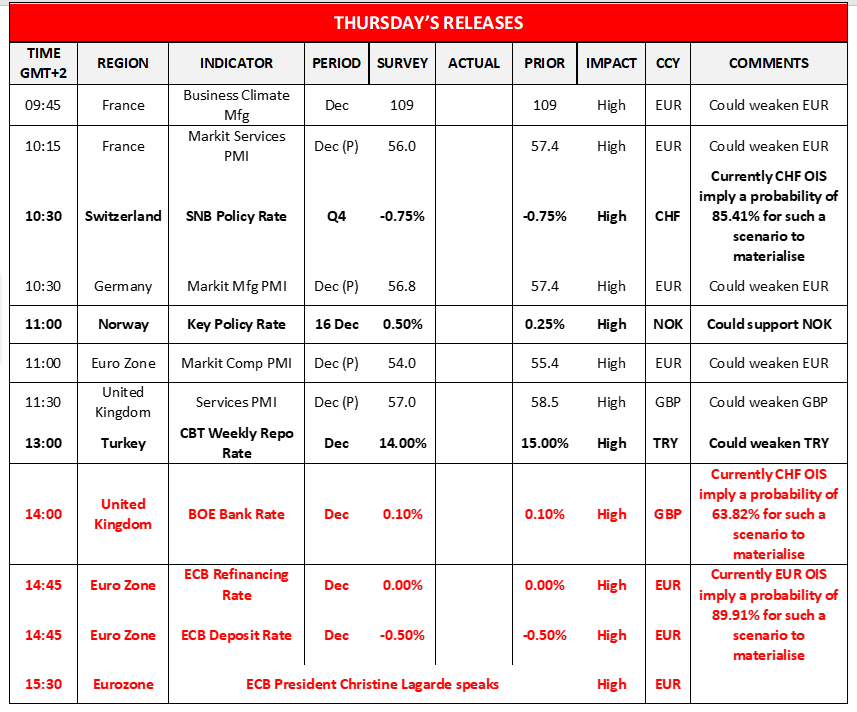
As for financial releases the market focus is on the release of the preliminary Markit PMI readings for December for France, Germany, Eurozone, UK and the US making the day pretty busy for traders. On the USD side we also note the release from the US of November’s construction data, the weekly initial jobless claims, December’s Philly Fed Business index and the industrial production growth rate for November.
EUR/USD remained in a sideways motion yesterday and reaffirmed the validity of the 1.1300 (R1) and the 1.1225 (S1) levels. We maintain a bias for a sideways motion yet ECB’s interest rate decision could alter the pair’s direction. Should bulls take over we may see EUR/USD breaking the 1.1300 (R1) line with the next possible stop being the 1.1370 (R2) resistance level. Should the bears take over, we may see the pair breaking the 1.1225 (S1) support line and take aim for the 1.1165 (S2) level.
BoE: To hike or not to hike?
Pound traders focus on the release of BoE’s interest rate decision later today and currently GBP OIS implies a probability of 64.44 % for the bank to remain on hold at 0.10%, yet that is far from certain. Inflationary pressures are building up in the UK and at the same time we must note that the Fed’s hawkish turn seems also to provide cover for BoE to hike rates. On the other hand, the uncertainty of the Omicron variant and the stricter measures announced by the UK Government seem to advise caution for the bank. Should the bank actually proceed with a rate hike, we may see the pound getting some substantial support, while should the bank remain on hold, we may see the pound retreating.
GBP/USD remained in a sideways motion yesterday between the 1.3160 (S1) and the 1.3280 (R1) levels. We maintain our bias for a sideways motion to continue currently given also that the RSI indicator below our 4-hour chart is near the reading of 50, yet we highlight BoE’s interest rate decision as a risk event that could alter the pairs’ direction. Should more buying orders be placed for cable we may see the pair breaking the 1.3280 (R1) resistance line and aim for the 1.3430 (R2) level. Should a selling interest be displayed by the market we may see the pair breaking the 1.3160 (S1) line and aim for the 1.2990 (S2) support level.
Other highlights for today
Yet it’s not all about the BoE today we also note the release of the interest rate decisions of Eurozone’s ECB, Norway’s Norgesbank, Turkey’s CBT, Switzerland’s SNB and during tomorrow’s Asian session Japan’s BoJ. Turkey’s CBT which has cut rates in its last meeting and there were reports that the banks’ Governor hinted towards another rate cut in December’s meeting. Should the bank actually proceed with another rate cut we may see the TRY weakening further as the aggressive easing of the bank continued. Please note that the TRY has been weakening in the past two days and despite CBT’s intervening in the markets to actually support the TRY, the bearish tendencies for the Lira seem to be ongoing.
On the other hand, we expect SNB and BoJ to maintain an accommodative monetary policy while Norgesbank is expected to hike rates by 25 basis points. Last but not least the ECB is being pressured to start tightening its monetary policy as inflation rates are accelerating yet on the other hand the spreading of the pandemic seems to advise caution. Should the bank maintain a wait and see position we may see the EUR weakening.
EUR/USD H4 Chart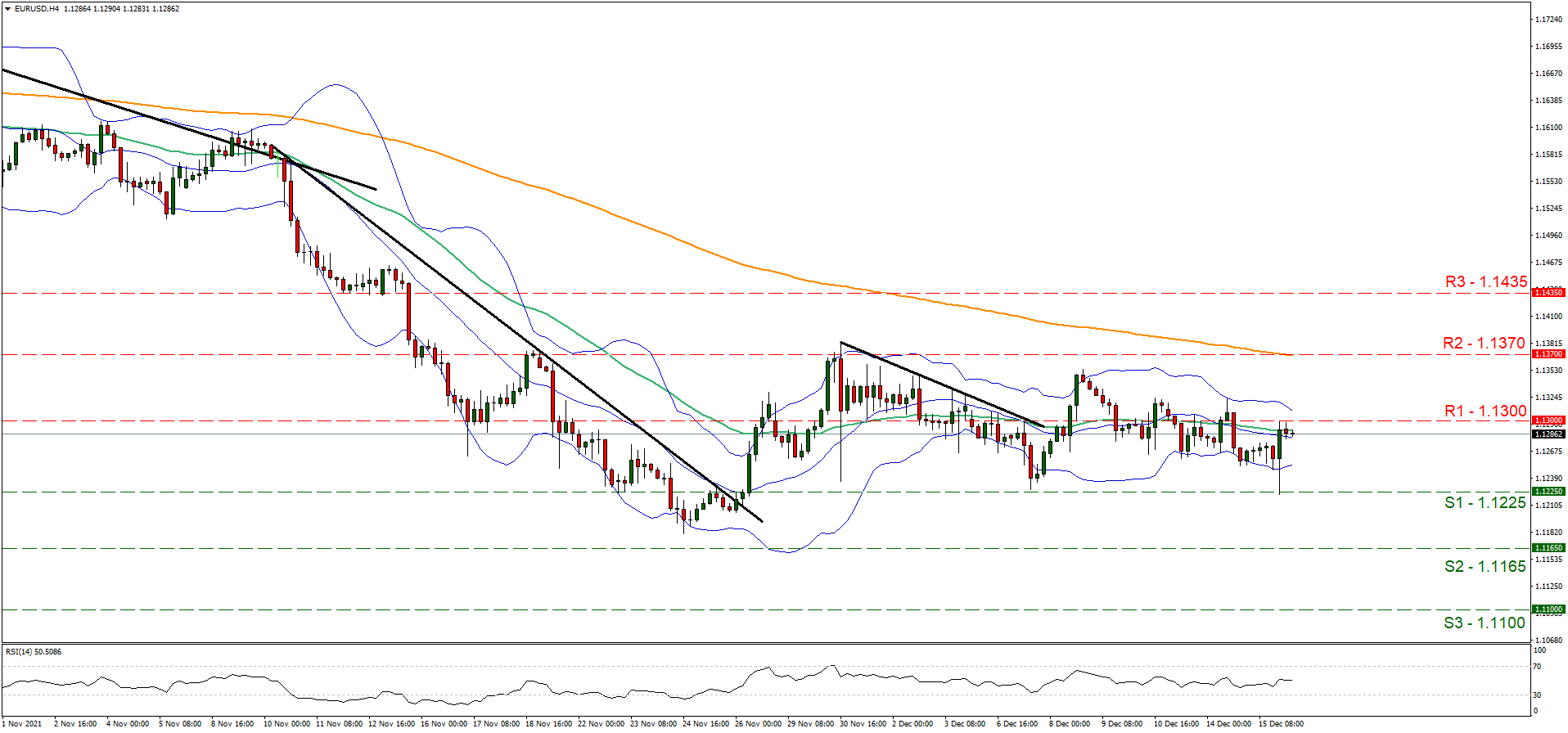
Support: 1.1225 (S1), 1.1165 (S2), 1.1100 (S3)
Resistance: 1.1300 (R1), 1.1370 (R2), 1.1435 (R3)
GBP/USD H4 Chart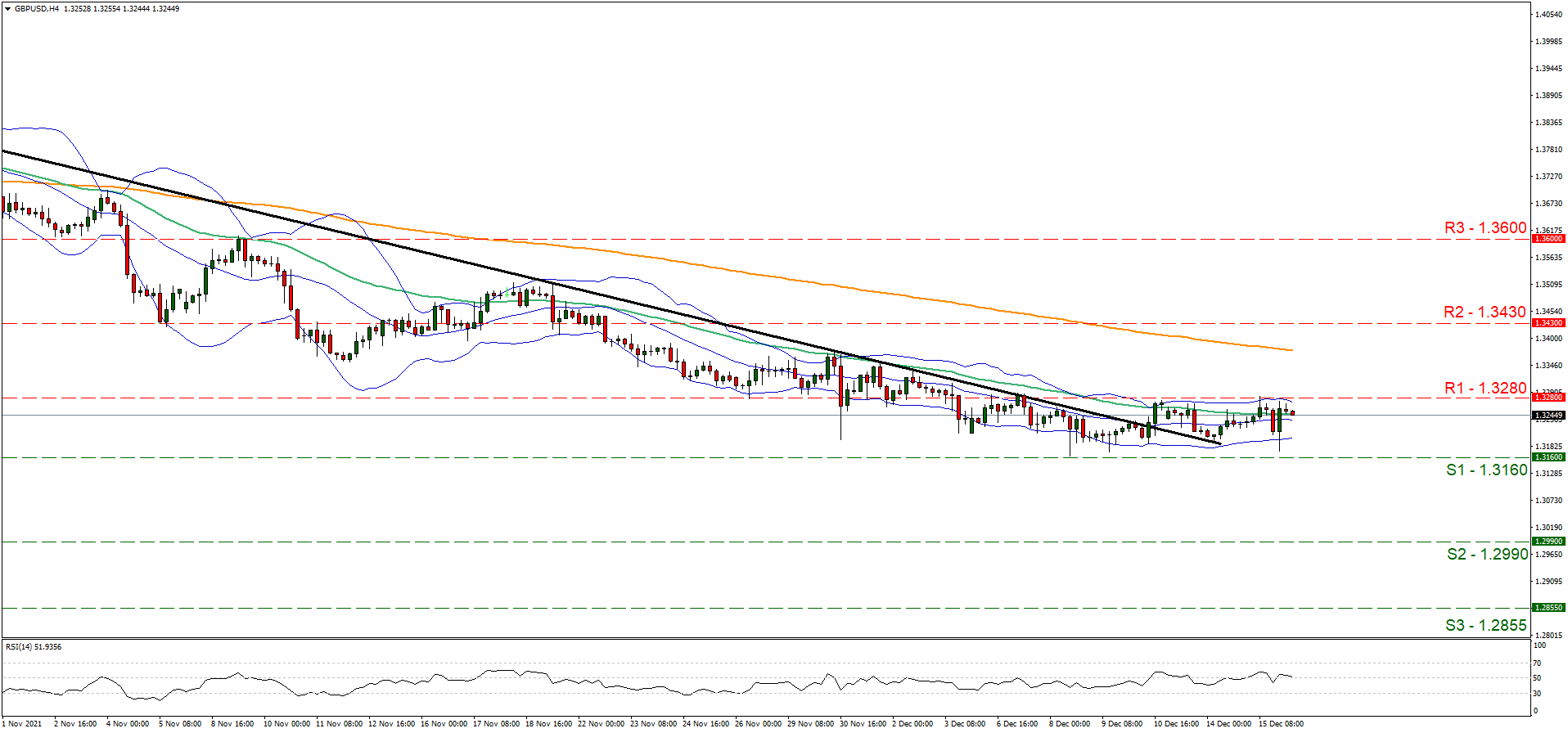
Support: 1.3160 (S1), 1.2990 (S2), 1.2855 (S3)
Resistance: 1.3280 (R1), 1.3430 (R2), 1.3600 (R3)
GBPJPY Bulls Get In Charge, Next Resistance At 152.49
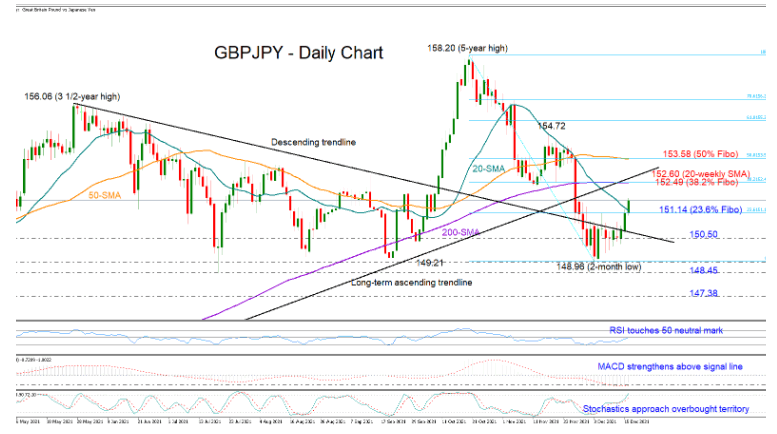
GBPJPY closed decisively above the descending trendline and the 150.50 bar on Wednesday after an intense battle around that bar during the past two weeks, raising hopes for more progress ahead of the Bank of England's policy announcement at 12:00 GMT today.
The spotlight is currently on the 23.6% Fibonacci retracement level of the latest downfall at 151.14 and the 20-day simple moving average (SMA) slightly above. Another prosperous session here could further bolster buying appetite, likely sending the price straight up to the 38.2% Fibonacci of 152.49, where the 200-day SMA is also flattening. The restrictive ascending trendline slightly at 152.75 could cement that ceiling, delaying any moves towards the 50% Fibonacci of 153.58 and the 50-day SMA. Note that the 20 SMA in the weekly chart is also hovering within this territory.
Given the positive momentum in the RSI, the Stochastics, and the MACD, the base scenario is for the pair to continue its recovery above the two-month low of 148.96. That said, as long as the RSI keeps hovering below its 50 neutral mark and the MACD is fluctuating within the negative zone, some caution is still required.
If selling pressures resurface, pressing the price below 151.14, the descending trendline could immediately catch the fall around the 150.00 level. Should it give way, however, the two-month low of 148.96 could come into view again. A clear break below that floor, and more importantly, a clear step beneath July’s low of 148.45, would downgrade the medium-term outlook from neutral to bearish, likely bringing February’s support of 147.38 next under examination.
In brief, GBPJPY bulls are expected to dominate in the near term, likely stretching the recent upside correction towards the 152.49 – 152.75 region.
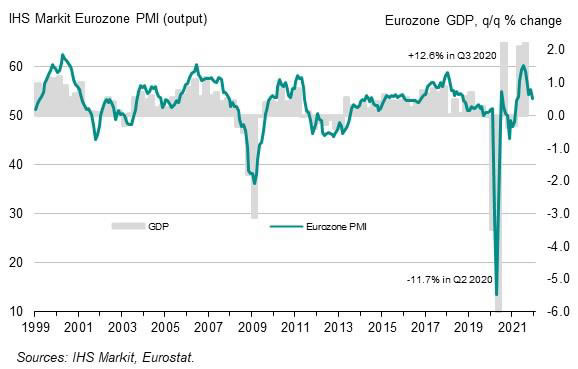
Eurozone PMI composite dropped to 53.4, another blow from COVID-19
Eurozone PMI Manufacturing dropped from 58.4 to 58.0 in December, a 10-month low but above expectation of 57.7. PMI Services dropped from 55.9 to 53.3, an 8-month low and missed expectations of 54.2. PMI Composite dropped from 55.4 to 53.4, a 9-month low.
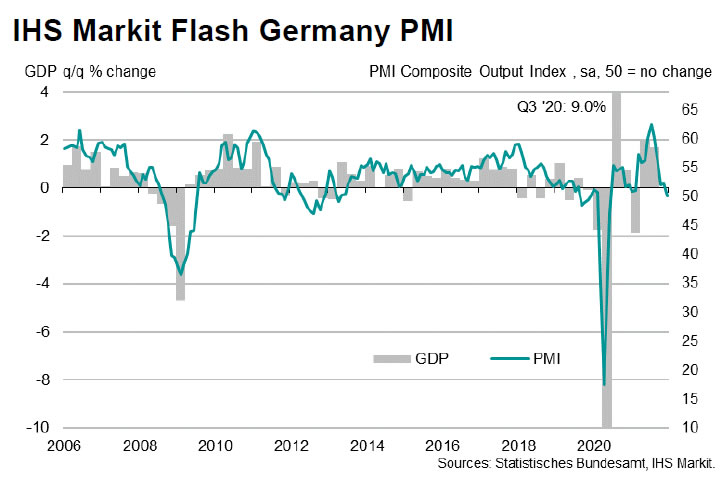
Chris Williamson, Chief Business Economist at IHS Markit said: "The eurozone economy is being dealt yet another blow from COVID-19... Germany is being especially hard hit, seeing the economy stall for the first time in a year-and-a-half, but the growth slowdown is broad based across the region.
"Encouragement comes from the manufacturing sector, where the strain on supply chains is showing some signs of easing, in turn helping to revive factory production... Easing supply constraints have alleviated some of the upward pressures on inflation, though the overall rate of price increase in December was still the second-highest on record. While inflation could soon peak, the rate of increase remains elevated."
Germany PMI manufacturing rose to 57.9, services dropped sharply to 48.4
Germany PMI Manufacturing rose from 57.4 to 57.9 in December, above expectation of 57.0. PMI Services dropped sharply from 52.7 to 48.4, below expectation of 51.0, back in contraction, and a 10-month low. PMI Composite dropped from 52.2 to 50.0, an 18-month low.
Phil Smith, Economics Associate Director, at IHS Markit said:
"The German economic recovery was stopped in its tracks in December by the resurgence of the pandemic, as renewed restrictions and increased uncertainty dampened activity across the country's service sector.
"However, despite the somewhat gloomy headline number, there were a number of more positive takeaways from December's flash survey, including an uptick in manufacturing growth and resilient business confidence. Goods production showed its strongest increase for three months, which coincided with a drop in the number of reports of longer lead times on inputs to the lowest since January. Any disruption to supply chains from the emergence of the Omicron variant seems to have been limited so far, although its impact may not have filtered through yet and the situation has the potential to change quickly if more cases start to appear, particularly in 'zero-COVID' policy economies.
"A rise in business expectations indicates that companies are looking past any current disruption to a brighter outlook in 2022, when it is expected that the pandemic will become less of an issue and supply-chain constraints will ease. As such, firms are gearing up for strong growth next year and continuing to add to payroll numbers at a historically strong rate.
"Price pressures continue to run extremely hot, but December's survey has at least offered the first indication that inflation might have peaked as rates of increase in input costs and output prices eased slightly from November's multi-year highs."
France PMI manufacturing dropped to 54.9, PMI services dropped to 57.1
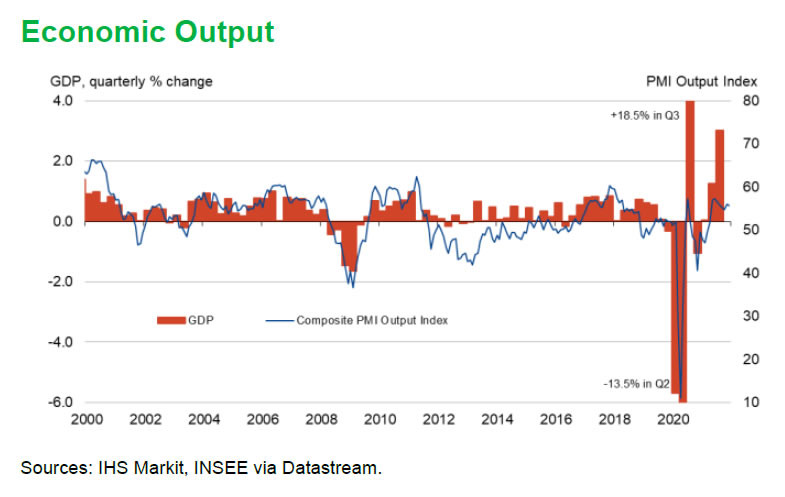
France PMI Manufacturing dropped from 55.9 to 54.9 in December, below expectation of 55.3. PMI Services dropped from 57.4 to 57.1, above expectation of 55.6. PMI Composite dropped from 56.1 to 55.6.
Joe Hayes, Senior Economist at IHS Markit said:
"France's economy ended the fourth quarter with another solid monthly expansion in output, but the headline number doesn't really tell us the full story as trends by sector are still widely divergent.
"Growth in France is, at present, entirely reliant on the service sector as manufacturing output fell for the second time in the past three months. Weak demand for goods, supply shortages and the consequent impact these have on production is weighing heavily on manufacturers. Meanwhile, although services firms are continuing to see rising activity levels, growth slowed from November as some firms saw new business intakes dented by the latest wave of COVID-19 infections hitting France right now. Tourism has also been a welcomed pillar of additional support to the services sector since the middle of this year, but December data showed new business from overseas falling amid the emergence of the Omicron variant.
"It's clear that the risks to the economy have grown substantially since November, and a fresh wave of COVID-19 infections could de-rail services activity. While France has so far distanced itself from implementing virus-combatting measures of the same stringency as other parts of Europe, changes in business and consumer behaviour in the face of the Omicron variant could dent the recovery."
SNB stands pat, upgrades 2021 and 2022 inflation forecasts
SNB kept the sight deposits rate unchanged at -0.75% as widely expected. It also remained "remains willing to intervene in the foreign exchange market as necessary, in order to counter upward pressure on the Swiss franc". The Swiss Franc "remains highly valued".
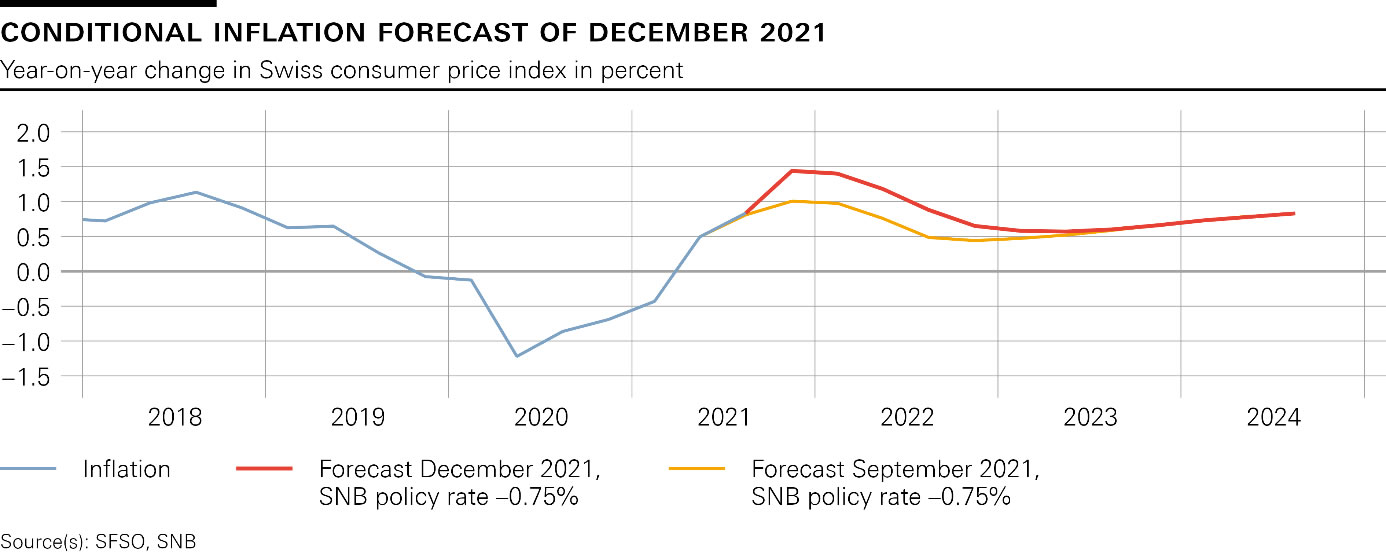
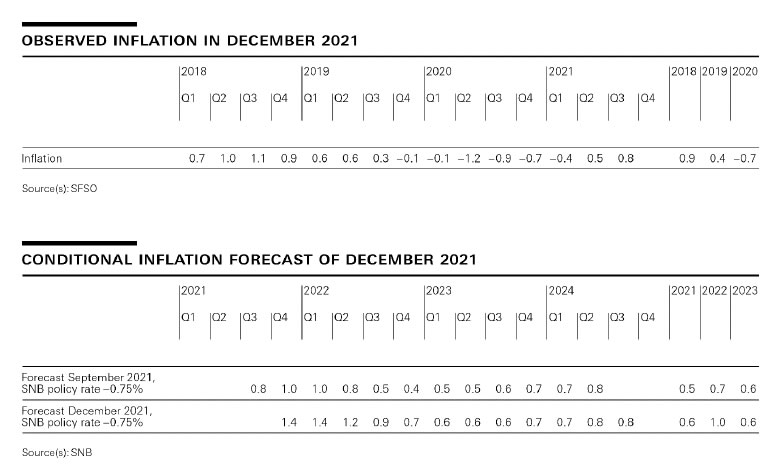
The new conditional inflation forecasts for 2021 and 2022 were revised higher "primarily due to higher import prices, all all for oil products and for goods affected by global supply bottlenecks". New forecast stands at 0.6% for 2021, 1.0% for 2022 and 0.6% for 2023, comparing to September forecasts of 0.5% for 2021, 0.7% for 2022, and 0.6% for 2023. They based on assumption that policy rate remains at -0.75% over the entire forecast horizon.
As for the economy, the baseline scenario is a "continuation of the economic recovery next year". SNB expects GDP growth of around 3% for 2022 while unemployment is "likely to decline again somewhat".
(SNB) Swiss National Bank maintains expansionary monetary policy
The SNB is maintaining its expansionary monetary policy. It is thus ensuring price stability and supporting the Swiss economy in its recovery from the impact of the coronavirus pandemic. It is keeping the SNB policy rate and interest on sight deposits at the SNB at −0.75%, and remains willing to intervene in the foreign exchange market as necessary, in order to counter upward pressure on the Swiss franc. In so doing, it takes the overall currency situation into consideration. The Swiss franc remains highly valued.
The SNB's new conditional inflation forecast for 2021 and 2022 is slightly above that of September (cf. chart 1). This is primarily due to higher import prices, above all for oil products and for goods affected by global supply bottlenecks. In the longer term, the inflation forecast is virtually unchanged compared with September. The new forecast stands at 0.6% for 2021, 1.0% for 2022, and 0.6% for 2023 (cf. table 1). The conditional inflation forecast is based on the assumption that the SNB policy rate remains at −0.75% over the entire forecast horizon.
The coronavirus pandemic is continuing to shape the global economic situation. The economic recovery worldwide weakened somewhat in the third quarter due to waves of infection in certain areas and supply bottlenecks in various industries in the manufacturing sector. At the same time, inflation was unusually high in both the US and the euro area. In addition to supply chain problems, higher energy prices also played an important role in this respect.
In its baseline scenario for the global economy, the SNB assumes that extensive containment measures will not have to be introduced again, this despite the adverse developments regarding the pandemic at present. The economic recovery should thus continue, albeit somewhat subdued. Supply bottlenecks are likely to persist for some time yet, leading to price increases for the goods concerned. This situation is likely to ease over the medium term, however, with inflation abroad dropping back to more moderate levels.
In Switzerland, the economic recovery has continued. There was a further robust increase in gross domestic product (GDP) in the third quarter, thus lifting it above its pre-crisis level for the first time. The situation on the labour market also continued to improve. GDP is likely to grow by around 3.5% this year. This is slightly stronger than the SNB had expected in September, the reason being that activity in certain service industries – such as hospitality – was more dynamic than was assumed at that time. That said, the economy has lost momentum again somewhat of late.
In its baseline scenario for Switzerland, the SNB anticipates a continuation of the economic recovery next year. This is based on the assumption that no measures will have to be introduced that would additionally impair economic activity. Against this backdrop, the SNB expects GDP growth of around 3% for 2022. Unemployment is likely to decline again somewhat, and the utilisation of production capacity should continue to return to normal.
The recent worsening of the pandemic situation has again increased the uncertainty with regard to the forecasts, both for Switzerland and abroad. Economic developments over the coming quarters will hinge on which additional containment measures are taken in the countries affected.
Mortgage lending and residential property prices have risen strongly in recent quarters. Overall, the vulnerability of the mortgage and real estate markets has increased further. The SNB regularly reassesses the need for the countercyclical capital buffer to be reactivated.
More detailed information on the monetary policy decision can be found in Thomas Jordan's introductory remarks, available from 10 am. Fritz Zurbrügg's remarks focus on developments in the area of financial stability, while Andréa Maechler's remarks address the situation on the financial markets.
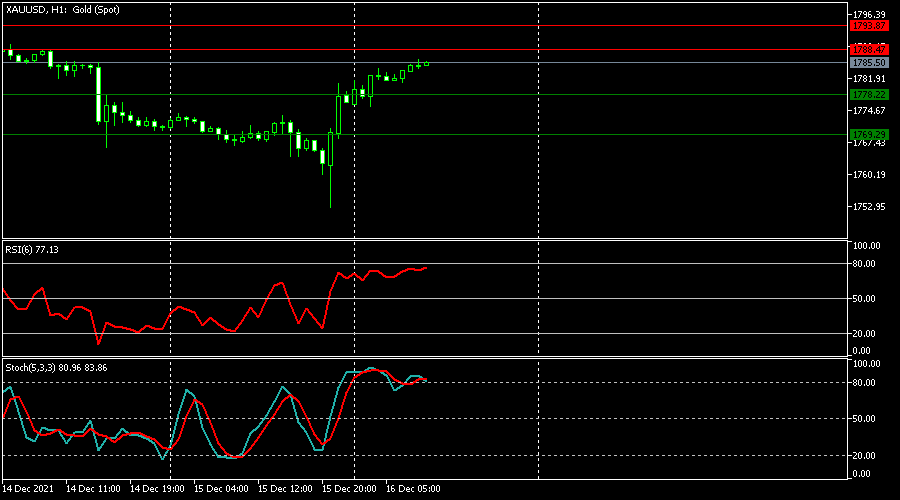
XAUUSD Is Possibly Bearish
Technical analysis
The RSI is above level 50 and headed downwards.
The Stochastics left the overbought zone and headed downwards to level 50.
Most likely scenario – SELL
Target prices: 1,778.22 1,769.29
Alternative scenario – BUY
Target prices: 1,788.47 1,793.87
Key levels
Support 1,778.22 1,769.29
Resistance 1,788.47 1,793.87
Daily Technical Analysis
EUR/USD
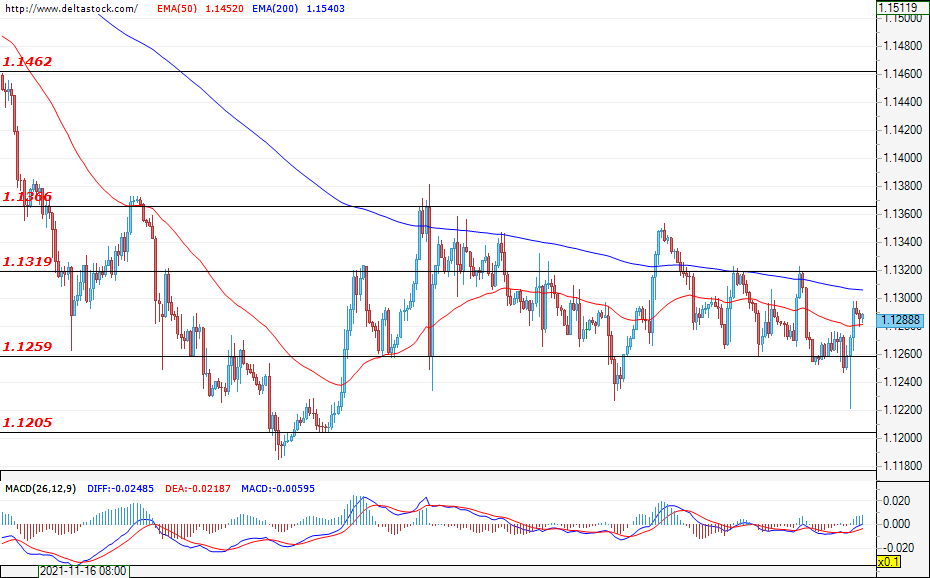
Current level - 1.1288
During yesterday's trading session, the currency pair made yet another unsuccessful attempt at breaching the critical support zone at 1.1260 and bounced back into the range between 1.1260 and 1.1320 in which it was trading since the start of the week. Either the bulls or the bears could receive the necessary boost to breach either of the borders of the range today at 12:45 GMT, when the European Central Bank rate decision will be announced, as well as during the follow-up press conference (13:30 GMT).
| Resistance | Support | ||
| intraday | intraweek | intraday | intraweek |
| 1.1320 | 1.1460 | 1.1259 | 1.1205 |
| 1.1366 | 1.1500 | 1.1205 | 1.1180 |
USD/JPY
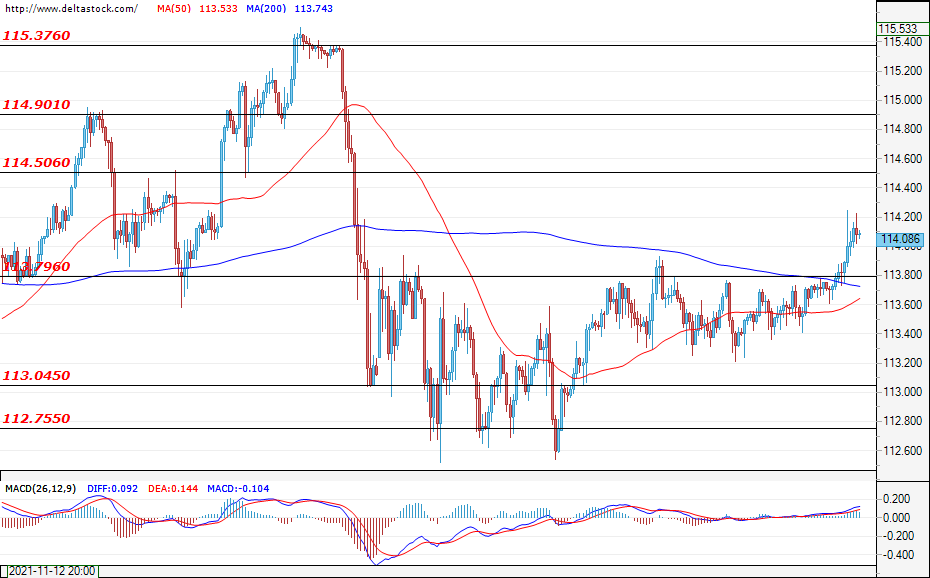
Current level - 114.08
The Ninja breached the resistance level of 113.80 and is headed towards the next resistance at 114.50. A possible breach of this level could pave the way towards the next resistance at 114.90, followed by the local peak at 115.40. In the negative direction, the mentioned level of 113.80 is now acting as a support.
| Resistance | Support | ||
| intraday | intraweek | intraday | intraweek |
| 114.50 | 114.90 | 113.80 | 112.75 |
| 114.90 | 115.37 | 113.04 | 110.80 |
GBP/USD
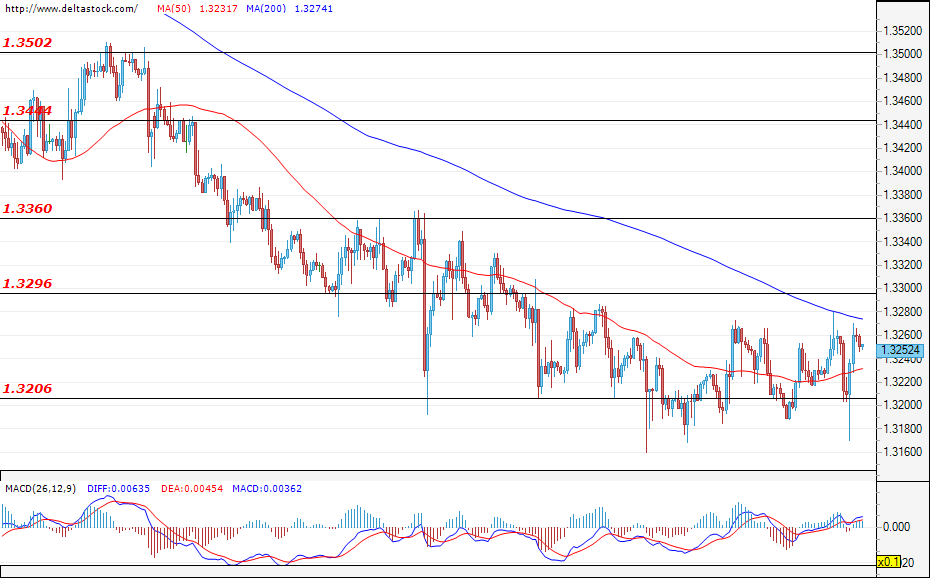
Current level - 1.3252
The support level of 1.3206 managed to resist the bearish pressure and the forecast is for a retracement and a test of the resistance level of 1.3296, which could pave the way towards the next resistance at 1.3360. In the negative direction, the major support lies at 1.3206. Today, increased trading activity can be expected around the announcement of the Bank of England interest rate decision (12:00 GMT).
| Resistance | Support | ||
| intraday | intraweek | intraday | intraweek |
| 1.3296 | 1.3360 | 1.3206 | 1.2900 |
| 1.3360 | 1.3440 | 1.3150 | 1.2800 |
USD/CAD Reacts To Fundamentals
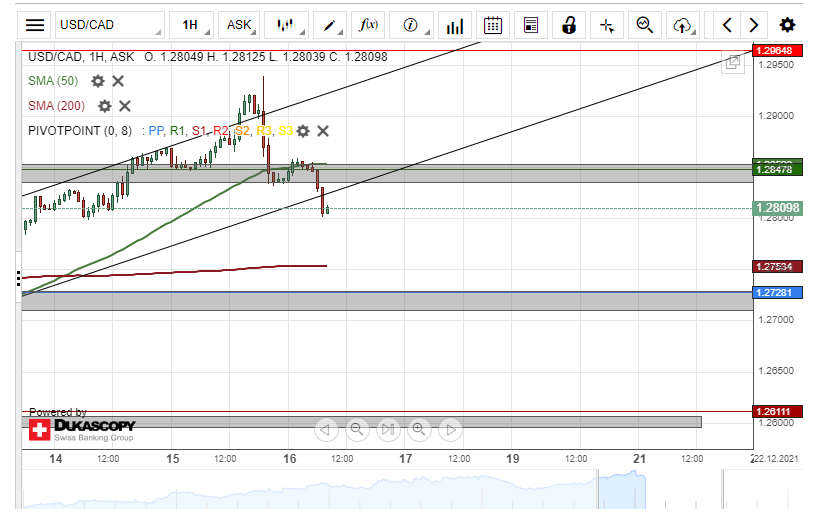
The USD/CAD has been mapping the recently released macroeconomic data releases and the US Federal Reserve monetary policy statement. At 13:30 GMT on Wednesday, it was revealed that US Retail Sales have increased more than thought. Meanwhile, the Canadian inflation hit expectations. Namely, there is more demand for the USD than though and the CAD demand remains as forecast. This caused a surge and breaking of the channel up pattern to the upside.
Later on, at 19:00 GMT, the US Fed caused an initial surge of the USD by decreasing stimulus. However, after almost reaching the 1.2950 mark, the rate began a decline, as the markets realized that monetary easing and the increasing of the supply of the USD will continue, despite the lower pace. This resulted in a decline, which by the start of Thursday's European trading had reached the 1.2800 level and had no technical support.
If the rate continues to decline and the 1.2800 mark does not act as support, the rate could reach the 200-hour simple moving average at 1.2754. Further below, note the weekly simple pivot point and a previous low level zone at 1.2710/1.2730.
However, if the USD recovers against the CAD, a potential surge would have to face the resistance zone and levels at 1.2835/1.2853, before aiming at the 1.2900 mark.