Sample Category Title
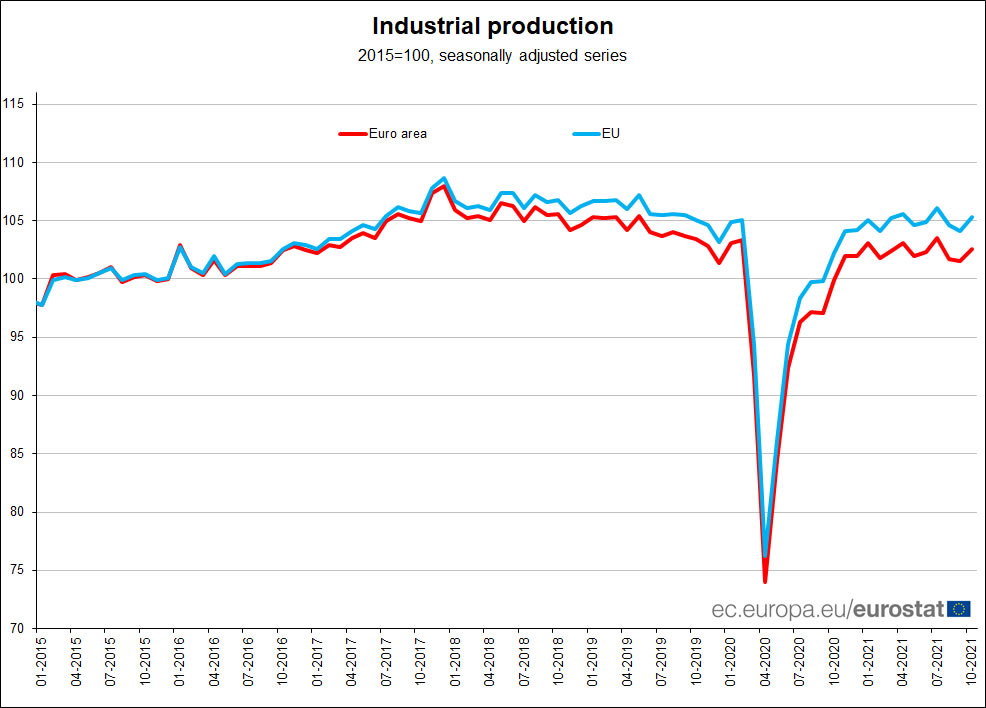
Eurozone industrial production rose 1.1% mom in Oct, EU up 1.2% mom
Eurozone industrial production rose 1.1% mom in October, below expectation of 1.5% mom. Production of capital goods rose by 3.0%, durable consumer goods by 1.7%, non-durable consumer goods by 0.4% and energy by 0.1%, while production of intermediate goods fell by -0.6%.
EU industrial production rose 1.2% mom. Among Member States for which data are available, the highest monthly increases were registered in Germany and Slovakia (both +3.0%), Greece (+2.5%) and Denmark (+2.1%). The highest decreases were observed in Estonia (-2.4%), Latvia (-1.5%), the Netherlands and Romania (both -0.9%).
USD/CAD Approaches High Level Zone
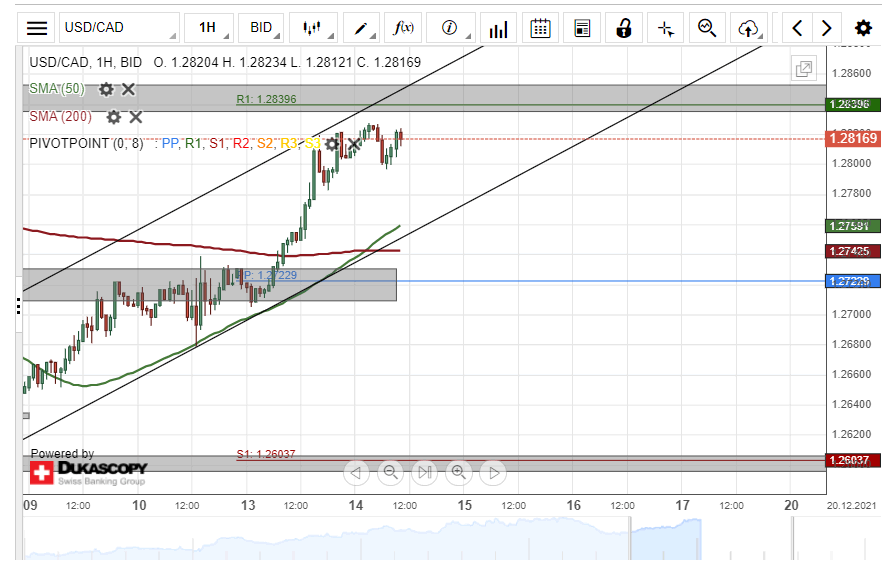
The surge of the USD against the Canadian Dollar continues, as on Tuesday morning the USD/CAD rate reached above the 1.2800 mark. In the near term future, the rate was expected to test the resistance of the December high level zone at 1.2835/1.2853 and the weekly R1 simple pivot point at 1.2840.
If the USD/CAD pair reaches above the 1.2853 level, the rate might surge as high as the 1.2900 level. Namely, the round exchange rate might act as resistance. Above the 1.2900 mark, the 1.2950 level and the weekly R2 simple pivot point at 1.2959 could stop a potential surge.
In the meantime, a decline of the pair might look for support in the combination of the 50 and 200-hour simple moving averages near 1.2760 and 1.2740. Below the SMAs, note the weekly simple pivot point at 1.2723.
BOE Preview – Delaying Rate Hike to February 2022
We expect the BOE to stand pat at this week’s meeting. October’s GDP came in weaker than expected, and the renewed restrictive measures to curb spread of the new Omicron variant could affect household consumption and put a brake on the job market improvement. We expect policymakers to wait for more certainty about the development of the pandemic and delay the first rate hike to February 2022.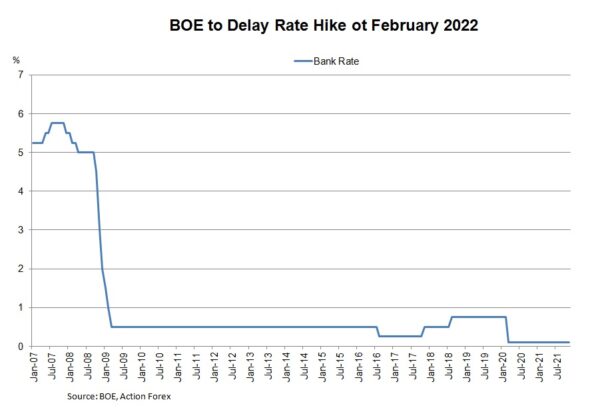
GDP grew +0.1% m/m in October, missing consensus of +0.4%. September’s growth was +0.6%. On a 3m/3m basis, the economy expanded +0.9%, down from +1.3% in September. Other activity data in October also slowed. For instance, industrial production grew +1.4% y/y, compared with consensus of +2.2% and September +2.9%. Growth in manufacturing production and construction output also eased and missed expectations.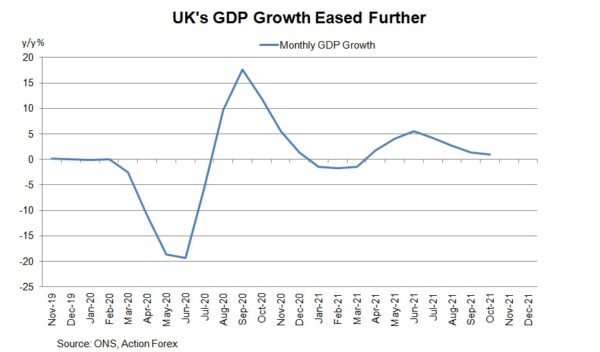
The job market remains resilient with the ILO unemployment rate slipped -0.1 ppt to 4.2% in the 3 months through October, in line with expectations. Claimant count fell -31.5K in November, after a -14.9K drop a month ago. The market had anticipated a bigger decline of -49.7K. The market expects inflation to have accelerated to +4.7% y/y in November from +4.2% in the prior month. Core CPI might have risen to +3.8% y/y, from October's +3.4%.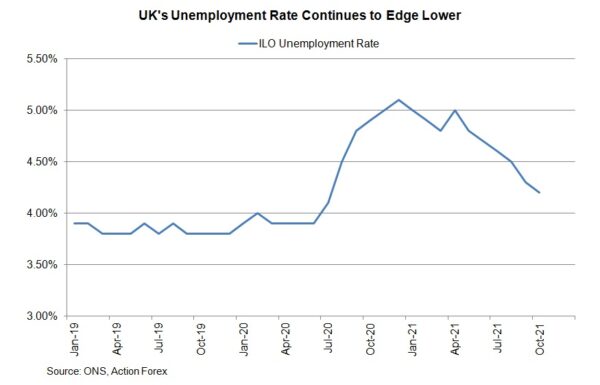
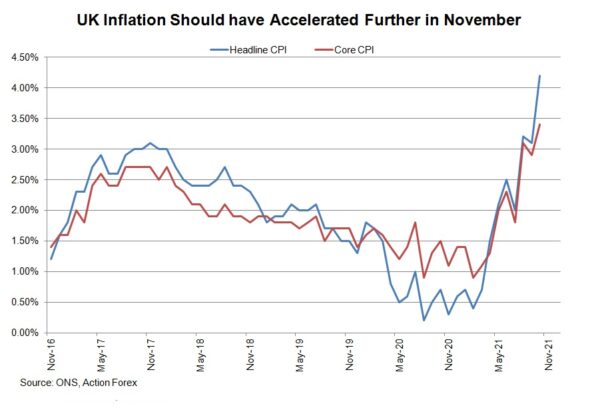
The rapid uptick of the number coronavirus cases has sent the UK back to Plan B restriction. Face masks are required in a number of venues and people must work from home if possible. There are rumors that plan C (stricter rules) would be implemented after Christmas. Meanwhile, the government announced plan to speed up third jab among adults. The Omicron variant has indeed increased uncertainty of the economic outlook. We expect the BOE would adopt a wait-and-see mode and leave the Bank rate 0.1% in December. The first rate hike would likely come in February, with a +15 bps increase.
GBP/JPY Breaks Triangle Pattern
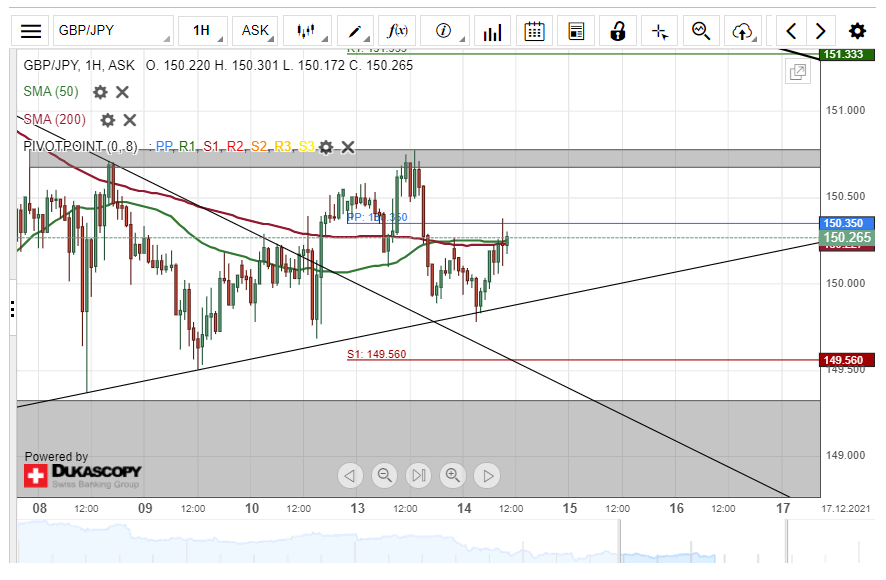
The GBP/JPY currency exchange rate broke the triangle pattern and surged to the resistance of the December 8 high level, which caused a decline. On Tuesday morning, the decline reached the support line of the December low level connecting trend line, and the rate recovered to the combined resistance of the 50 and 200-hour simple moving averages.
If the rate reaches above the 50 and 200-hour SMAs, the weekly simple pivot point at 150.35 might act as resistance. Higher above, the recent December high level zone at 150.67/150.77 might stop a surge.
However, a decline from the simple moving averages would have to pass the support of the December low level connecting trend line, before reaching the support of the weekly S1 simple pivot point at 149.56.
AUD/USD Finds Support Near 0.7100
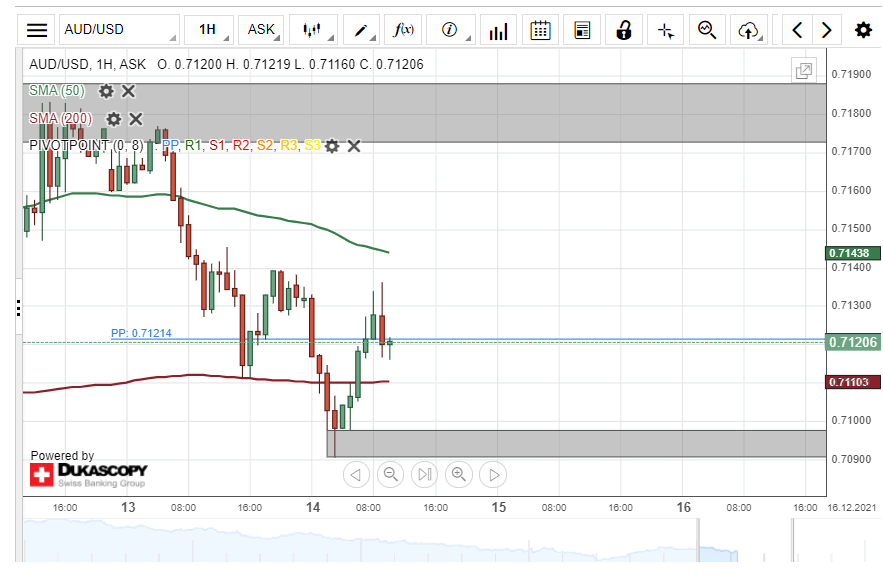
On Tuesday morning, the decline of the AUD/USD found support below the 0.7100 mark. Namely, the 0.7091/0.7097 zone provided support for a recovery. By 09:00 GMT, the rate had reached above the 200-hour SMA at 0.7110 and the weekly simple pivot point at 0.7121.
A continuation of the surge of the pair could encounter resistance in the 50-hour simple moving average at 0.7145. Higher above, the 0.7173/0.7187 zone might stop a surge of the Aussie against the US Dollar.
Meanwhile, a decline of the rate is highly likely set to find support in the weekly simple pivot point at 0.7121, the 200-hour simple moving average at 0.7110 and the support zone at 0.7091/0.7097.
EUR/JPY Finds Support In 128.00
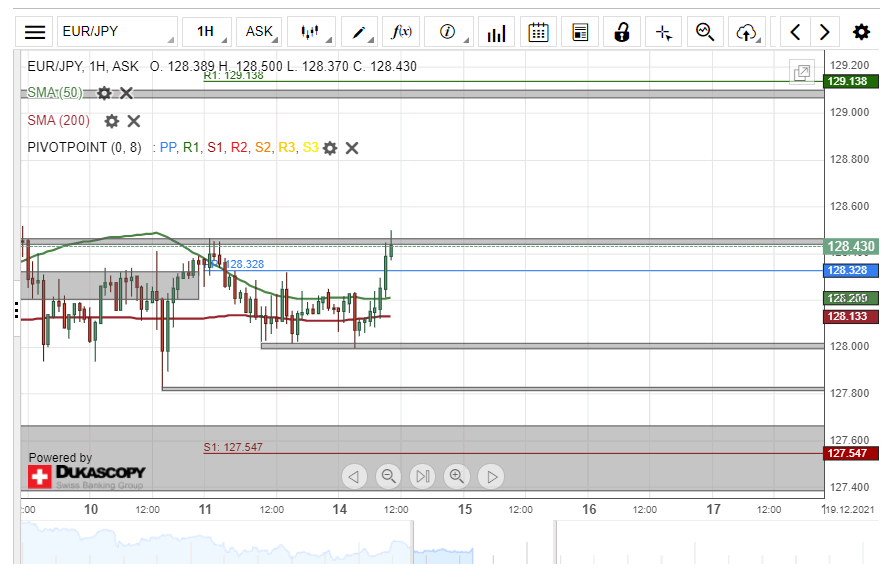
The EUR/JPY currency exchange rate has been trading above the support of the 128.00 level since Monday's trading hours. Meanwhile, resistance was being provided by the weekly simple pivot point at 128.33 and the 50-hour simple moving average near 128.20.
If the pair declines below the 128.00 mark, it could look for support in the Friday low level at at 127.83. Further below, note a strong support zone at 127.40/127.66.
On the other hand, a surge of the rate would have to pass the resistance of the 50-hour SMA at 128.20, the weekly simple pivot point at 128.33 and the high levels near 128.45, before aiming at the 129.00 mark.
USD/JPY Outlook: Dollar Firms Vs Yen Despite Omicron Fears, All Eyes On Fed
The dollar remains bid vs yen despite risk aversion on growing Omicron fears and moving in the upper side of near-term range in early trading on Tuesday.
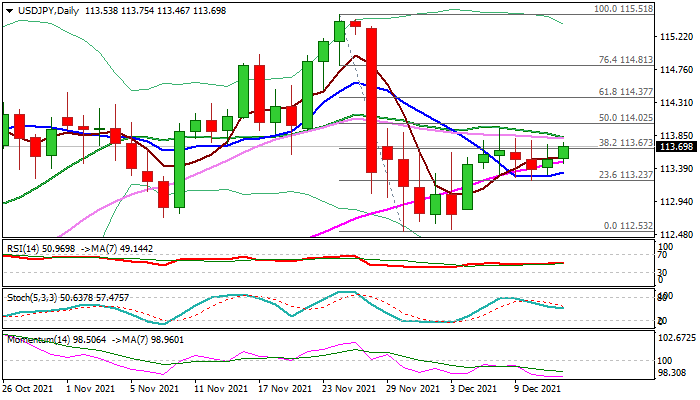
Daily chart shows the action supported by rising and thickening daily cloud (top of the cloud lays at 113.20) and marks solid support which contained dips in past few days.
At the upper side, Fibo barrier at 113.67 (38.2% of 115.51/112.53 pullback) continues to provide strong headwinds as the action in past five consecutive sessions repeatedly failed to register a daily close above this level, keeping the price action within a narrow range, with the upticks being capped by converged 20/30DMA’s (113.82).
Daily studies lack direction signal as negative momentum continues to rise, RSI is neutral and moving averages remain in a mixed setup.
All eyes are on Fed’s policy meeting which ends tomorrow, with high expectations that the US policymakers will be hawkish this time.
Rising inflation, which is more and more unlikely to be a transitory, pressures the US central bank to accelerate preparations for policy tightening, but rising fears about fast spreading Omicron variant and possible consequences it may cause, as well as still unsatisfactory situation in the labor market, could obstruct Fed’s decision.
Look for initial direction signal on break of either range boundary, with violation of upper pivots to (113.67/82) to expose key Fibo levels at 114.02/37 and confirm an end of corrective phase from new 4-year high.
Conversely, break of lower pivots at 113.20 (cloud top) and 112.60 (base) would risk deeper correction of 109.11/115.51 rally.
Res: 113.67, 114.02, 114.37, 114.69.
Sup: 113.55, 113.20, 113.07, 112.53.
Caution Prevails As Investors Eye Omicron And Fed Meeting
An air of caution gripped Asian markets on Tuesday as growing unease over the spread of the Omicron variant drained risk sentiment. The dollar held its ground despite US Treasury yields slipping in the previous session, while gold prices remained range-bound, waiting for a fresh directional catalyst.
European equity futures are mixed this morning with investors clearly on edge ahead of a week dominated by central bank decisions and key economic reports. Any decisions made on monetary policies will set the tone for the rest of 2021 while heavily impacting risk markets.
With the Bank of England, Bank of Japan, European Central Bank, and Swiss National Bank all expected to keep monetary policy unchanged, all eyes will be on the FOMC meeting on Wednesday. Expectations remain elevated over the Fed announcing a faster pace of tapering in the face of rising inflation and using more hawkish language than has been seen in previous statements. If this does become reality, it could weigh on stock markets while boosting the dollar.
Investors eye Fed decision
The Federal Reserve’s December policy meeting remains the main event for markets this week. With US inflation surging to its highest level in nearly 40 years, equity markets still volatile and the Omicron variant fueling economic uncertainty, it will be interesting to see what policymakers at the Fed have to say.
Back in November, the FOMC made an official announcement on tapering. Fast-forward to today and the central bank is set to announce an acceleration of tapering from January 2022, with consensus expecting the pace to double in speed, in order to counter inflation. This has boosted expectations over the Fed hiking interest rates sooner than expected with traders currently pricing in a 73% probability of at least one rate hike by early May 2022 and fully pricing a 25-basis point hike by mid-June 2022.
Much attention will be directed towards the Fed’s new dot plot and updated economic forecasts. Back in September, policymakers were forecasting one rate hike in 2022, followed by three in 2023 and another three in 2024. The new dot plot is expected to show the majority of Fed members now expect two rate hikes in 2022.
Currency spotlight – AUD/USD
The Australian dollar stumbled into Tuesday’s session under pressure as virus cases surged in the country’s most populous state. Daily Covid-19 infections jumped to their highest level in more than two months, fueling concerns over the economic outlook. However, there was some good news as reports showed that business confidence remained well above its long-term average, despite dropping sharply to 12 in November from a downwardly revised 20 in October.
Taking a look at the technical picture, the AUDUSD remains under pressure on the daily charts. Sustained weakness below 0.7180 could encourage a decline towards 0.7080 and 0.7000, respectively.
Commodity spotlight – Gold
Gold could enter the holiday season with a bang due to key central bank meetings, economic data and developments revolving around the Omicron variant. Prices have been trapped within a range over the past few weeks with bulls and bears waiting for a fresh directional catalyst.
This may come in the form of the Federal Reserve meeting or other economic events that could impact risk sentiment. Should the Fed step up the gear on tapering, this is likely to punish gold prices as the dollar appreciates, yields rise and rate hike expectations jump. In the meantime, support can be found at $1765 and resistance around the psychological $1800 level.
GER 40 Seeks Support
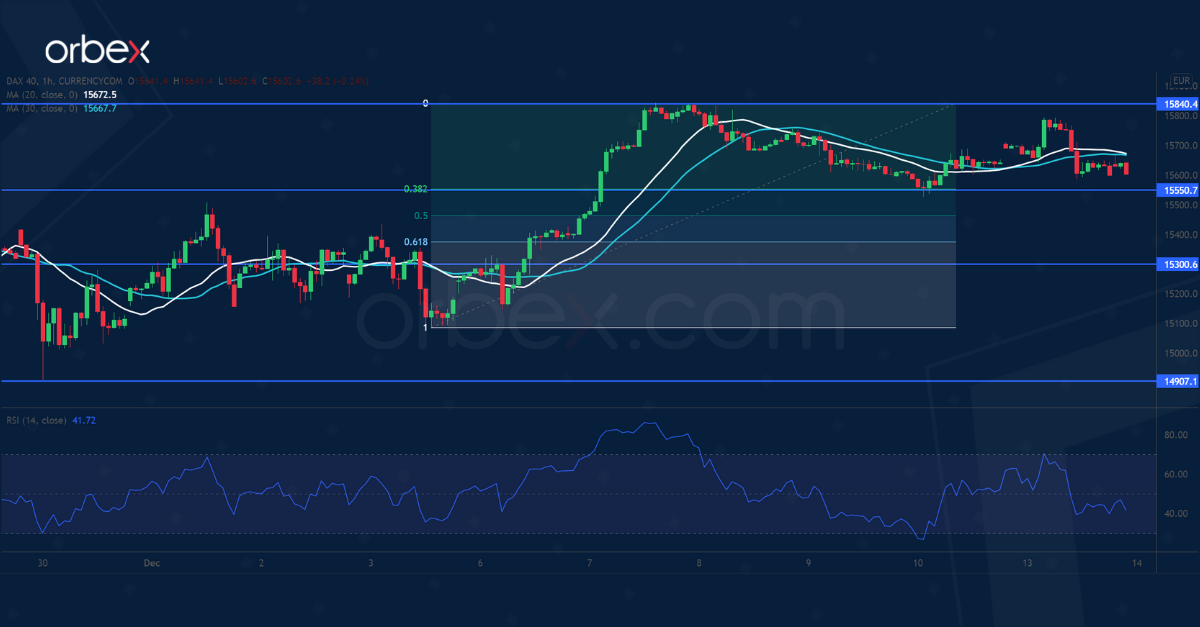
The Dax 40 treads water as major central banks are set to update their policies.
An initial surge above 15500 has prompted the bears to cover. Then the index found support at the 38.2% (15550) Fibonacci retracement level while an oversold RSI attracted buying interest. And that is a sign of underlying strength in the rebound.
A bullish MA cross indicates an acceleration on the upside. A break above 15840 may send the price to the all-time high at 16300. In case of a deeper pullback, 15300 is a critical level to keep the rebound relevant.
US 30 To Test Previous Peak
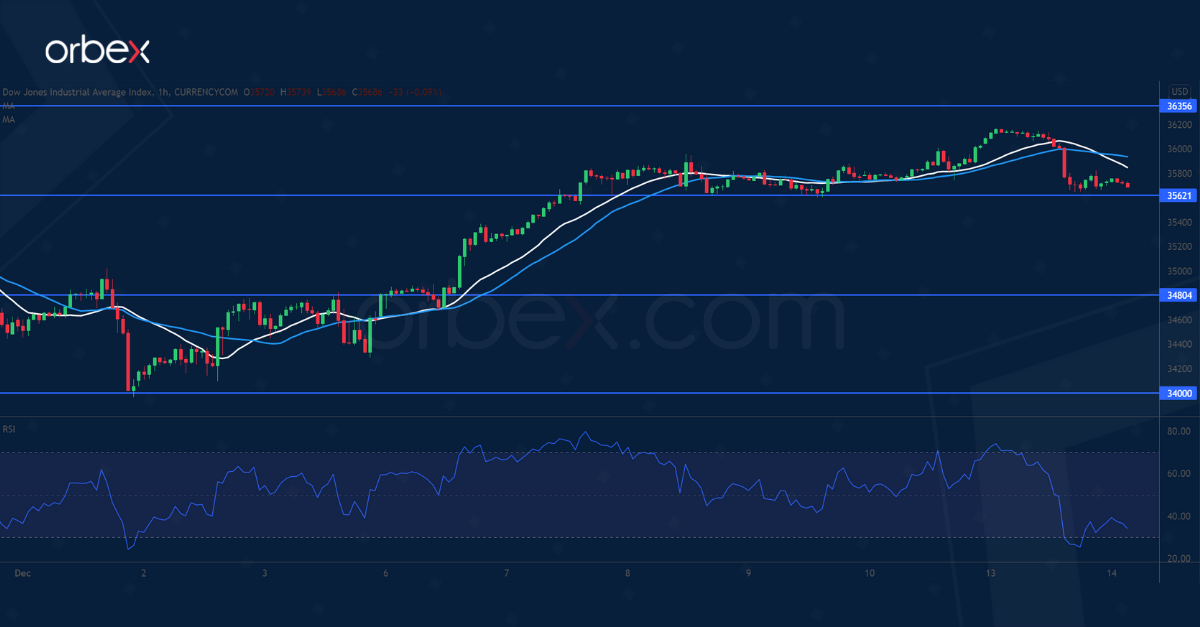
The Dow Jones 30 inches lower as investors look ahead to Fed’s aggressive tapering.
By lifting offers around the psychological level of 36000, a major resistance on the daily chart, the bulls may have turned sentiment around. As the index falls back in search of support, the RSI’s oversold situation may catch buyers’ attention.
A break above 36350 may resume the uptrend. Otherwise, 35620 is the closest support where buyers could jump in for fear of missing out. Further down, 34800 would be a second line of defense.