Sample Category Title
Focus Turns To The Plethora Of Central Bank Rate Decisions During The Week
Notes/Observations
- German Nov Wholesale Prices rose at its largest annual increase since 1962.
- UK Parliament to debate vaccine passports on Tuesday and could see a growing rebellion within the Tory party on leadership.
- Focus on numerous central bank rate decisions this week highlighted by Fed, BOE, ECB, BOJ.
Asia
- Japan Q4 Tankan Large manufacturing Index: 18 v 19e; Outlook Survey: 13v 19e.
- BOJ Official expressed some caution over latest Tankan saying the surveys probably did not consider impact of Omicron virus variant.
- BOJ to buy ¥2.0T in bonds with repurchase agreements [first operation since 2006, follows rise in Japanese repo rates].
- Reports circulated that >15 listed firms in Zhejiang (China) had temporarily halted production citing impact of rising COVID cases.
- Economists expect that China would add fiscal stimulus starting early 2022.
Coronavirus
- UK Govt raised COVID alert level to 4 from 3, cited omicron variant. Reports that over 50 Tory MPs may oppose PM Johnson's Plan B on Tuesday, Dec 14th in a Parliamentary vote on vaccine passports.
Europe
- UK PM Johnson said not looking to remove the ECJ from their role of enforcing the Northern Ireland protocol which could help broker a deal.
- France govt said to have drop threat of trade war with UK, after Channel Islands and UK Govt agree to more fishing licenses (Note: UK issued 23 fishing licenses to French boats but key issues remain. Move seen as signaling progress toward resolving the post-Brexit dispute).
- French fisherman said to be planning on blockading Calais and other key ports in protest over the amount of permits issued by the UK. Fishermen feel they have been betrayed by the UK and abandoned by the EU.
- G7 vowed that Russia would face massive consequences and severe costs if it went ahead with any military aggression against Ukraine. Concerned about China coercive economic policies.
- S&P revised Turkey sovereign ratings outlook to Negative; Affirmed its B+ ratings.
- Fitch affirmed UK sovereign rating at AA; outlook stable.
- Fitch affirmed Spain sovereign rating at A; outlook stable.
Americas
- Some Democrats said to be preparing for President Biden’s Build back Better package to get pushed back into next year despite.
Energy
- German Foreign Min stated that Nord Stream 2 could not be certified under current conditions because it did not meet European energy rules. Still open questions about security, talks weare best course to take to avoid further escalation.
Speakers/Fixed income/FX/Commodities/Erratum
Equities
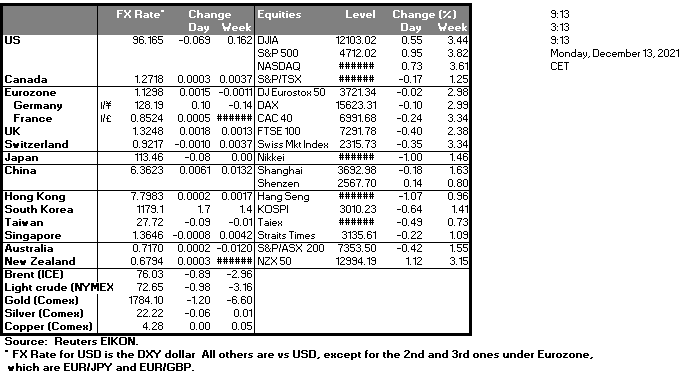
- Indices [Stoxx600 +0.61% at 478.46, FTSE +0.14% at 7,302.25, DAX +1.03% at 15,784.00, CAC-40 +0.38% at 7,018.45, IBEX-35 +0.34% at 8,388.55, FTSE MIB +0.63% at 26,890.00, SMI +0.13% at 12,623.86, S&P 500 Futures +0.33%].
- Market Focal Points/Key Themes: European indices open mixed; among the sectors trending higher are materials and industrials; while sectors trending lower include utilities and health care; oil and gas subsector supported following higher crud price; Rio Tinto offers to write down $2.3M to get Mongolian project moving; Vifor confirms in potential takeover talks from CSL; Piovan acquires IPEG in the US; focus on upcoming monthly OPEC report; no major earnings expected during the upcoming US session.
Equities
- Consumer discretionary: Capita [CPI.UK] -17% (trading update).
- Energy: Norsk Hydro [NHY.NO] +5% (CMD).
- Healthcare: Vifor Pharma [VIFN.CH] +14% (confirms deal discussion), Molecular Partners [MOLN.CH] +3% (drug effective against Omicron).
- Industrials: AMG Advanced Metallurgical [AMG.NL] +7% (raises outlook).
- Technology: Purplebricks Group [PURP.UK] -19% (delays results; business update).
Speakers
- Oxford University study noted that vaccines were said to induce lower levels of neutralizing antibodies against Omicron variant; Boosters might potentially prevent severe disease.
- Turkey Fin Min Nebati stated that the Govt was determined not to raise interest rates (**Reminder: TRY currency (Lira) recently moved beyond the 14.00 level against US dollar for fresh record lows).
- China Industry Ministry (MIIT) reiterates govt vow to stabilize industrial economy growth in 2022 (**Reminder: On Dec 10th China Central Economic Work Conference focused on economic stability. Work Conference sets the tone for China's 2022's economic priorities).
- China Premier Li reiterated confidence in meeting 2021 economic targets and put stable growth in a more prominent position.
- UAE Energy Min Mazrouei stated that UAE was committed to OPEC process.
Currencies/Fixed Income
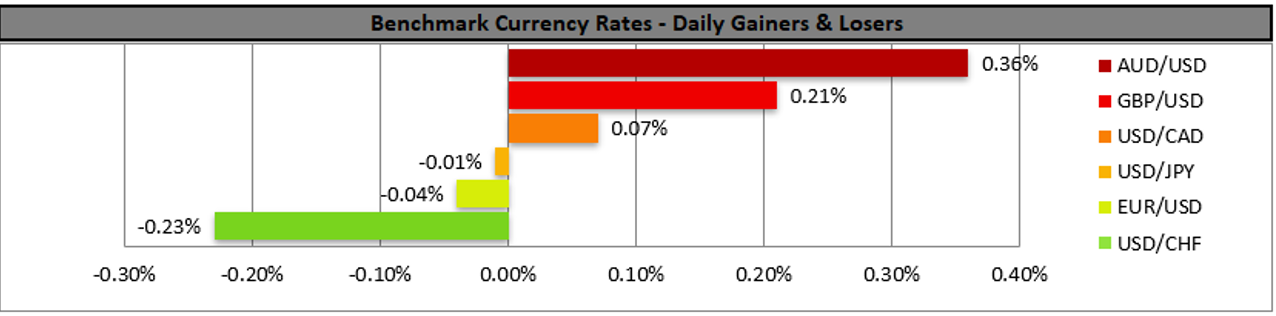
- Focus on a plethora of central bank rate decisions during the week. Fed expected to double the pace of taper. ECB to provide details on future of emergency QE. The BOE, SNB and BOJ all seen keeping policy steady.
- EUR/USD unable to sustain moves above 1.13 ahead of Thursday’s ECB meeting. where the central bank was expected to provide details on future of emergency QE.
- GBP/USD at 1.32 50 area. Markets continue to watch virus developments in the country. Over the weekend PM Jphnson noted a "tidal wave" of the Omicron coronavirus variant and expressed concern that two vaccine doses would not be enough to contain it. UK Parliament to vote on the vaccine passport on Tuesday and could see a growing rebellion within the Tory party.
- TRY currency (Lira) moved beyond the 14.60 level against US dollar for fresh record lows in the aftermath of Friday’s S&P revision of Turkey sovereign outlook to negative. TRY currency moved off its record low on reports Turkey Central Bank (CBRT) again intervened in the FX market.
Economic data
- (NL) Netherlands Oct Trade Balance: €4.0B v €5.5B prior.
- (SE) Sweden SEB Housing-Price Indicator: 43 v 44 prior.
- (FI) Finland Oct Current Account Balance: -€2.0B v +€1.2B prior.
- (DE) Germany Nov Wholesale Price Index M/M: 1.3% v 1.6% prior; Y/Y: 16.6%e v 15.2% prior.
- (RO) Romania Nov CPI M/M: 0.0% v 0.4%e; Y/Y: 7.8% v 8.2%e.
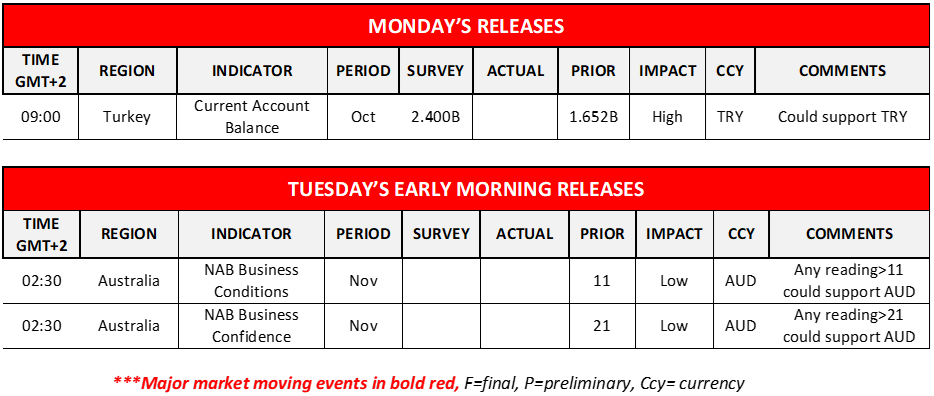
- (TR) Turkey Oct Current Account Balance: $3.2B v $2.5Be.
- (TR) Turkey Oct Industrial Production M/M: +0.6% v -0.1%e; Y/Y: 8.5% v 8.6%e.
- (ES) Spain Oct House transactions Y/Y: 22.2% v 40.6% prior.
- (HK) Hong Kong Q3 Industrial Production Y/Y: 7.8% v 5.6% prior.
- (HK) Hong Kong Q3 PPI Y/Y: -0.9% v +2.7% prior.
- (IT) Italy Q3 Unemployment Rate: 9.2% v 9.4%e.
- (CH) Swiss weekly Total Sight Deposits (CHF): 722.7B v 720.3B prior; Domestic Sight Deposits: 646.8B v 645.7B prior.
Fixed income Issuance
- (NO) Norway sold NOK6.0B vs. NOK6.0B indicated in 12-month bills; Avg Yield: 0.90% v 0.47% prior; Bid-to-cover: 1.39x v 2.36x prior.
Looking ahead
- (MX) Mexico Nov ANTAD Same-Store Sales Y/Y: No est v 11.6% prior.
- 05:25 (EU) Daily ECB Liquidity Stats.
- 05:30 ((DE) Germany to sell combined €6.0B in 3-month and 12-month BuBills.
- 05:30 (NL) Netherlands Debt Agency (DSTA) to sell €1.5-3.0B in 1-month, 3-month and 6-month bills.
- 06:00 (IL) Israel to sell bonds.
- 06:00 (IE) Ireland Oct Industrial Production M/M: No est v 3.5% prior; Y/Y: No est v 44.6% prior.
- 06:25 (BR) Brazil Central Bank Weekly Economists Survey.
- 06:30 (PT) ECB's Centeno (Portugal).
- 06:45 (US) Daily Libor Fixing.
- 07:00 (IN) India announces details of upcoming bond sale (held on Fridays).
- 07:00 (TR) Turkey to sell 2-year Bonds.
- 07:00 (IN) India Nov CPI Y/Y: 5.1%e v 4.5% prior.
- 07:20 OPEC Monthly Oil Report.
- 08:00 (UK) Daily Baltic Dry Bulk Index.
- 09:00 (FR) France Debt Agency (AFT) to sell €3.5-4.7B in 3-month, 6-month and 12-month bills.
- 16:00 (KR) South Korea Import Price Index M/M: No est v 4.8% prior; Y/Y: No est v 35.8% prior.
- 16:00 (KR) South Korea Export Price Index M/M: No est v 1.6% prior; Y/Y: No est v 25.3% prior.
- 16:45 (NZ) New Zealand Nov Food Prices M/M: No est v -0.9% prior.
- 17:30 (AU) Australia ANZ Roy Morgan Weekly Consumer Confidence Index: No est v 107.5 prior.
- 19:30 (AU) Australia Nov Business Confidence: No est v 21 prior; Business Conditions: No est v 11 prior.
- 23:30 (JP) Japan Oct Final Industrial Production M/M: No est v 1.1% prelim; Y/Y: No est v -4.7% prelim; Capacity Utilization M/M: No est v -7.4% prior.
- 23:30 (HK) Hong Kong to sell 6-month Bills.
Central Banks Need To Find A Balance Between The Uncertainty Caused By Omicron, And A High Level Of Inflation
Last week on Friday, the focus of investors was focused on the consumer price index in the United States. Consumer price inflation in the United States increased to 6.8% in annual terms, which has been the highest level during the last 39 years. However, the markets’ reaction to this news was positive for the main US indices and negative for the dollar index. Why has it happened? Inflation data was according to the forecast, so the market was waiting for these numbers. However, such a level of inflation may encourage a Federal Reserve to revise its plans regarding the tightening of monetary policy, particularly, to speed up the reduction of the QE program. This week, a meeting of the Federal Reserve will be held, where data on the interest rate and monetary policy will be updated. Central banks need to find a balance between uncertainty caused by Omicron, and a high level of inflation.
The US stock market closed with growth on Friday due to strengthening the technologies, consumer goods, and oil and gas sectors. The Dow Jones index (US30) increased by 0.60% (+3.86% for the week), the S&P 500 index (US500) increased by 0.95% (+3.60% for the week), and the NASDAQ technological index (US100) added 0.73% (+3.39% for the week). The leaders of growth among the components of the Dow Jones index were Cisco Systems (+ 2.95%), Microsoft (+2.83%), and Apple (+2.80%). Apple's capitalization is approaching 3 trillion dollars. Oracle shares jumped by 15.1% after the company reported on good results and predicted profits and revenue in the current quarter above market estimates.
Tesla ceases to accept orders on models S and model X outside North America.
The group of scientists of the University of Hong Kong and the local Chinese University said that the Pfizer vaccine was 32 times less effective against the Omicron version than other coronavirus strains.
Documents published by the FDA show that the manufacturer of drugs Pfizer registered nearly 160,000 adverse reactions to its vaccine against COVID-19 in the first months of its introduction. These reactions ranged from mild to severe forms, and 1223 of them were fatal. Most of these messages concerned people aged 31 to 50 years in the United States.
Six people died because of the collapse of an Amazon warehouse in Illinois, due to a strong tornado, which occurred at night on Friday.
The US Ministry of Finance allowed personal non-profit money transfers to Afghanistan.
European stock indices closed in the red zone on Friday. The British FTSE 100 index (UK100) fell by 0.40% (+2.38% for the week) on Friday, the French CAC 40 (FR40) decreased by 0.24% (+2.65% for the week), the German DAX index (DE40) decreased by 0.10% (+1.96% for the week), and Spanish IBEX 35 (ES35) lost 0.47% (+0.51% for the week). Statistical data from Germany showed that consumer inflation reached the maximum level for almost 30 years. Consumer prices increased to 5.2% in annual terms. The volume of industrial production of Great Britain showed a decline for the last month. Nevertheless, in annual terms, industrial production increased by 1.4%. In the UK, there is a sharp increase in Omicron cases, but there were no deaths.
For the first time since October, natural gas futures in Europe exceeded $1,300 per thousand cubic meters. At the opening of trading on Monday, growth is almost 7%.
S&P Global Ratings lowered the forecast for the sovereign credit rating of Turkey to negative, referring to the recent weakening of the lira and the growth of inflation, which create risks for the "country's economy with external borrowed capital."
The draft Iran's budget for the new year provides for oil exports per 1.2 million barrels per day. The sale price of Iranian oil is projected at the level of 53 euros per barrel, which is equivalent to 60 US dollars.
Asian markets were traded in the negative zone on Friday. Japanese Nikkei 225 (JP225) decreased by 1.00% (+1.31% for the week), Hong Kong Hang Seng (HK50) decreased by 1.07% (+2.46% for the week), and Australian S&P/ASX200 (AU200) fell by 0.42 % (+1.55% for the week). The capital influx in China has increased significantly since the beginning of December. Investors' confidence in Chinese companies has resumed.
In the commodity market, futures for lumber (+17.93%), WTI crude oil (+8.6%), Brent oil (+7.71%), sugar (+ 5.01%), and orange juice (+4.2%) showed the biggest gains by the end of the week. Futures on natural gas (-6.43%), coffee (-4.23%), palladium (-2.96%) and wheat (-2.49%) showed the biggest drop.
Main market quotes:
- S&P 500 (F) (US500) 4,712.02 +44.57 (+0.95%)
- Dow Jones (US30) 35,970.99 +216.30 (+0.60%)
- DAX (DE40) 15,623.31 −15.95 (−0.10%)
- FTSE 100 (UK100) 7,291.78 −29.48 (−0.40%)
- USD Index 96.05 -0.22 (-0.23%)
Important events for today:
- Japan Tankan Manufacturing Index (q/q) at 01:50 (GMT+2);
- Japan Tankan Non-Manufacturing Index (q/q) at 01:50 (GMT+2).
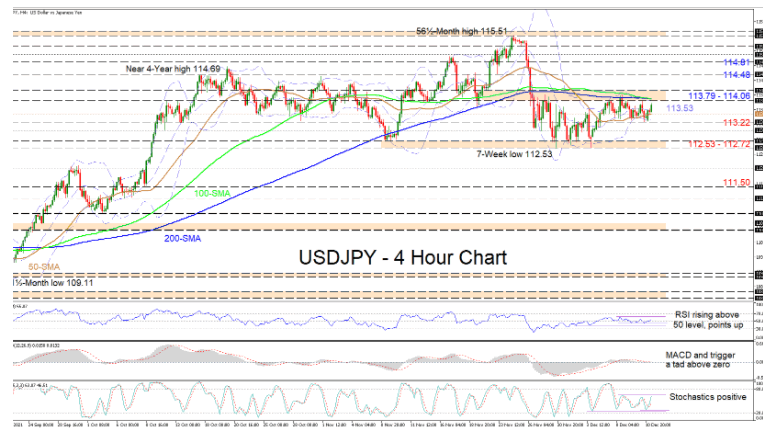
USDJPY Rangebound But Broader Bullish Structure Intact
USDJPY is trading around the mid-Bollinger band at 113.53, adhering to a two-week price consolidation that evolved after the plunge from the more than four-and-a-half-year high of 115.51. The horizontal demeanour of the simple moving averages (SMAs) is endorsing a trendless market.
Furthermore, the short-term oscillators are reflecting the recent minor increase in positive momentum but are hinting that directional impetus is presently feeble. The flattening of the MACD and its red trigger line, which are barely above the zero threshold, is confirming that directional forces have little power. On the other hand, the rising RSI and the positively charged stochastic oscillator are promoting upside price action.
Nonetheless, the squeeze in the Bollinger bands is suggesting a surge in volatility is due, which conveys the message that a larger price move is expected soon.
If buyers stay ahead, tough resistance could originate from the nearby 113.79-114.06 section, which encompasses the longer-term 100- and 200-period SMAs, and the upper Bollinger band. Successfully surpassing this fortified ceiling, the bulls may propel for the 114.48 and 114.81 inside swing lows from the later part of November before tackling the 115.00 handle.
Otherwise, if sellers take control and drive the price beneath the immediate mid-Bollinger band at 113.53 and the 50-period SMA at 113.44, they could test the lower Bollinger band and the 113.22 low. Moving downwards, the price may snag at the 113.00 hurdle before challenging the 112.53-112.72 support foundation. Should downward pressures overwhelm this critical barrier, the price could dive towards the 112.00 mark before turning its focus to the 111.50 trough, identified on October 8.
Summarizing, USDJPY is consolidating between the lower limit of 112.53-112.72 and the upper limit of 113.79-114.06. A clearer price direction is likely to evolve should the price break either below or above these confines. That said, a break below the 112.53-112.72 base may spark worries about the broader uptrend.
The Analytical Overview Of The Main Currency Pairs
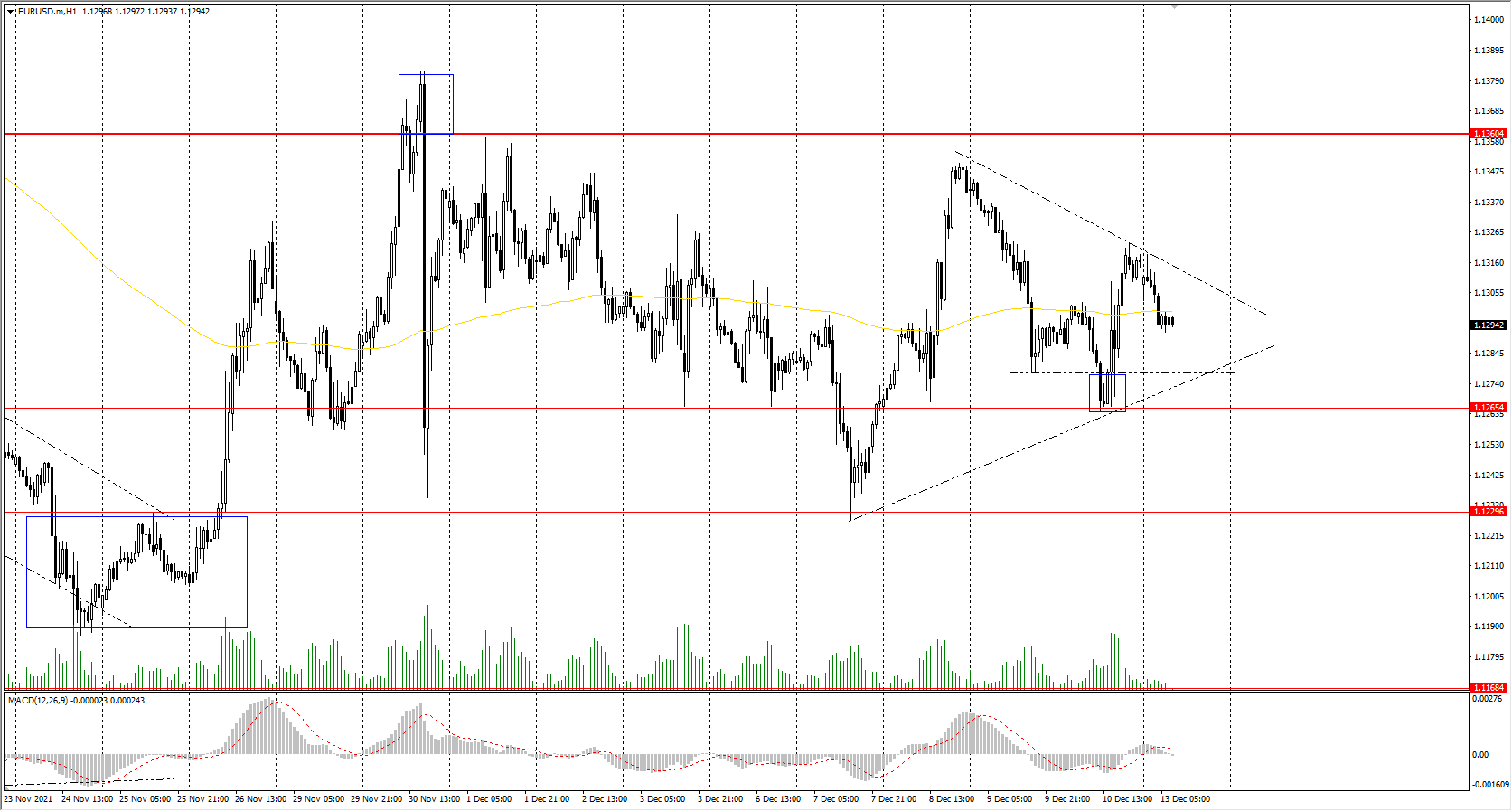
The EUR/USD currency pair
Technical indicators of the currency pair:
Prev Open: 1.1288
Prev Close: 1.1316
% chg. over the last day: +0.25%
The Euro showed some strength on Friday due to a decline in the dollar index on the US inflation data. Analysts had expected a rise in inflation, so the market reaction was against the dollar index. On the other hand, there is no fundamental reason for the Euro to strengthen right now since the ECB keeps on its soft monetary policy.
Trading recommendations
Support levels: 1.1265, 1.1230, 1.1168
Resistance levels: 1.1360, 1.1436, 1.1535, 1.1613, 1.1667, 1.1717
From a technical point of view, the EUR/USD on the hour time frame is still bearish. The price is trading in the corridor, and there is a narrowing of liquidity in the form of a pattern "triangle". The MACD indicator has become inactive. Under such market conditions, traders should consider sell positions from the priority change level of 1.1360. Buy trades can be considered on lower time frames, but only with short targets.
Alternative scenario: if the price breaks out through the 1.1360 resistance level and fixes above, the mid-term uptrend will likely resume.
The GBP/USD currency pair
Technical indicators of the currency pair:
Prev Open: 1.3217
Prev Close: 1.3269
% chg. over the last day: +0.39%
Friday's statistics showed a decline in industrial production in Great Britain. GDP figures for the quarter also decreased by 0.1%. The UK is now on lockdown, which will negatively impact the economy in future reports. A lot will depend on the Bank of England meeting this week. If the Bank of England postpones a rate hike until next year, it will negatively impact the national currency.
Trading recommendations
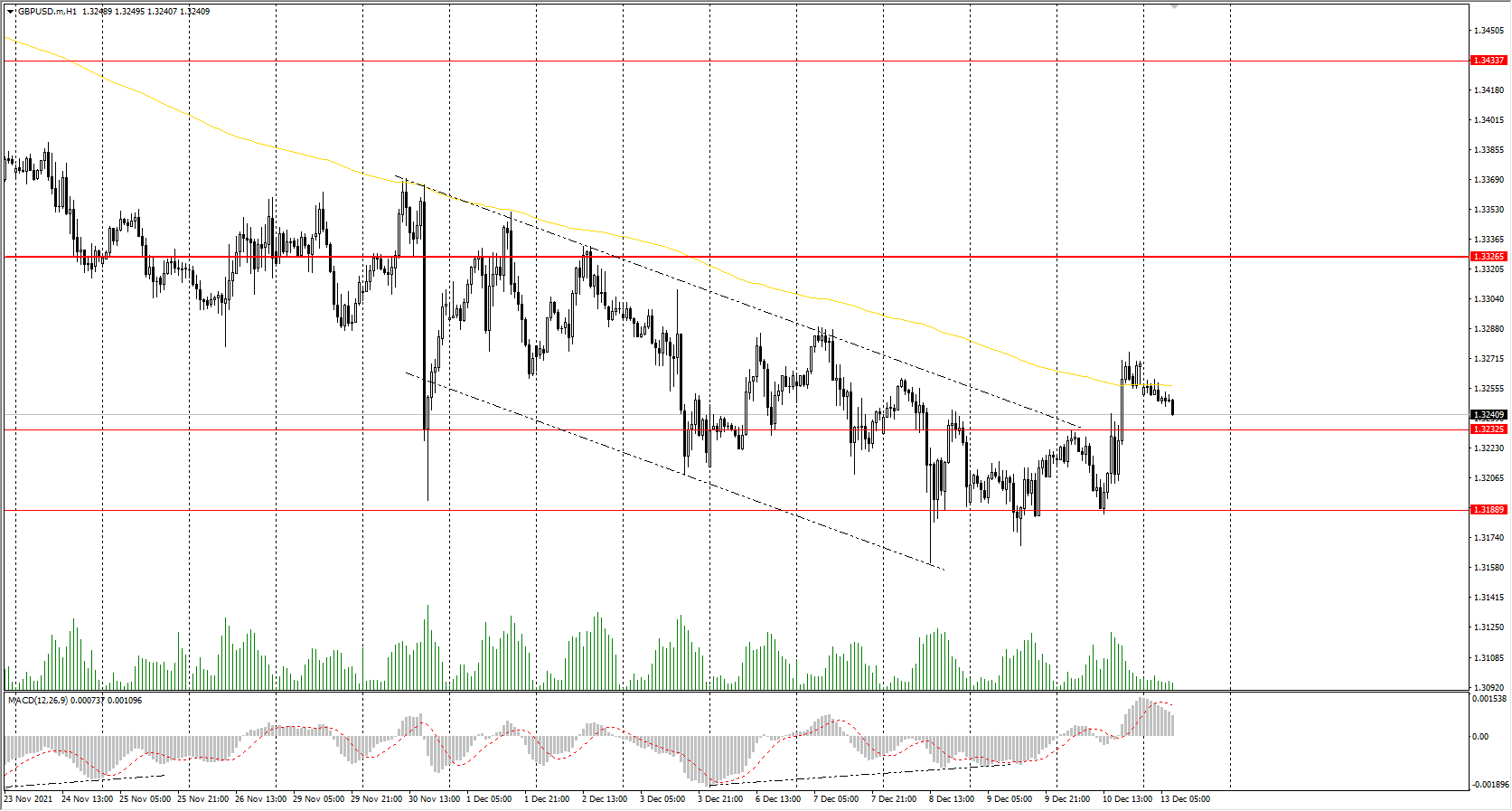
Support levels: 1.3232, 1.3188
Resistance levels: 1.3326, 1.3434, 1.3507, 1.3575, 1.3685
On the hourly time frame, the trend on GBP/USD is bearish. On Friday, the British pound showed some strength amid a decline in the dollar index and broke out the descending channel. The MACD indicator is in the positive zone. Under such market conditions, traders should consider sell positions from the priority change level. Buy trades should be considered from the support levels on lower time frames, but only with additional confirmation.
Alternative scenario: if the price breaks out through the 1.3326 resistance level and consolidates above, the bullish scenario will likely resume.
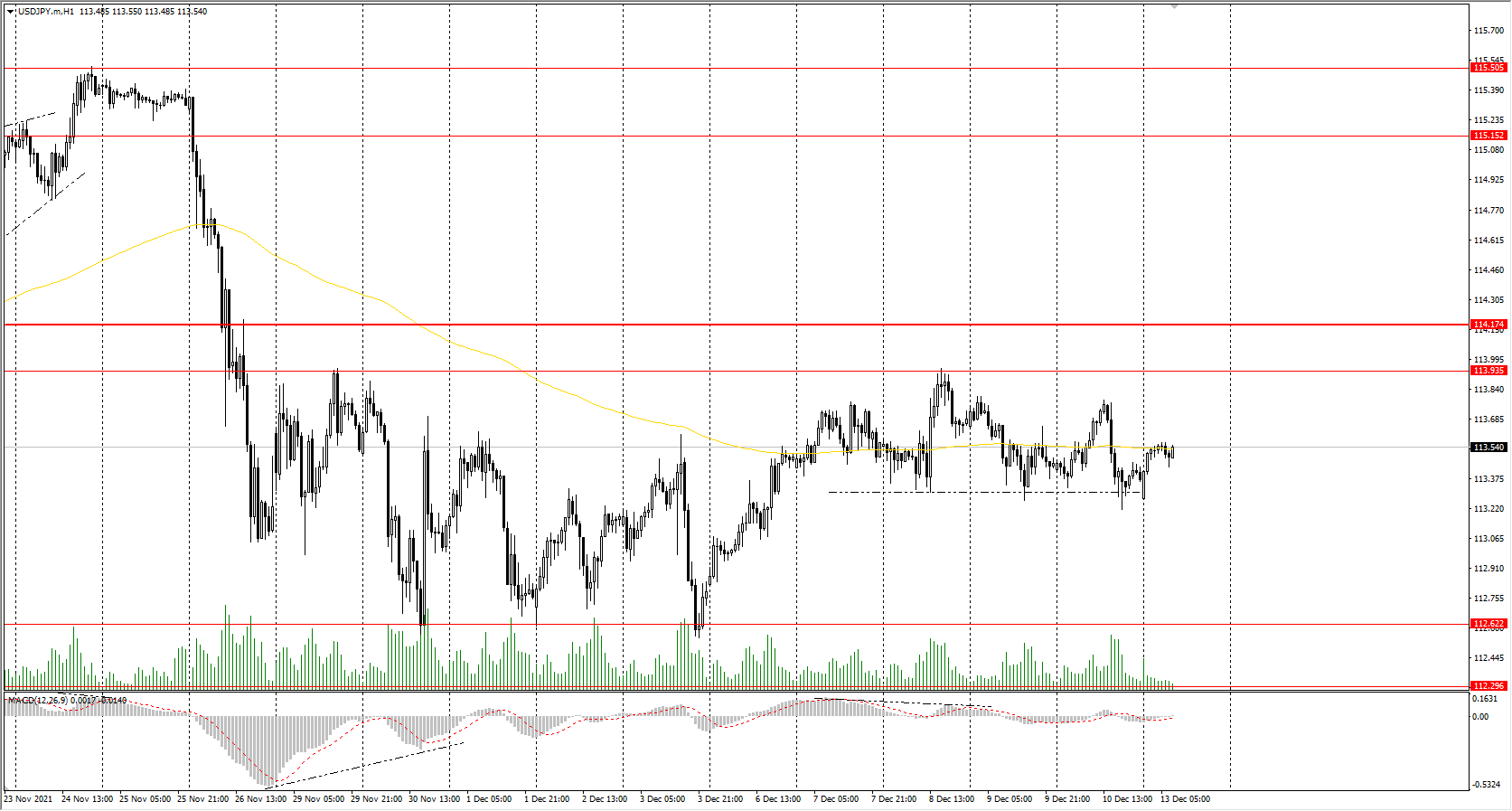
The USD/JPY currency pair
Technical indicators of the currency pair:
Prev Open: 113.42
Prev Close: 113.37
% chg. over the last day: -0.04%
The fundamental outlook for the Japanese Yen looks gloomy amid large-scale economic stimulus by the central bank of Japan. Meetings of the central banks of the USA and Japan will take place this week. If the Fed accelerates the reduction of the QE program and the Bank of Japan leaves its monetary policy unchanged, which is highly likely, USD/JPY quotes may return to a bullish trend.
Trading recommendations
Support levels: 112.62, 112.30
Resistance levels: 113.94, 114.17, 115.15, 115.50
The global trend on the USD/JPY currency pair is bearish. The price is trading in a wide corridor. The pressure of buyers is increasing and the price is approaching priority change level. Under such market conditions, traders are better to look for sell positions from the priority change level, but with additional confirmation. Buy positions should be considered from the lower border of the corridor, but with additional confirmation in the form of a buyers' initiative or after the price breakout the priority change level.
Alternative scenario: if the price rises above 114.17, the uptrend will likely resume.
News feed for 2021.12.13:
- Japan Tankan Manufacturing Index (q/q) at 01:50 (GMT+2);
- Japan Tankan Non-Manufacturing Index (q/q) at 01:50 (GMT+2).
The USD/CAD currency pair
Technical indicators of the currency pair:
Prev Open: 1.2705
Prev Close: 1.2722
% chg. over the last day: +0.13%
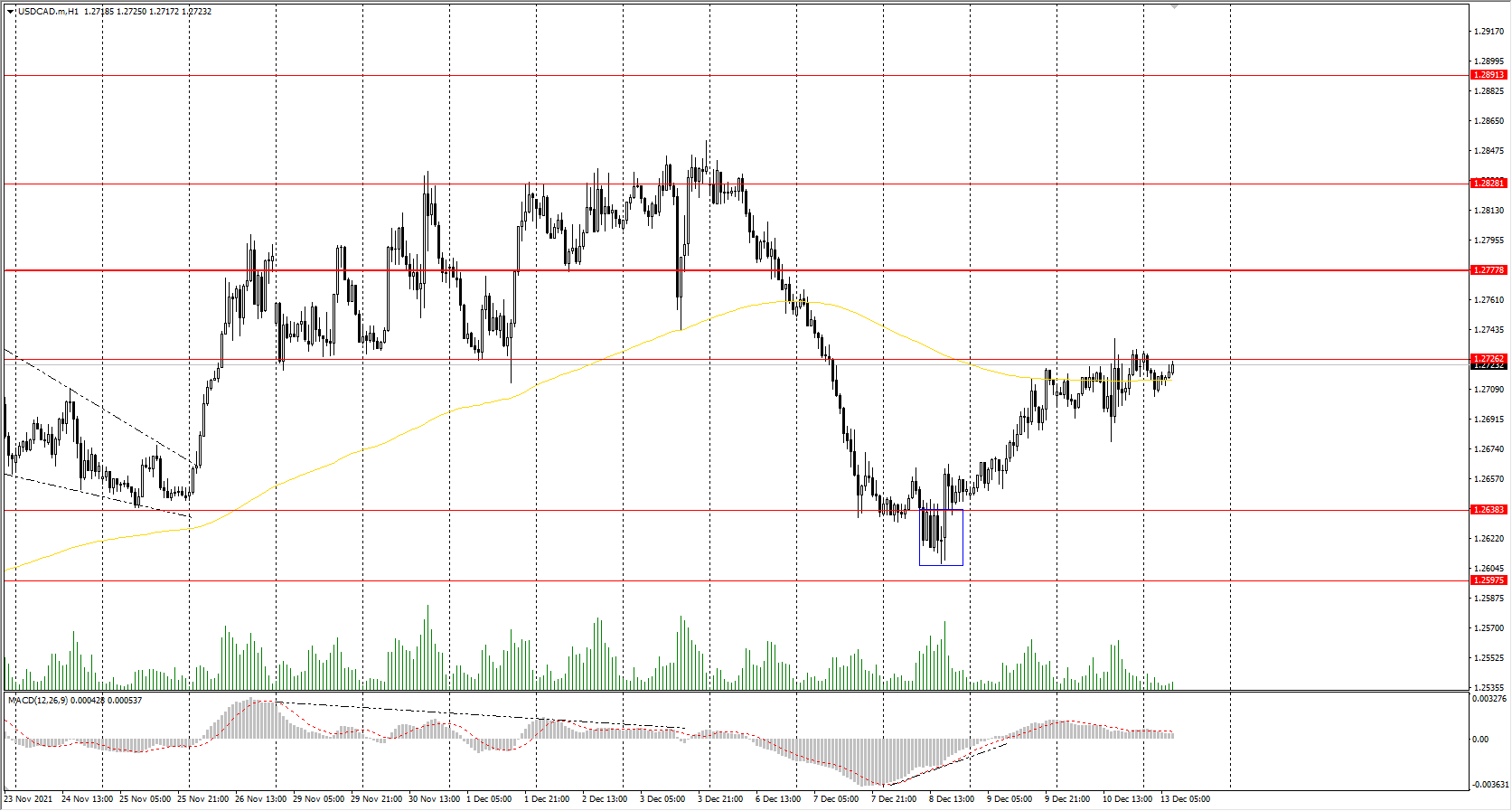
Fundamentally, both the dollar index and oil prices now tend to grow. Considering that the Canadian dollar is a commodity currency, the growth of oil prices will lead to the strengthening of the Canadian dollar, while the growth of the dollar index will lead to the reduction of the Canadian dollar. As a result, in the mid-term, traders should expect a wide flat for USD/CAD, without any single trend. However, analysts think that the Canadian dollar can rise to 1.25 against the US dollar due to the growth in oil prices.
Trading recommendations
Support levels: 1.2638, 1.2597, 1.2502, 1.2416
Resistance levels: 1.2726, 1.2776, 1.2828
From a technical point of view, the USD/CAD currency trend is bearish. The MACD indicator has become positive, and the price is trading in a narrow corridor. Under such market conditions, it is better to look for buy trades from the 1.2638 support level, but only after additional confirmation in the form of a buyers' initiative. It is better to consider sell deals from the priority change level.
Alternative scenario: if the price breaks out through the 1.2776 resistance level and fixes above, the downtrend will likely be broken.
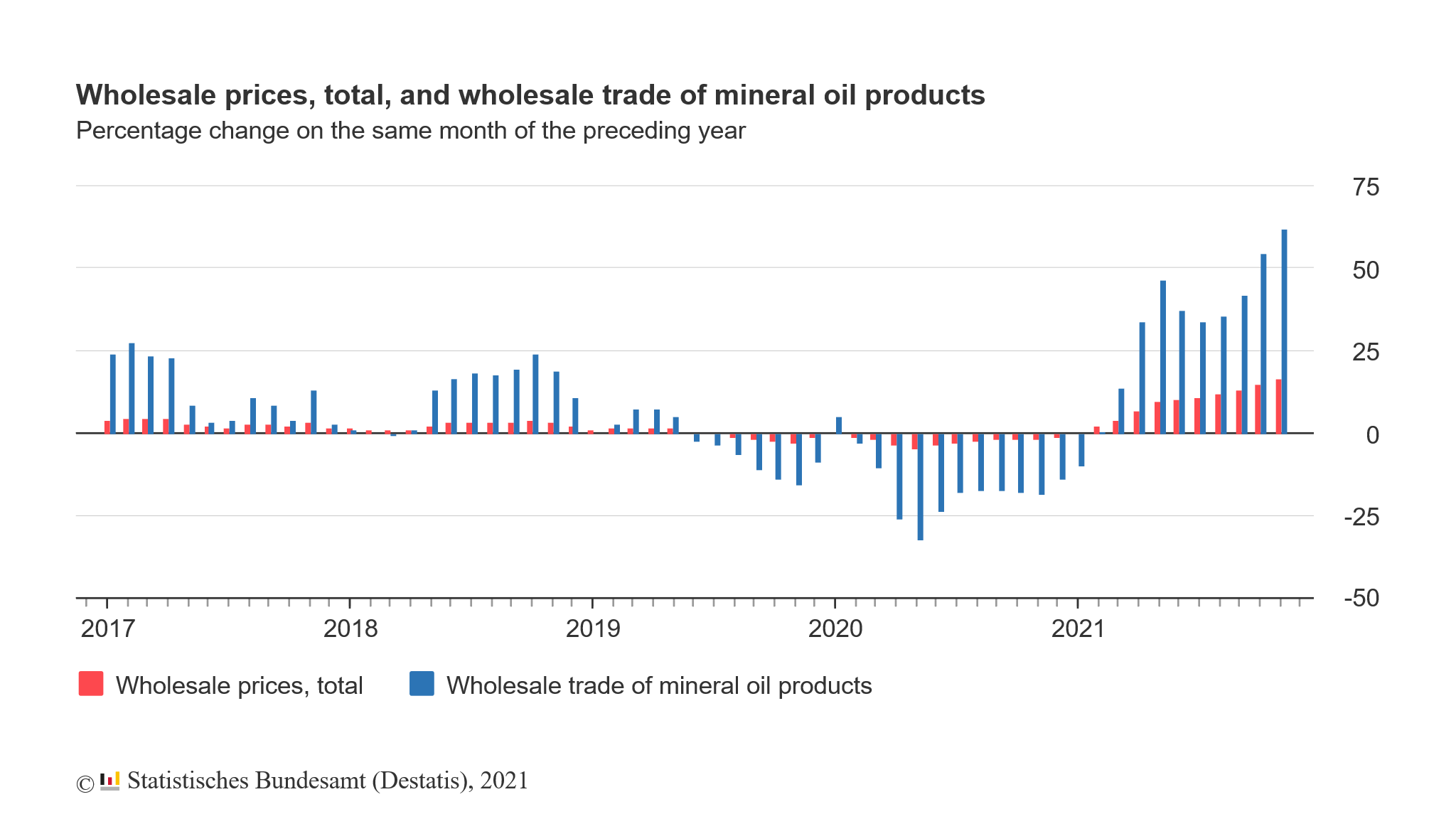
Germany wholesale price rose at record 16.6% yoy in Nov
Germany wholesale price index rose 1.3% mom, 16.6% yoy in November. The annual rate was the highest since record began back in 1962.
Destatis said: "The high rates of change for wholesale prices in annual comparison derive from increased prices for raw materials and intermediate products. The largest impact on the year-on-year price rate in wholesale trade had the increased prices for mineral oil products (+62.4%)."
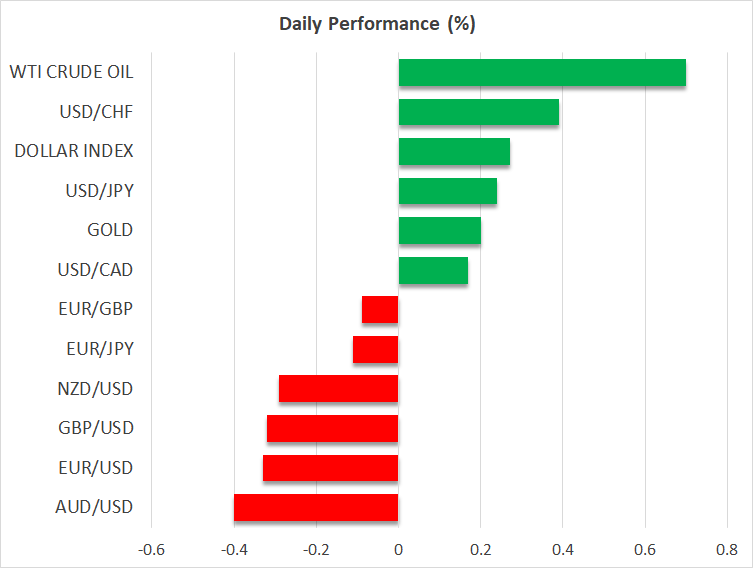
Mega Week For Central Banks Begins
- Markets relieved after US inflation report, trading like this is the peak
- Dollar pulls back alongside yields, stocks close at new records
- Massive week lies ahead, featuring five major central bank meetings
Peak inflation?
The latest inflation data out of the United States sparked a relief rally on Friday. Even though annual CPI inflation hit a four-decade high of 6.8%, investors were apparently positioned for an even hotter print after some earlier comments from President Biden that seemed to warn of something worse.
While inflation has surged at a breakneck pace this year, market participants appear to have concluded that this could be the peak as energy prices and shipping costs have started to cool down. With the supply side of the equation improving and the Fed hitting the brakes with some force while fiscal stimulus is withdrawn, inflation anxiety is quietly fading.
As such, traders went on another holiday shopping spree, buying up both equities and bonds in the aftermath. The S&P 500 rose by almost 1% to close at a new record high. Apple and Microsoft were at the tip of the spear as money managers continue to move higher along the quality spectrum, shunning riskier growth stocks now that policy normalization is on the horizon.
Dollar whipsaws, looks to the Fed
In the FX sphere, the dollar got knocked down initially as Treasury yields retreated but it has already recovered those losses. It is crucial to stress that yields fell because some inflation premium was priced out of US bonds, not because the inflation stats changed the narrative around the Fed, which meets this week.
Markets are still pricing in almost three rate increases for next year, so the crucial questions this week are whether the tapering process will be expedited and how many hikes the new dot plot will signal.
Considering just how strong the US economy is, with the labor market tight by several measures and the Atlanta Fed GDPNow model pointing to growth north of 8% this quarter, a hawkish Fed is the most likely endgame. That could keep the wind blowing in the dollar’s direction, especially if the European Central Bank fails to impress with how quickly it dials back its own stimulus.
Central bank extravaganza, gold yawns
Beyond the Fed and ECB, traders will also have to grapple with central bank decisions in the United Kingdom, Switzerland, and Japan this week. The Bank of Japan meeting will probably be another snoozer, but the Bank of England and Swiss National Bank could spark some fireworks.
The spread of the Omicron variant and the recent measures announced in the UK suggest the BoE will almost certainly keep its rate powder dry this time as well. With imminent liftoff bets receding, the pound has been hamstrung in recent weeks, unable to recover properly despite the powerful comeback in risk sentiment.
Meanwhile, the SNB will have to get creative if it wants to turn the tide of the battle in euro/franc, which is currently trading at levels last seen in 2015 after the currency peg was chaotically abandoned. The central bank doesn’t have much left in the armory, so it may resort to threats of stronger FX intervention to prevent euro/franc from heading towards parity.
The narrative that US inflation may have peaked was also reflected in gold prices, which rose only slightly despite the trifecta of a softer dollar, lower yields, and stronger risk appetite. This is in sharp contrast to last month when bullion powered higher amid a genuine inflation scare.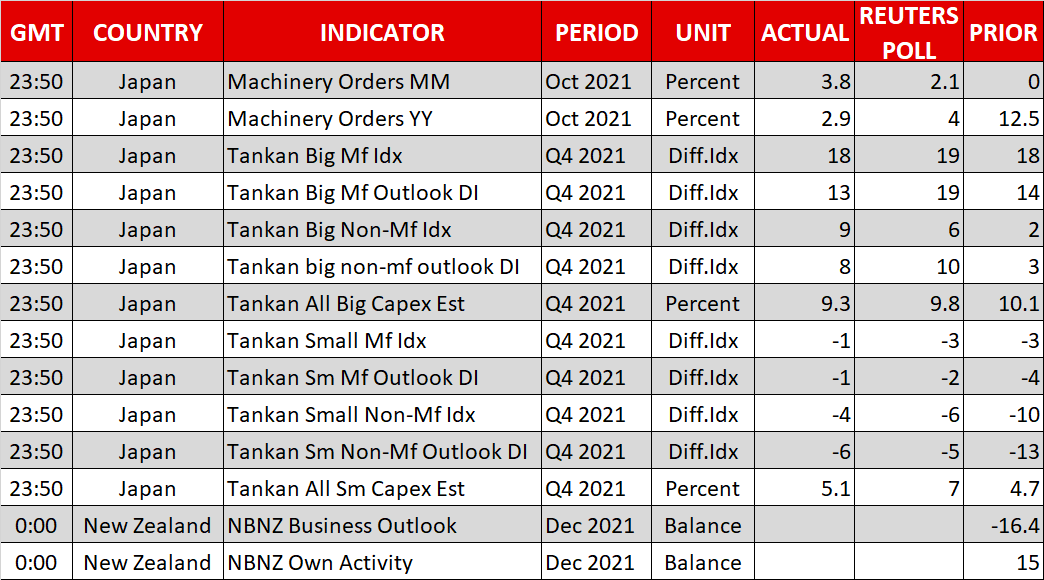
Gold Price Started An Upside Correction From The $1,770 Support
Gold price found support near $1,770 and started an upside correction against the US Dollar. The price broke the $1,775 level to move into a short-term positive zone.
Besides, there was a break above a major bearish trend line with resistance near $1,776 on the hourly chart. It is now trading above the $1,780 level and the 50 hourly simple moving average.
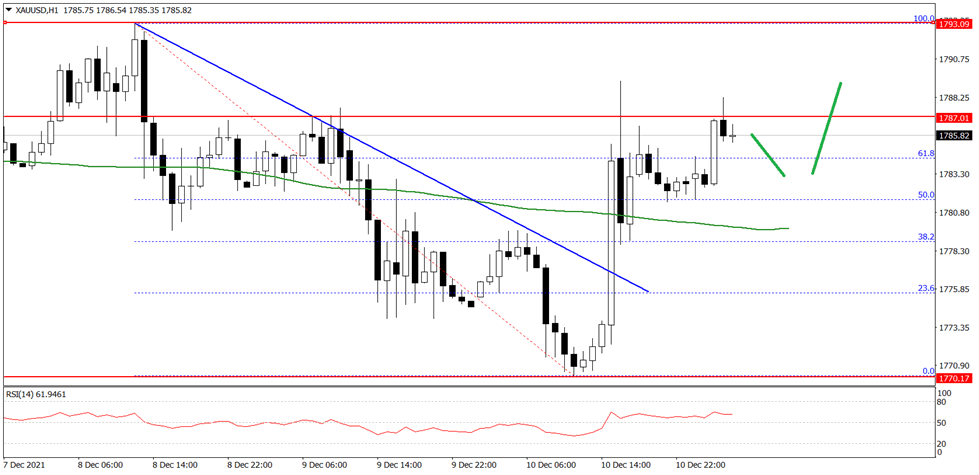
It is now facing resistance near the $1,788 level. The next main resistance could be near the $1,794 level, above which the price could attempt a break above the $1,800 level. The next major barrier for the bulls could be $1,820 on FXOpen.
The first key support on the downside is near the $1,780 level. The next major support could be $1,772, below which there is a risk of more downsides. In the stated case, the price could test $1,755.
USD Remains Stable As The Fed’s Meeting Nears
The USD remained steady against a number of its peers on Friday despite the US releasing the highest CPI rates for nearly four decades for the month of November. On the monetary front, FOMC's interest rate decision on Wednesday seems to be standing apart from a high number of central bank interest rate decisions this week and expectations that he Fed may start tightening its monetary policy earlier may have risen. Today given the light calendar after the Japanese releases we expect fundamentals to take the lead, while TRY traders may be keeping an eye out for Turkey's current account balance, especially after another CBT market intervention was reported on Friday. The pound seems to have stabilised against the USD amidst warnings from UK PM Johnson for a “tidal wave” of omicron infections in the UK and an intense effort to boost vaccination, while on the monetary front BoE's interest rate decision is due out on Thursday. Oil prices seemed to remain supported as the markets viewed the possible effects of the Omicron variant as limited on Friday. Gold's price edged higher after the release of the US inflation rates for November as the rising prices tended to increase the appeal of the shiny metal as it's being also used as a hedge against inflation. US stockmarkets were in the greens on Friday and remained there also during today's Asian session as S&P 500 reached new record highs despite the release of the 40-year record high inflation.
The US index continued to revolve around the 96.15 (S1) line. We tend to maintain a bias for a sideways motion currently given also that the RSI indicator below our 4-hour chart is near the reading of 50 implying a rather indecisive market yet the direction could alter either way. Should the bears take control over the index, we may see it breaking the 96.15 (S1) and take aim if not break the 95.60 (S2) support level. Should the bulls be in charge, we may see the USD Index aiming if not breaking the 96.65 (R1) resistance level.
GBP/USD edged higher on Friday taking aim of the 1.3280 (R1) resistance line. As the pair's price action has broken the downward trendline incepted since the 29th of October we switch our bearish outlook in favour of a sideways bias. On the other hand we note that the RSI indicator below our 4-hour chart is at the reading of 50, yet with a downward inclination. Should the selling interest for cable regain momentum we may see it breaking the 1.3160 (S1) support line and aim for the 1.2990 (S2) level. On the other hand, should the pair find fresh buying orders along its path we may see cable breaking the 1.3280 (R1) resistance line and aim for the 1.3430 (R2) level.
As for the rest of the week
On Monday no major releases are expected besides Japan's machinery orders and the Tankan indexes for Q4. On Tuesday, we note the release of UK's employment data. On Wednesday we get China's industrial output, UK's, France's and Canada's CPI rates all being for November while from Canada we also get the number of House Starts for November and from New Zealand Q3's GDP rate. On the monetary front the highlight is expected to be the release of the Fed's interest rate decision. On a packed Thursday, in the Asian session we get from Australia the preliminary PMI figures for December and November's employment data, from Japan we get the preliminary Jibun Bank manufacturing PMI figure for December as well as Novembers' trade data. In the European session we highlight the release of France's, Germany's, Eurozone and the UK's preliminary PMI figures for December while in the American session we get from the US the weekly initial jobless claims figure, the preliminary Markit PMI figures for December, the Philly Fed Business index for December and the industrial production for November. On the monetary front we highlight the release of ECBs' and BoE's interest rate decisions, yet we also note the release of SNB's and CBT's interest rate decisions. On Friday we note the release from Japan of BoJ's interest rate decision while from Germany we get Ifo Business climate for December and from the Eurozone November's final HICP rate.
USD Index H4 Chart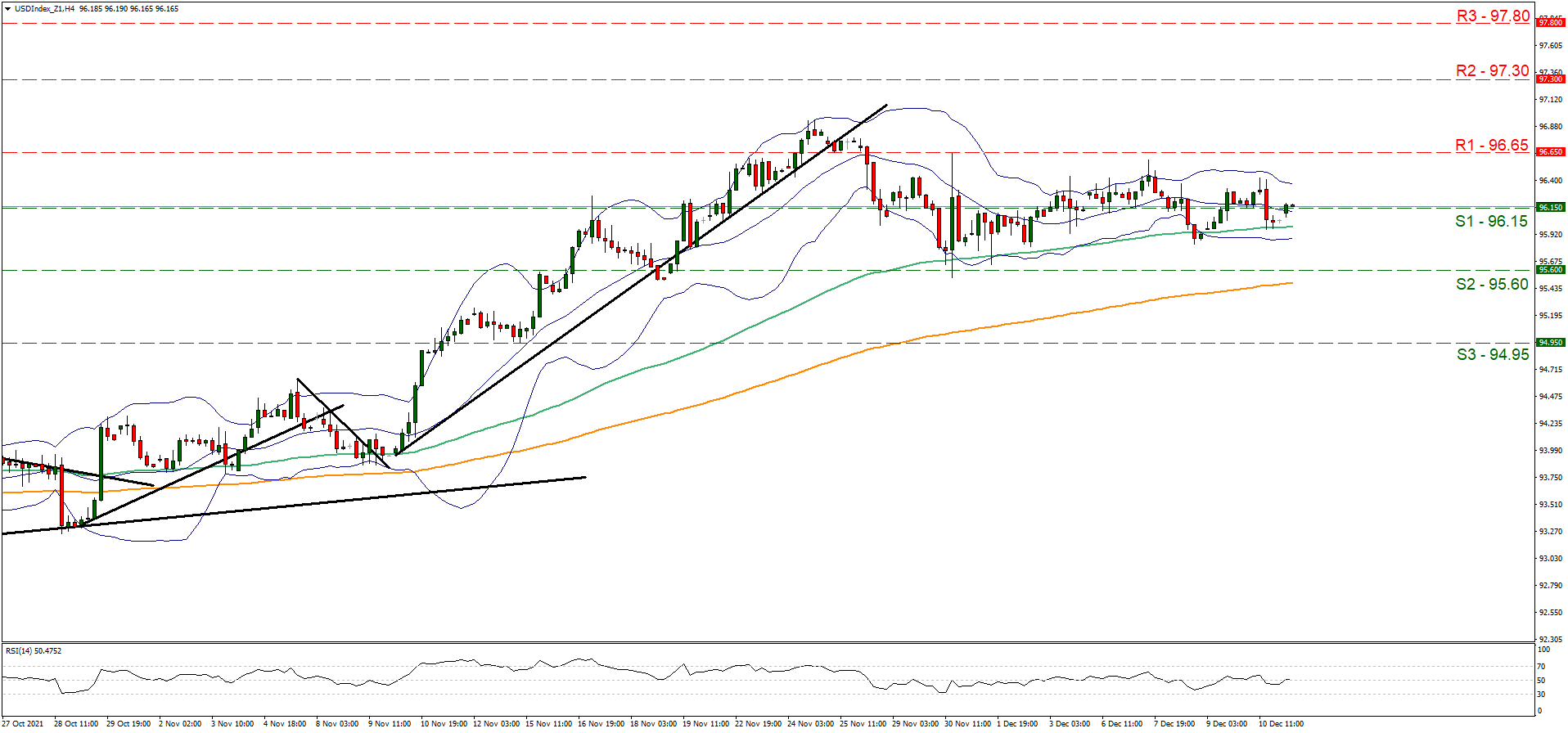
Support: 96.15 (S1), 95.60 (S2), 94.95 (S3)
Resistance: 96.65 (R1), 97.30 (R2), 97.80 (R3)
GBP/USD H4 Chart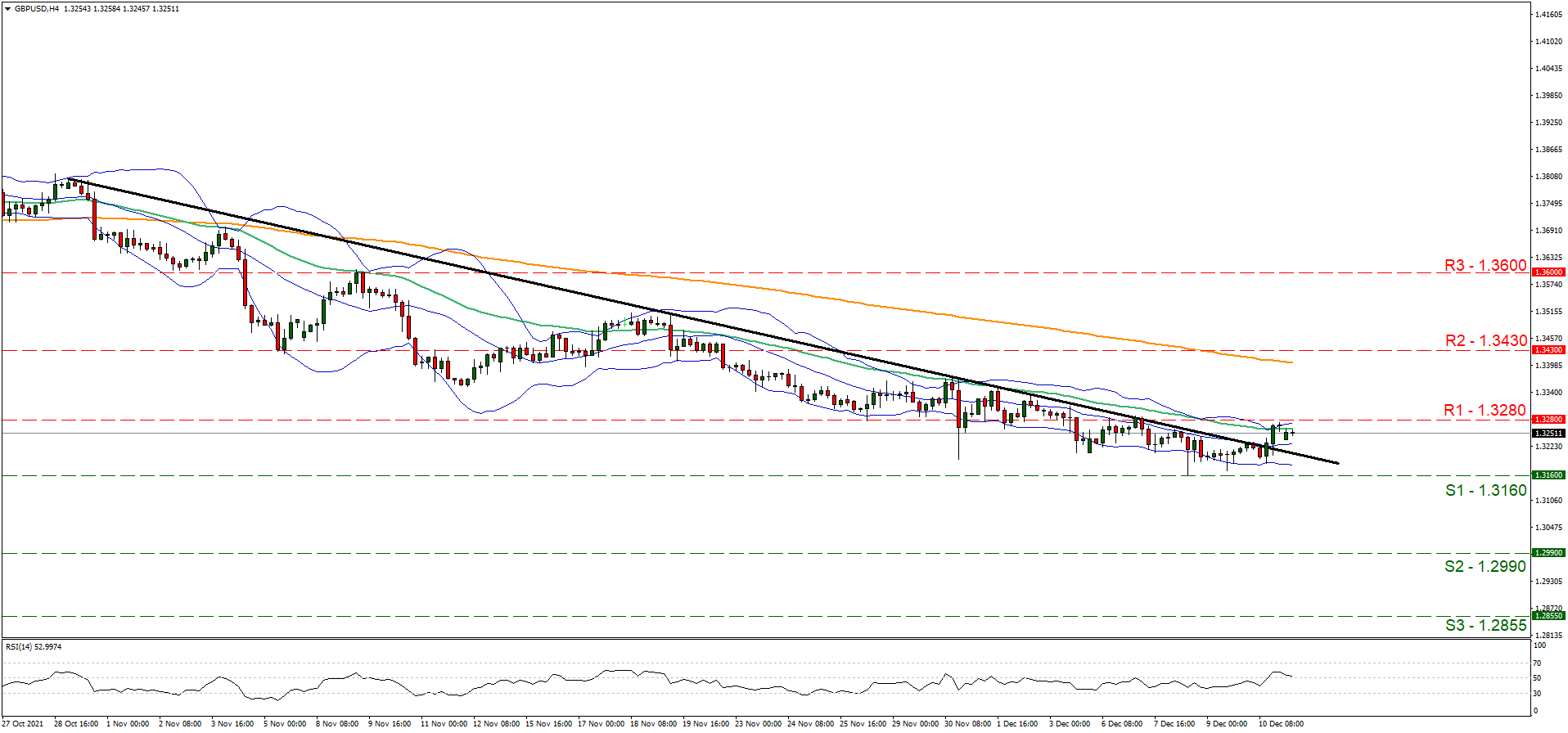
Support: 1.3160 (S1), 1.2990 (S2), 1.2855 (S3)
Resistance: 1.3280 (R1), 1.3430 (R2), 1.3600 (R3)
Daily Technical Analysis
EUR/USD
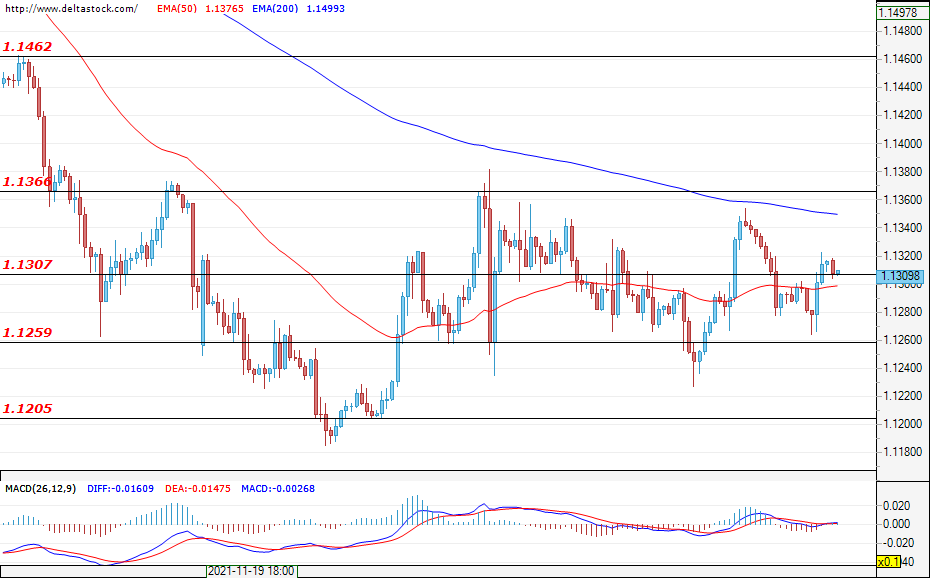
Current level - 1.1309
The European common currency gained some ground against the U.S. dollar and the pair tested the resistance zone at 1.1307. During the early hours of today`s trading, the price is hovering above the mentioned zone and, if the breach is confirmed, a test of the important target at 1.1366 would be the most probable scenario. If the latter succumbs to the bullish pressure, the positive expectations for the future path of the EUR/USD would strengthen and a rally towards 1.1462 is likely to develop. If the bears take control of the market, the first support can be found at the level at 1.1259, followed by the lower one at 1.1205. Among the important news for traders this week is the expected Fed interest rate decision (Wednesday; 19:30 GMT), as well as the European Central Bank interest rate decision (Thursday; 12:45 GMT) and the expected U.S. data for for the initial jobless claims (Thursday; 13:30 GMT).
| Resistance | Support | ||
| intraday | intraweek | intraday | intraweek |
| 1.1366 | 1.1460 | 1.1259 | 1.1205 |
| 1.1460 | 1.1500 | 1.1205 | 1.1180 |
USD/JPY
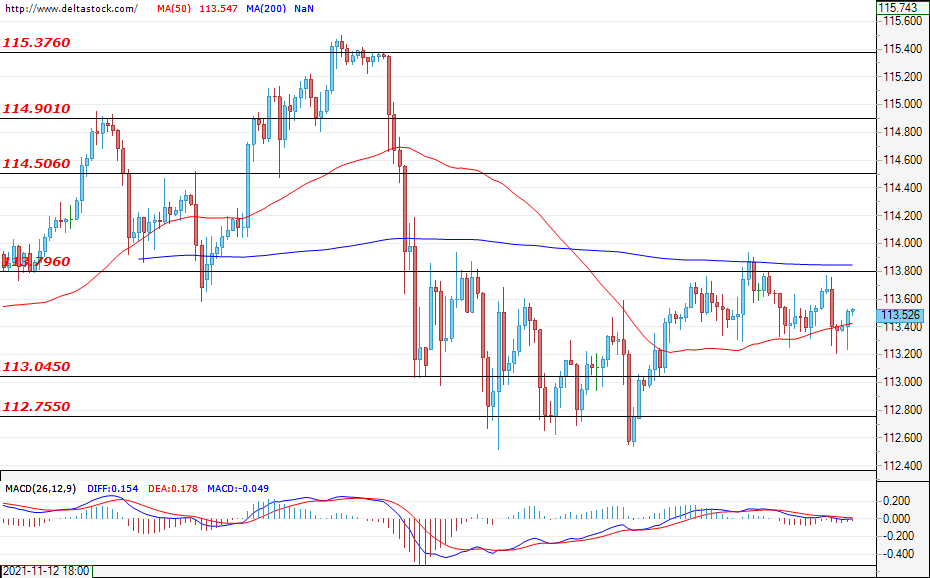
Current level - 113.52
The sentiment remains unchanged as the USD/JPY continued to trade in the zone between 113.04 and 113.79. А breach оf the latter zone could easily pave the way for a test towards the next target at 114.50, where another breach could continue the recovery towards the zone at 114.90. If the bears prevail and breach the 112.75 zone, then this would strengthen the negative expectations for a move towards the levels from September 2021 at around 112.00.
| Resistance | Support | ||
| intraday | intraweek | intraday | intraweek |
| 113.80 | 114.90 | 113.04 | 112.75 |
| 114.50 | 115.37 | 112.75 | 110.80 |
GBP/USD
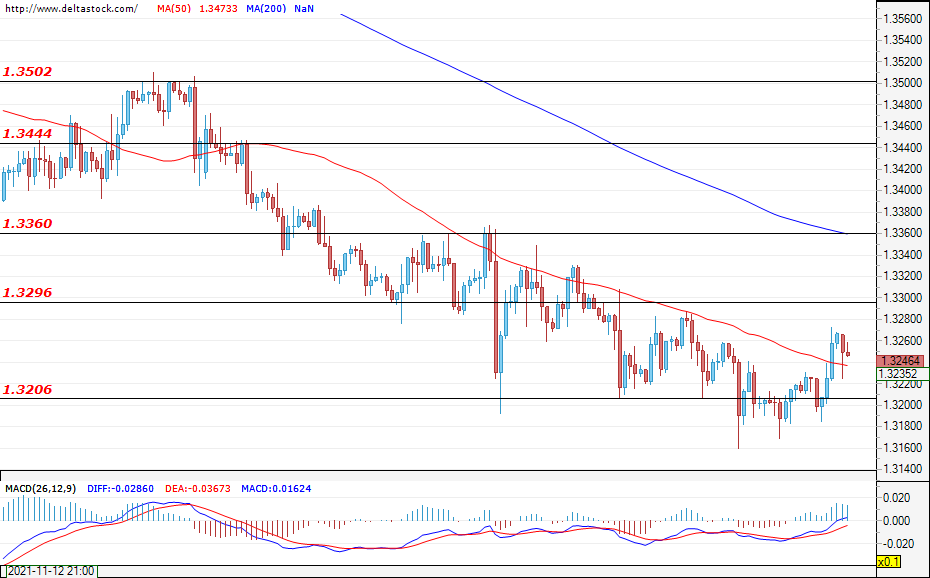
Current level - 1.3246
The support zone at 1.3206 withheld the bearish attack and, at the time of writing the analysis, the currency pair is hovering around the level at 1.3247. A successful breach of the resistance at 1.3296 could continue the correction, but only a breach of the upper target at 1.3360 would lead to a change in the current expectations of the market participants. Worse-than-expected data for the U.K. CPI (Wednesday; 05:00 GMT) could encourage the bears to re-enter the market. A breach of the mentioned zone at 1.3206 could deepen the decline and would easily lead to future losses for the pound against the dollar. The announcement of the Bank of England interest rate decision (Thursday; 12:00 GMT) should lead to an increase in the volatility of the currency pair.
| Resistance | Support | ||
| intraday | intraweek | intraday | intraweek |
| 1.3296 | 1.3440 | 1.3206 | 1.3150 |
| 1.3360 | 1.3500 | 1.3206 | 1.3060 |
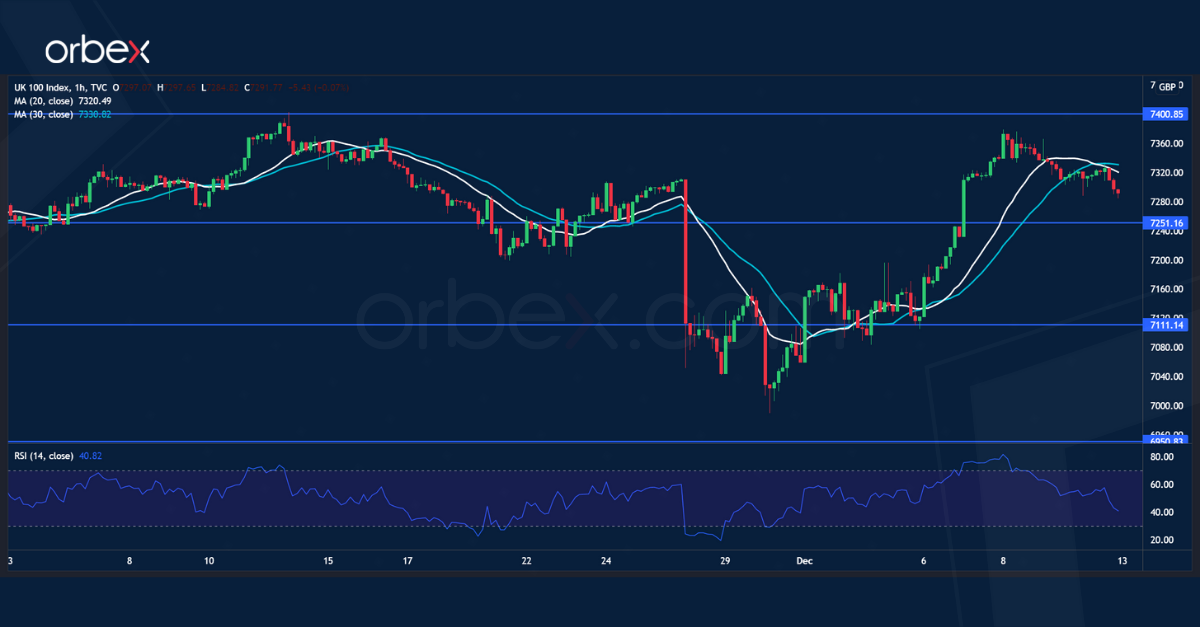
UK 100 To Test Previous High
The FTSE 100 hit a speed bump after a flat UK GDP reading in October. The psychological level of 7000 near October’s lows has offered strong support.
Sentiment turned around after a bullish close above the daily resistance at 7310. The RSI shot into the overbought area, causing a temporary pullback.
Buying interest could be expected around 7250 as sellers switch sides. A rebound may test the previous peak at 7400 and then resume the rally.
On the downside, 7110 would be the second line of defense.