Sample Category Title
UK 100 To Test Previous High
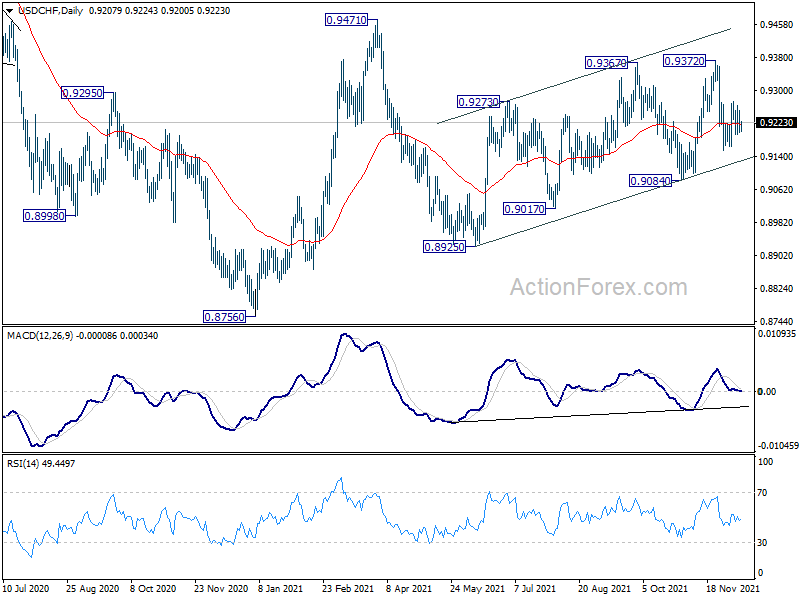
The FTSE 100 hit a speed bump after a flat UK GDP reading in October. The psychological level of 7000 near October’s lows has offered strong support.
Sentiment turned around after a bullish close above the daily resistance at 7310. The RSI shot into the overbought area, causing a temporary pullback.
Buying interest could be expected around 7250 as sellers switch sides. A rebound may test the previous peak at 7400 and then resume the rally.
On the downside, 7110 would be the second line of defense.
XAGUSD To Test Major Support
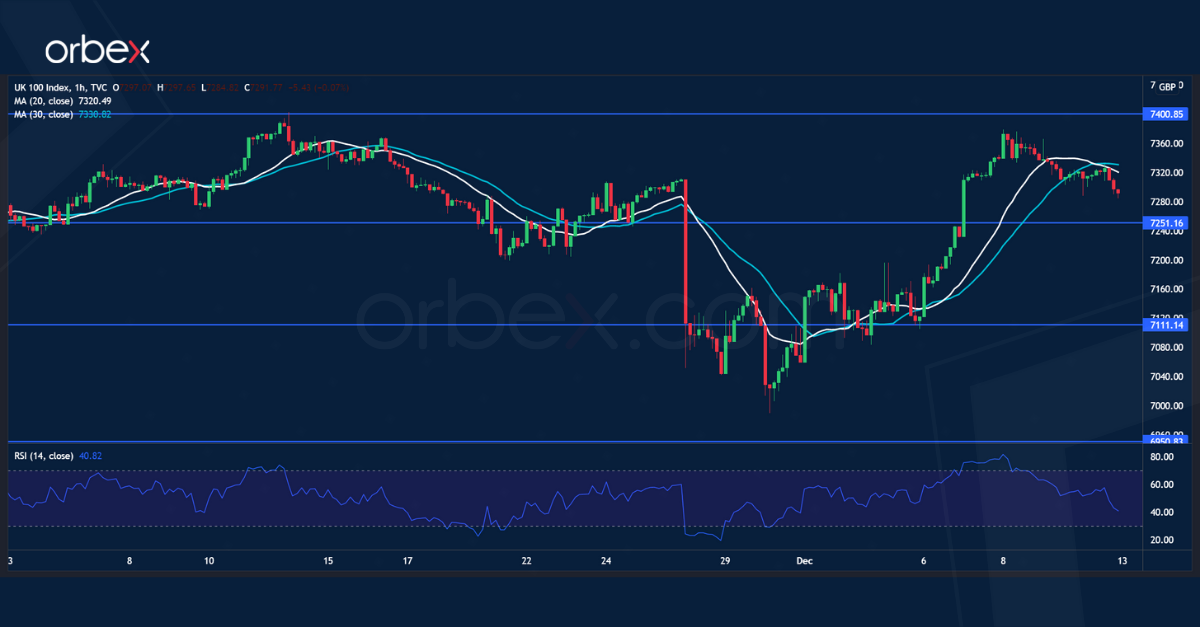
Silver bounced higher over a weaker US dollar. A bearish MA cross on the daily chart suggests that sellers are still in control of the direction.
Following a brief consolidation, a drop below the psychological level of 22.00 is another confirmation of the downtrend. The metal is heading towards September’s lows around 21.50. This is a major floor to keep the price afloat and its breach could trigger a bearish reversal below 20.00.
On the upside, buyers need to lift 22.45 before they could hope for a turnaround.
USDJPY Struggles To Rebound
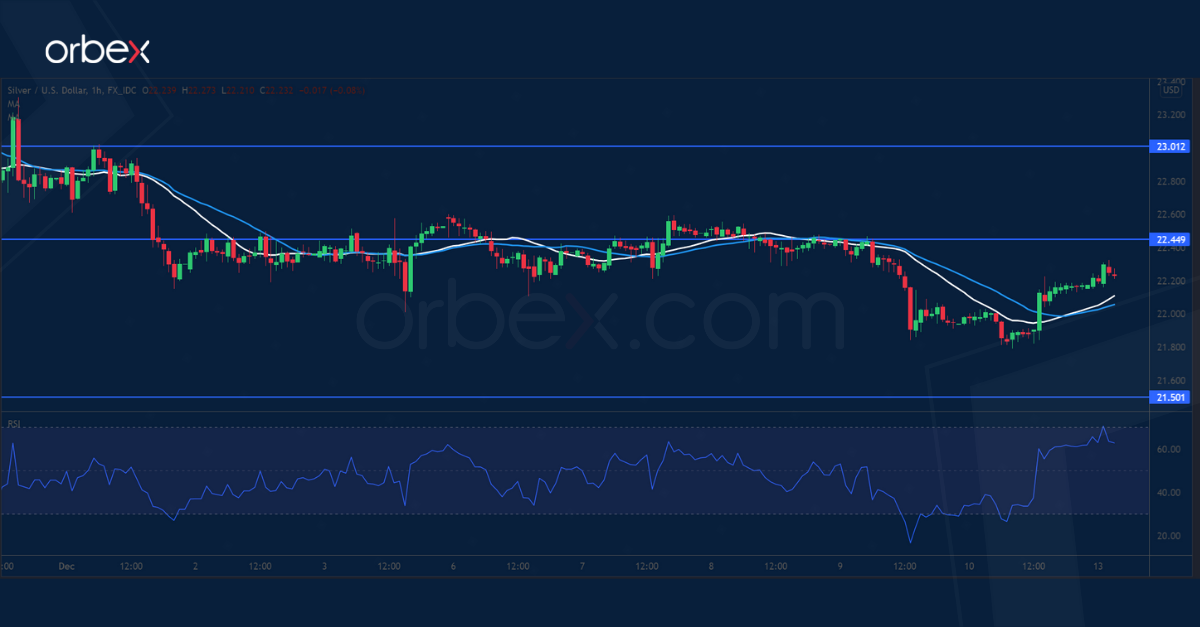
The US dollar edged lower after the inflation reading in November met expectations. The pair has found support at 112.55 while the RSI dipped into the oversold area.
Though bulls are struggling to push past 113.95, a bullish breakout would prompt sellers to jump ship, rising volatility in the process.
The previous peak at 115.50 would be the next target. The former supply zone around 113.25 has turned into a demand zone. Further weakness could send the dollar to revisit the said support.
Gold Prices Muted Below 1,800 Again, Indicators Suggest Bullish Bias
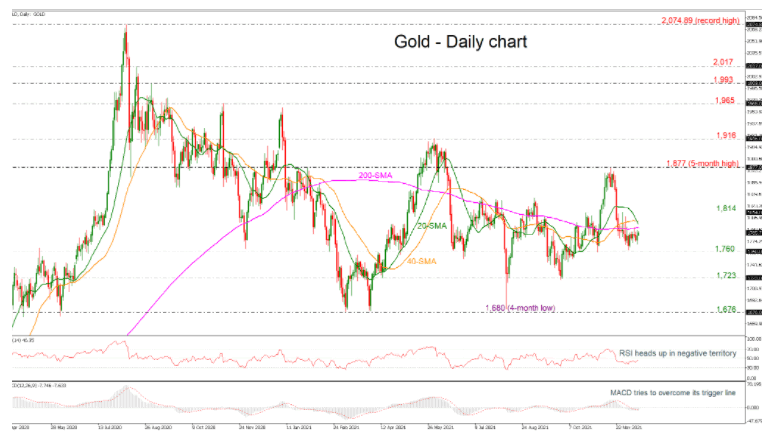
Gold prices are moving sideways within the 1,760 support level and the flat 200-day simple moving averages (SMAs) in the short-term.
The commodity is still finding strong resistance at the 1,800 handle and the technical indicators are suggesting a neutral-to-positive bias at the moment. The RSI indicator is pointing upwards in the negative region, while the MACD is trying to overcome its trigger line.
In the positive scenario where the precious metal snaps the 200-day SMA at 1,793 and closes above the 1,800 psychological mark, the next target would be the 1,814 resistance. Running higher, the bulls will need to rise towards the recent peak of 1,877.
Should the 1,760 support crack, the price could initially test the 1,723 level before heading towards the 1,676 low.
In the medium-term, gold is maintaining a neutral trend, resting between 1,916-1,676.In a nutshell, even though gold has held up above 1,760, it hasn't shown any clear signs that it is going to move up. This means it is still vulnerable to downturns. A fall below the boundary could push the price to 1,723.
US Dollar Holds Steady As Focus Shifts To The Fed Decision
The US dollar was relatively unchanged against other currencies as investors reflected on the latest US inflation numbers and the flattening yield curve. Data published by the Bureau of Labor Statistics (BLS) on Friday showed that the country’s inflation rose from 6.2% in November to 6.8% in November. This was the highest level it has been in a few decades. Excluding food and energy prices, inflation rose by almost 5%. The focus for the US dollar will be the upcoming Federal Reserve interest rate decision as the yield curve flattens.
US futures tilted upwards on Monday morning as the focus shifted to the Federal Reserve decision. Analysts expect that the bank will continue reducing the amount of money it is printing through its quantitative easing program. The bank will also signal that it will hike interest rates in 2022 in a bid to deal with inflation. Stocks will also react to key companies that are scheduled to publish their results this week. For example, Rivian, the electric pick-up company will publish the first earnings as a public company. Also, Lennar Corp will publish its results this week. Its results are watched closely because it is a leading homebuilder. Other companies that will publish their results are FedEx and Adobe.
The euro and sterling were also unchanged ahead of key economic data and central bank decisions scheduled for this week. The Bank of England (BOE) will publish its decision on Thursday. Analysts expect that the bank will sound a bit cautious because of the Omicron variant. The British pound will also react to key numbers like employment, inflation, and retail sales. The European Central Bank (ECB) will also meet this week.
EURUSD
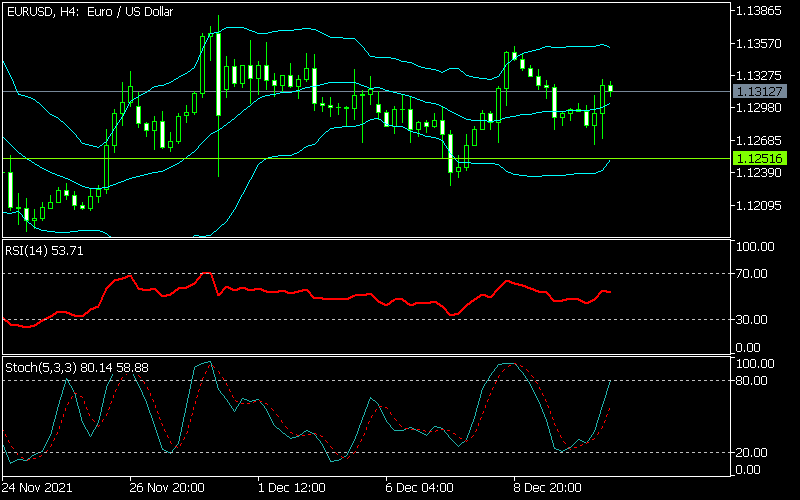
The EURUSD pair held steady after it rose following the release of the latest US inflation data. The pair is trading at 1.1312, which is slightly above last Friday’s low at 1.1267. On the four-hour chart, the price is along the upper side of the Bollinger Bands. It also moved slightly above the 25-day moving average while the Relative Strength Index (RSI) and Stochastic have moved upwards. Therefore, the pair will likely pull back as focus shifts to the FOMC decision.
USDCHF
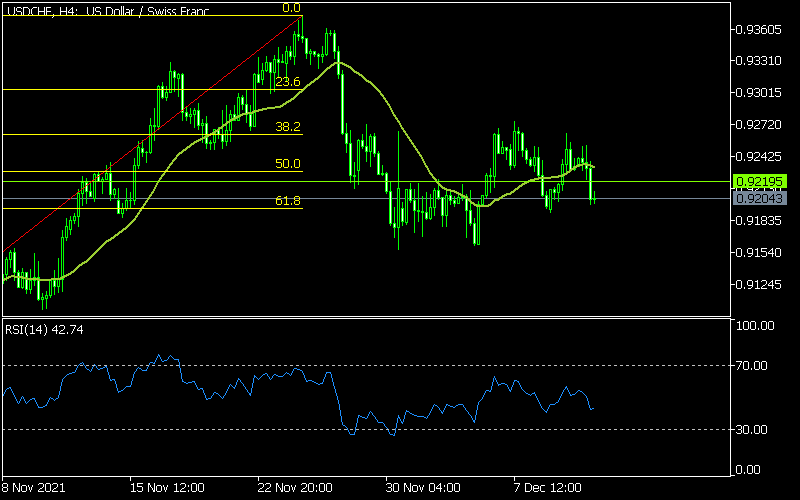
The USDCHF pair declined after the US inflation numbers. Now, the focus shifts to the upcoming Fed and Swiss National Bank (SNB) decision. It is trading at 0.9200, which is lower than last week’s high of 0.9273. On the four-hour chart, the pair moved above the 61.8% Fibonacci retracement level. It is also slightly below the 25-day moving average. Therefore, the pair will likely resume the upward trend ahead of the two central bank decisions.
AUDUSD
The AUDUSD pair is trading at 0.7170, which is slightly below the key resistance at 0.7187. On the four-hour chart, the pair has formed a small double-top pattern. It is also between the upper and middle lines of the Bollinger Bands. The pair is above the 25-day moving average. Therefore, because of the double-top pattern, the pair will likely have a pullback.

The Dollar Struggled For Direction With High But At-Consensus CPI
Markets
All eyes were on the US Friday. Michigan consumer sentiment in December barely recovered from a 10-year low to 70.4, slightly more than the 68 expected. The survey showed inflation remains a top worry for US consumers and data earlier on the day showed rightly so. US November CPI quickened from 6.2% to 6.8% y/y (4.6% to 4.9% in core measures), spot on consensus. Some anticipated an even higher rise, causing a small correction at the short end of the yield curve in particular. US yield changes ranged from -3.3 bps (2y) to -1.5 bps (10y). German Bunds traded listless ahead of the weekend. Yields added about 1 bp across the curve. US stocks inched higher with the S&P500 (+0.95%) closing at a new all-time high. The dollar struggled for direction with high but at-consensus CPI. A benign risk environment and UST outperformance eventually sent EUR/USD just north of 1.13. DXY held steady above 96. UK production failed to leave a mark on GBP trading last Friday. Markets were much more focused on what the Bank of England is to decide this week, causing sterling inertia. EUR/GBP gradually drifted south, finish at 0.853 from 0.854.
Asian markets trade quietly. Equities advance 0.5% on average. Japan's Q4 Tankan showed confidence especially in the services sector improving. The outlook was still lower compared to the current conditions though, with omicron a reason for concern. The Japanese yen trades mixed this morning. China's PBOC fixed the yuan again at a weaker-than-expected level. USD/CNY eases nevertheless to 6.36, erasing half of Thursday's boost. The dollar does strengthen against most G10 peers. EUR/USD again drops sub 1.13. Core bonds erased (much of) early weakness.
We don't expect much for today. Not only because the eco calendar is already depleted but more so due to the central bank avalanche this week. Uncertainty is even more elevated than usual. It's a given the Fed on Wednesday will increase the taper pace to pave the way for faster rate hikes, but how many will the new dot plot suggest? The jury is still out whether the Bank of England Thursday will use the omicron cover for kicking the can further down the road. Markets are in a 50-50 split. The ECB on the same day may or may not uncover the details of monetary policy after PEPP ends in March next year. News agencies Bloomberg and Reuters each ran their stories, citing sources, on what's being discussed. Testament to the uncertainty is how little markets reacted on both. Such indecisive trading (in core bonds, euro, dollar) will likely remain ahead of the first major event on Wednesday. For sterling, tomorrow's jobs report is definitely worth mentioning as the labour market was cited as a key factor in the BoE's assessment.
News headlines
Czech National Bank board member Holub argued that the central bank should hike interest rates by more than 25 bps at least at its next two meetings (Dec 22 & Feb 3). The policy rate currently stands at 2.75%. Holub said in a debate on TV that the peak rate could be as high as 4% during spring, that's above the CNB's central forecasts dating back to November. He is worried that the inflation peak could reach 8% at the start of next year, again above current forecasts. November CPI numbers were released last Friday and showed inflation running at 6% Y/Y. The CNB wants to avoid high inflation from becoming anchored over the long term, hence the aggressive tightening cycle. EUR/CZK extends its decline in the 25.20/25.80 trading range, currently changing hands near 25.35. In Poland, NBP member Hardt called for another 50 bps rate hike in January (to 2.25%) in order to help stem inflation. Hardt backed calls from colleagues by saying that he wouldn't mind a stronger currency. PLN remains historically weak at EUR/PLN 4.62.
Rating agency S&P cut the rating on the Turkish B+ rating from stable to negative. S&P considers that the broader impact of recent volatility on Turkey's economic outlook remains highly uncertain. In addition, it can't exclude additional rate cuts. Its base scenario doesn't include capital controls to stem the lira crisis. Turkey is rated one notch better at Fitch BB-; negative outlook) and worse at Moody's (B2; negative outlook). The Turkish closed at a new all-time low against the euro on Friday (EUR/TRY 15.76) despite a third attempt via FX interventions to stop the rot.
Rising Tensions Between Russia And The West
Market movers today
- The week is starting out quietly with regard to economic releases.
- Overnight we get Chinese industrial production and retail sales, which are expected to show a modest moderation in the growth rate relative to November last year.
- This week central banks will be in focus with the Fed meeting on Wednesday, followed by ECB, Norges Bank, Bank of England and the Switzerland National Bank on Thursday while Bank of Japan is rounding off the week on Friday morning.
The 60 second overview
Tensions between Russia and the West over Ukraine remains high. Over the weekend, Biden warned Russia that it would face "devastating" economic consequences if it were to invade Ukraine. Biden's warning echoed a joint statement from the G7 foreign ministers that warned Russia to de-escalate its activities around Ukraine or face massive consequences. Among the actions being contemplated are sanctions targeting Russia's biggest banks and its foreign-exchange access. Furthermore, Germany's new government, which includes the Green party, has come under pressure to link the fate of the Nord Stream 2 pipeline to Russia backing off Ukraine.
Equities: The strong trading week was concluded on a mostly solid note. Improving inflation data (more below) helped boost the initially sour risk appetite on Friday. European markets gradually rose during the session, closing moderately lower and US markets higher. The negative correlation between yields and equities re-emerged, with growth- and defensives leading markets higher, helped by lower yields. Tech (Apple) and consumer staples were among the best performers, while banks lagged. S&P closed up 1%, Nasdaq 0.8%, Dow 0.6% and Russell 2000 -0.4%. VIX moved south of 20. Tech is driving gains in Asia this morning as well. US futures are pointing slightly higher.
FI: Friday's price action was a story of two themes. In the morning it was mostly a waiting game, and after the US CPI figure it resulted in a risk on/spread tightening move. Media headlines of a supplementary budget in Germany of EUR60bn (yet it was already floating markets last month) may have weighted on the underperformance in Germany. Peripheral spreads tightened around 4bp.
FX: The end to last week was characterised by a relief setback to the USD post US inflation while some of the more risk- and commodity sensitive currencies in RUB, MXN and GBP gained. EUR/USD is now back above 1.13, EUR/SEK remains in the mid 10.20s while EUR/NOK hovers above 10.10.
Credit: CDS indices outperformed cash bonds on Friday where iTraxx Xover tightened 1.8bp and Main 0.5bp while HY and IG bonds widened 0.5bp and 1bp, respectively.
Nordic macro
Swedish markets will await November inflation released Tuesday and the big Prospera survey on Wednesday.
EUR/USD Daily Outlook
Daily Pivots: (S1) 1.1280; (P) 1.1302; (R1) 1.1339; More...
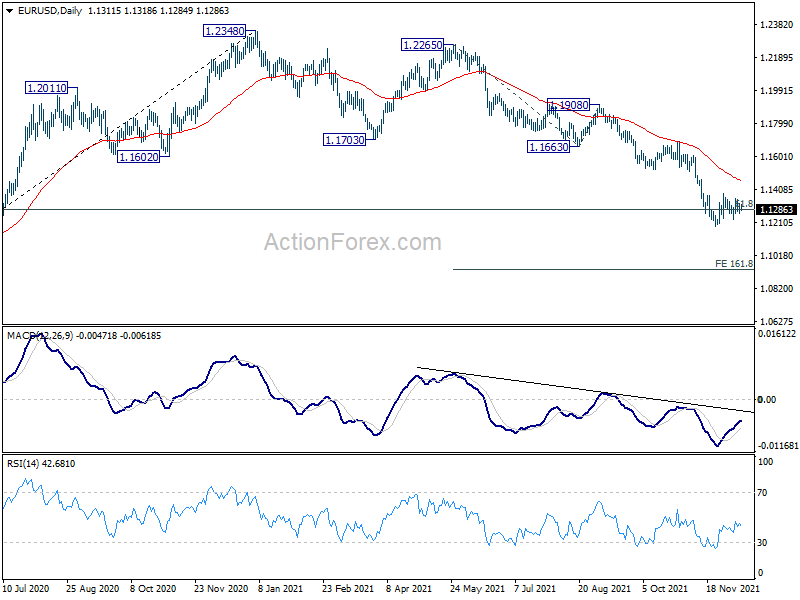
Range trading continues in EUR/USD and intraday bias remains neutral first. Downside breakout is mildly in favor with 1.1382 minor resistance intact. On the downside, break of 1.1185 will resume larger fall from 1.2348. Next target is 161.8% projection of 1.2265 to 1.1663 from 1.1908 at 1.0934. On the upside, however, firm break of 1.1382 resistance should confirm short term bottoming at 1.1186. Intraday bias will be turned back to the upside for 55 day EMA (now at 1.1462).
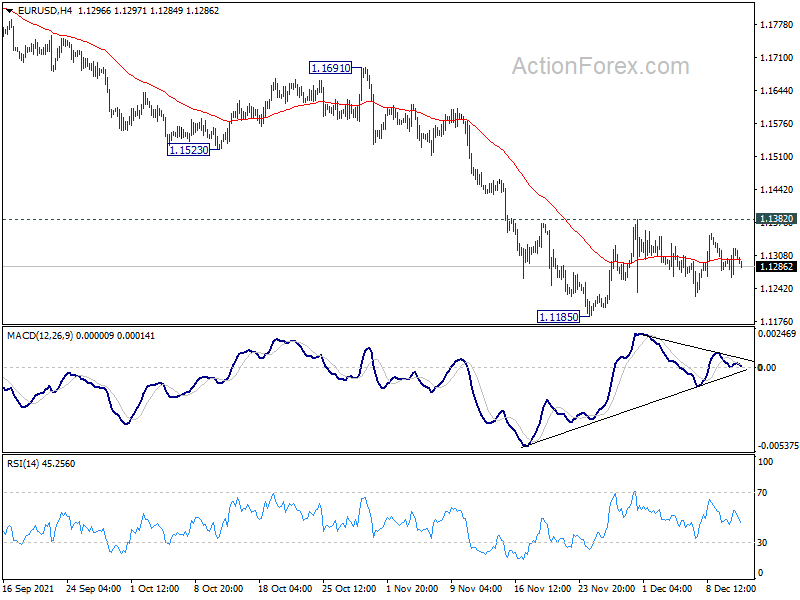
In the bigger picture, there are various ways of interpreting the fall from 1.2348 (2021 high). It could be a correction to rise from 1.0635 (2020 low), the fourth leg of a sideway pattern from 1.0339 (2017 low), or resuming long term down trend. In any case, outlook will now stay bearish as long as 1.1703 support turned resistance holds. Sustained break of 61.8% retracement of 1.0635 to 1.2348 at 1.1289 would pave the way back to 1.0635.
GBP/USD Daily Outlook
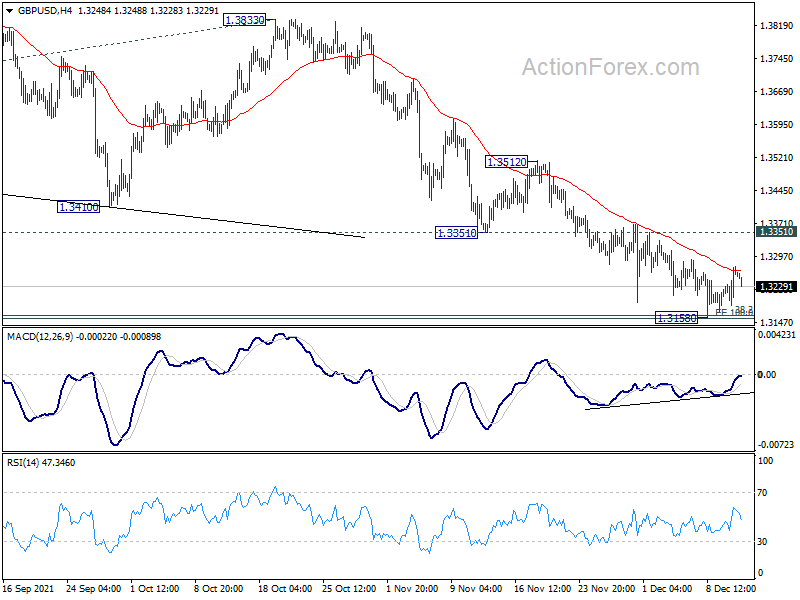
Daily Pivots: (S1) 1.3209; (P) 1.3242; (R1) 1.3298; More...
Range trading continues in GBP/USD and intraday bias remains neutral for now. Focus stays on 1.3164 medium term fibonacci level. Sustained break there will carry larger bearish implication, and target 161.8% projection of 1.4248 to 1.3570 from 1.3833 at 1.2736. On the upside, though, break of 1.3351 support turned resistance will indicate short term bottoming, and turn bias back to the upside for 1.3512 resistance next.
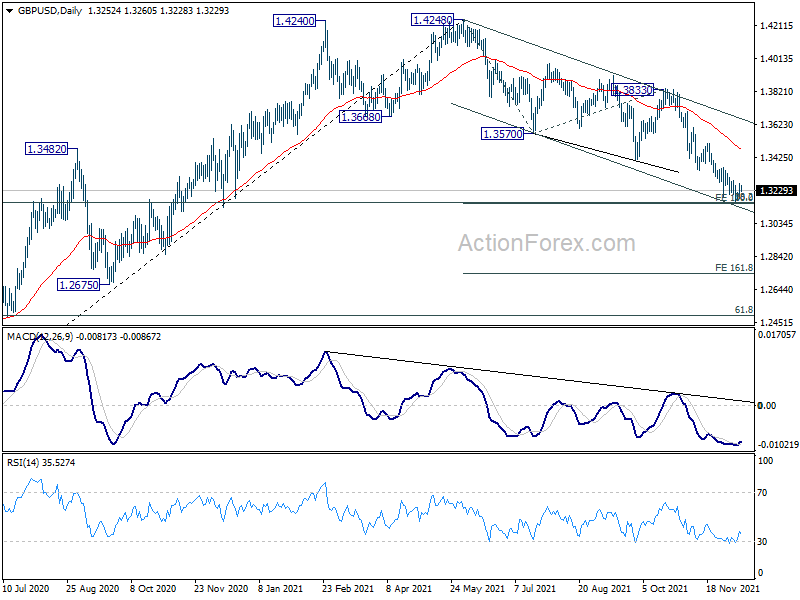
In the bigger picture, immediate focus is now on 38.2% retracement of 1.1409 to 1.4248 at 1.3164. Sustained break there will argue that whole rise from 1.1409 has completed at 1.4248, after rejection by 1.4376 long term resistance. That will revive some medium term bearishness and and target 61.8% retracement at 1.2493. However, strong rebound from current level will revive that case and up trend from 1.1409 is still in progress, and probably ready to resume.
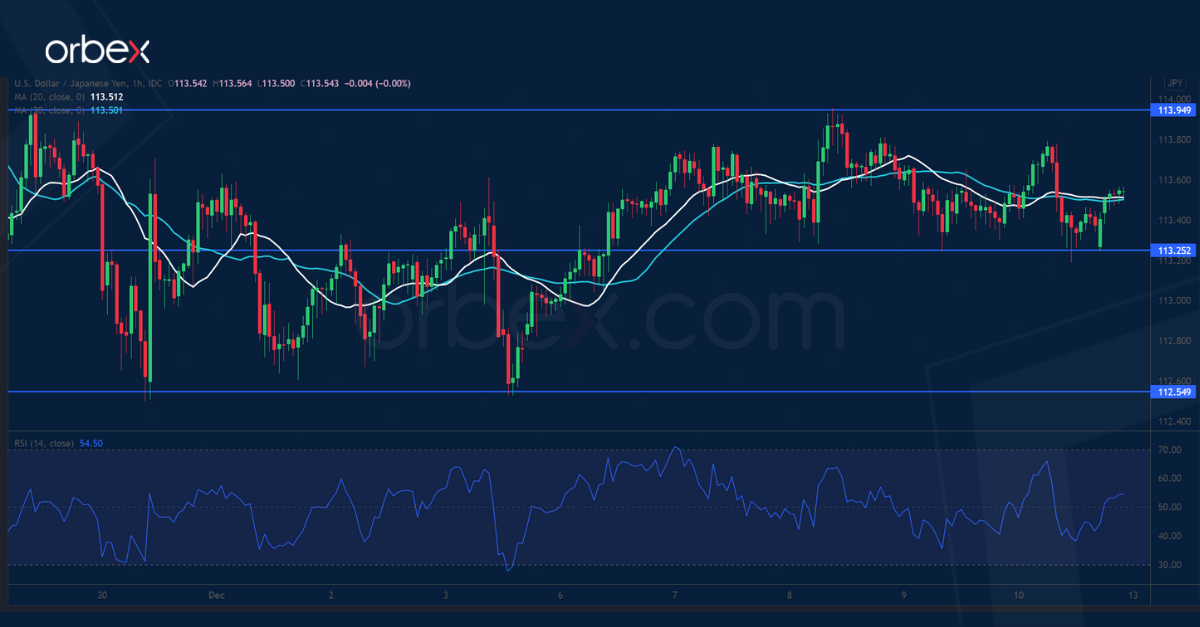
USD/CHF Daily Outlook
Daily Pivots: (S1) 0.9186; (P) 0.9220; (R1) 0.9241; More....
Intraday bias in USD/CHF remains neutral for the moment and outlook is unchanged. On the upside, break of 0.9274 will suggest that the pull back from 0.9372 is finished. Intraday bias will be turned back to the upside for 0.9372. On the downside, below 0.9156 will target 0.9084 support. Firm break there should confirm that choppy rise from 0.8925 has completed, and suggests that fall from 0.9471 is resuming. Deeper decline would be seen through 0.8925.
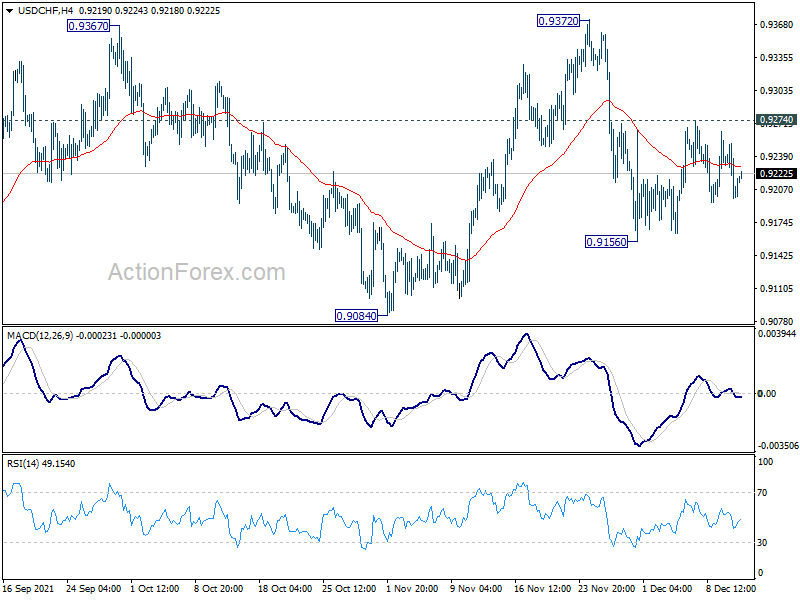
In the bigger picture, the corrective structure of the rebound from 0.8925 argues that fall from 0.9471 is not complete yet. It could either be the second leg of pattern from 0.8756 (2021 low), or resuming larger down trend from 1.0237 (2018 high). We'd pay attention to the downside momentum and assess the odds later. But for now, medium term outlook will be neutral at best as long as 0.9471 resistance holds.