

Sample Category Title
XAG/USD Remains Under Pressure
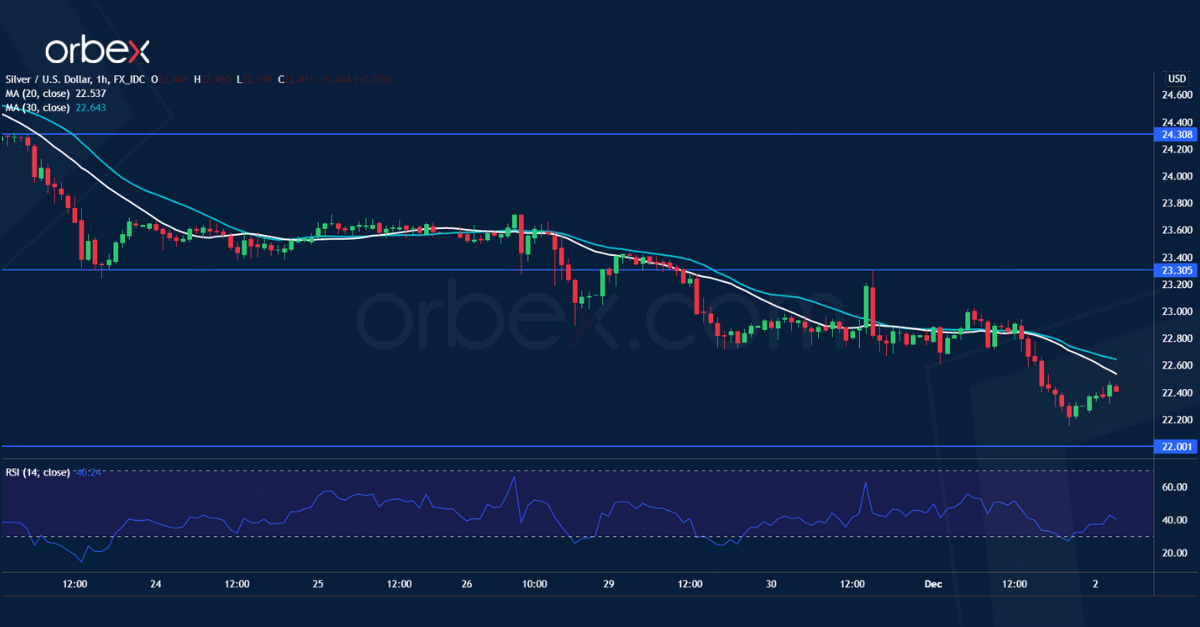
Silver struggled after US Treasury yields jumped on Fed’s hawkish tilt. A bearish MA cross on the daily chart indicates a deterioration in the market mood after a drop below the floor at 23.00.
An oversold RSI caused a limited rebound which was then capped by 23.30. This was a sign that the bears were still in control of the direction.
The psychological level of 22.00 is the next support. Its breach would lead to September’s lows at 21.50, an important level to keep the metal afloat in the medium term.
USD/CHF To Test Key Support
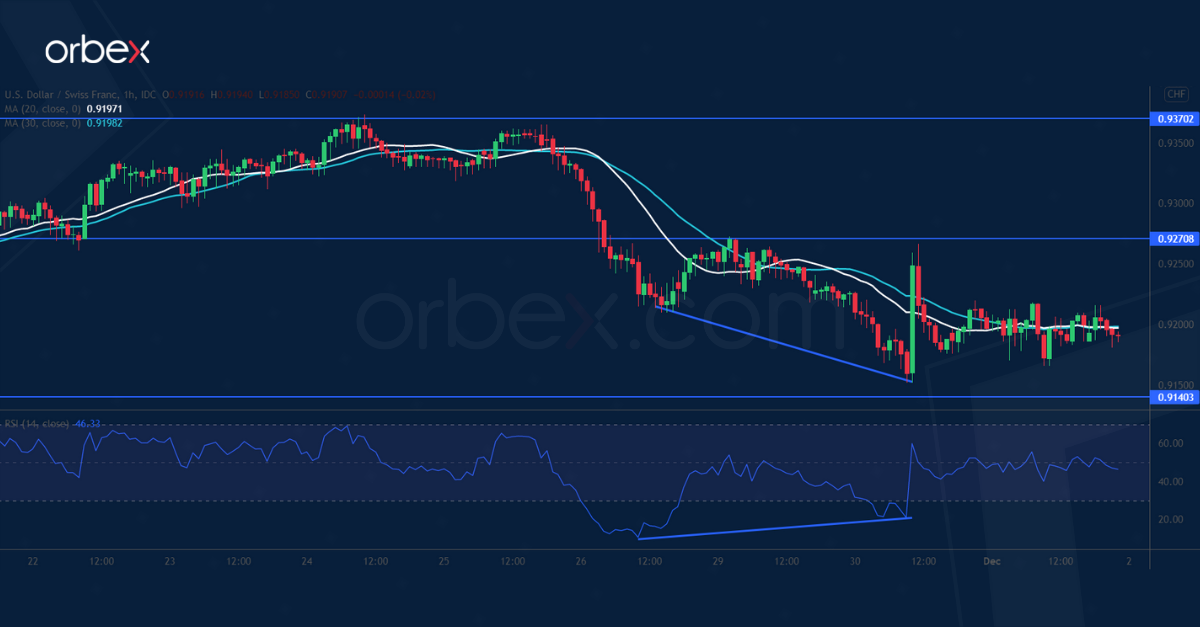
The US dollar stabilized after Jerome Powell hinted at speeding up the taper pace. The break below 0.9270 has put the rally on hold. The support has turned into resistance with the latest rebound fading.
But a bullish divergence suggests a loss of momentum in the retracement as the price approaches 0.9140. Buying could be expected in this demand zone around November’s low 0.9100.
Sentiment remains upbeat as long as the greenback is above this level. A bounce above 0.9270 may resume the uptrend.
XAUUSD Is Possibly Bearish
Technical analysis
The RSI is below level 50.
The Stochastics left the oversold zone and headed upwards to level 50.
Most likely scenario – SELL
Target prices: 1,774.87 1,770.61
Alternative scenario – BUY
Target prices: 1,783.63 1,788.34
Key levels
Support 1,774.87 1,770.61
Resistance 1,783.63 1,788.34

Fed Chair Powell’s U-Turn On Inflation Is The Obvious Driver
Markets
European stocks recovered in absence of any Omicron-related headlines. Main equity indices gained up to nearly 3% for the EuroStoxx50 in a calm European trading session. Core bonds and EUR/USD treaded water. Dynamics again changed during US dealings. A strong November US ADP employment report (534k) and manufacturing ISM (61.1 from 60.8) provided more evidence of better-than-expected Q4 growth momentum, but was still ignored. Risk sentiment dwindled once the US (and the UK and Switzerland and Brazil…) reported its first Omicron case. Main US equity indices turned intraday gains of around +2% into losses of a similar magnitude. Deteriorating risk sentiment coincided with a recovery in core bonds while EUR/USD no longer profited from those market settings. The pair closed the day near opening levels around 1.1330. US Treasuries outperformed German Bunds. The US yield curve bull flattened with yields shedding 1.4 bps (2-yr) to 5.2 bps (30-yr). Underlying dynamics for a second session show inflation expectations falling faster than the recovery in real yields. Fed Chair Powell's U-turn on inflation is the obvious driver. These dynamics will probably start benefiting the dollar if continued. In nominal terms, the US 10-yr yield tested November low at 1.41% while the 30-yr yield closed below the lower bound of the sideways trading channel in place since July (1.78%). It temporary traded at the lowest level since January. The German yield curve bear flattened with yields rising by 0.5 bps (10-yr) to 2.4 bps (2-yr). (US) market moves after the European bell obviously suggest a softer equity and yield opening this morning.
Cleveland Fed Mester joined the chorus of Fed members, including Chair Powell, who are open to scaling back asset purchases sooner than planned. “Making the taper faster is definitely buying insurance and optionality so that if inflation doesn't move back down significantly next year we're in a position to be able to hike if we have to”. That's as clear a message a central banker can deliver. We expect the Fed to double down on its tapering efforts from January with net purchases ending in March. Today's eco calendar is thin with weekly jobless claims and more Fed speeches. OPEC+ holds its monthly meeting and might decide to halt the reversal of earlier production cuts. Brent crude fell from $80/b to $70/b the past week. (US) risk sentiment might remain shaky on the combination of Omicron and a hawkish Fed. Rising real (US) rates should bring the dollar back on track after last week's corrective action.
News headlines
November South Korean CPI accelerated from 3.2% Y/Y to 3.7% Y/Y, marking the fastest pace of price rises since December 2011 and beating market expectations by a substantial margin. Inflation has now been running above the 2% target of the Bank of Korea for the eighth consecutive month. After the publication of the data, the BOK indicated that inflation might surpass the annual forecast of 2.3% it made only last week as supply bottlenecks could last longer than expected. Still it expects inflation to gradually slow due to the global oil price trend and as the effect of a lower fuel tax kicks in. Last week, the BoK raised its policy rate by 0.25% to 1.0%. Higher than expected inflation might cause the BOK to make some follow-up rate hikes. The next policy meeting is scheduled for January 14.
According an announcement in Turkey's Official Gazette, President Erdogan appointed Nureddin Nebati as minister of treasury and finance. He will replace Lutfi Elvan who resigned yesterday. The exit of Elvan is the latest episode in the battle within the Turkish government and the central bank with respect to president Erdogan's aim for lower interest rates despite run-away inflation. Elvan recently advocated that the CBRT should be able to do what is needed to slow price increases in line with its mandate, a view that is not in line with president Erdogan's view. The Turkish lira is again losing ground this morning after the CBTR yesterday executed FX interventions to support the lira which this week dropped to all-time lows against the dollar and the euro. EUR/TRY currently trades near 15.22.
Daily Technical Analysis
EUR/USD
Current level - 1.1330
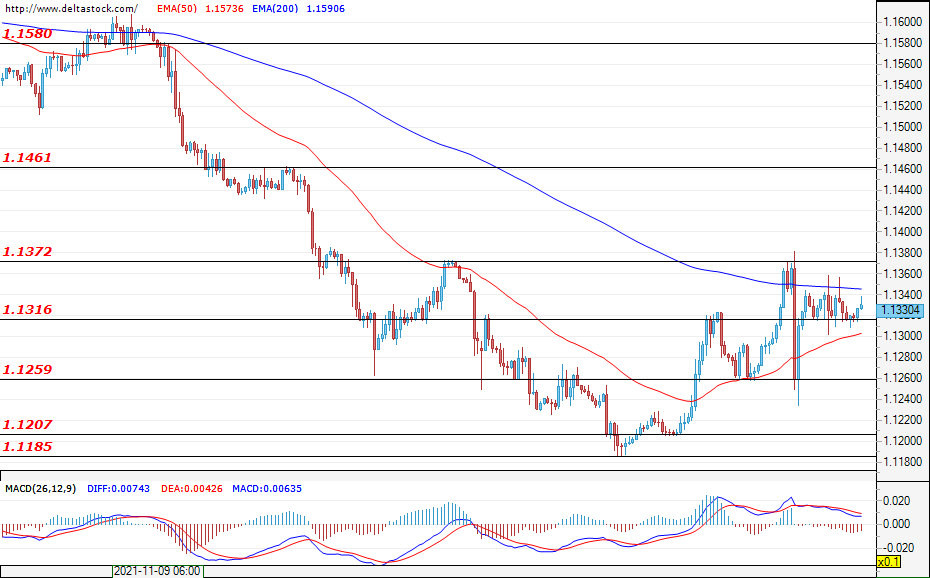
After limiting the sell-off from the previous trading session down to the support level at 1.1259, the bulls intervened and led the pair to just above the level of the next significant support at 1.1316. At the time of writing, the sentiment remains neutral – for a consolidation around the mentioned support at 1.1316, and investors will look forward to the initial jobless claims data for the U.S. (today; 13:30 GMT), followed by the announcement of the non-farm payrolls change data for the U.S. (Friday; 13:30 GMT), as well as the unemployment rate data for the U.S. (again on Friday; 13:30 GMT). In turn, the mentioned economic events could cause an increase in the volatility of the currency pair and change investors’ mood.
| Resistance | Support | ||
| intraday | intraweek | intraday | intraweek |
| 1.1372 | 1.1460 | 1.1316 | 1.1207 |
| 1.1460 | 1.1580 | 1.1259 | 1.1180 |
USD/JPY
Current level - 113.00
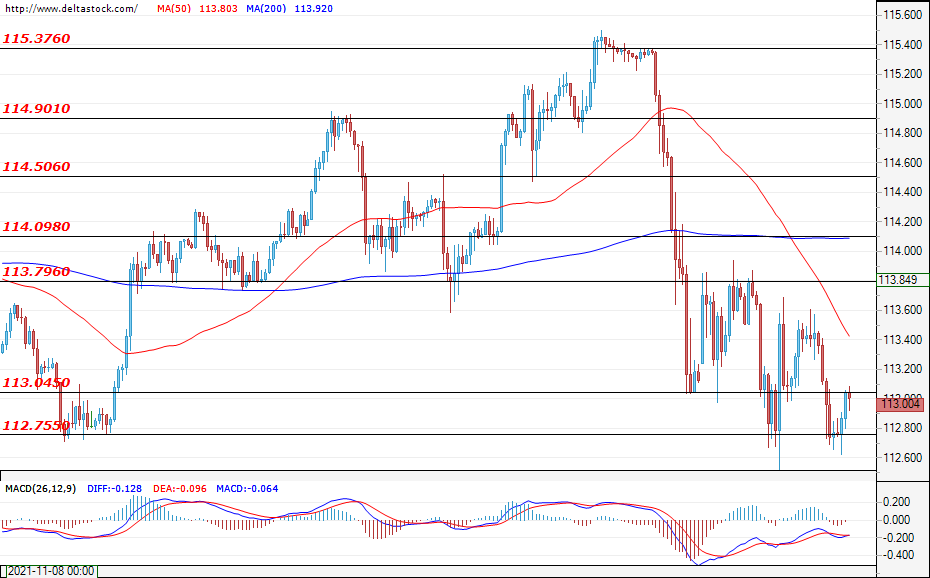
The depreciation of the U.S. dollar against the Japanese Yen continued during the past session. At the beginning of today's trading, however, the bulls managed to limit the sell-off down to the 112.75 support level and led the move in a positive direction – towards the first significant resistance at 113.04. It is possible to see a consolidation around this resistance until the economic news, mentioned in the EUR/USD analysis, is announced. At this point, investors could gain more clarity about the state of the market, which could lead to a denser and longer market movement.
| Resistance | Support | ||
| intraday | intraweek | intraday | intraweek |
| 113.80 | 114.50 | 113.04 | 112.75 |
| 114.10 | 114.90 | 112.75 | 110.80 |
GBP/USD
Current level - 1.3294
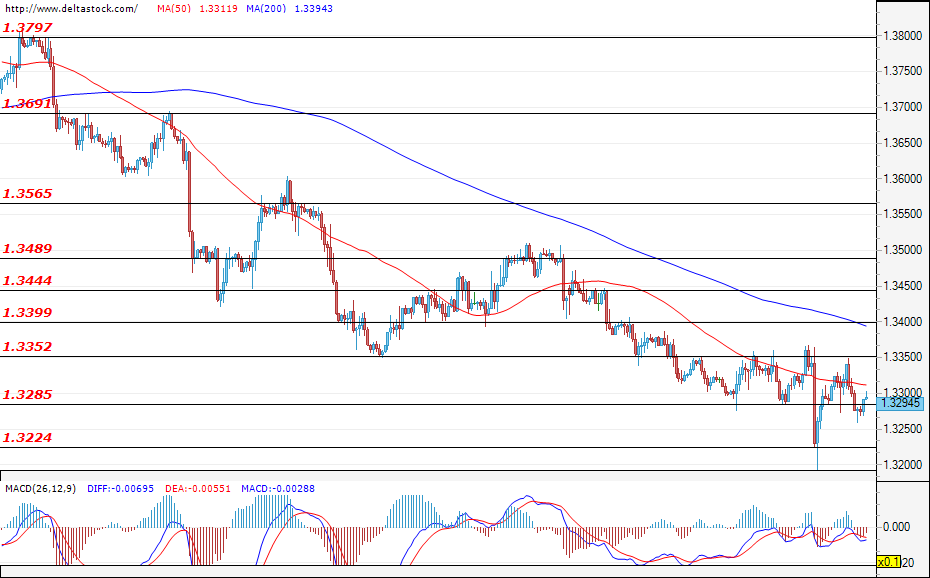
The depreciation of the British pound against the U.S. dollar continues and, at the time of writing, the price sits just above the support zone at 1.3285. A follow-up second attempt at breaching the support at 1.3224 is a possibility here. An event like that would then strengthen the bearish mood of the market participants. If the sell-off deepens, the first important support for the currency pair is the level at 1.3100, followed by the level at 1.2900. In the upward direction, a test of the resistance at 1.3352 may also be on the radar, which would, however, most likely be thwarted by the bears. The follow-up here could be a consolidation between the 1.3224 - 1.3352 range before the downward trend resumes.
| Resistance | Support | ||
| intraday | intraweek | intraday | intraweek |
| 1.3350 | 1.3440 | 1.3285 | 1.3200 |
| 1.3400 | 1.3490 | 1.3285 | 1.3060 |
House Of Cards
The strong rebound we saw in US equity futures ended up giving way to a decent sell-off on Wednesday trading session; all major US indices closed lower: the S&P500 ended the day near 1.20% lower and Nasdaq slid almost 2% and closed the session below the 16000 mark. It was the worst back-to-back sell-off we experienced since October 2020 and it may not be over.
The US equity futures are again in the positive at the time of writing, but the gains are hardly interpreted as a recovery; they are rather the result of a rising volatility. The risk sentiment is sour.
Market mood is hit by two fundamentally ugly news: first, the uncertainties around the new omicron strain, and second: the expectation that the Federal Reserve (Fed) would pull away its support faster to tame the rising inflationary pressures. And of course, no one can stand up against the Fed decision, as the move was long awaited, and comes even a bit too late, as well.
Mohammed El Erian says Powell dropping the ‘transitory’ word put the spotlight on inflation, and not because the prospects of higher inflation is problematic for the economy, but because the Fed’s communication and policy responses have lagged realities, and now the Fed needs catch up with that delay and that could be destabilize the markets. And add to that the fact that, the late response from the Fed also means that it cut off the hand that feeds the market and the support it could give from now is limited, as long as inflation remains high. So inflation will be the key metric that will determine what’s doable and what’s not in the next months. Till then, we may not see back-to-back fresh records in major equity indices.
Volatility is one place to watch, and VIX index is the one of the best places to do so. The index spiked to 30, it’s the highest level since the beginning of this year, a touch below the levels we saw in October 2020, and much below the levels we saw at the heart of the pandemic when the VIX index spiked to around 85 mark. It’s unlikely we get to the pandemic levels, but of course, the fact that the markets will soon be left to their own fundamentals is a problem for a market where valuations went through the roof. The S&P500 was flirting with the 3400 level before the pandemic hit, and that was a record high at that time, now we are above 4500 level. So a pullback to the pre-pandemic tops would mean a 25% slide, and it is not impossible given the leveraged positions and the extreme bullish positioning in the market over the past year.
OPEC decision
Now one place which could give hope for a slowdown in inflation is oil, as the prices are under the pressure of a couple of factors.
First, the US and other countries’ decision to release strategic reserves to tame the positive pressure, which by the way is rather minor as we are talking about days or weeks of more oil then back to the OPEC’s door.
Second, and more importantly, the surprise and unexpected progress in US-Iran nuclear deal, which, if achieved, would lift the ban on Iranian oil exports, which would bring about 4 million barrels of extra oil per day to the market, and help Biden easing the oil prices. So, if there is a good time to seal a deal, it is now.
Third, OPEC could hit back, and decide not to increase supply as much as it was planning to do so before the US action,
And finally, the rising omicron worries now bring about the new lockdown measures and travel restrictions, and the latest measures weigh on the prospects of global demand in the coming months. US crude traded below the $65 per barrel this week, recording the worst crash in a year.
OPEC meets today; the expectations have been as volatile as the market action in oil. The latest news suggest that OPEC is increasingly inclined to scrap its plan to raise output for January. Today’s decision will finally provide clarity on the OPEC front, but the omicron uncertainties should keep the balance tilted to the downside.
Falling stars
With the Fed pulling away support, we see the shining stars of the cheap-liquidity market falling from grace. AMC entertainment dived more than 15% yesterday, GameStop tanked 8% and chipmakers took a heavy hit as well, with AMD diving near 6% from record levels and Nvidia giving back near 4%. The rally in the electric car space could turn out to be a house of cards, as well.
Traditional safe-haven gold is doing quite poorly nowadays, the selloff in equities doesn’t translate into a better appetite for the yellow metal which steadies near the $1785 per ounce, meanwhile, Bitcoin is stable near the $56K mark, but the risks are tilted to the downside on the global loss of risk appetite.
So, I am thinking, but just thinking whether the US dollar will again be the place to park until the dust settles. The US dollar index pushing higher on hawkish Fed expectations, and the safe-haven inflows could add up to the mix and push the dollar index to 98-100 level in the coming weeks.
Oil Market Looks To OPEC+ For Help
Market movers today
- Today oil markets will look to OPEC+ for comforting signals after the plunge in prices since the news of the Omicron variant broke last week. OPEC+ needs to decide whether to go ahead with the planned 400kb/d output increase in January.
- In the US, it will be interesting to see what follows for initial jobless claims after last week's decline below 200,000. We will likely see another strong print adding further pressure on Fed.
- We also have several Fed speakers on the wire. Here we will listen to their stance on tapering pace compared to Powell's comments in recent days.
The 60 second overview
Oil: The rebound in oil prices yesterday again proved short-lived and Brent trades below USD70/bbl this morning. For the market, no news from OPEC+ so far is bad news amid an increasing spread of the Omicron variant and potential for more travel restrictions to come which should make it easy for OPEC+ to decide to hold back some or all of the planned 400kb/d output increase for January.
US: ISM manufacturing rose slightly in November to 61.1 - a still elevated level of manufacturing activity. The new orders index rose 61.5 which signals still strong activity to come and the prices paid index stayed at very high level of 82.4.
Fed: Cleveland Fed President Loretta Mester said yesterday she is open to tapering bond purchases at a faster pace, which would provide Fed with an option to hike rates. She added Fed should be able to hike rates a couple of times next year.
Equities: What looked like a rebound turned into risk-off in the US session as the first Omicron case had been detected in the country. Reopening plays were naturally among the worst performers in the US session and growth/momentum stocks trailed. Value and defensives generally held up better, although most sectors sold off. This brought S&P500 -1.1% lower, Nasdaq -1.8%, Dow -1.3% and Russell 2000 still underperforming - down -2.3%. What is more, VIX shot up further, ending north of 30. This is the highest implied volatility since January. Trading in Asia is more directionless this morning, and US futures have turned slightly positive.
FI: The belly of the EGB curve underperformed yesterday (5y Obl +3bp) as markets continue to digest the hawkish shift from Powell from Tuesday late in the afternoon and continued news that the Omicron variant may not be as severe as the previous. Markets recorded significant underperformance of the periphery, led by Italy by almost 4bp to reach new highs of 135bp in the BTPs-Bund spread, however with most drivers in the BTPs-Bund spread currently being external factors with resilient domestic policies, we expect a tightening bias going forward to approach the levels prevailing in September again (around 100-110bp). After the recent comments on accelerated Fed taper, markets will closely watch for Lagarde's speech tomorrow (9:30 CET).
FX: The tone in FX continues to be largely set by moves in equities, rates and commodities.
Credit: Volatility remains high in credit though yesterday to the positive side. iTraxx Xover tightened 9bp and Main 1.6bp. HY bonds closed 8bp lower and IG 2bp lower.
US Equity And Crude Oil FUTs Rebound In Asia, Similar Trading Pattern Was Seen On Wednesday
General trend
- USD has traded modestly lower against the European major and commodity currencies; US currency later pared drop.
- TRY drops amid shakeup at Turkey’s Finance Ministry.
- UST yields rise in Asia after prior decline.
- US equity FUTS have extended gains.
- Modest moves have been seen for the Asian equity markets.
- Nikkei has remained modestly lower; the index is currently off of the session lows; Softbank Group has hit another 52-week low [Alibaba and WeWork have been in focus]; Index heavyweight Fast Retailing to release monthly sales after the market close.
- Hang Seng traded slightly higher during the morning session after the lower open; Kaisa Group’s debt exchange deadline in focus [4:00 p.m., London time, on December 2].
- Shanghai Composite traded flat during the morning session.
- S&P ASX 200 pared drop.
- Japan’s Monetary Base continued to slow in Nov.
- China’s Commerce Ministry (MOFCOM) sometimes holds weekly news conferences on Thurs.
- Companies due to report during the NY morning include CIBC, Dollar General, Duluth Holdings, Express, Kirkland’s, Kroger, Lands’ End, LightInTheBox, Methode Electronics, SecureWorks, Signet, TD Bank.
Headlines/Economic data
Australia/New Zealand
- ASX 200 opened -0.2%.
- API.AU Woolworths makes A$1.75/shr cash offer.
- (AU) Australia chief medical officer Paul Kelly: There is no evidence that the Omicron variant of COVID is more deadly than other strains - press.
- (AU) AUSTRALIA OCT HOME LOANS VALUE M/M: -2.5% V +1.5%E; INVESTMENT LENDING M/M: 1.1% V 6.0%E; Owner Occupied Loan Value M/M: -4.1% v +3.0%e.
- (AU) Australia Oct Trade Balance (A$): 11.2B v 11.0Be, Goods and services credits (exports) fell $1,491m (3%) to $43,053m driven by falls in iron ore prices.
Japan
- Nikkei 225 opened -0.8%.
- (JP) Japan Investors Net Buying of Foreign Bonds: -¥1.34T v -¥12.8B prior; Foreign Net Buying of Japan Stocks: -¥309.6B v -¥47.1B prior.
- (JP) Japan PM Kishida: Confirms report he is considering bringing forward boosters for coronavirus.
- (JP) Bank of Japan (BOJ) Member Suzuki: BOJ will continue to take appropriate policy steps; Officials must be vigilant to risks that credit costs may increase on a delay in the economic recovery.
- 9201.JP Along with ANA to partially resume taking flight reservations – Press.
- Japan MoF sells ¥2.6T v ¥2.6T indicated in 0.1% 10-year JGBs; avg yield 0.0600% v 0.1070% prior; bid to cover: 3.16x v 3.14x prior.
Korea
- Kospi opened -0.9%.
- (KR) SOUTH KOREA NOV CPI M/M: +0.4% V -0.2%E; Y/Y: 3.7% V 3.1%E; CPI Core Y/Y: 2.3% v 2.2%e (10-year high).
- (KR) Bank of Korea (BOK): CPI to be above target for considerable time, 2021 CPI may be slightly above Nov outlook of 2.3%; Gov Lee to hold inflation briefing mid-Dec.
- (KR) SOUTH KOREA Q3 FINAL GDP Q/Q: 0.3% V 0.3%E; Y/Y: 4.0% V 4.0%E (in line with prelim reading).
- (KR) South Korea govt reportedly considering halting its gradual return to normal life as Covid cases rise - press.
- (KR) South Korea National Assembly expected to pass 2022 KRW607.9T budget by deadline (increased from KRW3.5T) - Yonhap.
China/Hong Kong
- Hang Seng opened %; Shanghai Composite opened -0.1%.
- 1383.HK To resume trading: Chairman Chau Cheok Wa to resign, effective immediately; SCGPCL to suspend travel related businesses.
- 1638.HK To meet with offshore bondholders on repayment options, exchange and consent solicitation to expire today.
- China PBOC sets Yuan reference rate: 6.3719 v 6.3693 prior.
- Weibo, 9898.HK Expected to price 11M share IPO at HK$272.80/shr v HK$388/shr indicated - press.
- (CN) China PBOC Open Market Operation (OMO): Sells CNY10B in 7-day reverse repos v CNY10B prior; Net drain CNY90B v Net drain CNY90B prior.
- (CN) China Banking and Insurance Regulatory Commission (CBIRC): planning stricter regulations on major shareholders of banks and insurance companies, confirms to better regulate connected transactions of banks.
- (CN) China Sec Journal: PBOC to keep funding conditions steady and certain tools such as relending will play a key role in stabilizing market conditions.
- (CN) Shanghai Sec News: China yuan currency (CNY) may fall after recent strong rally; notes slowing FX settlement demand, PBOC has also strengthened the management of expectations.
- (CN) China and US top military officials said to meet to discuss Taiwan tensions - press.
- (CN) China Nov Preliminary passenger vehicle sales -10.8% y/y - CAAM.
North America
- (US) Fed's Mester (non-voter, hawk): Very open to considering a faster taper pace, momentum in economy is clear, seen higher inflation rates, Omicron is a new risk but we need more data.
- WE To restate financial statements as of Dec 31st; Finds material weakness in internal control over financial reporting – filing.
- (US) CDC identifies first case of Omicron variant in the US in San Francisco, California; Individual was fully vaccinated and had mild symptoms; Patient is self-quarantining.
- AAPL Said to have told iPhone component suppliers that demand has slowed down [comments relate to the iPhone 13] - Press.
Europe
- VIFN.CH Australia's CSL said to be in exclusive talks to acquire company, deal seen around A$10B - press.
Levels as of 00:15ET
- Hang Seng -0.0%; Shanghai Composite -0.1%; Kospi +1.0%; Nikkei225 -0.4%; ASX 200 -0.2%.
- Equity Futures: S&P500 +0.6%; Nasdaq100 +0.5%, Dax +0.7%; FTSE100 -1.2%.
- EUR 1.1340-1.1315; JPY 113.11-112.66; AUD 0.7120-0.7095; NZD 0.6826-0.6805.
- Commodity Futures: Gold -0.4% at $1,777/oz; Crude Oil +0.8% at $66.10/brl; Copper +0.8% at $4.26/lb.
Elliott Wave View: S&P 500 (SPX) Correcting Larger Degree
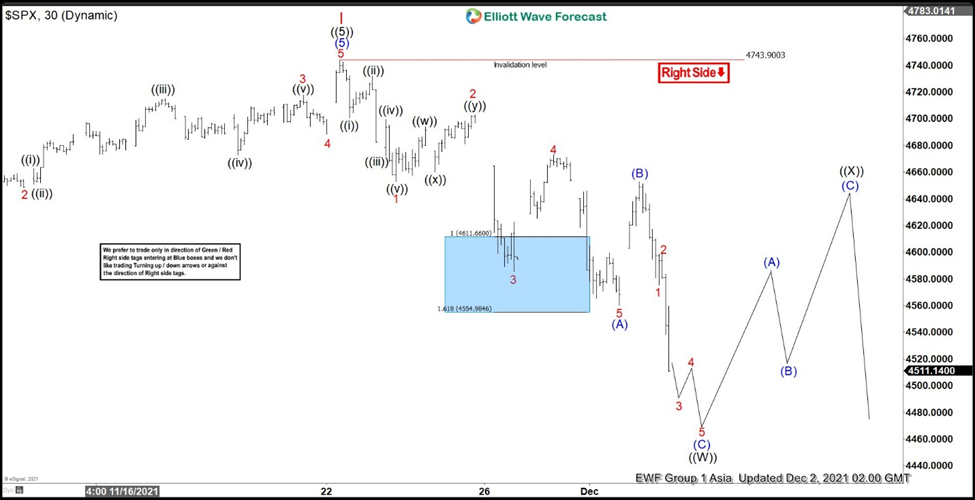
S&P 500 (SPX) has ended larger degree cycle from March 23, 2020 low (Covid-19 low) with wave I at 4743.9. The Index is currently in larger degree wave II pullback to correct the almost 2 years cycle. Down from wave I on November 22, wave 1 ended at 4652.66 and rally in wave 2 ended at 4702.87. Index then resumes lower in wave 3 towards 4585.43, bounce in wave 4 ended at 4672.95 and final leg lower wave 5 ended at 4560. This move lower also completed wave (A) in higher degree.
Wave (B) rally then ended at 4652.94 and Index has resumed lower in wave (C). Down from wave (B), wave 1 ended at 4575.42 and rally in wave 2 ended at 4599.05. Expect the Index to continue lower in wave (C). Potential target for wave (C) is 100% – 161.8% Fibonacci extension of wave (A) towards 4354.28 – 4468 area. From here, the Index should end wave ((W)) and start to rally in wave ((X)) to correct cycle from November 22, 2021 high before turning lower again. As far as pivot at 4743.9 high stays intact, expect rally to fail in the sequence of 3, 7, or 11 swing for further downside.
SPX 30 minutes Elliott Wave chart
Market Morning Briefing: EURJPY Rose Sharply From 128
STOCKS
Equities are mixed and somewhat look bearish. Dow has fallen sharply and needs to hold above 34000 to bounce back again, else a fall to 33000 is possible. Dax and Nikkei can test 15400 and 27000 before bouncing higher. Shanghai can fall from resistance near 3575. Nifty and Sensex look bearish too within the broad mentioned range.
Dow (34022.04, -461.68, -1.34%) has fallen sharply again. The index has strong support at 34000 which can hold for now and produce a bounce towards 34500\35000. Failure to bounce from 34000 can drag the index down towards 33000.
DAX (15472.67, +372.54, +2.47%) has risen sharply after seeing a low of 15187.09. While above 15400,the view is bullish to see a test of 15800/900 in the coming sessions.
Nikkei (27750.67, -184.95, -0.66%) has fallen today breaking below 28000. The index now has room to fall towards 27000 before we see a bounce again.
Shanghai (3571.30, -5.59, -0.16%) has fallen too. The index has interim resistance at 3575 which can hold for now and send the index to test 3550 and 3500 eventually. The expected rise to 3600 can be delayed if the index falls from 3575 immediately.
Nifty (17166.90, +183.70, +1.08%) opened higher and made a top at 17213.05 before closing at 17166.90. The index needs to sustain above 17100 and rise above 17200/250 to negate a fall towards 16500/16000. Broad view of 16800-17400 is still holding for the near term, a fall towards 16800 can be seen in the coming sessions.
Sensex (57684.79, +619.92, +1.09%) closed higher yesterday. Strong resistance can be seen at 58000 which can push the index down towards 57000/56000 in the coming sessions.
COMMODITIES
Crude prices fall ahead of the OPEC+ meeting scheduled today. Watch for a dip towards 68-65 on Brent and towards 64/63 on WTI. Other commodities trade in a range. Gold and Silver can trade within 1770-1820 and 22-24 respectively while Copper can fall to 4 before bouncing towards 4.45/50/60 levels in the medium term.
Brent (69.44) on the other hand has fallen below 70 and if that holds, a fall towards 68-65 looks possible soon.
WTI (66.16) has fallen to break below 67 and can now be headed towards 64/63.
Gold (1782) is stable and may continue to trade within 1770-1820.
Silver (22.43) is ranged and could trade within 22-24 region for now.
Copper (4.26820) fell to test 4.23 before bouncing from there. A sustained trade above 4.25 can take it higher to 4.50/60 else a fall to 4.00 is possible before the expected rise is seen.
FOREX
Dollar Index and Euro look stable just now and can be ranged within 95.50-96.50 and 1.12-1.14/1450 for the near term. Aussie is bearish on a break below 0.71 and could test 0.7050-0.6950 in the near term. Pound too can fall if it breaks below 1.33. Dollar Yen may trade within 113-114 region while USDINR can test upper levels of the 74.80/60-75.20/25 zone. USDCNY is bearish while below 6.40/39.
Dollar Index (95.948) fluctuated between 96.13 and 95.67 yesterday, holding above our mentioned support at 95.50. A break below 95.50 will be needed for the index to fall towards 95.40-95.00 on the downside. Else if the index manages to rise above 96.20/40, it can start moving up towards 97 and higher in the medium term. For now watch price action while above 95.50.
Euro (1.1335) is holding above support near 1.12 but has not been able to break above 1.14/1.1450 which is an immediate resistance zone. We expect 1.14-1.1450 to hold and produce a fall back to 1.12 or lower in the near term.
EURJPY (128.12) rose sharply from 128. As mentioned earlier, 128 is a crucial support which if holds can produce a rise towards 129-130 on the upside. Failure to hold above 128 can lead to a fresh fall towards 126/125 on the downside. For now, watch closely price action near 128.
Aussie (0.7148) fell sharply from 0.7173 seen yesterday. Immediate view looks bearish towards 0.7050-0.6950 before a bounce can be expected.
Pound (1.3303) looks stable just now. Any break below 1.33-1.3267/50, if seen again can take the Pound lower and signal fresh bearishness. Overall view is likely to see a bullish reversal from immediate support near 1.33-1.3267/50.
Dollar-Yen (113.05) may continue within a sideways range of 114-113 with chances of a fall to 112/111 in the medium term. View is sideways to bearish while below 114. A break above 114 is needed to bring back higher levels of 115-115.50 into focus.
USDCNY (6.3699) has bounced slightly from levels below 6.37 but the rise can be capped at 6.38/6.3815 before again resuming its fall towards 6.36/35 in the longer run. Below 6.39/40, view is bearish.
{USDINR (74.91) closed below 75 yesterday after testing an intra-day high of 75.02. We will keep a close watch to see if the pair attempts to rise back towards 75.20/25 or falls off towards 74.80/60 first. Above 75.20/25, higher resistances of 75.50/75 would come into focus.
INTEREST RATES
The US Treasury yields at the far-end (10Yr and 30Yr) have declined further and are coming closer to their crucial support. It will have to be seen if they can bounce-back from here to keep the broader sideways range intact or not. The German yields remain lower and keep our bearish view intact of seeing a further fall from here. The 10Yr and 5Yr GoI have bounced-back from their range supports and can continue to trade sideways for some more time.
The US 2Yr (0.57%) and the 5Yr (1.15%) remain lower and stable while the 10Yr (1.42%) and the 30Yr (1.75%) have declined further sharply. The 10Yr and approaching the crucial 1.4%-1.35% support zone while the 30Yr is already at the key level of 1.75%. It will have to be seen if the yields can bounce-back from here to keep the broader 1.35%-1.75% (10Yr) and 1.75%-2.1%/2.2% (30Yr) range intact. As mentioned yesterday, a break below these supports will be very bearish.
The German 2Yr (-0.73%) and 5Yr (-0.60%) yields have risen-back slightly while the 10Yr (-0.35%) and 30Yr (-0.06%) remain lower and stable. Our bearish view of seeing -0.45% / -0.5% on the 10Yr and -0.1% / -0.2% on the 30Yr remains intact.
The Indian 10Yr (6.3534%) and the 5Yr (5.6817%) have bounced back from near their range supports. This keeps the 6.3%-6.38% range on the 10Yr and 5.62%-5.7% on the 5Yr intact. A test of the upper end of these ranges looks likely now before the 10Yr and 5Yr reverses lower again.