Sample Category Title
Global Stocks Crash Accelerates As Omucron Risks Rise
Global stocks continued their sell-off as investors reacted to the rising number of Omicron cases and the travel restrictions. US futures added to the losses that they made on Friday. Futures tied to the Dow Jones, Nasdaq 100, and S&P 500 index declined by more than 5%. At the same time, the VIX index jumped by double-digits. This happened as countries like the UK, Netherlands, and Australia announced new Omicron cases. In the United States, Anthony Fauci announced that the US could face a more severe “fifth wave” that could disrupt holiday travels. Among the worst performers were companies in the hospitality and aviation industry.
The US dollar index tilted higher as traders rushed to safety as the number of Covid-19 cases rose. The index will react to the latest testimony by Jerome Powell, the Federal Reserve chair. Together with Janet Yellen, the Fed chair will testify about the CAREs act and the potential for a government shutdown. This will be the first testimony by Jerome Powell since he was reappointed as the Fed chair. The US dollar will also react to the latest pending home sales numbers. Analysts expect the data to show that the number of pending home sales rose by 1% after crashing in October.
The economic calendar will have some key events today even though the focus will be on the virus. In Germany, the statistics agency is expected to publish the latest preliminary inflation data. Analysts expect the data to show that inflation rose to a high of 5%. Spain will also publish the latest inflation data. Another key data to watch will be the latest Eurozone industrial, services, and consumer confidence data by the European Commission. In Canada, the statistics agency will publish the latest industrial and retail prices data.
NDX100
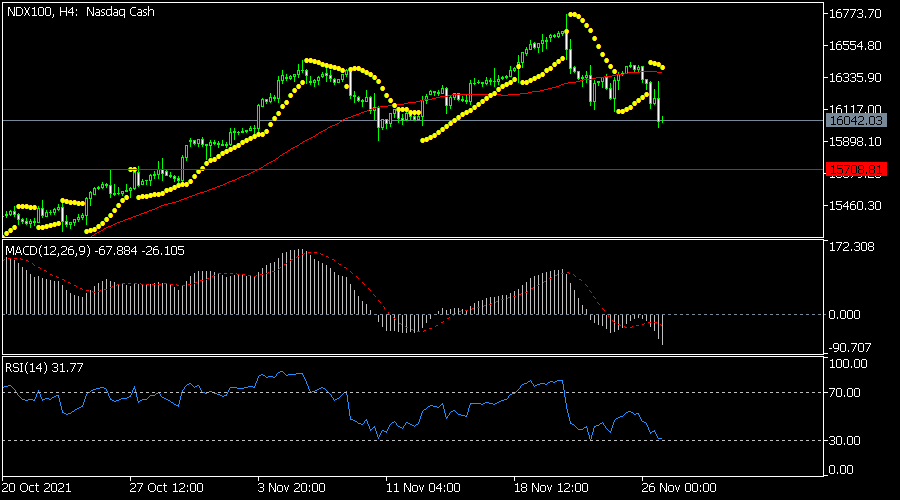
The Nasdaq 100 index crashed hard as investors focused on the Omicron variant. The index declined to $16,050, which was the lowest level since November 15th. It remains below the parabolic SAR dots and moved below the 25-day moving average. The Relative Strength Index (RSI) and MACD have been in a decline. Therefore, the index will likely keep falling as bears target the key support at $15,700, which will be the lowest level since November 1.
EURUSD
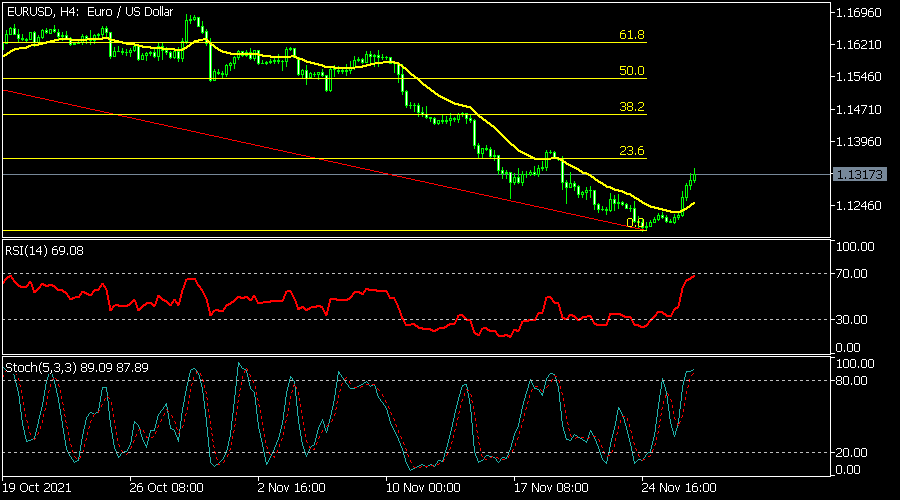
The EURUSD pair held steady on Monday morning. It rose to a high of 1.1317, which was the highest level since November 22. On the four-hour chart, the pair managed to rise above the 25-day moving average. It also approached the 23.6% Fibonacci retracement level. The Relative Strength Index (RSI) and Stochastic have also risen. The pair will likely keep rising today.
USDCAD
The USDCAD pair jumped to the highest level since September 23rd. The pair rose to 1.2790, which was significantly higher than October’s low of 1.2285. The pair moved above all moving averages on the four-hour chart. The MACD and the RSI have also been rising. Therefore, the pair will likely keep rising ahead of Jerome Powell testimony.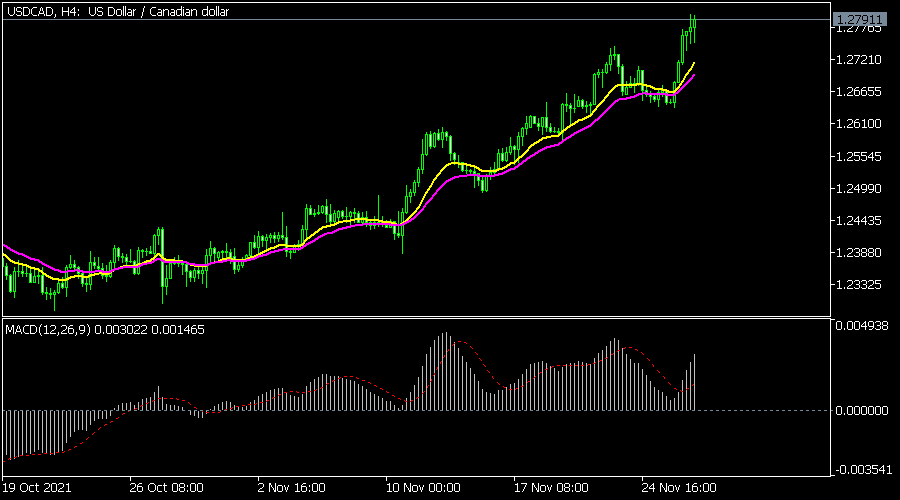
GER 40 To Test Major Floor
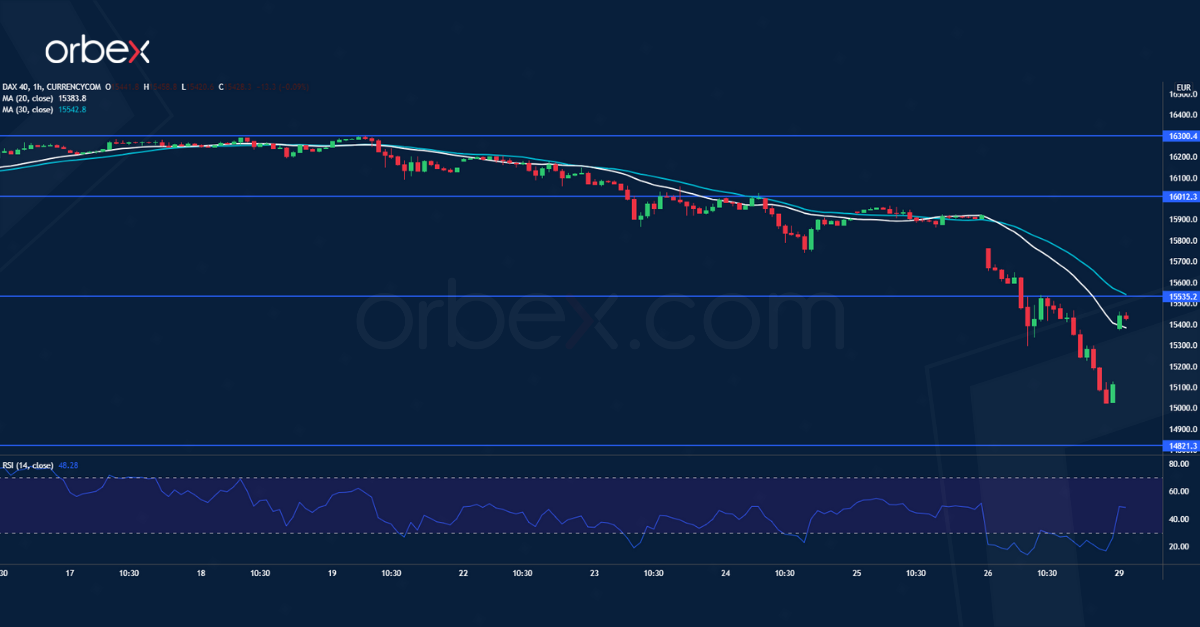
The Dax 40 plunged as investors fret that new lockdowns could wreck the recovery. The gap below 15760 has forced leveraged buyers to bail out, stirring up volatility in the process.
The momentum is typical of a catalyst-driven sell-off. Below 15150 the index is testing the psychological level of 15000. The RSI’s oversold situation has attracted a ‘buying-the-dips’ crowd in the demand zone.
Further down, 14820 is a key floor to maintain the uptrend. 15530 has become the closest resistance in case of a rebound.
GBPUSD Struggles To Bounce Back
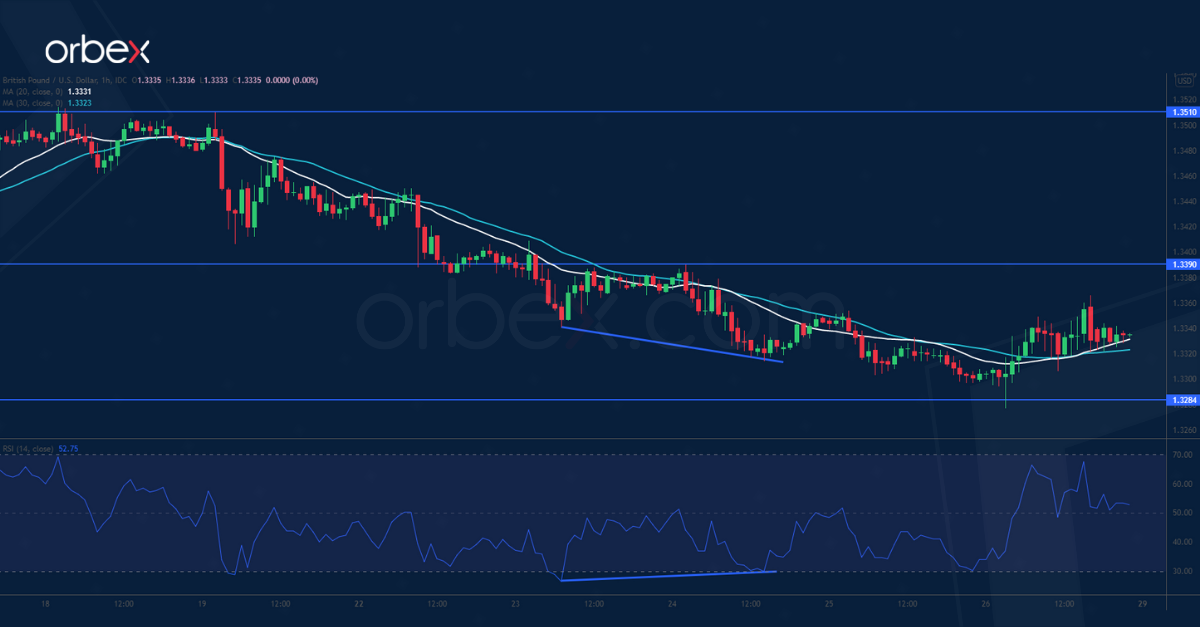
The pound continues on its way down against the US dollar over divergent monetary policy. The pair is hovering near a 12-month low around 1.3280.
Sentiment remains bearish after a failed rebound above 1.3420. A bullish RSI divergence suggests a deceleration in the downward momentum.
1.3390 is the first hurdle ahead. Its breach would prompt the short side to cover and open the door to the daily resistance at 1.3510. Otherwise, a bearish breakout would send the price to 1.3200.
EURJPY Breaks Double Bottom
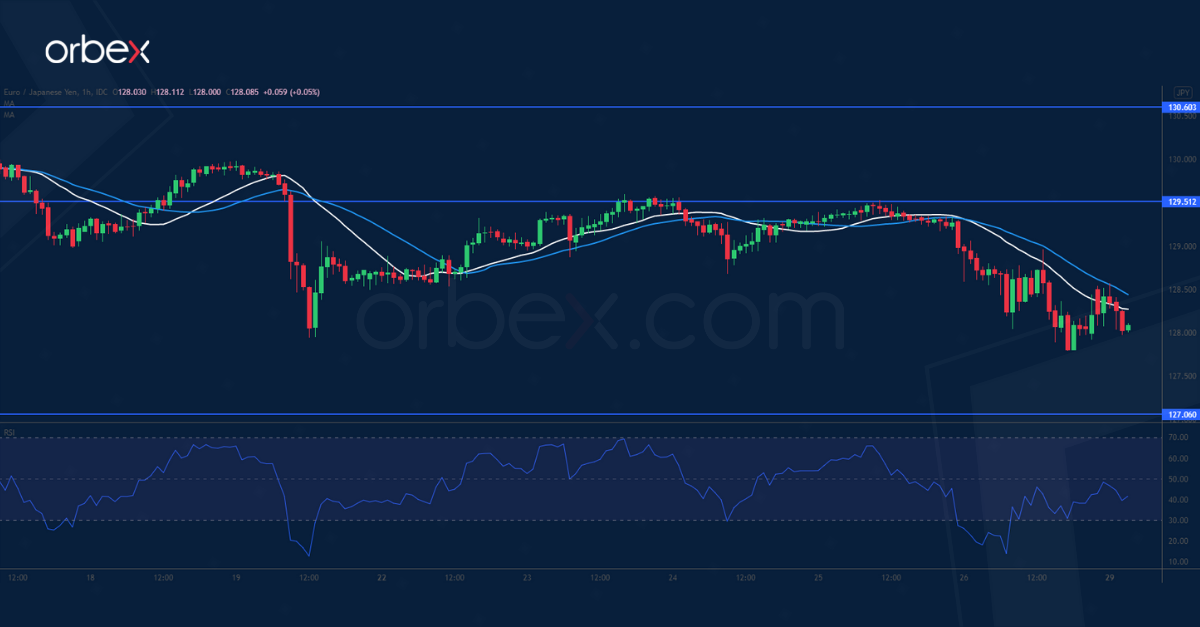
The safe-haven Japanese yen soars on news of a vaccine-resistant covid variant. A bearish MA cross on the daily chart indicates weakness in the euro’s previous rebound.
The pair has closed below last September’s low at 127.90, a major floor to keep price action afloat in the medium term. This is a bearish signal that the sell-off is yet to end with 127.00 as the next support.
The RSI’s double bottom in the oversold area may attract some buying interest. However, the bulls will need to lift 129.50 before a reversal could take shape.
Shooting First, Asking Questions Later
Omicron send markets tumbling
That was pretty much the response of both national governments and financial markets on Friday as fears over the new Omicron Covid-19 variant swept the world. Travel restrictions from Southern Africa have been quickly erected with Israel shutting borders full stop. In financial markets, US bond yields sank as investors rushed for safety (bond prices move inversely to yields), oil prices collapsed by over 9.0%, stock markets headed south with commodity prices and haven currencies such as the Swiss franc and Japanese yen have banner days as markets priced in a return to wider movement restrictions.
Having been burnt so badly with their own complacency over the emergence of the delta variant, national governments were taking no chances this time around. Interestingly, both gold and bitcoin flopped as well, and it seems neither is a haven or an inflation hedge when the flag really goes up. Looking at the performance of the platinum group metals on Friday, I am not really surprised that gold sank. But I also suspect that quite a bit of cross margin liquidation accounted for the sell-down in gold and cryptos.
As the week starts a new, it is a very mixed performance in Asia today. Over the weekend, the WHO said that omicron’s symptoms appear to be mild, and the head of Moderna said a newly rejigged version of their vaccine could be available by early 2022. That seems to have been enough to flush out the perpetual optimists of the US stock market, with US index futures strongly rallying this morning. Oil has leapt 4.0% higher as well, recouping nearly half of Friday’s losses. US 10-year T-note futures fell by over 1.0% on Friday (percentage of the price, not headline yield), but have fallen 0.35% this morning, meaning US 10-year yields have edged back up, and the US dollar, having crumpled on Friday, perhaps the day’s biggest surprise, is stronger across the board.
If US-dominated markets are attracting the buy-the-dippers like flies to a fresh pile of dung, the picture is rather more cautious in early Asian markets. Australia, Japan, and South Korean stock markets are all lower, and sentiment barometers, the Australian and New Zealand dollars have hardly moved. Gold spiked lower to USD 1770.00 an ounce when the margin servers went on at 0700 Tokyo, but quickly bounced back to be unchanged at USD 1793.00 an ounce. Some poor soul has been stopped out in the Monday twilight zone.
Asia’s caution is understandable. Memories are still raw in the region of the delta wave earlier this year, including the author. Asia has a much higher beta to world trade and the global recovery than the US where the majority of GDP is internally generated. Having moved heaven and earth over the past six months to get vaccination rates across the region to impressive levels, the prospect of them being rendered useless and trade suffering is understandably weighing on sentiment. The first move in early Asia on Monday is often the wrong one. If that plays true today, the early optimism shown in the most illiquid time of the week for global markets, could evaporate as the day goes on. It is hard to see Europe for example, already facing another Covid-19 wave and more restrictions, suddenly finding light at the end of the virus tunnel.
The fact is, we don’t know enough about this new variant yet to make a conclusive call on whether this is delta 2.0, or a more benign version. That uncertainly alone should cap optimism but-the-dip waves this week, although the annoying use of “mutant virus” or “mutant strain” has reappeared in the global press as if we were facing the zombie apocalypse. That won’t calm nerves but even as a non-scientist I can tell you that every time a virus mutates it becomes a mutated strain, not a “mutant strain” leading the world to doom. Flu evolves every year in multiple strains (hence we need a flu shot every year), but it’s not a “mutant flu.” So, stop scaring people to sell column inches. That said, viruses don’t mutate to become worse at what they do, and if this version is subsuming delta, itself a nasty beast, caution is warranted.
Viruses aside, the world does move on and although omicron will capture the hearts and imaginations and column inches of the world and the financial market this week, there is other stuff happening. China releases official PMIs tomorrow and Caixin Manufacturing PMI on Wednesday, and Services PMI on Friday. Wednesday the 1st also sees the usual dump of PMIs for the rest of Asia and Europe, which also sees Eurozone Inflation and pan-Europe Retail Sales on Friday. South Korean Industrial Production and Retail Sale will generate some attention, as will Australian Retail Sales and Balance of Trade.
Believe it or not, this week is also a US Non-Farm Payroll week, usually the one ring to rule them all. The street is pricing in another 500K+ jump in jobs although its impact is totally reliant on the evolution of the omicron situation. If that has faded and payrolls are strong, we will be back to the Fed taper-trade. If it hasn’t, then it will be ignored no matter what the headline number is, as the street prices in central banks everywhere, including the Fed, breaking the glass, and hitting the big red “WIMP” button.
Speaking of central bankers, we have a plethora of them speaking tonight in the early hours before Asia. The ECB’s Christine Lagarde and the Federal Reserve’s Jerome Powell and the Reserve Bank of Australia’s Debelle all speak. We have a rent-a-crowd of Fed Governors, Clarida, Williams and Bowman also making speeches. We already know what the only question will be to all of them. Expect to hear lots of x central bank stands ready if needed, we have lots of tools available, monetary policy remains flexible, insert we’ll loosen policy at the first sign of trouble comment without specifically saying it here. That might be good for stocks, commodities, and bonds if you are brave.
ECB Schnabel: November will prove to be the inflation peak
ECB Executive Board member Isabel Schnabel said "November will prove to be the peak" of inflation. She added, "We predict inflation will fall back below 2%" target.
"I can very well understand that many people have worries," she told Germany's ZDF national television broadcaster in a live interview. "We must understand that this has to do with an extraordinary economic situation", repeating the factors including base effects and rise in energy costs and raw materials prices.
What Does Omicron Mean for the Aussie?
The emergence of the Omicron variant of Covid-19 rattled markets late last week, knocking the Aussie to 3 month lows. Australia’s busy calendar this week includes Q3 GDP but the key to AUD/USD’s near-term prospects may be the reaction of Fed officials to the latest twist in the pandemic.
What does Omicron mean for the Aussie?
Last week AUD/USD fell for a fourth straight week, but the decline accelerated on Friday and included a low of 0.7113, barely above the 2021 lows recorded on 20 August. The day between the US Thanksgiving holiday and weekend is typically quiet for financial markets, but the emergence of a new ‘variant of concern’ of Covid-19 changed all that.
Investors might have been forgiven for expecting that Covid-19 would not deliver any more sudden jolts to markets. But the knee-jerk responses by governments such as the UK to block flights from southern Africa and even impose restrictions on flights from elsewhere cast a cloud over the services sector recovery. Shares in tourism-sensitive sectors plunged, as did oil prices, while vaccine manufacturers surged.
Notably for FX markets, US yields dropped steeply too. The 2 year US treasury yield fell from 0.64% pre-Thanksgiving to 0.50% on Friday, though it ticked back up to 0.54% on Monday as US equity futures trimmed losses somewhat. The US dollar lost ground against the euro and Japanese yen.
Westpac Economics revised its outlook on the Federal Reserve just ahead of the Omicron designation by the WHO. Given the surge in US inflation and strong economic growth, Westpac now sees the 14-15 December FOMC meeting resulting in a faster reduction in bond purchases, now wrapping up in March 2022. This would set the stage for rate hikes starting in June 2022.
Such an outlook would be very supportive for the US dollar against the Aussie given Westpac’s view that the RBA keeps its cash rate at 0.1% through 2022. In coming days though, the debate will rage over whether central banks regard Omicron as a game changer for the policy outlook. This adds extra focus on comment from Fed officials this week, especially Chair Powell’s testimony to Congress.
Of course the final US employment report before the pivotal FOMC meeting will also be important for the US dollar's prospects. We expect the Omicron mood and December non-farm payrolls to be key in whether AUD/USD can stabilise around 0.7050/0.7200 or continue its weekly declines. But there is plenty on the local calendar too.
Australia’s Q3 GDP data will bear the brunt of the Delta-driven lockdowns, especially in Sydney and Melbourne. We look for a contraction around -2.5%, the second-weakest quarter in the past 50 years (Q2 2020 of course being the worst, -7%). We know that recovery is under way, but Q3 GDP will show us how deep a hole the economy was in before reopening. October retail sales offered some encouragement for Q4, up 4.9%mth, but the harsher the response by Australia’s federal and state governments to Omicron, the weaker the summer economic rebound.
Event risk this week
Aust Q3 balance of payments and public demand, Aust Oct dwelling approvals and private credit, RBA’s Debelle speaks, China Nov manufacturing and services PMIs, US Nov consumer confidence, Fed Chair Powell testifies to Senate (Tue), Aust Q3 GDP, US Nov manufacturing ISM (Wed), Aust Oct housing finance and trade balance (Thu), US Nov employment report (Fri)
Gold Price Is Correcting Losses From The $1,780 Low
Gold price started a downside correction from well above $1,820 against the US Dollar. The price traded below the $1,800 support to move into a short-term bearish zone.
There was a break below the $1,795 level and the 50 hourly simple moving average. Besides, there was a break below a key bullish trend line with support near $1,797 on the hourly chart. It traded as low as $1,780 and is now correcting losses.
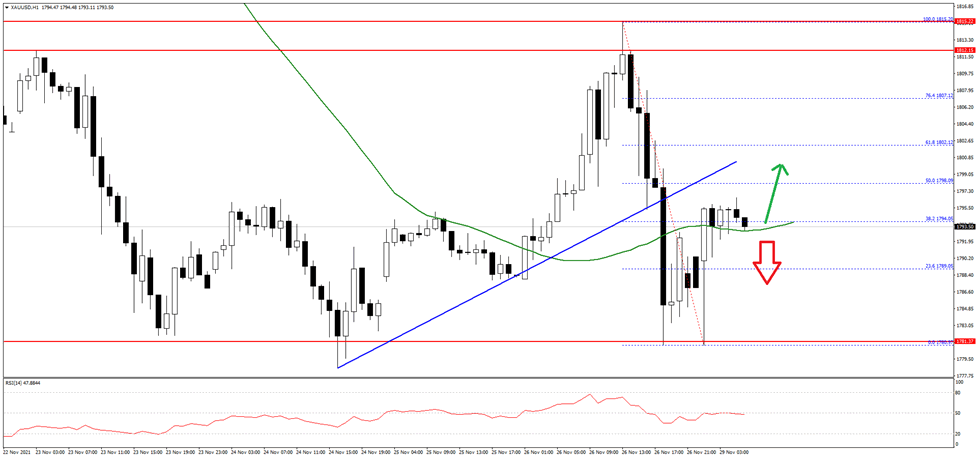
On the upside, an immediate resistance is near the $1,795 level. The next main resistance could be near the $1,800 level, above which the price could attempt a move towards the $1,815 level.
The first key support on the downside is near the $1,790 level. The next major support could be $1,780, below which there is a risk of more downsides. Any more losses could lead the price to $1,755 on FXOpen.
Gold Muted Between Key Boundaries, Risk Skewed To The Downside
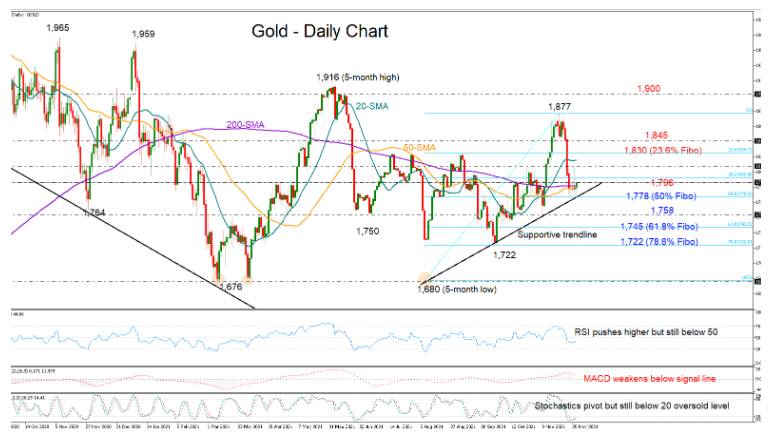
Gold is stubbornly fighting the nearby 1,796 resistance for the fifth consecutive trading day, deriving strong support from the 50% Fibonacci of the latest upleg and the ascending trendline, which has been navigating the market since the drop to the five-month low of 1,680.
The technical picture, however, suggests a neutral-to-bearish bias at the moment as the MACD remains negatively charged below its red signal line, while the RSI is currently pushing efforts for an upside reversal, but it is still clearly below its 50 neutral mark. Also, the Stochastics have yet to crawl above their 20 oversold level despite pivoting.
Should the trendline at 1,778 crack, the price could initially test the 1,758 handle before heading towards the 61.8% Fibonacci of 1,745. Sliding lower, the 78.6% Fibonacci of 1,722 could prevent a sharper decline towards the 1,680 bottom.
In the positive scenario where the precious metal snaps the 1,796 barrier and closes above the 38.2% Fibonacci of 1,802, the next target would be the 23.6% Fibonacci of 1,830. Running higher, the bulls will need to drive beyond 1,845 to access the recent peak of 1,877.
As regards the medium-term outlook, gold is maintaining a neutral trajectory, hovering within the range of 1,916 – 1,680.
In brief, despite its resilience above 1,778, gold has yet to show any clear bullish signals, remaining exposed to downside corrections. A move below the aforementioned boundary could pressure the price to 1,758.
GBP/JPY Daily Outlook
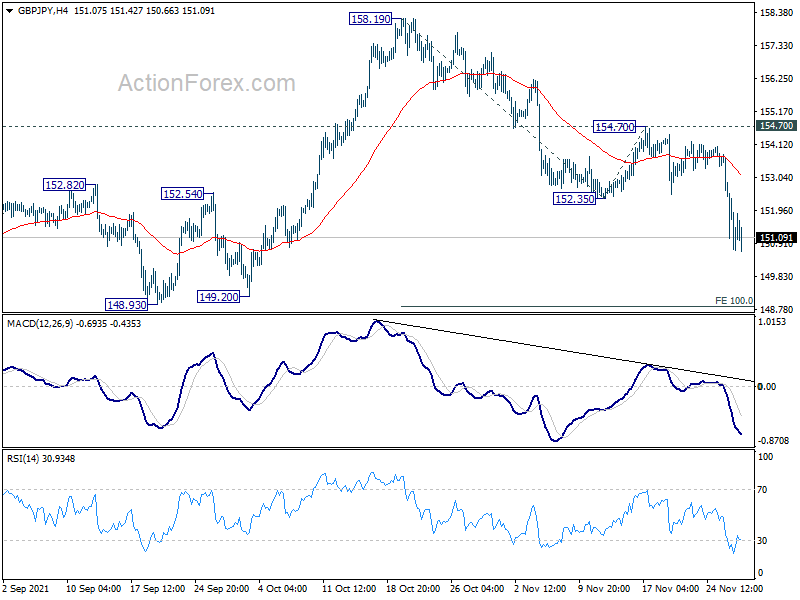
Daily Pivots: (S1) 150.01; (P) 151.86; (R1) 153.01; More...
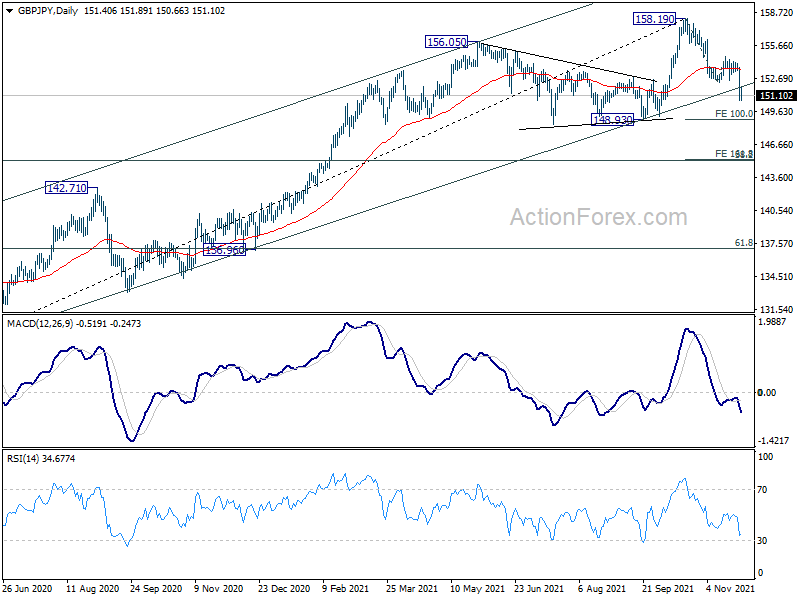
Intraday bias in GBP/JPY remains on the downside at this point. Fall from 158.19 should target 100% projection of 158.19 to 152.35 from 154.70 at 148.86 next, which is close to 148.93 key structural support. Decisive break there will carry larger bearish implication and target 161.8% projection at 145.25 next. For now, near term outlook will stay bearish as long as 154.70 resistance holds, in case of recovery.
In the bigger picture, the break of medium term channel support, and bearish divergence condition in week MACD are raising the chance of medium term topping at 158.19. Firm break of 148.93 support will argue that GBP/JPY is at least correcting the whole rise from 123.94 (2020 low). In this case, deeper fall would be seen to 38.2% retracement of 123.94 to 158.19 at 145.10. Nevertheless, strong rebound from 148.93 will retain medium term bullishness for another rise through 158.19 at a later stage.