

Sample Category Title
USDJPY Breaks Support
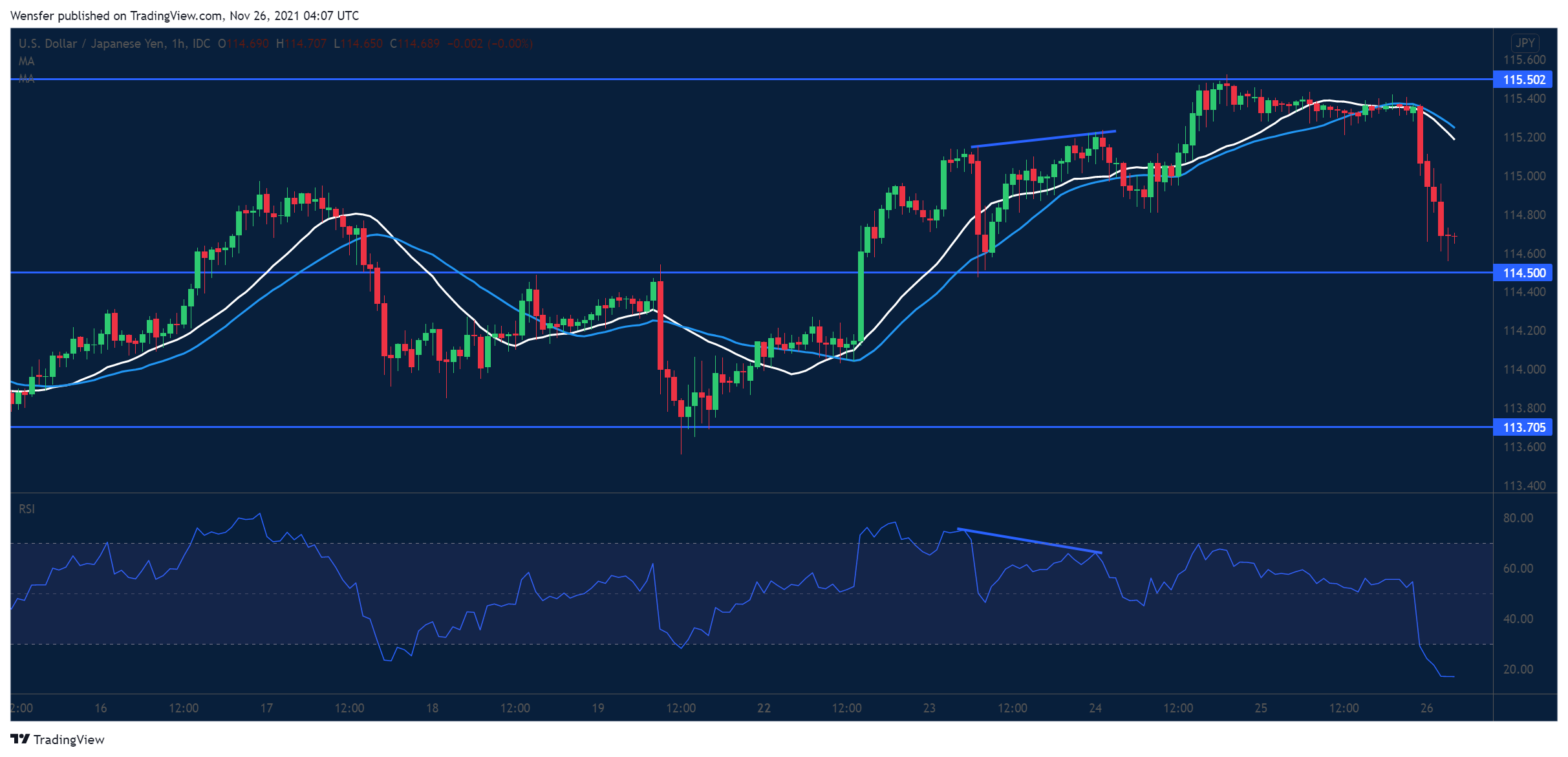
The Japanese yen recouped some losses after November’s Tokyo CPI rose to 0.5%. A bearish RSI divergence signaled a slowdown in the upward momentum.
A break below 114.90 confirmed weakness in the rally and prompted buyers to close their bets. As the RSI dips into the oversold territory, 114.50 is the immediate support where buying interest could be expected.
Further down, 113.70 would be the second line of defense. A bounce-back above 115.50 would keep the uptrend intact.
Safe Haven Flows Dominate As Concern Percolate Over Virus Variant
Notes/Observations
- Risk aversion theme percolates as variant found of virus in South Africa might spread worldwide and thwart the global recovery.
- Bets on US rate hikes dwindle over concerns of new covid variant (pushed back from July to Sept 2022).
- Germany Oct Import Price Index registered its highest annual pace since Jan 1980 (Y/Y: 21.7% v 19.6%e).
Asia
- Japan Nov Tokyo CPI Y/Y: 0.5% v 0.4%e ; CPI (ex-fresh food) Y/Y: 0.3% v 0.3%e.
- Australia Oct Retail Sales M/M: 4.9% v 2.2%e.
- BOJ Board member Nakagawa reiterated stance to maintain ultra-loose monetary policy to reach 2% inflation target, said 'weak' yen had both positives and negatives.
- Japan PM Kishida confirmed that sought 3% wage hikes at a minimum during spring labor talks.
- Moody's affirmed Japan’s A1 sovereign rating, outlook stable.
Coronavirus
- UK issued a temporary flight ban on six African countries, including South Africa. New variant found in Botswana, Hong Kong and Israel in travelers from South Africa.
Europe
- BOE Gov Bailey reiterated supply problems were causing inflation should be temporary; the risk was inflation expectations became embedded, noted the UK labor market was very tight.
Speakers/Fixed income/FX/Commodities/Erratum
Equities
- Indices [Stoxx600 -2.60% at 469.20, FTSE -2.86% at 7,100.96, DAX -2.84% at 15,465.95, CAC-40 -3.61% at 6,820.65, IBEX-35 -3.54% at 8,527.50, FTSE MIB -3.08% at 26,263.00, SMI -1.66% at 12,243.52, S&P 500 Futures -1.99%].
Market Focal Points/Key Themes:
Equities
- European indices open sharply lower across the board and remained deep in the red as the session progressed amid growing concerns regarding new COVID-19 variant which said to be named Nu by WHO and first detected in South Africa, carrying more mutations than any other variant in past; sectors leading to the downside include energy, industrials and financials as traders reprice their rate hikes expectations across the globe; on corporate front, shares of Airbus and many almost all European airlines down over 10%; Royal Dutch Shell trades down in Amsterdam as much as 5% as oil prices tumble; German tech firm Software AG trade higher on potential acquisition talks speculation; earnings expected in the upcoming US session include Pinduoduo.
- Consumer discretionary: Airbus [AIR.FR] -10%, Lufthansa [LHA.DE] -10%, Air France [AF.FR] -9%, IAG [IAG.UK] -10% (travel bans to South Africa following new variant concerns), ScS Group [SCS.UK] -14% (trading update).
- Energy: Royal Dutch Shell [RDSA.NL] -5% (oil down on variant concerns).
- Healthcare: Novacyt [ALNOV.FR] +12% (test approval in UK).
- Technology: Software AG [SOW.DE] +6% (considers sale).
Speakers
- ECB’s Visco (Italy) stated that the EU region's health situation was once again a source of concern and the consequences were hard to predict. Exit from pandemic measures needed to be gradual.
- EU Commission President Von Der Leyen stated that would propose to activate the emergency brake to stop air travel from the southern African region due to the variant of concern B.1.1.529.
- Sweden Central Bank (Riksbank) Dep Gov Ohlsson expressed confidence with its current inflation forecast. New Repo Rate Path was an obvious signal of direction.
- German Health Min Spahn reiterated govt stance that current virus situation was more serious compared to past; State leaders to meet in the coming weeks. Current wave to hit all of Germany; number of contacts between people must be reduced.
- German Greens official Baerbock stated that did not rule out a lockdown in Germany.
- France Fisherman Union said to be planning to block Channel tunnel and ports to protest the lack of UK issued licenses.
Currencies/Fixed Income
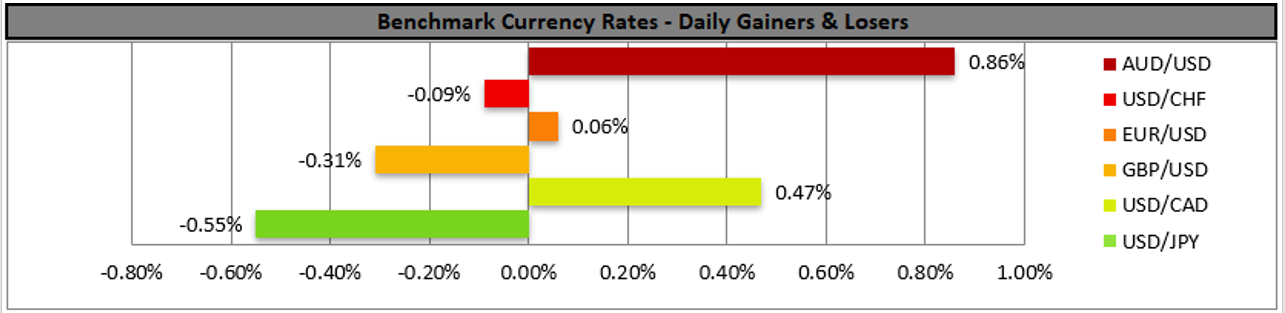
- Safe-haven flows dominated the session as concerns where heightened about the discovery of a new coronavirus variant that could resist current vaccines.
- USD was softer as some Fed rate hike bets were recalibrated. Dealers noted that the covid trends in Europe and US had gotten increased attention lately and the reports of a new variant that with an ability to evade vaccine immunity heightened uncertainty of the global recovery. Bets on US rate hikes dwindle over concerns of new covid variant (pushed back from July to Sept 2022).
- EUR/USD rebounded after a recent multi-week sell-off. Pair probing 1.1270 after testing below 1.12 earlier in the week.
- JPY currency was the main beneficiary of the safe-haven flows with USD/JPY testing 113.65 during the session.
Economic data
- (DE) Germany Oct Import Price Index M/M: 3.8% v 1.9%e; Y/Y: 21.7% v 19.6%e.
- (NO) Norway Oct Retail Sales M/M: 1.0% v 0.3%e.
- (CN) Weekly Shanghai copper inventories (SHFE): 41.9K v 34.9K tons prior.
- (FR) France Nov Consumer Confidence: 99 v 98e.
- (CH) Swiss Q3 GDP Q/Q: 1.7% v 1.6%e; Y/Y: 4.1% v 2.9%e.
- (SE) Sweden Nov Consumer Confidence: 99.7 v 102.0e; Manufacturing Confidence: 126.6 v 128.4 prior; Economic Tendency Survey: 118.0 v 119.9 prior.
- (RU) Russia Narrow Money Supply w/e Nov 19th (RUB): 14.35T v 14.33T prior.
- (TW) Taiwan Oct Monitoring Indicator: 39 v 38 prior.
- (TW) Taiwan Q3 Final GDP Y/Y: 3.7% v 3.8%e.
- (SE) Sweden Oct Retail Sales M/M: +0.4% v -0.2% prior; Y/Y: 5.2% v 4.9% prior.
- (EU) Euro Zone Oct M3 Money Supply Y/Y: 7.7% v 7.4%e.
- (AT) Austria Nov Manufacturing PMI: 58.1 v 60.6 prior (17th straight expansion).
- (IT) Italy Nov Consumer Confidence Index: 117.5 v 117.0e; Manufacturing Confidence: 116.0 v 114.0e; Economic Sentiment: 115.1 v 115.1 prior.
Fixed income Issuanceme
- (IN) India sold total INR240B vs. INR240B indicated in 2023, 2026, 2035 and 2051 bonds.
- (ZA) South Africa sold total ZAR vs. ZAR1.2B indicated in I/L 2033, 2046 and 2050 Bonds.
- (IT) Italy Debt Agency (Tesoro) sold €5.0B vs. €5.0B indicated in 6-month bills; Avg Yield: -0.563% v -0.550%; Bid-to-cover: 1.43x v 1.27x prior.
Looking ahead
- (BR) Brazil Oct Total Formal Job Creation: +260.0Ke v 313.9K prior.
- 05:25 (EU) Daily ECB Liquidity Stats.
- 06:00 (UK) DMO to sell £2.0B in 1-month, 3-month and 6-month bills (£0.5B, £0.5B and £1.0B respectively).
- 06:30 (IN) India Weekly Forex Reserve w/e Nov 19th: No est v $640.1B prior.
- 06:45 (US) Daily Libor Fixing.
- 07:00 (IN) India announces upcoming bill issuance (held on Wed).
- 07:00 (MX) Mexico Oct Trade balance: -$2.0Be v -$2.4B prior.
- 07:30 (BR) Brazil Oct Total Outstanding Loans (BRL): 4.491Te v 4.429T prior; M/M: 1.4%e v 2.0% prior; Personal Loan Default Rate: No est v 4.2% prior.
- 08:00 (UK) Daily Baltic Dry Bulk Index.
- 08:00 (UK) BOE’s Pill (chief economist).
- 08:30 (IE) ECB’s Lane (Ireland, chief economist).
- 08:30 (US) Weekly USDA Net Export Sales.
- 10:15 (ES) ECB's De Guindos (Spain).
- 10:15 (ES) ECB's de Cos (Spain).
- 11:00 (EU) Potential sovereign ratings after European close (Moody's on Belgium and Switzerland; S&P on Ireland sovereign rating; DBRS on Poland sovereign rating ).
- 20:30 (CN) China Oct Industrial Profits Y/Y: No est v 16.3% prior.
WTI oil in free fall, can 71 fibo support hold?
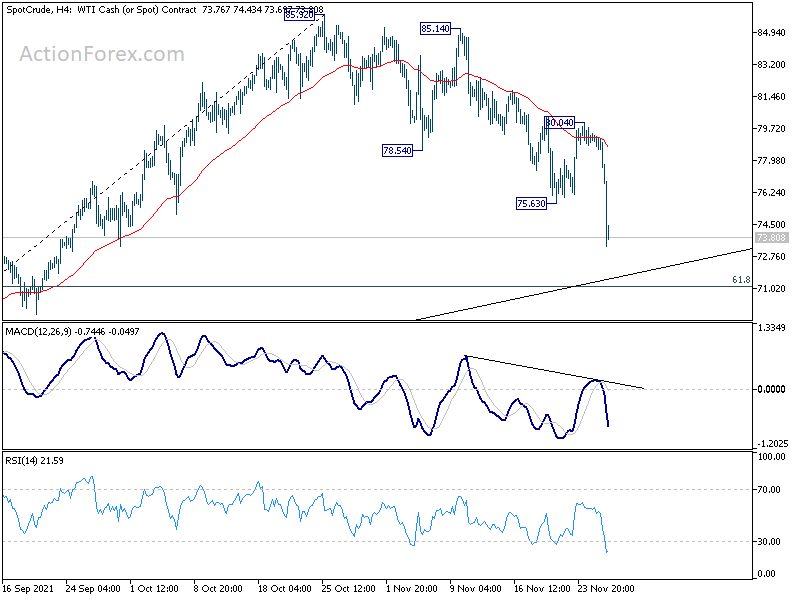
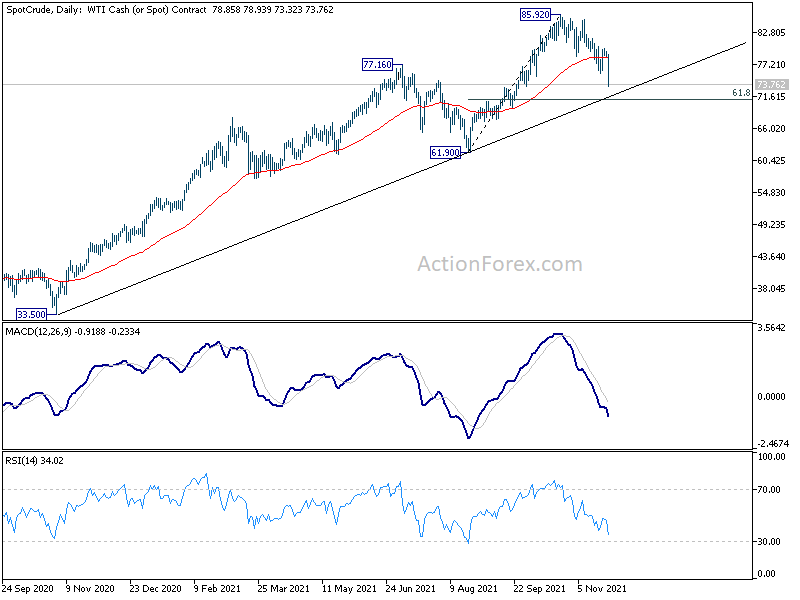
WTI crude oil is in free fall today, together with other risk markets. At this point, the decline from 85.92 is seen as a correction to rise from 61.90 only. Hence, we'd start to look for bottoming signal around 61.8% retracement of 61.90 to 85.92 at 71.07. This is slightly lower than medium term trend line at around 71.5.
However, in any case, break of 80.04 resistance is needed to indicate completion of the decline. Otherwise, further fall will remain in favor. Indeed, sustained break of 71.07 fibonacci level will argue that WTI is already correcting the long term up trend. In such case, even deeper fall would be seen towards 61.90 key structural support.
Elliott Wave Forecast: Silver Miners (SIL) Doing Flat Correction
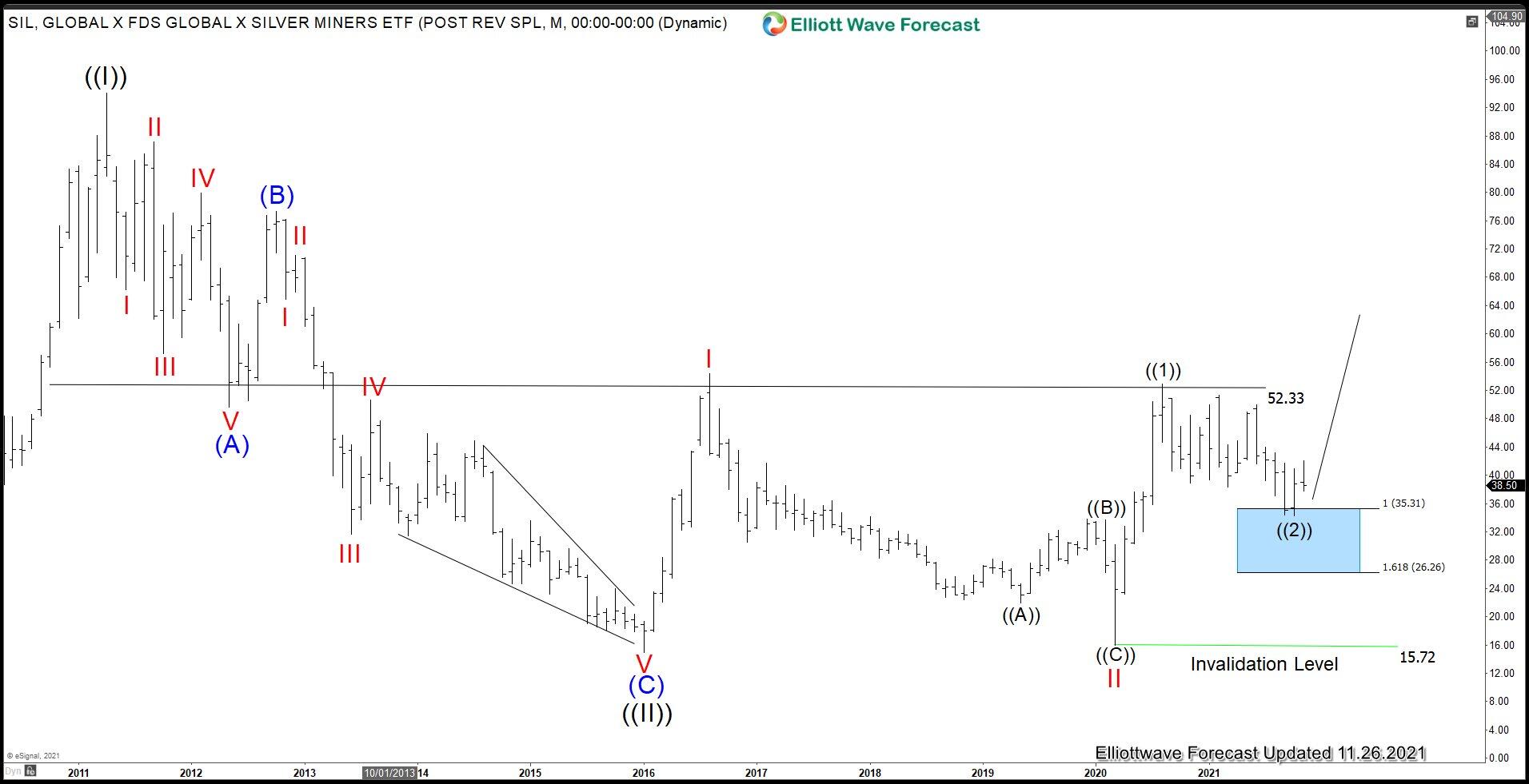
Silver Miners (SIL) reached the support area from August 6 peak in 7 swings and reacted higher. However, in the last few trading sessions, the ETF has taken a turn lower. What’s the outlook for the ETF and what alternative should we consider? Let’s take a look at the Elliott Wave update below:
SIL Monthly Elliott Wave chart
 Silver Miners (SIL) reached the support area from August 6 peak in 7 swings and reacted higher. However, in the last few trading sessions, the ETF has taken a turn lower. What’s the outlook for the ETF and what alternative should we consider? Let’s take a look at the Elliott Wave update below:
SIL Monthly Elliott Wave chart
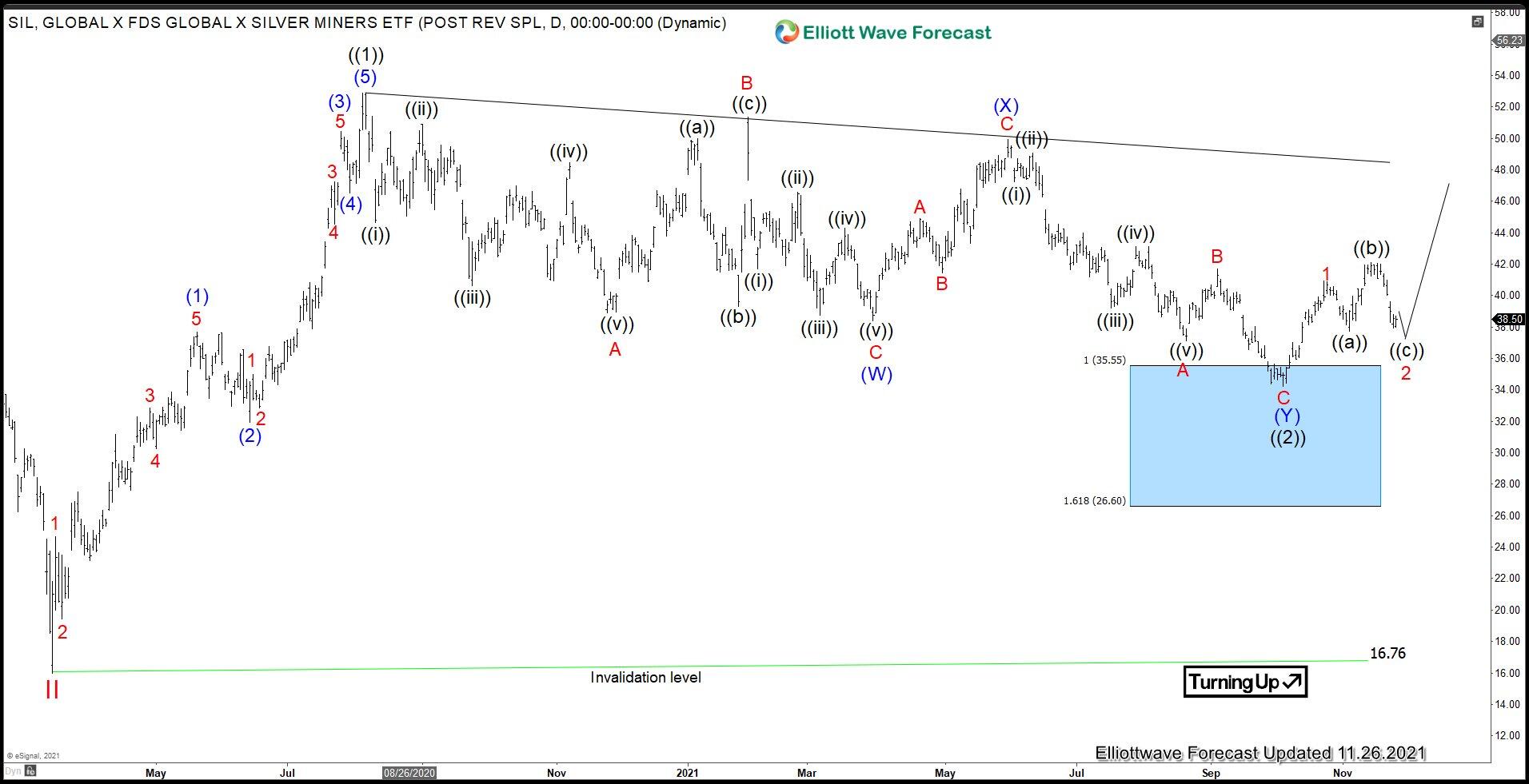
After forming wave ((2)) low on October 5 inside the blue box, the ETF has rallied in what looks like 3 waves. It’s possible that SIL is doing an expanded Flat correction in wave 2. As long as the pullback stays above wave ((2)) low at 34.21, expect further upside. Alternatively, if it breaks below $34.21, we can count the entire decline from wave ((1)) as a Flat. In this scenario, the ETF can see 1 more push in wave 5 of (C). Either way, the daily invalidation level at $16.76 remains the key pivot and the ETF is expected to extend higher once the correction is over.
Aussie Slide Continues
Australian dollar woes continue
The Australian dollar has extended its downswing, posting sharp losses on Friday. Currently, AUD/USD is trading at 0.7135, down 0.74% on the day. It is not looking pretty for the currency, which is having another week to forget. AUD/USD is down 1.34% this week and November has been ugly, with the currency losing 5.11% this month.
The emergence of a variant of Covid-19 in South Africa is causing jitters in the financial markets. We’re seeing a risk-off, flight to safety by investors, with risk currencies like the Australian dollar taking a beating. An excellent reading from Australian Retail Sales for October has not been enough to stop the Aussie’s slide. Retail Sales jumped 4.9% in October m/m, as the reopenings in New South Wales and Victoria resulted in a consumer spending spree.
The Australian dollar is also under pressure as the Federal Reserve is expected to accelerate tapering of its pandemic bond purchase programme. Goldman Sachs said in a note on Thursday that it expects to Fed to double its taper trim from USD 15 billion to USD 30 billion each month, starting in January. This means that the programme will be wound up by March instead of June. An earlier timeline means that the Fed can look at raising rates sooner, which is bullish for the US dollar.
We continue to see a disconnect between RBA guidance and market pricing. Governor Lowe has stated that he will not raise rates until 2023 or perhaps 2024. The markets have ignored Lowe and have priced in three rate hikes for next year. Lowe has pushed back against the market expectations, but with no success. There are two factors which favour raising rates sooner rather than later. First, inflation is moving higher, although it is still within the RBA’s target. Second, the Australian dollar is falling fast and is moving towards the key 70 level. The RBA may consider raising rates if it feels that the exchange rate is falling too low.
AUD/USD Technical
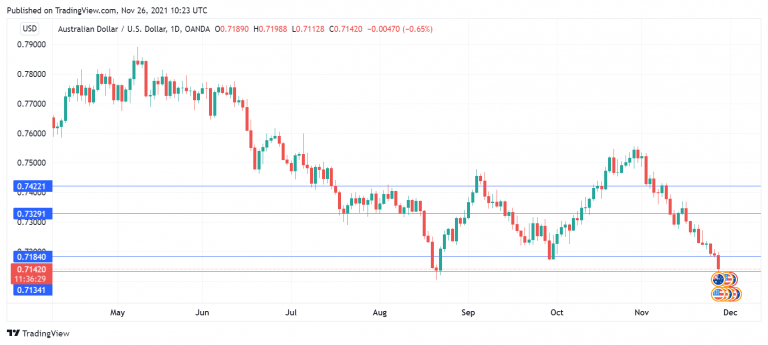
- There are resistance lines at 0.7328 and 0.7422
- AUD/USD has broken below support at 0.7184 and is testing support at 0.7134. Below, we find support at 0.7040
USD/JPY Outlook: Yen Rises Sharply As New Virus Variant Sparks Strong Risk Aversion
The USDJPY collapsed in early Friday trading after news about new virus variant sparked sharp migration into safety.
The pair was down 1.2% in Asia and early Europe, making so far the biggest drop this year.
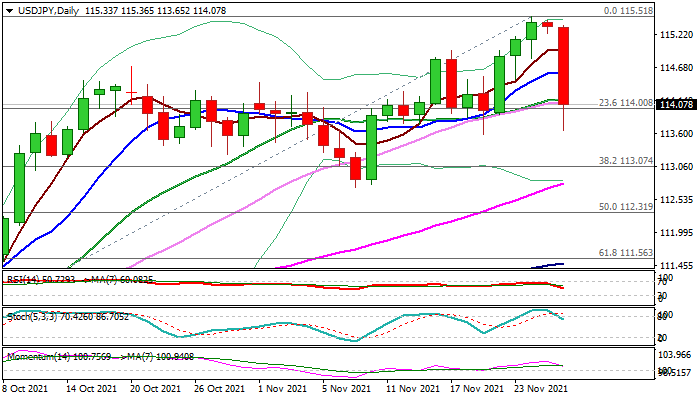
Fresh bearish acceleration weakened near-term structure, as daily studies show sharp loss of positive momentum, while stochastic reversed from overbought territory and heading south and the price fell below 5/10/20 DMA’s. Bears cracked initial Fibo support at 114.00 (23.6% of 109.11/115.51, unmasking key supports at 113.07 (Fibo 38.2%) and 112.72 (Nov 9 trough), break of which would generate reversal signal and further boost fresh bears.
Weekly chart shows long upper shadows on this and previous week’s candles that, in addition to recent multiple upside rejections, suggests that larger bulls may be running out of steam.
Weekly close below 114.00 Fibo level is seen as initial requirement to keep fresh bears in play, with the situation likely to be boosted by rising uncertainty about the new virus variant.
This would also partially offset dollar’s positive stance on expectations of Fed accelerating stimulus tapering and earlier than expected rate hike.
Res: 114.60, 115.00, 115.36, 115.51.
Sup: 113.65, 113.07, 112.72, 112.31.
GBPUSD Forms Foothold At 11-Month Low, Bearish Bias Stands
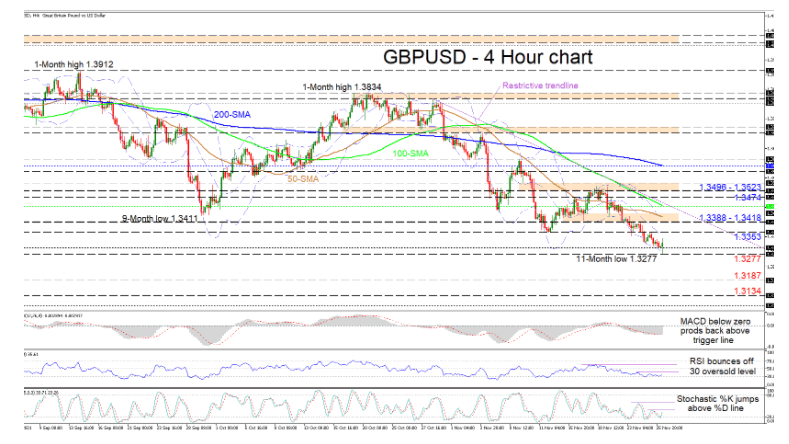
GBPUSD buyers have re-emerged around the 1.3300 handle and lower Bollinger band trying to make a comeback, after a one-week drop in the pair, which produced an 11-month low. The bearish simple moving averages (SMAs) are reinforcing the one-month descent from the 1.3800 vicinity.
Currently, the short-term oscillators are suggesting that negative momentum is fading, due to a surge in positive powers. The MACD, some ways below zero, has nudged over its red trigger line, while the RSI is improving off the 30 oversold level. The stochastic oscillator has turned bullish and is promoting additional advances in the pair above the 1.3300 hurdle.
If buyers manage to extend the rebound from the 1.3300 region, initial upside friction could commence around the mid-Bollinger band, bordering the 1.3353 high. Overstepping this, the bulls may face a fortified resistance section from 1.3388 to 1.3418, which encompasses the 50-period SMA and the upper Bollinger band. If the pair continues to progress, a potential neighbouring restrictive trendline, pulled from the 1.3814 high, and the 100-period SMA at 1.3443 could act as a downside defence. In the event the pair remains buoyant, the bulls could then attack the 1.3474 barrier before aiming for the 1.3496-1.3523 resistance boundary.
Otherwise, if positive forces start to subside, preliminary support could stem from the 1.3300 mark, the lower Bollinger band and the intraday low of 1.3277. Should the bearish trajectory resume, the price could target the 1.3187 trough from back in December 2020. Should the pair remain heavy, traders’ attention could then shift towards the 1.3134 barrier and the 1.3100 psychological number.
Summarizing, GBPUSD is exhibiting a firm bearish bias in the short-term picture below the SMAs. For the bulls to counter the negative picture, they would need to steer the price above the 1.3496-1.3523 resistance barrier. That said, an initial climb north of the 1.3388-1.3418 zone could reinforce buyers’ confidence.
New Virus Variant Hits Riskier Assets, Revives Yen
- Worries around a vaccine-resistant variant spark turmoil
- Stocks and commodity currencies slide, yen comes back to life
- We’ve seen this movie before, but there’s a catch this time
Covid strikes back
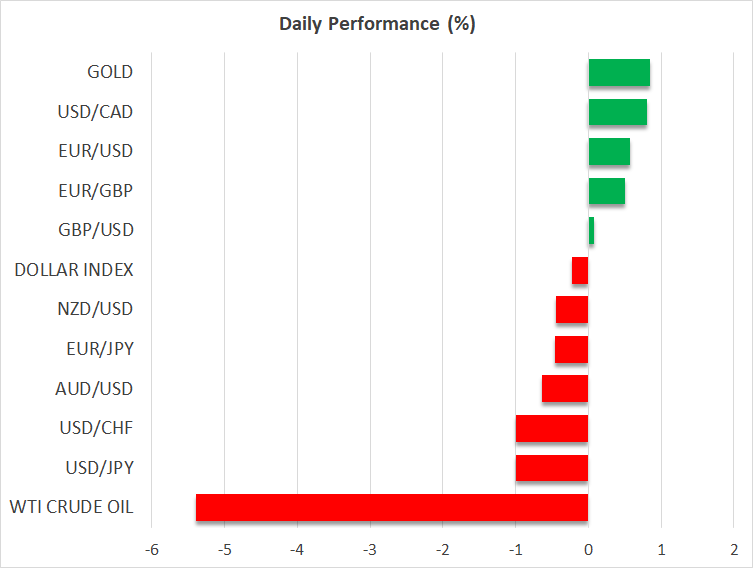
A new virus variant has come like a bolt out of the blue to rattle financial markets. The underlying concern is that vaccines may be less effective against this ‘Nu’ variant and it may spread easier thanks to its high number of mutations. The jury is still out though, as there isn’t much data available yet.
Of course, markets aren’t going to wait around until all the details are known. Traders are already running for cover, slashing their exposure to stocks and loading the truck with bonds.
European equity indices are down by roughly 3% while the S&P 500 is set to open 2% lower according to e-mini futures. The tech-heavy Nasdaq is holding up better. It is mostly ‘real economy’ stocks that are getting hammered, with the drop in yields also cushioning the blow in the tech complex.
In the FX battlefield, the yen is back in vogue as bond yields drop back and carry trades get unwound. On the other side of this coin are the commodity-linked currencies like the Australian and New Zealand dollars, which are suffering collateral damage from worries around global growth.
Just another dip to buy?
Investors have seen this movie before. The drill is that panic engulfs markets once a new variant is discovered, but ultimately the winning strategy has been to ‘buy the dip’ as central banks and governments ride to the rescue.
There may also be an element of overreaction this time, with thin liquidity conditions due to the US Thanksgiving break exacerbating the selloff. Indeed, nobody really wants to be loaded up to the brim with riskier assets ahead of the weekend and be exposed to even worse headlines come Monday.
Here’s the real risk: the Fed doesn’t have much room for helping markets out when inflation is already running above 6%. Sure, tapering may not be accelerated and one rate increase might be priced out for next year, but would that be enough to soothe markets? The ‘Fed put’ is not be what it used to be.
Dollar undecided, oil gets smashed
The dollar has been caught between opposing forces, with the slide in yields diminishing its interest rate advantage but its reserve currency status sending some safe-haven flows its way.
With fears around global growth flaring up again, oil has been the biggest casualty. Whereas earlier this week the supply side of the equation was running the show, it is now the demand picture for oil that is in the driver’s seat.
The silver lining is that there’s an OPEC+ meeting next week, and everything that’s happened lately gives the producers the perfect excuse to slow down their planned output increases. That could provide some relief to oil prices, although the real driver will be how the demand situation unfolds.
As for today, there isn’t much on the agenda. US markets will close early and the spotlight will naturally remain on any details around the variant that has petrified investors. It will be interesting to hear what the World Health Organization has to say about this when it concludes its meeting at 11:00 GMT.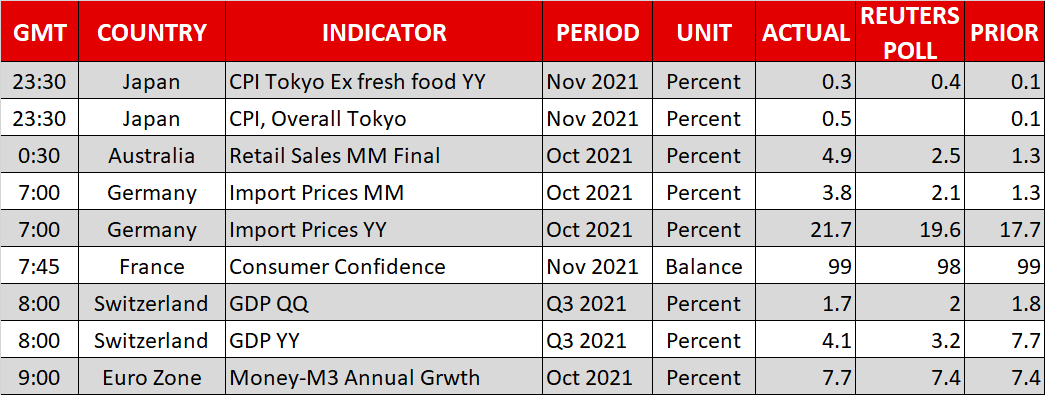
Black Friday To Be Closely Watched By Traders
The USD remained in a sideways motion against a number of its counterparts on a slow Thursday also partially due to the Thanksgiving holiday. Due to the lack of high impact financial releases we may see the market’s attention turning to the fundamentals surrounding the markets. A risk off sentiment due to Covid worries could emerge which could hurt US stockmarkets. On the other hand a drop of the US yields could support stockmarkets especially the high tech driven Nasdaq. We note that today its Black Friday which could be seen in conjunction with Thanksgiving and Cyber Monday (E-Retailers). This year’s Black Friday could also be affected by the inflationary pressures in the US and not only the US, as well. We could expect the main effect of the event to be on the stock markets and primarily felt by shares of retailers (e.g. Walmart) and E-Retailers (such as Amazon), but also producers (such as Apple, Sony and Microsoft). Should consumers actually increase their spending on Black Friday and retailers show strong numbers, investors might be inclined to believe that Q4 tends to be a very profitable one, as the holiday season kicks in. On the flip side, should retailers not meet market expectations, we could see share prices declining.
Nasdaq retreated testing the 16285 (S1) support line during today’s latte Asian session. We tend to maintain a bias for a sideways motion for the index given its movement for the past three days. On the other hand the RSI indicator below our 4-hour chart is below the reading of 50 implying an advantage for the bears. Should the bears actually take control over the index’s direction, we may see it aiming if not breaking the 16130 (S1) support line. Should the bulls say enough is enough, we may see the index breaking the 16285 (R1) line and aim for the 16460 (R2) level.
JPY strengthens by safe haven flows
JPY strengthened against the USD as it received some safe haven inflows during today’s Asian session also partially due to Covid worries. It should be noted that a new African variant of the pandemic has hit the headlines while the disease also firms its grip around Europe, intensifying worries for the recovery of the global economy. The new African variant is considered to be the most heavily mutated variant of the pandemic and scientists have mentioned that it has a big jump on evolution and very different that other variants so far, as per the BBC. It should be noted that back home, Japan has turned into a success story with its high inoculation rates, while the number of new daily cases has dropped to minimal levels. On the monetary front we maintain the view of BoJ maintaining its supportive role for the economy, while the Japanese economy continues to find difficulties in the supply chain sector slowing its recovery. Should worries for the pandemic intensify further we may see JPY enjoying more safe haven inflows which could strengthen it further.
USD/JPY dropped during today’s Asian session breaking the 115.20 (R1) support line, now turned to resistance. To switch our bias for a sideways movement in favour of a bearish outlook for he pair though we would require a clear breaking of the 114.45 (S1) support line. Please also note the downward slope of the RSI indicator below our 4-hour chart, which has just crossed below the reading of 50 also providing an advantage for the bears. Should the selling interest be intensified, we may see the pair breaking the 114.45 (S1) support line and aim for the 113.70 (S2) level. If the pair finds fresh buying orders along its path we may see it reversing course, breaking the 115.20 (R1) line and take aim for the 116.00 (R2) level.
Other market highlights for today
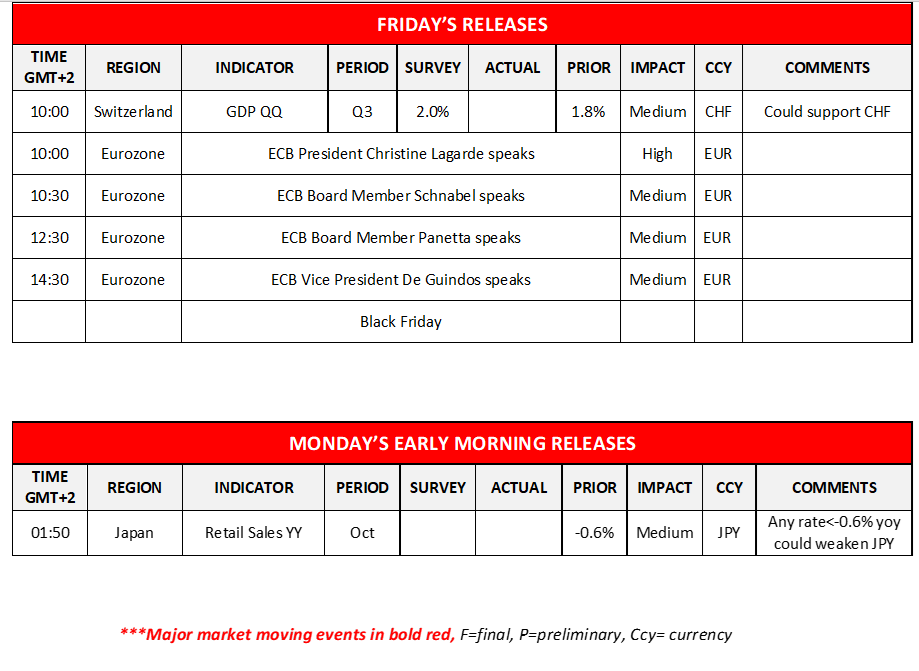
Today we note the release of Switzerland’s GDP rate for Q3. EUR traders may have a full day today as despite no EUR related financial releases, we have a high number of ECB policymakers, including Lagarde making statements today and should a dovish tone prevail we may see EUR sliding lower.
US100 Cash H4 Chart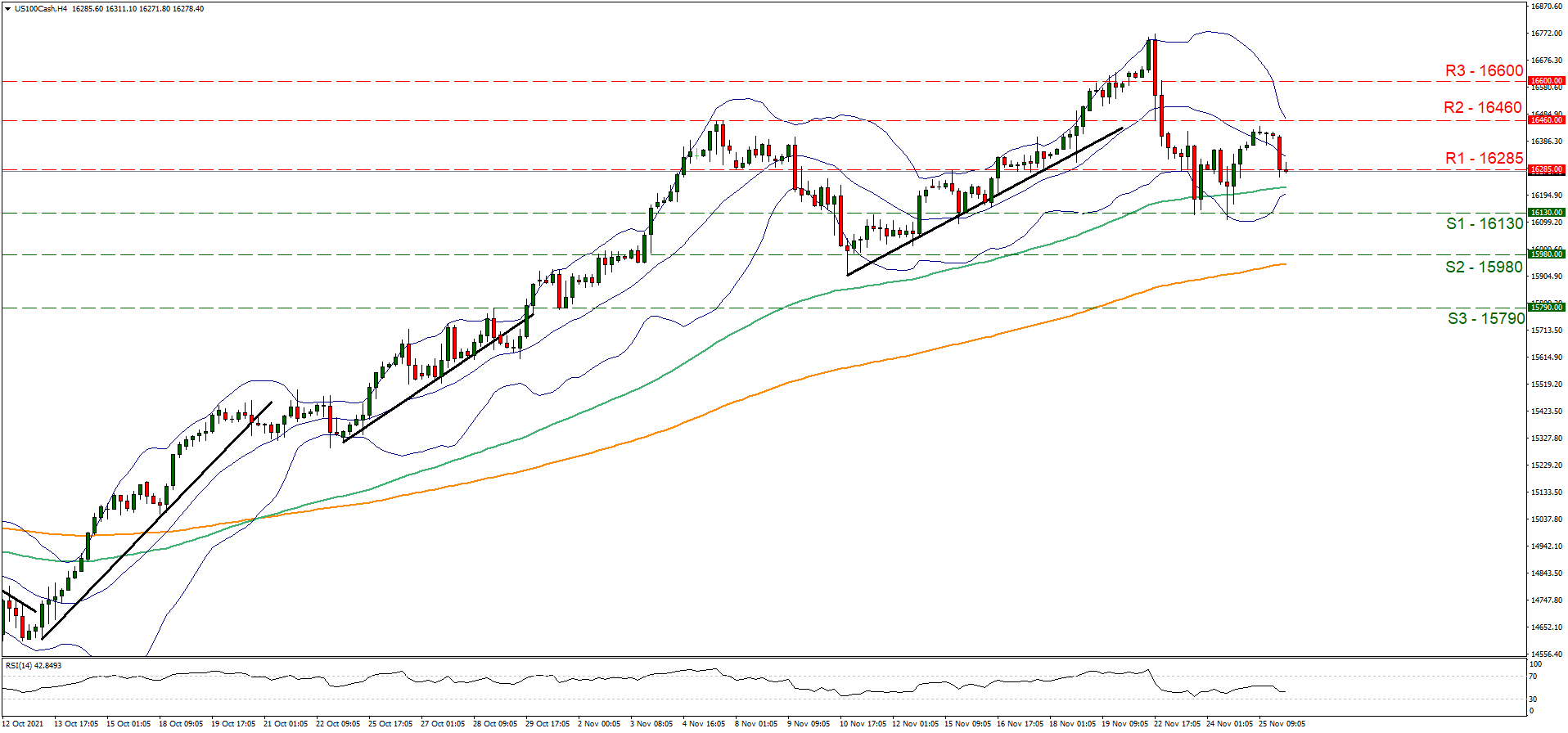
Support: 16130 (S1), 15980 (S2), 15790 (S3)
Resistance: 16285 (R1), 16460 (R2), 16600 (R3)
USD/JPY H4 Chart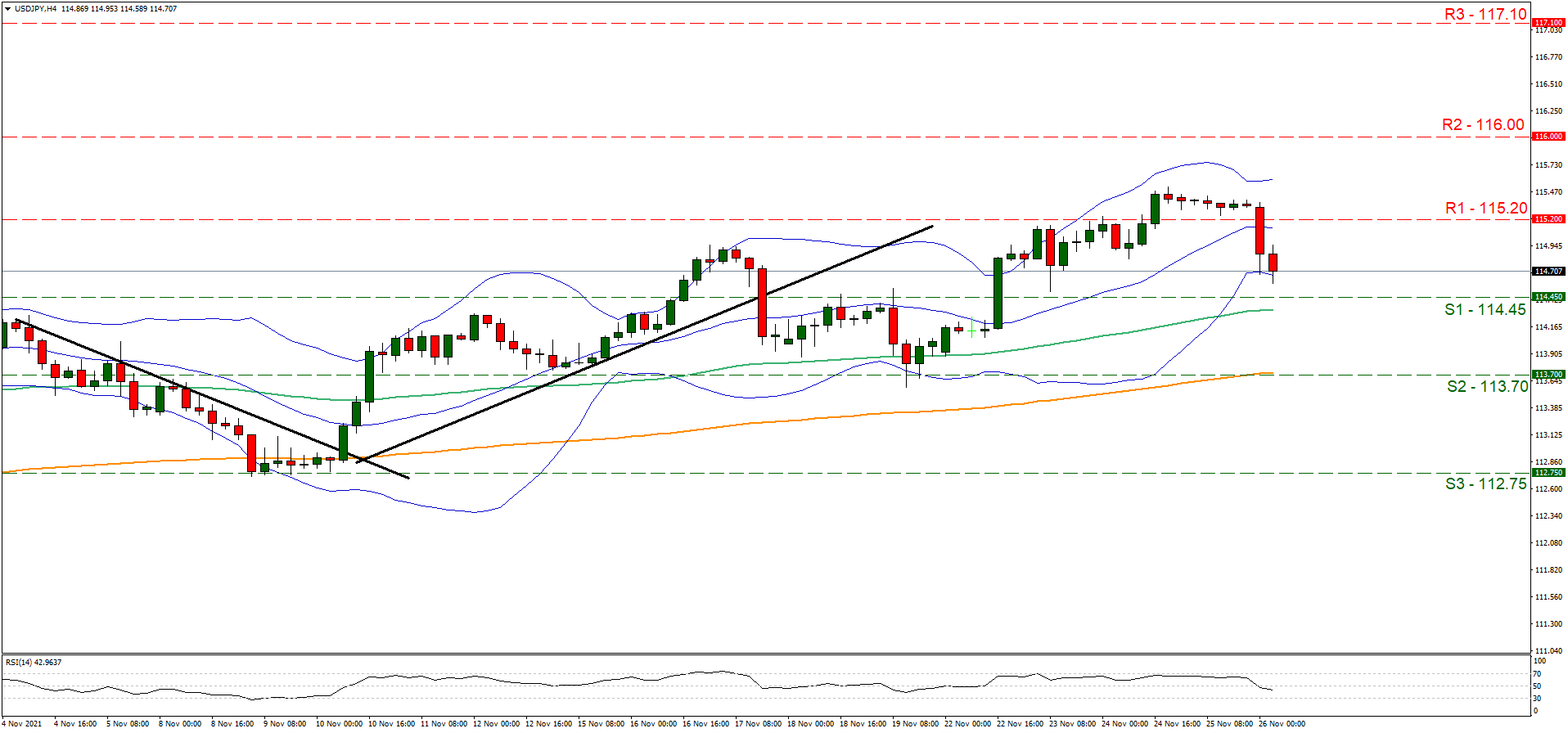
Support: 114.45 (S1), 113.70 (S2), 112.75 (S3)
Resistance: 115.20 (R1), 116.00 (R2), 117.10 (R3)
Global Markets Are Reacting Anxiously To The New Covid-19 Strain Detected In South Africa
Yesterday, the US stock market was closed due to the Thanksgiving holiday. The US stock markets have a shortened day today.
On Friday, investors dropped risky assets and switched into safe-haven assets because of a new strain of the coronavirus. Investors are worried that the strain of the virus (B.1.1.529) found in South Africa could spread internationally, preventing the global economic recovery. Many countries have already closed flights to South Africa. Investors’ fears have already pushed treasuries and the Japanese yen higher, while oil decreased by 3% and the South African rand has fallen to its lowest level in a year. The World Health Organization and scientists in South Africa are studying a recently identified variant that has been described as very different from previous versions and of great concern. This variant has a cluster of mutations that could help it bypass the body's immune response and make it more transmitted.
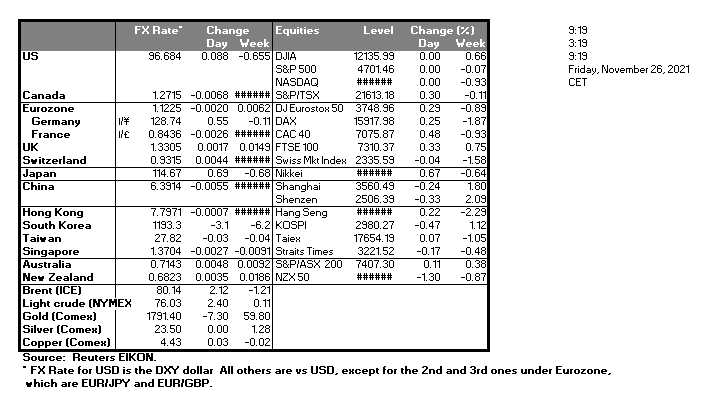
European stock indexes ended Thursday's trading higher despite a rise in the disease in the region. France's CAC 40 increased by 0.48%, Britain's FTSE 100 added 0.33%, Germany's DAX added 0.25%, Spain's IBEX jumped by 0.56%, while Italy's FTSE MIB decreased by 0.04%. Belgium is planning to take stricter measures to limit the spread of the virus tomorrow. The Czech government declared a state of emergency due to a surge in cases of coronavirus. The United Kingdom hurried to introduce restrictions on trips to South Africa and neighboring Botswana, Namibia, Zimbabwe, Lesotho, and Eswatini. The UK Health Protection Agency reported that the B.1.1.529 strain has twice as many delta strain mutations.
The European Central Bank's October meeting minutes showed that the PEPP (stimulus program) purchase could end by March 2022. At the moment, most policymakers are inclined to continue stimulus and take a cautious approach to any policy changes, despite the pressure from high inflation.
According to analysts at Goldman Sachs, the US Federal Reserve will begin a more rapid asset reduction plan from January next year, and interest rate hikes should be expected earlier than previously expected.
Oil prices fell sharply as a rise in coronavirus cases in Europe and a new Covid-19 strain raised concerns about the outlook for energy demand ahead of next week's OPEC+ meeting on production policy.
The Nikkei 225 stock index decreased by more than 3%, the highest of any major index in the region. On Friday, Japanese stocks showed a sell-off in Asia since worries about a new variant of the coronavirus and a stronger yen frightened traders. Japanese Prime Minister Fumio Kishida on Friday urged companies whose revenues have restored to pre-pandemic levels to raise wages by 3% or more in labor talks next spring, seeking a virtuous cycle of growth and wealth distribution. Last week, Bank of Japan Governor Haruhiko Kuroda confirmed his commitment to extensive monetary stimulus, adding that the central bank is ready to increase it if necessary.
China demanded that cab aggregator Didi develop a plan to leave the US exchange. In the case of privatization, the company will have to buy back its shares from investors at least at the IPO price, which is 70% higher than the current market value.
The risk-sensitive Australian dollar fell on Friday as investors began shifting funds into safe-haven currencies following the discovery of a new variant of the coronavirus. Australia's ASX 200 index also decreased by 1.73% after the opening trading, despite a surge in the retail sales index, one of the indicators of economic recovery.
Main market quotes:
- S&P 500 (F) 4,701.46 0.0 (0.0)
- Dow Jones 35,804.38 0.0 (0.0)
- DAX 15,917.98 +39.59 (+0.25%)
- FTSE 100 7,310.37 +24.05 (+0.33%)
- USD Index 96,77 -0.05 (-0.05%)
Important events for today:
- Australia Retail Sales (m/m) at 02:30 (GMT+2);
- Eurozone ECB President Lagarde’s Speech at 10:00 (GMT+2).