Sample Category Title
American Stocks And The USD Rise After Powell Reappointment
American equities and the US dollar rallied after the decision by Joe Biden to reappoint Jerome Powell as the Federal Reserve Chair. His deputy will be Lael Brainard, a Democrat. Investors were paying close attention to the decision because of regulations. In the past few years, Powell has worked to ease some of the regulations that were implemented during the last financial crisis. Lael Brainard was seen as more likely to bring more regulations to the financial sector. For example, she was expected to push banks to disclose more on their carbon financing.
Stocks also rose as signs emerged that corporate deal-making is continuing. On Monday, it was revealed that Apollo Global Management was holding talks to acquire Marks and Spencer, a leading UK retailer. The company owns about 50% of Ocado’s retail business. On the same day, Veritas Capital and Evergreen Coast Capital sold Athenahealth to Bain Capital and Hellman & Friedman for $17 billion. This was notable since the two firms bought the company for about $5.7 billion a few years ago. In another deal, Ericsson acquired Vonage for $6.2 billion.
The euro continued its downward trend after the Powell reappointment. It also declined after data showed that Eurozone’s consumer confidence declined sharply in November. It fell to -8.2 in November, the lowest level since the pandemic started. This trend will likely continue as the region goes through another wave of pandemics. Later today, the pair will react to the new German government formation and the latest flash manufacturing and services PMIs.
EURUSD
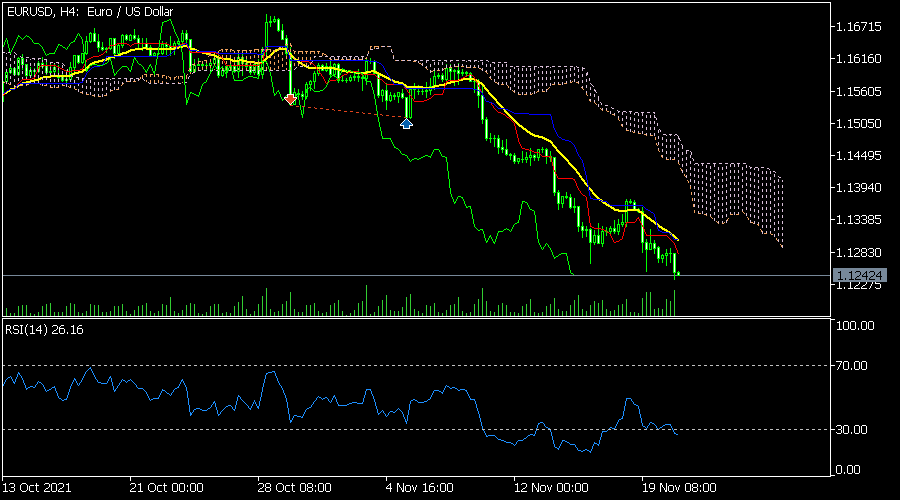
The EURUSD downward trend continued after relatively weak Eurozone consumer confidence data. It fell to a low of 1.1242, which was substantially lower than this year’s high of more than 1.2200. The pair has moved below the Ichimoku cloud and the short and long-term moving averages. The Relative Strength Index (RSI) has also moved below the oversold level. Therefore, the pair will likely keep falling as bears target the support at 1.1100.
GBPUSD
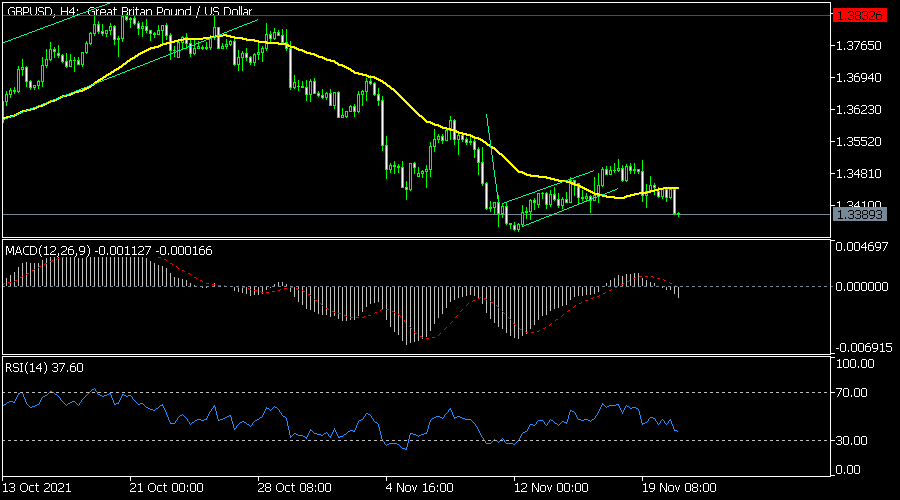
The GBPUSD pair has been forming a bearish flag pattern in the past few days. The pair managed to move below the lower side of this pattern on Monday. It is currently trading above the lowest level this year. Also, it has moved below the 25-day moving average while the MACD and the Relative Strength Index (RSI) have moved lower. The pair will likely keep falling in the coming days.
AUDUSD
The AUDUSD pair continued their bearish trend after Biden appointed Powell. It dropped to a low of 0.7227, which was the lowest level since October this year. The pair has moved between the descending channel shown in green. It has also moved below the 25-day and 50-day moving averages and the 61.8% Fibonacci retracement level. Therefore, the pair will likely keep dropping as bears target the key support at 0.7150.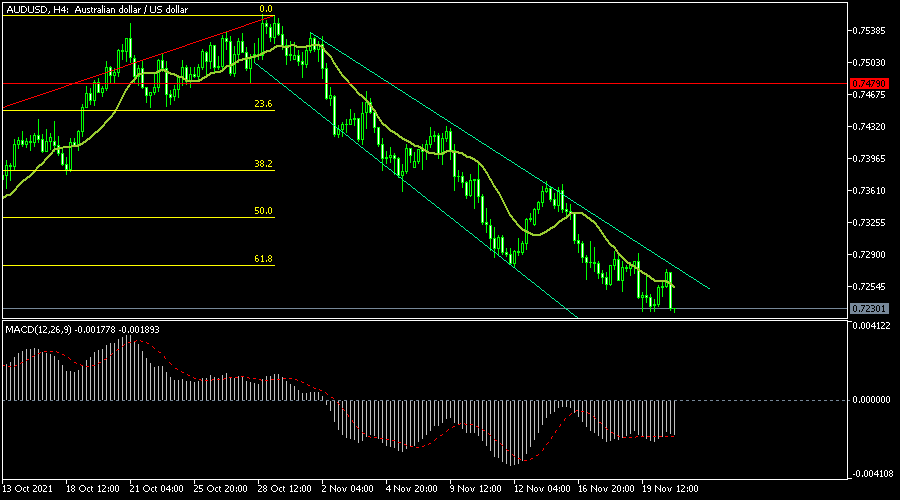
ECB Knot: Today’s inflation outlook clearly more favorable than pre-corona
ECB Governing Council member Klaas Knot said, "today's inflation outlook is clearly more favorable than it was pre-corona, in the sense that it's closer to out target."
"That's something to take into account and that should also be a measure for the recalibration of asset purchases that we need to undertake in December," he added.
Knot also predicts that the PEPP asset purchase would end in March, in spite of new pandemic restrictions being rolled out. He expects rate hike to happen some time after 2022. But, "if market is right on inflation, then it is also right on rates pricing."
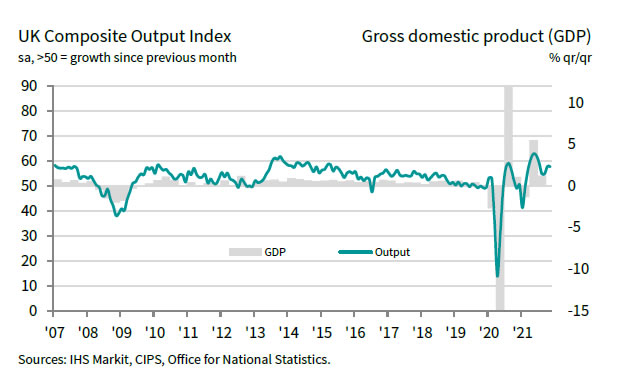
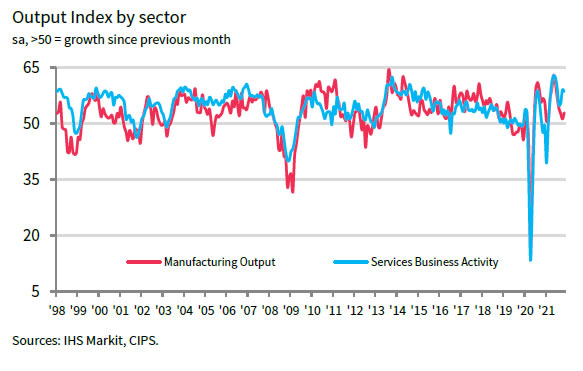
UK PMI composite ticked down to 57.7, giving green light for BoE rate hike
UK PMI Manufacturing rose to 58.2 in November, up from 57.8, above expectation of 56.7. PMI Services dropped to 58.6, down from 59.1, below expectation of 58.5. PMI Composite ticked down to 57.7, down from 57.8.
Chris Williamson, Chief Business Economist at IHS Markit, said: "A combination of sustained buoyant business growth, further job market gains and record inflationary pressures gives a green light for interest rates to rise in December... For policymakers concerned about the health of the labour market after the end of the furlough scheme, the buoyant jobs growth signalled should bring some reassuring comfort.
"A record increase in firms' costs will meanwhile further stoke fears that inflation will soon breach 5%, with lingering near-record supply delays adding to indications that price pressures may show few signs of abating in the near-term. The relatively poor performance of manufacturing is likely to remain a concern for some time, however, as is the potential to see tighter growth-inhibiting COVID-19 restrictions applied amid high COVID-19 case numbers both at home and now also in continental Europe.
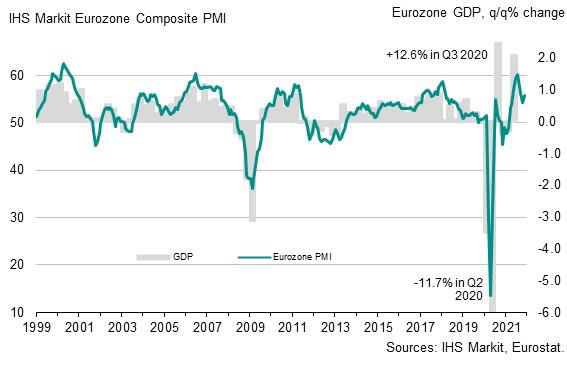
Eurozone PMI manufacturing rose slightly to 58.6, services rose to 56.6
Eurozone PMI Manufacturing rose slightly to 58.6 in November, up from 58.3, above expectation of 57.2. PMI Services rose to 56.6, up from 54.6, above expectation of 53.6.
Chris Williamson, Chief Business Economist at IHS Markit said:
"A stronger expansion of business activity in November defied economists' expectations of a slowdown, but is unlikely to prevent the eurozone from suffering slower growth in the fourth quarter, especially as rising virus cases look set to cause renewed disruptions to the economy in December.
"The manufacturing sector remains hamstrung by supply delays, restricting production growth to one of the lowest rates seen since the first lockdowns of 2020. The service sector's improved performance may meanwhile prove frustratingly short-lived if new virus fighting restrictions need to be imposed. The travel and recreation sector has already seen growth deteriorate sharply since the summer.
"With supply delays remaining close to record highs and energy prices spiking higher, upward pressure on prices has meanwhile intensified far above anything previously witnessed by the surveys.
"Not surprisingly, given the mix of supply delays, soaring costs and renewed COVID-19 worries, business optimism has sunk to the lowest since January, adding to near-term downside risks for the eurozone economy."
The Analytical Overview Of The Main Currency Pairs
The EUR/USD currency pair
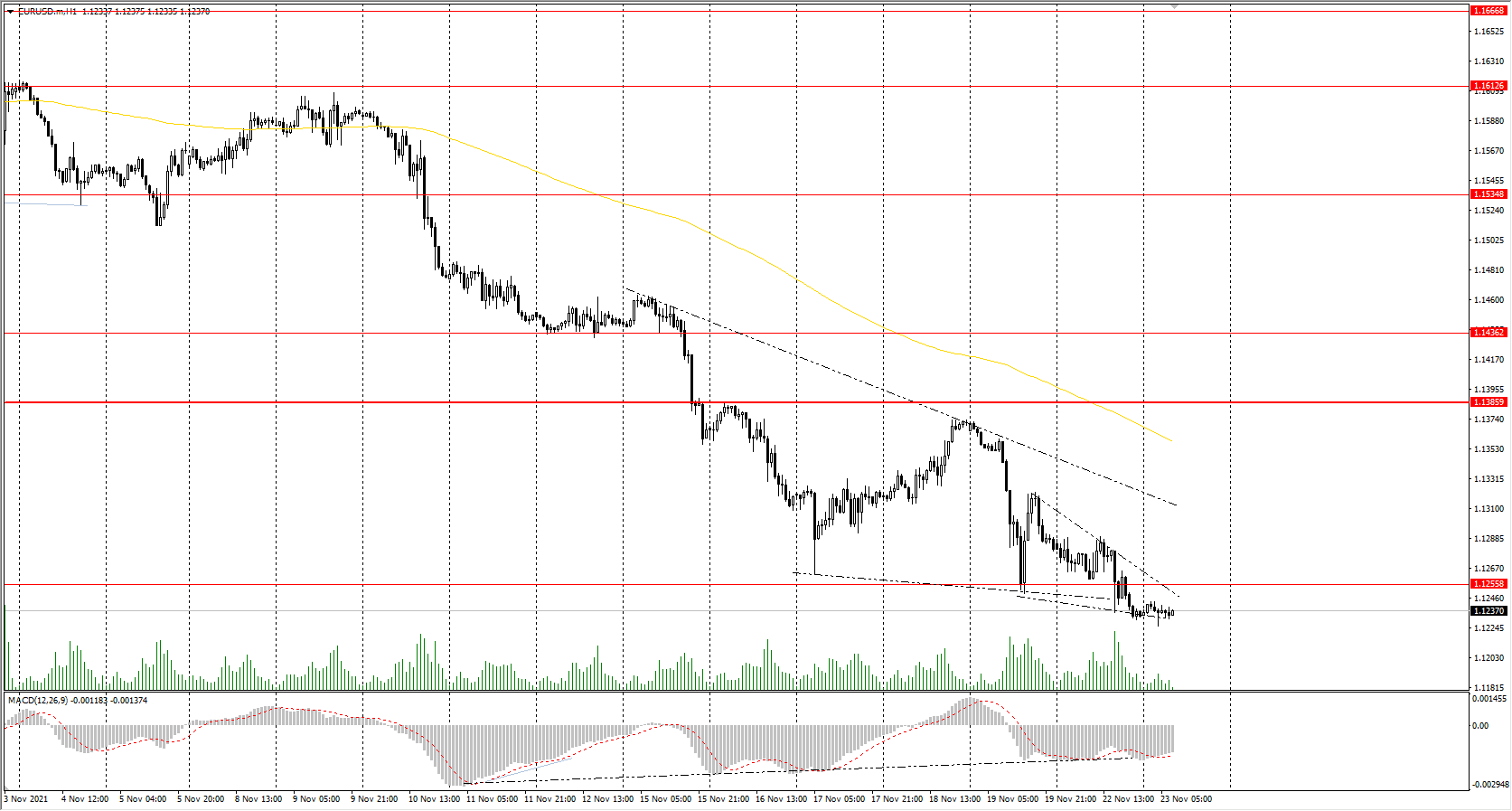
Technical indicators of the currency pair:
Prev Open: 1.1285
Prev Close: 1.1233
% chg. over the last day: -0.46%
Inflationary expectations are rising again in Germany. The Bundesbank predicts a jump in inflation to a level close to 6%. The euro continues to decline against the dollar after Powell's reappointment. With the ECB planning to start cutting back its stimulus program only next March, the Euro will continue to decline against the dollar in the medium term.
Trading recommendations
Support levels: 1.1256, 1.1168
Resistance levels: 1.1386, 1.1436, 1.1535, 1.1613, 1.1667, 1.1717
From a technical point of view, the EUR/USD is bearish on the hour time frame. The Euro continues to show weakness. The MACD indicator has become negative again, but there are signs of divergence at several time frames, so traders should expect a technical rebound. Under such market conditions, traders should consider sell positions from the resistance levels near the moving average since the price has deviated strongly from the averages. Buy trades should be considered only from the support levels of the higher time frame, given the buyers’ initiative, but only with short targets.
Alternative scenario: if the price breaks out through the 1.1386 resistance level and fixes above, the mid-term uptrend will likely resume.
News feed for 2021.11.23:
- Germany Manufacturing PMI (m/m) at 10:30 (GMT+2);
- Germany Services PMI (m/m) at 10:30 (GMT+2);
- Eurozone Manufacturing PMI (m/m) at 11:00 (GMT+2);
- Eurozone Services PMI (m/m) at 11:00 (GMT+2).
The GBP/USD currency pair
Technical indicators of the currency pair:
Prev Open: 1.3445
Prev Close: 1.3394
% chg. over the last day: -0.38%
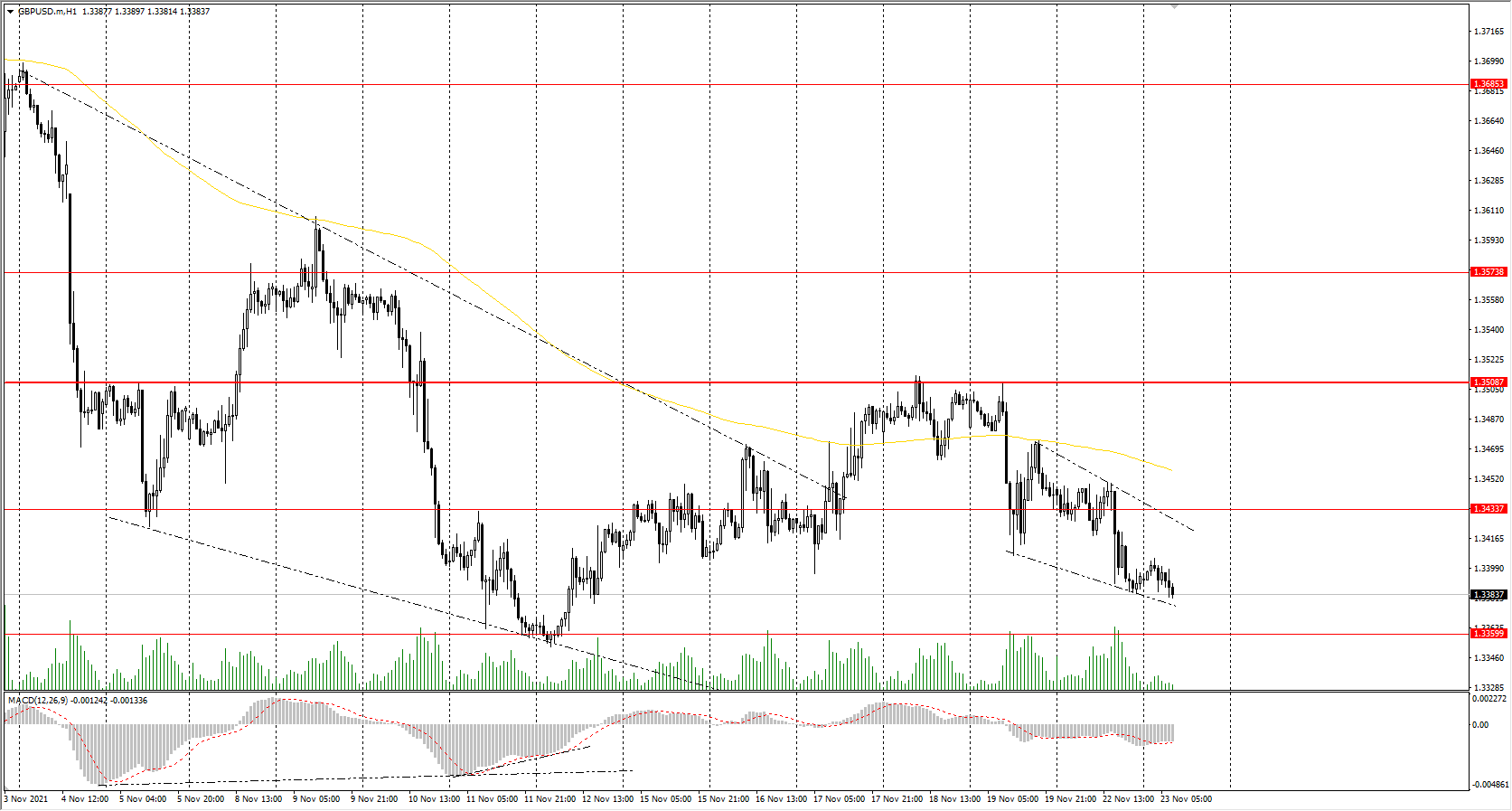
Traders are increasingly negative on the pound, betting that the decline will continue, which has already brought the currency close to its lowest level this year. The strength of the dollar, Brexit, and doubts in the decisiveness of the Bank of England are putting pressure on the currency.
Trading recommendations
Support levels: 1.3360
Resistance levels: 1.3434, 1.3507, 1.3575, 1.3685, 1.3748
On the hourly time frame, the trend on GBP/USD is bearish. The MACD indicator has become negative, sellers' pressure intensified. Under such market conditions, traders should consider sell positions from the resistance level near the moving average. Buy trades should be considered only from the support levels of the higher time frame, given the buyers’ initiative.
Alternative scenario: if the price breaks out through the 1.3507 resistance level and consolidates above, the bullish scenario will likely resume.
News feed for 2021.11.23:
- UK Manufacturing PMI (m/m) at 11:30 (GMT+2);
- UK Services PMI (m/m) at 11:30 (GMT+2).
The USD/JPY currency pair
Technical indicators of the currency pair:
Prev Open: 114.03
Prev Close: 114.86
% chg. over the last day: +0.73%
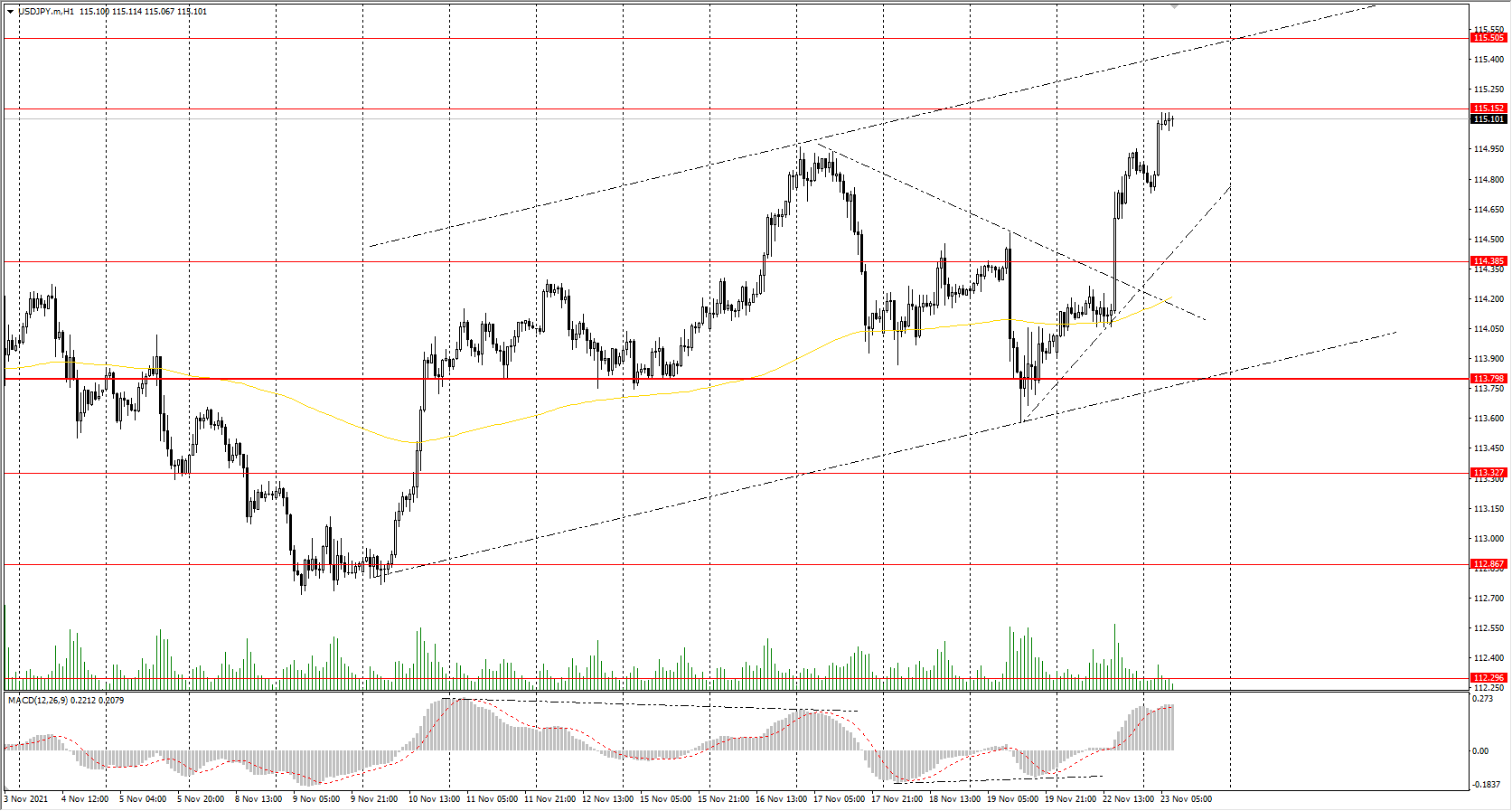
Today, it’s a bank holiday in Japan, so the Japanese Yen will be fully correlated with the dollar index. Yesterday, the USD/JPY quotes jumped sharply due to the strengthening of the dollar index. Fundamentally, the Japanese Yen will continue to decline against the USD.
Trading recommendations
Support levels: 114.38, 113.79, 113.32, 112.87, 112.30
Resistance levels: 115.15, 115.50
The global trend on the USD/JPY currency pair is bullish. Yesterday, the quotes jumped sharply, forming below the buyers' initiative zones. The MACD indicator is positive, but there are the first signs of divergence. Under such market conditions, it’s better to look for buy positions from the buyers' initiative zone near the moving average. Sell positions should be considered from the resistance levels of higher time frames, given there is sellers' initiative, but only with short targets.
Alternative scenario: if the price falls below 113.79, the uptrend will likely be broken.
The USD/CAD currency pair
Technical indicators of the currency pair:
Prev Open: 1.2639
Prev Close: 1.2699
% chg. over the last day: +0.47%
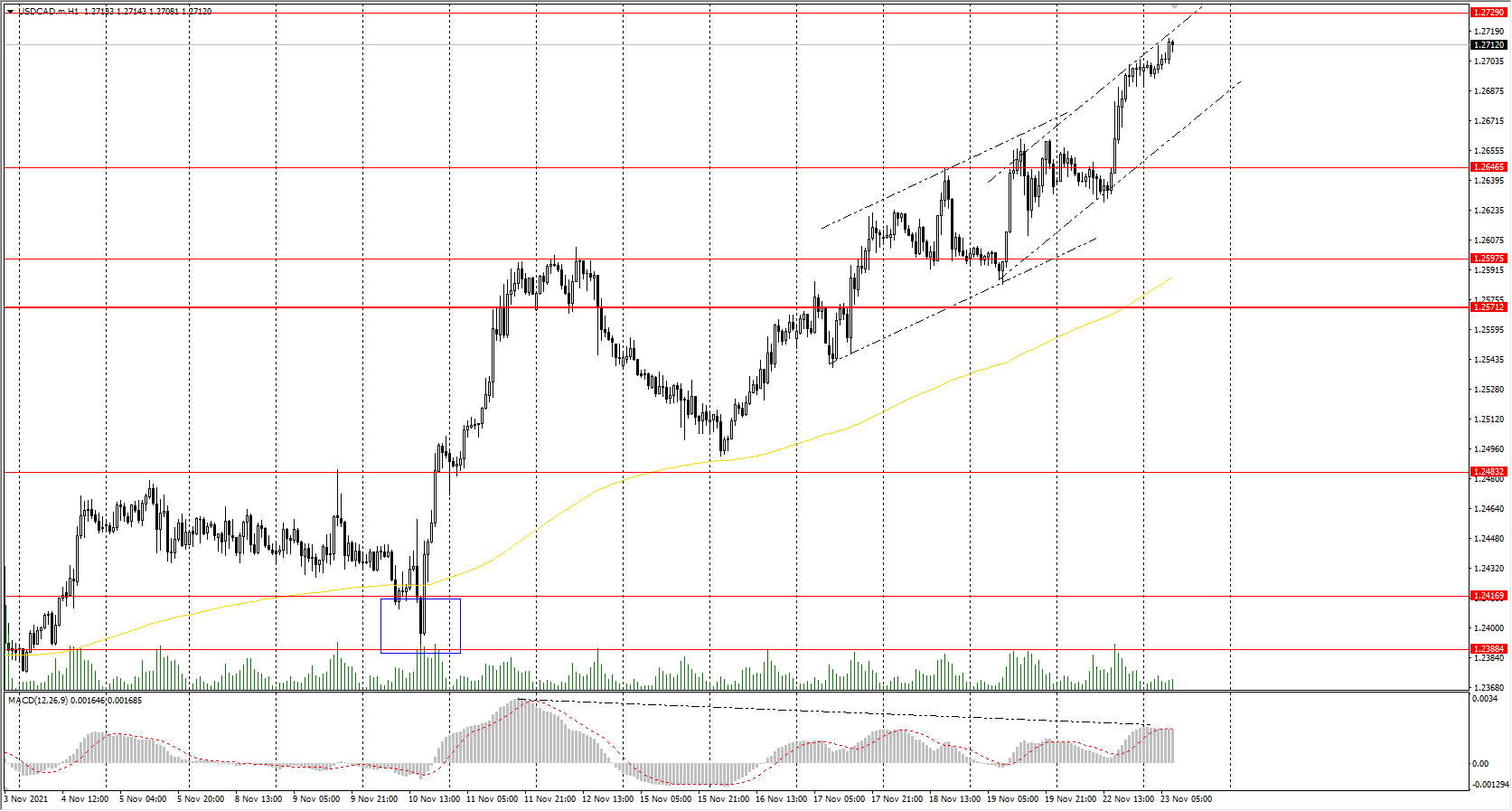
The Canadian dollar is a commodity currency, so the USD/CAD currency pair highly depends on the dollar index dynamics and oil prices. Yesterday, the dollar index increased sharply on the news of the Fed governor reappointment, while oil quotes decreased on possible oil reserves released by the USA, Japan, and India. As a result, the USD/CAD currency pair increased due to the strengthening US dollar.
Trading recommendations
Support levels: 1.2646, 1.2598, 1.2571, 1.2483, 1.2416, 1.2388
Resistance levels: 1.2729
From a technical point of view, the trend of the USD/CAD currency is bullish. The MACD indicator is in the positive zone, but there are signs of divergence on several time frames, which indicates the weakness of the buyers. Under such market conditions, it is better to look for buy trades from the support levels near the moving average, as the price has strongly deviated from the average values. Sell deals should be considered from the resistance levels of the higher time frames.
Alternative scenario: if the price breaks down through the 1.2571 support level and fixes below, the downtrend will likely resume.
GBPUSD Edges Towards 2021 Lows As Bears Resurface
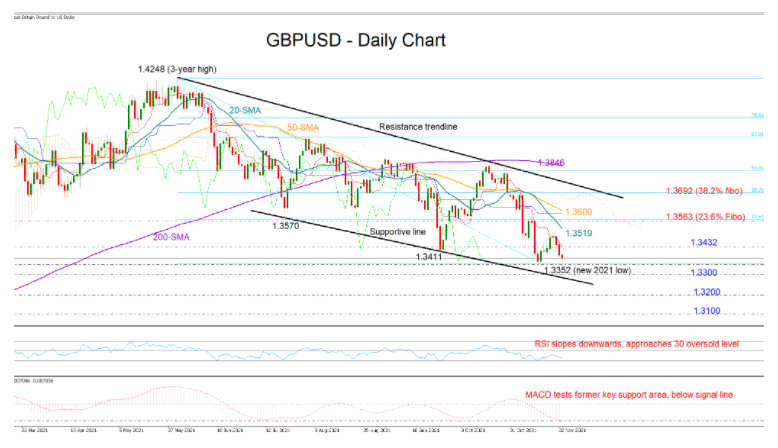
GBPUSD has erased last week’s gains, which barely touched the 1.3500 level, bringing its 2021 low of 1.3352 back into scope.
There is speculation for additional bearish sessions in the short term given the negative slope in the RSI, and the falling red Tenkan-sen line, which has been a key barrier to upside movements over the past three weeks. On the bright side, the MACD has reached its former support region, raising the odds for a potential reversal in the price, though as long as it holds below its red signal line, the base scenario is for the pair to continue lower.
A step below 1.3352 could immediately pause around the 1.3300 number, while within breathing distance, the supportive line, which joins all the lows from the end of July, could cement that floor, preventing any deterioration towards the 1.3200 mark.
Alternatively, for the bulls to re-enter the game in the near term, the price will need to close above the red Tenkan-sen line at 1.3432. If that is the case, the spotlight will turn to the 20-day simple moving average SMA) currently around the swing high of 1.3512. Crossing above that border, the 23.6% Fibonacci retracement of the 1.4248 – 1.3352 downleg at 1.3563 and the 50-day SMA at 1.3600 could be the next hurdles before a crucial battle starts around the resistance trendline and the 38.2% Fibonacci of 1.3694. Note that a decisive close above that area is required to brighten the outlook in the big picture.
Summarizing, negative risks are still evident in GBPUSD. A forceful move above 1.3432 could improve market sentiment, while a drop below 1.3352 could motivate fresh selling.
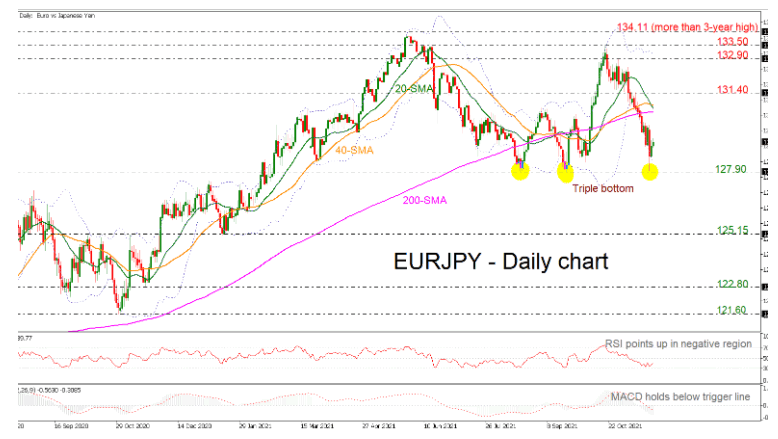
EURJPY Rebounds Off Triple Bottom At 127.90
EURJPY has been in an upside corrective mode after the rebound off the 127.90 level, creating a triple bottom.
Technically, the RSI indicator is pointing upwards in the negative region, confirming the recent bullish move; however, the MACD is still holding below its trigger and zero lines. In trend indicators, the 20- and 40-day simple moving averages (SMAs) posted a bearish crossover in the short-term, approaching the 200-day SMA as well.
If the price continues the upside move, immediate resistance could come from the 200-day SMA at 130.56 ahead of the negative cross of the short-term SMAs at 130.75. Breaching these lines, the barrier could meet the 131.40 barrier ahead of the 132.90 level.
On the flip side, a potential downside movement could test again the 127.90 bottom. A successful break below this key support, it could shift the outlook to strongly negative, hitting the 125.15 hurdle and the 122.80 level.
Summarizing, EURJPY is creating a triple low around 127.90 and any moves beneath this line could endorse the bearish bias. Though, a jump beyond the more-than-three-year high of 134.11 could switch the outlook to positive.
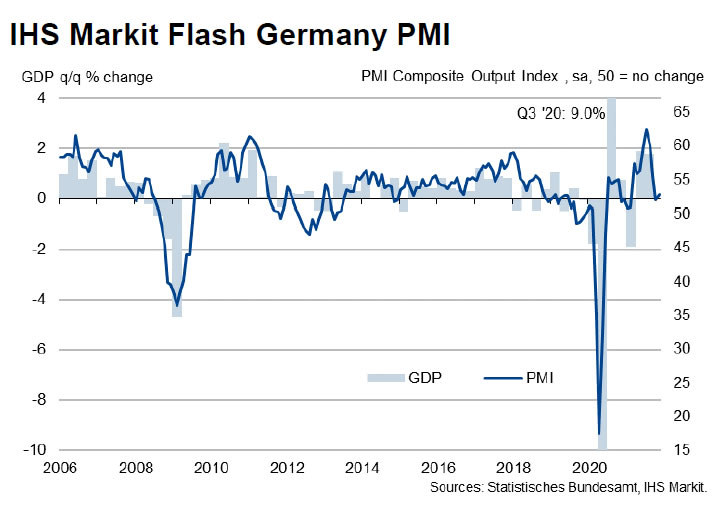
Germany PMI manufacturing ticked down to 57.6, services rose to 53.4
Germany PMI Manufacturing ticked down to 57.6 in November, from 57.8, but beat expectation of 56.7. That's nonetheless the lowest level in 10 months. PMI services rose slightly to 53.4, up from 52.4, above expectation of 51.5. PMI Composite rose to 52.8, up from 52.0.
Lewis Cooper, Economist at IHS Markit said:
"The flash PMI data for November point to a general levelling off the economic growth slowdown seen across the German private sector over the previous three months. Business activity continued to rise, with the rate of increase gaining some well needed momentum as manufacturers and services firms alike saw faster uplifts in output.
"Supply delays continued to weigh heavily on the performance of the German economy, however, with inflows of new work rising at a slower pace as clients held off on ordering due to delays. Export orders showed a more resilient trend, but nonetheless, overall new work increased at the weakest rate since February.
"Material shortages, combined with greater energy and wage bills, price hikes at suppliers and logistical issues led to an unprecedented rate of cost inflation in November, with German companies subsequently raising their own charges to a record degree. This subsequently knocked on to business confidence in November, with sentiment the lowest for over a year as many firms cited concerns around the pandemic, supply problems and price pressures.
"Overall, the flash PMI data point to a slightly improved trend for business activity, but supply delays and inflationary pressures remain a key cause for concern and are likely to weigh further on growth in the coming months, especially if these constraints further stifle demand."
AUD/USD Outlook: Aussie Extends South After Recovery Stalled
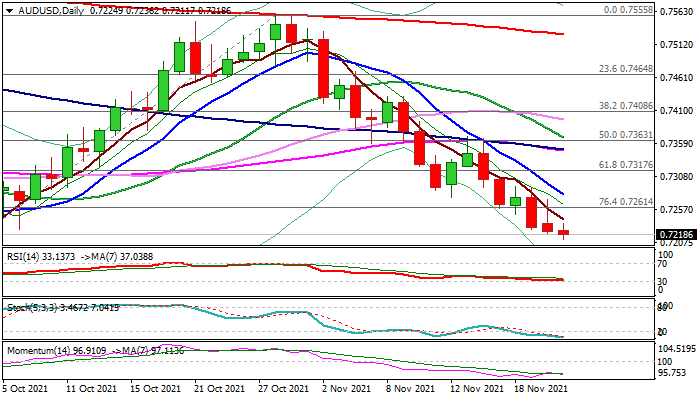
The Australian dollar fell further and hit new seven-week low in early Tuesday, after short-lived Monday’s recovery attempts.
Fresh strength of the US dollar after Jerome Powell got the second term as Fed Chair, further deflated.
The Aussie which was down almost 4% in past three weeks, pressured by risk aversion and growing hopes for Fed’s earlier-than-expected rate hike.
Diverging US and Australian rate outlook, as the US is likely to make the first hike in mid-2022 while the RBA announced it may stay on hold until 2024, added pressure on Aussie dollar.
Repeated close below pivotal Fibo support at 0.7261 (76.4% of 0.7170/0.7555), which now acts as solid resistance, following Monday’s strong rejection here.
Bears pressure supports at 0.7206/0.7194 (converged 100/200WMA’s), break of which would open way towards key support at 0.7170 (Sep 29 low).
Bearish daily studies support the action, with upticks on oversold conditions expected to offer better selling opportunities, while holding below 0.7280/0.7317 (falling 10DMA / broken Fibo 61.8%).
Res: 0.7242, 0.7261, 0.7280, 0.7317.
Sup: 0.7194, 0.7170, 0.7106, 0.7053.
NZD/JPY Seeks Support
The New Zealand dollar remains under pressure after disappointing retail sales in Q3.
The kiwi is seeking support after a surge above last May’s peak at 81.20 led the daily RSI into an overbought situation. Short-term sentiment remains bearish as the pair struggles to achieve a new high.
80.55 is a major resistance after the bulls’ multiple failed attempts. A bullish breakout may pave the way for a reversal towards 82.00. Otherwise, a drop below 79.50 would send the pair towards September’s high at 78.50.