

Sample Category Title
GBP/USD Retraces To Resistance Near 1.3770
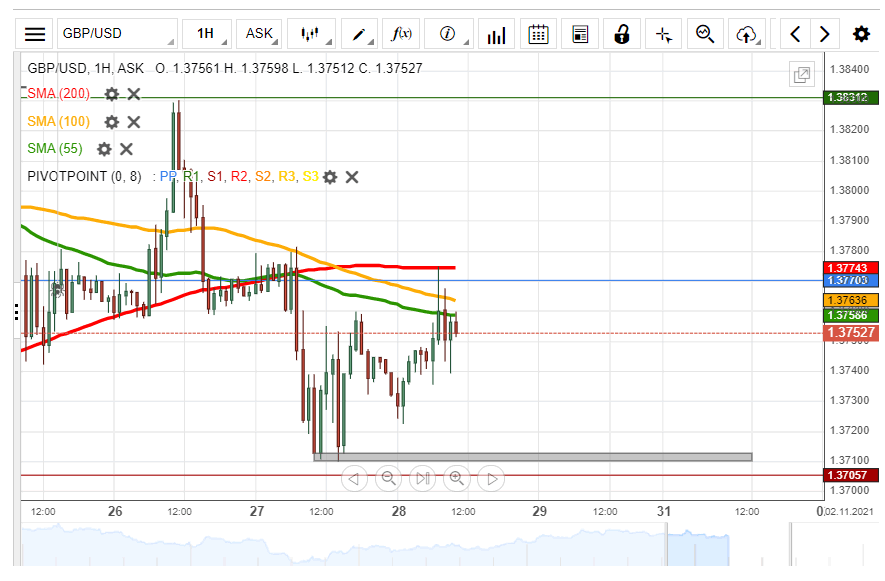
On Wednesday, the GBP/USD found support at 1.3710 and started a recovery. By the middle of Thursday's trading hours, the GBP/USD had reached the 1.3770 level. From 1.3760 up to 1.3777, the pair faced the resistance of the 55, 100 and 200-hour simple moving averages and the weekly simple pivot point.
A passing of the 1.3760/1.3777 zone would leave the pair with no technical resistance as high as the 1.3831 level, where the weekly R1 simple pivot point is located at. However, the 1.3800 level might act as a resistance level.
However, a decline of GBP/USD might look for support in the 1.3710 level first. Afterwards, the weekly S1 simple pivot point at 1.3706 and the 1.3700 could keep the pair up.
USD/JPY Finds Support In 113.40
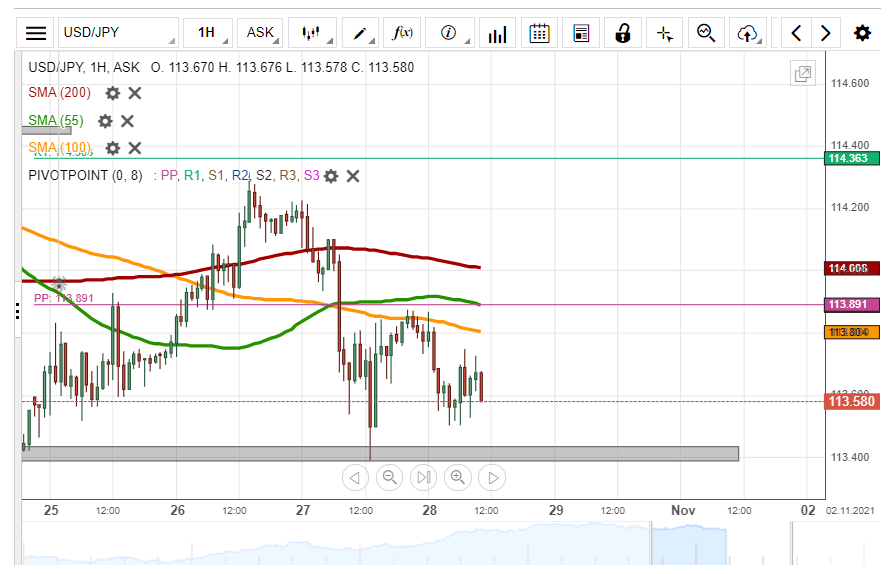
The USD/JPY has confirmed once again that the 113.40 level and the zone above it can provide support. Namely, the pair bounced off the support level on Wednesday and retraced to the resistance levels near 113.90. Near the 113.90 mark, the pair found resistance in the combination of the 55 and 100-hour simple moving averages
If the USD/JPY surges, it would have to pass the resistance levels near 113.90. Afterwards, the 114.00 mark could keep the rate down. Note that the 114.00 mark is being strengthened by the 200-hour simple moving averages.
Meanwhile, a potential decline of the USD/JPY currency exchange rate might look for support in the 113.40 level. A passing of the 113.40 mark might result in a drop to the weekly S1 simple pivot point at 113.08.
GOLD Reaches Above 1,800.00
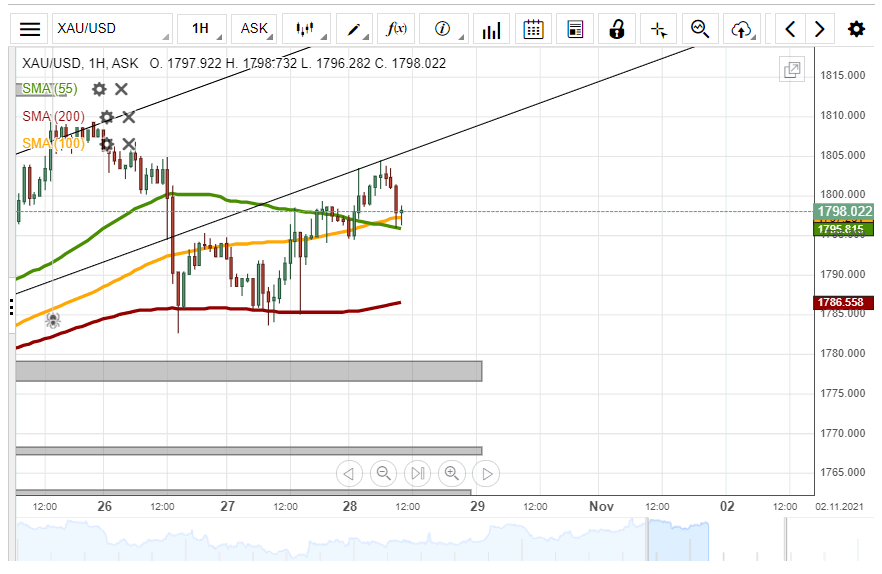
The price of gold found enough support in the 200-hour simple moving average to surge and pass the 1,800.00 level together with the 55 and 100-hour simple moving averages, which strengthened the round price level. On Thursday morning, the price was testing the resistance of the 1,805.00 level.
If the price continues to surge, it would most likely test the resistance of the 1,810.00 level, which reversed the metal's recovery on Monday.
On the other hand, a decline of the metal could find support in the combination of the 55 and 100-hour simple moving averages above the 1,795.00 level. Below the 1,795.00, the 200-hour SMA at 1,786.00 might once again act as a support level.
Oil Slides, Gold Rises On Risk Apprehension
Oil prices tank in Asia
Oil prices are in full retreat in Asia after a very soft overnight session, and it looks as if the long-awaited downside correction is now in progress. Overnight, official US Crude Inventories unexpectedly rose by 4.27 million barrels, sending shivers through the speculative long community. Markets ignored the huge drops in gasoline stocks, and the very concerning 3.90 million-barrel fall in Cushing Hub stocks to concentrate on the headline number. That again is an indication of a market heavily long and losing momentum.
Probably the main reason oil has fallen, apart from the speculative long excess, is the news that Iran said it would resume nuclear talks with world powers by the end of November. The prospect of a full return of Iranian crude to world markets would be a bit of a game-changer and appears to be the main reason Asia is selling today, combing with a culling of speculative long open-interest.
Overnight, Brent crude fell 2.30% to USD 84.15 barrel. WTI slumped by 2.60% to USD 84.15 a barrel. Notably, Brent crude has smashed through trendline support at USD 84.05 this morning, with WTI testing its multi-month trendline support in Asia today. Both represent a bearish development. Brent crude has fallen by 1.60% to USD 82.80 in Asia, with WTI retreating by 1.25% to USD 81.10 this morning so far. A close-by Brent crude below the USD 84.05 trendline would be a bearish technical development. It has support at USD 82.00 and USD 80.00 a barrel. WTI is hovering just above its USD 81.05 trendline at USD 81.15, with its next support at USD 79.50. Resistance is at USD 82.00 a barrel.
I have been waiting for this correction to occur for a while now and losses for Brent crude and WTI could easily extend to USD 81.00 and USD 79.50, with WTI potentially playing catchup to Brent. The Iran news, if it is indeed true, could keep both contracts lower over the session. However, I expect physical market short-term fundamentals to reassert themselves by early next week at the latest, if not by tomorrow, and for oil prices to start rising once again. Notably, the relative strength indexes (RSIs) on both contracts have plunged back to neutral territory, further improving the buy-the-dip picture for the brave.
Gold’s rises as global nerves increase
Gold prices rose overnight as US 10-year yields slipped and risk sentiment faltered generally. Gold rose 0.23% to USD 1797.00, before climbing another 0.20% to USD 1800.00 an ounce in Asia as investors’ nerves become frayed. Notably, gold held its multi-week trendline support at USD 1782.50 an ounce exactly overnight, a bullish technical development.
In the near-term, gold looks set to benefit from more haven flows and if the trendline at USD 1782.50 and $1780.00 an ounce hold, gold’s price action remains constructive. That said, investors’ attention seems to be turning towards next week’s FOMC. The expectation of the announcing of the Fed taper will probably limit gains. Gold is likely to trade in a USD 1780.00 to USD 1820.00 an ounce range ahead of the FOMC meeting. A move above USD 1835.00 would be a powerful bullish technical signal though, but my base case is that gold’s retreat resumes into next week after the FOMC.
Failure of USD 1780.00 therefore, likely signals deeper losses targeting USD 1750.00 in the first instance. Conversely, if gold overcomes formidable resistance into USD 1835.00, it will signal further gains to USD 1900.00 and possibly USD 2000.00 in the coming weeks, as the break would trigger an inverse head-and-shoulders formation.
The US Dollar Remains A Bastion Of Calm
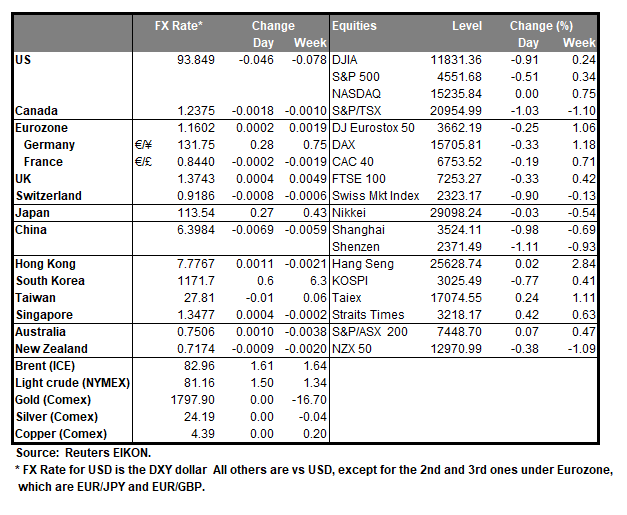
Currency markets remain a relative bastion of calm compared to other asset classes at the moment, with the US dollar once again holding steady overnight. The dollar index fell just 0.11% to 93.86 where it remains this morning. The 93.50 to 94.00 range continues to hold nicely, and the US dollar’s next directional move awaits a break either way. As the FOMC approaches, I am erring to US dollar strength, especially if short-dated yields keep rising on inflation looking less transitory, and more sticky.
Euro vulnerable as ECB meets
EUR/USD is steady at 1.1605 ahead of today’s ECB meeting with 1.1670 and 1.1520 the levels to watch. A dovish ECB should set the single currency up for a test of 1.1500. Lower borrowing requirements forecast next year in the overnight budget has seen GBP/USD edge back to 1.3740, with a break of 1.3700 likely triggering a washout of the BOE hiking longs. USD/JPY has fallen 20 points to 113.60 post-BOJ, but I suspect a narrowing of the 10-year US/Japan yield differential, and exporter selling above 114.00, mostly explain the fall. 114.50 is unlikely to be retested before the FOMC next week.
Elsewhere, the commodity currencies continue to maintain gains but appear to be running out of steam for now as risk sentiment turns down. Rather surprisingly, USD/CAD finished almost unchanged at 1.2470 overnight, despite the BOC abruptly ending its QE programme and signalling rate hikes. That is probably as good a warning of slowing momentum in the commodity currency space as any, especially with base metals and energy prices under temporary pressure. The rise in Australian rates is supporting AUD/USD for now as it trades near unchanged at 0.7505. A break of 0.7450 or 0.7550 will signal its next directional move. NZD/USD is holding mid-range at 0.7175. With the RBNZ priced in and Delta cases appearing in two South Island cities, NZD/USD is now the most vulnerable of the three, with a break of 0.7120 confirming the start of a downside correction.
Asian currencies remain steady after another neutral PBOC fixing. But with investor sentiment ebbing internationally, and a poor week for local stock markets and increasing China concerns, Asian FX may have seen the best of its recent rally. USD/KRW, having fallen the most recently, is vulnerable to a short-squeeze now. Similarly, the Indonesian rupiah and Malaysian ringgit, with their high beta to commodity prices, could see a return of selling pressure.
Spotlight Shines On ECB Meeting And Q3 US GDP
Asian markets were under pressure on Thursday, following the mostly negative cues from Wall Street overnight as investors adopted a cautious approach towards risk.
Concerns seem to be mounting over rising inflation prompting central banks to tighten monetary policy at a time when the global economy is still recovering from Covid-19. This unease may be reflected in risk sentiment with European and US stock futures mixed ahead of another busy day for financial markets. There is certainly a lot on the plate, ranging from the European Central Bank meeting and updated earnings from tech titans to the third quarter US GDP report among other key economic data.
Earlier this morning, the Bank of Japan left interest rates unchanged as widely expected. However, it cut this year’s economic growth forecast to 3.4% compared to the 3.8% previously expected. The bank’s inflation estimate for the year ending March 2022 was also cut to 0% from the 0.6% seen in July.
Euro on standby ahead of ECB
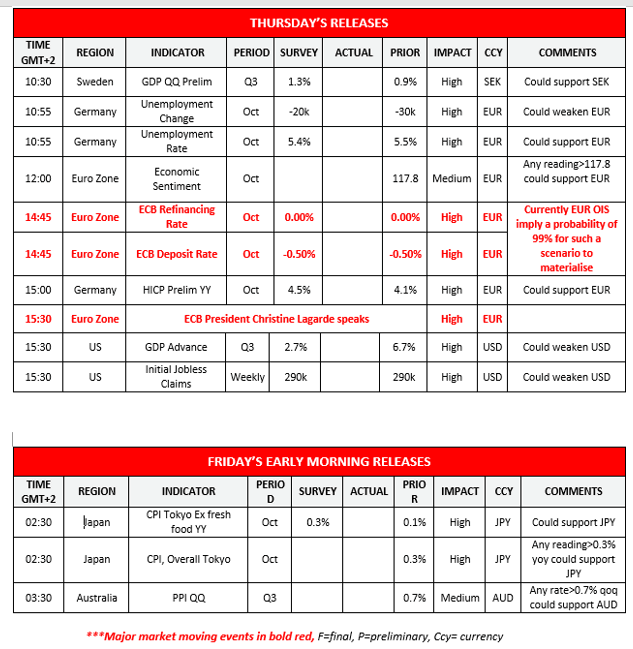
The European Central Bank is widely expected to leave monetary policy unchanged today. However, it may be unwise to label the meeting as a non-event given that rising inflationary pressures in Europe pushed euro-area CPI to the highest level since September 2008. It will be interesting to hear what President Christine Lagarde has to say, especially after she recently stated that inflation is largely transitory and unlikely to last.
Another topic of interest will be interest rate hikes. Markets have been pricing in a strong chance of a rise by the end of 2022, but the ECB is expected to pour cold water on these expectations. The market will also listen out for any hints the bank might offer about the future of the Pandemic Emergency Purchase Programme (PEPP) which expires in March 2022. The ECB is set to wait until December before making any formal decisions on the PEPP.
Should the overall tone of the meeting sound dovish, this may weaken the euro against its major counterparts. EURUSD continues to wobble around the 1.16 level, but a solid breakdown below this point could open a path towards the cycle low at 1.1523.
All eyes on Q3 USD GDP
Today’s main risk event for the dollar will be the growth figures for the July-September quarter in the United States. According to Bloomberg estimates, economic growth will dip sharply to 2.6%, compared to the 6.3% witnessed in the first quarter and 6.7% seen in the second quarter. The sharp decline in growth may be attributed to labour constraints, supply chain disruptions, and rising delta variant cases.
What complicates issues is the fact that US inflation remains at a 13-year high, with the horrible combination of slowing growth and rising inflation potentially fuelling fears around stagflation. The widely watched Dollar Index is trading around 93.85 as of writing. The pending GDP report may influence where the DXY closes this week, with tomorrow’s core PCE inflation data also a focus for traders.
Commodity spotlight – Gold
Gold continues to be pulled and tugged by conflicting forces and this is reflected in recent price action. The precious metal remains supported by subdued Treasury yields and the cautious market mood. However, the journey north may be blocked by robust corporate earnings and a stabilising dollar. Given how the end of the week is jampacked with key economic reports, the ECB meeting, and earnings, volatility could be on the cards for gold.
In regard to technical levels, prices remain trapped in a sticky range with support at $1777 and resistance around $1800. A strong breakout above here may open the doors towards $1813 and $1832. Should $1800 prove to be reliable resistance, a decline back towards $1777 could be on its way.
USD/JPY Outlook: Larger Bulls Likely To Resume After Consolidation
The USDJPY is standing at the back foot in European trading on Thursday, following a mild reaction on the outcome of BoJ policy meeting, earlier today.
The Bank of Japan kept ultra-easy policy as expected, with short-term interest rate target remaining around -0.1%.
BoJ expects the economy to eventually pick up as pandemic impact subsides, while the outlook for the fiscal 2021/22 being revised lower to 3.4% from previous forecast at 3.8% in July, but outlooks remain within expected parameters.
Dovish stance from the central bank and Governor Kuroda’s remark that recent yen weakness is good for Japanese investors, adds to expectations for further dollar’s rise against the Japanese currency.
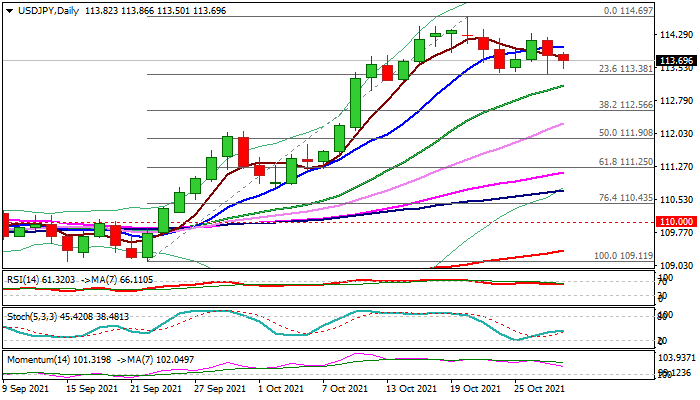
The pair is currently consolidating after two-month rally from 109 zone hit new 4-year high at 114.69 on Oct 20, with solid supports at 113.40/10 zone (consolidation range floor / Fibo 23.6% of 109.11/114.69 / rising 20DMA) expected to hold and keep larger bulls intact for fresh push higher and renewed probe through key resistances at 114.60 zone (Fibo 76.4% of 118.66/101.18 / 2017 peaks).
Caution on break below 113.40/10 pivots that would complete a failure swing pattern on daily chart and risk deeper pullback towards next key support at 112.56 (Fibo 38.2% of 109.11/114.69).
Res: 113.99, 114.31, 114.60, 114.73.
Sup: 113.40, 113.10, 112.56, 112.25.
USD Remains Stable As Traders Eye US GDP Rate For Q3
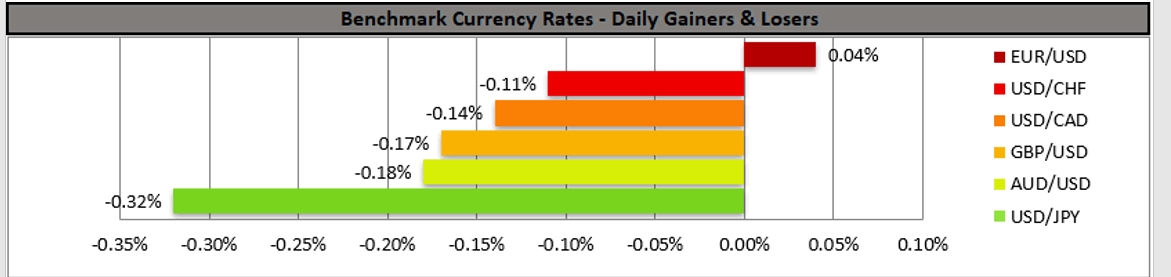
The USD remained rather stable yesterday against a number of its counterparts. An exception could be the JPY as BoJ’s interest rate decision was released during today’s Asian session and the CAD which strengthened due to BoC’s interest rate decision. BoJ as was expected remained on hold and projected low inflation for years to come implying that the ultra-lose monetary policy is to continue, reinforcing expectations that it will remain more dovish than other central banks. On the contrary, BoC yesterday had great confidence on display maintaining its interest rates unchanged yet ending its QE bond buying program in a clear signal that rate hikes are coming. Today we note the release of the US weekly initial jobless claims figure, yet we highlight the US GDP rate advance for Q3 as the main economic data of the day which could create considerable volatility for the markets. The rate is forecasted to decelerate and reach on an annualized basis 2.7% qoq if compared to Q2’s 6.7% qoq and if so could weaken the USD as it would imply a considerable slowdown in the expansion of growth for the US economy. On the other hand, attention is placed also on the US stockmarkets and may we remind you that we get a number of earnings reports for high profile companies such as Apple (#AAPL) and Amazon (#AMZN). Also, on the commodities front, we highlight the drop of WTI prices, as the EIA reported a substantial built up of oil inventories in the US oil market.
USD/CAD dropped yesterday from the highs of the 1.2425 (R1) resistance line to the lows of the 1.2330 (S1) level. As the slight bullish tendencies which the pair displayed were interrupted our bias for a sideways motion between the prementioned levels has been reinforced. Should the bulls take over, we may see USD/CAD breaking the 1.2425 (R1) line and aim for the 1.2500 (R2) level. Should the bears be in charge of the pair’s direction we may see USD/CAD breaking the 1.2330 (S1) support line and aim for the 1.2250 (S2).
EUR traders focus on ECB’s interest rate decision
EUR traders are expected to focus on ECB’s interest rate decision today and the bank is widely expected to remain on hold keeping its refinancing rate at 0.0% and the deposit rate at -0.50%. Market participants could be watching for any changes in the bank’s perception regarding the inflationary pressures and whether those are still considered to be of a transitory nature and any shift to the contrary in that perception could prove to be market moving. At the same time besides the inflationary pressures, we also have to note the worries for the slowing growth of the Zone’s economy, with the main focus being on the manufacturing sector which also is the spearhead for the German and Eurozone’s economy. We would expect the bank to maintain a dovish tone, probably with ECB’s President Christine Lagarde pushing against market expectations for any earlier or faster tightening of the bank’s monetary policy and reiterating that price increases are of temporary nature while the bank is still “pretty far away” from raising rates. Such dovishness could weigh on the common currency and we highlight that volatility for EUR pairs could be extended besides the time of the release also during ECB President Lagarde’s press conference 45 minutes later.
EUR/USD maintained a sideways motion yesterday just below the 1.1615 (R1) resistance line. We tend to maintain a bias for a sideways motion for the pair, yet ECB’s interest rate decision could alter the pair’s direction today. Should sellers take the initiative, we may see EUR/USD aiming if not breaking the 1.1520 (S1) line, paving the way for the 1.1445 (S2) support level. Should buyers be in charge, we may see EUR/USD breaking the 1.1615 (R1) level and take aim for the 1.1695 (R2) line.
Today’s events and expectations
Today we also note Sweden’s GDP rate for Q3, Germany’s employment data and preliminary HICP rates as well as Eurozone’s sentiment indicators all for October.
USD/CAD H4 Chart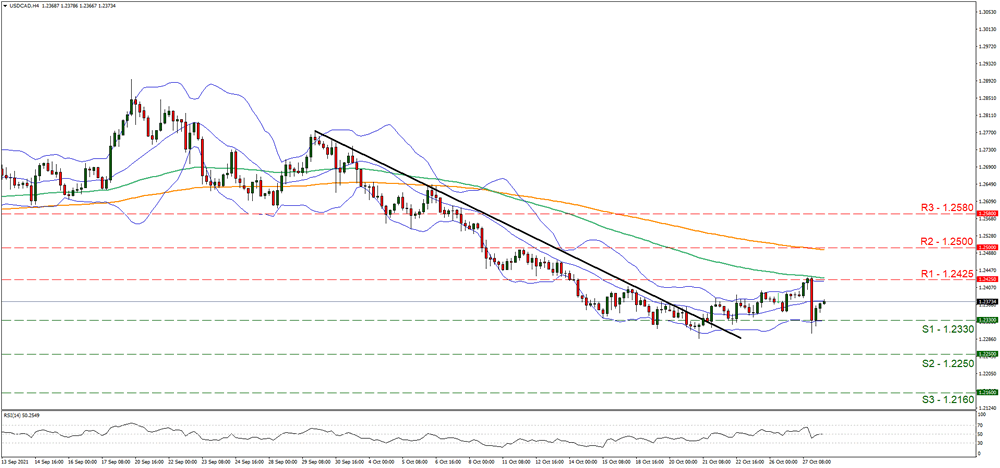
Support: 1.2330 (S1), 1.2250 (S2), 1.2160 (S3)
Resistance: 1.2425 (R1), 1.2500 (R2), 1.2580 (R3)
EUR/USD H4 Chart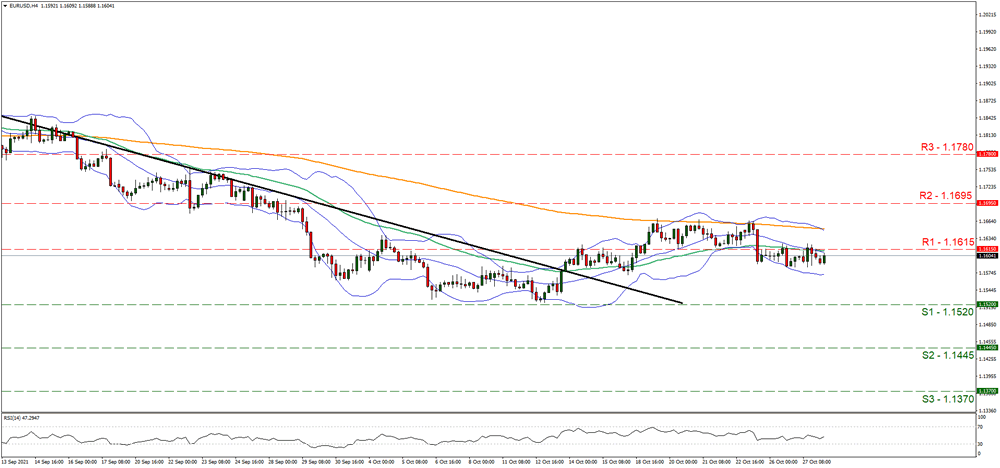
Support: 1.1520 (S1), 1.1445 (S2), 1.1370 (S3)
Resistance: 1.1615 (R1), 1.1695 (R2), 1.1780 (R3)
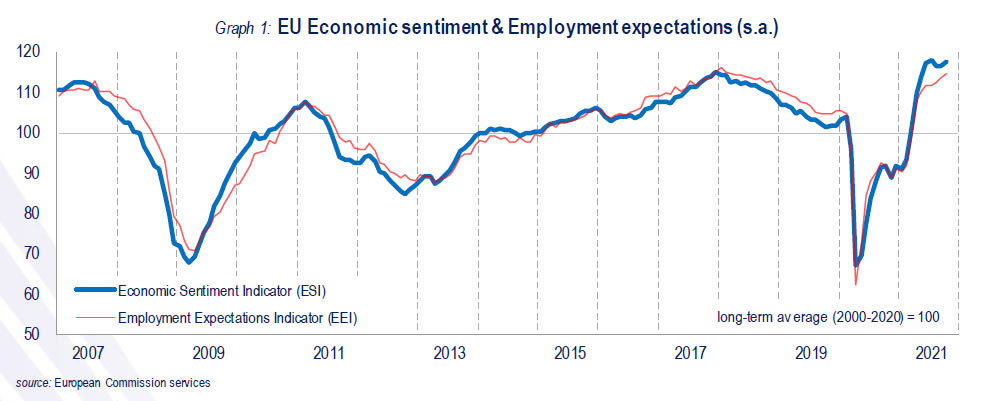
Eurozone economic sentiment indicator rose to 118.6, EU ESI rose to 117.6
Eurozone Economic Sentiment Indicator rose to 118.6 in October, up from 117.8, above expectation of 116.9. Employment Expectations Indicator rose from 113.4 to 114.5. Industrial confidence rose from 14.1 to 14.2. Services confidence rose from 15.2 to 18.2. Consumer confidence dropped from -4.0 to -4.8. Retail trade confidence rose from 1.4 to 2.0. Construction confidence rose from 7.5 to 8.9.
EU ESI rose from 116.6 to 117.6. Amongst the largest EU economies, the ESI rose in Spain (+2.5), France (+2.1), Italy (+1.8), Poland (+1.5) and the Netherlands (+1.4), while it weakened slightly in Germany (-0.5).
Asian Equities Do Not Pass Go
Asian markets in negative territory
Wall Street endured a soft session as the US earnings outperformance hit a wall of declining marginal utility. I suspect that that rise in short-dated yields in the US, the circus on Capitol Hill, and the impending FOMC meeting are sapping the momentum of the earnings trade. The S&P 500 fell by 0.51% while the Nasdaq held unchanged, and the Dow Jones slipped by 0.74%. In Asia, futures on all three are around 0.15% higher on fast-money short-covering.
Asian equity markets are ignoring the tiny bounce in US index futures though and have headed directly south. The Nikkei 225 has fallen by 0.95% in sympathy with Wall Street, with downgrade BOJ projections weighing on sentiment, along with this weekend’s election. The Kospi is barely treading water at unchanged, thanks to the impressive Samsung result. Mainland China was likely to open lower anyway, but the noise over coal and profiteering from the state planner has eroded sentiment further. The Shanghai Composite is 0.95% lower while the CSI 300 has fallen 0.40%. In Hong Kong, the Hang Seng is 0.25% lower thanks to several buy recommendations on mainland tech heavyweights overnight.
Singapore has eased by 0.35% as Covid-19 cases hit new daily highs, while Kuala Lumpur has fallen 0.55% as oil takes a bath this morning. Taipei is unchanged as tech-centric markets appear to be weathering the storm slightly better, while Jakarta is down by 0.70%, Manila by 0.90%, and Bangkok by 0.20%.
Australian markets have taken fright at the jump in 3-year CGB yields, as well as the China ambassador apparently leaving Australia. The retreat in resource prices will also be jarring nerves down under. The All Ordinaries and ASX 200 have fallen by 0.45% today.
European stocks are unlikely to find solace in the price action on Wall Street and Asia and will adopt a defensive posture ahead of this afternoon’s ECB meeting. With inflation nerves seemingly overcoming the US earnings trade, at last, Wall Street will be on tenterhooks for this evening’s PCE Prices, Advance GDP, and Jobless Claims. I doubt that even outstanding results from Apple and Amazon will be enough to lift the cautionary mood other than temporarily.