Sample Category Title
EUR/USD Outlook: Bulls Are Holding In Extended Consolidation Under Pivotal Fibo Barrier
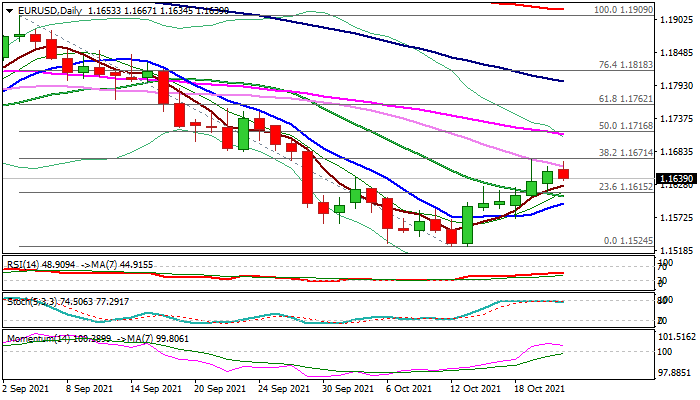
The EURUSD edges lower in early Thursday’s trading, holding in extended consolidation under pivotal Fibo barrier at 1.1671 (38.2% of 1.1909/1.1534 bear-leg) which provided significant headwinds to recovery leg from 1.1524 (Oct 12/13 lows).
The near-term bias remains with bulls, but a firm break of 1.1671 Fibo barriers is needed to confirm the reversal signal on the weekly chart (double rejection at weekly cloud base/200WMA) and extend recovery towards 1.1712/16 (falling 55DMA/50% retracement of 1.1909/1.1524).
Rising 10DMA (1.1597) is approaching 20DMA (1.1608) in an attempt to form a bull-cross and further support the advance, with 1.1600 zones offering solid support which should contain dips.
Res: 1.1671, 1.1695, 1.1716, 1.1755.
Sup: 1.1626, 1.1608, 1.1597, 1.1571.
US Oil Gains Support
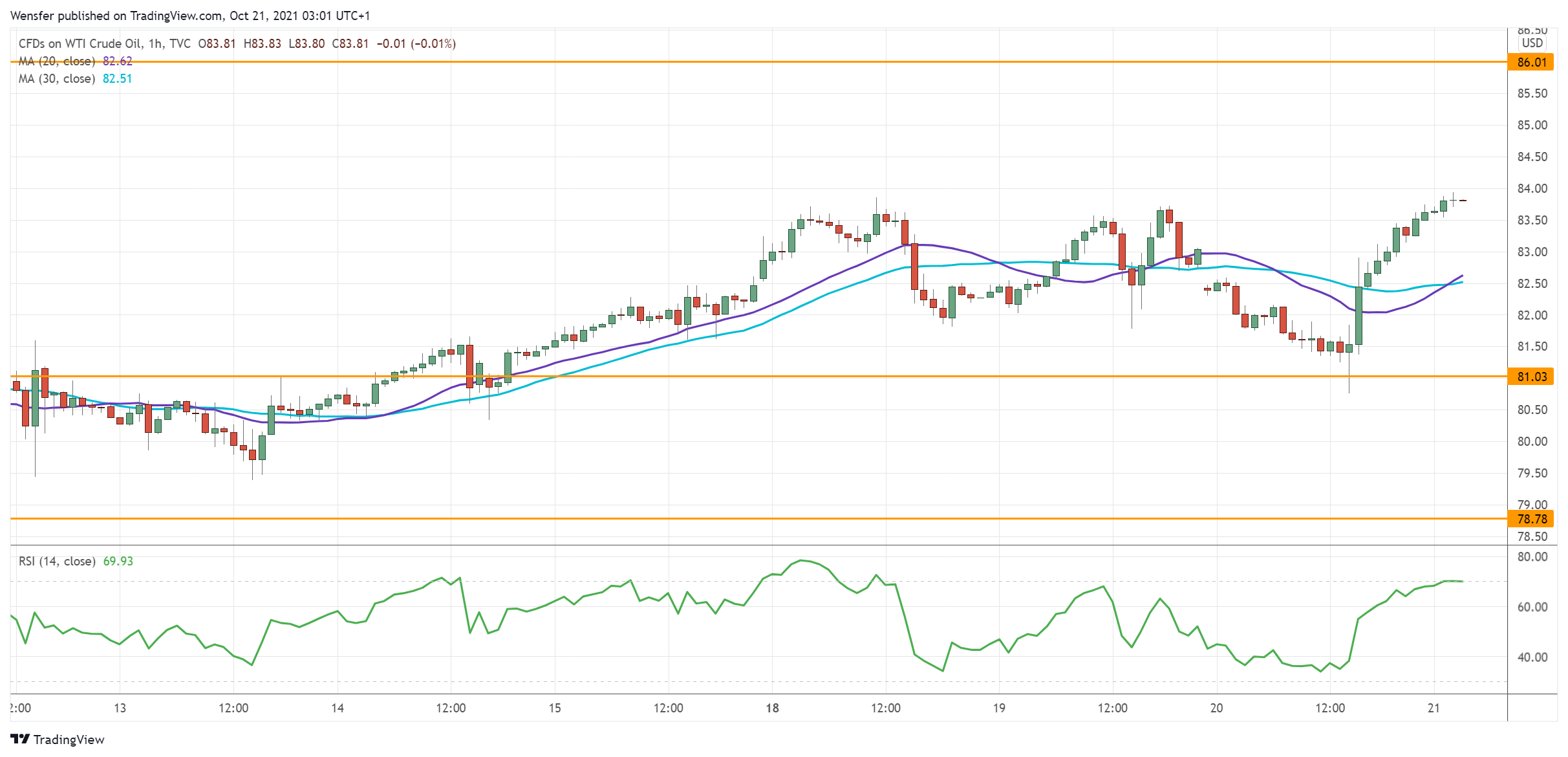
WTI crude bounced back after the EIA reported a surprise drop in US inventories.
A previous double top had indicated potential exhaustion as the price struggled to achieve a higher high. However, the price has found support at 81.00 as buyers were eager to stake in at a better price.
Overall sentiment remains upbeat and a close above at 83.80 may trigger an extended rally to 86.00. An overbought RSI may temporarily limit the momentum. But as long as the price is above the said support the directional bias stays bullish.
USD/CAD Sell-Off Continues
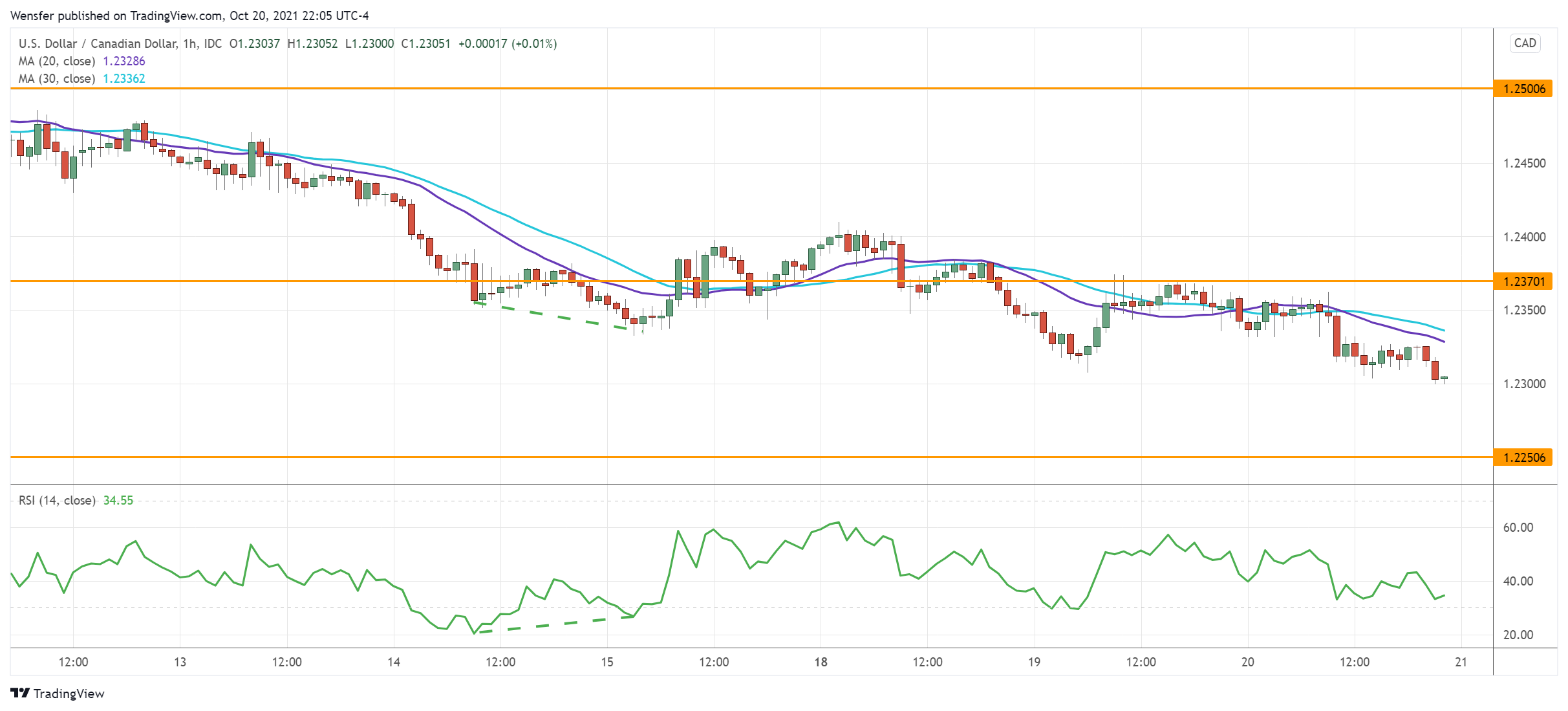
The Canadian dollar rallied after solid inflation data in September. The US dollar has found little buying interest near July’s lows (1.2310).
A bullish RSI divergence out of the oversold area suggests a deceleration in the downward momentum. But buyers need confirmation of a reversal, and a break above 1.2370 would be the first step to force sellers to cover.
Sentiment remains bearish unless the pair lifts offers around 1.2500. Failing that, the greenback could be vulnerable to a new round of sell-off towards 1.2250.
GBP/USD Seeks Support
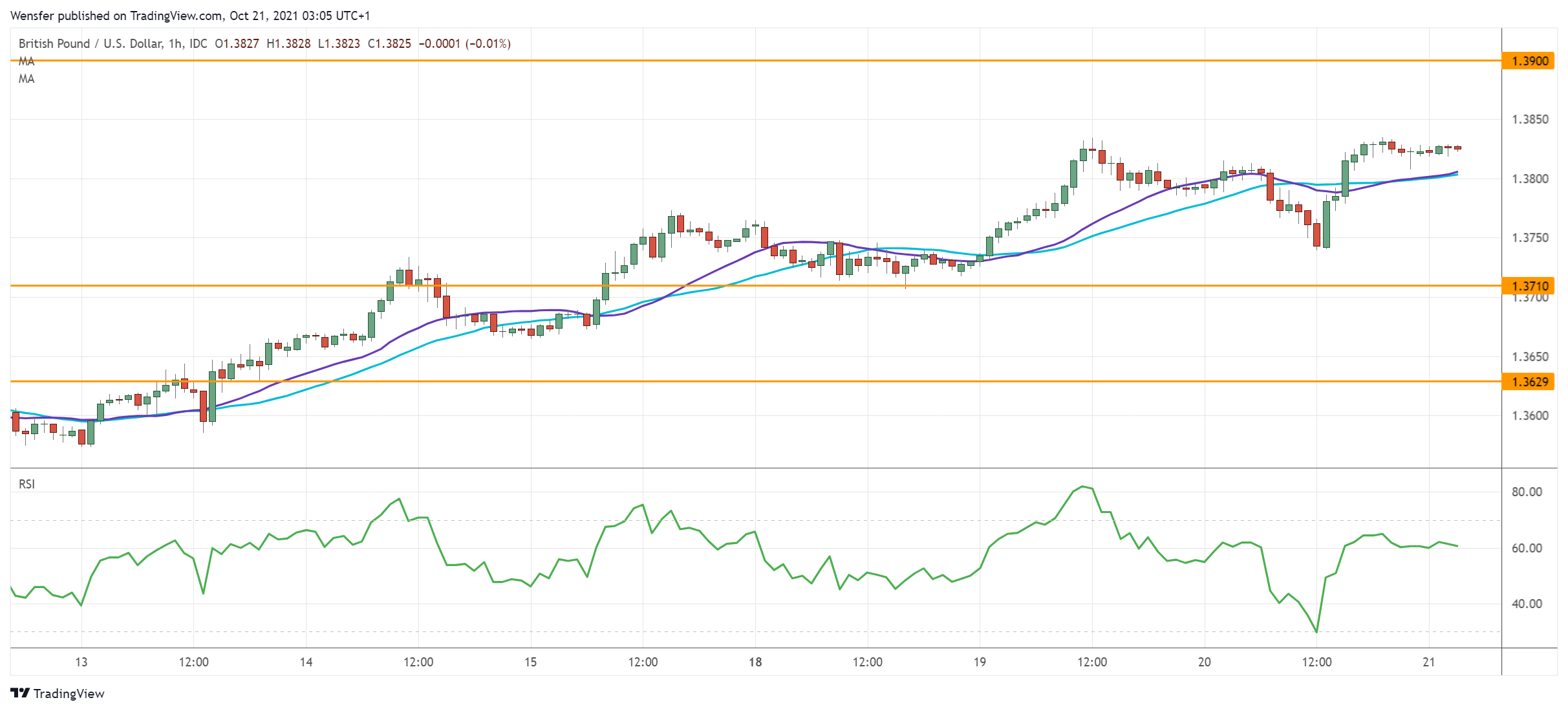
The pound’s rally stalled after Britain’s core CPI dropped below 3% in September. The pair’s recovery has picked up the pace after a close above the daily resistance at 1.3730.
1.3900 is the main hurdle and a bullish breakout would resume the uptrend. However, the RSI’s triple top in the overbought area indicates an overextension. A pullback is necessary to let the bulls consolidate their gains.
The supply-turned-demand zone around 1.3710 is the first level to watch for. Its breach may trigger more profit-takings towards 1.3630.
Core Bonds Steadily Lose Ground
Markets
Core bonds recovered somewhat intraday, but US Treasuries slipped away towards the end of the US trading session. Several items played a role. First, the US Treasury’s $24bn 20-yr Bond auction went miserably. The auction stopped way through the 1:00 PM bid side with a below average bid cover. Second, Fed Quarles warned that ‘transitory’ high inflation doesn’t necessarily mean ‘short lived’. Inflation expectations risks getting out of hand because of longer-lasting supply-chain bottlenecks. He mentioned a risk from additional government stimulus which would boost demand and add to price pressures. “We can tolerate, if you will, an extended period of 2.5% inflation…much longer than we could an extended period of 4% inflation. If we are still seeing 4% inflation…next spring, then I think we might have to reassess the speed with which we would be thinking about raising interest rates.” On Tuesday, another member of the Fed’s Board of Governors -" Waller -" also cited the possibility to bring rate increases forward if inflation doesn’t cool by year-end. BoG Bowman didn’t make the link with the rate cycle, but also pointed out that inflation may last longer than expected. It’s an unusual spin that BoG members speak out so openly on risks to the inflation scenario and possible implications to monetary policy. Usually, it are the regional Fed presidents who share their (opposing) views to the central scenario. Finally, the release of the Fed’s Beige Book provided more anecdotic evidence pointing in the same direction. Input cost increases were widespread across industry sectors, driven by product scarcity resulting from supply chain bottlenecks, increased transportation costs, labor constraints and commodity shortages. Many firms raised selling prices and expect higher prices and supply shortages to last another year or so. The majority of Fed Districts reported robust wage growth. The US yield curve eventually steepened in a daily perspective with yield changes ranging between -1 bp (2-yr) and +4.9 bps (30-yr). The US 10-yr yield closed at its highest level since mid-May (1.65%). The German yield curve bull steepened with yields declining by 0.4 bps (30-yr) to 3.3 bps (2-yr) as selling pressure at the front end eased somewhat after this week’s earlier heavy hawkish repositioning. (Hawkish) Bundesbank President Weidmann’s unexpected resignation might have played at the margin. Yield dynamics didn’t really hamper the single currency’s attempts to retake EUR/USD 1.1664 even though they remain in vain so far. At the moment, the battle between EUR and USD is weak vs weaker. EUR/GBP treaded water just below the previous key support at 0.8450. Today’s eco calendar contains US weekly jobless claims, Philly Fed Business Outlook and EMU consumer confidence. More companies report earnings. Price increases are a common theme so far (eg Nestlé, Akzo Nobel yesterday). We don’t expect the eco/event calendar to interfere with ruling market dynamics. Core bonds steadily lose ground, but moves aren’t that violent to interfere with a mild risk-on stock market climate. The dollar corrects lower after a stellar month, but EUR can’t really take over command. We assume the single currency waits the ECB’s go-ahead. Next week’s policy meeting is a wildcard.
News headlines
UK PM Johnson and New Zealand PM Ardern reached an agreement in principle on a new free trade deal. Tariffs on 97% of the products will be eliminated for both countries the day the deal comes into force. The text will be finalized over the coming months. The UK already reached a similar in principle agreement with Australia in June. UK Ministers see the deal as potentially supporting their aim toward joining the Comprehensive and Progressive Agreement for Trans-Pacific Partnership (CPTPP) - an 11-country bloc including Australia, Singapore and Mexico.
The Fed’s Beige Book indicated that employers assess US economic growth as ‘modest to moderate’. The near term outlook remains positive, but some mention increasing uncertainty because of supply chain disruptions, labor shortages and the spreading Delta-variant. Most districts reported significantly elevated prices and many firms raised selling prices indicating a greater ability to pass along cost increases amid strong demand. Employment increased, though labor growth was hampered by a low supply of workers, despite wage increases to attract new hires and keep existing employees. Firms also reported higher turnover as workers left for other jobs or retired.
XAUUSD Is Possibly Bearish
Technical analysis
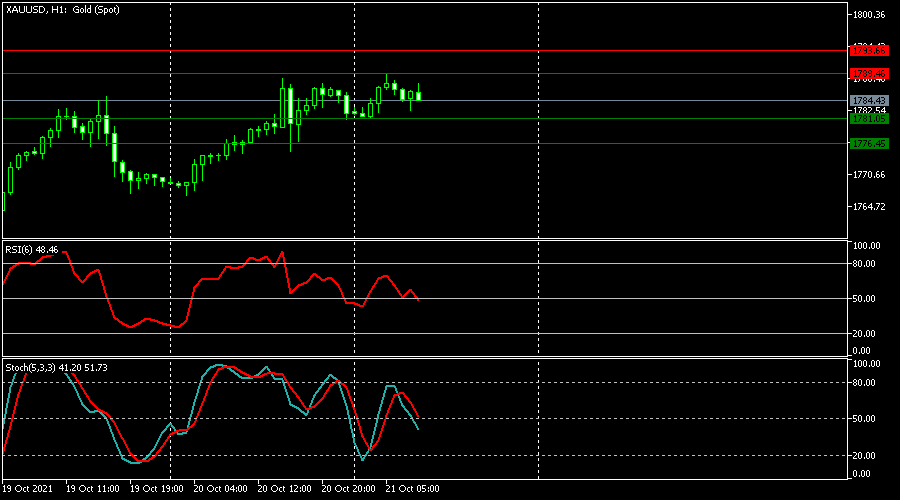
The RSI is below level 50
The Stochastics is below level 50 and headed downwards to oversold zone
Most likely scenario - SELL
Target prices: 1,781.05 1,776.45
Alternative scenario - BUY
Target prices: 1,789.46 1,793.66
Key levels
Support 1,781.05 1,776.45
Resistance 1,789.46 1,793.66
Dow Jones Soars After Strong Results From Key Corporate Gaints
US stocks rose on Wednesday as investors reflected on strong quarterly results by some of the biggest American companies. Some of the firms that released strong results this week are Netflix, Johnson & Johnson, Philip Morris, Tesla, and Bank of New York Mellon. The earning season will continue today, with some of the top companies to watch being Danaher, Tractor Supply, Ally Financial, Dow Chemicals, Intel, and Chipotle. While earnings have been good, analysts are concerned about the rising cost of doing business.
The USDCAD pair declined sharply as the US dollar maintained its bearish trend and after strong Canadian inflation data. Numbers by Canada’s statistics agency showed that the headline consumer price index rose from 4.1% in August to 4.4% in September. This increase was better than the expected 4.3%. Core CPI, which excludes volatile products, rose from 3.5% to 3.7%. These numbers are substantially above the 2% target by the Bank of Canada. Therefore, with the country’s election done, there is a likelihood that the bank will continue with its tightening cycle.
The key item in the economic calendar today will be the Turkish central bank decision. The bank surprised the market last month when it slashed interest rates even as inflation remained above its target. As a result, data published this month showed that the country’s inflation rose sharply in September. At the same time, the country’s president fired central bankers who opposed rate cuts. Therefore, there is a likelihood that the bank will slash its rates again. Other key numbers to watch today will be the American initial jobless and Philadelphia manufacturing index.
USDCAD
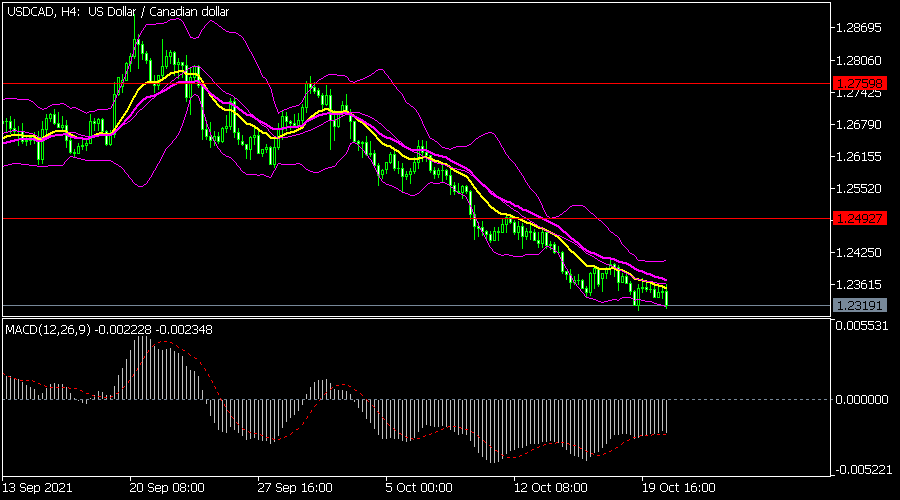
The steep sell-off of the USDCAD pair continued after strong Canadian inflation data. On the four-hour chart, the pair is at the lower side of the Bollinger Bands. It is also below the two lines of the envelopes indicator and the short and longer-term moving averages. The MACD is also below the neutral level. Therefore, the pair will likely keep falling as investors price in a rate hike by the BOC. If this happens, the next key support level is at 1.2250.
EURUSD
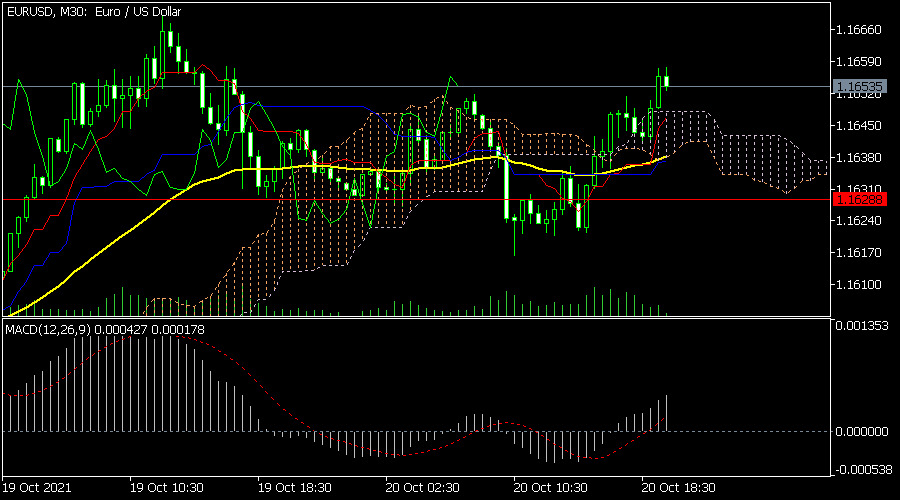
The EURUSD continued its bullish trend as US dollar weakness persisted. The pair rose to a high of 1.1657, which was the highest level since Monday. On the 30-minute chart, the pair rose above the 25-day moving average while the MACD moved above the neutral level. The pair also rose above the Ichimoku cloud. The pair will likely keep rising as bulls target this month’s high of 1.1670.
AUDUSD
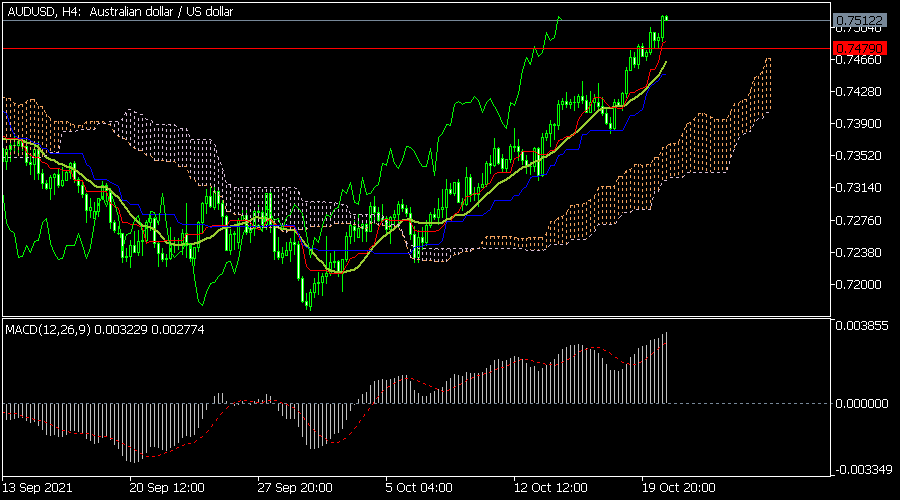
The AUDUSD continued its relentless rally, soaring to a multi-month high of 0.7515. On the four-hour chart, the pair rose above the Ichimoku cloud. It has also cruised above the moving averages while oscillators have soared. It also moved above the important resistance level at 0.7480. Therefore, the pair will likely keep rising, with the next key resistance level being at 0.7600.
GBP/JPY Daily Outlook
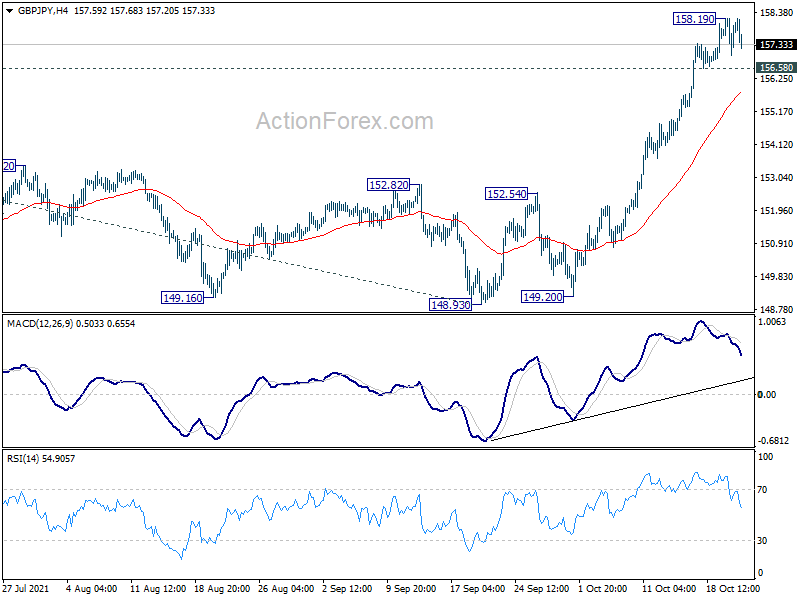
Daily Pivots: (S1) 157.31; (P) 157.77; (R1) 158.51; More...
Intraday bias in GBP/JPY is turned neutral with a temporary top in place at 158.19. But consolidations should be relatively brief as long as 156.58 minor support holds. Break of 158.19 will resume larger up trend to 61.8% projection of 136.96 to 156.05 from 148.93 at 160.72 next. However, break of 156.58 will turn bias to the downside for deeper pull back.
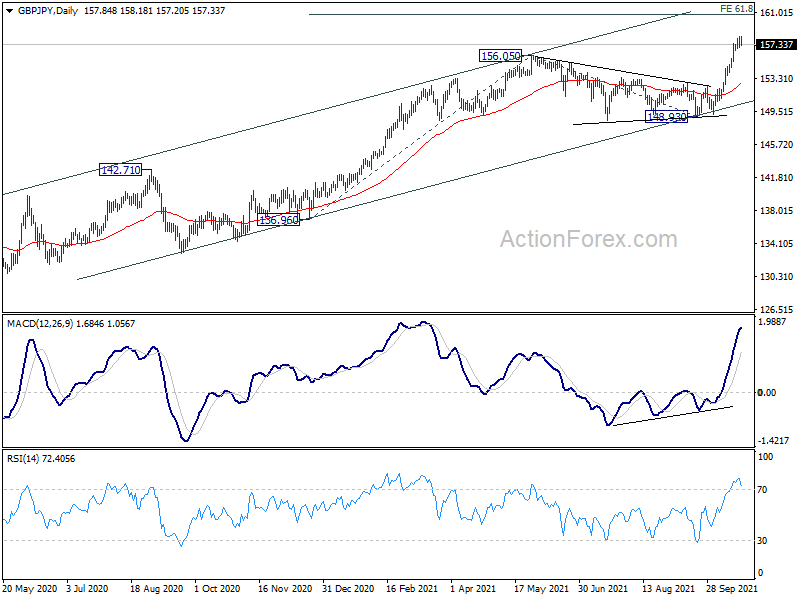
In the bigger picture, rise from 123.94 is seen as the third leg of the pattern from 122.75 (2016 low). The stay above 55 week EMA affirms medium term bullishness. Current rise should now target 61.8% retracement 195.86 (2015 high) to 122.75 at 167.93 next. In any case, outlook will remain bullish as long as 148.93 structural support hold, even in case of deeper pull back.
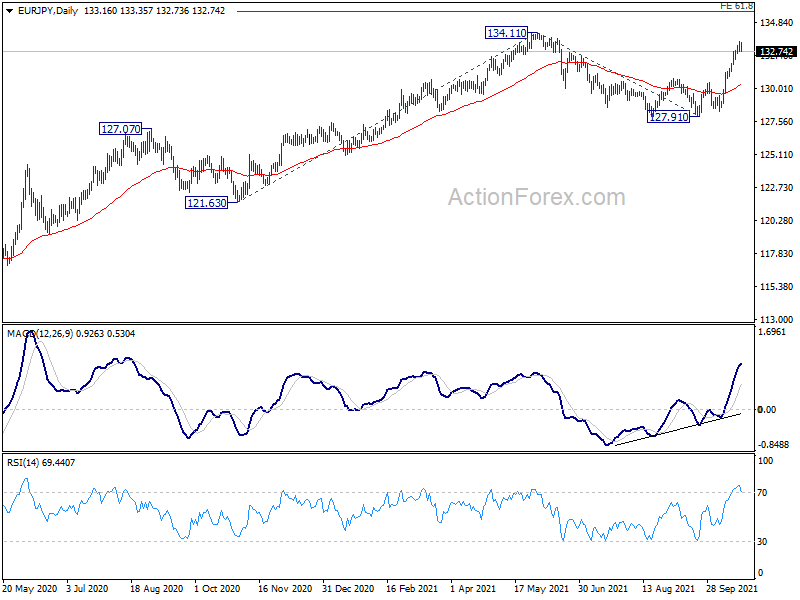
EUR/JPY Daily Outlook
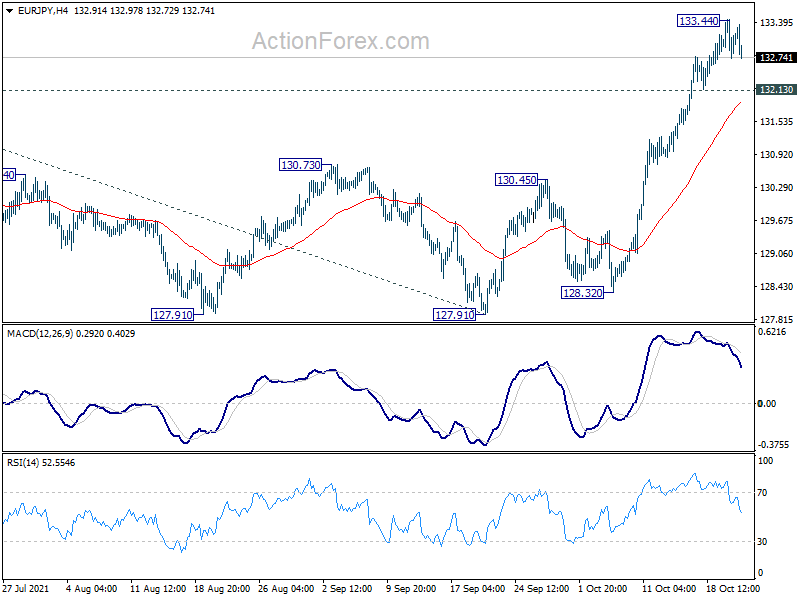
Daily Pivots: (S1) 132.81; (P) 133.14; (R1) 133.55; More....
Intraday bias in EUR/JPY is turned neutral first, with a temporary top formed at 133.44. But consolidation should be brief as long as 132.13 minor support holds. Above 133.44 will target 134.11 high first. Firm break there will resume larger up trend from 114.42. Next target is 61.8% projection of 121.63 to 134.11 from 127.91 at 135.62. Nevertheless, break of 132.13 will turn bias to the downside for deeper pull back.
In the bigger picture, rise from 114.42 (2020 low) is still in progress and the strong support support from 55 week EMA affirms medium term bullishness. Further rise would be seen to retest 137.49 (2018 high). Decisive break there will resume the whole long term rise from 109.03 (2016 low). Next target will be 100% projection of 109.03 to 137.49 from 114.42 at 142.88. This will now remain the favored case as long as 127.91 support holds.
EUR/GBP Daily Outlook
Daily Pivots: (S1) 0.8414; (P) 0.8437; (R1) 0.8452; More...
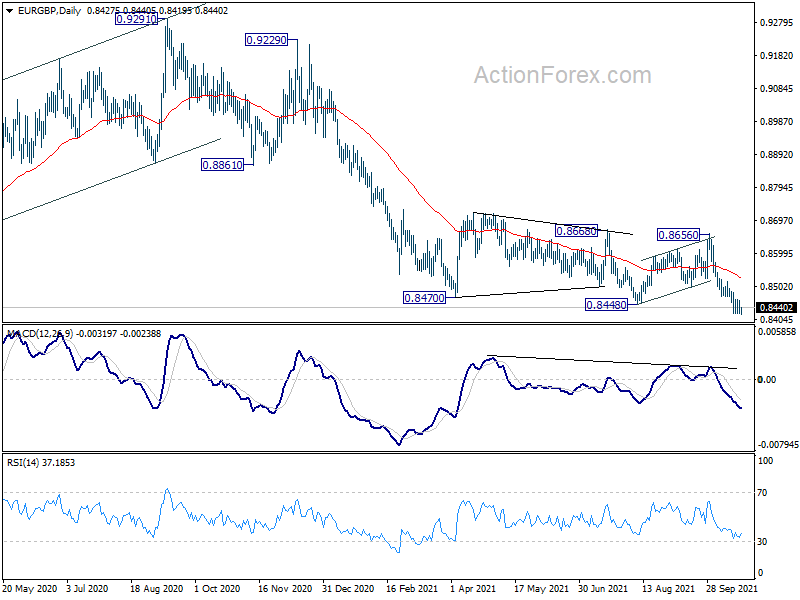
EUR/GBP is staying in consolidation form 0.8420 temporary low and intraday bias remains neutral for the moment. On the downside, break of 0.8420 will resume the larger down trend from 0.9499 to 0.8276 key long term support next. On the upside, though, sustained break of 55 day EMA (now at 0.8529) will bring stronger rebound back to 0.8656 resistance.
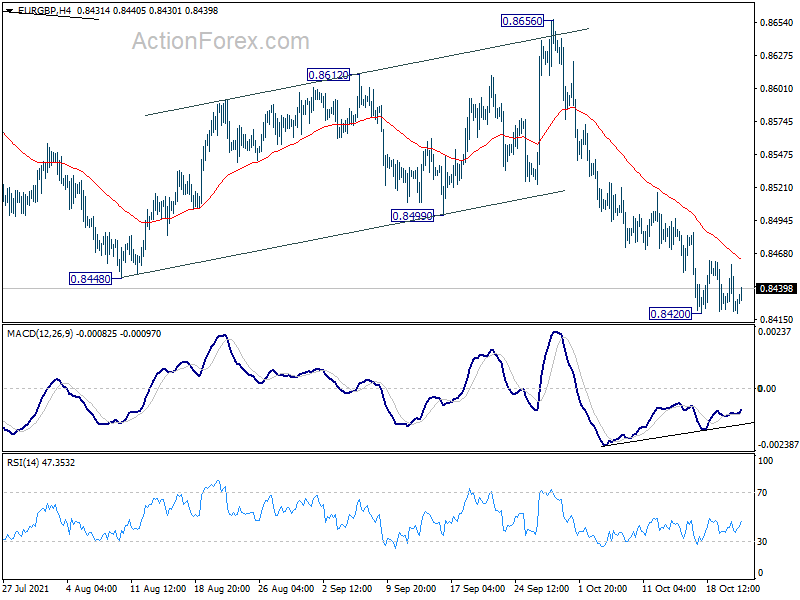
In the bigger picture, price actions from 0.9499 (2020 high) are still seen as developing into a corrective pattern. Deeper fall could be seen as long as 0.8656 resistance holds, towards long term support at 0.8276. However, firm break of 0.8656 resistance would argue that a medium term bottom was already formed. Stronger rise would be seen to 0.8861 support turned resistance to confirm completion of the corrective pattern.