

Sample Category Title
Gold Analysis: Recovers Once Again
The yellow metal's price shortly pierced the previous weekly low levels before starting another recovery. During the early Thursday's European trading hours, the bullion appeared to be once again heading to the 1,770.00 level.
In the case of a broad surge, the metal would most likely encounter resistance in round price levels. In addition, note the resistance zone from 1,781.00/1,784.00.
However, a decline might find support in this week's low levels in the 1,746.20/1,749.80 zone.

Natural Gas’s Boom And Bust
The energy market may have passed an inflexion point yesterday. The more than 20% jump in prices in Europe on Tuesday to $1,500 per 1,000 cubic meters triggered an avalanche of margin calls during the trading on Wednesday. At one point, it topped $1,950 at the beginning of the day before plummeting to below $1,700 within 5 minutes. By the day's end, the price slid back below $1,500.
Such market dynamics is clear evidence of margin-calls on short positions in futures, executed soon after the opening of the European market, which was executed in the market, without regard to the price.
It mirrors the story of a year and a half ago when US oil prices went negative on the forced closure of long positions in the futures. It is particularly ironic that once again, it was the energy market.
The triggering of margin calls alone is not enough to turn the market around. It only happens due to a shift in the balance of supply and demand, actual or perceived. Russian President Putin was on the bears' side, promising to increase gas supplies in all directions, including via Ukraine.
For its part, Russia has pointed out that Europe and China have embarked too abruptly on the energy transition. Particularly, China has previously refused to buy coal from Australia (purchases have resumed in recent days) and has preferred to replace it with gas and oil, which has increased competition for gas from Russia. Being one step ahead, Europe has cut its gas production unnecessarily drastically, according to the Russian leader, failing to fully compensate with energy from alternative sources. This was compounded by a rainy summer and a windless September, one-off factors that fuelled the market.
On top of this, there has been increasing evidence that companies in Europe are scaling back their activity because of energy shortages, which is already working on the side of reduced demand.
Gas prices above $700 could remain in Europe for the next few months, although they look inflated in the longer term. They will likely continue their comeback "on the ground" in the coming days. Experts predict that it will no longer be possible to bring stocks back to comfortable levels this season, leaving the risk of under-supply in play as it is now, keeping prices elevated, near $700.
US exchange gas prices were renewing 13-year highs yesterday at the start of trading above $6.5 per 1mn BTU (other units here), 170% above the area lows at the start of the year. The beginning of price stabilisation could take prices into the $3.5 area, where key trend reversals and acceleration have occurred since 2009.
USD/JPY Outlook: Bulls Lose Traction But Expected To Remain In Play As Bear-Trap Underpins The Action
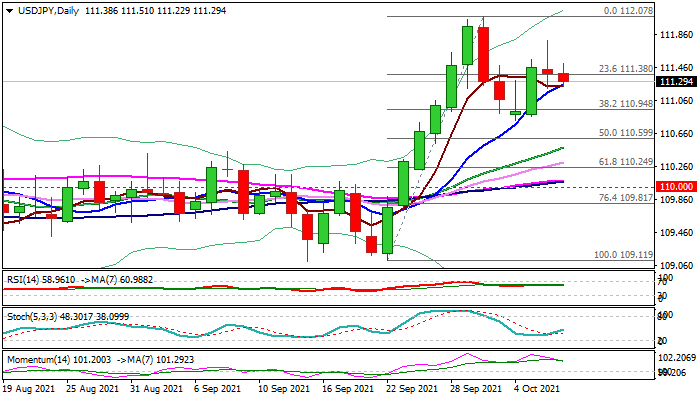
The USDJPY is standing at the back foot in early European trading on Thursday after long-legged Doji on Wednesday signaled that previous day’s strong rally lost traction.
Near-term action is underpinned by a bear-trap under 110.94 (Fibo 38.2% of 109.11/112.07 rally, formed on Mon/Tue), as well as overall bullish picture on daily chart that keeps focus shifted to the upside for now.
The dollar did not react much on upbeat US private sector jobs data released on Wednesday and traders eye releases of US weekly jobless claims (today) and US Sep NFP (Friday) for more signals.
Near-term action so far stays above initial support, rising 10DMA (111.25) that keeps fresh bulls off Monday’s higher low at 110.82 intact, however, further easing cannot be ruled out as 4-hr studies are weakening.
Near-term bias is expected to remain with bulls while the action holds above 111.00 support zone that would keep in play hopes for renewed attack at key barriers at 112.07 (2021 high), 112.22 (202 high), and 112.40 (2019 high).
Caution on possible drop and close below 111 zone that would complete failure swing pattern on daily chart and signal reversal of the 109.11/112.07 uptrend.
Res: 111.51, 111.78, 112.07, 112.22.
Sup: 111.20, 110.94, 110.82, 110.59.
AUDUSD Hovers Near The SMAs And Below 0.7300
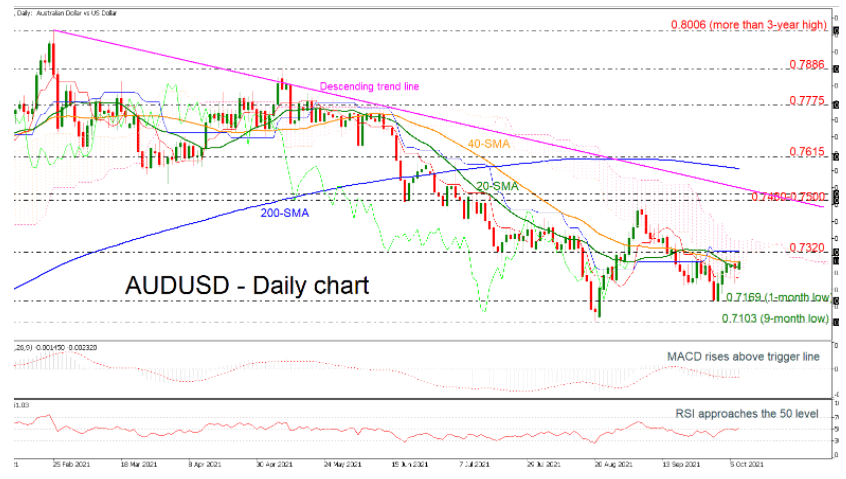
AUDUSD has been moving sideways over the last couple of sessions, holding near the 20- and 40-day simple moving averages (SMAs) and the lower surface of the Ichimoku cloud. The MACD oscillator is advancing above its trigger line in the negative region, while the RSI is flattening around the neutral threshold of 50.
If the price jumps above the SMAs and the 0.7320 resistance level, it could open the door for the 0.7480-0.7500 restrictive area. Moving higher, the 200-day SMA at 0.7577 could halt the upside movement ahead of the 0.7615 barrier.
On the other side, the one-month bottom at 0.7169 could be a crucial barrier before touching the nine-month trough of 0.7103. More downside pressures could confirm the bearish structure, driving the price until the 0.6990 support, registered in November 2018.
To sum up, the short-term bias is neutral, while in the longer-timeframe, the outlook has been negative since February 25.
Daily Technical Analysis
EUR/USD
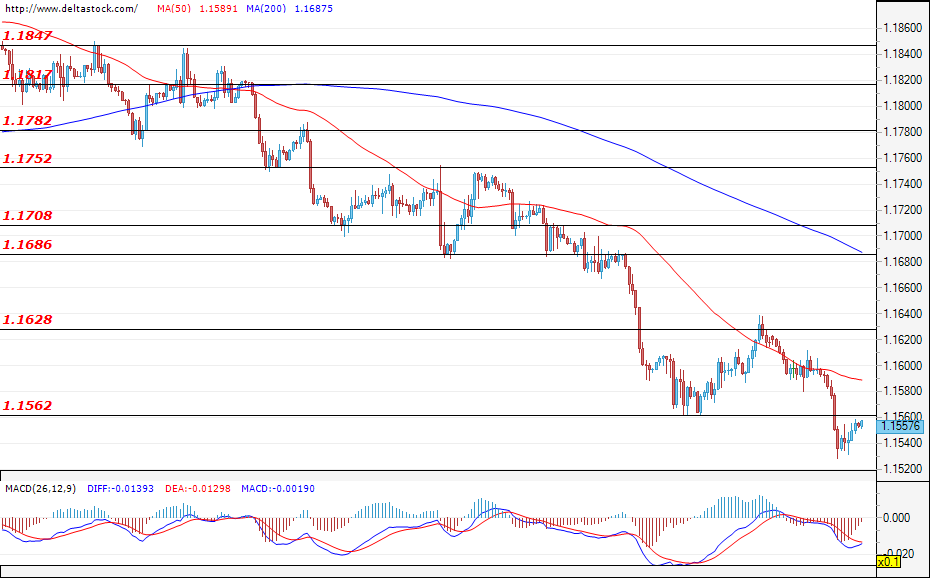
Current level - 1.1557
The common European currency continues to depreciate against the dollar and, yesterday, the pair violated the support level of 1.1562. The expectations are for the downtrend to continue, leading the EUR/USD towards a test of the support level of 1.1500, which is coming from the higher time frames. In the positive direction, the previously mentioned level of 1.1562 is now acting as a resistance for the pair. During today’s session, volatility will most likely spike after the announcement of the initial jobless claims data for the U.S. at 12:30 GMT.
| Resistance | Support | ||
| intraday | intraweek | intraday | intraweek |
| 1.1562 | 1.1708 | 1.1550 | 1.1550 |
| 1.1628 | 1.1752 | 1.1500 | 1.1490 |
USD/JPY
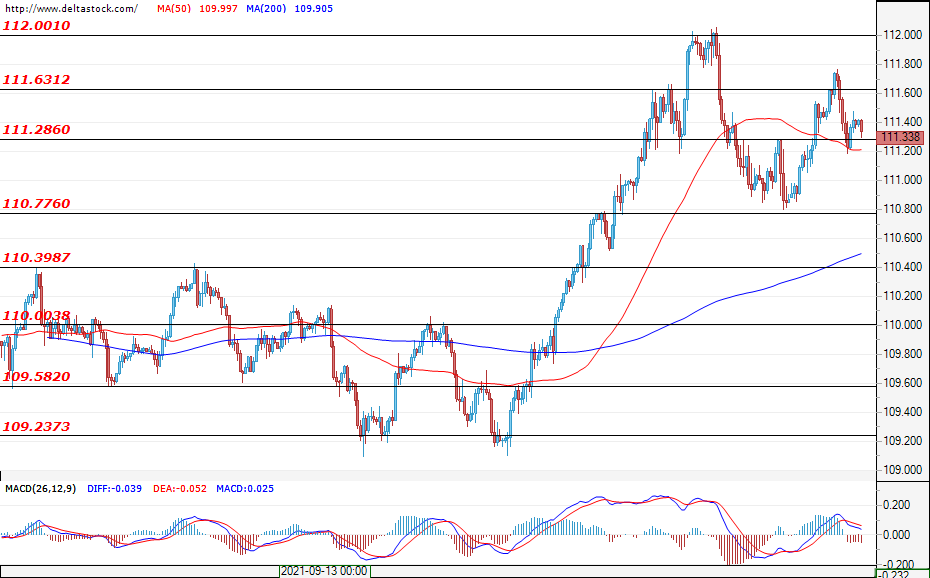
Current level - 111.33
During yesterday's trading session, the currency pair made an unsuccessful attempt at breaching the support level of 111.28 and now the expectations are for the bulls to prevail and approach the resistance level of 111.63 and, possibly, the local high at 112.00. In the negative direction, the first support lies at 111.28.
| Resistance | Support | ||
| intraday | intraweek | intraday | intraweek |
| 111.63 | 112.00 | 111.28 | 110.77 |
| 112.00 | 113.50 | 110.77 | 110.39 |
GBP/USD
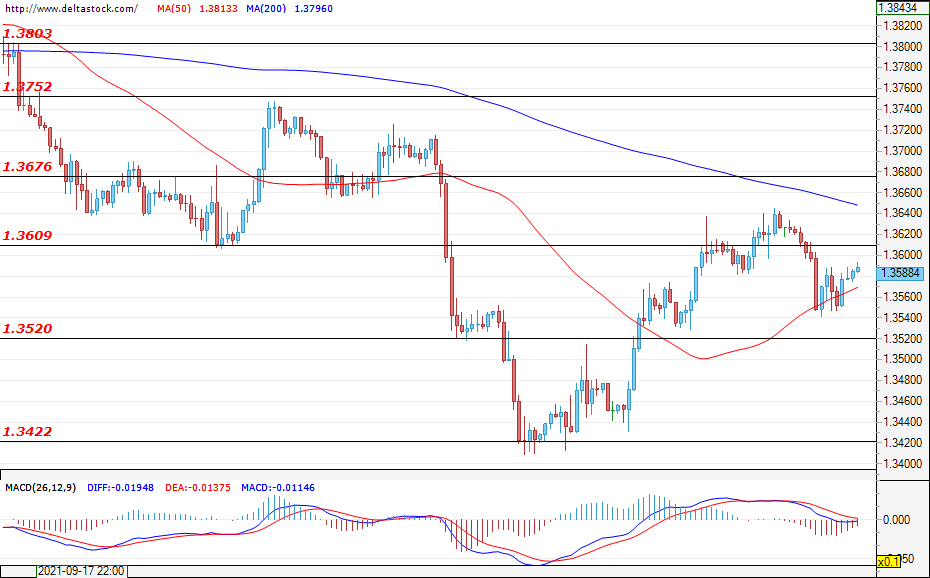
Current level - 1.3588
The sterling managed to partially recover its losses against the dollar in the first half of the week and is currently in a consolidation phase just below the resistance level of 1.3609. The expectations are for the Cable to test and violate the level of 1.3609, which would strengthen the positive sentiment and pave the way for an attack on the resistance zone of 1.3752. In the negative direction, the first support lies at 1.3520.
| Resistance | Support | ||
| intraday | intraweek | intraday | intraweek |
| 1.3609 | 1.3803 | 1.3520 | 1.3520 |
| 1.3676 | 1.3878 | 1.3422 | 1.3422 |
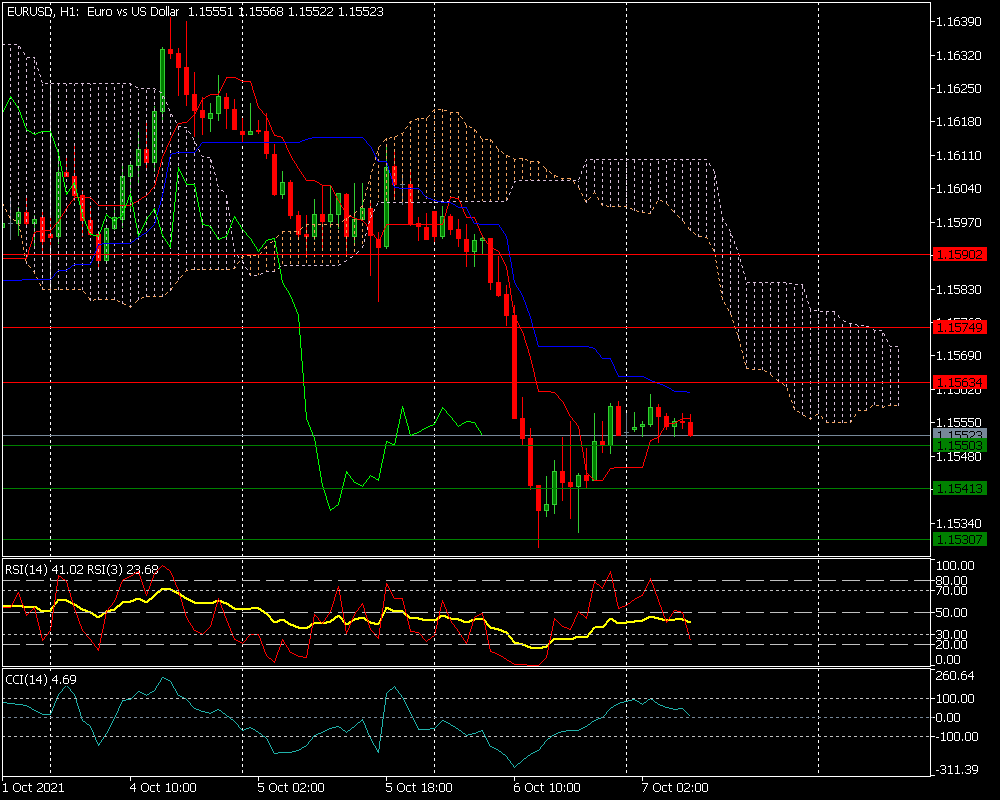
EURUSD Is Possibly Bearish
Technical analysis
The RSI(14) and the RSI(3) point to a possible downwards movement
The Ichimoku indicator displays a prevailing downtrend
The CCI suggests a possible downwards correction.
Most likely scenario - SELL
Target prices: 1.15413 1.15307
Alternative scenario - BUY
Target prices: 1.15634 1.15749
Key levels
Support 1.15413 1.15307
Resistance 1.15634 1.15749
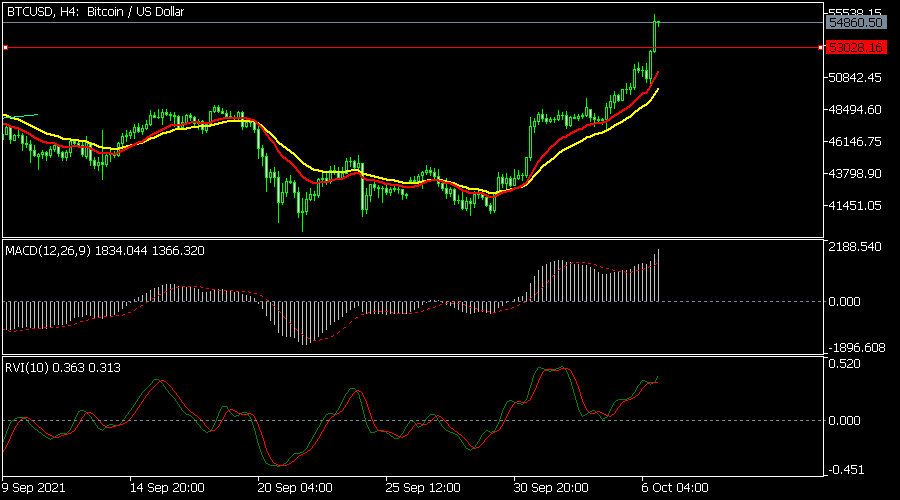
BTCUSD Spikes To 55,000 As Bitcoin Demand Spikes
Cryptocurrency prices rallied in the overnight session as Bitcoin rose to $55,000 for the first time since May. Its total market capitalization soared to more than $1 trillion. The total market cap of all cryptocurrencies tracked by CoinMarketCap surged to more than $2.3 trillion. There was no specific catalyst that pushed cryptocurrency prices higher. Still, recent on-chain data has shown that large Bitcoin buyers have continued adding to their holdings. Also, inflows to Bitcoin funds have been more than outflows in the past few weeks.
The price of crude oil and natural gas declined in the overnight session. The decline in natural gas from its all-time high happened after Vladimir Putin, the Russian president, said that he will work to stabilize prices. This happened after natural gas inventories in Europe declined to a multi-year low. Meanwhile, oil prices declined after the latest inventories numbers from the US. Data by the Energy Information Administration (EIA) showed that inventories declined to more than 2.4 million barrels last week. Gasoline inventories also rose to more than 3.6 million barrels.
The US dollar index rose to the highest level in months after the latest jobs estimates by ADP Institute. The numbers showed that the private sector added more than 543k jobs in September. This increase was significantly higher than the jobs added in August. Later today, the dollar will react to the latest initial jobless claims numbers and a speech by Fed’s Raphael Bostic. The US will publish the latest non-farm payroll numbers on Friday. Elsewhere, Switzerland will release the latest unemployment numbers while Halifax will publish the UK home price index.
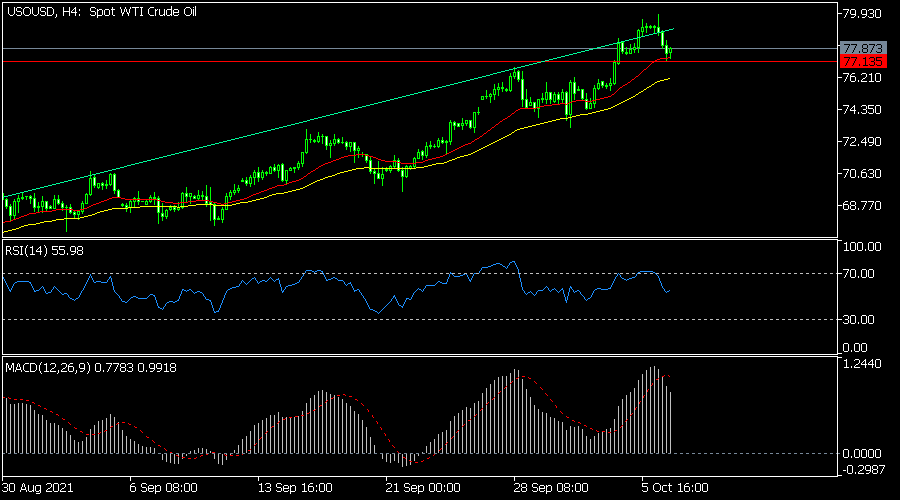
XTIUSD
The XTIUSD pair declined to a low of 77.13 in the overnight session. This was substantially lower than this week’s high of 79.82. The price retested the key support at 77.13, which was the previous year-to-date high. It remains above the 25-day and 15-day moving averages (MA) while the MACD is still above the neutral level. Therefore, the pair will remain in a bullish trend if it is above the support at 77.13 and the two moving averages.
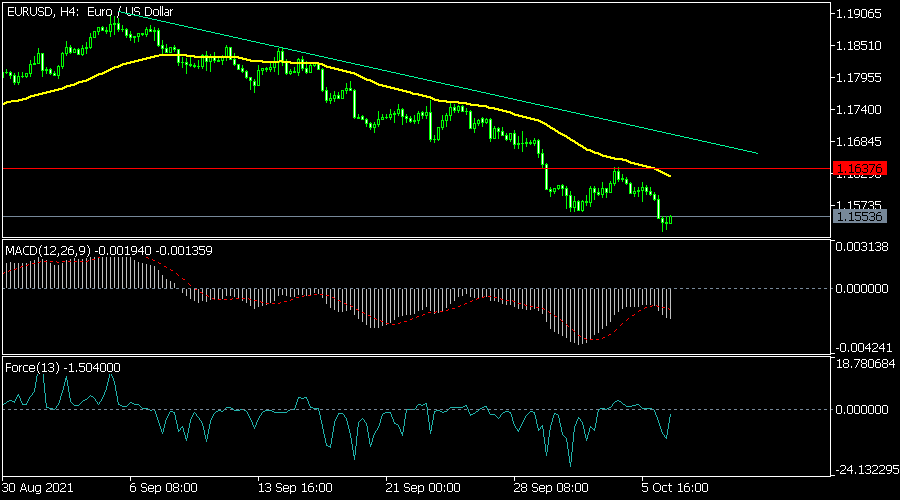
EURUSD
The EURUSD pair stabilized at 1.1552 ahead of key jobs numbers. On the four-hour chart, the pair is below the short and longer-term moving averages. The MACD and the Force Index have declined below the neutral level. The pair has also fallen below the descending trendline shown in green. Therefore, while a relief rally is possible, the pair will remain under pressure if it is below the 25-day EMA.
BTCUSD
The BTCUSD pair rallied substantially as demand for Bitcoin rose. The pair rose to a high of more than 55,000, which was the highest level since May. It also managed to move above the resistance at 52,979, which was the previous highest level in September. The pair has moved above the short and longer simple moving averages. It is also along the upper line of the Bollinger Bands. Therefore, the pair will likely keep rising as bulls target the next key resistance at 60,000.
Senate Republican Leader McConnell Offered To Raise The US Debt Ceiling Into December
Markets
Energy prices were once again at the center of attention yesterday. Natural gas futures at some point surged 40% in a matter of hours but eased afterwards as Russian president Putin offered to help with the energy crunch. He said gas flows to Europe could reach new records. Gas prices eventually dipped below Tuesday’s closing levels though remain at historically high levels. Brent oil retreated in lockstep to $81.08/b. Stocks in Europe cut their losses in half (EuroStoxx down 1.3%). Wall Street even managed to eke out gains (0.3-0.5%) after Senate Republican leader McConnell offered to raise the US debt ceiling into December, alleviating concerns for a near-term US default (cf. infra). Core bond yields retreated from their early gas-driven boost. The US yield curve flattened with yields up 0.9-1.6 bps at the short end and -0.6-1.7bps lower at the long end of the curve. The US 10y (1.52% at the close) yield briefly touched the highest level since mid-June. German yields were near-flat across the curve. The Japanese yen, Swiss franc and US dollar outperformed on FX markets. EUR/CHF neared the 1.07 barrier. EUR/USD slipped to support at the lower bound of the downward sloping trend channel around 1.153 to eventually close at 1.155 (down from 1.1598). A surprisingly resilient sterling held steady just north of the EUR/GBP 0.85 big figure.
Asian-Pacific equities welcome yesterday’s developments, both in the US and on global energy markets. Stocks bounce up to 3% (SK). China is closed for one last day. It’s an absolute snoozefest on FX markets this morning. US yields rise about 1.5 bps. Bund futures trade lower, brushing aside yesterday’s after-market reports the ECB is mulling a new bond-buying plan for when PEPP ends in March next year (see below). The rumours nevertheless give extra flavour to today. ECB chief economist Lane speaks on multiple occasions and we’re keen to see if any Q&A might reveal more. ECB chair Lagarde along with colleagues from the Fed and ECB are holding a joint Fed/ECB conference in Italy. The B20 takes place ahead of the G20 with Lagarde, Yellen and Draghi among the high-profile attendees. ECB’s September meeting minutes are also worth mentioning. General sentiment may improve today with the sting out of the energy debate, at least for now. Equity futures suggest nice opening gains and core bond yields may edge higher amid risk-on. EUR/USD downside is still vulnerable but the sharp decline over the previous days might ease a bit. We’re keeping a close eye at EUR/GBP 0.85. It risks succumbing to gravity, which would bring the August low of 0.845 at the radar again.
News headlines
Rumours circulated after yesterday’s European close indicating that the ECB is working on a new bond buying scheme to complement the current open-ended Asset Purchase Programma (€20bn/month) once the Pandemic Emergency Purchase Programme runs off in March 2022. Until now, it was generally assumed that the ECB would temporary bump APP in order to avoid a steep drop in monthly asset purchases as PEPP still acquires some €60bn monthly. Unidentified sources close to discussions say the big advantage and difference of a new scheme would be selectivity. Under APP and PEPP, purchases are conducted proportionally in relation to the size of each country’s economy (represented by ECB capital key). Selective purchases can be used to single out countries in times of stress. Question is how such a strategy fits in the central bank’s prohibition to monetary financing… The ECB aims to release its post-PEPP blueprint at the December 16 meeting.
US Senate Majority Leader Schumer sounded hopeful on a quick-fix to the debt ceiling issue. The proposal would extend the debt ceiling into December, avoiding a US default somewhere later this month. Republicans would agree to the temporary extension provided that Democrats affix a dollar amount to the debt level. Final passage through Senate and the House could come later this week. By agreeing to an extension, Republicans want to push Democrats in the position where they bypass the required 60 votes in the split Senate (50-50) using the reconciliation method to get their proposal to suspend the debt ceiling through mid-December 2022 unilaterally approved. Democrats until now argued that time was too short to do so while Republicans don’t want to lend their support as they consider it approving to President Biden’s fiscal spending plans.
McConnell Short-Term Debt Ceiling Raise Offer For Two Months
Japan news
- Japan Aug Preliminary Leading Index CI: 101.8 v 102.0e; Coincident Index: 91.5 v 91.5e.
- Japan Sept Tokyo Avg Office Vacancies: 6.4% v 6.3% prior.
- Japan Sept FX Reserves $1.41T v $1.42T prior.
- BOJ quarterly Regional Economic Report (Sakura): Downgrades assessments of 5 of 9 regions. Cited summer surge in infection cases and production cuts from supply shortages.
- Fitch: Expects Kishida Admin to announce stimulus package ahead of Oct 31st general elections.
Korea
- South Korea Aug Current Account (BOP): $7.5B v $8.2B prior (16th consecutive surplus); Balance of Goods (BOP): $5.6B v $5.7B prior.
- South Korea said to begin transition away from coronavirus rules starting Nov 9th - Korea Daily.
- South Korea Vice Fin Min: To flexibly adjust sales volume of Govt bonds according to maturity to stabilize markets.
China/Hong Kong
- China President Xi will speak on Taiwan Policy on Oct 9th speech - Taiwan press.
- Senior White House official: Pres Biden and Pres Xi will hold a virtual meeting before the end of 2021.
Europe
- ECB said to be studying new bond buying plan for when PEPP ended, plan to prevent widening of spreads. New program would complement older asset purchase plan.
North America
- Senate Democrats signaled they would accept GOP Leader McConnell short-term debt ceiling raise offer for two months.
- White House Press Sec Psaki stated that the Administration would take more steps as needed on oil prices; Declined to comment on potential release of crude from Strategic Petroleum Reserve (SPR).
- Energy Sec Granholm noted in an interview that release of crude oil from Strategic Petroleum Reserve was a 'tool that's under consideration' to tame fuel price rises; Did not rule out a ban on crude oil exports.
US Debt Ceiling Compromise On The Horizon
Market movers today
- ECB minutes from the September meeting are due today. Focus will be on the Governing Council's (GC) diverging views on the transitory nature of current high inflation. Investors will also keep an eye on any indications about the future of the PEPP programme, after the GC already decided to slow the purchase pace during Q4.
- Inflation comments will also be in focus at the joint ECB-Cleveland Fed "Inflation: Drivers and Dynamics" conference in the afternoon, with ECB's Lane and Schnabel among the speakers.
- Industrial production figures for August are due across a range of European countries, including Germany, Denmark and Norway. Weak German factory orders released yesterday point to a disappointing industry performance in Q3 as production continues to be held back by global supply chain disruptions.
The 60 second overview
US fiscal policy: Republicans and Democrats in Congress opened the door to a temporary solution to the debt ceiling issue, saying they would consider a stop-gap measure extending the borrowing limit until December. A Senate vote might follow today. While the deal merely postpones the default risk until the year-end, it at least removes another downside risk to market sentiment in the near-term. US treasury yields retreated somewhat from their highs. For more on this issue, see also Research US - Government shutdowns are usually short-lived and no one is interested in a default by the end of the day, 29 September.
German politics: Germany's Greens and liberals (FDP) decided to launch talks with the Social Democrats (SPD) on forming a so-called 'traffic-light' coalition government. The talks increase the chances that Olaf Scholz, current finance minister, will succeed Angela Merkel as chancellor. But tough coalition talks could still drag on for months, given the parties' diverging views on fiscal and economic policies. We see a 'traffic-light' coalition as positive for Germany's growth prospects and expect such a government to maintain clear pro-European stance, read more in German Politics Monitor - Let the game of thrones begin!, 27 September.
Energy crisis: Europe's gas prices surge took a breather yesterday after comments from President Putin signalled that Russia was willing to send more gas via Ukraine than contracted this year, sending prices down nearly 7%. Still, European governments are growing increasingly concerned that the rapid energy price rises could endanger an already fragile recovery, see also Research Euro Area - Looming energy crisis creates a perfect storm, 4 October. The European Commission plans to outline measures for national governments next week, including compensation for the most vulnerable households, tax cuts and state aid for companies. To boost its resilience to market shocks in the longer term, the EU also mulls plans to strengthen rules on gas storage and energy supply security.
Central banks: In a surprise move, Poland's central bank yesterday raised its policy rate from 0.1% to 0.5%, the first rate hike since 2012. EUR/PLN fell on the announcement. Comments indicated that the central bank sees inflation as more persistent, warranting the policy adjustment, but kept its dovish language on the need for FX interventions. We are not convinced that the central bank has turned sufficiently hawkish, read more in Flash comment - A surprisingly large Polish rate hike, 6 October.
Equities: After starting the day in risk off, sentiment gradually improved on Wednesday. European markets lower, but US gradually higher and even managed to close the day in green as investors bought into utilities, real estate and consumer staples. Health care continued its disconnect to the other 'classic' defensive sectors, and were among the worst performers together with materials and energy. Overall though, defensives were generally in favour and growth beat value. S&P increased 0.4% and is now slightly up for the week, Nasdaq 0.5%, Dow 0.3% and Russell 2000 -0.6%. Sentiment is rebounding in Asia this morning too, with indexes in the ballpark of 1-2.5% (China still closed though) as investors buy the dip in tech. Optimism extending into the US, with futures signalling another day of gains.
FI: Headlines on natural gas and subsequent inflation implications from the early morning, amid sour risk sentiment drove EGB yields higher, with bunds touching close to -0.15% intraday. In the afternoon, EGBs recorded a relief rally as concerns about energy supply to the EU was somewhat eased after Putin's signal. 5y5y inflation swap touched 1.86% intraday, but ended broadly unchanged on the day at 1.82%. Bund ASW spreads have widened marginally despite the noticeable sell-off in previous weeks, still remaining below the 40bp (+1.3bp yesterday).
FX: EUR/USD dropped further yesterday and risks remain to the downside. The first RBNZ hike in 7 years did not end up being a major market mover for NZD/USD. The National Bank of Poland delivered a surprise rate hike yesterday.
Credit: While CDS indices followed European equities in red, cash bonds were steady. Xover widened 8bp and Main 1.3bp. HY bonds managed to tighten 1bp while IG bonds widened 0.4bp.
Nordic macro
The Swedish Debt Office (SNDO) will release the September figures for the Swedish budget balance and borrowing requirement. Since SNDO's last forecast (May), the budget balance has come out a cumulated SEK 38bn above forecast (i.e., a correspondingly lower borrowing requirement). This has been the pattern throughout the pandemic, with stronger than expected tax incomes boosting the balance. Given these developments, it is not far-fetched to assume that the SNDO will revise the outlook in their next forecast, due on 27 October.