Sample Category Title
ECB Lagarde: Key challenge is not to overreact to transitory supply shocks
In a speech, ECB President Christine Lagarde said, "the key challenge is to ensure that we do not overreact to transitory supply shocks that have no bearing on the medium term, while also nurturing the positive demand forces that could durably lift inflation towards our 2% inflation target."
And, "once the pandemic emergency comes to an end – which is drawing closer – our forward guidance on rates as well as purchases under the asset purchase programme will ensure that monetary policy remains supportive of the timely attainment of our medium-term 2% target."
US goods trade deficit widened to USD 87.6B in Aug
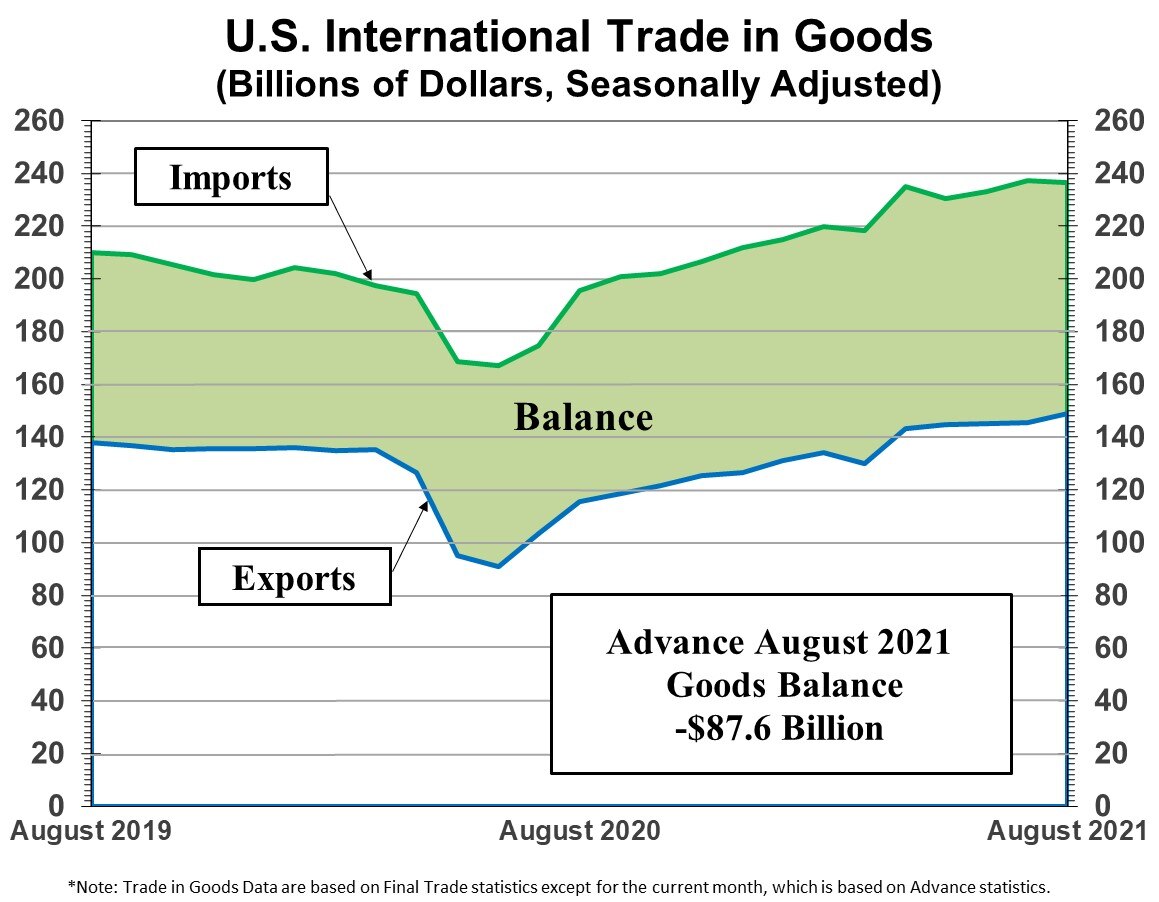
US exports of goods rose USD 1.1B to USD 149.0B in August. Imports of goods rose USD 1.9B to AUD 236.6B. Goods trade balance deficit widened to USD -87.6B, versus expectation of USD -87.0B. Wholesale inventories rose 1.2% mom to USD 731.0B. Retail inventories rose 0.1% mom to USD 603.3B.
The Possible Decline In Expansionary Policies Has Boosted Demand For The US Dollar
US Federal Reserve Chairman Jerome Powell announced yesterday that inflation indicators have reached a level that makes ready the situation for a reduction in bond-buying programs as well as a reduction in expansionary policies. As a result of this news, bond yields in the market have increased. This, along with concerns about the crisis of the Chinese company Evergrande, has led to a relative reduction in the level of risk in the stock markets.
Technically, the Dow Jones Index is currently moving in a short-term uptrend after a bullish wave. Therefore, the probability of a short-term uptrend and pullback has risen to the 34560 level. In the medium term, the Dow jones index has reached the PRZ level from the Ichimoku cloud and Moving averages of 34 and 55 days and has had a corrective reaction to it. Then the index’s response to the mentioned level will be decisive.
The possible decline in expansionary policies has boosted demand for the USD, directly impacting USD related instruments such as the GBPUSD and the EURUSD. The GBPUSD has now returned to a bearish trend after a short bullish correction, and technically, the first possibility is that the price will continue to decline to the support level of 1.36.
Oil And Gold, Have Been Affected By New Reports
In the oil market (the Brent oil index), Goldman Sachs and the US Energy Information Administration (EIA) have reportedly increased their estimates of industrial oil demand for next year. In addition, with the onset of the cold season, fuel demand levels in many regions of the world it’s increasing. These factors have caused the oil price to break the significant resistance of $ 77.5 per barrel and reach the highest level since October 2018.
Technically, the price has reached the critical level of $ 80 per barrel, and the price reaction to this level will be decisive. There is a possibility of short-term corrective movements in this price level, but the first possibility will continue to be upward in the medium term. However, the price reaction to the critical $ 80 level should be monitored.
In the gold market, demand for the US dollar has risen, following the results of last week’s FOMC meeting and Jerome Powell’s speech yesterday that inflationary conditions have been met to reduce bond-buying programs as well as expansionary policies. And has reduced the price of gold in international markets.
Technically, the price has reached the support level of $ 1740, and the first possibility is to cross this price level and continue the downward trend in the medium term. If the price crosses this level, the following support levels will be $ 1718 and $ 1700.
Yields Continue To Rise, UK 30-Year Auction Disappoints
Notes/Observations
- Yields kept climbing pulled up by a hawkish shift at the Fed.
- EU confidence rises as data defied concerns over supply-side constraints and a new surge in Covid-19 cases (Note: Both German and French reading beat consensus).
- Senate fails to advance debt ceiling, government funding measure.
- China Aug industrial profit growth slows for sixth month.
- Oil extends rally into 6th day on tight supply, Brent hitting 3-year high.
Asia
- China PBOC Open Market Operation (OMO) again injected CNY100B in 14-day reverse repos (Note: 8th straight session of PBoC net liquidity injection).
- BOJ July Meeting Minutes (two decisions ago) reiterates its overall assessment that domestic economy had picked up as a trend, although it remained in a severe situation due to the impact of COVID.
- Japan Fin Min Aso stated that he did not believe pent up demand would emerge too easily and would take time for demand to return after state of emergency ends.
- Australia Aug Preliminary Retail Sales M/M: -1.7% v -2.5%e.
- China Aug Industrial Profits slow for the 6th consecutive month (Y/Y: 10.1% v 16.4% prior).
- North Korea fires unidentified projectile into East Sea.
Europe
- ECB’s de Cos (Spain) stated that reduction of ECB monetary support must be done with caution.
- UK govt said to place the army on standby to help ease fuel supply issues with up to 150 military drivers preparing to deliver fuel to station forecourts.
Americas
- Fed Chair Powell Senate testimony stated that Fed would act against 'sustained' high inflation; Bottleneck effects were larger and more persistent than expected.
- Fed's Bostic (FOMC voter, hawk) stated that was not convinced were facing a lengthy bout with troublesome inflation; Without clear data demonstrating inflation had arrived and was likely to last, we would allow labor markets to run their course.
- Fed's Williams (FOMC voter): Tapering bond buying might soon be warranted; Conditions to support a rate hike still well off.
- Fed’s Brainard noted that economy could reform to pre-pandemic equilibrium of low unemployment and mild inflation. Expected inflation to return to pre-virus dynamics, did not take any signal on liftoff from taper timing.
- Fed's Kashkari (dove, non-voter) stated that our highest priority was to put people back to work.
- Dallas Fed's Kaplan to retire on Oct 8th (Reminder: Fed's Rosengren (non-voter) said to retire on Sept 30th).
- Senate Republicans blocked a measure to fund the government and suspend the debt ceiling Monday evening.
- Democrats said to be hinting that they could be willing to drop the debt ceiling from their government funding package this week in order to avoid a government shutdown - Politico.
Energy
- WTI Crude continues to rise, Brent trades above $80/bbl.
Speakers/Fixed income/FX/Commodities/Erratum
Equities
- Indices [Stoxx600 -1.03% at 457.64, FTSE -0.28% at 7,043.31, DAX -0.70% at 15,464.75, CAC-40 -1.14% at 6,575.28, IBEX-35 -0.97% at 8,915.50, FTSE MIB -0.63% at 25,967.00, SMI -1.16% at 11,556.00, S&P 500 Futures -0.65%].
- Market Focal Points/Key Themes: European indices open mixed with a downward bias, then fell into the red later in the session; better performing sectors include energy and financials; consumer discretionary and technology sectors among those leading to the downside; oil and gas subsector supported by rise in crude prices; Castellum divests property portfolio; Blue Prism to be acquired by Vista; reportedly SocGen looking to acquire ING’s retail bank unit; Maerks sells it’s reefer construction unit; Wolters Kluwer sells its US legal ed business; focus on upcoming testimony from Fed’s Powell before Congress; earnings expected later in the US session include IHS Markit, Micron Technologies and Synnex.
Equities
- Consumer discretionary: Ferguson [FERG.UK] +1% (earnings; buyback), Smiths Group [SMIN.UK] +3% (earnings; confirms divestment), Go-Ahead [GOG.UK] -18%.
- (CFO resigns; Updates on Southern Contract), Card Factory [CARD.UK] -1% (earnings), EasyJet [EZJ,UK] -3% (results of rights issue).
- Technology: ASM International [ASM.NL] -4% (investor day), Blue Prism Group [PRSM.UK] -2.5% (to be acquired).
Speakers
- ECB's Villeroy (France) reiterated view that inflation rate will fall below 2% by 2023.
- ECB's Kazimir (Slovakia): Financing conditions remain favorable.
- Sweden Central Bank (Riksbank) Bremam stated had clearly indicated that would tolerate inflation over target for a while. Having Repo Rate outlook that was on the accommodative side was OK as it was only a forecast.
- Turkey Central Bank Gov Kavcioglu stated that planned to increase FX reserves and saw no reason for further depreciation in currency.
- Romania Central Bank official Popa: Favor faster rate hikes.
- Japan PM Suga to lift the Coronavirus State of Emergency on Sept 30th (as expected).
- China State Grid stated that power supply for Beijing was ample and that cuts made during the week were due to regular checks.
- China PBOC Gov Yi Gang: No need to purchase assets at this time. Saw China's economy potential growth between 5.0-6.0%.
Currencies/Fixed Income
- Plethora of recent Fed speak reinforces message of tapering and US bond yields continued to climb. The 10-year Treasury yield approached the 1.55% level during the session.
- USD/JPY at 3-month highs and edging to the key resistance area of 112. JPY currency furthered weakened after a weak JGB auction that added to negative sentiment. Focus also on the LDP ruling party election on Wednesday.
- EUR/USD holding below the 1.17 level as US yields kept climbing pulled up by a hawkish shift at the Fed.
- GBP/USD moved back below the 1.37 level as markets reassessed the BOE. Dealers noted the current supply chain crisis could discourage the Bank of England from raising interest rates.
Economic data
- (NL) Netherlands Sept Producer Confidence Index: 11.1 v 9.6 prior.
- (FI) Finland Aug Preliminary Retail Sales Volume Y/Y: 1.2% v 3.4% prior.
- (DE) Germany Oct GfK Consumer Confidence: +0.3 v -1.5e (1st positive reading in 19 months).
- (NO) Norway Aug Retail Sales (includes auto/fuel) M/M: -3.8% v +0.6%e.
- (FR) France Sept Consumer Confidence: 102 v 100e.
- (ES) Spain July Total Mortgage Lending Y/Y: 5.7% v 29.9% prior; House Mortgage Approvals Y/Y: 36.8% v 41.2% prior.
- (HU) Hungary Aug Unemployment Rate: 4.0% v 3.7%e.
- (SE) Sweden Aug Retail Sales M/M: +0.7% v -0.2%e; Y/Y: 6.6% v 5.3%e.
- (SE) Sweden Aug Trade Balance (SEK): -10.3B v 6.6B prior.
- (AT) Austria Sept Manufacturing PMI: 62.8 v 61.8 prior (15th straight expansion).
- (HK) Hong Kong Aug Trade Balance (HKD): -26.3B v -29.2Be; Exports Y/Y: 25.9% v 26.0%e; Imports Y/Y: 28.1% v 28.9%e.
- (IS) Iceland Sept CPI M/M: 0.5% v 0.5% prior; Y/Y: 4.4% v 4.3% prior.
Fixed income Issuance
- (NL) Netherlands Debt Agency (DSTA) sold €4.92B vs. €3.0-5.0B indicated range in new 0.0% Jan 2029 DSL Bonds; Avg Yield: -0.251% v -0.479% prior.
- (ID) Indonesia sold total IDR12.0T vs. IDR12.0T target in bills and bonds.
- (IT) Italy Debt Agency (Tesoro) sold €5.5B vs. €5.5B indicated in 6-month bills; Avg Yield: -0.545% v -0.519% prior; Bid-to-cover: 1.29x v 1.28x prior.
- (UK) DMO sold £2.0B in 1.25% July 2051 Gilts; Avg Yield: 1.332% v 0.972% prior; bid-to-cover: 2.05x v 2.41x prior; Tail: 1.1bps v 0.5bps prior.
- (CH) Switzerland sold CHF637.0M in 6-month Bills; Avg Yield: -0.776% v -0.750% prior.
Looking Ahead
- (PL) Poland Central Bank to hold non-monetary policy meeting.
- 05:25 (EU) Daily ECB Liquidity Stats.
- 05:30 (ZA) South Africa Q2 Non-farm Payrolls Q/Q: +0.1%e v -0.1% prior; Y/Y: -1.0%e v -5.4% prior.
- 05:30 (HU) Hungary Debt Agency (AKK) to sell 3-Month Bills; Avg Yield: % v 1.11% prior; bid-to-cover: x v 1.70x prior.
- 05:30 (EU) ECB allotment in 7-Day Main Refinancing Tender (MRO).
- 05:30 (ZA) South Africa to sell combined ZAR3.9B in 2035, 2040 and 2048 bonds.
- 06:00 (IE) Ireland Aug Retail Sales Volume M/M: No est v -1.7% prior; Y/Y: No est v 5.2% prior.
- 06:45 (US) Daily Libor Fixing.
- 07:00 (MX) Mexico Aug Unemployment Rate NSA (unadj): 4.4%e v 4.4% prior.
- 07:00 (BR) Brazil Central Bank (BCB) Sept Minutes.
- 07:00 (SE) Sweden Central Bank (Riksbank) Dep Gov Skingsley.
- 08:00 (UK) Daily Baltic Dry Bulk Index.
- 08:00 (EU) ECB chief Lagarde opens ECB forum.
- 08:30 (US) Aug Advance Goods Trade Balance: -$87.3Be v -$86.4B prior.
- 08:30 (US) Aug Preliminary Wholesale Inventories M/M: 0.8%e v 0.6% prior; Retail Inventories M/M: 0.5%e v 0.4% prior.
- 08:30 (ES) ECB’s De Guindos (Spain).
- 08:50 (UK) BOE’s Mann.
- 08:55 (US) Weekly Redbook LFL Sales data.
- 09:00 (US) July FHFA House Price Index M/M: 1.5%e v 1.6% prior.
- 09:00 (US) July S&P Case-Shiller House Price Index (20-City) M/M: 1.70%e v 1.77% prior; Y/Y: 20.00%e v 19.08% prior.
- 09:00 (US) July S&P Case-Shiller House Price Index (Overall) Y/Y: No est v 18.61% prior.
- 09:00 (EU) Weekly ECB Forex Reserves.
- 09:00 (RU) Russia announcement on upcoming OFZ bond issuance (held on Wed).
- 09:00 (US) Fed’s Evans.
- 09:45 (IT) ECB’s Panetti (Italy).
- 09:45 (EU) ECB weekly QE bond buying update.
- 09:45 (UK) BOE to buy £1.47B in APF Gilt purchase operation (20+ years).
- 10:00 (US) Sept Consumer Confidence Index: 115.0e v 113.8 prior.
- 10:00 (US) Sept Richmond Fed Manufacturing Index: 10e v 9 prior.
- 10:00 (MX) Mexico Weekly International Reserve data.
- 10:00 (US) Fed chief Powell in Senate.
- 10:00 (SE) Sweden Central Bank (Riksbank) Gov Ingves.
- 11:00 (DE) ECB’s Schnabel (Germany).
- 13:00 (US) Treasury to sell 7-year notes.
- 15:00 (AR) Argentina July Economic Activity Index (Monthly GDP) M/M: No est v 2.5% prior; Y/Y: 8.5%e v 10.8% prior.
- 15:00 (US) Fed’s Bostic.
- 16:30 (US) Weekly API Oil Inventories.
- 19:01 (UK) Sept BRC Shop Price Index Y/Y: No est v -0.8% prior.
- 21:10 (JP) BOJ Outright Bond Purchase Operation for 3~5 Years and 5~10 Years maturities.
- 22:00 (VN) Vietnam Q3 GDP Y/Y: 1.9%e v 6.6% prior.
- 22:00 (VN) Vietnam Sept CPI Y/Y: 3.1%e v 2.8% prior.
- 22:00 (VN) Vietnam Sept Trade Balance: -$1.8Be v -$1.3B prior; Exports Y/Y: +0.5%e v -5.4% prior; Imports Y/Y: 15.0%e v 21.2% prior.
- 22:00 (VN) Vietnam Sept YTD Retail Sales Y/Y: No est v -4.7% prior.
- 22:00 (VN) Vietnam Sept Industrial Production Y/Y: No est v 5.6% prior (revised from -7.4%).
- (JP) Japan Ruling Party (LDP) agreed on leadership.
Yen and Tech Stocks Bleed as Yields March Higher
- Spike in bond yields plays havoc with yen and stocks
- Oil cruises higher amid dual energy crises in Europe and China
- Dollar firms, gold struggles, Powell testifies before Congress
Yields spike
The specter of rising interest rates has returned to haunt financial markets. The Fed breathed some life back into Treasury yields last week after it opened the door for a rate increase next year, and the rally has gone into overdrive this week thanks to some signs that inflation won't cool anytime soon.
There are essentially two energy crises playing out simultaneously in Europe and China. In Europe it's driven mostly by a natural gas shortage that is feeding into surging electricity prices, while in China a scarcity of coal has resulted in widespread power outages that have plagued heavy industry.
China's power crunch threatens not only to kick the economy when it is already down, but also to ripple through global markets by exporting inflation abroad as manufacturers raise their prices to cope with the production fallout. With growing signs that inflation will be more persistent, investors have started demanding a higher return to hold bonds, hence the spike in yields.
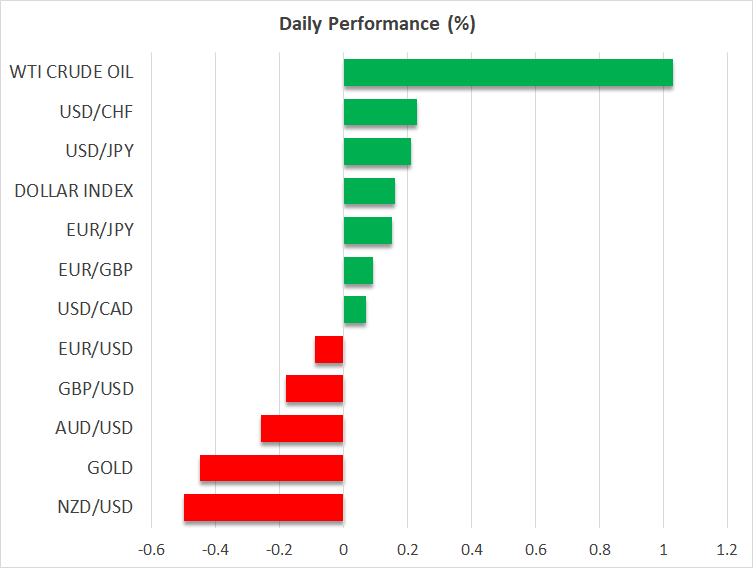
When yields move higher, the assets that typically suffer the most damage are stocks with stretched valuations, the Japanese yen, and gold prices. That's exactly where the hammer has fallen this time. The tech-heavy Nasdaq is under heavy pressure as future cash flows are worth less when a higher discount rate is used in valuation models. Gold held up surprisingly well but is unlikely to come out unscathed in a world of rising real rates and a yield-powered dollar.
Oil tests multi-year highs
With coal and natural gas markets going berserk, it's only natural that there would be positive spillover effects into crude oil as some producers switch to alternative energy sources. And since changes in oil prices correlate quite closely with changes in inflation expectations, the fate of this rally could ultimately impact monetary policy too.
All eyes are now on OPEC. The cartel will meet next week and the sword hanging over oil prices is whether it will react to the unfolding energy crisis by opening its supply taps even wider. If not, panic-buying could kick into higher gear.
The Canadian dollar hasn't capitalized much on rising oil prices as risk sentiment remains shaky and the US dollar has stood tall. That said, pairs like loonie/yen paint a much clearer picture of recent dynamics.
Dollar firms ahead of Powell testimony
The bounce in yields has re-energized the world's reserve currency, which is currently testing its recent highs against the euro. Since the ECB isn't expected to touch the interest rate button over the next few years, any rally in European yields tends to be limited, allowing US yields to rise faster and adding downward pressure to euro/dollar.
In other news, regional Fed presidents Rosengren and Kaplan both resigned their posts after a scandal that they were actively trading equities. While not illegal per-se, the optics weren't good as there was a perception of conflicts of interest. Rosengren would have been an FOMC voter next year, so his replacement will be crucial.
As for today, there's a heavy dose of speeches from central bankers, starting with ECB President Lagarde at 12:00 GMT. Then at 14:00 GMT, Fed Chairman Powell will testify before the Senate Banking Committee. He will most likely be grilled on inflation, the infrastructure packages the Democrats are working on and their impact on the US economy, as well as the debt ceiling drama.
The debt ceiling debate always attracts a lot of attention, but it almost never impacts markets. It's mostly political theater - investors know a deal will come, sooner or later.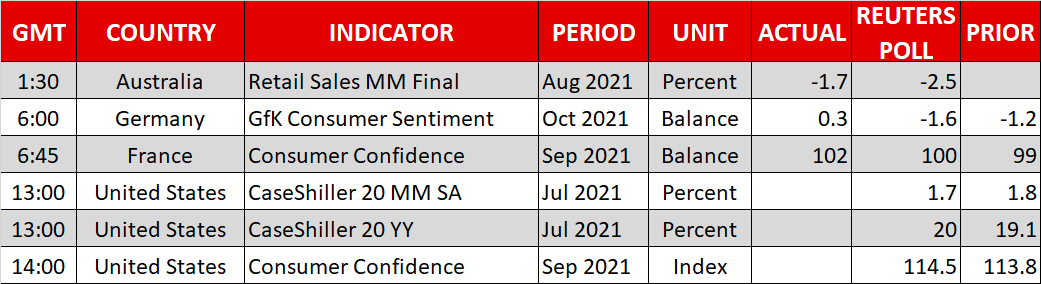
GBPUSD Steering Forces Feeble Around Support Base
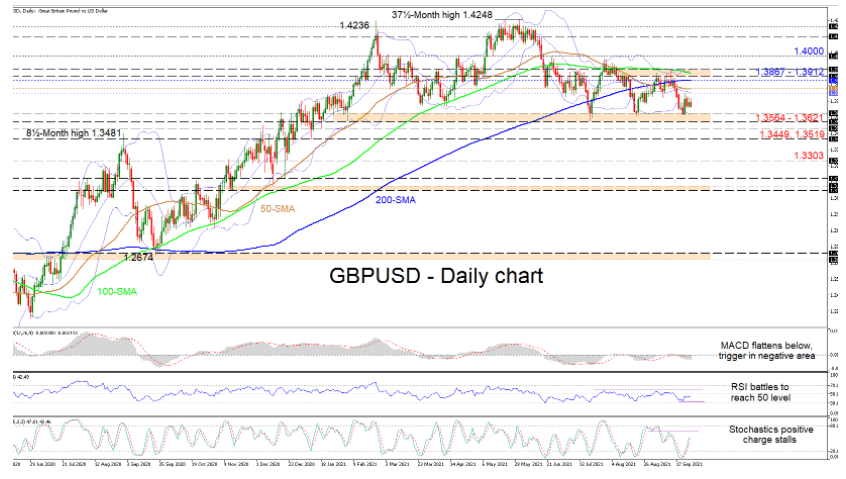
GBPUSD is consolidating in the proximity of the support foundation of 1.3564-1.3621, which has defended the positive structure from the beginning of February. The converging simple moving averages (SMAs) are currently lacking a clear direction in trend.
Furthermore, the short-term oscillators are indicating a phase where directional momentum is not decisive. The MACD, is flattening below its red trigger line slightly beneath the zero threshold, while the RSI is drifting sideways in negative territory. The stochastic oscillator’s %K line has dipped downward, signaling that the positive price action in the pair is under strain.
If sellers retain their minor lead, they could once again face the hardened support section of 1.3564-1.3621, which also encapsulates the lower Bollinger band. If this critical upside defense fails to avert a decline from evolving, the price may meet the January troughs of 1.3519 and 1.3449 respectively. Should selling interest intensify further, the bears could then target the 1.3303 support barrier.
On the other hand, if buyers make a comeback, initial resistance may arise from the mid-Bollinger band at 1.3754 and the neighbouring 50-period SMA at 1.3785. Overstepping these obstacles, buyers would need to muster a more profound upside force to conquer the 200-period SMA at 1.3839 and the adjacent reinforced barricade of 1.3867-1.3912. Triumphing over this resistance section, which also encompasses the 100-period SMA and the upper Bollinger band, the bulls could then propel to challenge the 1.4000 handle.
Summarizing, in the short-term timeframe GBPUSD has been ranging between the 1.3564 and 1.4000 limits. Furthermore, the pair currently is lacking directional impetus, which could create a new price course in the pair.
China PMIs Eyed Amid Worsening Power Crisis And Evergrande Woes
The latest headlines out of China haven’t been particularly encouraging. The country’s power outages appear to be worsening, supply shortages and soaring prices are stifling businesses, regulatory crackdowns are on the up, and the Evergrande debacle is about to send shockwaves through the property sector, if not the entire economy. The manufacturing PMIs for September due on Thursday will therefore be attracting a lot of attention as concerns grow about a major slowdown in the world’s second largest economy.
Manufacturers’ boom times may be over
China’s manufacturing sector has been showing signs of stress for some time now, losing momentum at the end of 2020, even before the latest troubles came to the surface. The official government manufacturing PMI has been steadily declining since April and is on the verge of slipping below 50, which separates expansion from contraction. It stood at 50.1 in August and is forecast to stay unchanged in September when released at 01:00 GMT on Thursday.
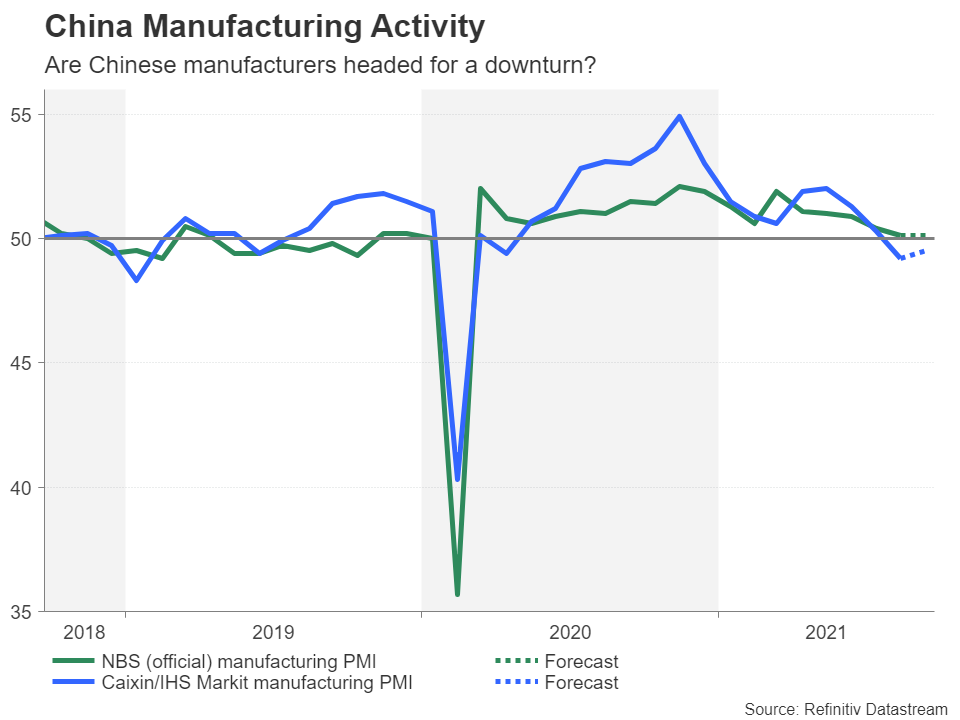
The Caixin/Markit manufacturing PMI will follow 45 minutes later and is expected to show a small improvement. The private survey has already dipped below the critical 50 level, falling to 49.2 in August. But analysts are predicting a slight pickup in September to 49.5.
Energy crisis could be bigger than Evergrande
Should the September figures disappoint, this could ring alarm bells for investors already on edge about the fate of Evergrande – China’s heavily indebted property giant. But with some signs that Chinese authorities are working behind the scenes to try and contain a wider market fallout from Evergrande’s debt crisis, there’s now another worry for investors.
Power outages across the country are spreading, inflicting not only businesses but also households. Much of the problem, though, is the government’s own making. Factories ranging from aluminium smelters to soybean processing plants to chemical plants are under instructions to ration electricity so that provincial authorities can meet their emissions targets. The government has enforced tough emissions curbs to rein in pollution ahead of the Beijing Winter Olympics in February.
A growing list of problems
Meanwhile, a ban on Australian coal imports over a trade dispute is exacerbating the commodity’s shortage, crippling power producers that also have to contend with surging natural gas prices. All this comes against a backdrop of broader supply bottlenecks and shortages that are pushing up factory prices, as well as a series of crackdowns by regulatory authorities, mainly targeting the tech sector.
Potentially making matters worse, Evergrande – China’s largest real estate developer – is on the brink of collapse and a full state bailout is looking unlikely. This means it’s almost certain there will be significant repercussions on the construction industry and the financial system even if the government were to try and ease the pain from a restructuring of Evergrande’s massive debt.
Aussie at risk from China slowdown
The Australian dollar, which is considered a good proxy for China-related trades due to Australia’s dependence on Chinese demand for its exports, has been somewhat undermined lately by the negative newsfeed, though it has yet to have a major wobble. That could change in the coming weeks if businesses begin to buckle under the weight of all the aforementioned headaches. Thus, traders will likely be sensitive to possible warnings coming from Thursday’s PMIs.
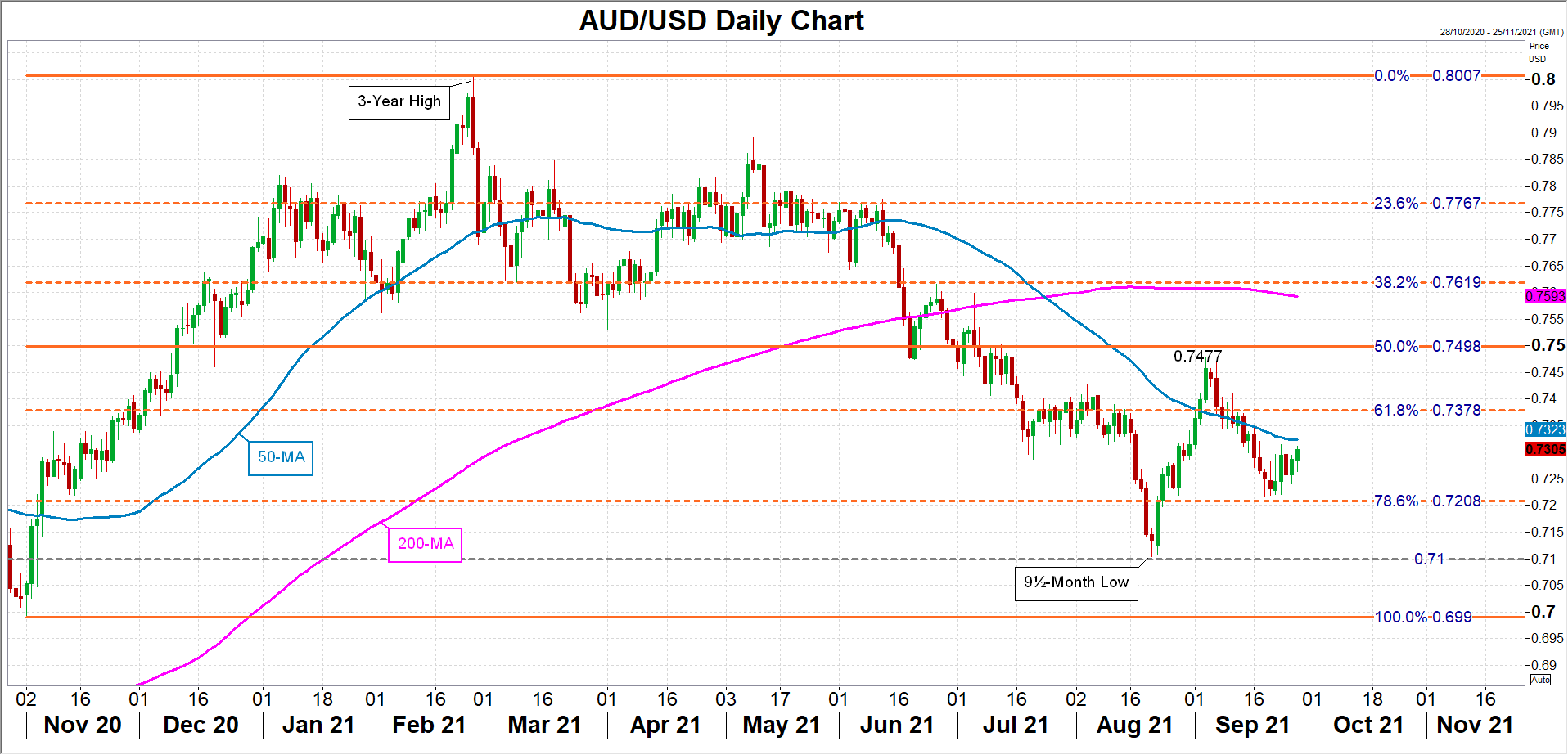
Aussie/dollar is currently struggling beneath its 50-day moving average (MA) and a rise above it would be difficult without a substantial improvement in risk appetite. The early September peak of $0.7477 looks even more like a distant memory. A worrying set of PMI indicators out of China could push the pair below the 78.6% Fibonacci retracement of the November 2020-February 2021 downtrend at $0.7208 and towards the 9½-month low of $0.7104 from August 20.
The Energy Crisis In Europe And Asia Could Significantly Slow Down The Global Economic Recovery
The US stock market closed without a single trend yesterday. The Dow Jones index increased by 0.21%, thanks to the growth of the banking sector. The S&P 500 index decreased by 0.28%, and the Nasdaq technology index lost 0.52%. Investors are clearly leaving technology stocks and switching to companies associated with economic growth. This is a sign that investors are expecting the market to rise soon. The energy sector is also in the focus of investors, as due to the increase in oil and natural gas prices, energy stocks are growing.
There is a political conflict between the Democrats and Republicans in the US Parliament over the national debt limit. The Republican Party is blocking a bill that ties government funding to the debt ceiling.
Federal Reserve member Williams says that the Fed does not expect the labor market to improve much in September and October. The Fed has recently made significant progress in curbing inflation and job creation. But if the US doesn't solve the national debt problem, the Fed won't be able to repair the damage to the economy. Fed member Evans says that the central bank predicts that the unemployment rate in the United States will fall to 5% by the end of 2021 and that the labor market will be strong next year.
Supply chain problems will reduce global auto production in the near term. Goldman Sachs cut its forecast for global auto production for 2021 and 2022 to 75 million and 85 million, respectively.
The European stock market closed in the green area yesterday. British FTSE 100 and French CAC 40 increased by 0.2%, German DAX increased by 0.27%, Italian FTSE MIB and Spanish IBEX 35 added 0.6% and 1.5%, respectively. Germany's federal election will be followed by lengthy coalition talks, extending a period of policy uncertainty beyond the election. But Olaf Scholz, the chancellor candidate of the winning Social Democratic Party (SPD), expressed hope that the new German government would be formed before Christmas.
The 10-year US yield exceeded 1.5%, its highest level since June, and the two-year yield reached an 18-month high. Gold and silver prices are set to decline amid rising government bond yields.
Oil is rising amid signs of a global energy crisis, while natural gas prices are just "skyrocketing to space" as inventory levels remain critically low ahead of the heating season. US natural gas futures increased by more than 5% yesterday and more than 17% in the last 2 trading sessions. The growth of demand for natural gas is likely to stimulate oil demand, as energy companies are moving to a different type of fuel.
Troubled Chinese real estate developer Evergrande may sell a 50% stake in its insurance department for $600 million. In addition to problems with the real estate market, China is also facing an energy crisis that could come as a shock to global supply chains as the world's largest exporter's businesses are forced to save energy by cutting production.
India's large fleet of coal-fired power plants is at dangerously low inventory levels, which could force the country to buy expensive batches of fuel or risk power outages. More than 60% of coal-fired capacity has low fuel reserves.
Main market quotes:
- S&P 500 (F) 4,443.11 −12.37 (−0.28%)
- Dow Jones 34,869.37 +71.37 (+0.21%)
- DAX 15,573.88 +42.13 (+0.27%)
- FTSE 100 7,063.40 +11.92 (+0.17%)
- USD Index 93.40 +0.07 (+0.08%)
Important events for today:
- Japan Monetary Policy Meeting Minutes (m/m) at 02:50 (GMT+3);
- Australia Retail Sales (m/m) at 04:30 (GMT+3);
- Eurozone ECB President Lagarde’s Speech at 15:00 (GMT+3);
- US CB Consumer Confidence (m/m) at 17:00 (GMT+3)
- US Fed Chair Jerome Powell’s Speech at 17:00 (GMT+3);
- US FOMC Member Bowman’s Speech at 20:40 (GMT+3);
- US FOMC Member Bostic’s Speech at 22:00 (GMT+3).
EURJPY Fights For A Bullish Trendline Breakout
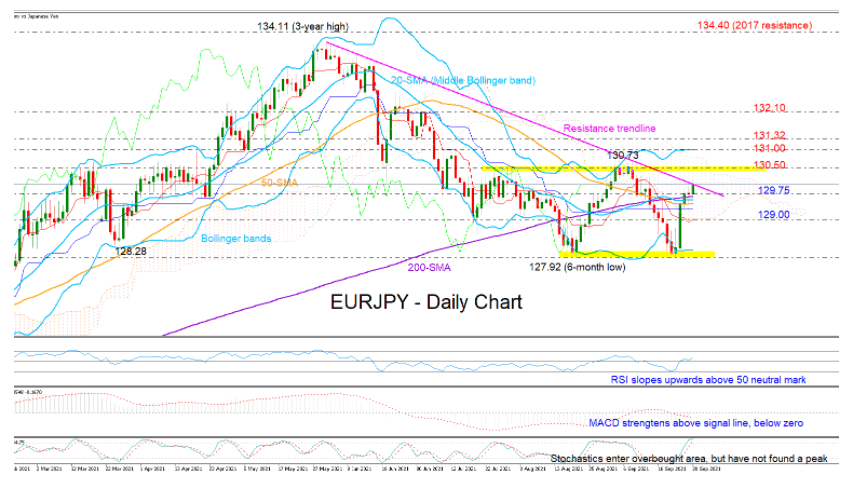
EURJPY resumed its positive momentum on Tuesday after a neutral start to the week with scope to test the descending trendline drawn from June’s 3 ½-year high and the 130.00 mark, which proved hard to claim yesterday.
A sustainable move above the trendline would signal further continuation of last week’s rebound, which took place exactly where the summer sell-off paused in August, creating a sort of double bottom pattern around 127.92. Hence, if traders monitor this bullish structure, they will probably wait for confirmation to come above the 130.50 neckline in order to boost buying orders towards the 131.00 -131.32 restrictive region. Beyond that, the next stop could be around the 132.00 psychological level.
Technically, the short-term risk is tilted to the upside, backing the above scenario. The price has jumped into the bullish upper Bollinger band area, the RSI is rising with a steep positive slope above its 50 neutral mark, and the MACD, although in the negative region, is strengthening above its red signal line.
Nevertheless, if bullish forces prove unsuccessful in breaching the trendline, with the price pulling below the nearby support of 129.75, the 129.00 mark could be the last opportunity for a rebound before all eyes turn to the 127.92 bottom.
In brief, EURJPY seems to be at a make-or-break point. A clear step above 130.00 could produce additional upside corrections, though only a fresh higher high above 130.50 would add credibility to the latest rebound. Otherwise, a new bearish wave could start below 129.75.