

Sample Category Title
Daily Tecnical Analysis
EUR/USD
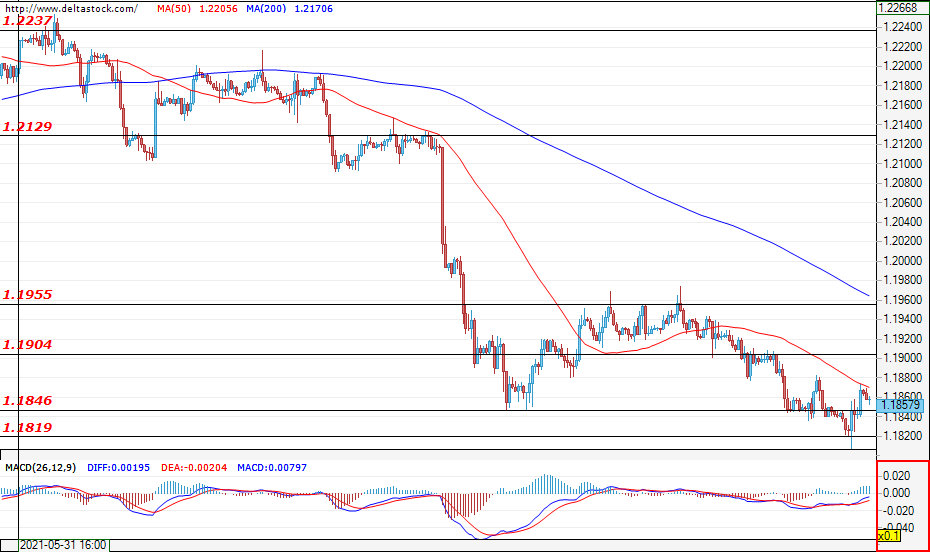
Current level - 1.1858
The bears did not gain enough momentum to successfully violate the support zone at 1.1820. A breach coming from the bears at this level would strengthen the negative expectations for the future path of the pair towards a test of the support at 1.1760. If the buyers re-enter the market, the first resistance would lie at the level of 1.1904. If it gets breached, a rally towards the upper zone (between 1.1955 and 1.2129) is a highly probable scenario. This week, investors' focus will mainly fall on the announcement of the ISM non-manufacturing data (Tuesday; 13:45 GMT).
| Resistance | Support | ||
| intraday | intraweek | intraday | intraweek |
| 1.1900 | 1.2130 | 1.1850 | 1.1760 |
| 1.1955 | 1.2237 | 1.1760 | 1.1690 |
USD/JPY
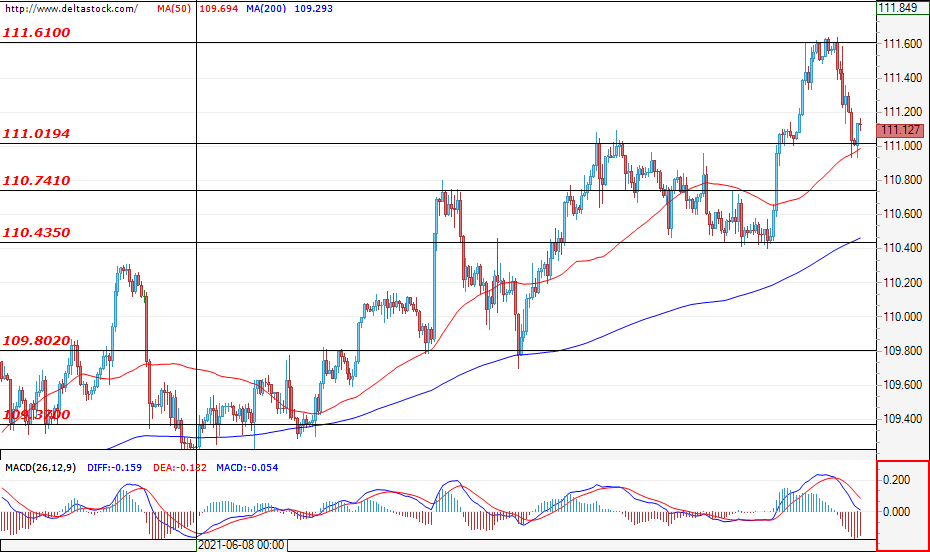
Current level - 111.12
At the time of writing this analysis, the downward movement from the last trading session was limited by the support level at 111.02. In case the USD/JPY continues its upward movement, it may be expected that the pair will test the resistance at 111.61. If the bears enter the market once again and successfully breach the support at 111.02, then the pair will most probably consolidate in the range between 110.43 - 111.02.
| Resistance | Support | ||
| intraday | intraweek | intraday | intraweek |
| 111.60 | 112.60 | 111.01 | 110.43 |
| 112.20 | 113.60 | 110.74 | 109.80 |
GBP/USD
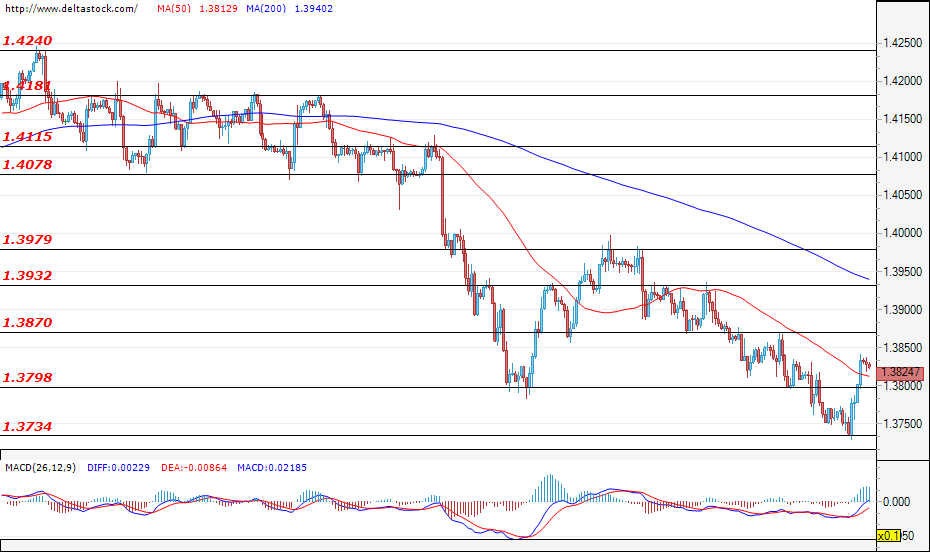
Current level - 1.3824
During Friday’s trading session, we witnessed a depreciation of the U.S. dollar against the sterling after the support zone at 1.3732 was not breached. This could be considered as a corrective move and only a breach of this level would confirm the negative expectation of market participants and head the pair towards the next support at 1.3660. In the upward direction, the main resistance remains the level of 1.3870.
| Resistance | Support | ||
| intraday | intraweek | intraday | intraweek |
| 1.3870 | 1.3980 | 1.3800 | 1.3660 |
| 1.3932 | 1.4078 | 1.3730 | 1.3610 |
AUDUSD In A Tight Range Ahead Of The RBA Rate Decision
Crude oil declined after the latest OPEC+ meeting ended without a deal. This happened after Saudi Arabia and Russia asked participating members to increase production in the next few months. The goal was to ease rising oil prices and extend the existing deal. This proposal found resistance by the United Arab Emirates (UAE), which sees its own production quota as being unfair. As a result, the relationship between Saudi Arabia and UAE has become fragile. Meanwhile, other OPEC+ members are comfortable increasing oil production by about 400k barrels per day from August to December. They are also prepared to extend the deal beyond April 2022.
The Australian dollar rose slightly as traders reflected on the latest positive economic data. According to the Australian Statistics Bureau, the country’s retail sales rose from 0.1% in April to 0.4% in May. This increase was better than the expected 0.1%. Further data showed that the country’s building approvals declined by 7.1% month-on-month in May while job advertisements increased by 3.0%. Meanwhile, the country’s services PMI declined to 56.8. These numbers came a day before the latest RBA interest rate decision.
Market activity will be relatively muted today as the US celebrates Independence Day. As a result, while the US markets will be closed, the futures market will remain open. Traders will focus on the latest services PMI data to be published by Markit. Analysts expect the data to show that the German services PMI increased to 60.4 while the Eurozone PMI rose to 58.0. Traders will also be reflecting on the Friday’s employment data that showed that the US economy added more than 850,000 jobs as the unemployment rate rose to 5.9%.
EURUSD
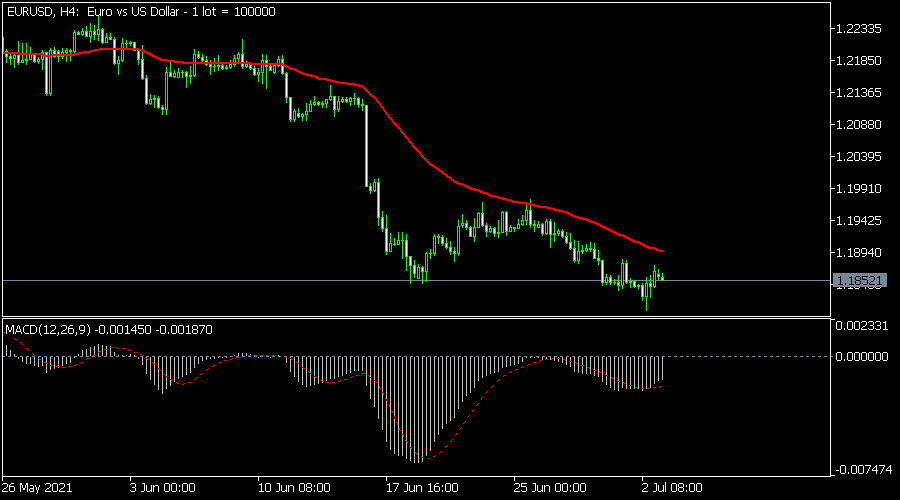
The EURUSD pair was little changed in early trading as traders reflected on the latest US NFP data. It is trading at 1.1852, which was slightly above last week’s low of 1.1805. The pair is slightly below the 25-day moving average on the four-hour chart while the MACD is below the neutral line. It is also slightly below the 61.8% Fibonacci retracement level. Therefore, the pair will likely remain at this range today.
AUDUSD
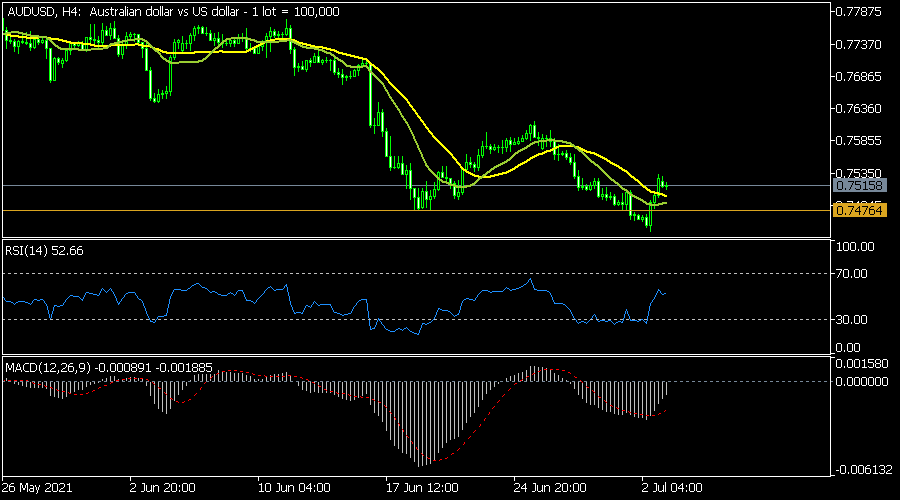
The AUDUSD pair rose to 0.7515 after the latest Australian PMI data. The pair has moved above the 25-day and 15-day moving averages while the signal line of the MACD has made a bullish crossover. The Relative Strength Index (RSI) has moved above the oversold level. It is also above the important support at 0.7476 level. Therefore, the pair may keep rising as bulls target the next key level at 0.7550.
USDJPY
The USDJPY pair declined to 111.10 after the latest US non-farm payrolls data. On the four-hour chart, the pair has moved below the short and longer-term moving averages. It is also between the ascending channel while the signal and histogram of the MACD are above the neutral level. Therefore, the pair may keep falling as bears target the lower side of the channel at 110.50.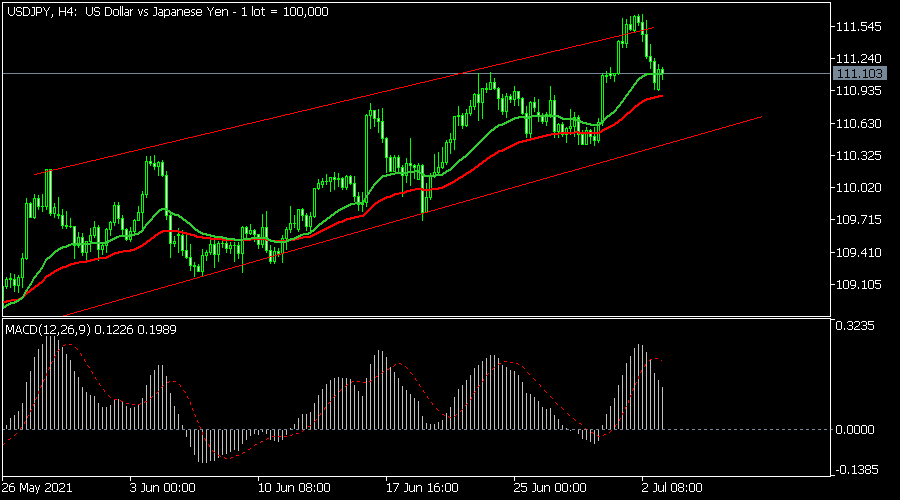
GBPUSD Bottom May Be In
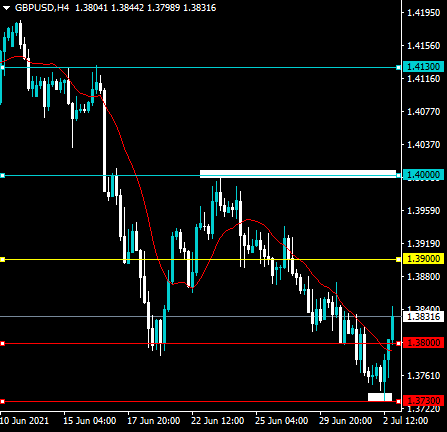
The British pound has bounced back above the 1.3800 level against the US dollar currency after the pair rallied following last Friday’s US monthly jobs report. A meaningful price bottom may now have formed after sellers were unable to breach the 1.3700 area. The four-hour time frame shows that an extremely large inverted head and shoulders pattern will form if the GBPUSD pair reaches the 1.4000 level.
The GBPUSD pair is only bullish while trading above the 1.3900 level, key resistance is found at the 1.4000 and the 1.4130 levels.
If the GBPUSD pair trades below the 1.3900, sellers may test the 1.3800 and 1.3730 support levels.
EURUSD Trendline Watch
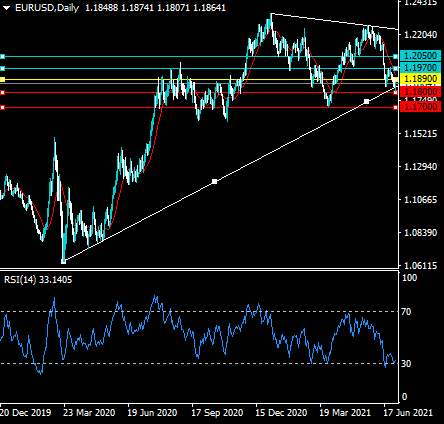
The euro currency is attempting to move higher against the US dollar as the RSI indicator on the daily time frame continues to show that the EURUSD is oversold. The EURUSD bulls case will look strong this week if the pair can stabilize above key trendline resistance, around the 1.1890 level. The 1.2000 level is a possible target this week if bulls can make gains above the mentioned trendline.
The EURUSD pair is only bullish while trading above the 1.1890 level, key resistance is found at the 1.1970 and 1.2050 levels.
EURUSD pair is only bearish while trading below the 1.1890 level, key support is found at the 1.1800 and 1.1700 levels.
USDJPY In The Buy Zone
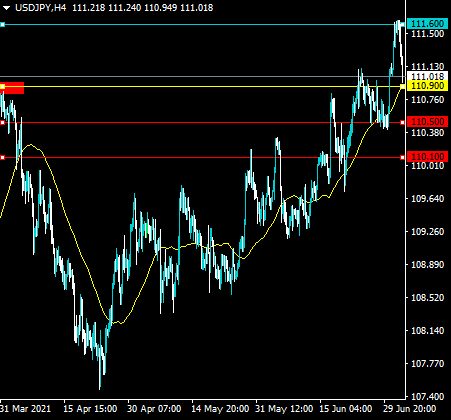
The US dollar remains under pressure against the Japanese yen currency as the greenback took a hit after the release of the US jobs report last week. The USDJPY is approaching its 200-period moving average on the four-hour time frame, which is an area traders may be looking to enter into to follow the established price trend. As long as the USDJPY pair holds above the 110.90 level this week then buying the recent pullback remains the best option.
The USDJPY pair is only bullish while trading above the 110.90 level, key resistance is found at the 111.60 and 112.00 levels.
The USDJPY pair is only bearish while trading below the 110.90 level, key support is found at the 110.50 and 110.10 levels.
XAUUSD $1,775 Pivot
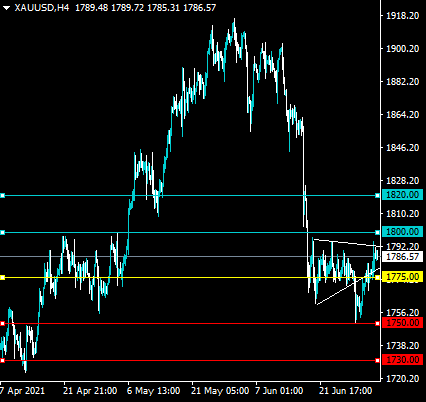
Gold is trying to recover higher in early-week trade after the US dollar currency gave back recent gains after last Friday’s US monthly jobs report. The price of gold needs to hold above the pivotal $1,775 level this week in order for a recovery in the yellow-metal to take hold. Gold bulls ideally need to hold to break above a triangle pattern and advance past the $1,800 resistance barrier.
XAUUSD is only bullish while trading above the $1,775 level, key resistance is found at the $1,800 and the $1,820 levels.
If XAUUSD trades below the $1,775 level, sellers may test the $1,750 and $1,730 support levels.
BoJ upgraded economic assessment of 2 regions, downgraded 2, kept 5 unchanged
In the Regional Economic Report, BoJ upgraded economic assessment of 2 regions (Hokuriku and Kinki), downgraded 2 regions (Chugoku and Shikoku), and kept 5 regions unchanged (Hokkaido, Tohoku, Kanto-Koshinetse, Tokaiand Kyshu-Okinawa).
It added: "while they reported that their economy had remained in a severe situation due to the impact of the novel coronavirus (COVID-19) -- with some reporting that it had seen a slowdown in the pace of its pick-up -- many reported that it had picked up as a trend or had started to pick up."
Governor Haruhiko Kuroda told branch managers, "Japan's economy remains in a severe state but is picking up as a trend... As the pandemic's impact gradually eases, the economy will recover thanks to increasing external demand, loose monetary policy and the effect of government stimulus measures."
AUDUSD RBA Watch
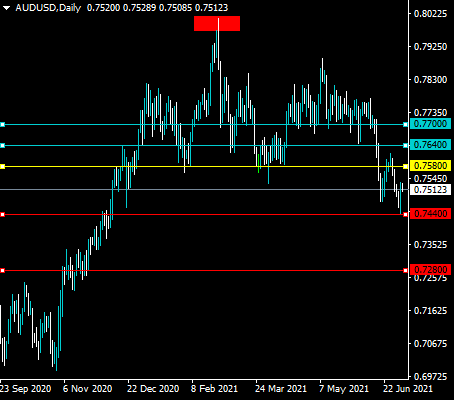
The Australian dollar is still holding a bearish bias against the US dollar ahead of tomorrow Reserve Bank of Australia interest rate decision. A bearish head and shoulders pattern has been activated and is indicating that the AUDUSD pair could fall towards the 0.7280 level. AUDUSD bulls need to anchor the price above the 0.7580 level in order for selling pressure to start to decrease.
The AUDUSD pair is only bearish while trading below the 0.7580 level, key support is found at the 0.7440 and 0.7280 levels.
The AUDUSD pair is only bullish while trading above the 0.7580 level, key resistance is found at the 0.7640 and 0.7700 levels.
Core Bonds Have A Minor Downward Bias
Markets
US payrolls guided Friday’s market dynamics in an otherwise quiet session. Job growth was better than expected (850k vs. 720k), breaking with two months of disappointments. The household survey-based unemployment rate, however, unexpectedly rose from 5.8% to 5.9%. These two labour market gauges are key elements in the Fed’s assessment so having them going in opposite ways provides an excellent opportunity to observe from the sidelines rather than feel the pressure to act swiftly. Markets at least seemed to think so and brought both the S&P500 and Nasdaq to new all-time highs. Bets on Fed hikes were pared back, causing outperformance of the short and medium end of the curve. Yields fell up to 4.1 bps (7y). The 10y yield (-3.4bp) retreated to just below support of 1.43%. The German yield curve bull flattened again. Both the 10y and 30y finished the week more than 3 bps lower with the former slipping below -0.20% support and closing the post-Fed gap. The move followed reports the day earlier the ECB is holding a special strategy meeting this week (Tuesday through Thursday) to wrap up its strategy review, including the way it defines price stability. EUR/USD reversed European weakness, rebounding from the low 1.18 area to finish at 1.1865 as the dollar softened in the wake of the payrolls. The 1.185 support lived to fight another day. USD/JPY fell but held the 111 barrier in the close. EUR/GBP lost ground but is still going nowhere around 0.86.
Asian-Pacific markets trade mixed. China marginally underperforms following the country’s broadened crackdown on tech platforms and disappointing PMIs. The services Caixin PMI eased significantly from 55.1 to 50.3, just above the neutral level with Markit citing a resurgence of Covid-19 (in the Pearl River Delta) as one of the important factors explaining deteriorating sentiment. Combined with the manufacturing slowdown to 51.3 last week, the composite indicator declined to 50.6. Core bonds have a minor downward bias. US cash markets remain closed in observance of Independence Day (4th of July). The dollar strengthens marginally on FX markets.
Today’s economic calendar is all but empty and without guidance from the US either this is going to be a day to forget soon. Commodities, and oil in particular, might grab most of the headlines. OPEC+ is still in disarray over a further output increase starting from August (see headline below). Overall sentiment will guide trading. European equity futures trade neutral. After closing the gap, the German 10y yield could be in for a technical rebound, in line with current (inverse) moves in the Bund future. Question is what this means in thin markets of course. To the downside, support lies at -0.25%. In EUR/USD we’ll be looking for 1.185 to hold but we don’t expect any sizeable market moves today.
News headlines
According to a report of the International Energy Agency, global demand for gas is expected to recover to pre-pandemic levels this year. The IEA sees global gas consumption rising 3.6% this year after a contraction of 1.9% last year. Albeit at a slower pace, demand is expected to grow to 7% above the pre-corona level in 2024. “The rebound in gas demand shows that the global economy is recovering from the shock of the pandemic and that gas is continuing to replace more emissions-intensive fuels”. The outlook assumes that there are no new policies to curb natural gas consumption in the coming years.
The rift within the OPEC+ cartel to reach a deal on production restrictions hasn’t been resolved during the weekend. A deal to raise production by 2 mln barrels per day between August and December was reported to have been blocked by United Arab Emirates. The UAE doesn’t agree on a proposal to extend the broader agreement on production cuts until the end of 2022. The UAE also asks its baseline production reference which is used for the calculations of the cuts, to be reviewed, reflecting its actual production capacity, rather than the (outdated) October 2018 production reference. The negotiations will continue today. The price of Brent oil continues hover near post-corona peal levels in the $76 p/b area.
The OPEC Drama
The OPEC+ meeting is turning into an OPEC+ drama, as oil producer countries can’t find an agreement on whether they should extend the actual production-cut agreement into next year.
According to the latest news, OPEC+ countries have reached an agreement to increase production by 400’000 barrels per day starting from August, to meet the increasing global demand with the reopening of economies, increased economic activity and traveling. But Saudi wants to extend the production-cut regime to the end of next year to make sure that another wave of contagion doesn’t spoil the more-than-a-year efforts that were put in to deal with the pandemic from all OPEC+ members in restricting their oil output. Russia agrees to follow Saudi in this plan, but the United Arab Emirates is blocking the deal, insisting that it’s not a decision to be taken right now. More importantly, they ask for better conditions for the UAE, with the threat of leaving the cartel if their demand is not met.
Discussions will continue today, and the growing risks start threatening the oil’s latest advance.
A barrel of US crude is still exchanged near the $75 this Monday.
If the OPEC+ fails to find an agreement and the crisis deepens at the heart of the cartel, then the oil prices will fall free, and we could see a serious dive which could throw the price of a barrel to $50/55 region, as there would be a dramatic, structural change in the supply side of the game. Also, the Saudi-UAE conflict is more serious than the OPEC/Russia disagreement, given that we are now talking about a friction within the cartel itself. The fall of OPEC is of course not the base case scenario as everyone has a lot to lose in a situation like this – the lone sheep is always in danger of the wolf.
Therefore, the basecase scenario is a delayed OPEC+ deal, and the announcement of 400’000-barrel increase in oil productio, and ideally a plan on what’s to come for the months ahead. In this case, we should see oil consolidate gains and post fresh gains. We shall see a rally to $80 mark if Saudi convinces the UAE to follow the extension of lower-supply regime until the end of next year.
Could we see an advance to $100 per barrel in case of agreement? Hardly, or hardly sustainable, as higher oil prices are not good for the economic recovery, as a too rapid rise in energy costs would curb the global demand. Also, if oil prices continue rising at the current speed, inflation which already hit 5% in the US in May, will further threaten the Fed’s ultra-supportive monetary policy and would be a second hit on companies. Therefore, the upside potential in oil remains limited in both cases, yet the latest frictions between Saudi and the UAE increased the risk of seeing a sizable downside correction in global oil prices.