ECB Cœuré: “Winding back globalisation is the wrong solution”

    ECB Executive Board member Benoît Cœuré warned of “consequence of protectionism” in a speech at a workshop today.

    A few from the speech to note:

    • “Greater global economic integration has boosted living standards worldwide and lifted millions out of poverty.”
    • “Winding back globalisation is the wrong solution.” And, “a retreat from openness will only fuel more inequality as import prices rise, goods become dearer and real incomes fall.”
    • “The distributional and social effects of greater economic integration should rather be addressed by targeted policies that achieve fairer outcomes.”
    • “By allowing Member States to recover some of the state functions that have been eroded by globalisation, the European Union is a vehicle that brings the benefits of economic openness to the greatest number of its citizens while protecting them against untrammelled global forces. It represents the most progressive model we have for taking back control of globalisation by addressing people’s concerns over open markets and fair competition – doubts that individual countries on their own cannot dispel.”

    Here is the full speech.

    UK retail sales flat versus expectation of -0.4% mom

      UK April retail sales data came in better than expected:

      • Retail sales include auto & fuel rose 0.0% mom versus expectation of -0.4% mom.
      • Retail sales include auto & fuel rose 5.2% yoy versus expectation of 4.5% yoy.
      • Retail sales exclude auto & fuel dropped -0.2% mom versus expectation of -0.5% mom.
      • Retail sales exclude auto & fuel rose 4.9% yoy versus expectation of 4.3% yoy.

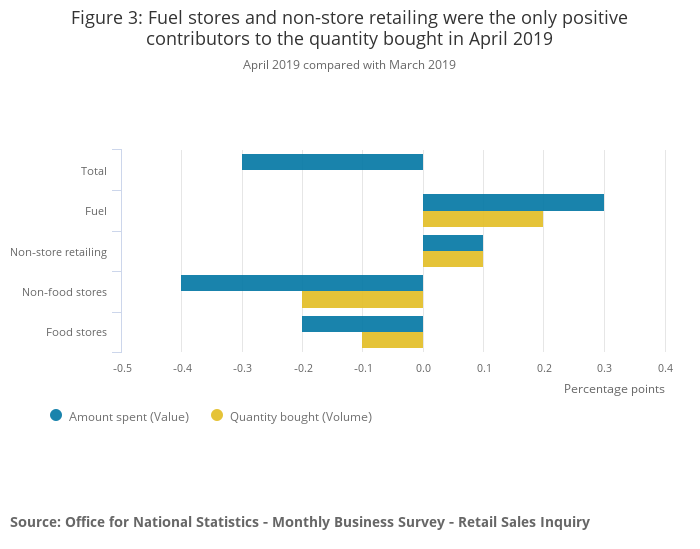
      The details, though, are not too impressive and fuel stores and non-store retailing were the only positive contributors to the quantity bought in April.

      Full release here.

      US durable goods surge 2.9% mom in August, crushing expectations

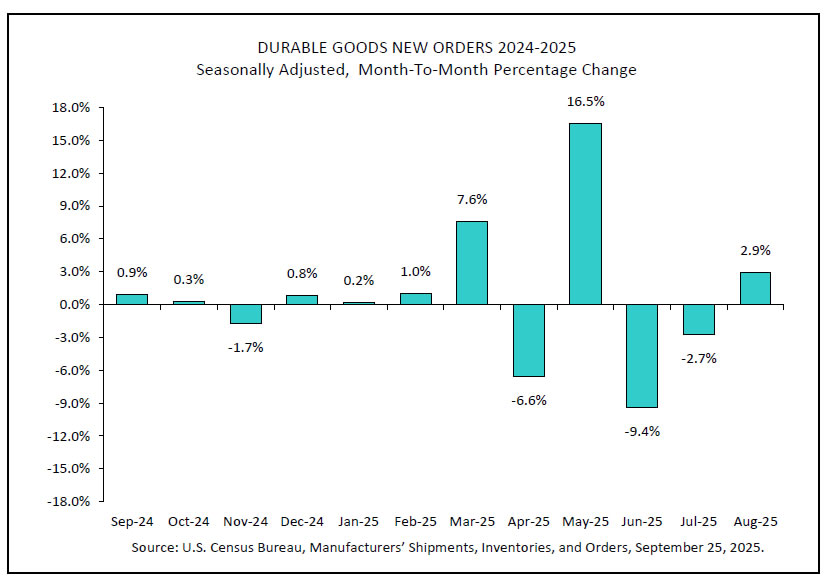
        US durable goods orders surged 2.9% mom to USD 312.1B in August, far stronger than the expected -0.5% mom contraction. Excluding transportation, orders still rose 0.4% mom to USD 201.9B, beating forecasts for a small decline of -0.1% mom. Ex-defense orders climbed 1.9% mom to USD 290.7B.

        The headline gain was led by a 7.9% mom jump in transportation equipment to USD 110.2B, but the breadth of gains pointed to firm underlying demand.

        Full US durable foods orders release here.

        German GDP contracted -0.1% in Q2, 10-year yield hits new record low

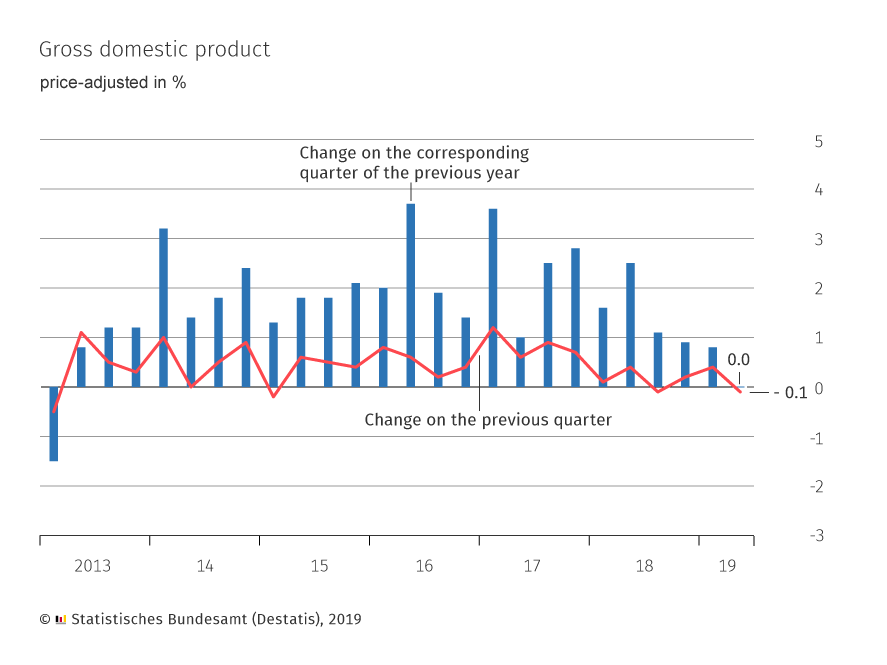
          German GDP contracted -0.1% qoq in Q2, matched expectations. There were positive contributions from domestic demand, with growth in household final consumption and government final consumption. However, gross fixed capital formation in construction declined. Additionally, development of foreign trade slowed down economic growth because exports recorded a stronger quarter-on-quarter decrease than imports.

          Full release here.

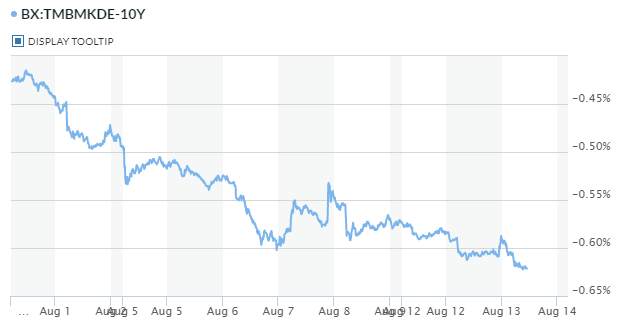
          German 10-year yield drops to new record low at -0.623 and remains weak for now.

          RBA’s Bullock warns markets too optimistic, says trade war effects to linger for years

            RBA Governor Michele Bullock cautioned today that financial markets may be underestimating global economic risks, warning that investors have taken a “Goldilocks view” of the outlook. Speaking at a forum, Bullock said markets appear to be “discounting the bad macroeconomic risks,” even as trade and geopolitical tensions threaten to slow global growth. She emphasized that the effects of the trade war will “play out over the next few years,” as tariffs are maintained or expanded by multiple countries, dampening trade and investment.

            Bullock said the unpredictability of government responses to tariffs—rather than the general uncertainty surrounding them—was the biggest risk to investors’ confidence. “You just don’t know what might come out tomorrow morning,” she said, noting that sudden policy shifts could easily destabilize the currently “rosy” market outlook.

            Addressing China’s economic struggles directly, Bullock pointed to the country’s ongoing deflationary pressures and excess industrial capacity, saying that “competing provinces” are cutting prices to maintain output, effectively exporting deflation to the rest of the world. She suggested that Beijing could do more to stimulate domestic consumption to rebalance its economy, adding that China’s “massive population” provides untapped potential demand if policies shift toward supporting households.

            Japan PMI manufacturing finalized at 49.8, but short-term prospects turning a corner

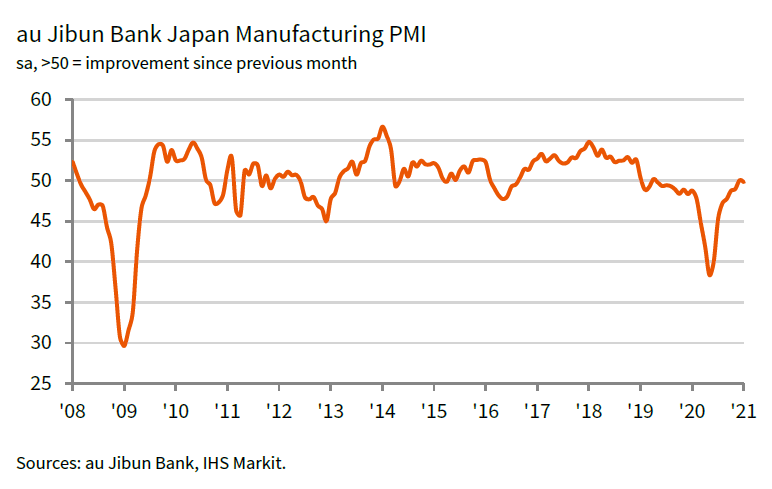
              Japan PMI Manufacturing was finalized at 49.8 in January, slightly down from December’s 50.0.

              Usamah Bhatti, Economist at IHS Markit, said: “The Japanese manufacturing sector slipped back into contraction territory at the start of the year… as a rise in COVID-19 infections and issuance of a state of emergency dampened operating conditions… Manufacturers indicated a renewed fall in output levels… firms were further discouraged to replace voluntary leavers in the sector as staffing levels reduced.

              “Nonetheless, the short-term prospects for the Japanese manufacturing sector appear to be turning a corner, with firms reporting a stable level of new orders. Businesses were also optimistic that the pandemic would subside over the coming year, triggering a wider economic recovery in Japan which would boost output levels. IHS Markit estimates industrial production will grow 7.1% in 2021, although this is from a lower base and does not fully recover the output lost in 2020.”

              Full release here.

              Swiss KOF barometer edges up to 101.7 on stronger demand

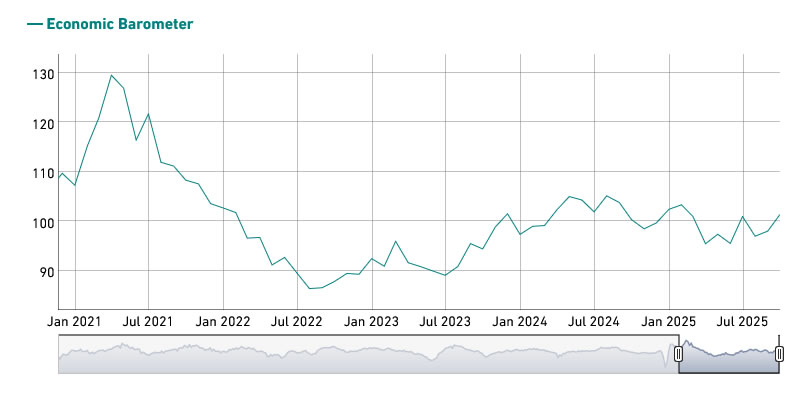
                Switzerland’s KOF Economic Barometer ticked higher in November, rising from 101.5 to 101.7 and signaling modest improvement in the near-term economic outlook.

                KOF noted that the improvement is concentrated on the demand side. Indicator bundles tied to foreign demand and private consumption strengthened, suggesting both external orders and household activity are on firmer footing.

                On the production side, however, parts of the economy remain under pressure. Indicators for financial and insurance services, as well as construction, deteriorated, revealing a mixed underlying picture.

                Full Swiss KOF release here.

                UK PMI construction dropped to 52.6, severe loss of momentum

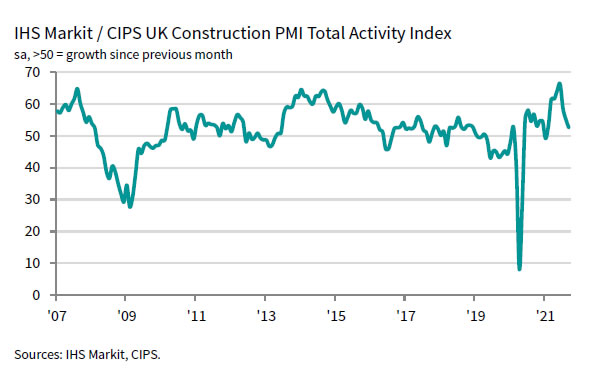
                  UK PMI Construction dropped to 52.6 in September, down from August’s 55.2, missed expectation of 53.9. Markit said output growth eased for the third month running. Sub-contractor charges increased at survey-record pace. Widespread supply shortages led to rapid cost inflation.

                  Tim Moore, Director at IHS Markit said: “September data highlighted a severe loss of momentum for the construction sector as labour shortages and the supply chain crisis combined to disrupt activity on site. The volatile price and supply environment has started to hinder new business intakes… Shortages of building materials and a lack of transport capacity led to another rapid increase in purchase prices… Measured overall, prices charged by sub-contractors increased at the fastest rate since the survey began in April 1997.”

                  Full release here.

                  Germany CPI slowed sharply to 1.4% in Jan, Euro shrugs

                    German CPI dropped -0.8% mom in January, matched expectation. But annual rate slowed sharply to 1.4% yoy, down from 1.7% yoy, and missed expectation of 1.6% yoy. Today’s German CPI miss should weigh on expectation for Eurozone CPI reading to be released later in the week, it’s expected to slow to 1.4% yoy.

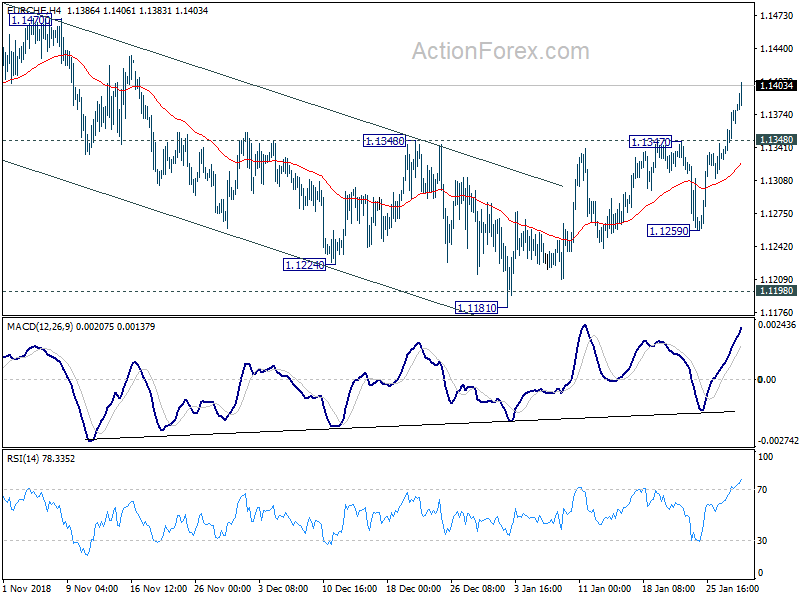
                    Euro shrugs off the data, nevertheless. In particular, EUR/CHF’s rally is accelerating after taking out 1.1347 resistance yesterday.

                    Full release here.

                    France PMI composite back in contraction at 48.5, recovery path reversing

                      France PMI Manufacturing rose to 50.9 in September, up from 49.8, above expectation of 50.6. However, PMI Services dropped to 47.5, down from 51.5, missed expectation of 51.7. PMI Composite dropped to 48.5, down from 51.6, hitting a 4-month low and was back in contraction.

                      Eliot Kerr, Economist at IHS Markit said: “The sharp rise in COVID-19 cases recorded across France during September helped to explain the first fall in business activity since May. August data had already pointed to a slowdown in the recovery but now the path towards pre-coronavirus levels of activity has gone into reverse. The rise in case numbers has been accompanied by fresh restrictions, but has also caused hesitancy among businesses due to fears of a second round of temporary business closures. For now, at least, firms remain optimistic towards the year ahead outlook, but should the current trajectory of infection rates persist, that confidence is likely be tested in the coming months.”

                      Full release here.

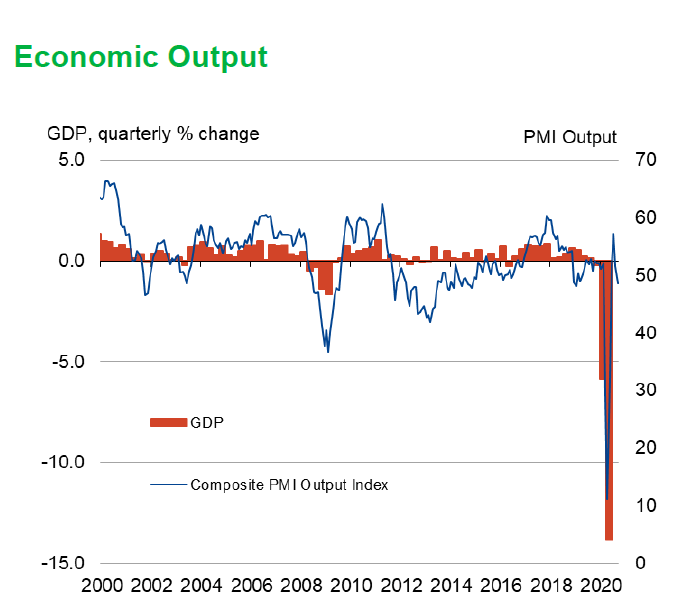
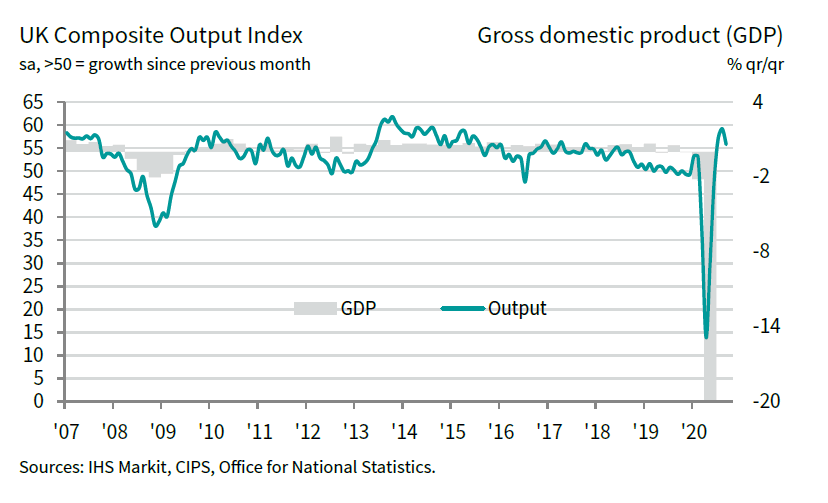
                      UK PMIs retreated, but still point to solid Q3 GDP rebound

                        UK PMI Manufacturing dropped slightly to 54.3 in September, down form 55.2, above expectation of 54.0. PMI services dropped to 55.1, down form 58.8, missed expectation of 56.0. PMI Composite dropped to 55.7, down form 59.1.

                        Chris Williamson, Chief Business Economist at IHS Markit, said: “The UK economy lost some of its bounce in September, as the initial rebound from Covid-19 lockdowns showed signs of fading… It was not surprising to see that the slowdown was especially acute in services… Encouragingly, robust growth in manufacturing, business services and financial services has offset weakness in consumer-facing sectors, meaning the overall rate of expansion remained comfortably above the survey’s long-run average, which adds to expectations that the third quarter will see a solid rebound in GDP from the collapse seen in the second quarter.

                        Full release here.

                        NZ business confidence surges as firms anticipate more RBNZ rate cuts

                          NZIER Quarterly Survey of Business Opinion reveals significant improvement in business confidence in New Zealand during Q3. A net 5% of firms now expect deterioration in general economic conditions, a stark improvement from the net 40% expressing pessimism in the June quarter.

                          Firms are still facing challenges in demand. A net 31% of businesses reported weaker trading activity. However, looking ahead, only a net 2% of firms expect activity to decline in the next quarter.

                          This shift in sentiment comes as firms anticipate more supportive economic conditions following RNBZ’s decision to begin cutting interest rates in August, with expectations of further reductions in the coming year.

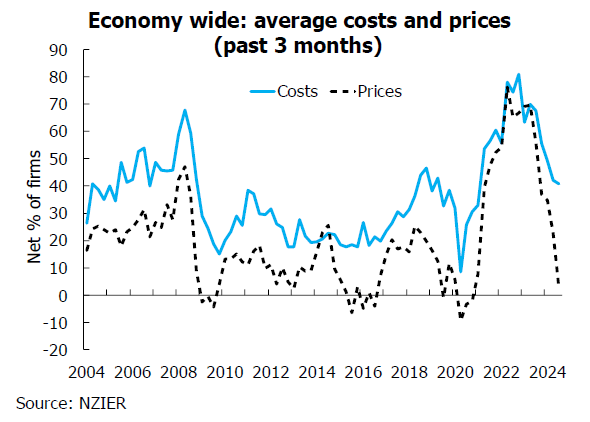
                          Cost pressures remained present, with a slight increase in the proportion of firms reporting higher costs. However, pricing power has diminished significantly, with only a net 3% of firms able to pass on these costs to consumers, compared to 23% in the previous quarter.

                          Full NZIER QSBO release here.

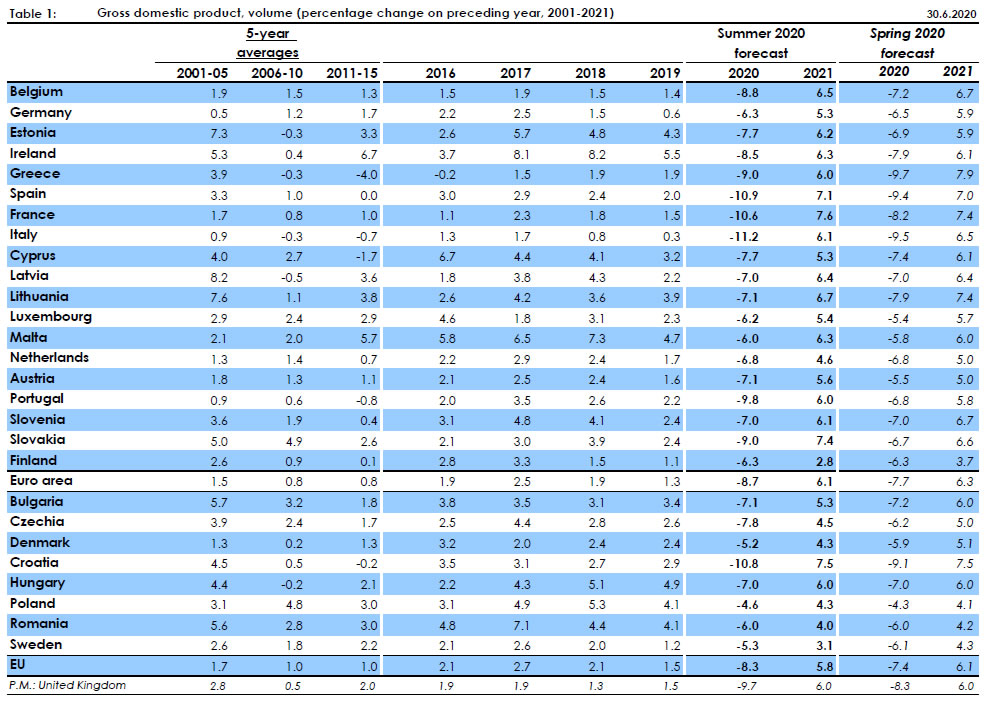
                          EU forecasts deeper contraction of -8.7% this year, on slow lockdown easing

                            In the Summer Economic Forecasts released today, European Commission projects a deeper recession in Eurozone and EU in 2020, due to coronavirus pandemic. Because “lifting of lockdown measures is proceeding at a more gradual pace than assumed” in the Spring forecast, impact on the economy will be “more significant than anticipated.

                            Some highlights:

                            • Eurozone GDP to contract -8.7% in 2020 (down from Spring forecast of -7.7%).
                            • Eurozone GDP to grow 6.1% in 2021 (down from 6.3%).
                            • EU GDP to contract -8.3% in 2020 (down from -7.4%).
                            • EU GDP to grow 5.8% in 2021 (down form 6.1%).
                            • Germany GDP to contract -6.3% in 2020 (down form -6.5%).
                            • Germany GDP to grow 5.3% in 2021 (down from 5.9%).
                            • France GDP to contract -10.6% in 2020 (down from -8.2%).
                            • France GDP to grow 7.6% in 2021 (up from 7.4%).

                            Valdis Dombrovskis, Executive Vice-President for an Economy that works for People, said: “The economic impact of the lockdown is more severe than we initially expected… If anything, this forecast is a powerful illustration of why we need a deal on our ambitious recovery package, NextGenerationEU, to help the economy.”

                            Paolo Gentiloni, Commissioner for the Economy, said: “The policy response across Europe has helped to cushion the blow for our citizens, yet this remains a story of increasing divergence, inequality and insecurity. This is why it is so important to reach a swift agreement on the recovery plan proposed by the Commission – to inject both new confidence and new financing into our economies at this critical time.”

                            Full report here.

                            Hong Kong status in jeopardy as China set to bypass 1C2S to impose national security law

                              Hong Kong stocks tumble sharply today as China confirmed that it’s going to impose its own national security laws in the city. The new legislations are expected to ban any sedition, secession and subversion of the central government run by the Chinese Communist Party. Most importantly, the method used will bypass the city’s own legislative body, effectively violating the “One-Country, Two-Systems” as promised. Hong Kong’s special international status granted by the US and other countries due to the high degree of autonomy is seen as in severe jeopardy..

                              US President Donald Trump warned that “if it happens we’ll address that issue very strongly.” Senate Majority Leader Mitch McConnell also said, “a further crackdown from Beijing will only intensify the Senate’s interest in re-examining the U.S.-China relationship.” State Department spokesperson Morgan Ortagus urged China to “honor its commitments and obligations to the Sino-British Joint Declaration” of guaranteeing Hong Kong a “high degree of autonomy” until at least 2047. She added, those commitments are “key to preserving Hong Kong’s special status in international affairs, and, consistent with US law, the United States’ current treatment of Hong Kong”.

                              The last British governor of Hong Kong, Chris Patten, called the move a “comprehensive assault on the city’s autonomy”. “At best, the integrity of ‘one country, two systems’ hangs by a thread,” he added. “Unless the Chinese Communist regime sees sense, this will be hugely damaging to Hong Kong’s international reputation and to the prosperity of a great city.” “UK should tell China this is outrageous”.

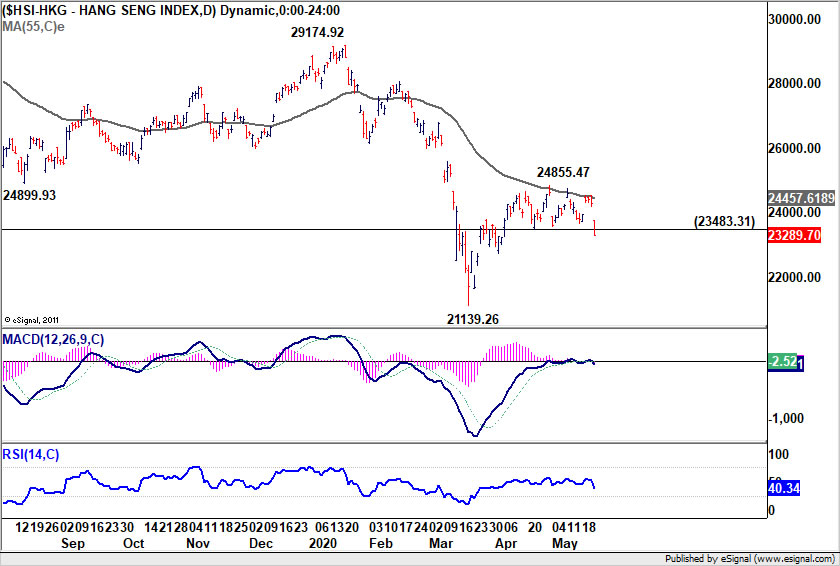
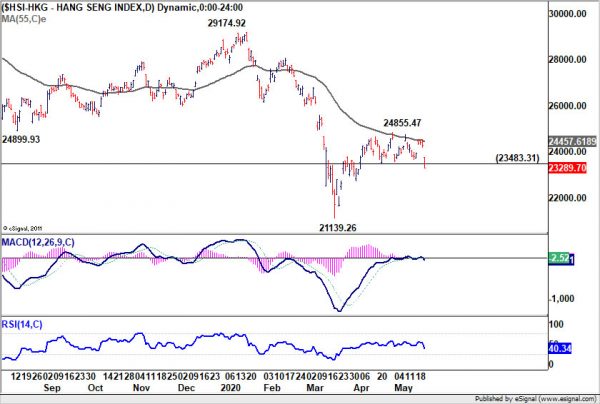
                              HSI gapped lower today and it’s currently down nearly -4% at the time of writing. The multiple rejection by 55 day EMA, and the break of 23483.31 support today, suggest that corrective rebound form 21139.26 has completed at 24855.47. Deeper fall is now expected for retesting 21139.26 low, or even further to resume the medium term down trend. It remains to be seen if the selloff in Hong Kong stocks would spillover to other markets.

                              Australia Westpac consumer sentiment rose to 106.2, strong resilient despite lockdown

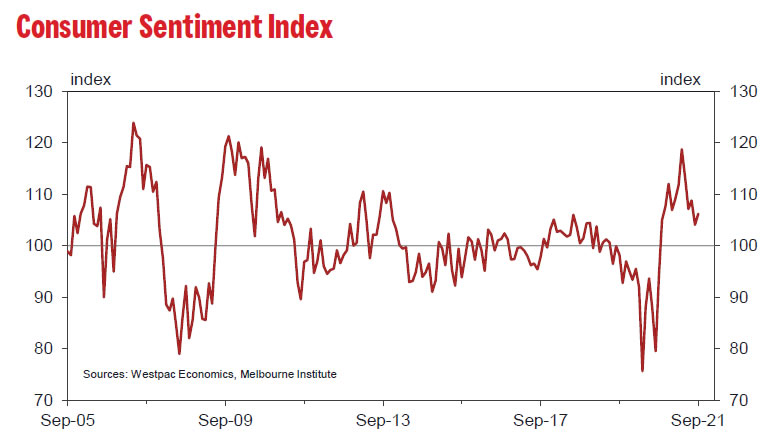
                                Australia Westpac-MI consumer sentiment rose 2.0% to 106.2 in September. The index remained comfortably above the levels five years prior to the pandemic. Confidence in New South Wales rose 5.3% while Victoria was steady at 104.1, despite extended lockdown in both states. Queensland jumped 8.4% to 111.6. Overall, the data indicates strong resilience of consumer sentiment and positives reactions to vaccination progresses.

                                Westpac added that given that RBA has already defer the next review of the asset purchase program to February, it’s highly unlikely that there will be any policy changes before that meeting. Nevertheless, it added, “with the US Federal Reserve likely to have begun its tapering program by then and the economy likely to be bouncing back as high vaccination levels see easing restrictions, we expect the Board to further taper its bond purchases in February.”

                                Full release here.

                                DUP confirms it won’t back May’s Brexit deal

                                  DUP party leader Arlene Foster tweeted that they won’t back May’s Brexit deal in today’s meaningful vote. DUP said in a statement that “sufficient progress has not be achieved” and May just made “limited progress” with the EU.

                                  Twitter

                                  By loading the tweet, you agree to Twitter’s privacy policy.
                                  Learn more

                                  Load tweet

                                  Australia PMI composite fell to 50.5, RBA has time on their side

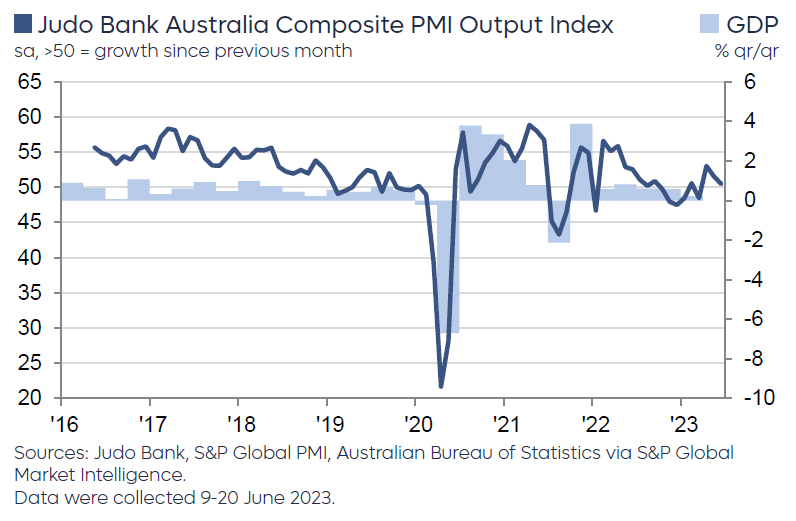
                                    Australia PMI Manufacturing ticked up from 48.4 to 48.6 in June. PMI Services fell from 52.1 to 50.7. PMI Composite declined from 51.6 to 50.5.

                                    Warren Hogan, Chief Economic Advisor at Judo Bank said:

                                    “The loss of momentum in recent months will probably give the RBA some comfort that economic activity is slowing down across the economy in 2023, following their consecutive rate hikes in May and June…

                                    “The survey suggests that the RBA has time on their side and does not necessarily need to hike rates again in July. The slowdown taking place across the economy provides further evidence that the point at which the RBA can undertake a genuine pause in their tightening cycle is getting closer.

                                    “We cannot rule out a further hike in the next few months, but we are close to a level of interest rates whereby the RBA can sit back for 4-6 months and observe the effects of past interest rate increases.”

                                    Full Australia PMI release here.

                                    Inflation data and treasury auction pose twin tests for US Bond Market

                                      Two major events in the US are closely watched today. The May CPI report and the USD 39B 10-year Treasury auction converge to test sentiment in the bond market.

                                      The May consumer price index (CPI) will offer the clearest signal yet of whether tariffs are beginning to filter through to consumer prices. Economists expect a 0.2% mom gain, with annual headline inflation accelerating to 2.5%. Core CPI, is projected to rise 0.3% mom and accelerate to 2.9% yoy.

                                      While today’s CPI reading will provide an initial glimpse, the real acceleration in prices may come in June as tariffs ripple through supply chains. The unpredictability of Trump’s trade strategy, frequent shifts between escalation and truce, could delay the impact but increasing its persistence. Fed’s challenge is not only identifying if inflation is returning, but determining whether it’s sticky enough to warrant policy action beyond holding rates steady.

                                      Meanwhile, the 10-year Treasury auction will act as a referendum on fiscal credibility. With swelling deficits, an uncertain trade outlook, and ballooning spending commitments—including the administration’s touted “big, beautiful” infrastructure and defense budgets—investors will be watching bid-to-cover ratios and indirect bidder participation for signs of strain. A weak auction could rekindle fears of waning demand for US debt, driving yields higher and possibly stoking volatility across asset classes.

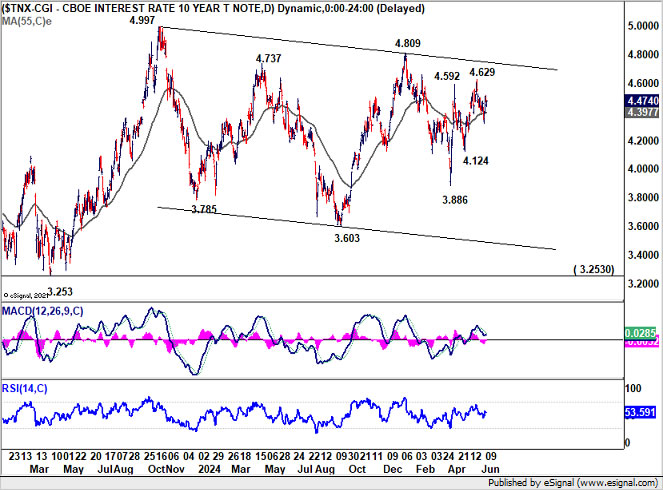
                                      Technically, the 10-year yield has remained within a broad range since peaking at 4.997 in 2023. While it spiked to 4.629% in May following Moody’s downgrade of the US credit rating, the move was limited and quickly retraced. As long as the 4.809 resistance level caps upside attempts, the bond market appears relatively calm—though not immune to future shocks.

                                      Fed’s Barr: Not confident to start easing monetary policy yet

                                        Fed Vice Chair Michael Barr stated in a speech today that while inflation has decreased from its peak of 7.1% to 2.7%, it is “not yet all the way to 2% target. He noted that inflation readings for the first quarter were “disappointing,” as highlighted in FOMC’s recent statement.

                                        “These results did not provide me with the increased confidence that I was hoping to find to support easing monetary policy by reducing the federal funds rate,” Barr noted.
                                        He added that Fed’s restrictive policy would need “some further time to continue to do its work” in bringing inflation down.

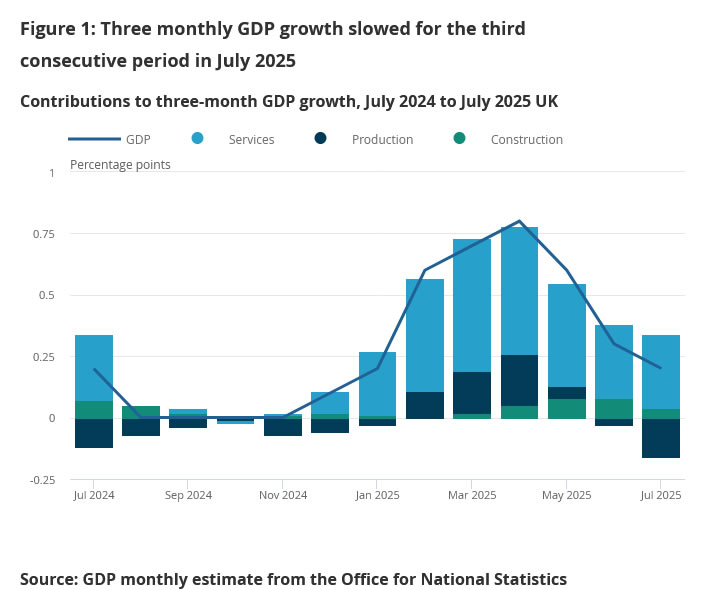
                                        UK GDP stalls in July, services offset weak production

                                          UK GDP was flat in July, matching expectations, as modest growth in services and construction offset a sharp drop in production. Services output rose 0.1% and construction gained 0.2%, while production fell -0.9%, highlighting ongoing weakness in the industrial sector.

                                          Over the three months to July, GDP rose 0.2% compared with the previous three-month period. Services expanded 0.4% and remained the key driver of growth, while production fell -1.3% and construction rose 0.6%.

                                          Full UK monthly GDP release here.