


Australia’s inflation report offered further evidence that price pressures are gradually easing, strengthening the case for the Reserve Bank of Australia to remain on hold in August. Both the quarterly and monthly measures came in softer than expected, while underlying inflation remained below the RBA’s own forecasts. The outcome supports Governor Michele Bullock’s recent assessment that inflation is evolving broadly as anticipated and suggests there is little pressing need to resume tightening immediately after three rate hikes already delivered this year.
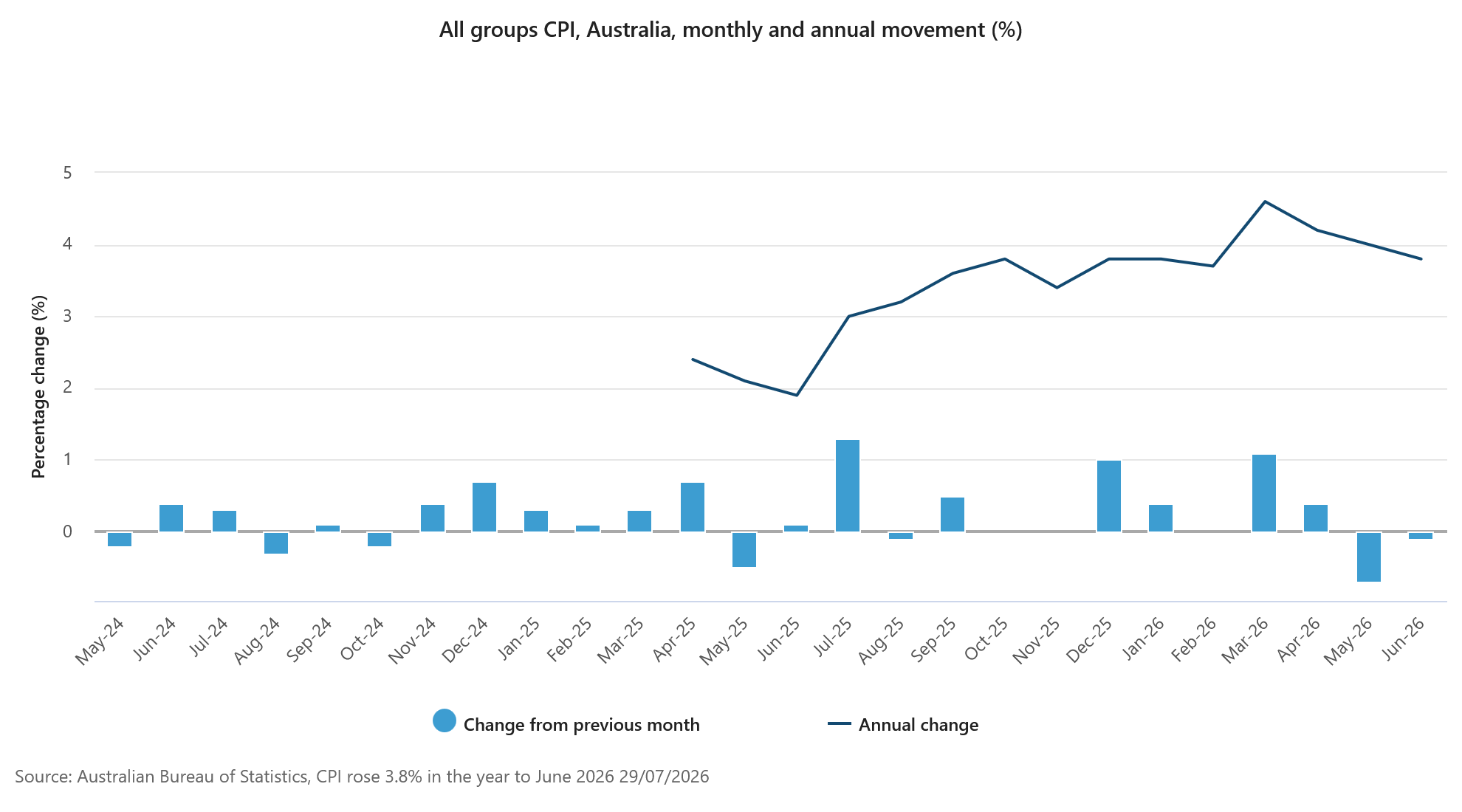
The quarterly figures, which carry the greatest weight for RBA policy, were particularly encouraging. Headline CPI unexpectedly fell -0.1% qoq in the second quarter, compared with expectations for a 0.7% increase, after rising 1.4% in the first quarter. Annual headline inflation slowed from 4.1% to 3.8%. More importantly, quarterly trimmed mean inflation—the RBA’s preferred gauge of underlying price pressures—rose 0.8% qoq, below the 0.9% consensus and matching the pace recorded in the first quarter. On an annual basis, trimmed mean inflation edged up from 3.5% to 3.6%, but remained below both the 3.7% market consensus and the RBA’s own 3.8% forecast published in May.
The monthly CPI indicator told a similar story. Headline CPI slowed from 4.0% yoy in May to 3.8% yoy in June, while monthly trimmed mean inflation held steady at 3.6% yoy, undershooting expectations for a rise to 3.7%. On a monthly basis, both the trimmed mean and weighted median increased just 0.3%, while prices excluding volatile items and holiday travel were unchanged. Tradable and goods prices each declined -0.8% mom during the month, extending the disinflation trend in imported goods. Services inflation remained firmer at 4.0% yoy, while non-tradables rose 4.9% yoy, indicating that domestically generated inflation continues to moderate only gradually.
Taken together, the report reinforces the view that the RBA’s tightening bias remains intact but the urgency to act has diminished. Inflation remains above target, meaning policymakers are unlikely to declare victory. However, with both headline and underlying inflation coming in below expectations—and trimmed mean inflation also below the RBA’s own forecasts—the data give the Board little reason to abandon June’s pause and rush into another rate increase in August.
Economic Data
Quarterly CPI (Q2 2026)
| Indicator | Actual | Expected | Previous |
|---|---|---|---|
| CPI q/q | -0.1% | 0.7% | 1.4% |
| CPI y/y | 3.8% | 4.1% | 4.1% |
| Trimmed Mean CPI q/q | 0.8% | 0.9% | 0.8% |
| Trimmed Mean CPI y/y | 3.6% | 3.7% | 3.5% |
Monthly CPI (June 2026)
| Indicator | Actual | Expected | Previous |
|---|---|---|---|
| CPI m/m | -0.1% | 0.2% | -0.7% |
| CPI y/y | 3.8% | 4.0% | 4.0% |
| Trimmed Mean CPI m/m | 0.3% | 0.4% | 0.4% |
| Trimmed Mean CPI y/y | 3.6% | 3.7% | 3.6% |
Key Takeaways
- Australia’s inflation report was softer than expected across both the quarterly and monthly measures. Headline and trimmed mean inflation all undershot market forecasts.
- Quarterly trimmed mean inflation—the RBA’s preferred measure—rose 0.8% q/q and 3.6% y/y, below both market expectations and the RBA’s own May forecast of 3.8%.
- The monthly CPI indicator reinforced the quarterly message, with headline CPI slowing to 3.8% y/y and monthly trimmed mean inflation holding at 3.6% instead of rising as expected.
- The details point to broader disinflation rather than just lower fuel prices. Prices excluding volatile items and holiday travel were flat in June, while tradable and goods prices both fell 0.8%.
- Housing remained the largest source of inflation, rising 6.8% y/y, driven by electricity (+22.4%) following the expiry of government rebates and new dwelling costs (+5.8%) as builders passed through higher labour and material costs.
- Services and non-tradables remain sticky, with annual inflation of 4.0% and 4.9% respectively, indicating domestic inflation pressures have eased only gradually.
- For the RBA, the report weakens the case for an August rate hike. The Bank’s tightening bias remains intact, but inflation is evolving slightly better than expected, giving policymakers more room to assess the cumulative impact of previous tightening.





