Sample Category Title
Research US: Symbolic Protectionism With Limited Impact on Growth and Inflation But Risks Remain
- In this piece, we try to dive into US trade policy from different angles, what it means for the economy and what to expect from here.
- We do not expect the recent developments to evolve into a full-blown trade war but measures to be taken in fairly narrow areas (small part of global trade). Hence, we expect the impact on US growth and inflation to be fairly limited.
- There is a risk that we are too optimistic and that there will be a bigger trade war, which would be negative for the global economy and global risk sentiment and would lift inflation by more than we expect.
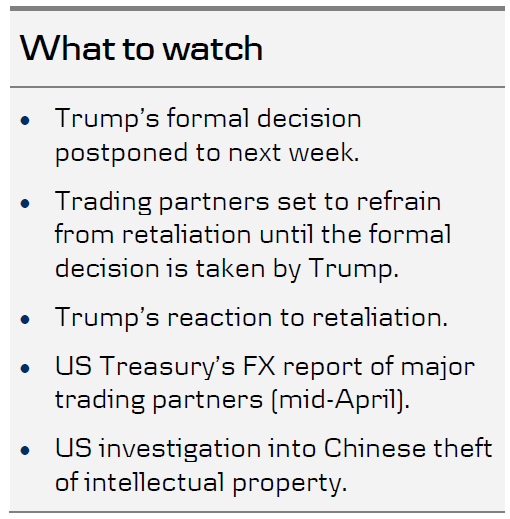
- Trump's formal decision is likely to be postponed until next week but the White House is signalling he is not backing down. Gary Cohns's resignation supports this view. Trading partners unlikely to retaliate until formal decision has been made. Next step for Trump is likely measures targeted at China.
- In our risk scenario, we expect a weaker USD due to slower US growth and US isolation to dominate traditional USD support from lower global risk sentiment.
Trump shifting focus to trade
US President Donald Trump's announcement that he intends to put a 25% tariff on steel and 10% on aluminium has increased the fears of a global trade war although this was widely expected. Trump has tweeted intensively on trade recently, saying 'trade wars are good and easy to win' and that the US has a large trade deficit 'because of our very stupid trade deals and policies' and threatened the EU that he would impose tariffs on cars from Europe (see tweet).
After Trump's success in passing the tax reform and budget deal (and the Republicans' inability to reform health care), we are not surprised Trump is moving his attention to trade policy, as 'America First' and protection of the US were key pledges during his election campaign. This is also in line with what Commerce Secretary William Ross hinted at in the autumn when he said that the administration would shift focus to trade policy after the tax reform. The promotion of Peter Navarro to assistant to the president for trade policy is another sign that focus has shifted to trade.
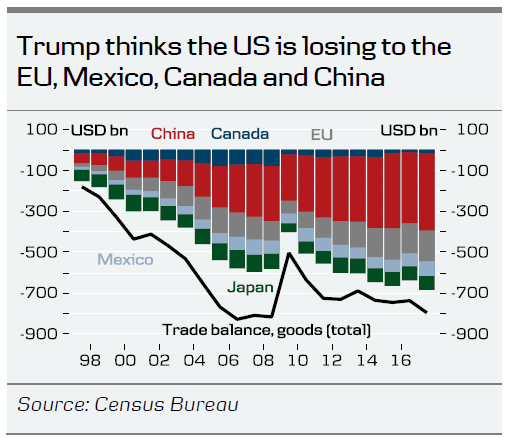
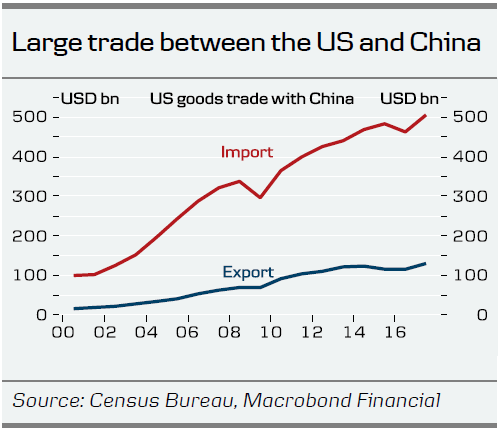
So far the tariffs are mainly symbolic, as imports of steel and aluminium only account for 2% of total imports of goods in the US and it remains our base case that this is not going to evolve into a full-blown global trade war, as it would hurt everyone economically. The impact on US growth and inflation should be limited also if trading partners are countering US tariffs. While protectionism is bad for global risk sentiment (lower yields and equities), we think the market impact will be limited in our base case. We still think it is likely that Trump will go further, targeting China explicitly, as the US's largest trade deficit is with China (see chart to the right) but these measures are likely to be small in the bigger picture as well.
Republicans are pushing back on protectionism
Especially within the Republican Party, the establishment is pushing back on the protectionist agenda; most notably House Speaker Paul Ryan. Trump's economic advisor Gary Cohn was also against protectionist measures, which he considered business-unfriendly, but he resigned yesterday. Many Republican politicians think Trump should target China and not US allies, see Financial Times and the discussions mean the formal decision has been postponed until next week, see NYTimes. The White House is signalling that Trump is not backing down.
Trump can implement the tariffs on steel and aluminium without Congressional support through Section 232 of the 1962 Trade Act based on 'national security' concerns. The US Congress may try to prevent this by passing a bill, but Trump can just veto the bill unless it is passed by a two-thirds supermajority in both the House of Representatives and the Senate, which might prove difficult.
It is important to note that Trump's tariffs are going to be fundamentally different from the ones George W. Bush implemented in 2002. George W. Bush used a clausal (Section 201 of the Trade Act of 1974) stating that the President can impose tariffs on imported goods if they are threatening domestic industries. Trading partners filled a WTO complaint and won the case but it is unclear what the 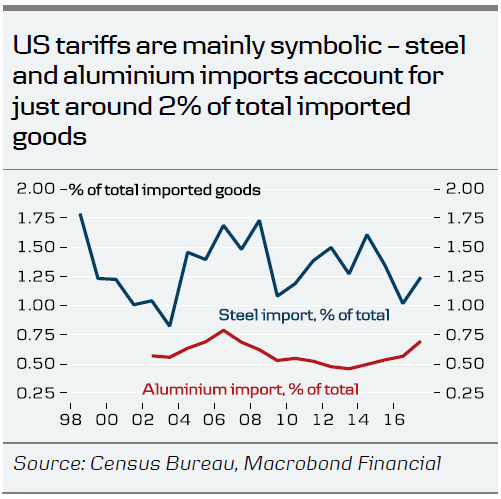 WTO will do now Trump may use the 'national security' exemption. The fear is this this opens up a Pandora's Box, as other countries could easily use the same reason for protectionist measures, which might result in 'the Wild West' in the global trade area.
Another concern is that Trump may choose to withdraw the US from the WTO. He mentioned this during the election campaign when he called the WTO 'a disaster', see Financial Times. Trump's administration could also just decide to ignore WTO rulings, something which has been put on the table before, see Reuters. It is interesting that the Trump administration continues to block appointment of new WTO judges to the Appellate Body ('supreme court of world trade'), which has slowed down handling of trade disputes, see Reuters.
Trump thinks trade is a zero sum game
Trump thinks trade is a zero sum game and this is a view that Trump has repeated since the 80s (see e.g. interview with Oprah Winfrey from 1988 here (YouTube)). If the US is running a trade deficit with country A, A is winning and the US is losing. This is also why Trump is lashing out at countries like China, Mexico and Germany, who have a large trade surplus with the US (see chart on front page). We consider trade a positive sum game from a macroeconomic perspective but acknowledge that there might be winners and losers from a microeconomic perspective. In US media there are stories about manufacturers praising Trump, as they think NAFTA and China are to blame for the decline in manufacturing employment, see e.g. CNN Money. Total manufacturing employment has declined from around 18m 20 years ago to 12m now, not least in the 'Rust Belt' with states like Ohio, Pennsylvania and Michigan, all three important swing states that Trump won. In reality, there are likely other forces at play (e.g. automatisation), as manufacturing output has risen 150% since 1980 despite manufacturing employment having fallen 34% during the same period.
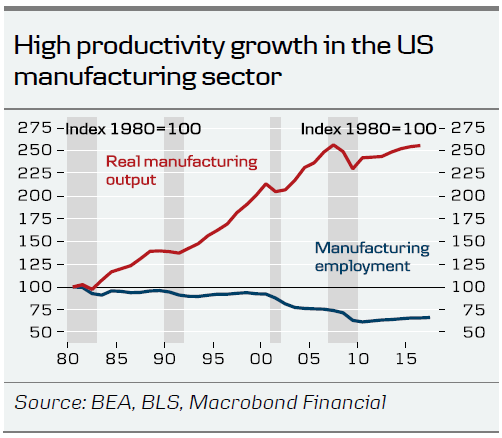
Trump's pledges to protect US companies ('America First') and implement protectionist measures help to explain his victory and with a low approval rating it makes sense for Trump to try win back popularity by acting on it before the US midterm election in November (the Republican leaders disagree with this strategy).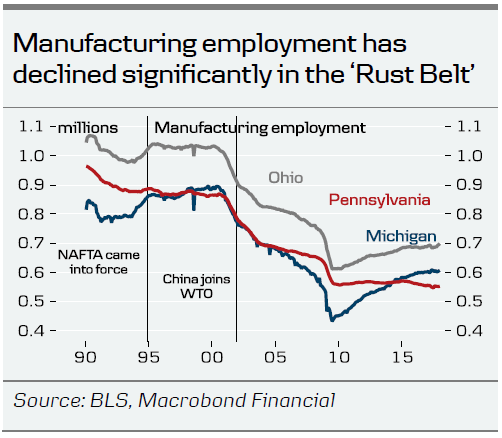
Our base case is that Trump will stick to symbolic measures, as it would satisfy his voter base without starting an actual trade war. If we are right, this would not slow GDP growth or lift US inflation significantly. For example, 900kg of steel is used per vehicle on average, according to the World Steel Association, which cost approximately 588 dollars to buy. Assuming the tariffs increase the steel price by 25% (unlikely as car producers are likely to buy domestic-produced steel instead), the price would be 735 dollars instead, an increase of around 147 dollars. The average selling price of a new vehicle was 34,450 dollars in 2016, so steel input only accounts for 1.7% of the total selling price. The price of an average car including 25% higher steel costs would be 34,596 dollars, an increase of 0.4%. As a new vehicle only accounts for 3.8% of total CPI, it would lift CPI inflation by only 0.02 percentage point. Of course there are other items being hit as well (the price increases will likely come with a lag, as prices only change infrequently) but this back-of-the-envelope calculation shows that the tariffs proposed so far are not a game changer for US inflation.
China will be cautious in its response
China will not be hurt much by a steel tariff, as the US imports very little steel from China. However, China could choose to come with some countermeasures and, for example, put tariffs on grain imports from the US and it could also pull back from part or all of the USD250bn of trade deals it offered Trump during his visit in November last year. However, we believe China will be cautious as it is not interested in a big trade war. At the same time, though, it will show the US that protectionist measures will come at a cost. Clearly, China would also be disappointed by the tariffs, as it has done a lot over the past two years to reduce the overcapacity in the steel industry (the big dumping of Chinese steel took place in 2014-15 when the Chinese construction sector was in a huge downturn). As a result, steel prices have more than doubled over the past two years to the highest level since 2012. China announced two years ago that it would aim to cut steel capacity by 140m tonnes from 2016-2020, corresponding to 15% of total capacity. By 2017 it had cut 115m tonnes and had met 80% of the target set for 2020 already. At the ongoing National People's Congress, Li Keqiang announced in his Work Report that China aims to cut steel capacity by another 30m tonnes in 2018. If implemented, the total amount of capacity cuts would actually reach 145m tonnes and exceed the target of total cuts by 2020. Hence, China has clearly stepped up measures to deal with the overcapacity problem.
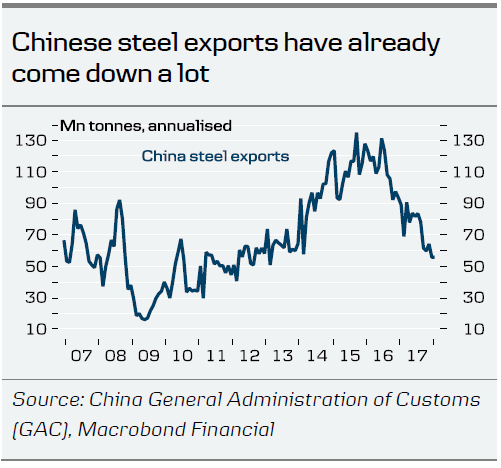
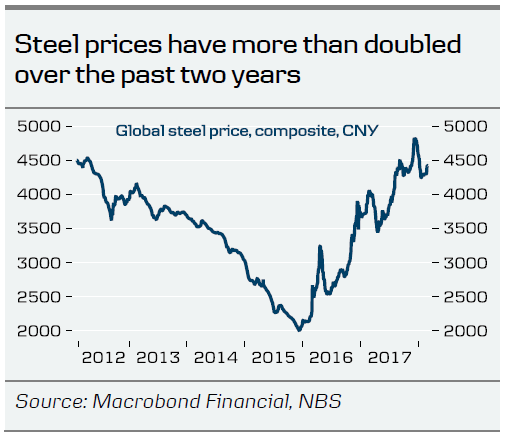
Should the trade war escalate, China could hurt the US in the areas of soybeans and aircraft, which are the two biggest US export groups to China (see table on page 6). It is quite easy to substitute Boeing airplanes with Airbus. Soybeans can also be bought from other countries. That said, the trade flows between the US and China are large and it would hurt both economies if the situation escalates. We have dived further into the US-China trading relationship in the appendix on page 6.
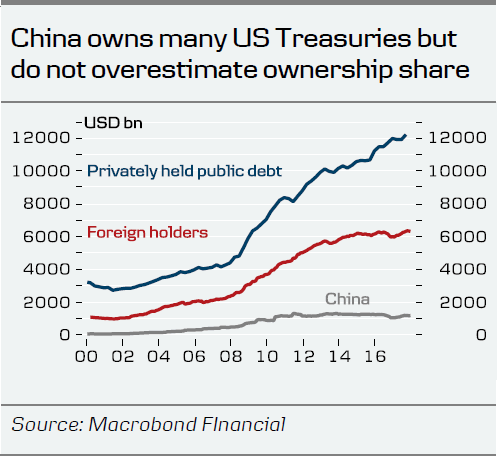
Another possibility is that China will slow down US treasury purchases, as was talked about in January, see Flash Comment: US-China relations on a concern path – part 2, 11 January 2018. Back then it was likely a warning that China has the tools to hit back at protectionist measures from the US and now that the US seems to be on a more protectionist path, the probability of this happening has increased, although it is not our base case. US Treasury yields moved higher on the story.
US is investigating theft of Intellectual Property Rights
In an interesting story, Bloomberg writes the next step for the Trump administration is to target China by imposing tariffs on Chinese imports and limiting Chinese investments in US businesses. It is not surprising that Trump wants to target China, as the US runs the largest trade deficit with China and with the ongoing investigation of Chinese theft of intellectual property rights (initiated in August 2017). Still, it is noteworthy that the story is more concrete than we have seen before. For instance in the most severe scenario, the US could impose tariffs on imports of for instance Chinese-produced clothing and electronics, according to the story. Both account for a large share of US imports from China (see appendix page 6). On the investment sides, the US may limit or prohibit Chinese mergers and acquisitions of US companies based on 'national security concerns', especially for sectors, where US companies cannot access the Chinese market. The investigation on China is expected in the coming weeks. As with tariffs on steel and aluminium, we expect any measures taken against China to be small in magnitude, meaning this is more about politics than economics. There is a risk we are being too optimistic and that we are heading for a full-blown global trade war.
Trump has also started to use the Taiwan card, which angers China. Trump has just signed a law aiming to encourage official visits between the US and Taiwan, which a Chinese Foreign Ministry spokesman said 'severely violated the one-China principle', see China Daily. The Taiwan issue could add to provoking China into retaliation. So far, though, China has kept calm but given how sensitive the Taiwan issue is in China, it may add to China's wish to strike back at the US in the trade area.
EU 'can also do stupid' but retaliation is of small magnitude
EU has signalled clearly it will retaliate to US tariffs and EU Commission President Jean-Claude Juncker has said the EU 'can also do stupid'. According to Bloomberg, the EU is considering to implement tit-for-tat tariffs of 25% to USD3.5bn of US goods (corresponding to 1.2% of the total US goods exports of USD384bn to EU). Tariffs on Harley Davidson motorcycles and Kentucky Bourbon, produced in home states of leading Republicans, have been mentioned, which was how the EU responded to George W. Bush's tariffs on steel in 2002, when the EU also targeted specific products in order to punish specific politicians.
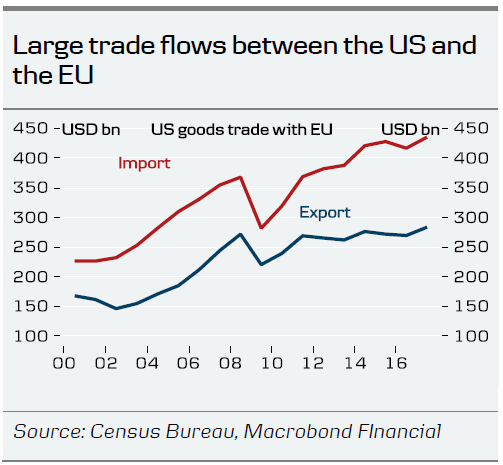
The retaliation measures are unlikely to do much damage to the US economy (something US Commerce Secretary Ross has also touched upon) and are also symbolic. That said, a harder stance on trade policy fits well with French President Emmanuel Macron's view on trade, as he is actually quite protectionist himself. Macron has on several occasions pushed for a tougher trade policy strategy, see e.g. Financial Times.
There are divergent opinions among the EU member states and we think it is noteworthy that the Danish finance minister in a tweet warned about EU retaliation, as it would hurt the EU economy and EU citizens. While Denmark is obviously a small EU country, it supports our view that the EU is unlikely to implement very tough measures against the US, as there is a risk that Trump would counter the EU's move by increasing tariffs on European cars, for instance. The European economy is strong and while the acceleration phase is likely over, we expect growth to remain strong and the symbolic US tariffs do not alter this view.
NAFTA discussions on a concern path
Trump's decision to impose tariffs on aluminium and steel imports is also important for the ongoing NAFTA negotiations, as Canada is one of the main exporters of steel to the US. While NAFTA has a 'national security exemption', both Canada and Mexico think Trump's tariffs are misusing the exemption. The tariffs are likely making it more difficult to reach a compromise and Trump has tweeted the US needs concessions in order to exempt Canada and Mexico from tariffs on steel and aluminium. Trump wants better access to the Canadian market for US farmers and wants Mexico to do more to stop drugs passing the US-Mexico border. In this sense, it seems like Trump is following the same strategy as when he made NATO countries spend more on defence: making big threats in order to get concessions ('mad man' strategy).
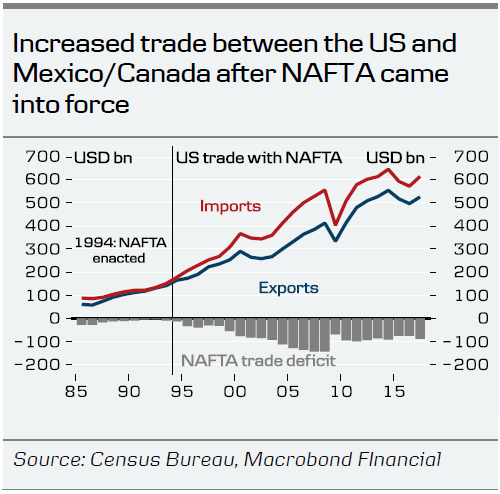
The seventh round of the NAFTA negotiations ended a couple of days ago and at the moment the three countries have not announced dates for the eighth and final round. Progress in the negotiation is slow as only six chapters of the NAFTA agreement have been closed and there are still 24-27 to go. In addition, campaigns for the Mexican federal election are expected to begin soon, which may slow talks further. The Mexican election takes place on 1 July 2018 and the Mexican government fears that it will lose to left-wing nationalists, making it difficult for them to compromise.
If Trump wants to pull out of NAFTA, Congress may be able to prevent a total withdrawal since it ratified and implemented the agreement through legislation. The Congress can also pass new laws that give it greater authority over trade agreements. If Trump vetoed those laws, it could lead to a rupture with the Republican Party. Besides, the Congress could possibly form a veto proof majority by a two-thirds supermajority of both houses. If the US withdraws from NAFTA, the US and Mexico would return to WTO standards, while the US and Canada may resuscitate the previous US-Canada FTA. The US may seek bilateral deals with both countries instead.
US protectionism is dollar negative
As discussed in Strategy: Push for a weaker USD supported by flows, Trump's accelerating his protectionist agenda is easily reconcilable with his highly fiscal expansionary policies and the talk of the virtues of a weak dollar voiced by Treasury secretary Mnuchin early in the year. While the current mix of fiscal and monetary policy policy is set to remain USD negative, see Part 5: FX and inflation - US inflation outperformance + comfy Fed = weaker USD, we further note that the hegemony status of the USD – and hence possibly its safe-haven properties – have been up for revision for a while, and Trump's trade rhetoric is accelerating that process. Currency-reserve flows take time to shift but a decline in the lure of US assets at a time when the US has to issue more bonds to finance the twin deficits could be critical. In an FX context, we deem that the associated upward pressure on yields will do little to outweigh the negative effects of the current US policies on the USD.
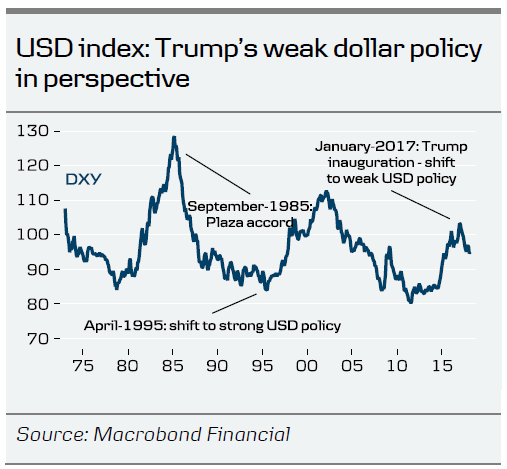
In our base case that the Trump administration introduces protectionist measures on a case-by-case basis, we believe the near-term USD weakness trend would abate somewhat, and EUR/USD should stay in the 1.21-1.26 range for now (but still edge higher as the ECB continues its path to 'normalisation').
In a risk scenario where an actual trade war breaks out, e.g. with the US leaving the WTO, global risk sentiment is likely to take a firm hit and it is less clear whether the traditional safe-haven status of the USD would still be in place and support the dollar. We think however that the associated hit to US growth will dominate any flight to US 'safety' in that case, and foresee a weaker USD in that outcome too.
Appendix. US trade with China
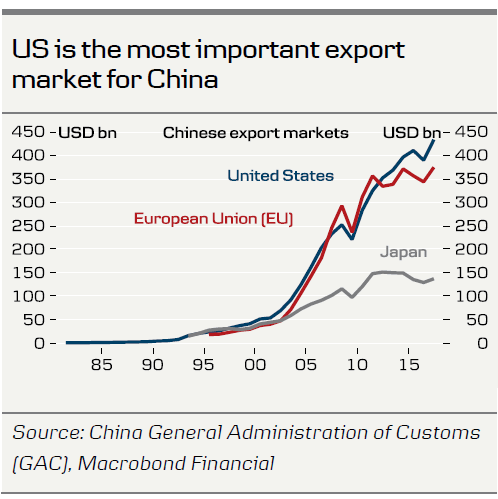
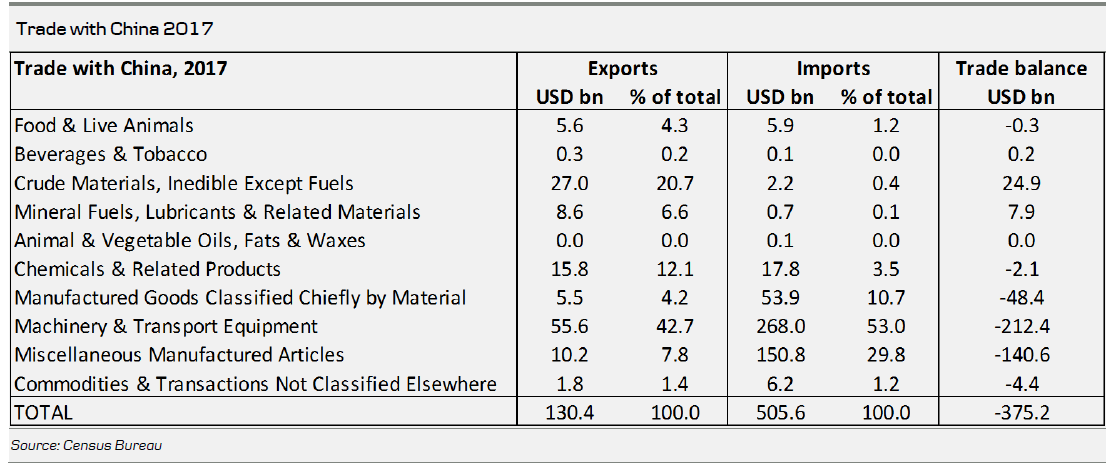
As there is a risk that we are heading for a global trade war, we have dug into the goods trade flow between the US and China. In 2017, the US exported goods to and imported goods from China for a total of USD130.4bn and USD505.6bn, respectively. The trade deficit was USD375bn or 2% of GDP. The large trade flows mean that a trade war between the two biggest economies in the world would be damaging for both sides and this is the main reason why we do not think it is going to happen. US consumers would experience higher prices (and smaller supply of goods) in case of tariffs or import quotes. China would be hurt, as the US is the most important export market for China (lower exports and lower employment).
The US main goods exports to China consist of the following.
- 'Crude Materials Inedible except Fuels' (mainly soybeans).
- 'Chemicals and related products' (pharmaceutical products).
- 'Machinery and transport equipment' (mainly motor vehicles and aircrafts).
The US mainly imports the following goods from China.
- 'Manufactured goods classified chiefly by material' (textile yarn and manufactures of metals).
- 'Machinery and transport equipment' (mainly electronics like computers, televisions, smartphones etc.).
- 'Miscellaneous manufactured articles' (toys, apparel and clothing and furniture).
Forex Technical Analysis: EUR/USD, USD/JPY, GBP/USD
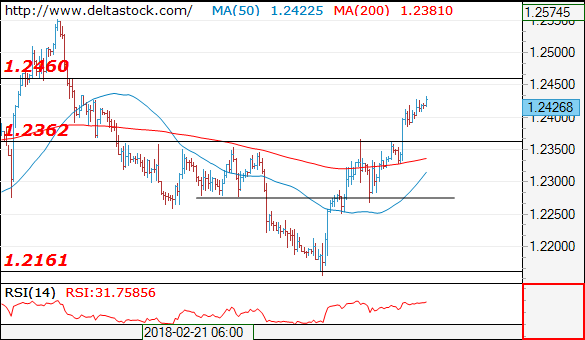
EUR/USD
Current level - 1.2426
The bias here is bullish above 1.2360, for a test of 1.2460, en route to 1.2550.
| Resistance | Support | ||
| intraday | intraweek | intraday | intraweek |
| 1.2360 | 1.2460 | 1.2280 | 1.2160 |
| 1.2460 | 1.2560 | 1.2160 | 1.2090 |
 USD/JPY
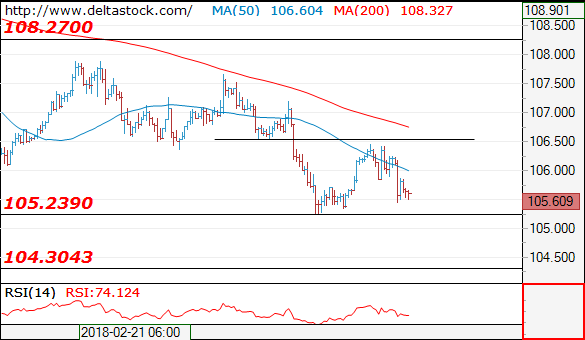
Current level - 105.60
The test of 106.50 resistance failed and a break through 105.20 will signal a renewal of the downtrend, towards 104.30.
| Resistance | Support | ||
| intraday | intraweek | intraday | intraweek |
| 106.50 | 108.30 | 105.20 | 105.40 |
| 107.60 | 110.40 | 104.30 | 102.40 |
 GBP/USD
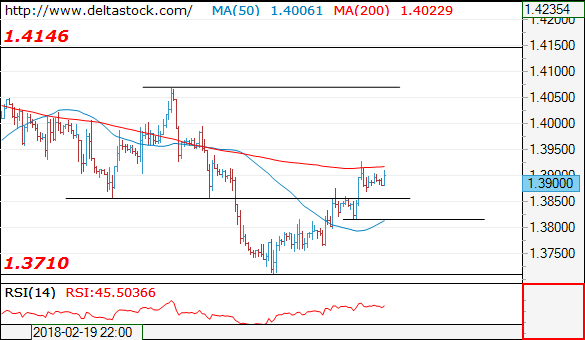
Current level - 1.3900
The uptrend is still intact, with an intraday support at 1.3860 and there is a risk of another leg upwards, to 1.3970 dynamic resistance. Crucial on the downside is 1.3815 and a violation of that low will signal a slide towards 1.3620.
| Resistance | Support | ||
| intraday | intraweek | intraday | intraweek |
| 1.3930 | 1.4060 | 1.3860 | 1.3710 |
| 1.3970 | 1.4280 | 1.3815 | 1.3620 |
Technical Outlook: EURUSD Maintains Bullish Tone For Further Advance, EU GDP In Focus
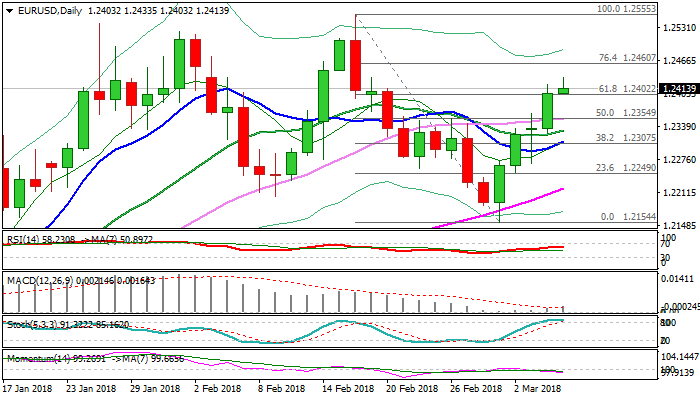
The Euro remains supported on Wednesday, holding in green for the fifth straight day and establishing above broken 1.2400 barrier (Fibo 61.8% of 1.2555/1.2154 descend).
Strong rally on Tuesday, which was sparked by news of Koreas’ summit, generated bullish signals on break above 30SMA (1.2354) and marginal close above next target at 1.2400.
Bullish setup of daily MA’s is supportive, but overbought slow stochastic and 14-d momentum heading south in negative territory, warn of further hesitation at 1.2400 zone and possible deeper pullback.
EU Q4 GDP data are the key release for the single currency in the European session, with release of US ADP private sectors employment data, due later today, also being in focus.
Eurozone’s economy is expected to grow at unchanged pace in Q4 and maintain strong growth, as Q4 forecast and Q3 GDP stand just under multi-year high.
EU economy is expected to grow by 0.6% q/q and 2.7% y/y, with firm release today expected to further boost the Euro for test of next targets at 1.2460/87 (Fibo 76.4% / 20-d upper Bollinger band).
Corrective dips are expected to hold above broken 30SMA to keep fresh bulls intact.
Res: 1.2433, 1.2460, 1.2487, 1.2500
Sup: 1.2400, 1.2354, 1.2331, 1.2310
Technical Outlook: AUDUSD – Bumpy Ride In Asia After Weaker Than Expected GDP And Upbeat RBA Governor Lowe
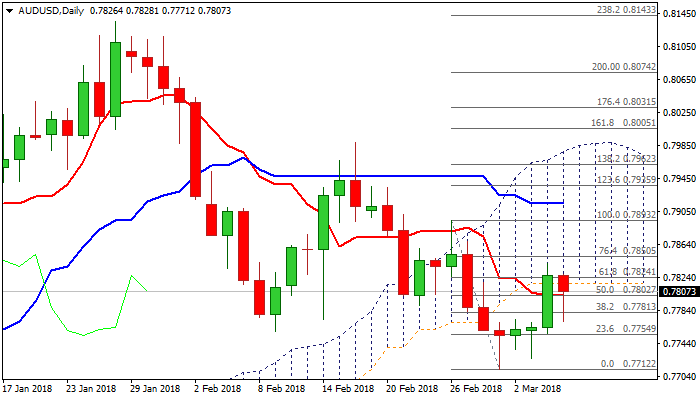
The Australian dollar was in hectic mode in Asia on Wednesday, driven by news and data. The pair fell to 0.7771 in early Asian trading, hit by weaker than expected Australia's Q4 GDP data (q/q 0.4% vs 0.5% f/c and 0.7% in Q3) (y/y 2.4% vs 2.5% and 2.9% in Q3) signaled slower than expected growth. The dip retraced the largest part of Tuesday's strong rally and was contained by broken 100SMA, former strong barrier, now reverted to support, ahead of fresh rally. The Aussie was inflated by remarks from the Governor of Australian central bank Lowe, who was upbeat about Australia's economic growth despite weaker numbers at the end of the year. Lowe also talked about possible global trade war, describing the decision on imposing tariffs as highly regrettable. The Aussie received fresh boost from Lowe's positive stance and bounced back above 0.78 barrier, coming closer to the Asian session high at 0.7828. Despite overnight's dip, the pair maintains positive tone in early European trading and probes again through daily cloud base (0.7817), which was broken on Tuesday's strong rally and close within the cloud. Tuesday's long bullish candle continues to underpin, after strong bullish signal was generated on break above former key barriers, provided by 100 and 200SMA's. However, bulls need further confirmation on firm penetration of cloud base and lift above 0.7824/34 pivots (Fibo 61.8% of 0.7893/0.7712 fall and 20SMA) to signal further recovery as momentum studies remain weak and keep the downside vulnerable. Weaker dollar on resignation of Trump's advisor Cohn and concerns about the impact of global trade war could help bulls, as markets are focusing on US jobs data on Friday which are expected to provide fresh signals.
Res: 0.7817, 0.7834, 0.7868, 0.7893
Sup: 0.7802, 0.7787, 0.7771, 0.7756
XAUUSD Intraday Analysis
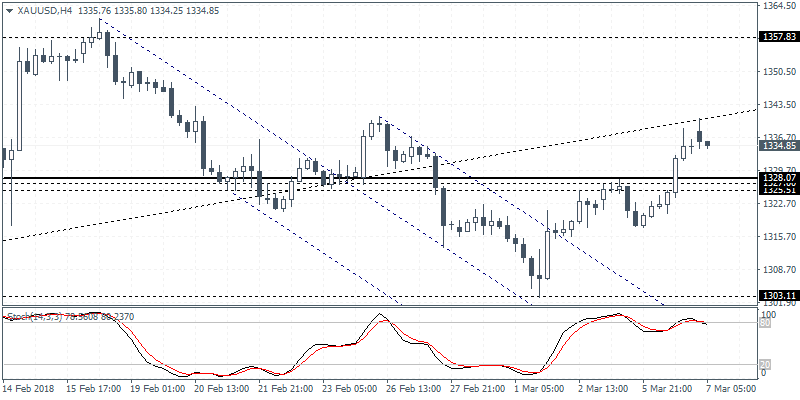
XAUUSD (1334.85): Gold prices closed with strong gains on Tuesday rising above the 1328 resistance level. However, price action was seen easing back in early trading today. A close below the resistance level of 1328 could potentially shift the bias to the downside. In the near term, we expect gold prices to retest the level near 1328 where support could now be established. A rebound off this level could indicate further upside gains in the near term. The bias shifts to the downside only on a close below this level.
GBPUSD Intraday Analysis
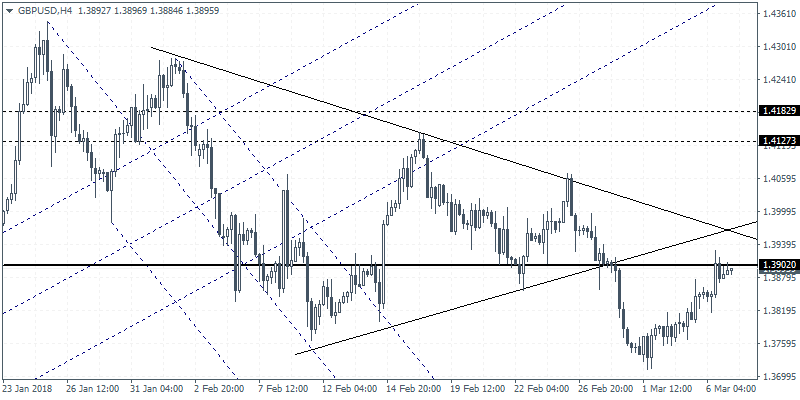
GBPUSD (1.3895): The British pound was seen closing higher on the day as price was seen briefly rising to the 1.3902 level of resistance. An upside breakout above this level on the daily basis could potentially shift the bias to the upside. The bearish flag pattern noted previously stands invalidated as price action edged higher. The current retest of 1.3902 comes as the previous breakdown from the triangle pattern put the initial downside target towards 1.3611 - 1.3589 region.
EURUSD Intraday Analysis
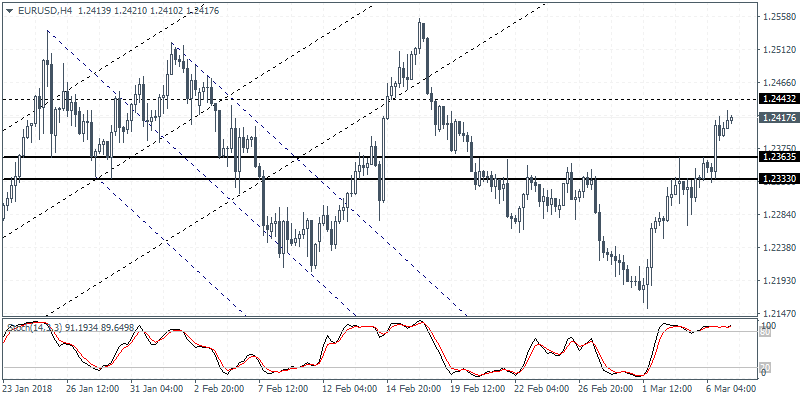
EURUSD (1.2417): The EURUSD continued to post strong gains marking a four consecutive day of gains. price action edged higher on Tuesday as the common currency breached past the resistance level at 1.2363 - 1.2330. The upside breakout above this resistance level could indicate further near term gains as the bearish flag pattern stands invalidated. Price action is close to testing the 1.2443 level of minor resistance to the upside and could settle into the range ahead of Thursday's ECB meeting.
USD Edges Lower. Australia GDP Rises Less Than Expected
The U.S. dollar was seen closing weaker as demand for risk appetite grew. News reports about North Korea being open to talks with the U.S. lifted the markets higher. On the economic front, the Eurozone retail sector PMI was seen rising to 52.8 compared to 50.8 previously. In the U.S. factor orders were unrevised, posting a 1.4% decline on the month. This comes after five consecutive months of solid gains in the sector.
Earlier today, Australian fourth quarter GDP showed a slower than expected pact of increase. The fourth quarter GDP expanded at a slower pace of just 0.4%, down from the third quarter's revised GDP of 0.7%. This brought the annual GDP in 2017 to 2.4%.
Looking ahead, the ADP private payrolls data will be coming out later today. Economists forecast that the economy added 199k jobs in the private sector. FOMC member Dudley will be speaking again today.
The Bank of Canada will be deciding on the interest rates today. No changes are expected as the BoC is likely to keep the interest rate unchanged at 1.25%.
Dollar Falls As Trade War Fears Rise, Bank Of Canada Decision Eyed
Here are the latest developments in global markets:
FOREX: The dollar was recording losses versus a basket of currencies, falling to its lowest in two weeks, as fears over as potential trade war were rekindled following the resignation of US President Trump's top economic advisor, a free trade proponent.
STOCKS: US markets managed to close higher yesterday, with the Nasdaq Composite gaining 0.6%, the S&P 500 climbing 0.3%, and the Dow Jones rising, though only marginally so. However, a few hours after US markets closed, news hit the wires that Trump's chief economic advisor Gary Cohn would resign, reviving concerns that a trade war may be looming and sending US equity futures sharply into negative territory. As expected, risk aversion rolled into Asia, with major benchmarks being a sea of red. Japan's Nikkei 225 and Topix fell by 0.8% and 0.7% respectively, while in Hong Kong, the Hang Seng was down by 1.0%. Europe seems ready to follow suit, with futures tracking all the major indices currently flashing red, pointing to a lower open.
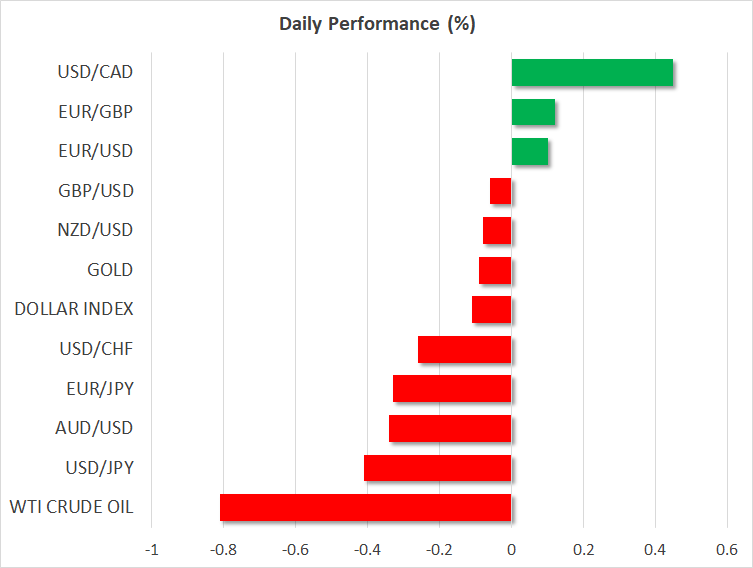
COMMODITIES: Oil prices fell sharply, with WTI and Brent crude trading 0.8% and 0.9% lower respectively, as investors' risk aversion and the API inventory data weighed on the precious liquid. The private API figures showed a larger-than-expected build in crude stockpiles, which likely generated speculation that the official EIA inventory data later today (1530 GMT) are likely to show similar results. In precious metals, gold prices fell 0.1% on Wednesday, with the yellow metal being unable to sustain the gains it posted on the news that Gary Cohn resigned. It is currently trading near the $1332/ounce mark, and in case trade concerns intensify further, then the safe-haven could extend its gains and head for a test of the $1340 resistance zone.
Major movers: Dollar records losses following Cohn’s resignation; loonie relatively close to 8-month low ahead of BoC rate decision
The dollar index was 0.15% down, trading close to 89.41, its lowest since February 20 recorded earlier on Wednesday. The decline in the greenback was fueled by the resignation of Gary Cohn; he served as President Trump’s top economic advisor.
Cohn was reportedly taking initiatives to avert the imposition of tariffs announced by Trump last week and his resignation is leading markets to reassess the risk of a trade war occurring, apparently revising the probability of such an outcome upwards. The fall in Asian equity markets on Wednesday is indicative of risk sentiment falling.
Some argue that policymakers favoring protectionism within the White House also favor a weaker dollar, something which would enhance US exports and act to the detriment of imports.
The safe-haven perceived yen was benefitting from the uncertainty, with dollar/yen falling by 0.4% and touching 105.43 at its lowest, this being not far above last week’s 16-month low of 105.23. The dollar was losing ground versus the Swiss franc as well, which also tends to gain at times of uncertainty.
Euro/dollar was up, though not by much, hitting its highest since February 19 of 1.2434 earlier in the day. On a weekly basis, the pair is up by 0.8%, recovering from the losses induced by the “inconclusive” Italian elections, with the focus turning to the ECB meeting which concludes tomorrow. Pound/dollar was little changed, being roughly 20 pips below the 1.39 level.
Aussie/dollar was 0.35% down, trading around the 0.78 handle. The pair gave back part of Tuesday’s gains that saw it rise to the one-week high of 0.7842; those came on the back of the North Korea denuclearization story that boosted risk appetite. Concerns around trade are seen as the catalyst behind today’s fall in the pair. Australia is a major commodity exporter and potentially stands to lose significantly should a trade war occur. Weaker-than-anticipated GDP figures out of Australia earlier today could have also contributed to negative sentiment for the pair. Kiwi/dollar was not much changed, trading not far below the 0.73 handle.
The Canadian dollar was recording losses versus its US counterpart as the latest developments are seen as increasing the risk that the US will leave NAFTA. Dollar/loonie was up by 0.45% at 1.2931 ahead of an interest rate decision by the Bank of Canada later in the day. This compares to 1.3000, the eight-month high hit on Monday. The Mexican peso was also losing ground versus the greenback; Mexico is one of the three countries participating in NAFTA.
Day ahead: Bank of Canada decision, US data and trade concerns in focus
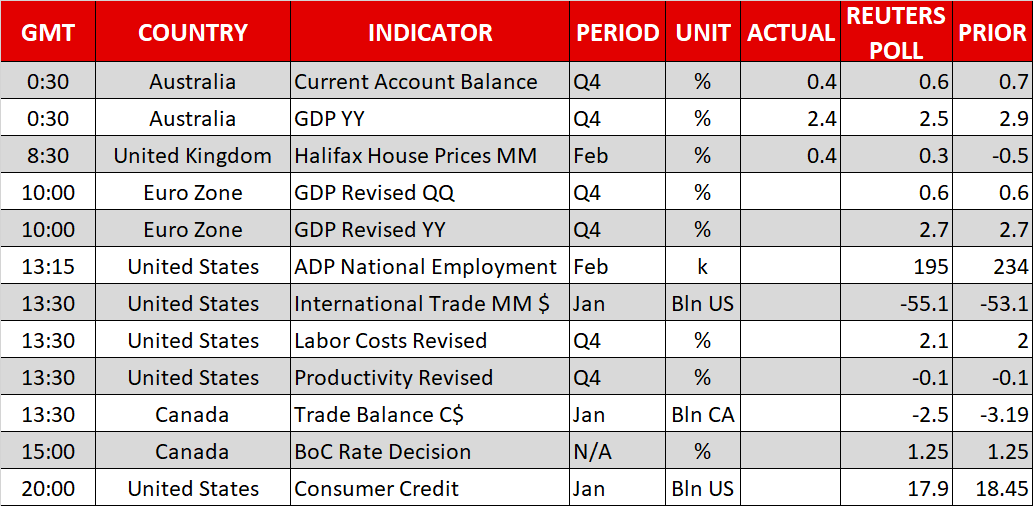
The main event in the FX market today will probably be the Bank of Canada (BoC) rate decision at 1500 GMT. Attention will also fall on the release of the US ADP employment report, as well as any potential updates on the trade front, in light of Gary Cohn’s resignation and the resurging probability of a tit-for-tat trade war.
The BoC is widely anticipated to remain on hold today, having raised interest rates at its latest meeting in January. Investors will scrutinize the accompanying statement looking for clues as to whether the recent softness in economic data and the increasing risk of trade tariffs from the US will delay the Bank’s future hiking plans. If indeed the BoC signals that it will be even more cautious in raising interest rates given these trade uncertainties, then the loonie could extend its recent losses. That said, caution is always warranted: the market may already be anticipating a concerned tone by the BoC, implying that anything other than a dovish statement could prove cause for a rebound in the CAD.
Turning to economic data, the eurozone will release the final estimate of economic growth for Q4 2017 at 1000 GMT, though the final figure is usually not a major market mover.
In the US, the ADP employment report for February is due out at 1315 GMT and expectations are for the private sector to have added 195k jobs in the month. If confirmed, such a print could enhance speculation that the NFP number on Friday may also meet its forecast of 200k and thereby, help the dollar to recover some of its latest losses. The US trade balance for January is also set for release at 1330 GMT, alongside the final estimate of labor costs for Q4 2017.
In energy markets, oil traders will keep their eyes on the weekly EIA crude inventory data at 1530 GMT. Stockpiles are forecast to have risen again, though by less compared to the previous week.
Equity markets will likely continue to be driven by speculation regarding the likelihood of a trade war actually materializing. Even though US Treasury Secretary Steven Mnuchin said yesterday that the US is “not looking to get into trade wars”, the resignation of Gary Cohn and President Trump’s unyielding stance on the imposition of tariffs are keeping that risk very much alive. Markets are still uncertain as to whether these are simply unorthodox negotiating tactics in complex trade talks, or whether the President is indeed set to toughen up on trade, perhaps to appeal to his voting base ahead of the midterm US elections. Until there is more clarity on the subject, price action in equities may remain choppy, and especially sensitive to headlines.
As for today’s speakers, we will hear from Atlanta Fed President Raphael Bostic (voter), as well as New York Fed President William Dudley (voter), at 1300 GMT and 1320 GMT respectively.
Technical Analysis: WTI oil futures looking neutral in the short-term
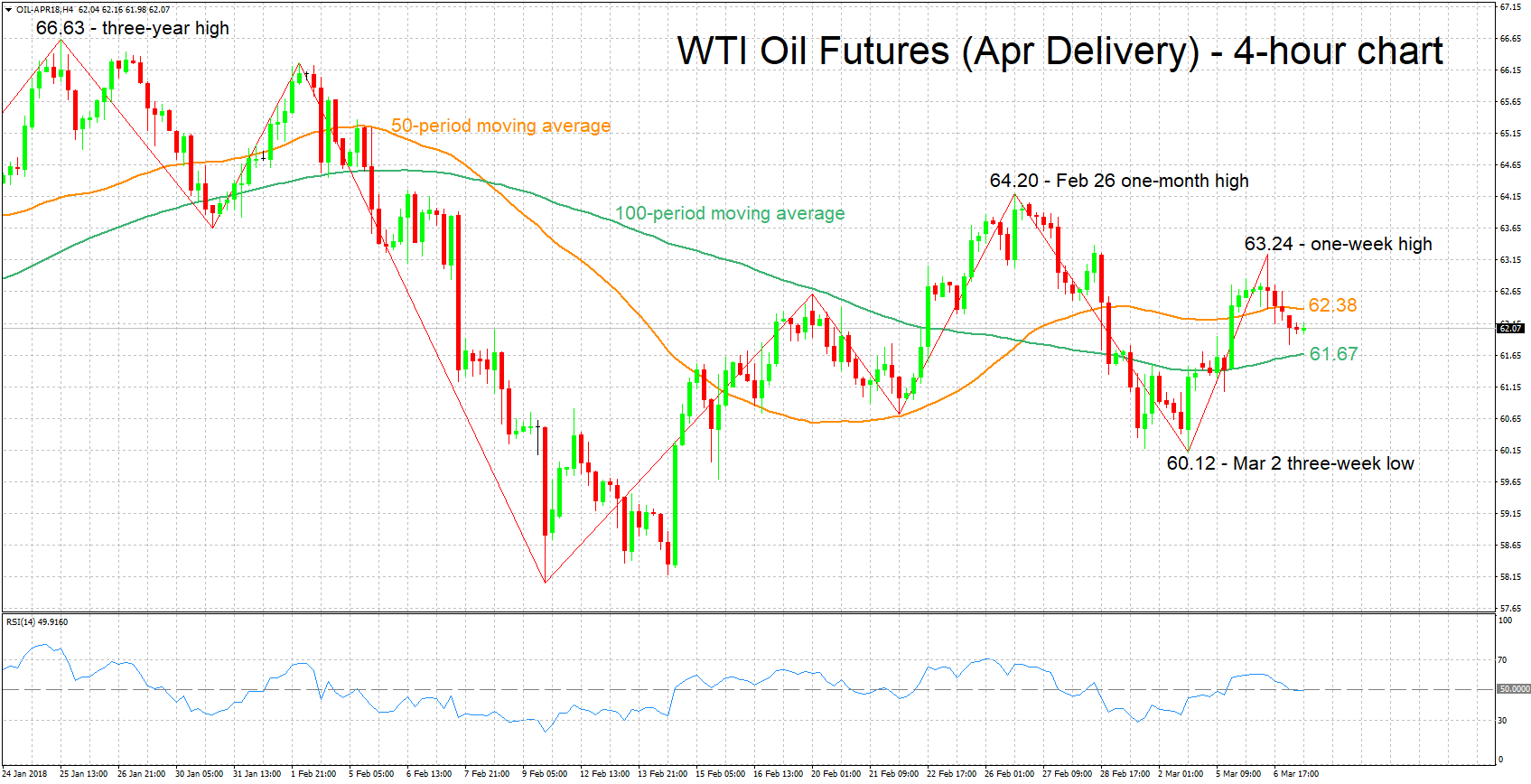
WTI oil futures for April delivery retreated a bit after recording a one-week high of 63.24 during Tuesday’s trading. The RSI is at the 50 neutral-perceived level and is currently moving sideways, hinting to the absence of short-term momentum in either direction.
If the Energy Information Administration’s weekly report shows a smaller-than-projected increase – or of course a decrease – in US crude oil inventories, prices could advance. In this case, resistance could come around the 50-period moving average at 62.38. Further above, the focus would turn to yesterday’s high of 63.24.
On the other hand, should crude inventories rise by more than anticipated, then prices might post losses. In this scenario, immediate support could come around the 100-period MA at 61.67, with attention falling to the three-week low of 60.12 from March 2 in case of steeper declines.
AUDUSD Continues Bearish Correction, Significant Obstacle At 23.6% Fibonacci Level
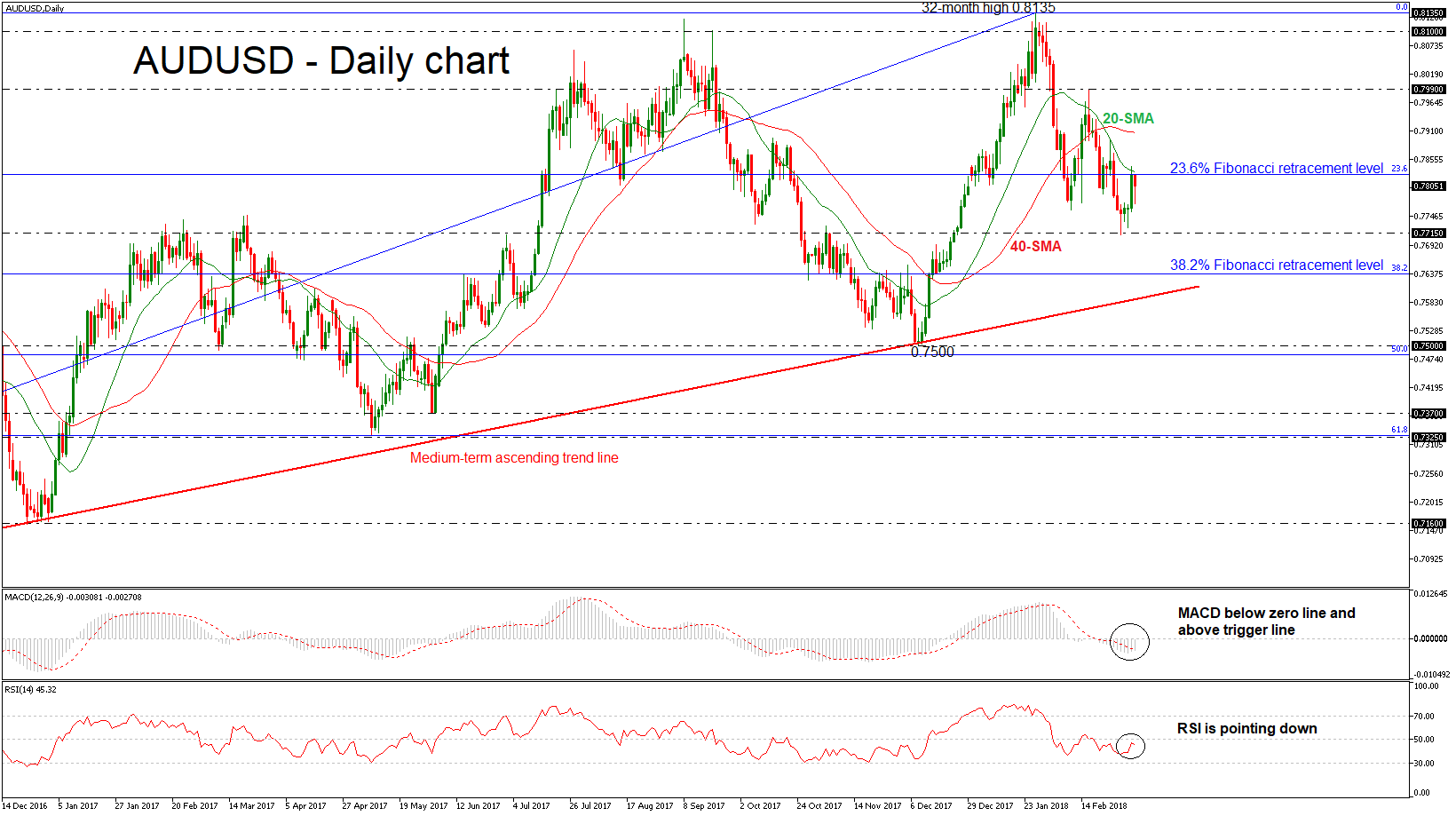
AUDUSD skyrocketed during Tuesday's trading session and created a one-week high of 0.7841. The pair jumped above the 23.6% Fibonacci retracement level at 0.7827 of the upleg from the low of 0.6820 and the high of 0.8135, however, it ended the day below it and started Wednesday's session with negative movement.
In the daily timeframe, from the technical point of view, the indicators seem to be in confusion. The MACD oscillator is flattening in the bearish territory but posted a bullish crossover with its trigger line in the previous days. Moreover, the RSI indicator is pointing to the downside below the 50 level as it failed to enter the positive zone.
Upsides moves are likely to find resistance at the aforementioned 23.6% Fibonacci mark which is acting as a strong obstacle for the bulls. A climb above this area could open the door for the 40-simple moving average around 0.7900 at the time of writing. Clearing this key level could push the price further up towards 0.7990.
On the flip side, the next target to have in mind is the March 1 low at 0.7715. At this stage, the market would likely see a resumption of the downward movement. Falling below this level could help shift the focus to the downside at the 38.2% Fibonacci mark near 0.7640.