

Sample Category Title
USD/JPY Daily Outlook
Daily Pivots: (S1) 112.01; (P) 112.45; (R1) 112.83; More....
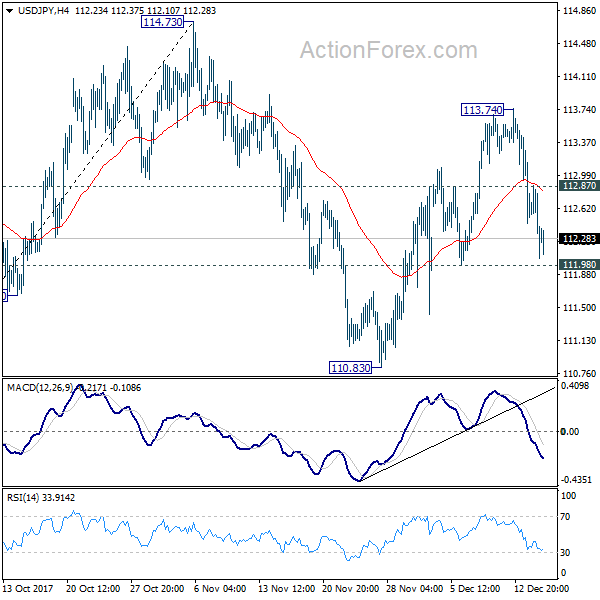
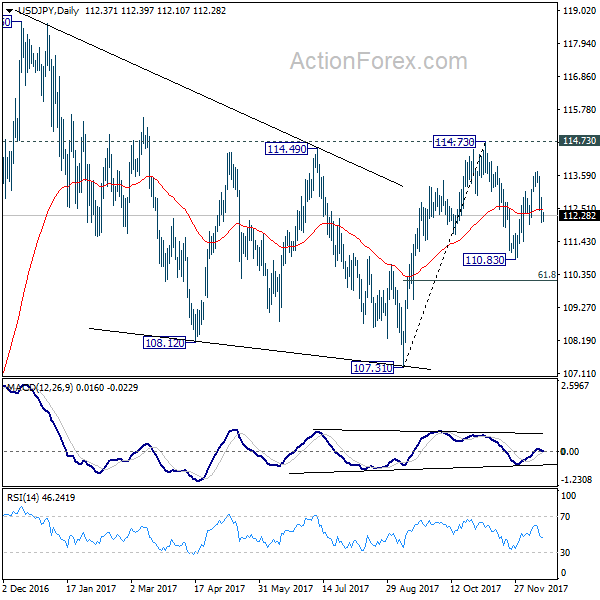
At this point, the fall from 113.74 is still seen as a correction. As long as 111.98 support holds, further rally is expected in USD/JPY. Above 112.87 minor resistance will turn bias to the upside for 113.74. Break will target 114.73 key resistance. However, break of 111.98 support will extend the decline from 114.73 with another fall, possibly to 61.8% retracement of 107.31 to 114.73 at 110.14 before completion.
In the bigger picture, we're holding on to the view that correction from 118.65 is completed a 107.31. And medium term rise from 98.97 (2016 low) is resuming. Sustained break of 114.73 should affirm our view and send USD/JPY through 118.65. However, break of 107.31 will dampen this will and extend the medium term fall back to 98.97 low.
AUD/USD Daily Outlook
Daily Pivots: (S1) 0.7634; (P) 0.7656; (R1) 0.7687; More...
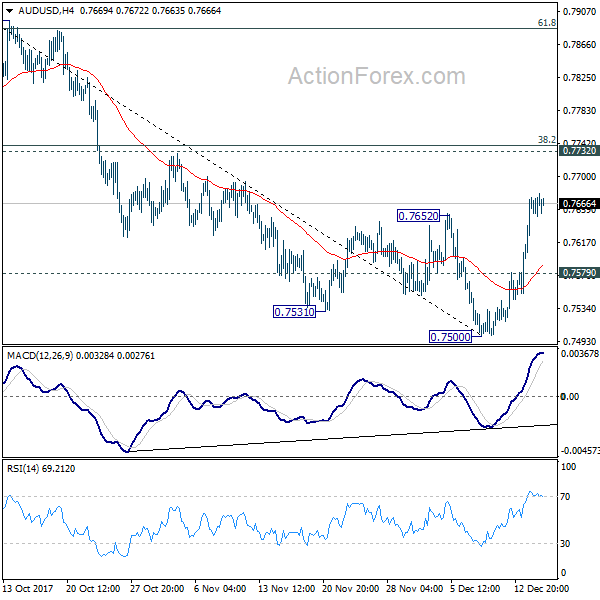
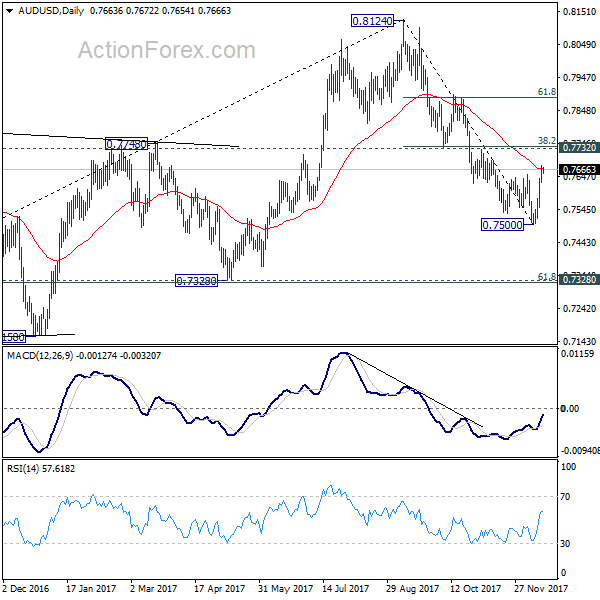
Intraday bias in AUD/USD remains mildly on the upside as rise from 0.7500 short term bottom is still in progress. Further rally could be seen. For now, we'd expect strong resistance from 0.7732 cluster resistance (38.2% retracement of 0.8124 to 0.7500 at 0.77385) to limit upside to bring fall resumption. Below 0.7579 minor support will turn bias to the downside for 0.7500 and below. However, sustained break of 0.7732 should invalidate our bearish view and bring stronger rise through 61.8% retracement at 0.7886.
In the bigger picture, corrective rise from 0.6826 medium term bottom is likely completed at 0.8124, after hitting 55 month EMA (now at 0.8029). Decisive break of 0.7328 key cluster support (61.8% retracement 0.6826 to 0.8124 at 0.7322) will confirm. And in that case, long term down trend from 1.1079 (2011 high) will likely be resuming. Break of 0.6826 will target 61.8% projection of 1.1079 to 0.6826 from 0.8124 at 0.5496. This will now be the favored case as long as 0.7732 near term resistance holds.
USD/CAD Daily Outlook
Daily Pivots: (S1) 1.2717; (P) 1.2791; (R1) 1.2869; More....
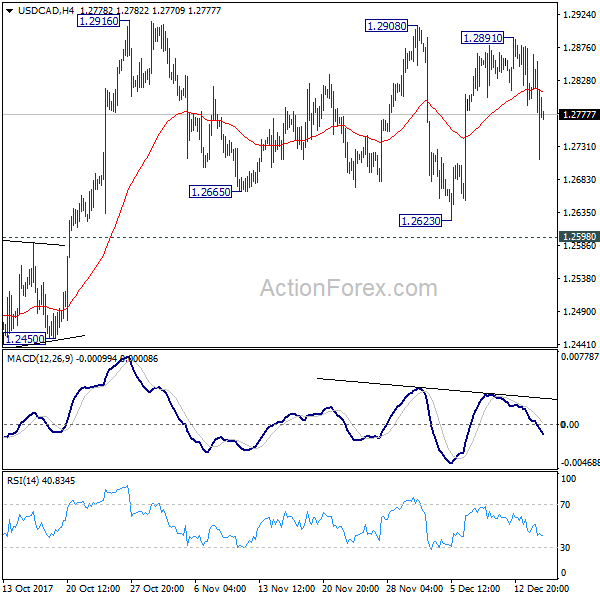
USD/CAD dropped sharply from 1.2891, but still it's staying in range below 1.2916. Consolidation from there is in progress and intraday bias remains neutral. Also, outlook remains bullish with 1.2598 resistance turned support intact. On the upside, firm break of 1.2916 will resume whole rally from 1.2061 and target 1.3065 medium term fibonacci level next. However, sustained break of 1.2598 will argue that rebound from 1.2061 has completed after hitting 55 week EMA (now at 1.2888). Near term outlook will be turned bearish in this case.
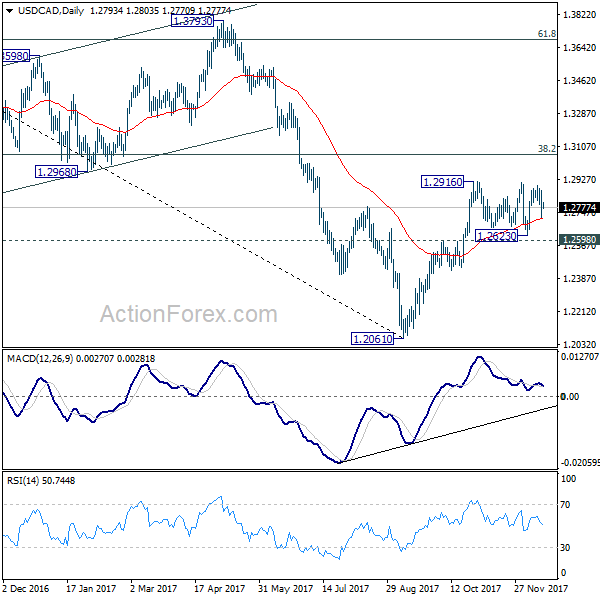
In the bigger picture, USD/CAD should have defended 50% retracement of 0.9406 (2011 low) to 1.4689 (2016 high) at 1.2048. And with 1.2048 intact, we'd favor the case that fall from 1.4689 is a correction. Rise from 1.2061 medium term bottom should now target 38.2% retracement of 1.4689 to 1.2061 at 1.3065. Firm break there will target 1.3793 key resistance next (61.8% retracement at 1.3685). We'll now hold on to this bullish view as long as 1.2450 support holds.
Dollar Back Under Pressure after Short Lived Recovery, Canadian Dollar Lifted by Upbeat BoC Poloz
Dollar's data inspired rally overnight was brief and weak. The greenback is still set to end as the weakest major currency for the week despite a Fed rate hike. It seems like markets are rather worried on passage of the reconciled tax bill in the Senate. Euro is indeed trading as the second weakest one for the week. Even though ECB raised both growth and inflation forecasts, it's still not going to meet 2% inflation target before 2020. Commodity currencies are trading broadly higher for the week. Canadian Dollar was given a boost by BoC Governor Stephen Poloz's upbeat comment. But it's overwhelmed by Aussie and Kiwi.
More on this week's central bank activities:
- ECB Review: Christmas Mood Leaves QE Exit Decisions for 2018
- BOE Stands on Sideline after November Hike, Attributing Inflation Overshoot to Weak Currency
- SNB Raised CPI Forecasts, Acknowledged Franc's Weakness But Pledged To Stay Cautious
- Bank of Canada Steals the Show Despite Not Making Rate Decision
- BoC: Poloz Worries, But Feels We're Still "Close to Home"
- Fed Raises Rates, Maintains Normalization Path
- FOMC Hikes Rate For Third Time, With Two Dissents
- The FOMC Takes Another Step Toward Normal
- Fed Delivers December Hike, With More Tightening in Store Next Year
- FOMC Review: Broadly Unchanged Fed Signal
- Federal Reserve Hikes Rates in December
Japan large manufacturing confidence hit 11 year high
Japan Tankan survey showed improvements in large manufacturing business confidence in Q4. The results support BoJ's upbeat assessment on the economy. And they will likely add to the central bank's confidence that inflation will eventually return to 2% target as economy improves. However, considering the slowdown in capex growth and slower improvement in other readings, there is still a long way to go for the BoJ. Large manufacturing index rose 3 pts to 25 in Q4, beating expectation of 24. That's also the highest level in 11 years since Q4 of 2006. Large manufacturing outlook was unchanged at 19, below expectation of 22. Large non0manufacturing index was unchanged at 23, below expectation of 24. Large non-manufacturing outlook rose to 20, but missed expectation of 21. All industry capex spending rose 7.4%, slowed from 7.7% and missed expectation of 7.5%.
BoC Poloz raised expectations of Q1 hike
Canadian Dollar was given a strong lift overnight by upbeat comments from BoC Governor Stephen Poloz. Poloz said that the economy made "tremendous" progress in 2017. And, It's now "close to reaching its full potential". He also said that policymakers are "growing increasingly confidence that the economy will need less monetary stimulus over time". Markets took that as confirmation that the next move is still a hike. More importantly, it wouldn't be too far away. His comments affirmed the expectation of another rate hike by BoC in Q1 next year.
UK PM May in Brussels EU summit
UK Prime Minster Theresa May arrived in Brussels yesterday for the highly anticipated EU summit. Brexit negotiation is widely expected to be given a go-ahead into trade talks. However, it's believe that the formal discussions on post Brexit trade relationship will not start until March. Also, according to a leaked European Council document, there will be "additional guidelines" for the negotiations onward, in particular regarding the "framework for the future relationship". Meanwhile, UK Parliament voted 309 to 305 on an amendment to the Brexit bill. And the Parliament must be given on vote on the final agreement with EU before withdrawal begins. That is seen as further weakening May's position.
Looking ahead
The economic calendar is much lighter today. Eurozone will release trade balance. Canada will release manufacturing sales. US Empire state manufacturing and industrial production will also be featured.
USD/CAD Daily Outlook
Daily Pivots: (S1) 1.2717; (P) 1.2791; (R1) 1.2869; More....
USD/CAD dropped sharply from 1.2891, but still it's staying in range below 1.2916. Consolidation from there is in progress and intraday bias remains neutral. Also, outlook remains bullish with 1.2598 resistance turned support intact. On the upside, firm break of 1.2916 will resume whole rally from 1.2061 and target 1.3065 medium term fibonacci level next. However, sustained break of 1.2598 will argue that rebound from 1.2061 has completed after hitting 55 week EMA (now at 1.2888). Near term outlook will be turned bearish in this case.
In the bigger picture, USD/CAD should have defended 50% retracement of 0.9406 (2011 low) to 1.4689 (2016 high) at 1.2048. And with 1.2048 intact, we'd favor the case that fall from 1.4689 is a correction. Rise from 1.2061 medium term bottom should now target 38.2% retracement of 1.4689 to 1.2061 at 1.3065. Firm break there will target 1.3793 key resistance next (61.8% retracement at 1.3685). We'll now hold on to this bullish view as long as 1.2450 support holds.
Economic Indicators Update
| GMT | Ccy | Events | Actual | Forecast | Previous | Revised |
|---|---|---|---|---|---|---|
| 21:30 | NZD | Business NZ Manufacturing PMI Nov | 57.7 | 57.2 | 57.3 | |
| 23:50 | JPY | Tankan Large Manufacturing Index Q4 | 25 | 24 | 22 | |
| 23:50 | JPY | Tankan Large Manufacturers Outlook Q4 | 19 | 22 | 19 | |
| 23:50 | JPY | Tankan Large Non-Manufacturing Index Q4 | 23 | 24 | 23 | |
| 23:50 | JPY | Tankan Non-Manufacturing Outlook Q4 | 20 | 21 | 19 | |
| 23:50 | JPY | Tankan Large All Industry Capex Q4 | 7.40% | 7.50% | 7.70% | |
| 23:50 | JPY | Tankan Small Manufacturing Index Q4 | 15 | 11 | 10 | |
| 23:50 | JPY | Tankan Small Manufacturing Outlook Q4 | 11 | 9 | 8 | |
| 23:50 | JPY | Tankan Small Non-Manufacturing Index Q4 | 9 | 9 | 8 | |
| 23:50 | JPY | Tankan Small Non-Manufacturing Outlook Q4 | 5 | 5 | 4 | |
| 10:00 | EUR | Eurozone Trade Balance Oct | 24.6B | 25.0B | ||
| 13:30 | CAD | Manufacturing Sales M/M Oct | 0.50% | |||
| 13:30 | USD | Empire State Manufacturing Index Dec | 18 | 19.4 | ||
| 14:15 | USD | Industrial Production M/M Nov | 0.30% | 0.90% | ||
| 14:15 | USD | Capacity Utilization Nov | 77.20% | 77.00% | ||
| 21:00 | USD | Net Long-term TIC Flows Oct | 80.9B |
ECB Review: Christmas Mood Leaves QE Exit Decisions for 2018
- Despite a stronger growth and inflation outlook, the ECB delivered a fairly balanced policy message, without further hints about a shift towards a more 'holistic' view on inflation and the economy. We expect discussions about QE exit and policy normalisation to gain prominence in the spring of 2018.
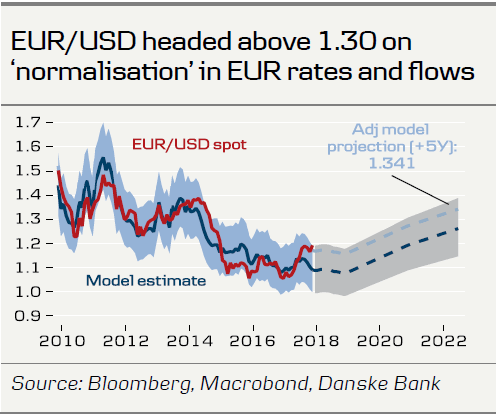
- ECB sees euro zone heading in 'the right direction' – we see EUR/USD headed firmly into 1.20s in 2018.
In line with our expectation, the ECB left its policy measures and forward guidance unchanged, keeping the QE programme open-ended. The ECB reiterated that policy rates would remain at current levels for an extended period and well past the horizon of asset purchases. The Q&A also brought little news as Draghi confirmed that both the new QE composition and a possible decoupling of the QE forward guidance from the inflation outlook were not discussed at the meeting.
Although Draghi stressed that the Governing Council is growing more confident in its ability to meet the inflation target eventually, not least because of the stronger growth outlook, today's meeting confirmed that the ECB is in a wait-and-see mode for now and any further discussions about QE exit and policy normalisation would probably only gain prominence in the spring of 2018. Related to this, we think it is important to watch out for growing support within the Governing Council for the idea of decoupling the forward guidance on QE from the requirement for a sustained rise in inflation and instead linking it to the overall monetary policy stance, as this would enable the ECB to end QE even if inflation continues to undershoot the target. Such a change in the forward guidance might come for example in the April or June meetings next year.
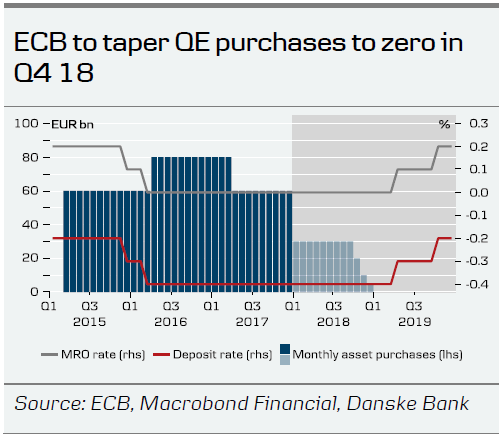
We still believe the ECB will end the QE programme in 2018 and taper purchases to zero in Q4 18, due to a combination of binding technical restrictions, the growing size and importance of QE reinvestments, fading deflationary risks with core inflation staying above 1.0% and a growing consensus within the Governing Council that the October QE extension was the last one. Given gradually rising underlying inflation pressures, we expect the ECB to deliver its first 10bp deposit rate hike in Q2 19, supported by a growing urge in the Governing Council to move ahead with monetary policy normalisation in order to regain room to manoeuvre for future crises and avoid falling behind the curve.
ECB projects core inflation at 1.8% in 2020
The ECB also released new economic forecasts at the meeting, which, as expected, painted a rosier picture for the eurozone growth and inflation outlook.
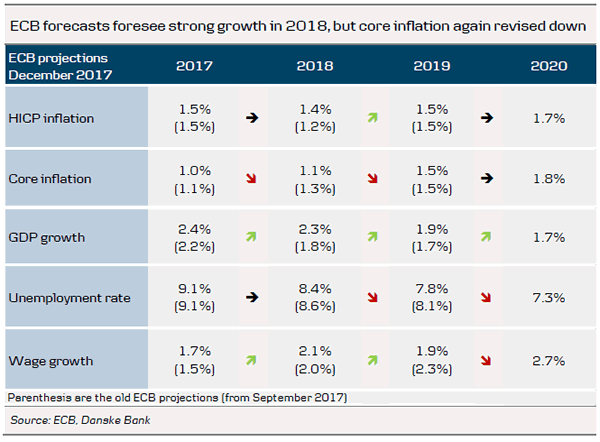
- The 'significant improvement in the growth outlook' gives the ECB greater confidence that inflation will converge to its aim. The GDP growth forecast for 2018 was lifted to 2.3% from 1.8%, reflecting the strong cyclical momentum, and which is even above our forecast of 2.0%. The projection for 2019 was also raised, by 0.2pp to 1.9%, while the ECB sees growth moderating to 1.7% in 2020. Risks to the growth outlook were judged to be broadly balanced.
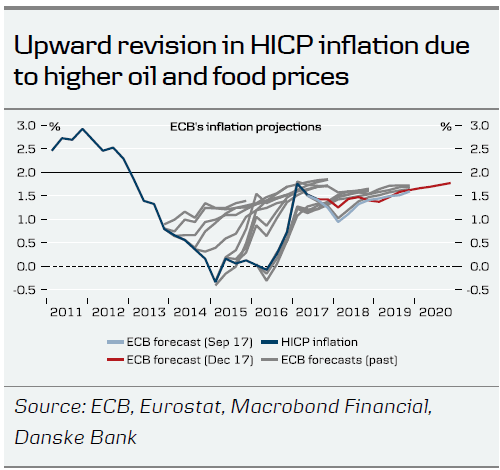
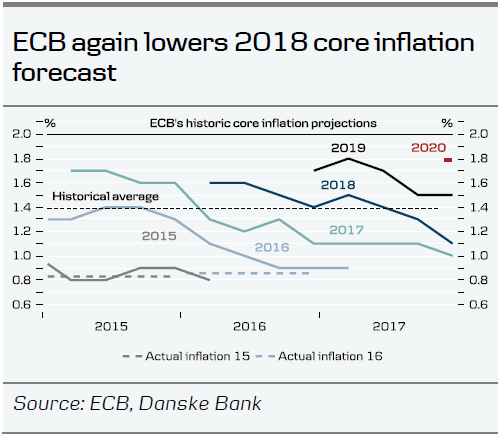
- The inflation outlook was revised up, mainly reflecting higher oil and food prices, as we anticipated in Euro Area Research: ECB inflation gap persists in 2019. It was still judged that an ample degree of monetary accommodation was needed for underlying inflation pressures to continue to build up and Draghi stressed that the inflation outlook remains (too) dependent on the accommodative monetary policy stance. The ECB kept its 2017 and 2019 HICP inflation forecasts unchanged, but raised the 2018 forecast by 0.2pp to 1.4%. Interestingly, at the same time, the ECB lowered its core inflation forecast for 2018 by 0.2pp to 1.1%, which is now in line with our forecast. The new 2020 forecast projects core inflation close to the target at 1.8%, in line with the ECB's belief in increasing underlying inflation pressures in light of the continued strong economic momentum and an expected strong pick-up in wage growth to 2.7% in 2020.
FX: ECB sees euro zone headed in 'the right direction' – we see EUR/USD headed firmly into 1.20s
A fairly muted reaction in EUR/USD to the 'October replay message' from the ECB insofar as its stance on QE and forward guidance on rates were concerned. First, the sense Draghi tried to convey in terms of upward economic revisions, namely that things are moving in the right direction in the euro zone, helped to send EUR/USD higher at the start of the press conference. However, the fact that decoupling the inflation outlook from the QE decision had not been discussed helped to send the cross lower again (even as the inflation forecasts were lifted). We also note that the strong US retail sales figures, which came out this afternoon, and the ongoing tightening in USD liquidity (as evident in a stillwider basis) likely helped to send the cross back down again.
While there were no clear hints from Draghi today that the 'holistic' approach to the economic outlook and to the overall policy stance is gaining further traction yet, this is something for the FX market to watch out for when the minutes are published in a few weeks' time. Notably, Draghi did remind us of what we have dubbed the 'Sintra accord', i.e. the (seemingly coordinated) move by a range of central bankers back in late June to urge for policy 'normalisation' on the grounds that deflationary risks had evaporated. This suggests to us that the FX market should be able to keep the faith that the next level of ECB 'normalisation' is just around the corner. We think this will be a key theme in Q2 next year.
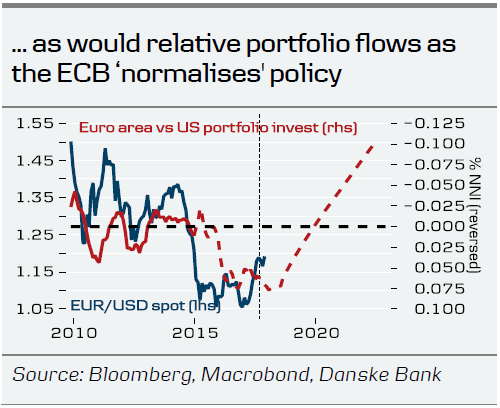
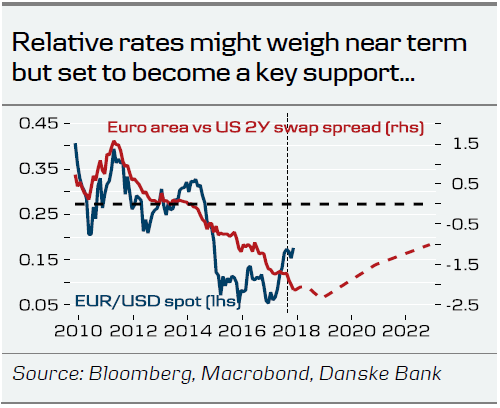
As we have stressed repeatedly - and notably in our recent Special Report - we see risks in EUR/USD tilted to the upside for 2018 as a whole. While relative rates could possibly weigh a bit in the near term, what the FX market would increasingly be focused on is the potential not least for debt flows to support the single currency in the ECB's 'exit' process that is only just getting started. We are long EUR/USD on a 12M horizon via options in our FX Top Trades 2018.
The Great Central Bank Yawn
Neither the ECB or the BOE offered up much of anything at yesterday's Central Bank events.
Not wanting to impede the nascent EU economic recovery via a stronger Euro, the ECB forward guidance remained dovish.
The BoE decision was equally dull as the central bank voted unanimously to keep rates in check while towing the usual G-4 Central Bank mantra to remain cautious.
The predictably cautious nature of the global central banks continues to drain volatility from currency markets. So get ready for more of the same old same old in early 2018 "that economic growth remains robust yet inflation remains dovish."
US shoppers are embracing the holiday season as retail sales surged. While it portends well for near-term consumption metrics, it does little to support the dollar as the shopping frenzy will likely cool in January.
Frankly, there are few if any conclusions to be made from overnight markets, so I suspect local traders are prepared to slide into the weekend on a quiet note.
Equities
With no news on Tax reform US stock markets were happy to take profits and trim positions ahead of the weekend which created an afternoon slide on the broader indices.
Oil
Oil prices are trading off overnight session lows as the Forties pipeline supply disruption, and a Texas refinery fire is helping to support gasoline prices, attracting some bottom feeders on WTI. It's been a long week for Oil Patch traders who will be looking to wind down for the weekend, so unless any surprises, trading should remain subdued.
Malaysian Ringgit
There were few if any fireworks from the global central banks who are more than content erring on the side of caution and steering a dovish tack. G-10 central bank dovishness bodes well for Asian currencies in the medium term and more so for the Malaysian Ringgit as BNM is expected tweak interest rates higher in January in response to surging economic growth and to thwart inflationary expectations.
My outlook for next week is for trading to remain subdued within the 4.0650-4.10 levels with US dollar rallies quickly faded. However, given that we are entering holiday season liquidity conditions so absent any surprises, we'll likely trade on a lighter note
The Japanese Yen
USDJPY has taken a bit of a beating after the FOMC's dovish rate hike put the final nail in the coffin on the long USDJPY trade into year end. Going forward, the weakness in the USD could pick up some speed into year end, but unless an unexpected downslide catalyst hits, traders are more apt to sit tight waiting to fade tax headline rallies than chase the dollar lower.
BoC: Poloz Worries, But Feels We’re Still “Close to Home”
Bank of Canada Governor Stephen Poloz gave a speech today focused on the things keeping him awake at night.
Before getting to his concerns, Poloz laid out his view on the current state of play, noting that 2018 is "looking positive", with the export recovery to be "pulled along by rising foreign demand". Referencing prior speeches, he judged that "we find ourselves quite close to home, and getting closer".
The focus of the speech were the several key issues that concern the Governor: cyber threats, high home prices and household debt, and the tough job market for young people. He also commented on cryptocurrencies.
The latter risks are probably of most interest. On house prices and household debt, the 40% figure came up twice: this is both the share of housing backed loans that have a home-equity line of credit (HELOC) component, and the share of those HELOC borrowers that are not regularly paying down their principal. Poloz sees this as a risk, particularly if these lines of credit are being used to further speculate in housing markets. He was very supportive of the updated B20 mortgage stress test, advising borrowers that may choose to skirt the regulation by choosing an institution that doesn't impose the new test that ensuring you can handle rising rates is nevertheless a good idea.
Poloz noted that of the more than 350k full-time jobs created so far this year, only about 50k have gone to those aged 15-24. He also remarked that were the youth participation rate be brought back to pre-crisis levels, some 100k more young people would have jobs. This has the potential to create a long-term impact if these young people are not building the work experience that they otherwise would be. Encouragingly, the Governor noted that with the economy in a sweet spot right now, people are being more encouraged to enter or re-enter the workforce, as seen by rising wages and a tick-up in the participation rate among young people.
The Governor also took a moment to comment on cryptocurrencies, calling the term itself a misnomer as instruments like Bitcoin, in his view, are neither a store of value or act as a medium of exchange. Noting that he was not giving investment advice, he characterized the market as buying risk - calling it more like gambling than investing.
Key Implications
For Governor Poloz, what keeps him up at night isn't wondering whether Quentin Tarantino will actually make a Star Trek movie (though it might be), but ongoing issues in the Canadian economy. Specifically, it is cyber threats, housing markets and household debt, and the state of youth employment that generate restless nights for the Governor. However, in each case, Poloz made the point that progress is being made.
Indeed, despite the speech ostensibly being about the Governor's worries, it carried a somewhat hawkish bent. The three key areas of concern are seen as being addressed, at least on an ongoing basis. On top of this, while we were reminded that monetary policy is an exercise in risk management, ultimately Poloz sees the economy as being 'quite close to home' and has maintained a positive characterization of 2018 - something that suggests that we may be closer to the next hike than markets have been expecting of late.
Ultimately, while the decision may come down to the wire, today's speech confirms our view that the next hike will likely come sooner rather than later. As discussed in our latest Quarterly Economic Outlook, the Canadian economy is expected to run at an above-potential pace for a while longer. As such, although caution remains the watchword, we expect the incoming data to guide Poloz towards another rate hike in early-2018.
Canadian Dollar Higher After Poloz Hawkish Comments
The Canadian dollar appreciated on Thursday after Bank of Canada (BoC) Governor Stephen Poloz spoke at the Canadian Club in Toronto. His speech was titled "The Three Things Keeping Me Awake at Night". Poloz delivers a hawkish assessment of the economy confident that less stimulus will be needed going forward. The economy is in a sweet pot in the economic cycle running close to full output and inflation near the 2 percent target.
The USD/CAD was higher earlier in the session, but the loonie got support from Poloz's speech by keeping an interest rate hike on the table for the first quarter of 2018. The Bank of Canada (BoC) raised rates twice in 2017 to leave the benchmark rate at 1.00 percent, but as the economy cooled, so did the rhetoric. The words today from the BoC Governor suggest that current rates are still too low, but all monetary decisions will be based on the evolution of the economy.
After the U.S. Federal Reserve hiked the Fed funds rate on Wednesday by 25 basis points, the third lift by the central bank this year, the gap between the Canadian rate and the American rate was expected to grow as the BoC did not appear to be ready to raise. The statement from Mr Poloz makes it clear that the neutral rate for the Canadian central bank is higher, but also that it is no rush to get there and will do so only when the economy justifies it.
The USD/CAD lost 0.47 percent in the last 24 hours. The currency pair is trading at 1.2754 after the words from Bank of Canada (BoC) Governor Stephen Poloz pushed the loonie higher.
Mr Poloz focused on three things keeping him up at night: cyber threats, high house prices and household debt and the tough job market for young people. Housing related concerns are highly relevant given the new mortgage rules to try to keep prices grounded will come into effect on January 1st. Canadian borrowers are stretching themselves by combining mortgages with lines of home equity. Canadian banks have already suffered credit downgrades given their exposure to a fall in prices or higher rates that could make the payments unsustainable for these borrowers and the BoC is right to be monitoring the situation as it related to the path of interest rates in 2018.
NAFTA was a topic Poloz addressed several times during his speech and in the Q&A afterward. The Governor believes that the uncertainty of the trade deal is holding back investment in Canada. As negotiatiors meet in Washington without political interference this intercessional meeting is expected to bring tangible, albeit smaller results. Canada, Mexico and industries that would be affected by the sudden exit (6 months) if the Trump administration decides to terminate its involvement in the agreement, have started to lobby for a change in tactics. The defeat of Republican candidate Roy Moore in the special senate election will weigh on Republicans that side with the part line instead of the people.
Oil prices rose on Thursday. West Texas Intermediate is trading at $57.04 as the disruption in the North Sea pipeline continues to support higher prices. The outage of the Forties pipeline kept prices higher as crude inventories continue to shrink. The Organization of the Petroleum Exporting Countries (OPEC) trade agreement is partly responsible but of concern to traders is the rise in gasoline stocks signalling a lack of demand.
The Energy Information Administration (EIA) released its weekly US crude and gasoline stocks on Wednesday. Oil inventories shrank by 5.1 million barrels, but gasoline grew by 5.7 million barrels. Distillates proved to be the tie breaker as it also fell by 1.4 million barrels. Supply disruptions have kept lack of demand and rising US production in check versus the OPEC and other major producers efforts to reduce their output to stabilize prices.
Gold Yawns as Retail Sales Jump
Gold has ticked lower in the Thursday session. In North American trade, the spot price for an ounce of gold is $1254.27, down 0.11% on the day. On the release front, consumer spending indicators looked sharp, as Core Retail Sales and Retail Sales improved in November, with readings of 1.0% and 0.8%, respectively. Both indicators beat expectations. There was positive news on the employment front, as unemployment claims fell to 225 thousand, well below the forecast of 237 thousand. On Friday, the US releases the Empire State Manufacturing Index.
There were no surprises from the Federal Reserve, which raised rates on Wednesday, bringing the benchmark rate to a range between 1.25% and 1.50%. This marked the third rate hike in 2017, testimony to the strong performance of the US economy. The Fed statement was optimistic about the economy, noting that the labor market "remained strong". It also lowered its unemployment forecast in 2018 from 4.1% to 3.9%, and revised growth for 2018 from 2.1% to 2.5%. Despite this upbeat assessment, gold prices moved higher, as the US was broadly lower after the rate announcement. Why did investors give the dollar a thumbs-down despite a rate hike? One reason is the Achilles heel of the US economy – inflation. The Fed has not changed its September forecast for rate hikes next year, with the Fed dot plot indicating that three rate hikes are projected for 2018. This disappointed some investors who would like to see four increases next year. As well, the rate statement said that the Fed did not expect tax reform legislation to have any long-term effect on the economy, contradicting White House claims that the legislation would trigger substantial growth in the economy.
The Fed is pleased with the strength of the US economy, but remains puzzled why strong growth and a red-hot labor market has not led to higher inflation. The labor market continues to operate at full capacity and various sectors in the economy are reporting a lack of workers. Still, this has not translated into stronger wage growth, despite predictions from Janet Yellen and other Fed policymakers that a lack of workers is bound to push up wages. The Fed appears ready to continue to jack up rates, despite the lack of inflation. The markets are preparing for another quarter-point increase next month, with the odds of a rate hike standing at a remarkable 100%, according to the CME Group.
Pound Steady as BoE Stays on the Sidelines
The British pound is showing little movement in the Thursday session. In North American trade, GBP/USD is trading at 1.3429, up 0.10% on the day. On the release front, Retail Sales jumped 1.1%, crushing the estimate of 0.4%. As expected, the Bank of England maintained the benchmark rate at 0.50%. In the US, consumer spending climbed, as Core Retail Sales and Retail Sales improved in November, with readings of 1.0% and 0.8%, respectively. Both indicators beat expectations. There was positive news on the employment front, as unemployment claims fell to 225 thousand, well below the forecast of 237 thousand. On Friday, the US releases the Empire State Manufacturing Index.
Earlier on Thursday, the Bank of England maintained interest rates at 0.50%. Although this was not a surprise, the vote was significant in that there were no dissenters, as all 9 policymakers were in agreement for the first time since February. BoE Governor Mark Carney will certainly be pleased with the unanimous vote, but could be on the hot seat as inflation continues to creep higher. CPI climbed to 3.1% in November, edging above the forecast of 3.0%. Inflation is now running at its highest level since March 2012, and Carney will have to write an open letter to open letter to the British finance minister, explaining how the BoE plans to lower inflation closer to the Bank's target of 2.0%. Carney would rather not raise rates in the next few months, but that could be the most effective tool in bringing down inflation, which is at uncomfortably high levels.
There were no surprises from the Federal Reserve, which raised rates on Wednesday, bringing the benchmark rate to a range between 1.25% and 1.50%. This marked the third rate hike in 2017, testimony to the strong performance of the US economy. The Fed statement was optimistic about the economy, noting that the labor market "remained strong". It also lowered its unemployment forecast in 2018 from 4.1% to 3.9%, and revised growth for 2018 from 2.1% to 2.5%. Despite this rosy prognosis, the dollar was broadly down after the announcement. Why? One reason is the sore point in the economy – inflation. The Fed has not changed its September forecast for rate hikes next year, with the Fed dot plot indicating that three rate hikes are projected for 2018. This disappointed some investors who would like to see four increases next year. As well, the rate statement said that the Fed did not expect the tax reform legislation to have any long-term effect on the economy, contradicting White House claims that the legislation would trigger substantial growth in the economy.