Sample Category Title
U.S. January Inflation to Show Limited Easing in Price Pressures
The U.S. Federal Reserve will be closely watching January inflation data on Wednesday after foregoing an interest rate cut last month for the first time in the last four meetings.
A resilient U.S. economy isn’t signalling an urgency to cut interest rates further. Retail sales likely ticked lower in January, given a pullback in auto sales after a string of upside surprises. That leaves any additional interest rate reductions in the near term more contingent on price growth continuing to slow towards a 2% rate.
We expect some signs of gradual easing in core price growth in January, but with the total consumer price index growth holding at 2.9% year-over-year, and the risk of a round of tariff hikes on imports from China threatening to stall further progress later this year.
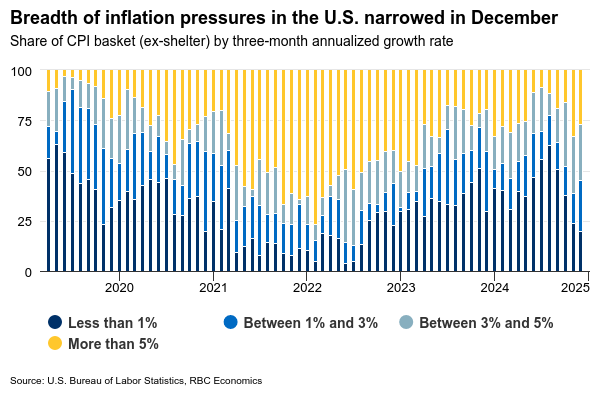
We expect core prices edged up by 0.2% for a second straight month, excluding volatile food and energy components. Growth in home rent prices has continued to slow as expected from an earlier slowdown in market rent costs filtering gradually through to lease renewals. Growth in core goods prices slowed in December after a larger rise in November. By our count, the breadth of inflationary pressures narrowed in December, and we will watch our diffusion measure closely for further signs of broader easing in price pressures.
We don’t expect that progress on inflation will be enough to prompt additional interest rate cuts from the Fed this year.
Week ahead data watch
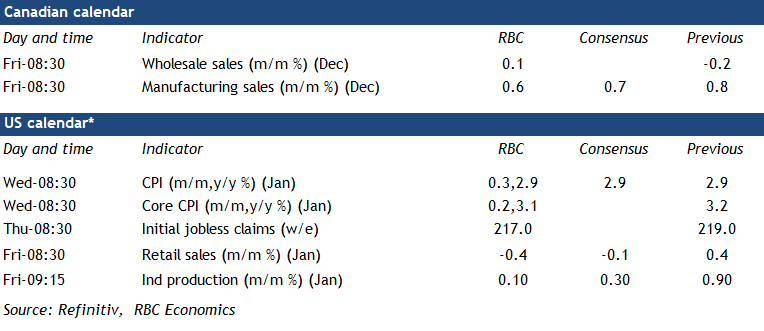
We expect manufacturing sales to edge 0.6% higher in December, in line with Statistics Canada’s preliminary estimate. Most of the increases were driven by higher sales in petroleum and coal products, and food subsectors.
Canadian wholesale trade likely grew 0.1% in December, according to StatsCan’s early indicator, given sales were up in the motor vehicles, parts and accessories subsector.
We look for 0.4% growth in January U.S. retail sales, slowing from the 0.5% increase in December. Auto sales dropped sharply during the month. Sales at gas stations saw price increases, but not enough to offset the pullback from the auto sector.
U.S. industrial production likely slowed from 0.9% to 0.1% in January, given hours worked in mining and manufacturing sectors both declined during that month.
Week Ahead – Will US CPI be a Positive Distraction Amid Trump’s Dramas?
- US consumer and producer prices to be main focal point.
- UK economic output data to be watched too.
- But Trump and tariff headlines might be a bigger market driver.
Trump rattles markets with tariff games
With the initial central bank decisions of 2025 out of the way, it will be somewhat of a quieter week. However, there’s still plenty for investors to look forward to as the all-important CPI report out of the United States is on the agenda.
Of course, that’s not to say that President Trump won’t find himself at the centre of the markets’ attention again. The tariff war is only just getting started and an escalation is more likely than a de-escalation, while Congressional Republicans have started work on how to finance an extension of the 2017 tax cuts that are due to expire at the end of 2025 amid worries about rising debt.
There’s been some relief, however, for the Treasury Department from the recent drop in Treasury yields. A slight slowdown in economic growth and signs that the uptick in inflation is peaking, alongside Trump’s conciliatory tone on tariffs, have contributed to the pullback in long-term borrowing costs.
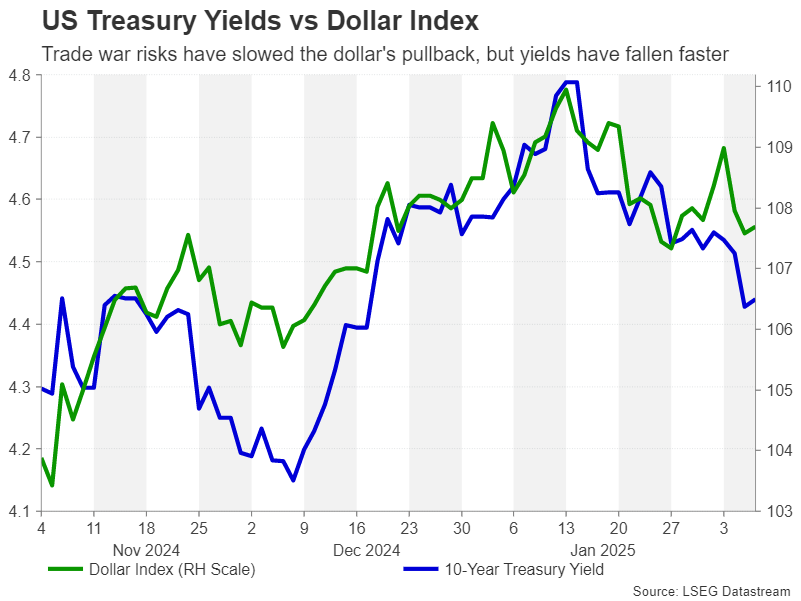
Subsequently, the US dollar has retreated from more than two-year highs against a basket of currencies. There could be more losses in store for the greenback in the coming week if the consumer price index begins to ease on a yearly basis.
US CPI might test Dollar bulls’ resolve
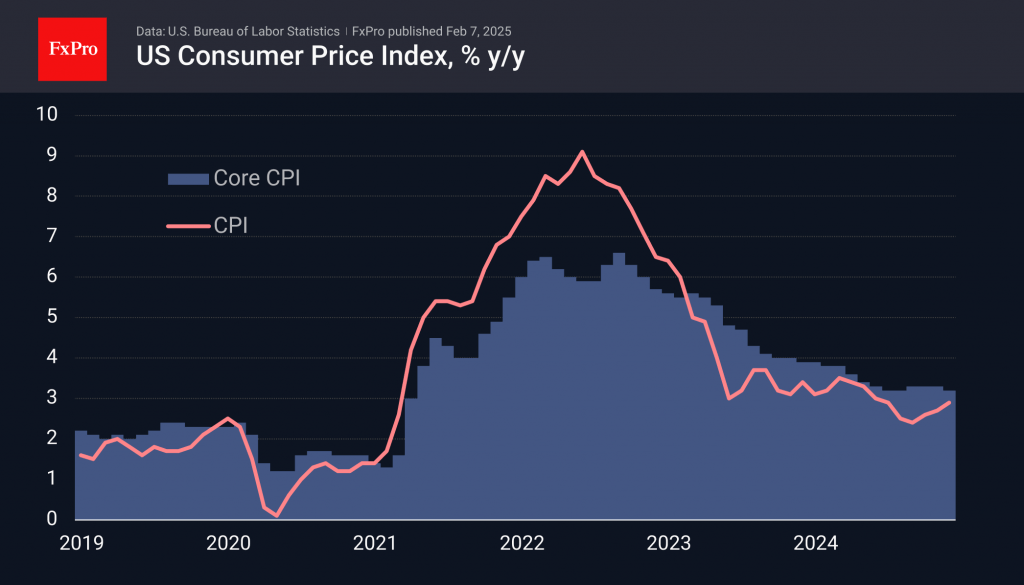
The headline rate of CPI edged up to 2.9% y/y in December, while the core rate softened to 3.2%. According to the Cleveland Fed’s Inflation Nowcasting model, headline CPI is anticipated to have moderated to 2.85% in January and the core rate to have ticked lower to 3.13%.
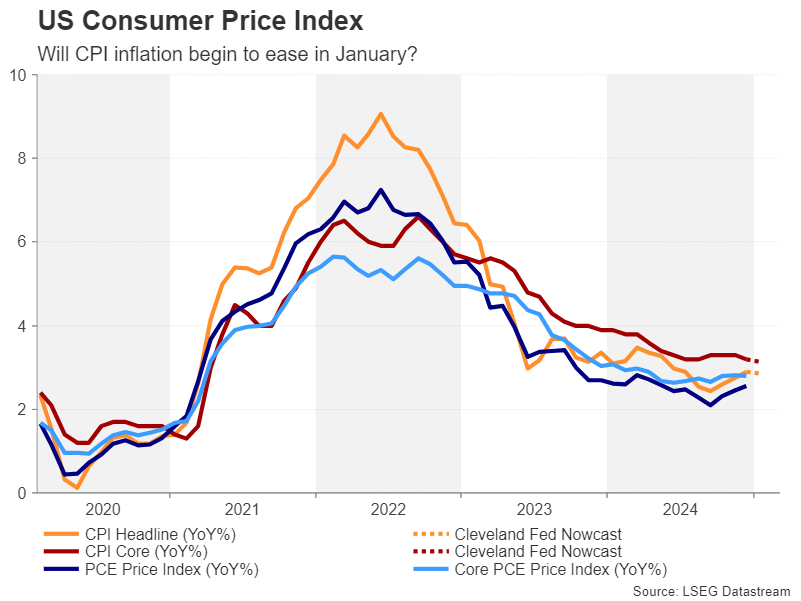
If the actual numbers meet these estimates, investors will likely read them as an indication that the disinflation process is back on track and yields could slide further.
The CPI figures are out on Wednesday and producer prices will follow on Thursday. US factory gate prices have also been trending north in recent months so a decline in the PPI data will be key for a sustained pullback in the dollar. Furthermore, retail sales for January will be an additional guide for Fed policy expectations as strong retail spending could partially offset any increase in rate cut bets.
Markets seem reluctant to fully price in two rate reductions for 2025, likely due to the active threat of higher tariffs. But should the incoming data significantly boost expectations of more aggressive easing, risk appetite could improve further, lifting Wall Street.
Pound eyes UK GDP update after BoE cut
The Bank of England lowered its benchmark lending rate by 25 basis points at its February meeting but maintained a cautious stance on the pace of future cuts. Worries about elevated wage growth and the inflationary impact of the Labour government’s budget measures continue to weigh on policymakers’ minds.
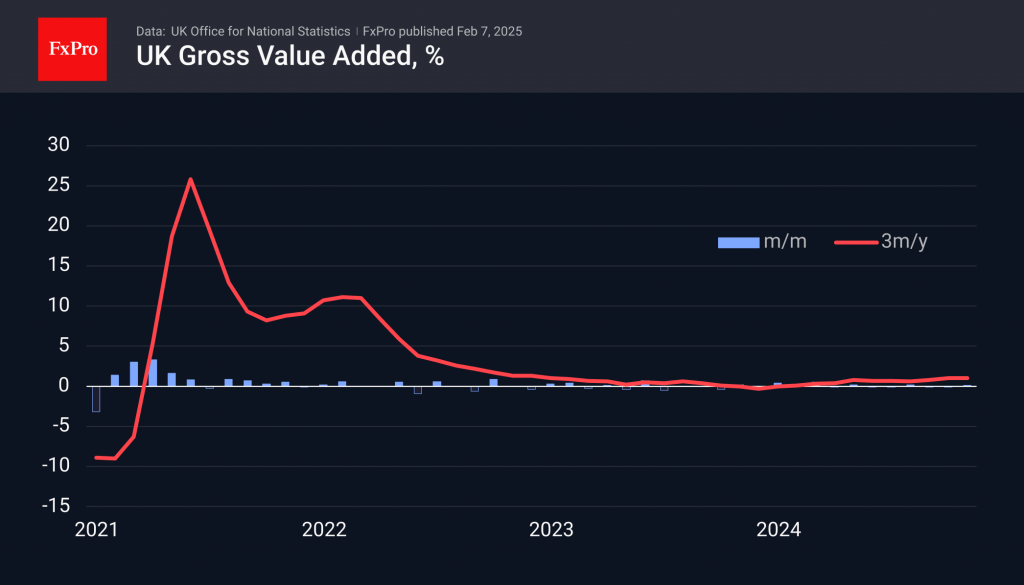
However, the BoE is also concerned about the anaemic growth that the economy has been eking out since last summer. GDP barely grew in the third quarter of 2024 so investors will be hoping that there was some improvement in Q4, although the forecasts show a small contraction.
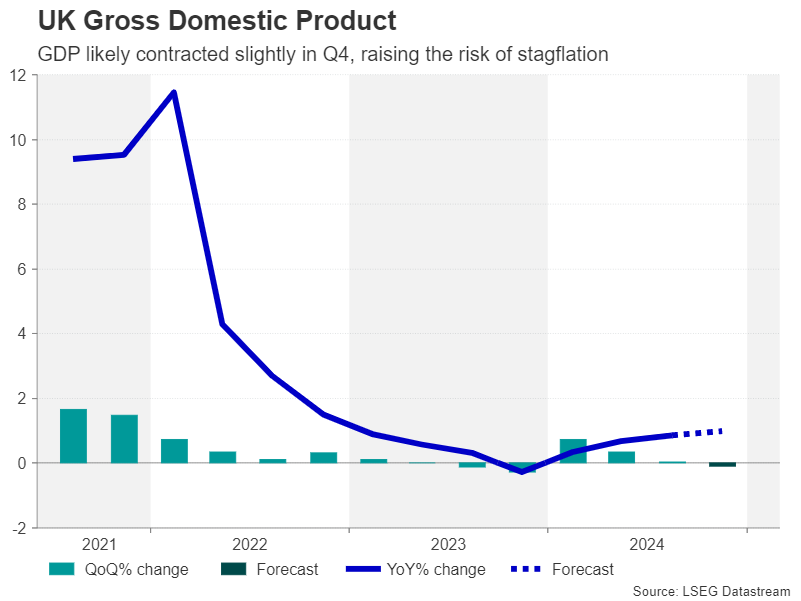
The first estimate of Q4 growth is out on Thursday and will be accompanied by the monthly readings on services, industrial and manufacturing output. Stronger-than-expected data could aid the pound’s rebound from January’s more than one-year low of $1.2097.
The pound took a lesser hit from the tariff-led market turmoil than its counterparts as Trump hinted that he is not as of yet thinking about imposing any import levies on the UK. Any change in that rhetoric could hurt sterling, while political developments could also spur some volatility amid rumours that Prime Minister Keir Starmer is thinking of reshuffling his cabinet as a means of replacing his finance minister, Rachel Reeves.
On inflation watch
Elsewhere, CPI numbers are also due out of Switzerland and China. The latter will publish its stats for January on Sunday. The yearly CPI rate is expected to have stayed quickened from 0.1% to 0.4% and the decline in producer prices is forecast to have slowed to -2.1%, which would suggest a slight improvement in domestic demand.
In Switzerland, inflation has been subdued since the middle of 2023 and stood at just 0.6% y/y in December. The Swiss National Bank doesn’t meet until March 20, and although another 25-bps cut is highly likely, whether policymakers maintain an easing bias or turn more neutral will depend on what the next two CPI reports will point to, the first of which is out on Thursday.
In the meantime, the safe-haven Swiss franc has made modest gains versus its major peers during the past week on the back of the Trump-induced uncertainty.
Inflation
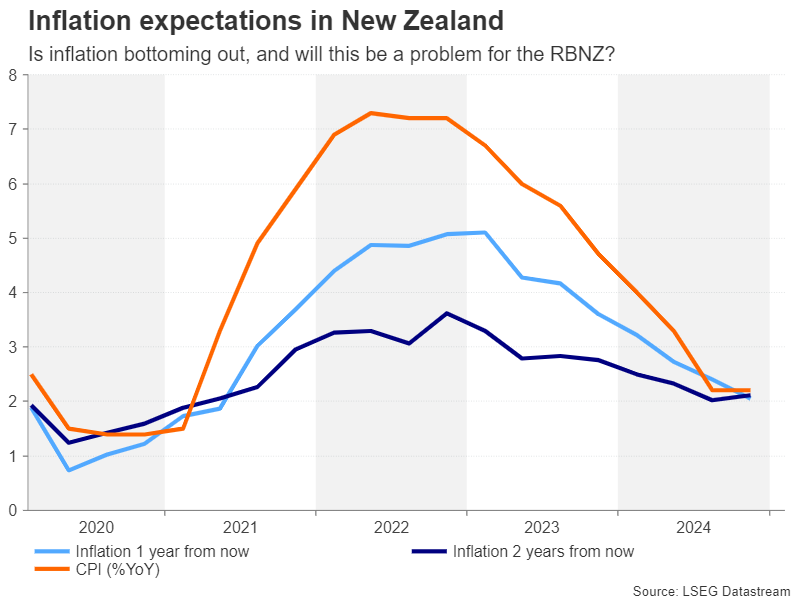
Another central bank that’s yet to meet this year is the Reserve Bank of New Zealand. Ahead of the February 19 decision, the central bank’s own survey of inflation expectations might sway rate cut bets on Thursday. In the previous quarter’s survey, two-year expectations edged up slightly to 2.1%. If there’s another uptick in the Q1 report, investors might scale back their bets of a 50-bps reduction at the February meeting, lifting the kiwi.
January CPI Preview: A Strong, But Less Jarring Start to 2025
Summary
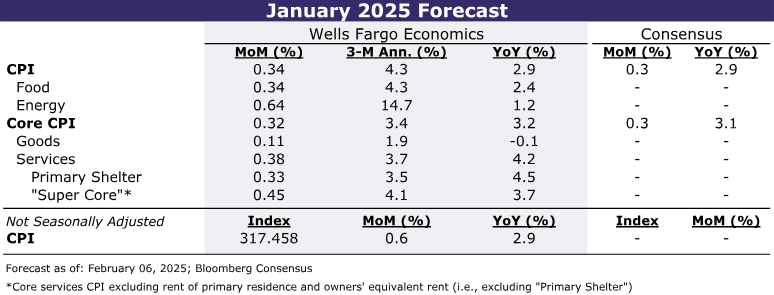
Inflation's early strength in 2024 was a jarring reminder that restoring price stability would not be a quick affair. The January CPI report is likely to show that inflation remained stubbornly strong at the start of 2025. We estimate the headline index rose a "high" 0.3%, which would leave the year-over-year rate unchanged at 2.9%. The core index also looks set for a 0.3% advance that we expect to be driven by the ongoing rebound in goods prices and a pickup in non-housing services.
We expect some lingering issues around residual seasonality to buoy January's core reading, but we think this dynamic will be less pronounced than last year. Seasonal adjustment factors will be updated with the upcoming release to reflect the most recent year's price movements. The incorporation of 2024 figures should lead the seasonal factors to "expect" more strength in January and February. Meantime, the somewhat calmer price environment of the past year should lessen the need for businesses to push through big price increases at the start of the calendar year.
If realized, more moderate price increases at the start of this year would unlock favorable base effects and lead to a slowing in the year-over-year rate of inflation in Q1. Yet, we expect the 12-month rate of inflation to move sideways through the remainder of the year, as further services disinflation is offset by higher goods inflation now that additional tariffs are in the works.
January Brings a Change in the Calendar, but Not the Inflation Picture
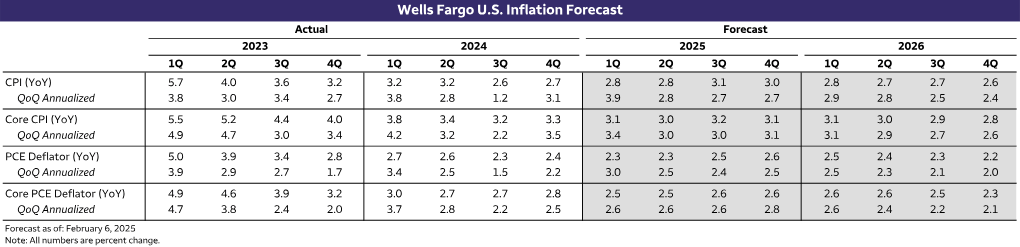
The first CPI prints of 2024 ended the notion that normalizing supply conditions would be enough to return inflation to the Fed's 2% target in short order. An upside surprise in January was followed by further strength in the first quarter, and while the 12-month rate of consumer price inflation still managed to slow over the course of 2024, it ended the year little better than where it started (Figure 1). A similar story played out across the PCE price index, with the core up 2.8% year-over-year in the fourth quarter—half a point higher than where the January 2024 Bloomberg consensus estimated it would end the year.
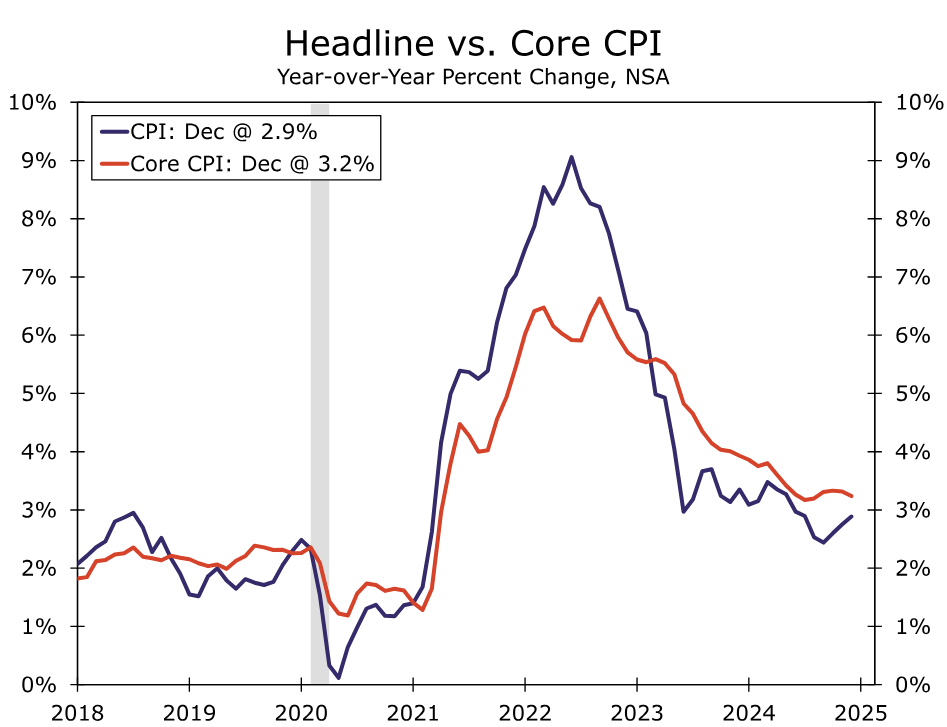
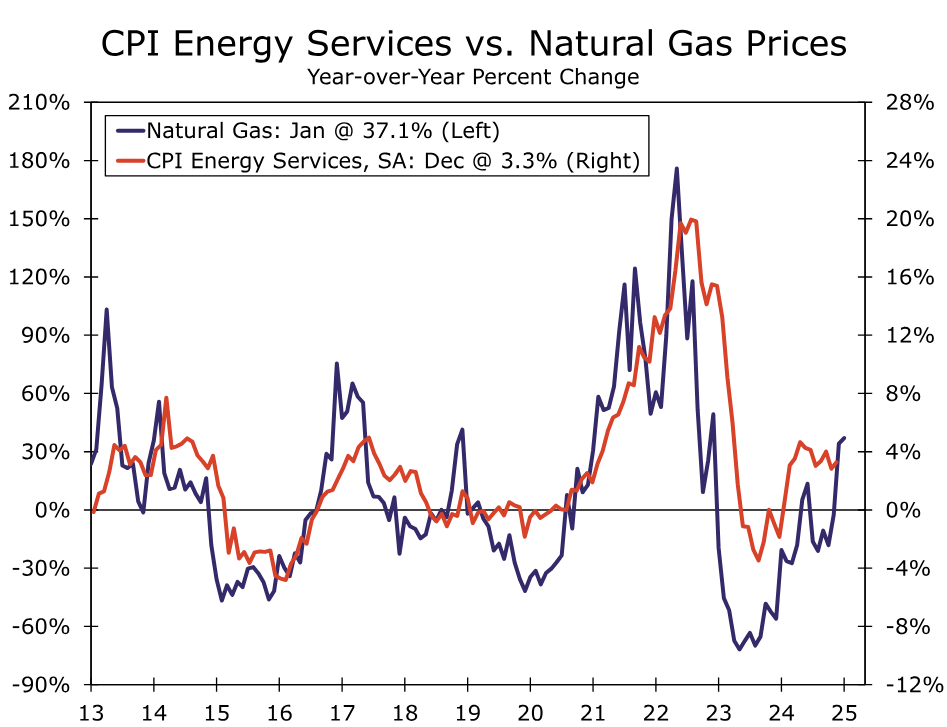
The first major inflation reading for 2025 is likely to show that inflation remains stubbornly strong. We estimate the consumer price index rose a "high" 0.3% in January (0.34% before rounding), which would leave the year-over-year rate unchanged at 2.9%. Energy prices should provide less of a lift to the headline than in December. Although energy services should see another sizable rise following higher natural gas prices (Figure 2), energy goods are poised for a smaller advance based on gasoline prices. The rebound in food inflation since the summer, however, is likely to continue amid the recent months’ rise in food-related commodity prices generally and egg prices particularly.
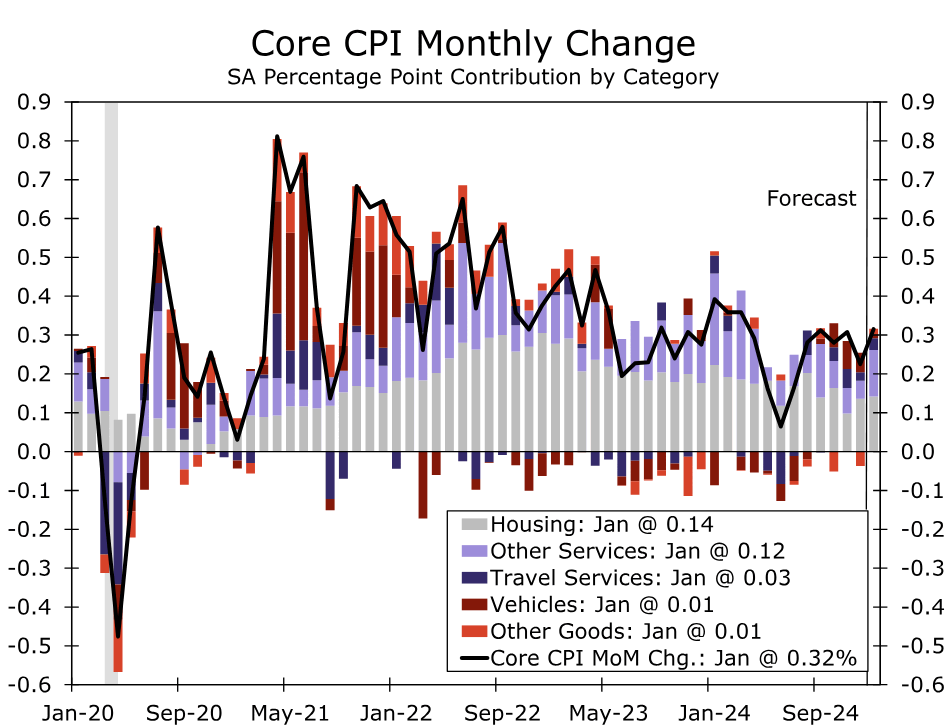
Excluding food and energy, we estimate consumer price growth picked up relative to December’s 0.2% gain with an increase in January of 0.3% (0.32% before rounding) (Figure 3). The disinflationary impulse from the goods sector continues to fade, and we estimate prices for core goods rose another 0.1% last month. Within core goods, we look for the drivers to be roughly balanced between vehicle prices (+0.2%) and other core goods (+0.1%). Meantime, core services inflation likely picked up a tenth in January (+0.4%), fueled by strength in non-housing services like medical care and travel. We look for primary shelter to rise 0.3% in January, matching December’s gain.
Could Residual Seasonality Fuel Another Upside Surprise this January?
Last January, the core CPI came out of the gate strong, rising a full tenth more than consensus expectations. Some—but not all—of this looked due to residual seasonality, i.e., the inability of seasonal adjustment factors to fully capture regular calendar patterns. Typically, January and February see the largest price increases of the year as businesses update their pricing at the start of the calendar year. However, the need to update pricing more quickly in the pandemic period scrambled the recent historical patterns, leading seasonal factors to not “expect” such outsized strength at the start of the year (Figure 4).
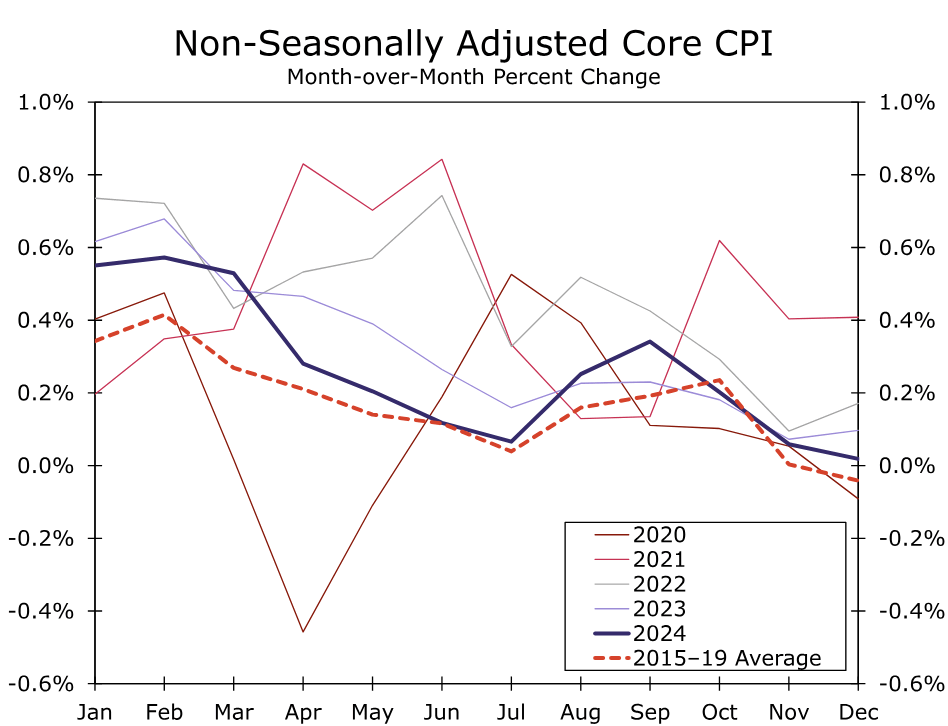
We expect some lingering residual seasonality to buoy January’s core reading, but for this dynamic to be less pronounced than last year. New seasonal factors will be published with the release of the January CPI on February 12, and these will incorporate the monthly (not-seasonally adjusted) price changes observed in 2024. The non-seasonally adjusted increase in the January core CPI was particularly strong last year (the January gain exceeded the calendar year average by 28 bps compared to an average of 16 bps the prior five years). The incorporation of 2024 figures and the rolling off of the 2019 price data should lead the seasonal factors to "expect" more strength this January. In addition, as the overall inflation environment quiets down, the degree to which firms need to raise prices at the start of the year to cover their own costs diminishes. These developments should also help tamp down February’s seasonally adjusted change in the core CPI.
Notably, the more moderate pop in prices that we expect at the start of the year will help unlock favorable base effects when it comes to the 12-month rate of core inflation. If our estimate of a 0.3% monthly increase in the core CPI is realized, the year-over-year rate would still likely manage to round to 3.2% in January, but the read-through to the core PCE deflator would push the 12-month change down from 2.8% to 2.6%.
Yet, the path back to 2% remains bumpy, with risks of roadblocks rising. Higher tariffs promised by President Trump on the campaign trail are now a reality with an additional 10% import duty levied against products from China. Although the 25% tariffs threatened against Mexico and Canada have been delayed a month, the down-to-the-wire decision has nevertheless forced businesses to reckon with the potential for higher input and product costs, and leaves little reason for firms to “give” on pricing now. We expect the year-over-year rate of inflation to tick down in Q1 due to favorable base effects, but for price growth to trend sideways through the remainder of 2025 at a pace still above the Fed's target (Table). Some further slowing in services inflation remains in train due to the lag in shelter and ongoing moderation in labor costs, but we expect that to be offset by stronger goods inflation as businesses prepare for, and soon face, higher tariffs.
Xi-Trump Call Cancelled, 10% Tariff Just ‘Opening Salvo’, Chinese Stocks Rallying
Geopolitics:
First shots have been fired in trade war: While it took more than a year before the trade war starting in the first term of US President Donald Trump’s, it only took 10 days this time. A 10% tariff rate was put on China related to Fentanyl coming to the US via Mexico. China was quick to retaliate with tariffs on energy, export controls on metals and targeting several US companies (see box).
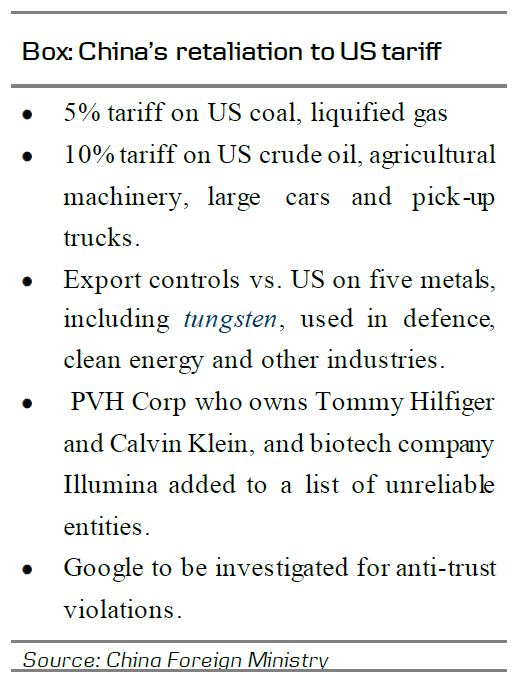
It is interesting that China throws export controls into the mix in its retaliation as it has normally only been used in the ‘tech war’ in response to US export controls on microchips. Several commentators have interpreted China’s retaliation as moderate as the tariffs only cover a small part of imports coming from the US. However, I would argue the export controls on key metals are more painful for the US and the same goes for measures towards single US companies. PVH Corp dropped 15% since the retaliation was announced. China sends a clear signal it could hurt other major US companies and thus US stock market performance in case of a further escalation. PVH Corp may not move the overall market but if China goes after big US tech companies, and potentially Tesla, it could have a wider impact. Nvidia is already under an anti-trust investigation and China looks into a similar move on Intel. China likely knows that Trump may be more sensitive to how US stocks perform than tariffs on US trade.
Xi-Trump call cancelled, tariffs just an ‘opening salvo’: A call between Xi and Trump was apparently planned to take place on Tuesday this week but cancelled after China retaliated. On Tuesday afternoon, Trump said he was in no hurry to speak to Xi and that the tariffs was only an ‘opening salvo’. He added that "If we can't make a deal with China, then the tariffs would be very, very substantial". As I wrote last week the ‘real’ trade war will probably not start until the US trade study looking into China’s unfair practices etc. is done by 1 April. Our baseline scenario is still that US average tariffs on China will ultimately end up of around 40% over the next 1-2 years from currently just below 25% (including the latest 10% increase).
Panama leaves Belt and Road Initiative, US claims victory: Panama is officially leaving the Chinese Belt and Road Initiative following US pressure. The news came few days after US Secretary of State Marc Rubio visited the country and Rubio called the decision a “victory”. China’s ambassador to UN Fu Cong called the decision “regrettable” and said that “The smear campaign that is launched by the US and some of the other Western countries on the Belt and Road Initiative is totally groundless”. An audit by Panama of the Hong Kong company that operates two of the five ports in the Panama Canal has been launched and a law suit has also been filed against the Hong Kong company. It seems likely the company will end up having to end the port operations.
Panel warns US risk losing next industrial revolution: At a hearing held by the US-China Economic and Security Review Commission, a panel of China experts warned that the US is at risk of falling behind China as the country is making significant strides in the realms of artificial intelligence (AI) and humanoid robotics. One panellist stated, “China’s AI and robotics ecosystem has seen significant growth, with major companies driving innovation in humanoid robotics and embodied intelligence…these firms are pioneering advancements in robotic hardware, AI integration, and industrial automation, positioning China as a leader in next-generation intelligent robotics.” China’s decades long focus on tech and industrial policy programs continue to put China at the frontier in a rising number of manufacturing areas, such as within EVs, batteries and drones. AI and robotics are also advancing fast.
Markets:
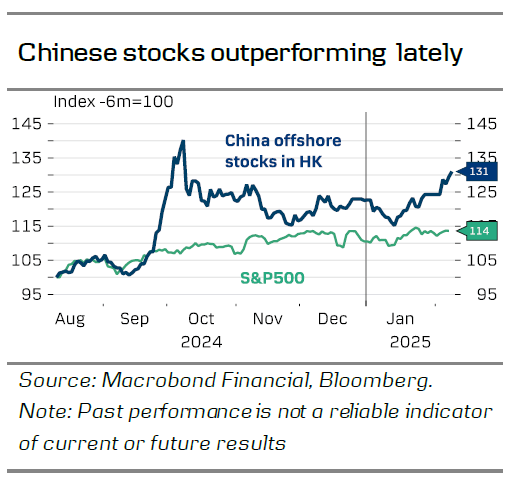
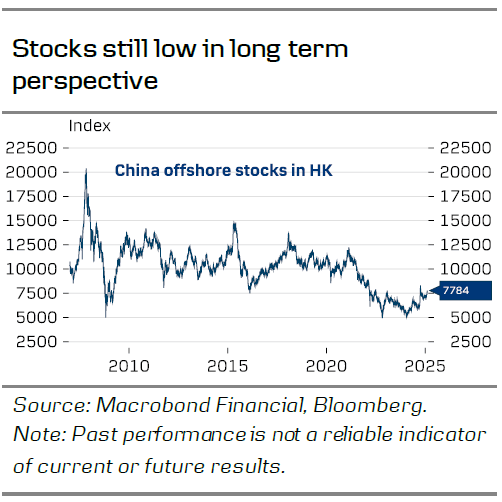
Chinese stocks on a roll: Despite Trump firing the first tariff shots last week, Chinese stocks have performed strongly. This week offshore stocks were up 6% and they have outperformed US stocks lately. The DeepSeek breakthrough two weeks ago has provided optimism back to tech stocks that have led the gains. With more stimulus, positive tech stories and Chinese long-term funds pushed to invest in the market, equities are getting a better foundation. The upside may be capped once the trade war really takes off. In the medium to long term, I still see value, though, as current levels are still low in a historical perspective.
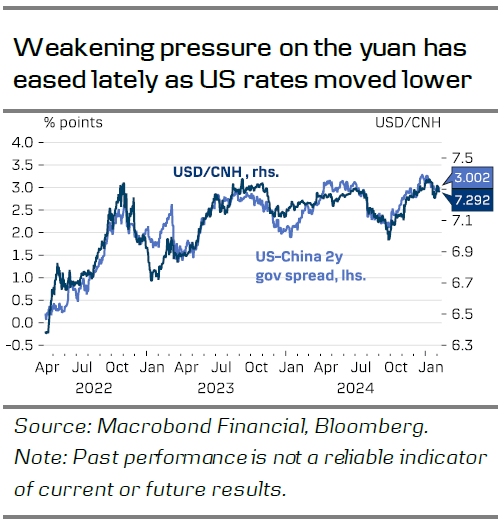
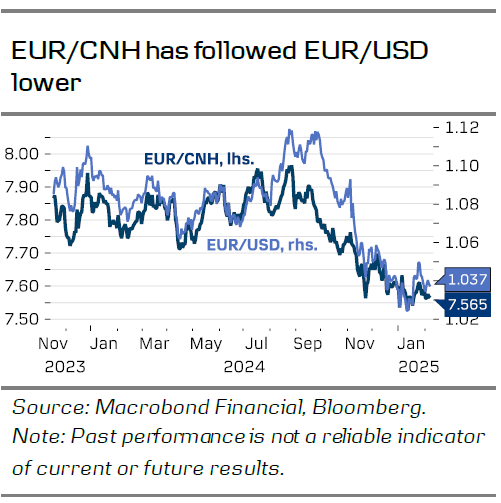
CNY weakening pressure eased lately: Despite the rise in US tariffs, the pressure on the yuan has eased somewhat over the past weeks (chart). It reflects a slight weakening of the overall USD as US yields have moved lower and the removal of tariffs on Canada and Mexico for now. We continue to see USD/CNY moving higher on a 12-month horizon towards 7.60 as we look for the trade war to get tougher during the year. EUR/CNH has stabilized somewhat around the 7.56 level mirroring the stabilisation seen in EUR/USD (chart).
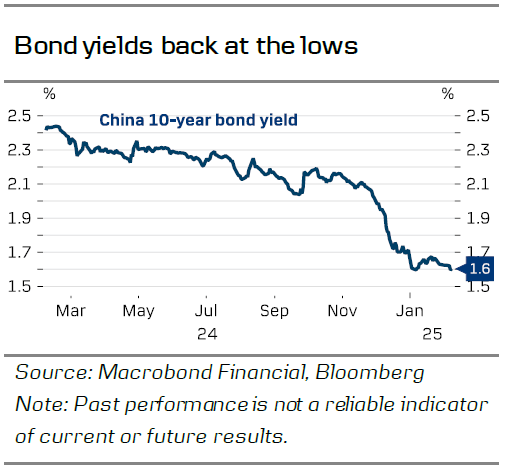
Chinese bond yield back at lows: The Chinese 10-year yield is back at the recent low of 1.60% as the soft PMI data and threat of tariffs has added to the expectations of low(er) for long. Next week CPI data are likely to show another weak print for January.
Economy:
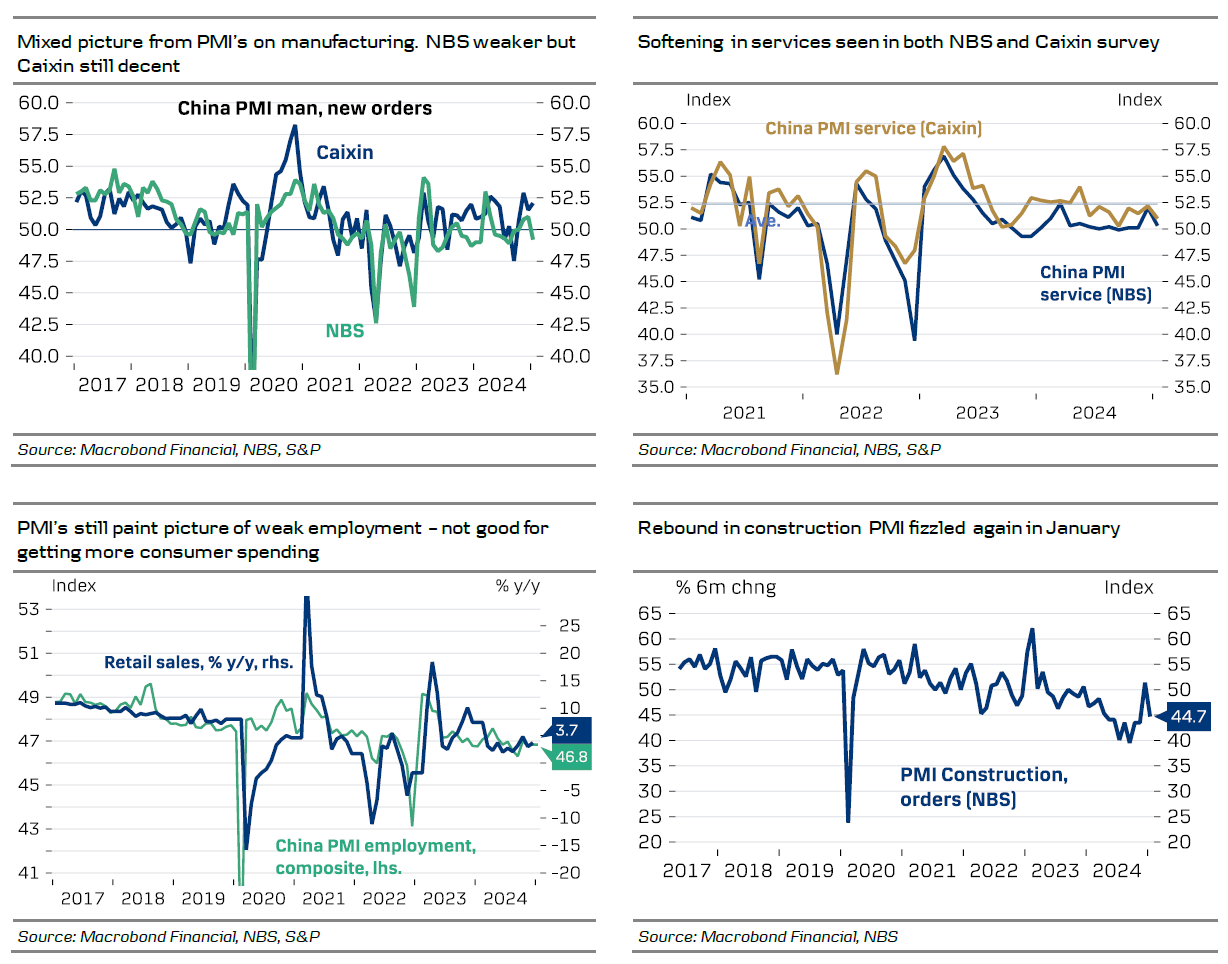
PMI’s for January warning of need for continued stimulus: Chinese PMI’s from both NBS and Caixin pointed to some weakening in January, especially in the service sector (see charts below). The first months of the year should always be treated with some caution due to the effects from Chinese New Year, but still the numbers give rise to some caution and underlines the need for continued stimulus.
Strong China New Year travel spending: Providing some light was reports of strong holiday spending over the New Year break last week. The number of trips hit 501 million, a 5.9% increase from last year. The number of foreign travellers also reached a level similar to the one prior to the pandemic suggesting that China’s visa-free travel has had a clear positive effect on inbound tourism.
Weekly Focus – Tariff Announcements Gave Markets a Roller Coaster Ride
Donald Trump caused a significant market reaction this week by announcing steep tariffs on Canada, Mexico, and China starting from 4 February, which pushed the broad USD higher and sent equities lower. However, after he quickly put the tariffs on Mexico and Canada on hold for a month, the market reaction reversed, and overall equity indexes ended the week higher due to positive earnings reports. Although the outcome remains unclear, we anticipate more tariffs on China later this year, with the EU and possibly other countries being affected soon after. The new tariffs are linked to border security and could be removed or reduced following negotiations, though there is a risk of a tit-for-tat escalation in the short term. China's package of retaliation measures includes 10-15% tariffs on US energy imports and export controls on five metals used in defence, clean energy, and other industries, showing its readiness to engage in conflict if Trump is inclined to do so. On 13 February, we are hosting a webinar to shed light on this situation, see invitation: US Tariff Update - Deal or No Deal?.
On the data front, HICP inflation in the euro area increased to 2.5% y/y in January, slightly above expectations for an unchanged print at 2.4% y/y. The increase was entirely due to energy inflation while food inflation declined, and core inflation was unchanged at 2.7%. Despite the elevated yearly growth rates, the most recent monthly price increases on core inflation rhymes well with 2% annualised inflation. On the political front, French prime minister Bayrou managed to pass the 2025 budget and survive a no-confidence vote.
In the US, the ISM manufacturing index rose more than expected to 50.9 from 49.3, reaching its highest level since September. This increase aligns with the PMI surveys and indicates positive momentum for the US manufacturing sector. In contrast, both the services PMI and ISM fell in January, with the ISM index dropping to 52.8 from 54.0. Data on US productivity in Q4 showed that productivity growth weakened. Although the data is volatile, the current pace is now close to the pre-pandemic trend of around 1%, down from over 3% seen in the second half of 2023. This indicates that structural growth is slowing, meaning firms will either need to pass a larger share of nominal wage costs onto their selling prices or absorb them into their margins.
The Bank of England lowered the policy rate by 25bp to 4.50% as widely expected. At the same time, the BoE delivered a dovish twist to its guidance as two members voted for a larger 50bp cut and they lowered their growth projections, see BoE Review, 6 February.
Next week, the key data release will be the US January CPI, while US politics will also remain in focus. We forecast US headline inflation at 2.9% y/y and core inflation at 3.1% y/y. Attention in the US will also be on Fed Chair Powell's congressional testimony on Wednesday and US retail sales on Friday. In China, CPI and PPI data will be released on Monday, with focus on whether a call between Xi Jinping and Trump, cancelled this week due to China's retaliation to Trump's 10% tariffs, will take place. In the euro area, data releases are limited, but Q4 employment data on Friday will be a highlight. Additionally, the US is set to unveil Trump's plan to end the war in Ukraine at the Munich Peace Conference starting on Friday.
What Next: US CPI and Powell Testifies
In the new week, Fed Chairman Jerome Powell will address Congress on Tuesday and the House of Representatives on Wednesday. The prepared speech will be the same in both cases, but all attention will be focused on his answers to lawmakers’ questions and the outlook for monetary policy.
The key economic news will be the release of US consumer inflation data on Wednesday, 12 February. It has been accelerating since September and reached 2.9% in December. Further acceleration is a strong positive for the Dollar as it pushes back the timing of a rate cut.
Don’t miss the UK’s monthly and quarterly GDP estimates on Thursday, 13 February. The Bank of England has just lowered its growth forecast for this year to 0.75%, which is expected to be weak and negative for the Pound.
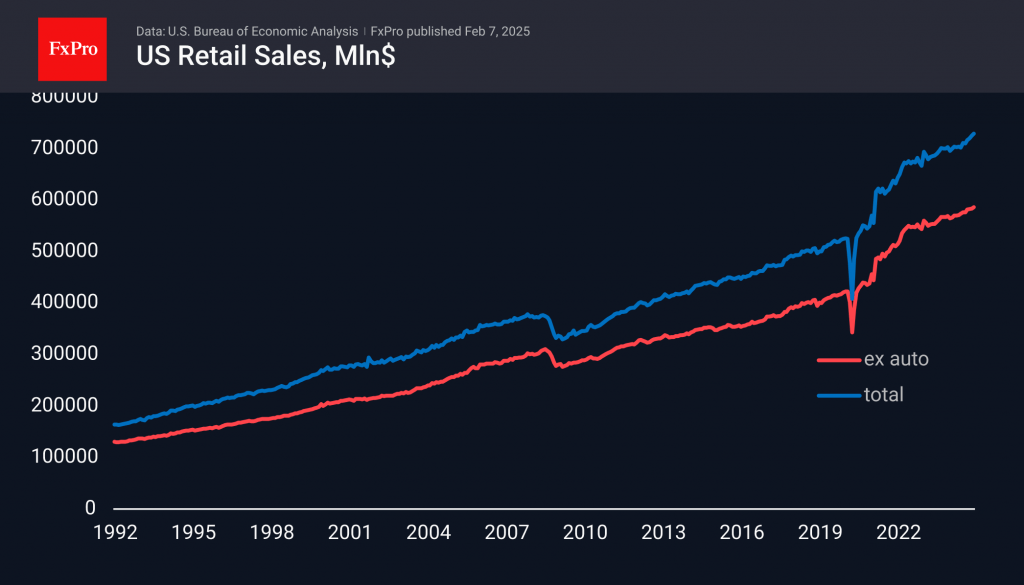
On Friday, 14th February, US retail sales are due to be released. Sales excluding autos have been rising every month since last May. The big question is whether this trend will be broken.
Sunset Market Commentary
Markets
The long-awaited re-evaluation of the neutral rate in the euro area turned out to be much ado about nothing. Estimates varied widely depending on the measurement technique. What mattered most in the end was whether or not the bottom of the pre-pandemic 1.75-2.5% range had risen in this new era. The ECB is guessing that it didn’t. The practical implication is that the central bank could lower rates as low as 1.75% before adopting a supportive stance. The latter is not warranted given the lingering inflationary risks, especially in the services sector and ahead of an expected economic recovery. Two things stand out though. One is that the variability at the lower bound estimates decreased sharply compared to pre-2020, which does reveal some upward pressure on the neutral rate. Second is that the staff paper goes at length trying to downplay the usefulness of this theoretical, unobservable neutral rate for actual policymaking. ECB chief economist Lane did the same earlier this week as part of an unusually hawkish speech. It suggests, if anything, that the ECB wants to at least contain (too dovish) market expectations. Money markets already almost fully price in four additional moves (to 1.75%).
Moving on to the next potential market moving candidate for today: US payrolls. Job growth remains solid. The January outcome of 143k was slightly below expectations (175k). But November and December saw a combined 100k upward revision. The household survey, just as in December, tells a similar story with 223k employment growth. That was more than enough to offset the increase in labour participation (rate rose to 62.6%), leading to an unexpected decline in the unemployment rate to 4%. To top it off, wages grew an above-consensus 0.5% m/m to 4.1% y/y. Yearly wage growth now appears to be stabilizing around 4%, significantly above the levels seen prior to the pandemic. US yields dropped up to 7 bps in a kneejerk reaction to what a small headline miss to begin with anyway. It reveals market sensitivity is currently skewed to downside surprises. US rates erased losses and more as the strong details began to sink in. They currently trade 4-5.4 bps higher across the curve. We’re now spotting the first signs of a bottoming out process. US yields pull European rates a few bps higher as well. The Fed’s extended rate pause (at least through June) gets firm market backing now. The next first full rate cut isn’t priced in before September. Dallas Fed president Logan during yesterday’s BIS event even openly pondered whether more cuts are necessary this year at all. The dollar is trading extremely stoic with a tiny strengthening bias. EUR/USD trades around 1.036, DXY just south of 108 and USD/JPY at 152. Both European and US stock markets trade little changed.
News & Views
Canadian employment rose by 76k in December, building on the solid 91k pace from December and beating consensus (25k) by a wide margin. Details showed an increase in both full-time (+35.2k) and part-time (+40.9k) occupations. Employment gains in January were led by manufacturing (+33k; +1.8%) and professional, scientific and technical services (+22k; +1.1%). The unemployment rate avoided the feared uptick from 6.7% to 6.8% and even declined to 6.6%. This occurred even against the background of a higher participation rate (65.5% from 65.4%). Average hourly wages rose by 3.5% Y/Y (down from 4% in December). The Canadian dollar holds the balance with a strong USD today as the numbers reduce the likelihood that the BoC will implement more rate cuts even as the lingering tariffs pose significant downside risks to the Canadian economy. USD/CAD is testing first support in the 1.43-area. A break lower would make the technical picture in the pair more neutral. CAD swap rates add 7 to 9 bps across the curve.
The Turkish central bank published its updated inflation outlook. The CBRT raised the end of year forecast to 24% from 21% with a projection band of 19%-29%. It added that it was mostly a mechanical revision driven by factors beyond the control of monetary policy. It doesn’t suggest any easing of the monetary policy stance. The end-2026 forecast was unchanged at 12% while a first prognosis for end-2027 came in at 8%. The CBRT sets the policy rate in a way to ensure the tightness required by the projected disinflation path. In December and January, they conducted back-to-back 250 bps rate cuts to bring the policy rate at 45% currently. EUR/TRY trades sideways (36-38.50) near record highs since last summer.
US: Payrolls Slow in January, But California Wildfires and Cold Weather Likely a Factor
Non-farm payrolls rose 143k in January, slightly below the consensus forecast calling for a gain of 170k.
- This morning's report also included more comprehensive benchmark revisions, which are done annually to better align the establishment survey figures to observed employment counts reported in tax filing data. The revisions showed the level of employment as of March 2024 was lower by 589k.
- The Bureau of Labor Statistics also revised its seasonal adjustment factors (dating back to 2020) as well as the birth/death factors used to scale payroll changes up or down depending on the estimated rate of firm formation. These revisions showed that payroll growth between April 2024 – December 2024 was revised slightly lower by a total of 21k jobs. However, revisions through the fourth quarter were notably higher (adding an additional 101k jobs to the previously reported figures), suggesting more hiring momentum heading into 2025.
Private payrolls rose 111k – notably lower than the 273k reported in December – with the largest gains seen in health care & social assistance (+66k) and retail trade (+34.3k). Government hiring rose 32k.
In the household survey, new population controls were introduced last month (as is the case every January), to reflect new population estimates from the Census Bureau. Unlike the establishment survey, the historical household data is not revised, distorting the month-to-month changes for civilian employment, unemployment, and the labor force. However, the ratios in the survey (i.e., the unemployment and participation rates) remain largely unaffected.
- Civilian population was revised higher by 2.9 million in January, as prior population estimates have significantly undercounted immigration flows in recent years.
- The unemployment rate ticked lower by 0.1 percentage points to 4.0%, while the labor force participation rate edged up to 62.6%.
Average hourly earnings rose 0.5% month-on-month (m/m) in January – an acceleration from December's more modest gain of 0.3%. On a twelve-month basis, wage growth was up 4.1% (unchanged from the month prior), while the three-month annualized edged up to 4.5% (from 4.3% in December).
Key Implications
There was a lot to digest in this report. But perhaps the biggest takeaway was that hiring momentum was even stronger than previously expected at the end of last year – averaging 204k jobs per-month in the fourth quarter. And even though the January figures showed some deceleration in payrolls, it was likely due to wildfires in California and cold weather across much of the U.S. – suggesting we could see some bounce back in February.
While it was previously thought that that labor market had fallen into a sweet spot, this morning's release suggests things are still running a bit hotter than previously expected. The unemployment rate dipped to an eight-month low, while wage growth has shown more staying power. With inflation progress having stalled in recent months and heightened uncertainties on how far the new administration will go on tariffs, the Fed is likely to remain more cautious on rate cuts and hold the policy rate steady until sometime this summer.
Another Positive Surprise for Canada’s Job Market in January
The Canadian labour market's solid job gains carried over into 2025, with 76k new jobs beating expectations. Job gains were split between full (+42.3k) and part-time (+38.6k) positions.
The healthy job gain pushed the unemployment rate down another 0.1 percentage point to 6.6%.
Following a period where labour force growth was outpacing job creation, the proportion of the population aged 15+ with a job has now risen for three consecutive months. And this has occurred across age cohorts: youth (15-24 years), core age (25-54 years) and older people (55-64) have all seen their employment rates rise.
Employment gains across industries were mixed. Gains were led by manufacturing (+33k), professional, scientific and technical services (+21.7k), construction (+19.3k) and accommodation and food services (+14.9k). Meanwhile, other services (-13.9k), educational services (-7.9k) and business building and other support services (-7.4k) led the declines.
Given the threat of tariffs in the spotlight, Statistics Canada included a feature on manufacturing employment, which accounts for 8.9% of total employment in Canada. Specifically, 39.4% of manufacturing jobs depend on U.S. demand for Canadian exports, or roughly 641k jobs.
Lastly, total hours worked jumped a massive 0.9% month-on-month, pointing to solid economic growth on the month. Meanwhile wage inflation continued to cool. Average hourly wages were up 3.5% year-on-year in January (from 4.0% in December).
Key Implications
Three consecutive months of solid job growth suggests the cyclical boost to Canada's economy from lower interest rates is clearly taking effect. Unfortunately, the imminent threat of tariffs hanging over the Canadian economy, is likely to temper business confidence and could weigh on hiring in some sectors in the coming months.
The Bank of Canada continued to lower interest rates in January, such that interest rates are no longer a drag on the economy. Now it is over to Canadian governments to do what they can (see commentary) to improve the competitiveness of the economy in the face of the tariff threat.
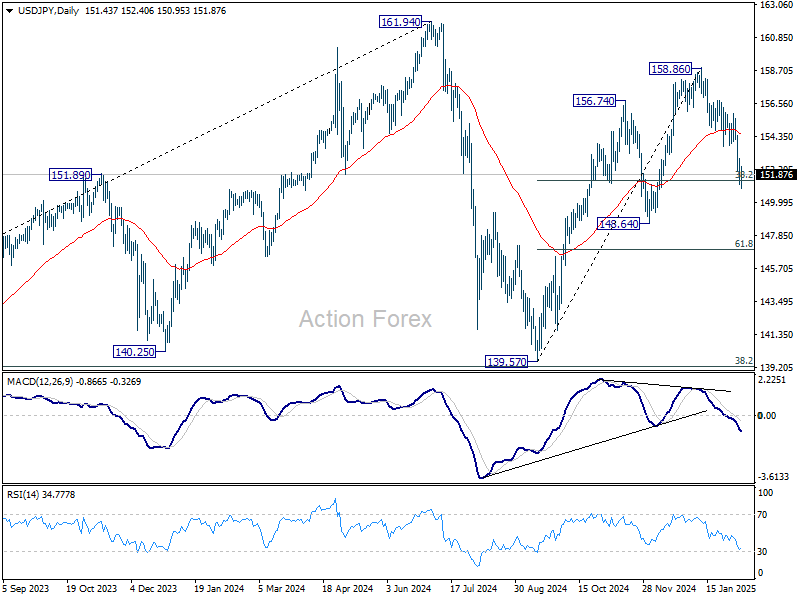
USD/JPY Mid-Day Outlook
Daily Pivots: (S1) 150.83; (P) 151.86; (R1) 152.48; More...
Intraday bias in USD/JPY is turned neutral with 4H MACD crossed above signal line. Focus stays on 38.2% retracement of 139.57 to 158.86 at 151.49. Strong bounce from current level will keep decline from 158.86 as a correction, and retain near term bullishness. Firm break of 153.70 support turned resistance will turn bias back to the upside for stronger rebound. However, sustained break of 151.49 will raise the chance of bearish reversal, and target 61.8% retracement at 146.32 next.
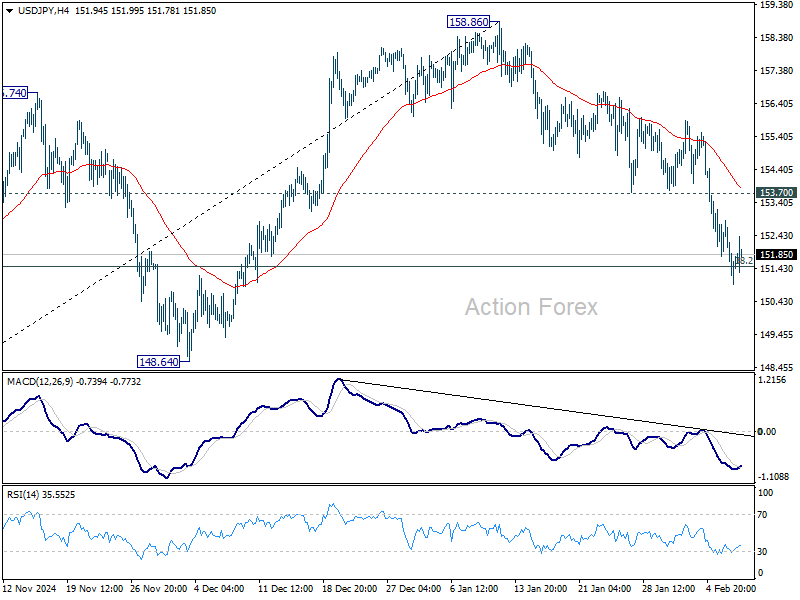
In the bigger picture, price actions from 161.94 are seen as a corrective pattern to rise from 102.58 (2021 low). The range of medium term consolidation should be set between 38.2% retracement of 102.58 to 161.94 at 139.26 and 161.94. Nevertheless, sustained break of 139.26 would open up deeper medium term decline to 61.8% retracement at 125.25.