Sample Category Title
EUR/JPY Daily Outlook
Daily Pivots: (S1) 162.13; (P) 162.63; (R1) 163.06; More...
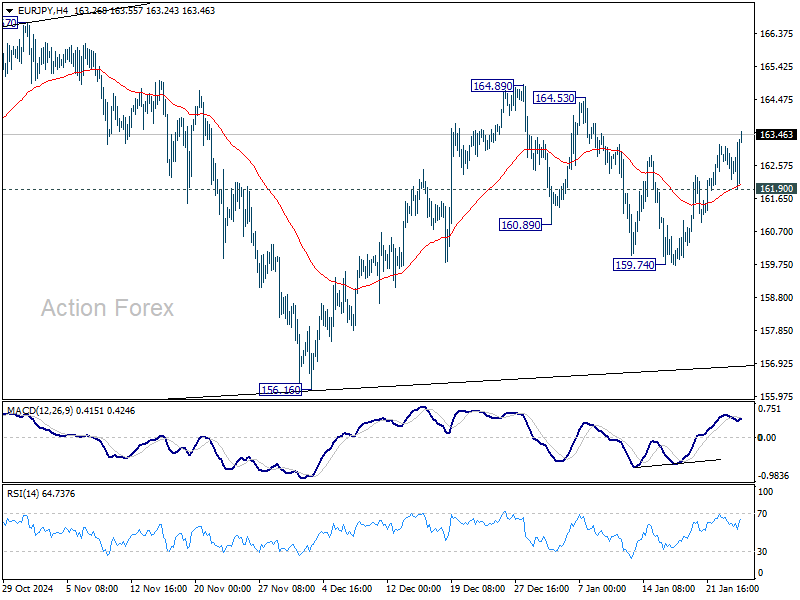
Intraday bias in EUR/JPY remains on the upside for 164.89 resistance. Firm break there will resume the rise from 156.16, as another leg of the corrective pattern from 154.40, to 166.67 resistance next. On the downside, below 161.90 minor support will turn intraday bias neutral again first.
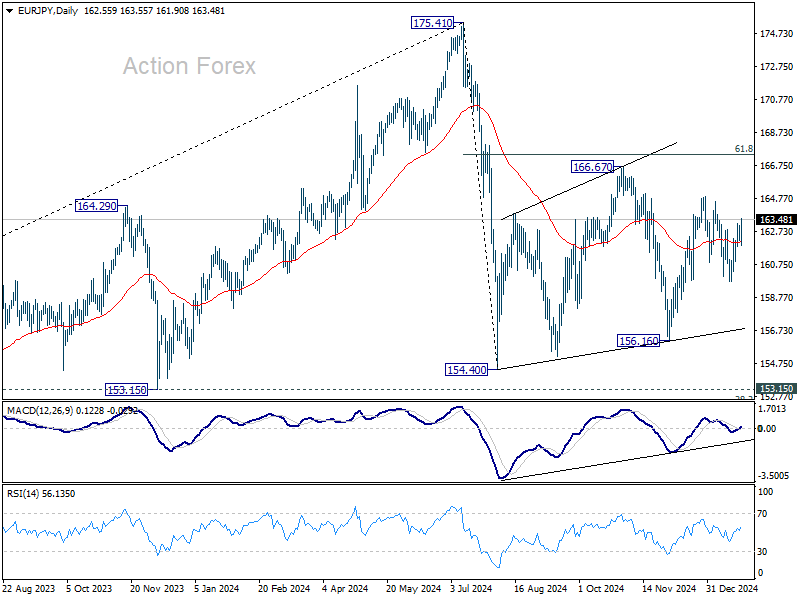
In the bigger picture, price actions from 175.41 are seen as correction to rally from 114.42 (2020 low). The range of consolidation should have been set between 38.2% retracement of 114.42 to 175.41 at 152.11 and 175.41 high. However, decisive break of 152.11 would argue that deeper correction is underway.
EUR/GBP Daily Outlook
Daily Pivots: (S1) 0.8422; (P) 0.8441; (R1) 0.8452; More...
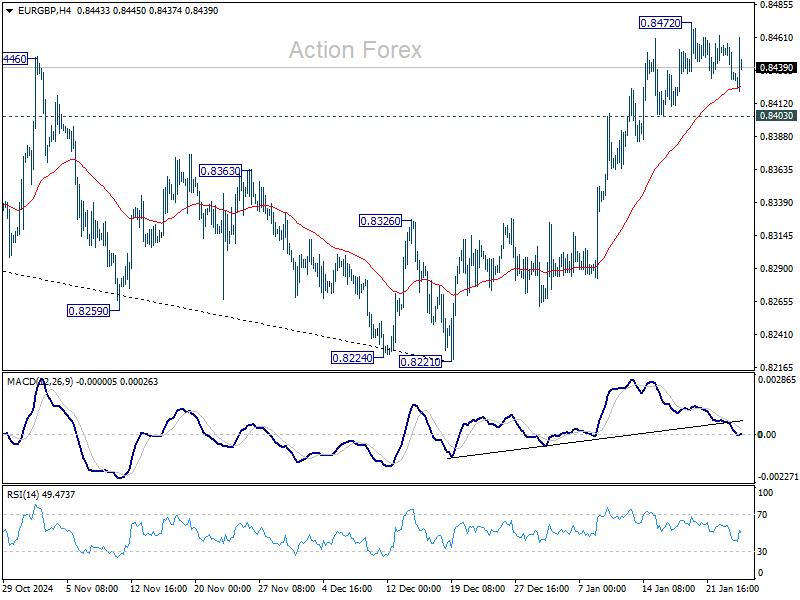
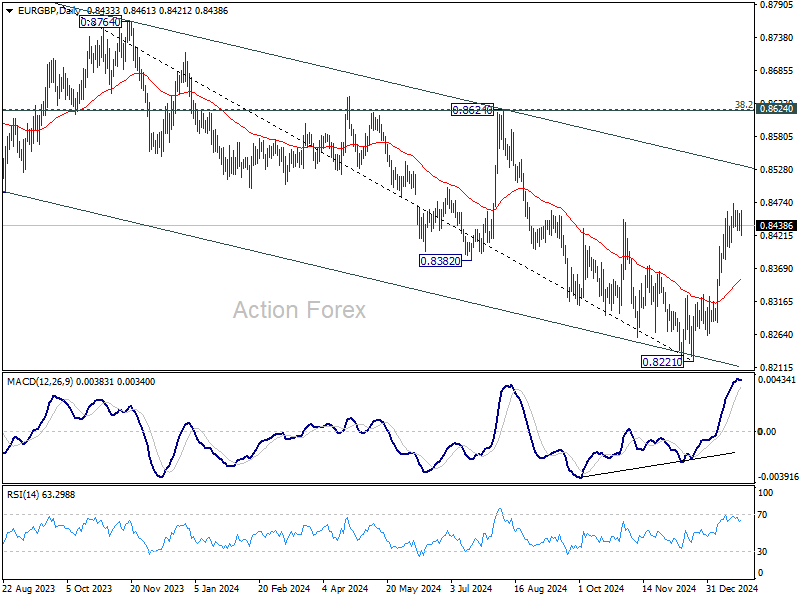
Intraday bias in EUR/GBP remains neutral for the moment, and more consolidations could be seen below 0.8472. Outlook will stay bullish as long as 0.8403 support holds. Break of 0.8472 temporary top will resume the rally from 0.8221 to 0.8624 key cluster resistance zone next.
In the bigger picture, a medium term bottom was formed at 0.8221, just ahead of 0.8201 key support (2022 low). But outlook will be neutral as best as long as 0.8624 cluster resistance (38.2% retracement of 0.9267 to 0.8221 at 0.8621) holds. That is, larger down trend from 0.9267 (2022 high) might still extend lower. However, decisive break of 0.8621/4 should confirm trend reversal and turn outlook bullish.
EUR/AUD Daily Outlook
Daily Pivots: (S1) 1.6550; (P) 1.6590; (R1) 1.6615; More...
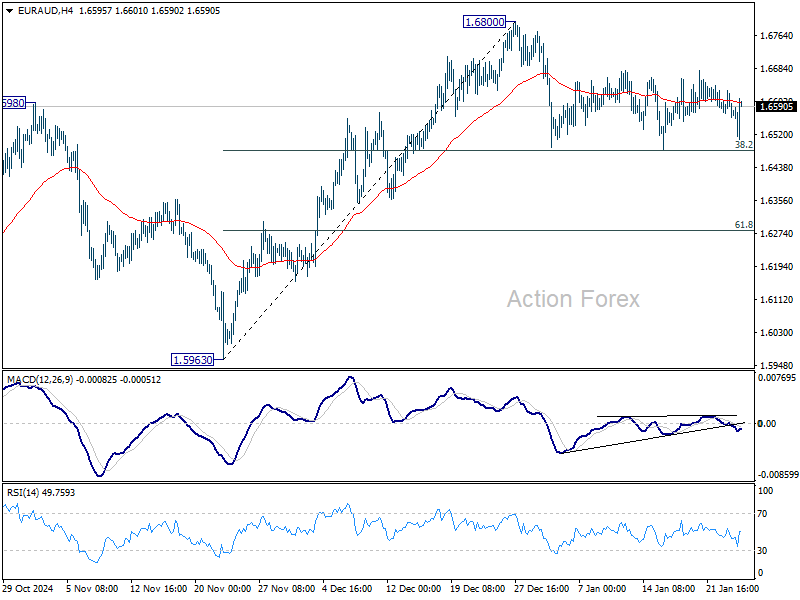
No change in EUR/AUD's outlook as it;s still bounded in consolidation below 1.6800. Strong support is still expected from 38.2% retracement of 1.5963 to 1.6800 at 1.6480 to contain downside. On the upside, firm break of 1.6800 will resume the rally from 1.5963. However, sustained break of 1.6480 will bring deeper correction 61.8% retracement at 1.6283 instead.
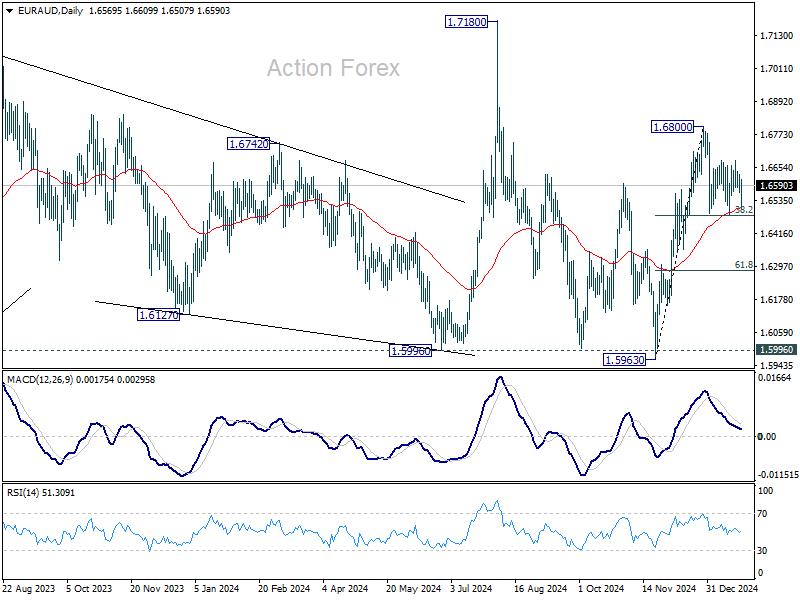
In the bigger picture, EUR/AUD is holding on to 1.5996 key support despite brief breach. Larger up trend from 1.4281 (2022 low) is still in favor to resume through 1.7180 at a later stage. Nevertheless, sustained break of 1.5995 will indicate that such up trend has completed and deeper decline would be seen.
EUR/CHF Daily Outlook
Daily Pivots: (S1) 0.9432; (P) 0.9445; (R1) 0.9465; More....
EUR/CHF's rebound from 0.9204 is in reacceleration as seen in 4H MACD breaks through 0.9481 fibonacci resistance. Intraday bias stays on the upside for the moment. Sustained trading above 0.9481 will pave the way to 0.9651 fibonacci level. For now, further rally would remain in favor as long as 0.9424 support holds, in case of retreat.

In the bigger picture, considering bullish convergence condition in D MACD, a medium term bottom could be in place at 0.9204, after defending 0.9209 support. Sustained trading above 38.2% retracement of 0.9928 to 0.9204 at 0.9481 will pave the way to 61.8% retracement at 0.9651, either as trend reversal or just a correction to fall from 0.9228. This will be the favored case as long as 55 D EMA (now at 0.9385) holds.

USD/CAD Daily Outlook
Daily Pivots: (S1) 1.4341; (P) 1.4378; (R1) 1.4421; More...
USD/CAD is still bounded in range trading below 1.4516 and intraday bias remains neutral. Further rise is expected as long as 1.4260 support holds. Break of 1.4516 will resume larger up trend to 1.4667/89 key resistance zone. Nevertheless, firm break of 1.4260 will turn bias to the downside for deeper pullback to 55 D EMA (now at 1.4215) and below.

In the bigger picture, up trend from 1.2005 (2021) is in progress for retesting 1.4667/89 key resistance zone (2020/2015 highs). Decisive break there will confirm long term up trend resumption. Next target is 100% projection of 1.2401 to 1.3976 from 1.3418 at 1.4993. Medium term outlook will remain bullish as long as 1.3976 resistance turned holds (2022 high), even in case of deep pullback.

AUD/USD Daily Report
Daily Pivots: (S1) 0.6259; (P) 0.6280; (R1) 0.6304; More...
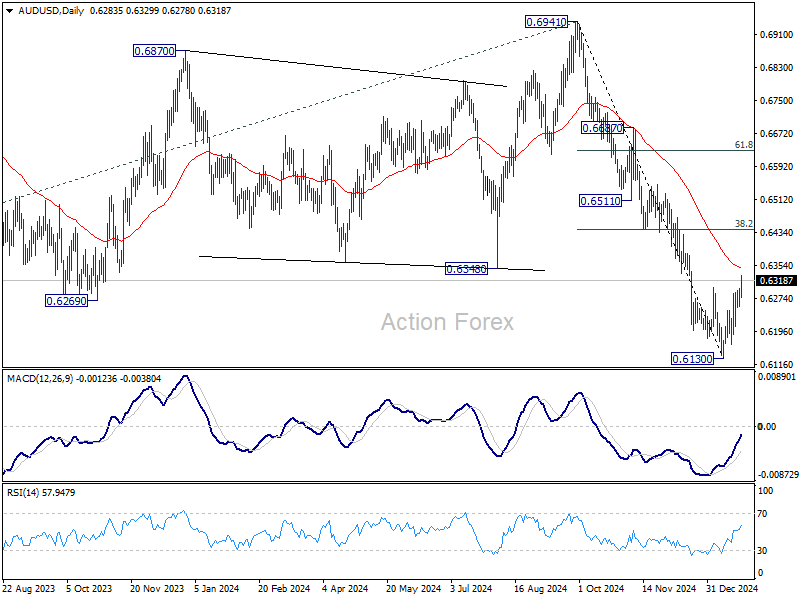
AUD/USD's rally from 0.6130 extended with break of 0.6301 resistance. Intraday bias is back on the upside for 55 D EMA (now at 0.6352), and possibly above. But strong resistance should be seen from 38.2% retracement of 0.6941 to 0.6130 at 0.6440 to limit upside. On the downside, break of 0.6252 minor support will bring retest of 0.6130 low instead.
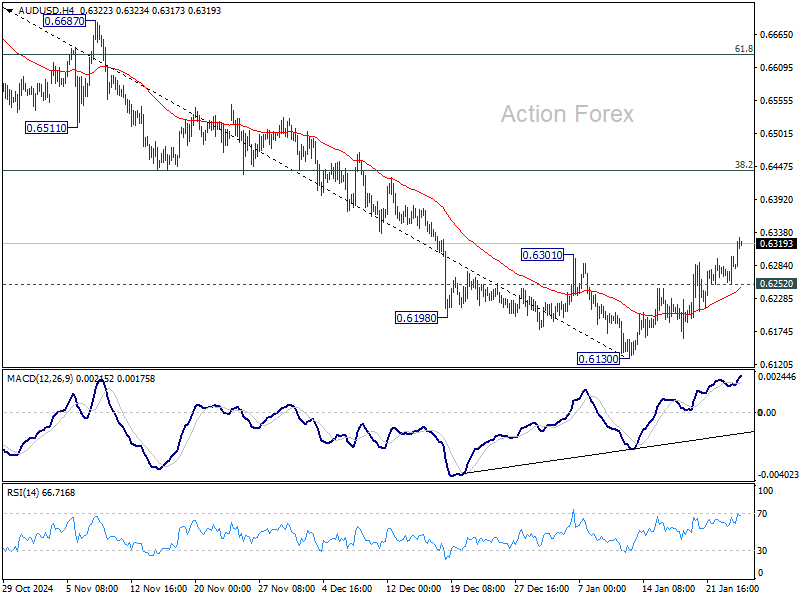
In the bigger picture, down trend from 0.8006 (2021 high) is resuming with break of 0.6169 (2022 low). Next medium term target is 61.8% projection of 0.8006 to 0.6169 from 0.6941 at 0.5806, In any case, outlook will stay bearish as long as 55 W EMA (now at 0.6545) holds.
EUR/USD Daily Outlook
Daily Pivots: (S1) 1.0379; (P) 1.0409; (R1) 1.0445; More...
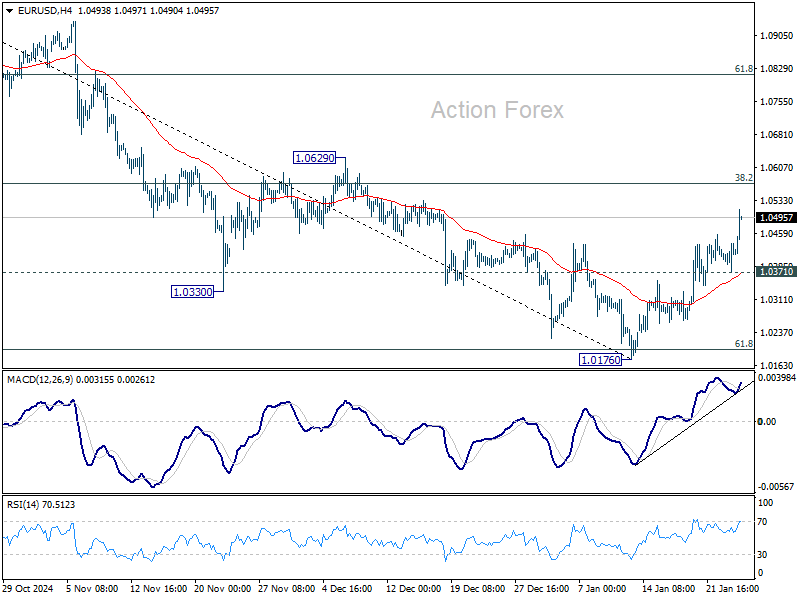
Intraday bias in EUR/USD is back on the upside as rebound from 1.0176 resumed by breaking through 1.0435 resistance. Strong resistance might be seen from 38.2% retracement of 1.1213 to 1.0176 at 1.0572 to limit upside. Break of 1.0371 minor support will bring retest of 1.0176 low. However, sustained break of 1.0572 will raise and chance of reversal, and target 61.8% retracement at 1.0817.
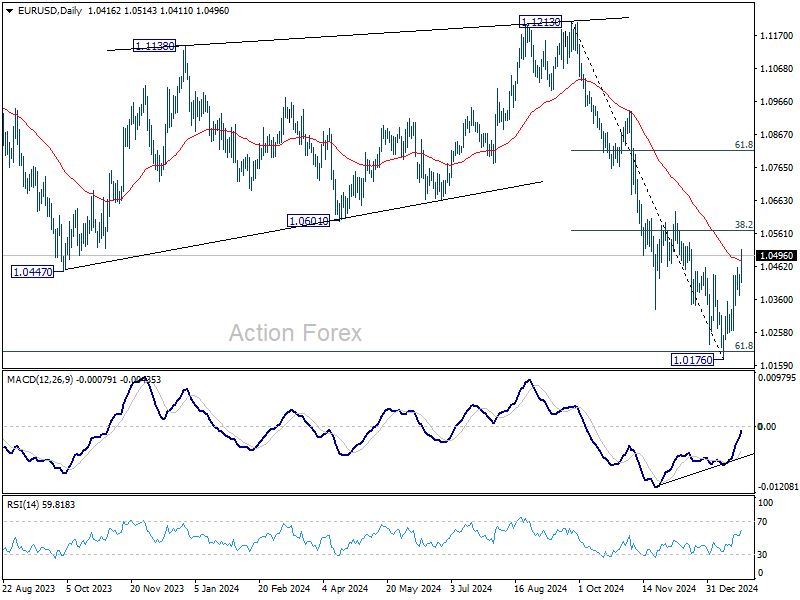
In the bigger picture, fall from 1.1274 (2023 high) should either be the second leg of the corrective pattern from 0.9534 (2022 low), or another down leg of the long term down trend. In both cases, sustained break of 61.8 retracement of 0.9534 to 1.1274 at 1.0199 will pave the way back to 0.9534. For now, outlook will stay bearish as long as 1.0629 resistance holds, even in case of strong rebound.
GBP/USD Daily Outlook
Daily Pivots: (S1) 1.2305; (P) 1.2340; (R1) 1.2388; More...
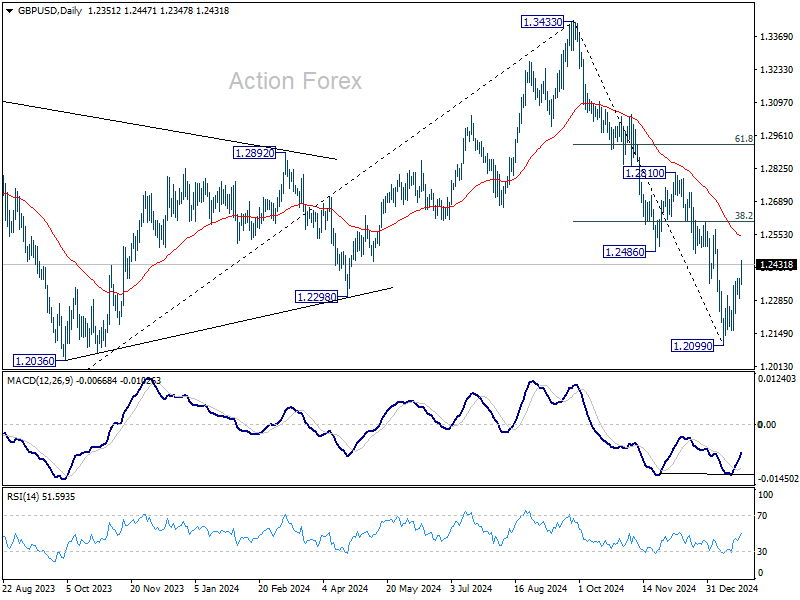
GBP/USD's recovery from 1.2099 extended higher but upside is still capped below 1.2486 support turned resistance. Intraday bias remains neutral and further decline is in favor. On the downside, below 1.2292 minor support will turn bias back to the downside for retesting 1.2099 low. However, firm break of 1.2486 will bring stronger rebound towards 1.2810 resistance instead.
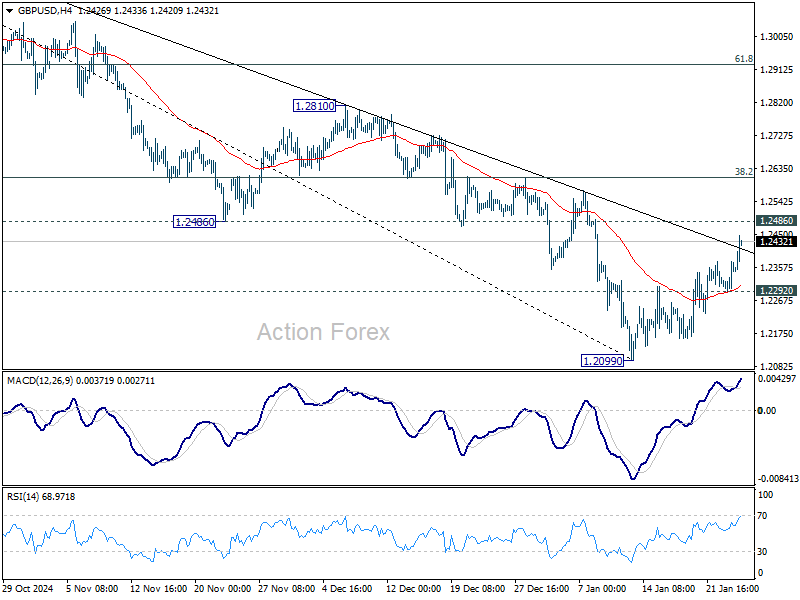
In the bigger picture, rise from 1.0351 (2022 low) should have already completed at 1.3433, and the trend has reversed. Further fall is now expected as long as 1.2810 resistance holds. Deeper decline should be seen to 61.8% retracement of 1.0351 to 1.3433 at 1.1528, even as a corrective move.
USD/CHF Daily Outlook
Daily Pivots: (S1) 0.9051; (P) 0.9080; (R1) 0.9103; More…
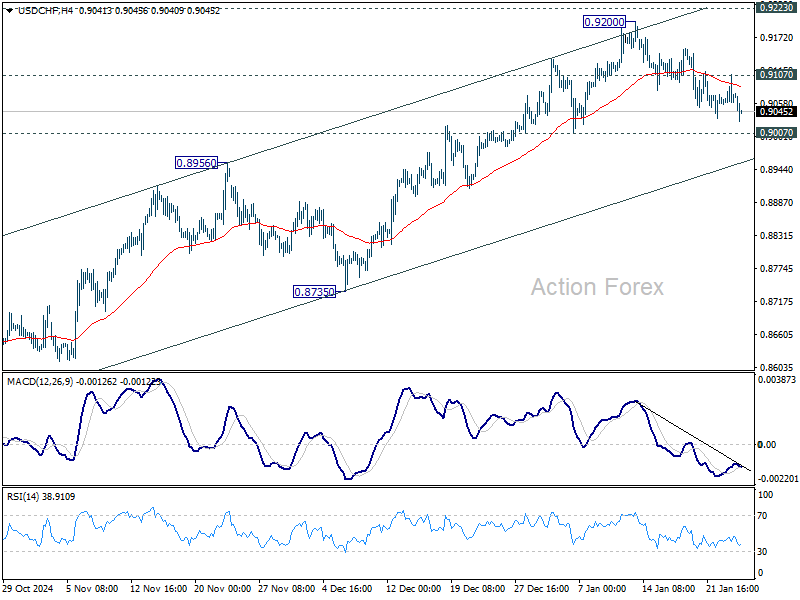
While USD/CHF pull back from 0.9200 extends lower, downside is still contained above 0.9007 support. Intraday bias remains neutral and further rise is in favor. Above 0.9107 minor resistance will turn bias back to the upside for retesting 0.9200 and 0.9223 key resistance. However, firm break of 0.9007 will turn bias back to the downside for deeper pull back to 55 D EMA (now at 0.8954) and possibly below.
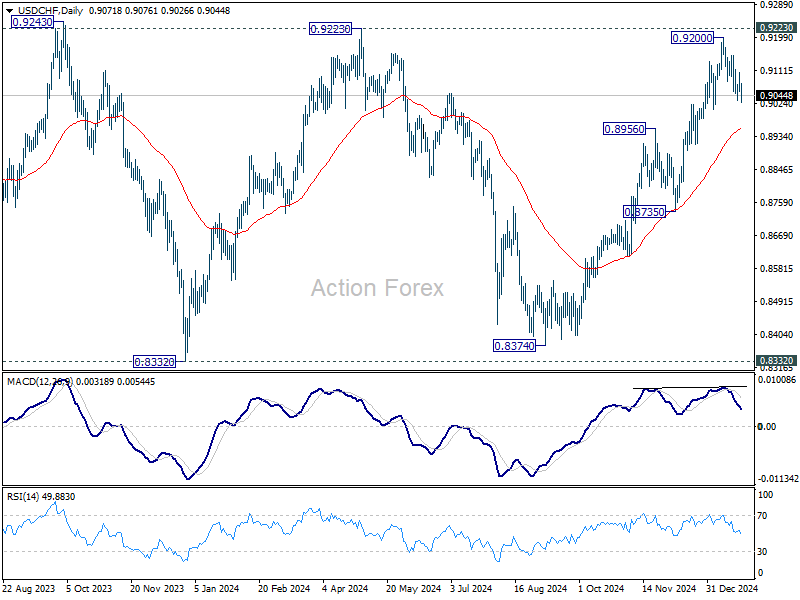
In the bigger picture, as long as 0.9223 resistance holds, price actions from 0.8332 (2023 low) are seen as a medium term corrective pattern. That is, long term down trend is in favor to resume through 0.8332 at a later stage. However, sustained break of 0.9223 will be an important sign of bullish trend reversal.
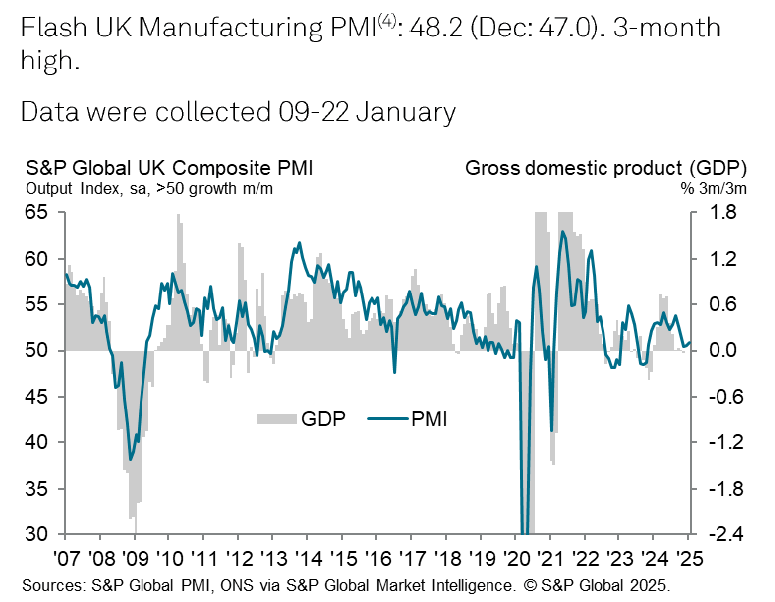
UK PMI composite edges higher to 50.9, but stagflation risks cloud economic outlook
UK PMI Composite rose slightly from 50.4 to 50.9 in January, indicating marginal growth. Manufacturing PMI improved from 47.0 to 48.2, while services PMI ticked up from 51.1 to 51.2. Despite these increases, the overall outlook remains gloomy, with underlying concerns about economic weakness and inflationary pressures persisting.
Chris Williamson, Chief Business Economist at S&P Global Market Intelligence, warned that the data "add to the gloom" surrounding the UK economy.
Companies are cutting jobs at the fastest rate since the global financial crisis in 2009, reflecting falling sales and bleak business prospects. Business optimism remains at its lowest levels in two years, accompanied by subdued activity across sectors.
Inflationary pressures have also "reignited," creating what Williamson described as a "stagflationary environment" and a "policy quandary" for BoE.