Sample Category Title
NZ Retail Softens | NZDUSD Considers Break of Monthly Pivot
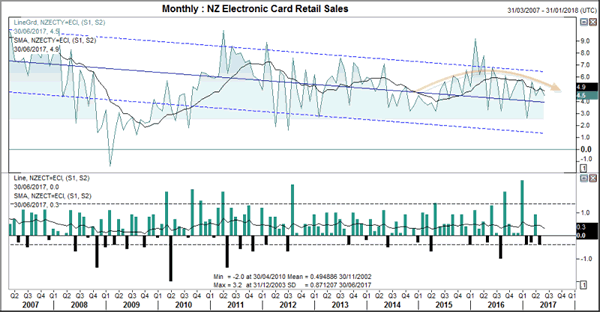
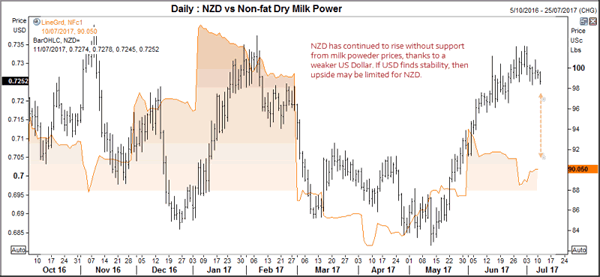
At 4.5%, credit card retail sales remain elevated compared with some economies, yet the 1yr average suggests further weakness ahead. NZDUSD has failed to take the Feb highs and the odds of a retracement lower are quickly building.
Electronic card retail sales fell from 5.2% YoY to 4.5% YoY, a two-month low which has dragged the 12-month average down to 4.9%. The 1yr average better displays the cyclical tendency of retail spending, which peak in Q2 2016 and suggests we may continue to see downwards pressure on retail spending throughout 2017. The monthly read was steady at 0%, yet as this followed on from a -0.4% contraction in May which was the 3rd contraction in 4 months, further softness is yet to be revealed in the YoY read. Also, whilst -0.4% contraction may not sound too much, but by historical standards it is at the extreme of a -1 standard deviation.
However, where retail sales suggest further weakness from the consumer side, business survey's such as the PMI's continue to suggest support for the economy. Tomorrow we get to see if business PMI maintains positive outlook.
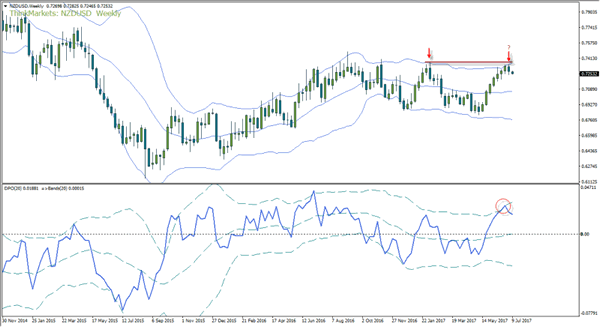
We have monitored NZDUSD over recent weeks to see if it could break above the 0.7375 high from February. Whilst we cannot rule out a break later this year, we now see potential for a pullback from current levels. Last week produced a dark cloud cover pattern which was also a marginally bearish outside week. The fact its high was below the Feb high is also another side of near-term weakness, as is the fact this occurred after touching the upper bollinger band. The 20 week DPO (detrended price oscillator) also moved lower after testing its own bollinger band.
To look at this from the US Dollar's perspective, the downside appears to have stopped for now and eyes will be on Yellen's testimony on Wednesday night for further clues of Fed tightening. As the USD remain unloved and possibly oversold over the near-term, we see potential for a bounce higher on DXY which may pile on the pressure on NZDUSD.
The impressive gains from the May low was fuelled by three main drivers; RBNZ becoming less dovish; A weaker USD; higher milk powder prices. It is therefor worth noting that some of this support has taken a side-step whilst NZDUSD has remain elevated. Milk prices stopped rising in June, RBNZ have not exactly turned into prominent hawks and, as mentioned, there is potential for a spike higher on US Dollar as markets continue to doubt Fed's ability to tighten.
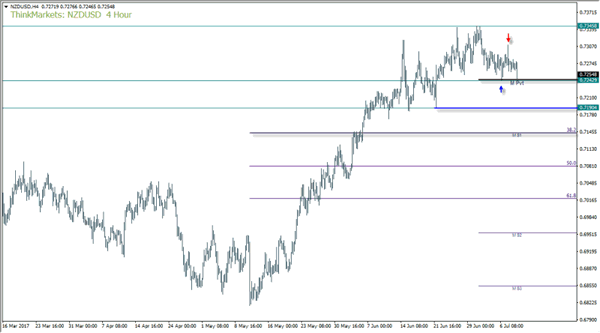
NZDUSD appears to be considering a break of 0.7250 support. As this is also where the monthly pivot awaits, it may hold for a while longer yet but we also note a lower low and lower high has formed to suggest downside momentum is building.
We can use a sell-stop to catch a downside break with the view to target 0.719, and 07145 where the 38.2% retracement awaits.
GBPJPY – Backs Off Higher Prices, Vulnerable
GBPJPY - The cross continues to face upside pressure but could see pullback threats in the new week having continued to reject higher prices. On the downside, support comes in at the 146.00 level where a violation will aim at the 145.50 level. A break below here will target the 145.00 level followed by the 144.50 level. Conversely, resistance is seen at the 147.00 level followed by the 147.50 level. A cut through that level will set the stage for a move further higher towards the 148.00 level. Further out, resistance resides at the 148.50 level. All in all, GBPJPY looks to pullback further.

No Catalyst Overnight
No catalyst overnight
A lack of market agitators has led to a very parochial and lacklustre overnight session. However not too surprising as the market’s current driver, Fixed Income, walks a razor’s edge with the Bank of Canda ( BOC) and Yellen’s Humphrey-Hawkins testimony meeting head on in Wednesday’s NY session. So fixed income investors will likely take their lead from whether the Bank of Canada hikes rates and track cues from Fed Chair Yellen, more so if she taps the brakes on the FOMC hawkish lean.
After nearly a decade of loose monetary policy, Global central banks are looking to turn down the music at the global bond party that has raged on well past its expected shelf life. After a week of continued repricing yields higher in mature economies -a predictable feedback loop to hawkish policy guidance, that too may have run its course as the markets continue to grapple with the notion of higher interest in a low inflation world. Despite this growing sense of reality setting in, traders remain tied up in knots fearing inflationary data surprises could induce a secondary sell off.
After starting out with a bounce in their step in early Asia, yesterday equity investors found little direction overnight.After Asia caught up with the Wall Street Friday rally markets became rather directionless during the overnight sessions.
Commodity markets optimism continues to wane on revamped analysts warnings as WTI prices nudged higher with talk of production kerbs in Libya and Nigeria and a sign of shrinking U.S. stockpiles
The forex traders had a case of butterflies in the stomach ahead of upcoming BoC and Yellen risk which saw traded volumes drop well below last month’s average turnover; perhaps the tepid volumes are reflecting reduced summer positioning, a lack of interest or a bit of both. However, that tune will change as we move deeper into a potentially dangerous trading week.
Dr Yellen
Her testimony could be the least impactful risk of the week. It’s highly unlikely she will change her hawkish tone, and with the market in total data-dependent mode, traders will look past Fed speak and focus on both US CPI and the BOC announcement
US CPI
CPI data will be the key for the USD near-term direction. Despite the Hawks ruling the roost, it means little to traders without the inflationary impact kicking in. After three consecutive misses on CPI, the Fed’s ability to look past the transitory inflation factor will be tested on another downside inflationary wobble.
Bank of Canada
The markets completely fixated on this event and now pricing in over 90% probability of a hike in July and two full hikes by the end of 2017 implying an evolving tightening cycle Given this skew, a no rate hike could topple the apple carts and send both Fixed income and currency markets into a frenzy.The more likely scenario, however, is a one and done with the bank expressing some lingering downside economic concerns and a wave of USD-CAD profit taking ensues
Currency Markets
Price action on Monday was not too untypical of post NFP trade as traders tend to pick up the pieces after the weekend to digest the data.
EURO
Extremely quiet session lacking any central catalysts and with a slow week on the economic calendar traders will look to EDB rhetoric as the primary driver. Few convictions either way despite EU Bond markets trading a touch stronger with German and French 10-year yields falling 3bps
Japanese Yen
The first question I fielded this morning is why is USDJPY not trading higher given the Japan -US Bond differential back in vogue. First US bonds rallied a touch overnight, but I also suspect some short term optionality is in play.By all accounts with the BOJ and FED divergence still in the cards, we should be trading higher. However lingering regional geopolitical concerns ( North Korea) and domestic concerns about PM Abe’s continuity are weighing on Japanese investors as a drive for downside protection enters the psyche as local equity markets look ” toppish” . It appears these fears are tempering USDJPY upside despite the FED maintaining its tightening conviction, and BoJ its easing bias
USD/CAD Canadian Dollar Lower Ahead Of Central Bank Decision
The Canadian dollar started the week on the back foot as the USD recovered some ground during the Asian trading session touching session highs of 1.2932. Oil prices swung wildly in the past 24 hours ending in a net positive gain for the black stuff and helped the loonie reduce its daily losses ahead of Wednesday's widely anticipated interest rate decision by the Bank of Canada (BoC).
The Canadian dollar appreciated on Friday with the better than expected release of the Canadian jobs report. The economy added 45,500 jobs busting forecasts of 10,000 and forcing a drop in the unemployment rate to 6.5 percent. The American jobs report published at the same time usually takes the spotlight at it also showed a 223,000 job gain south of the border but the rising expectations of the BoC hike rates on its July 12 monetary policy meeting pushed the CAD over the USD.
The probability of a rate hike on Wednesday has gone up considerably since senior BoC policy makers started commenting on the effect of the two rate cuts in 2015 and the fiscal stimulus package launched in 2016. Money markets are pricing in a rate hike on July 12 and a follow up in the December monetary policy meeting to keep the gab between the Canadian benchmark rate and the Fed funds rate from diverging further.
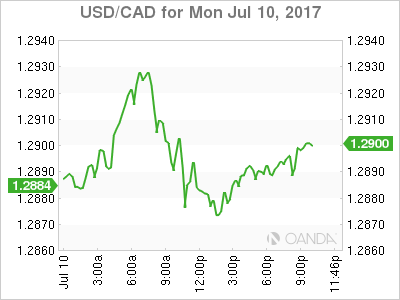
The USD/CAD gained 0.068 percent on Monday. The currency pair is trading at 1.2886 as the USD enjoyed a recovery in the Asian and European session that sent the pair above the 1.29 price level. A modest recovery in oil prices above $44 per barrel helped the loonie end up back above 1.29.
Canadian jobs surprised to the upside with another strong gain. Canada added 45,000 jobs in June, although less full-time positions than in May but a strong showing that dropped the unemployment rate to 6.5 percent. The loonie appreciated after the release as it adds further speculation that the Bank of Canada (BoC) will hike rates on July 12 after several comments from senior central bank members. The Canadian central bank changed its tune on June 11 and started signalling an upcoming rate hike after the two rate cuts in 2015 and the government's fiscal stimulus seemed to have done their job. The BoC was not forecasted to hike rates until 2018 as there are still major question marks with oil prices and the NAFTA negotiations in the fall, but the pace of growth in the Canadian economy is giving the central bank the confidence to make a move sooner rather than later and keep up with the Federal Reserve.
The Bank of Canada (BoC) monetary policy meeting will be the highlight of the week. Central bank rhetoric in the developed economies has now taken hawkish tone as the European Central Bank (ECB), Bank of England (BoE) and the Bank of Japan (BOJ) have seen improvement in economic growth.
The BoC is ahead of the pack and slightly behind the pack as it carries no quantitative easing program to taper and its benchmark rate is 50 basis points. A 25 basis points in the next meeting would keep it close to the 100–125 basis points of the Fed funds rate.
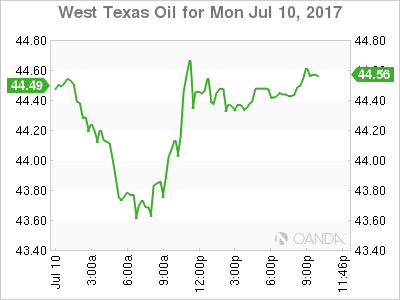
Oil rose 0.319 percent in the last 24 hours. West Texas Intermediate is trading at $44.40 after comments from Saudi Aramco CEO said on Monday that lack of new discoveries and a drop in investments will contusion global supply of oil. The market does not share the pessimistic view of the state run energy company with supply gaps anticipated to be filled by Brazil, Canada and the United States.
Oil rigs in the US have started to increase as shale operations take advantage of stable prices at current levels. The diplomatic disagreement between Qatar and other Arab nations leaves in question the unified front of the OPEC as Saudi Arabia's leadership in the group will be questioned. Weekly inventories regain their normal publication date with US crude stocks to be reported on Wednesday, July 12 at 10:30 am EDT.
Market events to watch this week:
Wednesday, July 12
4:30am GBP Average Earnings Index 3m/y
10:00am CAD BOC Monetary Policy Report
10:00am CAD BOC Rate Statement
10:00am USD Fed Chair Yellen Testifies
10:30am USD Crude Oil Inventories
11:15am CAD BOC Press Conference
Thursday, July 13
8:30am USD PPI m/m
8:30am USD Unemployment Claims
10:00am USD Fed Chair Yellen Testifies
Friday, July 14
8:30am USD CPI m/m
8:30am USD Core CPI m/m
8:30am USD Core Retail Sales m/m
8:30am USD Retail Sales m/m
Gold Remains Under Pressure, Touches 4 Month Lows
Gold has shown some downward movement on Monday, but is unchanged on the day. In the North American session, spot gold is trading at $121.09 per ounce. Earlier in the day, gold prices dropped to a low of $1204, the metal's lowest level since mid-March. On the release front, there are no major events on the schedule.
Gold had a rough week, dropping 2.4 percent. The metal lost ground on Friday, as Nonfarm Payrolls rebounded in June, climbing to 222 thousand. This easily beat the estimate of 175 thousand and marked a 4-month high. At the same time, employment data was not all positive, as wage growth wage growth was unchanged at 0.2%, shy of the forecast of 0.3%. Weak wage growth has remained soft throughout the first half of 2017, despite a tight labor market. With wages remaining stagnant, inflation is also mired at low levels. The Fed has consistently said that it plans to raise interest rates for a third and final time in December. Last month, Fed Chair Janet Yellen shrugged off inflation worries, saying that she expected inflation was mired at lows levels due to temporary factors. However, the markets don't seem to be buying in, as the odds of a December hike have dropped to just 47%, according to the CME Group. The US economy slowed down in the first quarter, and there are signs that Q2 will also be soft. Consumer spending, which comprises two-thirds of US economic growth, remains soft. Another sore point in the economy is inflation, which remains below the Fed's target of 2%. If the economy doesn't show signs of stronger growth and higher inflation, the Fed might change its tune about a December rate, which would be good news for slumping gold prices.
Pound Steady After Ending Week on Losses
GBP/USD is showing limited movement in the Monday session. In North American trade, the pair is trading just under the 1.29 line. On the release front, there are no major events on the schedule.
The British economy has managed quite well since the Brexit vote in June 2016, but last week's PMIs may signal the much-feared economic downturn. PMIs in the manufacturing, construction and services sectors all pointed to slower growth in June, compared to the May readings. The double whammy of the British election and the start of Brexit talks with Europe have increased uncertainty and resulted in a decrease in new orders across the economy. The BoE is divided over whether to raise interest rates in the next few months, and the public disagreements between BoE policy makers over rate policy will not help investor confidence. The May government has a razor-thin majority, and must negotiate a divorce with an angry European Union that does not want to see other members opt to leave the club. The UK will release key employment numbers on Wednesday, with wage growth and unemployment claims expected to worsen in June.
The US wrapped up last week with key employment numbers, and the data was mixed. Nonfarm Payrolls rebounded in June, climbing to 222 thousand. This easily beat the estimate of 175 thousand and marked a 4-month high. However, wage growth remains soft, as Average Hourly Earnings was unchanged at 0.2%, shy of the forecast of 0.3%. Weak wage growth has remained soft throughout the first half of 2017, despite a tight labor market. With wages remaining stagnant, inflation is also mired at low levels. If inflation does not improve, the Federal Reserve may have second thoughts about a rate hike in December. Currently, the odds of an increase in December have dipped to 47%, as the markets clearly have their doubts that the Fed will press the rate trigger.
Dollar Pushes Above 114 on Weak Japanese Mfg. Report
USD/JPY has posted slight gains in Monday trading. In the North American session, the pair is trading just above the 114 level. On the release front, Japanese data started off the weak on a sour note. Core Machinery Orders declined 3.6%, well off the forecast of a 1.7% gain. Japan's current account surplus dropped to JPY 1.40 trillion, short of the estimate of JPY 1.63 trillion. There are no major events in the US.
Japan's economy has improved in 2017, buoyed by a stronger global economy. This has translated into increased demand for Japanese goods and this has boosted the manufacturing and export sectors. The Tankan Manufacturing Index jumped to 17 in the first quarter, its strongest showing since 2014. However, Core Machinery Orders is raising some concerns, as the indicator has posted two straight declines of 3.1% and 3.6%. We'll get a look at Preliminary Industrial Production on Friday. The indicator recorded a strong gain of 4.0% in April, but the markets are braced for a sharp downturn in June, with an estimate of -3.3%. If manufacturing indicators continue to miss expectations, the yen could continue to lose ground.
The US wrapped up last week with key employment numbers, and the data was mixed. Nonfarm Payrolls rebounded in June, climbing to 222 thousand. This easily beat the estimate of 175 thousand and marked a 4-month high. However, wage growth remains soft, as Average Hourly Earnings was unchanged at 0.2%, shy of the forecast of 0.3%. Weak wage growth has remained soft throughout the first half of 2017, despite a tight labor market. With wages remaining stagnant, inflation is also mired at low levels. If inflation does not improve, the Federal Reserve may have second thoughts about a rate hike in December. Currently, the odds of an increase in December have dipped to 47%, as the markets clearly have their doubts that the Fed will press the rate trigger.
Dollar at 2-Month High vs Yen; Euro Falls as Bond Yields Ease
As the European session was coming to a close, the dollar edged higher against most major currencies. Falling yields on eurozone bonds as the bond sell-off eased, could have contributed to the euro pressure.
The dollar continued strengthening against most major currencies during the European session on the back of the better-than-expected jobs report on Friday. The dollar index, a broad measure of the greenback's strength, was up 0.16% percent on the day. Dollar/yen was last trading at 114.22, while dollar/loonie was at 1.2884. The rest of the day looks to be quiet as no high-importance data releases are scheduled out of the US till tomorrow.
Today was a relatively quiet day for data releases out of the eurozone as well. The Sentix index of eurozone business and investor sentiment in July (28.3) narrowly beat the expected level of 28.2, but tempered from the decade-high level in June (28.4). The wave of eurozone bond sell-off eased today, causing the yields to fall. Germany's 10-year bund yield is down two basis points at 0.55%, easing back from Friday's 18-month high. Looking at the forex market, the eurozone currency weakened against the dollar during today's European session, after holding steady in the prior session. Euro/dollar was last trading at 1.1388.
Pound/dollar reversed the gains recorded during the Asian trading hours and is looking to close lower at the end of the European session. The pair was last trading at 1.2865. Looking ahead, sterling traders could focus on the speeches by two Bank of England members, scheduled tomorrow.
Oil prices declined, extending losses at the end of last week on the back of high drilling activity in the US and ample supplies from OPEC and non-OPEC nations. The number of total active rigs exploring oil and natural gas in the U.S. increased by 12 last week to 952. A year ago, just 440 rigs were active. WTI was last trading at $44.02 a barrel, while Brent crude was at $46.54 a barrel.
Similarly to oil prices, gold has been under pressure as well. The precious metal was last trading at $1,209.24 as European markets were looking to close for the day.
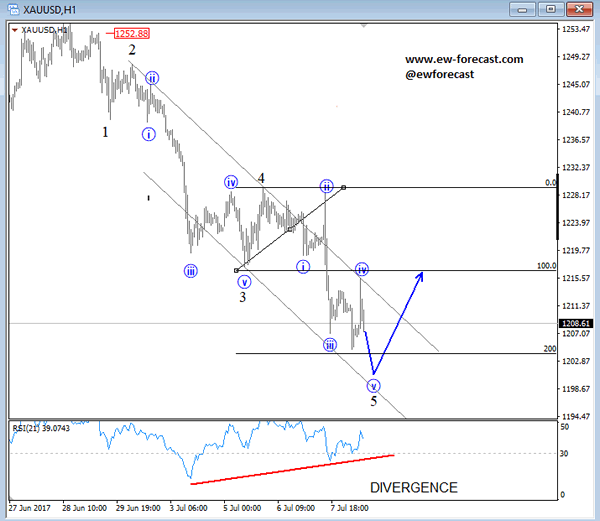
Elliott Wave Analysis: Gold Intraday Drop; Downside Can Be Limited
Gold is trading lower, now making a final drop within final wave 5. As we can see the upper channel line reacted as a resistance for the previous blue wave iv; which means current drop represents sub-wave v of five. That said, downside can still be limited in the near-term around Fibonacci ratio of 200.0. From the mentioned region, a new minimum three wave reversal higher can come in play. Even the relative strength index is pointing to the upside.
GOLD, 1H
USD/JPY Mid-Day Outlook
Daily Pivots: (S1) 112.85; (P) 113.14; (R1) 113.57; More...
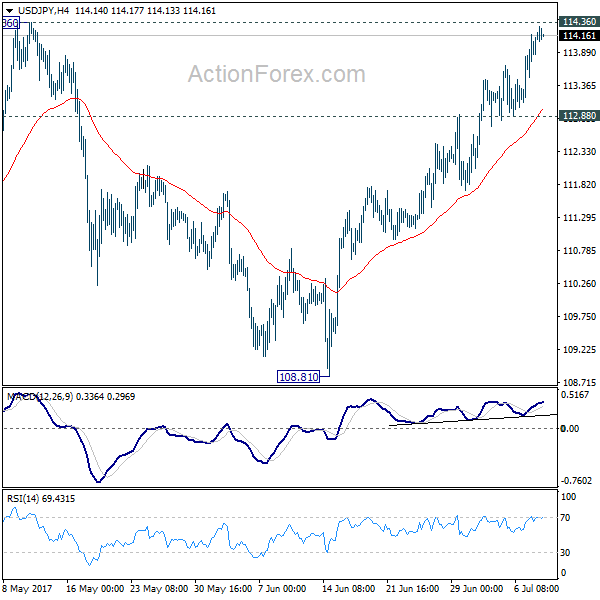
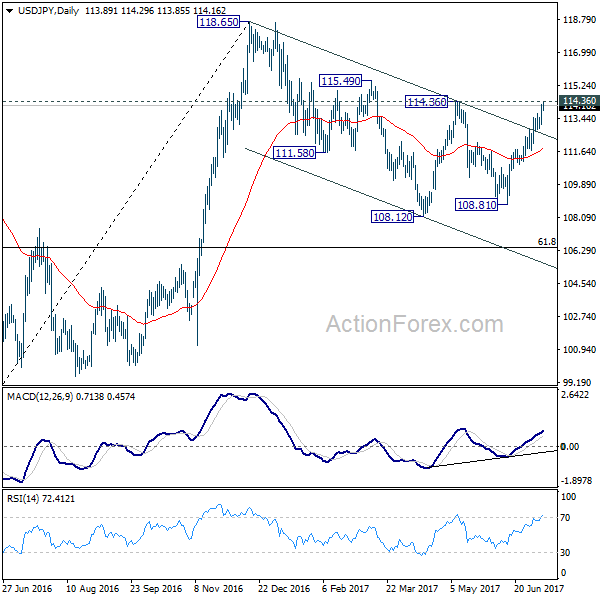
Intraday bias in USD/JPY remains on the upside for 114.36 resistance. Decisive break there will confirm our bullish view that corrective pull back from 118.65 has completed at 108.12. In that case, further rally would be seen to retest 118.65. On the downside, break of 112.88 support is needed to indicate short term topping. Otherwise, outlook will remain bullish in case of retreat.
In the bigger picture, the corrective structure of the fall from 118.65 suggests that rise from 98.97 is not completed yet. Break of 118.65 will target a test on 125.85 high. At this point, it's uncertain whether rise from 98.97 is resuming the long term up trend from 75.56, or it's a leg in the consolidation from 125.85. Hence, we'll be cautious on topping as it approaches 125.85.