Sample Category Title
Markets Gripped by Monday Jitters
Global stocks were vulnerable to losses during early trading on Monday with investors on edge as the heightened geopolitical tensions in East Asia weighed on risk sentiment. Asian shares traded mostly mixed amid the jitters while risk aversion exposed European equities to downside shocks. With the overall trading mood subdued and market participants treading cautiously, gains on Wall Street could be limited this evening.
It should be kept in mind that the rising optimism over Trump's fiscal policies boosting US growth has attributed to the highly impressive stock market rally this quarter. A situation where the anticipated policies fall below expectations could still result in a sharp selloff across the board.
Greenback on standby
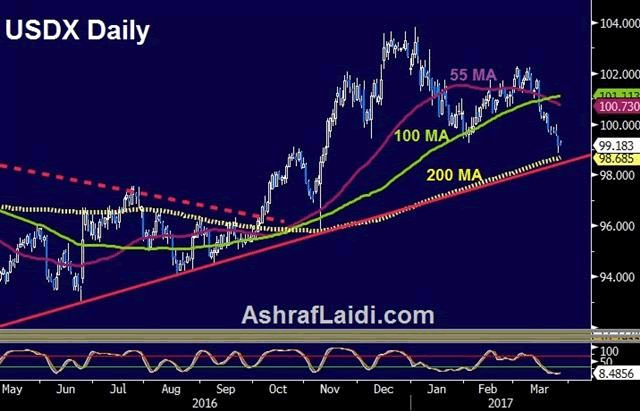
The lack of buying incentives for fresh Dollar purchases coupled with profit taking has placed the Greenback on standby during Monday's trading session. Although Janet Yellen's hawkish remarks last Friday have heightened speculations of a March rate hike, Dollar bullish investors may still be seeking further inspiration elsewhere. Much attention will be directed towards Friday's NFP which could offer some insight on how the U.S labour force has fared in the New Year. A strong NFP should cement expectations of a March rate hike with bullish investors exploiting the optimism to elevate the Dollar Index back above 102.00.
Sterling bears eye 1.2200
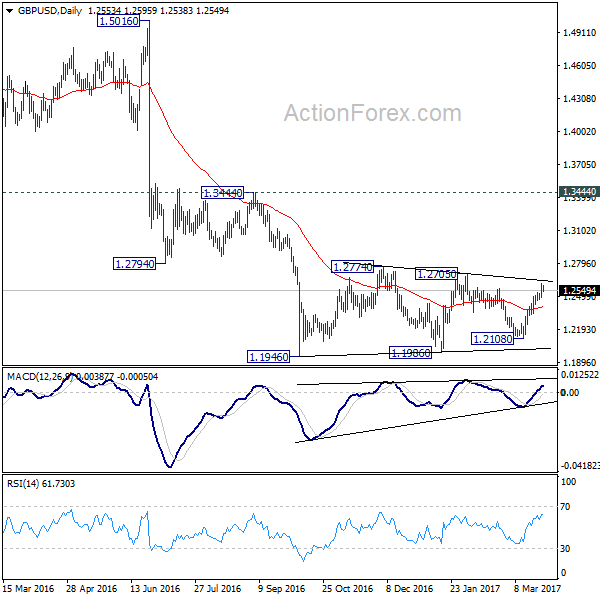
The growing anxiety ahead of the Article 50 invoke this month has exposed Sterling to noticeable losses during Monday's trading session. Uncertainty has made Sterling fundamentally bearish with investors likely to exploit the Brexit developments to drag the currency much lower this quarter. From a technical standpoint, the GBPUSD is tilted to the downside on the daily charts as there have been consistently lower lows and lower highs. Previous support around 1.2300 could transform into a dynamic resistance that encourages a further decline back towards 1.2200.

WTI Crude losing upside momentum
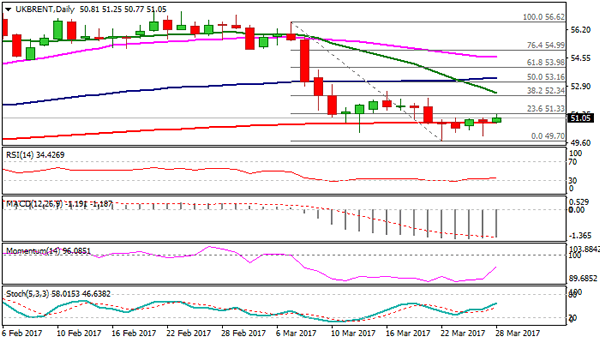
WTI Crude was under pressure during Monday's trading session as fears of lower growth targets in China sparked discussions of the nation cutting oil demand. The selling pressure was fuelled by the ongoing concerns over Russia's compliance with the global output cut which revived some oversupply anxieties. With U.S inventories rising incessantly and the Dollar set to strengthen from the prospects of higher US rates, oil markets could be poised to trade lower moving forward. From a technical standpoint, WTI Crude is pressured on the daily charts and a breakdown below $52.50 could encourage a further decline towards $51.50.
Commodity spotlight - Gold
The rising optimism over the Federal Reserve raising US interest rates in March has encouraged sellers to repeatedly attack Gold. Although risk aversion from geopolitical tensions in East Asia may provide some support for the zero-yielding metal, prices are looking increasingly pressured on the daily charts. A solid NFP this Friday combined with a strengthening Dollar could provide enough downside momentum for bears to conquer $1220. From a technical standpoint, a breakdown below $1220 may open a path lower towards $1200.

Deutsche Bank Capital Raise Sends DAX Lower
The DAX Index closed the week above the 12,000 level, but has dropped lower at the start of the new trading week. In the Monday session, The DAX is trading at 11,981.89 points. On the release front, Eurozone retail sales were stable in February, as Retail PMI came in at 49.1, down slightly from 50.1 a month earlier. Eurozone Sentix Investor Confidence report improved to 20.7, beating the estimate of 18.8 points. On Tuesday, Germany releases Factory Orders, with the markets bracing for a sharp decline of 2.5%.
European stocks are broadly lower in the Monday session, as a capital raise by Germany's Deutsche Bank as reduced investors' appetite for risk. The bank decided on a major reorganization on Sunday, which includes raising EUR 8 billion by issuing 687.5 million shares on March 21. Deutsche Bank has hit rough waters, and it seemed only a matter of time before it was forced took some drastic measures to right the boat. In December, the bank reached a $7.2 billion settlement with the U.S. Department of Justice for selling toxic mortgage-backed securities. Deutsche had a dismal 2016, with losses of EUR 1.4 billion. This capital hike is the fourth since 2010, and it remains to be seen if this move will attract investors and help set the bank in the right direction. Deutsche Bank shares are down about 1.0% on Monday, which has weighed on the DAX in the Monday session.
The euro dropped below the 1.05 line on Thursday, as EUR/USD dropped close to 7-week lows. Investors seized the opportunity and locked in profits on Friday, which helped boost the sagging euro. The pair gained 1.0% on Friday, marking its strongest 1-day gain since January 5. German Retail Sales disappointed, but this didn't impede the euro's rebound. Retail Sales declined 0.8%, well off the forecast of +0.2%. This marked a fifth decline of six releases, pointing to weakness in German consumer spending. Meanwhile, Eurozone inflation levels pointed higher in February. German Preliminary CPI rebounded posted a strong gain of 0.6%, matching the estimate. The Eurozone CPI Flash Estimate rose to 2.0%, hitting the ECB inflation target. Policymakers are now faced with a concern that they haven't experienced in years – will inflation rise too fast, too quickly? The central bank could curb inflation by tightening monetary policy, but will be hesitant to tinker with interest rates or its asset-purchase program unless growth and inflation indicators heat up significant
With the US economy continuing to perform well, market sentiment has heated up regarding a Fed rate hike. Federal Reserve policymakers continue to sound hawkish about a rate move on March 15, when the Fed next meets for a policy meeting. Last week, FOMC members William Dudley and John Williams both hinted at an imminent hike by the Fed. Dudley said the case for a hike is compelling, while Williams noted that a rate increase will be up for "serious consideration" at the March policy meeting. The markets are taking these statements at face value, as the odds of a March move have increased dramatically. The likelihood of a rate this month has jumped to 80%, compared to 33% just a week ago. Why the huge jump in odds? One reason is that policymakers are now saying they won't wait for Donald Trump to outline tax reform or other economic packages before making a monetary move. This is a significant departure from a few weeks ago, when the Fed sent out signals that it would stay on the sidelines until it had a clearer picture of the economic stance of the new administration.
Lower China Growth Spooks Markets
Monday March 6: Five things the markets are talking about
With geopolitical risk dominating early trading – North Korea fired four ballistic missiles into nearby waters – this is another busy economic event week that see's an RBA (Monday 10:30pm EST) and an ECB (Thursday 7:45am EST) rate decision and an U.S non-farm payroll print (Fri. 8:30am).
Expect ECB's Draghi to come under some pressure after last month's flash-CPI data printing +2% on the year thanks largely to increases in energy and food prices.
With Fed Chair Yellen almost assuring a Fed rate hike this month (Mar 14-15) after her statements last week, this Friday's U.S jobs report is anticipated to make that decision a slam-dunk. U.S Employers are expected to add around +190k workers to payrolls, in line with the average over the past six-month.
Elsewhere, Japan will posts its second estimate of Q4 growth, while China will release both consumer and producer prices. Canada's labor force data for Feb. will be released on top of NFP.
1. Mixed results for global stocks
Asian bourses saw some mixed results in overnight trading.
In Japan, shares fell in thin trade as the yen (¥113.75) firmed and as global geopolitical tensions rose after North Korea fired four missiles. The Nikkei share average fell -0.5% while the broader Topix shed -0.2%.
In Hong King, stocks gained as China optimism offset concerns on U.S rates and N. Korea. The Hang Seng index rose +0.2%, while the China Enterprises Index gained +0.3%.
In Europe, equity indices are trading generally lower. Shares of Deutsche Bank is the notable laggard in the Eurostoxx after confirming plans to raise +€8B through a rights issue. Commodity and mining stocks are weighing on the FTSE 100 as copper prices trades sharply lower intraday
U.S stocks are set to open in the red (-0.2%).
Indices: Stoxx50 -0.2% at 3,396, FTSE -0.3% at 7,354, DAX -0.3% at 11,993, CAC-40 -0.3% at 4,982, IBEX-35 +0.1% at 9,811, FTSE MIB -0.4% at 19,592, SMI -0.1% at 8,661, S&P 500 Futures -0.2%

2. Oil falls on lower China growth targets
Oil prices are under pressure, wiping out most of Friday's gains; amid worries that lower growth targets in China (see below) could cut oil demand and ongoing concern over Russia's compliance with a global deal to cut oil output.
Brent crude futures have dropped -47c, or -0.8%, to +$55.43 a barrel, while U.S West Texas Intermediate (WTI) crude futures fell -47c, or -0.9%, to +$52.86 a barrel.
Note: Russia's energy ministry released figures last week that showed February oil output was unchanged from January at +11.11m bpd – this is casting doubt on Russia's moves to rein in output as part of a pact with OPEC.
The markets remains range bound and expect dealers to take their cue from the dollars direction.
Ahead of the U.S open, gold (+0.1% to +$1,233.18) is little changed, supported by safe haven interest amid rising geopolitical tensions over North Korea and a weaker dollar. On Friday, the yellow metal hit +$1,222.51, the lowest since Feb. 15, on signals of a hike in U.S interest rates this month.
Note: Data Friday showed that both hedge funds and money managers boosted their net long position in COMEX gold to the highest in over three-months.

3. Rate differentials to dominate
The probability of a Fed rate hike this month has jumped from +35% at the beginning of last week to currently over +80% after a spate of hawkish commentary from Fed officials supporting the notion of a 'live' FOMC meeting on March 14-15. Expect Friday's NFP print to determine whether FI dealers have priced their curves correctly. Yields on 10-year Treasuries fell one -1bps to +2.47%.
This week, the ECB is likely to keep policy unchanged this week, even after eurozone inflation hit the key desired +2% mark last month. Expect ECB's Draghi to likely stress the four criteria for fighting low inflation that he outlined in January. To date, none of the four criteria have been met so far. The market expects some tweaks to the ECB's take on the regions economy and rate guidance may be less 'dovish.'
Note: 10-year Bund yields have been rising from a low of +0.18% in late February to a high of +0.36% last week, driven by increasing expectations of an interest rate increase by the Fed in March.
Down-under, fixed income markets are pricing in about a +20% chance of an RBA rate hike before the end of 2017 and also see about +50% chance of a hike by the end of Q1 of 2018. The RBA meets today (10.30pm EST). Aussie 10-year bonds are little changed at +2.80%.

4. 'Big' dollars mixed results
The USD trades mixed ahead of the U.S open. The world's reserve currency of choice is trying to consolidate its gains from last weeks Fed-inspired rally where Ms. Yellen virtually confirmed the Fed's intentions to raise rates this month.
The EUR (€1.0592) is finding some support on the back of France's political center looking less fragmented – Juppe (Conservative) confirmed he would not run for President – and with the ECB meeting this week to be "less" dovish because of stronger global inflation and calmer peripheral sovereign spread markets.
The Pound (£1.2227) continues to hover atop of its two month low outright after weak U.K data from last week. For sterling traders, the focus will be on Chancellor of the Exchequer Hammond's budget statement on Wednesday (7:30am EST).
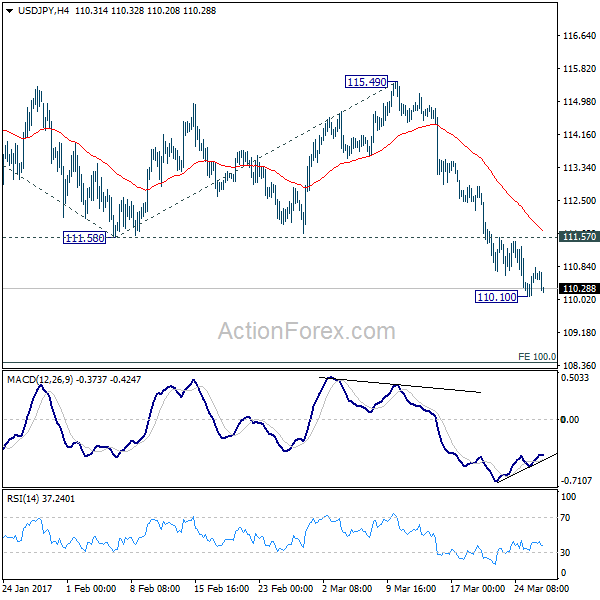
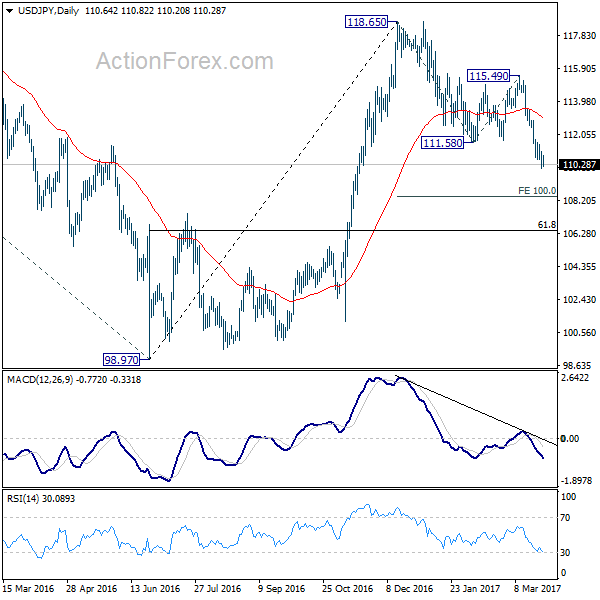
USD/JPY (¥113.85) is softer on Korean Peninsula jitters. North Korea said to have fired 4 missiles into eastern Japanese sea.

5. China lowers 2017 GDP, M2, and Retail Sales targets
At the National People's Congress (NPC) this weekend, China adjusted its economic target for 2017. They expect a GDP target of "around +6.5% or higher if possible" vs. +6.5-7.0% in 2016. Leaders also lowered M2 money supply to +12% from +13% and retail sales to +10% from +11%. However, authorities have kept its CPI target and Fiscal Budget deficit to GDP ratios unchanged at +3% each. The PBoC has pledged to pursue "prudent, neutral monetary policy in 2017." The Defense Ministry's 2017 growth was set at +7%, down from +7.6% last year and the lowest in a decade.
Leaders also expressed a continued commitment to reducing pollution, with that in mind, regulators also announced cuts in steel capacity by another -50M tons and coal output by over -150M tons.
Premier Li has dropped a pledge he had made in similar speeches in the past three-years to ensure that the yuan "remains generally stable at an appropriate and balanced level". This suggests China's government is ready to tolerate further declines in the yuan value against the dollar.

USDJPY: Remains Vulnerable But With Caution
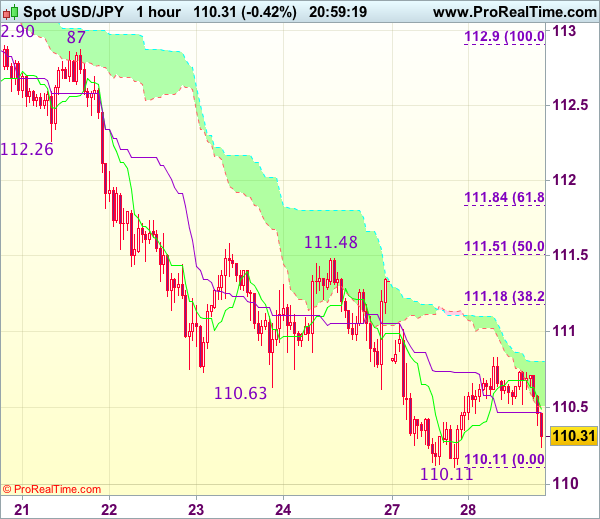
USDJPY: The pair still faces downside pressure though closing higher the past week. On the downside, support comes in at the 114.00 level where a break if seen will aim at the 113.50 level. A cut through here will turn focus to the 113.00 level and possibly lower towards the 112.50 level. Its daily RSI is bearish and pointing lower suggesting further weakness. On the upside, resistance resides at the 114.50 level. Further out, we envisage a possible move towards the 115.00 level. Further out, resistance resides at the 115.50 level with a turn above here aiming at the 116.00 level. On the whole, USDJPY looks to weaken in the nearer term.

ECB Preview: Inflation on Target But Still Too Early to Discuss Tapering
We expect the ECB to maintain its dovish stance at the meeting this week although inflation has reached the 2% target. The reason why we do not expect the ECB to react to the stronger inflation figure is that it is driven by the volatile energy and unprocessed food price inflation, whereas the underlying price pressure remains weak. The ECB has said it will not change its monetary policy based on such a rise in inflation and in the introductory statement from the latest ECB meeting it was communicated that 'the Governing Council will continue to look through changes in HICP inflation if judged to be transient and to have no implication for the medium-term outlook for price stability'.
Along the same lines, President Mario Draghi has defined four objectives which are relevant for the ECB's monetary policy stance. These include that any rise in inflation is 1) affecting the medium-term horizon, 2) a durable convergence, 3) a self-sustained convergence (without the extraordinary monetary policy support) and 4) for the whole of the eurozone. While inflation is higher across euro area countries, it is much less clear for the ECB whether the first three conditions are also fulfilled, hence we expect the ECB to stick to its dovish stance while assessing the medium-term impact on inflation.
We expect core inflation will have to exceed 1.0% for a number of months before the ECB will announce tapering of its QE purchases. This follows as executive board member Benoît Cæuré at the end of last year said 'we are still waiting for signs that core inflation is on the rise and will clearly exceed 1%'. Our forecast for core inflation is it will be 0.9% on average this year and only go slightly above 1.0% at the very end of the year, implying the ECB, in our view, will not announce tapering of its purchases this year. We still believe the ECB will extend its QE purchases beyond December 2017.
Despite the need for a continued accommodative monetary policy stance, the ECB is facing some challenges related to its QE purchases. Partly as a result of the ECB's purchase patterns there has been a fall in short-end German yields at the beginning of this year, where the ECB has allowed itself to buy bonds yielding below the deposit rate. Regarding the future ECB QE purchases, the latest communication from the ECB shows it is very reluctant to allow a change to the 33% issue/issuer limit due to both legal and price formation issues.
From a market perspective, expectations are very low with a zero probability of a move in the deposit rate at the upcoming meeting. The market is pricing a 50% probability of a full 10bp hike in January next year, which in our view is premature.
Looking further ahead, a first step from the ECB when initiating a less accommodative monetary policy stance could be to remove its forward guidance. Currently, the ECB communicates that policy rates are expected 'to remain at present or lower levels for an extended period of time, and well past the horizon of our net asset purchases' and at some point in time the ECB will start stating that policy rates should not go lower, but stay at present levels for an extended period of time. Likewise, the ECB could at some point in time remove its easing bias related to the QE purchases where it currently communicates that it stands ready to increase its QE in terms of size and/or duration.


Our expectations for the ECB meeting
We expect the ECB to stick to a dovish tone even though inflation is back at the 2% target for the first time since January 2013 and the higher inflation is seen across euro area countries.


The main argument for a continued dovish stance is there are still no signs of underlying price pressure, which will be highly dependent on a pick-up in wage pressure.


In our view, the ECB's wage forecast is hopeful and due to slack in the labour market in the periphery countries the ECB will likely revise its wage forecast lower instead of start tapering.


Monetary conditions
Market expectations are very low with zero probability of a deposit rate hike. The market is currently pricing a full 10bp hike already in mid-2018 and a 50% probability of a hike in January.


The minutes from the ECB meeting in December revealed the ECB expected a steeper yield curve - the new purchase pattern has been part of the reason why short-dated yields dropped.


The effective euro is unchanged since the beginning of 2016 despite the political events in the UK and US and large moves in bilateral exchange rates.


Survey and market-based inflation expectations
Market pricing of medium-term inflation - 5Y5Y inflation swap - has picked-up from its very low level but it has still not reached 2% and is only around QE announcement level.


The rise in spot inflation has affected market based inflation expectations in longer tenors but longer-dated survey based inflation expectations are still at low levels.


Close to 35% of the respondents in the ECB's Survey of Professional Forecasters still expect inflation to stay below 1.5% in five years time.


ECB's inflation projection
Draghi has described the latest ECB inflation projection as 'not really' being close to the target. A higher near-term inflation forecast should not reflect higher underlying price pressure.


The current overshooting of the ECB's inflation projection is driven by the oil price base effects together with a strong increase in unprocessed food price inflation.


The ECB expects higher core inflation both this year, next year and in 2019 it should exceed its historical average - these core inflation forecasts are in line with what the ECB usually expects.


Activity indicators
Survey based activity indicators have been very strong and are currently at levels where the ECB historically has been tightening its monetary policy.


The strong activity indicators have implied the economic surprise index remains at a high level. The unemployment rate also continues to decline and the level in 2004-6 will soon be reached.


The transmission of the accommodative monetary policy is working better than in a long time - but according to the ECB 'a very substantial degree of monetary accommodation is needed'.


Trade Idea Update: USD/CHF – Stand aside
USD/CHF - 1.0099
New strategy :
Stand aside
Position : -
Target : -
Stop : -
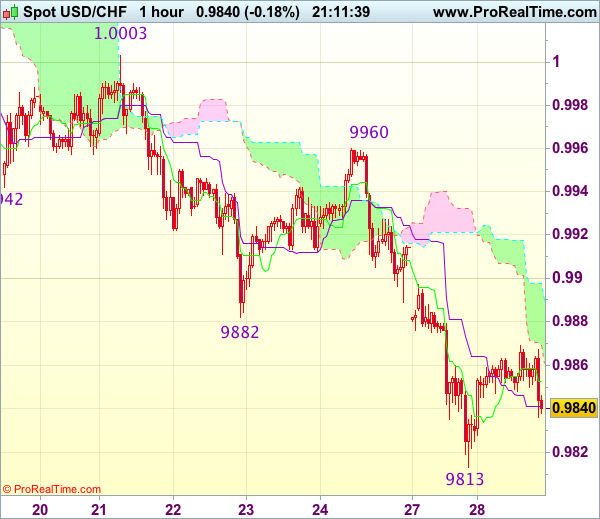
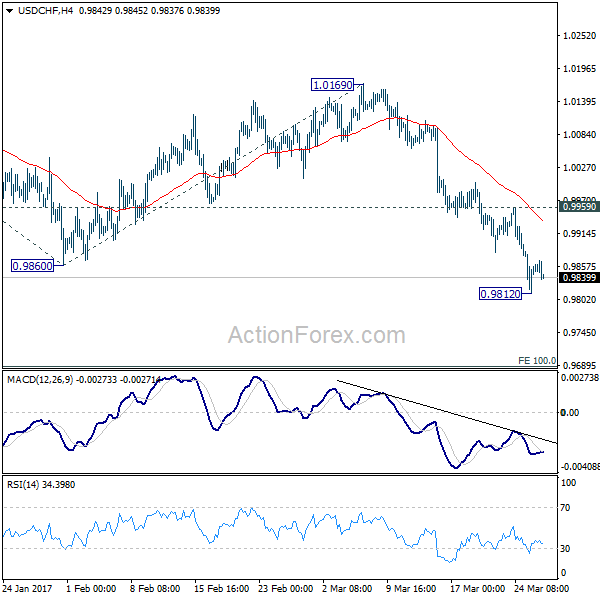
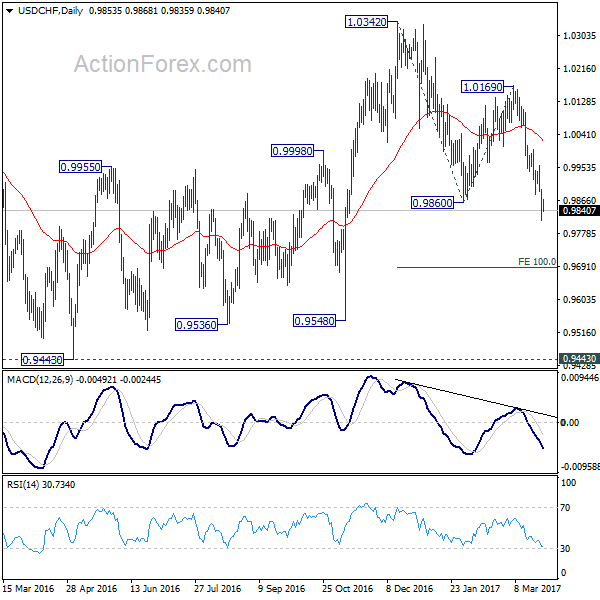
As the greenback ran into resistance at 1.0135 and has retreated again after faltering below resistance at 1.0146, suggesting consolidation below this level would be seen and weakness to 1.0060-65 (61.8% Fibonacci retracement of 1.0009-1.0146 and previous support), however, as broad outlook remains consolidative, reckon downside would be limited to 1.0035-40 and price should stay well above support at 1.0009, bring rebound later.
On the upside, expect recovery to be limited to 1.0120 and price should falter well below resistance at 1.0146, bring retreat later. Only above said resistance at 1.0146 would extend recent erratic rise from 0.9661 to 1.0170-80 but reckon 1.0200 would hold from here.

European Market Update: France Conservative Political Juppe Confirmed He Would Not Run For President
France Conservative political Juppe confirmed he would not run for President
Notes/Observations
France Conservative political Juppe confirms he will not run for President; brings political riks back into elections
Geopolitical tensions on Korean peninsula flared up again ahead of the annual joint US-South Korea military exercises
Deutsche Bank confirmed plans to raise €8B (31.9% of market cap) through rights issue on Mar 21st
Overnight:
Asia:
China National Peoples' Congress (NPC) formally sets 2017 GDP growth target of "around 6.5% or higher if possible" vs 6.5-7.0% in 2016 (in-line with press speculation). CPI maintained at 3.0%
China NDRC State Planner Vice Chairman: Will deepen reforms in 2017 and ensure prices are basically stable
China PBoC Dep Gov Yi Gang: China did not need to raise interest rates or cut RRR for the time being; Yuan to remain relatively strong but will fluctuate in near term
Former China Commerce Min Chen Deming: Both China and the US will be weakened if there is a trade war
North Korea said to have fired 4 missiles into eastern Japanese sea (**Note: Event comes as South Korea and United States are currently holding their annual military exercises, known as Foal Eagle)
Japan PM Abe said to consider potential snap election in 2018. The ruling LDP party endorsed changes to party rules that would allow PM Abe to remain until 2021 (run for a 3rd term) and become the country's longest-serving leader in the post-World War II era
Europe:
France conservative politician Alain Juppe expected to announce he would NOT run for president if candidate Fillon stepped down
French Republican Political Committee Statement: To discuss situation of its Presidential Candidate Fillon at 12:00 ET (17:00 GMT) on Monday, Mar 6th. Meeting brought forward by 24 hours due to ‘evolution of political situation'
Germany BDB Banking Association: Given the economic growth and prices outlook, the exceptionally strong monetary policy impulse provided by the European Central Bank (ECB) is no longer necessary
UK Chancellor Hammond: To take a cautious approach to spending in Wednesday's Budget to ensure that the UK has "got enough in the tank" to get out of the EU
UK Manufacturer's Organization EEF/BDO Survey: UK manufacturers growing at fastest pace in more than 3 years, helped by lower GBP currency and recovery in core EU markets
Italy Govt said to be considering measures to spur economy
ECB's Stournaras (Greece) reiterated view to swiftly conclude Greece bailout review
Fitch affirmed France sovereign rating at AA; outlook Stable
S&P affirmed Sweden sovereign rating at AAA; outlook Stable
Americas:
President Trump claimed Obama ordered wire taps on his phones back in October; Obama spokesperson denied the allegation
Economic data
(DE) Germany Feb Construction PMI: 54.1 v 52.0 prior
(EU) Euro Zone Mar Sentix Investor Confidence (beat): 20.7 v 18.5e
(GR) Greece Q4 Final GDP Q/Q: -1.2% v -0.4%e; Y/Y: -1.4% v 0.2%e
Fixed Income Issuance:
None seen
SPEAKERS/FIXED INCOME/FX/COMMODITIES/ERRATUM
Index snapshot (as of 10:00 GMT)
Indices [Stoxx50 -0.2% at 3,396, FTSE -0.3% at 7,354, DAX -0.3% at 11,993, CAC-40 -0.3% at 4,982, IBEX-35 +0.1% at 9,811, FTSE MIB -0.4% at 19,592, SMI -0.1% at 8,661, S&P 500 Futures -0.2%]
Market Focal Points/Key Themes: European equity indices are trading generally lower after a mixed session in Asia overnight; shares of Deutsche Bank the notable laggard in the Eurostoxx after confirming plans to raise €8B through rights issue; shares of Standard Life in the FTSE 100 the notable gainer after confirming they are to acquire Aberdeen Asset Management for 286.5p/shr; shares of EasyJet also notably higher after releasing their February metrics; commodity and mining stocks trading lower in the index as copper prices trade sharply lower intraday; Shares of PSA Group the notable gainer in the French CAC-40 after they confirmed to acquire GM's European units Opel/Vauxhall for €2.2B to become Europe's second largest automobile manufacturer.
Upcoming scheduled US earnings (pre-market) include Armstrong Flooring, Ecopetrol, and Fairpoint Communications.
Equities (as of 09:50 GMT)
Consumer Discretionary: [Aurelius AR4.DE +0.9% (FY16 results), Devro DVO.UK -2.3% (FY16 results), EasyJet EZJ.UK +1.5% (Feb metrics), Synthomer 7YC.DE +1.5% (FY16 results)]
Energy: [Alpiq ALPH.CH +1.1% (FY16 results), Bowleven BLVN.UK -5.1% (farm-out agreement with Victoria Oil & Gas), Victoria Oil & Gas VOG.UK +12.0% (farm-out agreement with Bowleven)]
Financials: [Aberdeen Asset Management ADN.UK +4.2% (confirms to be acquired by Standard Life for 286.5p/shr), Deutsche Bank DBK.DE -6.2% (confirms plans to raise €8B through rights issue; exec changes), Flughafen Zuerich FHZN.CH -1.3% (FY16 results), Standard Life SL.UK +5.2% (to acquire Aberdeen Asset Management)]
Industrials: [Norwegian Air NAS.NO -1.6% (Feb metrics), PSA UG.FR +2.2% (Confirms to acquire GM's Opel/Vauxhall for €2.2B)]
Technology: [Ultra Electronics ULE.UK +6.0% (FY16 results)]
Speakers
France politician Juppe (Conservative) stated that he would not run for President; He added that the Fillon candidacy was now a 'dead-end'; uniting right and center was more difficult at this time
Greece PM Tsipras: 2016 saw growth return to country and 2017 would see high growth rate. National growth strategy was needed for a 2021 roadmap
Turkey Central Bank: General FX impact observed in Feb inflation data. TRY currency (Lira) weakening led to price gains in basic goods last month, resulting in faster core inflation
China PBoC Dep Gov Yi Gang stated that to maintain exchange rate policy framework of managed flows based on market supply and demand with reference to basket. CNY currency (Yuan) was stable at a reasonable and balanced level
Currencies
FX markets saw the USD mixed just ahead of the NY morning. Overall dealers noted opposing forces battled for momentum. USD consolidating its recent gains from its Fed-inspired rally. Fed Chair Yellen virtually confirmed intentions to raise rates this month in her speech on Friday while dealers noting a lot of EUR supportive news over recent days particularly France's political centre looked less fragmented from weekend press reports. ECB meets on Thursday, with stronger global inflation and calmer peripheral sovereign spread markets working in its favor. EUR/USD moved off session highs after France politician Juppe (Conservative) confirmed he would not run for President.
GBP/USD hovering around seven-week low after weak UK data from last week. Pair lower by 0.2% at 1.2270 area. Focus will be on Chancellor of the Exchequer Hammond budget statement on Wednesday.
USD/JPY softer on Korean Peninsula jitters. North Korea said to have fired 4 missiles into eastern Japanese sea (**Note: Event comes as South Korea and United States are currently holding their annual military exercises, known as Foal Eagle)
Fixed Income:
Bund futures trade at 161.19 up 48 ticks trading in the lower part of today's range, with price remaining close to the lows made on Friday. Key resistance remains the 163.50 level. Downside momentum targets 160.50 initially followed by 160.00 level. Another major leg lower could target 157.50.
Gilt futures trade at 128.28 up 35 ticks with the focus falling on the UK budget, which will be announced on March 8th. Resistance lies at the 130.00 level, with further upside targets including the 132.36 region. Support lies at 127.50 level, followed by 126.80 then 125.90.
Looking Ahead
05:30 (NL) Netherlands Debt Agency (DSTA) to sell €2.0-4.0B in 3-month and 6-month Bills
06:25 (BR) Brazil Central Bank Weekly Economists Survey
06:30 (CL) Chile Jan Economic Activity Index (Monthly GDP) M/M: -0.1%e v +0.9% prior; Y/Y: 1.0%e v 1.2% prior
06:30 (TR) Turkey Feb Real Effective Exchange Rate (REER): No est v 88.17 prior
06:45 (US) Daily Libor Fixing
07:00 (IN) India announces details of upcoming bond sale (held on Fridays)
08:00 (BR) Brazil Feb PMI Services: No est v 45.1 prior, Composite: No est v 44.7 prior
08:00 (ES) Spain Debt Agency (Tesoro) to announce size of upcoming Bill issuance (held on Tuesday)
08:15 (UK) Baltic Dry Bulk Index
08:30 (CH) Swiss Government Question Time in Parliament
08:50 (FR) France Debt Agency (AFT) to sell combined €5.6-6.8B in 3-month, 6-month and 12-month BTF Bills
09:00 (MX) Mexico Feb Consumer Confidence: 68.6e v 68.5 prior
09:30 (EU) ECB announces Covered-Bond Purchases
09:35 (EU) ECB calls for bids in 7-Day Main Refinancing Tender
10:00 (US) Jan Factory Orders: 1.0%e v 1.3% prior
10:00 (US) Jan Final Durable Goods Orders: 1.0%e v 1.8% prelim; Durables Ex-Transportation : +0.1%e v -0.2% prelim; Capital Goods Orders (Non-defense ex aircraft): No est v -0.4% prelim, Capital Goods Shipments (Non-defense/ex-aircraft): No est v -0.6% prelim - Durables Ex-Defense: No est v 1.5% prelim
11:30 (US) Treasury to sell 3-Month and 6-Month Bills
Trade Idea Update: GBP/USD – Buy at 1.2220
GBP/USD - 1.2265
Original strategy :
Buy at 1.2220, Target: 1.2340, Stop: 1.2185
Position : -
Target : -
Stop : -
New strategy :
Buy at 1.2220, Target: 1.2340, Stop: 1.2185
Position : -
Target : -
Stop : -
Although cable dropped to as low as 1.2214 late last week, the subsequent rebound suggests consolidation above this level would be seen with mild upside bias for recovery to 1.2315-20 (38.2% Fibonacci retracement of 1.2479-1.2214), above there would extend gain to 1.2347 (50% Fibonacci retracement and previous support), however, reckon upside would be limited to 1.2375-80 (61.8% Fibonacci retracement of 1.2479-1.2214) and bring another decline later.
In view of this, we are looking to turn long on dips but one should take profit on such a rebound. Below said support at 1.2214 would extend recent decline from 1.2706 top to 1.2200, then towards 1.2170-75 but reckon 1.2150 would hold from here, risk from there is seen for another rebound.

Trade Idea Update: EUR/USD – Stand aside
EUR/USD - 1.0592
New strategy :
Stand aside
Position : -
Target : -
Stop : -
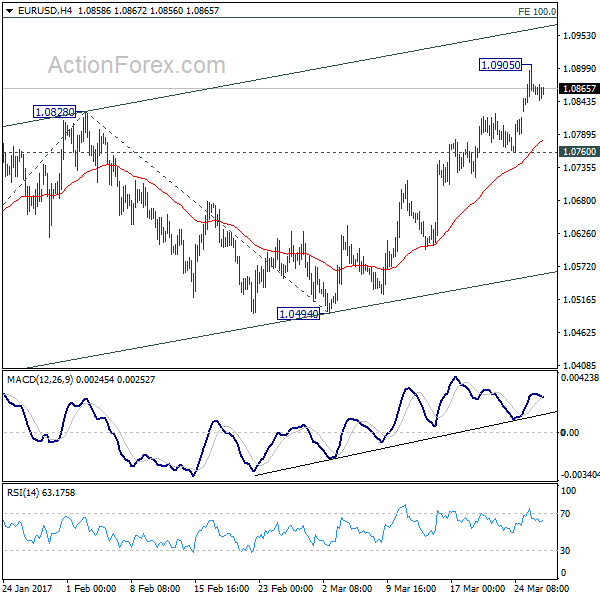
The single currency rallied after holding above previous support at 1.0493, dampening our bearishness and consolidation with mild upside bias is seen for marginal gain, however, as broad outlook remains consolidative, reckon upside would be limited to 1.0660-65 (50% Fibonacci retracement of 1.0829-1.0493) and resistance at 1.0680 should hold, price should falter well below 1.0700-05 (61.8% Fibonacci retracement), bring retreat later.
In view of this, would not chase this rise here and would be prudent to stand aside in the meantime. Below 1.0570-75 would prolong consolidation and risk weakness to 1.0540-45, however, support at 1.0493 should remain intact. Only a drop below this support would revive bearishness and signal;l recent decline from 1.0829 has resumed for further selloff to 1.0470 and then towards previous support at 1.0454.

Trade Idea Update: USD/JPY – Sell at 114.35
USD/JPY - 113.77
Original strategy :
Sell at 114.35, Target: 113.35, Stop: 114.70
Position : -
Target : -
Stop : -
New strategy :
Sell at 114.35, Target: 113.35, Stop: 114.70
Position : -
Target : -
Stop : -
Although the greenback rose briefly to 114.75, the subsequent sharp retreat suggests top is possibly formed there on Friday, hence consolidation with mild downside bias is seen for retracement of last week’s rise to 111.69, hence weakness to 113.47 support is likely, below there would bring further fall to 113.20-25 (50% Fibonacci retracement of 111.69-114.75), however, downside would be limited to 113.00 and 112.84-86 (previous resistance and 61.8% Fibonacci retracement), bring rebound later.
In view of this, we are looking to sell dollar on recovery for such move as 114.40-50 should limit upside, bring another decline. Only above said resistance at 114.75 would abort and signal the rise from 111.69 has resumed and extend gain to 114.96 (previous resistance) but price should falter well below resistance at 115.38.