Sample Category Title
Spotlight on US Consumer Sentiment
In focus today
- Today's schedule is light in terms of data releases.
- In the US we get the Conference Board Consumer Confidence numbers for June at 16.00 CEST. A Reuters poll has consensus expecting 100.0, slightly down from 102.0 in May.
- In Sweden, May PPI is released at 08.00 CEST. Its development has been normalized over many months now. However, frontloaded import inflation has begun to moderately pick up pace and is now slightly above its historical mean. Thus, Sweden is no longer importing a deflationary pressure.
- FOMC members Bowman and Cook (both voting members) give speeches today. Bowman speaks at both 13.00 and 20.10 CEST and Cook at 18.00 CEST.
Economic and market news
What happened overnight
In Japan, the Chief Cabinet Secretary Yoshimasa Hayashi said that authorities would respond appropriately to excess FX volatility. The top governmental spokesperson emphasised that currency volatility was negatively affecting both households and businesses, as such following the lines of Japanese Finance Minister Shunichi Suzuki, who had said earlier that currency rates 'need to be stable', and that authorities would respond 'appropriately to excessive currency moves'. The Japanese yen has been nearing 160 against the US dollar (USDJPY), and trades around 159.4 as of this morning. When the USDJPY hit a 34-year trough of 160.245 earlier this year it triggered interventions by authorities in late April and early May of USD61.33bn.
In the US, president of the San Fransisco Fed, Mary Daly, said the Fed need not only worry about inflation as rising unemployment was increasingly becoming a risk. Daly said inflation still posed a risk, and the Fed would hence need to keep monetary policy strict to dampen demand. However, she said in doing so, it would need to exhibit care so as not to risk it translating into too high unemployment.
What happened yesterday
In Germany, the Ifo declined in line with Friday's composite PMIs. Ifo dropped solely due to its expectations component which fell to 89.0 (consensus: 90.7, prior: 90.3), whereas the assessment of the current business situation stood unchanged at 88.3 (consensus: 90.7, prior: 90.3). The June decline in both the Ifo and PMI follows several months of strengthening. Although one should caution against overinterpreting a single month's data, the weak sentiment signals in June clearly questions the strength of the growth rebound seen in the first half of 2024.
In Sweden, finance minister Elisabeth Svantesson declared victory over inflation, and stated that fiscal policy would no longer try to beat inflation. The finance minister however reiterated that what matters going forward is not the amount spent, but rather the type of fiscal measures that are implemented, as long-term fiscal stability remains a core objective. As such, the finance minister warned that fiscal policy will not necessarily turn expansionary just because inflation has come under control.
In the US, President of the Chicago Fed, Austan Goolsbee, said policy makers were still looking for further cooling of inflation before considering initiating their first rate cut. Goolsbee described himself as a 'closet optimist' that improvements in terms of inflation would soon show themselves in data releases.
USD/JPY Daily Outlook
Daily Pivots: (S1) 158.95; (P) 159.43; (R1) 160.11; More...
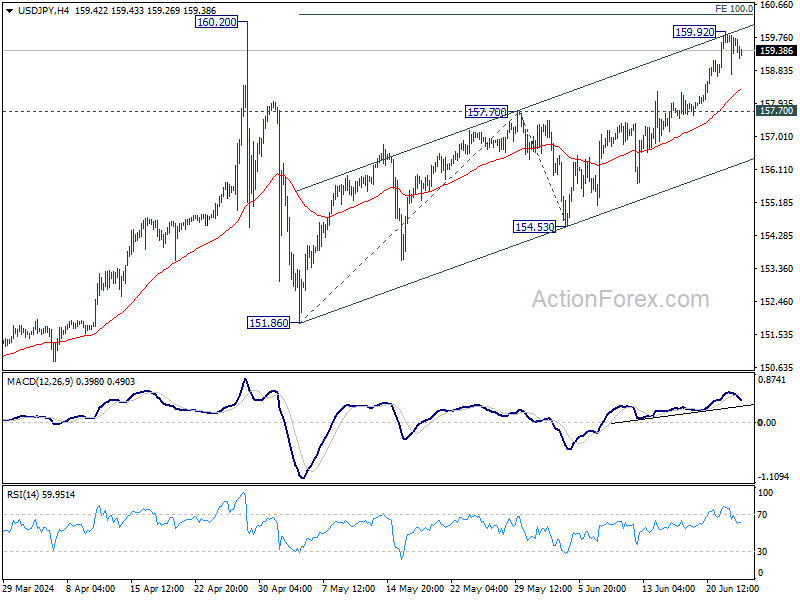
A temporary top should be formed at 159.92 in USD/JPY and intraday bias is turned neutral first. Further rise will remain in favor as long as 157.70 resistance turned support holds. Sustained break of 106.20 and 100% projection of 151.86 to 157.70 from 154.53 at 160.37 will confirm long term up trend resumption, and pave the way to 161.8% projection at 163.97. Nevertheless, firm break of 157.70 will turn bias back to the downside for channel support (now at 156.23) first.
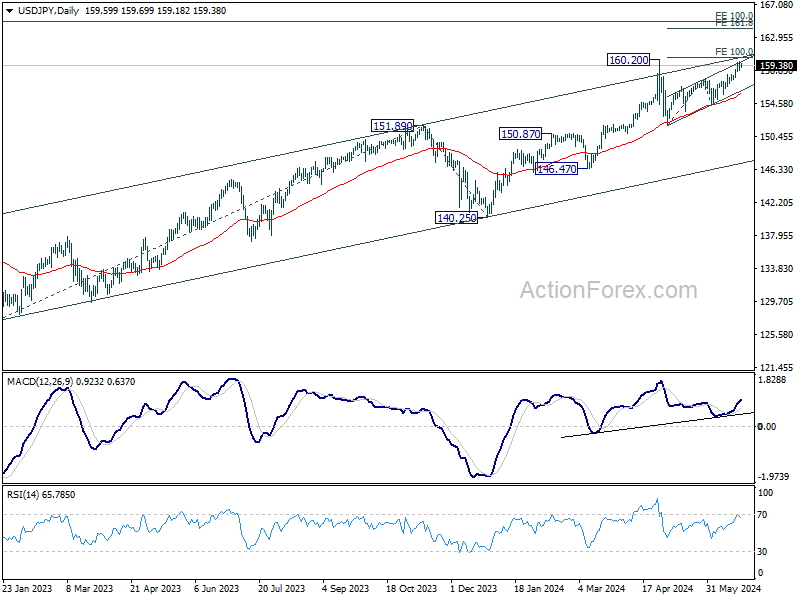
In the bigger picture, there is no sign of long term trend reversal yet. Further rally is expected as long as 150.87 resistance turned support holds. Decisive break of 160.02 will target 100% projection of 127.20 to 151.89 from 140.25 at 164.94.
Canadian CPI Takes Center Stage; Yen Stabilizes in Quiet Trading
Trading in the Asian session has been quiet today and is expected to remain so during the European session, given the empty economic calendar. However, Yen continues to be a significant focus among market participants. Discussions are emerging about the possibility of USD/JPY surging through the 160 level, which is currently perceived as the intervention threshold for Japanese authorities, reaching 170 in a rapid manner.
The primary driver behind this speculation is the substantial interest rate gap between the US and Japan, which is unlikely to narrow significantly anytime soon. Today's data from Japan, showing a further slowdown in business-to-business service inflation in May, does not bolster the case for BoJ to hike rates again in July. Additionally, intervention alone, without substantial market participation in buying Yen, is considered insufficient to reverse the currency's course.
Attention will also turn to Canadian Dollar later in the day with the release of Canadian CPI data. BoC Governor Tiff Macklem has stated that he does not want to ease monetary policy "too quickly," aligning with the expectation that BoC will not deliver back-to-back rate cuts in July. Stronger-than-expected inflation readings today would likely prompt BoC to maintain its current stance for longer before considering the second rate cut in this cycle.
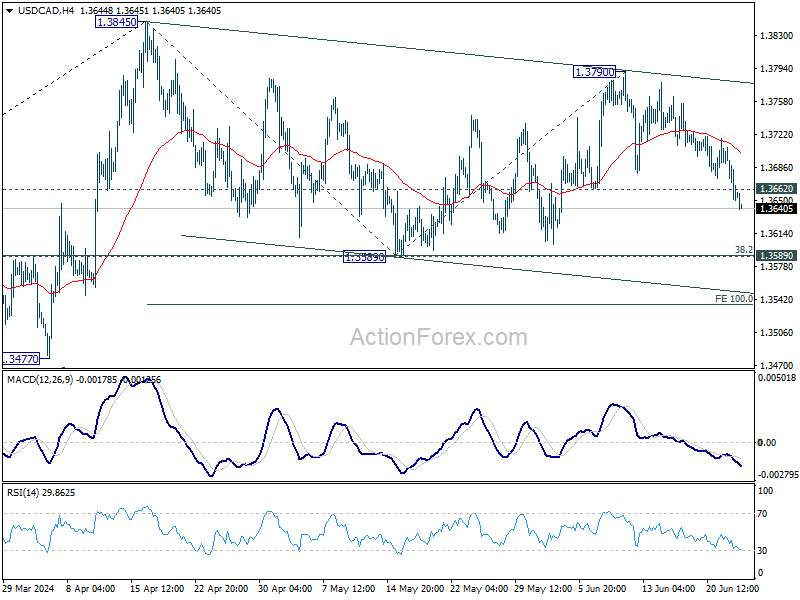
Technically, USD/CAD's extended fall from 1.3790 suggests that rebound from 1.3589 has completed. Corrective pattern from 1.3845 is now extending with the third leg. Deeper fall would be seen to 1.3589 support, or even further to 100% projection of 1.3845 to 1.3589 from 1.3790 at 1.3534.
In Asia, at the time of writing, Nikkei is up 0.72%. Hong Kong HSI is up 0.41%. China Shanghai SSE is down -0.10%. Singapore Strait Times is up 0.25%. Japan 10-year JGB yield is up 0.0099 at 1.001. Overnight, DOW rose 0.67%. S&P 500 fell -0.31%. NASDAQ fell -1.09%. 10-year yield fell -0.009 to 4.248.
Fed's Daly: We have two goals, one tool, and a lot of uncertainty
San Francisco Fed President Mary Daly, in a speech last night, discussed the ongoing challenges with inflation and the labor market. Daly remarked that the inconsistent inflation data this year has not built confidence. While recent figures are promising, it remains uncertain if the path to sustainable price stability is secure.
While, the labor market has been slow to adjust, with only a slight increase in the unemployment rate, Daly warned that "we are getting nearer to a point where that benign outcome could be less likely. "
Emphasizing Fed's situation with "two goals, one tool, and a lot of uncertainty," and Daly stressed that "policy has to be conditional" and policymakers have to "think in scenarios."
Daly outlined the possible policy responses to different economic scenarios. "If inflation turns out to fall more slowly than projected, then holding the federal funds rate higher for longer would be appropriate."
Conversely, "If inflation falls rapidly, or the labor market softens more than expected, then lowering the policy rate would be necessary."
Daly also addressed a middle-ground scenario, saying, "If we continue to see gradual declines in inflation and a slow rebalancing in the labor market, then we can normalize policy over time, as many expect."
BoC's Macklem monitoring wage growth for further moderation
BoC Governor Tiff Macklem emphasized overnight that the central bank doesn't want monetary to be "more restrictive than it has to be,". Yet he also cautioned against lowering borrowing costs "too quickly" as it could undermine progress on controlling inflation.
Macklem pointed out that although wage growth remains above pre-pandemic levels, there are signs that the labor market is rebalancing and inflation is moderating, which could reduce compensation pressures.
"Wages tend to lag adjustments in employment," he explained, adding, "Going forward, we will be looking for wage growth to moderate further."
Australia's Westpac consumer sentiment ticks up but still deeply pessimistic
Australia's Westpac Consumer Sentiment rose 1.7% mom to 83.6 in June. However, the index remains deeply pessimistic, well below neutral level of 100. Although assessments of personal finances and buyer sentiment have become less negative, concerns about inflation, interest rates, and economic growth continue to weigh heavily on consumers.
The sub-index tracking the 'economic outlook for the next 12 months' fell -5.7% mom to 78.5, marking its lowest level since last October. In contrast, the 'economic outlook for the next 5 years' sub-index saw a slight improvement, rising 2.1% mom to 94.1.
Regarding RBA monetary policy, Westpac noted that the upcoming Q2 CPI data, due on July 31, will be crucial. Westpac expects the update to confirm that weak demand is still exerting disinflationary pressure. This should provide RBA with sufficient confidence that upside risks are not materializing, reducing the likelihood of a rate hike.
Looking ahead
The economic calendar is empty in Europen session. Canada CPI is the main focus later in the day. US will relase house price index and consumer confidence.
USD/JPY Daily Outlook
Daily Pivots: (S1) 158.95; (P) 159.43; (R1) 160.11; More...
A temporary top should be formed at 159.92 in USD/JPY and intraday bias is turned neutral first. Further rise will remain in favor as long as 157.70 resistance turned support holds. Sustained break of 106.20 and 100% projection of 151.86 to 157.70 from 154.53 at 160.37 will confirm long term up trend resumption, and pave the way to 161.8% projection at 163.97. Nevertheless, firm break of 157.70 will turn bias back to the downside for channel support (now at 156.23) first.
In the bigger picture, there is no sign of long term trend reversal yet. Further rally is expected as long as 150.87 resistance turned support holds. Decisive break of 160.02 will target 100% projection of 127.20 to 151.89 from 140.25 at 164.94.
Economic Indicators Update
| GMT | Ccy | Events | Actual | Forecast | Previous | Revised |
|---|---|---|---|---|---|---|
| 23:50 | JPY | Corporate Service Price Index Y/Y May | 2.50% | 2.80% | 2.70% | |
| 00:30 | AUD | Westpac Consumer Confidence Jun | 1.70% | -0.30% | ||
| 12:30 | CAD | CPI M/M May | 0.30% | 0.50% | ||
| 12:30 | CAD | CPI Y/Y May | 2.60% | 2.70% | ||
| 12:30 | CAD | CPI Core M/M May | 0.20% | 0.20% | ||
| 12:30 | CAD | CPI Media Y/Y May | 2.60% | 2.60% | ||
| 12:30 | CAD | CPI Trimmed Y/Y May | 2.80% | 2.90% | ||
| 12:30 | CAD | CPI Common Y/Y May | 2.60% | 2.60% | ||
| 13:00 | USD | S&P/CS Composite-20 HPI Y/Y Apr | 7.00% | 7.40% | ||
| 13:00 | USD | Housing Price Index M/M Apr | 0.50% | 0.10% | ||
| 14:00 | USD | Consumer Confidence Jun | 100.2 | 102 |
Elliott Wave Analysis on Silver (XAGUSD) Expects Further Correction Lower
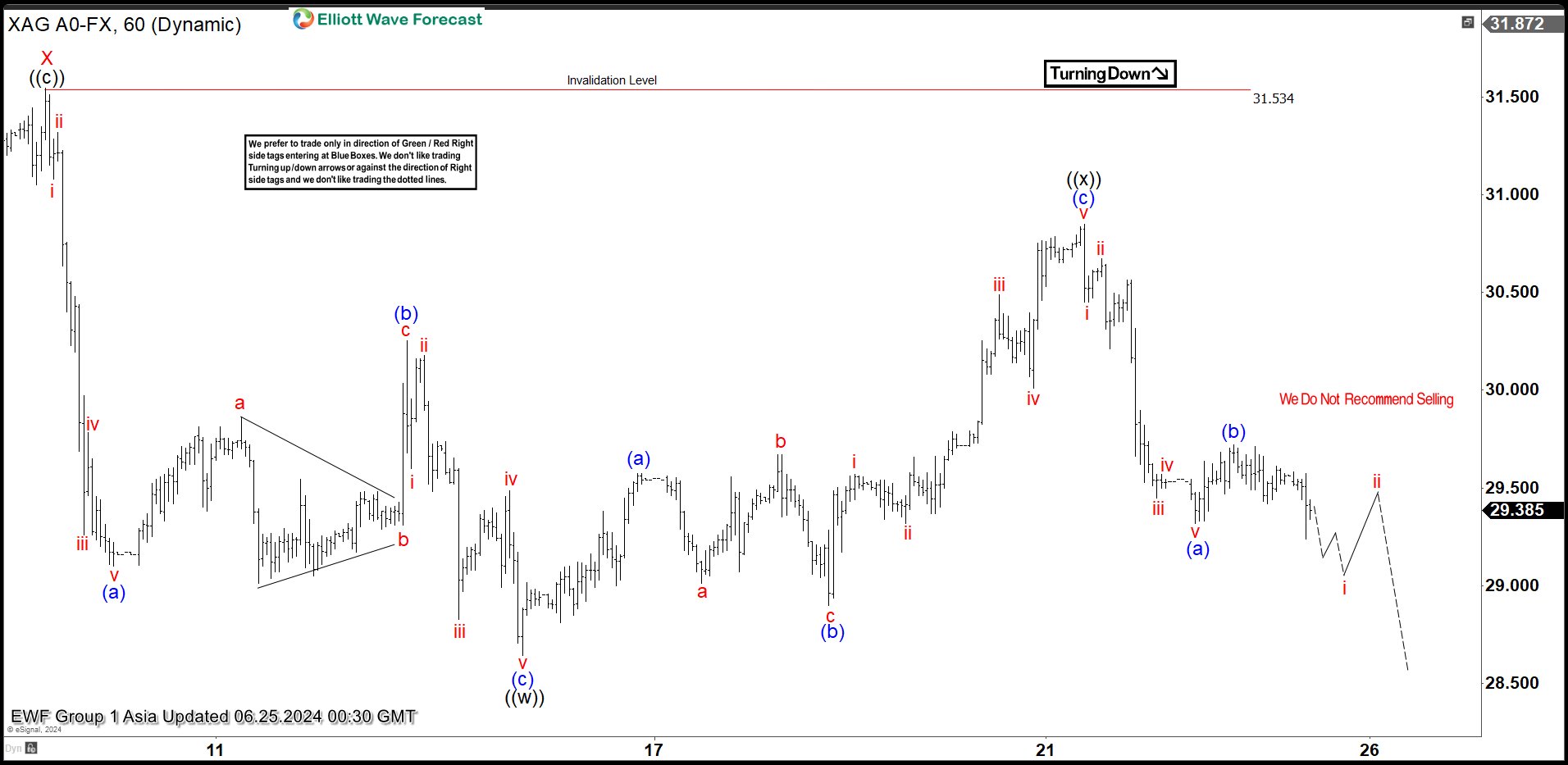
Short Term Elliott Wave in XAGUSD (Silver) suggests cycle from 5.20.2024 high remains in progress as a double three structure. Down from 5.20.2024 high, wave ((a)) ended at 30.03 and wave ((b)) rally ended at 32.29. Wave ((c)) lower ended at 29.36 which completed wave W. Rally in wave X has ended at 31.53 as the 1 hour chart below shows. Wave Y lower is now in progress as another double three in lower degree.
Down from wave X, wave (a) ended at 29.1 and rally in wave (b) ended at 30.25. Wave (c) lower ended at 28.64 which completed wave ((w)) in higher degree. Rally in wave ((x)) unfolded as a zigzag structure. Up from wave ((w)), wave (a) ended at 29.57 and pullback in wave (b) ended at 28.90. Wave (c) higher ended at 30.84 which completed wave ((x)) in higher degree. The metal has turned lower in wave ((y)). Down from wave ((x)), wave (a) ended at 29.32 and rally in wave (b) ended at 29.72. The metal has extended lower in wave (c). Near term, as far as pivot at 31.53 high stays intact, expect rally to fail in 3, 7, 11 swing for further downside.
XAGUSD 60 Minutes Elliott Wave Chart
Silver (XAGUSD) Elliott Wave Video
https://www.youtube.com/watch?v=HclRLq-spKY
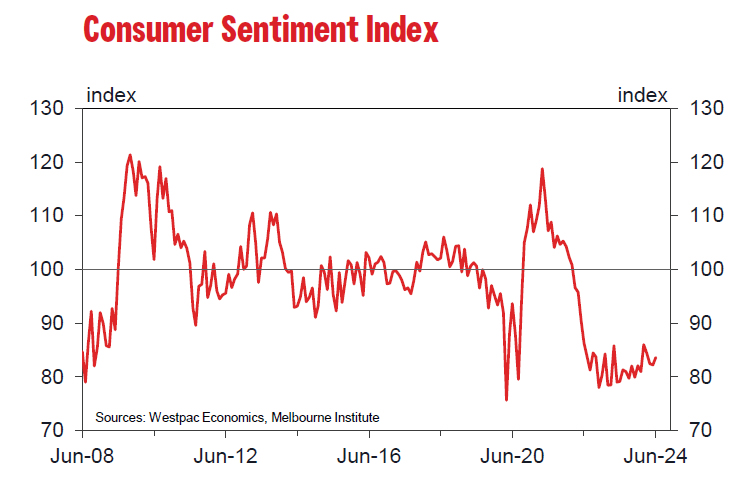
Australia’s Westpac consumer sentiment ticks up but still deeply pessimistic
Australia's Westpac Consumer Sentiment rose 1.7% mom to 83.6 in June. However, the index remains deeply pessimistic, well below neutral level of 100. Although assessments of personal finances and buyer sentiment have become less negative, concerns about inflation, interest rates, and economic growth continue to weigh heavily on consumers.
The sub-index tracking the 'economic outlook for the next 12 months' fell -5.7% mom to 78.5, marking its lowest level since last October. In contrast, the 'economic outlook for the next 5 years' sub-index saw a slight improvement, rising 2.1% mom to 94.1.
Regarding RBA monetary policy, Westpac noted that the upcoming Q2 CPI data, due on July 31, will be crucial. Westpac expects the update to confirm that weak demand is still exerting disinflationary pressure. This should provide RBA with sufficient confidence that upside risks are not materializing, reducing the likelihood of a rate hike.
BoC’s Macklem monitoring wage growth for further moderation
BoC Governor Tiff Macklem emphasized overnight that the central bank doesn't want monetary to be "more restrictive than it has to be,". Yet he also cautioned against lowering borrowing costs "too quickly" as it could undermine progress on controlling inflation.
Macklem pointed out that although wage growth remains above pre-pandemic levels, there are signs that the labor market is rebalancing and inflation is moderating, which could reduce compensation pressures.
"Wages tend to lag adjustments in employment," he explained, adding, "Going forward, we will be looking for wage growth to moderate further."
Bitcoin Plummets Below $60K: Analyzing the Sudden Crash
Key Highlights
- Bitcoin price started another decline below the $60,000 support zone.
- BTC is trading below a major bearish trend line with resistance at $63,800 on the 4-hour chart.
- EUR/USD remained stable and attempted to recover above 1.0720.
- Oil prices are eyeing more upsides above the $82.50 resistance.
Bitcoin Price Technical Analysis
Bitcoin price failed to clear the $66,500 resistance zone and started a fresh decline. BTC/USD traded below many supports such as $65,500 and $65,000.
Looking at the 4-hour chart, the price settled well below the $65,000 zone, the 100 simple moving average (red, 4 hours), and the 200 simple moving average (green, 4 hours). The bears even dragged the price below the $62,000 support zone.
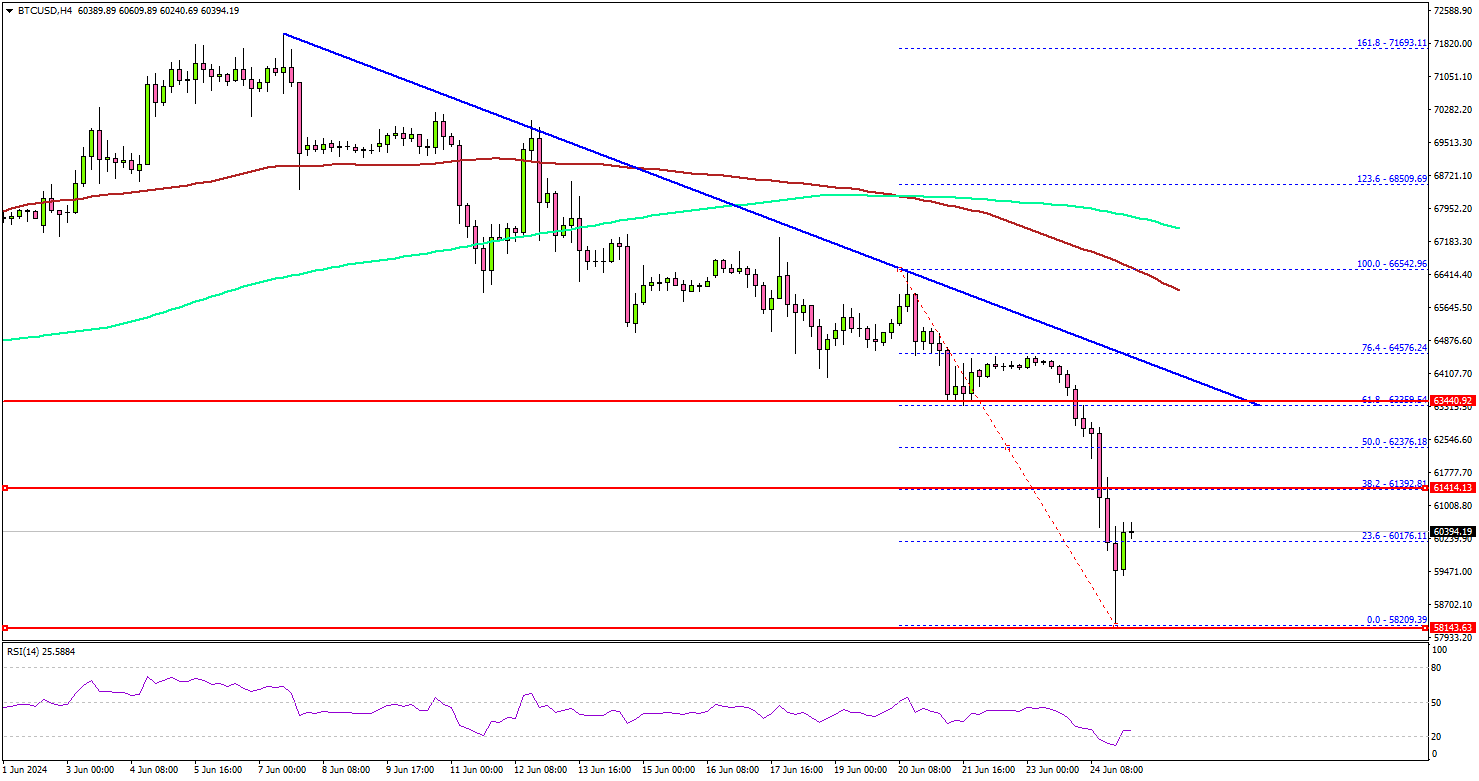
They seem to be aiming for a move toward the $57,500 support zone. If there is a recovery wave, the price could face resistance near the $61,400 level.
The first key resistance is near the $63,500 zone. There is also a major bearish trend line forming with resistance at $63,800 on the 4-hour chart. The trend line is close to the 61.8% Fib retracement level of the downward move from the $66,542 swing high to the $58,209 low.
The next resistance is near $66,500 and the 100 simple moving average (red, 4 hours). A successful close above $66,500 might start another steady increase. In the stated case, the price may perhaps rise toward the $68,000 level.
Conversely, Bitcoin might extend losses. Immediate support is near the $60,000 level. The main support sits at $59,200. Any more losses might send the price toward the $57,500 support zone.
Today’s Economic Releases
- Fed's Bowman speech.
Fed’s Daly: We have two goals, one tool, and a lot of uncertainty
San Francisco Fed President Mary Daly, in a speech last night, discussed the ongoing challenges with inflation and the labor market. Daly remarked that the inconsistent inflation data this year has not built confidence. While recent figures are promising, it remains uncertain if the path to sustainable price stability is secure.
While, the labor market has been slow to adjust, with only a slight increase in the unemployment rate, Daly warned that "we are getting nearer to a point where that benign outcome could be less likely. "
Emphasizing Fed's situation with "two goals, one tool, and a lot of uncertainty," and Daly stressed that "policy has to be conditional" and policymakers have to "think in scenarios."
Daly outlined the possible policy responses to different economic scenarios. "If inflation turns out to fall more slowly than projected, then holding the federal funds rate higher for longer would be appropriate."
Conversely, "If inflation falls rapidly, or the labor market softens more than expected, then lowering the policy rate would be necessary."
Daly also addressed a middle-ground scenario, saying, "If we continue to see gradual declines in inflation and a slow rebalancing in the labor market, then we can normalize policy over time, as many expect."
GBP: A Correction May Be Imminent
During Monday's session, the GBPJPY pair continued its uptrend, reaching a high of around 202.50, its highest level since 2007. Despite earlier attempts by sellers to push the pair down to 106.14, buyers regained control and drove the pair to new cycle highs. The Daily Relative Strength Index (RSI) at 68 suggests ongoing bullish momentum, though nearing overbought territory indicates a possible correction. The Daily Moving Average Convergence Divergence (MACD) shows continued bullish momentum with rising green bars, though it might be peaking. Traders should note that while the pair's performance is strong, supported by its position above key SMAs, indicators point to potential corrections, with support around 202.00 and resistance near 203.00.
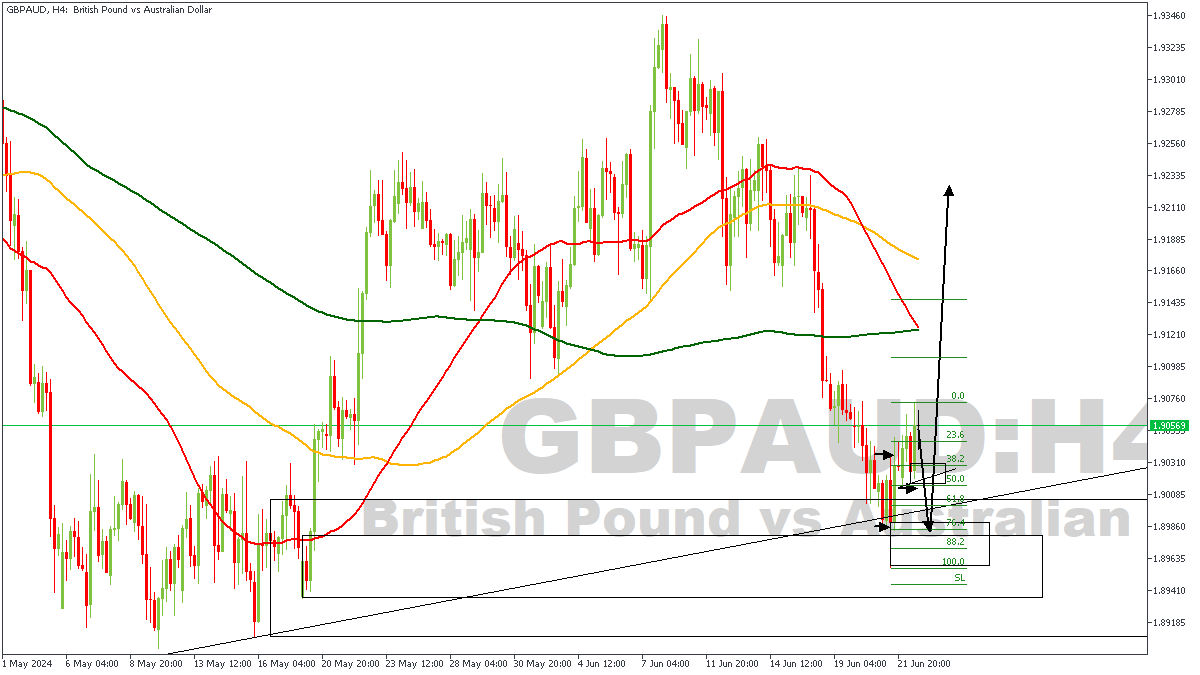
GBPAUD – H4 Timeframe
The far-left side of the attached chart shows evidently that a bullish break of structure occurred, pushing prices all the way to the high at 1.93440 before beginning a corrective move. However, at the moment, I expect price to bounce off the drop-base-rally demand zone I have highlighted on the chart, since the price action has even created a QMR pattern right in the middle of the demand zone. In the case of GBPAUD, my argument is bullish.
Analyst’s Expectations:
- Direction: Bullish
- Target: 1.91006
- Invalidation: 1.89556
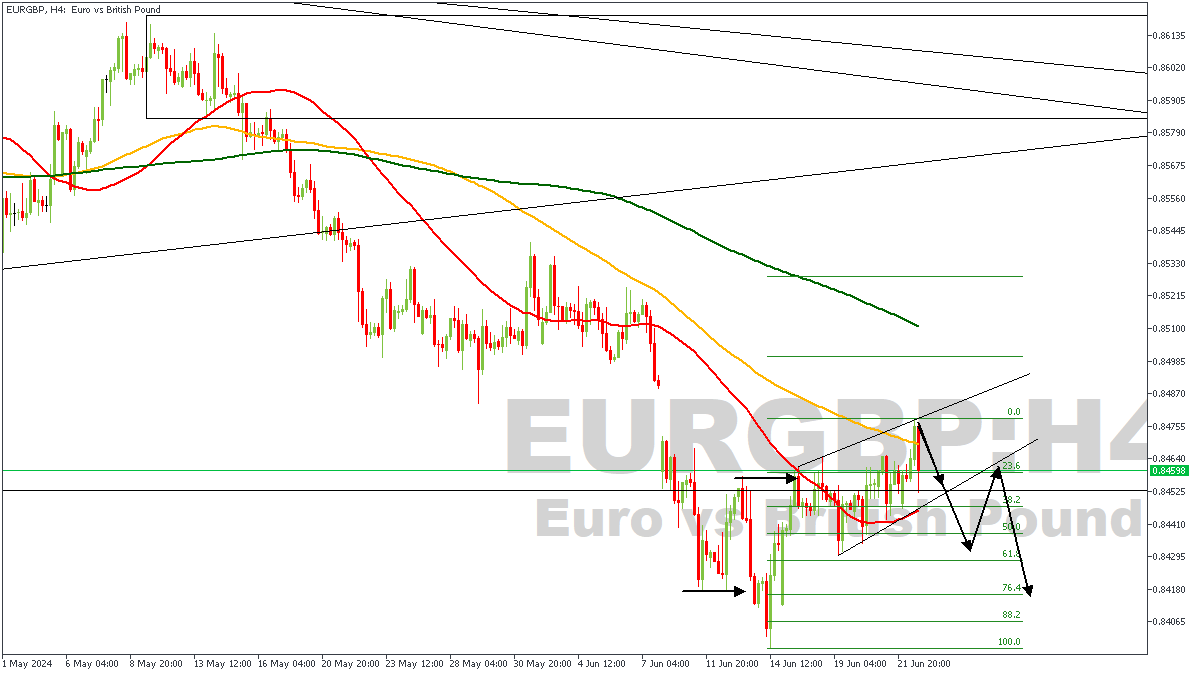
EURGBP – H4 Timeframe
EURGBP on the 4-timeframe chart shows an initial sweep of the sell-side liquidity from the highlighted arrowed line, and the break of structure that followed was also highlighted. According to LIT techniques (Liquidity Inducement Theorem), we ought to see price retrace low enough to sweep liquidity once again from the induced low. So, once price breaks below the trendline support of the ascending channel, my sentiment for a short entry would be validated.
Analyst’s Expectations:
- Direction: Bearish
- Target: 0.84279
- Invalidation: 0.84800
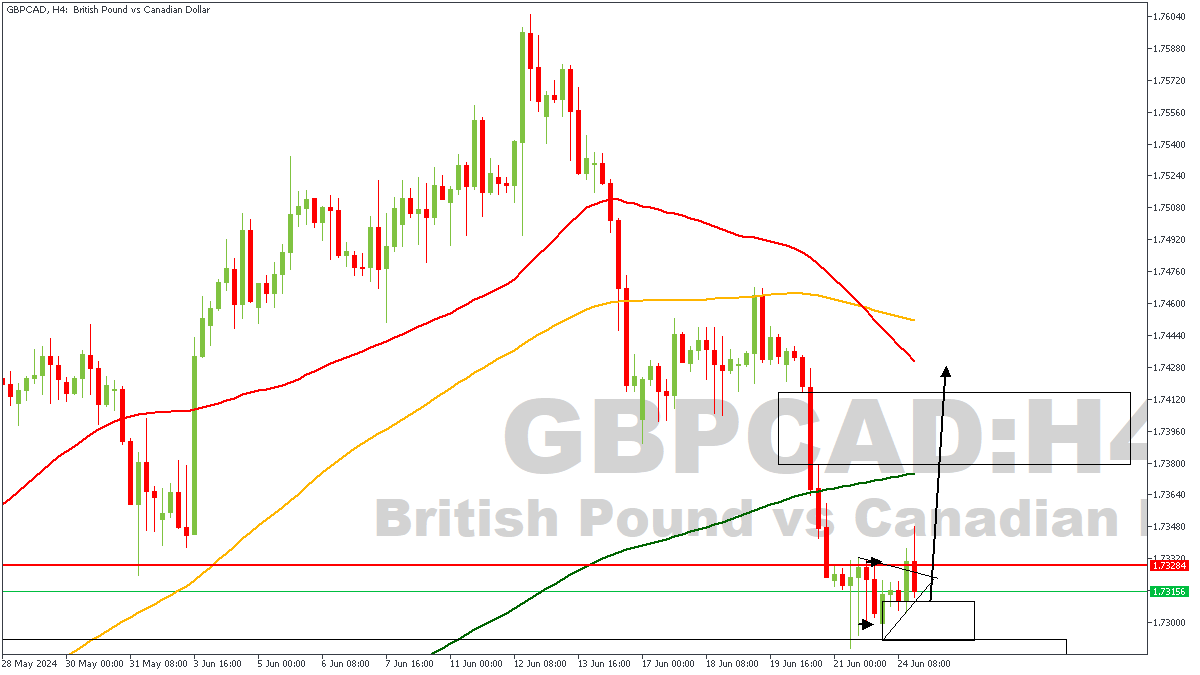
GBPCAD – H4 Timeframe
Within the GBPCAD daily timeframe pivot zone, we can see the attached chart showing a bullish breakout of a triangle pattern on the 4-hour timeframe, right within the demand zone. The implication of this is simply that we should begin to see increased bullish participation in the market since the bullish breakout often signifies that buyers are now in control of the markets.
Analyst’s Expectations:
- Direction: Bullish
- Target: 1.73685
- Invalidation: 1.72873
ICYMI: Monday Market Breakdown
The US Dollar (USD) declined during Monday's European session as political concerns in Europe receded, shifting focus to France's upcoming election. This reduced safe-haven demand for the USD. Meanwhile, the Japanese Yen (JPY) continued to weaken against the USD, nearing the critical 160.00 level, which previously triggered intervention by Japan's Ministry of Finance. Economically, lighter data is expected this week, including the Dallas Fed Manufacturing Business Index for June. In case you missed our weekly market review on the YouTube channel, here are a few trade ideas.
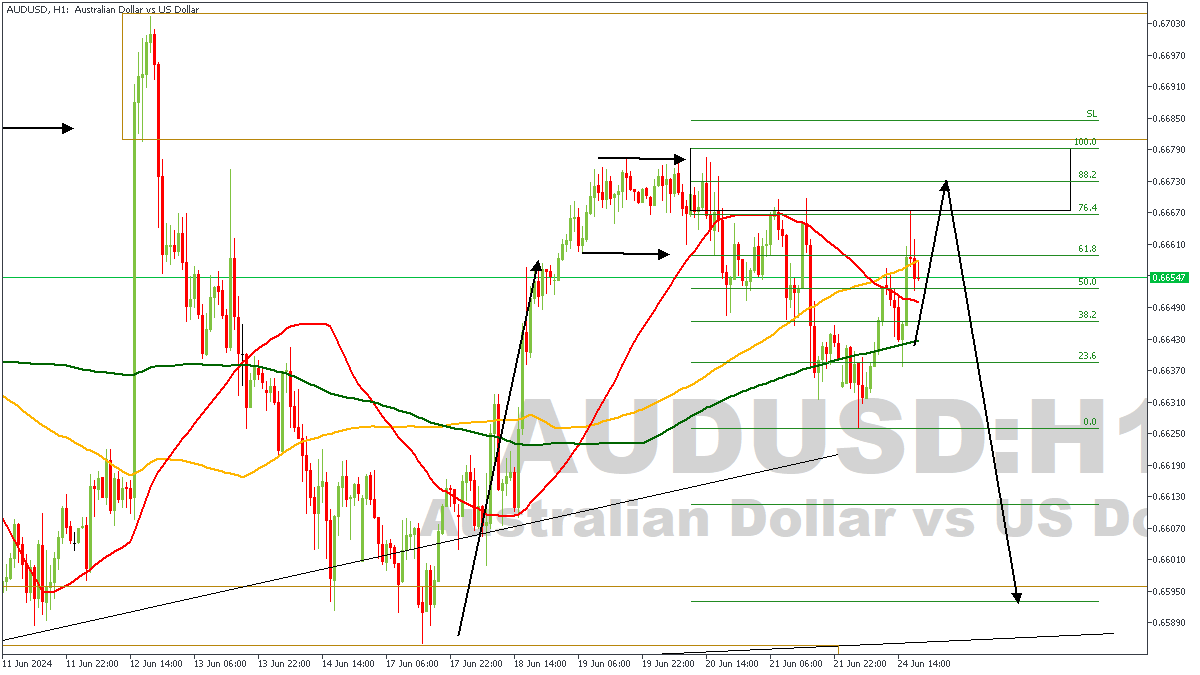
AUDUSD – H1 Timeframe
The 1-hour timeframe of AUDUSD as seen on the attached chart is currently under pressure from an area of supply, with increased confluence as a result of the sweep of the previous high, followed by the bearish break of structure. The supply zone and the 88% of the Fibonacci retracement tool helps solidify my sentiment as bearish, with an initial target at the 23% level.
Analyst’s Expectations:
- Direction: Bearish
- Target: 0.66390
- Invalidation: 0.66810
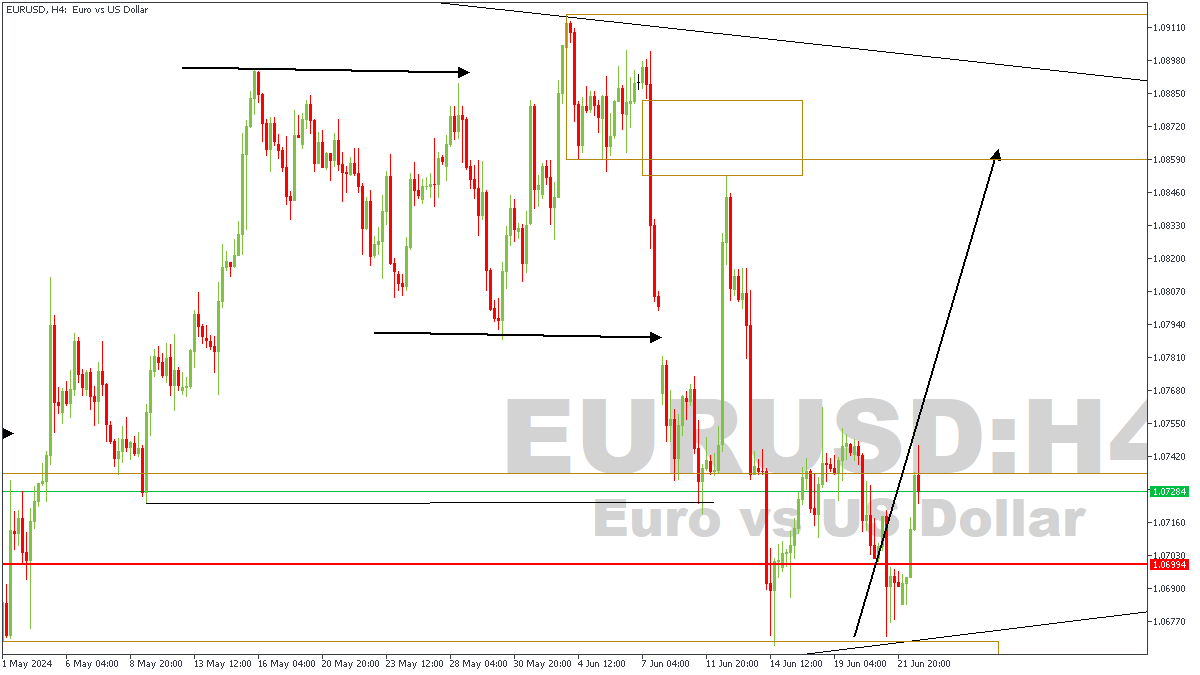
EURUSD – H4 Timeframe
EURUSD as seen on the 4-hour chart recently had a massive reaction off the confluence of the trendline support, and the drop-base-rally demand zone. As indicated by the slanted arrowed line, I am expecting price to keep pushing higher because of the Fair Value Gap price left behind as a result of the very volatile break below the previous low, and the fact that price swept liquidity from an induced low right before tapping into the area of demand.
Analyst’s Expectations:
- Direction: Bullish
- Target: 1.08182
- Invalidation: 1.06481
GBPUSD – H4 Timeframe
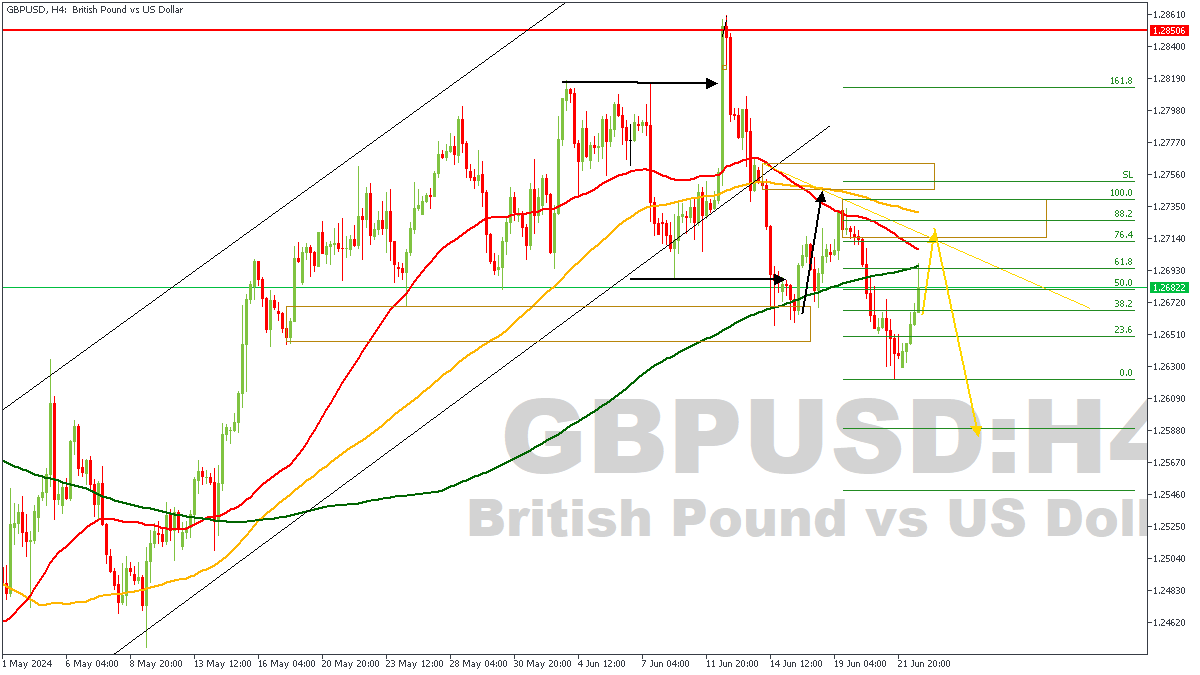
The price action on the 4-hour timeframe of GBPUSD recently broke below the support trendline of an ascending channel, implying the onset of a bearish trend. On that basis, I have plotted a resistance trendline that overlaps a supply zone and is supported by the 50 and 100 moving averages as confluence for the bearish sentiment. The 88% of the Fibonacci is another factor worth considering in favor of the bearish sentiment.
Analyst’s Expectations:
- Direction: Bearish
- Target: 1.26489
- Invalidation: 1.27439