Sample Category Title
Bitcoin Price Extend Rally, Ethereum and Altcoins Follow
Key Highlights
- Bitcoin price extended its rally above $50,000 and $51,000.
- BTC is trading above a key bullish trend line with support at $49,650 on the 4-hour chart.
- Ethereum also rallied above the $2,650 and $2,700 resistance levels.
- XRP and SOL are also showing signs of bullish bias.
Bitcoin Price Technical Analysis
Bitcoin price corrected lower after it spiked above the $50,000 resistance. BTC tested the $48,250 zone and recently started a fresh rally.
Looking at the 4-hour chart, the price is trading above a key bullish trend line with support at $49,650. There was a strong increase above the $50,000 level. BTC settled well above the 100 simple moving average (red, 4 hours) and the 200 simple moving average (green, 4 hours).
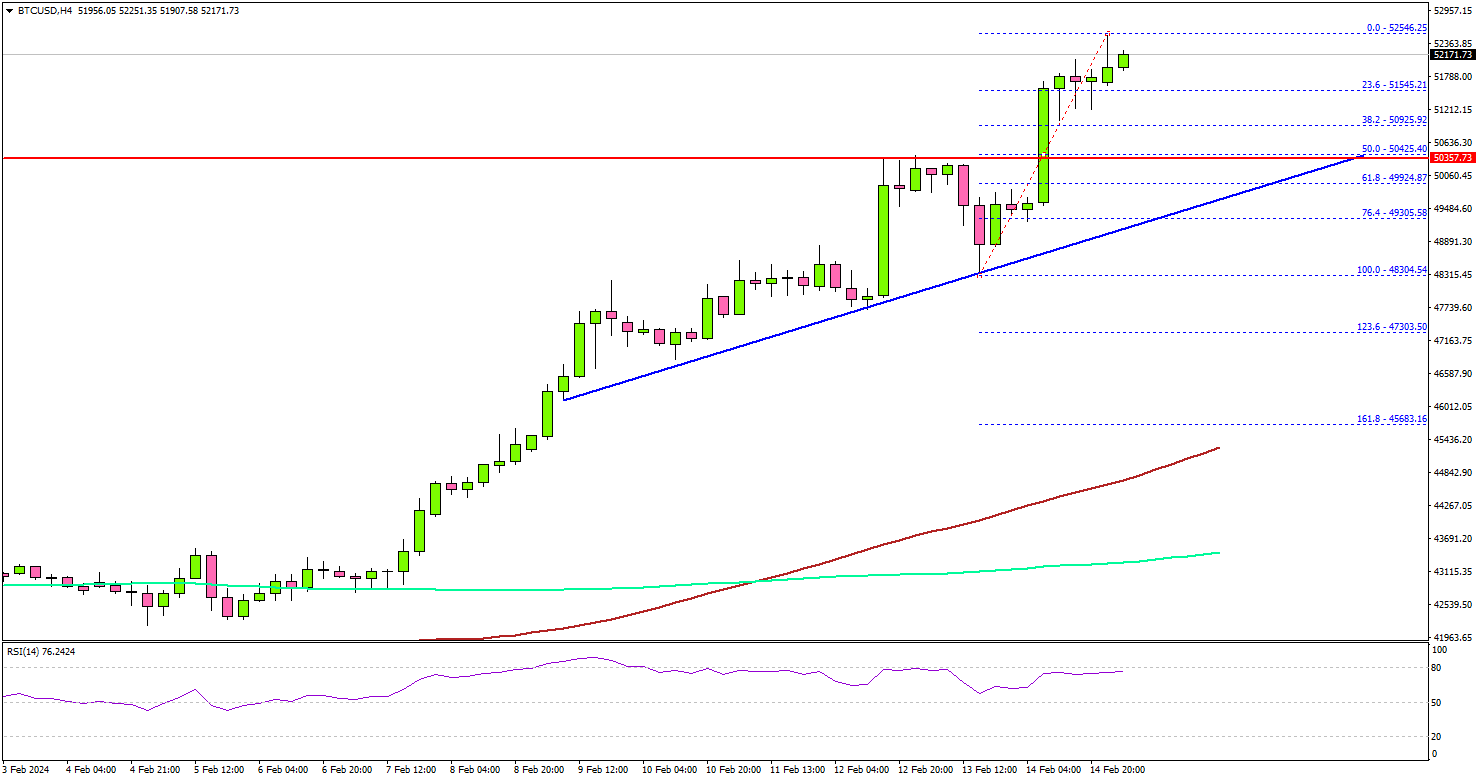
The bulls were able to pump Bitcoin above the $52,000 level. Immediate resistance is near the $52,450 level. The next resistance is near $53,200. A successful close above the $53,200 level might start another steady increase.
In the stated case, the price may perhaps rise toward the $55,000 level. Any more gains might send Bitcoin toward the $56,200 level in the near term.
If not, the price might start a downside correction. Immediate support is near the $50,800 zone. The next major support is $50,000 or the trend line. Any more losses might send the price toward the $49,200 support zone.
The next key support is near the $48,800 level, below which there is a risk of a drop toward the $46,500 level in the coming days.
Economic Releases
- US Initial Jobless Claims - Forecast 220K, versus 218K previous.
- US Retail Sales ex Autos for Jan 2024 (MoM) – Forecast +0.2%, versus +0.4% previous.
Japan enters technical recession amid falling consumption and investment
Japan's economy has entered a technical recession as GDP unexpectedly contracted by -0.1% qoq in Q4, much worse than expectation of 0.3% qoq growth. That also marked a continuation from -0.8% contraction seen in Q3. On annualized basis, the downturn was -0.4%, a stark contrast to the anticipated 1.4% growth and following -3.3% contraction in the previous quarter.
The contraction is attributed primarily to decline in private consumption, which accounts for over half of the Japanese economy, falling by -0.2% qoq. Capital expenditure, another significant driver of private-sector growth, also decreased by -0.1% qoq. However, external demand, as indicated by the net exports, provided a slight buffer, contributing 0.2 percentage points to GDP, with exports growing by 2.6% qoq.
Economy Minister Yoshitaka Shindo emphasized the importance of solid wage growth to support consumer spending, which he noted is currently "lacking momentum" amidst rising prices. He also pointed out that BoJ considers a broad range of data, including consumption patterns and risks to the economy, when formulating monetary policy.
Australia’s employment grows 0.5k in Jan, unemployment rate rises to 4.1%
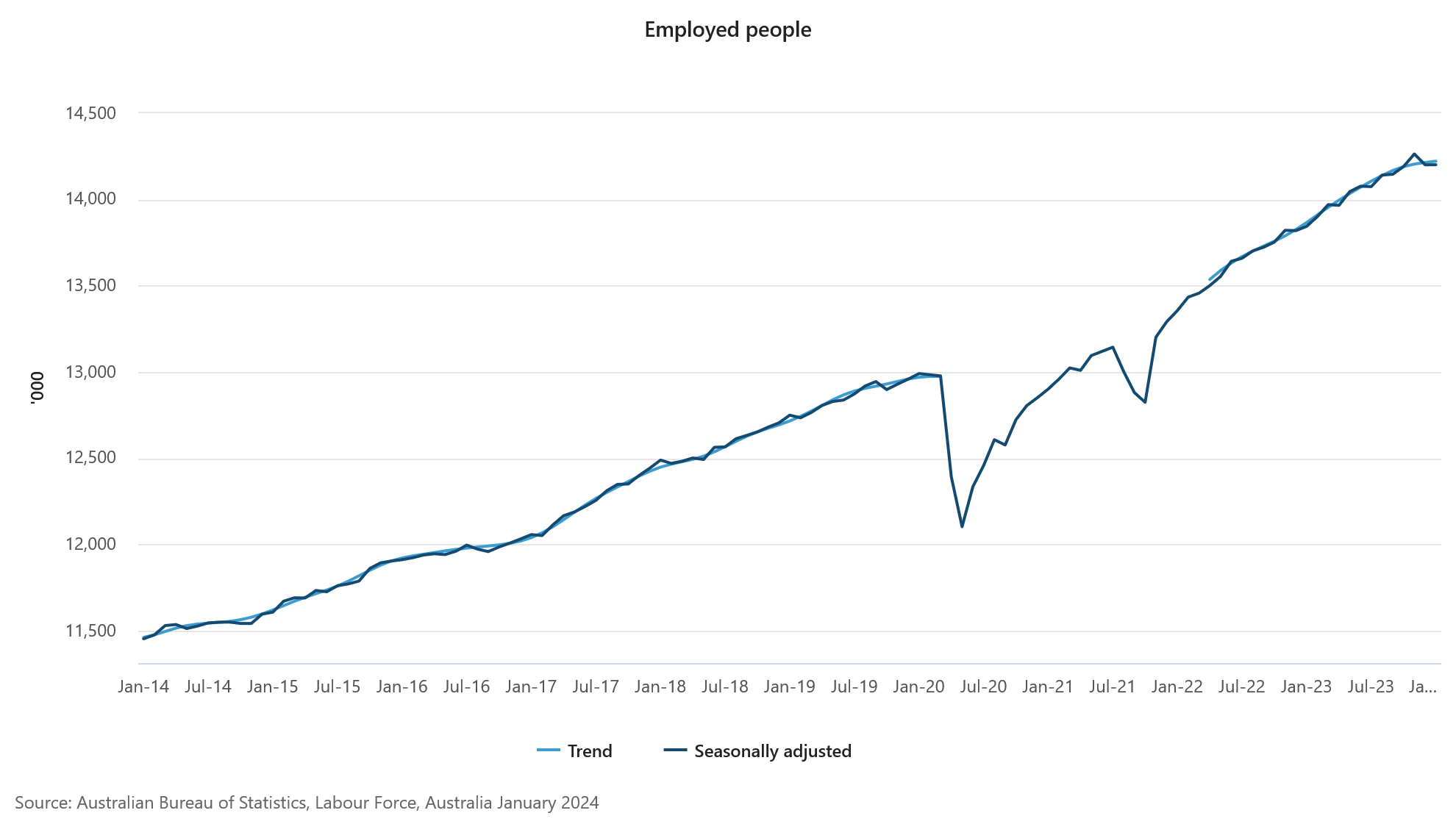
Australia's job market showed further signs of cooling in January, as the latest employment data reveals a modest increase of just 0.5k jobs, significantly below expectation of 20.7k growth. Looking at the details, full-time employment saw an uptick of 11.1k, counterbalanced by reduction in part-time job by -10.6k.
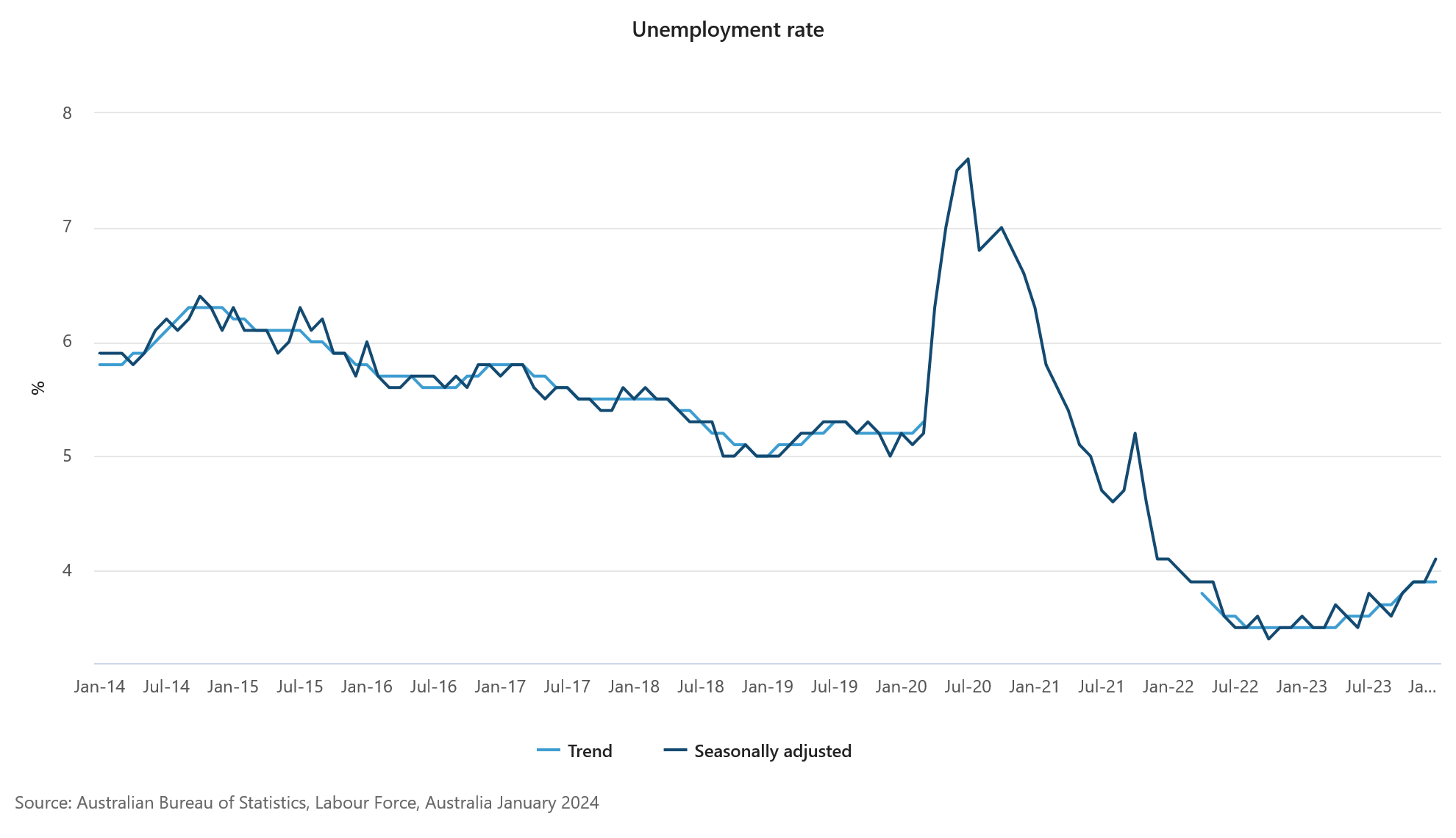
Unemployment rate unexpectedly rose from 3.9% to 4.1%, above expectation of 4.0%. That also marked the first occasion in two years since January 2022 that the rate has breached the 4% threshold. Participation rate held steady at 66.8%, but a notable decrease in monthly hours worked by -2.5% mom paints a picture of a slackening labor market.
RBA’s Bullock highlights inflation persistence and demand-supply imbalance
In today's Senate Estimates appearance, RBA Governor Michele Bullock underscored the "persistent" nature of inflationary pressures within the Australian economy.
She pointed out the crucial distinction between demand growth rates and overall demand levels, emphasizing "growth rates are slowing, but aggregate demand is still above aggregate supply, and that's what's generating inflationary pressures."
Bullock remained optimistic about RBA's ability to manage inflation effectively without jeopardizing employment growth. "We think we're in a good position to get inflation down in a reasonable amount of time while still keeping employment growing," she noted.
Fed’s Barr: Rate cut decisions hinge on continued good data
In a speech overnight, Fed Vice Chair Michael Barr noted that the FOMC is "confident" that US is "on a path to 2% inflation". However, Barr underscored the importance of seeing "continued good data" before initiating reduction in federal funds rate.
Reflecting on the latest consumer product index inflation report, he acknowledged the potential for a "bumpy" journey back to the target inflation rate, emphasizing the need for a "careful approach" in the current economic climate.
BoE’s Bailey highlights persistent concerns over services inflation and wage trends
During an appearance the House of Lords Economics Affairs Committee, BoE Governor Andrew Bailey highlighted that UK's inflation rates have fluctuated, slightly overshooting last month and slightly undershooting this month. The development balanced out to "pretty much leaves us where we were".
He noted the inflation trend were "obviously encouraging" potential worse outcomes. However, he emphasized that services inflation is at levels that are "not compatible with a 2% sustained inflation target". Meanwhile, pay growth reduction was "just not quite as far as we thought."
Bailey's observations come after the latest CPI data remained steady at 4% in January, with core CPI also unchanged at 5.1%. Bailey's comment suggested that this week's data s unlikely to prompt immediate policy shifts.
XAUUSD: What To Expect Now
Following the CPI data release on Tuesday, the price of Gold dropped from its recent high at $2,000 all the way through to the $1980 region where it is currently sitting. As we anticipate what could be next for the yellow metal ahead of the Retails sales data release from the US. In the meantime, here are my projections for XAUUSD going forward.
XAUUSD - D1 Timeframe
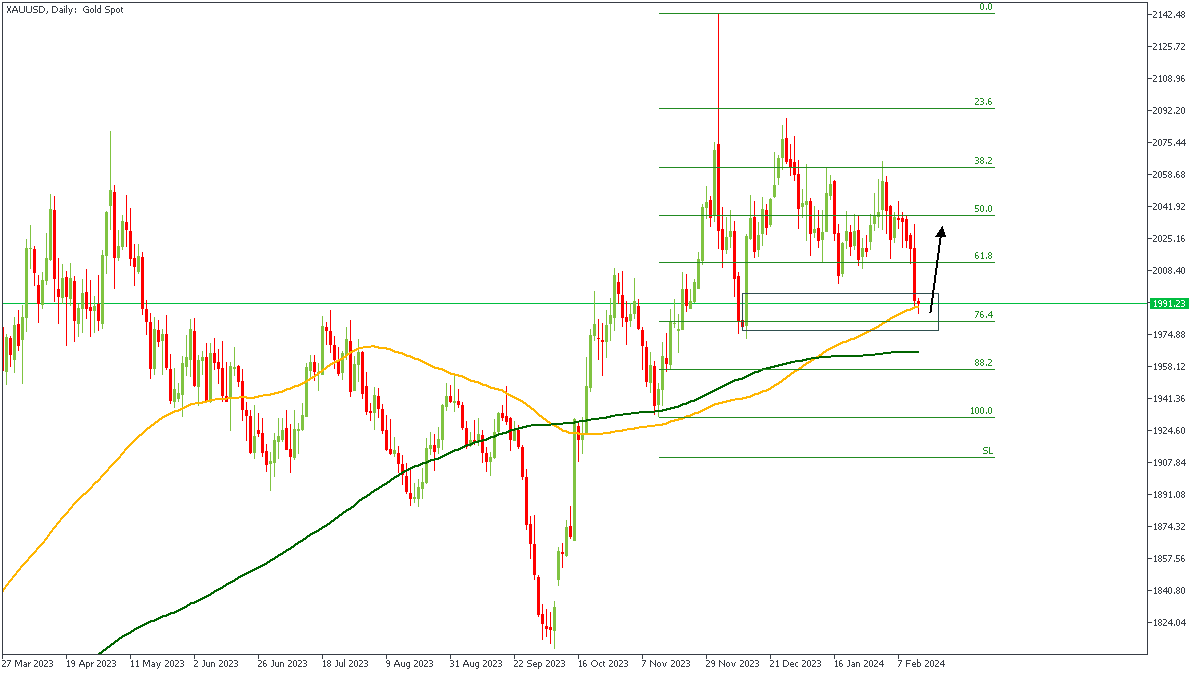
The analysis on XAUUSD that I shared a few weeks ago; in January, I pointed out the bearish movement that has recently played out flawlessly so far, and now the demand zone that was indicated as my target has been reached. In line with this, I expect to see the confluence of the 100-day moving average, the 76% of the Fibonacci retracement, and the bullish array of the moving averages provide the market with renewed bullish vigor.
XAUUSD - H4 Timeframe
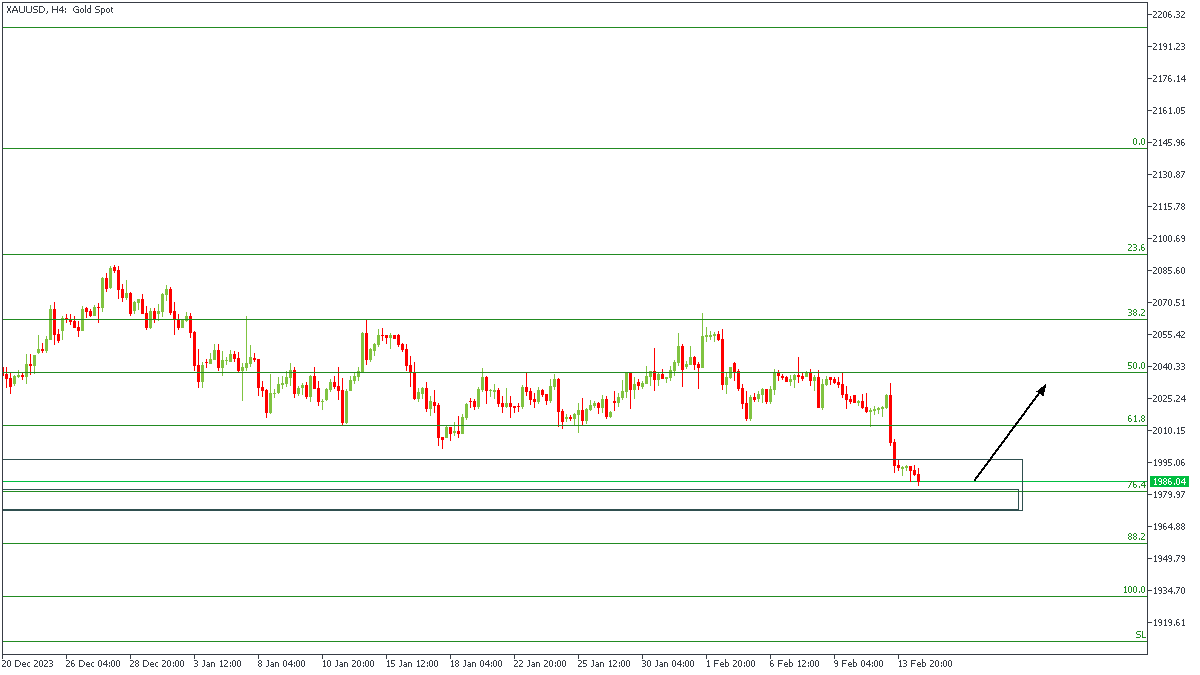
On the 4-hour timeframe of XAUUSD, we can see price currently trading within the demand zone on the 76% Fibonacci retracement level. It is noteworthy that this demand zone sits right within the demand zone on the daily timeframe, and I consider that a good confirmation for incoming bullish pressure.
Analyst’s Expectations:
- Direction: Bullish
- Target: $2020.95
- Invalidation: $1972.22
CONCLUSION
The trading of CFDs comes at a risk. Thus, to succeed, you have to manage risks properly. To avoid costly mistakes while you look to trade these opportunities, be sure to do your due diligence and manage your risk appropriately.
EURGBP Wave Analysis
- EURGBP reversed from support level 0.8510
- Likely to rise to resistance level 0.8575
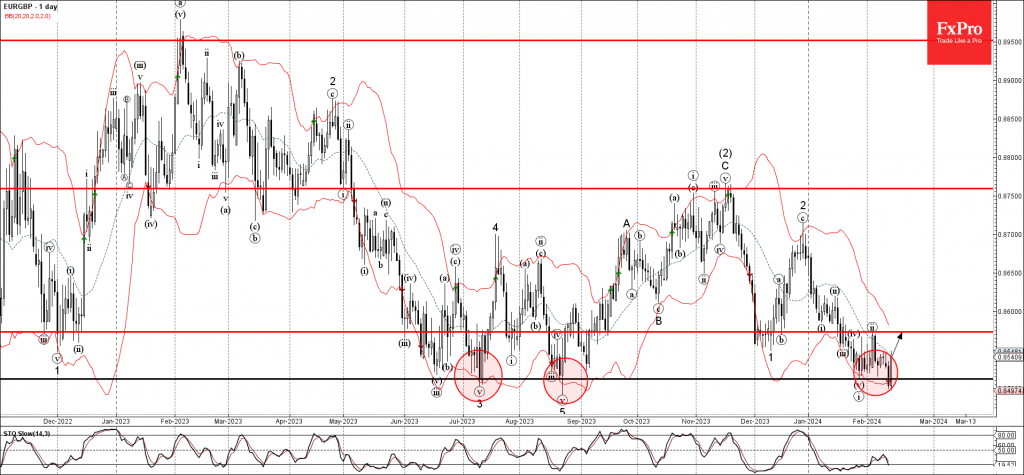
EURGBP currency pair recently reversed up from the key support level 0.8510 (which has been reversing the price from July), strengthened by the lower daily Bollinger Band.
The upward reversal from the support level 0.8510 created the daily Japanese candlesticks reversal pattern Bullish Engulfing.
EURGBP currency pair can be expected to rise further to the next resistance level 0.8575 (top of the previous minor correction ii).
WTI Crude Oil Wave Analysis
- WTI crude oil reversed from resistance level 78.00
- Likely to fall to support level 74.00
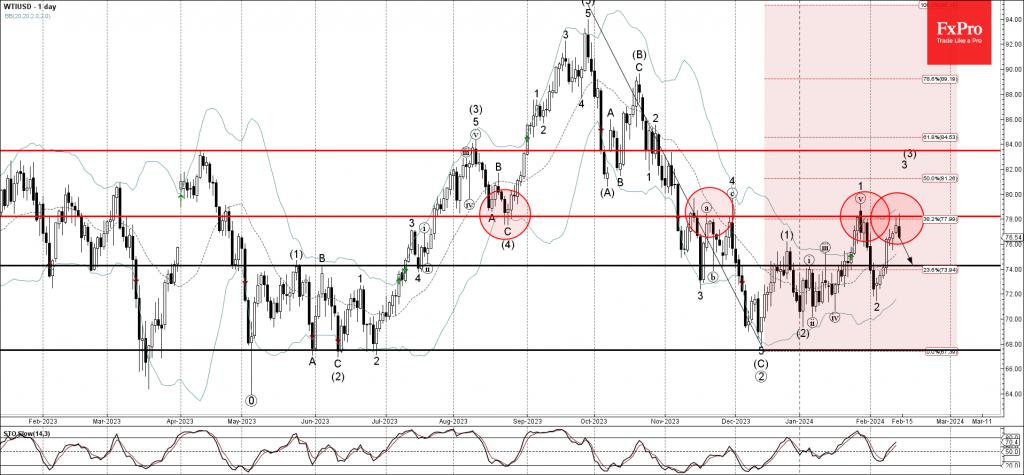
WTI crude oil recently reversed down from the pivotal resistance level 78.00 (former support from August, which has been reversing the price from November), intersecting with by the upper daily Bollinger Band and the 38.2% Fibonacci correction of the downward impulse from September.
The downward reversal from the resistance level 78.00 stopped the previous impulse waves 3 and (3).
Given the improvement of the global risk sentiment, WTI crude oil can be expected to fall further to the next support level 74.00.