Sample Category Title
USD/CHF Mid-Day Outlook
Daily Pivots: (S1) 0.8721; (P) 0.8743; (R1) 0.8773; More....
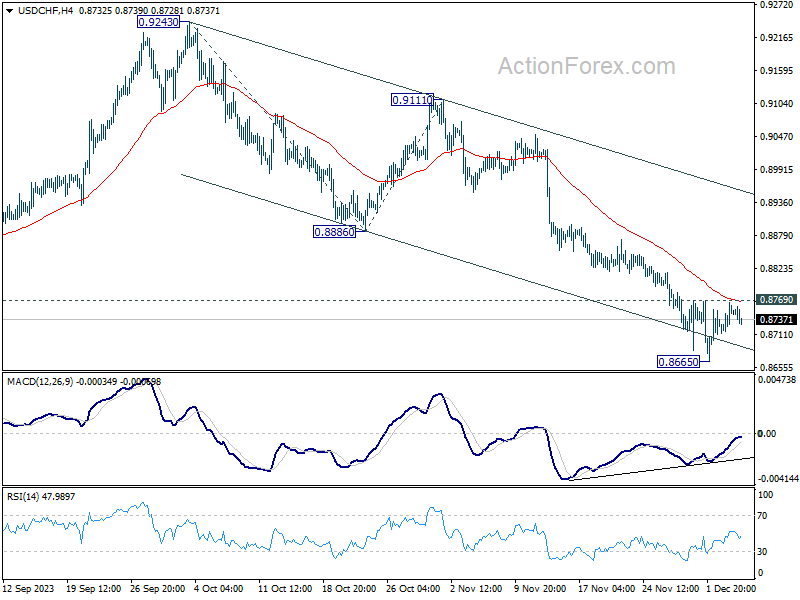
Intraday bias in USD/CHF stays neutral at this point. Another fall is in favor as long as 0.8769 minor resistance holds. Below 0.8665 will resume the decline from 0.9243 to 161.8% projection of 0.9243 to 0.8886 from 0.9111 at 0.8533, which is close to 0.8551 low. However, break of 0.8769 minor resistance should indicate short term bottoming, and turn bias back to the upside for stronger recovery to 0.8886 support turned resistance.
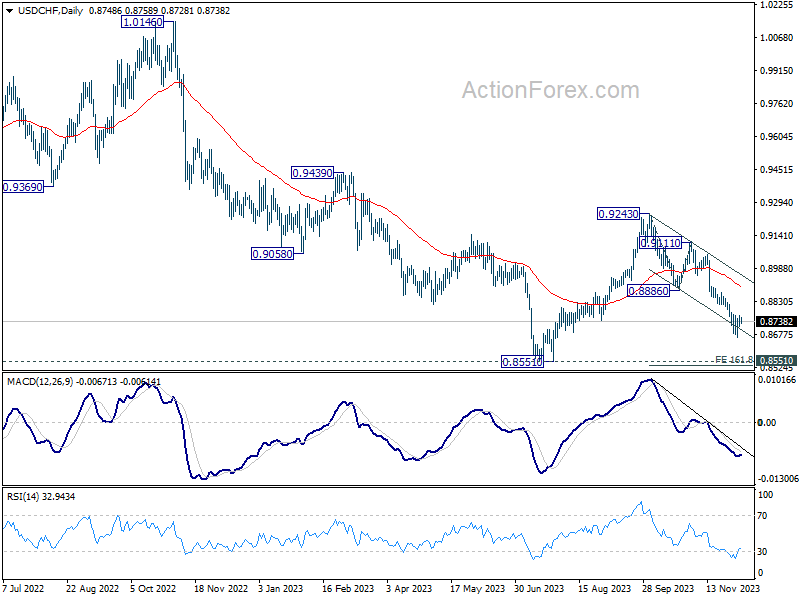
In the bigger picture, price actions from 0.8551 are currently seen as part of a corrective pattern to the decline from 1.0146 (2022 high). Fall from 0.9243 is seen as the second leg for now. Deeper decline could be seen to 0.8551 low but strong support should be seen there to bring rebound. For now, this will remain the favored case as long as 0.8886 support turned resistance holds.
GBP/USD Mid-Day Outlook
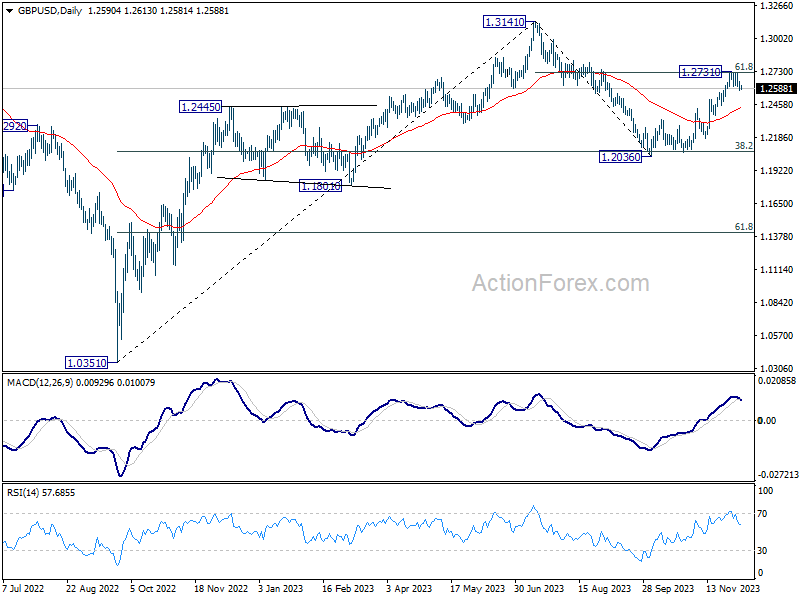
Daily Pivots: (S1) 1.2565; (P) 1.2608; (R1) 1.2640; More...
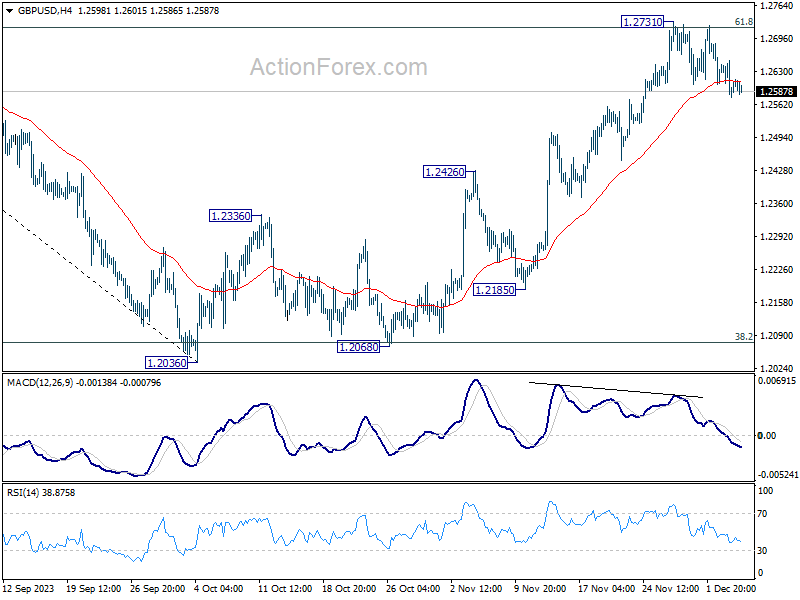
Intraday bias in GBP/USD remains on the downside at this point. Fall from 1.2731 short term top should extend to 55 D EMA (now at 1.2427). For now, risk will stay on the downside as long as 1.2731 resistance holds, in case of recovery.
In the bigger picture, price actions from 1.3141 are seen as a corrective pattern to rise from 1.0351 (2022 low). Strong rebound from 38.2% retracement of 1.0351 (2022 low) to 1.3141 at 1.2075 suggests that current rise from 1.2036 is already the second leg. However, while further rally could be seen, upside should be limited by 1.3141 to bring the third leg of the pattern.
EUR/USD Mid-Day Outlook
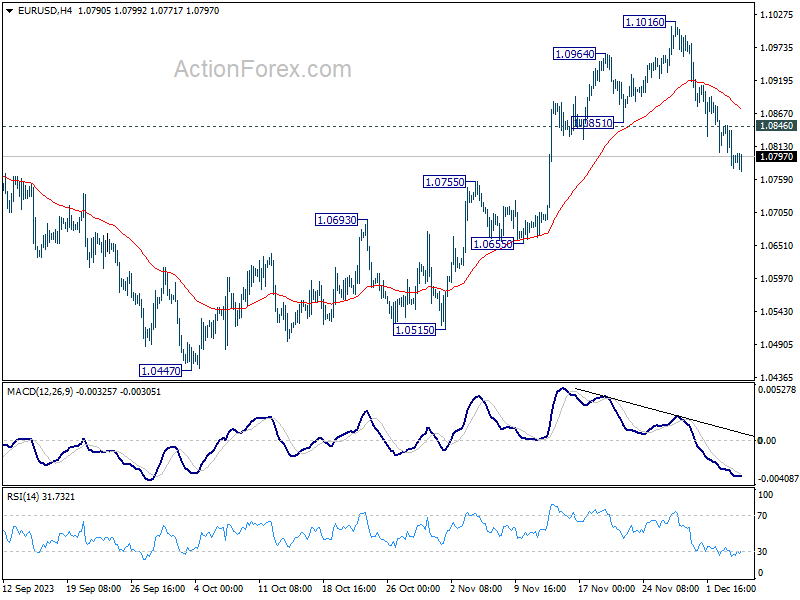
Daily Pivots: (S1) 1.0768; (P) 1.0808; (R1) 1.0838; More...
EUR/USD's fall from 1.1016 is still in progress and intraday bias stays on the downside. Sustained break of 55 D EMA (now at 1.0770) will pave the way to retest 1.0447 support. On the upside, above 1.0846 minor resistance will turn intraday bias neutral first. But risk will stay on the downside as long as 1.1016 resistance holds, in case of recovery.
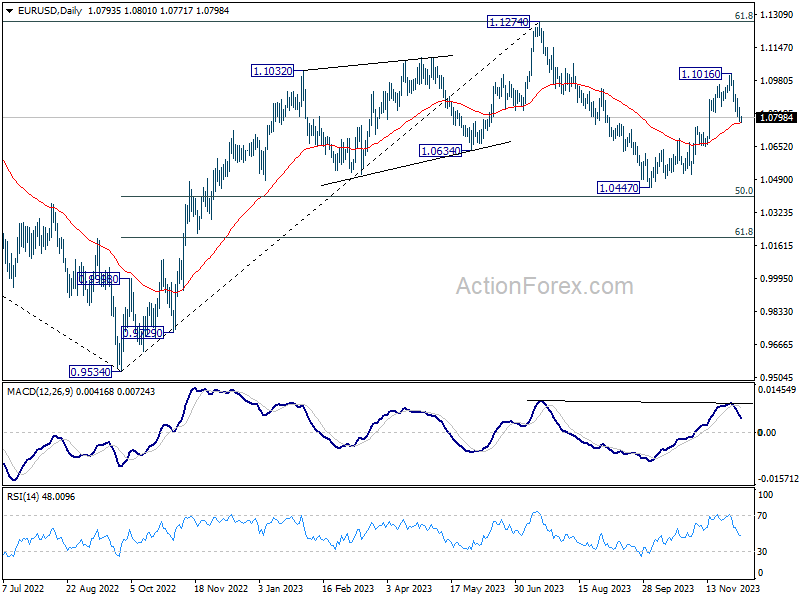
In the bigger picture, price actions from 1.1274 are viewed as a corrective pattern to rise from 0.9534 (2022 low). Rise from 1.0447 is tentatively seen as the second leg. Hence while further rally could be seen, upside should be limited by 1.1274 to bring the third leg of the pattern. Meanwhile, sustained break of 55 D EMA will argue that the third leg has already started for 1.0447 and below.
Falling Yields Drive Euro and Sterling Down
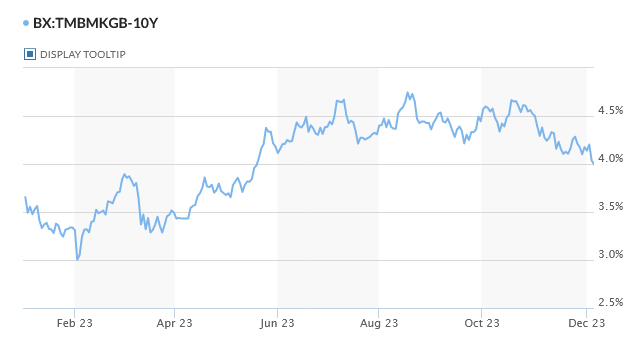
Euro and Sterling are falling broadly in European session today, a trend largely driven by notable decrease in benchmark yields in Germany and the UK. German 10-year bund yield has reached its lowest point since June. Simultaneously, UK 10-year gilt yield has dipped below 4% mark for the first time since May
These movements in bond markets reflect increasing expectations among investors for upcoming rate cuts by ECB and BoE. Current market pricings suggest the likelihood of four rate cuts from ECB and three from the BoE in 2024. This aggressive pricing-in of rate cuts underscores growing concerns about the economic outlook in Europe and while disinflation is making significant progress.
In the broader currency markets, commodity currencies are displaying robustness, particularly led by New Zealand Dollar, with Australian Dollar also showing strength but not to the same extent. Canadian Dollar's performance is keenly watched as traders and investors await the upcoming rate decision from BoC. There is a focus on whether the BoC will introduce dovish elements in its policy statement, which could significantly influence the Loonie's next move.
Meanwhile, Swiss Franc is showing mixed performance, gaining strength against its European peers while maintaining a balanced position overall. Dollar turns softer after weaker than expected ADP Job data, while Yen is digesting this week's gains.
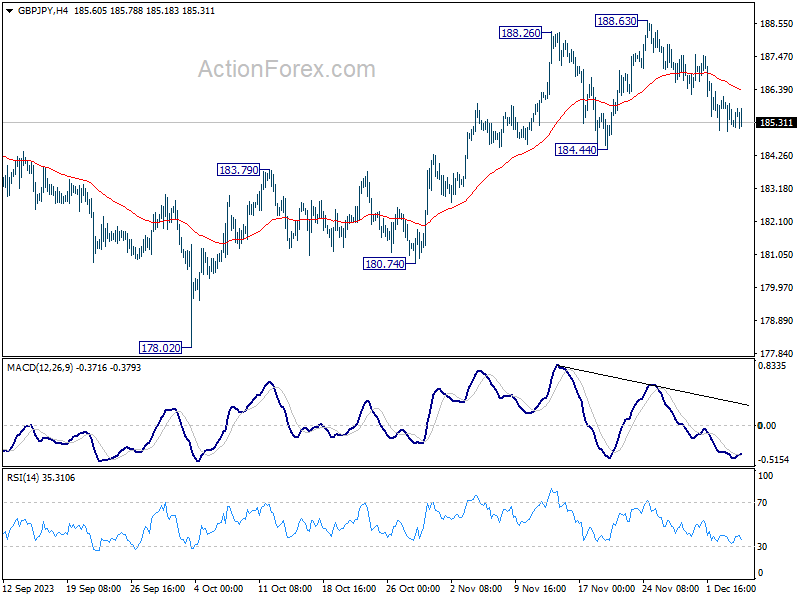
Technically, GBP/JPY is so far still resilient, holding above 184.44 support despite extending the pull back from 188.63. However, firm break of 184.44 will align the outlook with EUR/JPY. That is this decline is actually a larger scale correction. That would open up deeper fall to 180.74 support, or even further to 178.02 key structural support level.
In Europe, at the time of writing, FTSE is up 0.51%. DAX is up 0.58%. CAC is up 0.60%. German 10-year yield is down -0.013 at 2.237. UK 10-year yield is down -0.039 at 3.998. Earlier in Asia, Nikkei rose 2.04%. Hong Kong HSI rose 0.83%. China Shanghai SSE fell -0.11%. Singapore Strait Times rose 0.33%. Japan 10-year JGB yield fell -0.0246 to 0.648.
US ADP jobs grows 103k, pay rise slows further
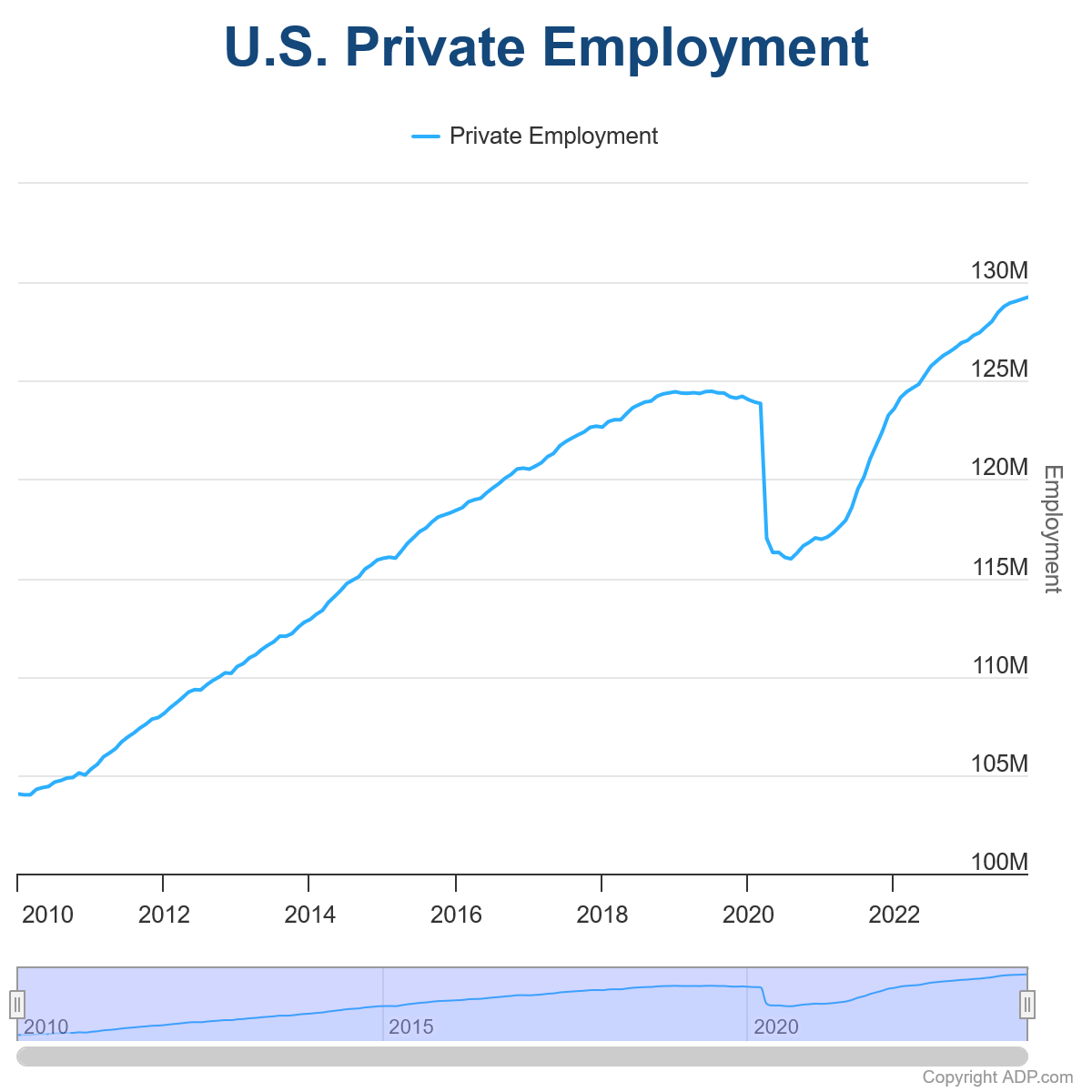
US ADP private sector employment grew 103k in November, below expectation of 120k. By sector, goods-producing jobs fell -14k while service-providing jobs rose 117k. By establishment size, small companies added 6k jobs, medium companies added 68k, large companies added 33k.
Job-stays saw a 5.6% yoy pay increase, down from 5.7% yoy, and the slowest since September 2021. Job-changes saw a 8.3% yoy pay rise, down from 8.4% yoy, slowest since June 2021.
"Restaurants and hotels were the biggest job creators during the post-pandemic recovery," said Nela Richardson, chief economist, ADP. "But that boost is behind us, and the return to trend in leisure and hospitality suggests the economy as a whole will see more moderate hiring and wage growth in 2024."
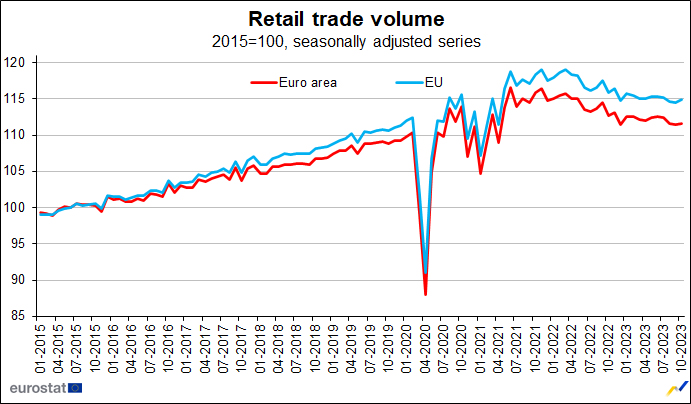
Eurozone retail sales rises 0.1% mom in Oct, EU up 0.3% mom
Eurozone retail sales volume rose 0.1% mom in October, below expectation of 0.2% mom. Volume of retail trade increased by 0.8% mom for non-food products, while it decreased by -0.8% mom for automotive fuels and by -1.1% mom for food, drinks and tobacco.
EU retail sales rose 0.3% mom. Among Member States for which data are available, the highest monthly increases in the total retail trade volume were registered in Croatia (+3.1%), the Netherlands (+2.4%) and Slovakia (+1.9%). The largest decreases were observed in France (-1.0%), Belgium and Austria (both -0.8%), Spain and Portugal (both -0.4%).
UK PMI construction fell to 45.5, ongoing sectoral downturn
UK PMI Construction ticked down from 45.6 to 45.5 in November, remaining below the neutral 50 mark and underperforming against the expected 47.1. This level indicates continued contraction in the construction sector for the third month, marking it as the second-lowest reading since May 2020.
Tim Moore of S&P Global Market Intelligence highlighted the sector's issues, stating, "A slump in house building has cast a long shadow over the UK construction sector." He pointed out that the downturn in residential construction has persisted for the past 12 months, with recent reductions among the steepest since 2009.
Elevated mortgage costs and adverse market conditions were cited as key reasons for the decline in housing projects. Additionally, rising interest rates and economic uncertainty are adversely affecting commercial construction, while civil engineering activity saw its sharpest drop since July 2022.
Moore also noted a significant decrease in overall input prices for the second consecutive month, marking the fastest rate of decline since July 2009. Despite this decrease in costs, the sector continues to face substantial challenges.
BoE's Bailey: Rates to stay high for an extended period
BoE Governor Andrew Bailey, in a press conference today, stated that "rates are likely to need to remain at these levels for an extended period to bring inflation back to target on a sustained basis," referring to the current bank rate at 5.25%.
He also noted that the full impact of the higher interest rates is yet to be fully realized, and highlighted the central bank's vigilance towards potential financial stability risks that might emerge as a result.
Separately, BoE's half-yearly Financial Stability Report noted, "The overall risk environment remains challenging, reflecting subdued economic activity, further risks to the outlook for global growth and inflation, and increased geopolitical tensions."
The report also drew attention to the strains on household finances due to rising living costs and higher interest rates. It pointed out that some effects of these higher rates, particularly in terms of mortgage repayments, have yet to fully manifest.
Australia's Q3 GDP growth slows to 0.2% qoq, per capita output declines
Australia's GDP for Q3 showed a modest increase of 0.2% qoq, falling short of the expected 0.5% qoq growth. On a year-on-year basis, GDP grew by 2.1%. However, a contrasting picture emerges when considering GDP on a per capita basis, which revealed a decline of -0.5% qoq and a -0.3% yoy.
Katherine Keenan, ABS head of national accounts, said: "This was the eighth straight rise in quarterly GDP, but growth has slowed over 2023." She pointed out that government spending and capital investment were the primary contributors to GDP growth in this quarter.
Specifically, government final consumption expenditure rose by 1.1%. Additionally, gross fixed capital formation also saw a 1.1% rise.
An interesting aspect of the September quarter's GDP was the contribution of 0.4% points from changes in inventories. Notably, mining inventories increased by AUD 2.4B, a reflection of the larger fall in exports compared to production volumes.
On the other hand, trade in services had a negative impact on growth. Imports of services surged by 8.4%, significantly outpacing the 1.9% growth in services exports.
BoJ's Himino stresses patience in monetary easing to prevent return to "frozen state"
BoJ Deputy Governor Ryozo Himino, in a speech today, affirmed the central bank's commitment to continued monetary easing. He noted, "the Bank will patiently continue with monetary easing until sustainable and stable achievement of the price stability target, accompanied by wage increases, comes in sight."
He acknowledged the positive changes in firms' wage- and price-setting behavior, noting "solid progress" and "signs in the right direction." However, he warned of the risks of reverting to a deflationary state if a virtuous cycle between wages and prices is not established.
Explaining further, Himino commented on the longstanding norm in Japan where neither wages nor prices could rise significantly. "Japan had worked for many years to break free from this," he added, "and simply returning to such a frozen state after the current high inflation comes down would not be a desirable outcome either."
Himino highlighted the longstanding norm in Japan where "neither wages nor prices could rise". He stressed that Japan's efforts to break free from this stagnation, adding, "simply returning to such a frozen state after the current high inflation comes down would not be a desirable outcome".
He also outlined the multiple challenges facing Japanese monetary policy, including addressing current inflation, supporting moderate economic recovery, encouraging wage increases, and preventing a return to deflation. "The Bank is struggling to find a solution and this is by no means an easy task," he admitted.
EUR/USD Mid-Day Outlook
Daily Pivots: (S1) 1.0768; (P) 1.0808; (R1) 1.0838; More...
EUR/USD's fall from 1.1016 is still in progress and intraday bias stays on the downside. Sustained break of 55 D EMA (now at 1.0770) will pave the way to retest 1.0447 support. On the upside, above 1.0846 minor resistance will turn intraday bias neutral first. But risk will stay on the downside as long as 1.1016 resistance holds, in case of recovery.
In the bigger picture, price actions from 1.1274 are viewed as a corrective pattern to rise from 0.9534 (2022 low). Rise from 1.0447 is tentatively seen as the second leg. Hence while further rally could be seen, upside should be limited by 1.1274 to bring the third leg of the pattern. Meanwhile, sustained break of 55 D EMA will argue that the third leg has already started for 1.0447 and below.
Economic Indicators Update
| GMT | Ccy | Events | Actual | Forecast | Previous | Revised |
|---|---|---|---|---|---|---|
| 00:30 | AUD | GDP Q/Q Q3 | 0.20% | 0.40% | 0.40% | |
| 07:00 | EUR | Germany Factory Orders M/M Oct | -3.70% | 0.50% | 0.20% | 0.70% |
| 09:30 | GBP | Construction PMI Nov | 45.5 | 47.1 | 45.6 | |
| 10:00 | EUR | Eurozone Retail Sales M/M Oct | 0.10% | 0.20% | -0.30% | -0.10% |
| 13:15 | USD | ADP Employment Change Nov | 103K | 120K | 113K | 106K |
| 13:30 | CAD | Labor Productivity Q/Q Q3 | -0.80% | 0.20% | -0.60% | |
| 13:30 | CAD | Trade Balance (CAD) Oct | 3.0B | 1.8B | 2.0B | |
| 13:30 | USD | Trade Balance (USD) Oct | -64.3B | -63.0B | -61.5B | -61.2B |
| 13:30 | USD | Nonfarm Productivity Q3 | 5.20% | 4.70% | 4.70% | |
| 13:30 | USD | Unit Labor Costs Q3 | -1.20% | -0.80% | -0.80% | |
| 15:00 | CAD | BoC Rate Decision | 5.00% | 5.00% | ||
| 15:00 | CAD | Ivey PMI Nov | 54.2 | 53.4 | ||
| 15:30 | USD | Crude Oil Inventories | -1.3M | 1.6M |
US ADP jobs grows 103k, pay rise slows further
US ADP private sector employment grew 103k in November, below expectation of 120k. By sector, goods-producing jobs fell -14k while service-providing jobs rose 117k. By establishment size, small companies added 6k jobs, medium companies added 68k, large companies added 33k.
Job-stays saw a 5.6% yoy pay increase, down from 5.7% yoy, and the slowest since September 2021. Job-changes saw a 8.3% yoy pay rise, down from 8.4% yoy, slowest since June 2021.
"Restaurants and hotels were the biggest job creators during the post-pandemic recovery," said Nela Richardson, chief economist, ADP. "But that boost is behind us, and the return to trend in leisure and hospitality suggests the economy as a whole will see more moderate hiring and wage growth in 2024."
NIKKEI Futures (NKD_F) Found Buyers At The Blue Box
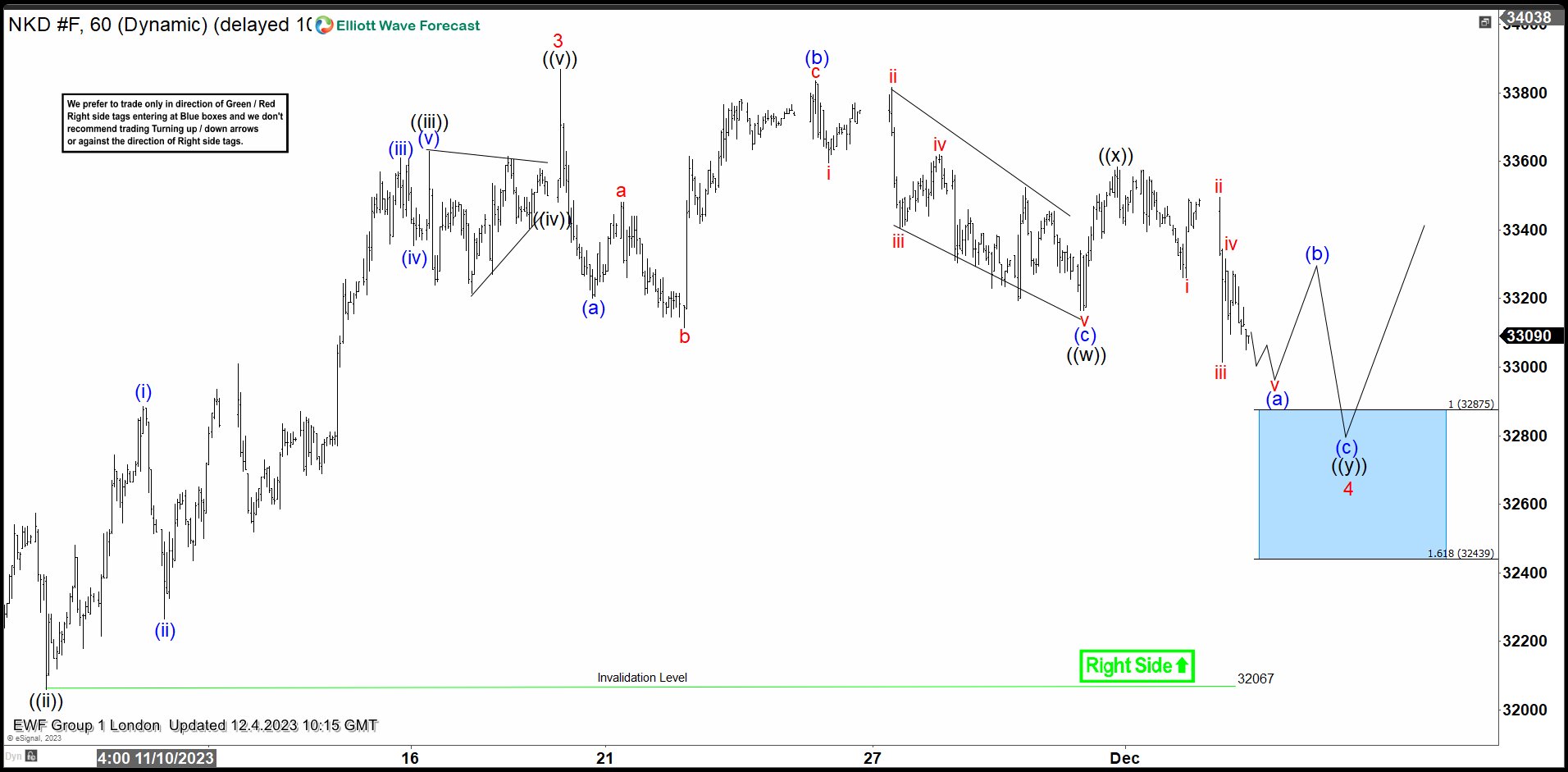
Hello fellow traders. In this technical article we’re going to take a look at the Elliott Wave charts charts of NIKKEI Futures published in members area of the website. As our members know NIKKEI Futures has recently made pull back that has unfolded as Elliott Wave Double Three Pattern. It made clear 7 swings from the November 20th peak and completed correction right at the Equal Legs zone( Blue Box Area) . In further text we’re going to explain the Elliott Wave pattern and trading setup.
NIKKEI Elliott Wave 1 Hour Chart 12.04.2023
NIKKEI is doing correction that is unfolding as a 7 swings pattern. Pull back has ((w))((x))((y)) labeling. The price structure is incomplete at the moment, calling for a further weakness in near term toward : 32875-32439. We don’t recommend selling Nikkei and prefer the long side from the marked Blue Box ( buying zone). Once Nikkei reaches our buying area, it should ideally make either rally toward new highs or in 3 waves bounce alternatively. Once bounce reaches 50 Fibs against the ((x)) black high, we will make long position risk free ( put SL at BE) and take partial profits.
Quick reminder on how to trade our charts :
Red bearish stamp+ blue box = Selling Setup
Green bullish stamp+ blue box = Buying Setup
Charts with Black stamps are not tradable. 🚫
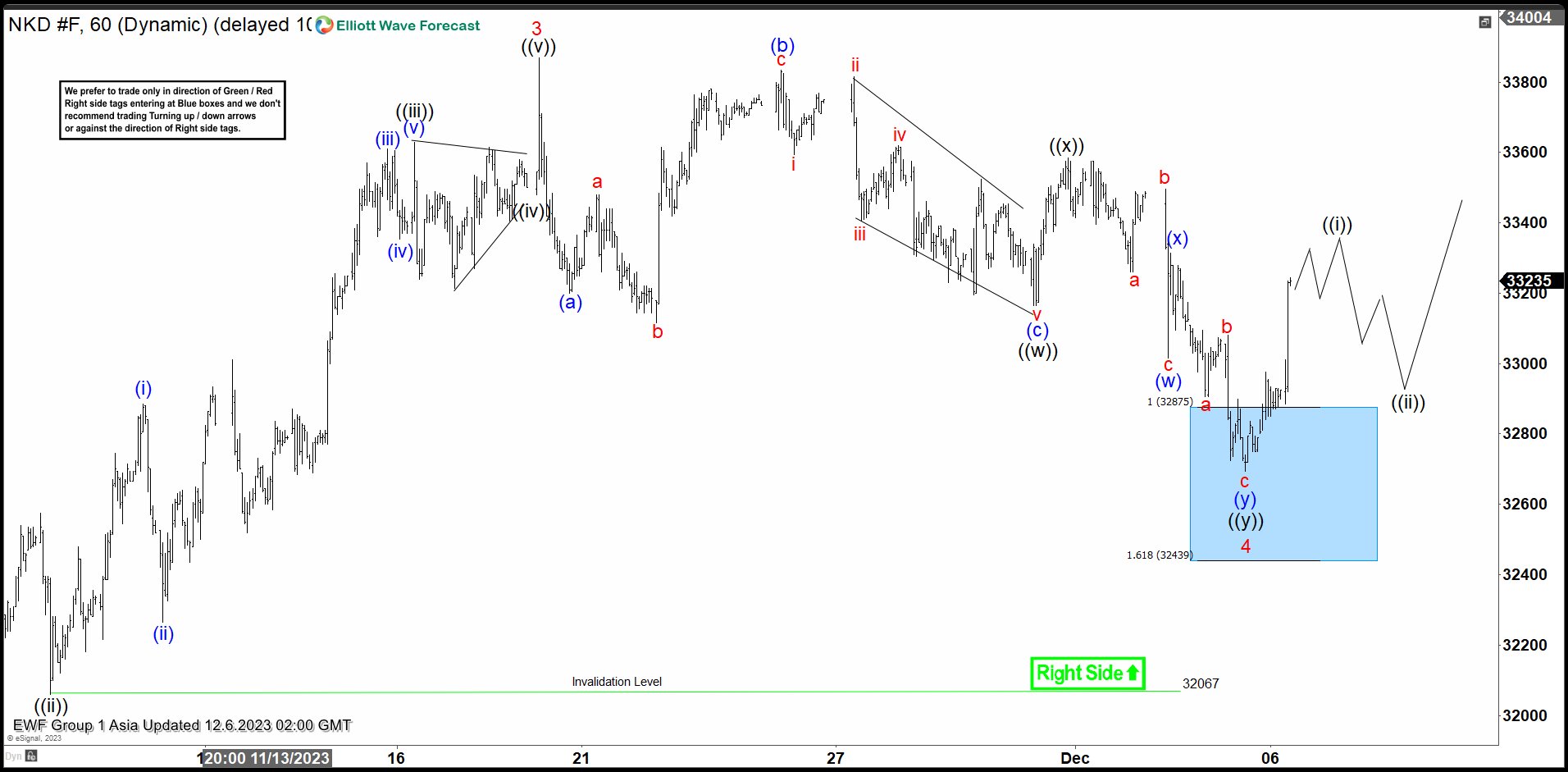
NIKKEI Elliott Wave 1 Hour Chart 12.06.2023
NIKKEI made extension toward our buying zone at : 32875-32439. The futures found buyers at the blue box as expected and we got good reaction from there. Bounce already reached 50 fibs against the ((x)) black connector which confirms cycle from the peak is done. Consequently, any long positions from the equal legs area should be risk free by now. As far as the price stays above 32700 low, we can see further strength in Nikkei.
BoE’s Bailey: Rates to stay high for an extended period
BoE Governor Andrew Bailey, in a press conference today, stated that "rates are likely to need to remain at these levels for an extended period to bring inflation back to target on a sustained basis," referring to the current bank rate at 5.25%.
He also noted that the full impact of the higher interest rates is yet to be fully realized, and highlighted the central bank's vigilance towards potential financial stability risks that might emerge as a result.
Separately, BoE's half-yearly Financial Stability Report noted, "The overall risk environment remains challenging, reflecting subdued economic activity, further risks to the outlook for global growth and inflation, and increased geopolitical tensions."
The report also drew attention to the strains on household finances due to rising living costs and higher interest rates. It pointed out that some effects of these higher rates, particularly in terms of mortgage repayments, have yet to fully manifest.
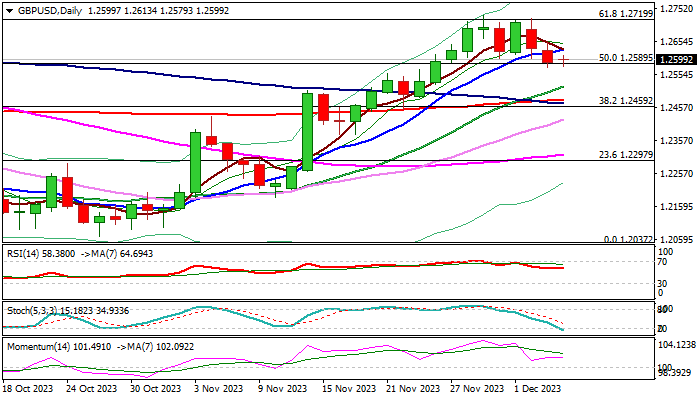
GBP/USD: Cable – Limited Correction Likely to Precede Fresh Rise, US Labor Data in Focus
Cable is holding within a tight range on Wednesday morning, as two-day pullback found a footstep on broken Fibo support at 1.2585, though stronger dollar and weaker than expected UK data continue to sour the sentiment.
Traders await release of US labor data (ADP report is due later today and NFP on Friday) for fresh direction signals.
Technical studies on daily chart are bullishly aligned (positive momentum / MA’s mainly in bullish setup / oversold stochastic) which points to scenario of limited correction preceding fresh push higher.
Extended dips should hold above rising 20DMA (1.2518) and should not exceed 200DMA (1.2479) to keep short-term action biased higher, with break of recent tops (also Fibo 61.8% of 1.3141/11.2037) which recently capped multiple attacks, to signal bullish continuation.
Res: 1.2631; 1.2700; 1.2719; 1.2746.
Sup: 1.2577; 1.2518; 1.2500; 1.2467.
EUR/GBP: Hits New Multi-Month Low, But Oversold Studies Continue to Obstruct Bears
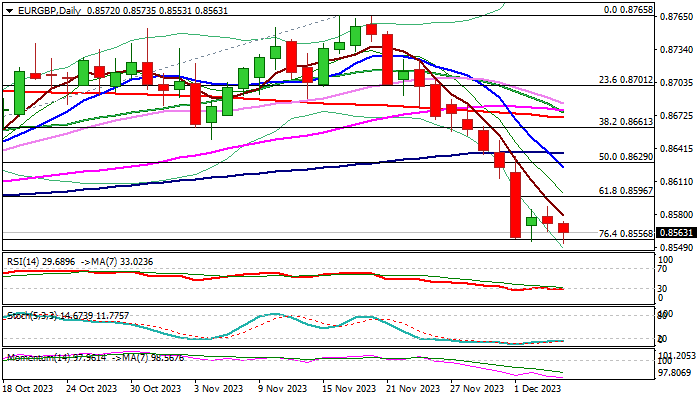
EURGBP fell to three-month low early Wednesday, attempting to resume larger downtrend, after a brief consolidation in past two days.
Larger bears regained traction following a double rejection of recovery attempts and received fresh boost from weak German data (factory orders slumped in October and Nov construction PMI fell to the lowest since mid-2020).
Bears probe again through pivotal Fibo support at 0.8566 (76.4% retracement of 0.8492/0.8765) which contained several attacks in past few sessions, with firm break here to signal bearish continuation and expose targets at 0.8523 (Sep 5 higher low) and 0.8499 (2023 low, posted on Aug 23).
Daily studies are in full bearish setup but oversold, which may produce headwinds and keeps bears further on hold.
Current range top (0.8588) marks initial resistance, followed by broken Fibo 61.8% (0.8596), which should ideally cap upticks and guard upper pivot at 0.8623 (base of thick daily cloud/ falling 10DMA).
Res: 0.8573; 0.8588; 0.8596; 0.8623.
Sup: 0.8553; 0.8523; 0.8499; 0.8471.
Eurozone retail sales rises 0.1% mom in Oct, EU up 0.3% mom
Eurozone retail sales volume rose 0.1% mom in October, below expectation of 0.2% mom. Volume of retail trade increased by 0.8% mom for non-food products, while it decreased by -0.8% mom for automotive fuels and by -1.1% mom for food, drinks and tobacco.
EU retail sales rose 0.3% mom. Among Member States for which data are available, the highest monthly increases in the total retail trade volume were registered in Croatia (+3.1%), the Netherlands (+2.4%) and Slovakia (+1.9%). The largest decreases were observed in France (-1.0%), Belgium and Austria (both -0.8%), Spain and Portugal (both -0.4%).