Sample Category Title
EUR/GBP Daily Outlook
Daily Pivots: (S1) 0.8685; (P) 0.8702; (R1) 0.8731; More....
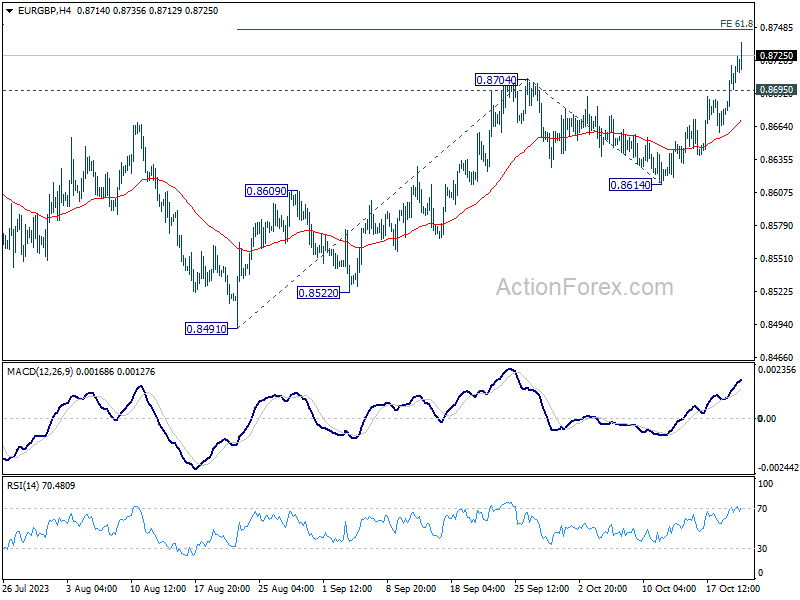
Intraday bias in EUR/GBP stays on the upside as rise from 0.8491 is extending. next target is 61.8% projection of 0.8491 to 0.8704 from 0.8614 at 0.8746. Decisive break there could prompt upside acceleration to 100% projection at 0.8827 next. On the downside, below 0.8695 minor support will turn intraday bias neutral first. But retreat should be contained well above 0.8614 to bring rise resumption.
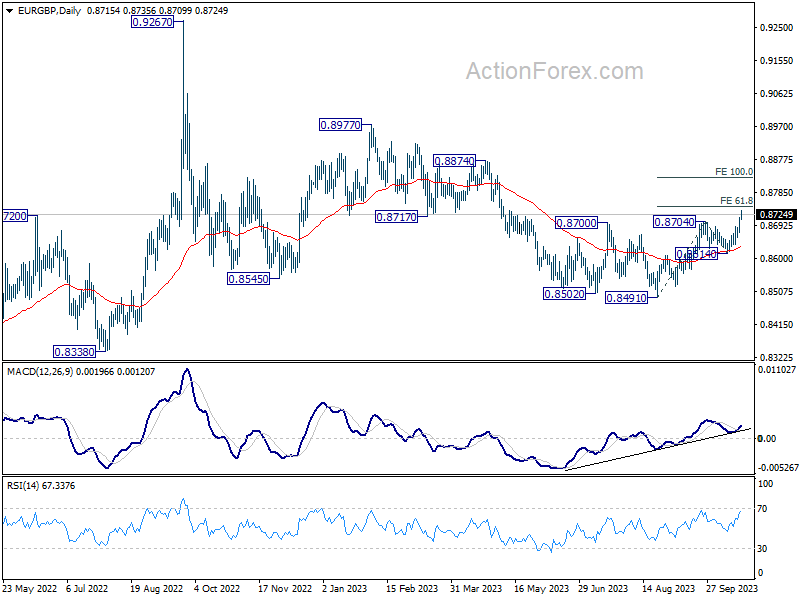
In the bigger picture, current development suggests that whole down trend from 0.9267 (2022 high) has completed with three down to to 0.8491. Rise from 0.8491 is seen as another leg inside that pattern from 0.9499 (2020 high). Further rally should be seen to 0.8977 resistance and above. This will now remain the favored case as long as 0.8614 support holds.
EUR/AUD Daily Outlook
Daily Pivots: (S1) 1.6641; (P) 1.6691; (R1) 1.6770; More...
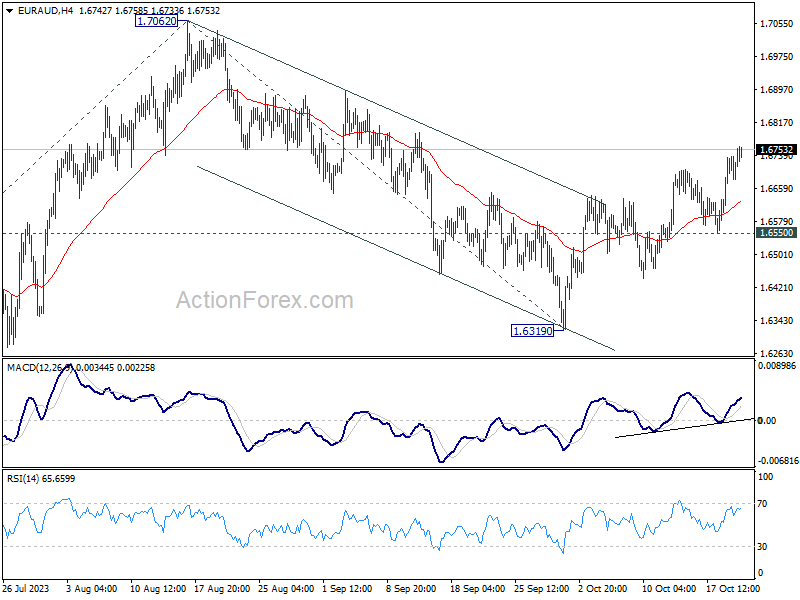
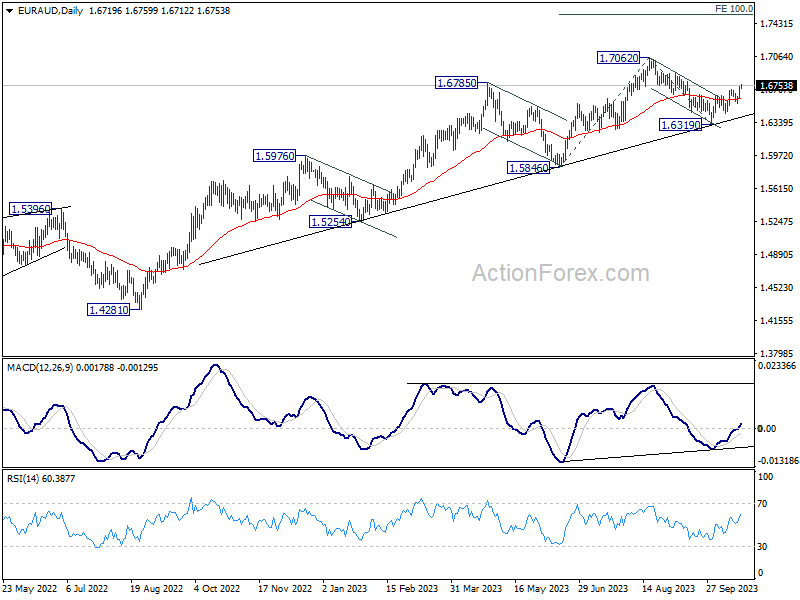
Intraday bias in EUR/AUD stays on the upside as rise from 1.6319 is in progress. Further rally should be seen to retest 1.7062 high next. On the downside, break of 1.6550 support is needed to indicate completion of the rebound. Otherwise, near term outlook will stay mildly bullish even in case of retreat.
In the bigger picture, the strong support from medium term rising trend line indicates that rise from 1.4281 (2022 low) is still in progress. On resumption, next target is 100% projection of 1.5846 to 1.7062 from 1.6319 at 1.7353. In any case, outlook will stay bullish as long as 1.6319 support holds.
EUR/CHF Daily Outlook
Daily Pivots: (S1) 0.9413; (P) 0.9449; (R1) 0.9470; More...
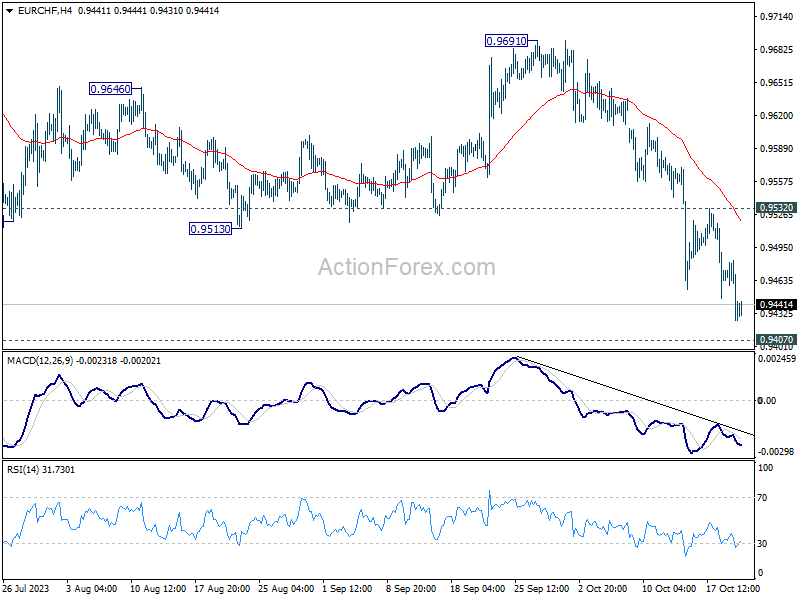
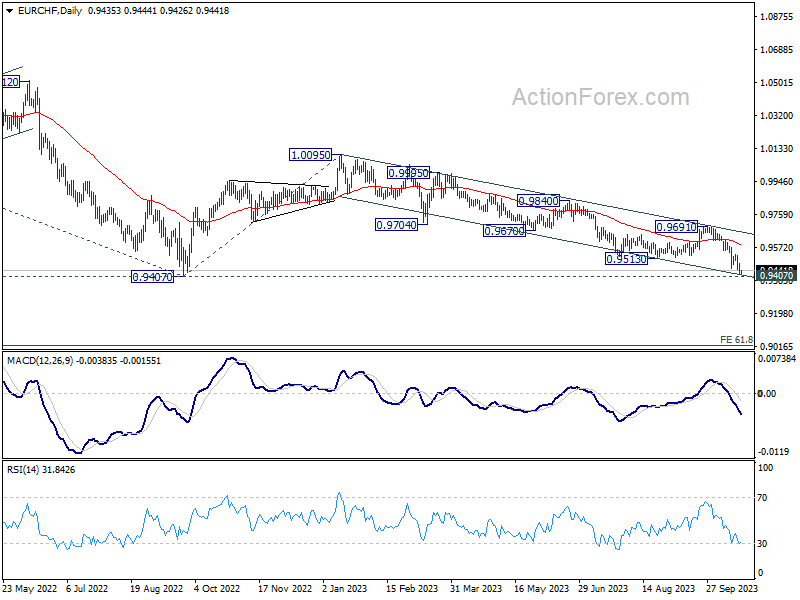
Intraday bias in EUR/CHF stays on the downside at this point. Current decline from 1.0095 is in progress for 0.9407 medium term bottom. Decisive break there will confirm larger down trend resumption. On the upside, break of 0.9532 resistance is needed to indicate short term bottoming. Otherwise, outlook will remain bearish in case of recovery.
In the bigger picture, medium term outlook remains bearish with the cross capped well below falling 55 W EMA (now at 0.9782). Firm break of 0.9407 (2022 low) will confirm resumption of larger down trend from 1.2004 (2018 high). Next target will be 61.8% projection of 1.1149 to 0.9407 from 1.0095 at 0.9018. On the upside, break of 0.9691 resistance is needed to indicate medium term bottoming. Otherwise, outlook will stay bearish.
BoE’s Bailey anticipates marked decrease in October’s inflation figures
BoE Governor Andrew Bailey, in an interview with Belfast Telegraph, expressed that he "wasn't surprised" by the latest inflation report released on Wednesday. This report showcased consumer prices having ascended by 6.7% compared to the previous year in September, mirroring the growth rate observed in August.
Bailey's added the inflation rate was "not far off what we were expecting." Even more reassuring was the slight dip in core inflation, a development hefound "quite encouraging."
He optimistically anticipates a "noticeable drop" in the headline inflation rate with the forthcoming October data. This anticipated decline can be attributed to the significant surge in energy prices last year, which will be excluded from the annual comparison.
However, Bailey warned, "Pay growth as measured is still well above anything that's consistent with the target."
Fed Chair Powell Walked the Path His Colleagues Paved for Him
Markets
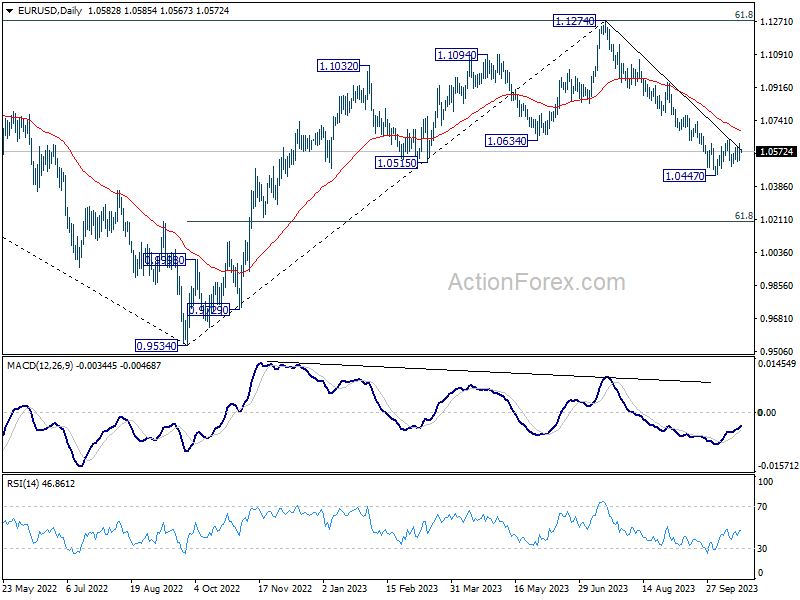
Fed chair Powell yesterday walked the path his colleagues had paved for him. In his widely anticipated speech at the Economic Club of New York, Powell said the recent rise in especially long‐term bond yields caused a tightening of general financial conditions which could lessen the need for a (final) rate hike. He argued for proceeding carefully given the uncertainties and risks, adding that some of the earlier delivered rate increases hasn’t showed up in the economy just yet. His comments, the last high‐profiles ones before the blackout period kicks in tomorrow, cement expectations for keeping interest rates steady at the November 1 meeting. Powell retained optionality by saying that further tightening of policy could be warranted if growth remained above‐trend and/or if tightness of the labour no longer eases. It’s a real risk following stellar September retail sales and payrolls. Bumper weekly jobless claims yesterday (198k) argued for the same. But markets, for now at least, don’t frontrun such a scenario and instead assume the end of the tightening cycle. The US yield curve turned less inverse with yields at the short end already easing going into Powell’s speech. The 2‐y yield fell 6.3 bps but the long end added more than 11 bps (30‐y). The 10‐y yield closed one bp shy of the symbolical 5%. German yields whipsawed, leading to changes of less than 1 bp across the curve. The US dollar lost ground. Gloomy risk assets (Wall Street finished up to 1% lower) prevented a close at the daily lows though. EUR/USD rose from 1.0536 to 1.0582. DXY found support at 106(.25). USD/JPY is going nowhere just shy of 150. This morning’s marginally higher‐than‐expected Japanese inflation numbers (see below) aren’t changing anything about that. China’s yuan trades marginally weaker (USD/CNY 7.317) after the central bank injected the most cash on record in a bid to support the premature economic recovery. The US dollar is generally better bid in a mild risk‐off Asian session. Stocks in the region lose up to 1.8% (South Korea). Treasuries for once attract some safe haven flows, pushing cash yields 4.5 bps lower at the belly of the curve. We expect some further core bond consolidation going into the weekend. Technical charts also argue for slightly lower yields (short‐term) after the likes of the US‐10y yield failed to push through the 5% barrier. In the same vein the dollar looks set for some gains. EUR/USD 1.0516 marks the first support zone. That said, the greenback’s performance over the past few days was not at all convincing. Retail sales in the UK this morning settle the debate for the Bank of England November 2 meeting: it’s a hold. Markets remain split over a final rate hike to 5.5% later this year/early 2024 but that’s not enough for sterling. EUR/GBP extends yesterday’s trip above 0.87 and is closing in on resistance at 0.8736.
News and views
UK GfK consumer confidence dropped at an unexpected sharp pace in October, from ‐21 to ‐30 while a near stabilization (‐21) was expected. This marks a sharp U‐turn as the index in September rebounded to the highest level since January 2022. GfK comments that ‘This sharp fall underlines that the cost‐of‐living crisis, and simply not having enough money to make‐ends‐meet, are still exerting acute pressure for many consumers’. UK consumers turned more negative most major subindices in the survey in particular expectations on the economic situation over the next twelve months (‐32 from ‐24) and climate for major purchases (‐34 from ‐20). The latter might be bad now for retailing going into the important Christmas season.
Japanese consumer prices ex fresh food slowed in September to 0.1% M/M and 2.8% Y/Y, down from 3.1%. It was the first sub 3.0% print since August last year. The index reached a cycle peak of 4.2% in January. Still the outcome was slightly above expectations. Core inflation excluding food and energy also slowed modestly from 0.3% M/M and 4.3% in August to 0.2% M/M and 4.2%Y/Y in September. In a monthly perspective, the easing in inflation was mainly driven by a sharp decline in prices of utilities (‐1.8% M/M). Costs of transport and communication declined 0.1% M/M. Clothing and footwear rose 3.0% M/M. Despite the September slowdown in inflation, the BoJ will probably again have to upgrade its inflation forecast when it holds its next regular policy meeting on October 31. For now, the BoJ held to a narrative that stimulus could stay in place as most of the inflation is cost‐driven and as the bank gives an important weight to wage growth that should support domestic demand. With respect to execution of its policy, after announcing unscheduled bond‐buying earlier this week, the BoJ today announced to offer 5‐y loans to banks to support bond buying as the 10‐y yield touched a new cycle peak near 0.85% this morning.
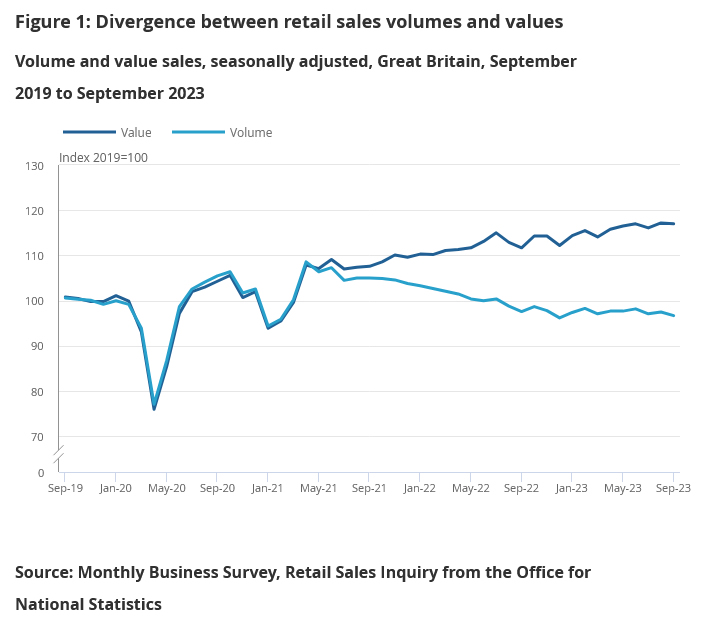
UK retail sales volumes down -0.9% mom in Sep, value down -0.2% mom
UK retail sales volumes fell sharply by -0.9% mom in September, much worse than expectation of -0.4% mom. Sale volumes excluding automotive fuel dropped -1.0% mom.
Looking at some details, non-food stores sales volumes fell -1.9% mom. Non-store retailing sales volumes fell -2.2% mom. Foot stores sales volumes rose rose 0.2% mom. Automotive fuel sales volumes rose by 0.8% mom.
Looking at the quarterly picture, sales volumes fell by -0.8% in the three months to September when compared with the previous three months. Ex-fuel sales volumes fell -1.0%.
In value term, retail sales value dropped -0.2% mom. Sales value excluding automotive fuel fell -0.4% mom.
US 10-year Yield Hits 5% on Powell’s Comments, Gold Exceeds $1980 per Ounce
‘Additional evidence of persistently above-trend growth, or that tightness in the labour market is no longer easing, could put further progress on inflation at risk and could warrant further tightening of the monetary policy’ said the Federal Reserve (Fed) Chair Jerome Powell at the Economic Club of New York yesterday. September’s 336K NFP read, higher-than-expected set of inflation data at the latest release contrary, a more than 35% surge in US household net worth since 2019 (Survey of Consumer Finances) are among evidence that the US economy is doing just fine.
Of course, the flip side of the story is dirtier. The US national debt is now above $33 trillion and rising and the safety of the US sovereign bonds, especially on the long end of the yield curve, came under scrutiny by global investors. Despite the rising tensions in Gaza, and a swift flight to safety, the US 10-year papers were aggressively sold, and the US 10-year yield hit the 5% mark after rising by around 35bp since Monday.
The selloff could be explained by strong retail sales data – that followed a strong NFP read and a stronger-than-expected inflation data since the month started – which both fueled the hawkish Fed expectations.
While a hawkish Fed means higher rates and the continuation of the QT, the US Treasury issues long-term debt to balance out the amount of short-term bills that it issued earlier this year.
Moreover, the US is now expected to help Israel – and continue to help Ukraine, in a period of swelling fiscal problems.
Whatever it is, the US initial jobless claims yesterday came below the 200K psychological level, and further fueled the selloff. The US 10-year yield at 5% for the first time since 2007. Needless to tell you that this is the first time in my career I have seen the US 10-year yield at this level as I had my Master’s degree in 2010! The US 2-year yield remains steady around 5.15%. The gap between the US 2 and 10-year yield is now narrowing, we haven’t seen recession in the US just yet. Bloomberg’s Simon White writes that there is ‘sufficiently compelling evidence that the US – and the rest of the world – is likely to enjoy a cyclical upswing before the next downturn’. I am less optimistic. The US 10-year yield at 5% will likely boost appetite, if not, expect the stock markets to bear the brunt of the surge in long term yields.
In the FX, the US dollar is surprisingly calm this week; you would expect more movement amid the surge in the US yields. Regardless of surging US yields, safe haven capital flows into gold. The price of an ounce exceeded $1980 this morning, and the purchases should accelerate before the closing bell as investors will seek safety into a weekend that could bring more carnage in the Middle East. Crude oil is above the $90pb level and has more to rise due to fear of supply disruptions in the Middle East. The dollar-yen is uncomfortably stable near the 150 psychological mark, as inflation in Japan came in higher-than-expected but fell to a year low, softening the Bank of Japan (BoJ) hawks’ hands.
USD/CAD Daily Outlook
Daily Pivots: (S1) 1.3686; (P) 1.3714; (R1) 1.3747; More....
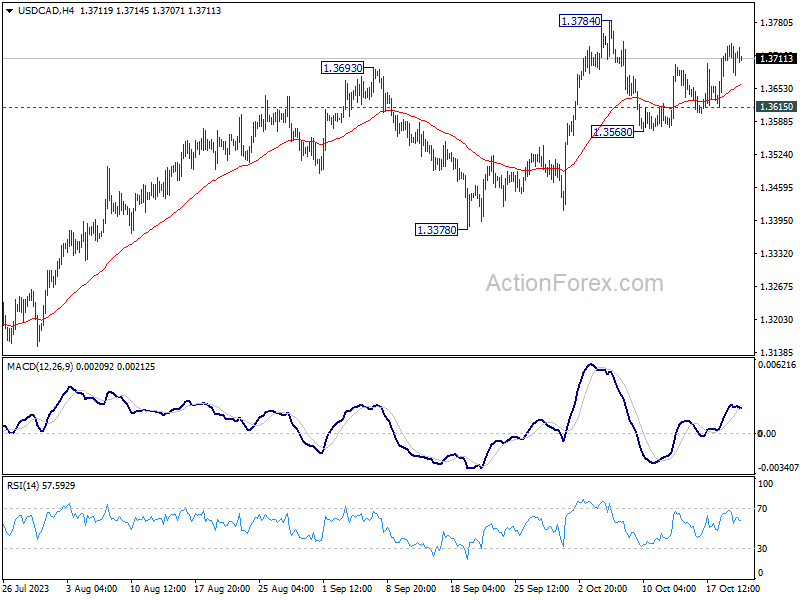
Intraday bias in USD/CAD stays on the upside for retesting 1.3784 first. Break there will resume larger rise from 1.3091 to retest 1.3976 high. On the downside, however, break of 1.3615 support will bring another falling leg to extend the near term corrective pattern from 1.3784.
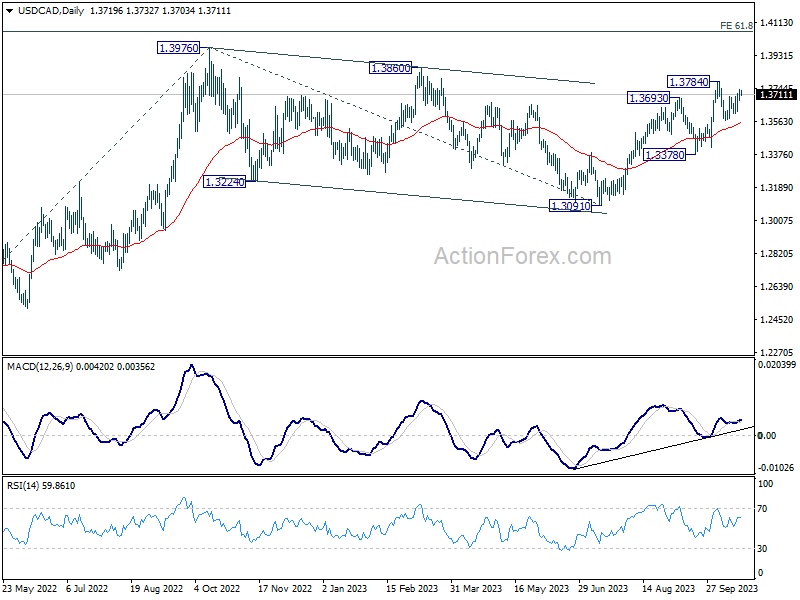
In the bigger picture, current development revives the case that corrective pattern from 1.3976 (2022 high) has completed with three waves down to 1.3091. Decisive break of 1.3976 high will confirm resumption of up trend from 1.2005 (2021 low). Next target will be 61.8% projection of 1.2401 to 1.3976 from 1.3091 at 1.4064. This will now remain the favored case as long as 1.3378 support holds.
AUD/USD Daily Report
Daily Pivots: (S1) 0.6298; (P) 0.6327; (R1) 0.6359; More...
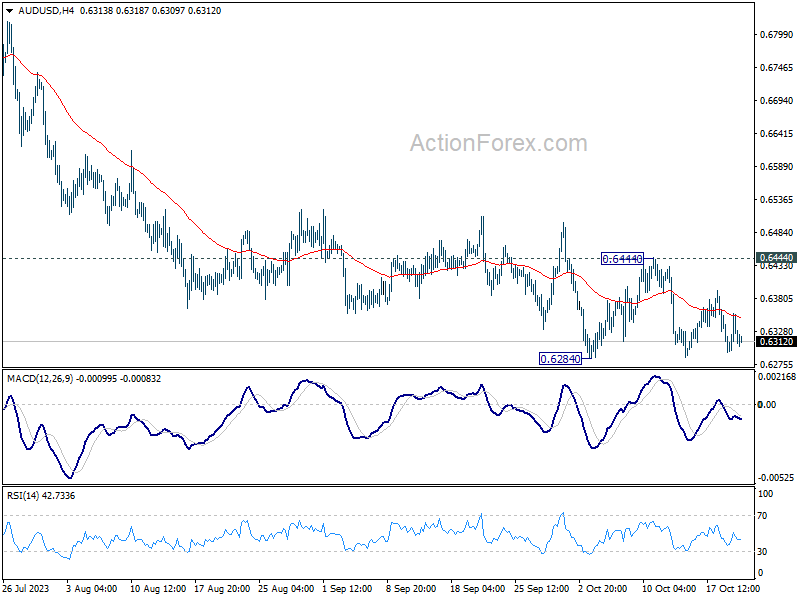
Range trading continues in AUD/USD and intraday bias stays neutral. Also, outlook remains bearish with 0.6444 resistance intact. On the downside, decisive break of 0.6284 will confirm resumption of whole decline from 0.7156. Next target is 100% projection of 0.7156 to 0.6457 from 0.6894 at 0.6195, which is close to 0.6169 medium term support. Nevertheless, firm break of 0.6444 will confirm short term bottoming, and turn bias to the upside for stronger rebound.
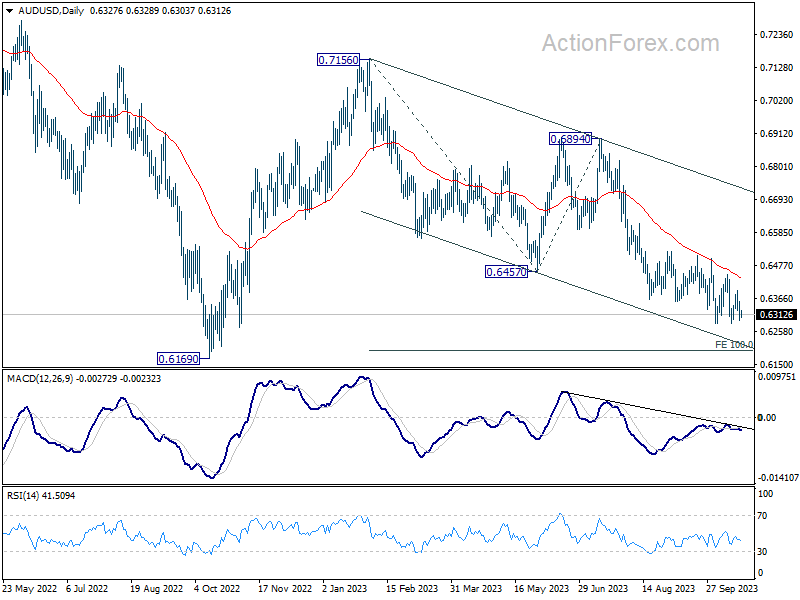
In the bigger picture, down trend from 0.8006 (2021 high) is possibly still in progress. Decisive break of 0.6169 will target 61.8% projection of 0.8006 to 0.6169 to 0.7156 at 0.6021. This will now remain the favored case as long as 0.6894, in case of strong rebound.
EUR/USD Daily Outlook
Daily Pivots: (S1) 1.0535; (P) 1.0575; (R1) 1.0623; More...
Intraday bias in EUR/USD remains neutral and outlook stays bearish with 1.0639 resistance intact. On the downside, firm break of 1.0447 will resume whole fall from 1.1274 and target 1.0199 fibonacci level. On the upside, however, break of 1.0639 will resume the rebound from 1.0447 to 55 D EMA (now at 1.0684).
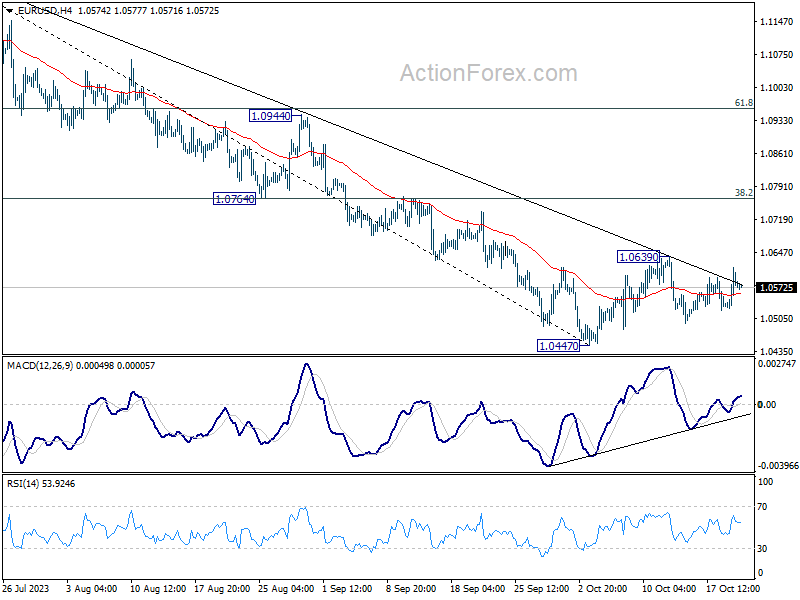
In the bigger picture, fall from 1.1274 medium term top could still be a correction to rise from 0.9534 (2022 low). But chance of a complete trend reversal is rising. In either case, current fall should target 61.8% retracement of 0.9534 to 1.1274 at 1.0199 next. For now, risk will stay on the downside as long as 55 D EMA (now at 1.0684) holds, in case of rebound.