Sample Category Title
Bonds Surge Again Amid Global Financial Crisis Fears; Euro Down, Dollar and Yen Up
The financial markets are once again in a state of panic as Credit Suisse saw its shares plummet by over -20% and hit a new record low, dragging European stocks deeply down with it. Bonds are becoming the go-to for worried investors again, with US 10-year yield breaking the 3.5 handle and Germany 10-year yield breaking the 2.2 handle. There are serious concerns that recent bank routs would develop into another global financial crisis.
In the currency markets, the Euro is suffering from a steep sell-off, with the case for the ECB to deliver a 50bps rate hike in doubt given the current state of the region. Swiss Franc and Sterling are also among the weakest currencies, indicating funds flowing out of Europe. The Yen is experiencing a strong rally, while the Dollar trails behind as the second strongest performer.
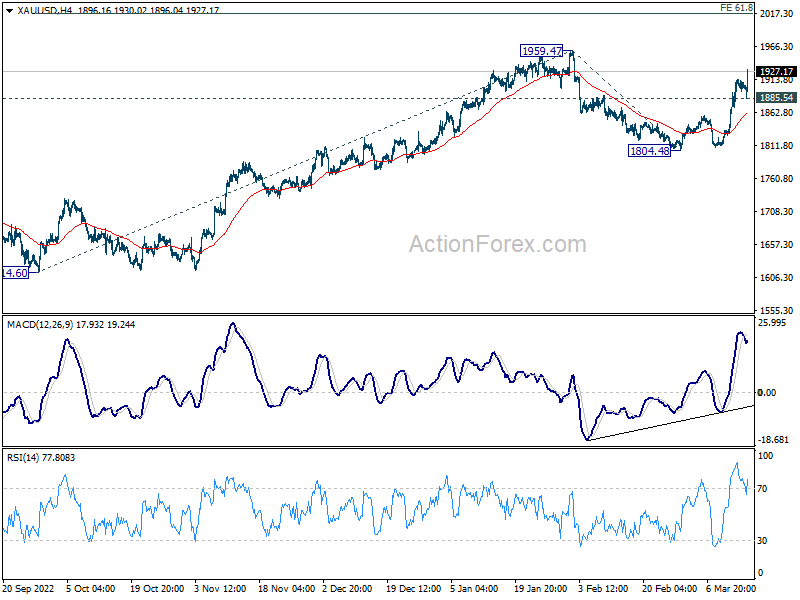
Technically, Gold's rise from 1804.48 resumes today and hit as high as 1930.02 so far. Further rise is expected as long as 1885.54 support holds, for 1959.47 high next. Decisive break there will resume whole rally from 1614.60 to 61.8% projection of 1614.60 to 1959.47 from 1804.48 at 2017.60.
In Europe, at the time of writing, FTSE is down -2.92%. DAX is down -3.00%. CAC is down -3.58%. Germany 10-year yield is down -0.2464 at 2.168. Earlier in Asia, Nikkei rose 0.03%. Hong Kong HSI rose 1.52%. China Shanghai SSE rose 0.55%. Singapore Strait Times rose 1.38%. Japan 10-year JGB yield is up 0.0328 at 0.316.
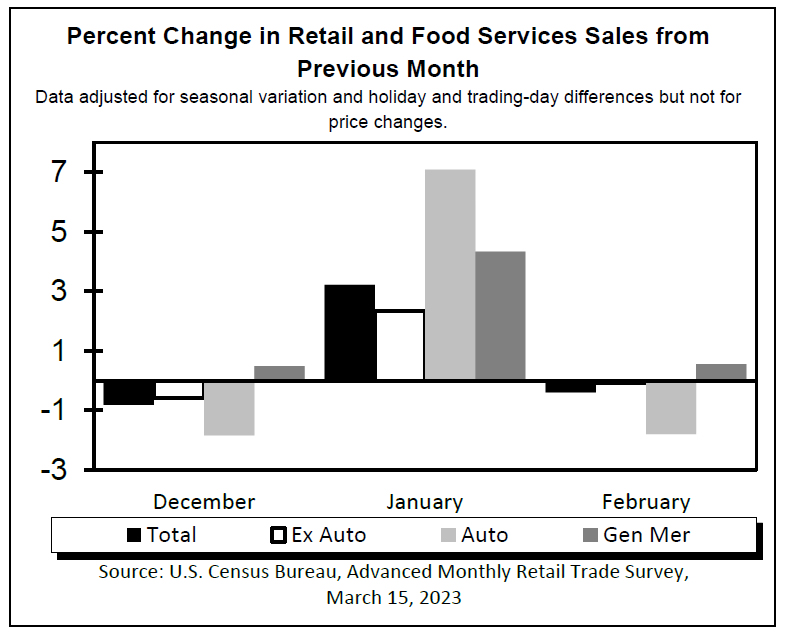
US retail sales down -0.4% mom in Feb, ex-auto sales dropped -0.1% mom
US retail sales declined -0.4% mom to USD 697.9B, below expectation of 0.2% mom. Ex-auto sales fell -0.1% mom to USD 567.2B, matched expectations. Ex-gasoline sales dropped -0.4% mom to USD 639.5B. Ex-auto, gasoline sales was flat over the month at USD 508.9B.
Total sales for the December 2022 through February 2023 period were up 6.4% from the same period a year ago.
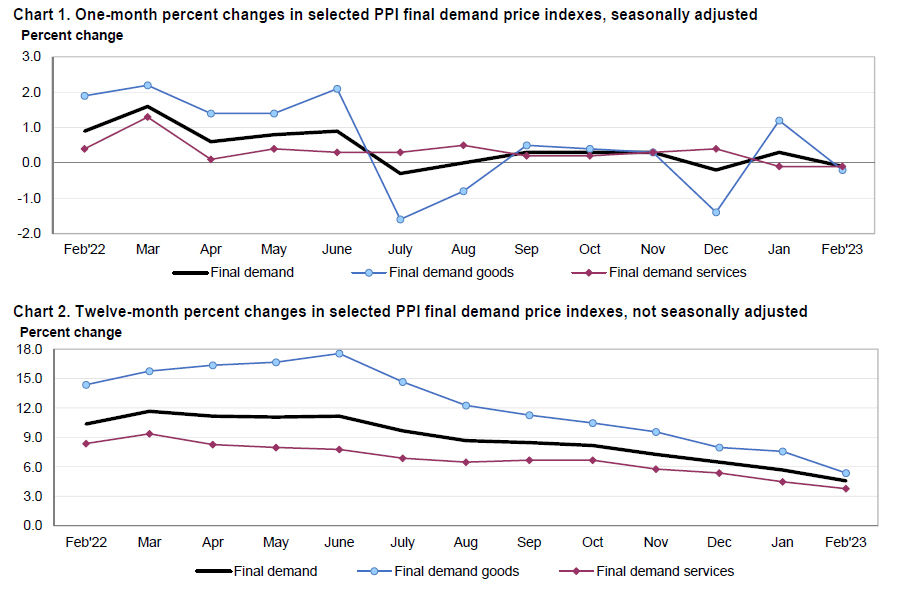
US PPI down -0.1% mom in Feb, goods fell -0.2% mom, services dropped -0.1% mom
US PPI for final demand dropped -0.1% mom in February, below expectation of 0.3% mom. Prices for goods dropped -0.2% mom while prices for services was down -0.1% mom. Prices less foods, energy, and trade services rose 0.2% mom.
For the 12 months ended in February, PPI slowed from 5.7% yoy to 4.6% yoy, below expectation of 5.1% yoy. Prices for final demand less foods, energy, and trade services advanced 4.4yoy .
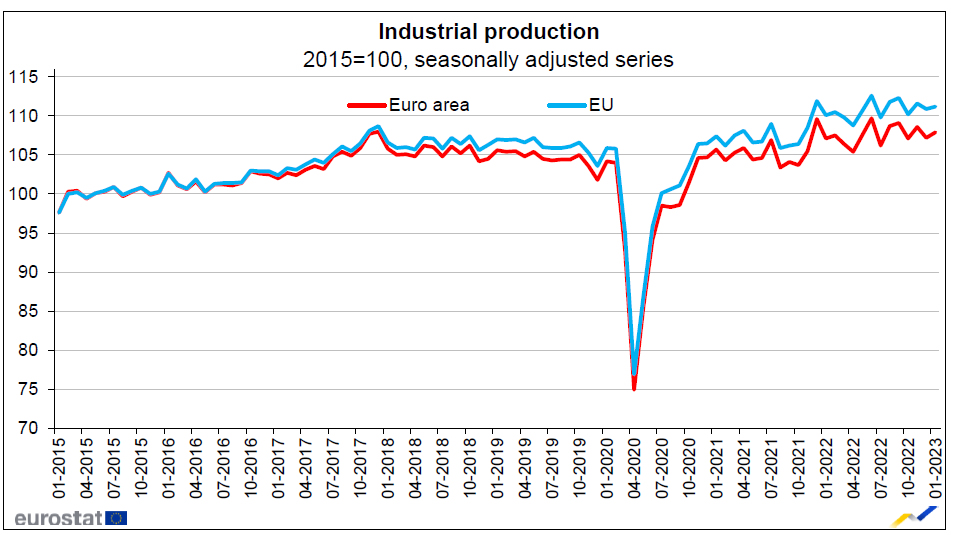
Eurozone industrial production rose 0.7% mom in Jan, EU up 0.3% mom
Eurozone industrial production rose 0.7% mom in January, above expectation of 0.5% mom. Production of intermediate goods grew by 1.5%, while production of capital goods fell by -0.2%, durable consumer goods by -0.7%, energy by -0.8% and non-durable consumer goods by -2.1%.
EU industrial production rose 0.3% mom. Among Member States for which data are available, the highest monthly increases were registered in Ireland (+9.3%), Sweden (+5.0%) and Romania (+2.0%). The largest decreases were observed in Denmark (-7.1%), Hungary (-5.0%) and the Netherlands (-4.3
Ifo Spring Forecast: German economy to contract slightly in 2023
According to the Spring 2023 economic forecast released by Germany's Ifo, the country's economy is expected to contract by -0.1% in 2023 before growing 1.7% in 2024. Headline inflation is projected to slow slightly to 6.2% in 2023 before dropping to 2.2% in 2024. However, core inflation, which excludes energy prices, is expected to rise further to 6.3% in 2023 and then decline to 2.8% in 2024.
Ifo stated that the "subdued performance of the global economy is dampening German exports," while high inflation rates are "depressing consumer spending and construction activity through declining purchasing power and significantly increased financing costs." The report also noted that inflation has become increasingly broad-based over the past year, remaining at historic highs for several months. While the direct contribution of energy prices has weakened, inflation in all other goods and services has increased steadily, reaching 7.6% in February.
The report added, "In addition to higher production costs passed on by companies to consumers, a noticeable widening of profit margins in some, particularly consumer-related, areas of the economy also contributed to this."
China posts mixed economic data in Jan-Feb period
China's economic data for the first two months of 2023 showed mixed results, with industrial production growth falling short of expectations but retail sales and fixed asset investment exceeding them.
According to China's National Bureau of Statistics, industrial production grew by 2.4% yoy, below the forecasted 2.6% yoy. Retail sales, on the other hand, rose by 3.5% yoy, slightly above expectations of 3.4% yoy.
Fixed asset investment also exceeded expectations, growing by 5.5% yoy, compared to the forecasted 4.5% yoy. Infrastructure investment saw a rise of 9.0% yoy. However, property investment showed a decline of -5.7% yoy, indicating a slowdown in the real estate sector.
The NBS released a statement that highlighted the challenges facing China's economy. "The external environment is even more complex, inadequate demand remains prominent and the foundation for economic recovery is not solid yet," the statement said.
The economic data for January and February is combined to smooth out the impact of the Lunar New Year holiday, which falls at different times during the two months in different years.
BoJ minutes: Basic stance to continue with current monetary easing
BoJ has reaffirmed its commitment to continuing with its current monetary easing policy, including yield curve control, to achieve the price stability target, according to the minutes of its meeting in January 17-18.
One member noted that there is "still a long way to go to achieve the price stability target", and thus the Bank should continue with the current monetary easing to firmly support the economy.
To encourage firms' efforts with regard to business transformation until sustained wage increases can be expected, the Bank needs to "curb interest rate rises across the entire yield curve" while paying attention to the functioning of bond markets, according to another member.
Another member added that it was "inappropriate to rush to an exit" from the current monetary policy, as overseas economies were currently heading toward slowdowns.
However, one member recognized that "at some point in the future", it will be necessary to examine and assess the balance between the positive effects and side effects of the current monetary easing policy.
The Bank's "basic stance on its future conduct of monetary policy" is to "continue with the current monetary easing -- including the conduct of yield curve control -- and thereby achieve the price stability target in a sustainable and stable manner accompanied by wage increases," the minutes read.
EUR/JPY Mid-Day Outlook
Daily Pivots: (S1) 142.92; (P) 143.67; (R1) 144.79; More....
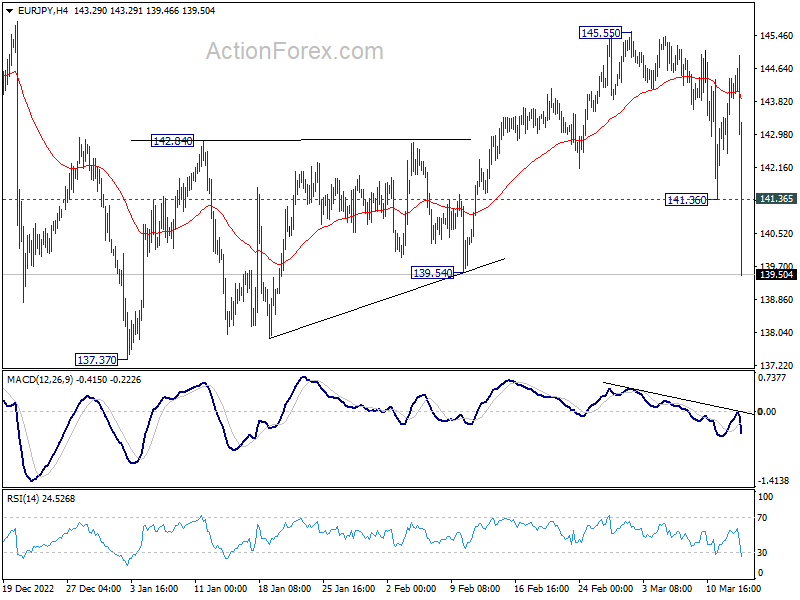
EUR/JPY's steep decline today and strong break of 141.36 confirms resumption of the decline from 145.55. The development also solidify the case that whole correction from 148.38 is in its third leg. Intraday bias is back on the downside for retesting 137.37 low, and then 135.40 fibonacci level. For now, risk will stay heavily on the downside as long as 141.36 resistance holds.
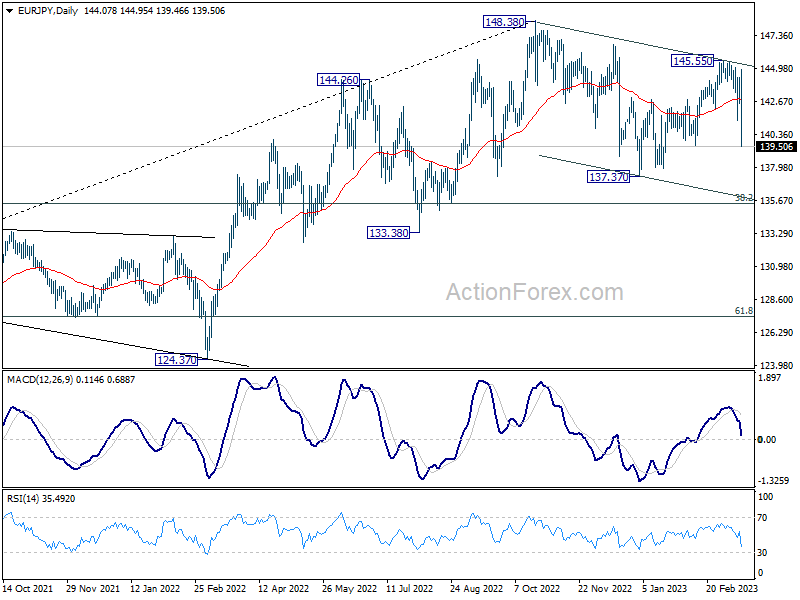
In the bigger picture, as long as 55 week EMA (now at 139.54) holds, larger up trend from 114.42 (2020 low) is still in progress for 149.76 long term resistance. However, firm break of 55 week EMA will bring deeper fall to 38.2% retracement of 114.42 to 148.38 at 135.40. Sustained break there will raise the chance of trend reversal, and target 61.8% retracement at 127.39.
Economic Indicators Update
| GMT | Ccy | Events | Actual | Forecast | Previous | Revised |
|---|---|---|---|---|---|---|
| 21:45 | NZD | Current Account (NZD) Q4 | -9.46B | -7.65B | -10.21B | -11.40B |
| 23:50 | JPY | BoJ Minutes | ||||
| 02:00 | CNY | Retail Sales Y/Y Feb | 3.50% | 3.40% | -1.80% | |
| 02:00 | CNY | Industrial Production Y/Y Feb | 2.40% | 2.60% | 1.30% | |
| 02:00 | CNY | Fixed Asset Investment YTD Y/Y Feb | 5.50% | 4.50% | 5.10% | |
| 10:00 | EUR | Eurozone Industrial Production M/M Jan | 0.70% | 0.50% | -1.10% | -1.30% |
| 12:15 | CAD | Housing Starts Feb | 225K | 215K | ||
| 12:30 | USD | Empire State Manufacturing Index Mar | -24.60% | -7.5 | -5.8 | |
| 12:30 | USD | Retail Sales M/M Feb | -0.40% | 0.20% | 3.00% | 3.20% |
| 12:30 | USD | Retail Sales ex Autos M/M Feb | -0.10% | -0.10% | 2.30% | 2.40% |
| 12:30 | USD | PPI M/M Feb | -0.10% | 0.30% | 0.70% | |
| 12:30 | USD | PPI Y/Y Feb | 4.60% | 5.10% | 6.00% | 5.70% |
| 12:30 | USD | PPI Core M/M Feb | 0% | 0.40% | 0.50% | 0.10% |
| 12:30 | USD | PPI Core Y/Y Feb | 4.40% | 5.00% | 5.40% | |
| 14:00 | USD | Business Inventories Jan | 0.00% | 0.30% | ||
| 14:00 | USD | NAHB Housing Market Index Mar | 42 | 42 | ||
| 14:30 | USD | Crude Oil Inventories | -0.2M | -1.7M |
US retail sales down -0.4% mom in Feb, ex-auto sales dropped -0.1% mom
US retail sales declined -0.4% mom to USD 697.9B, below expectation of 0.2% mom. Ex-auto sales fell -0.1% mom to USD 567.2B, matched expectations. Ex-gasoline sales dropped -0.4% mom to USD 639.5B. Ex-auto, gasoline sales was flat over the month at USD 508.9B.
Total sales for the December 2022 through February 2023 period were up 6.4% from the same period a year ago.
US PPI down -0.1% mom in Feb, goods fell -0.2% mom, services dropped -0.1% mom
US PPI for final demand dropped -0.1% mom in February, below expectation of 0.3% mom. Prices for goods dropped -0.2% mom while prices for services was down -0.1% mom. Prices less foods, energy, and trade services rose 0.2% mom.
For the 12 months ended in February, PPI slowed from 5.7% yoy to 4.6% yoy, below expectation of 5.1% yoy. Prices for final demand less foods, energy, and trade services advanced 4.4yoy .
Key Moment for the Oil Market
Oil prices fell to a three-month low following the release of US inflation data which was in line with expectations. The annual inflation rate of 6% and monthly rate of 0.4% were unsurprising, but the monthly core Consumer Price Index (CPI) beat expectations at 0.5%. This has led to the market pricing in a 25 basis point hike from the Federal Reserve next week after briefly considering a pause in the aftermath of the recent bank failures of Silvergate Corp., SVB Financial, and Signature Bank.
The market is now viewing the Federal Reserve as hawkish again, which has raised concerns about a potential recession, given that the tightening cycle is yet to play out. We hope to gain more insight into the Fed's inclination at next week's Federal Open Market Committee (FOMC) meeting. Still, the market remains uncertain and anxious about the economy's future. Having said all this, let's now look at the technical side of things.
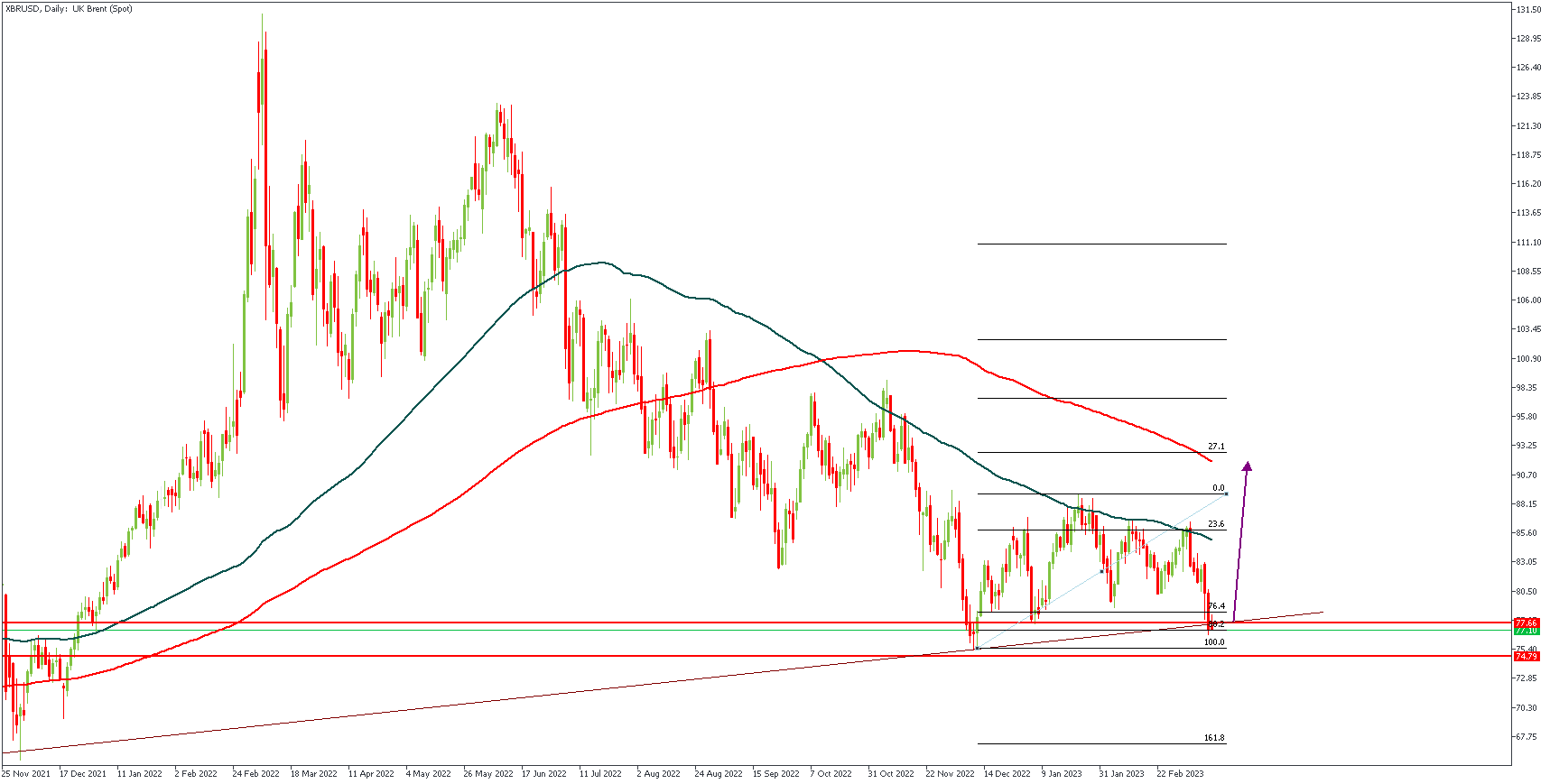
XBRUSD
XBRUSD on the Daily timeframe is currently squeezing between the support trendline from 4 years ago and the 100-day MA. Note that the price is currently stalling around 88% of the Fibonacci retracement, which may indicate bullish intent. However, there remains a bit of uncertainty as the MAs are still poised in a bearish array.
Analysts’ Expectations:
- Direction: Bullish
- Target: 85.55
- Invalidation: 74.82
CONCLUSION
The trading of CFDs comes at a risk. Thus, to succeed, you have to manage risks properly. To avoid costly mistakes while you look to trade these opportunities, be sure to do your due diligence and manage your risk appropriately.
Australian Dollar Slips Ahead of Employment Report
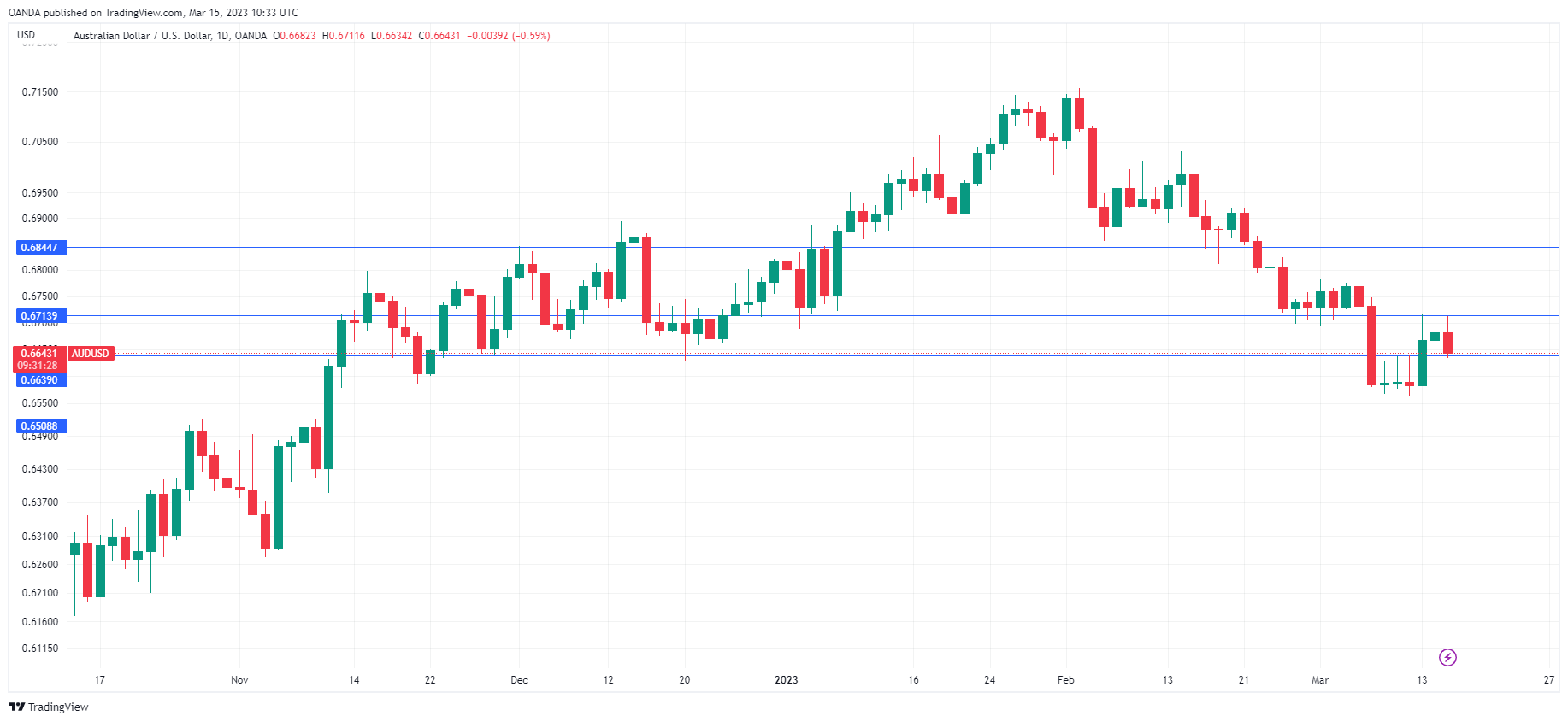
The Australian dollar, which has posted strong gains early in the week, has run into a wall on Wednesday. In the European session, AUD/USD is trading at 0.6638, down 0.66%.
Australian job growth expected to rebound
Australia releases the February employment report on Thursday (Australia time). Job growth is expected to rebound, with a consensus of 48,500 after a soft January read of -11,500. The unemployment rate is expected to tick lower to 3.6%, down from 3.7%. The Reserve Bank of Australia will be watching closely, as a robust labour market has enabled the central bank to continue its tightening – the Bank raised rates last week by 25 basis points, a 10th straight hike which brought the cash rate to 3.60%. The good news is that the end of the tightening cycle could be near, with the markets pricing in a pause at the April meeting. Consumers and businesses are weary of rising interest rates and confidence indicators do not paint an optimistic picture.
Along with the job data, Australia releases consumer inflation expectations for March. The markets are braced for the indicator to rise to 5.4%, after a 5.1% gain in February. Inflation expectations is a key inflation gauge as it can set the direction of actual inflation, and the RBA will not be happy if inflation expectations accelerate.
There is an uneasy calm in the air as the dust begins to settle after the Silicon Valley Bank collapse. The sky is not falling, not even above US bank towers, as regional bank stocks have rebounded. The US inflation release on Tuesday delivered as expected, with both the headline and core CPI readings matching the estimates. Headline CPI fell to 6.0%, down from 6.4%, while the core rate ticked lower to 5.5%, down from 5.6%. Inflation is cooling but we’re not seeing the disinflation process that the markets were celebrating only a few weeks ago.
AUD/USD Technical
- AUD/USD is testing support at 0.6639. Below, there is support at 0.6508
- 0.6713 and 0.6844 are the next resistance lines
Ifo Spring Forecast: German economy to contract slightly in 2023
According to the Spring 2023 economic forecast released by Germany's Ifo, the country's economy is expected to contract by -0.1% in 2023 before growing 1.7% in 2024. Headline inflation is projected to slow slightly to 6.2% in 2023 before dropping to 2.2% in 2024. However, core inflation, which excludes energy prices, is expected to rise further to 6.3% in 2023 and then decline to 2.8% in 2024.
Ifo stated that the "subdued performance of the global economy is dampening German exports," while high inflation rates are "depressing consumer spending and construction activity through declining purchasing power and significantly increased financing costs." The report also noted that inflation has become increasingly broad-based over the past year, remaining at historic highs for several months. While the direct contribution of energy prices has weakened, inflation in all other goods and services has increased steadily, reaching 7.6% in February.
The report added, "In addition to higher production costs passed on by companies to consumers, a noticeable widening of profit margins in some, particularly consumer-related, areas of the economy also contributed to this."
Eurozone industrial production rose 0.7% mom in Jan, EU up 0.3% mom
Eurozone industrial production rose 0.7% mom in January, above expectation of 0.5% mom. Production of intermediate goods grew by 1.5%, while production of capital goods fell by -0.2%, durable consumer goods by -0.7%, energy by -0.8% and non-durable consumer goods by -2.1%.
EU industrial production rose 0.3% mom. Among Member States for which data are available, the highest monthly increases were registered in Ireland (+9.3%), Sweden (+5.0%) and Romania (+2.0%). The largest decreases were observed in Denmark (-7.1%), Hungary (-5.0%) and the Netherlands (-4.3%).
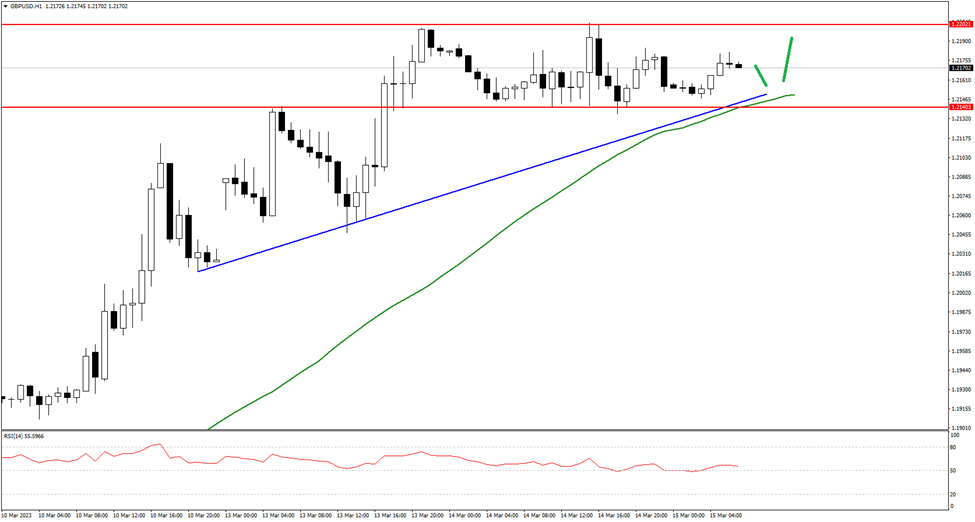
GBP/USD Pair Started a Fresh Increase Above 1.2000
The British Pound started a fresh increase above the 1.2000 resistance against the US Dollar. The GBP/USD pair gained pace for a move above the 1.2050 level.
The pair even settled above the 1.2120 level and the 50 hourly simple moving average. The pair is now consolidating gains above the 1.2150 pivot level. An immediate resistance is near the 1.2200 level.
The first major resistance is near the 1.2220 level. If there is a clear upside break above the 1.2220 resistance, the pair could rise steadily towards the 1.2250 level in the near term. The next major resistance sits near 1.2320 on FXOpen.
On the downside, the first major support is near the 1.2150 level and a trend line on the hourly chart. The main support is forming near the 1.2120 level. A break below the 1.2120 support could push the pair towards the 1.2060 support.
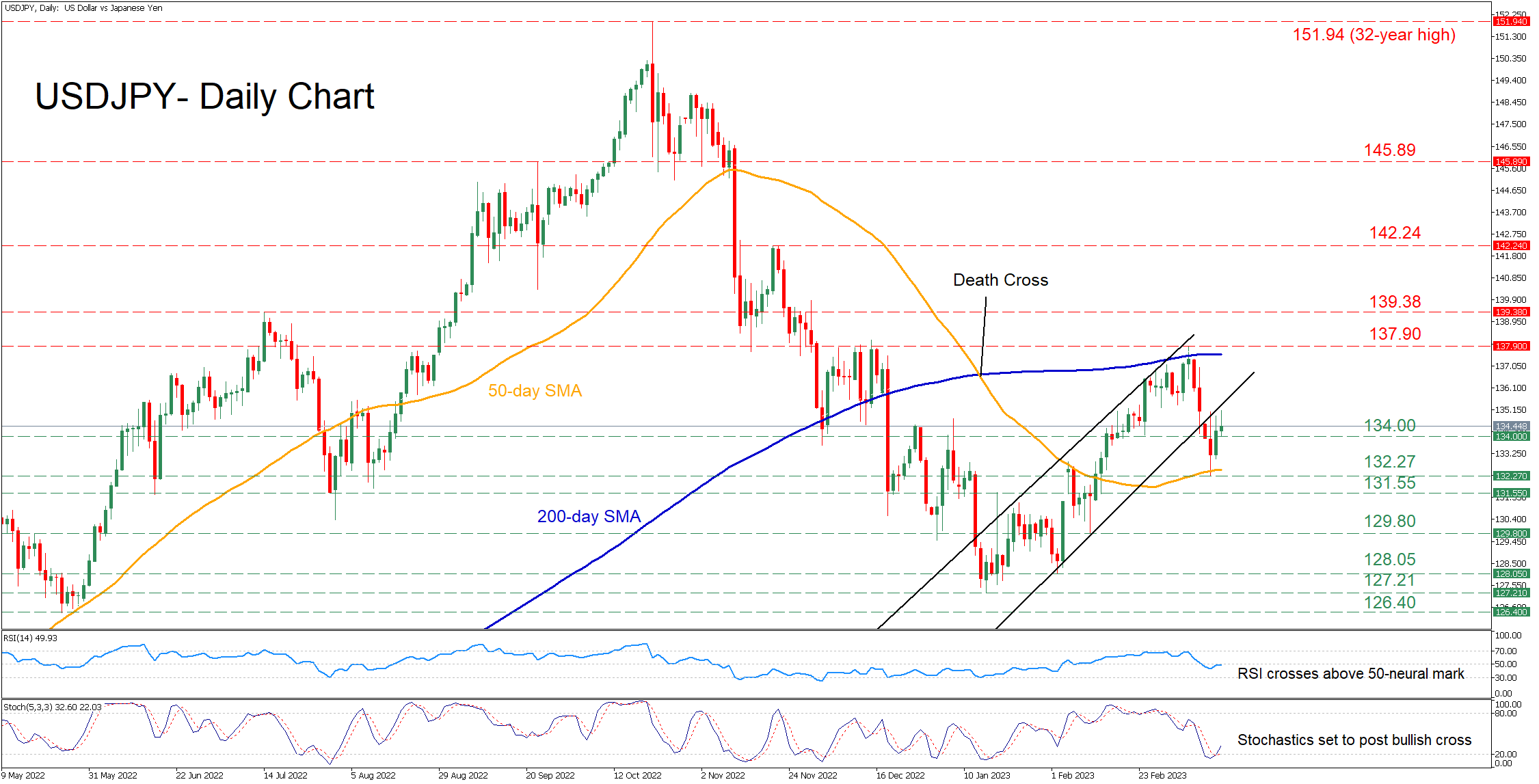
USDJPY Recoups Losses After Sharp Drop
USDJPY has been in a massive downtrend after peaking at the 32-year high of 151.94 in October. Even though the pair exhibited some signs of recovery, trading within an upward sloping channel in the short term, this bullish pattern was recently broken to the downside.
The momentum indicators currently suggest that the recent decline is slowly reversing as near-term risks are tilting to the upside. Specifically, the RSI has jumped above its 50-neutral mark, while the stochastic oscillator posted a bullish cross within the 20-oversold zone.
If the upside tendency persists and the price re-enters into its bullish setup, initial resistance could be encountered at the recent resistance of 137.90, which lies close to the 200-day simple moving average (SMA). Piercing through that zone, the price could ascend towards 139.38 or higher to test the November peak of 142.24. Should the latter barrier fail, further advances could cease at the 145.89 hurdle.
Alternatively, bearish actions might send the price to test the recent support of 134.00. Sliding beneath that floor, the bears could aim for the March low of 132.27 before the spotlight turns to 131.55. A break below the latter could pave the way for the 129.80 obstacle.
Overall, USDJPY seems to be regaining some ground despite its recent weakness. Therefore, the pair could realize more gains in the case that it jumps back into its upward sloping channel.
IfW raises Germany’s growth forecast, but warns of subdued momentum
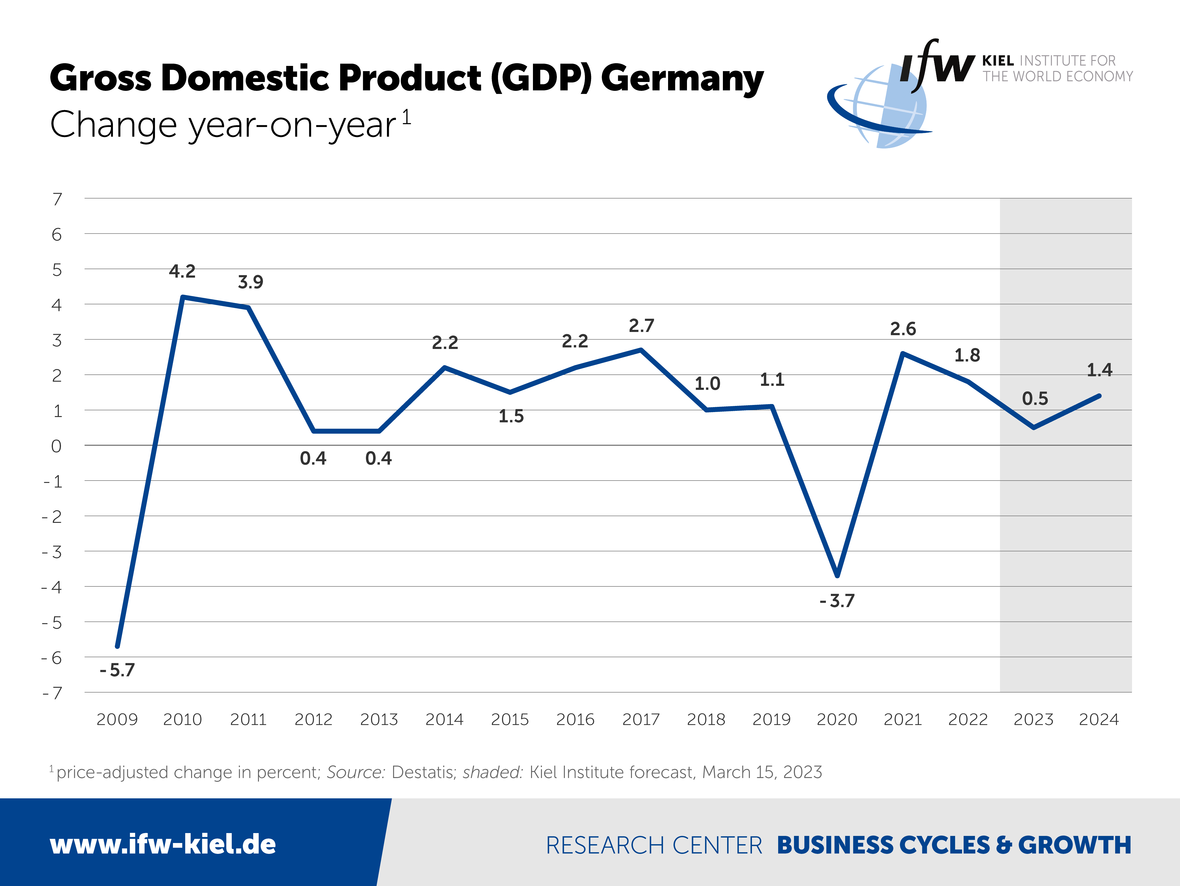
The German economy is expected to grow at a faster pace than previously predicted, according to forecasts by the IfW economic institute. The institute raised Germany's economic growth forecasts for 2023 from 0.3% to 0.5% and for 2024 from 1.3% to 1.4%. Meanwhile, inflation is forecast to slow from its current level of beyond 7% to 5.4% in 2023 and to around 2% in 2024.
For the Eurozone as a whole, GDP is projected to grow 1.1% in 2023 and 1.6% in 2024. Inflation is forecast to slow to 5.5% in 2023 and then to 2.6% in 2024.
Stefan Kooths, Vice President and Head of Economic Research at the Kiel Institute said, "The economic compass is pointing upwards again, but the momentum remains subdued.
"The recent sharp drop in gas prices is initially providing little stimulus to the economy in this country, it is primarily easing the burden on the government budget, which now must step in with fewer subsidies as part of the so-called energy price brakes.
"As a result, lower import prices are replacing the stimulus from state energy subsidies, which has a similar effect on the macro economy."