

Sample Category Title
Aussie Jumps, Ignores RBA’s Tough Message
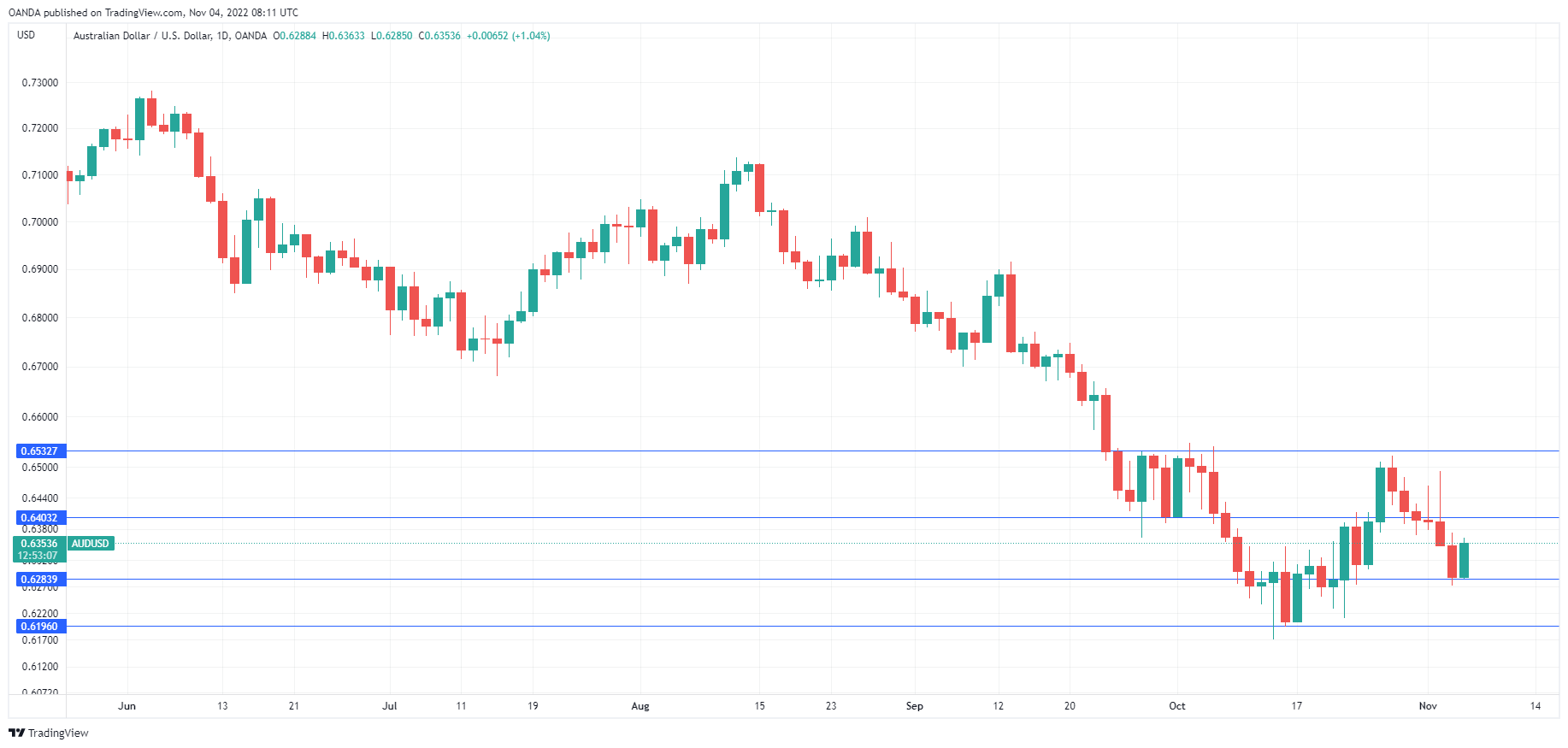
AUD/USD continues to show strong volatility and is sharply higher today. In the European session, the Australian dollar is trading at 0.6338, up 0.81%. This follows losses of almost 1% on Thursday.
RBA sees lower growth, higher inflation
The RBA monetary policy statement was gloomy, with a warning that tough times lie ahead for the Lucky Country. The central bank is projecting a GDP of 3% over 2022, slowing to 1.5% in 2023. Inflation is expected at 4.75% over 2023, higher than the 4.25% pace in its previous policy statement. The forecasts are based on the cash rate peaking at 3.5% in mid-2023.
The RBA raised the cash rate to 2.85% earlier this week, with a 0.25% hike, and Governor Lowe said that the central bank was on a “narrow path” that required “striking the right balance between doing too much and too little.” The RBA finds itself in a pickle, as its steep tightening cycle is slowing growth and hurting businesses and households. At the same time, inflation remains red-hot at 7.3%, fuelled by high food prices. Inflation remains the RBA’s number one priority, but it has eased up on the size of the hikes, hoping that inflation will peak shortly and a recession can be avoided.
The week wraps up with the US nonfarm payrolls report, which has been overshadowed by Fed meetings and inflation releases. Still, the release is carefully watched by Fed policymakers and today’s data will be a factor in the December rate decision. The October consensus stands at 200,000, lower than the September reading of 263,000. With the markets split 50/50 on whether the Fed will raise rates by 0.50% or 0.75%, the NFP could provide some volatility in the currency markets in the North American session.
AUD/USD Technical
- There is resistance at 0.6403 and 0.6532
- There is support at 0.6283 and 0.6196
All Eyes on the Jobs Report
It's been another fascinating week in financial markets and it's not over yet, with the US jobs report still to come amid some interest rate uncertainty.
The Fed meeting on Wednesday left investors scratching their heads a little. What was meant to be the pivot moment quickly became something very different; an admission that markets need to price in more. The central bank had given with one hand and taken with the other and investors were left to sulk once more.
But perhaps the takeaway is more positive than the markets would have us believe. In scaling back its tightening (probably) in December, the central bank is buying itself time for the data to improve and justify a lower terminal rate. It's possible that the fear at the Fed was that a slower pace - or "dovish pivot" would send the wrong message and markets would overreact, undermining its tightening efforts. By adding the terminal rate caveat, it's kept markets on their toes and bought the Fed more time.
Or maybe I'm simply reading too much into it but frankly, who isn't at this point? The fact remains that the pace of tightening will be slower and the Fed will be able to continue making monetary policy restrictive but in a potentially less damaging way while enabling more visibility on the economy. This puts additional emphasis now on the data which could lower the terminal rate and further slow the pace of tightening.
While all of the data will be closely monitored and factor into the Fed's decision-making in December, the two releases at the top of the list are undoubtedly the inflation and jobs reports. And we'll get two of each of those, the first of which being the October jobs report, later today.
Needless to say, investors are a little on edge ahead of the release. Not only was Powell's caveat unexpected and unwelcome by investors, the labour market remains extremely healthy which means today's report is likely to be red hot once more. If that doesn't turn out to be the case, investors may start to see the upside to the Fed's statements on Wednesday.
China rumours boost oil prices
Oil prices are rallying once more at the end of the week as rumours continue to circulate around China's plans to relax certain Covid restrictions in the first major move away from its zero-Covid policy. Of course, this is pure speculation at the moment and yesterday's denial from the National Health Commission appears to have fallen on deaf ears but that doesn't appear to have stopped oil rallying. Stocks in China and Hong Kong aren't doing too badly either.
Of course, there remain two dominant forces in the oil market right now, the economic outlook and OPEC+. We've seen more gloomy forecasts this week, with the BoE suggesting the UK could face a two-year recession. While others may not be as bad, global growth prospects remain weak. Oil has been climbing over the last few weeks but ultimately remains roughly in the middle of the $90-$100 range.
Tentatively higher
Gold is trading tentatively higher on the final day of the week after testing the September and October lows on Thursday. The yellow metal was dealt another blow by the Fed's admission on the terminal rate but appears to be clinging on for now. A hot jobs report today could be the final nail in the coffin, with support around $1,620 coming under serious pressure. Below there $1,600 could be key.
But the gains we're seeing so far today are impressive, if not a little surprising. Following Wednesday's setback, a rally of more than 1% in the run-up to what could be another red-hot jobs report is certainly bold. Should it break $1,680 in the aftermath, it could signal that a relief rally is underway.
Optimism ahead of the jobs report
Bitcoin is bouncing back ahead of the jobs report alongside other risk assets. Whether it will be able to hold onto those gains will obviously depend on the strength of the report itself, especially in light of the recent Fed comments. Clearly, there's some sense of optimism out there and bitcoin could be eyeing up $21,000 once more where it ran into resistance in late October. Of course, a failure to hold onto these gains could see $20,000 come under pressure once more.
NAS 100 Tests Critical Floor
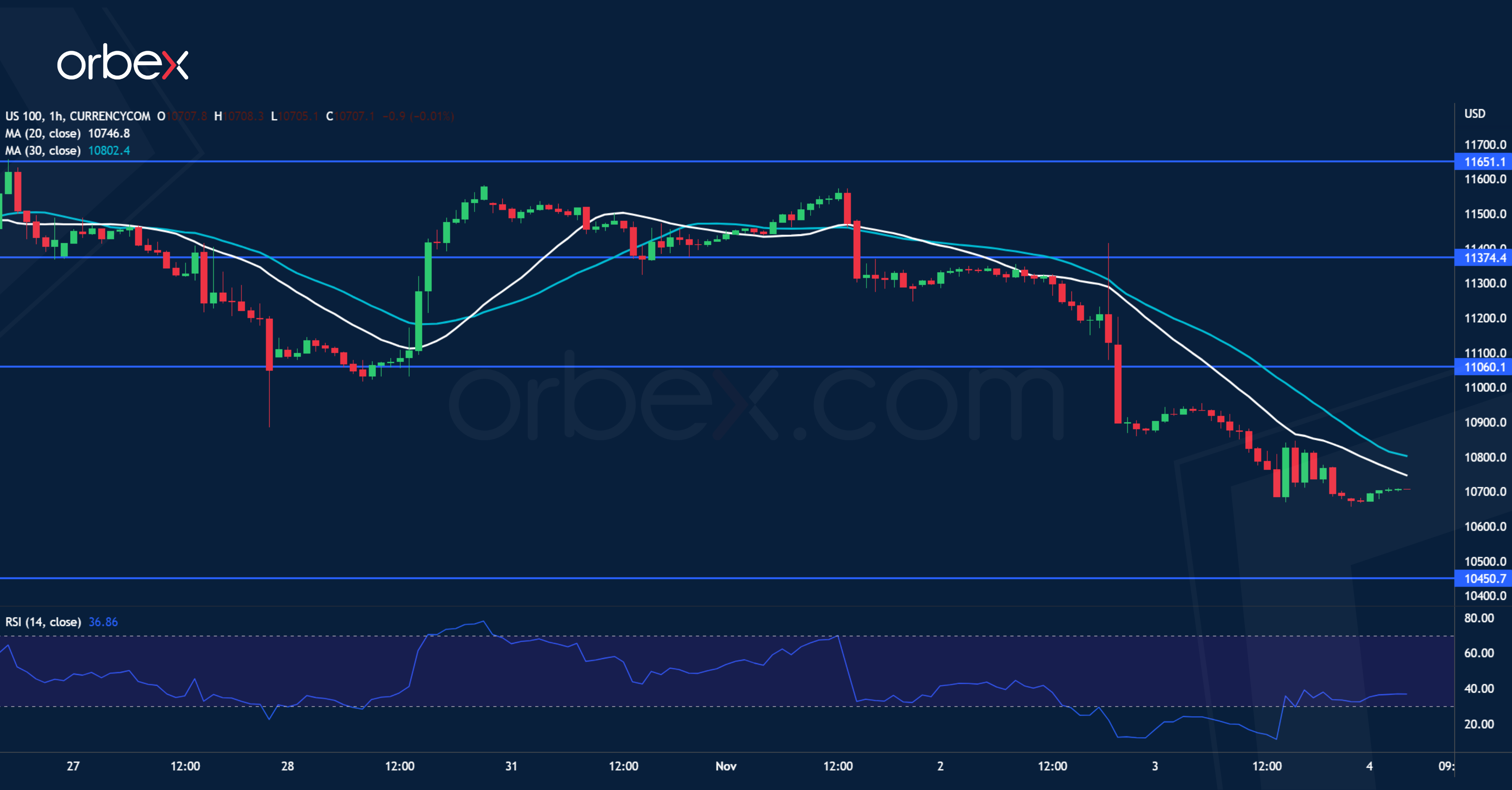
The Nasdaq 100 slumps as fewer US jobless claims reinforces the tightening agenda. Previously, a tentative break below 10900 weakened the bulls’ position. A failure to achieve a new high above 11650 shows that the path of least resistance would be down. A sharp drop below the said support has definitely knocked out the buy side. A rebound is likely to be capped by 11060. 10450 would be the last level to salvage the situation. A bearish breakout could trigger a new round of sell-off and effectively resume the bear market.
GBP/USD Turns Lower
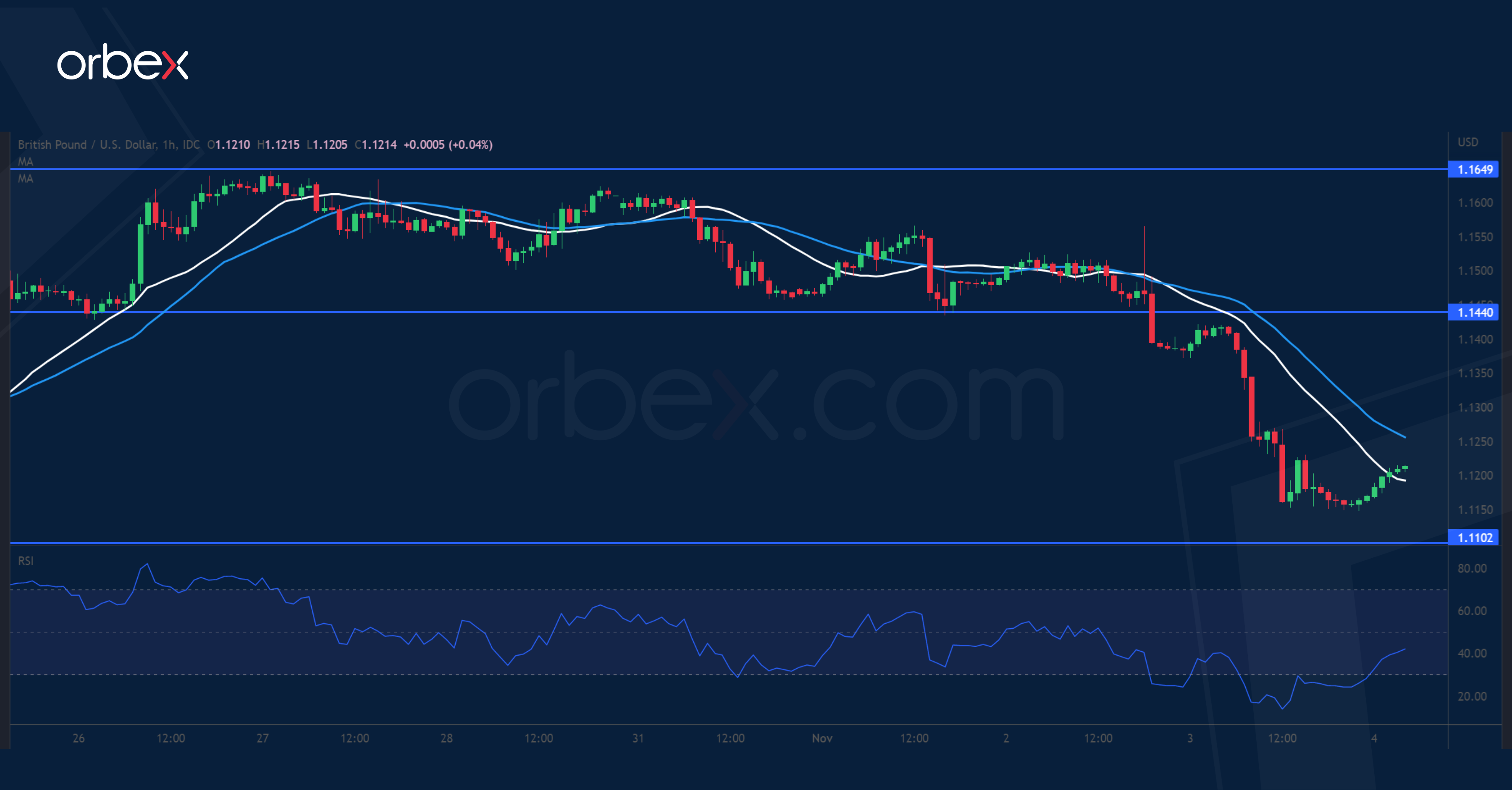
The pound tumbled after the BoE warned of a protracted downturn. The price lost steam near September’s high (1.1700) and a break below 1.1440 sent buyers packing, turning it into a resistance. A lack of bids at the base (1.1300) of a recent bullish breakout is a warning sign that sentiment has gone cautious. 1.1100 is an important support and after the RSI sank to the oversold area, a ‘buying-the-dips’ behaviour could be expected. However, its breach could make Sterling vulnerable to renewed selling pressure.
GBP/JPY Daily Outlook
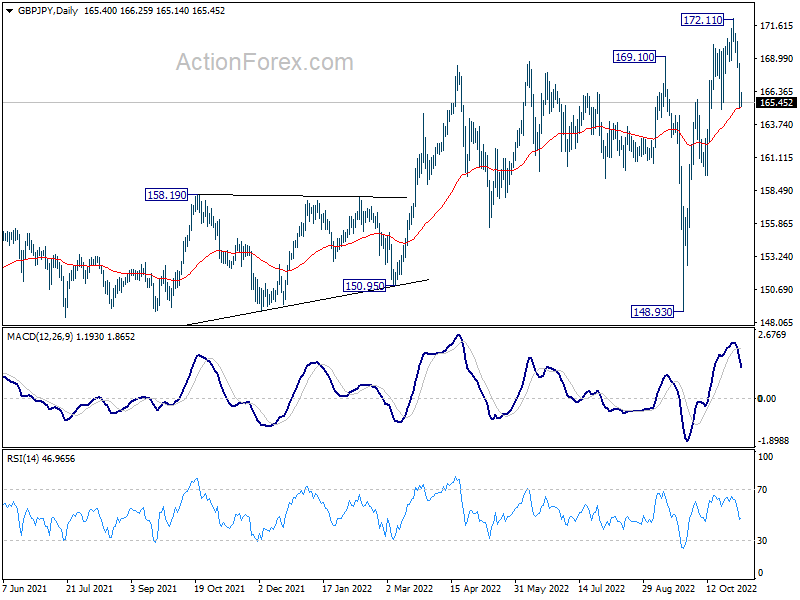
Daily Pivots: (S1) 164.19; (P) 166.39; (R1) 167.67; More...
Intraday bias in GBP/.JPY stays neutral at this point. Further rise is in favor as long as 164.95 support holds. Break of 172.11 will resume larger up trend. However, break of 164.95 will bring deeper pull back to 159.71 support and below.
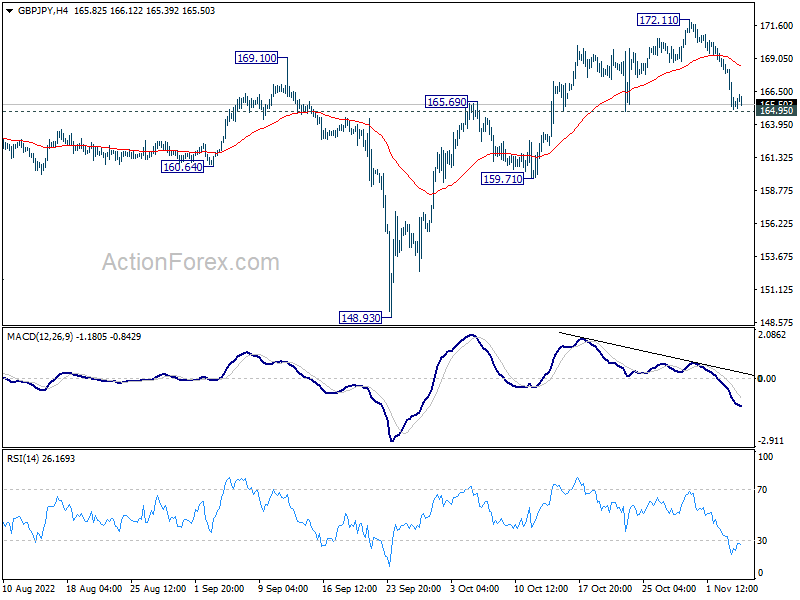
In the bigger picture, up trend from 123.94 (2020 low), as part of the trend from 122.75 (2016 low) is still in progress. Further rise would be seen to 161.8% projection of 122.75 to 156.59 (2018 high) from 123.94 at 178.69. This will now remain the favored case as long as 148.93 support holds.
EUR/JPY Daily Outlook
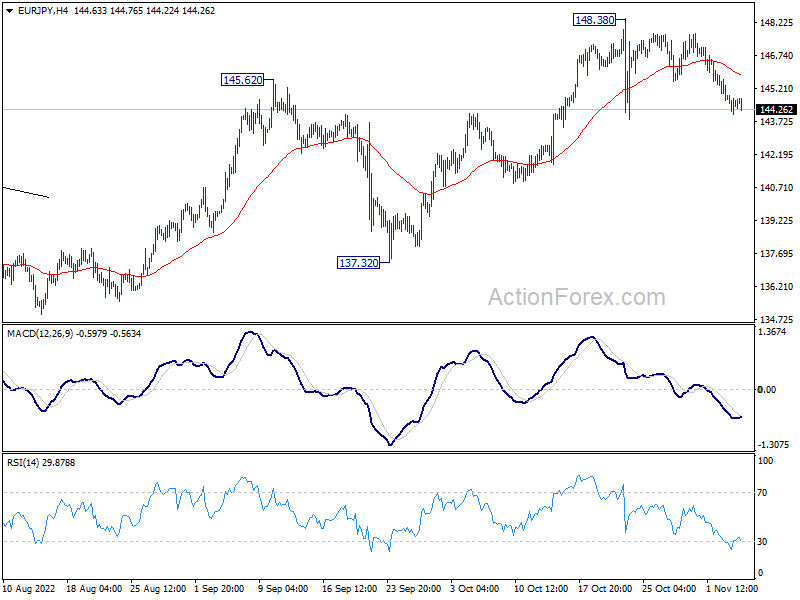
Daily Pivots: (S1) 143.94; (P) 144.65; (R1) 145.26; More....
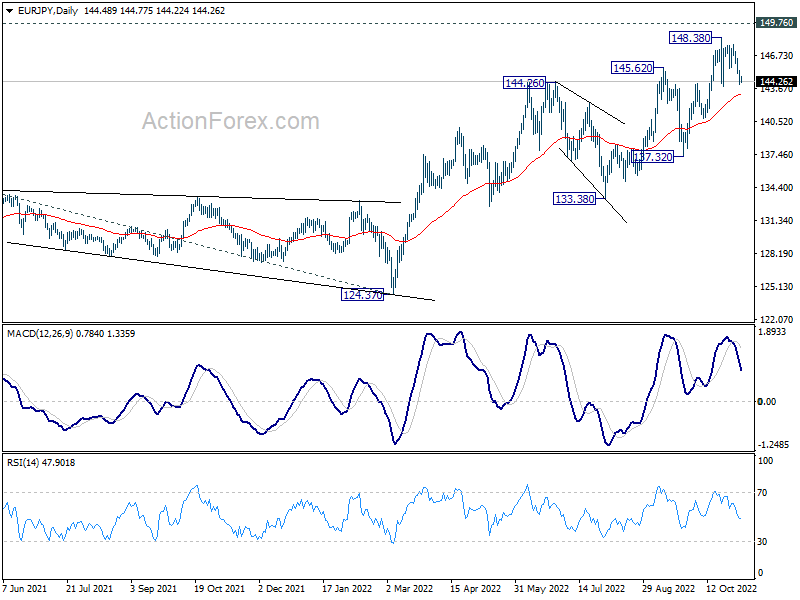
Intraday bias in EUR/JPY stays neutral as consolidation from 148.38 is extending. In case of deeper fall, downside should be contained by 55 day EMA (now at 143.09) to bring rise resumption. On the upside, break of 148.38 will resume larger up trend to 149.76 long term resistance next.
In the bigger picture, the up trend from 114.42 (2020 low) is still in progress for 149.76 (2014 high). Decisive break there will pave the way to 161.8% projection of 114.42 to 134.11 from 124.37 at 156.22. This will now remain the favored case as long as 137.32 support holds.
EUR/GBP Daily Outlook
Daily Pivots: (S1) 0.8648; (P) 0.8695; (R1) 0.8783; More...
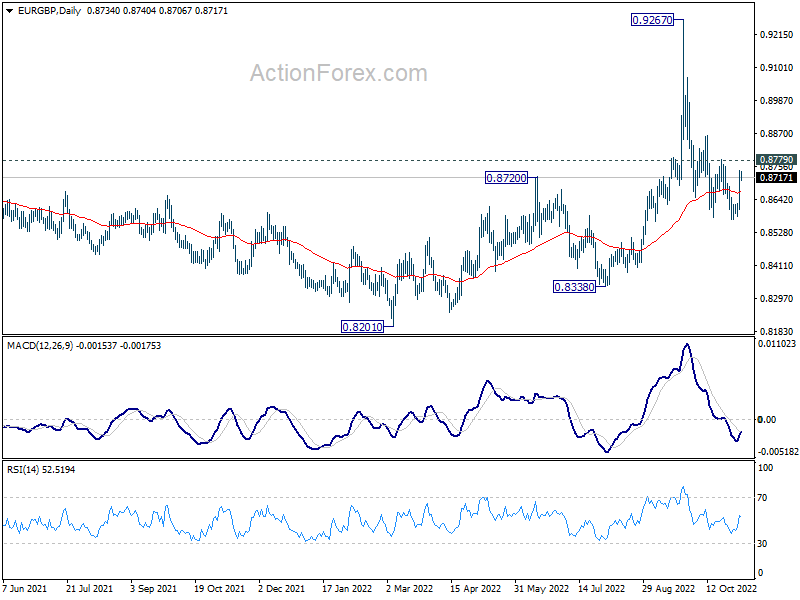
Intraday bias in EUR/GBP remains neutral for the moment. Further decline is in favor with 0.8779 resistance intact. Break of 0.8570 will resume the fall from 0.9267 and target 0.8201/8388 support zone. However, break of 0.8770 will turn bias back to the upside for 0.8869 resistance and above.
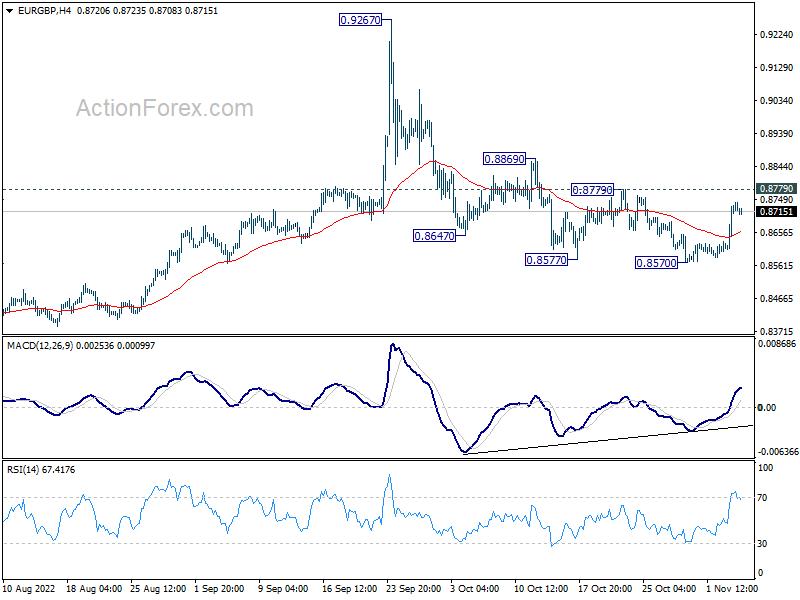
In the bigger picture, current development suggests that fall from 0.9267 is a down leg inside long term range pattern. Deeper fall could be seen towards 0.8201/8338 support zone. But strong support should be seen there to bring reversal.
EUR/AUD Daily Outlook
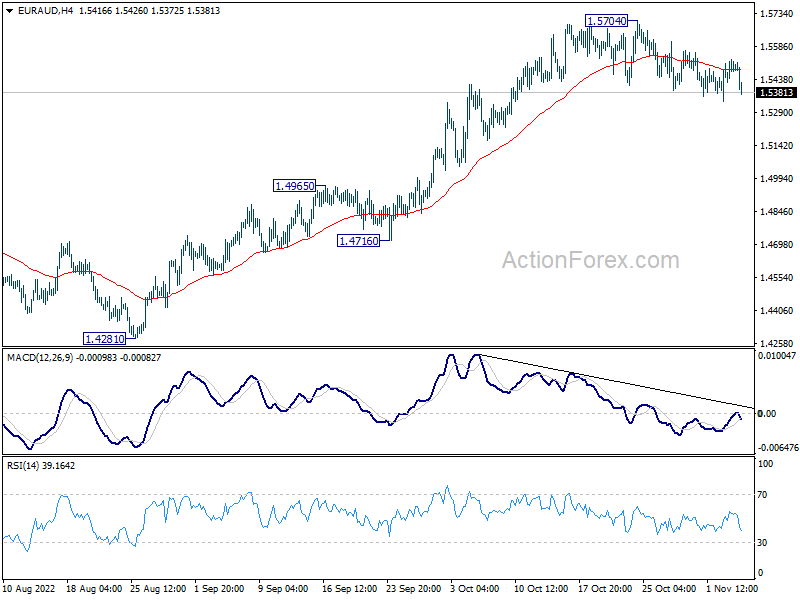
Daily Pivots: (S1) 1.5440; (P) 1.5486; (R1) 1.5541; More...
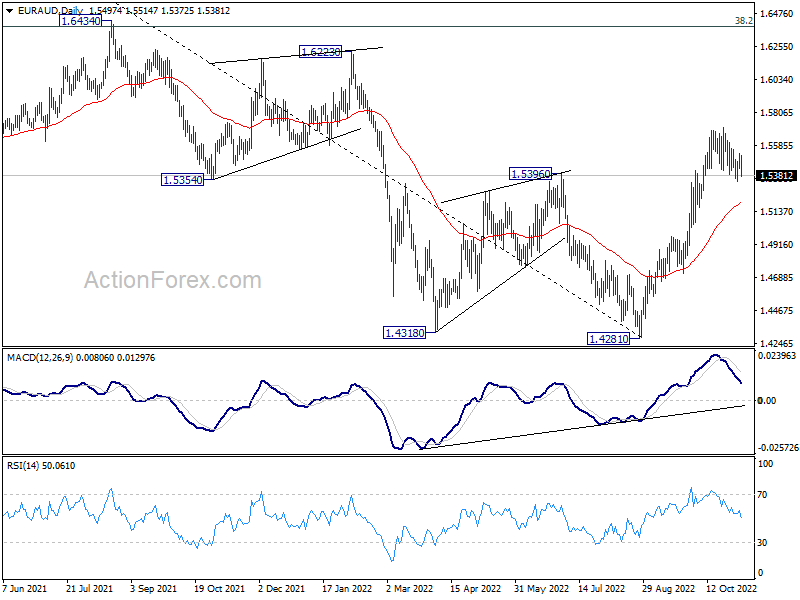
Intraday bias in EUR/AUD remains neutral as consolidation from 1.5704 is extending. Deeper decline cannot be ruled out. But downside should be contained by 55 day EMA (now at 1.5199) to bring rebound. On the upside, break of 1.5704 will resume the rally from 1.4281.
In the bigger picture, a medium term bottom should be in place at 1.4281, on bullish convergence condition in daily MACD. Further rise would be seen back to 1.6434 key resistance next. Break of 1.4965 resistance turned support is needed to indicate reversal. Otherwise, further rally will remain in favor.
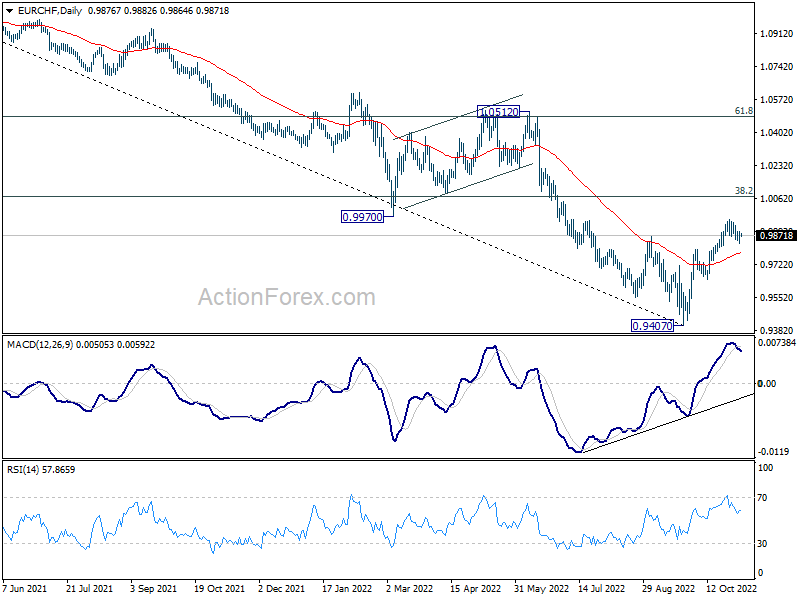
EUR/CHF Daily Outlook
Daily Pivots: (S1) 0.9843; (P) 0.9868; (R1) 0.9907; More....
EUR/CHF is still extending the consolidation pattern from 0.9953 and intraday bias stays neutral. In case of deeper retreat, downside should be contained by 0.9798 support to bring rebound. On the upside, break of 0.9953 will resume the rise from 0.9407 to 1.0072 fibonacci level.
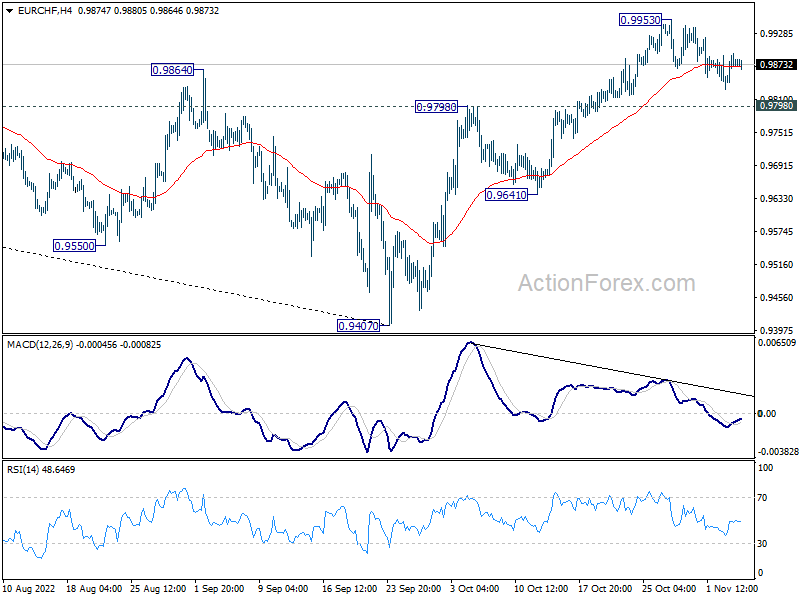
In the bigger picture, a medium term bottom should be in place at 0.9407. Further rally is expected as long as 0.9641 support holds, even as a corrective rebound. Next target 38.2% retracement of 1.1149 to 0.9407 at 1.0072. Reaction from there, as well as 55 week EMA (now at 1.0128) will reveal whether the trend is reversing.
A Reading Close Enough to Expectations (195k) Will Only Reinforce Powell’s Message
Markets
The pound sterling underperformed peers yesterday. The Bank of England hiked by an expected 75 bps to 3%. More is coming but not as much as markets are discounting (4.5-4.75%), it said in unusually explicit wording. Combined with bleak economic forecasts, EUR/GBP rallied from 0.862 to 0.874. GBP/USD gave up support from the 50dMA (1.134) to finish at 1.116. Dollar strength was at least as much responsible for the move, enjoying a healthy bid still in the wake of Powell’s hawkish press conference. The trade-weighted index closed just south of 113. EUR/USD (0.975) lost the lower bound of the short-term upward sloping trend channel. Core bonds stayed under pressure with Bunds marginally underperforming USTs. ECB president Lagarde said that – while not the base scenario – a (mild) recession along would not be enough to tame inflation. These comments come after the ECB last week put more emphasis on growing recession risks, raising speculation for a dovish pivot soon. German yields rose more than 10 bps in the 2-10y segment. The European 2y (+8.6 bps) yield narrowly closed above 3% again. US yields rose between 4.1 bps (30y) and 9.4 bps (2y, new cycle high). A slightly below-consensus but solid October US services ISM doesn’t change the Fed narrative. A knee-jerk countermove on the daily market trends shortly after the release faded quickly. The post-BoE UK yield curve steepened with changes varying from +3.7 bps (2y) to +14.8 bps (30y). UK (money) markets are just not buying the BoE’s/Bailey’s story.
While European and US stocks closed lower yesterday, equities in Asia are closing the week more upbeat. Hong Kong/Chinese stocks go berserk (6-7%+) amid ongoing speculation of an exit from zero-Covid. News of US audit inspections in the region (necessary for keeping Chinese firms listed on US stock exchanges) having wrapped up early also boosted sentiment. China’s yuan rebounds from multiyear lows to USD/CNY 7.248. Some overall dollar weakness is at play too. EUR/USD advances to 0.978. US yields ease a few bps across the curve. Both current dollar and yield declines could soon reverse though. US October payrolls are due later today. An unexpected uptick in JOLT vacancies and the stronger-than-expected ADP job report earlier this week suggest that real labour market softness hasn’t arrived yet. Even if hiring were to slow compared to September, we think that a reading close enough to expectations (195k) will only reinforce Powell’s message on Wednesday. US yields at the shortest tenors already hit new cycle highs. Longer tenors could come closer today. EUR/USD support is located at 0.9633 (October low).
News Headlines
Following up on Tuesday’s 25 bps rate, the Reserve Bank of Australia published its quarterly “Statement on monetary policy” which sets out the RBA’s assessment of current economic conditions along with an outlook for inflation and growth. The central bank upgraded its forecast for trimmed mean inflation (favorite core gauge) for December 2022 from 6% in August to 6.5%. Core inflation will then fall to 3.75% in Dec2023 and remain above the 2%-3% inflation tolerance band by Dec2024 (3.25% from 3% in August). The forecasts assume a further increase in the policy rate to 3.5% by June next year (currently 2.85%) before settling back at 3% by end 2024. Australian growth is forecast at 3% for this year and 1.5% in both 2023 and 2024. The Aussie dollar is relatively stronger this morning, with AUD/USD rising from 0.63 to 0.6350, but remains weak in absolute terms. A positive Asian risk sentiment helps. AUD swap yields lose around 8 bps across the curve.
The US services ISM fell more than expected in October, from 56.7 to 54.4. It’s the weakest level since May 2020, even as the indicator remains far above the 50 boom/bust mark for the moment. Details paint a bleak demand side picture with a drop in business activity (55.7 from 59.1), new orders (56.6 from 60.6) and especially new export orders (47.1 from 65.1). Backlog of orders stabilized (52.5) with inventory levels shrinking at a slower pace (47.2 from 44.1). The employment component fell back below 50 (49.1 from 53). The prices paid component ticked up again to 70.7 from 68.7 pointing at still alleviated price pressure.