

Sample Category Title
GBP/USD Mid-Day Outlook
Daily Pivots: (S1) 1.1434; (P) 1.1495; (R1) 1.1529; More...
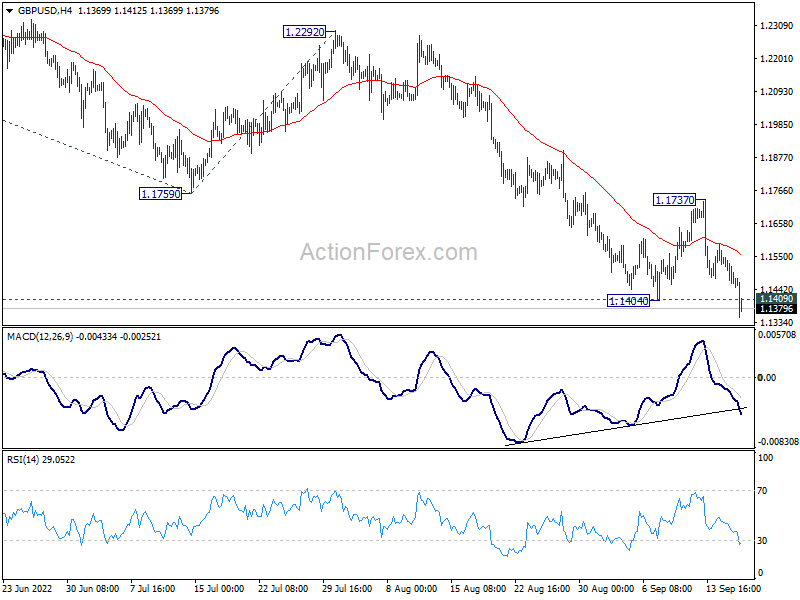
Break of 1.1404/9 support zone indicates down trend resumption in GBP/USD. Intraday bias is back on the downside for 61.8% projection of 1.3748 to 1.1759 from 1.2292 at 1.1063. On the upside, break of 1.1737 resistance is needed to indicate short term bottoming. Otherwise, outlook will remain bearish in case of recovery.
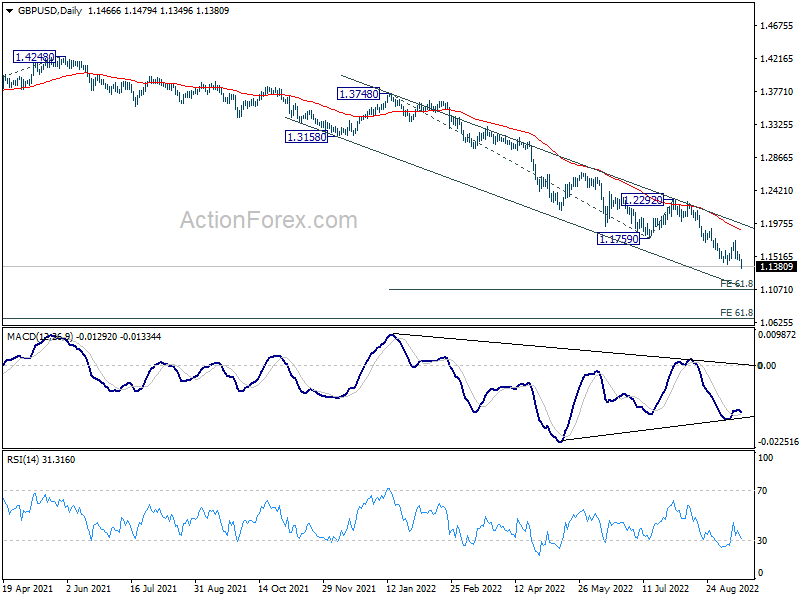
In the bigger picture, based on current momentum, fall from 1.4248 (2018 high) is probably resuming long term down trend from 2.1161 (2007 high). Sustained break of 1.1409 will target 61.8% projection of 1.7190 (2014 high) to 1.1409 (2020 low) from 1.4248 (2021 high) at 1.0675. This will remain the favored case for now as long as 1.2292 resistance holds.
Sterling Hits 37-Yr Low, Dollar Staying Strong
Selloff in Pound catches most currency related headlines today, as it slumped to a 37-year low against Dollar. The decline came after data showed retail sales contracted in both volume and value term in August, indicating that inflation was already biting into spending. In the background, the UK economic is already in recession. Still for now, commodity are even worse for the week. Dollar is the biggest winner, followed by Swiss Franc and Yen. The final picture will depend on development in risk sentiment in the last few hours.
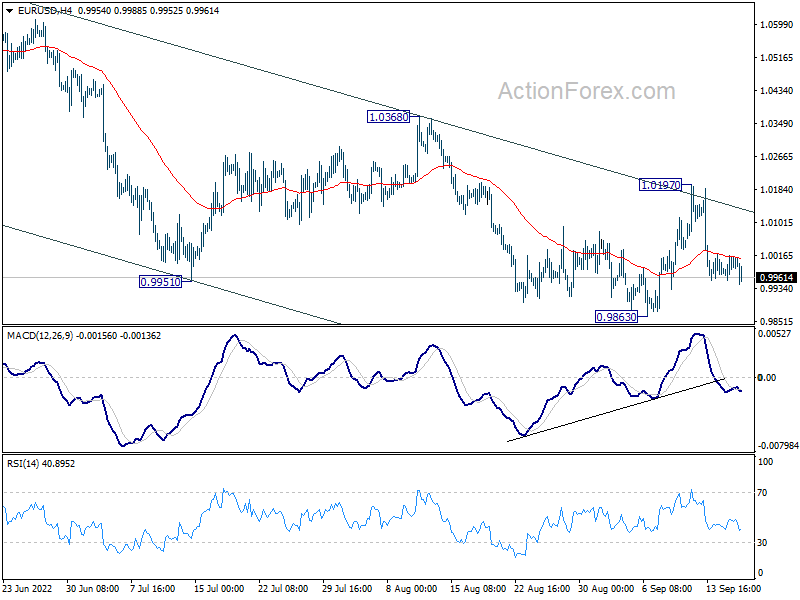
Technically, EUR/USD is so far resilient. But being capped below 4 hour 55 EMA, risk remains mildly on the downside for the near term. Retest of 0.9863 is in favor. Break there will resume larger down trend, and align the outlook with GBP/USD.
In Europe, at the time of writing, FTSE is down -0.32%. DAX is down -1.73%. CAC is down -1.49%. Germany 10-year yield is down -0.006 at 1.763. Earlier in Asia, Nikkei dropped -1.11%. Hong Kong HSI dropped -0.89%. China Shanghai SSE dropped -2.30%. Singapore Strait Times rose 0.01%. Japan 10-year JGB yield dropped -0.0001 to 0.257.
Canada wholesale sales dropped -0.6% mom in Jul, led by personal and household goods
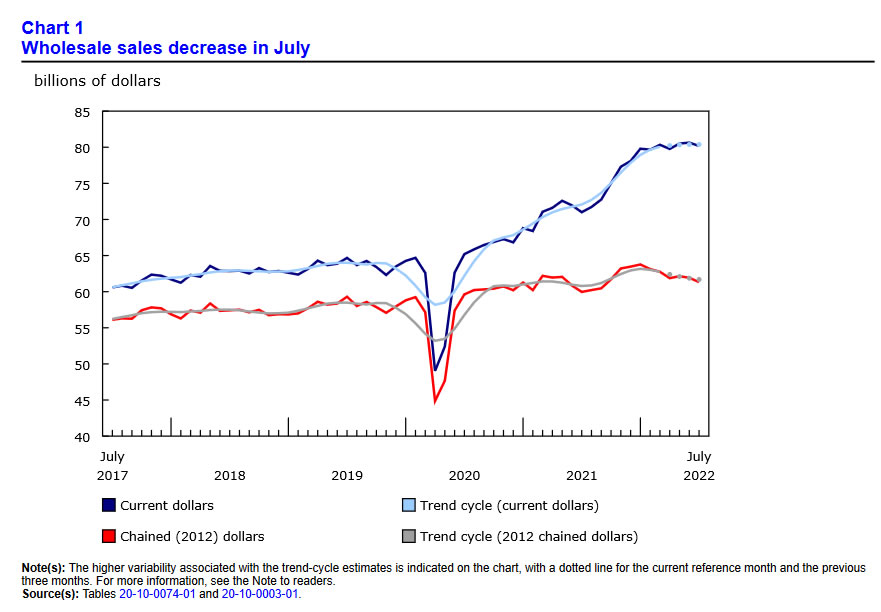
Canada wholesale sales dropped -0.6% mom in July to CAD 80.2B, worse than expectation of -0.4% mom. That followed two consecutive months of record-high sales in May and June.
Declines in the personal and household goods subsector led the losses for July, followed by the building material and supplies, and the motor vehicle and motor vehicle parts and accessories subsectors. Sales fell in five of seven subsectors, which represented 63% of wholesale sales.
ECB de Guindos hopes recent depreciation in Euro is reversed in near future
ECB Vice President Luis de Guindos told a Portuguese newspaper Expresso, "the slowdown of the economy is not going to 'take care' of inflation on its own."
"The slowdown of the economy will reduce demand pressures, which will lower inflation," he added. "But, simultaneously, we have to act from the monetary policy standpoint to keep inflation expectations anchored and avoid second-round effects."
"We need to continue the normalization of monetary policy," he said. "More hikes might come in the next few months -- how many times and by how much will depend fundamentally on the data -- and we underscore our full determination to make inflation converge toward our definition of price stability"
"Further depreciation of the euro could be detrimental to inflationary pressures. On the contrary, if the euro stopped depreciating, this could be positive and support the fight against inflation. I hope that the recent depreciation trend is reversed in the near future", he also noted.
Eurozone CPI finalized at 9.1% yoy in Aug, core CPI at 4.3% yoy
Eurozone CPI was finalized at 9.1% yoy in August, up from 8.9% yoy in July. A year earlier, the rate was only 3.0% yoy. CPI core (all item ex-energy, food, alcohol and tobacco) was finalized at 4.3%, up from prior month's 4.0% yoy. The highest contribution to the annual Eurozone inflation rate came from energy (3.95%), followed by food, alcohol & tobacco (2.25%), services (1.62%) and non-energy industrial goods (1.33%).
EU CPI was finalized at 10.1%, up from 9.8% a month ago. The lowest annual rates were registered in France (6.6%), Malta (7.0%) and Finland (7.9%). The highest annual rates were recorded in Estonia (25.2%), Latvia (21.4%) and Lithuania (21.1%). Compared with July, annual inflation fell in twelve Member States and rose in fifteen.
UK retail sales volume dropped -1.6% mom in Aug, sales value also down -1.7% mom
UK retail sales volume dropped -1.6% mom, -5.4% yoy in August, worst than expectation of -0.6% mom, -4.2% yoy. Ex-fuel sales volume dropped -1.6% mom, -5.0% yoy, versus expectation of -0.7% mom, -3.4% yoy.
Retail sales value also dropped -1.7% mom while ex-fuel sales value dropped -1.4% mom. On a year earlier, headline sales value rose 5.4% yoy while ex-fuel sales value rose 3.7% yoy.
RBA Lowe: Rate at 2.35% is still too low
RBA Governor Philip Lowe told the House of Representatives Standing Committee on Economics, interest rate at 2.35% is "still too low". He added that over the longer term, the cash rate "should at least average the mid point of the inflation target", which is 2.5%, if not a bit higher. Also, an average interest rate of about 3% was "possible", and we'll cycle around some number between 2.5 and 3.5."
Lowe also warned that the longer inflation stays above 3%, "the more difficult it's going to become" for Australians. If that. happens "then we have higher interest rates and a recession, which is damaging. "So we've got two difficult kind of positions at the moment: some pain now and hopefully real wages start rising again next year against the risk of not doing anything, just sitting on our hands and having inflation stay higher."
NZ BusinessNZ manufacturing rose to 54.9, improving tone around underlying growth
New Zealand BusinessNZ Performance of Manufacturing Index rose slightly from 53.5 to 54.9 in August. Production rose from 50.8 to 54.6. Employment rose from 52.9 to 53.6. New orders rose from 50.8 to 59.2. Finished stocks rose from 48.7 to 50.8. Deliveries rose from 50.1 to 53.7.
BNZ Senior Economist, Craig Ebert stated " that manufacturing production, in general, was holding its own in Q2, rather than drooping, was portrayed in the PMI readings for April May and June. And in July and August the PMI has moved on to suggest an improving tone around underlying growth."
GBP/USD Mid-Day Outlook
Daily Pivots: (S1) 1.1434; (P) 1.1495; (R1) 1.1529; More...
Break of 1.1404/9 support zone indicates down trend resumption in GBP/USD. Intraday bias is back on the downside for 61.8% projection of 1.3748 to 1.1759 from 1.2292 at 1.1063. On the upside, break of 1.1737 resistance is needed to indicate short term bottoming. Otherwise, outlook will remain bearish in case of recovery.
In the bigger picture, based on current momentum, fall from 1.4248 (2018 high) is probably resuming long term down trend from 2.1161 (2007 high). Sustained break of 1.1409 will target 61.8% projection of 1.7190 (2014 high) to 1.1409 (2020 low) from 1.4248 (2021 high) at 1.0675. This will remain the favored case for now as long as 1.2292 resistance holds.
Economic Indicators Update
| GMT | Ccy | Events | Actual | Forecast | Previous | Revised |
|---|---|---|---|---|---|---|
| 22:30 | NZD | Business NZ PMI Aug | 54.9 | 52.7 | ||
| 02:00 | CNY | Retail Sales Y/Y Aug | 5.40% | 3.20% | 2.70% | |
| 02:00 | CNY | Industrial Production Y/Y Aug | 4.20% | 4.00% | 3.80% | |
| 02:00 | CNY | Fixed Asset Investment (YTD) Y/Y Aug | 5.80% | 5.60% | 5.70% | |
| 06:00 | GBP | Retail Sales M/M Aug | -1.60% | -0.60% | 0.30% | 0.40% |
| 06:00 | GBP | Retail Sales Y/Y Aug | -5.40% | -4.20% | -3.40% | -3.20% |
| 06:00 | GBP | Retail Sales ex-Fuel M/M Aug | -1.60% | -0.70% | 0.40% | |
| 06:00 | GBP | Retail Sales ex-Fuel Y/Y Aug | -5.00% | -3.40% | -3.00% | |
| 08:00 | EUR | Italy Trade Balance (EUR) Jul | -0.36B | -1.50B | -2.17B | -2.51B |
| 09:00 | EUR | Eurozone CPI Y/Y Aug F | 9.10% | 9.10% | 9.10% | |
| 09:00 | EUR | Eurozone CPI Core Y/Y Aug F | 4.30% | 4.30% | 4.30% | |
| 12:30 | CAD | Wholesale Sales M/M Jul | -0.60% | -0.40% | 0.10% | |
| 14:00 | USD | Michigan Consumer Sentiment Index Sep P | 59.8 | 58.2 |
ECB de Guindos hopes recent depreciation in Euro is reversed in near future
ECB Vice President Luis de Guindos told a Portuguese newspaper Expresso, "the slowdown of the economy is not going to 'take care' of inflation on its own."
"The slowdown of the economy will reduce demand pressures, which will lower inflation," he added. "But, simultaneously, we have to act from the monetary policy standpoint to keep inflation expectations anchored and avoid second-round effects."
"We need to continue the normalization of monetary policy," he said. "More hikes might come in the next few months -- how many times and by how much will depend fundamentally on the data -- and we underscore our full determination to make inflation converge toward our definition of price stability"
"Further depreciation of the euro could be detrimental to inflationary pressures. On the contrary, if the euro stopped depreciating, this could be positive and support the fight against inflation. I hope that the recent depreciation trend is reversed in the near future", he also noted.
Canada wholesale sales dropped -0.6% mom in Jul, led by personal and household goods
Canada wholesale sales dropped -0.6% mom in July to CAD 80.2B, worse than expectation of -0.4% mom. That followed two consecutive months of record-high sales in May and June.
Declines in the personal and household goods subsector led the losses for July, followed by the building material and supplies, and the motor vehicle and motor vehicle parts and accessories subsectors. Sales fell in five of seven subsectors, which represented 63% of wholesale sales.
Pound’s Demise Probably Forces BoE to Tighten Harder
A package of retail sales statistics in Britain appears to have removed the last layer of support for the Pound, sending it into a dive. GBPUSD earlier today renewed its lows since 1985, dropping to 1.1350.
Fresh data showed a 1.6% m/m and 5.4% y/y drop in sales, which was noticeably weaker than the expected 0.5% m/m and 4.2% y/y decline. This upsetting surprise has added to the pressure on Pound, which has been losing 0.9% against the dollar and yen and 0.6% against the euro after the report.
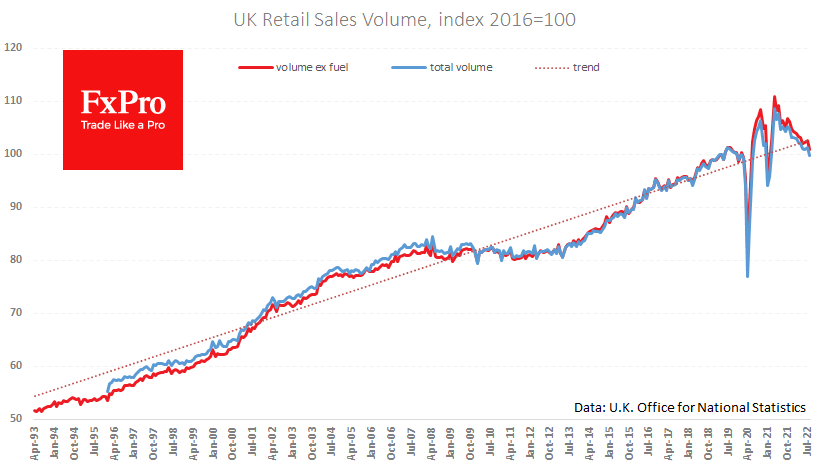
There has been an almost non-stop, albeit very measured, sell-off in the Pound since August 11, with a brief pause for a shake-out of the dollar bulls’ positions. In turn, this momentum looks to be part of a downward wave since March. In that case, the GBPUSD can fall to 1.06, where the 161.8% Fibonacci mark passes from the February peaks to the July lows. It is also worth noting that this technical target is very close to the historical lows of the GBPUSD at 1.0520, which only adds to its attractiveness for the rest of the year.
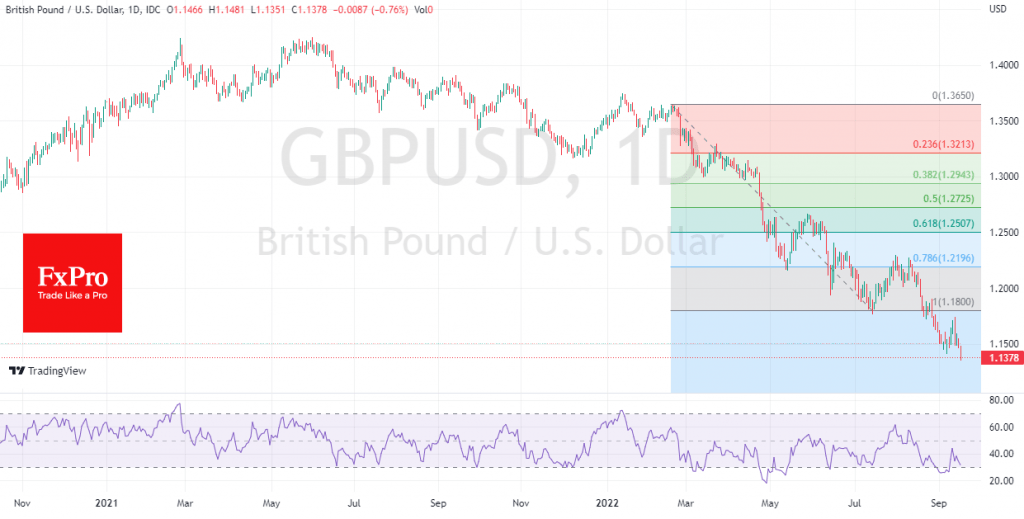
Due to inflation being off the charts by historical standards, the Bank of England has much more motive to make currency or verbal interventions to buy the collapse of the Pound. This is especially true given the recent one-way movement in the British currency. As such, traders and investors should be prepared for a rate hike of more than 50 points next week, as previously done and expected. A tightening of monetary authority rhetoric is also likely.
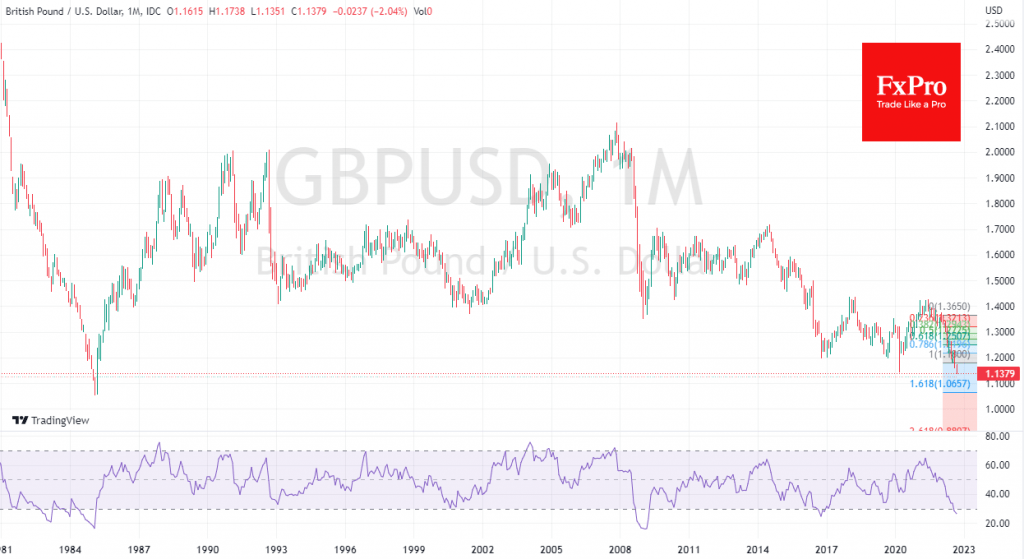
GBP/USD: Cable Falls to Multi-Decade Lows as Downbeat UK Data Add to Negative Outlook
Sterling falls further on Friday and breaks below 1.14 mark vs dollar, trading at the lowest levels since 1985 during the European session.
In addition to persisting pressure from strong dollar on expectations for another massive Fed rate hike, pound was driven lower on Friday by much weaker than expected UK retail sales, which dropped by 1.6% in August after 0.4% rise in July and also well below forecasted 0.7% fall.
August drop is the biggest since December 2021and adds to warnings that the economy is sliding into recession, as consumer spending is getting squeezed more on soaring cost of living.
Break of very important 1.14 zone (lows of post-Brexit vote fall in 2016 and pandemic in 2020) would risk stronger acceleration and unmask psychological 1.10 support.
Bearish daily and weekly studies support the action, with additional negative signal seen on formation of bearish engulfing pattern on weekly chart, though oversold condition warn that bears may take a breather before resuming.
All eyes are on two top events next week, policy meetings of the US Federal Reserve and the Bank of England.
The Fed is widely expected to deliver another 75 basis points, but with significant percentage of those who bet for a massive 1% raise, while the BoE is likely to go for another 50 basis points hike.
Res: 1.1405; 1.1450; 1.1480; 1.1521.
Sup: 1.1350; 1.1300; 1.1227; 1.1200.
Japan CPI, China Loan Prime Rate
At the start of next week there are two Far East data points that are important to talk about more from a perspective of technicalities. That is, they aren't expected to cause an immediate move in the currency markets, but do provide some important insights into where currencies could be going. And that based on certain fiscal and monetary technicalities that can drive markets in certain circumstances.
The economic situation in Asia is particularly complex at the moment, with direct intervention from the two largest governments in the region. The Japanese government is looking to keep the yen from becoming too weak, and the Chinese government has major control over an economy under strain from covid lockdowns. Which is why these sorts of technicalities about government policy can have such a large impact on the currency.
Why inflation isn't important in Japan
Japan's CPI is expected to move up to 2.7% from 2.4% prior, but this isn't expected to impact the market all that much. That's because there is a unanimous consensus that the BOJ will not change policy at their next meeting later in the week. Even if headline inflation is above target, and despite decades of trying to raise inflation.
That's because the inflation Japan is experiencing is the "wrong" kind of inflation. It's not driven by increased monetary circulation from economic growth, but a combination of higher global costs and increased import prices from a weak currency. While raising rates would help reduce some of the impact from inflation, it would come at the cost of hurting an economy that already isn't very healthy. The BOJ would very much like to keep easing, and use other means to deal with the problem. Such as preventing the yen from weakening too much through government intervention, as explained earlier.
China getting things in order
The Loan Prime Rate is one of the PBOC's main tools for monetary policy, particularly for supporting the economy. It amounts the interest rate on 1-year and 5-year debt, and sets the interest rates for the financial system. It's not the same as an interest rate in other countries, since it isn't applied to government debt, but private loaning. It is a major tool for regulating the cost of credit.
The lower the rate, the more support the government is seeking to supply to the economy. But, it comes at the cost of profitability for the banking sector, which in turn leaves the financial markets a little more vulnerable. The rate is now at a record low level, having just been cut a couple of weeks ago.
What to expect
Yesterday, China's bureau of statistics said it expected a rebound in low demand. And they also said something that is likely key for future monetary policy action: That core CPI might increase, particularly if the covid situation improves. That means it's less likely that the Loan Prime Rate will be cut.
The broader implications of that is companies will not have access to lower cost credit in the future. That could mean less importing of machinery from Japan, and commodities from Australia and New Zealand.
EUR/USD Pair is Now Consolidating Losses Near $1.0000
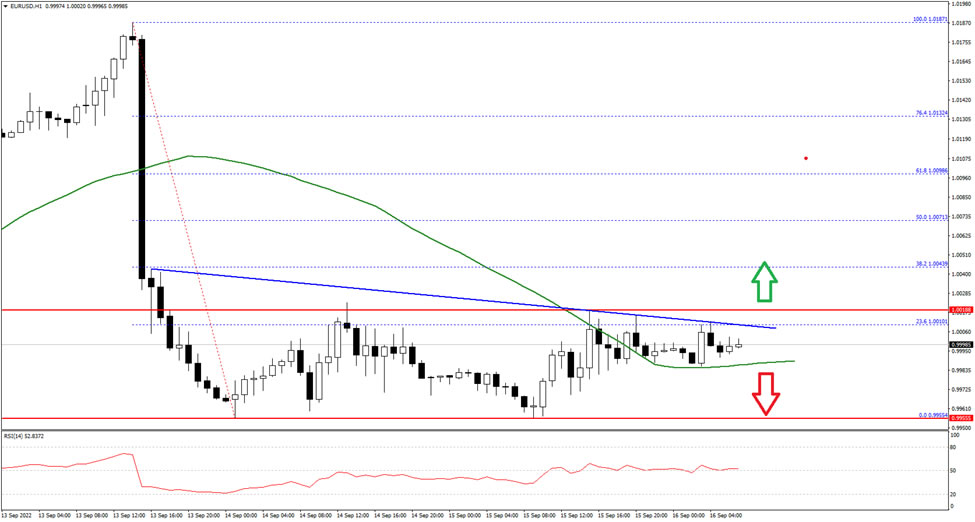
The Euro started a fresh decline from well above the 1.0150 level against the US Dollar. The EUR/USD pair declined below the 1.0100 and 1.0080 support levels.
There was close below the 1.0050 level and the 50 hourly simple moving average. The pair is now consolidating losses near the 1.0000 level. An immediate resistance on the upside is near 1.0010 and a connecting bearish trend line on the hourly chart. The first major resistance is near the 1.0020 level.
A break above the 1.0020 resistance level could start a decent upward move. In the stated case, it could even surpass 1.0050 on FXOpen.
Conversely, the pair might start another decline below 0.9980. The next key support is near 0.9955, below the pair could decline towards the 0.9920 level. Any more losses might send the pair towards the 0.9900 level.
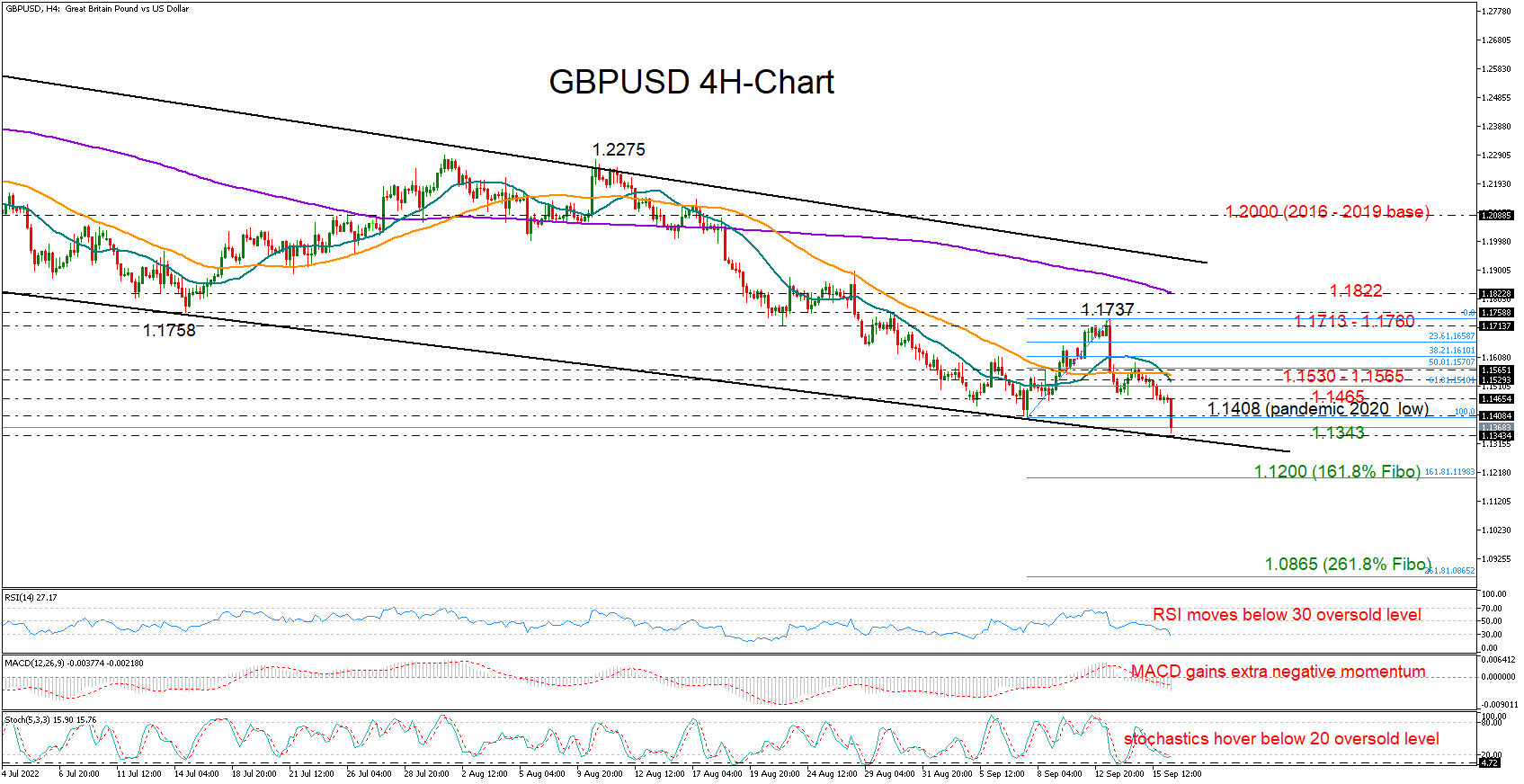
GBPUSD Revisits Pandemic Lows as Bears Persist
GBPUSD corrected forcefully to the downside early on Friday, breaking below the critical 1.1400 pandemic low, where the bears halted the 2022 downtrend on September 7.
The MACD is extending its bearish wave below its red signal and zero lines in the four-hour chart, while the RSI and the stochastics are negatively charged near their oversold levels, suggesting a cautiously bearish bias.
The channel’s lower boundary is now a target at 1.1343. A continuation lower could pause near the 1.1200 psychological level before a more aggressive downfall takes place towards the 1.0890 number – this being the 261.8% Fibonacci extension of the latest bullish correction.
On the upside, a bounce above the nearby 1.1465 constraining zone could see the pair testing the 20- and 50-period simple moving averages (SMAs) within the 1.1530 – 1.1565 area. A break higher could pave the way towards the 1.1713 – 1.1760 resistance territory. If this gives way too, the door will open for the 200-period SMA at 1.1828.
Summarizing, GBPUSD is currently trading bearish at a make-or-break point. A decisive close below 1.1343 could confirm additional losses ahead.
China’s Weaker Currency for a Stronger Economy
China’s data package released this morning exceeded expectations in countering the worsening market sentiment.
Official data showed a 5.4% y/y rise in retail sales in August compared to the expected 3.8%. The retail sector has benefitted from pent-up demand after a sluggish 2.7% MoM. Industrial production added 4.2% YoY against expectations of 3.8%.
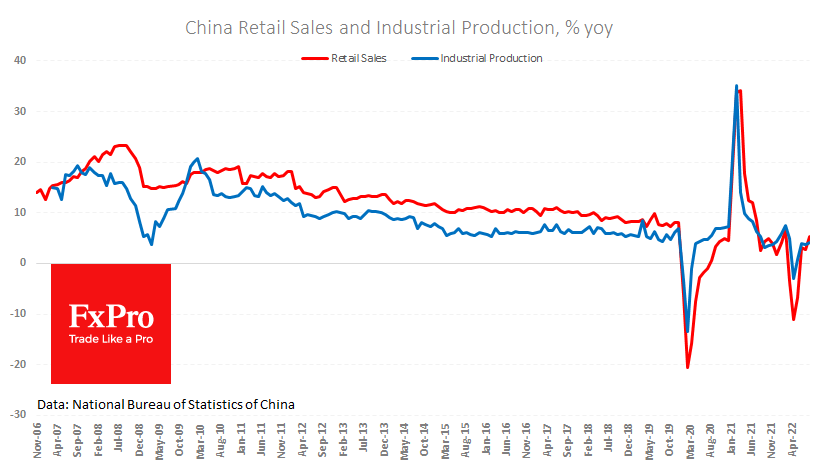
These improvements are mainly attributable to the easing of coronavirus restrictions but may also be a reaction to the stimulus package implemented last month.
The recent economic acceleration may also be linked to the weaker renminbi, which has lost 4.7% against the dollar in less than a month. The USDCNH gained 11.5% from March local lows. In contrast to Europe, where a weak Euro is becoming a brake on the economy, the weaker renminbi may be warmly greeted by the authorities.
China’s consumer and producer prices growth is close to 2.5% y/y, compared with 9% CPI growth in the Eurozone and 8.3% in the USA. The weaker yuan supports Chinese exports’ competitiveness and slightly boosts domestic consumption but has not yet provoked excessive pressure on prices.
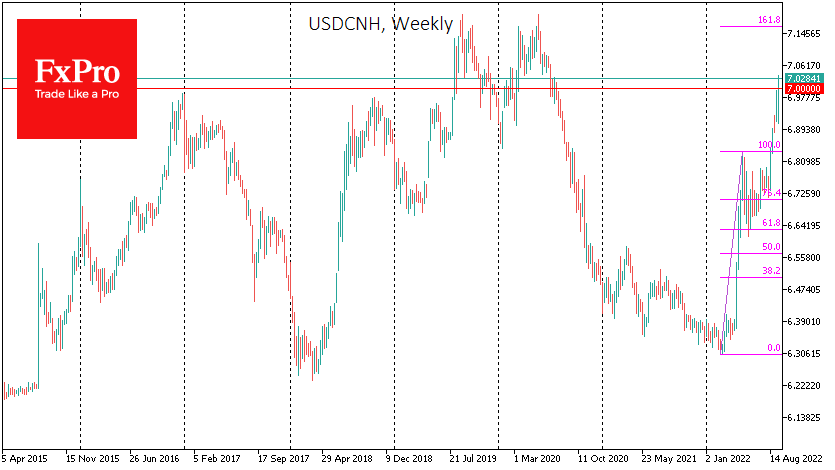
Yesterday the Chinese offshore yuan crossed the 7.0 per dollar line and is trading at 7.03 today. A significant psychological level in the past forced the authorities to step in to defend their currency in 2016 and 2018. In 2019 and 2020, the turning points have been higher, close to 7.15. It is well worth being prepared that we will not see any meaningful action or serious verbal interventions by the Chinese or US authorities up to these levels.