Mon, Feb 16, 2026 06:40 GMT
More

    Sample Category Title

    USD/JPY Continues Its Uptrend as Yen Weakens Further

    RoboForex Ltd

    USD/JPY rose to 158.61 on Friday, continuing its upward movement as the yen remains under pressure. Investors are adopting a wait-and-see approach ahead of the Bank of Japan’s (BOJ) monetary policy decision.

    The BOJ recently kept rates unchanged after a hike to 0.75% in December – ** the highest level in nearly 30 years. Market participants are now focusing on comments from BOJ Governor Kazuo Ueda for clues on the timing of the next rate hike, especially amid the yen’s persistent weakness.

    Recent data showed a slowdown in core inflation in December, but it remains above the BOJ’s 2% target. Additionally, fiscal risks have added pressure on the yen, as Prime Minister Sanae Takaichi prepares to dissolve parliament and call early elections, a move aimed at consolidating power and promoting fiscal expansion.

    As USD/JPY approaches the psychologically significant 160 level, market expectations of possible currency intervention are growing, leading to increased caution among traders.

    Technical Analysis

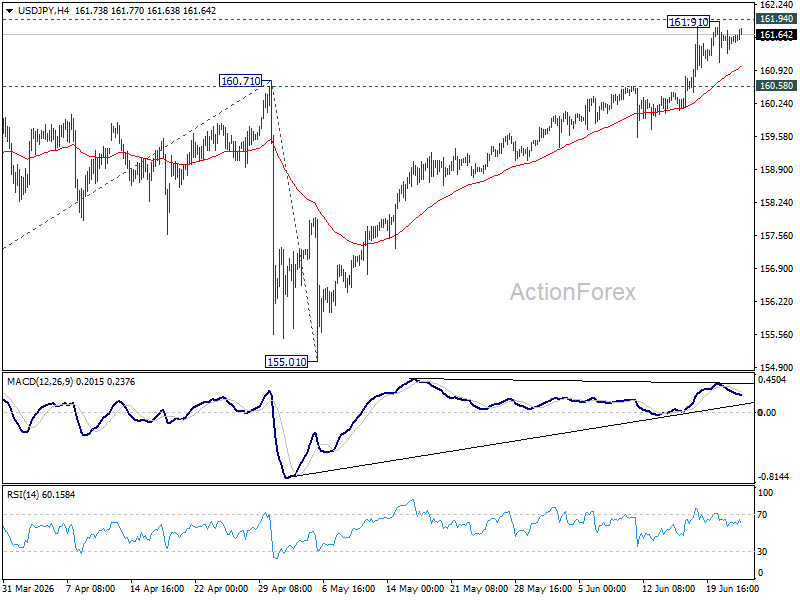
    On the H4 chart, USD/JPY has formed a consolidation range around 158.50. The breakout to the upside has opened the potential for a rise to 160.00. After reaching this level, a potential decline to 158.00 may occur. The MACD indicator supports this bullish scenario, with its signal line above zero and pointing upward.

    On the H1 chart, a growth wave structure is forming towards 159.30, with a possible correction to 158.70 before continuing the ascent to 160.00. This scenario is confirmed by the Stochastic oscillator, whose signal line is above 50 and pointing towards 80.

    Conclusion

    USD/JPY continues to rise, driven by the yen’s weakness and market expectations of further BOJ rate hikes. As the pair approaches the 160 level, the potential for currency intervention increases, keeping market participants cautious. Technically, the upward trend remains intact, with key levels to watch at 160.00 and 158.00.

    Chart Alert: USD/JPY Plunging Below 158 on Suspected Inntervention, Watch 157.50 Support

    Key takeaways

    Suspected FX intervention jolts USD/JPY: After briefly spiking above 159 following BoJ comments, USD/JPY plunged nearly 200 pips within minutes to ~157.30 with no data catalyst, strongly suggesting intervention or rate-checking by Japanese authorities.

    Momentum signals warn of a trend shift: A bearish RSI divergence on the daily chart flags rising risk of a medium-term reversal after the uptrend since April 2025, with near-term downside pressure building.

    Key levels define the next move: A break below 157.50 opens downside toward 157.00 and 156.12, while a sustained move above 159.75 would invalidate the bearish view and revive squeeze risks toward 160.25–161.10.

    Since our last report, the USD/JPY dropped marginally to our highlighted first intermediate support at 157.50 (printed at an intraday low of 157.42 on 19 January 2026 before it traded sideways between 158.50 and 157.50 for the entire week.

    During today’s Bank of Japan (BoJ) Governor Ueda’s post-monetary policy meeting press conference, the USD/JPY has staged an intra-session break above the 158.50 printed an intraday high of 159.23 at the 3.00 pm (Singapore time) hour mark as speculators tried to sell the Japanese yen on the backdrop that Ueda mentioned that BoJ may coordinate with the government on the JGB market to encourage stability in the JGB yields, which implied that BoJ may restart its bond purchases programme that can put downside pressure on the JPY.

    A swift intra-session plunge of 1.2% in USD/JPY smells of intervention

    Interestingly and swiftly, the USD/JPY plummeted by 191 pips (-1.2%) within the next five minutes from 159.22 to hit an intra-session low of 157.32 at the time of writing without any relevant economic data releases or news flow.

    This current swift and erratic movement on the USD/JPY has a lingering smell of intervention or rate checking by Japanese banks under the instruction of the BoJ and or the Ministry of Finance because the recent rounds of verbal intervention by Finance Minister Katayama and the BoJ last intervened in the FX market to sell the USD and buy back the yen was on 12 July 2024 when the USD/JPY hit an intraday high of 159.45.

    Let's now look at the charts.

    USD/JPY has formed a daily bearish divergence on its RSI

    Fig. 1: USD/JPY medium-term & major trends as of 23 Jan 2026 (Source: TradingView)

    Fig. 2: USD/JPY minor trend as of 23 Jan 2026 (Source: TradingView)

    The daily RSI momentum indicator of the USD/JPY has flashed out an impending bearish divergence condition at its overbought region, which suggests that the medium-term uptrend in place since 22 April 2025 low is at risk of staging a medium-term (multi-week) bearish reversal (see Fig. 1).

    In the short-term (1 to 3 days), watch the 159.45/159.75 key short-term pivotal resistance, and a break below 157.50 (also the 20-day moving average) may trigger a potential push down to expose the next intermediate supports at 157.00 and 156.12 in the first step (see Fig. 2).

    However, a clearance and an hourly close above 159.75 invalidates the bearish scenario for a potential squeeze up towards 160.24/160.35 and even 161.00/161.10 (upper limit of intervention risk zone).

    Natural Gas Prices Surge as Cold Weather Approaches

    According to AccuWeather, a powerful Arctic cold front is expected to sweep across the United States, reaching as far south as the southern states and bringing lower temperatures to more than 150 million people across 24 states.

    On Thursday, Texas Governor Abbott declared a state of emergency in more than half of the state’s counties ahead of the cold snap. It is worth noting that Texas is home to key natural gas production facilities, while its infrastructure is less adapted to prolonged cold weather.

    As a result, market sentiment is being shaped both by expectations of higher natural gas demand for heating and by the risk of technical disruptions to production.

    Consequently, the XNG/USD chart shows a sharp rise in natural gas prices, with the move from last week’s low to the recent high amounting to nearly 40%.

    Technical Analysis of the XNG/USD Chart

    When analysing gas prices on 15 January, we identified a long-term descending channel, highlighted in red on the chart. At that time, we also:

    → noted that prices were hovering near the 2025 low;

    → suggested that bears might attempt to break below the 2025 low, which could have a psychological impact on the market, prompting short sellers to take profits and encouraging renewed buying interest.

    Indeed, following a false bearish break of the 2025 low (as indicated by the arrow), prices surged sharply towards the median of the channel, an area where supply and demand often tend to balance.

    Moreover, around the 3.330 level, there was a clear period of imbalance in favour of buyers. Bulls broke through the descending trendline resistance, and XNG/USD rose with minimal pullbacks.

    From a technical perspective, it is therefore possible that this area may now act as support. However, the actual path of the natural gas market will largely depend on the severity of the cold weather and its impact on conditions across the country.

    Start trading commodity CFDs with tight spreads (additional fees may apply). Open your trading account now or learn more about trading commodity CFDs with FXOpen.

    This article represents the opinion of the Companies operating under the FXOpen brand only. It is not to be construed as an offer, solicitation, or recommendation with respect to products and services provided by the Companies operating under the FXOpen brand, nor is it to be considered financial advice.

    UK PMI composite jumps to 21-month high, growth kicks up a gear but price pressures stir

    UK business activity accelerated sharply in January, with PMI surveys pointing to the strongest momentum in nearly two years. Manufacturing PMI rose from 50.6 to 51.6, a 17-month high, while Services PMI jumped from 51.4 to 54.3, lifting Composite PMI from 51.4 to 53.9, its highest level in 21 months.

    According to Chris Williamson of S&P Global Market Intelligence, UK firms “kicked up a gear” despite geopolitical headwinds. The flash PMI reading is consistent with quarterly GDP growth approaching 0.4%, with services—especially financial services and tech—leading the expansion. Manufacturing also showed a gathering recovery, helped by goods exports rising for the first time in four years.

    However, the upbeat activity picture is tempered by continued job losses, as firms cut headcount to manage elevated costs. High staffing costs were again widely cited as a driver of higher selling prices, pointing to intensifying inflation pressures above the BoE's target.

    Full UK PMI flash release here.

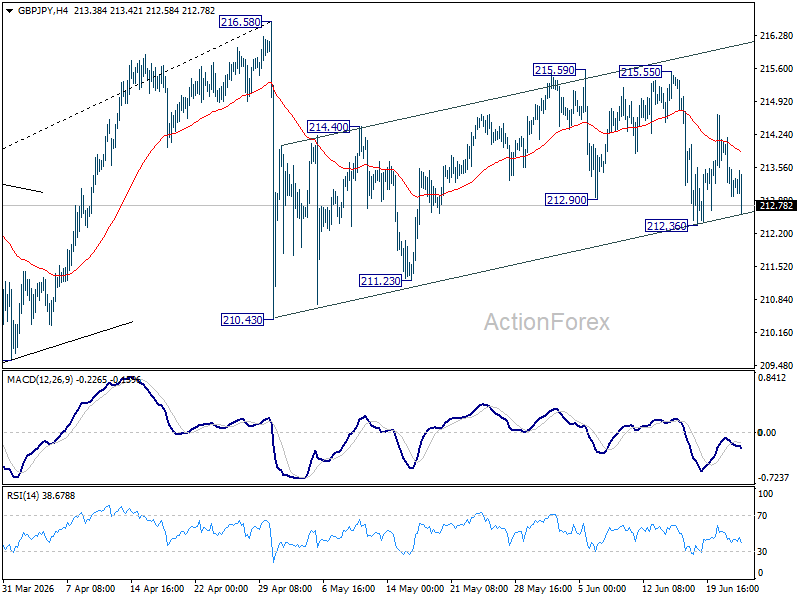
    GBP/JPY Daily Outlook

    Daily Pivots: (S1) 212.87; (P) 213.42; (R1) 214.45; More...

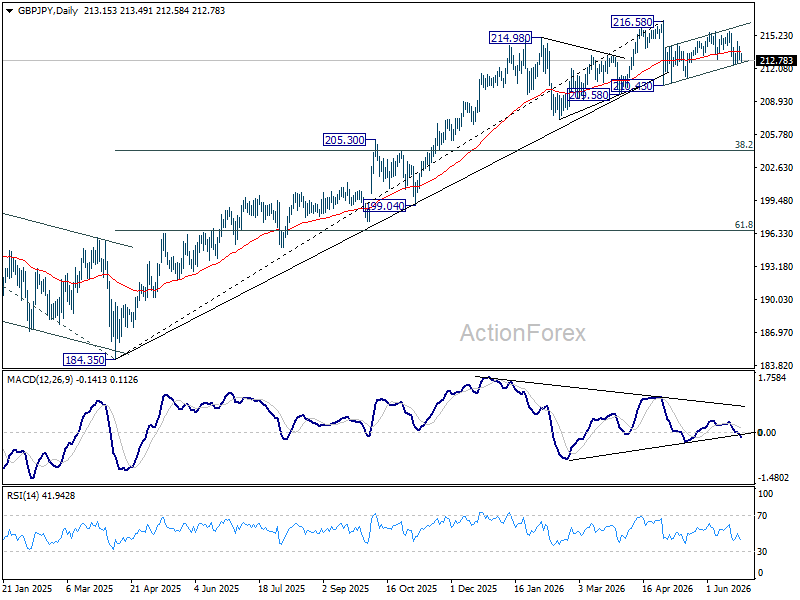
    GBP/JPY retreated after brief rise to 214.83 and intraday bias remains neutral. With 210.63 support intact, further rally is expected. On the upside, break of 214.283 will resume larger up trend to 100% projection of 184.35 to 205.30 from 199.04 at 219.99 next. Nevertheless, considering bearish divergence condition in 4H MACD, firm break of 210.63 will confirm short term topping, and turn bias to the downside for deeper pullback to 55 D EMA (now at 208.89).

    In the bigger picture, up trend from 123.94 (2020 low) is in progress. Next target is 61.8% projection of 148.93 (2022 low) to 208.09 (2024 high) from 184.35 at 220.90. On the downside, break of 205.30 resistance turned support is needed to indicate medium term topping. Otherwise, outlook will stay bullish even in case of deep pullback.

    EUR/JPY Daily Outlook

    Daily Pivots: (S1) 185.27; (P) 185.77; (R1) 186.72; More...

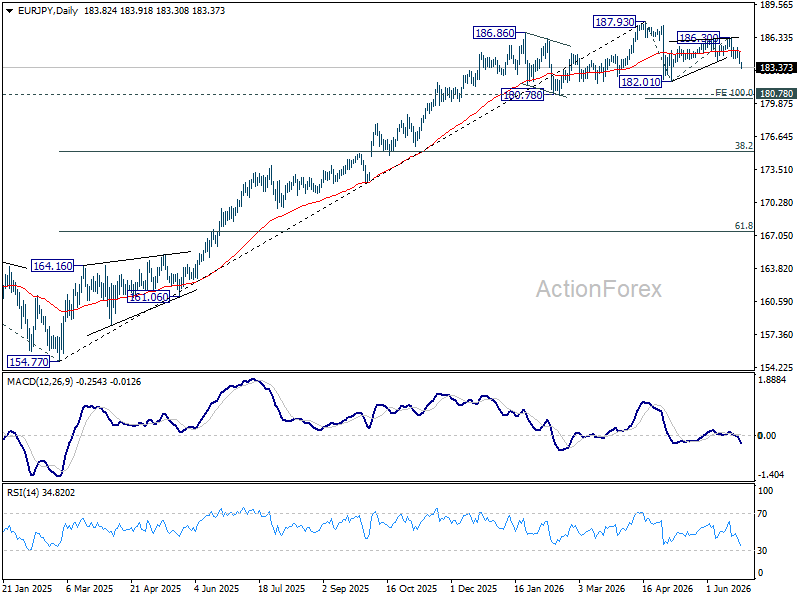
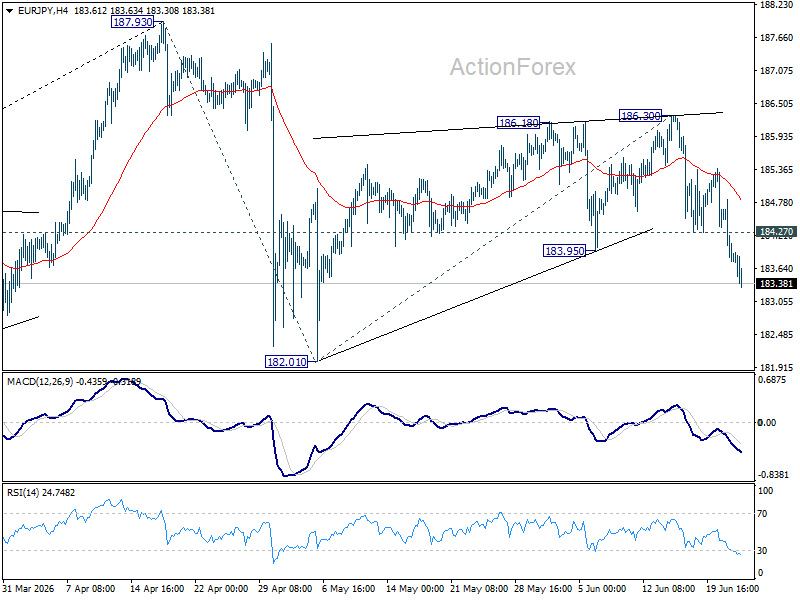
    EUR/JPY retreated notably after edging higher to 186.86 and intraday bias is turned neutral. Some consolidations would be seen but downside should be contained above 182.75 support. On the upside, firm break of 186.86 will resume larger up trend to 138.2% projection of 151.06 to 173.87 from 172.24 at 189.94.

    In the bigger picture, up trend from 114.42 (2020 low) is in progress and should target 61.8% projection of 124.37 to 175.41 from 154.77 at 186.31. Considering bearish divergence condition in D MACD, upside could be capped by 186.31 on first attempt. Still, outlook will stay bullish as long as 55 W EMA (now at 172.58) holds, even in case of deep pullback. Sustained break of 186.31 will pave the way to 78.6% projection at 194.88 next.

    EUR/GBP Daily Outlook

    Daily Pivots: (S1) 0.8688; (P) 0.8711; (R1) 0.8728; More…

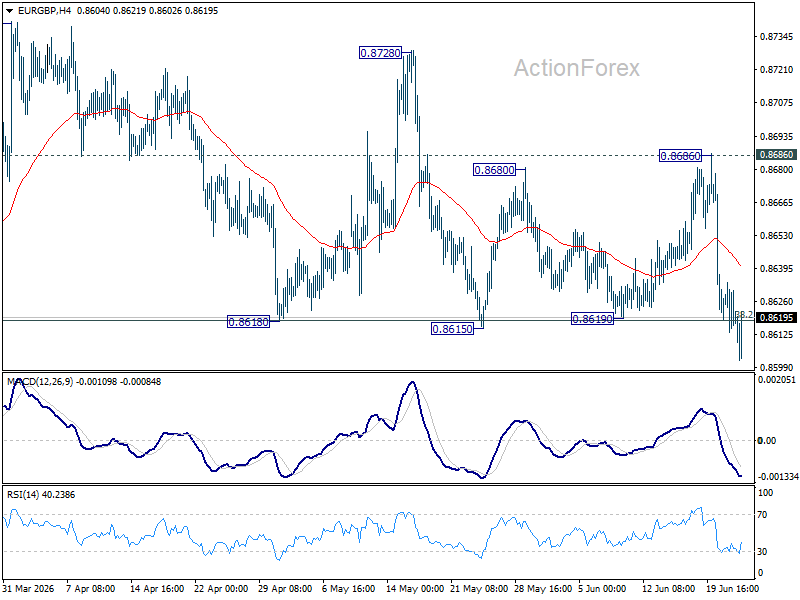
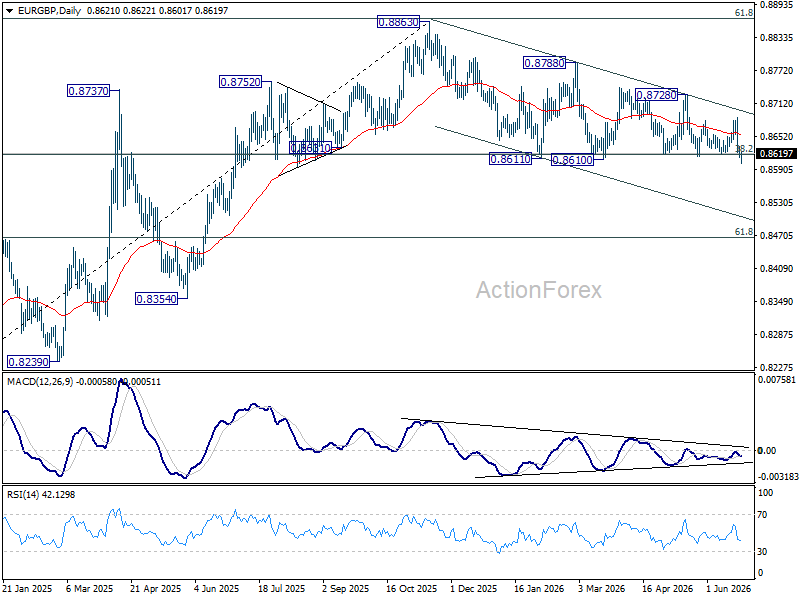
    Intraday bias in EUR/GBP stays neutral for the moment. On the downside, firm break of 0.8691 resistance turned support will suggest that rebound from 0.8643 has completed as a corrective bounce. Rejection by 55 D EMA (now at 0.8717) will keep the fall from 0.8863 intact. Intraday bias will be back on the downside for 0.8643 low first, and then 0.8631 cluster support (38.2% retracement of 0.8221 to 0.8663 at 0.8618).

    In the bigger picture, rise from 0.8221 medium term bottom (2024 low) is seen as a corrective move. Upside should be limited by 61.8% retracement of 0.9267 to 0.8221 at 0.8867. Sustained trading below 55 W EMA (now at 0.8623) should confirm that this corrective bounce has completed. In this case, deeper fall would be seen back to 0.8201/21 key support zone. However, decisive break of 0.8867 will suggest that EUR/GBP is already reversing whole decline from 0.9267 (2022 high). That should pave the way back to 0.9267.

    EUR/AUD Daily Outlook

    Daily Pivots: (S1) 1.7129; (P) 1.7216; (R1) 1.7272; More...

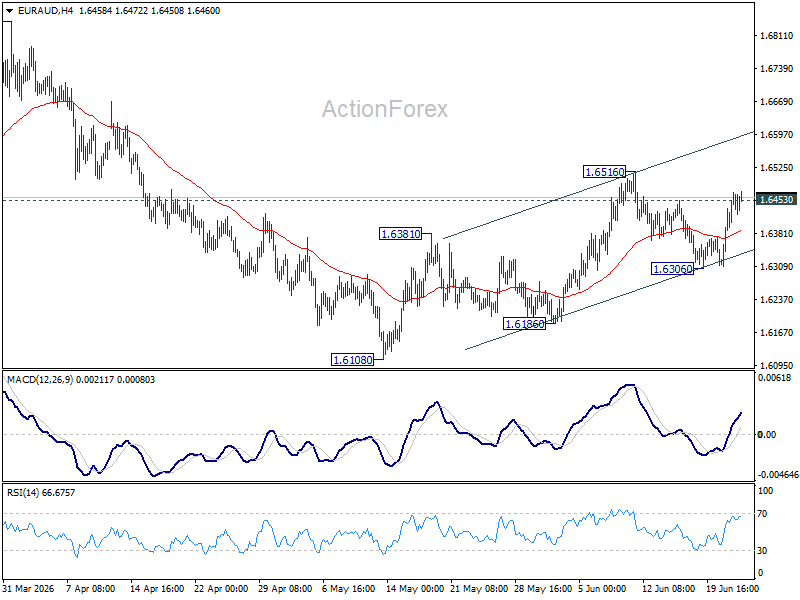
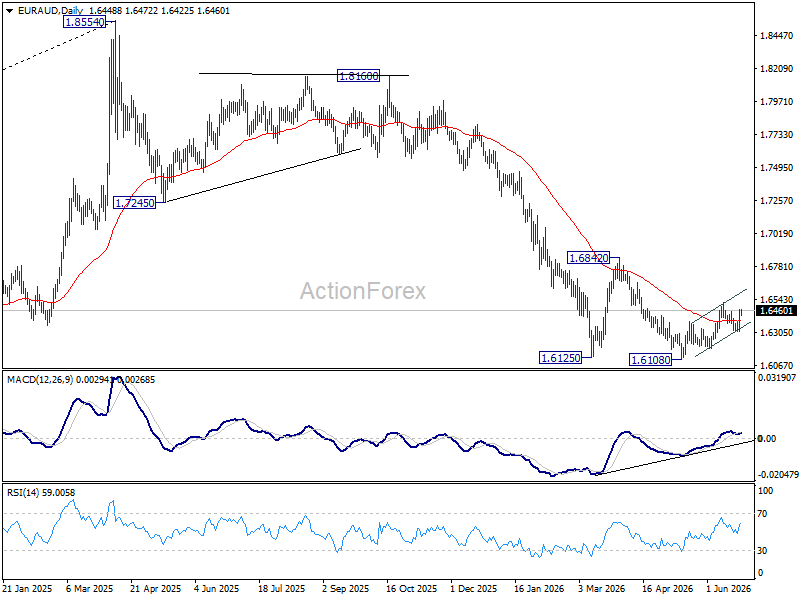
    Intraday bias in EUR/AUD remains on the downside for the moment. Current fall from 1.8554 should target 100% projection of 1.8554 to 1.7245 from 1.8160 at 1.6851. On the upside, above 1.7287 support turned resistance will turn intraday bias neutral first. But outlook will stay bearish as long as 1.7466 resistance holds, in case of recovery.
    In the bigger picture, the break of 55 W EMA (now at 1.7464) argues that fall from 1.8554 medium term top is correcting whole up trend from 1.4281 (2022 low). Deeper decline is in favor to 38.2% retracement of 1.4281 to 1.8554 at 1.6922, and possibly below. Risk will stay on the downside as long as 1.8160 resistance holds, in case of strong rebound.

    EUR/CHF Daily Outlook

    Daily Pivots: (S1) 0.9262; (P) 0.9286; (R1) 0.9299; More....

    Intraday bias in EUR/CHF remains neutral for the moment. Another fall will remain mildly in favor as long as 0.9347 resistance holds. Below 0.9253 will extend the decline from 0.9394 towards 0.9178 low. Nevertheless, firm break of 0.9347 will indicate that fall from 0.9394 has completed as a correction, and bring stronger rally to retest this resistance.

    In the bigger picture, persistent bullish convergence condition in W MACD is a medium term bullish sign. Firm break of 0.9394 resistance should bring sustained trading above 55 W EMA (now at 0.9360). That should indicate medium term bottoming at 0.9178. Further break of 0.9452 resistance will bring stronger medium term rally towards 0.9928 resistance next, even still as a corrective bounce. Nevertheless, rejection by 55 W EMA will retain bearishness for another fall through 0.9178 at a later stage.

    Eurozone PMI composite stalls at 51.5, ECB likely to stay put

    Eurozone business activity showed little momentum at the start of 2026, with January PMI data pointing to a fragile and uneven recovery. Manufacturing PMI improved modestly from 48.8 to 49.4, but remained in contraction. Services PMI eased from 52.4 to 51.9, leaving Composite PMI unchanged at 51.5, a level consistent with only modest growth.

    According to Cyrus de la Rubia of Hamburg Commercial Bank, the recovery “still looks rather feeble.” Manufacturing continues to signal weakness, while services growth has moderated.

    For the ECB, the details are "anything but reassuring". Services inflation has risen sharply in terms of sales prices, while input cost inflation remains elevated. That dynamic is likely to reinforce the Governing Council’s preference to hold rates steady, with some hawkish members potentially arguing that the next move should be up rather than down.

    Country-level divergences persist. Services activity in Germany expanded at a relatively solid pace in January, while French services slipped into contraction. In manufacturing, France marginally outperformed Germany, though output growth in both remains weak.

    Full Eurozone PMI flash release here.