

Sample Category Title
The Weekly Bottom Line: A High Bar for Rate Cuts in Canada
U.S. Highlights
- A potential trade war between U.S. and Mexico was averted, but global trade uncertainty remains.
- Despite markets pricing in rate cuts, domestic indicators suggest that the U.S. economy is on decent footing. Inflation remains stubbornly low, however.
- The Fed rate decision next week is clouded by conflicting signals, but we believe it will likely feature an easing bias
Canadian Highlights
- Housing data for May suggests that residential investment is set to grow for the first time in five quarters.
- At least two rate cuts are priced in for the U.S. Federal Reserve, the bar remains high for a rate cut in Canada. Absent a realization of downside risks, don't bet on a rate cut by the Bank of Canada this year.
U.S. - Conflicting Signals Cloud Fed Rate Decision
The U.S. economy is taking us on a bit of a rollercoaster ride. Some signals suggest that the downside risks to growth are rising, necessitating further support by the Federal Reserve. Others indicate that the economy is doing just fine, and stepping on the gas might not be warranted. One thing's for sure, the Fed has a tricky path to navigate as it seeks to sustain the economic expansion.
This week was a perfect example of the conflicting signals faced by the economy. We began the week with a quick extinguishing of a possible trade war with Mexico, but trade uncertainty still looms large. Indeed, the trade conflict between the U.S. and China is not subsiding. Earlier this week, President Trump warned that if President Xi did not meet with him at the upcoming G20 summit, he would immediately slap 25% tariffs on the remaining un-tariffed $300 billion of Chinese imports.
Markets are pricing in the risks emanating from the trade conflicts, resulting in a continued inversion of the yield curve (3-month to 10-year), and an expectation of at least two Fed rate cuts by the end of the year.
However, trade uncertainty does not yet seem to be weighing on business optimism. The NFIB small businesses optimism index improved for the fourth consecutive month as businesses anticipated an improvement in economic conditions and more capital expenditure in months to come.
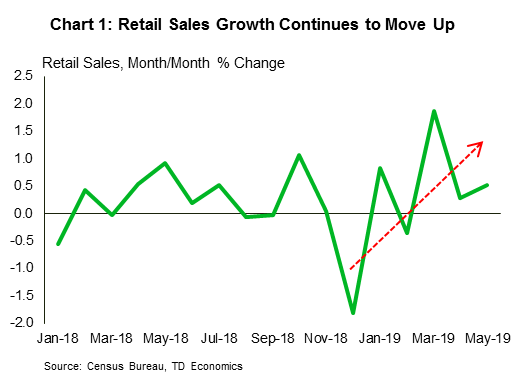
Moreover, U.S. consumers displayed their strength again, with solid retail sales growth in May alongside a significant upward revision to April data (Chart 1). Consumption growth may now exceed the 3% (annualized) mark in Q2.
Despite the strength in consumption, CPI inflation weakened in May. The weakness in inflation in Q1 appears now to be less transitory. Core inflation declined for a range of products including used cars and trucks, apparel, and motor vehicle insurance. While inflation may pick-up going forward, given the increased tariffs on Chinese imports, underlying price pressures in the economy seem to be limited.
The Fed will no doubt take notice of the weakness in inflation in the FOMC meeting next week. But they will also have to consider all other developments as well. Despite rising downside risks, the domestic economy appears to be chugging along. All told, we expect the Fed to convey an easing bias, but not move on rates at next week's meeting.
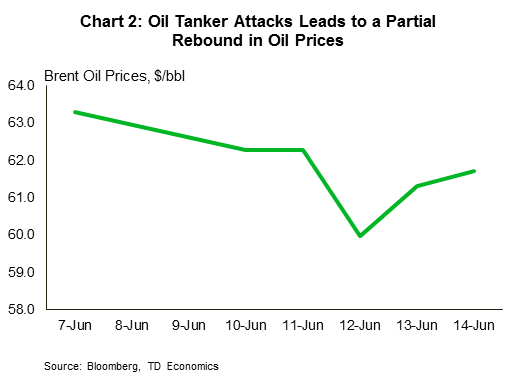
We also saw a rise in global political risks rise this week as two oil tankers were attacked in the Gulf of Oman. After falling through much of the week on the back of concerns about global growth, Brent oil prices jumped by around 5% on Thursday (with a similar move in the WTI contract), not quite enough to offset losses earlier in the week (Chart 2). With the relationship between the U.S. and Iran increasingly strained, oil markets may get caught in the middle.
Canada - A High Bar for Rate Cuts in Canada
As global growth concerns linger, waning demand and ample supplies has resulted in a softening of commodity prices. Oil prices lost more ground this week despite oil tanker sabotage, with WTI briefly hitting US$50 a barrel – the lowest level since January.
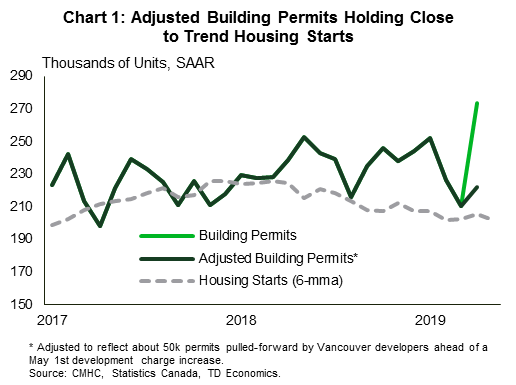
On the domestic front, the little economic news we got this week remained consistent with an economy set to accelerate in the second quarter. Housing starts for May came back to earth after shooting higher in April, disappointing expectations a bit. While the signal from April's permit surge to 273k units appeared to suggest booming supply on the horizon, the strength instead reflected Vancouver developers pulling-forward permits to avoid a rise in development charges as of May 1st. Removing this impact leaves permits more in line with recent trend in housing starts (Chart 1). Despite the pullback in May starts, new construction is averaging a healthy 217.9k units this quarter through May, and should contribute positively to GDP for the first time in four quarters.
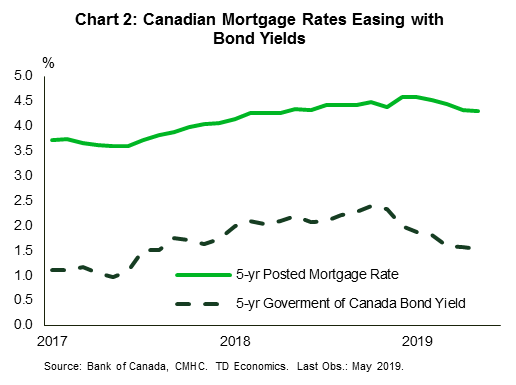
Residential investment has contracted for the past five quarters, but both monthly existing home sales and new construction indicators imply that this negative streak is set to come to an end this quarter. Strong population growth and declining mortgage rates are factors supporting housing demand. Interest rates for fixed-term mortgages are typically priced off of 5-yr Government of Canada bonds (Chart 2). Intensifying global growth concerns and trade war risks in recent weeks have helped to tilt investment flows into safe haven assets such as government bonds. Investors are also betting on a slowdown in the U.S. economy that may require the Fed to take out insurance and cut its policy rate by at least 50 basis points before the end of the year.
Although the Fed has not been shy about its willingness to respond with rate cuts to support growth in the wake of intensifying downside risks, the same cannot be said about the Bank of Canada. Governor Poloz has always emphasized the need for a risk management strategy when setting interest rates, which in practice involves putting a higher weight on financial stability risks posed by the high level of household debt in Canada than usual.
Canadian household finances are gradually improving, but household debt remains at very high levels. Historically, two consecutive quarters of well below trend economic growth would have triggered a response by the Bank of Canada. But, in this era of high debt, the Bank has been reluctant to cut rates unless there were clear signs of excess capacity, like in aftermath of the oil price crash of 2014/15. This time around, labour market strength and inflation holding near target suggest only modest economic slack. Nevertheless, financial markets have priced in one rate cut by the Bank of Canada before the end of this year. A rate cut may be necessary if downside risks are realized. However, until then, don't bet on one.
U.S.: Upcoming Key Economic Releases
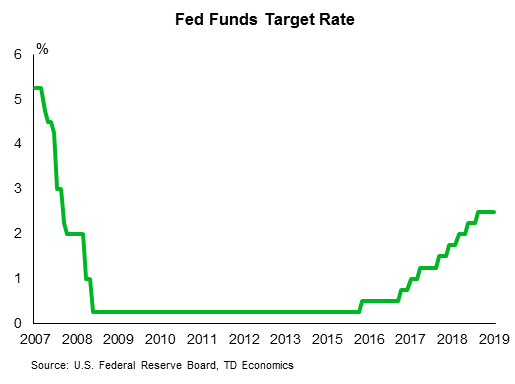
U.S. FOMC Rate Decision
Release Date: June 19, 2019
Previous: 2.50%
TD Forecast: 2.50%
Consensus: 2.50%
We expect the Fed to signal readiness to ease policy but stop short of committing to a near term cut. Chair Powell will likely look to put markets more at ease by reiterating his comments a few weeks ago that the Fed is ready to act if conditions warrant it. The Fed will likely stress that they are monitoring risks on the economy and taking appropriate action to sustain the expansion. In terms of projections, we expect the Fed to deliver only modest downgrades to growth and inflation forecasts despite some recent weakness in data. We expect the median 2019 dot to remain unchanged (reflecting a Fed on-hold) and the median 2020 dot to decline.
Canada: Upcoming Key Economic Releases
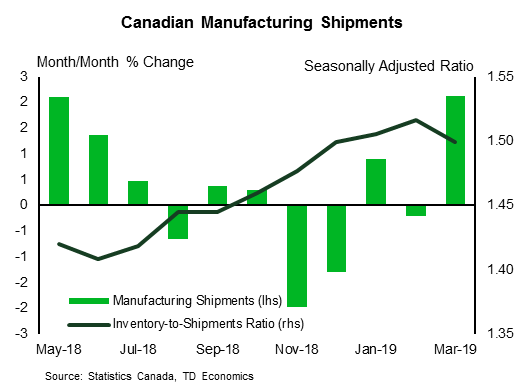
Canadian Manufacturing Sales - April
Release Date: June 18, 2019
Previous: 2.1%
TD Forecast: -0.8%
Consensus: 0.6%
TD looks for manufacturing sales to fall by 0.8% in April, giving back a portion of the prior month's gain. Weaker motor vehicle shipments are the main culprit after a major automaker idled assembly lines for two weeks, which fits with a large drop in auto exports. Elsewhere, the sharp increase in gasoline prices will provide a tailwind to nominal refinery sales, although we see limited scope for increased refinery output which has risen by 12% over the last three months. Outside of these two industries, higher factory prices should provide a modest lift to nominal sales. Volumes should see a larger decline than the headline series, suggesting a drag on industry-level GDP.
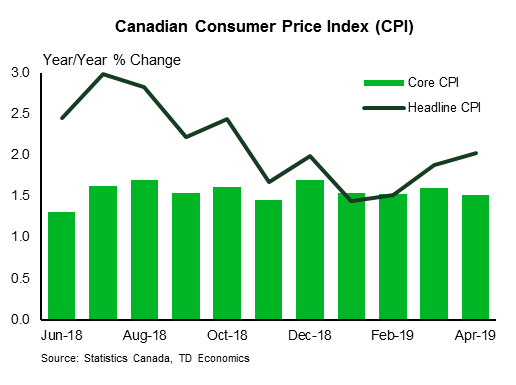
Canadian Consumer Price Index - May
Release Date: June 19, 2019
Previous: 0.4% m/m, 2.0% y/y
TD Forecast: 0.2% m/m, 2.2% y/y
Consensus: 0.2% m/m, 2.2% y/y
CPI is projected to firm to 2.2% y/y in May, with prices up 0.2% on the month. Energy will make a muted contribution after a stabilization in gasoline prices, which are coming off consecutive 10% m/m gains, leaving core goods and services to drive the headline print. Elsewhere, a rebound in rental prices following their first pullback in several decades should make a positive contribution to shelter cost inflation.
Core inflation should hold at 1.9% on average although we should see some divergence across the individual measures. CPI-trim is poised to push above 2.0% y/y due to base-effects but we do not expect this to be replicated across CPI-median or CPI-common, with downside risks to the latter on the heels of two consecutive quarters of <0.5% GDP growth.
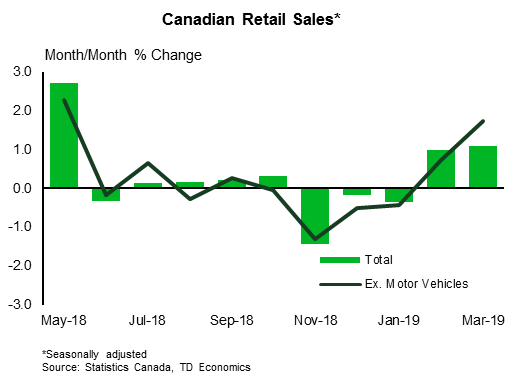
Canadian Retail Sales - May
Release Date: June 19, 2019
Previous: 0.4% m/m, 2.0% y/y
TD Forecast: 0.2% m/m, 2.2% y/y
Consensus: 0.2% m/m, 2.2% y/y
TD looks for retail sales to remain unchanged in April following the broad increase observed in March. Auto sales should make a negative contribution, leaving ex-auto sales up 0.2% m/m, while higher gasoline prices should provide a tailwind to nominal sales at the pump. The latter should serve as the main source of strength in April, overshadowing a pullback in the ex. autos and gasoline measure which drove last month's increase. Higher consumer prices point towards a decline in real retail sales for April, which will weigh on industry-level GDP and Q2 consumption.
Dollar Rallies Ahead of FOMC Meeting; Markets Await Fed Signal for July Cut
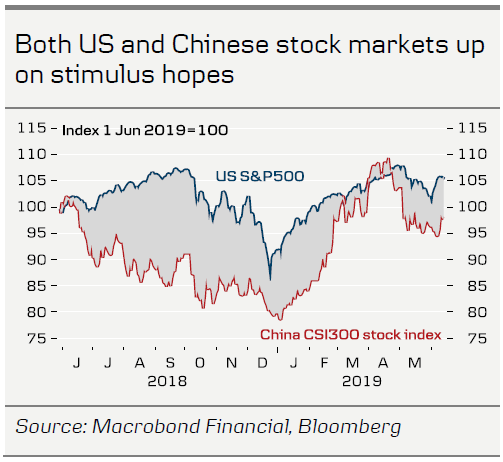
Markets are bracing for updates on tactical trade war positioning and central bank rate decisions. The dollar's recent rally stemmed on better than expected economic data that could convince Fed officials that the economy is healthy enough and might not require an immediate rate cut. US stocks are struggling resuming the recent rebound until we see further progress on the trade front and a confirmation that the Fed will deliver a rate cut.
On Monday, we will see if China is dumping US Treasuries and public hearings begin in Washington on President Trump's proposed tariffs on $300 billion more in Chinese goods. The focus for the trading week will fall on the upcoming rate decisions from the Fed, BOJ, and BOE, which should further cement easing money flowing through financial markets. The Fed will meet on Wednesday and is expected to pave the way for July rate cut by downgrading their forecasts and removing their patient stance. The BOJ is not expected to announce anything new, but possibly highlight the growing of the risks to the downside on both their growth and inflation forecasts. The BOE is expected to remain on hold until further clarity is delivered on Brexit. The outlook for the UK economy is worsening and rate hike expectations have been dwindling since February.
- FOMC Meeting: Powell to setup July rate cut
- China's Treasury Holding Update and Hearings on Trump's proposed tariffs
- Crude volatility on high alert as Geopolitical Risks Remain and on OPEC meeting uncertainty
Fed
It appears bond markets got their way. After sending the yield on US 10-year Treasury down from just below 2.60% all the way down towards 2.00%, the Fed appears ready to capitulate on cutting rates. With inflation remaining muted and growth vulnerable due to the trade war, the Fed is expected appears set to signal to markets that a rate cut is coming at the July meeting. Fed fund futures see a 21.3% chance that rates will be cut at the June 19th meeting, while the July 31st meeting has an 84.3% expectation for a rate cut. The Fed is widely expected to tweak their stance on being patient, which would signal they are ready to ease.
Historically the dollar weakness is strongest at the beginning of an easing cycle and the Swiss franc has been the strongest beneficiary. If we see the Fed signal a one and done approach to easing, we however could see limited dollar weakness. The Fed owes the market a rate cut to fix the policy mistake at the end of last year and they should keep the door open for further easing to deliver a soft landing for the US economy.
GBP
The Bank of England is expected to keep rates steady as policymakers will unlikely be able to deliver any clear messages on future policy until we have Brexit clarity. While the recent banter has been calling for rate hikes, BOE officials will struggle to deliver a rate hike as economic growth has softened and despite inflation running above target.
Brexit remains the key driver for the British pound and expectations are growing for Boris Johnson to win the Tory leadership. Johnson had a strong showing at the first round of Conservative Party Leadership vote. While Johnson has begun downplaying a hard Brexit, that risk will grow if he wins the top spot and that should cap any sustained rebounds with cable.
Oil
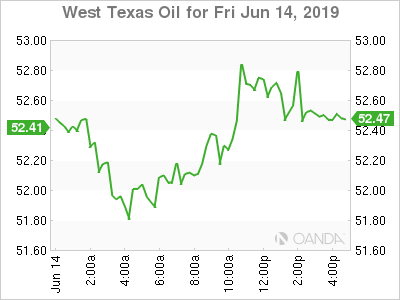
Crude prices are expected to remain volatile as tensions remain high in the Middle East and as OPEC scrambles to coordinate their next meetings to solidify a continuation of production cuts. Crude remains around bear market territory as global growth concerns from recent escalations in the trade war are flipping the demand argument for higher prices on its head. Rising crude inventories have not done any favors for the supply argument as well.
Next week, should see OPEC and allies finally agree on when they will meet. Russia was hoping to push the meeting back from the scheduled Ministerial meeting from June 26th in to early July. Iran did not want to change any of the dates, with OPEC meeting on the June 25th and the next day being the OPEC and allies meeting. Once the oil producing countries agree upon when to meet, the complicated task in reorganizing production cuts will be difficult to appease both the Russians and Iranians. A failure however in continuing the production cuts could prove catastrophic for crude and could warrant Brent and WTI falling below the $60 and $50 a barrel levels respectively.
Gold
Gold bulls made their return in June after initially struggling to benefit from strong risk aversion flows in April. Softer economic data globally and expectations the markets will see most of the advanced economies provide easy money have helped the yellow metal gain some traction. The Fed's FOMC meeting should cement a July cut and that could provide the beginnings of a dollar reversal, which could be bullish for gold.
Deflationary conditions worldwide, rising tensions in the Middle East and trade uncertainty are likely to support gold's rally. Next week both the BOJ and Fed will update markets on their outlooks for inflation and the overall risks to their respective economies. Dovish messages are widely expected from both central banks.
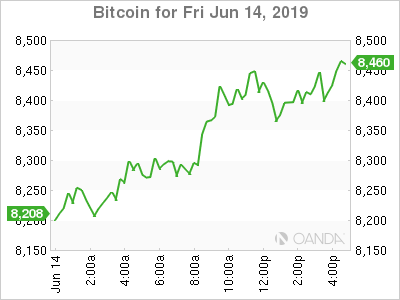
Bitcoin
Facebook is expected to announce Libra, a new cryptocurrency that has key partnerships with Visa, Mastercard, Paypal and Uber. Mainstream commerce is important for the success with digital currencies and the social media giant's digital coin could re-energize crypto fans. Libra is expected to launch next year but we could see cryptocurrencies continue to rally as continued acceptance in the financial world will improve retail demand.
Monday, June 17th
- 8:30am ET USD Empire State Manufacturing Index
- 2:00pm ET USD TIC Long-Term Purchase
- 9:30pm ET AUD RBA Minutes of June Policy Meeting
- 9:30pm ET AUD Q1 House Price Index q/q
- 9:30pm ET CNY New Home Prices m/m
Tuesday, June 18th
- 2:00am ET EUR Germany PPI m/m
- 3:00am ET TRY Turkey Industrial Production m/m
- 5:00am ET EUR Germany ZEW Current Situation Survey
- 5:00am ET EUR Eurozone ZEW Survey Expectations
- 5:00am ET EUR Final CPI y/y
- 8:30am ET USD Housing Starts & Building Permits
- 8:30am ET CAD Manufacturing Sales m/m
- 7:50pm ET JPY Trade Balance
Wednesday, June 19th
- 3:30am ET SEK Unemployment Rate
- 4:00am ET ZAR CPI y/y
- 4:30am ET GBP CPI y/y
- 7:00am ET USD MBA Mortgage Applications
- 8:30am ET CAD CPI y/y
- 2:00pm ET USD FOMC Rate Decision
- 6:45pm ET NZD Q1 GDP q/q
Thursday, June 20th
- JPY BOJ Interest Rate Decision and Press Conference
- 4:30am ET GBP Retail Sales m/m
- 7:00am ET GBP BOE Interest Rate Decision
- 8:30am ET USD Q1 Current Account Balance
- 8:30am ET USD Initial Jobless Claims
- 8:30am ET USD Philly Fed Manufacturing Index
- 10:00am ET USD CB Leading Index m/m
- 10:00am ET Eurozone Advance Consumer Confidence
- 7:30pm ET JPY National CPI y/y
- 8:30pm ET JPY Preliminary Manufacturing PMI
Friday, June 21st
- 3:15am ET EUR France PMI data
- 3:30am ET EUR Germany PMI data
- 4:00am ET EUR Eurozone PMI data
- 4:30am ET GBP Public Finances (PSNCR)
- 8:30am ET CAD Retail Sales m/m
- 9:45am ET USD Markit PMI data
- 10:00am ET USD Existing Home Sales
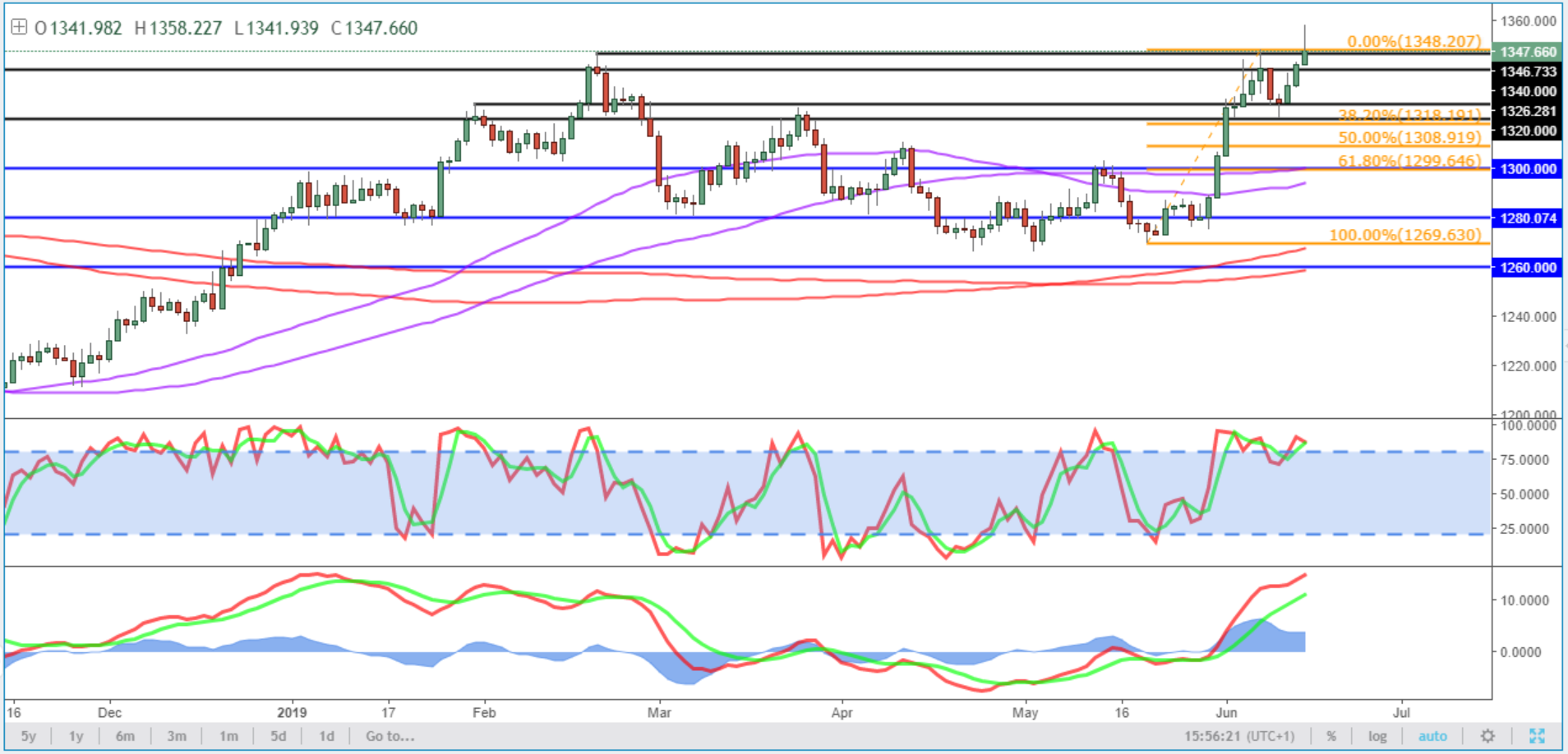
Gold Soars Through $1,350
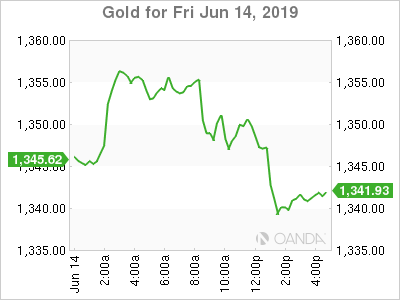
Gold hasn’t hesitated to capitalize on the risk averse markets, soaring through $1,350 today to hit a 14-month high.
The yellow metal has run straight into resistance again though around $1,360, which coincides with the peaks we saw throughout 2017 and 2018. Even above here we could see further resistance around $1,370, around the 2016 peak. Above here though, we could see gold gather further momentum.
Gold Daily Chart
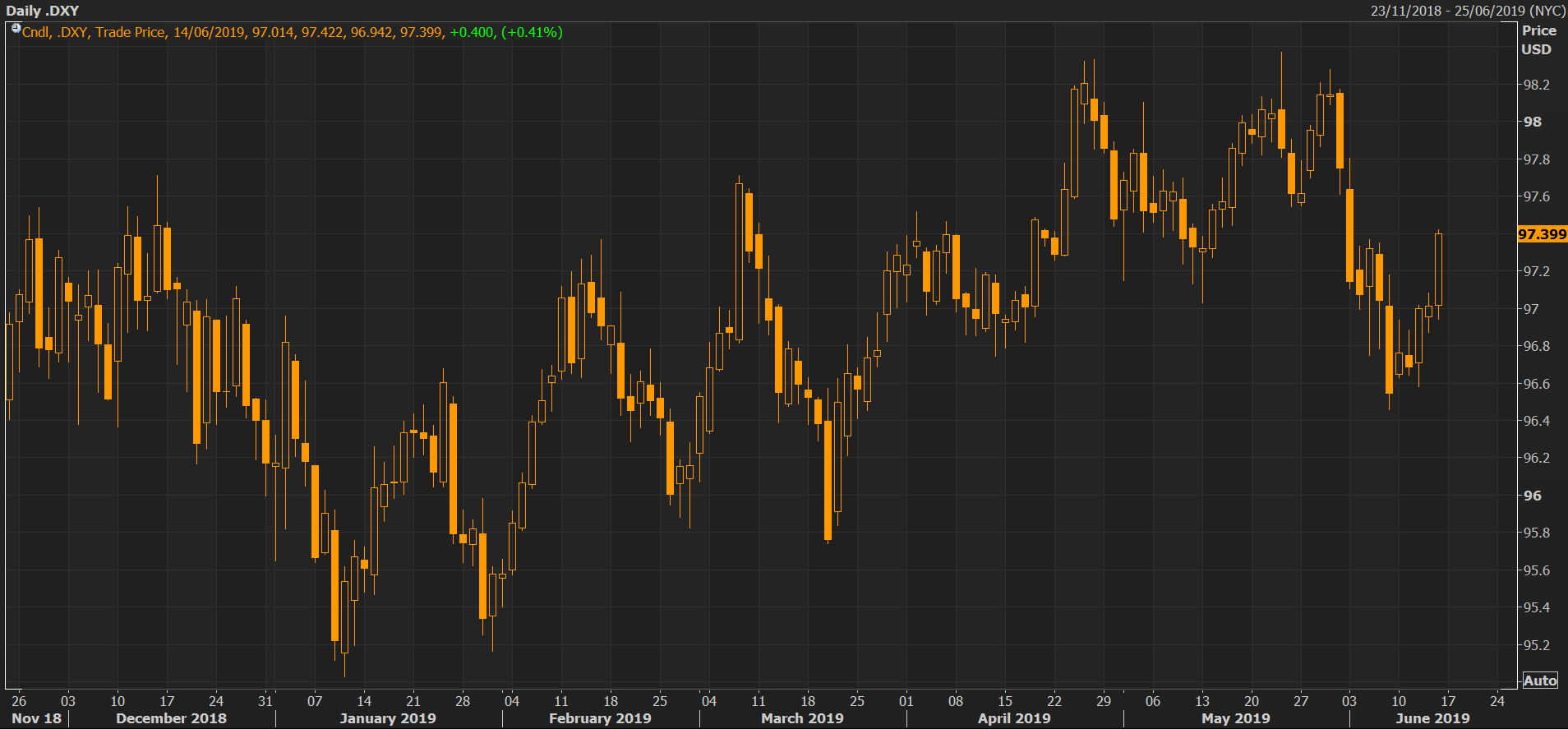
I’m not convinced the risk aversion will hold though so this may rely on the dollar coming under further pressure, which wouldn’t come as a surprise after it fell to its lowest level since March last week. We’ve seen a recovery since then but that already looks to be running out of steam, which could see its resolve tested.
The dollar index below shows the greenback testing prior support from below and struggling to break back above.
US Dollar Index
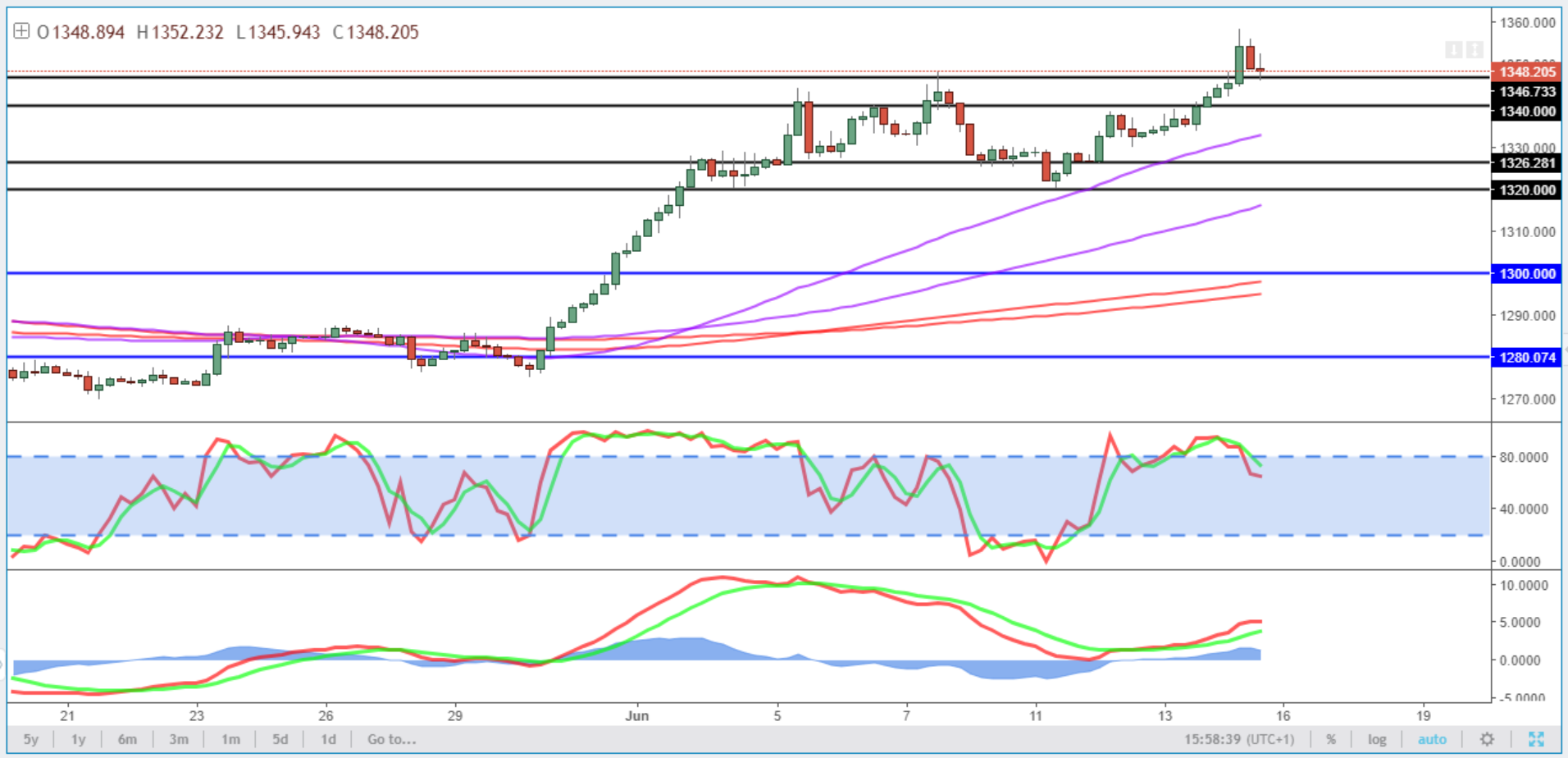
As the day has progressed, gold has pulled back from its highs and is now testing prior resistance from above. If we can close the week above here, it could be viewed as a very bullish signal and help get next week off to a strong start.
Gold 4-Hour Chart
China Weekly Letter – Xi-Trump Meeting Crucial for Next Stage in Trade War
- Xi Jinping-Donald Trump meeting to be crucial for the next stage of the trade war.
- Weak US data likely to put pressure on Trump soon.
- China opens up for more infrastructure stimulus, data for May was mixed.
- The People's Bank of China (PBoC) indicates that 7.0 for USD/CNY is not a 'red line'.
Can Xi and Trump bridge the significant gap that has opened up?
The past week did not provide any encouraging news on the trade front. The meeting between US President Donald Trump and China's President Xi Jinping at the G20 summit in two weeks will be crucial for the next stage of the trade war. When the Chinese delegation left Washington on 10 May, the two sides agreed that talks would continue in Beijing but no meetings are scheduled and we hear no stories of preparations for the Xi-Trump meeting. Actually, China has not even confirmed that Xi will meet with Trump.
Trump showed no signs of softening his stance this week. On Monday, he stated that if Xi would not meet at the G20 summit, he would move on with tariffs on another USD300bn of goods. Then, on Friday, he said 'it doesn't matter' if Xi Jinping shows up. Trump continues to signal confidence that China will go back to the 'old' deal: 'I can tell you China would like to make a deal very badly. They're getting hurt by the tariffs because companies can't pay the tariffs, so they're leaving China .' In another interview, he said 'we had a deal with China. Unless they go back to that deal, I have no interest '.
However, the Chinese side shows no sign of a change in its stance. Xinhua yesterday posted yet another story reiterating 'China will not give ground on issues of principle ' and 'China's attitude is very clear. The United States must change its attitude, show sincerity and correct its wrong practices if it wants the talks to continue '. The change of wrong practices might refer to the export ban on Huawei. However, China has not elaborated on what 'wrong practices' means. The message, that China does not want a trade war but is ready to fight to the end if necessary was also repeated many times during the week.
In a letter to Trump, more than 600 companies urged him to resolve the trade dispute. Intel and Google have also been lobbying for exemptions from the export ban on Huawei. An indicator from Morgan Stanley measuring US business conditions collapsed in June to the lowest level since the financial crisis 10 years ago. This follows other recent data, which point to a business slowdown and challenges the view of Trump's economic adviser Larry Kudlow, who, on Tuesday, argued that US growth will continue at 3% for the rest of the year, even without a trade deal. Chinese data remain weak but there are no signs of a hard landing (see more below).
Comment: A big gap in the trade talks between the US and China opened up in early May and there are no signs either side will back down. The concessions Trump wants from China are called 'core principles' on the China side, which makes it close to impossible for Xi to move on this. This article explains well why Xi is unable to offer much to Trump, as it describes how the resistance to the US demands is broad based in the Politbureau and that 'despite being positioned as the 'core' of the party leadership, even Xi cannot overturn a collective decision without securing the consent of the party leaders.
If China makes further talks conditional on removal of the export ban on Huawei, it would complicate things further. Trump would look weak if he left Osaka with a ceasefire and removed the export ban. We are increasingly concerned that Xi and Trump are unable to compromise enough for Trump to abstain from adding more tariffs on China.
Going into an election campaign, Trump has to weigh the benefit of being tough on China and the damage it would do to the US economy. If he listens to Larry Kudlow and believes growth will be 3% rest for the year, he may overplay his hand in the short term, as Chinese retaliation to more tariffs is likely to hurt the US economy. We look for a trade deal at some point in H2, when the economic pain in the US becomes clear and Trump takes the deal he can get. He is normally good at selling any deal as a success. In our view, polls currently indicate that he needs a strong economy to win the 2020 election.
More infrastructure stimulus, 7.0 not red line for USD/CNY
This week China opened up for more infrastructure spending by loosening restrictions on so-called special-purpose bonds. PBoC officials have also stated on several occasions that the 7.0 level for USD/CNY is not a 'red line' but that markets decide the level of CNY.
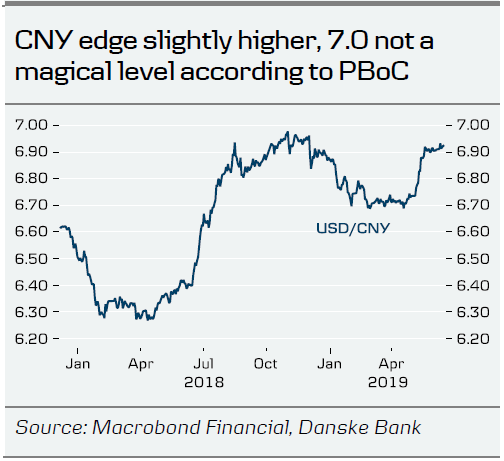
Comment: China aims to keep growth in the 6.0-6.5% range and if we see a further escalation of the trade war, we expect China to ease further. It is slightly concerning for the long term, though, that debt-fuelled infrastructure spending seems to be increasing. Monetary policy easing would put depreciation pressure on the CNY. However, that the Federal Reserve is expected to ease policy as well should keep some sort of a lid on USD/CNY. We expect the cross to rise to 7.10 in 3M.
Mixed data for June but no hard landing
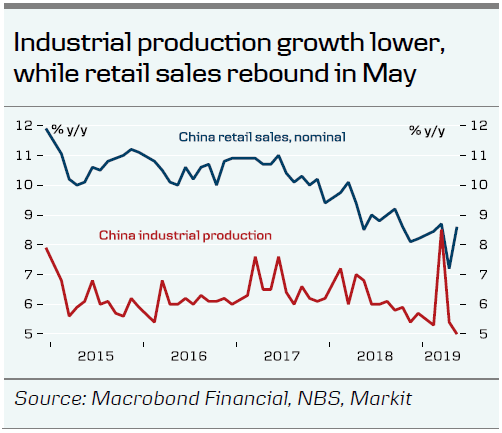
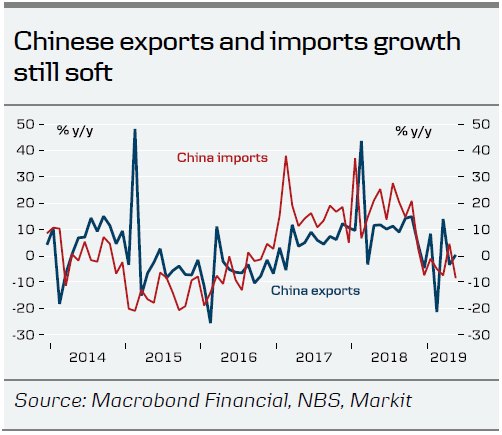
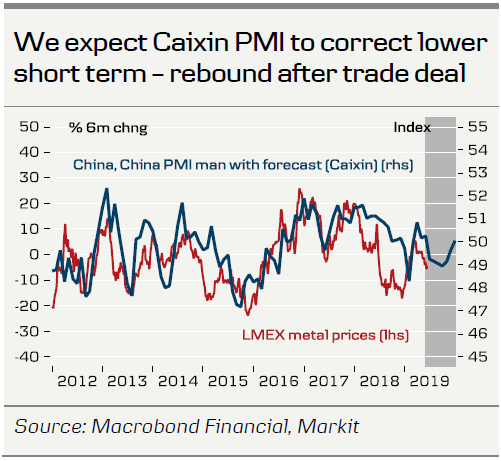
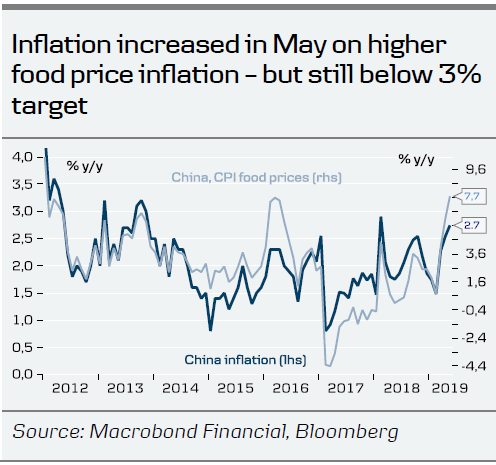
Chinese data this week was a mixed bag (see charts). Industrial production fell to the lowest level in 17 years, while retail sales rebounded in May. Imports and exports are still soft. CPI inflation increased from 2.5% to 2.7% y/y due to a rise in food prices. Credit and money growth was broadly as expected. Metal prices are falling but at a moderate pace.
Comment: The data did not add much new to the economic picture, in our view. However, it is too early to see the real effects of the trade war escalation. We look for a still-soft picture in the short term until we get a trade deal.
Other China news over the past week:
Demonstrations have roiled Hong Kong this week, as big crowds have taken to the streets to protest against a proposed extradition bill.
The US called Taiwan a country in paper on the Indo-Pacific strategy. This is a clear violation of the One China policy and adds to US-China tensions.
China has officially launched a new technology innovation board, China's version of the US Nasdaq. The board is intended to facilitate financing of domestic tech innovators and is a pet project of Xi Jinping, who has called for more support for China's innovation.
Forward Guidance: Next Week’s Main Attraction is Fed’s Rate Announcement
The Fed’s last meeting on May 1 seems like ages ago. Chair Powell sounded decidedly neutral, dismissing a slowdown in inflation as transitory and noting some improvement in risks to the outlook—all of which was consistent with a patient approach to setting monetary policy. Since then, we’ve seen tariff hikes on nearly $200 billion in Chinese imports, a general increase in uncertainty about US trade policy, signs of softer growth abroad, and emerging weakness in the US industrial sector. Those developments have investors expecting a response from the Fed. While a move next week is unlikely, markets are pricing in at least two rate cuts over the second half of this year, including a 25-basis-point cut in July.
With limited expectations for a policy change, Wednesday’s announcement is all about tone. One of the Fed’s more dovish members has publicly mused about lowering rates, but otherwise the Fed has done little to validate market pricing. Chair Powell was fairly vague in recent comments, noting the Fed is “closely monitoring” implications of trade developments and that policymakers will “act as appropriate to sustain the expansion.” Powell might not go much further than that in his comments next week. But simply reiterating that the Fed stands ready to act might be enough encouragement for markets. Attention will also be on the dot plot, which in March showed no committee members expecting the central bank would need to lower interest rates in the coming years. Markets are sure to key in on whether some of the FOMC now thinks easing will be appropriate.
While keeping an eye on the Fed, the Bank of Canada will also have plenty of domestic data to digest next week. The first release—the April manufacturing report—may get the most attention as markets look for signs that rising trade tensions are hurting the Canadian economy. We look for manufacturing sales to fall 0.7% in April, partially due to retracement of the previous month’s gains in motor vehicle and aircraft shipments. The two other Canadian data releases are more consumer-focused. We’re expecting April retail sales to be little changed as higher debt-service costs remain a headwind for household spending. Meanwhile, low, stable inflation has been a positive for consumers, and we expect next week’s CPI release will show that trend continuing.
Week Ahead – Markets Seek Rate Cut Signals from Fed; BoE and BoJ Meet too; Euro Eyes Flash PMIs
Central bank meetings will be front and centre next week as the Federal Reserve, Bank of England and Bank of Japan convene for their policy decisions. The Fed will likely grab the most attention amid intensifying expectations of a rate cut. In terms of data releases, the main focus will be on inflation as Canada, the Eurozone, Japan and the United Kingdom report for the month of May. Flash PMIs out of the Eurozone will be important too, so will Q1 GDP figures from New Zealand.
Fed could flag a rate cut
The Fed will be the first of the three central banks to make its policy announcement next week and is expected to keep the fed funds rate unchanged at the target range of 2.25-2.50%. But with markets convinced that a rate cut at the following meeting in July is a foregone conclusion, traders could be disappointed if the Fed falls short of giving outright signals of lower borrowing costs.
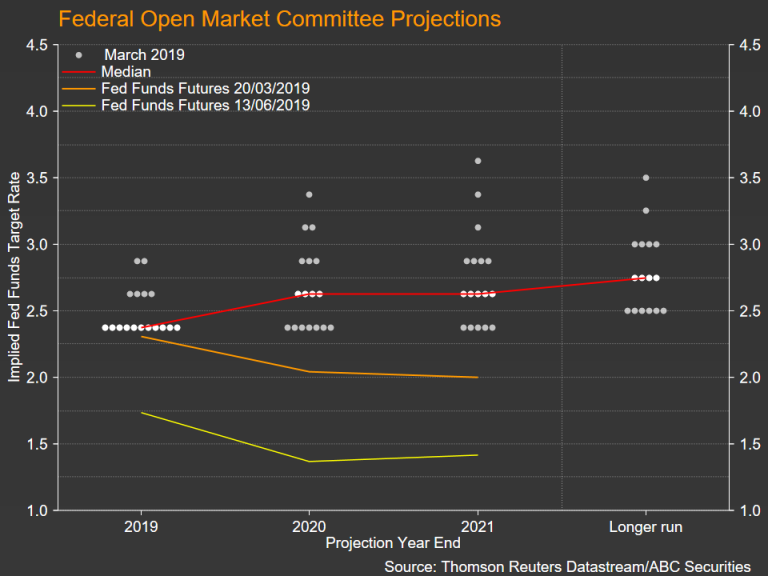
The Fed will publish updated economic projections on Wednesday, but with most FOMC members having so far only gone as far as suggesting they are open to rate cuts, it will be fascinating to see how many committee members will predict a rate cut in their projections. In the previous projections, the Fed had sharply lowered its median forecasts for interest rates but was still anticipating some tightening over the next couple of years.
It’s more than possible therefore that the median projection in June will be for only a modest cut in rates, which would risk triggering a major upside correction for the bearish looking dollar. Worse, it could cause a major market upset, sending stocks spiralling downwards. Thus, Fed chief Jerome Powell will have a tough challenge in sounding dovish enough to please the markets without promising as many cuts as investors are pricing currently.
With the Fed meeting grabbing all the limelight next week, US releases will probably struggle for attention. Manufacturing activity gauges for June will come into focus over the next few days. The Empire State manufacturing index is due on Monday, with the Philly Fed manufacturing index coming up next on Thursday and the IHS Markit flash manufacturing PMI on Friday. Housing data will also be plenty. Building permits and housing starts are out on Tuesday, followed by existing home sales on Friday.
BoJ to maintain course as outlook worsens
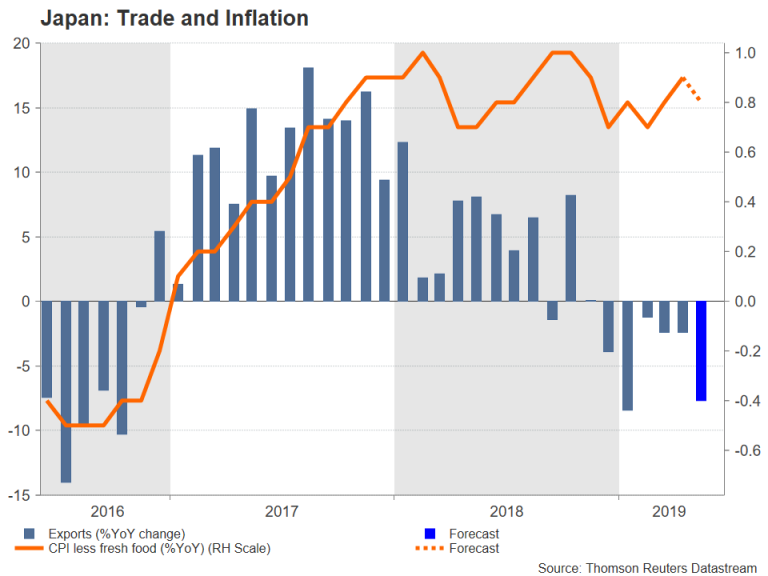
The Bank of Japan will announce its policy decision a few hours after the Fed on Thursday. Unlike in the United States where interest rates are comfortably above 0%, the BoJ has limited room to cut even though it may need to as Japanese exports have taken a big hit from Trump’s trade war and inflation is still nowhere near the 2% target.
Investors will be able to gauge how exports and inflation performed in May on Wednesday and Friday, respectively. However, even if the data surprises and shows some easing in the annual decline in exports and core CPI, which strengthened to 0.9% y/y in April, rises further, they’re unlikely to be significant enough to alter the BoJ’s view that the risks to both growth and inflation remain skewed to the downside.
But while the BoJ will probably stress the negative risks to the economy in its statement and reiterate its willingness to expand its stimulus program if required, policymakers are unlikely to take any action next week nor commit to any changes in policy in the near future. BoJ Governor Haruhiko Kuroda recently signalled the policy rate could be cut below the current -0.1% but didn’t see the need to do so just yet.
The absence of fresh policy direction by the BoJ can only mean the yen will continue to be driven by market sentiment and unless there’s any positive developments on the trade front, the safe-haven currency is expected to stay in strong demand over the coming weeks.
New Zealand to report Q1 GDP
The Reserve Bank of New Zealand was the first of the major central banks to cut interest rates, lowering its cash rate by 0.25% in May. However, all the indications are that the RBNZ is not in a hurry to ease again, and with rate cut expectations for the Fed surging in recent week, the local dollar appreciated against its US counterpart before coming under pressure in the past week from the dip in risk appetite.
Next week’s GDP estimates for the first quarter, due on Thursday, will be watched closely as any unexpected weakness in economic growth would fuel speculation that the RBNZ will deliver another cut before the year-end.
It’s been a similar story for the Australian dollar, which saw limited downside from an RBA rate cut due to a weaker US dollar before being weighed down from the latest bout of risk aversion. However, investors are a little more certain of additional rate cuts from the Reserve Bank of Australia and will therefore be scrutinizing the Bank’s June meeting minutes on Tuesday for more clues.
Loonie looks to inflation and retail sales data for further upside
The Canadian dollar finally managed to halt its year-to-date slide against the greenback in June as US data disappointed, while Canadian indicators fared much better in comparison. Next week’s releases could further help shift sentiment for the loonie as May inflation figures are due on Wednesday and April retail sales follow on Friday.
With investors pricing about a 70% probability of a Bank of Canada rate cut by December, the loonie could stretch its rebound versus the dollar if the numbers are strong enough to cast doubt on BoC rate cut prospects.
Bank of England only hawk in the room
The Bank of England will be the last of the central bank meetings next week, announcing its policy decision on Thursday after the BoJ and the Norges Bank. But ahead of that, UK data will draw traders’ attention amid growing concerns that the British economy is finally starting to feel some real pain from the chaos and uncertainty inflicted by Brexit.
UK inflation numbers are out on Thursday and are expected to show the headline rate nudging down to 2.0% year-on-year in May. Retail sales will follow on Thursday and will be very important given that domestic consumption is the main driver of UK growth. Retail sales were flat in April and the absence of a pickup in May would not send out very positive signals about the UK economy.
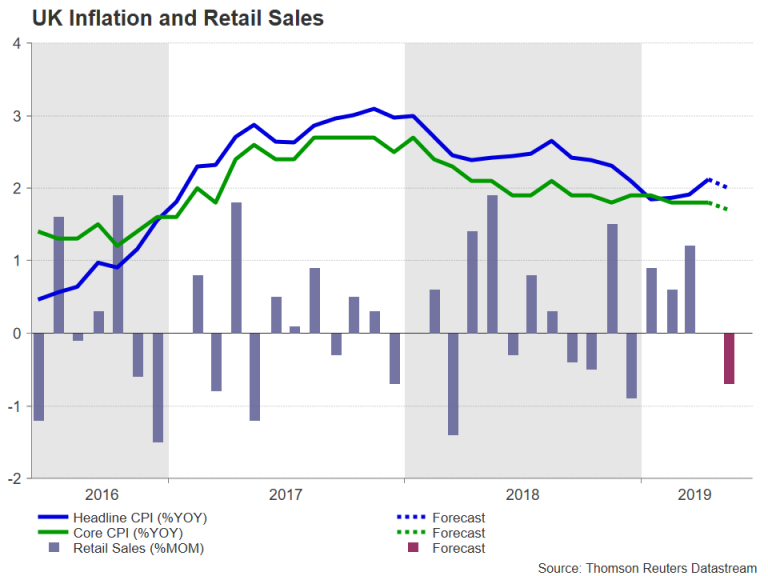
Despite the growth worries, however, and the rising risks of a no-deal Brexit, the BoE is sticking to its central projection that some tightening in monetary policy will be needed over the next 2-3 years. With no press conference or quarterly forecasts scheduled for the June meeting, the BoE is widely anticipated to repeat the same message in its statement.
Markets aren’t convinced by this hawkish talk, however, and so the impact on the pound of the BoE being the only major central bank that’s outright flagging a rate increase hasn’t been too significant.
Eurozone PMIs to steady in June
As the European Central Bank keeps its options open for a possible loosening in monetary policy, the flash Eurozone PMIs for June will come under the radar on Friday. Before that though, the final reading of May CPI is out on Tuesday, along with Germany’s ZEW economic sentiment index for June.
As trade frictions stay elevated, morale among Germany’s export-heavy businesses is taking a knock and the ZEW economic sentiment index is predicted to decline to -5.0 in June from -2.1 previously.
IHS Markit’s PMIs paint a somewhat steadier picture, however, with the euro area’s composite PMI hovering in the 51.5-52.0 region in recent months. The flash PMI prints for June are forecast to show a small improvement in both manufacturing and services activity.
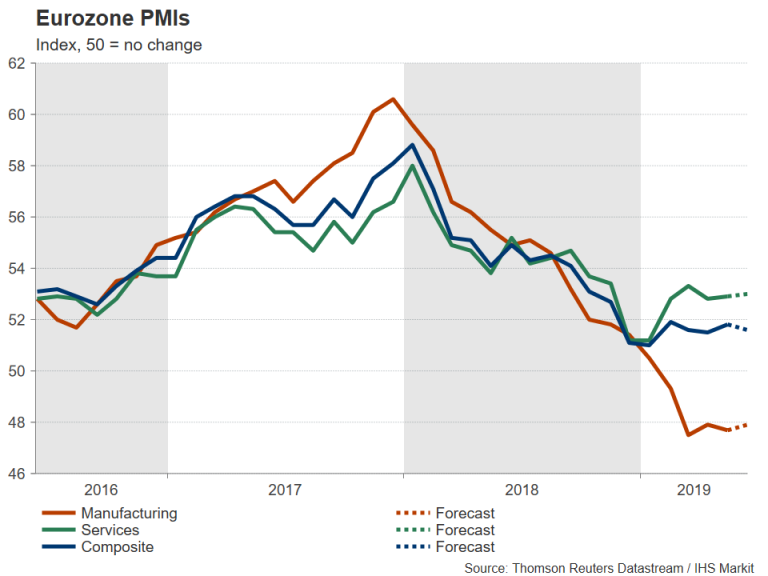
The euro is likely to be sensitive to any big surprises in the PMI numbers as the ECB ponders what its next move should be.
Weekly Focus – Will Fed Heed the Easing Calls?
Market movers ahead
- We expect the Fed to make a dovish policy shift at the upcoming meeting.
- June PMI figures on both sides of the Atlantic will give more clues on whether the cyclical downturn continues.
- In Europe, a range of important decisions loom at the EU summit and markets will keep a close watch on monetary policy hints from the ECB's Sintra Forum.
- The UK Conservative Party leadership contest continues, while the Bank of England meeting should not bring much news.
- We expect the Bank of Japan to keep its assessment of the economy at its meeting.
- We expect Norges Bank to raise its policy rate by 25bp to 1.25%.
Weekly wrap-up
- Calls for central bank easing are getting louder both in the US and Europe.
- We published our updated global view in The Big Picture (audio recording here ).
- ECB credibility continues to be challenged with euro area (market-based) inflation expectations nose-diving.
- Trade conflicts and geopolitical risks continue to weigh on risk sentiment.
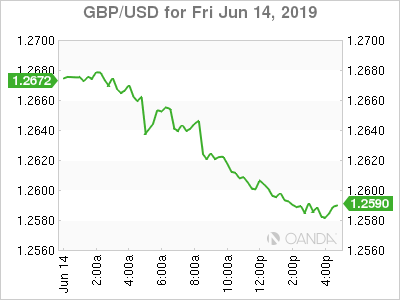
GBPUSD Turns Lower On More Bearishness
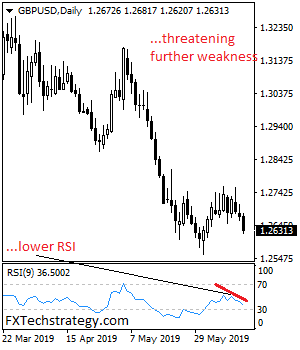
GBPUSD turns lower on more bearishness following its recent weakness. Support lies at 1.2600 as it looks for more weakness. Below that level will turn attention to the 1.2550 level. Further down, support comes in at the 1.2500 level where a break will turn focus to the 1.2450 level. Further down, support lies at the 1.2400 level. On the upside, resistance stands at the 1.2700 with a turn above here allowing for additional strength to build up towards the 1.2750 level. Further out, resistance stands at the 1.2800 level followed by the 1.2850 level. On the whole, GBPUSD turns lower on more bearishness following its recent decline.
Sunset Market Commentary
Markets
German bonds outperformed US’s today. The German bund opened higher and received a second round of support following the weakest Chinese industrial data in 17 years (see below). Germany’s 10y yield even hit a new record low of -0.27% but paired most of the decline on stronger than expected US retail sales (see below). Other yields across the curve declined about 1bp. Peripheral spreads narrow 3 bps (Italy, Spain and Portugal). The US Treasury note held steady during Asian trading hours before gaining momentum at the start of European dealings. But strong US retail sales and decent industrial production figures wiped out all previous intraday gains and even more on the short end of the curve. The US yield curve bear flattens with yields changes varying from +2bps (2y) to roughly flat (10y).
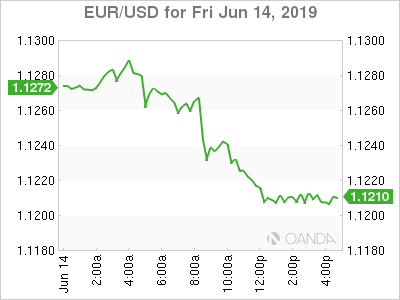
EUR/USD trading was again order driven and technical in nature this morning as investors were looking for the last important set of eco data ahead of next week’s Fed meeting. Sentiment on risk remained fragile and US yields initially kept a downward bias. As was the case over the previous days, a shy attempt of EUR/USD to rebound (on those lower US yields) again ran into resistance very soon. Were USD investors coming to the conclusion that enough Fed easing was already discounted? Whatever the reason, EUR/USD drifted lower going into the publication of the US retail sales. May sales were solid and the April figure was substantially upwardly revised. US pay production was also slightly stronger than expected. This reinforced the question whether the Fed should embark for an protracted, aggressive easing cycle as is discounted by markets. US yields and the dollar jumped higher. US president Trump repeated its critics on Fed Powell for having raised rates so much. However, this time the impact on the dollar (and US yields) was limited. EUR/USD dropped below the 1.1250 handle and trades currently around 1.1240. USD/JPY rebounded from the 108.20 area to the 1.10845 area, even as equities show a very hesitant picture.
Having witnessed the outcome of the first voting round yesterday, markets now await the second ballot for UK’s next leader next Tuesday. Matt Hancock decided to withdraw today, which narrows down the candidates list to six. This wait-and-see mode and the lack of economic data forced sterling into a technical and sentiment driven trading pattern today. The risk-off climate pushed EUR/GBP back north of the 0.89-handle, but moves were limited. Cable’s decline was more pronounced as the May retail sales in the US came in pretty strong. The couple slipped to 1.262 (down from 1.268).
News Headlines
A delayed batch of Chinese data came in mixed. Retail sales rebounded from 7.2% YoY in April to 8.6% in May. The ongoing trade tensions do leave traces on the industrial sector however. Production figures disappointed with an unexpected decline to 5.0% YoY (vs. a stabilization at 5.4% expected), the lowest in 17 years.
Swedish prices unexpectedly rose faster in May with CPIF headline inflation printing at 2.1% YoY (0.3% MoM) whereas a slight decline to 1.9% vs. last month was expected. Core measures also increased to 1.7% vs. 1.6% in April (1.5% anticipated). The Swedish krona strengthened to 10.64.
US retail sales topped expectations. The headline figure rose 0.5% MoM vs. an upwardly revised 0.3% in April. Core measures showed a similar positive surprise with the retail control group – a proxy to consumer expenditures in US GDP – also printing at 0.5% MoM, up from a bumped 0.4% in April.
Retail Sales Show that American Consumers Still Have Gas in the Tank
- Retail sales rose 0.5% in May, slightly under the median survey estimate for 0.6%. The bigger story was the size of the revision to April, which was revised from -0.2% in the advance reading to +0.3%.
- Excluding the most volatile components (gas, autos, building materials, and food services), the retail sales 'control group' rose 0.5% (ahead of expectations for 0.4%), and was revised up from a flat reading in April to +0.4%.
- Most sub-categories gained in the month, with non-store retailers (+1.4%) leading the way. Other big gainers were electronics and sporting goods (both up 1.1%), motor vehicles and parts and general merchandise (both up 0.7%). Pulling back in the month were sales at miscellaneous (-1.3%), department stores (-0.7%), and food and beverage stores (-0.1%). Declines in these categories in May followed solid gains in April.
Key Implications
- Wow. With robust growth in May and huge upward revisions to April's print, consumer spending looks to regain its footing in the second quarter with growth looking to exceed the 3% (annualized) mark.
- Business sentiment has taken a hit lately, but consumer sentiment has held up well. As long as job growth continues (even if at a somewhat slower rate from the past year), the fundamentals will remain in place for consumers to drive economic growth.
- Indeed, with credit spreads remaining tight and treasury yields falling, households are benefiting from lower borrowing costs, which should support the housing market and spending on related items (including autos) in the months ahead.