

Sample Category Title
Summary 3/25 – 3/29
Monday, Mar 25, 2019
[php_everywhere instance="1"]
Tuesday, Mar 26, 2019
[php_everywhere instance="2"]
Wednesday, Mar 27, 2019
[php_everywhere instance="3"]
Thursday, Mar 28, 2019
[php_everywhere instance="4"]
Friday, Mar 29, 2019
[php_everywhere instance="5"]
China Weekly Letter: High-Level Trade Talks Resume, Enforcement the Key Hurdle
- High-level trade talks resume, disagreement on enforcement the big hurdle.
- Metal markets still underpin a recovery, otherwise little macro news this week.
- Xi Jinping visits Europe amid concern over Italy signing memorandum on the Belt and Road Initiative.
High-level trade talks resuming
We are still waiting for the date of the meeting between Xi Jinping and Donald Trump, at which they are set to sign a trade deal. High-level trade talks will resume in Beijing next week with the aim of closing a deal soon, see SCMP 21 March. US Trade Representative and Treasury Stephen Mnuchin is set to lead US talks with China's top negotiator Vice-Premier Liu He and his team and the following week the Chinese high-level trade team is planned to head for Washington. According to some sources, the hope is to pave the way for a 'signing summit' between Xi and Trump in late April, see AP News 19 March.
Trump generated more uncertainty about the talks this week, saying "We're not talking about removing them [tariffs], we're talking about leaving them for a substantial period of time, because we have to make sure that if we do the deal with China that China lives by the deal."
A report by the US Chamber of Commerce and the Rhodium Group put a price tag for the trade war on the US at USD1trn (assuming tariff rates are not removed), see NYT 17 March. The report argued that tariffs are eroding the competitiveness of the US IT sector, one of the sectors the Trump administration aims to protect from unfair competition. The US semiconductor industry has pushed back on becoming part of a deal with China committing to buying a large amount of US chips. They fear a quota system instead of a market-driven system could backfire in the longer run and force them to establish production in China due to the high production costs in the US, see WSJ 18 March.
Comment: We still see a very high likelihood that a deal will be closed within the next three months , despite the rising hurdles at the end of the trade talks. Trump needs a deal to set the stage for his election campaign, where he will be able to present significant gifts to key voters in the agricultural heartland as well as strong support to stock markets and the economy. In contrast, a failure to make a deal would give him the opposite: angry farmers, faltering stock markets and uncertainty over the economic outlook. We find it very unlikely, though, that China would make a deal without Trump lifting tariffs on a significant part of the affected goods. Hence, this is likely to be one of the key sticking points at the end of the talks. We would not put too much weight on Trump's pledges about tariffs being maintained. He has changed his mind many times before when he felt he needed that in order to achieve what he was after. In this case, a deal with China. Lighthizer and other hawks may very well end up frustrated but eventually Trump will make his own decision.
Signs of recovery continue
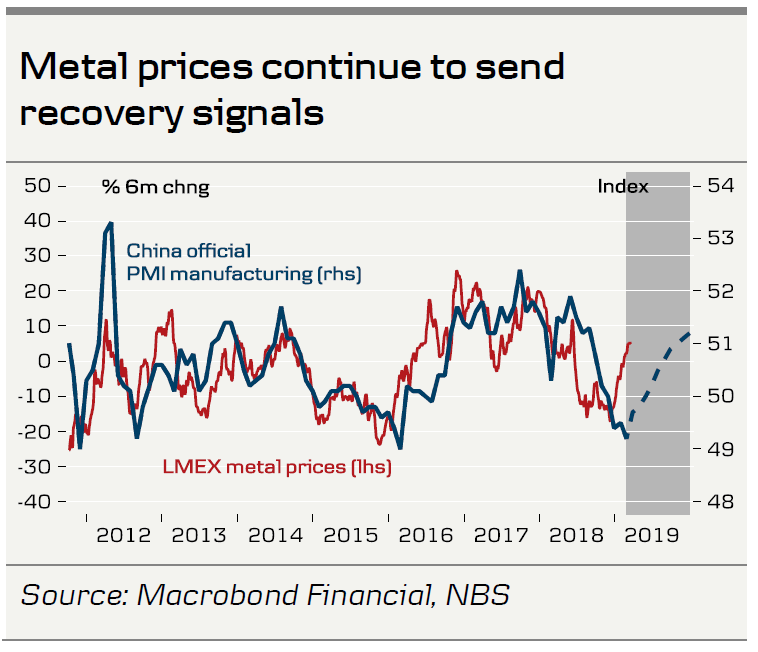
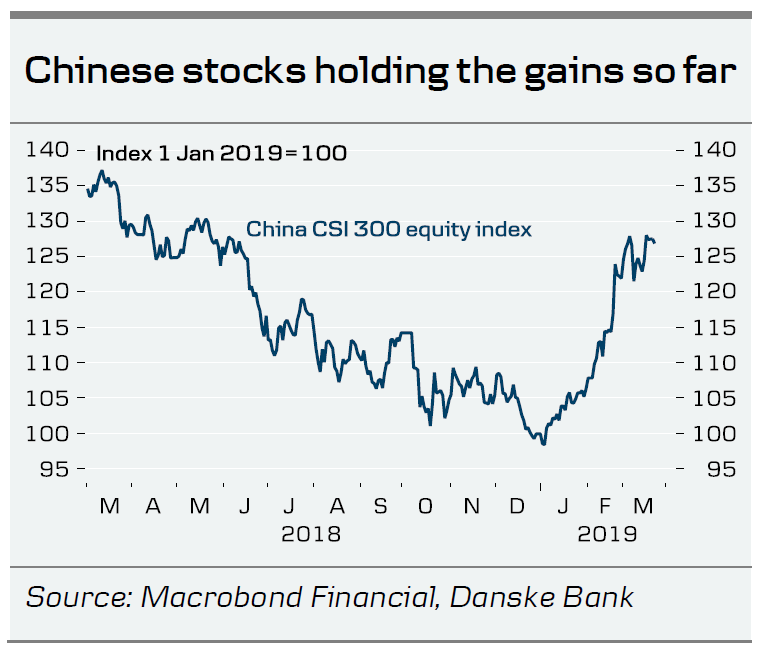
There has been little news on the economic front this week, but one of our favourite cyclical indicators, metal price inflation, continues to underpin a picture of recovery (see chart on front page). Chinese house price gains for February increased to 11.1% from 10.8% in January according to Bloomberg's 70-city index. Chinese A-share stocks rallied back a bit this week and are up more than 25% this year.
Some Chinese business owners have said that the VAT tax cuts will have little effect on activity, see SCMP 20 March. Many companies are experiencing rising costs due to stronger enforcement of pollution regulation and collection of social security contributions. It has become harder to circumvent these costs, making it more expensive to run a business.
Comment: Metal markets have sustained a positive signal for some time now. Although the indicator is noisy, we rarely see a move for this long without it showing up in the data. We continue to look for a moderate recovery in China this year, with Q1 being the bottom. We see a trade deal and stimulus as the main drivers. The story about companies seeing little effect from the VAT tax cuts reflects the tougher environment that many SMEs have faced in recent years, with tighter credit availability due to the financial tightening, higher costs due to stronger enforcement of rules and recently, negative effects from the trade war. This is one reason why we look for only a moderate recovery in China. Nevertheless, stimulus will support housing, infrastructure and private consumption.
Xi visiting Europe, Italy joins the BRI as the first G7 country
A lot of news has hit the wires on the EU and China this week. Xi Jinping arrived in Europe on Thursday, where he will visit Italy and France. Among other things, he will be signing a memorandum of understanding with Italy on the Belt and Road Initiative (BRI), see BBC 21 March and Reuters 20 March. Italy is the first G7 country to sign such an agreement with China and it has fuelled concern in other EU countries and strong warnings from the US, which calls the BRI 'debt trap diplomacy' and a 'vanity project'. Italy has sought to reassure the US and EU over China deals, with Italian Prime Minister Giuseppe Conte saying it will not "remotely put into doubt our euro-Atlantica alliance" and adding that it is "fully in line with the strategy of the EU".
EU leaders weighed a more defensive stance towards China at the EU Summit on Thursday. It follows the recent EU Commission strategy paper on China, in which it called China a 'systemic rival', see Reuters 21 March. The Commission has also suggested to revive a proposal that could block Chinese access to public tenders if there is discrimination against EU companies in China's procurement market, see Reuters 20 March.
Comment: The EU aims for a tougher stance on China but is struggling to find unity within. China has tried to ease EU concerns and has stepped up efforts to close a bilateral investment treaty (BIT) with the EU that would open up investments in more areas for European companies, see FT 7 March.
Other China news of the week
Apple faces more pressure in China as consumers choose more Chinese brands when upgrading their smart phones, see Reuters 22 March.
Chinese tech giant Tencent will cut its reliance on gaming after a profit hit, see Reuters 21 March. Tencent has been hurt by stricter regulation on gaming, the company's main area of earnings (although it is mostly famous for its WeChat app).
The Weekly Bottom Line: When The Dots Are Down
U.S. Highlights
- The Fed's dots showed that it only expects to hike rates once more by the end of 2020, sending Treasury yields lower mid-week.
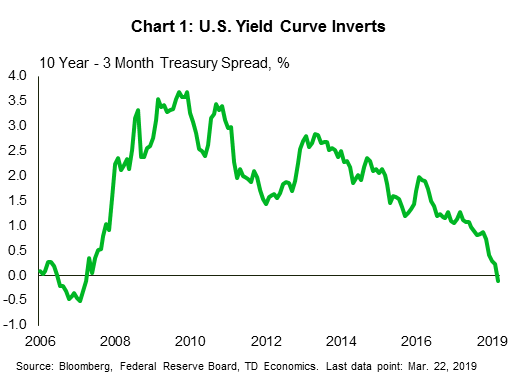
- On Friday, weakness in March manufacturing surveys in Europe, Japan, and the U.S. sent longer-term U.S. yields low enough to invert the yield curve. A yield curve inversion has historically preceded a recession by up to eight quarters.
- In a separate drama, the UK has earned a two-week extension on its Brexit deadline to April 12th. It remains to be seen if the UK's parliament will pass the current deal reached with the EU, and so further cliffhangers are likely.
Canadian Highlights
- All eyes were on Ottawa this week as the Federal Government tabled its FY2019-20 budget. The budget contained some new policy initiatives, but there was little in the way of material implications on debt trajectory, near-term economic growth, or monetary policy.
- At the same time, three provincial governments showcased their FY 2019-20 budgets, laying out plans to remain in the black (Quebec, New Brunswick) or move back into it (Saskatchewan).
- The week wasn't light on economic data. Wholesale trade kicked off the release schedule with a decent uptick. Capping the week, however, was a disappointing retail sales showing and an unsurprising CPI inflation print.
U.S. - When The Dots Are Down
The Fed's revelation that it only expects to hike rates once by the end of 2020 fanned equity market flames through much of the week. However, a souring in March PMI surveys for Japan and Europe, dampening expectations of a modest rebound in these regions in 19Q2, snuffed out some of that optimism. Global treasury yields moved down sharply, causing the U.S. yield curve to invert slightly today (Chart 1). A yield curve inversion has historically preceded a recession by up to eight quarters.
The Fed meeting was the first opportunity for it to present updated economic projections since they pivoted to a patient stance in January. In the statement, FOMC officials downgraded their assessment of current economic conditions. Moreover, the committee reaffirmed that it "will be patient as it determines what future adjustments to the target range may be appropriate", which is unchanged from the January statement.
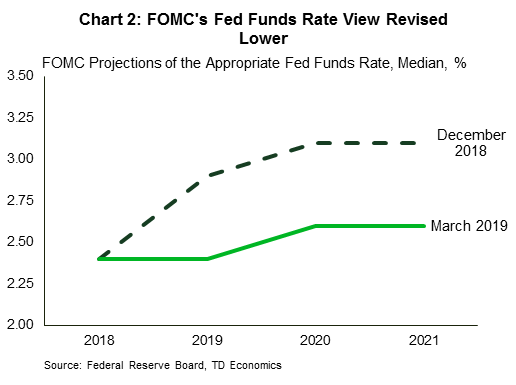
Markets were waiting for the Fed's dot plot downgrade, and it didn't disappoint. The majority of FOMC members (11 of 17) do not expect to raise rates in 2019, down from a median expectation of two hikes in December (Chart 2). For 2020, the median expectation is one hike. The longer-run expected level of the fed funds rate is 2.8%, which is unchanged from December.
These lower rate expectations came alongside a modest downgrade to real GDP growth to 2.1% in 2019 (prev. 2.3%), and 1.9% in 2020 (prev. 2.0%). The unemployment rate forecast was raised two-tenths in 2019 and 2020, and one tenth in 2021. Inflation expectations, however, were unchanged, suggesting that the Fed's expected monetary policy path should keep inflation on target.
Given a muted inflation backdrop, deteriorating economic outlook and uncertainty about the path of Brexit, an extended pause on hikes continues to be a prudent course of action and remains in line with our recent forecast.
Adding to Europe's economic woes is the extended period of Brexit uncertainty. The EU agreed to extend the Brexit cliffhanger until April 12th if the UK's parliament votes against the withdrawal agreement for the third time next week. That gives Theresa May three weeks to sell her negotiated Brexit deal to parliament. If the withdrawal agreement is eventually passed, it will have until May 22nd to sort out the logistics for withdrawal.
The upside of a shorter extension than May had requested is it should reduce the duration of Brexit-related uncertainty, which is exacting a toll largely on UK economic activity, but also weighing on European sentiment. Our UK economic forecast was downgraded last week to a 1.2% pace in 2019, versus 1.6% in our December outlook. In its decision to leave rates on hold this week, the Bank of England continued to fret about Brexit developments. With Brexit developments in flux and weak foreign demand, we expect the BoE may remain on the sidelines through 2019.
Canada - Federal Budget Takes Centre Stage
It was a busy week for Canadian data and financial markets. The S&P/TSX lost ground this week as oil prices gave up earlier gains in light of Friday's manufacturing data that signalled a deteriorating global economic outlook. Meanwhile, the budget-heavy week was joined by data that did little to change the downbeat domestic economic story.
The big-ticket event was the Federal Government's release of its FY2019-20 budget on Tuesday. The government's projected deficits for last year were lower than initial estimates, with the windfall used to finance new initiatives. Some of the measures include a focus on incentivizing education and job training, with new refundable tax credits and EI support, and reduced interest costs on Canada Student Loans. Other areas of focus included environmental initiatives, where the government is introducing a credit for electric vehicles and transferring $1 billion to municipalities for greening initiatives.
Arguably, the most attention-grabbing parts were its housing demand measures. Specifically, its First Time Home Buyer's Initiative includes a shared equity mortgage program and an increase in RRSP withdrawal limits. This may help increase home ownership rates, but the impact on sales and prices is likely to be minor. Indeed, we anticipate both to be only around 3% higher by the end of 2020 if implemented. Still, not all markets are expected to benefit, with some like Toronto and Vancouver likely not benefitting as much due to the price cap, and with tight markets potentially experiencing higher price impacts.
On the revenue side, the budget contained little change, with the most notable being a cap on the value of stock options subject to tax-preferred treatment. All told, the new budget's measures are unlikely to have material implications on growth or monetary policy projections. Importantly, the deficit trajectory (Chart 1) is mostly unchanged.
Meanwhile, three provincial governments showcased a commitment to balanced budgets this week. New Brunswick's decent starting point and planned spending restraint should help keep its books in the black within the projection horizon. Saskatchewan's government also signaled a commitment to surpluses going forward, an encouraging feat given its outsized deficits following the 2014 oil price shock. Last but not least, Quebec's new government tabled its first budget, introducing an array of new measures, with an intention to maintain surpluses of $2.5-$4 billion.
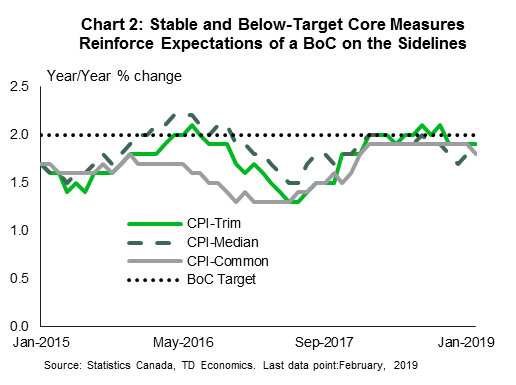
Budgets aside, two top-tier data releases capped the week. The CPI inflation print was unsurprising; with the headline coming in at 1.5% and the Bank of Canada's core measures hovering slightly below its target, at an average of 1.8% (Chart 2). Retail sales disappointed for the third straight month, declining 0.3% and with volumes almost flat, consistent with expectations of a slowdown in consumer spending in Q1. Wholesale trade was decent, with a 0.6% uptick. Altogether, the data reinforce the expectation that the Bank of Canada will likely remain on the sidelines for a long period to come.

U.S.: Upcoming Key Economic Releases
U.S. Personal Income & Spending – January/February
Release Date: March 29, 2019
Previous: Spending: -0.5% m/m; income: -0.1%
TD Forecast: Spending: 0.4% m/m; income (Feb): 0.3%
Consensus: Spending: 0.3% m/m; income (Feb): 0.3%
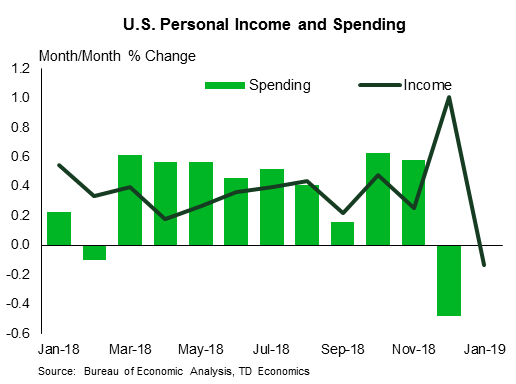
In line with the CPI print and maintaining its recent pace, we expect core PCE inflation to have advanced 0.2% m/m in January. This should keep the annual rate slightly below 2% for a fourth straight month. Conversely, spending should have bounced back from December's large 0.5% contraction. We pencil in a 0.4% jump but see scope for a smaller increase. In the details, we expect a 0.5% m/m increase in services spending to be the main driver of the rebound, with a rise in spending on nondurables also helping on the headline. On the contrary, we see spending on durables acting as a headwind in January. All in, our headline forecast would suggest spending is tracking a soft 0.5% q/q increase for Q1. For personal incomes, we look for a 0.3% increase in February on the heels of strong average hourly earnings.
Canada: Upcoming Key Economic Releases
Canadian International Trade - January
Release Date: March 27, 2019
Previous: -$4.6bn
TD Forecast: -$3.6bn
Consensus: N/A
TD looks for the international merchandise trade deficit to narrow to $3.6bn in January on a combination of stronger exports alongside a moderation in import activity. Exports will benefit from a broad rebound in manufacturing activity while Alberta's energy curtailment policy will have minimal impact; pipelines continued to operate at full capacity despite weaker production, although an unintended consequence was a sharp narrowing in the heavy crude discount which will weigh on the volume of rail shipments. However, higher oil prices will more than offset a pullback in crude exports by rail. On the other side of the ledger, imports should see a modest decline on weaker manufacturing activity south of the border and softer domestic demand after a 1.6% increase in December.
Canadian Real GDP - January*
Release Date: March 29, 2019
Previous: -0.1%
TD Forecast: 0.0%
Consensus: N/A
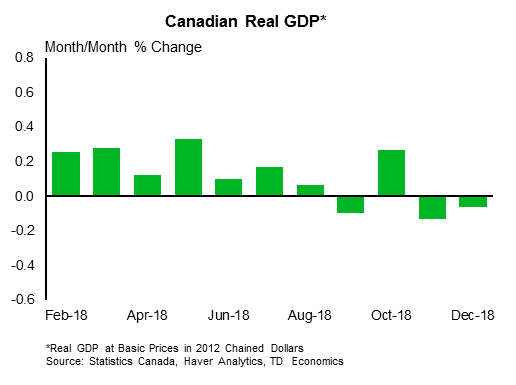
Industry-level GDP is forecast to remain unchanged in January, as distortions from Alberta's oil curtailment program cast a shadow over what would otherwise be a decent report. Oil sands production fell by 7.3% (nsa) in January, but will recover gradually over the coming months as inventories normalize from elevated levels. Outside of the energy sector things look relatively intact, underscored stronger activity data while a rebound in existing home sales should provide fleeting support to real estate output ahead of an outsized pullback in February. Construction also ought to make a positive contribution on a reported increase in building investment although further deterioration in housing starts, which in February slowed to the weakest pace since 2014, bodes poorly for residential investment going forward. Unchanged GDP in January would present an upside risk to our current tracking for Q1 although consecutive monthly declines into year-end will present a high-hurdle to realize the Bank of Canada's forecast for 0.8%.
Dollar Recovers Fed Driven Losses on Safe-haven Flows
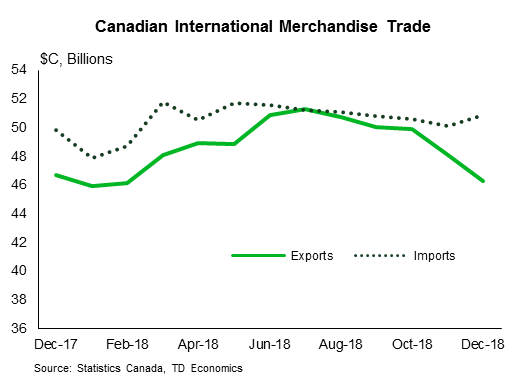
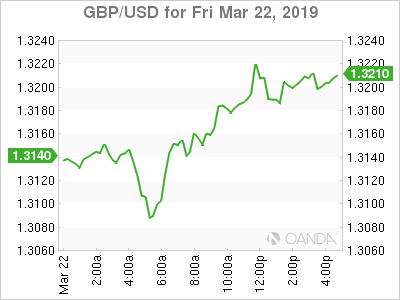
The US dollar had a wild week, finishing the week mixed against its major trading partners, as market participants reassess the effects of the Fed’s dovish commitment and how much weaker the German economy will become. Risk-aversion remains the key theme for financial markets after the three-month/10-year yield curve inverted for the first time since the financial crisis. The trade war and Brexit took a backseat this week, but a key trade meeting in Beijing and votes in Parliament will deliver crucial updates to the next respective steps. All eyes will also be on the Attorney General as he will be concluding his review of the Mueller Report.
Euro sinks as recession concerns grow for Germany
The euro collapsed after German PMI data contracted for a third consecutive month, making many economists who expected Germany to stabilize scratch their heads. As the German manufacturing sector falls further into contraction territory, many are pricing in much lower growth for the largest economy in the euro zone.
The ECB is not going to be raising rates anytime soon and recessionary concerns could start to raise expectations of further stimulus from the Bank. Euro weakness is now also approaching some longer-term technical levels at 1.12 and if that breaks, deeper support could come from the psychological 1.10 handle.
Gold stronger on Fed and safe-haven flows
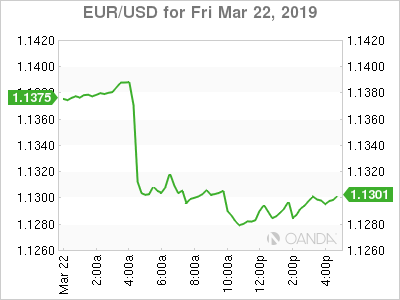
The precious metal had two main catalysts for bullishness this week. The Fed’s decision to wipe out all rate hike increases for 2019 and their downgrade of their growth outlook signaled to investors that the Fed is very concerned about the economy. The other key catalyst was the slower global growth concerns that stemmed from the weaker than expected PMI data from Europe.
In the short-term, it appears there are not many economic releases or triggers that will alleviate weakening economic growth concerns. Trade deal optimism has derailed many of golds rallies in recent months, but we may see markets be less optimistic until we see a meeting on the books for President Trump and Xi.
Oil
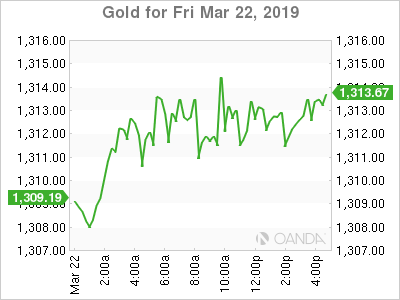
Oil prices are under pressure as global growth concerns spark fears that demand might be softer than expected. The fundamental case for higher prices still remains valid, but if we continue to see further deterioration in Europe and Asia, we could see production cuts matter less. Rising production from the US is expected to make fresh record highs and ultimately be a headwind for higher crude prices.
Brexit
Another critical week for PM May is upon us. This could be her last stand as she tries to push through her unpopular Brexit deal through Parliament. The March 29th Brexit deadline has been pushed back to April 12th. The pressure is on for May to try to deliver a Brexit deal or we may see a long extension.
The British pound remains vulnerable to a no-deal Brexit, but many scenarios still remain in play, but we could get further clarity after UK Parliament votes on many amendments. Control of Brexit, leadership challenges and referendums are all in play next week.
Steady as She Goes – RBNZ OCR Preview
- The RBNZ is likely to repeat the key messages from February, including "OCR on hold through 2019 and 2020" and "the next move could be up or down."
- The details of the statement will also be similar to February, emphasising global risks and a positive domestic outlook.
- Recent developments have been in line with RBNZ expectations, so there is no reason for the RBNZ to change stance.
- The impending move to a Monetary Policy Committee is another reason for the RBNZ to avoid rocking the boat right now.
- Markets would be surprised by an unchanged statement from the RBNZ. Swap rates and the exchange rate would rise a bit.
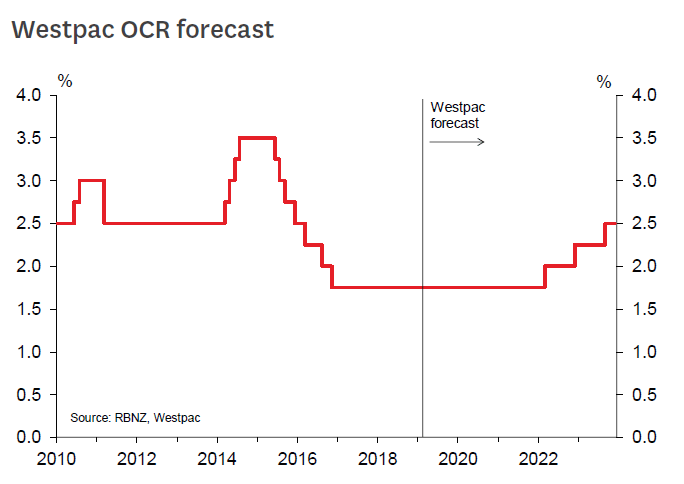
The RBNZ is unlikely to alter its firmly-on-hold stance at next week's March OCR Review. Recent data has been mixed, and hasn't created any strong basis for shifting the OCR outlook one way or the other.
At the February Monetary Policy Statement, the RBNZ said it expects to keep the OCR unchanged "through 2019 and 2020" and that "the next move in the OCR could be up or down." This was a dovish shift from late-2018, when the "up or down" statement had been omitted, and the OCR was expected to remain at 1.75% only "into 2020", not throughout that year.
The main reason for the RBNZ's dovish tilt at the time was concern about the global economic outlook, which was weakening. The RBNZ's take on the domestic economy was upbeat – it emphasised that capacity pressures were emerging, that the economy was expected to pick up in 2019 on the back of fiscal stimulus, and that core inflation was expected to rise.
The RBNZ is unlikely to have altered its views since February, given that economic developments since that time have been mixed.
A few elements of the domestic economy have been weaker than the RBNZ anticipated. Weak house sales data recently might cause the RBNZ to lower its house price forecast a bit, and GDP in the December quarter was a touch weaker than the RBNZ's February forecast. But overall, the RBNZ can still credibly stick to the view that the economy is set to pick up this year, especially in light of very strong consumer spending and building consent numbers coming through recently.
Global central banks, including the US Federal Reserve, have continued to shift to more dovish stances in acknowledgement of a gradual but broad-based slowdown in global economic growth. But this global economic situation is probably in line with the RBNZ's expectations from February, rather than being any kind of surprise. Actually global prices for New Zealand's key export commodities, including dairy, have been stronger than expected in recent weeks. So from a New Zealand point of view, international trading conditions have improved since February.
Finally, the exchange rate has been trading very close to the RBNZ's previous forecast, again creating no strong reason for the RBNZ to alter its stance.
Given the mixed nature of recent economic developments, we would expect the Reserve Bank to issue a statement very similar to the February press release, repeating the key phrases: "We expect to keep the OCR at [1.75%] through 2019 and 2020" and "The direction of our next OCR move could be up or down." The details will continue to emphasise global risks but to talk up the chances of New Zealand's economy picking up, including citing the risk that inflation in New Zealand picks up more than expected. There might be some slight acknowledgement that the domestic economy has weakened a bit, but that would be decidedly second-order.
The impending change to the monetary policy decision making structure is another reason to expect a steady-asshe- goes approach from the Reserve Bank. The fact that a committee is about to take over probably creates a higher hurdle for the Governor to take decisive action on the OCR outlook right now – after all, the committee could take a different approach to the current leadership.
We expect the membership of the RBNZ's new Monetary Policy Committee to be announced a few days after the March OCR Review. The four RBNZ members are likely to be Governor Adrian Orr, Deputy Governor Geoff Bascand, Assistant Governor Christian Hawkesby, and the new Chief Economist who is yet to be appointed. There will also be three external members.
Financial markets are primed for something more dovish than we anticipate. Many global central banks have shifted to a more dovish stance recently. Financial markets probably believe that the Reserve Bank is going to follow suit. If the RBNZ actually issues a vanilla statement without much change, as we expect, then swap rates and the exchange rate would rise on the day.
Weekly Economic and Financial Commentary: A Wait-and-See Approach
U.S. Review
A Wait-and-See Approach
- The unanimous decision by the FOMC to keep rates unchanged this week was widely expected, but the committee's increased caution regarding the outlook reaffirmed its wait-and-see approach to monetary policy.
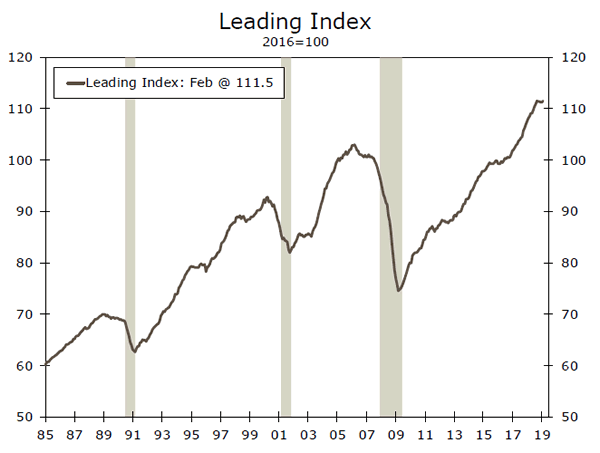
- In other news, the Leading Economic Index for February suggests economic growth will continue, but with the positive contributions to the index getting smaller on trend, the index suggests a moderation in the pace of growth.
A Wait-and-See Approach
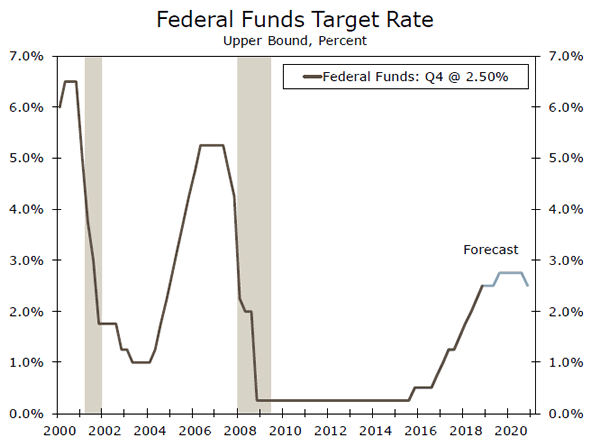
The two-day meeting of the Federal Open Market Committee (FOMC) was the focal point this week, concluding with a unanimous decision to keep the range of the federal funds rate unchanged between 2.25% and 2.50%. This decision was widely expected by financial markets, but the committee's increased caution regarding the outlook reaffirmed its wait-and-see approach to monetary policy.
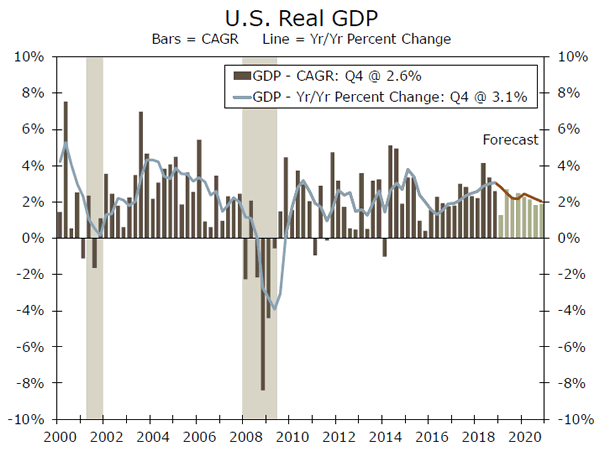
Perhaps expected, equity markets gained at the onset of the announcement, but markets soon gave back most of those gains after fully digesting the breadth of the FOMC's decision. The committee downgraded its assessment of the economy, with officials' median projection for growth this year dropping to 2.1% from 2.5% previously. With this more reserved outlook, the committee scaled back its expectations regarding tightening and now looks to be on hold for the rest of this year. Does this suggest the FOMC believes it has reached its neutral policy rate? Taking the dot plot at face value would suggest there is still a modest preference to hike rates 25 bps next year. But, given the patient tone of the FOMC and its data-dependent approach, it is remains a close call on if the next move would be a hike or a cut.
Our most recent forecast looks for the Fed to hike rates 25 bps later this year. Markets had previously priced in a low probability of a hike this year, but after this week's meeting the tone among markets shifted, with the market implied probability of a cut in late 2019 jumping to about 60%. Although a rate hike in 2019 is still possible, the committees' communication this week suggests that the risk to our forecast is skewed to the downside. We have been looking for a step-down in growth this year for some time now, and as highlighted in the committees' statement, more recent data around consumer spending and business fixed investment suggest such a moderation in growth will unfold. For more detail regarding the FOMC decision, please see our Interest Rate Watch on page 6.
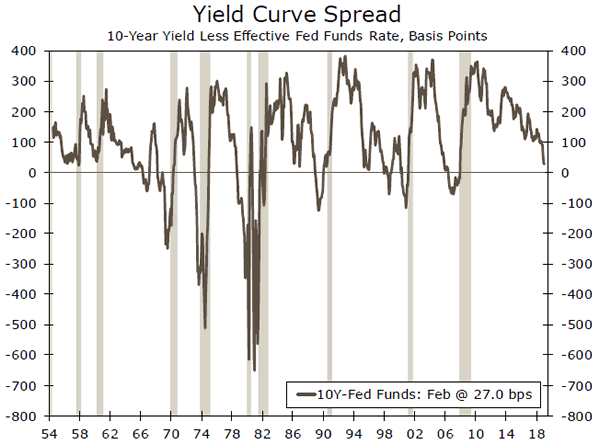
Besides the FOMC meeting, we also learned that the Leading Economic Index rose 0.2% in February. While the index continues to suggest a solid pace of growth, the positive contributions to the index have been getting smaller on trend suggesting some temperance. This is clearly seen in the interest rate spread component, as the spread between the 10-year Treasury and fed funds rate has continued to fall, although it has not fallen into negative territory. If—or perhaps when—the yield curve inverts, market apprehension of a recession will heighten. But, while we look for growth to moderate, we think financial markets may be underestimating near-term growth.
Both upside and downside risks to the outlook persist. Perhaps one of the largest of these risks remains the outcome of trade negotiations between the United States and China. A new round of talks are set to take place in Beijing next week, with the hopes of a deal by the end of April. But, President Trump said this week that tariffs on Chinese goods may remain in place for a "substantial period of time," which only increases uncertainty around the impact to economic growth. We will continue to monitor these developments as they arise and adjust our forecast as necessary.
U.S. Outlook
Housing Starts • Tuesday
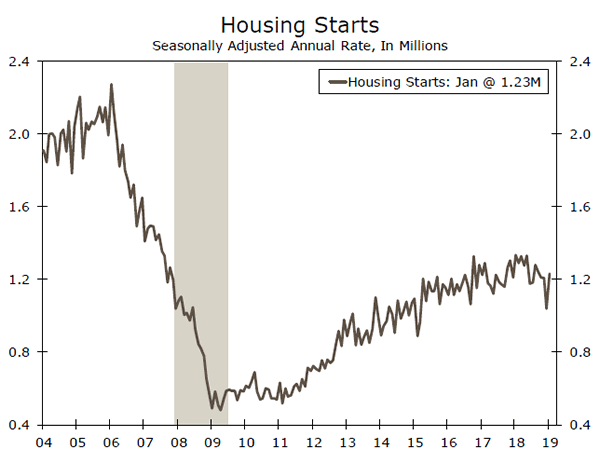
Next week, we get a look at the extent to which the Fed's dovish pivot has fed through to the housing market as we enter the spring buying season. The announcement of the "pause" in December spurred a 50 bps plunge in mortgage rates, which appears to have been just in time to stem the slide in residential activity, as housing starts rebounded 18.6% in January after the 14% drop in December. The jump in single-family starts last month broke a string of four consecutive declines. With permits running 15% ahead of starts, we expect to see a continued modest rebound through the spring.
Moderating home price appreciation and firming mortgage applications and builder confidence should boost new home sales, for which we also receive February data next week. As a primary transmission mechanism for monetary policy, the housing market will be closely watched this spring for clues as to the efficacy—and sustainability—of the Fed's new stance.
Previous: 1,230K Wells Fargo: 1,201K Consensus: 1,210K
Consumer Confidence • Tuesday
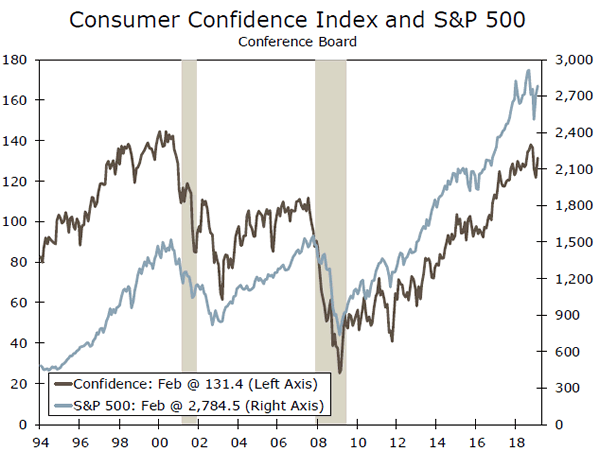
Consumer confidence stabilized last month as the government shutdown and the equity market sell-off retreated further in the rear view mirror. While off the peak of 137.9 from last October, the index reading of 131.4 remains elevated amid a very strong labor market and accelerating wages. As financial markets and consumers digest the Fed's new policy stance, their expectations for future conditions will drive the outlook for personal consumption.
Such elevated readings of consumer confidence are consistent with robust growth in personal consumption, which explains our surprise at the 0.6% drop in real spending reported in December. We caution against reading too much into this one figure or the alarming December retail sales report. Real PCE rose a stronger-than expected 2.8% in Q4; going forward, we expect a moderation rather than a decline. On Friday, we get January spending data, which should reflect a more moderate pace of growth from the consumer sector.
Previous: 131.4 Wells Fargo: 131.8 Consensus: 132.0
Trade Balance • Wednesday
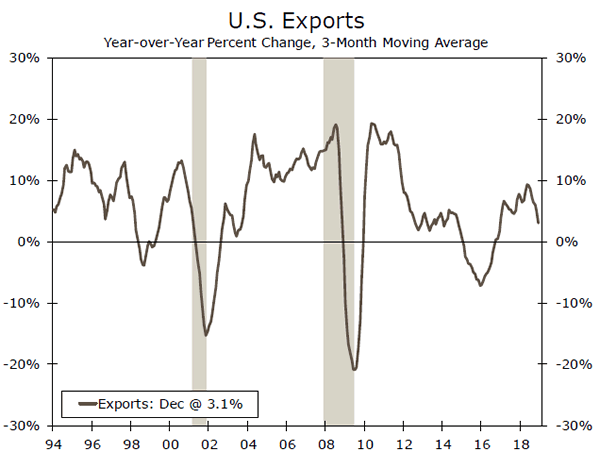
Slowing global growth and surprisingly resilient domestic demand pose a challenging backdrop for the U.S. trade balance. Last month, the deficit widened to a 10-year high of $59.8 billion, as imports surged and exports fell for the third consecutive month. Systemic global uncertainty surrounding the trade environment as well as country-specific slowdowns in major trading partners China, Japan and Germany should eat into global demand for the foreseeable future, weighing on the U.S. trade balance and overall GDP growth. U.S. trade representatives will be in Beijing on Thursday and Friday as the two countries continue to negotiate toward a potential deal.
Net exports were originally reported to have subtracted 0.2 percentage points off of growth in the fourth quarter, but revisions to the national accounts data released next Thursday will likely bump up the drag to 0.3 percentage points.
Previous: -$59.8B Wells Fargo: -$58.4B Consensus: -$57.3B
Global Review
Brexit Uncertainties Persist, Norges Bank Goes Hawkish
- As the end-March deadline approaches, Brexit developments continue to dominate headlines. U.K. Prime Minister Theresa May has stated her intention to seek a delay to the deadline, while U.K. parliament might reconvene again to vote on May's deal. Amid Brexit, the Bank of England held policy rates steady this week as uncertainty is likely to persist for the time being.
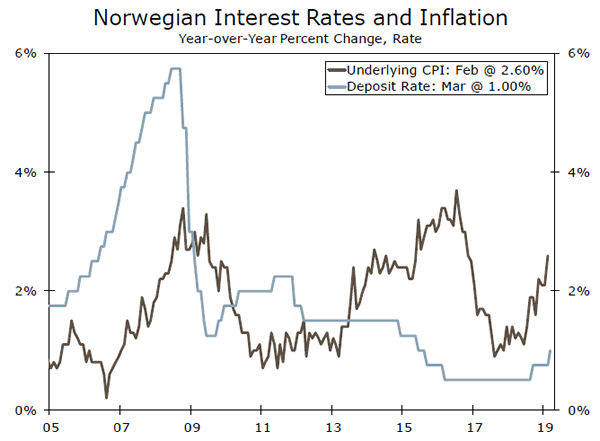
- The Central Bank of Norway opted to raise interest rates at this week's monetary policy meeting and suggested more hikes may be coming. As other major central banks have become more dovish, Norges Bank has undertaken a more hawkish path as oil prices recover and the domestic economy improves.
See "EU" Later? Not So Fast.
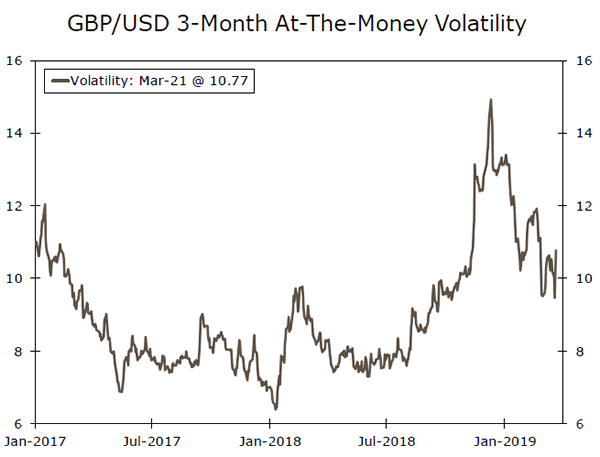
With a little over a week before the U.K.'s current deadline to leave the EU, Brexit developments have again dominated headlines this week. While the situation between the U.K. and the EU is very fluid and susceptible to frequent change, at the current juncture, U.K. Prime Minister Theresa May has formally signaled her intention to ask the EU for a short extension of the Article 50 deadline to June 30. As expected, the EU has pushed back on this request, granting May only a two week extension of Article 50. During these two weeks, May must get members of parliament to approve her current Brexit deal. If she cannot gather U.K. parliament support, the EU has indicated May will have until April 12 to decide whether the U.K. leaves the EU with no-deal or must formally request a much longer extension of the deadline, with commentary from EU officials suggesting a possible extension of up to a year. These new developments have significantly increased the risk of a no-deal Brexit, while a longer extension of the deadline makes options such as a leadership challenge and second referendum more likely as well. As Brexit developments continue to unfold, the British pound is likely to remain quite volatile. Despite a recent decline, we expect volatility in the pound to pick up as any Brexit votes will likely be contentious.
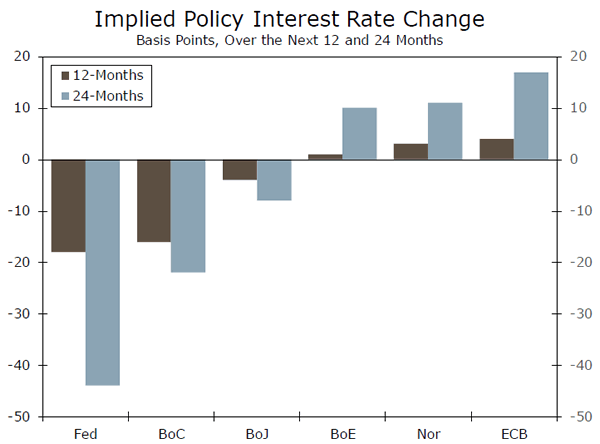
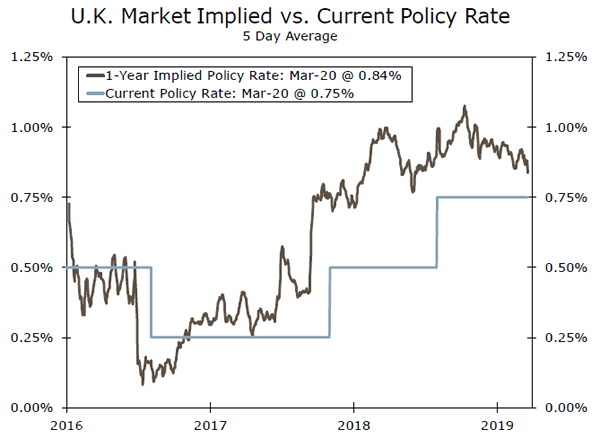
Among the midst of Brexit, the Bank of England (BoE) met on Thursday to decide monetary policy. As expected, the BoE left policy rates unchanged as the uncertainty regarding the outcome of Brexit lingers over the economy. Despite a more dovish policy stance of global central banks, markets are still implying the BoE will look to raise rates over the next few years. As of now, markets are pricing in about 1 bp of rate hikes in 12 months, and about 11 bps over a two-year horizon. While we share a similar outlook for higher interest rates, we believe the BoE will look to be more aggressive in tightening monetary policy, with our forecast calling for a 25 bps hike in the third quarter of this year and another hike in Q1-2020. Our primary rationale continues to be centered on our view that the U.K. will come to a Brexit agreement and an orderly exit from the EU is imminent. With the domestic economy resilient and performing relatively well, an orderly exit should remove the majority of the uncertainty hanging over the U.K. economy and should provide the BoE with sufficient rationale for raising policy rates.
Aside from the BoE, a few other major foreign central banks decided monetary policy this week, with the central bank of Norway being the most notable. In response to recently higher oil prices and an improving domestic economy, Norges Bank opted to hike its benchmark deposit rate 25 bps to 1%, up from 0.75%. This is the first policy rate hike from the central bank of Norway since August 2018, and marks a diverging path of monetary policy from the rest of the developed world as major central banks continue to suggest steady monetary policy for the time being. Policymakers from Norges Bank also suggested that interest rates may increase again in the second half of this year as oil prices continue to recover, the domestic economy continues to strengthen and inflation remains above the central bank's target rate.
Global Outlook
Central Bank of Mexico Decision • Thursday
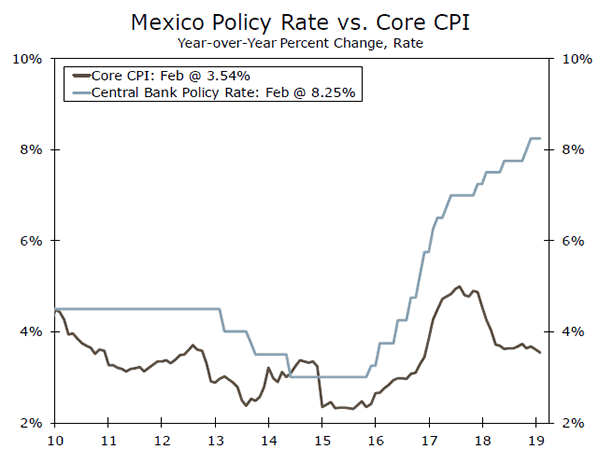
Last year, the central bank of Mexico maintained a relatively hawkish stance on monetary policy, raising interest rates four times over the course of 2018. The combination of hawkish global central banks, along with an unstable currency, were likely the most influential factors in the central bank's decision to raise policy rates. However, as global monetary policy has become more benign and the peso has stabilized, the central bank of Mexico is likely to remain on hold in the short-term. In fact, Mexico's economy slowed noticeably in 2018, while this sluggish momentum has carried into 2019 as well. As a result, the central bank may look to reverse course and cut policy rates in an effort to reignite growth and inflation. Markets share a similar outlook as well and are currently pricing in two full rate cuts from the central bank over the next year. While we expect the central bank to keep rates steady next week, we anticipate the tone to be more dovish in nature, suggesting cuts may be on the horizon.
Previous: 8.25% Consensus: 8.25%
Argentina Economic Activity • Thursday
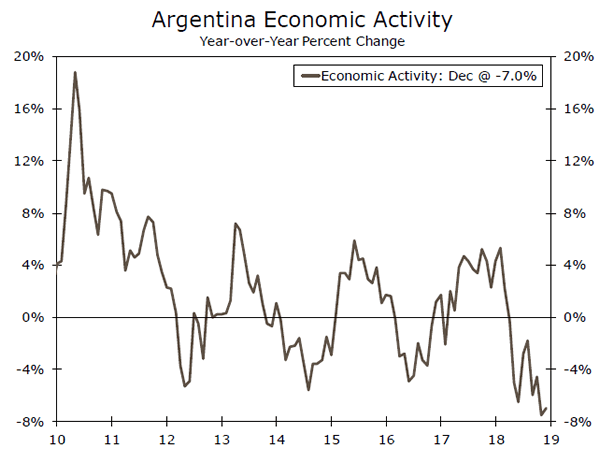
Following last year's currency crisis and extreme tightening of monetary policy, Argentina's economy fell into a deep recession. While we expected the economy to show signs of bottoming out by now, economic activity has not recovered and continues to underperform expectations. In February, economic activity contracted by 7% year-over-year, a much larger decline than consensus forecasts had suggested. The worse-than-expected data have put renewed downward pressure on the peso once again, and with CPI inflation recently hitting a new high, weak economic activity in March may push the peso towards an all-time low and extend Argentina's recession. Despite soft economic activity, authorities have taken adequate steps toward curing Argentina's domestic imbalances. This is evidenced by the IMF applauding the administration's efforts towards achieving a balanced budget, while disbursing another US$10.8B to the government to ensure economic stabilization.
Previous: -7.0% (Year-over-Year)
Eurozone CPI Inflation • Friday
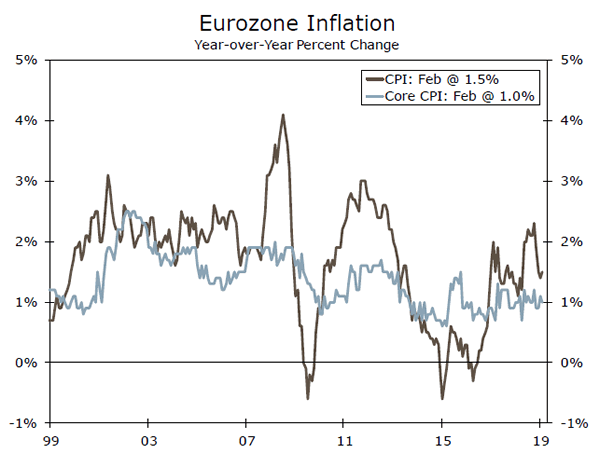
At its latest meeting, the ECB made significant downward revisions to its forecasts for both GDP growth and inflation. On the inflation side, the ECB cut its outlook in 2019 to 1.2% year-over-year, down from a previous forecast of 1.6%, while also cutting its forecasts in 2020 and 2021. In an effort to stimulate growth and inflation dynamics across the broader European economy, the ECB introduced a new round of targeted long-term refinancing operations (TLTROs) aimed at encouraging commercial banks to lend to the private sector. Along with the forecast revisions and TLTRO announcement, the ECB also changed its forward guidance to suggest policy rates will remain on hold through the end of 2019. We share a similar outlook, with our forecast now calling for a rate hike in March 2020, as growth and inflation are likely to remain relatively subdued for the time being. Any indications that CPI inflation is still slowing could push back the timing again for an ECB policy rate hike.
Previous: 1.5% Wells Fargo: 1.3% Consensus: 1.5% (Year-over-Year)
Point of View
Interest Rate Watch
Fed on Hold Through 2019?
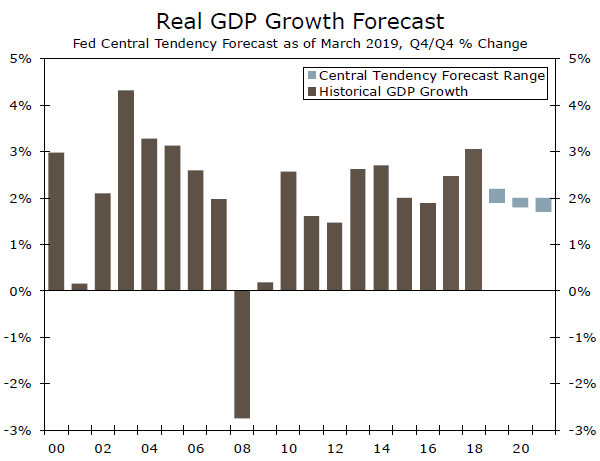
As universally expected, the Federal Open Market Committee (FOMC) voted unanimously on March 20 to keep the range for the fed funds rate between 2.25% to 2.50%. That said, the announcement was not without consequence. For starters, the FOMC downgraded its assessment of the current state of the economy, saying that "growth of economic activity has slowed from its solid rate in the fourth quarter." Furthermore, it shaved down its GDP growth forecast for 2019 and 2020 (top chart).
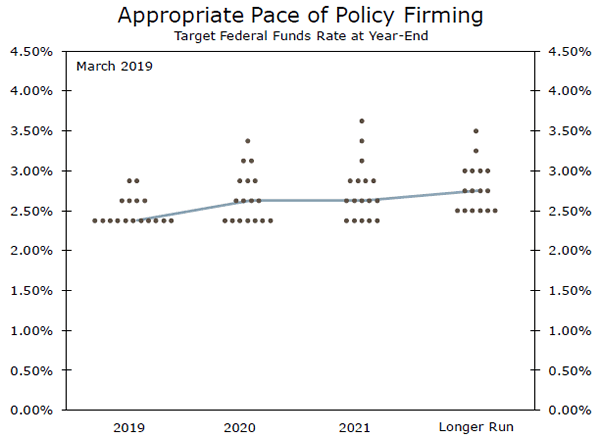
More consequentially, the committee indicated it may not raise rates any further this year. In December, the median FOMC forecaster projected 50 bps of tightening in 2019 and another 25 bps rate hike in 2020. The median forecaster now believes that the FOMC will keep the target range for the fed funds rate unchanged at 2.25% to 2.50% for the rest of 2019 (middle chart). The median forecast of one 25 bps rate hike next year remains in the forecast, but seven of the 17 FOMC members think that rates will be on hold next year as well. In other words, the forecast of a rate hike next year is a close call.
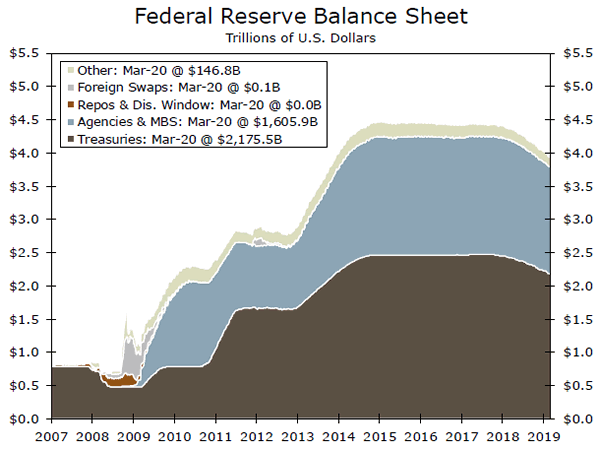
The committee also said that it will slow the pace at which its balance sheet is shrinking, and that it will end the runoff of Treasury securities altogether in October. As we have been writing for some time, the Fed's balance sheet will be elevated for the foreseeable future. Furthermore, it will continue to hold trillions of dollars of Treasury securities, which, everything else equal, should keep long-term interest rates lower than they otherwise would be.
Our most recent forecast, which was compiled earlier this month, looks for the Fed to hike rates by 25 bps later this year. We expected that the FOMC would then remain on hold until the end of 2020, when we forecasted that it would cut rates by 25 bps. Although another rate hike in 2019 is still possible, the FOMC's announcement this week means that the risk to our current forecast is skewed to the downside. We will continue to monitor incoming data to determine whether we need to adjust our forecast for the fed funds rate.
Credit Market Insights
Foreigners Flee U.S. Equities
Data released from the U.S. Treasury showed foreign investors fleeing U.S. equities in January as the stock market volatility continued into the new year. Foreigners offloaded a net $31.2 billion in U.S. equities, the largest decline since September 2015, when fears about the Chinese economy caused another stock market swoon. This large January decline came on the heels of an $18.2 billion drop in foreign equity holdings in December.
The sharp declines in December/January were part of a larger trend that has seen foreigners reducing their holdings of U.S. equities. Over the past 12 months, foreign holdings of U.S. equities have declined a net $187 billion, the largest on record.
Where then has foreign money been flowing? Into U.S. fixed income, particularly Treasuries and agency debt. In January, Chinese investors purchased $15 billion of agency debt, the largest net purchase since July 2013. The foreign flows into Treasuries have been mostly concentrated among foreign private investors, as foreign official holders of Treasuries have continued to see net selling over the past several months.
To some extent, the net decline in foreign holdings is also a result of U.S. residents reducing their exposure to foreign securities. U.S. residents have been heavy sellers of foreign securities over the past 12 months, particularly foreign fixed income. With concerns about the current economic cycle, it appears capital is flowing toward domestic sources and fixed income.
Topic of the Week
Shifting Burdens of Household Debt
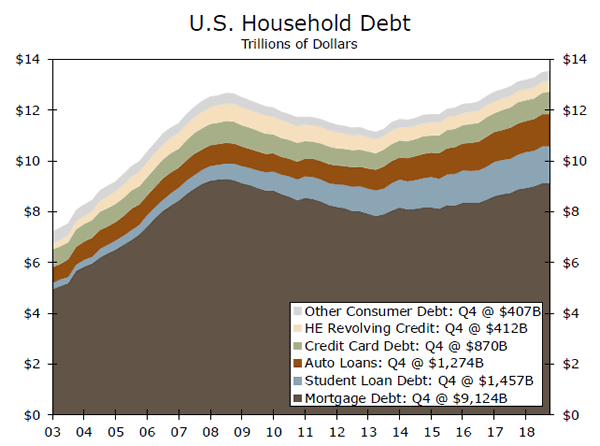
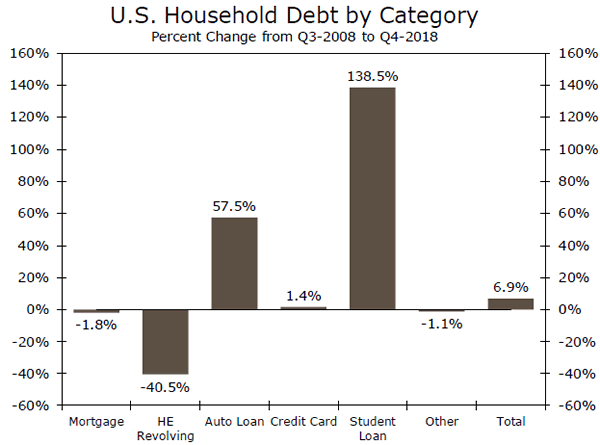
Household debt in the United States is higher now than it was at the height of the prior cycle, which has brought dire warnings about leverage and the inevitable comparisons to debt levels in 2008. There are reasons to be circumspect about the composition of household debt, and too much leverage was indeed a large part of what went wrong in the lead-up to the financial crisis, but the hand-wringing about reaching "all-time highs" in household debt are misplaced, in our view. As long as assets, income and the broader economy are rising along with it, rising debt itself is not disconcerting. It is when debt is growing in excess of these measures that it becomes a concern for future consumer spending and, more broadly, economic growth.
At $13.54 trillion in Q4-2018, total U.S. household debt is roughly 7% higher than the total level of household indebtedness at its prior peak in Q3-2008. Household debt amounted to about 86% of total disposable income in the fourth quarter, which is down from about 115% right before the 2008 crisis. The household Debt Service Ratio and Financial Obligations Ratio, remain at or near historic lows, suggesting households' quarterly debt payments remain relatively small. With manageable debt burdens, we do not expect debt payments to constrain consumer spending at this time.
What is potentially more troubling than the rise in household debt is the shifting composition of it. Almost all of the growth in household debt since 2008 is concentrated in student and auto loans. As you might expect, younger households tend to experience this in more pronounced ways. The youngest households owe more in student loans than they do on a mortgage. The growth in auto lending is not particularly disconcerting, but student loan debt is. Rather than seeing elevated household debt levels as an immediate catalyst for recession, what we see instead is a shift in the composition of debt toward student loans that will likely weigh on consumer spending for years to come.
For our full analysis please see, "Shifting Burdens of Household Debt".
Cliff Notes: FOMC Guard Against Risks
Key insights from the week that was.
Beginning with the RBA minutes, the Board has taken a step closer to cutting rates by emphasising the near-term importance of data releases. As highlighted by our Chief Economist Bill Evans, as “the forecasts are only reviewed every three months, it is entirely unsurprising that the minutes confirm the current GDP growth forecast in 2019 of 3 per cent”. However, with momentum in the economy since reported as “having slowed to a 1% pace in the second half of 2018”, the RBA’s central forecast for growth is outdated and certain to be lowered in its May Statement on Monetary Policy, to 2.75% for 2019 and 2.5% in 2020. To our mind, doing so would call for the adoption of an easing bias and then, if growth remains well below trend as we anticipate, cash rate cuts in August and November 2019. To this view, the cautious consumer and a negative wealth effect from house prices are key.
Also critical for the consumer outlook, the strong tailwind provided by employment growth over the past two years looks to be abating, February's 5k job gain leaving the six-month annualised growth pace at 2.3%yr (from 2.9% in January). The labour market typically lags activity, hence this deceleration is expected to continue through 2019. As a result, the unemployment rate is seen rising from 4.9% currently to 5.5% the second half of this year, and higher still in 2020.
For readers keen on understanding how these factors, and many more, are influencing conditions in each of Australia’s states, our latest edition of Coast-to-Coast has been released.
In New Zealand this week, Q4 GDP reported a pick up in momentum, from 0.3% in Q3 to 0.6% in Q4. For our NZ economics team, this result offers comfort that growth will accelerate again in 2019, aided by government spending, construction activity and rising household incomes. How the RBNZ reacts to this result, which was relatively close to their own expectation of 0.8%, as well as global developments will be a point of interest next week when the RBNZ Board meets.
Then to the main event, the March FOMC meeting. In 2019 to date, the FOMC have been cautious on the economic outlook and the need for any further tightening of policy. At their March 2019 meeting, the Committee formally confirmed this shift in stance, with the growth and employment forecasts lowered, and Committee members taking a much more cautious approach to future rate hikes.
Whereas in December, two hikes were seen in 2019 followed by another in 2020, now only one hike is seen in 2020. Further, ‘the dots’ point to downside risks to this view, with a (not insignificant) minority also forecasting ‘no change’ in 2020 and 2021 (respectively seven and five members, up from one in December 2018). While we view the economy in much the same way as the FOMC, we take greater heart from the accelerating wage trend, seeing this as an offset to global risks and decelerating employment growth – and potentially a risk for inflation. Hence, we believe a final hike is more likely to occur in December 2019 than sometime in 2020. With both the real economy and global financial markets in flux, it will however be important to continue closely assessing underlying economic momentum and the FOMC’s perspective on the risks. Both will prove pivotal for the stance of policy.
Turning to Europe, Brexit uncertainties persist as a concern. Last week’s votes in the UK parliament and Bercow’s ruling that PM May’s deal cannot be brought back without “substantial” changes set the stage for contentious negotiation at the EU Summit on a Brexit extension. At this stage, a final decision has not been made but leaks from the Lithuanian President to the press suggest that there will be an extension but that the terms are yet to be finalised. Complications relate to the length of any extension given the upcoming European Parliament elections on 23 May as well as any conditionality to an extension date relating to whether or not May passes her deal in the near future.
With that backdrop, it was no surprise that the Bank of England unanimously voted to leave policy on hold last night. The stance was left intact from February – a mild tightening bias but emphasising policy decisions would be significantly affected by the nature and timing of a UK withdrawal from the EU. Elsewhere in policy-making, the Swiss National Bank left rates on hold and reduced their inflation forecasts, while the Norges Bank delivered a second 25bps hike to raise its benchmark rate to 1.00%. The latter remains a sole northern light in a month that has otherwise been blanketed by central bank dovishness.
Week ahead – RBNZ Meets, Trade Talks Resume, and More Brexit in Store
After a hectic week that saw the Fed officially abandon its rate-hike plans for this year and several developments in the Brexit saga, things could quiet down a little. The only major central bank to meet next week will be the Reserve Bank of New Zealand (RBNZ), while in the political arena, all eyes will remain on the UK as another Brexit vote could be held in Parliament. On the trade front, high-level talks will resume in Beijing.
Brexit squarely in focus as British lawmakers prepare to vote (again)
In the UK, the final estimate of GDP for Q4 is due out, though that will almost certainly be overshadowed by Brexit developments. At its summit this week, the EU granted the UK a very short extension until April 12, which may be extended until May 22 conditional upon British lawmakers finally approving Theresa May’s Brexit deal. Otherwise, the UK will either leave on April 12 without a deal, or Britain will likely need to participate in the imminent EU Parliament elections and get a much longer delay of nearly two years. The UK Parliament is expected to vote on May’s deal again on Tuesday, but this has not been confirmed yet.
Where does this all leave the pound? In the near term, the risks surrounding the currency remain tilted to the downside, considering that UK lawmakers are highly unlikely to change their mind on the deal, which has not changed one iota since they last voted it down. Hence, leaving on April 12 without a deal is now the default path, and while that will most probably be avoided at the end, the mere fact this massive risk still lurks in the background is likely enough to keep sterling under pressure for now.
That said, as April 12 draws closer, any signs that the government will finally request a long extension could trigger a sizeable rebound in sterling, as the no-deal risk starts fading again and markets begin to focus on more positive scenarios – for instance another public vote over the next years.
RBNZ meeting: one for the bears?
In New Zealand, the calendar will be dominated by the RBNZ rate decision, early on Wednesday. No change in policy is expected, so all eyes will be on the language of the accompanying statement. The central bank surprised traders the last time it met, maintaining a broadly neutral tone despite a litany of worrisome developments, ranging from softness in the housing and labor markets to a slowdown in China – New Zealand’s largest export market by far.
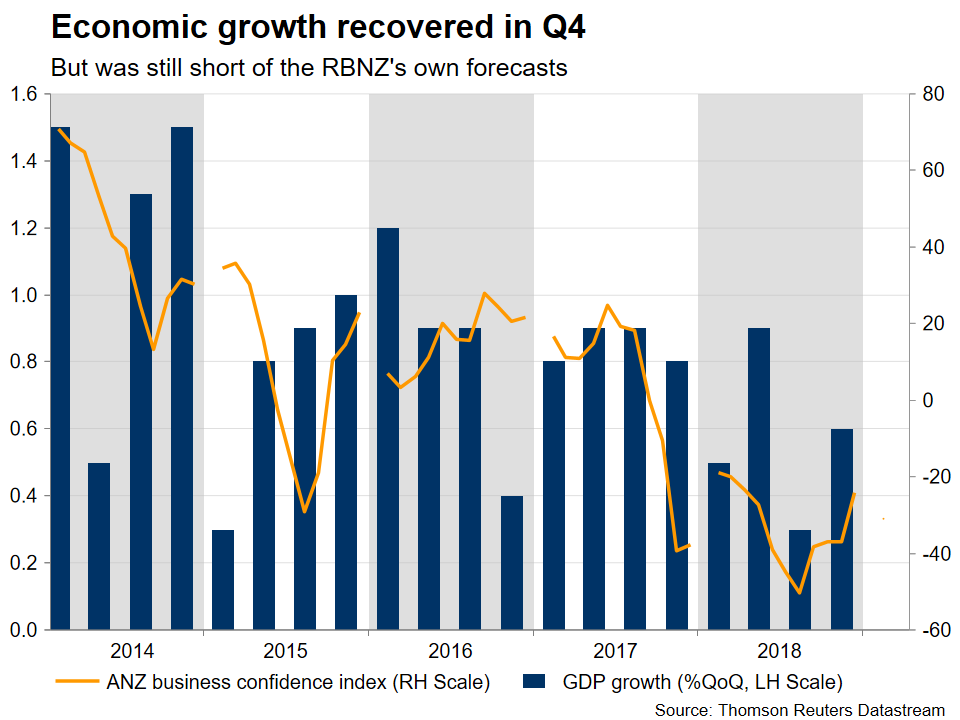
Alas, economic growth in the final quarter of 2018 was weaker than the RBNZ had anticipated in its own forecasts back at that meeting, so policymakers could be a shade more dovish this time. To be clear, recent developments haven’t been disappointing enough for the overall neutral bias to change to a formal easing bias, but the Bank could nevertheless indicate that risks are accumulating, paving the way for an official shift in communication later on if data remain soft in 2019.
Another potentially important factor for the kiwi’s overall direction will be how the latest round of trade talks plays out. US Treasury Secretary Mnuchin and Trade Representative Lighthizer will visit China next week, and markets will be looking for a confirmation that progress is being made.
Raft of ‘dated’ US releases unlikely to move the needle for Fed
The US will be on the receiving end of several data points, starting with the final GDP for Q4 on Thursday. Growth is expected to be revised down to an annualized rate of 2.5%, from 2.6% in the previous estimate. Even though this would be a negative development, the caveat is that investors may view these data as outdated given that Q1 is now almost over. Not to mention that the Fed was already as dovish as it could possibly be at this stage, abandoning its rate-hike plans for 2019 altogether this week. The implication is that policymakers are unlikely to make any further changes to their stance for a while, and will certainly want to examine 2019 data before doing so.
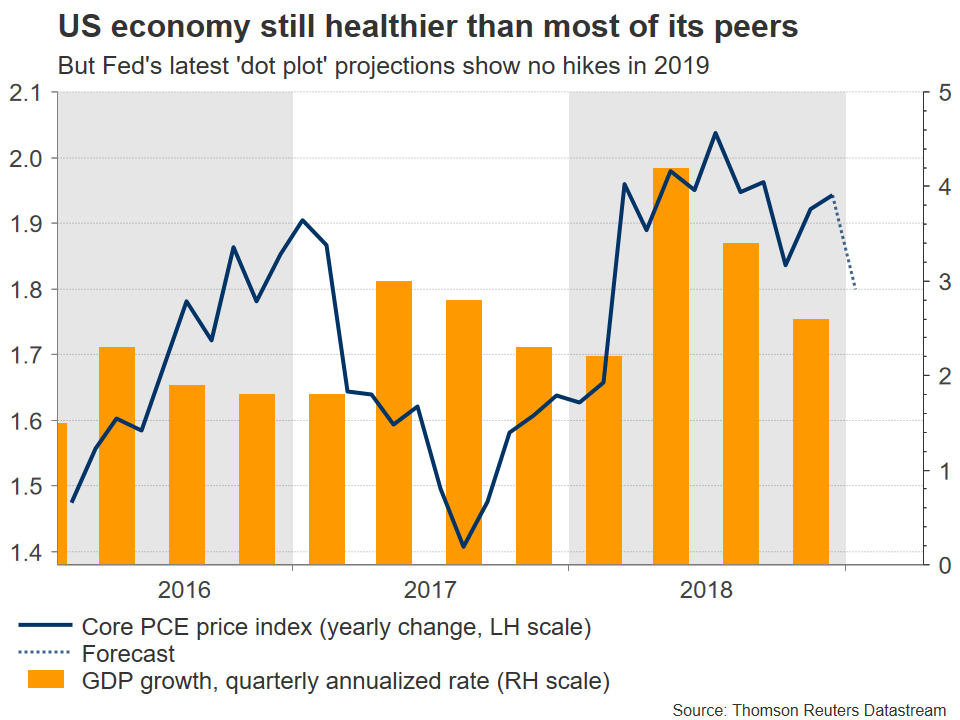
In this sense, Friday’s releases may attract more attention. The core PCE price index and personal consumption figures for January are due out, alongside the personal income data for February. These releases are usually all for the same month, but the previous government shutdown is still complicating things, so income figures are being released ahead of everything else. Investors could focus mainly on those, as they are more up-to-date. On that front, the acceleration in average hourly earnings in February suggests that a solid personal income number may be in the offing.
Germany’s Ifo survey and inflation data highlight European calendar
In the euro area, the most noteworthy releases will be Germany’s Ifo business survey on Monday and the nation’s preliminary inflation data on Thursday, all for March. On the Ifo front, forecasts suggest a pullback in the current conditions index but an uptick in the forward-looking expectations print, which would keep the composite measure practically unchanged. Bearing in mind the disappointment in Germany’s manufacturing PMI for the same month, investors will pay a lot of attention to the Ifo prints, in order to either confirm or cast doubt on the narrative that Europe’s growth engine slowed further in Q1.
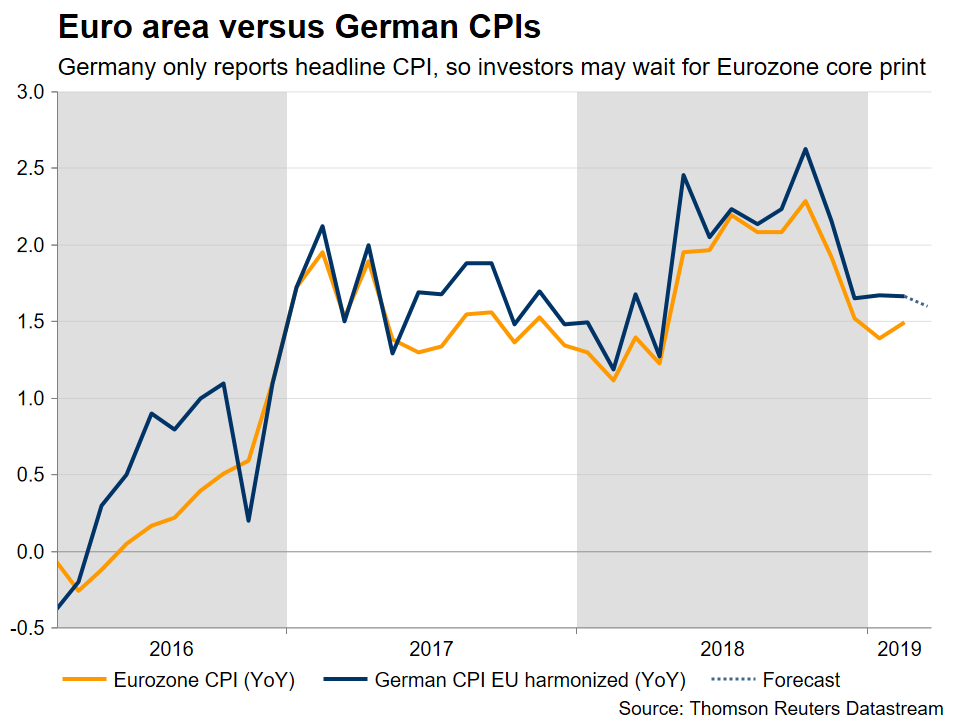
Meanwhile, the nation’s EU-harmonized CPI rate is projected to tick down to 1.6% in yearly terms, from 1.7% in February. While this seems discouraging, the pullback could be owed mainly to movements in energy prices, so investors may prefer to wait for the core CPI print for the entire euro area – due on April 1 – before drawing any conclusions about the outlook for price pressures.
Raft of Japanese data due, but risk sentiment will drive yen
The yen ended up as the best performer among its G10 peers this week, as there were discouraging or dovish developments in every major region – US, Eurozone, UK – but not in Japan. The coming week will bring a raft of economic data out of Japan, including the forward-looking Tokyo CPIs for March, as well as the employment figures and industrial production data for February.
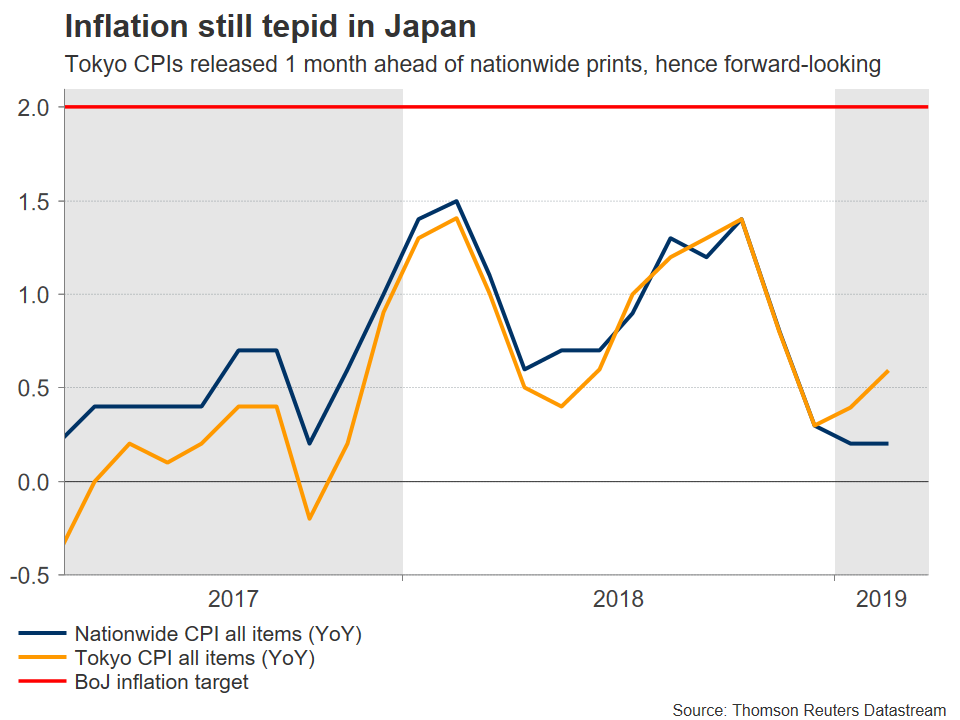
Yet, economic data rarely impact the yen, which is instead more likely to be driven by changes in investors’ risk appetite. On that front, the global growth outlook is deteriorating quickly, with whispers of recession growing louder in Europe, spelling upside risks for the safe-haven yen.
Canada to return to growth in January
Canada’s GDP growth report for January will be published on Friday. The Canadian economy expanded at the slowest pace in two years in Q4 and investors are now eager to find out whether the slowdown has spread further as global and domestic risks are boiling in the background. Analysts, however, are hopeful that monthly expansion returned to positive territory in January and specifically to 0.1% after retreating by an equivalent percentage in December.
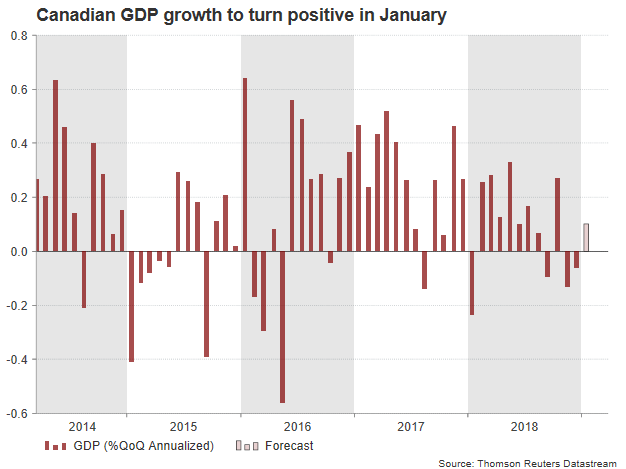
Another negative surprise would probably complicate the timing for rate hikes even further, bringing fresh selling pressure to the loonie and vice versa. Yet, BoC policymakers would wisely wait for more economic evidence before taking their next policy decision on April 24.
Weekly Focus – Dovish Central Bankers Give Their Verdict
Market movers ahead
- US PCE core inflation is expected to remain at 1.9% y/y i.e. below the Fed's 2% target.
- We have a host of Fed and ECB speakers giving their verdict on the recent dovish twist by the two central banks.
- On Brexit, PM Theresa May is expected to bring back her deal for a vote in the House of Commons on Tuesday or Wednesday following the EU's decision to extend Article 50 to 12 April unconditionally.
- High-level trade talks between the US and China will resume in Beijing next week with US Trade Representative Lighthizer and Treasury Secretary Mnuchin set to lead a US delegation in talks with China's top negotiator Vice-Premier Liu He and his team.
Weekly wrap-up
- The Fed joins the group of dovish global central banks, basically going on hold for the rest of 2019. The Bank of England also remained cautious amid Brexit uncertainty.
- On the other hand, Norges Bank went against the tide, raising its benchmark rate and signalling two additional rate hikes this year.
- The EU Council grants the UK another lifeline, providing a very short unconditional extension of the Brexit deadline by two weeks to 12 April with a possible extension to 22 May if the House of Commons passes the Withdrawal Agreement before that.
- With the dovish global central banks and weak economic numbers, global yields continue to fall.
US: Existing Home Sales Surge in February
- After declining the previous month, existing home sales surged 11.8% to 5.51 million units (annualized) in February. The outturn was better than the consensus forecast that called for a 3.2% showing.
- The gain was concentrated in the single-family market segment. Single-family sales were up 13.3% from the previous month while condo/co-op sales were largely unchanged.
- Home resales were up in three of the four regions, led by a 16.0% increase in the West, followed by 14.9% in the South and 9.5% in the Midwest. Sales in the Northeast were unchanged.
- The number of homes available for sale rose 2.5% to a seasonally unadjusted 1.63 million units from 1.59 million in January, which at the current sales rate, puts supply at just 3.5 months (down from 3.9 in January).
- Median existing home prices advanced 3.6% from year ago levels, slightly ahead of the 3.5% outturn in January.
Key Implications
- Existing home sales rebounded nicely from three straight months of declines, posting the largest month-on-month gain since December 2015. While one month does not a trend make, the strength of the increase is promising and suggests that last year's lackluster performance in the housing sector will not be repeated.
- Home sales faced significant headwinds in 2018, including rising mortgage rates and a lack of affordable inventory in both the new and resale market. The recent declines in mortgage rates, along with rising household income should bring more buyers to the market in coming months.
- All said, the report was good news for the U.S. housing market. Still, while demand conditions have improved, the market continues to struggle with low supply, which may keep a lid on sales growth.