

Sample Category Title
GBP/USD Daily Outlook
Daily Pivots: (S1) 1.3157; (P) 1.3221; (R1) 1.3272; More....
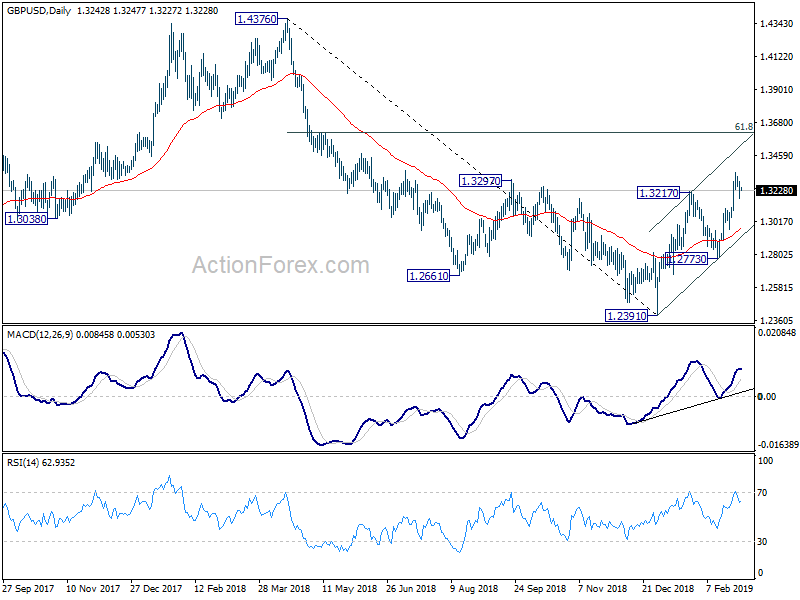
Intraday bias in GBP/USD remains neutral for consolidation below 1.3350 temporary top. Downside of retreat should be contained by 1.3109 support to bring anther rally. On the upside, On the upside, break of 1.3350 will extend the rise from 1.2391 to 61.8% retracement of 1.4376 to 1.2391 at 1.3618 next. Sustained break will pave the way to 1.4376. However, break of 1.3109 will turn focus back to 1.2773 near term support instead.
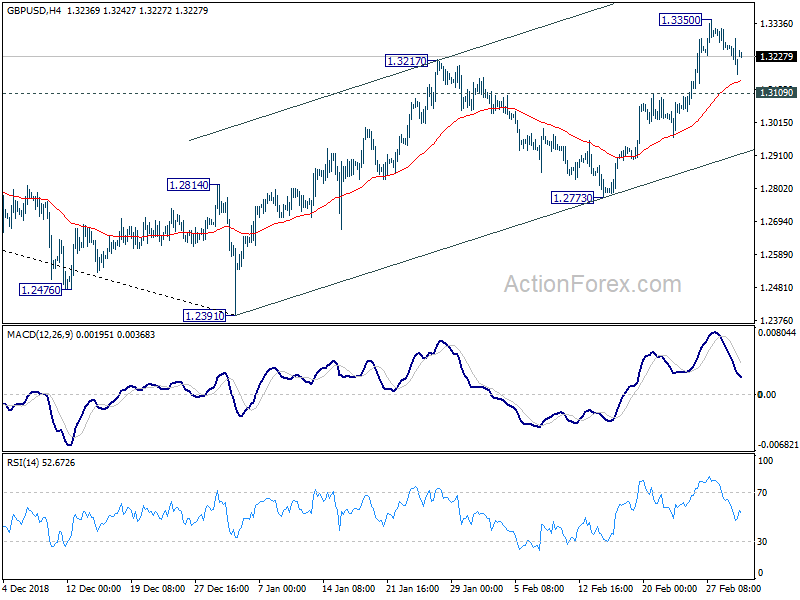
In the bigger picture, medium term decline from 1.4376 (2018 high) should have completed at 1.2391. Rise from 1.2391 is now seen as the third leg of the corrective pattern from 1.1946 (2016 low). Further rise could be seen through 1.4376 in medium term. On the downside, though, break of 1.2773 support will turn focus back to 1.2391 low and then 1.1946.
USD/CHF Daily Outlook
Daily Pivots: (S1) 0.9966; (P) 0.9988; (R1) 1.0013; More...
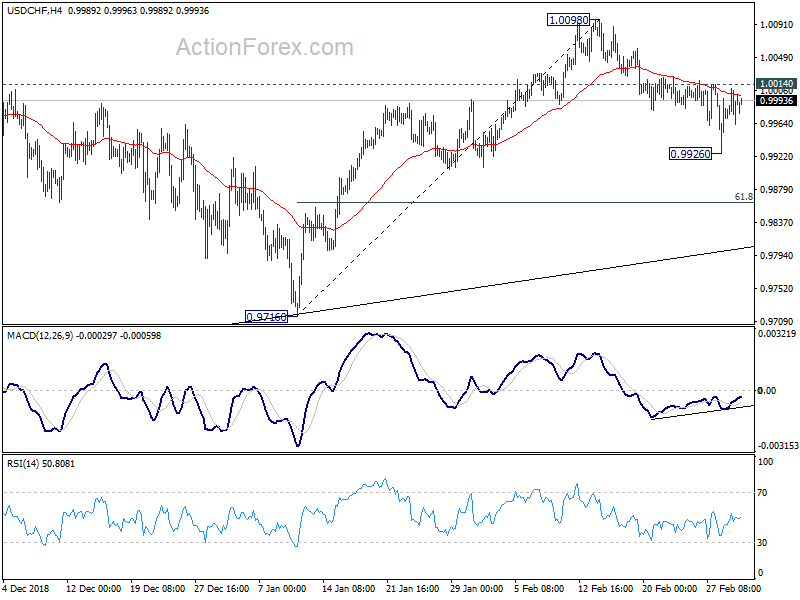
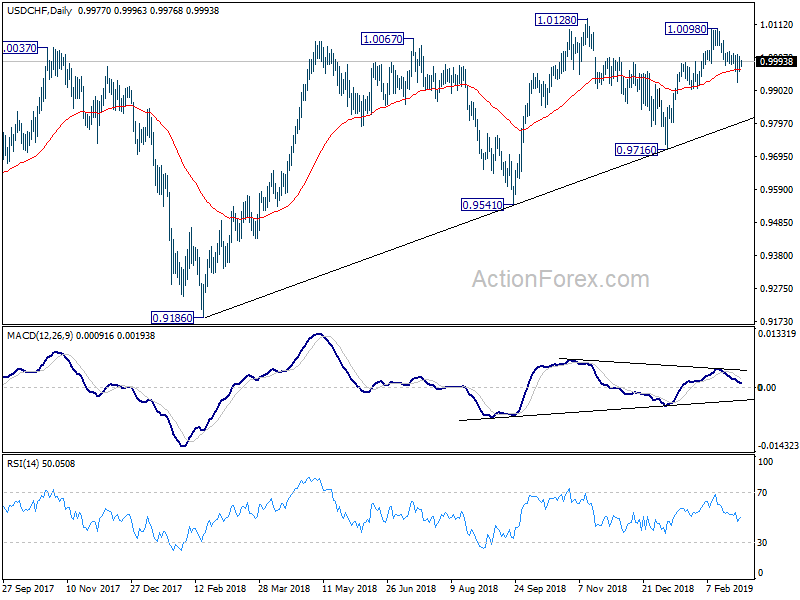
Intraday bias in USD/CHF remains neutral first. Based on the structure of the fall from 1.0098, we'd treat it as a corrective pull back first. On the upside, break of 1.0014 minor resistance will suggest that the pull back is completed. Intraday bias will then be turned back to the upside for retesting 1.0098. On the downside, below 0.9926 will extend the corrective fall to 61.8% retracement of 0.9716 to 1.0098 at 0.9862. We'd look for bottoming signal again below there.
In the bigger picture, USD/CHF drew strong support from medium term trend line and rebounded. That suggests rise from 0.9186 is still in progress. Further break of 1.0128 will confirm up trend resumption and target 1.0342 key resistance. Nevertheless, break of 0.9716 will dampen this bullish view and at least bring deeper fall to 0.9541 key support.
USD/JPY Daily Outlook
Daily Pivots: (S1) 111.48; (P) 111.78; (R1) 112.23; More...
Intraday bias in USD/JPY remains on the upside for the moment. Current rise from 104.69 should target 114.54 resistance next. On the downside, below 111.50 minor support will turn intraday bias neutral and bring consolidations. But downside should be contained above 110.35 support to bring another rally.
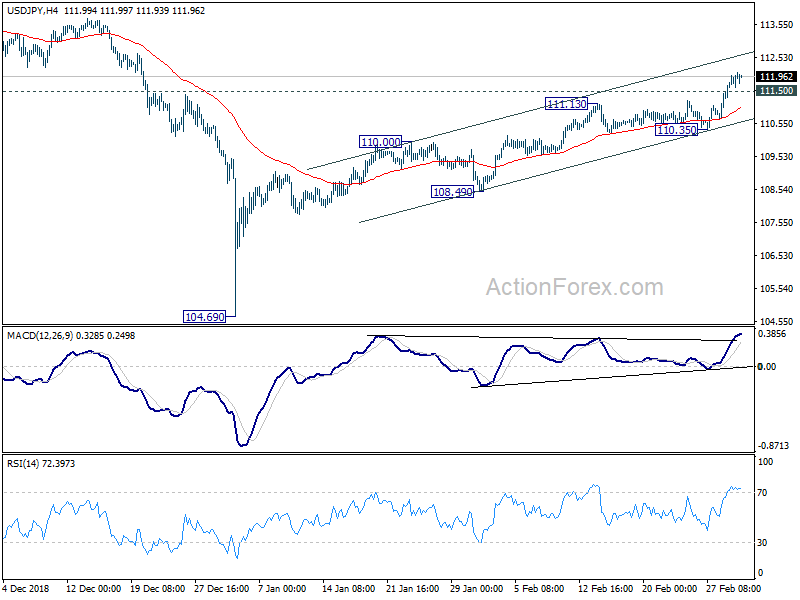
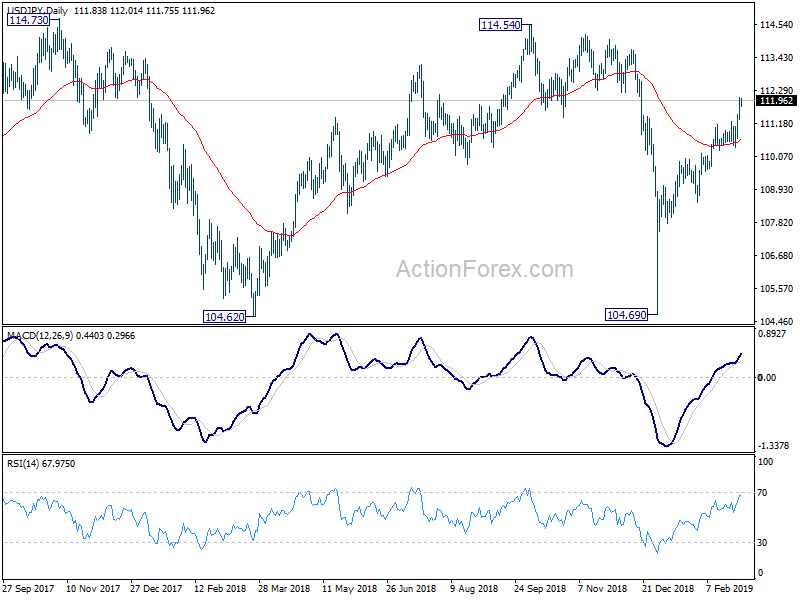
In the bigger picture, current strong rebound from 104.69 argues that decline from 118.65 (2016 high) has completed with three waves down to 104.69, after failing 104.62. More importantly, the rise from 98.97 (2016 low) could be resuming. Focus now turns back to 114.54 resistance, decisive break there will add more credence to this bullish case and target 118.65. This will now be the favored case as long as 110.35 support holds.
USD/CAD Daily Outlook
Daily Pivots: (S1) 1.3183; (P) 1.3246; (R1) 1.3361; More...
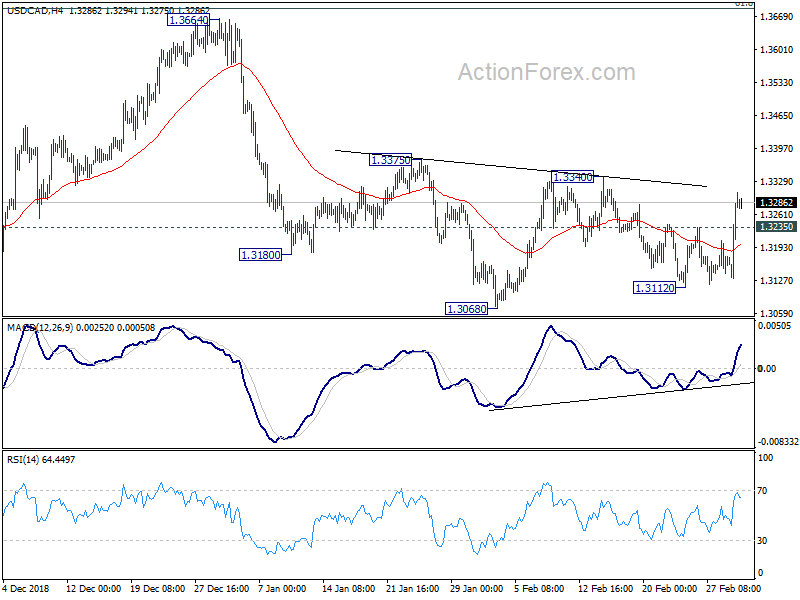
Intraday bias in USD/CAD remains cautiously on the upside for 1.3340 resistance. Decisive break there will complete a head and shoulder bottom pattern (ls: 1.3180, h: 1.3068, rs: 1.3112). That should indicate completion of pull back from 1.3664. In this case, further rally should be seen back to 1.3664 high. On the downside, though, break of 1.3235 minor support will turn bias neutral again first.
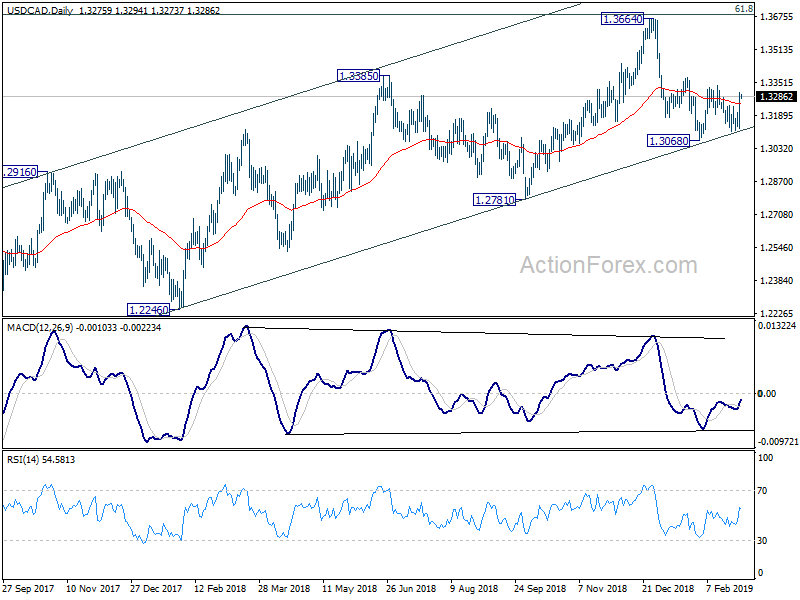
In the bigger picture, structure of the medium term rise from 1.2061 (2017 low) to 1.3664 is not clearly impulsive. Hence, we'd stay cautious on strong resistance from 61.8% retracement of 1.4689 (2016 high) to 1.2061 at 1.3685 and 1.3793 resistance to limit upside, and bring medium term topping. But in any case, medium term outlook will stay bullish as long as channel support (now at 1.3118) holds. Sustained break of 1.3793 will pave the way to retest 1.4689 (2015 high). Firm break of the channel support should confirm reversal target 1.2061 low again.
Stocks in Strong Rally as US-China Trade Deal Close in, Currencies Tread Water
Strong risk appetite dominates Asian markets today on trade optimism after WSJ said a deal could be sealed by the end of the month. In particular Chinese Shanghai SSE surged through 3000 handle for the first time since June 2018. Japan 10-year JGB yield also turned positive again at the time of writing. Though, the currency markets are rather quiet as major pairs and crosses are bounded inside Friday's range. Sterling is the strongest one so far while Swiss Franc and Yen are weakest. But the picture could easily change as the session goes.
Technically, USD/JPY, EUR/JPY and GBP/JPY are some intraday upside moment on overbought condition. But there is no change in the near term bullish outlook after recent breakout. We'd likely see further upside in these pairs, should German and UK yields rise again in European session. Dollar remains mixed in general. There is prospect for the greenback to regain near term bullishness. But EUR/USD has to break 1.1316 minor support first. AUD/USD needs to break 0.7054 support while USD/CAD needs to break 1.3340 resistance.
In other markets, Nikkei is currently up 1.09%. Hong Kong HSI is up 1.16%. China Shanghai SSE is up 2.64% at 3073. Singapore Strait Times is up 0.74%. Japan 10 year JGB yield is up 0.010 at 0.001.
US and China could sign trade deal on March 27
The WSJ reported that US and China are close in on a trade agreement, which could be signed on March 27 between Trump and Chinese President Xi Jinping.
In the agreement, China would offer to lower tariffs and restrictions on US agricultural, chemical, auto and other products. Specific to the car industries, tariffs on imported vehicles would be lowered from the current 15%. China would also speed up removal of foreign ownership limitations on car joint ventures. As a sweetener, China would also buy USD 18B natural case from Cheniere Energy as part of the deal. On the other hand, US will lift most, if not all, of the punitive tariffs on Chinese imports imposed last year.
But so far there are practically no details on the core issues of intellectual property theft, forced technology transfer and state-owned enterprises.
UK Cox given up Irish backstop time limit or unilateral exit
The Telegraph reported that UK Attorney General Geoffrey Cox has given up the request on a time-limit on the Irish backstop or unilateral exit mechanism. Cox wanted to push for an independent arbitration mechanism which both UK and EU could give formal notice to end the backstop. But such independent arbitration would be outside the jurisdiction of the European Court of Justice. That is seen as totally unacceptable by the EU.
Separately, Trade Minister Liam Fox said he would be "shocked" if EU would insist on a delay of 21 months or two years extension of Article 50, if requested. He said "the European Union does not want Britain to fight the European elections." Fox added it's still "entirely possible" for leave EU on March 29. But a short extension to Article 50 may be needed to deliver a smoother exit.
BoJ Kuroda: Will debate exit strategy when appropriate time comes
BoJ Governor Haruhiko Kuroda said there is no specific stimulus exit strategy yet as it would take "significant time" to achieve the 2% inflation target. For now, BoJ will "patiently" maintain current monetary easing while "the economy is sustaining momentum for achieving the BOJ's price target."
Though, he acknowledged that "to ensure markets remain stable, it's important to come up with a strategy and guidance at an appropriate timing on how to proceed with an exit". And, "when the appropriate time comes, we will debate at our policy meetings an exit strategy and guidance, and communicate them appropriately."
Looking ahead: RBA, BoC and ECB to meet, NFP featured too
Three central banks will meet this week. RBA, BoC and ECB are all expected to keep interest rates unchanged. RBA turned neutral in February meeting as it indicated that the chance for next move as hike or cut are now more "evenly balanced". We don't expect RBA to change its rhetoric. But in any case, it's a big week for Australian Dollar as building approvals, GDP, retail sales and trade balance will be featured.
BoC Governor Stephen Poloz's recent comments indicated that the central bank is maintaining tightening bias. The main question is timing of the next hike and that would very much depend on how the impact of oil price slump and housing markets play out. Meanwhile, Q4 GDP as released last week was shockingly poor, showing only 0.4% qoq growth. It's well short of market expectation of 1.0%. There is room for BoC to turn a bit more neutral in this week's announce. Canada employment data will also be market moving.
New staff economic projections will be the main focus in ECB's announcement. January ECB meeting turned out to be more dovish than expected. The central bank noted that "the risks surrounding the Euro area growth outlook have moved to the downside". This is the first time since April 2017 that the central bank admitted that risks are to the downside. But generally speaking, policy makers have been waiting for the upcoming projections to assess the outlook. This week's announcement could shape Euro's path for the rest of first half.
In addition, there will be heavy weight economic data including US non-farm payroll and ISM services, UK PMI services, as well as China trade balance.
Here are some highlights for the week:
- Monday: Australia building approvals, company operating profits; Eurozone Sentix investor confidence, PPI; UK construction PMI; US construction spending
- Tuesday: Australia current account, RBA rate decision; Eurozone PMI services final, retail sales; UK PMI services; US ISM services, new home sales
- Wednesday: Australian GDP; US ADP employment, trade balance; Canada trade balance, Ivey PMI, BoC rate decision, Fed's Beige Book
- Thursday: Australia retail sales, trade balance; Japan leading indicators; Swiss unemployment rate, foreign currency reserves; Eurozone GDP revision, ECB rate decision, US jobless claims
- Friday: New Zealand manufacturing sales; Japan household spending, current account, average cash earnings, GDP final; China trade balance; German factory orders; Canada employment; US non-farm payrolls, housing starts and building permits
AUD/USD Daily Outlook
Daily Pivots: (S1) 0.7059; (P) 0.7091; (R1) 0.7112; More...
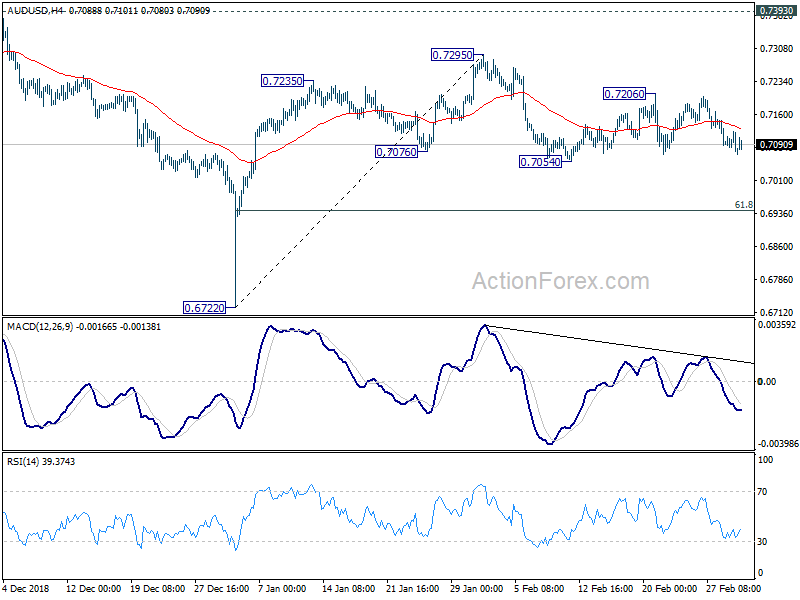
Intraday bias in AUD/USD remains neutral with focus on 0.7054 support. Decisive break of 0.7054 support will confirm completion of a head and shoulder top pattern (ls: 0.7235, h: 0.7295, rs: 0.7206). That should confirm completion of rebound from 0.6722. Further decline should then be seen to 61.8% retracement of 0.6722 to 0.7295 at 0.6941 next. On the upside, though, break of 0.7206 will turn focus back to 0.7295 resistance instead.
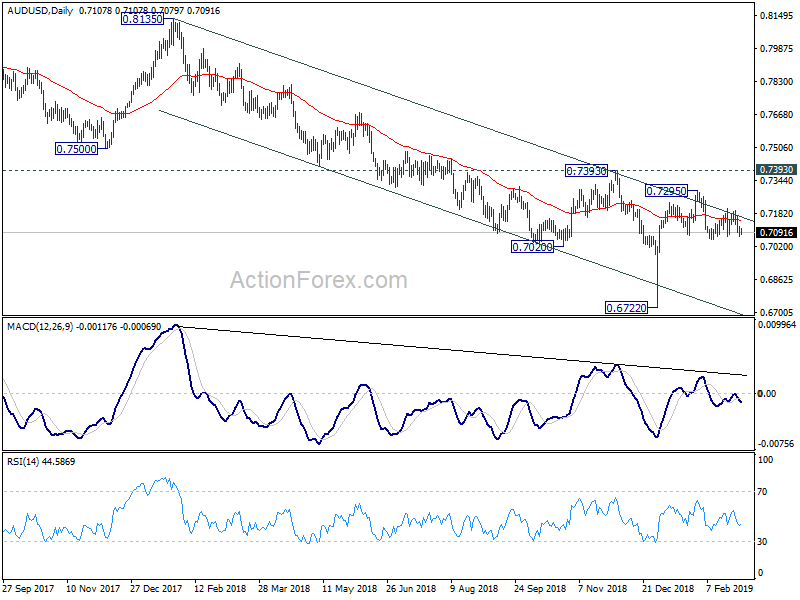
In the bigger picture, as long as 0.7393 resistance holds, we'd treat fall from 0.8135 as resuming long term down trend from 1.1079 (2011 high). Decisive break of 0.6826 (2016 low) will confirm this bearish view and resume the down trend to 0.6008 (2008 low). However, firm break of 0.7393 will argue that fall from 0.8135 has completed. And corrective pattern from 0.6826 has started the third leg, targeting 0.8135 again.
Economic Indicators Update
| GMT | Ccy | Events | Actual | Forecast | Previous | Revised |
|---|---|---|---|---|---|---|
| 23:50 | JPY | Monetary Base Y/Y Feb | 4.60% | 4.50% | 4.70% | |
| 0:00 | AUD | TD Securities Inflation M/M Feb | 0.10% | -0.10% | ||
| 0:30 | AUD | Company Operating Profit Q/Q Q4 | 0.80% | 3.00% | 1.90% | 1.20% |
| 0:30 | AUD | Building Approvals M/M Jan | 2.50% | 1.50% | -8.40% | -8.10% |
| 9:30 | EUR | Eurozone Sentix Investor Confidence Mar | -3.1 | -3.7 | ||
| 9:30 | GBP | Construction PMI Feb | 50.5 | 50.6 | ||
| 10:00 | EUR | Eurozone PPI M/M Jan | 0.30% | -0.80% | ||
| 10:00 | EUR | Eurozone PPI Y/Y Jan | 2.90% | 3.00% | ||
| 15:00 | USD | Construction Spending M/M Dec | 0.20% | 0.80% |
BOC Preview – Risk on Growth is to the Downside
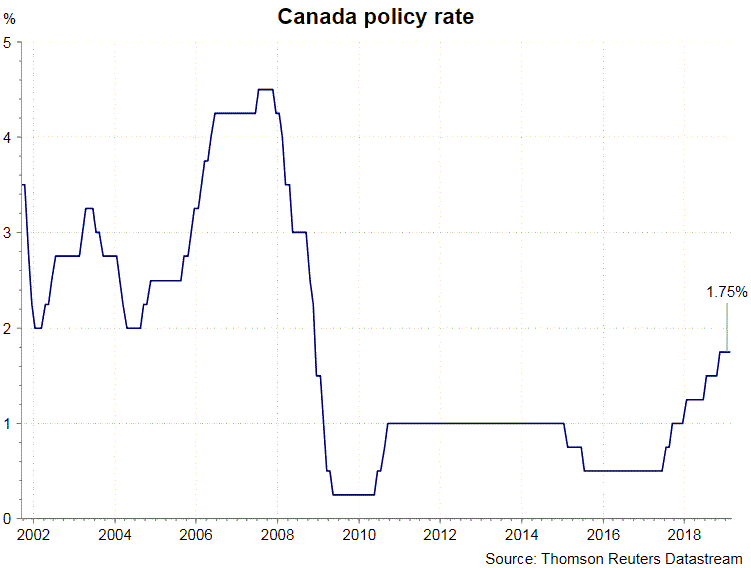
BOC would leave the policy rate unchanged at 1.75% at this week’s meeting. Since the last meeting, economic data released pointed to slowdown in Canada’s growth momentum. Although Governor Stephen Poloz has recently affirmed at the central bank should still increase the policy rate to the neutral level at some point, the timing is data-dependent. It is important to monitor how the members react to the broad-based data disappointment of late.
Recent economic data suggested that a growth slowdown is in place. GDP growth eased to an annualized pace of +0.4% in 4Q18, from about +2% a quarter ago. The market had anticipated a +1% expansion. The second quarter growth rate was revised lower to +2.6%, from initial estaitme of +2.9%. All in all, growth last year was +1.8%, much weaker than 2017’s +3% and marking the lowest since 2016. Deceleration was broadly based. While household consumption contributed less to growth in the fourth quarter, government spending and business investment even contributed negative growth. These were partly offset by improvement in trade and inventories.
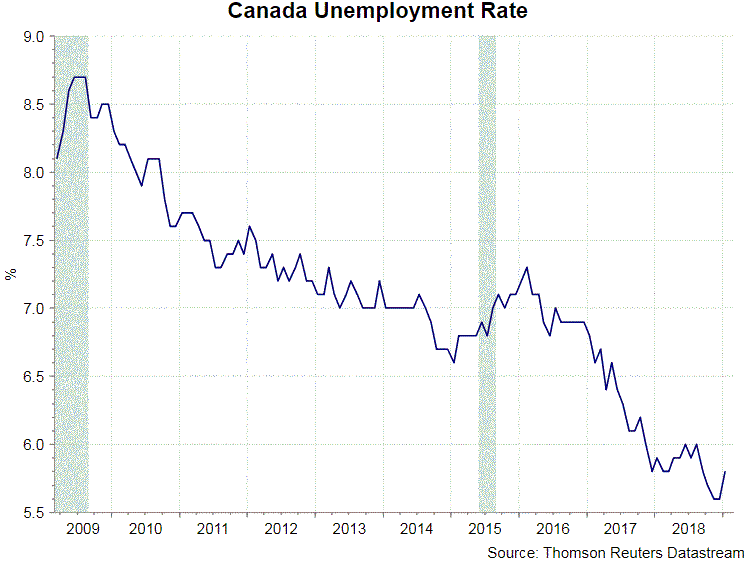
The manufacturing PMI, by Markit/ IHS, dropped -0.4 point to 52.6 in February, the lowest since December 2016. While employment growth was the biggest factor dragging the index, production growth was also “subdued” as “trade frictions and heightened global economic uncertainty had led to delayed decision making among clients on new orders”. The job market in January remained resilient although the unemployment rate rebounded slightly. The number of jobs increase was still remarkable, by +66.8K.
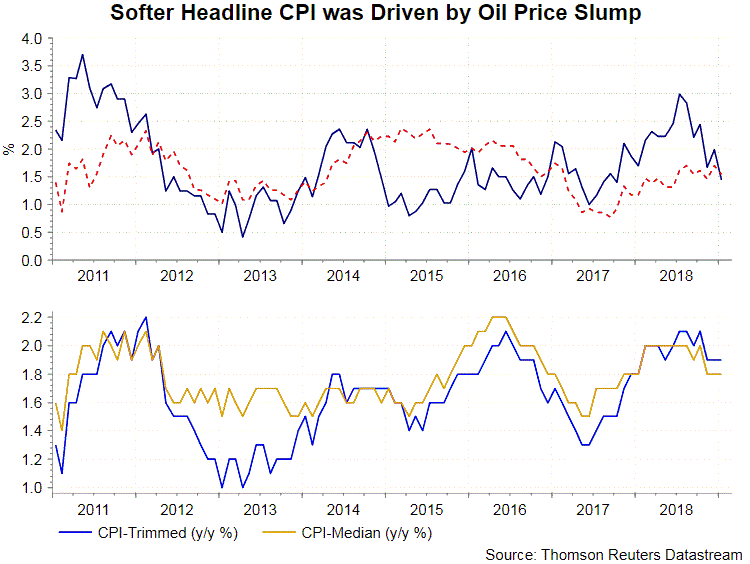
Headline CPI has been falling rather sharply after peaking in mid-2018. The January figure, at 1.4%, marked the lowest level since October 2017. Acknowledging such developments, BOC revised lowest its forecasts at the January meeting and forecast inflation to “edge further down and be below 2% through much of 2019, owing mainly to lower gasoline prices”. Yet, it added that the effects are only “transitory” and depreciation in Canadian dollar would “exert some upward pressure on inflation”, causing it to return to around the 2% “by late 2019”. Indeed, excluding volatile components such as energy prices, core CPI has remained resilient. Both of BOC’s preferred measures of CPI (CPI-trimmed and CPI- median) has stayed closed to +2%, the midpoint of the central bank’s target range.
On the monetary policy outlook, Governor Poloz noted in a speech two weeks ago that the policy rate would need to move “up into a neutral range over time, to a point where it is not stimulating or constraining economic growth”. He added, however, that “the path back to that neutral range is highly uncertain” and any move should be data dependent.
GBP/USD And USD/CAD Buyers In Full Control
GBP/USD rallied recently and broke the 1.3100 and 1.3250 resistance levels. USD/CAD traded above the key 1.3240 resistance to start a solid uptrend in the near term.
Important Takeaways for GBP/USD and USD/CAD
- The British Pound climbed above the 1.3300 level before sellers appeared near the 1.3350 level.
- There is a major bearish trend line formed with resistance at 1.3260 on the hourly chart of GBP/USD.
- USD/CAD rallied above the key 1.3240 resistance area to move into a positive zone.
- There was a break above a major triangle pattern with resistance at 1.3195 on the hourly chart.
GBP/USD Technical Analysis
The British Pound started a solid upward move this past week from the 1.3000 support area against the US Dollar. The GBP/USD pair rallied above the 1.3100 and 1.3200 resistance levels to move into a bullish zone.
The upward move was strong as the pair even broke the 1.3250 resistance and the 50 hourly simple moving average. Finally, buyers gained momentum above the 1.3300 level and a new monthly high was formed at 1.3349 on FXOpen.
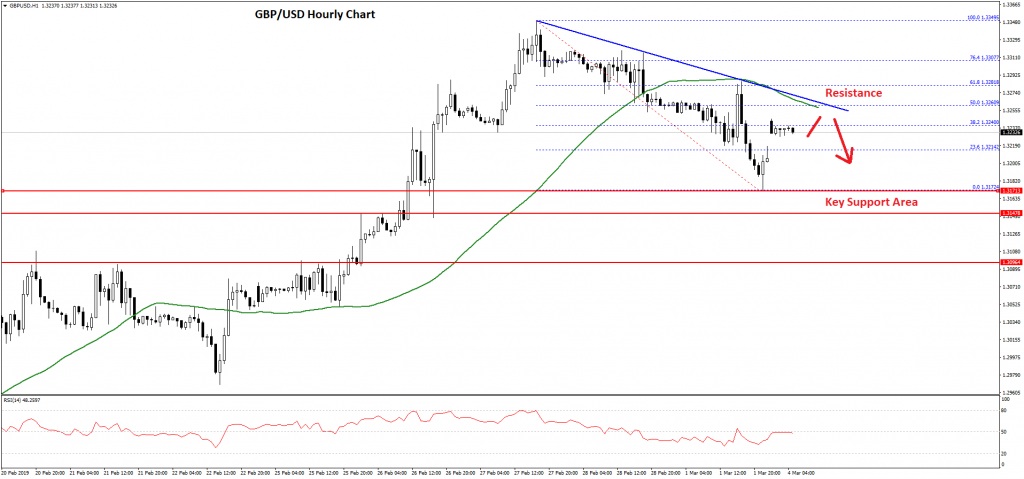
Later, the pair started a downside correction and traded below the 1.3300 support area. There was a break below the 1.3200 support as well before buyers appeared near the 1.3175 level.
The pair bounced back after trading as low as 1.3172, but it is still trading well below the 50 hourly simple moving average. At the moment, the pair is testing the 38.2% Fib retracement level of the last decline from the 1.3349 high to 1.3172 low.
However, there is a strong resistance formed near the 1.3260 level and the 50 hourly simple moving average. There is also a major bearish trend line formed with resistance at 1.3260 on the hourly chart of GBP/USD.
The trend line coincides with the 50% Fib retracement level of the last decline from the 1.3349 high to 1.3172 low. Therefore, the pair is likely to struggle near the 1.3260 resistance area.
In the short term, there could be another dip in GBP/USD towards the 1.3140 support area before the pair climbs back above the 1.3250, 1.3260 and 1.3300 resistance levels.
USD/CAD Technical Analysis
The US Dollar formed a solid support base near the 1.3120 level and later climbed higher against the Canadian Dollar. The USD/CAD pair broke the 1.3180 and 1.3200 resistance levels to move into a positive zone.
More importantly, there was a break above a major triangle pattern with resistance at 1.3195 on the hourly chart. Finally, the pair broke the key 1.3240 resistance area to move into a positive zone.
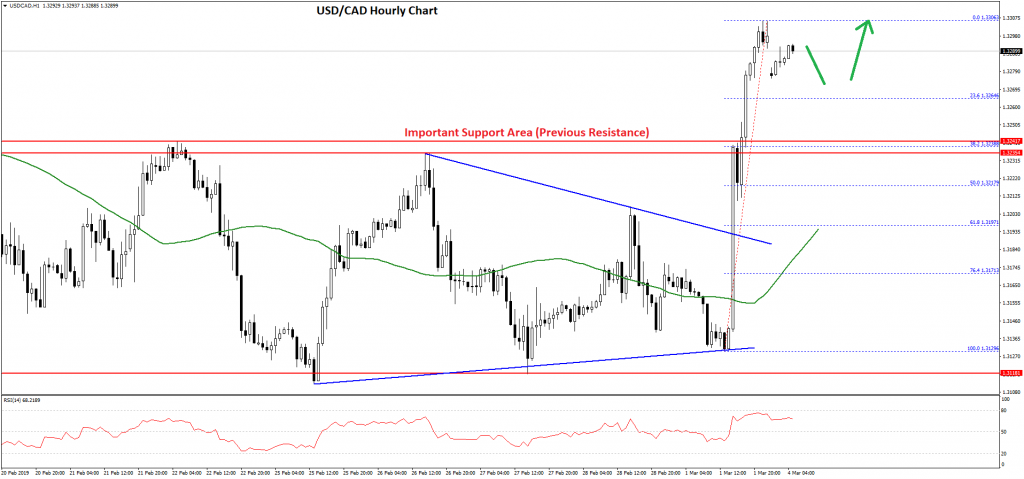
The pair settled above the 1.3250 level and the 50 hourly simple moving average. It traded as high as 1.3306 and currently correcting lower. An initial support is at 1.3265 and the 23.6% Fib retracement level of the last wave from the 1.3129 low to 1.3306 high.
However, the main support is near the 1.3240 level and the 38.2% Fib retracement level of the last wave from the 1.3129 low to 1.3306 high.
Therefore, if USD/CAD declines or corrects lower, it is likely to find a strong buying interest near the 1.3265 and 1.3240 levels. On the upside, a break above the 1.3300 area may push the pair towards the 1.3320 and 1.3340 levels.
BoJ Kuroda: Will debate exit strategy when appropriate time comes
BoJ Governor Haruhiko Kuroda said there is no specific stimulus exit strategy yet as it would take "significant time" to achieve the 2% inflation target. For now, BoJ will "patiently" maintain current monetary easing while "the economy is sustaining momentum for achieving the BOJ's price target."
Though, he acknowledged that "to ensure markets remain stable, it's important to come up with a strategy and guidance at an appropriate timing on how to proceed with an exit". And, "when the appropriate time comes, we will debate at our policy meetings an exit strategy and guidance, and communicate them appropriately."
UK Cox given up Irish backstop time limit or unilateral exit
The Telegraph reported that UK Attorney General Geoffrey Cox has given up the request on a time-limit on the Irish backstop or unilateral exit mechanism. Cox wanted to push for an independent arbitration mechanism which both UK and EU could give formal notice to end the backstop. But such independent arbitration would be outside the jurisdiction of the European Court of Justice. That is seen as totally unacceptable by the EU.
Separately, Trade Minister Liam Fox said he would be "shocked" if EU would insist on a delay of 21 months or two years extension of Article 50, if requested. He said "the European Union does not want Britain to fight the European elections." Fox added it's still "entirely possible" for leave EU on March 29. But a short extension to Article 50 may be needed to deliver a smoother exit.
US and China could sign trade deal on March 27
The WSJ reported that US and China are close in on a trade agreement, which could be signed on March 27 between Trump and Chinese President Xi Jinping.
In the agreement, China would offer to lower tariffs and restrictions on US agricultural, chemical, auto and other products. Specific to the car industries, tariffs on imported vehicles would be lowered from the current 15%. China would also speed up removal of foreign ownership limitations on car joint ventures. As a sweetener, China would also buy USD 18B natural case from Cheniere Energy as part of the deal. On the other hand, US will lift most, if not all, of the punitive tariffs on Chinese imports imposed last year.
But so far there are practically no details on the core issues of intellectual property theft, forced technology transfer and state-owned enterprises, as well as enforcement of the deal.