Sample Category Title
Weekly Economic and Financial Commentary: All We Need Is A Little Patience
U.S. Review
All We Need Is A Little Patience
- Fed officials this week reemphasized that they would exercise patience, making a pause in rate hikes in March more likely.
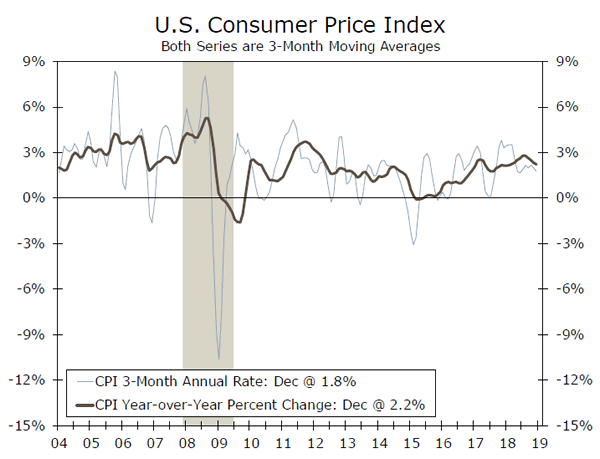
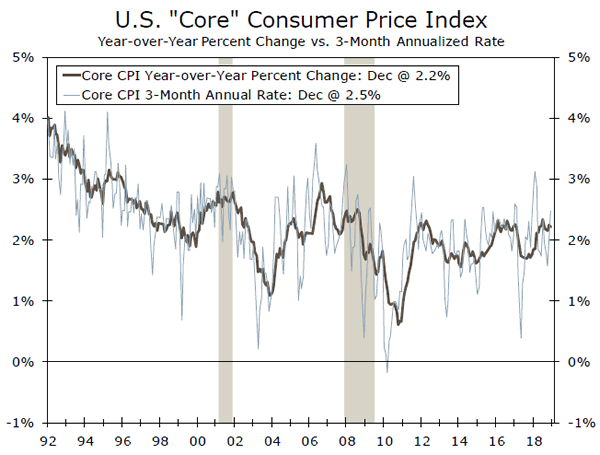
- The CPI fell 0.1% during December owed to lower energy prices. Core CPI increased 0.2% and is up 2.2% year-to-year.
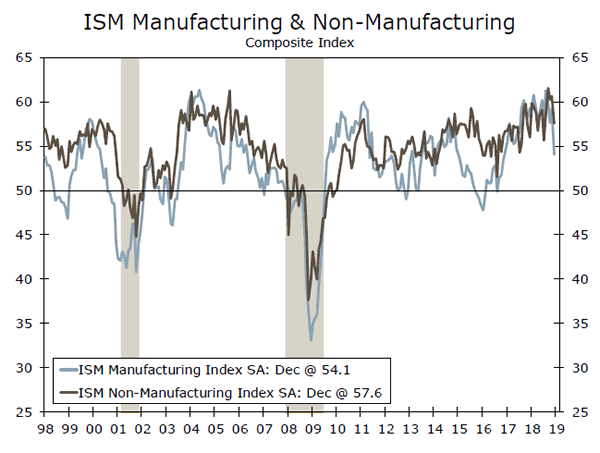
- The ISM non-manufacturing index fell from 60.7 in November to a still-elevated 57.6 in December. New orders rose to 62.7.
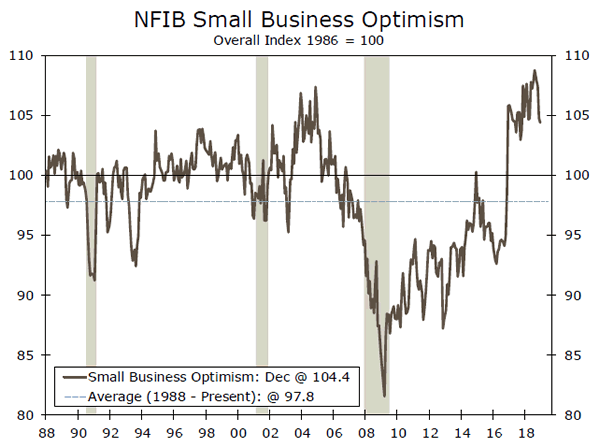
- The NFIB Small Business Optimism Index fell to 104.4 in December, the fourth consecutive drop.
- The federal government remains partially shut down, leading to numerous data reports being postponed this week.
All We Need Is A Little Patience
The Fed appears increasingly likely to hit the "pause" button in March amid financial market volatility, trade uncertainty and an overall moderation in economic growth. In a speech this week, Fed Chairman Powell reemphasized that the Fed would exercise patience and watch the economic data carefully, a sentiment that was echoed by Fed Vice Chairman Clarida. Given a strong labor market and contained inflation, we still expect two hikes from the Fed to occur in 2019. However, the Fed has clearly struck a more dovish tone recently making a pause in March more likely.
Some uncertainty may be brewing as a result of the continued government shutdown. The inability of Congress and the Trump Administration to reach an agreement on all 2019 appropriation bills has led to a partial government shutdown since December 22. If no agreement is reached by January 14, it will mark the longest federal government closure since the 21-day shutdown of 1995-1996. At present, we do not view the shutdown as having a significant negative effect on overall economic growth. However, it has substantially slowed down the stream of economic data that is compiled and released by government agencies that receive federal funding, notably the U.S. Department of Commerce, which houses both the Census Bureau and Bureau of Economic Analysis. As a result, reports on factory orders, the trade balance and the Treasury monthly budget statement were all postponed this week.
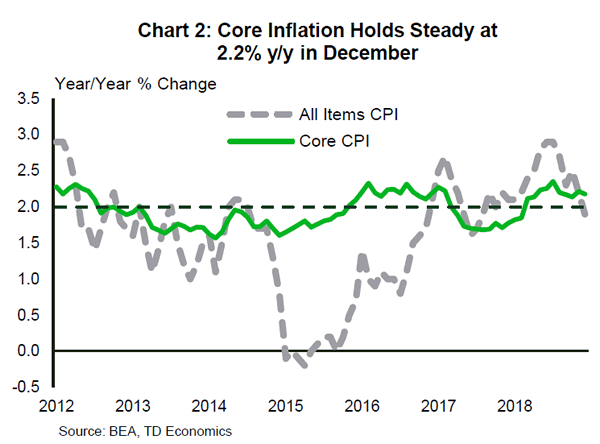
Not every agency has been shuttered, however, as roughly 75% of federal agencies had already had funding approved prior to closure. The Bureau of Labor Statistics, which is a component agency of the fully funded Department of Labor, has remained open and released the latest CPI data for December. The report revealed that overall inflation remains in check, as the overall index fell 0.1% during the month, mostly owed to a 3.5% drop in energy prices. Given lower oil prices, the energy component will continue to be a drag on the overall index in coming months. Meanwhile, core inflation continues to gradually edge higher. The core index, which excludes energy and food, increased 0.2% during the month is up 2.2% over the past year (top chart). Recent firming in core inflation is primarily a result of increases in shelter costs and medical care services, which rose 0.3% and 0.4%, respectively, in December.
Meanwhile, weakness on the production side of the economy arising from the trade dispute appears to be confined to the factory sector. The ISM non-manufacturing index fell from 60.7 in November to a still-elevated 57.6 in December (middle chart), however the falloff was somewhat less dramatic than what occurred in the manufacturing index during the month. In contrast to its manufacturing counterpart, the new orders component of the services index edged higher to a six-month high of 62.7, which indicates that the service sector is poised to expand at a solid rate.
The NFIB Small Business Optimism Index also fell slightly, the fourth consecutive monthly decline (bottom chart). Most of the pullback came from the share of business owners expecting the economy to improve over the next six months, likely a result of financial market volatility that has plagued Wall Street lately.
U.S. Outlook
Retail Sales • Wednesday
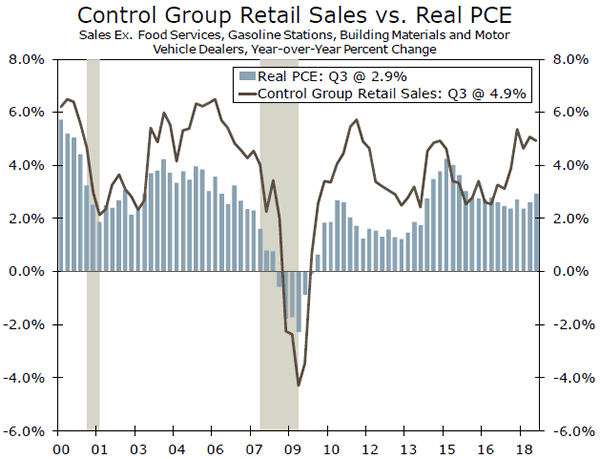
Despite recent worries of slower domestic growth, the consumer sector looks poised to post another solid quarter to end the year. A recent indication of strength was November retail sales. Overall retail sales were held back by price-related declines at gasoline stations, something we expect to continue in December. The upside here is that smaller gas outlays frees up more money for other items. Control group sales, a proxy for personal consumption expenditures (PCE), were up 0.9%. This was the strongest monthly increase for 2018 so far, and points to another strong print for PCE in Q4.
November was the first month for holiday related spending and suggests we are on track to reach our forecast of 4.5% holiday spending growth over last year. The December retail sales report is slotted for release next week by the U.S. Department of Commerce. But, with the partial government shutdown impacting the release of many domestic indicators, retail sales looks to be delayed as well.
Previous: 0.2% Wells Fargo: 0.4% Consensus: 0.2% (Month-over-Month)
NAHB Housing Market Index • Wednesday
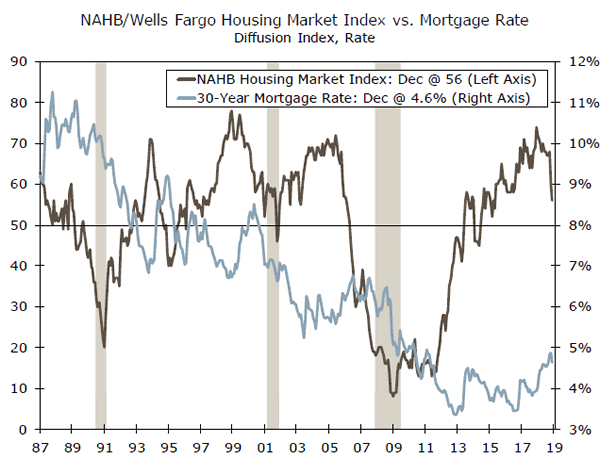
After plunging eight points in November, the NAHB Housing Market Index fell four points to 56 in December. The overall level of builders' confidence at its current level is still indicative of a majority of builders seeing current conditions as good rather than poor. But, having fallen 12 points over the past two months, the overall index sits at its lowest level since May 2015.
Higher mortgage rates have likely been partly to blame for decreased confidence among builders. The more recent decline in mortgage rates, however, may provide some support to the housing market, which has essentially stalled this past year. The Federal Reserve is likely taking note of builders' confidence, as the housing market is one of the primary transmission mechanisms for monetary policy. Lower overall inflation will likely limit the extent of further policy tightening. We look for the Fed to raise rates 50 bps this year, which could lend some support to the housing sector.
Previous: 56 Consensus: 56
Industrial Production • Friday
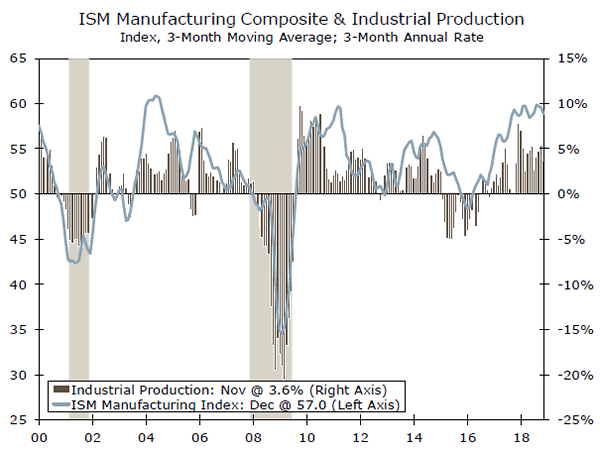
Due to its more volatile components, industrial production (IP) rose 0.6% in November. Utilities output contributed much of the gain, as colder-than-usual temperatures gripped much of the country. Slower global growth and booming petroleum supply in the United States led to a sharp decline in oil prices in Q4. That sharp drop in oil, however, did not hold back mining output in November, which was up 1.7% over the month and a whopping 13.2% from a year ago.
Manufacturing output, on the other hand, was flat over the month. More recent survey data, such as the ISM manufacturing new orders component falling 11 points to 51.1 in December, indicate some further slowing. We expect IP to rise 0.3% in December. Despite volatility in financial markets and worries of an imminent slowdown, a strong print in December IP would signal the industrial sector remains stable. A weaker print, on the other hand, may further stoke fears surrounding ongoing trade tensions and Fed policy.
Previous: 0.6% Wells Fargo: 0.3% Consensus: 0.3% (Month-over-Month)
Global Review
Slow Growth, Slower Central Banks
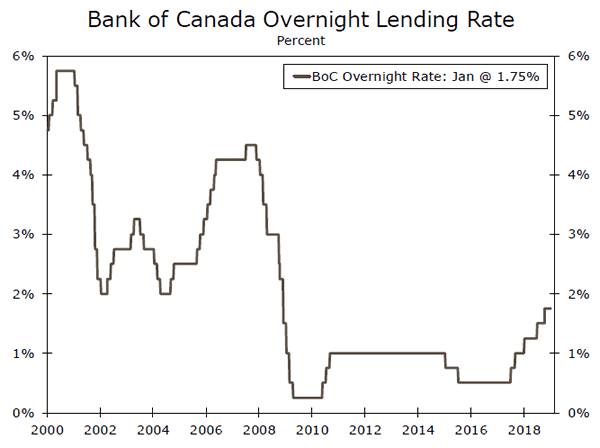
- The Bank of Canada (BoC) held its policy interest rate at 1.75% this week, as expected, and said lower oil prices would depress growth over the next couple of quarters. However, the central bank sees a return to above trend growth over the medium term, and we still expect the BoC to raise rates later this year.
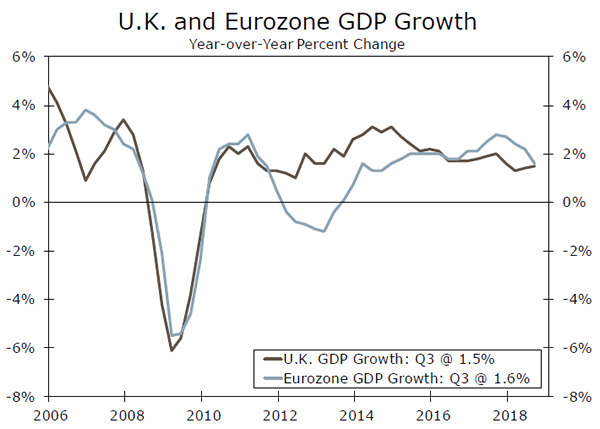
- Eurozone data were a mixed bag this week, with some stability on the services side but softness in the industrial sector. We do not view the figures as weak enough to signal an imminent recession, but they could be soft enough to slow Eurozone monetary tightening. In the U.K., economic growth remained sluggish ahead of a key Brexit vote due next week.
Bank of Canada Not Ready to Hike Rates Yet
The Bank of Canada (BoC) held is latest monetary policy meeting this week, holding its benchmark policy interest rate steady at 1.75%, as we expected. Since late last year BoC policymaker comments have become less hawkish, with the central bank noting a sharp drop in oil prices and also that trade conflicts are weighing more heavily on global demand. Some of these dovish elements were also apparent in the BoC's latest statement. The central bank sees the sharp drop in oil prices depressing growth in late 2018 and early 2019, contributing to some slack opening up within the economy. Outside of the oil sector, however, the economy is seen as performing more solidly, and, after a period of slow growth in the near term, the central bank sees Canada's economy returning to an "above potential" growth rate over time. In a similar vein the BoC also indicated that policy interest rates would need to rise over time to achieve its inflation target, although with the exact path of monetary policy dependent on several economic and market factors. Overall we see both positives and negatives in the central bank's monetary policy announcement, and maintain our outlook for two BoC rate hikes this year.
Eurozone Economy Flirting With Recession?
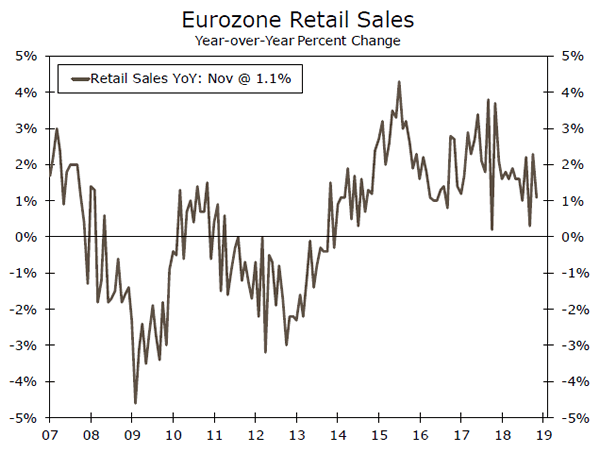
This week was marked by a mixed batch of Eurozone economic data. On the stronger side, Eurozone November retail sales were solid, rising 0.6% month-over-month, matching the October gain, while unemployment also fell further in November. However, other economic figures were mostly consistent with a generally subdued Eurozone growth trend. German industrial output unexpectedly declined 1.9% month-over-month and French, Italian and Spanish industrial output all declined. In addition, Eurozone December economic sentiment fell to 107.3, a 12th straight fall. The decline in German output in particular raised the specter of whether the Eurozone economy is on the verge of falling into recession. In our view there appears to be enough solidity in the consumer sector, and momentum in the overall economy, to avoid a recession at this time. That said, we do expect the period of subdued Eurozone economic activity to persist further and, as a result, see a slower return to zero interest rates than previously expected by the European Central Bank.
U.K.: Sluggish Economy, Uncertain Outlook
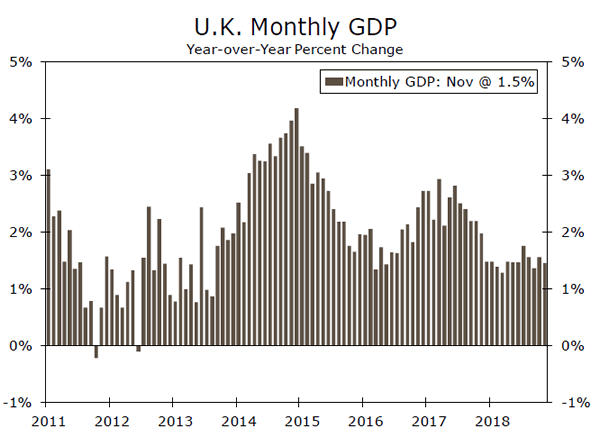
This week's U.K. data show signs of a potential moderation in economic growth late last year. November GDP rose 0.2% monthover- month, a slight increase from October. Service sector output was a bit firmer, rising 0.3%, but industrial output declined 0.4% on the month. After U.K. GDP was surprisingly strong in Q3, with a gain of 0.6% quarter-over-quarter (not annualized), the consensus slowdown is for some slowing in GDP growth in Q4 to 0.3%.
One factor that is likely contributing to sluggish growth is the U.K.'s approaching exit from the European Union and the associated uncertainty. A U.K. Parliamentary vote on PM May's Brexit deal is scheduled next week, but is widely expected to be rejected. For the time being, slow U.K. growth and an uncertain outlook is likely to continue.
Global Outlook
U.K. CPI • Wednesday
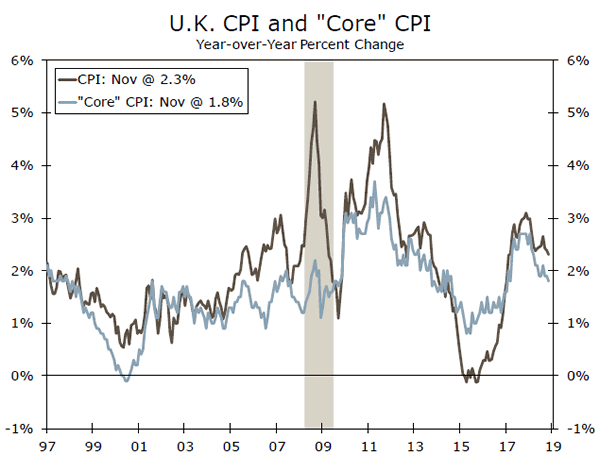
Consumer price inflation in the United Kingdom has moved lower in recent months, a trend that likely continued in December. Given the drop in oil prices in recent months, we expect headline CPI inflation eased further to 2.2% year-over-year. Despite slower price outcomes recently, it is possible that inflationary pressures could rebuild over the medium term, with unemployment low and wage growth accelerating in recent months. That said, a near-term Bank of England rate hike seems unlikely with growth subdued, and until Brexit uncertainties have lifted and the nature of the future U.K./European trading relationship becomes clearer.
Separately and also on the consumer front, December retail sales are also released next week. Sales were particularly strong in November, with a rise of 1.4% month-over-month, and some payback is expected in December, with the consensus forecast for a 0.8% decline.
Previous: 2.3% Wells Fargo: 2.2% Consensus: 2.1% (Year-over-Year)
Japan CPI • Friday
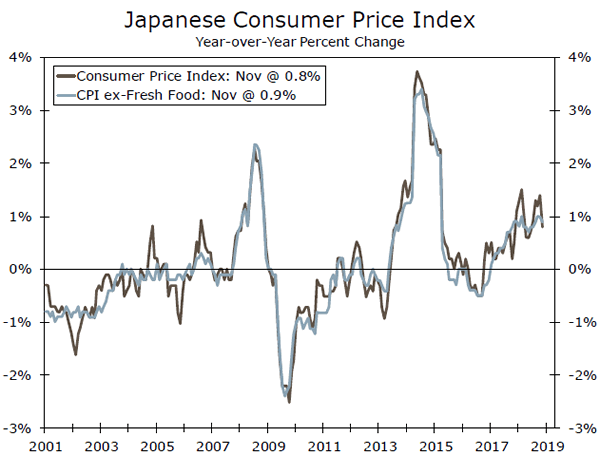
Inflation pressures in Japan remain underwhelming, with the November CPI rising 0.8% year-over-year and the CPI excluding fresh food rising 0.9%, both well short of the Bank of Japan's 2% inflation goal. For December, given a decline in energy prices, we expect headline inflation to slow noticeably to just 0.4%, while core inflation pressures should remain relatively steady. While we believe the Bank of Japan may take a tentative step towards monetary policy normalization this year, the low inflation readings suggest that may be at best a "one-and-done" move from the central bank.
That is particularly the case given relatively sluggish Japanese economic growth. The November tertiary industry index (a proxy for service sector output) is forecast to fall 0.5% month-over-month, after a large October gain. However, November core private machinery orders are expected to rise 3% month-over-month, hinting at more resilience in capital spending and industrial activity.
Previous: 0.8% Wells Fargo: 0.4% Consensus: 0.3% (Year-over-Year)
Canada CPI • Friday
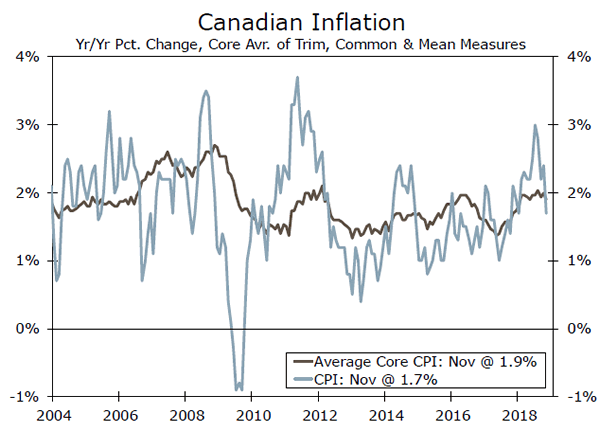
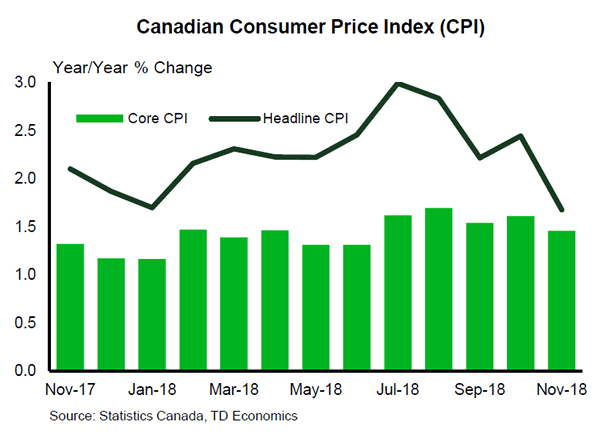
Canadian inflation has slowed noticeably in recent months, and that trend appears likely to have continued in December. Given the further decline in oil prices, we expect headline CPI to slow to 1.5% year-over-year, which would be the smallest increase since mid-2017. Meanwhile, the Bank of Canada's (BoC) various measures of core inflation remain close to 2%, the midpoint of the central bank's inflation target range.
Lower oil prices are of course also relevant for the Canadian economic outlook, while we also observe that wage growth has slowed noticeably over the past several months. Against this backdrop, the BoC held its policy interest rate steady at 1.75% at its monetary policy meeting this week and appears comfortable with an unchanged policy stance for the time being, although we do expect the BoC to tighten further if growth and oil prices recover.
Previous: 1.7% Wells Fargo: 1.5% Consensus: 1.7% (Year-over-Year)
Point of View
Interest Rate Watch
A Little More Patience at the Fed
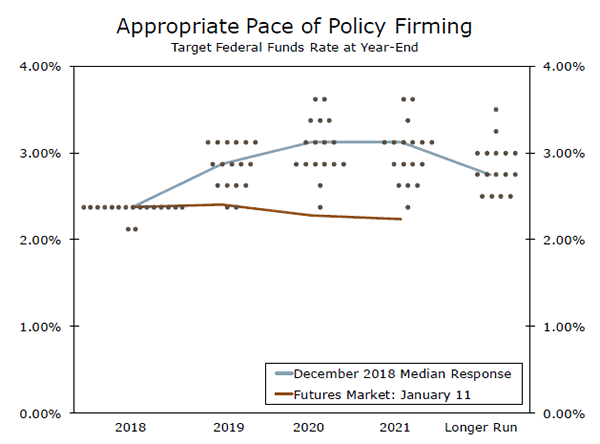
The minutes of the December FOMC meeting reinforced the notion that the Federal Reserve is likely to be more patient in raising interest rates in coming months. While the decision to raise the federal funds rate by a quarter percentage point in December was unanimous, there was considerable debate among FOMC board members about whether or not the Fed needed to raise rates. Absent the criticism from the administration the Fed might have been even more inclined to have left rates unchanged in December.
As it is, the federal funds rate is now close to what most FOMC members feel is a neutral level, where interest rates are no longer stimulating but not necessarily restraining growth. While the whole notion of a neutral rate is somewhat debatable and extremely hard to approximate when the Fed is also reducing its balance sheet and had unnerved the financial markets with its previous hawkish rhetoric, the financial markets now appear to feel assured the Fed will remain on hold for the next few months.
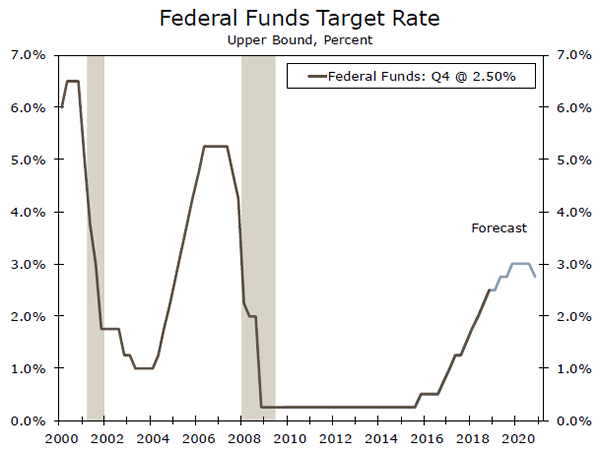
The financial markets seem to have an exaggerated sense of the Fed's intentions, expecting it to remain on hold through all of 2019 and to cut rates a quarter point in 2020. This scenario requires a more pessimistic view of the economy than we think likely. We have slightly reduced our forecast for growth and inflation but still see real GDP rising 2.6% this year and 2.2% in in 2020. Growth will be slightly slower on a fourth quarter-to-fourth quarter basis but should still be strong enough to nudge the unemployment rate lower and push wages higher. We still see the Fed hiking rates twice this year, in June and December.
The key areas to watch are business fixed investment and manufacturing in general. If the damage to credit conditions proves significant enough to throttle back business fixed investment and hiring, then the Fed's pause may prove more lasting. Wall Street appears to be much more worried about the fallout from this past fall's stock market selloff and tightening in credit conditions than Main Street. We look for job growth and consumer spending to hold up relatively well.
Credit Market Insights
Where's the Issue?
There were zero high yield bonds issued in December, the first month since 2008 that not a single company below investment grade raised money in public debt markets. With concerns of a more pronounced slowdown mounting, the fourth quarter of 2018 saw a surge in equity market volatility and credit spreads. The Bloomberg Barclays high yield average spread index rose more than 200 bps in just three months as risk preferences shifted towards safer assets. Facing sharply higher financing costs and greater uncertainty, lower rated companies retreated from public markets. What impact do higher corporate bond yields have on the broader economy?
For one, a higher cost of capital lowers the net present value of future projects, rendering companies less likely to embark on those project and initiate new capital spending, all else equal. In the December NFIB survey, plans to increase capex over the next six months fell four points to the lowest level since 2016. Moreover, the new orders component of the December ISM survey fell 11 points. The final month of the year was further evidence of the deleterious effect tighter financial conditions are having on business fixed investment.
Spreads have retreated a bit over the past week, however, as the December FOMC meeting minutes signaled the committee's shift to a decidedly more dovish tone. The FOMC appears committed to monitoring financial conditions before tightening monetary policy further.
Topic of the Week
Where Have All the Good Times Gone?
This week we released our January Monthly Economic Outlook and Monthly Macro Manual, where we highlight key changes to our economic forecasts and views on the state of the economy in the month ahead. Financial market jitters to end 2018 led market participants to question if the domestic economy is poised for a broader slowdown in coming months. In our view, while there have been signs of slowing economic growth, many of these trends are driven by policy changes, rather than fundamental weakness in the U.S. economy. On the domestic side of the equation, tighter Fed policy looks to be a drag on the housing market in terms of higher mortgage rates, while retaliatory Chinese tariffs on U.S. goods have weighed on exports in recent months.
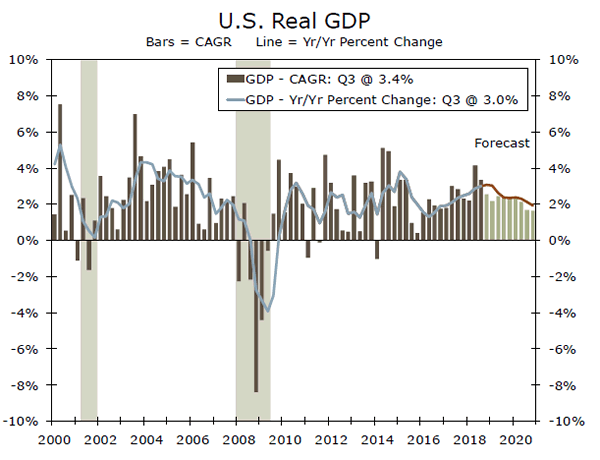
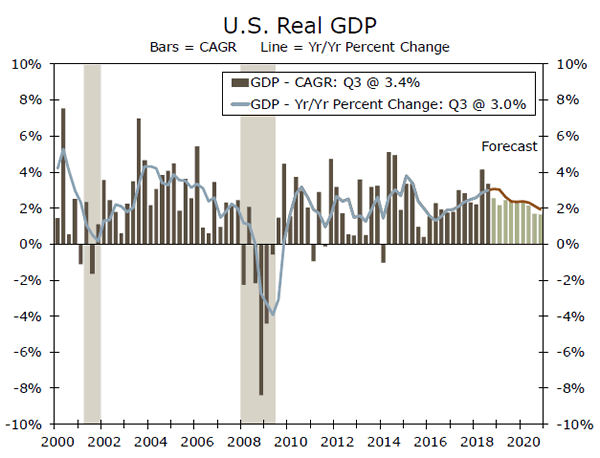
But on the bright side, income growth continues to remain solid, while lower oil prices should support further gains in consumer spending. Although we look for the recent sharp drop in oil prices to weigh on energy sector investment in the near term, its impact will likely not be nearly as pronounced as during the similar energyrelated slowdown of 2015-2016. We still look for real GDP to rise at a solid 2.5% annualized rate in Q4 (top chart).
We acknowledge that the recent tightening in financial conditions and slower growth on the horizon will likely have an effect on Fed policy. While we still look for the Fed to raise rates twice in 2019, we have pushed back the timing to June and December, given recent developments in financial markets, growth concerns and the Fed's desire to become more data dependent.
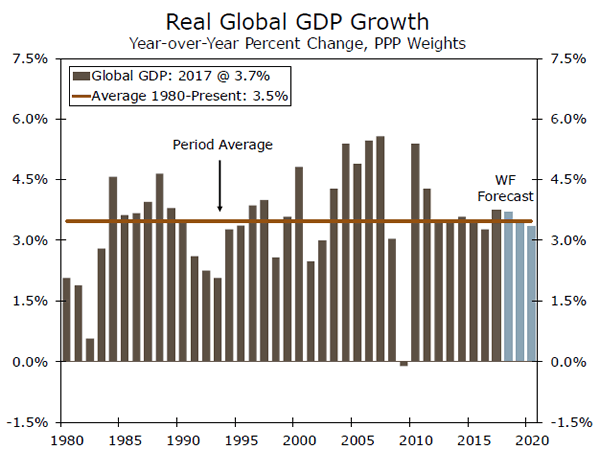
On the international front, a similar set of concerns exists surrounding global growth prospects, as several key economies registered slower GDP growth in Q3, namely the Eurozone and China. At the same time, global political developments remain in focus, with a key Brexit vote scheduled for next week and U.S./China trade talks ongoing. Looking past these uncertainties, we still look for the global economy to expand at a solid pace in 2019 near its long-run average of 3.5% (bottom chart).
The Weekly Bottom Line: Bank of Canada’s Odyssey Continues
U.S. Highlights
- U.S. equity markets built on last Friday's gains, firming up for the second consecutive week. Seemingly-fruitful trade negotiations between the U.S. and China offered notable support.
- With respect to data, both the ISM non-manufacturing index and small business confidence have eased from recent highs, but remain in healthy territory. Inflation data came in as expected, with core CPI holding steady at 2.2% y/y.
- The government shutdown, which is on track to become the longest in U.S. history, may test the Fed's wait and see approach to monetary policy, given data distortions and delays. If it ends soon, we expect its impact to be quite modest. But each passing week has the potential to amplify the impact.
Canadian Highlights
- As widely anticipated, the Bank of Canada held its policy rate at 1.75% this week. It also signaled little desire to raise rates in the near term.
- Energy sector woes are expected to drag on Canadian economic activity to the tune of half a point through 2020. As a result, 2019 growth was downgraded by 0.4 ppts to 1.7% relative to the Bank's October outlook.
- With the Bank of Canada communicating less urgency to raise rates in the near-term, we now expect the next rate hike to occur in July.
U.S. - Of Mending Bridges and Building Fences
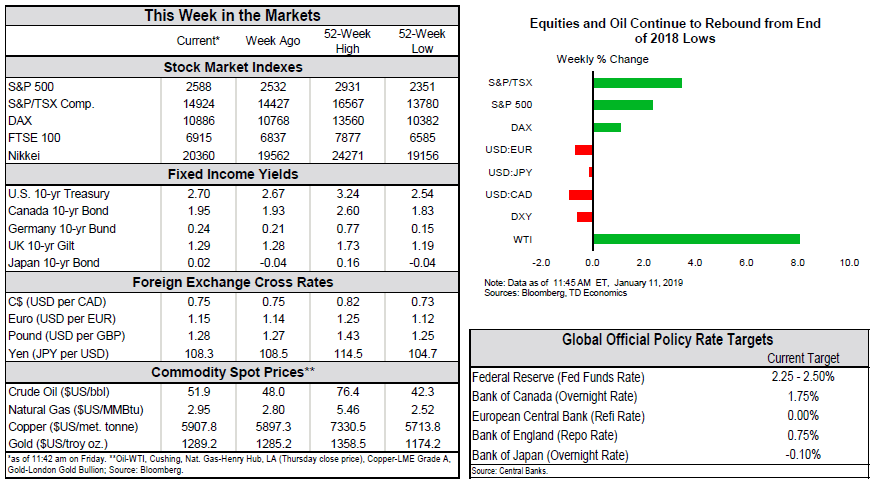
U.S. equity markets built on last Friday's gains, firming up their comeback in the second week of 2019. The strong December jobs report continued to buoy market sentiment, while seemingly-fruitful trade negotiations between the U.S. and China offered additional support. Discussions in Beijing lasted an extra day, with indications that progress was made on a few items of interest, such as the further solidification of Chinese commitments to purchase U.S. goods. China's Commerce Ministry suggested that progress was made on more contentious issues as well, such as forced technology transfers and the protection of IP rights. The finding of common ground is a very encouraging development. But, with plenty of work still to be done and details to be hashed out, we're not out of the woods yet.
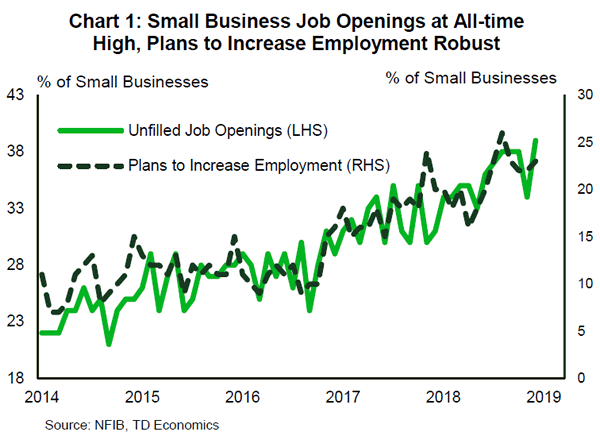
On the domestic data front, the numbers this week did little to rock the boat. After a hot three-month streak, the ISM non-manufacturing index descended below the 60-point threshold in December. But, at a reading of nearly 58, the index still points to a healthy pace of expansion for the lion's share of the economy. Similarly, small business confidence eased off at the end of 2018, but remained quite upbeat relative to history. Employment indicators from the small business survey also reaffirmed the strength the U.S. labor market (Chart 1).
What truly dominated headlines this week were negotiations related to border security that hold the key to ending the partial government shutdown. Talks this week have so far failed to yield positive results. The current shutdown has already matched the longest 21-day closure of 1995-96 and appears likely to extend further.
The shutdown only adds to the cloud of uncertainty facing the Fed. Indeed, the FOMC minutes confirmed that after hiking in December, there was less certainty going forward given recent volatility in financial markets and concerns about global growth. With price pressures easing off in recent months, the Fed is in no rush to hike rates. This narrative is corroborated by today's CPI data where core inflation held steady at 2.2% y/y (Chart 2). But, this wait and see approach will be challenged by the government shutdown, which will distort the data and delay its release.
Ultimately, the length of the shutdown will determine the overall impact. If it ends over the weekend, we expect the impact to be fairly modest, with the closure shaving off about 0.1 p.p. from first quarter economic growth. But the impact could prove to be non-linear, meaning that the economic costs rise with time. With respect to data, if the shutdown extends to next week the jobless rate could tick up by 0.2 p.p. as some 380k furloughed workers are counted as unemployed, though January payrolls should be spared the distortion. Delays will add to the fog. So far, only second tier indicators such as factory orders and new home sales have been affected. Among primary releases, the retail sales report is next in line to be taken off of the queue, with more releases impacted and uncertainty mounting the longer the shutdown continues.
Canada - Bank of Canada's Odyssey Continues
This week the Bank of Canada held its policy rate at 1.75% while also signaling little desire to hike again in the near-term. The pause was largely anticipated given recent weakness in Canada's energy sector, global financial and commodity markets, and concerns about global growth.
The reasons for delaying further increases are twofold. First off, energy price weakness and mandated production cuts are likely to shave about half a point off the level of Canadian GDP through 2020. This is roughly a quarter of the estimated drag that the 2014-2016 energy shock exerted on economic growth. The less pronounced impact is due to a smaller energy price decline (25% vs 70% in 2014-16), greater industry efficiencies, and lower representation of the energy sector in total investment. As a result, the Bank's 2019 growth forecast for Canada was revised lower by 0.4ppts to 1.7%. This change includes limited spillovers to other sectors of the Canadian economy, as the negative income shocks from the decline in prices, output, and investment take their toll.
Secondly, Governor Poloz cited that U.S.-led trade tensions are having a negative effect on the global economy. Moreover, global financial and commodity market volatility, and a potential escalation in trade tensions could worsen the global picture. As such, this elevated level of trade uncertainty is expected to continue to weigh on Canadian business investment and exports.
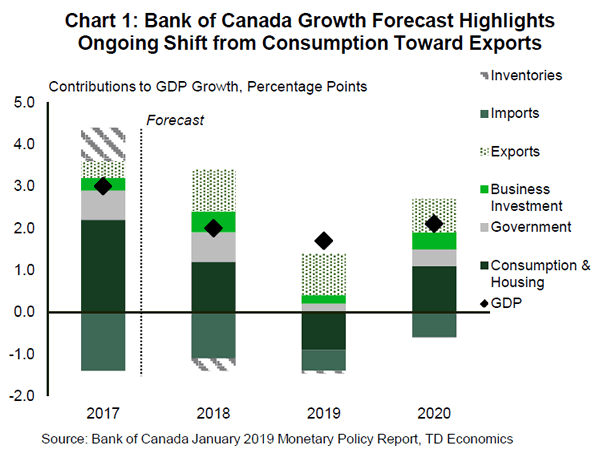
Still, despite the temporary energy sector challenges, trade tensions, financial market volatility, and anticipated slowdown in foreign demand, the Bank remains generally upbeat about the medium-term outlook for the Canadian economy. Its forecasts continue to emphasize the economy's shifting dependence away from household spending and housing toward exports and non-energy sector business investment (Chart 1).
All told, these and other negative developments, including downward historical revisions to economic growth, suggest that Canada's economy could be operating with more slack than previously estimated. Given inflation is at target and unlikely to march substantially higher in the year ahead, the Bank no longer has the same sense of urgency to raise rates and get back home to 'neutral' (estimated between 2.5-3.5%). Moreover, patience allows for time to assess how the economy evolves as mandatory production cuts are reduced in scope. As such, we expect the next rate hike to now come in July.
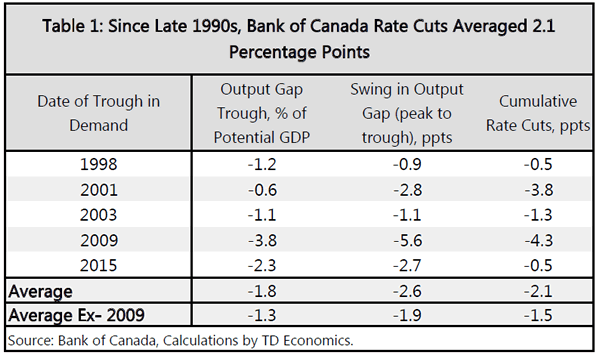
The Bank's odyssey is likely coming close to a conclusion. Given uncertainty about estimates of trend output and the neutral rate, interest rates may not have to rise much higher. Even at 2%, and assuming an estimated -50bps lower bound on the policy rate, the Bank may have just enough ammunition to combat the next downturn (Table 1). Of course, this assumes that it avoids a U.S. style household deleveraging, a turn of events that could require much greater stimulus than interest cuts alone could deliver.
Canada: Upcoming Key Economic Releases
Canadian Consumer Price Index - December
- Release Date: January 18, 2019
- Previous: -0.4% m/m, 1.7% y/y
- TD Forecast: -0.4% m/m, 1.7% y/y
- Consensus: -0.3% m/m, 1.7% y/y
Despite the persistent drop in oil prices through December, we expect CPI to stabilize at 1.7% y/y helped by base effects and higher core inflation. We expect to see gasoline prices down roughly 7% m/m following a 9% drop in November. Outside of energy, past CAD depreciation (-3% since October), which propped up import prices, underpin food and core (ex food and energy) prices this month, with the latter expected to firm to 1.9% y/y from 1.7%. Airfares, however, are again a source of uncertainty as recent methodology changes make monthly figures over the next year more uncertain. Overall we view risks as skewed slightly to the downside for this report. Our forecast, if realized, would also still leave Q4 CPI tracking at 1.9% y/y, below the BoC's forecast of 2.0% from the January MPR. Looking ahead, the recent drop in oil prices and our revised commodity price outlook suggests headline inflation will remain below target for most of 2019, before rebounding back to 2% next December.
Fed’s Dovishness Confirmed – Focus Shifts to Brexit and Earning Season
The US dollar continues to weaken in 2019, this week’s decline was supported by the Fed’s Minutes and a busy week of FOMC talk that cemented views that the Fed can wait on the next interest rate hike. The narrative now shifts from central bank focus to Brexit and earning seasons. Prime Minister May’s Brexit deal is expected to be voted down in Parliament on Tuesday. There is no strong consensus as to what is next for Brexit, but after Tuesday, we will learn a lot more. The other key driver for the next big move in risk appetite could come the beginning of a very long earning season. We have seen many technology and consumer discretionary companies warn on their outlooks already.
- May expected to lose Parliament Brexit Vote on Tuesday, January 15th
- Earning Season kicks off
- G20 Finance Ministers and Central Bank Governors meeting, January 16-18th
Cable remains firm ahead of Brexit Vote
Looking at cable, some might find it hard to believe that the end could be near for PM May. She is widely expected to lose the Parliament vote on Tuesday and many are expecting the exit day or March 29th to be postponed, despite her office refuting any possibility of that happening. After losing the Tuesday vote, there are 5 scenarios that could occur. The scariest scenario for the UK is if nothing else happens and we see a no-deal Brexit. Cable could fall anywhere from 5 to 10 percent and while it is the least likely result, it is still possible and should not be ruled out. If she loses the vote by a close margin, she could renegotiate with the EU, but she will have only few days to try to come up with a Plan B and get EU concessions. A general election is another potential scenario, but that would require May getting two-thirds of MPs supporting the call. A vote of no confidence has a good chance of occurring as Labour has been very clear in stating they will call a formal vote of no confidence in the government following May’s defeat. If the government loses the vote, we may not see a clear alternative choice and we could see a general election. Another referendum could be a fifth scenario, albeit a longshot, that would require an extension of Article 50, this however is unlikely to occur before the March 29th deadline.
Oil winning streak snapped on profit taking
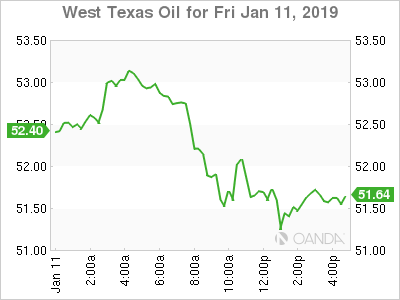
Oil had its best week in two years on a soft dollar and as the OPEC + production cuts are being implemented. Friday’s round of profit taking saw West Texas Intermediate crude snap the longest streak of consecutive session gains in nine years. This week’s rally took oil out of bear market territory and the backdrop of a patient Fed and progressive trade talks among the US and China have been very supportive for oil markets.
Powell seals dovish stance
Fed Chair Powell’s latest interview on Thursday was a reiteration of the Minutes of the December 19th meeting, noting that policymakers regard the economic outlook as solid, despite intensifying downside risks. The Fed is clearly going to be patient on the next hike and will wait for further clarity on risks to global growth and the affect to the US economy. For the US, rebounds are expected in New Home Sales, Empire Manufacturing, factory orders, housing starts and the Philly Fed Business Outlook, while declines are expected with the PPI Final Demand, Building Permits, University of Michigan Sentiment, and Industrial Production. Softer data prints could further support the Fed’s dovish bias.
Earning Season kickoffs
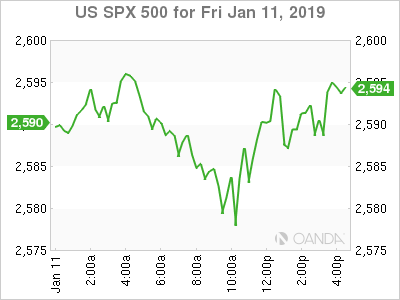
Two reasons stock markets have been roaring higher are from reassurances that the Fed is in a place where it can be patient and flexible and secondly, optimism from mid-level trade talks between the US and China. Investor appetite for the next major move in stocks is likely to take a queue from the beginning of earning season. Citigroup kicks the season off on Monday. Tuesday we will see results from Delta, United Continental Holdings, and JP Morgan. Goldman Sachs and Bank of America report on Wednesday. Thursday we will hear from Netflix and several other financial companies. Schlumberger and Kansas City Southern report on Friday.
The government shutdown could also start having a greater impact on economic data. A prolonged shutdown could end the longest streak of continuous job growth, which currently stands at 99 months.
The G20 Finance Ministers and Central Bank Governors meeting will take place between January 16th and 18th in Tokyo. This is not to be confused with the major G20 Osaka Summit that will take place at the end of June. The first day will focus more on technological innovation and development. Bank of Japan Governor Kuroda will deliver a key speech on the second day, which focuses on monetary policy and financial system during demographic changes. The third day is meetings amongst the governors and ministers.
Monday, January 14
- Earning season begins
- CNY China Trade Balance
- 5:00am EUR Euro Zone Industrial Production
Tuesday, January 15
- GBP Parliament Brexit Vote
- 8:30am USD Empire Manufacturing & PPI
- 6:50pm JPY Core Machine Orders
Wednesday, January 16
- 4:15am GBP BOE Gov Carney Testifies on FSR
- 4:30am GBP Consumer Price Index (CPI)
- 6:00am TRY CBRT Rate Decision
- 8:30am USD Retail Sales
Thursday, January 17
- 8:30pm USD Philadelphia Business Outlook
- 8:30pm USD Building Permits & Housing Starts
- 6:50pm JPY National Consumer Price Index (CPI)
Friday, January 18
- G20 Finance and Central Bank Deputies Meeting
- 4:30am GBP Retail Sales
- 4:30am GBP Manufacturing Production m/m
- 8:30am CAD CPI m/m
- 10:00 USD University of Michigan Sentiment
Do Equity Markets Predict Recession?
Highlights
- On the back of weakening global growth and downgrades to the corporate profit outlook, equity markets are down significantly from 2018 highs.
- With such a strong swing in market sentiment, discussion has increased on whether the decade long economic expansion in the U.S. is approaching an end.
- When looking back at history, equity markets have a very spotty track record for calling recession. Since the 1950’s, a bear market for the S&P 500 has about a 50/50 chance of calling a recession.
- For a more accurate signal of recession, we need to consider the transmission mechanism to the overall economy. Even though business confidence is declining from lofty levels, we have not yet seen financial market contagion into the macro economy. Though the equity market can influence Main Street, it has so far failed to do so.
Equity markets have been on a roller coaster ride these last few months. After falling significantly in late-2018, we have seen a positive bounce the last couple of weeks. Though this is encouraging, it is far too early to say we are in the clear, and if markets fall further, talk of recession will only get louder. To assess this risk, we compare the current market stress relative to history and consider the pass-through of stocks to consumer and business confidence in order to determine how close we are to recession.
Putting the sell-off in perspective
After peaking in September 2018, the S&P 500 Index sold-off dramatically, reaching an intraday peak-to-trough low of approximately 20% (a bear market) on Christmas Eve. When we look back at recessionary episodes in the post-WWII time period, we see that equity markets typically reach bear market territory (Chart 1). With such a significant drawdown at the end of 2018, the equity market is flashing a strong warning signal.
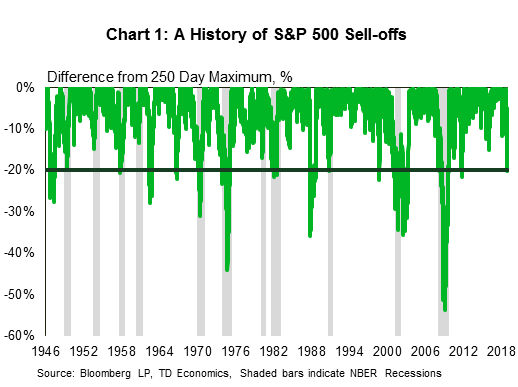
Should we all run for the hills? Probably not. Bear markets have given many false signals in the past (2011, 2002, 1998, 1987, 1966, 1962, and 1946). When we get a bear market, a recession occurs only 50% of the time. And in several instances, the stock market didn’t even decline more than 20% during a recession (1980, 1960, and 1953).
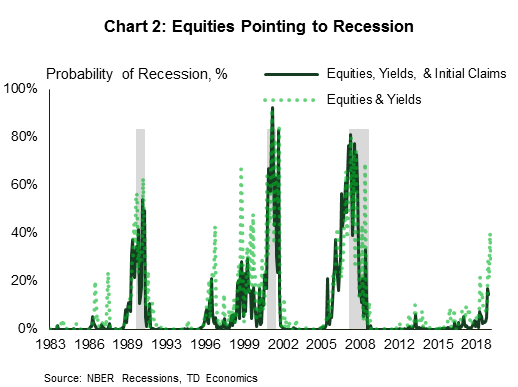
When it comes to forecasting recessions, we need to be more accurate. Equities alone are far too volatile to be effective at predicting recession. This is apparent when we model recessions using just financial variables compared to when we add macro variables to the model (Chart 2). It is for this reason that other factors have to be taken into account. We have written extensively on the slope of the yield curve as a predictor of recession. But, it alone cannot predict recession either. We need to confirm the transmission of financial market volatility into the macro environment in order to solidify a call for recession.
How stocks impact the economy
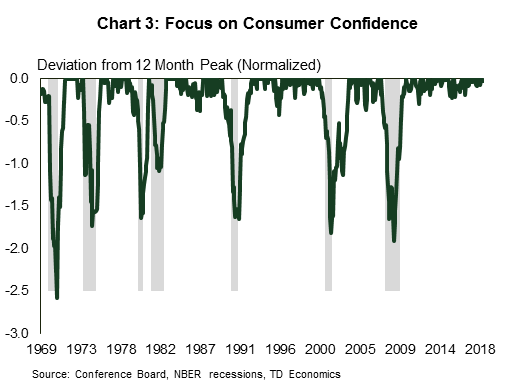
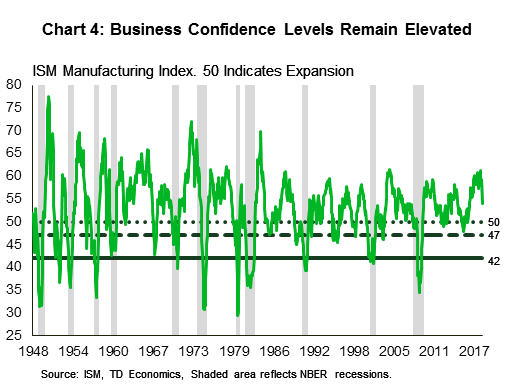
When financial market stress occurs, businesses can become fearful, changing hiring/spending plans, and laying off workers. When this leads to a persistent labor market hit, consumer confidence falls and a recession is all but confirmed (Chart 3). For this reason, we want to gauge a shift in the sentiment of businesses via profit outlooks, new orders, and overall survey indicators. For example, the ISM Manufacturing Index is closely watched (Chart 4). When the Index breaks the 50 level, it implies negative growth for that sector, but this would give more false signals than even equity markets. A threshold analysis shows that a persistent drop below 47 provides more conviction of recession and a level of 42 all but confirms it. The current level of the Index is 54. If this drops towards the warning levels along side financial market stress, the combination will increase the probability of recession to a high level.
But the next couple of months will be key. If equity markets resume weakness, there will be a point where a recession becomes inevitable. The fall would likely reflect market expectations for negative corporate profit growth. If this causes stalled spending plans and hiring by businesses, the hit to the labor market would be visible in the weekly data on unemployment claims. A significant rise in this indicator will cause the unemployment rate to jump and consumer confidence to drop into recessionary territory. Once the consumer goes to sleep, the expansion is over.
Right now, global growth is decelerating but the current level of business sentiment has not been sufficient to translate into a shock to the labor market.
What it equates to is a slower, rather than negative, growth. Main Street has not been impacted by the jitters on Wall Street for now. When calling recession, that is all that matters.
Week Ahead – Brexit Crunch Time as MPs to Vote on May’s Deal; Inflation Data to Dominate
Brexit fatigue looks set to reach a climax next week as UK lawmakers will finally get their say on Theresa May’s deal. But with little chance of the deal passing through Parliament, stormy days lie ahead for sterling. On the data front, inflation will be the dominant theme, while the US housing market will also come under the spotlight, assuming the government shutdown doesn’t cause a delay to the scheduled releases.
Chinese trade figures eyed
China will publish its latest monthly trade numbers on Monday, as negotiations with the US head for a long, drawn-out process. The two sides concluded three days of talks this week, which ended with substantial progress on many issues but with plenty of outstanding ones remaining. A weak set of trade figures would likely add to the pressure on Chinese authorities to quickly resolve their differences with the US. Exports from China are forecast to have grown by 3% year-on-year in December, easing from the prior 5.4%. Imports are expected to have accelerated, however, from 3% to 5.0%.
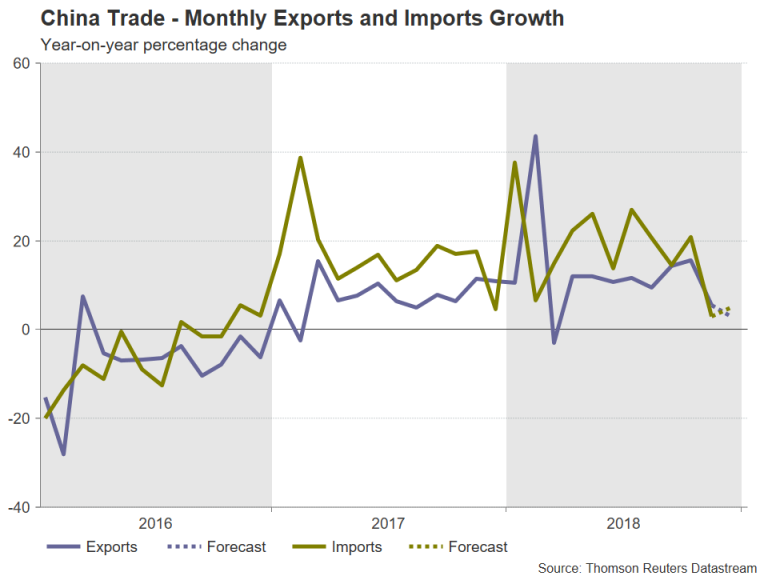
Any negative shock in the trade data could knock the Australian dollar off the one-month high it scaled this week versus its US counterpart. The aussie is highly sensitive to developments relating to China’s economy given Australia’s reliance on the country for its exports market.
Inflation to be the focus in Japan
Japan will publish corporate goods and consumer prices next week along with machinery orders. December corporate goods prices (Japan’s equivalent of producer prices) and November machinery orders (an important forward indicator of business investment) are due on Wednesday, with CPI figures following on Friday. Core CPI, which excludes fresh food prices and is targeted by the Bank of Japan for its 2% price goal, is expected to have moderated further in December to 0.8% y/y.
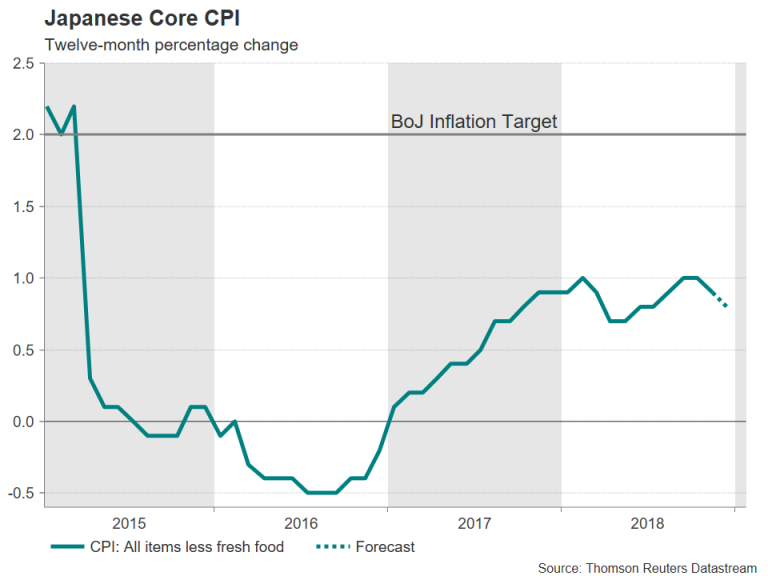
With the data unlikely to alter the near-term inflation outlook in Japan, it’s not anticipated to receive a lot of attention from yen traders as the Japanese currency tends to be driven more by risk sentiment than the domestic economy.
Euro could again shrug off underwhelming Eurozone data
A dollar pullback lifted the euro to 3-month highs this week despite more worrying indicators on the health of the Eurozone economy. Data in the coming days will probably continue to paint a bleak picture, with investors eyeing Monday’s industrial production numbers for the euro bloc and Tuesday’s 2018 GDP estimate for Germany. Industrial output is forecast to have contracted by 1.0% month-on-month in November, more than reversing the prior 0.2% gain. Meanwhile, the Eurozone’s largest economy, Germany, is projected to have grown by 1.5% in 2018, slowing from the 2.2% rate observed in 2017.
Also due out of the Eurozone are the final inflation readings for December on Thursday. The final CPI prints aren’t expected to generate much reaction as no change to the initial estimates have been pencilled in by analysts. However, any surprise revision, mainly to the two core rates, could stoke some volatility in the euro, particularly if it is a downward one. Otherwise, the single currency could maintain its impressive year-to-date recovery against the greenback.
All eyes on Westminster; investors hold tight for bumpy ride
The UK will be another country to release December inflation figures. The CPI report is out on Wednesday and will be followed on Friday with retail sales numbers. The headline rate of inflation is forecast to have eased by 0.1 percentage point to 2.2% y/y in December, while the core rate is anticipated to hold steady at 1.8%.
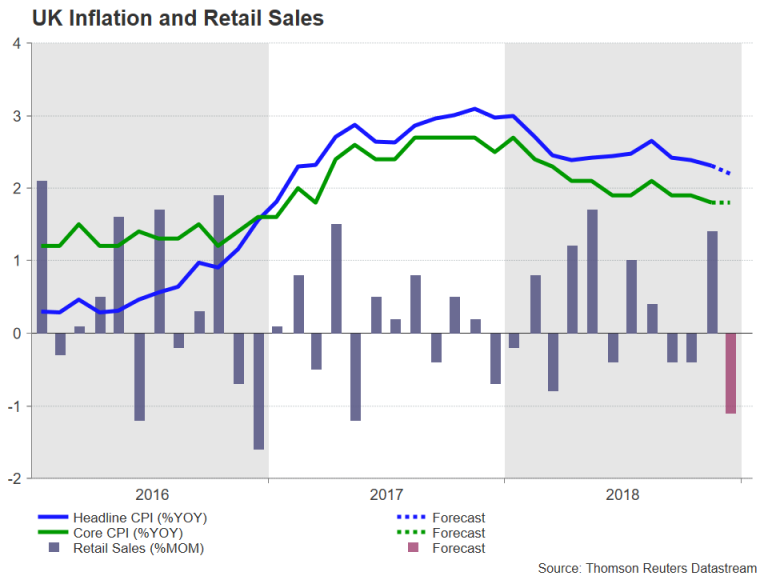
With the Bank of England not expected to raise interest rates unless Parliament approves a smooth Brexit, the inflation data is unlikely to have much impact in currency markets. Retail sales on the other hand could see a stronger response by traders as it’s a better gauge of UK growth momentum. Retail sales are forecast to have slumped by 1.1% m/m in December after a 1.4% surge in the prior month, with the annual rate projected to have slowed to 3.3%.
Ahead of the data though, is a major risk event on Tuesday when the House of Commons will vote on May’s much-criticised Brexit deal. If, as expected, the deal is rejected by MPs, Mrs. May will have three days to present Parliament with an alternative plan. With the number of possibilities – ranging from a snap election to a second referendum to a cancellation of Article 50 – being so varied, the pound is likely to gain from any attempt by lawmakers to block or delay Brexit but tumble sharply from signs the UK is steering towards a crash exit from the EU.
US manufacturing gauges to draw attention
After last month’s shock plunge in the ISM manufacturing PMI, the New York Fed’s Empire State manufacturing index and the Philadelphia Fed’s own manufacturing barometer will be watched more closely than usual for potential signs the US economy could be headed for a sharp slowdown. Consensus estimates for January though, are for both indices to rise slightly. The Empire State manufacturing index is out first on Tuesday, with the Philly Fed index coming up on Thursday. Also due on Tuesday are December producer prices.
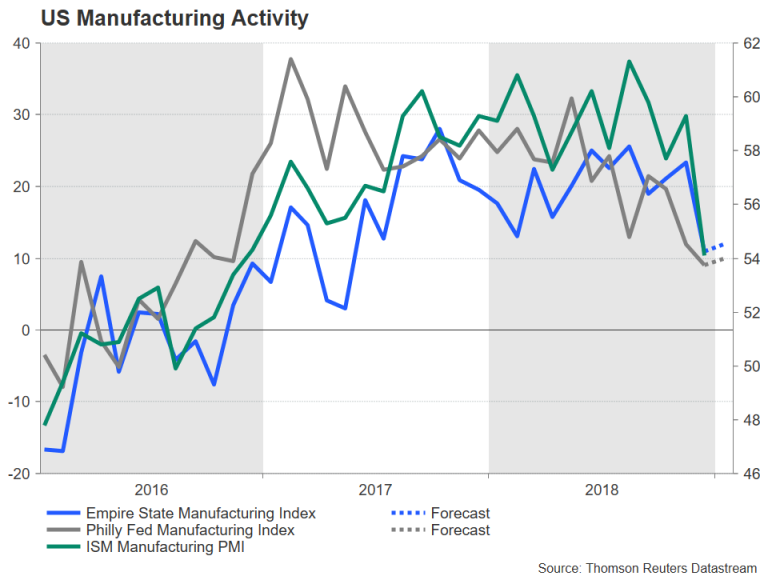
On Wednesday, retail sales will be the main highlight. Retail sales are forecast to have risen by 0.2% m/m in December. The focus will then turn onto the housing sector with the release of the NAHB housing market index for January, followed by December housing starts and building permits on Thursday. Note, however, that federal agency reports may get postponed due the ongoing partial government shutdown in the US.
Any disappointing reading in the above data could add to the downside pressure currently affecting the US dollar as it would solidify bets that the Fed won’t be raising rates this year.
Wrapping up the week on Friday are industrial output numbers for December and the University of Michigan’s preliminary print of the consumer sentiment index. North of the border, Canadian inflation figures will be scrutinized on Friday following the Bank of Canada meeting this week that signalled more rates increases in 2019. Investors had all but priced out a rate hike for this year but the BoC appears to have shifted to a merely cautious stance as opposed to a dovish one. Any positive surprise in the CPI numbers could contribute to the loonie’s upside correction.
Weekly Focus – Recession Fears Abating on Softer Fed Talk
Market movers ahead
-
- The US government shutdown continues. Look out for more negotiations.
- US regional surveys from Philadelphia and New York (Empire) should give more clues to how much manufacturing is slowing down.
- In the UK, the House of Commons will vote on Theresa May's Brexit deal on Tuesday. We expect the House to vote it down.
- We expect Chinese money and credit data to show how much the monetary easing is feeding through to the economy.
- In Scandinavia, focus turns to Swedish inflation numbers and house price statistics.
Weekly wrap-up
- US recession fears abated somewhat, as the Fed struck a more dovish tone and job growth is solid.
- Risk sentiment improved with equities gaining and bond yields and oil prices moving higher.
- US and China concluded another round of talks in Beijing this week. Negotiations continue according to plan and the top negotiators on both sides plan to meet later this month.
- Theresa May suffered another heavy defeat on Brexit. Uncertainty prevails.
- A softer tone from the Fed weakened the USD.
Sunset Market Commentary
Markets
Global core bonds gained ground today with US Treasuries outperforming German Bunds. Recent uptick of risk sentiment, bolstered by a dovish tone from the Federal Reserve and hopes for a breakthrough on the US-Sino trade negotiations, came under pressure. European equities edged lower after a higher open. Disappointing industrial production results in both Italy and Spain supported the shift to less risky assets. German Bunds immediately moved higher after EU openings. After temporarily trimming those gains, the German Bund currently hoovers back near the intraday high. The German yield curve moved lower with changes in the range of -0.1 bp (2-yr) to -2.4 bps (10-yr). US Treasuries edged higher, too. The move higher was extended when US investors joined the debates. The only eye catcher on today’s economic calendar, US inflation, fell for the first time in 9 months (on a monthly basis) but was spot on market expectations. The US yield curve edges lower with the belly of the curve outperforming the wings. Yield changes vary between -2.9 bps (30-yr) to -4.5 bps (10-yr). Italy tested investor appetite today with a first bond auction of the year. It passed by quiet smoothly with an increase in demand for two of the three tenors sold. Italian BTP’s little outperformed German Bunds.
The dollar initially stabilized today, holding a rather tight intraday trading range. There was no additional news to extend the USD decline that started late last week as Fed’s Powell indicated that the Fed was turning more cautious on further policy normalization. There were few eco data in Europe today.US December CPI inflation was bang in line with expectations. At the same time, the rebound of risky assets which was a driver of USD softness earlier this week, did run into resistance. Initially, it looked that major USD cross rates would go nowhere ahead of the weekend. However, finally some USD short-covering kicked in. EUR/USD dropped back below the 1.15 handle. The intraday rebound of USD/JPY is more modest. The pair is trading in the 108.50 area.
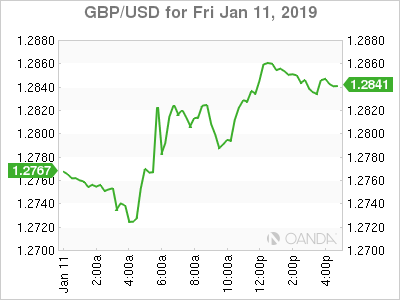
There were plenty of UK eco data. Growth in the three months to November slowed to 0.3% Q/Q. Activity in the services sector and in the construction held up rather well, but November production data were very poor, showing negative growth for the manufacturing and industrial sector. The UK trade deficit was also wider than expected. Overall, the data painted a grey picture in the UK economy as uncertainty on Brexit grows. As was mostly the case of late, sterling traders largely ignored UK data. The focus remained on next episode in the Brexit sage. The political bickering in the run-up to Tuesday’s vote in parliament continues. Sterling gained some ground on rumours that the UK government will seek to delay the exit beyond 29 March, if PM May’s deal would be rejected next week. The government denied the rumours, but sterling maintained its intraday gains. This afternoon, the correction of EUR/USD also weighed on EUR/GBP. EUR/GBP returned below 0.90 (0.8975 area). Cable is changing hands near 1.28.
News Headlines
US December CPI came in at 1.9% YoY (-0.1% MoM) down from 2.2% last month and the lowest since August 2017. The move is mainly the result of the drastic decline in oil prices recently. Core measures closed 2018 stable at 2.2% YoY (0.2% MoM). The data matched market estimates.
Sweden is close in breaking the political stalemate that governed the country since the elections four months ago. Prime minister Löfven’s Social Democrats reached a deal with the greens and with the Center Party and Liberals, thereby breaking up the now former center-right bloc. The deal is subject to approval by the parties this weekend. The official vote in parliament is scheduled next Wednesday.
US: Inflation Edges Down in December, as Energy Prices Plunge
Consumer prices fell 0.1% (month-on-month) in December, in line with market expectations. The decline largely reflected a 3.5% drop in energy prices – the largest in almost three years and a 2% falloff in transportation. On a year-on-year basis, inflation edged down to 1.9% from 2.2% the previous month.
In line with consensus estimate, core CPI prices (excluding food and energy) were up 0.2% (month-on-month) and 2.2% (year-on-year). Both remaining unchanged from November's outturn.
Core goods prices rose 0.1% on the month, after a 0.2% increase the prior month, while core services rose 0.3%,up slightly from the 0.2% in November.
Key Implications
The falloff in energy prices in recent weeks has resulted in more muted inflation dynamics. The 3.5% drop in energy prices is the largest since February 2016 and has taken much of the steam out of headline inflation.
Core inflation continues to remain contained at just above the 2% watermark, with an acceleration in core services offset by a slowdown in core goods.
Inflation closed out 2018 on a relatively stable footing, suggesting that it is contained around the Fed's 2% target. As 2019 unfolds, rising wages stemming from the tightening U.S. labor market as well as previously imposed import tariffs could alter the inflation picture. Nevertheless, a soft price environment allows the Fed to be patient and maintain its flexibility in responding to the economic data. As such, we expect two rate hikes in 2019, with the first likely in June.
USD/JPY Mid-Day Outlook
Daily Pivots: (S1) 107.96; (P) 108.24; (R1) 108.71; More..
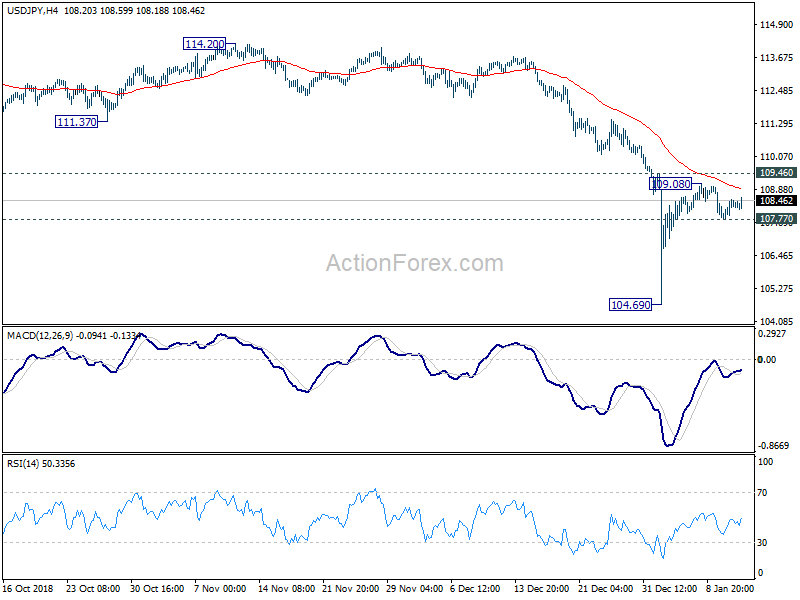
Intraday bias in USD/JPY remains neutral first. In case of another rise, upside should be limited by 109.46 minor resistance. On the downside, below 107.77 will turn bias to the downside for retesting 104.69 low. Overall, larger downtrend from 118.65 (2016 high) is expected to resume finally through 104.62 after current consolidation from 104.69 completes.
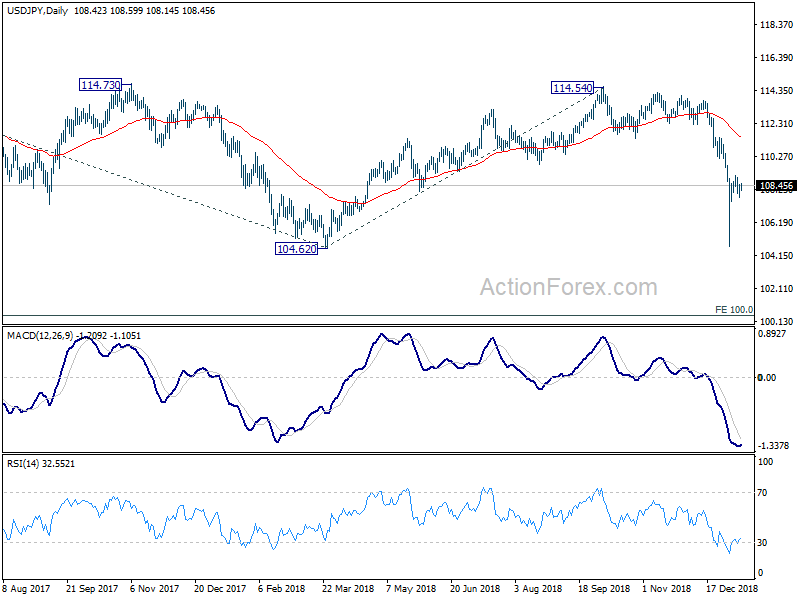
In the bigger picture, price actions from 125.85 (2015 high) are seen as a long term corrective pattern, no change in this view. Apparently, such corrective pattern is not completed yet. Fall from 114.54 is seen as part of the falling leg from 118.65 (2016 high). Break of 104.62 will target 100% projection of 118.65 to 104.62 from 114.54 at 100.51, which is close to 100 psychological level. But in that case, we'd expect strong support from 98.97 to contain downside to bring reversal. Also, this bearish case will remain the preferred one as long as 114.54 resistance holds.
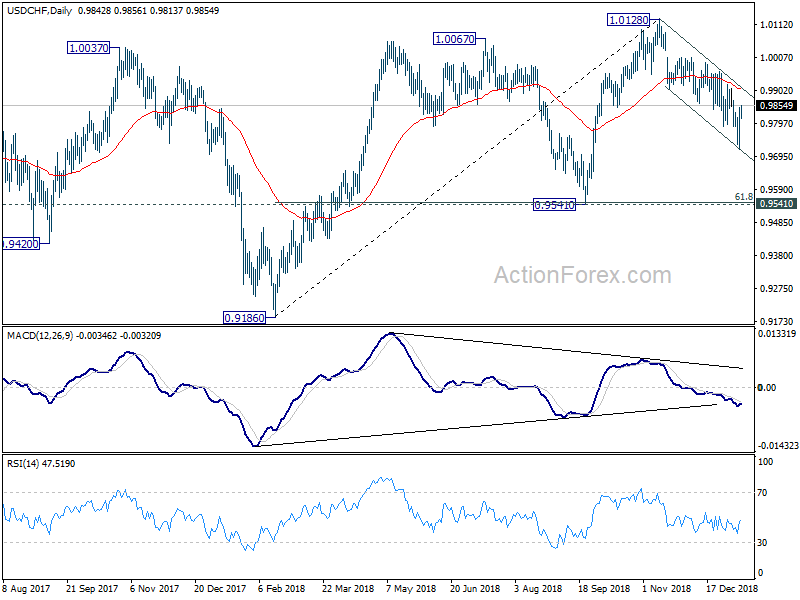
USD/CHF Mid-Day Outlook
Daily Pivots: (S1) 0.9757; (P) 0.9803; (R1) 0.9891; More....
Intraday bias in USD/CHF remains neutral at this point. We'd expect rebound from 0.9716 to be limited well below 0.9963 resistance to bring another decline. The fall from 1.0128 should be correcting whole rise from 0.9186. Below 0.9716 will target 0.9541 (61.8% retracement of 0.9186 to 1.0128 at 0.9546).
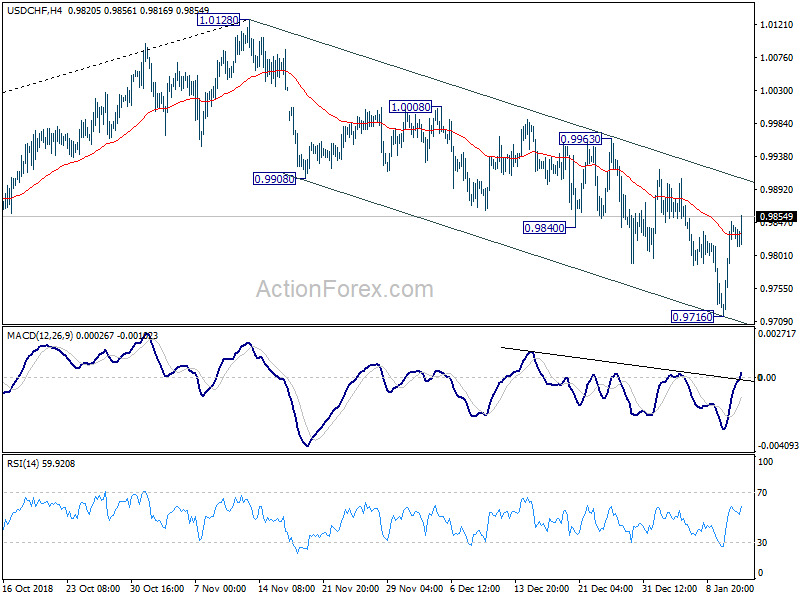
In the bigger picture, current development suggests that rise from 0.9186 has possibly completed with three waves up to 1.0128 already. Decline from 1.0128 could either be correcting this move, or reversing the trend. As long as 0.9541 support holds, we'd slightly favor the former scenario, and expect another rise through 1.0128 at a later stage. However, sustained break of 0.9541 will confirm trend reversal and bring deeper fall back to 0.9186 low.