

Sample Category Title
Fed’s Economic Projections to Provide Guidance as Concerns on Global Slowdown Intensify
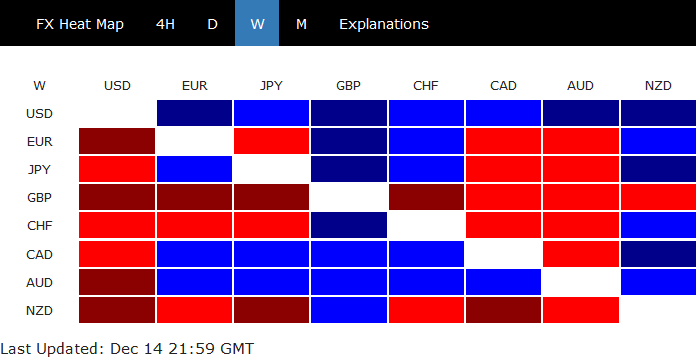
Sterling and Brexit was the center of focus during the early part of last week. The parliament vote on Brexit was postponed to at least January. UK Prime Minister Theresa May survived leadership challenge but her position is shaky with more than one-third of her MPS voted against her. The visit to EU was seen as a complete failure by some as May only got some vague clarifications and assurance from EU. It's still unknown how May could get the Brexit agreement through the Commons. Sterling ended as the weakest one last week after all.
On the other hand, Dollar ended as the strongest one, with the help from worries over global slowdown. In particular, China and Eurozone released some very poor data. But the US is not without it's own problem. The sharp selloff in US stocks on Friday argues there are worries that global slowdown would eventually spread to the US. Yield curve has ended the week inversion between 2- and 5-years. Focus will turn to Fed's rate hike this week, and more importantly, new economic projections.
More evidence of global slowdown...
Looking pass all the "specific" risks of Brexit, trade war, Italy budget and emerging markets, global slowdown is the main theme in the financial markets right now. In particular, China's engine has slowed notably. November's sharp deceleration in import growth from 21.4% yoy to 3.0% yoy and exports growth from 15.5% yoy to 5.4% yoy, in USD term, was the first alarm. Then industrial production growth slowed from 5.9% yoy to 5.4% yoy and retail sales slowed from 8.6% yoy to 8.1% yoy. The shift from export to domestic demand seemed not working well.
Turning to Eurozone, outlook is even worse. Eurozone December PMI composite dropped to 49-month low at 51.3, with PMI manufacturing at 35-month low of 51.4, PMI services at 49-month low at 51.4. German PMI composite dropped to 48-month low at 52.2. France PMI composite dropped 49.3, 30-month low and first contraction in 2 1/2 years. ECB President Mario Draghi said the policy maker's discussion were with "continuing confidence with increasing caution". But such description might need to change as growth momentum slows further in 2019.
The main positive development currently, is that US-China trade negotiations seemed to be making real progress. In particular, China as already started large purchase of US soybeans. Also, retaliation tariffs on US autos and parts were suspended for 90 days through March 31. It seems that both sides do want to make a deal and more information regarding China's reforms could be released in the upcoming weeks.
But US isn't immune
Trump claimed that China's economy was growing much slower than anticipated because of "our trade war with them". We won't object to that. It's just a matter of when the slowdown in China, and other parts of the world, would feed back, through the interconnected global economy, to the US. The US PMI composite dropped to 19-month low at 53.9 in December, which indicated that momentum is fading. And judging from the development in the stock and treasury markets, the US economy is far from being safe.
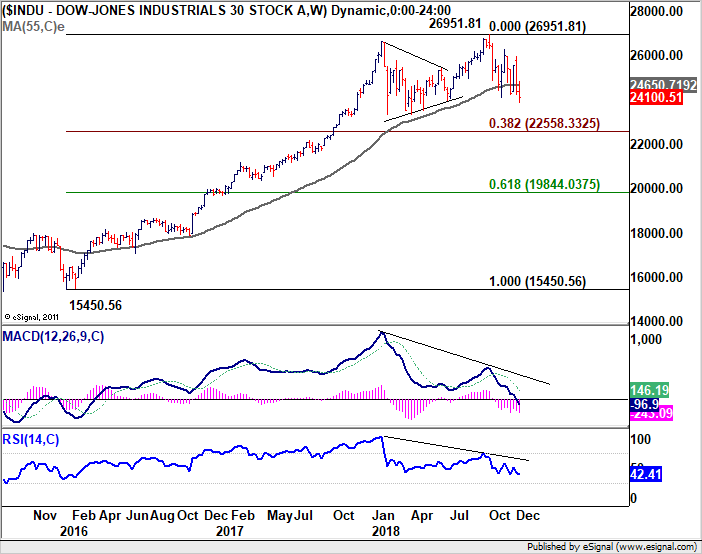
Over the week, DOW closed down -1.18%, S&P 500 lost -1.26% and NASDAQ dropped -0.84%. At the time same time DAX rose 0.72%, CAC rose 0.84% and FTSE rose 0.84% too. Asian markets were mixed only. Nikkei continued to suffer most and lost -1.40%. Singapore Strait Times lose -1.09%. But China Shanghai SSE was merely down -0.47%. Hong Kong HSI even closed up 0.12%.
DOW's near term outlook is rather bearish with another close below 55 week EMA. As long as last week's high at 24828.29 holds, further decline is in favor to extend the medium term correction from 26951.81. We'd maintain that, even though interim fluctuation could be seen, such correction should extend to 38.2% retracement of 15450.56 to 26951.81 at 22558.33 before completion.
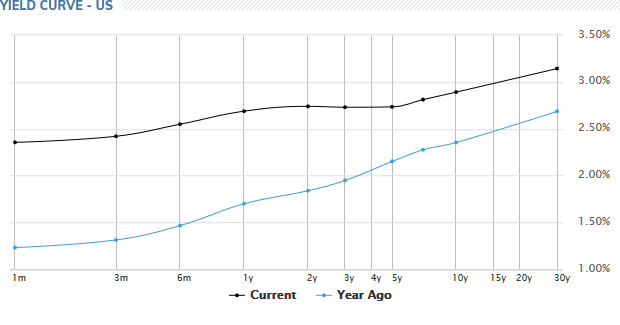
US treasury yields somewhat stabilized last week but lacked momentum for meaningful recovery. It should be noted that 3-year yield closed at 2.732 la while 5-year yield closed at 2.736. That is, this part of the yield curve is not inverted any more. However, 2-year yield closed at 2.741. That means, yield curve is now inverted between 2- and 5-year yields.
Fed projections to provide guidance
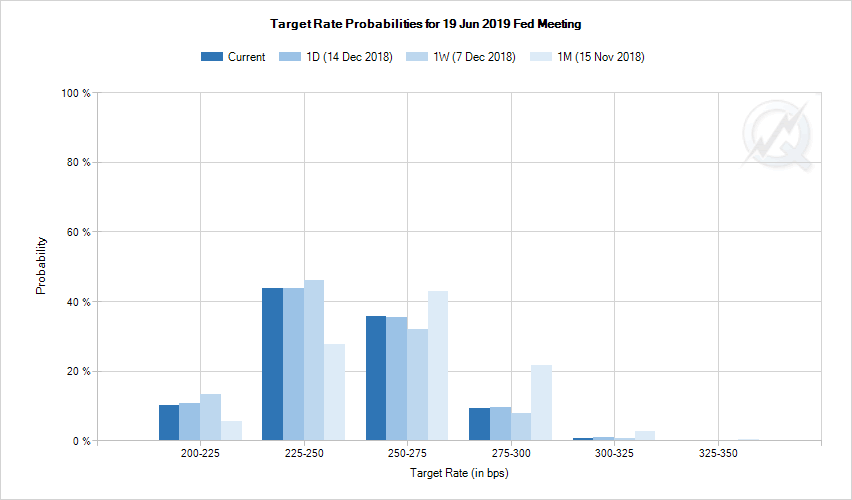
Eyes will turn to FOMC rate decision this week. Fed is still generally expected to raise federal funds rates to 2.25-2.50%. There shouldn't be any surprise. And the question is on how many more rate hikes Fed will deliver next year. And, given that Fed Chair Powell has confused the markets with his "rates just below neutral" rhetorics, he's obliged to give more clarifications.
And of course, what matters most is Fed's new economic projections, including growth, inflation, federal funds rates and long-run rates. The FOMC decisions are, after all, rather scientific. But as of now, Fed fund futures are only pricing in around 46% chance of federal funds rate being at 2.50-2.75% and above after June FOMC meeting. That is, there is less than 50% chance of one rate hike in H1. Investors are rather unconvinced Fed's projections should provided enough guidance for markets expectations. And they would also set the tone of the markets at least through January.
Dollar index still bullish, but with no conviction
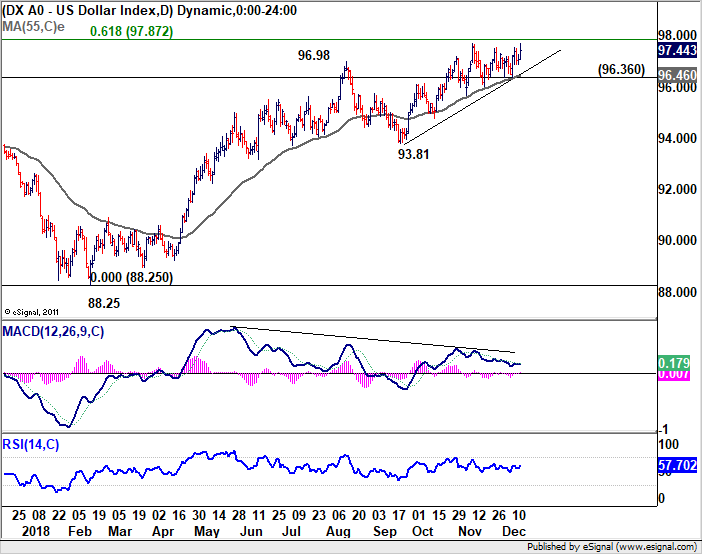
Dollar was the strongest major currency last week. But the outlook isn't too convincing yet. EUR/USD managed to hold above 1.1267 minor support despite Friday's sharp fall. USD/JPY also retreated notably after hitting 113.70. The lack of conviction is reflected in the Dollar index too. It's without a doubt still near term bullish, staying above trendline and rising 55 day EMA. But upside momentum has been diminishing for a while as seen in daily MACD. 61.8% retracement of 103.82 (2017 high) to 88.25 (2018 low) at 97.87 remains a difficult hurdle to overcome. Fed's new projections and rhetoric will be a key factor to determine whether Dollar index can overcome this fibonacci resistance, or rejected by it. Break of 96.36 support will be an early, but important, sign of bearish reversal.
Position trading
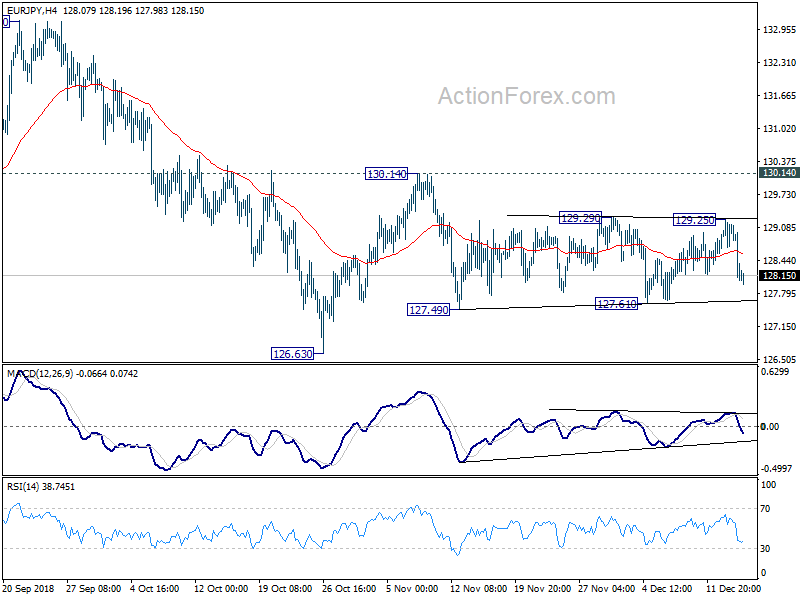
We're holding on to our EUR/JPY short (entered at 127.80, stop at 129.30) as updated last week. While EUR/JPY recovered to as high as 129.25 last week, it's kept below our stop at 129.30. Subsequent sharp fall also kept our short position safe, and did nothing to change our bearish view. Thus, we'll hold on to short position with stop unchanged.
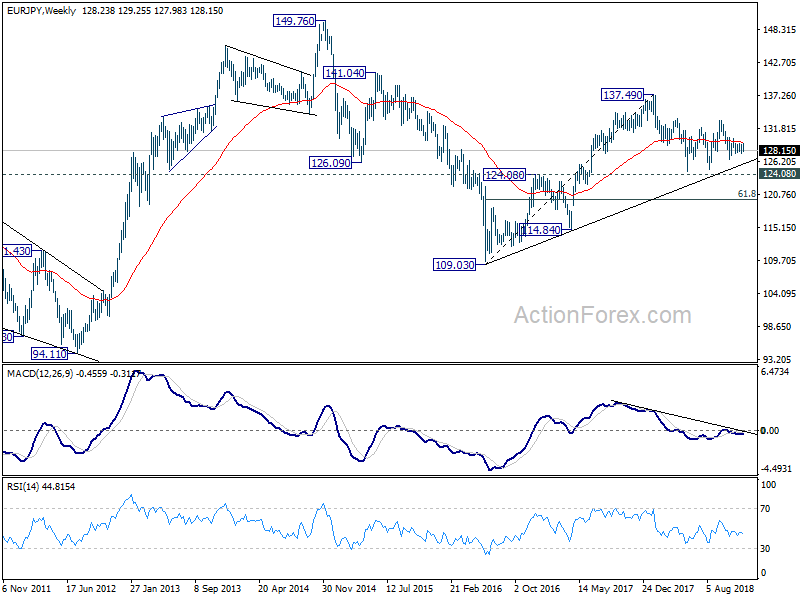
It's a bit early to be medium term bearish. But EUR/JPY is staying below 55 week EMA which indicates underlying weakness. We're envisaging the fall from 137.49 to resume eventually and extend to 61.8% retracement of 109.03 to 137.49 at 119.90. But we'll also watch the reactions from 124.08 closely.
AUD/USD Weekly Outlook
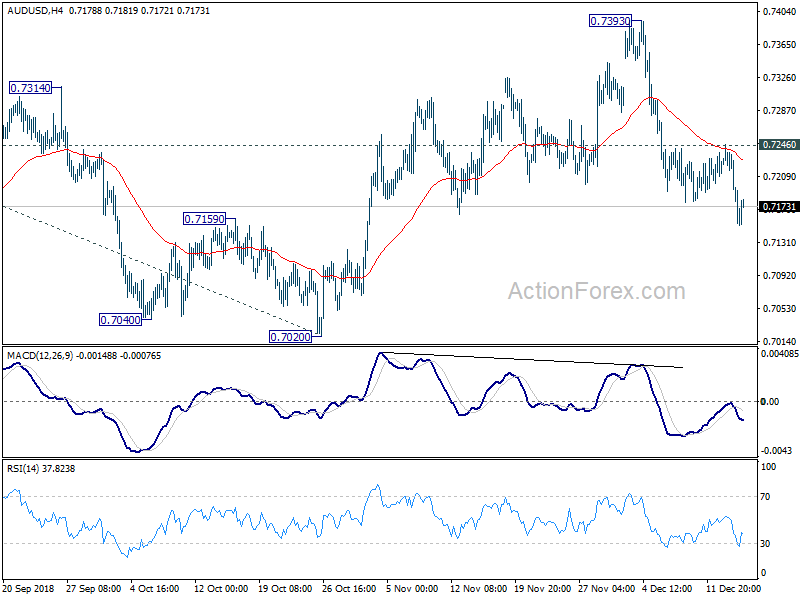
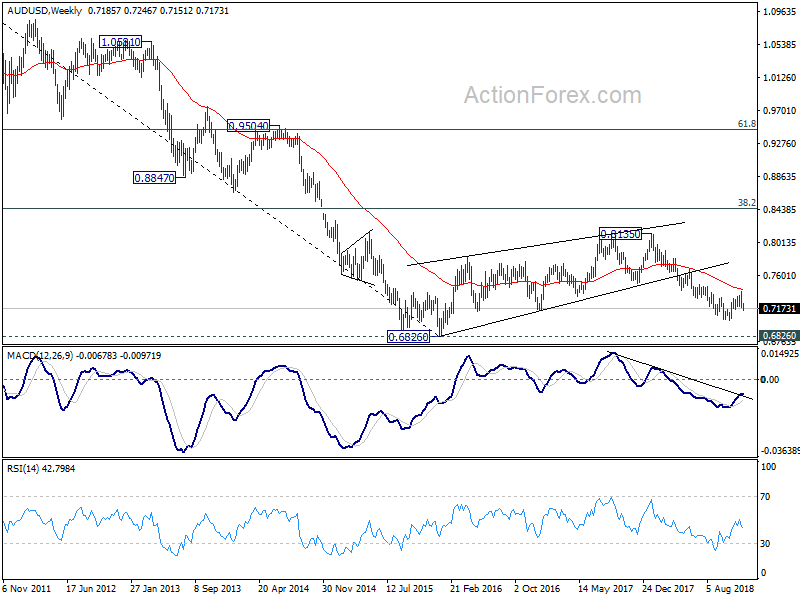
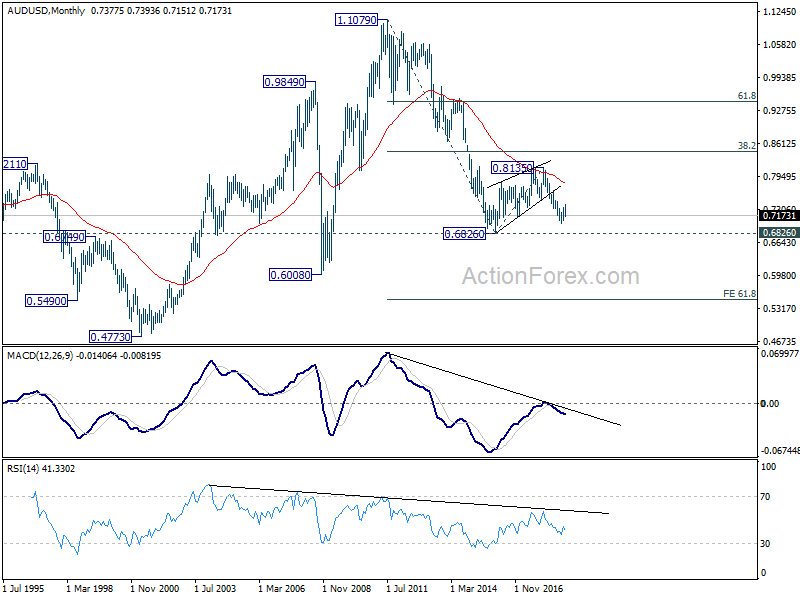
AUD/USD dropped to as low as 0.7151 last week. The development confirmed completion of corrective rebound from 0.7020 at 0.7393. Initial bias stays on the downside this week for retesting 0.7020 low first. On the upside, though, break of 0.7246 resistance will delay the bearish case and turn bias back to the upside. Rebound from 0.7020 could probably head to 38.2% retracement of 0.8135 to 0.7020 at 0.7446 before completion.
In the bigger picture, a medium term bottom is in place at 0.7020 ahead of 0.6826 key support (2016 low). Stronger rebound could still be seen to correct the whole fall from 0.8135 high. But we'd expect strong resistance from 0.7500 support turned resistance to limit upside. Medium term fall from 0.8135 should resume later and extend to take on 0.6826 low at a later stage, after the correction from 0.7020 completes.
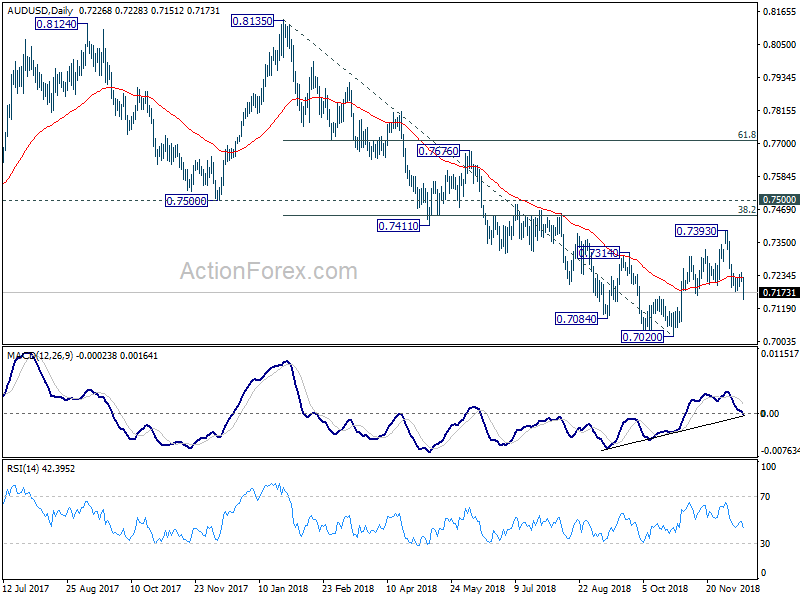
In the longer term picture, the corrective structure of rebound from 0.6826 (2016 low) to 0.8135, and the failure to break 38.2% retracement of 1.1079 (2011 high) to 0.6826 at 0.8451, carry bearish implications. AUD/USD was also rejected by 55 month EMA. Now, the down trend from 1.1079 is in favor to extend. On break of 0.6826, next target will be 61.8% projection of 1.1079 to 0.6826 from 0.8135 at 0.5507.
Summary 12/17 – 12/21
Monday, Dec 17, 2018
[php_everywhere instance="1"]
Tuesday, Dec 18, 2018
[php_everywhere instance="2"]
Wednesday, Dec 19 2018
[php_everywhere instance="3"]
Thursday, Dec 20, 2018
[php_everywhere instance="4"]
Friday, Dec 21, 2018
[php_everywhere instance="5"]
Weekly Economic and Financial Commentary: A Holly Jolly Price Reprieve
U.S. Review
A Holly Jolly Price Reprieve
- Falling gasoline prices kept consumer price inflation flat in November, supporting real income just in time for the holiday shopping season.
- Holiday sales got off to a solid start in November. Excluding sales at gasoline stations, auto dealers and food service establishments, our holiday sales measure rose 0.8%. Total sales came in more modest at 0.2%, however, due in part to the aforementioned drop in gasoline prices and softer auto sales.
- Industrial production increased 0.6% last month as unseasonably cold weather boosted utilities output. Manufacturing output was flat, and further cooling is likely.
A Holly Jolly Price Reprieve
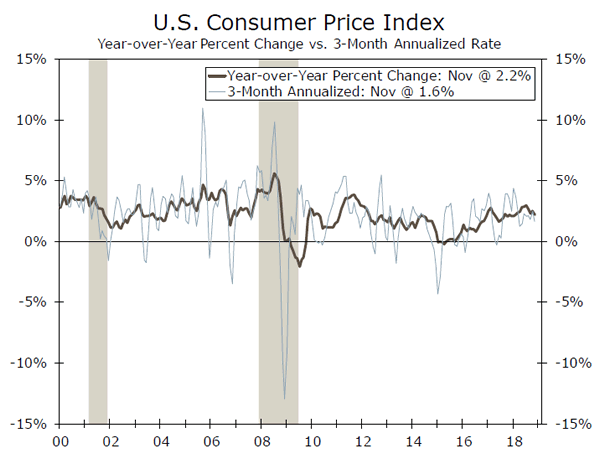
Consumers are catching a break on inflation just in time for the holiday shopping season. After rising for seven straight months, the consumer price index was unchanged in November. Lower prices at the pump thanks to oil prices tumbling have led to an easing in inflation. After increasing 2.9% on a year-ago basis as recently as July, headline CPI is up only 2.2%. With oil prices falling further in the first half of December and unlikely to return to $76 a barrel anytime soon, inflation dynamics are looking more favorable for real consumer spending in the next few months.
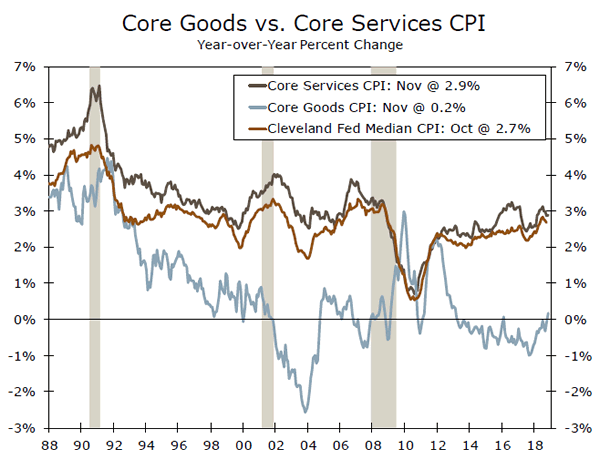
While headline inflation has eased up, the trend in core inflation has remained fairly steady. The core CPI rose 0.2% in November with goods and services both picking up (top chart). The 0.2% rise in core goods overstates the trend somewhat, however. Used auto prices jumped more than 2% for the second straight month, more than unwinding the 3.0% drop in September. At the same time, the resilience of the dollar is keeping the cost of imported goods muted. Like the consumer price index, import prices were held down by the drop in oil prices last month, leading to a monthly decline of 1.6%. But prices for nonfuel imports have also eased, declining 0.3% last month.
The lion's share of core inflation, however, is services. Services exenergy, which account for 75% of the core index and 60% of headline CPI, rose a trend-like 0.2% in November. After a soft couple of readings, shelter costs picked up, but a sustained acceleration is doubtful given emerging pressure on home prices. But an increasingly tight labor market and firms' willingness to raise prices suggest upward pressure on prices elsewhere. We expect core CPI to continue to rise a touch above 2% in the coming months after having picked up to 2.2% on a year-over-year basis in November.
The modest inflation backdrop bodes well for real consumer spending but dented retail sales, which are reported in nominal terms, in November. Total retail sales rose a modest 0.2% in November. The headline was held back by a 2.3% drop in gas station sales as prices tanked.
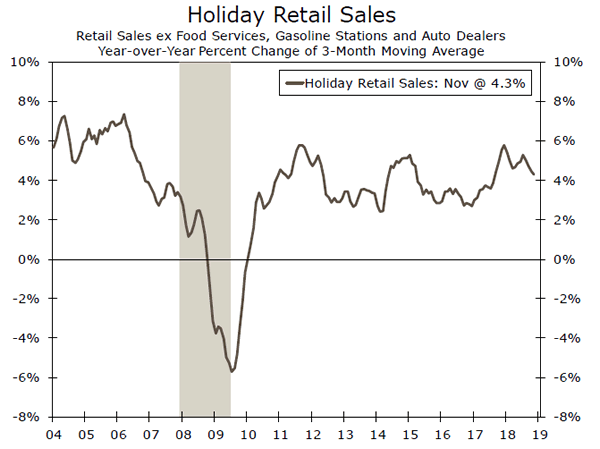
Excluding sales at gasoline stations, auto dealers and food service establishments, holiday retail sales rose 0.8% That points to the make-or-break holiday shopping season getting off to a solid start this year. As of November, sales in these categories were up 4.4% year-over-year, close to our call for holiday sales to rise about 4.5% this year (middle chart).
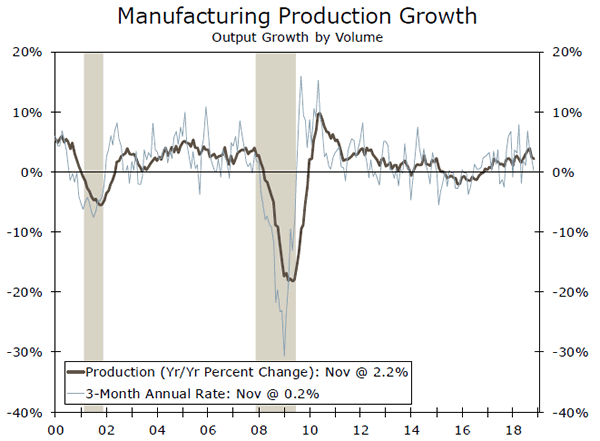
While consumer spending looks to be on solid footing, the latest data on industrial production hint at some modest cooling. Total production rose 0.6% in November, helped by a 3.3% rise in utilities as temperatures were below their seasonal averages. Despite the aforementioned decline in oil prices, mining rose 1.7% over the month, but is likely to cool in coming months given expectations of lower oil prices to remain. Manufacturing production was flat over the month. We would not be surprised to see some further moderation given the outlook for slower U.S. and global growth (bottom chart).
U.S. Outlook
Housing Starts • Tuesday
We expect November housing starts to come in below consensus, following last month's 1.5% rise to a 1.228 million unit pace. All of last month's increase came from the volatile multifamily sector, which has seen some renewed strength in recent months as apartment demand has proved to be much more resilient than had been expected this year. Single-family starts fell 1.8% in October, following a 1.0% drop the prior month.
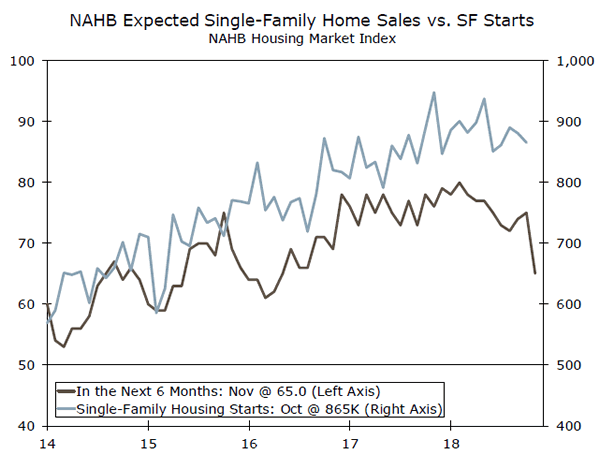
Unfortunately, we expect to see more soft data on single-family starts. Sales have slowed in recent months and the November NAHB Wells Fargo Homebuilders Index plummeted eight points during the month, with expectations for future sales plunging 10 points. New home inventories have also risen, which we believe will cause builders to hold off on speculative projects. Apartment starts were also likely negatively impacted by fires out West and heavy rain across much of the South.
Previous: +1.5%, 1,228K Wells Fargo: -1.1%, 1,214K Consensus:+0.4% (Month-over-Month), 1,233K
Existing Home Sales • Wednesday
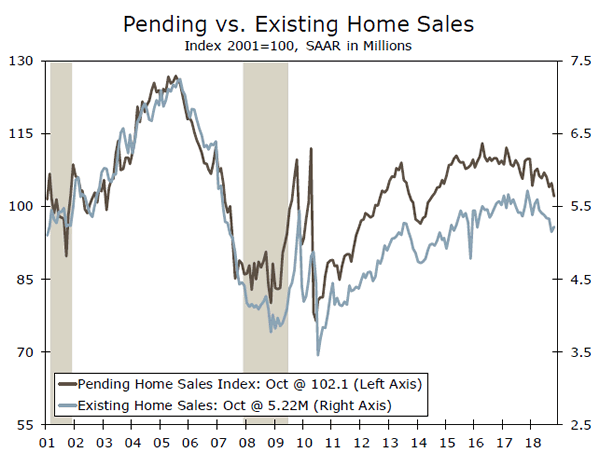
Existing home sales are also expected to come in well below the current consensus. We are projecting a 2.1% drop, following October's 1.4% gain. That increase followed six consecutive monthly drops. Our below consensus call in November is based off the incredibly weak pending home sales data for October, which plunged 2.6% that month. October pending sales are a measure of purchase contracts signed that month which would likely close in November and December and then be counted as an existing home sale.
Data from local real estate associations strongly suggest sales weakened further in November, particularly in the West, where pending home sales plunged 8.9% in October. Most of the weakness has been along the West Coast and formerly high flying parts of the Rocky Mountain states. The South has seen less of a slowdown but sales have clearly slowed across major markets such as Dallas, Houston, Orlando, Charlotte and Nashville.
Previous: +1.4%, 5.22M Wells Fargo: -2.1%, 5.11M Consensus: -0.4%(Month-over-Month), 5.20M
Durable Goods • Friday
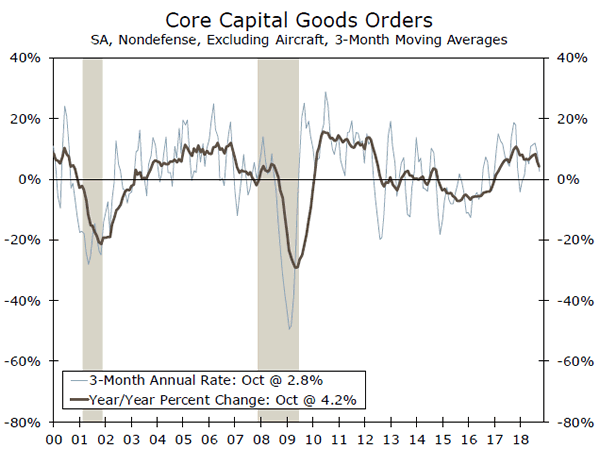
We expect advance orders for durable goods to rebound solidly following a 4.3% decline in October. That drop was primarily in orders for commercial aircraft, which plummeted 21.4% during the month. Orders excluding transportation equipment rose 0.1% in October. The closely watched core capital goods orders category was unchanged in October and has risen at just a 2.9% annual rate over the past three months, which hints that capital spending will likely slow in coming quarters.
Our forecast calls for a more modest 1.8% gain in headline durable goods orders, which is slightly below the 2.0% consensus call. Orders excluding transportation equipment are expected to rise just 0.2%, continuing the soft patch we are seeing in capital spending. The shortfall in capital spending may be tied to uncertainty surrounding global economic growth and trade negotiations with China.
Previous: -4.3% Wells Fargo: +1.8% Consensus: +2.0% (Month-over-Month)
Global Review
Global Outlook Still Murky Amid Policy Uncertainty
- United Kingdom Prime Minister Theresa May survived a no confidence vote, but the path ahead remains murky for the Brexit deal negotiated between her government and the EU.
- Also across the Atlantic, the European Central Bank's Governing Council met for the final time in 2018. As expected, the ECB confirmed the end of its asset purchase program, which the central bank has used over the past few years to bring down interest rates across Europe.
- Finally, Chinese economic data for November were weaker than expected, signaling that Chinese economic growth continues to slow.
Global Outlook Still Murky Amid Political Uncertainty
The international drama began this week when it became clear that Theresa May, the Prime Minister of the United Kingdom, would face a no confidence vote this week amid the ongoing turmoil surrounding Brexit negotiations. The Conservative Party voted to maintain PM May as their leader, though the 200-117 vote illustrated the deep divisions within the current government. Had PM May lost the vote, the U.K. political situation likely would have fallen into further disarray, with no clear leader at the helm and the March 29, 2019 Brexit deadline looming.
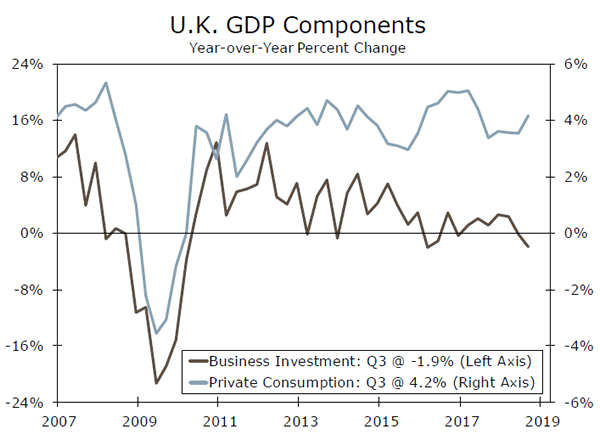
The path ahead remains daunting, however, as PM May remains well short of the votes she needs to pass the Brexit deal negotiated between her government and the European Union. Against this uncertain backdrop, business investment in the United Kingdom has been decelerating and is down 1.9% year-over-year at present (see chart on front page). Initial data for Q4 were not much more encouraging, as data released this week showed U.K. industrial production growth in October was negative over the month. On a year-over-year basis, U.K. manufacturing output has fallen 1.0% through October, a marked decline from the 2.0-2.5% pace of growth seen at the start of 2018.
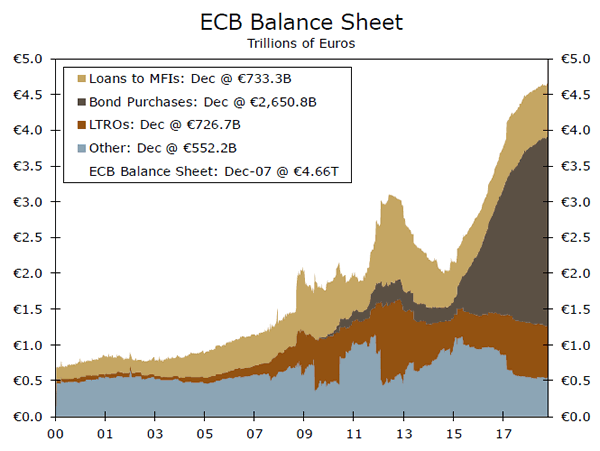
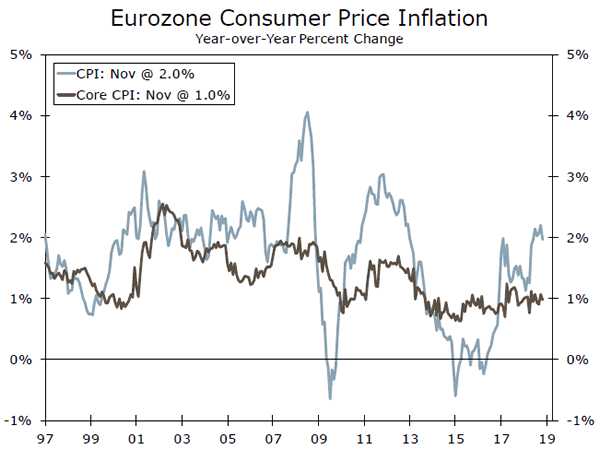
Also across the Atlantic, the European Central Bank's Governing Council met for the final time in 2018. As expected, the ECB confirmed the end of its asset purchase program (top chart), which the central bank has used over the past few years to bring down interest rates across Europe. Though monetary policy remains extraordinarily accommodative in Europe, the ECB, like the Fed a few years ago, continues to take gradual steps towards removing some of that accommodation. Now that the asset purchases are ending, we expect the ECB to begin the next phase of its tightening by slowly hiking interest rates in the second half of next year. With economic growth still slightly above potential growth, the key to this forecast will be the inflation outlook, which remains soft relative to the central bank's target (middle chart).
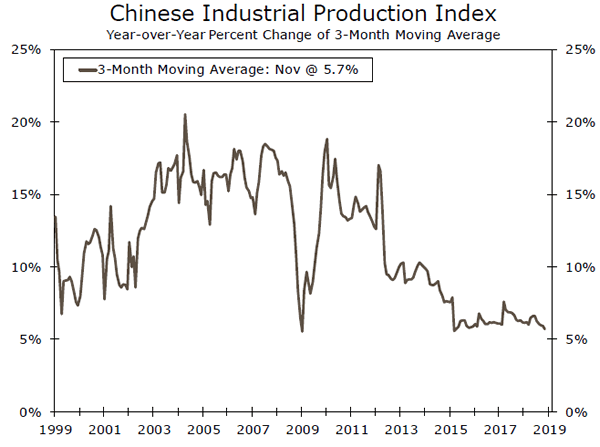
Finally, Chinese economic data on retail sales, industrial production and fixed investment for November were released on Friday. The data were weaker than expected, with retail sales and industrial production growth slowing more than expected on a year-over-year basis (bottom chart). The fixed investment data were a bit better, but on balance the data signaled that economic growth in China continues to slow.
In our annual outlook published this week, we highlighted that China is probably the biggest "swing" factor for global growth in 2019. Real GDP growth in China has been gradually slowing as working-age population growth slows, the "catch-up" phase of the country's economic development ends and policymakers attempt to decrease leverage in the economy. These structural factors have been compounded by trade developments, including both alreadyin- place tariffs and uncertainty about future ones. We look for 6.2% real GDP growth in China in 2019, down from about 6.6% this year. If the trade war should escalate further, our forecast for Chinese economic growth would likely continue to decline, with a sub-6% forecast possible in a full-blown trade war.
Global Outlook
United Kingdom CPI • Wednesday
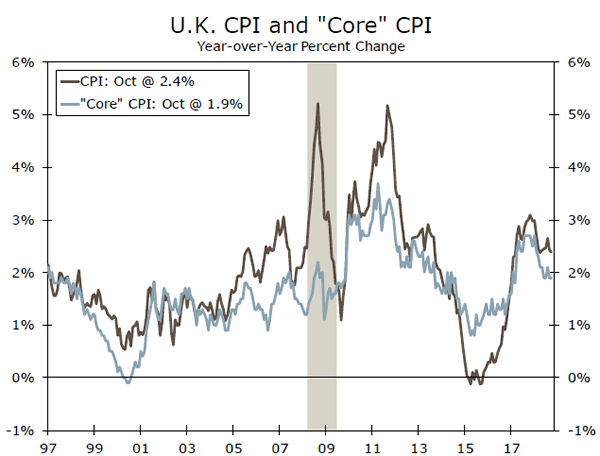
Inflation in the U.K. has been slowing as the impact from the pound's post-Brexit decline continues to fade. This slowing trend in inflation has likely been supportive to growth, as falling inflation and rising wage growth from a tight labor market are supportive of real income growth. At its last meeting, the Bank of England (BoE) judged that, as a result of a closed output gap, "excess demand is expected to build, feeding through into higher growth in domestic costs."
While this sounds like a recipe for tighter policy, the BoE will need to grapple with the tumultuous Brexit situation when it meets next Thursday. As discussed in the Global Review section, investment growth has been weak of late, and the BoE has taken notice: "business investment has been more subdued than previously anticipated, as the effect of Brexit uncertainty has intensified." We look for the BoE to remain on the sidelines until Q2-2019, by which point we expect the worst of the Brexit uncertainty will have cleared.
Previous: 2.4% Wells Fargo: 2.3% Consensus: 2.3% (Year-over-Year)
Canada CPI • Wednesday
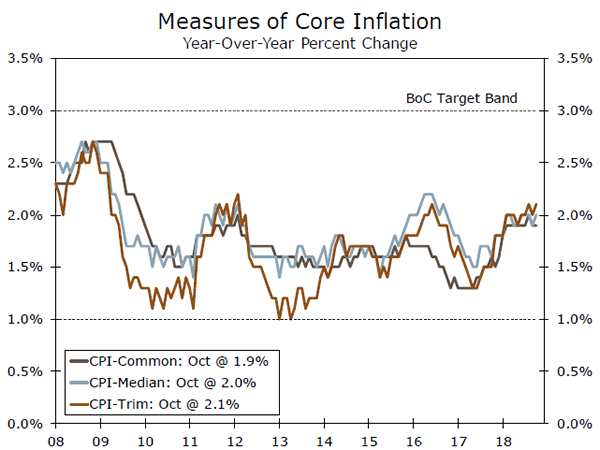
Core inflation in Canada is currently sitting right in the sweet spot, hovering almost perfectly in the middle of the central bank's 1-3% target band. Other challenges have been preventing the Bank of Canada (BoC) from tightening more rapidly, including the uncertain trade policy outlook and the wobbly Canadian housing market. At its last meeting on December 5, the BoC hinted at a dovish leaning in its statement by stating that "there may be additional room for non-inflationary growth."
We continue to expect three rates hikes from the BoC next year, as the central bank judges the output gap as essentially closed and core inflation is more or less at target. We believe the risks are tilted to the downside, however, as the timeline for USMCA passage in the United States is murky, and the Canadian housing market continues to face challenges. Put another way, two rate hikes in Canada next year is far more likely than four, in our view.
Previous: 2.4% Wells Fargo: 2.0%
Bank of Japan • Thursday
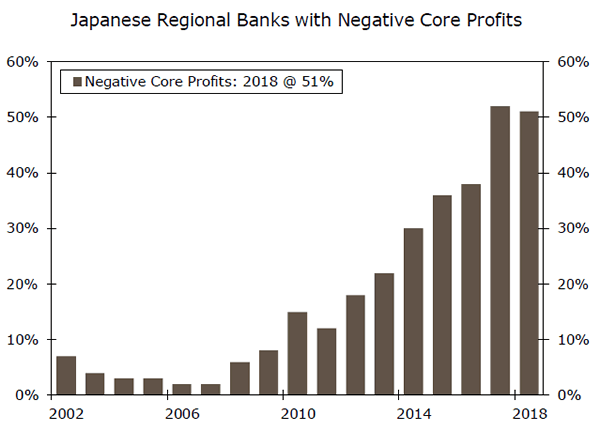
In July, the Bank of Japan (BoJ) introduced modest adjustments to its monetary policy framework, allowing for a wider trading range for yields on Japanese government bonds (JGB). This move came more in the name of improving stability and profitability in the banking system than because of an overheating economy. At present, core inflation remains well below the central bank's target of 2%.
Looking to next week, we think the BoJ will refrain from any material changes to monetary policy. That said, while we believe the BoJ will continue with its ultra-loose monetary policy, it is our view the BoJ will make further adjustments towards less accommodative policy earlier than markets are currently anticipating. With Japan's economy steady, along with the central bank's objective to ensure financial stability, we forecast the BoJ to increase its main policy rate to 0% from -0.10% as well as widen the tolerance band to +/- 30bps on 10-year JGB's as early as Q2-2019.
Previous: -0.10% Wells Fargo: -0.10%
Point of View
Interest Rate Watch
Does Monetary Policy Convergence Lead to Higher Interest Rates?
Meeting for the final time this year, officials at the European Central Bank held interest rates steady and made good on their promise to end their quantitative easing program at the end of the year. The ECB has now joined several other central banks who will now play "catch up" with the Fed in a return to more normal monetary policy accommodation. With the turn to the new year, market participants are looking ahead to see whether this monetary policy convergence strengthens and what impact, if any, there will be on U.S. interest rates.
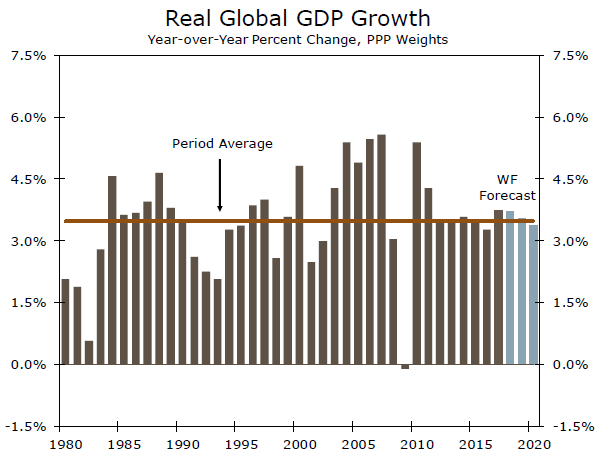
As highlighted in our recently published 2019 economic outlook, we expect U.S. GDP growth to slow next year to 2.7% from 2.9% in 2018, in part, as fiscal tailwinds begin to fade. Raising rates at a slower pace than seen over the past year, we look for two Fed rate hikes in 2019 until monetary policy is mildly restrictive. On the international front, we also expect slower economic growth, but not so slow that it derails most developed countries' plans to continue gradually normalizing monetary policy. We project global GDP growth at 3.6% in 2019, down from 3.7% in 2018, but in line with the pace of trend growth over the past six years. On solid growth projections, we look for rate hikes from the Bank of Canada, the European Central Bank, the Bank of England and even some modest tweaks from the Bank of Japan. Thus, should the pace of economic growth remain reasonably steady, we expect foreign central banks to gradually become more active in normalizing monetary policy.
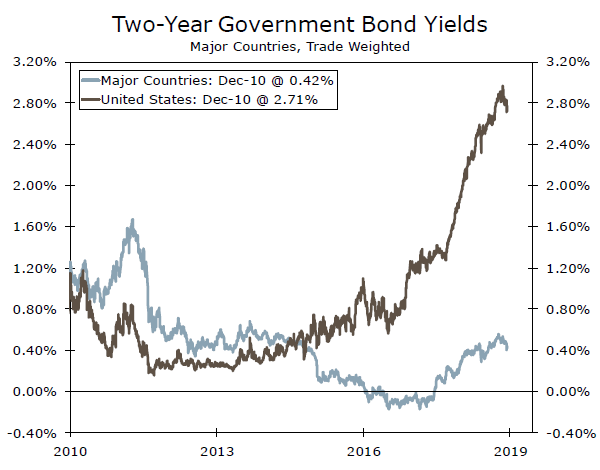
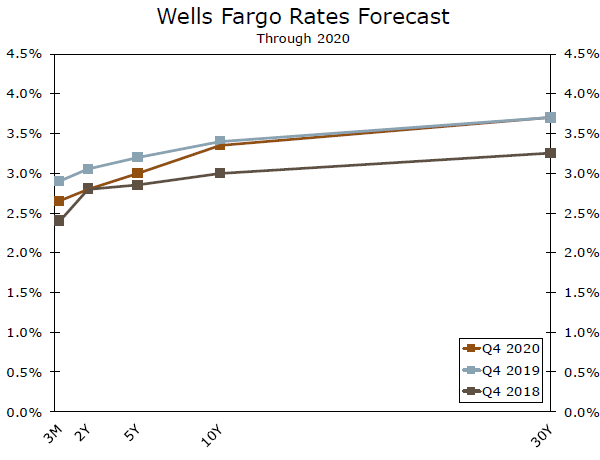
So what does this mean for U.S. interest rates in 2019? Over the past year, rates have been primarily a function of domestic developments, including steady Fed rate increases and higher budget deficits. The question now begs, does the normalization of monetary policy abroad now take the baton and help drive interest rates higher? We believe it will. In our updated outlook, we expect short-term Treasury yields to follow the fed funds rate higher, and for longer-term Treasuries to climb as well. We project the 10-year U.S. Treasury yield will end 2019 at 3.30%, roughly in line with the Blue Chip consensus estimate.
Credit Market Insights
Is Tighter Credit on the Horizon?
Throughout much of this expansion most consumers have enjoyed relatively easy credit conditions, but could the recent rise in interest rates mean consumers may face tighter credit standards in lockstep with higher borrowing costs? According to results released earlier this month from the New York Fed's October Credit Access Survey, there is some evidence of a modest tightening in credit conditions in recent months. But looking ahead, they look poised to remain relatively stable in the near term.
For example, the share of respondents who applied for credit over the past 12 months but were rejected surpassed 10% in the most recent survey, continuing its rise in recent months. At the same time, 7.2% of respondents reported lender-initiated account closures over the survey period, the largest share since the inception of the survey in 2013. But on net, the share of consumers reporting that they are likely to apply for credit in the next year still ticked up slightly over the survey period.
Based on the most recent survey results, while signs of tighter credit may be on the horizon, financial conditions still remain relatively solid in the aggregate. Indeed, in separately-released data from the Fed's Senior Loan Officer Opinion Survey for Q3, the net share of bank respondents reporting increased willingness to make consumer loans rose more than four percentage points to 14%, signaling that credit remains relatively accessible for most consumers in the near term.
Topic of the Week
To Boost Growth & Shrink the Deficit, Fix the Retirement Gap
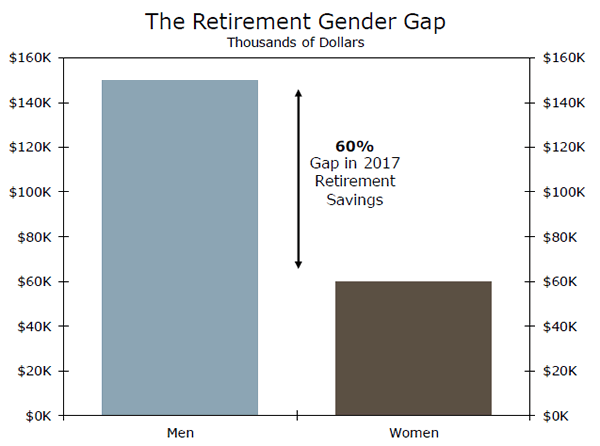
While it is far from closed, the gender gap in income is gradually narrowing, but for too many women that is small comfort as they head into their golden years without the retirement nest egg they need to sustain a vibrant retirement. According to a 2017 Wells Fargo Study, women have just 40% of the retirement savings that men have (top chart). But, given that women face unique challenges in their advancing years related to health and longevity, they will require more, not less, money than men. Those challenges are only amplified by the career and investment hurdles women face that lead to smaller nest eggs.
When half the people do not have the resources they need in retirement, it strains already tight public budgets and the Social Security system. That matters for everyone. Bolstering women's retirement savings would not only help shore up the federal budget deficit, it would also boost economic growth during women's working years.
Pushing back retirement may be the best for women (and men for that matter) to bolster retirement savings, while at the same time alleviating some pressure on public finances. Delaying retirement means more years adding to one's nest egg and fewer years over which to allocate it. Filing at a later age for Social Security increases monthly payments, further reducing the risk of outliving savings.
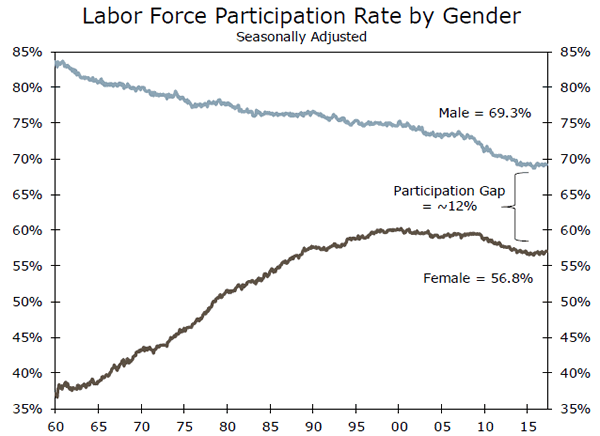
Higher labor force participation would help individuals and couples build larger nest eggs to sustain longer retirements, and is therefore a worthy policy goal for all workers. But, there is greater opportunity for women given the lower starting point (bottom chart). In the current environment where finding labor is businesses' number one issue and is actually becoming an impediment to the expansion, raising participation among women could bolster U.S. economic growth in addition to individual retirement accounts.
The Weekly Bottom Line: Stretch That Loonie (You Have To)
U.S. Highlights
- After some optimism early in the week, financial market sentiment soured as focus shifted back to fears of an escalation in trade tensions, Brexit uncertainty, and a potential economic downturn in 2019.
- The U.S. consumer remained unbowed in November, with consumer spending now tracking above 3% annualized in Q4. Inflation has cooled in line with oil prices, which should help to support real spending going forward.
- The FOMC makes its final decision of 2019 next week, and a hike is universally expected. We will be watching closely to see how members' views have changed about how many hikes will ultimately be required in this cycle.
Canadian Highlights
- Canadian builders broke ground on a few more homes in November, as starts beat expectations, reaching 216k in November, a 4.4% increase on the month.
- This week also revealed that Canadians are more stretched than previously thought. Statistics Canada reported the household debt-to-income ratio at 177.5% in Q3, revising the level up markedly on downward revisions to household incomes.
- TD Economics' revised quarterly forecast sees real GDP growth slowing from 2.1% this year to 1.8% in 2019 in the face of mounting headwinds, notably oil sector disruptions.
U.S. - "Bah! Humbug!"
After some optimism early in the week, supported by positive headlines about the lessening of U.S.-China trade tensions, sentiment turned sour to end the week. Markets seem to be channeling Dickens's curmudgeonly character Ebenezer Scrooge, saying "Bah! Humbug!" to any good news that comes along. Markets are down roughly 10% in the fourth quarter of this year as investors fret about prospects for 2019, focusing on the potential for escalating trade tensions, uncertainty about the path of Brexit, and a potential economic downturn.
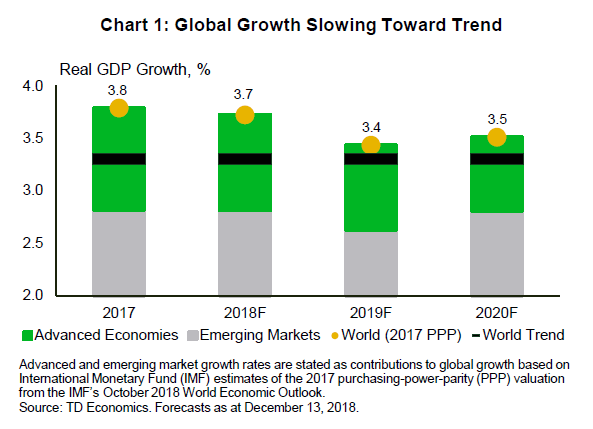
Our latest outlook did feature a small downgrade to global growth (Chart 1). However, the selloff in global risk assets in the fourth quarter has been outsized relative to the magnitude of the economic slowdown. The selloff likely reflects the build-up of unresolved global risks, coupled with a delayed adjustment in growth expectations from lofty levels. Taking a step back from the downturn in equity markets, there are few signs that the economic expansion is nearing an end, other than the fact that the expansion is approaching the longest on record. One worry is that negative sentiment can become self-fulfilling (see our Perspective). We remain vigilant in monitoring signals of an impending downturn, such as yield curves, business confidence, risk-assets, and labor market conditions.
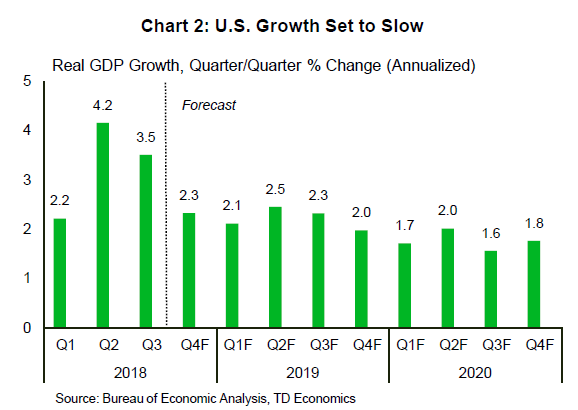
Financial market pessimism certainly hasn't yet filtered down to the U.S. consumer. The holiday shopping season appears to have gotten off to a good start in November, as retail sales were up more than expected, on top of upward revisions to October. In our latest U.S. Outlook, we also expect the overall economy to moderate towards a sustainable pace in 2019 (Chart 2). This process is already underway in the fourth quarter, where growth is tracking 2.3% after averaging 3.5% through the middle of the year. However, the consumer has more momentum. Today's retail sales report places expectations for consumer spending in the fourth quarter to 3.5%, from our recently published 2.9%.
The consumer is in pretty good shape. The job market is strong and inflation is contained. Economy-wide growth in wages and salaries has averaged roughly 4% over the past six months. And, headline inflation has cooled in line with lower oil prices. CPI inflation was at 2.2% year-on-year in November's data. Our forecast is for inflation to remain around that level through 2019. That sets the consumer up for some decent real income gains. Therefore, we expect consumer spending to slow only modestly in 2019, as the windfall from tax cuts fades, but still running at a very healthy 2-2 ½% clip in real terms.
Overall, the U.S. economy is strong, and the Federal Reserve is well justified in raising rates another quarter point at its meeting next Wednesday. The real question is how the FOMC's views have changed about how much further rates need to rise. Given the fairly benign inflation backdrop recently, we expect the Fed to hike rates more gradually in 2019.
Canada - Stretch That Loonie (You Have To)
This week saw generally soft performances across major markets, with the S&P/TSX composite index looking to end the week slightly lower. This movement comes in spite of another constructive week for Canadian energy prices, as both Albertan heavy and light benchmarks held onto recent gains.
The reversal of pricing pressures in the wake of government-mandated curtailment plans has been remarkable. In a few short weeks, the Western Canada Select heavy oil benchmark has gone from the doldrums to among the best performing commodities this year. If current pricing holds, this contract is set to end 2018 more than 5% above where it began, making it one of just a few major commodities set to end the year up.
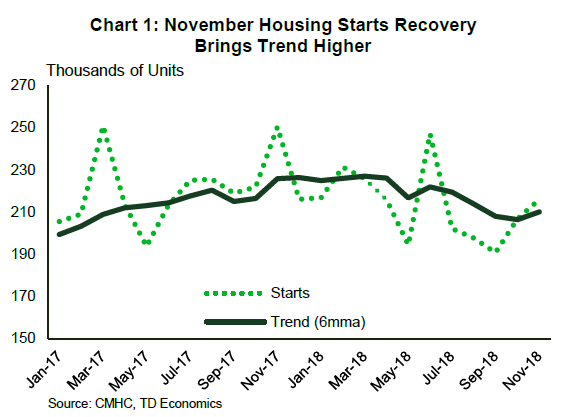
Away from markets, it was a relatively light week in terms of Canadian economic data before next week's pre-holiday deluge. Housing starts were released early in the week, with Canadian builders breaking ground on 216k new units (Chart 1). This came in ahead of market expectations, and was strong enough to bend the trend measure upwards. Encouragingly, while much of the gain came from the volatile multi-family segment, single-detached starts also rose a healthy 7.8%.
Less encouraging was Statistics Canada's release of national wealth accounts. We got a preview of what was coming with the Q3 GDP figures, which reported a household saving rate of just 0.9%, revised down by more than two percentage points. This revision came from updated tax data that revealed a much weaker household income story than initially reported. This also means that households are more stretched than previously thought.
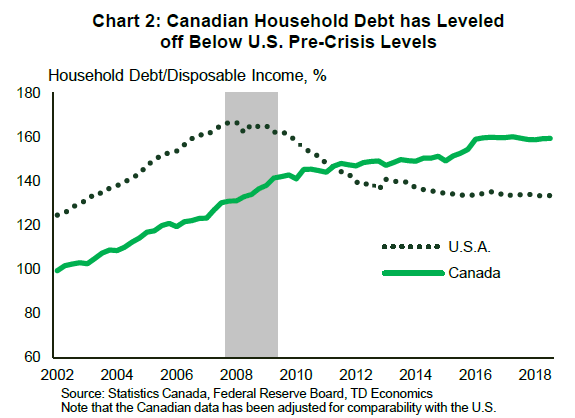
In the event, even as borrowing decelerated slightly, the household debt-to-income ratio rose to 177.5%, meaning households owe, on average, $1.78 for every dollar of disposable income. This is roughly four percentage points higher than what had been reported previously, on a like-for-like basis.
Certain to garner much attention, it may be instructive to compare this with where things sat in the U.S. pre-crisis. Once we adjust the data for comparability, we see that not only are debt ratios lower than they were in the U.S. pre-crisis, but the dynamics are different as well, with the Canadian ratio effectively flat over the past two years (Chart 2).
That said, there is no arguing that household debt levels are anything but high, and stretched Canadian households are a key factor holding back the pace of consumer spending in our Quarterly Economic Forecast. The impact of oil curtailments, alongside headwinds such as the closure of GM's Oshawa plant, is a mark-down of growth expectations. We now anticipate that output growth will decelerate from 2.1% this year to 1.8% next, before picking up again in 2020.
U.S.: Upcoming Key Economic Releases
U.S. FOMC Statement
Release Date: December 19, 2018
Previous: 2.25%
TD Forecast: 2.50%
Consensus: 2.50%
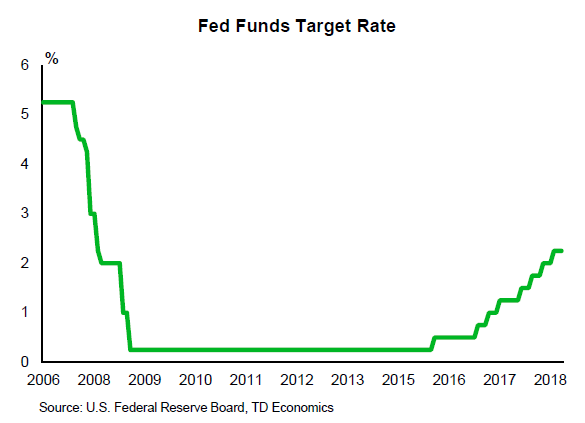
TD and the wider market look for the Fed to hike to 2.50% in December. Changes to the FOMC statement language should remove the last vestiges of forward guidance, making policy even more data dependent and hinting that policy may be approaching the end of the cycle. In his press conference we expect Chair Powell to continue to sound cautiously optimistic on the outlook and to try to calm market concerns about over-tightening. It will only take one FOMC participant to move the median dots in most years; we think a decline in the 2019 median dot to two hikes from three is slightly more likely than staying put. Conversely, we expect the median longer-run dot to remain at 3%. The overall tone of the meeting should be modestly dovish.
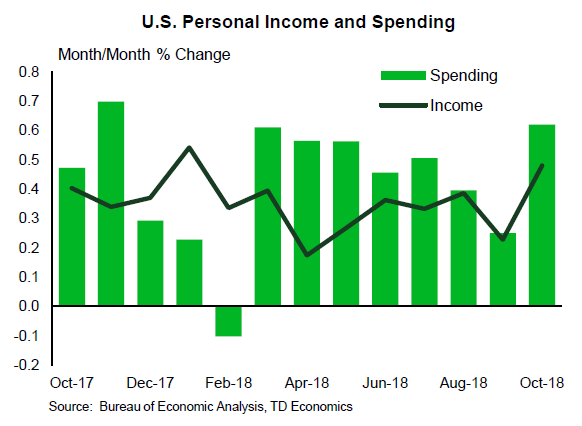
U.S. Personal Income & Spending - October
Release Date: December 21, 2018
Previous: Income 0.5%; spending 0.6%
TD Forecast: Income 0.4%; spending 0.3%
Consensus: Income 0.3%; spending 0.3%
We expect core PCE inflation to rise 0.2% m/m, pushing the y/y rate higher to 1.9%. But the past disappointment and downward revisions will still leave Q4 core inflation tracking below FOMC estimates at 1.9%, with risk for 1.8%. On a more upbeat note, we expect a strong showing for personal spending (0.4%), reinforcing another robust quarter for consumer spending above 3%.
Canada: Upcoming Key Economic Releases
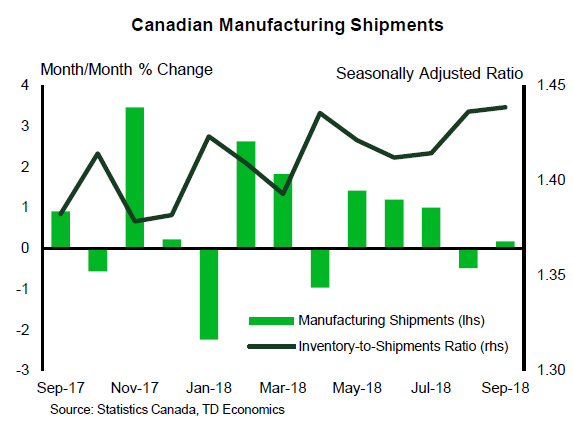
Canadian Manufacturing Sales - October
Release Date: December 18, 2018
Previous: 0.2%
TD Forecast: -0.8%
Consensus: N/A
Manufacturing sales are forecast to decline by 0.8% in October as a sharp pullback in petroleum production outweighs higher durable goods sales. The energy sector lost roughly 300k bpd of refining capacity in early October, roughly 20% of the Canadian total, due to shutdowns at the Irving facility in Saint John which will provide a significant headwind to manufacturing activity as a whole. Motor vehicles should provide a key offset on higher reported production figures, while a rebound in machinery manufacturing could add another source of strength after registering the largest decline since 2012 in the month before the CUSMA agreement. Real manufacturing sales should see a slightly larger decline on higher factory prices and should energy provide the primary source of downside we would be inclined to fade any reaction given a likely rebound next month.
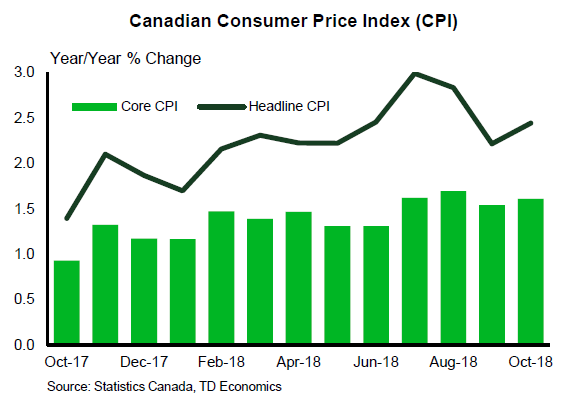
Canadian CPI - November
Release Date: December 19, 2018
Previous: 0.3% m/m, 2.4% y/y
TD Forecast: -0.4% m/m, 1.7% y/y
Consensus: N/A
November inflation is set to moderate significantly, from 2.4% to 1.7%. The main driver is energy prices, with gasoline prices down 10% m/m on the oil rout. That pushes the energy component into deflationary territory (-1.4% y/y vs +7.9% y/y previously). Food prices should provide a partial offset but beyond that the picture is not upbeat. We look for the ex-food and energy index to slide back below 2%, partially reflecting mean reversion from the strength in October. We also eye weakness in travel services and airfares, which skew risks to the downside. The recent currency depreciation (-4.5% since early October) is a net tailwind but we don't expect a noticeable lift to materialize until next month. Looking ahead, headline CPI should fall further in December on the back of lower oil prices, leaving inflation tracking below BoC's forecasts at 2.0% in Q4 (BoC: 2.3%).
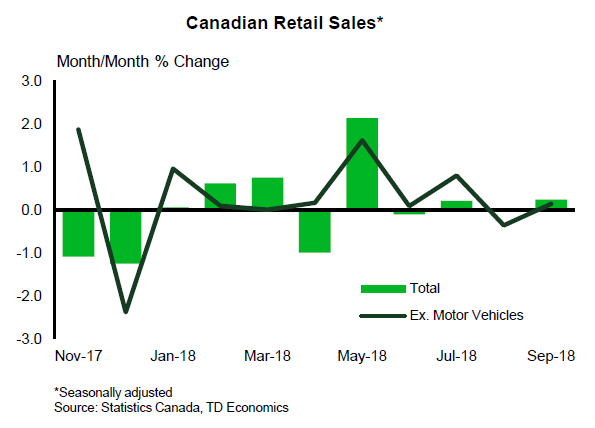
Canadian Retail Sales - October
Release Date: December 21, 2018
Previous: 0.2%, ex-auto: 0.1%
TD Forecast: 0.4%, ex-auto: 0.2%
Consensus: N/A
TD looks for retail sales to rise by 0.4% in October on further gains in motor vehicle sales along with more modest increase in ex-auto sales. Preliminary data, while volatile, showed higher sales for both trucks and passenger vehicles although ongoing softness in home sales calls into question the durability of any gains. However, residential construction has picked up through Q4 which should support a rebound in building materials following a cumulative 4% drop over the last three months. Gasoline station sales should provide a slight drag on the headline print owing to lower prices at the pump although higher prices as a whole will leave real retail sales to underperform the nominal print.
Canadian Real GDP - October
Release Date: December 21, 2018
Previous: -0.1%
TD Forecast: 0.1%
Consensus: N/A
Industry-level GDP is forecast to rise by 0.1% in October on a rebound in energy and a pickup in services. A sharp pullback in oil and gas production shaved 0.1pp from growth last month and we expect to get roughly half of that back before production cuts take effect in November. Manufacturing output will be constrained by refinery shutdowns, offsetting strength in durable goods manufacturing, while residential construction will benefit from the recovery in housing starts. On the services side, we expect a pickup from a muted 0.1% increase in September, with retail activity providing a tailwind on a recovery in auto sales although ongoing softness in home sales will weigh on real estate. This would leave Q4 growth tracking in the mid 1% range, below estimates from the October MPR.
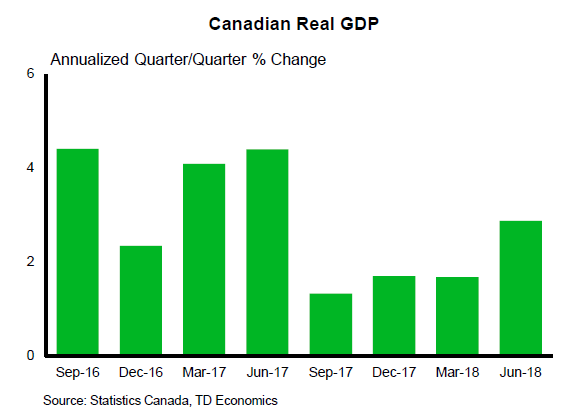
Canadian Business Outlook Survey
Release Date: December 21, 2018
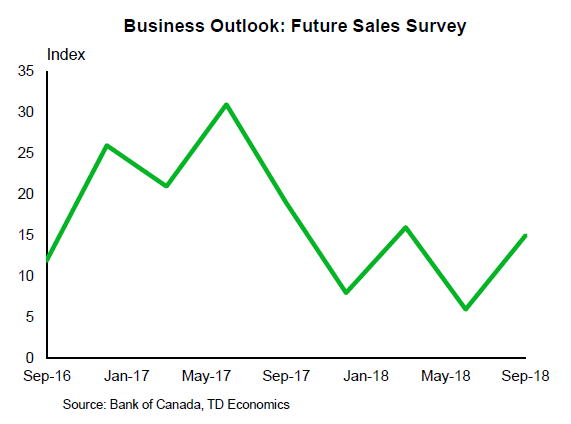
The December Business Outlook Survey should weigh increased confidence in the industrial sector against a more cautious tone from energy-producing firms. The former should feed into sustained capacity pressures and capex intentions on the heels of the CUSMA agreement and expectations of forthcoming tax relief. Previous survey periods suggest that most consultations took place before the Fall Economic Statement but anecdotal evidence of delayed investments would be hawkish and help explain Q3 weakness. The survey timing also puts it during a period of plunging crude oil prices and voluntary shut-ins. These will weigh on both the future sales outlook and inflation expectations, leading to a more balanced tone.
Dollar Higher Ahead of Crucial Fed Meeting
Safe-haven currencies soared on Friday as disappointing data from China and Europe heightened concerns over global growth. The greenback finished the week stronger against its major trading partners as investor eagerly await Wednesday’s FOMC interest rate decision and updated economic projections. The majority of economists expect the benchmark federal-funds rate to be raised by 25 basis points. Most will focus on any downgrades we see on the economic projections and clarity if the risks on housing and the global economy are starting to weigh on their outlook. The recent wave of global headwinds led many analysts to downgrade their outlook on Fed tightening for 2019, with some calling for only one or two rate rises. At the September meeting the Fed forecasted three rate increases in 2019, they will now be able to downgrade that assessment or have a wait and see approach.
• Financial markets can’t shake global growth concerns
• China to unveil policy roadmap at their annual economic policy setting meeting
• Critical rate decision week for the Fed, BOJ and BOE
Global Growth Concerns drive Safe-Haven Currencies Higher
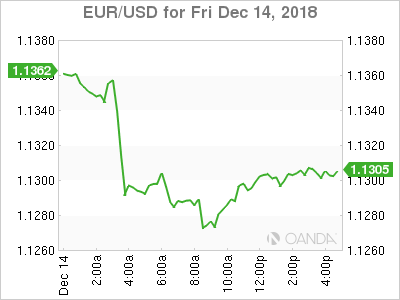
The EUR/USD fell 0.50 percent on Friday as risk aversion returned as softer data from China and the euro zone escalated concerns that economic and political risks could grow in the coming weeks. For China, industrial output was at the slowest pace since early 2016 and the retail sales reading had its worst result since 2003. The PMI readings for the euro zone, Germany, and France all came under consensus, with the focus falling France’s manufacturing and service sectors falling into contraction.
The euro whipsawed following the ECB rate decision. The statement was fairly hawkish as the asset purchase program was confirmed to end and the guidance for the first rate hike remained at least through the summer of 2019. Draghi’s presser however was more dovish as he highlighted the risks to the euro zone’s economic growth outlook remained “broadly balanced” but were shifting to the “downside,” due to geopolitical uncertainties, the threat of protectionism, emerging-market. The staff forecasts however cut both GDP and CPI for 2019.
Continued softer economic data from the euro zone is likely to push back expectations for that first rate hike. The Italian budget pledge also may not be enough and we could see that story remain in play next week. Next week’s key data will be the German Ifo Business Climate on Tuesday morning.
China unveils policy road map for 2019
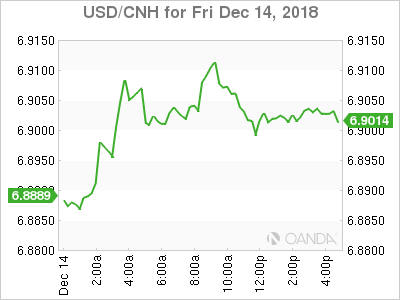
China has maintained their stance that monetary policy will continue to be supportive, but will the weakening domestic economy and intensifying trade war force the government to announce new measures. Leaders from China will have their annual economic policy-setting meeting from December 19th to 21st. They should outline their priorities, with the specific targets released in March. If China is going to become more active in the markets, we should not be surprised if we see a decision to cut the one-year lending rate. The market consensus is for the key rate to stay steady throughout 2019, but if we see China wanting to be proactive, they could act very soon.
Oil’s bearish fundamentals are not going anywhere
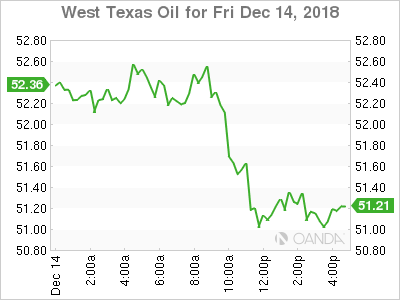
Oil prices plummeted more than 20 percent during November and are lower 2.5 percent in December. Oversupply concerns remain in place as US shale production surges and slower economic growth globally could signal falling demand.
BOJ and BOE rate decisions
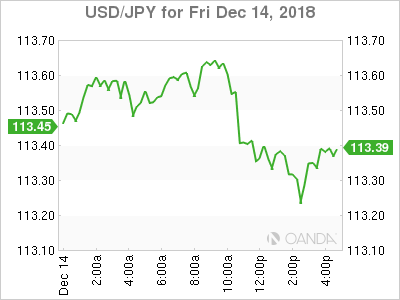
The Bank of Japan (BOJ) is not expected to make any changes to its ultra-loose monetary policy program as inflation has stalled near 1% and is not anticipated to reach the target before 2021. The Japanese economy has posted some mix data, with recent natural disasters hurting GDP and putting it at risk of hitting a recession. Reviving inflation is still the primary focus and no major new actions are expected.
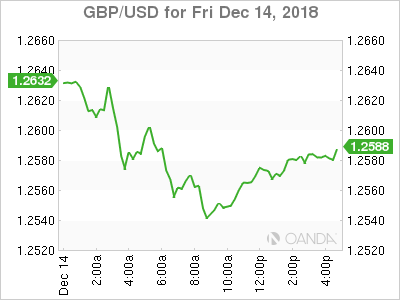
The Bank of England is expected to keep Interest Rates unchanged 0.75 percent in an unanimous vote. While the data has been mixed for the UK, Brexit will remain on the front burner. Expectations are still for BOE’s next move to be a rate hike, but we will have to wait until the February 7th meeting for further clarity.
Market events to watch this week:
Monday, December 17
- 8:30am USD Empire State Manufacturing Survey
- 7:30pm AUD RBA Minutes
Tuesday, December 18
- 4:00am EUR German IFO Business Climate
- 8:30am USD Housing Starts and Building Permits
Wednesday, December 19
- 4:30am GBP Consumer Price Inflation (CPI)
- 8:30am CAD Consumer Price Inflation (CPI)
- 10:30am USD Weekly Crude Oil Inventories
- 2:00pm USD FOMC Rate Decision/ Economic Projections
- 2:30pm USD FOMC Press Conference
- No set time JPY BOJ Policy Rate Decision
Thursday, December 20
- 7:00am GBP BOE Interest Rate Decision
Friday, December 21
- 8:30am USD Final GDP Reading
- 8:30am USD Durable Goods Orders
- 8:30am CAD GDP & Retail Sales
*All times EDT
Aussie Tanks vs Greenback (AUD/USD) after China’s Horrendous Industrial and Retail Sales Data
Since the beginning of the year, the Australian dollar has dropped sharply against the greenback, predominantly on the stronger dollar move. The US currency was stronger earlier in the year on the expectations the US economy was strong, and the Fed was poised to accelerate the pace of rate increases. The last half of the year, the focus has been on concerns China is slowing, a critical component for the Australian economy, and that trade wars amongst the two largest economies are nowhere near ending.
Poor overnight Chinese data releases
Overnight, industrial output and retail sales misses rose concerns growth is decelerating fast than expected. Industrial output for November came in at 5.4% from a year ago, the slowest pace since early 2016. Retail Sales increased by 8.1% in November but was the weakest print since 2003.
China resumes MLF operations
After skipping the prior 35 open market operations the PBOC did conduct 1-year Medium-Term Lending Facility (MLF). While the injection was mostly to cover up loans that were expiring, many are anticipating action from the PBOC as credit risks rise and economic data continues to disappoint.
All eyes on next week’s 2019 policy road map for China
China has maintained their stance that monetary policy will continue to be supportive, but many are starting to think they will need to do more sooner than expected. Next week, leaders from China will have their annual economic policy-setting meeting. They should outline their priorities, with the specific targets released in March. If China is going to become more active in the markets, we could see a decision to cut the one-year lending rate. The market consensus is for the key rate to be steady throughout 2019, but if we see China wanting to be proactive, they could act very soon.
AUD/USD Technical Analysis
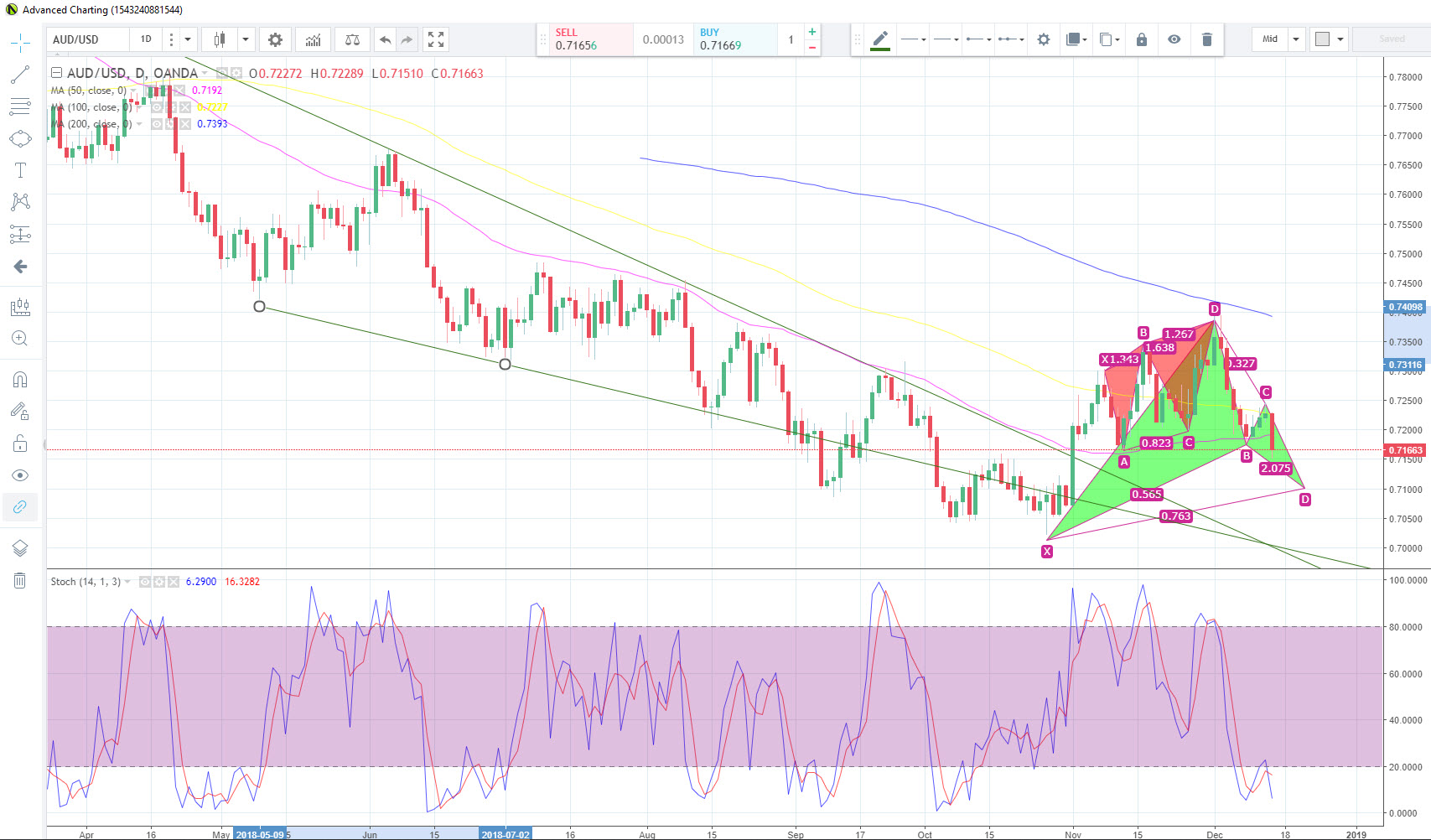
Price action on the AUD/USD daily chart shows that today’s drop is tentatively taking the daily candle below the 50-day SMA. If we continue to see commodity currencies under pressure, we could see price target the 0.7100 handle. It is around that area that we could see a bullish Gartley pattern. If valid, we could see a rebound target the 0.7200 region. If the pattern is invalidated, further pressure could target the 2018 low of 0.7020. Major support would come from 2016 low, which is the 0.6826 level
Australia & New Zealand Weekly: What Might Our Economic Forecasts Mean for Investors?
Week beginning 17 December 2018
- What might our economic forecasts mean for investors?
- Australia: Federal Budget mid-year update, RBA minutes, employment, Westpac-MI Leading Index.
- NZ: GDP, Westpac-MM consumer confidence, business confidence, current account.
- Europe: consumer confidence.
- US: FOMC policy decision, GDP 3rd estimate, durable goods orders.
- Central banks: BOE policy decision, BOJ policy decision.
- Key economic & financial forecasts.
Information contained in this report current as at 14 December 2018.
What might our economic forecasts mean for investors?
What do our economic forecasts for 2019 mean for Investors?
Our key economic themes are:
Australian economy and markets
- Growth in the Australian economy will slow in 2019 under the weight of political uncertainty; falling house prices; a contraction in residential construction; global volatility; and a softening labour market.
- Australia's commodity price Index will fall as China softens its anti-pollution policies; supply lifts; and China's economy slows.
- Housing affordability in Sydney and Melbourne is still stretched and further adjustments to affordability are necessary. With limited scope to rely on the adjustment factors of previous downturns (interest rates and strong household income growth) residential prices are set to fall further in Sydney and Melbourne through the year .
- Credit conditions are unlikely to ease significantly representing further complications. Even if prices adjust sufficiently to stabilise affordability and attract new buyers funding difficulties will complicate the recovery. In markets where affordability is not stretched credit tightening will still weaken conditions.
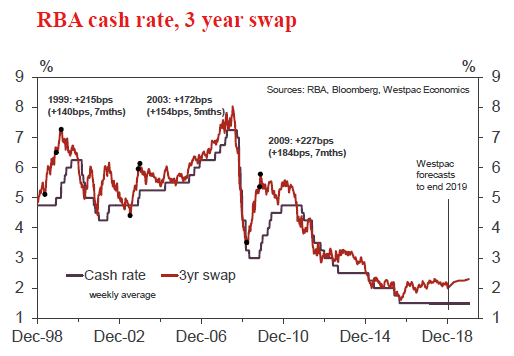
- The Reserve Bank is likely to keep the cash rate on hold through the year further widening the yield differential with the US.
- Lower commodity prices; deteriorating yield differentials; wide spread scepticism around the housing market will weigh on the AUD with a target of USD 0.68 seeming reasonable.
US economy and markets
- The bond markets are underestimating the momentum in the US economy particularly around the consumer and the resulting commitment of the Federal Reserve to higher rates.
- The federal funds rate is likely to peak at 3.125% by September (four more hikes) rather than the 2.5% which is currently factored into the market implying a potential Fed pause as early as March next year.
- The momentum of the US economy and the flexibility of the Federal Reserve to pause when growth is still around 2% and employment growth has eased to 1% leads us to expect a "soft landing" for the US economy with growth settling around 2% in 2020, from 2.5% in 2019.
- With recession and an early pause for the Fed unlikely there is going to be another wave of increases in the 10 year bond rate with a likely trough to peak move from the current 2.90% to 3.4% by September quarter next year.
- There is likely to be an extension of the fiscal spending initiatives from last year well into 2020, the Presidential election year.
- This sustained growth momentum ; a more aggressive Federal Reserve; and higher bond rates will further boost the USD which is expected to lift by a further 3% through the first half of 2019.
China and markets
- Authorities will stay the course of deleveraging; antipollution, although at a slower pace; and rebalancing the economy towards services.
- Further constraints on capital outflows will be enforced as US interest rates pressure investors.
- It seems unlikely that the Chinese authorities will be prepared to make the specific changes to their industry and trade policy that would specifically satisfy the US needs.
- These would include changes to forced technology transfer, intellectual property protection, non-tariff barriers, forced joint venture investment, cyber intrusions and government industry subsidies.
Investments
It is firstly important to note that our December Westpac Melbourne Institute Consumer Sentiment survey showed that respondents are increasingly risk averse.
The proportion of respondents who nominated real estate as the wisest place for savings was 10% –the lowest proportion since the first survey in 1974. Equities were down to 6%, the lowest since 2012, and the sum of equites and real estate was a record low.
Preferences for bank deposits and "pay down debt" dominated while the "don't know" category, printed a record high at 7%.
USD Cash
Australian investors are expected to receive a reasonable return by investing in USD cash. With the federal funds rate forecast to average 2.6% over the next 9 months an anticipated fall in the AUD/ USD from 0.72 to 0.68 by September investors would receive an annualised cash return in AUD of "around" 10%.
That would compare with around 1- 2% in AUD cash. Given the current mood of risk aversion such an option might be attractive. Of course the return is dependent on one of the key themes in our economic forecasts – a rising USD relative to the AUD.
Equities
Here the outlook is much more complex and the economic/ market environment which we forecast on balance sends a signal to be cautious until the second half of 2019.
Our best view is that equity strategies should recognise two separate phases. Currently, valuations are not stretched (as noted by Chairman Powell) as they were at the beginning of 2018 where forward PE ratios (S&P 500) averaged nearly 19.
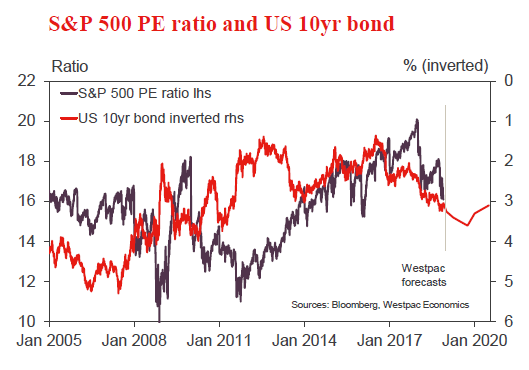
They are now down to around 16.0 (around average over previous cycles). These valuations are based on quite solid forward earnings estimates and the risk is always that earnings estimates prove to be overly optimistic.
The markets' expectations for bond rates are quite different to our own views. An increase in the 10 year bond rate over the first nine months of 2019 from the current 2.9% to our target 3.4% and a rising USD could weigh on equity prices.
Markets are also basing the current outlook on prospects for a sharp slowdown through end 2019 and into 2020, (signalled by the current low bond rates and flattening of the US yield curve).
Our current expectation is that growth in the US will hold around 2% through 2020. With the Federal Reserve expected to be on hold after September next year; bond rates falling, and a lower USD, earnings can be expected to hold up.
Other developed equity markets are likely to reflect the US market and, indeed, likely to underperform as US economic and earnings growth continues to exceed growth in those markets. Consider 2018 where a flat US market outperformed Europe (– 12%); Japan (–5%) and Australia (–5%).
However, once the USD and US interest rates fall in response to the "on hold" Federal Reserve we would expect the US market to lift and provide a solid boost to other markets.
Our economic forecasts envisage the US economy settling into a stable growth environment supported by a lower currency and lower bond rates.
In summary, the best alternative seems to be to restrict most exposure to the cash option until it is clear (we expect around September) that the federal funds rate has peaked.
Property
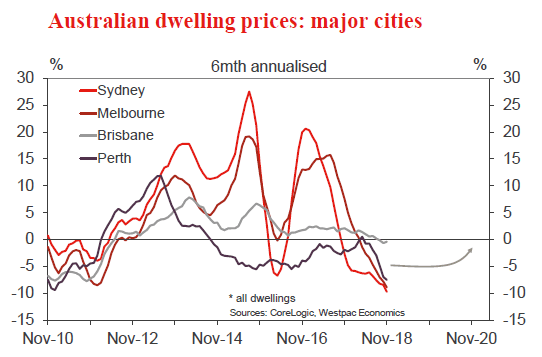
Residential property prices are already falling in Sydney and Melbourne and with limited flexibility or desire to cut rates by the RBA there is likely to be a full year in 2019 of house prices falling further particularly in Sydney and Melbourne.
Westpac's "Time to Buy" index from its Consumer Sentiment survey has recently lifted indicating some recovery in interest from owner occupiers but, as discussed, only 10% of respondents in the survey nominate real estate as the "wisest place for savings" – the lowest proportion since 1974. Investors are clearly cautious about residential housing.
For the US the housing market is at a very different stage in the cycle. Robert Shiller, using his highly regarded Case – Shiller Index, estimates that prices have lifted by 53% in the current boom (2012 to present) exceeded only by the pre GFC (1997– 2006) boom (76%) and the post war (1942–1947) boom (60%).
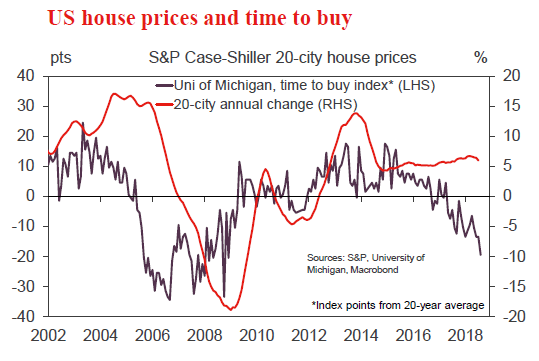
The "Time to Buy" Index from the Michigan survey has turned negative, and with our profile for the Federal Reserve policy and the outlook for bond rates a significant turning point in the US housing market seems very likely.
That will provide the Federal Reserve with additional reason to pause. However, the US banking system is well capitalised and it seems highly unlikely that the economy will be impacted by the highly leveraged liquidity crunch which under-pinned the GFC.
Nevertheless, residential housing in the US seems a very unattractive prospect if we are correct about the Fed's interest rate policies.
The week that was
"Continued confidence with increasing caution" was how ECB President Draghi described his view of the outlook this week. But it also describes the view of Australian consumers and businesses, and indeed how all are approaching the rolling malaise that is Brexit in the UK.
Beginning with the Australian consumer, our Westpac–MI Sentiment report for December highlighted confidence in the economy, with optimists continuing to outnumber pessimists. On a 1 and 5-year forward view, expectations over the economy are well above average. Arguably this view is built on the strength of the labour market, highlighted in our survey by below-average unemployment expectations. The atmospherics that surround this report were also favorable however, in particular: a growing belief that rates are on hold for the foreseeable future; and a 20% decline in petrol prices since November. At a time when house prices have declined significantly in Sydney and Melbourne, and there remains unease over real wages growth, this is quite a remarkable result for sentiment.
The effect of weak wages growth, declining house prices and cost of living pressures on households' willingness to consume and invest is clear nonetheless. 'Time to buy a major household item' was below average and down on a year ago at December – as were Christmas spending plans in the November report. On housing, despite an improvement in recent months as prices have fallen, 'time to buy a dwelling' remains below average. More broadly on risk aversion, nearly two thirds of consumers now preference 'safe options' (deposits, superannuation and pay down debt), while only 10% favour housing – a low back to 1974. Pessimism over house price growth in Sydney and Melbourne is enduring.
For business, two reports were received this week. First from NAB, the November business survey reported current conditions still above average, but trending lower. A slightly below-average read for confidence in the month is indicative of businesses expecting a further easing of conditions ahead. The deterioration is being seen across the nation, but particularly in NSW and Victoria – where conditions were previously the strongest. Nonetheless, business remains favourably disposed towards robust employment growth and business investment. This implies that GDP growth should settle around trend in 2019 – as we anticipate.
Focusing in on the manufacturing sector, our Australian Chamber–Westpac Survey of Industrial Trends again reported strong conditions in Q4 2018, aided by continued strength in construction and public infrastructure spending as well as the lower Australian dollar. With reference to employment and investment, this survey corroborates the view of the NAB survey.
Moving offshore, this week Europe has captured the headlines. Responding to a further deterioration in the growth pulse during the second half of 2018, the ECB edged their growth forecasts down at their December meeting – albeit while keeping it above trend through to 2021. The Council also refined their characterization of the risks as "broadly balanced" but "moving to the downside" thanks to trade protectionism, emerging market vulnerabilities, financial market volatility and now geopolitical factors.
Regarding policy guidance, rates on hold until "at least through the summer of 2019, and in any case for as long as necessary" was retained; and there was also a commitment to continue asset purchase program reinvestment "for an extended period of time past the date when we start raising the key ECB interest rates and [again] in any case for as long as necessary". The ECB is clearly set to remain on the sidelines for a while yet.
On political matters, uncertainty around Brexit was amplified (again) this week after the UK Parliament vote on the draft deal with Europe was pulled at the last minute and a vote of confidence was subsequently called on UK Prime Minister May's leadership. By winning the vote, PM May secures the leadership of her party for a year and, given her clear commitment to it, locks in the Brexit process. PM May is now reportedly seeking 'further assurances' from European authorities in an effort to make the draft deal agreeable to UK Parliament. Based on available reports, this seems a tall order. All the while, the 29 March 2019 Brexit date creeps nearer. Market participants have largely kept the faith until now, but greater volatility seems likely come 2019 if the impasse persists.
Chart of the week: Westpac Market Outlook
Thinking forward to 2019, our December/January Market Outlook has just been released. In it, we detail our expectations for Australia; New Zealand; Asia; and the North Atlantic with respect to their economies and financial markets. Key themes for the new year include: a growing rate differential between Australia and the US; geopolitical tensions, particularly between the US and China; and, of course, market sentiment, to be buffeted by the above factors along with slower global growth.
New Zealand: week ahead & data wrap
Trundling along
Recent data suggests that the New Zealand economy is continuing to trundle along slowly but steadily, a view that should be supported by next week's GDP figures. We expect a modest pickup in growth over the next couple of years, supported by a lift in fiscal spending that will be even larger than the Government is currently signalling.
This week the Government released its Half-Year Economic and Fiscal Update (HYEFU). At face value, the change in the outlook since the May Budget might appear to be negative – lower GDP growth and smaller operating surpluses for the next few years. But digging into the details reveals a less concerning story.
The Treasury was previously forecasting a sharp acceleration in GDP growth in the near term, an assumption that we described at the time as 'heroic'. The updated forecasts now see growth picking up modestly to around 3% per annum – much in line with our view and with the range of market forecasts.
While the forecasts of real GDP have been revised down, the Treasury has also raised its inflation forecasts. At the May Budget, inflation was forecast to remain below 2% for several more years, despite strong domestic growth. Now the Treasury is essentially expecting the Reserve Bank to meet the 2% midpoint of its inflation target consistently over the coming years. Again, this brings the Treasury more in line with market forecasts.
Consequently, the forecasts for nominal GDP – which is what matters for the tax take – were little changed from the Budget. Indeed, the tax revenue projections were actually slightly higher than in the Budget, to reflect the fact that the tax take has been surprising to the upside in recent times.
The lower surplus forecasts were largely the result of some reallocation. The surplus in the June 2018 fiscal year was $2.2bn larger than expected, most of which was due to an unintended shortfall in spending towards the end of the year. That underspend is likely to be caught up this year, resulting in a $2bn reduction in the forecast surplus for June 2019. Lower surplus forecasts in the following two years were mostly due to a reclassification of some transport spending from capital to operational, with no impact on the funding requirement.
The bottom line of the HYEFU was that there is still plenty in the tin for more fiscal spending. The Government has overachieved on its self-imposed Fiscal Responsibility Rules: net debt is set to fall below 20% GDP sooner than expected, and forecast operational spending is well below the cap of 30% of GDP. Despite that, the Government did not signal an increase in its spending plans – the allowance for new spending in future Budgets remains at $2.4bn per year.
We doubt that the Government's hands will stay off the piggy bank forever. The New Zealand public tends to ask for a slice of the action when it sees a large surplus. And the current Government faces the added pressure of having to satisfy the interests represented by three political parties. We suspect that the Government will announce an increase in spending plans closer to the time of the next election.
Next week sees the release of the balance of payments and GDP, rounding out the picture of how the economy performed up to the September quarter. We're expecting a modest 0.5% rise in GDP (Thursday), following a 1% jump in the June quarter that benefited from one-offs in certain industries. Milk production was significantly above trend in the June quarter; it was only modestly above trend in the September quarter. Electricity demand fell in the September quarter, and lower hydro lake levels meant a greater reliance on higher-cost methods of generation. On the positive side, the mining sector appears to have rebounded from the shutdowns that affected the June quarter. And, as noted above, government spending fell short in the June quarter but has been catching up in recent months.
We expect the current account deficit (Wednesday) to widen from 3.3% to 3.6% of GDP, which would be the largest in five years. The trade balance has been hindered by lower dairy production and rising oil prices over the last couple of years, but these factors are starting to reverse. The current account is still on a path that we would consider to be sustainable over the longer term.
Other recent data releases suggest that the economy has continued to trundle along since September. Electronic card spending was down 0.4% in November, but this was influenced by a sharp fall in petrol prices during the month. Spending in the core retail sectors was up 0.5%, suggesting continued modest growth in consumer spending.
November house sales fell 8% in seasonally adjusted terms, unwinding most of the 13% spike in October. House prices eked out small gains across most regions. We're expecting a more lively housing market over summer, due to the sharp fall in mortgage rate in recent months and the loosening of the Reserve Bank's loan-to-value restrictions. However, we still expect this boost to be temporary, with other Government polices likely to temper house price gains.
Finally, we note that the Reserve Bank has released a consultation paper on bank capital requirements. Higher bank capital provides a greater buffer against losses during downturns (and provides more confidence that those losses will be borne by shareholders rather than taxpayers). The flipside is that capital is a more expensive form of funding for banks, resulting in higher interest rates for borrowers and more constrained credit growth. The Reserve Bank is proposing a substantial increase in banks' capital from their current levels, though the final requirement will be determined next year after a consultation period.
Data Previews
Aus Federal budget, 2018/19 mid-year update, AUDbn
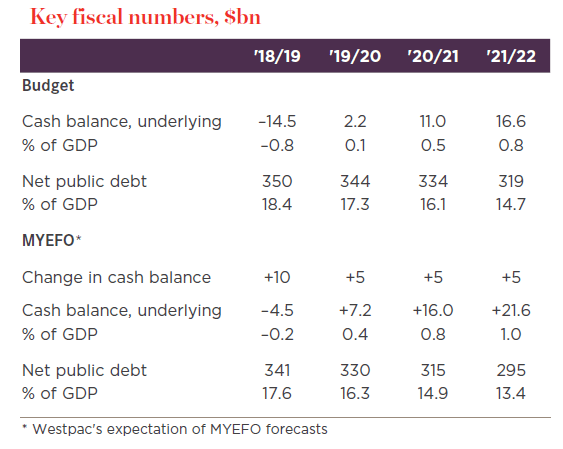
- Dec 17, Last: –14.5(pr), WBC f/c: –4.5
The Federal Government's Mid-Year Economic and Fiscal Outlook (MYEFO) will see upgrades to the budget position as a stronger (nominal) economy boosts revenues.
National income has surprised to the high side, on higher commodity prices, and jobs growth has outperformed.
Nominal GDP growth for 2018/19 will be upgraded (5.0% from 3.75%). Real GDP growth for this year will be rounded down (2.75% from 3.0%) but out years are likely to remain at 3% - although the housing downturn is a downside risk.
On our figuring, the forecast budget position for this year and next is: -$4.5bn (a $10bn upgrade) and +$7.2bn (a $5bn upgrade). This factors in modest new spending, in the order of $1bn this year and $2bn in 2019/20.
Aus Nov Westpac–MI Leading Index
- Dec 19, Last: 0.08%
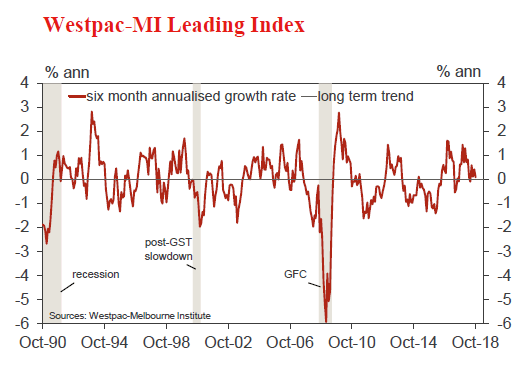
The six month annualised growth rate in the Westpac– Melbourne Institute Leading Index, which indicates the likely pace of economic activity relative to trend three to nine months into the future, slowed to +0.08% in October, down materially from the 0.89% averaged over the six months to April. That moderation is consistent broadly with the moderation seen in the Q3 national accounts and suggests the slowdown will extend into late 2018 and early 2019.
The Nov index looks likely to be soft again with component updates on: the ASX200 (down -2.8% vs -6.1% last month); the Westpac-MI Consumer Expectations Index (down -0.7% vs +4.7% last month); commodity prices (down -1.2% in AUD terms vs +4.4% last month); dwelling approvals (down -1.5% vs +5.5% last month).
Aus Nov Labour Force Survey - Employment '000
- Dec 20, Last: 32.8k, WBC f/c: 20k
- Mkt f/c: 20k, Range: 10k to 35k
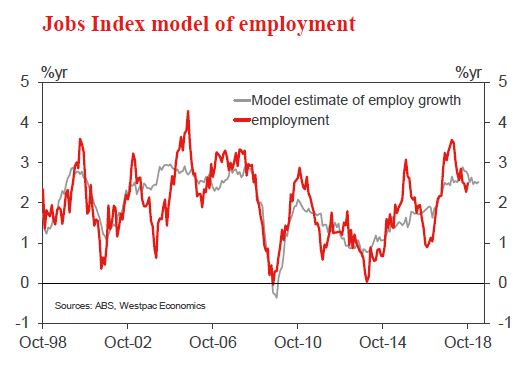
The expected bounce in employment appeared in the October Labour Force Survey with a 32.8k rise. The market median was for 20k. However, just as in September, the mix was also positive with a 42.3k rise in full-time and a small 9.5k decline in part-time employment. In addition hours worked rose 0.3% following a 0.4% gain in September.
November is a slightly positive seasonal month and the original data suggests that a sound gain in November is possible. The business surveys, while moderating, are not pointing to a meaningful slowdown in employment growth.
The ABS released the preliminary re-benchmarking based on the census 2016 final Estimated Resident Population benchmarks. October employment is now +31.8k and Westpac is forecasting a 20k gain in November. Risks are balanced as the outgoing sample group has the same employment to population group as the sample average,
Aus Nov Labour Force Survey - Unemployment %
- Dec 20, Last: 5.0%, WBC f/c: 5.0%
- Mkt f/c: 5.0%, Range: 4.9% to 5.1%
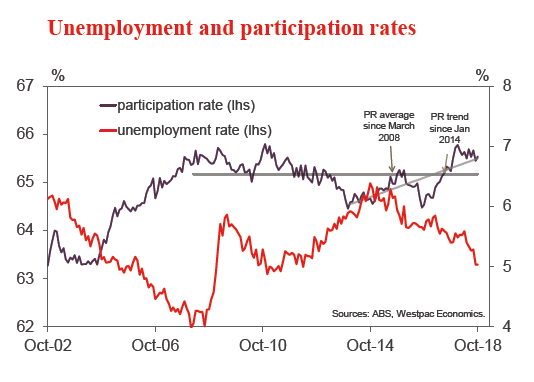
The more important observation from October was the continuation of the trend improvement in unemployment. In the month. Unemployment was flat at 5.0%, but this is a good result seeing as the 0.3ppt drop in unemployment to 5.0% in September was due to a large drop in participation rather than a strong employment print. As such, there was always a risk participation would bounce in October. Participation did lift but the 0.1ppt rise to 65.6% still left it under the 65.7% print in August.
Holding participation flat at 65.6%, a 20k gain in employment is enough to hold the unemployment rate flat at 5.0%. In terms of risk, the ABS notes that in November, the sample group rolling out of the survey has a higher unemployment rate than the sample average so rolling that group out will lower the average. All else held equal, this presents downside risk to our unemployment forecast for November.
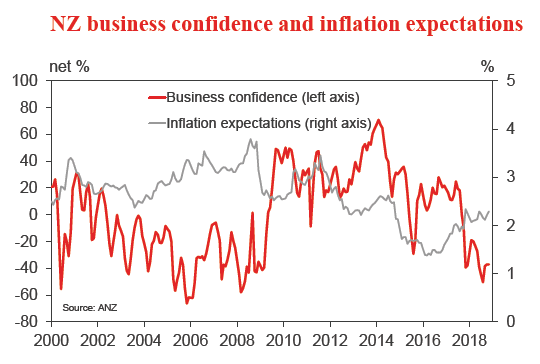
NZ Dec business confidence
- Dec 18, Last: –37.1
Business sentiment was unchanged at a low level in November.
It's a relatively short interval between the release of the November and December surveys and there have been few economic developments in the interim.
That said, there have been recent announcements of changes made to concessions made in order for the Government to get its Employment Relations Bill over the line. With changes to employment law one factor that has likely been weighing on sentiment, this could be viewed as a positive development by businesses.
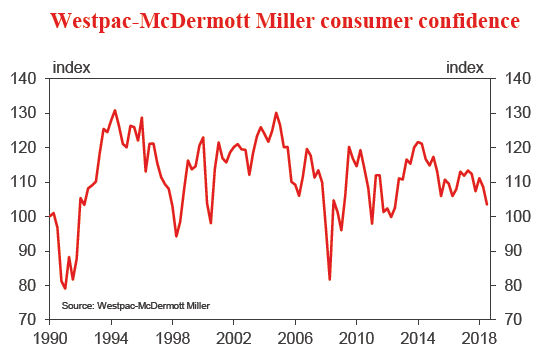
NZ Q4 Westpac McDermott Miller Consumer Confidence
- Dec 19, Last: 103.5
Consumer confidence fell sharply in September, dropping to its lowest in six years.
That fall occurred against a backdrop of rising petrol prices and a cooling in the housing market. Those developments saw households highlighting increased concerns about the outlook for their own finances and the economy more generally over the next year.
Since the time of the last survey, we've seen falls in interest rates and petrol prices, a resurgence in the housing market, and positive news on the labour market.
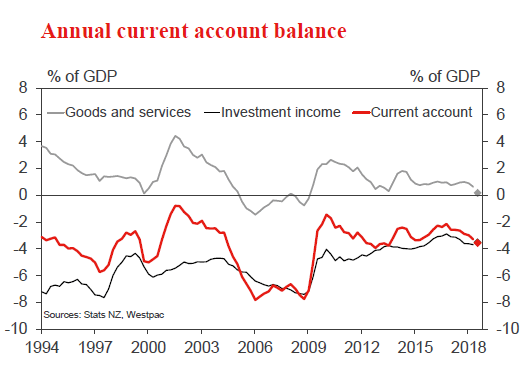
NZ Q3 current account, % of GDP
- Dec 19, Last: -3.3%, Westpac f/c: -3.6%, Mkt f/c: -3.6%
We expect the annual deficit to widen from 3.3% to 3.6% of GDP. While the quarterly balance for September should improve compared to June, it remains wider compared to the same time last year.
In seasonally adjusted terms the goods trade balance improved in the September quarter, with a strong lift in export volumes and a drop in import volumes. This was partly offset by a fall in services exports, as tourist spending reversed a sharp jump in the June quarter. We expect investment income flows to be little changed.
Lower milk production and rising oil prices have played a part in the widening of the deficit over the last couple of years, but these factors are starting to reverse their course. The current account remains on a path that we would consider to be sustainable over the longer term.
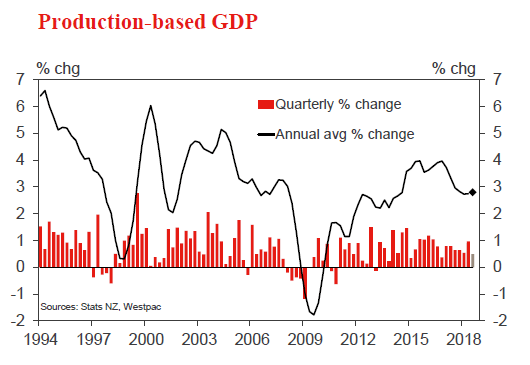
NZ Q3 GDP
- Dec 20, Last: 1.0%, Westpac f/c: 0.5%, Mkt f/c: 0.6%
The June quarter GDP result reflected some large one-off moves across several sectors that, on balance, provided a substantial boost to growth. We expect growth to drop back to a more modest 0.5% in the September quarter as some of those one-offs are unwound.
The underlying story is of an economy that continues to trundle along. Consumer spending growth has remained modest, as a boost to household incomes from government transfers has been offset by rising fuel prices and a subdued housing market.
The September quarter release will include the annual round of data revisions, which can alter the picture of how the economy has been performing in recent times.
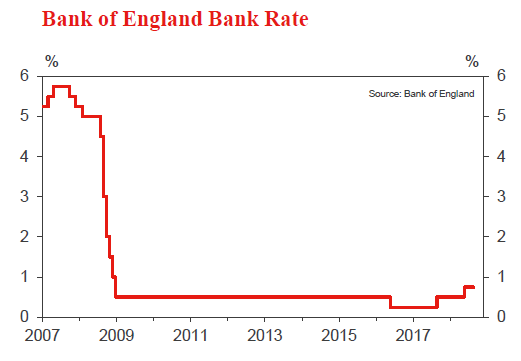
UK Bank of England Bank Rate
- 20 Dec, Last: 0.75%, WBC f/c: 0.75%, Mkt f/c: 0.75%
The Bank of England left the Bank rate at 0.75% at its November policy meeting. And with Brexit negotiations and the UK's economic outlook mired in uncertainty, there's no chance of a rate hike at the December interest rate decision.
The real focus will be on the BOE's rhetoric and its description of the risks around the outlook. In November, the BOE maintained a very modest tightening bias, noting that future increases were likely to be "at a gradual pace and to a limited extent". However, the Bank's assessment was contingent on a smooth Brexit transition, and they noted that this was a key risk for the outlook. Now, with Brexit in turmoil and likely flow–on impacts for confidence, the Bank is likely to emphasise the conditionality of its forecasts even more strongly. That could also be reflected in a softer bias statement.
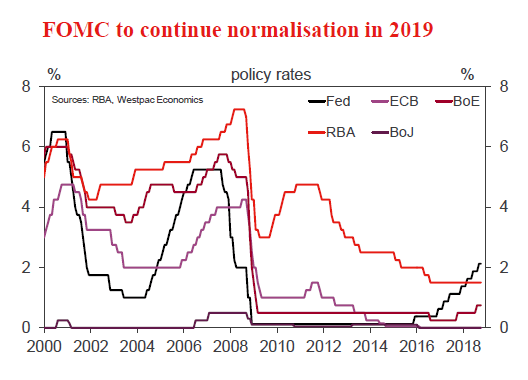
US Dec FOMC meeting
- Dec 18–19, federal funds rate, last 2.125%, WBC 2.375%
In recent weeks, the market has materially reduced their expectations for rate hikes over the coming year. However, pricing for the December meeting itself has remained firm.
The basis for this view is sound, with the US economy in strong form, and the FOMC remaining of the view that, while there are risks, underlying momentum should remain above trend.
Given the tension between the FOMC's 2019 view on rates and that of the market, the quarterly revision to forecasts and the tone of Chair Powell's press conference will be assessed very carefully. While we believe that these communications are likely to acknowledge the risks and the data-dependent nature of policy, we foresee the Committee continuing to forecast multiple rate hikes through 2019. We anticipate one per quarter to 3.125% at September 2019.
Week Ahead – Fed Decides as Pressure Grows to Pause Rate Hikes; BoE and BoJ Meet Too
The Federal Reserve’s policy meeting will be the main attraction next week as speculation grows the US central bank could signal slowing down the pace of rate hikes. Policy meetings by the Bank of England and Bank of Japan are not expected to draw as much attention. Instead, economic data will be grabbing the headlines for the rest of the week as inflation, retail sales and GDP figures are due for a number of major markets, including, Canada, Japan, the United Kingdom and the United States.
New Zealand to post Q3 GDP numbers
Somewhat late to the Q3 GDP party, New Zealand will publish its estimates of growth on Thursday. Ahead of that, the ANZ business outlook index for December will be watched on Tuesday, as well as third quarter current account figures on Wednesday. More trade stats will follow on Thursday with the release of monthly export data for November.
New Zealand’s GDP probably grew by a solid 0.6% quarter-on-quarter rate in the three months to September as other indicators for the period were mostly positive. However, business confidence remains low and could undermine future growth prospects. Any disappointing aspect from next week’s numbers could therefore push back the expected timing of a rate hike by the RBNZ, which would be negative for the New Zealand dollar.
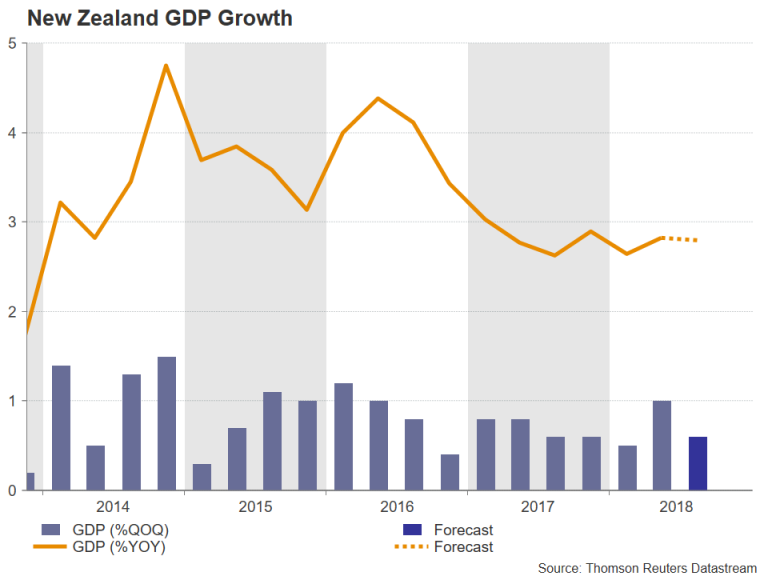
The kiwi recently scaled a near 6-month high on the back of improving risk sentiment. The Australian dollar was another currency benefiting from the positive market mood. However, a worse-than-expected growth performance in Q3 in Australia later led to a pullback from those gains. Investors will next be looking to Thursday’s November employment report for clues to how the economy is faring in the current quarter, with the aussie likely to be sensitive to any surprises in the figures. Australia’s unemployment rate is expected to have held steady at 5% in November. Prior to the jobs data though, the RBA’s minutes of the December policy meeting will fall under the limelight on Tuesday.
Canadian inflation and retail sales eyed
Sticking to commodity-linked currencies, the Canadian dollar could be sailing through some choppy seas next week as several key releases are due out of Canada. Starting the week are manufacturing sales for October on Tuesday, followed by November CPI figures on Wednesday, and retail sales and GDP numbers for October on Friday.
A positive trend from next week’s economic gauges could help the loonie move off recent 1½-year lows. The currency has been struggling after the Bank of Canada struck a dovish tone at its December meeting, while the very modest rebound in oil prices hasn’t done the loonie any favours either.
Will the Fed deliver a dovish hike?
The Fed will be the first of the major central banks to conclude its two-day monetary policy meeting on Wednesday. Federal Open Market Committee (FOMC) members are widely anticipated to raise the fed funds rate for the fourth time this year. But there has been rising speculation that the Fed is about to go into slower gear as fears mount of a global economic slowdown in 2019, with the recent slide in oil prices further dampening inflation expectations. Should the Fed forecast fewer rate increases in 2019 and also lower some of its growth and inflation projections, the US dollar could come under the firing line in forex markets.
Fed Chairman Jerome Powell will have to explain the central bank’s revised forecasts first to reporters, at the post-meeting press conference, and then to US lawmakers, at the Congressional testimony on Friday.
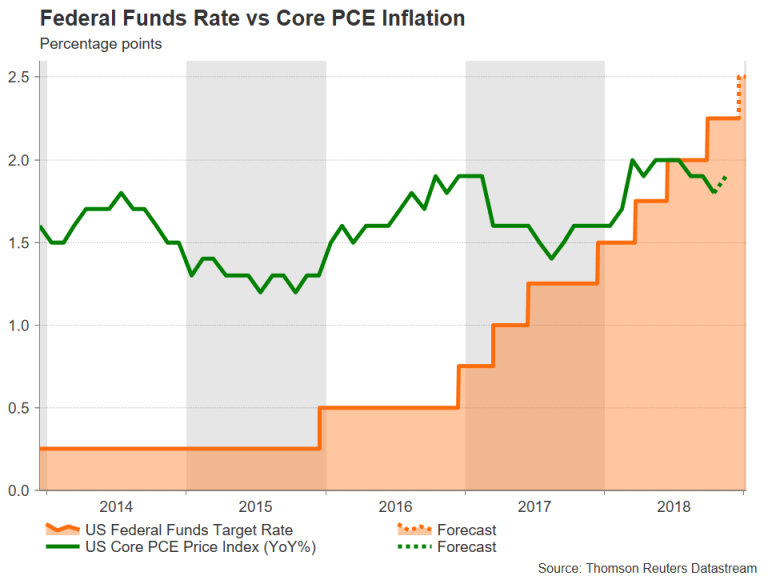
US data will also be watched next week with plenty of economic releases on the horizon. First up is the Empire State manufacturing index for December on Monday. On Tuesday, the focus will turn to the housing sector as building permits and housing starts for November are due, with existing home sales coming up on Wednesday. On Thursday, the Philly Fed manufacturing index is out, and on Friday, there will be a barrage of data to wrap up the week, including durable goods orders, final Q3 GDP estimates and the personal income and outlays report.
Durable goods orders are forecast to bounce back by 1.8% month-on-month in November after a 4.3% fall in the prior month, while the final estimate of third quarter growth is predicted to be left unrevised at an annualized 3.5% rate. But the highlight in Friday’s figures will likely be the PCE inflation and consumption numbers. Both personal income and spending are both forecast to rise by 0.3% m/m in November, easing somewhat from October. More importantly, the Fed’s preferred inflation measure, the core personal consumption expenditures (PCE) price index is forecast to edge up from 1.8% to 1.9% year-on-year in November, though this is still below the Fed’s 2% target.
Bank of Japan to stand pat once again
Just hours after the Fed’s decision, the Bank of Japan will announce its policy decision on Thursday. The BoJ is not expected to make any changes to its ultra-loose monetary policy program as inflation has stalled around 1% and is not anticipated to reach the target before 2021. And with the Japanese economy losing some momentum in 2018, the BoJ is unlikely to make further tweaks to its stimulus program anytime soon.
Trade and CPI also due from Japan next week are expected to confirm the subdued growth and inflationary conditions. Data out on Wednesday is forecast to show annual export growth slowed to just 1.8% last month. Inflation figures will follow on Friday, with core CPI projected to stay unchanged at 1% y/y in November.
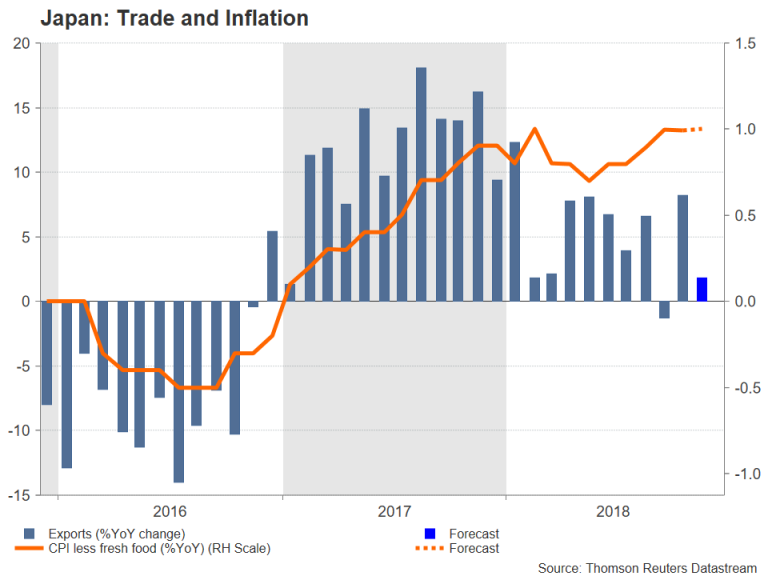
The yen could see some small reaction from any surprises in the numbers or the BoJ’s statement. However, yen traders will probably be paying more attention to what the Fed says and how the trade war story plays out in the next seven days.
No changes from Bank of England
As British politicians continue to wrangle over Brexit, UK economic indicators could once again take the backseat, especially if the prime minister, Theresa May, decides at the last minute to reschedule the vote for her Brexit deal for next week. Nevertheless, the flurry of releases as well as a Bank of England policy meeting run the risk of adding to sterling’s bearishness.
The November CPI report is out on Tuesday and the headline rate is forecast to ease to 2.3% y/y from 2.4%. The core rate is also expected to moderate, to 1.8%. Retail sales will follow on Thursday, and finally on Friday, the second estimate of GDP growth for the third quarter will be published, with no revision being predicted to the initial reading of 0.6% q/q.
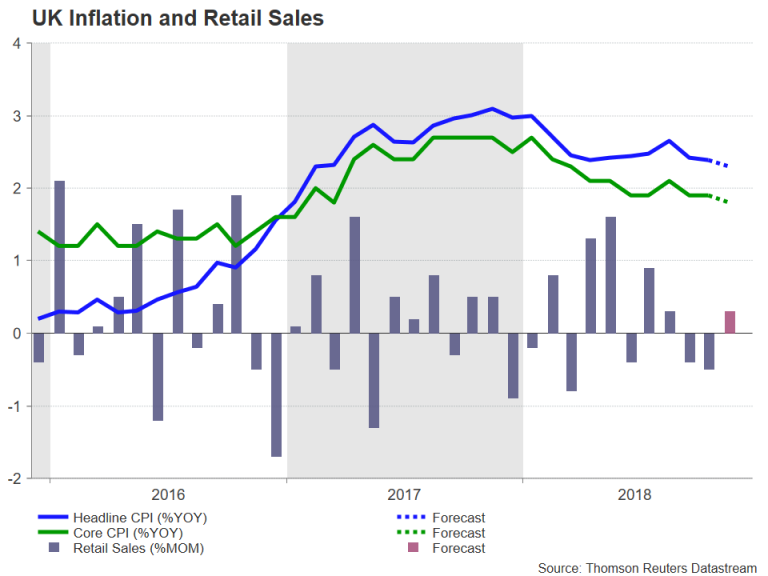
Moving back to Thursday, when the BoE will announce its latest monetary policy decision, the meeting could turn out to be a non-event as there will be no press-conference or quarterly projections. However, it’s possible the BoE could sound more cautious in its statement as the Brexit uncertainty and political turmoil have started to take their toll on the UK economy. Any dovish tilt in the wording of the statement would pressure the pound, which this week touched a 20-month low.
Quiet week for the Eurozone
The euro could struggle to break out of its current tight range over the next week or so as the Eurozone calendar is looking relatively light. The only major releases are the final November CPI print (Monday) and the German Ifo business sentiment survey (Tuesday). The closely-watched Ifo business climate index is expected to slip further in December from 102.0 to 101.7. Lastly, the flash reading of the Eurozone consumer confidence index for December is due on Friday.
Also noteworthy in Europe next week is the policy meeting by the Riksbank – Sweden’s central bank – on Thursday. The Riksbank has indicated that it plans to begin raising its repo rate either in December or February. December had been the favourite by many analysts but recent soft data on GDP and inflation have lowered the odds for a hike this month to around 50%. If the Riksbank delays a move but strongly signals an increase in February, the Swedish krona is unlikely to suffer significant losses. However, if the central bank lowers its forecasts for the repo rate, the krona could come under selling pressure.
China Weekly Letter: Improvement in Trade War, Deterioration in Tech War
- Positive signals on the trade front despite tensions in other areas
- The 'tech war' moved to the next level - US tech could be caught in the crossfire
- More signs of economic weakening - it gets worse before it gets better
Both sides keen on making a trade deal
While the US-China 'tech war' has moved to the next level (see below), we keep getting positive signals on the trade front. This week China bought the first batch of soybeans from the US since the ceasefire deal. China has also agreed to cut car tariffs on US cars to 15% from the current 40% rate for three months starting on 1 January. It will likely be a permanent reduction if a trade deal is made. In addition, several media reported that China has agreed to make changes to its industrial policy 'Made in China 2025' strategy, which is China's strategy to take the next leap in technology. According to some sources, China may delay some of the targets by a decade to 2035, see Bloomberg and WSJ.
In another sign that US President Donald Trump is keen on making a deal, Trump stated he could intervene in the case of the arrest of Huawei's CFO: 'If I think it's good for what will be certainly the largest trade deal ever made, which is a very important thing…I would certainly intervene, if I thought it was necessary '. According to experts, this would actually be legal, although it would set a bad precedent, see New York Times. In a tweet Trump also said 'Very productive conversations going on with China. Watch for some important announcements'. US Commerce Secretary Wilbur Ross also struck an optimistic tone in a Bloomberg interview mentioning that China had so far delivered in a range of areas since the ceasefire deal was made including measures to increase protection of intellectual property rights.
Comment. In our view, there are clear signs that both the US and China are keen to reach a trade deal this time and agree on keeping the trade track separate from other tracks that strain the relationship. Under normal circumstances, Trump would have used the Huawei case to put more pressure on China. Politico had an interesting story this week on Trump 's fear of recession in 2020 and the need for a trade deal. On China's side, they have continued to deliver on points agreed upon in the ceasefire even after the Huawei case broke out. It suggests that they also very much want an end to the trade war. We continue to look for a trade deal between US and China within the next 3-6 months, see also US-China Trade - Ceasefire paves the way for the real deal in 2019, 2 December 2019.
Tech war to next level - US tech could be caught in the cross fire
While things look good on the trade front, the US-China relationship has moved to a new level when it comes to the 'tech war' and cy bersecurity . The arrest of Huawei's CFO has sparked a very strong reaction in China, both from the leadership and the Chinese people. So far, China has mainly retaliated against Canada for arresting the CFO of Huawei (who got out on bail on Tuesday). Two Canadian citizens were arrested in China this week based on claims of threats to national security, see SCMP. The former US ambassador to China, Gary Locke, asked rhetorically in a Bloomberg interview' When have we prosecuted high-level executives of companies that have violated Iran sanctions?' and called it a very delicate issue. Media reports suggest executives of US high-tech companies are now thinking twice about going to China, vice versa, see NYT.
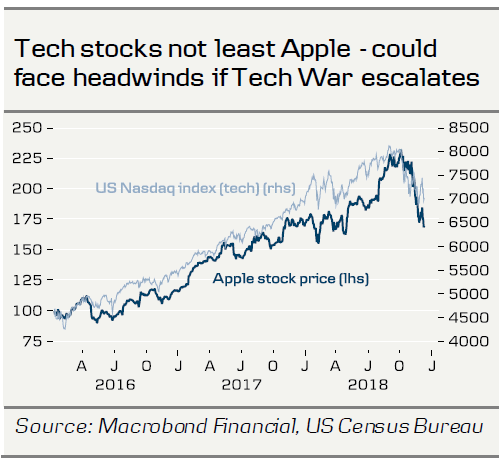
The Trump administration is apparently preparing actions to condemn China over hacking and economic espionage, see Washington Post. Among other things, the Justice Department is expected to announce indictments of hackers suspected of working for Chinese intelligence service.
In a sign of how the US tech industry could be caught in the crossfire of the rising tensions on the tech and cybersecurity front, a Huawei supplier decided this week to punish employees that buy iPhones over next three years, SCMP. This week also Apple lost a case in a China court to Qualcomm, which resulted in a ban on selling a range of (older) iPhone models in China, see CNBC.
Comment. The tech war is here to stay as a long-term strategic rivalry has begun. The intensifying government-wide US approach to confront China was already signalled by Vice President Mike Pence in his speech at the Hudson Institute in October. We expect to see a range of measures from the US to follow up on that over the next year. From China's side there are many ways in which they can retaliate on the tech front, for example by putting up regulatory and administrative obstacles for US tech companies in China, see Washington Post for examples.
More signs of Chinese slowdown - more stimulus coming
Economic data this week confirmed that Chinese growth is slowing further going into year-end. Export data were soft and industrial production and retail sales both disappointed (see top chart on this page). On the inflation front producer price inflation fell again and our model suggests it could dip into deflation territory over the next six to nine months. Finally money and credit growth for October were also still weak.
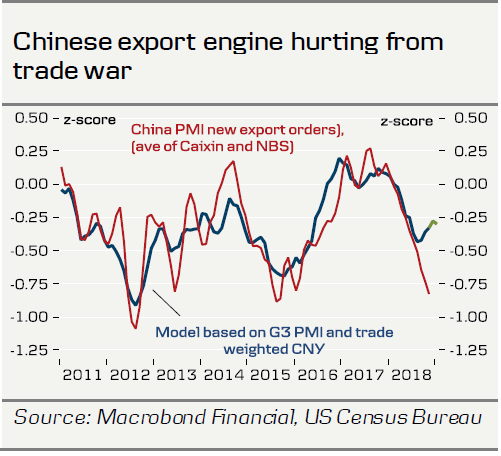
Comment. It's clear that the Chinese economy is slowing further at the moment and we expect it to get worse before it gets better. Chinese policymakers gather next week for the annual Central Economic Work Conference that sets out plans for the coming year. We expect them to announce more stimulus shortly after, most likely in the form of further tax cuts for households and companies. We look for a recovery of the Chinese economy from Q2 based on a US-China trade deal and the effects of the stimulus.
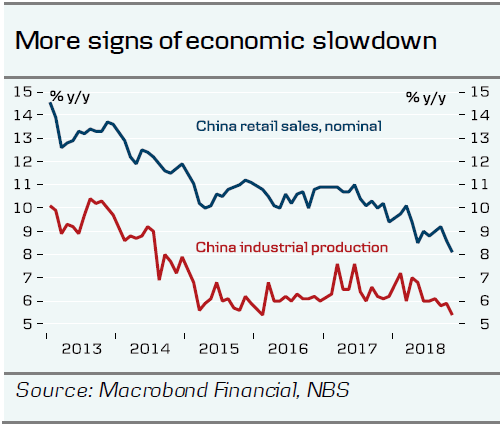
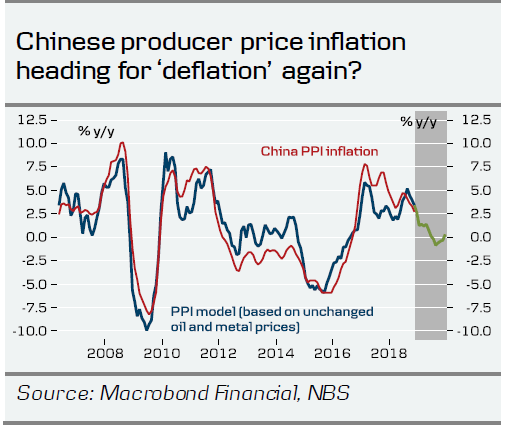
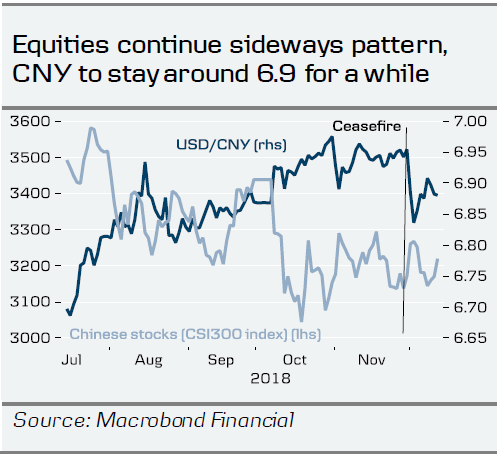
Other China news:
China poised for the first time to attract more venture capital than US for early-stage start-ups in 2018, see SCMP.
China's financial opening continues - financial flows into China are about to eclipse inflows from foreign direct investments, see FT analysis.
China's politbureau led by Xi Jinping vowed on Thursday to continue reform and opening up: 'China should continue to take pursuing supply-side structural reform as the main task, deepen market-oriented reform, expand opening up at a high level, and speed up the building of a modernized economy', see Xinhua.
China's Vice President Wang Qishan vows to keep 'strategic focus' amid mounting challenges of trade war, see SCMP.
Weekly Focus: A Hike for Christmas
Market movers ahead
- In the US , we expect the Federal Reserve to raise the target range by 25bp to 2.25-2.50%, but the focus will be on what policy path the Fed signals going forward.
- In Sweden , we see a 70% chance of the Riksbank hiking at the December policy meeting.
- In the UK , the focus remains on Brexit after a hectic week. We do not expect major changes to the policy signals from the Bank of England.
- In the euro area , final November HICP and German Ifo numbers are the key releases.
- The main focus in China will remain on the trade talks with the US.
- We expect the Bank of Japan to keep its 'QQE with yields curve control' policy unchanged, while November inflation figures will likely move south again.
Weekly wrap-up
- Markets continue to be choppy as politics dominates the news flows.
- Another hectic week in Brexit land, where PM Theresa May successfully fended off a no-confidence vote.
- The Italian government proposed cutting its 2019 deficit to 2.04% (from 2.4%) in a concession to EU concerns, causing a rally in Italian government bonds.
- The ECB concludes its QE programme, but sounds a dovish tone on the near-term growth and inflation outlook.