

Sample Category Title
The Analytical Overview Of The Main Currency Pairs
The EUR/USD currency pair
Technical indicators of the currency pair:
Prev Open: 1.14853
Open: 1.14884
% chg. over the last day: +0.11
Day's range: 1.14830 – 1.15109
52 wk range: 1.0571 – 1.2557
Yesterday, there was a variety of trends on the EUR/USD currency pair. Quotes have reached monthly lows, and then have started recovering. At the moment, the key support and resistance levels are 1.14800 and 1.15200, respectively. Trading instrument has the potential for further growth. Positions should be opened from the key levels.
The news feed on 2018.10.10:
Producer price index in the US at 15:30 (GMT+3:00).
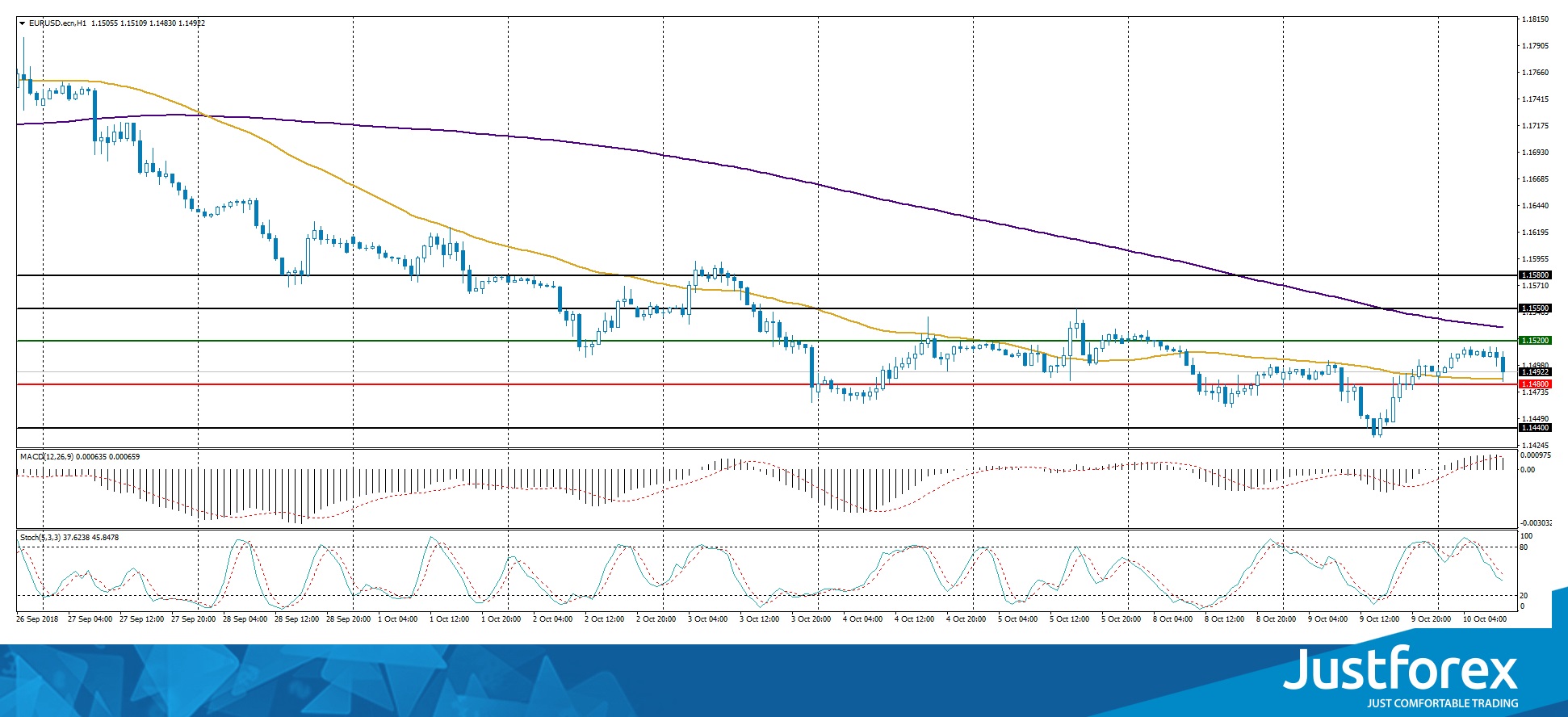
Indicators do not send accurate signals: the price is being traded between 50 MA and 200 MA.
The MACD histogram is in the positive zone, but below the signal line, which gives a weak signal to buy EUR/USD.
Stochastic Oscillator is in the neutral zone, the %K line is below the %D line, which indicates the bearish sentiment.
Trading recommendations
Support levels: 1.14800, 1.14400
Resistance levels: 1.15200, 1.15500, 1.15800
If the price fixes below the support level of 1.14800, a further decline in the EUR/USD currency pair is expected. The movement is tending to 1.14400-1.14200.
An alternative may be the EUR/USD quotes growth to the level of 1.15500-1.15800.
The GBP/USD currency pair
Technical indicators of the currency pair:
Prev Open: 1.30789
Open: 1.31411
% chg. over the last day: +0.51
Day's range: 1.31613 – 1.31673
52 wk range: 1.2361 – 1.4345
The GBP/USD currency pair has begun to recover. The British pound strengthened against the US dollar after Dow Jones Newswires reported that an agreement on the Brexit terms could be reached by Monday. At the moment, the key support and resistance levels are: 1.31400 and 1.31800, respectively. We recommend opening positions from the key levels.
The news feed on 2018.10.10:
Data on the UK GDP at 11:30 (GMT+3:00);
The volume of production in the UK manufacturing industry at 11:30 (GMT+3:00).
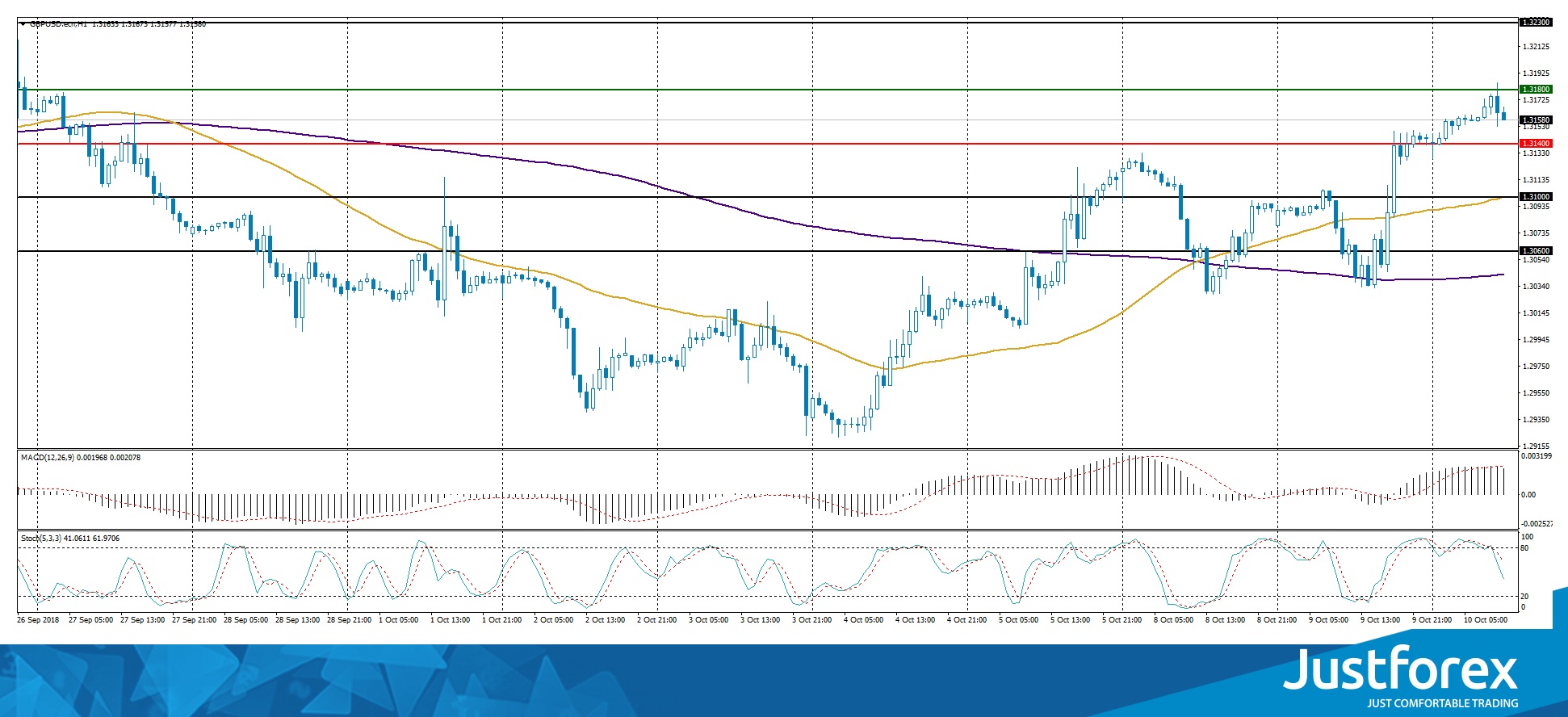
Indicators do not send accurate signals: the price is being traded between 50 MA and 200 MA.
The MACD histogram is in the positive zone, but below the signal line, which gives a weak signal to buy EUR/USD.
Stochastic Oscillator is in the neutral zone, the %K line is below the %D line, which indicates the bearish sentiment.
Trading recommendations
Support levels: 1.14800, 1.14400
Resistance levels: 1.15200, 1.15500, 1.15800
If the price fixes below the support level of 1.14800, a further decline in the EUR/USD currency pair is expected. The movement is tending to 1.14400-1.14200.
An alternative may be the EUR/USD quotes growth to the level of 1.15500-1.15800.
The GBP/USD currency pair
Technical indicators of the currency pair:
Prev Open: 1.30789
Open: 1.31411
% chg. over the last day: +0.51
Day's range: 1.31613 – 1.31673
52 wk range: 1.2361 – 1.4345
The GBP/USD currency pair has begun to recover. The British pound strengthened against the US dollar after Dow Jones Newswires reported that an agreement on the Brexit terms could be reached by Monday. At the moment, the key support and resistance levels are: 1.31400 and 1.31800, respectively. We recommend opening positions from the key levels.
The news feed on 2018.10.10:
Data on the UK GDP at 11:30 (GMT+3:00);
The volume of production in the UK manufacturing industry at 11:30 (GMT+3:00).
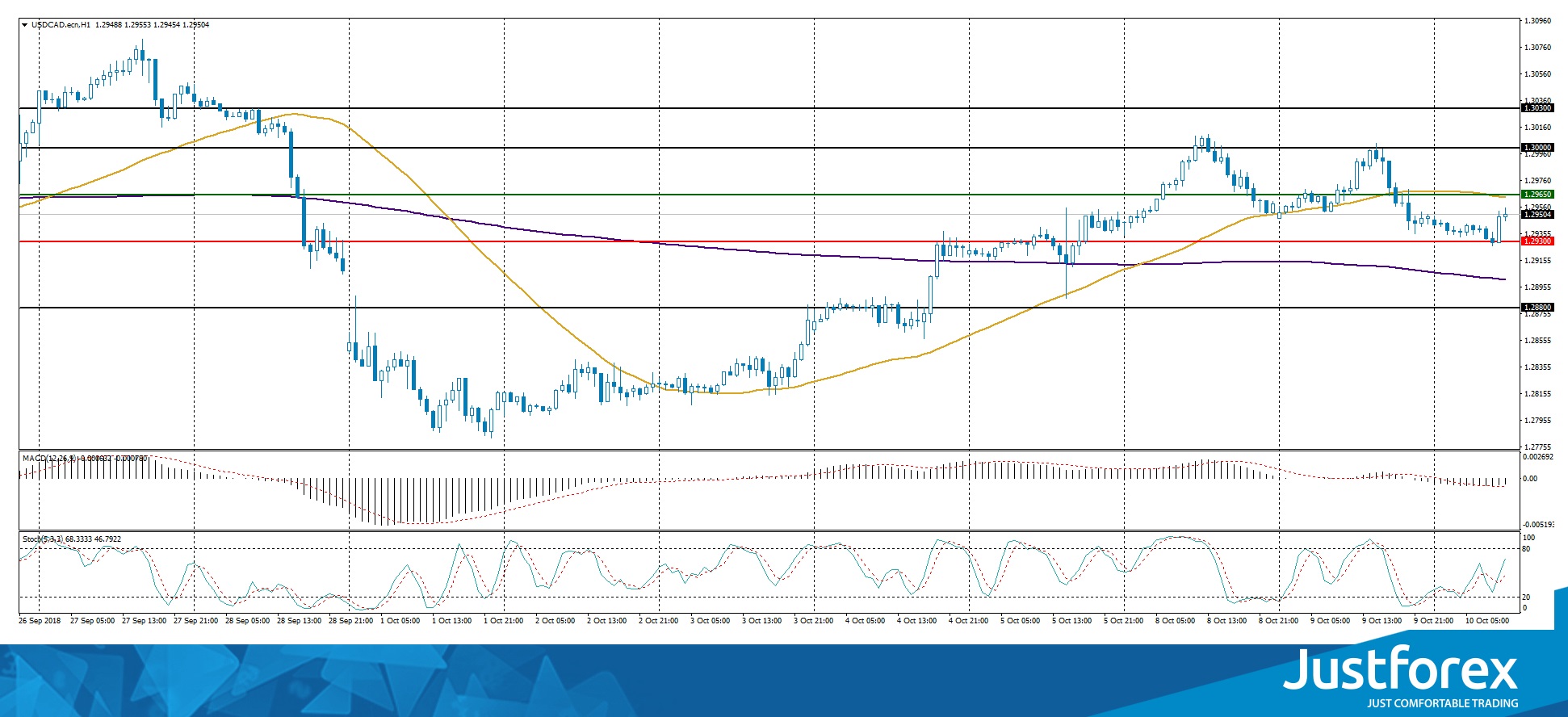
Indicators do not send accurate signals: the price is being traded between 50 MA and 200 MA.
The MACD histogram is in the negative zone, but above the signal line, which gives a weak signal to sell USD/CAD.
Stochastic Oscillator is in the neutral zone, the %K line is above the %D line, which gives a signal to buy USD/CAD.
Trading recommendations
Support levels: 1.29300, 1.28800
Resistance levels: 1.29650, 1.30000, 1.30300
If the price fixes below the support level of 1.29300, the USD/CAD currency pair is expected to decline. The movement is tending to 1.29000-1.28800.
Alternative option. If the price fixes above 1.29650, it is necessary to consider purchases of USD/CAD. The target level for profit taking is 1.30000-1.30200.
The USD/JPY currency pair
Technical indicators of the currency pair:
Prev Open: 113.149
Open: 112.979
% chg. over the last day: -0.19
Day's range: 112.931 – 113.372
52 wk range: 104.56 – 114.74
The technical pattern on the USD/JPY currency pair is ambiguous. The trading instrument is in a sideways movement. The local support and resistance levels are 112.900 and 113.250, respectively. We recommend paying attention to the US government bonds yield. Positions should be opened from the key levels.
Today, the news feed on the economy of Japan is calm.
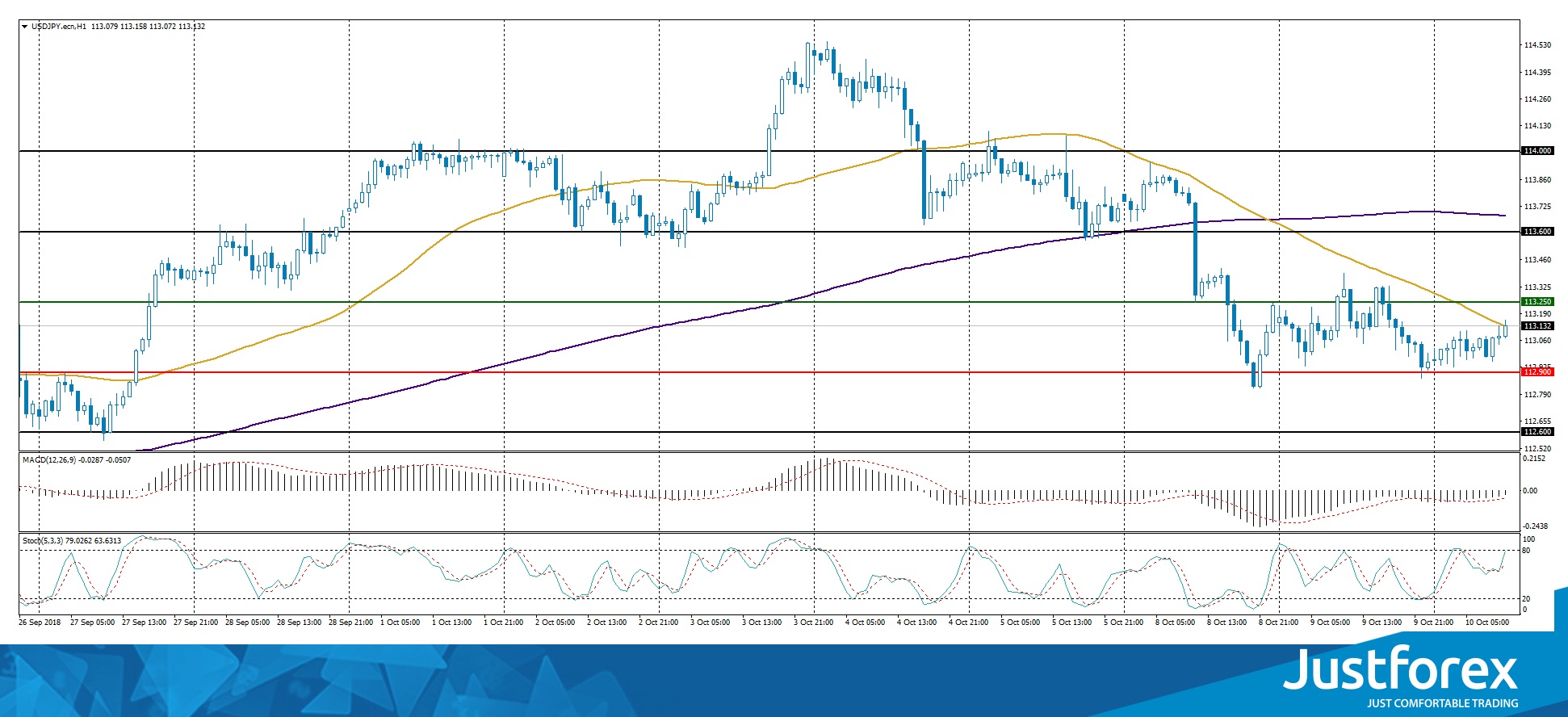
Indicators do not send accurate signals: the price is testing 50 MA.
The MACD histogram is in the negative zone, but above the signal line, which gives a weak signal to sell USD/JPY.
Stochastic Oscillator is in the neutral zone, the %K line is above the %D line, which indicates the bullish sentiment.
Trading recommendations
Support levels: 112.900, 112.600
Resistance levels: 113.250, 113.600, 114.000
If the price fixes below the support of 112.900, it is necessary to consider sales of USD/JPY. The movement is tending to 112.600-112.400.
An alternative may be the USD/JPY currency pair growth to the level of 113.600-114.000.
The US Dollar Index Keeps Current Levels
Yesterday, the US dollar weakened slightly against a basket of major currencies. The US dollar index (#DX) closed in the negative zone (-0.09%). The 10-year US government bonds yield has become stable. In general, demand for the US currency is still high.
Trade relations between the United States and China have escalated again. Chinese Foreign Minister Wang Yi accused the United States of escalating the trade conflict between the countries, as well as of Washington's interference in the internal affairs of China. Due to political tension, demand for safe assets has increased.
The British pound strengthened against the US dollar after Dow Jones Newswires reported that an agreement on the Brexit terms could be reached by Monday. Today, we expect important economic statistics from the UK, which may affect the alignment of forces on currency pairs with the pound.
The "black gold" prices are consolidating. At the moment, futures for the WTI crude oil are testing a mark of $74.75 per barrel. At 23:30 (GMT+3:00) a report on the API weekly crude oil stock will be published.
Market Indicators
Yesterday, there was a variety of trends in the US stock market: #SPY (-0.15%), #DIA (-0.23%), #QQQ (+0.32%).
At the moment, the 10-year US government bonds yield is at the level of 3.21-3.22%.
The news feed on 2018.10.10:
Data on the UK GDP at 11:30 (GMT+3:00);
The volume of production in the UK manufacturing industry at 11:30 (GMT+3:00);
Producer price index in the US at 15:30 (GMT+3:00).
Italy Believes That The Rise In Its Bond yield does not reflect its fundamentals
Notes/Observations
- Optimism prevalent that UK and EU could come to an agreement
- Italian govt officials reiterate concern on rise in bond yields; maintain that there will be no backtracking on its 2019 budget
Asia:
- US Treasury Sec Mnuchin has warned China on competitive currency devaluation
- Former PBoC Advisor Yu Yongding said hard to imagine yuan (CNY) currency will fall to a level that could trigger financial crisis given China’s economic fundamentals. China should refrain from market intervention even if the yuan slides below 7 level against the USD
- RBA Deputy Head of Economic Analysis Coombs stated that the:expectation was that GDP growth to remain a little above 3% for the next year or so, which would further reduce spare capacity in the economy
Europe:
- UK BoE Deputy Gov Broadbent: Govt could stop issuing debt linked to RPI; large change to UK inflation-linked gilts would risk legal challenge
- UK, EU said to be make progress in Brexit negotiations over Irish backstop
- Approx 30 Labour Party MPs said to be prepared to support the Chequers deal in order to prevent a 'no-deal' Brexit.
- PM May said to 'force' cabinet into new Brexit compromise. Expected to include a commitment to keep the whole of the UK in an effective customs union with the EU after Brexit, but with a “clear process” of steps to exit
- Italy PM Conte reiterated Italy govt would not change its budget outline - comments after budget meeting. govt would confirm the targets provided in its budget plan, despite the Italy Parliamentary Budget Office (fiscal watchdog) rejecting the plan
- Italy Dep PM Di Maio: turning back on the 2019 budget plan would be betraying the Italian people
- EU banking regulators reportedly monitoring Italy bank liquidity levels more intensely than usual due to market turbulence but had found no cause for alarm
Americas
- President Trump reiterated view that did not like what the Fed was doing; I think we don't have to go as fast on rates
Macro
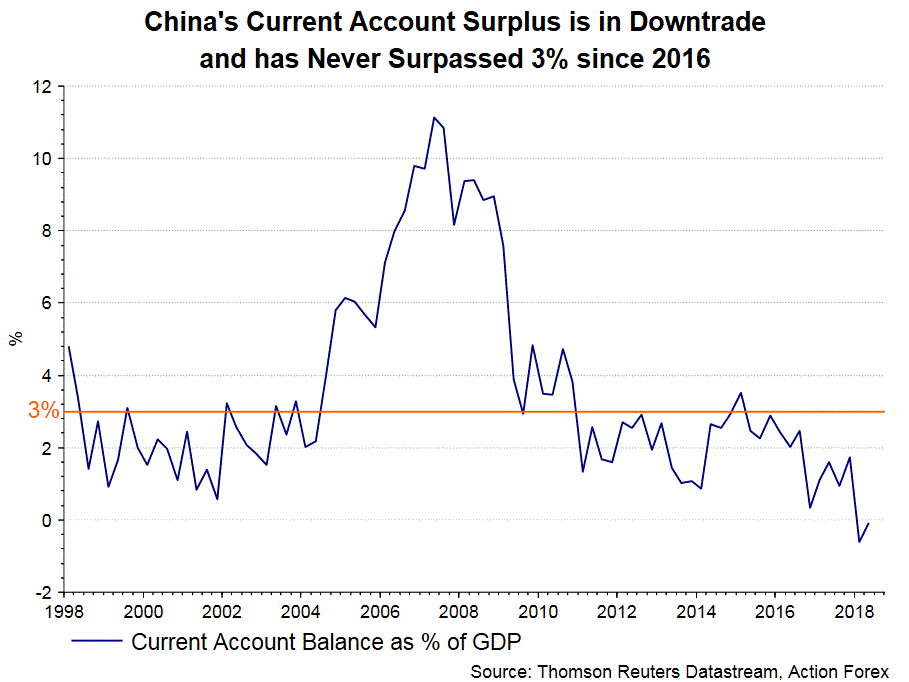
- (US) US: Treasury Secretary Mnuchin warned China on competitive currency devaluation. Worth noting that the Treasury's Semi-Annual Report is due out next week. China has been on that watch list since 2016. It's one of six countries currently on the list. When Trump ran for office said he would label China a “currency manipulator” on “day one”. If they really wanted to escalate this would probably be the next course of action. The Treasury Department hasn't accused China of artificially suppressing the Yuan because it relies on The Trade Facilitation and Trade Enforcement Act 2015 law that sets strict standards for the designation. (A min $20B trade surplus with the US, current account surplus greater than 3% of GDP, & repeated interventions in the currency markets - China only meets the trade deficit test) But The Omnibus Foreign Trade & Competitiveness Act 1988 law (still in effect) sets a looser standard which the US has reportedly been looking "very strongly" in to.
- (IT) Italy: Moody's says Italy's fiscal plan is a mistake. They are due to issue their rating update this month and Moody's chief economist Mark Zandi told La Stampa that market concern about Italy will be reflected in upcoming reviews. Zandi suggested the fiscal plan was akin to gambling with the long-term fiscal and economic health of Italy and stressing that the views of markets and ratings agencies are based on numbers not politics. Italy's parliamentary budget office is expected to give its assessment this week. Both houses need to approve the fiscal outlines, which will then send to the European commission before the October 15 deadline.
- (UK) UK: According to reports a group of at least 30 opposition Labour MPs would break with party leadership and vote for Prime Minister May's Chequers plan at the last minute, if needed to avoid a no-deal exit from the EU. The group consists of those who oppose a second Brexit referendum, and who would offer their support to offset the expected no-vote from the hardcore Eurosceptic MPs in the prime minister's own party. These Labour MPs according to the report also reject the Labour strategy of trying to use a vote against any Chequers-type deal to trigger a general election. If the report is accurate it suggests that a negotiated plan would at least have a chance of passing a vote in Parliament.
SPEAKERS/FIXED INCOME/FX/COMMODITIES/ERRATUM
Equities
- Indices [Stoxx600 -0.4% at 371.5, FTSE -0.1% at 7227, DAX -0.6% at 11904, CAC-40 -0.7% at 5283, IBEX-35 -0.6% at 9203, FTSE MIB -0.2% at 20023, SMI 0% at 8960, S&P 500 Futures -0.1%]
Market Focal Points/Key Themes:
- European Indices continue their bearish tone with declines across the board tracking US futures lower and mixed session in Asia. Chinese export related stocks continue to be under pressure on US-China trade issues, with Italian Budget and UK Brexit commentary continue to weigh on markets.
- On the corporate front LVMH trades lower after in line results, trading at the lowest level since April; Marston and Telford Homes among other companies lower after trading updates. Meanwhile strong order intake sees Nordex higher, with Takeaway.com and PageGroup also trading higher after positive updates.
- Elsewhere a report suggesting the US is considering blocking the UK from a 46 nation gloal procurement agreement sees Roll Royce and Serco lower.
- Looking ahead Fastenal is set to report.
Equities
- Consumer discretionary: [LVMH [MC.FR] -4% (earnings), Marston's [MARS.UK] -2% (trading update), Takeaway.com [T5W.DE] +6% (trading update), PageGroup [PAGE.UK] +1% (earnings), Bureau Veritas [BVI.FR] +1.4% (analyst action)
- Energy: Nordex [NDX1.DE] +1% (order intake)
- Healthcare: Eckert & Ziegler [EUZ.DE] +4% (raised outlook)
- Industrials: Hella [HLE.DE] -7% (analyst action), CTT Systems [CTT.SE] -38% (de-selected as supplier), Rolls Royce [RRUK] -2.3% (US reportedly considering blocking UK from 46-nation global procurement agreement )
- Real Estate: Telford Homes [TEF.UK] -7.5% (trading update)
Speakers
- ECB’s Mersch (Luxembourg) reiterated view that euro area economy was currently experiencing a broad-based economic expansion. Remained confident that the underlying strength of the euro area economy would continue to support the gradual build-up of price pressures
- BOE’s Haldane (leaning hawk, chief economist): Pay growth should start picking up despite false dawns in the past. Saw longer-term threats to pay growth from reduced worker bargaining power, automation and business monopolies. Reiterated market expectations of 25 bps a year increase in BOE rates "not dissimilar" to BOE forecasts for pick up in wage growth over next 3 years
- Italy Dep PM Salvini reiterated Italy govt would not backtrack on its budget
- Italy Dep PM Di Maio reiterated Italy govt would not backtrack on its budget and expected economic growth to be higher on 2019 measures. Goal was to have dialogue with all EU institutions
- Italy Fin Min Tria stated in Parliamentary hearing that the Government bond yield gain was a reason for concern as it did not reflect fundamentals. Stated that the Govt economic forecasts were approved by budget watchdog but that it had a different view on the growth target. Govt set aside €15B for 2019 expenditures (derived from €6.9B in spending cuts and €8.1B in revenues
- Russia said to consider a 5 year extension to the START Treaty
- China govt said to be planning a major expansion of its 'too big to fail' rules
Currencies
- Political crisis in Italy over its 2019 budget plan continued to be a key concern as Italy political leaders seem keen to disobey Brussels's fiscal line. The EUR/USD saw some initial gains erode away as the Italian 10-year yield rose by over 10bps in the session. Italy Fin Min Tria tried to sooth the market as he noted that bond yield gain was a reason for concern
- Optimism was swirling that The UK and EU could reach a compromise in the Brexit negotiations prompted the GBP currency to rise for a 2nd straight session. PM May appears to be working on a plan that shows commitment to keep the whole of the UK in an effective customs union with the EU after Brexit, but with a “clear process” of steps to exit
- The USD/JPY was higher as the yen snapped a 4-day losing streak as some safe-haven flows ebbed as US Treasury rates stabilize
Fixed Income
- Bund Futures trades at 158.01 down 12 ticks as the 10-year Bund falls back below the 0.55% level. A downside break of 157.25 sees 155.69 initially. To the upside 158.50 remains initial resistance.
- Gilt futures trades at 119.89 down 13 ticks following the move in Treasuries. Continued support at 120.50, with a continued move higher targeting 123.93 then 124.00.
- Wednesday's liquidity report showed Tuesday's excess liquidity fell from €1.893T to €1.892T. Use of the marginal lending facility stayed fell from €58M to €40M.
- Corporate issuance saw 2 issuers raise $1.2B in the primary market
Economic Data:
- (NL) Netherlands Aug Manufacturing Production M/M: +1.3% v -1.1% prior; Y/Y: 3.1% v 1.9% prior Industrial Sales Y/Y: 12.8% v 8.5% prior
- (RO) Romania Sept CPI M/M: 0.5% v 0.3%e; Y/Y: 5.0% v 4.8%e
- (RO) Romania Q2 Final (3rd reading) GDP Q/Q: 1.4% v 1.4%e; Y/Y: 4.1% v 4.1%e
- (DK) Denmark Sept CPI M/M: -0.3% v +0.1%e; Y/Y: 0.6% v 1.0%e
- (DK) Denmark Sept CPI EU Harmonized M/M: -0.2% v +0.1%e; Y/Y: 0.5% v 0.8%e
- (NO) Norway Sept CPI M/M: 0.6% v 0.4%e; Y/Y: 3.4% v 3.3%e
- (NO) Norway Sept CPI Underlying M/M: 0.5% v 0.3%e; Y/Y: 1.9% v 1.8%e
- (NO) Norway Sept PPI (including Oil) M/M: 1.5% v 0.6% prior; Y/Y: 21.1 v 22.8% prior
- (FI) Finland Aug Industrial Production M/M: +0.2 v -1.6% prior; Y/Y: 1.8% v 2.3% prior
- (JP) Japan Sept Preliminary Machine Tool Orders Y/Y: 2.8% v 5.1% prior
- (FR) France Aug Industrial Production M/M: 0.3% v 0.1%e; Y/Y: 1.6% v 1.5%e
- (FR) France Aug Manufacturing Production M/M: 0.6% v 0.1%e; Y/Y: 1.9% v 1.7%e
- (SE) Sweden Aug Household Consumption M/M: +1.5% v -2.0% prior; Y/Y: +0.3% v -0.7% prior
- (IT) Italy Aug Industrial Production M/M: 1.7% v 0.8%e; Y/Y: -0.8% v +1.8% prior, Industrial Production WDA Y/Y: -0.8% v -1.5%e
- (UK) Aug GDP M/M: 0.0% v 0.1%e, 3M/3M: 0.7% v 0.7% prior
- (UK) Aug Visible Trade Balance: -£11.2B v -£10.9Be; Total Trade Balance: -£1.3B v -£1.2Be; Trade Balance non-EU: -£4.2B v -£3.1Be
- (UK) Aug Industrial Production M/M: 0.2% v 0.1%e; Y/Y: 1.3% v 1.0%e
- (UK) Aug Manufacturing Production M/M: -0.2% v +0.1%e; Y/Y: 1.3% v 1.1%e
- (UK) Aug Construction Output M/M: -0.7% v -0.5%e; Y/Y: 0.3% v 1.2%e
- (UK) Aug Index of Services M/M: 0.0% v 0.1%e; 3M/3M: 0.5% v 0.5%e
- (GR) Greece Aug Industrial Production Y/Y: 1.4% v 2.0% prior
- (GR) Greece Sept CPI Y/Y: 1.1% v 1.0% prior; CPI EU Harmonized Y/Y: 1.1% v 0.9% prior
Fixed Income Issuance
- (IE) Ireland Debt Agency (NTMA) opened its book to sell EUR-denominate 12-year green bonds; guidance seen +15bps to mid-swaps
- (IN) India sold total INR150B vs. INR150B indicated in 3-month, 6-month and 12-month bills
- (NO) Norway sold NOK3.0B vs. NOK3.0B indicated in 2% May 2023 Bonds; Avg Yield: 1.66% v 1.36% prior; Bid-to-cover: 2.70x v 1.76x prior
- (IT) Italy Debt Agency (Tesoro) sold €6.0B vs. €6.0B indicated in 12-month Bills; Avg Yield: 0.949% v 0.206% prior; Bid-to-cover: 1.63x v 1.64x prior
Looking Ahead
- (MX) Mexico Sept Nominal Wages: No est v 5.5% prior
- (SE) Sweden Central Bank (Riksbank) Dep Gov Ohlsson
- 05:30 (ZA) South Africa Sept Sacci Business Confidence: 89.0e v 90.5 prior
- 05:30 (DE) Germany to sell €3.0B in 0.25% Aug 2028 Bunds
- 05:30 (PT) Portugal Debt Agency (IGCP) to sell €0.75-1.0B in Oct 2028 OT bond
- 05:30 (GR) Greece Debt Agency (PDMA) to sell 13-week bills
- 06:00 (PT) Portugal Aug Trade Balance: No est v -€1.2B prior
- 06:00 (CZ) Czech Republic. to sell 2033 Bonds
- 06:45 (US) Daily Libor Fixing
- 07:00 (US) MBA Mortgage Applications w/e Oct 5th: No est v 0.0% prior
- 07:00 (BR) Brazil Oct IGP-M Inflation (1st Preview): 1.1%e v 0.8% prior
- 07:00 (RU) Russia to sell RUB5B in weekly OFZ bond auction
- 07:30 (CL) Chile Central Bank Economists Survey
- 08:00 (RO) Romania Central Bank (NBR) Sept Minutes
- 08:05 (UK) Baltic Dry Bulk Index
- 08:30 (US) Sept PPI Final Demand M/M: 0.2%e v -0.1% prior; Y/Y: 2.7%e v 2.8% prior
- 08:30 (US) Sept PPI (Ex Food and Energy) M/M: +0.2%e v -0.1% prior; Y/Y: 2.5%e v 2.3% prior
- 08:30 (US) Sept PPI Ex Food, Energy, Trade M/M: 0.2%e v 0.1% prior; Y/Y: No est v 2.9% prior
- 08:30 (CA) Canada Aug Building Permits M/M: +0.5%e v -0.1% prior
- 10:00 (US) Aug Final Wholesale Inventories M/M: 0.8%e v 0.8% prelim; Wholesale Trade Sales M/M: 0.5%e v 0.0% prior
- 11:30 (US) Treasury to sell 3-year notes
- 12:00 (US) DOE Short-Term Crude Outlook:
- 12:00 (IS) Iceland Sept International Reserves (ISK): No est v 684B prior
- 12:00 (CA) Canada to sell 2-year notes
- 12:15 (US) Fed's Evans (non-voter, dove) on Economy and Monetary Policy
- 13:00 (US) Treasury to sell 10-year Notes
- 16:30 (US) Weekly API Oil Inventories
- 18:00 (US) Fed's Evans (non-voter, dove) on Economic Outlook
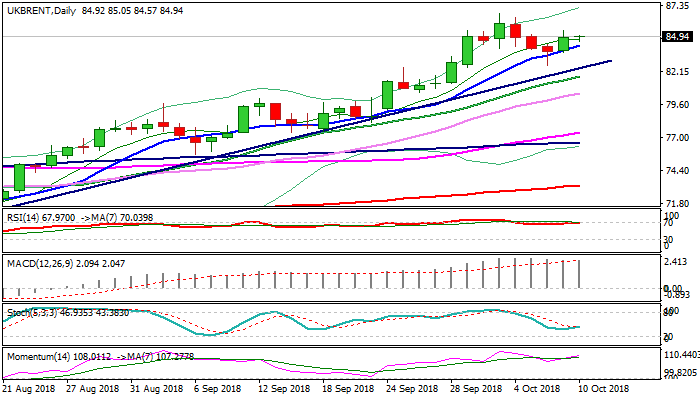
Brent Oil Outlook: Bullish Techs Continue To Underpin, US Crude Stocks Data Eyed For Fresh Signals
Brent price was slightly lower on Wednesday, consolidating Tuesday's 1.2% rally, with negative impact from IMF's lowered global growth forecast being partially offset by concerns about the hurricane that approaches the coast of Florida.
Closure of oil platforms and refineries in the region could further boost oil prices which remain supported by bullish techs.
Completion of reversal pattern on daily chart, with rising 10SMA ($84.21) is supportive, along with rising bullish momentum.
Recovery attempts face headwinds from Fibo barrier at $85.17 (61.8% of $86.73/$82.65 pullback) which was cracked on Tuesday but without sustained break.
Close above here is needed to confirm reversal and shift focus towards next obstacle at $85.77 (Fibo 76.4%).
Bullish tone also prevails on lower timeframes, supporting further recovery.
Release of US API crude stocks report alter today is eyed for fresh signal, with focus turning towards tomorrow's EIA weekly crude inventories report (2.64 mln bls build f/c vs previous week's build of 7.97 mln bls) which is expected to provide stronger signal.
Res: 85.17, 85.43, 86.70, 86.73
Sup: 84.21, 83.71, 82.84, 82.65
USD Better Bid As Risk-Off Sentiment Prevails
Euro gets no love
The single currency has been unable to reverse the greenback’s strong momentum yet. EUR/USD is stuck below the 1.15 threshold, as investors remain worried about the potential negative outcome of the clash between Italy and the EU regarding the Italian budget. The rise in the country’s sovereign yields continues to have market participants holding their breath to the very end. Yesterday, the parliamentary budget office refused to sign off the government’s budget, saying that growth estimates were too optimistic (1.5% in 2019, 1.6% in 2020 and 1.4% in 2021).
Economy Minister Giovanni Tria will go back in the arena on Wednesday morning. Given the latest comments from Di Maio, Deputy Prime Minister, there is little chance that the new proposal would be much different from the one presented yesterday. In light of the developments in the equity market, it seems that investors are not optimistic about the potential outcome of today’s parliamentary session. The FTSE MIB was down 0.45%, the DAX fell 0.50%, while the CAC 40 slid 0.75%. In the absence of significant – positive – developments, the mood will stay down in financial market today.
Relief for the South African rand
The South African rand is still under pressure. Economic growth remains sluggish, while inflation continues to overshoot a target of 3-6%. Additionally, a recent attempt to change constitutional law related to land expropriation without compensation, for owners of more than 12’000 hectares, appears tougher than initially thought by the ruling ANC party.
However, the trend appears to be changing now. Recent USD weakness against emerging currencies, along with President Cyril Ramaphosa’s stimulus package, are improving investors’ sentiment. Yesterday’s resignation of Finance Minister Nhlanhla Nene amid corruption affairs related to the Gupta family and the appointment of former Central Bank Governor Tito Mboweni, was welcomed by the market, pushing the rand higher by almost 2% intraday against the greenback. Accordingly, the ZAR continues to benefit from current events, putting waves of uncertainties aside. Currently bouncing from 14.56 (9 October low), USD/ZAR is expected to increase slightly, approaching 14.70 short-term.
UK In The Spotlight As Wall Street Faces Lower Open
Investors remain risk averse as multiple concerns weigh
Relatively flat sessions across much of Asia and some weakness in Europe on Wednesday is taking its toll on US futures ahead of the open on Wall Street.
There are a number of worries for investors right now, from the pace of rising bond yields and the impact on investor sentiment, to Italy’s populist coalition playing a game of chicken with the European Commission, stalling Brexit negotiations and the ongoing trade conflict between the US and China. This is all taking its toll on investors and while the US may have recently scaled record highs, supported in a major way by tax reforms passed late last year and the economic fallout from them, others are not faring as well and the longer it goes on, the more it’s likely to catch up with Trump as well.
No one getting too excited despite increasingly positive Brexit reports
The UK is very much in the spotlight this morning, following reports that progress has been made on the Irish border. While traders are yet to get too excited about the prospect of significant progress despite the fact that we are now a week away from the EU summit, at which leaders had previously hoped to have a deal in place to sign off on. It’s been a long time since this was seen as a realistic target but time is running out and at the next summit in November, the pressure will be significantly higher to have an agreement in place or no deal Brexit is going to become increasingly likely.
It does seem over the last 24 hours that reports have been becoming more positive, which has been reflected in the currency but we’re yet to hear anything of substance and fatigue may be setting in from all of the vague and at times, unfounded, claims that’s keep filtering out. There does seem to be something more to the more recent comments but traders are being patient, for now.
UK economy flat lines in August
Sterling has been paring gains since the start of the European session and the raft of UK data hasn’t done anything to put a floor under it. GDP data for August was a little disappointing as the economy didn’t grow following a bumper month in July. It would appear the consumer buzz from the unusually good summer and World Cup has worn off, which was to be expected at a time when the consumer is feeling the squeeze following a period of negative wage growth. The July data was revised higher though which offset the disappointment from the August data.
Other figures released alongside the GDP data were a little better with manufacturing and industrial production data exceeding expectations on the month, while numbers for July were also revised higher. Unfortunately, accounting for such a small portion of the economy, this failed to get traders too excited and instead we just saw a collective shrug of the shoulders. As has been the case for some time, politics is driving markets right now and the data just doesn’t have the sway it once did.
Oil slightly lower as Hurricane Michael upgraded
Oil markets remain a particular point of interest having recently risen to 2014 levels and threatening to go higher. It has lost some of its spark over the last week as traders lock in some profits but we’re not yet seeing much appetite for lower prices. With Iranian sanctions coming next month and Hurricane Michael – following its upgrade to category four - threatening some near-term output in the US, the bulls may still feel pretty confident. The IMF’s warnings on global growth on Tuesday may also have weighed a little but broadly speaking, I think few were surprised at the lower revisions given the environment we currently find ourselves in.
Forex Technical Analysis: EUR/USD, USD/JPY, GBP/USD
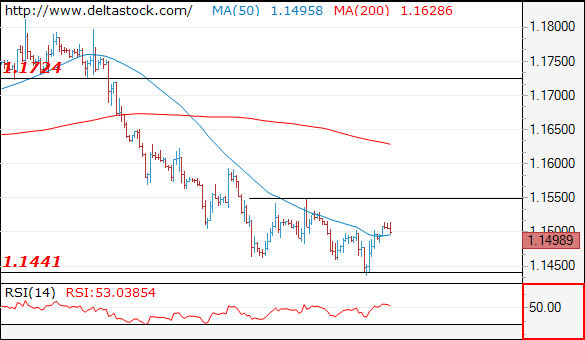
EUR/USD
Current level - 1.1498
The test of 1.1440 failed, but the downtrend since 1.1820 is still intact and while the crucial 1.1550 holds, my outlook will be bearish, for a dip to 1.1300 area.
| Resistance | Support | ||
| intraday | intraweek | intraday | intraweek |
| 1.1550 | 1.1835 | 1.1440 | 1.1300 |
| 1.1720 | 1.2010 | 1.1300 | 1.1100 |
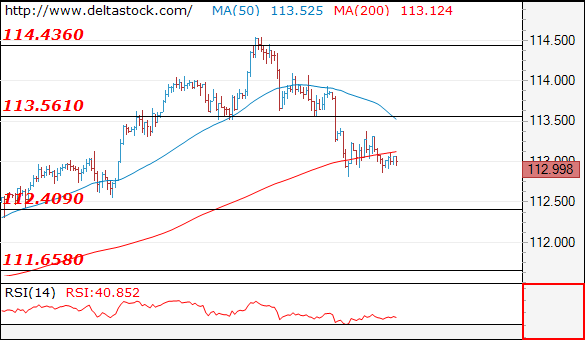
 USD/JPY
Current level - 112.98
The downtrend is intact, heading towards 112.40 area. Key hurdle lies at 113.50.
| Resistance | Support | ||
| intraday | intraweek | intraday | intraweek |
| 113.50 | 114.40 | 112.40 | 111.65 |
| 114.40 | 114.40 | 112.40 | 110.40 |
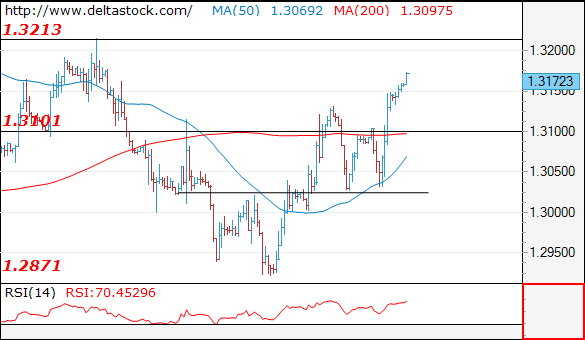
GBP/USD
Current level - 1.3172
The inner slide to 1.3030 finalized the minor consolidation below 1.3130 and the upmove since 1.2920 has been renewed. Due to the corrective nature of the whole rise from 1.2920, my outlook is counter-trend against 1.3210 resistance , for a new, more substantial slide, towards 1.2870.
| Resistance | Support | ||
| intraday | intraweek | intraday | intraweek |
| 1.3210 | 1.3440 | 1.3100 | 1.2570 |
| 1.3210 | 1.3440 | 1.2870 | 1.2570 |
Markets Mixed On IMF Gloom, Sterling Boosted By Brexit Noise
A gloomy mood continues to hang over the financial markets after the International Monetary Fund (IMF) downgraded its economic growth forecast for the first time since July 2016.
Escalating trade tensions and stresses in emerging markets are the main factors behind the IMF downgrading its growth forecasts for both 2018 and 2019 to 3.7%, down from the 3.9% just three months ago. The IMF left its 2018 U.S. and China forecast unchanged but downgraded growth projections in 2019 to 2.5% for the U.S. and 6.2% for China. The more concerning comment is probably the message that global growth is at risk of “plateauing” with the IMF also expressing that “everyone is going to suffer” from global trade tensions, meaning that the outlook for the global economy is that there will be a risk of a potential downturn from this point.
Asian stocks markets were mostly mixed in early trade as global growth fears encouraged investors to remain on the side-lines. With the unsavoury combination of ongoing trade tensions, emerging market weakness and global growth fears denting risk sentiment, investors will be tempted to shun riskier assets and favour the Dollar as a safe-haven investment instead.
The British Pound has hit the ground running this morning on renewed optimism over Britain and the European Union securing a Brexit deal by Monday.
While this welcome development is likely to push Sterling higher in the near term, investors should remain diligent as it is likely too early for celebrations. We have had optimism before over Brexit progress, before later reversing back. There still remains a thick cloud of uncertainty over the unresolved Irish border dispute, an issue that still represents serious headwinds. Even if a deal is struck before the fast approaching November deadline, it has to go through British parliament which represents another challenge of its own.
Away from Brexit, investors will direct their attention towards the UK’s monthly GDP reading scheduled for release this morning, with headline figures expected to hit 0.1% in August. A disappointing release may weigh on the British Pound and fuel concerns over Brexit negatively impacting the UK economy. However, the major driver behind the Pound in the medium to longer term will be the Brexit saga and how negotiations play out. With Brexit developments and politics likely to overshadow economic data in the coming weeks, the Pound is still instore for a wild rollercoaster ride.
In regards to the technical picture, the GBPUSD is pushing higher as risk hungry investors firmly clench on hopes of a Brexit deal being reached by Monday. With prices already breaking above the 1.3150 level, the next key level of interest will be around 1.3220.
The Dollar was dumped and trumped by the U.S. President yesterday after Trump - once again criticized the Federal Reserve for raising interest rates too quickly. While this form of verbal intervention by Donald Trump may promote short-term Dollar weakness, it is unlikely to change the medium- to longer-term bullish outlook. With Trump’s comment unlikely to impact the Federal Reserve’s interest rate increase cycle, the Dollar remains king. Taking a look at the technical picture, the Dollar Index could challenge 96.00 if bulls are able to keep above 95.50.
ECB Mersch: Global risks are gaining prominence
ECB Executive Board member Yves Mersch said in Singapore that the Eurozone economy is experience broad based expansion. And risks to growth remain "broadly balanced". Overall, Mersch expect the expansion to continue as a "pace slightly above potential in the period ahead." Inflation is expected to continue its rise thanks to "quite some" degree of monetary stimulus.
However, Mersch also warned that risks related to global factors, including "the threat of increased protectionism, the finalization of the Brexit negotiations and vulnerabilities in emerging markets are gaining prominence."
Who is a Currency Manipulator?
As US-China trade war continues to evolve, the market is increasingly concerned over the pace of slowdown in China’s economic growth. Meanwhile, weakness in renminbi (China Yuan) has given more bullets for the White House to attack China and threaten to impose more restriction. US Treasury’s semiannual currency report, due next week, is under the spotlight as US officials have recently reiterated worries over recent renminbi deprecation. Some media have noted that US Treasury might label China as currency manipulator in the report.
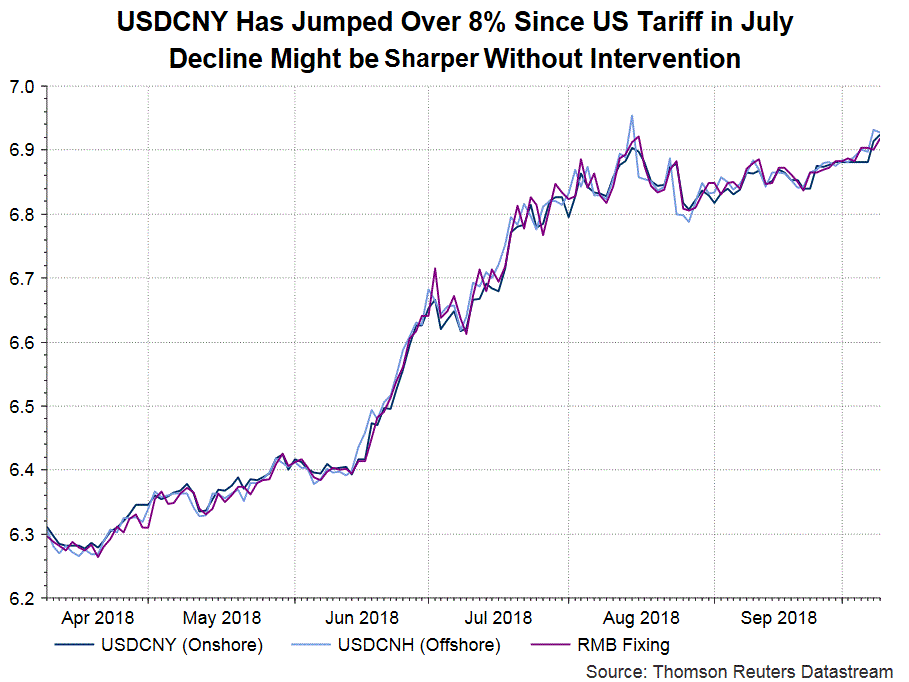
Trump’s pledge to label China as currency manipulator is all foam, no beer, both during his election campaign and after he has taken office. China, along with 5 other countries (Japan, Germany, India, South Korea and Switzerland), was put on the “monitoring list” in the last semiannual currency report. Yet, it was not labeled as currency manipulator. Some US officials have proposed that the Treasury could take action this time by using the 1988 Omnibus Trade and Competitiveness Act, rather than the Trade Facilitation and Trade Enforcement Act (and specifically the Bennet Amendment; Section 701) passed in 2015. This is because the latter has listed three quantitative criteria for being currency manipulator while the former is vaguer!
The Impacts of Being Labeled as Currency Manipulator
As the 1988 Act noted, “the Secretary of the Treasury shall analyze on an annual basis the exchange rate policies of foreign countries, in consultation with the International Monetary Fund, and consider whether countries manipulate the rate of exchange between their currency and the United States dollar for purposes of preventing effective balance of payments adjustments or gaining unfair competitive advantage in international trade”. Yet, the act suggested that, in case of manipulation, the Treasury secretary shall “initiate negotiations with such foreign countries on an expedited basis, in the IMF or bilaterally, for the purpose of ensuring that such countries regularly and promptly adjust the rate of exchange between their currencies and the US dollar”. Also the secretary “shall not be required to initiate negotiations in cases where such negotiations would have a serious detrimental impact on vital national economic and security interests”. In short, no penalty is authorized under the 1988 act.
On the other hand, the 2015 Trade Act has laid down three numerical criteria. And, the Treasury has to “commence enhanced bilateral engagement” with the country which it has found violation. If the situation remains unchanged after year, the President is required to take one or more of the following actions:
- Prohibit the Overseas Private Investment Corporation from approving any new financing (including any insurance, reinsurance, or guarantee) with respect to a project located in that country on and after such date.
- Prohibit the Federal Government from procuring, or entering into any contract for the procurement of, goods or services from that country.
- Call for IMF’s additional surveillance
- Negotiate new trade agreements with the country, taking into account that country’s currency practices
http://uscode.house.gov/view.xhtml?req=(title:19%20section:4421%20edition:prelim)
While the ambiguity of the 1988 Act gives the Treasury more flexibility to label a country as currency manipulator, it has not endorsed any penalty or sanction, rather than “negotiation”. The 2015 Act is more concrete, listing both criteria of being currency manipulator and follow-up measures.
| Legislation | Criteria | Threshold |
| 1988 Omnibus Trade and Competitiveness Act | 1. signaficant bilateral trade surplus with US | |
| 2. matieral global account surplus | ||
| 2015 Trade Facilitation and Trade Enforcement Act | 1. signaficant bilateral trade surplus with US | US$ 20B |
| 2. matieral global account surplus | 3% of GDP | |
| 3. engaged in persisten one-sided intervention in FX market | 2% of GDP over 12-month period |
China’s Currency Manipulation
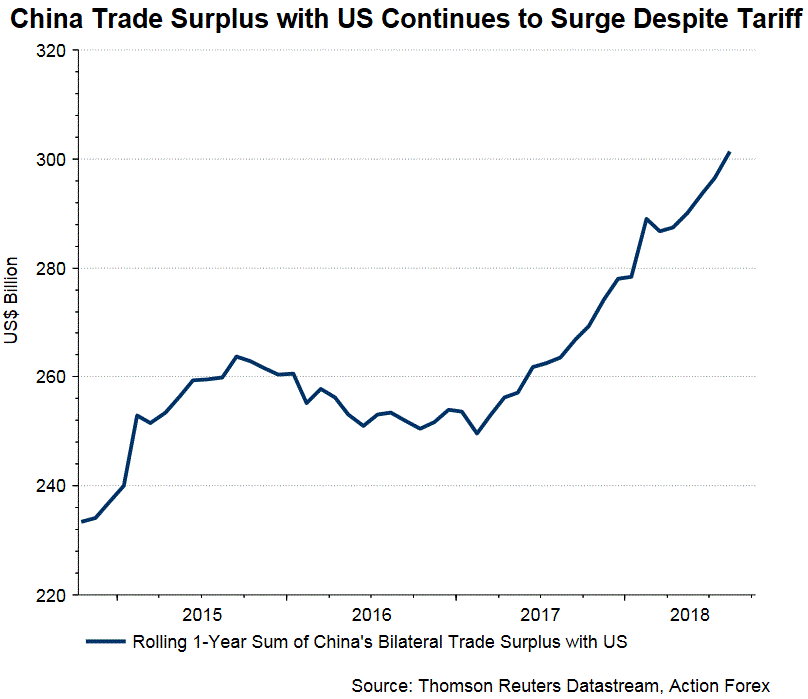
As mentioned in previous reports, China only satisfies one of the criteria laid down in 2015 Act with huge bilateral trade surplus with US. Obviously, the Treasury has no ground to label China as currency manipulator under the 2015 Act. However, even if China has met all the criteria, we wonder if Trump is authorized to impose more tariffs. Threatening to label China a currency manipulator indicates that Trump’s China policy remains tough, at least before mid-term elections
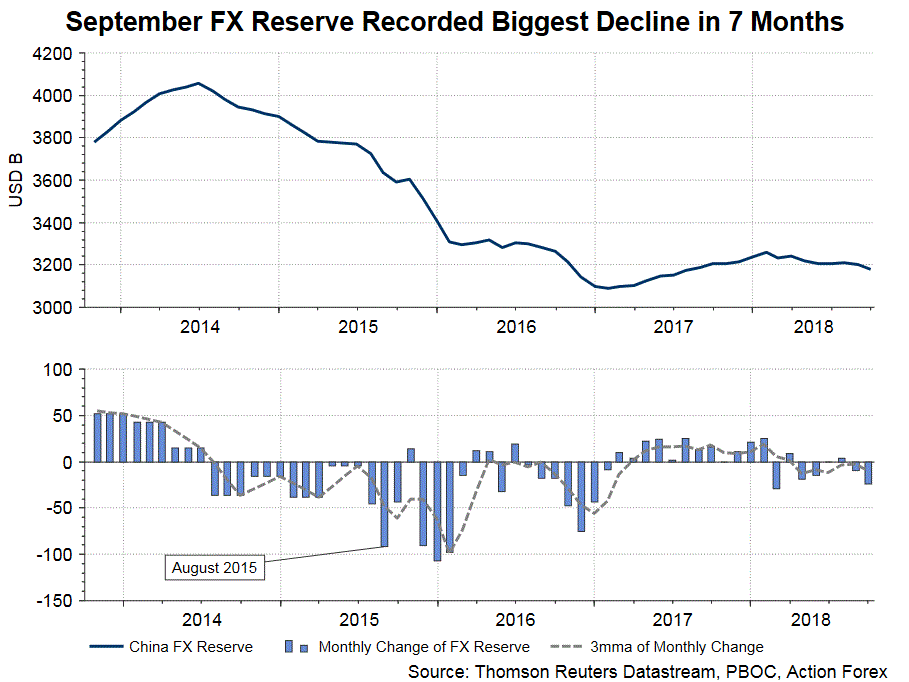
Such threat is premised on the assumption that currency intervention would only lead to currency depreciation. Yet, in recent years, while China has continued to grip tightly renminbi movement, its objective is to keep the movement stable. The latest FX reserve data signaled that PBOC might have sold FX assets to defend renminbi. We agree China is manipulating its currency, it is intervening a way such that it would not fall too sharply. Given the dismal prospect from China’s growth outlook, with the slowdown accelerated by the recent trade war, renminbi should have depreciated more sharply should there be no intervention.
Other Countries More susceptible to Currency Manipulation
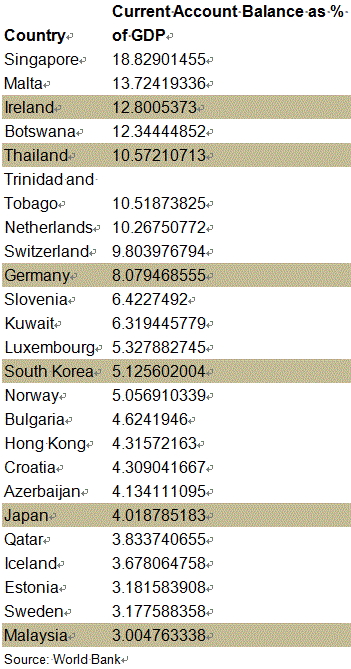
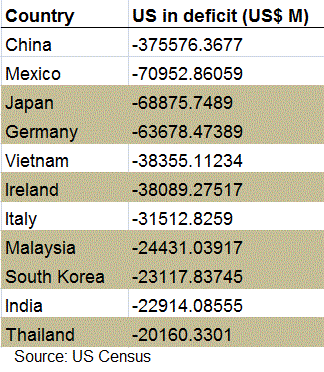
World Bank’s data shows that, in 2017, the 25 countries in the first table was having current account surplus at 3% of GDP or above. The second table lists the countries with bilateral trade surplus with US at US$20B or above. The highlighted countries are those who met the first two criteria under the 2015 Act. Ironically, only three (Germany, South Korea and Japan) among the countries highlighted were put in the monitor list at the April semiannual report.
Current Account Balance as % of GDP (2017)
Bilateral Trade Balance between US and Other Countries
Concerning the third criterion, the Treasury has to see the country engaging in persistent one-sided intervention in FX market. for being judged as "persistent", the country in question would have purchased FX on net for 8 of the 12 months and the the net purchase should reach 2% of GDP over 12-month period.
In the April semiannual report, the US criticized Germany's huge trade surplus and its accumulation of foreign assets. Yet, it refrained from blaming Germany from currency intervention as ECB has not intervened unilaterally in foreign currency markets in over 15 years. Treasury showed concerns over the "pick-up in intervention in November 2017 and January 2018" but noted that "these purchases were partially reversed through foreign exchange sales in February 2017". For sure, the US attempted to get an upper in the KORUS trade deal renegotiation by being picky on Korea. There are probably fewer reasons to blame Japan, as the yen has been relatively strong.
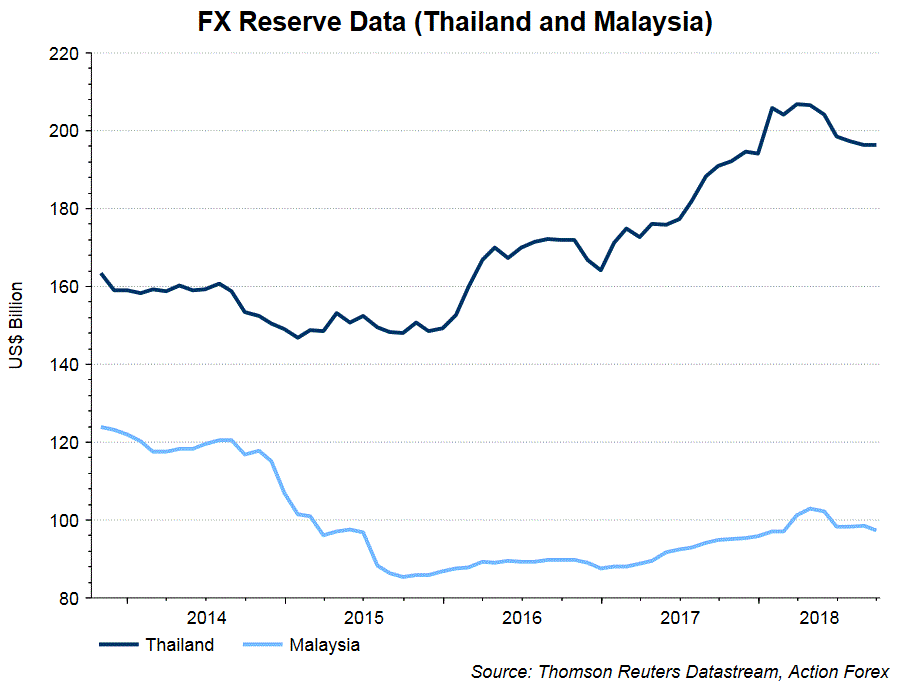
We wonder why there were no mention about the practices of Thailand and Malaysia in the April report. For instance, Rhailand recorded net purchase on FX for 9 out of 12 months in 2017. Also, a HSBC report estimated that, as of September 2017, the country's net FX purchase reached 5% of GDP. If the US had not "monitored" Thailand at the April report, it would not do it in October, as the country's FX reserve has been consistently dropping from the peak since the beginning of this year.
We despise China for many of its economic and trade policies. While participation virtually in all international organizations since economic reform in 70s, China's compliance to the rules of games has been declining as its economic status in the world grows. It is also notorious for tweaking the rules in its favor, despite detrimental to others. It is equally a disgrace that the Trump administration accuses China of what it is not, for political gains.