Sample Category Title
GBPUSD Analysis: Is Supported By SMAs
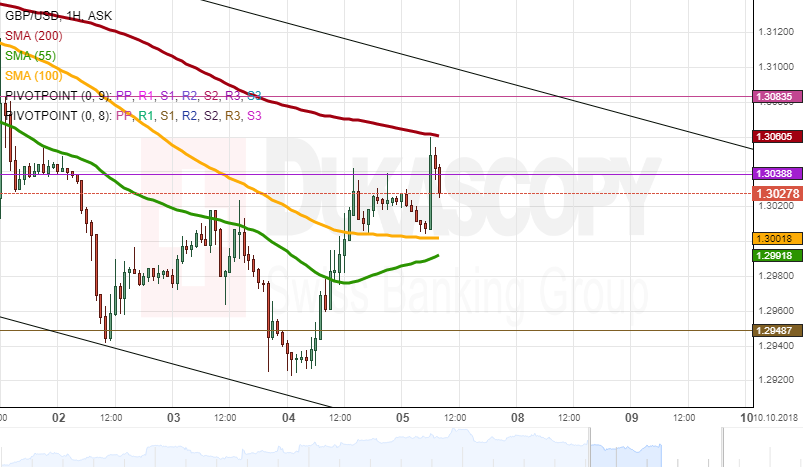
The British pound appreciated 0.66 % against the US Dollar since Thursday's session. On Friday morning, the rate was supported by the 100-hour SMA at the 1.3008 mark.
During Friday's session, most likely, the rate will surge upwards to the 1.3060 level due to support of the 100-hour and the 55-hour SMAs. The rate might break the resistance of the monthly PP at the 1.3038 mark and use it as support to break the 200-hour simple moving average during the day.
On the other side, the monthly PP may resist the rate to pass the simple moving averages supports to trade at the 1.2980 level on Friday.
USDJPY Analysis: Trades At 113.90 Mark
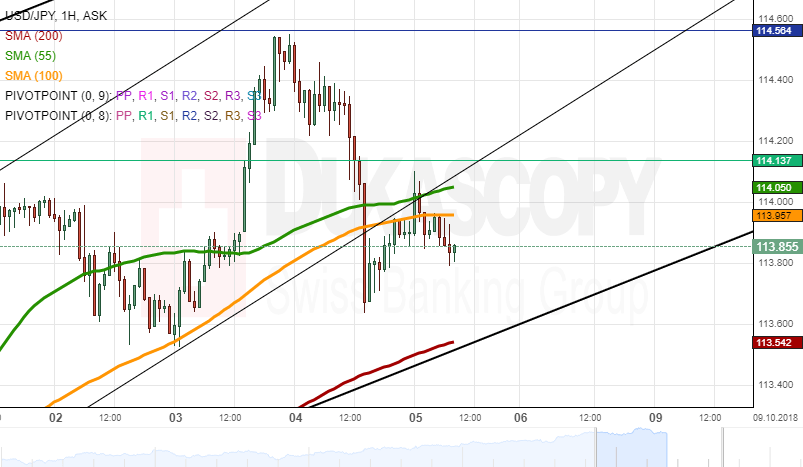
The US Dollar depreciated 0.36% against the Japanese Yen since Thursday's session. On Friday morning, the US Dollar was resisted by the 100-hour SMA at the 113.91 mark.
In regards to the near future, the rate will trade sideways due to the resistance of the weekly R1 at the 114.13 mark and the SMAs. Also, the rate is supported by the 200-hour SMA at the bottom boundary of the large ascending pattern. Most likely, the rate will trade at the 113.60 level during the day.
On the other side, the rate might break the resistance of the SMAs and use the SMAs as support to break the weekly R1 at the 114.13 mark.
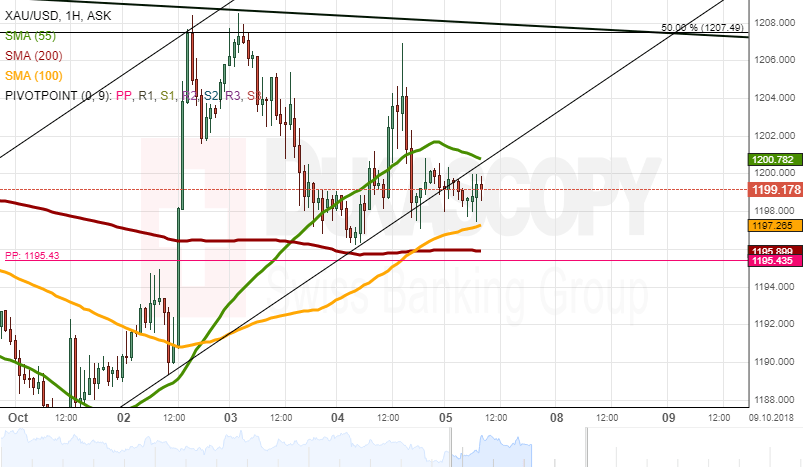
XAUUSD Analysis: Will Stay At 1,198.00
The gold price depreciated 0.03 % since Thursday's session. During Friday's morning hours, the yellow metal was trading between the 55-hour and the 100-hour simple moving averages at the 1,198.04 mark.
In regards to the near-term future, most likely, the rate will stay at the 1.198.00 level during the day. The rate will be supported by the 100– hour and the 200-hour SMAs and resisted by the 55-hour SMA at the bottom boundary of the small ascending pattern.
On the other side, the supports of the 100-hour and the 200-hour SMAs could push the rate to break the resistance of the pattern line to trade at the 1,200.00 level.
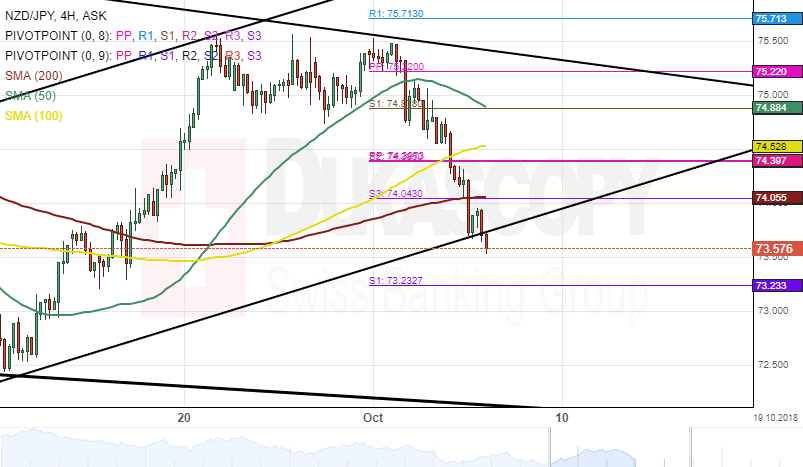
NZD/JPY 4H Chart: Price Level Below SMAs
The bullish momentum that began early September has guided the NZD/JPY exchange rate higher towards the upper boundary of a descending channel at 75.50.
The currency pair made a U-turn from the upper boundary of the descending channel pattern a few days ago and currently trading near the bottom boundary of a one-month ascending channel at 73.66.
Given that the currency exchange rate has breached the lower boundary of the channel, the next target for the pair will be near the monthly S1 at 73.23.
Furthermore, the three SMAs are currently located above the price level on the 4(H) time frame and could give further confirmation of a downside momentum during the following trading sessions.
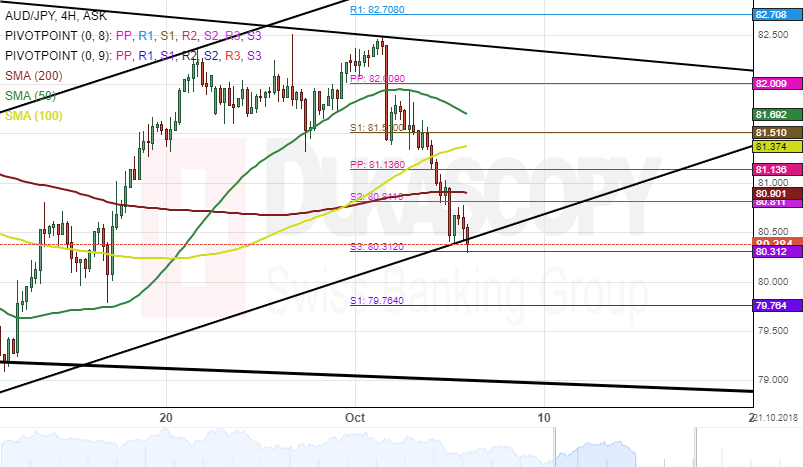
AUD/JPY 4H Chart: Potential Breakout
The bullish sentiment that began early September has guided the AUD/JPY currency pair higher towards the upper boundary of a descending trend line at 82.50.
The exchange rate reversed from the upper border of the downtrend line a few days ago and currently trading near the bottom boundary of a one-month ascending channel at 80.54.
Given that the three SMAs are located above the price level, it is expected that the currency exchange rate breaks the one-month ascending channel pattern within this session.
Moreover, technical indicators suggest that the bearish momentum might aim at the monthly S1 at 79.76 during the following trading sessions.
Dollar Steady Ahead Of US Non-Farm Payrolls, Gold Flat
The story defining the Greenback’s aggressive appreciation in recent days revolves around robust economic data propelling U.S. Treasury yields to multi-year highs.
Dollar strength was a major market theme this week as growing optimism over the strength of the U.S. economy boosted buying sentiment towards the currency. Although the rally took a breather this morning ahead of the U.S. jobs data later in the day, bulls remain in firm control. With the ADP figures exceeding market expectations, there is speculation over the U.S. non-farm payrolls following a similar pattern. A blockbuster NFP number complementedwith signs of accelerating wage growth could stimulate expectations over the Fed adopting a more aggressive approach towards monetary policy normalization.
Focusing on the technical picture, the Dollar Index remains in an uptrend on the daily charts. A solid weekly close above the 96.00 level could instil bulls with enough courage to challenge 96.43. Alternatively, sustained weakness under 96.00 may trigger a correction back towards 95.30.
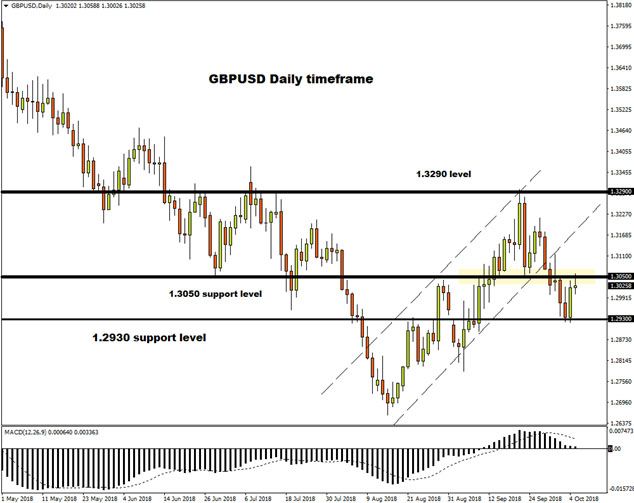
Currency spotlight – GBPUSD
It has certainly been a rollercoaster trading week for the Pound thanks to Brexit-related uncertainty and political drama in Westminster.
Although the currency has received a slight boost this morning on reports of Ireland backing Theresa May’s Brexit plan, it may be too early to celebrate. Lessons of the past have repeatedly taught investors how highly unpredictable the world of Brexit can be. With Brexit fears clearly a major theme weighing on sentiment, the near-term outlook for the British Pound points to further downside. Focusing on the technical picture, the GBPUSD has staged a rebound towards the 1.3050 resistance level. A failure for bulls to secure a weekly close above this region could result in the GBPUSD sinking back towards 1.2930.
Commodity spotlight – Gold
Gold was almost directionless on Friday morning as investors remained cautious ahead of the highly anticipated U.S. jobs report.
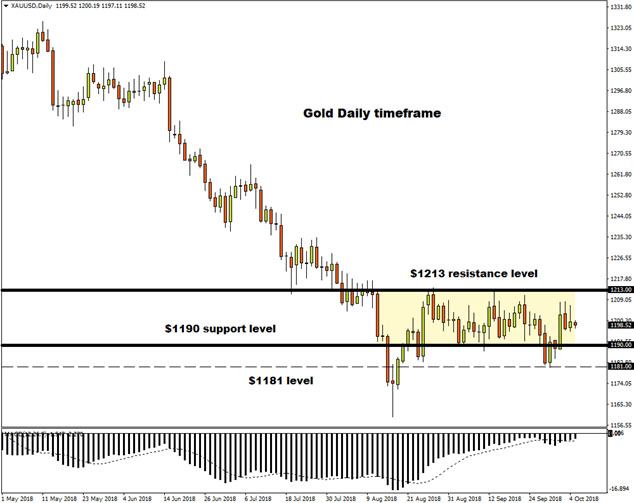
Although the yellow metal initially received a boost mid-week from uncertainty surrounding Italy’s budget, these gains could be easily be erased by a solid U.S. jobs report. With Gold’s fortune tied to the Dollar’s performance, this could be another rough and rocky trading quarter for the precious metal. Taking a look at the technical perspective, prices are likely to trade within a modest range until the NFP figures are released this afternoon. A solid breakdown below the $1,190 support level could inspire a move towards $1,181 and $1,173, respectively.
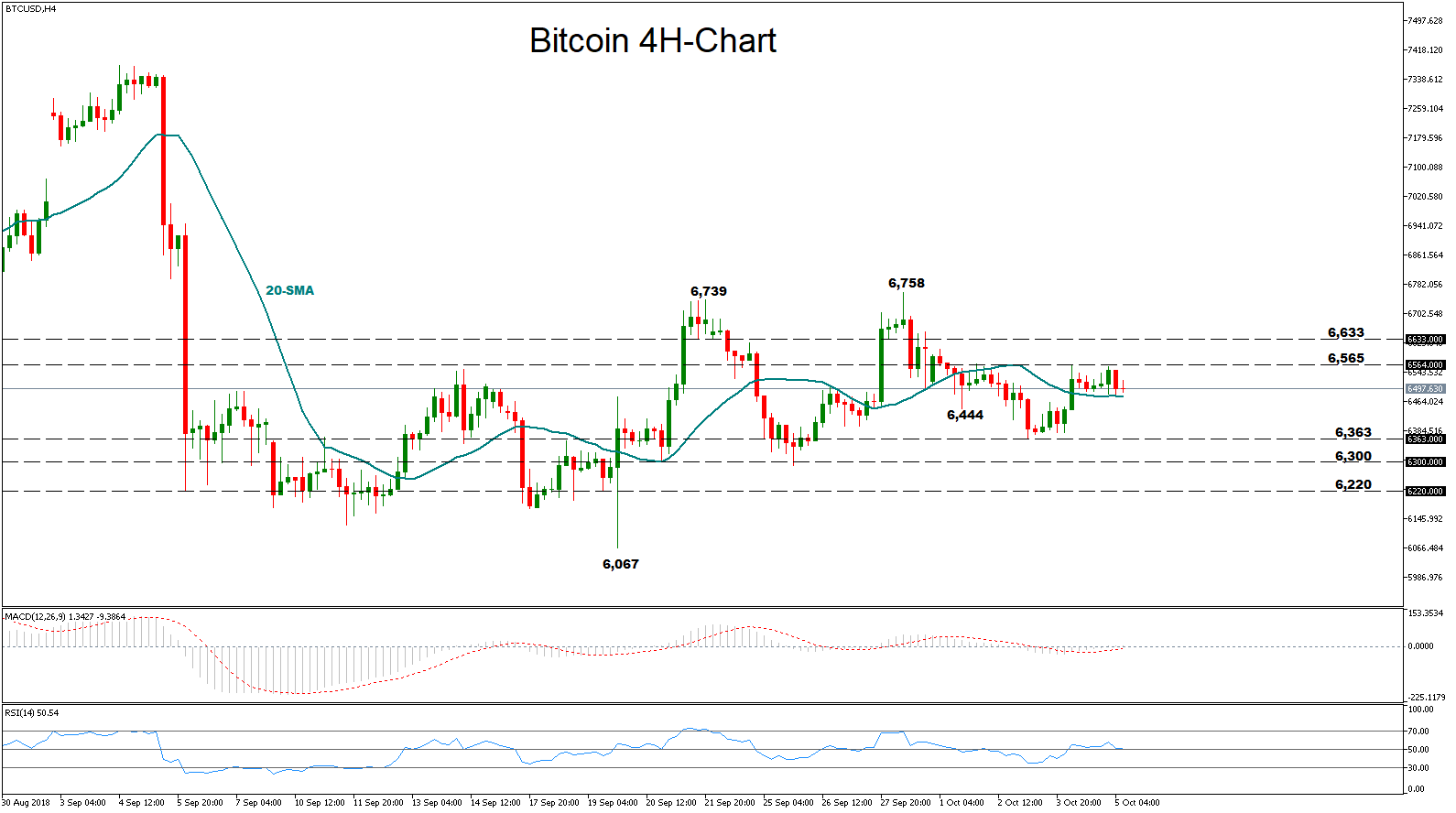
Bitcoin Flattens After Bouncing Off 1-Week Lows, Range-Trading May Continue
BTCUSD has somewhat flattened after its rebound off the one-week low of 6,363 reached on Wednesday, with the MACD and the RSI hinting that consolidation might continue in the short-term as the former holds tight around zero and its red signal line, while the latter hovers just above its 50 neutral level.
If the market manages to turn higher, the price may find immediate resistance around 6,564 as it did in the past few sessions. Above that mark, the price could increase until it touches 6,633, an area marked by the inside swings low on September 28 and September 21-24, while steeper increases would also try to overcome the previous two peaks of 6,739 and 6,758. Should the bulls push prices above the latter, traders could expect further gains in the market.
On the flip side, a reversal to the downside and below the 20-period moving average currently at 6,476 would potentially approach the area between 6,444 and 6,363 formed by the lows on October 1 and October 4 respectively, while an extension beneath the bottom of this zone, may see the bears testing the area between 6,300 and 6,220. Yet, greater attention could be gathered around 6,067 as any significant drop below that trough which is the lowest since August 15 would bring the bearish outlook back into play.
Risk-Off Tones Boost The Yen And Weigh On Equities, US Jobs Data Front And Center
Here are the latest developments in global markets:
FOREX: The dollar is practically flat against a basket of six major currencies on Friday. It retreated in the previous session, but still held close to its recent highs. The yen saw a round of gains, with dollar/yen falling back below 114.00 as investors turned defensive amid high bond yields, and signs that the US-China “cold war” may be entering a new phase. Meanwhile, the commodity-linked currencies continued to underperform, with the aussie and kiwi touching fresh 2 ½-year lows against the dollar earlier today.
STOCKS: US markets retreated on Thursday as the recent climb in bond yields send shivers across equity markets, and tensions between the US and China seemed ready to heighten further (see below). The tech-heavy Nasdaq Composite (-1.81%) underperformed as the US Vice President hinted at industrial espionage by China, while the S&P 500 (-0.82%) and Dow Jones (-0.75%) were also on the back foot. Sentiment was sour in Asia on Friday as well, with Japan’s Nikkei 225 (-0.80%) and Topix (-0.47%) falling amid a stronger yen, and the Hang Seng in Hong Kong inching lower (-0.14%). Likewise, all major indices in Europe were set to open lower today, according to futures.
COMMODITIES: Oil fell from elevated levels on Thursday as risk appetite took a hit, though the precious liquid managed to recover some of its losses early on Friday. WTI eased to $74.83 per barrel, while Brent tumbled to $85.02, in the absence of any major supply-side news. In precious metals, gold remains stuck near the $1,200 per ounce zone, still moving sideways within a relatively narrow range between $1,180 and $1,213.
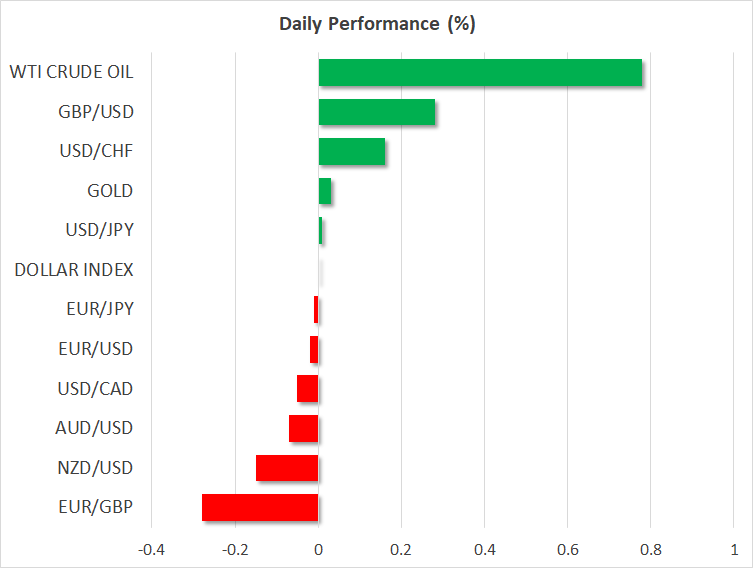
Major movers: Risk-off tones dominate as US-China tensions go beyond trade; dollar retreats
The greenback retreated against most of its major peers on Thursday, giving back some of the gains it recorded in recent days, but remaining at relatively elevated levels. There wasn’t any clear catalyst behind the pullback, with investors likely locking in some profits ahead of the highly-unpredictable nonfarm payrolls report today, and of course after six consecutive sessions of advances.
More broadly, risk-off tones dominated in the FX space, as the recent rise in US bond yields sent shivers through equity markets, feeding back into a stronger yen. To explain – rising bond yields are generally considered negative for stocks for two key reasons. First, bonds are considered safer than stocks, and as they begin to offer a higher return they become more attractive to hold relative to equities. Secondly, higher bond yields translate to higher borrowing costs for corporations, potentially disrupting their profitability. Thus, the performance of bond yields may very well prove crucial for the fortunes of stock markets heading into year-end.
Contributing to the risk-aversion, were signs that US-China tensions are heating up further, and crucially not only on the trade front. Earlier this week, US and Chinese warships almost collided in the South China Sea in what was described as a “close encounter”. Yesterday, US Vice President Pence launched a verbal salvo, saying China is trying to sway the outcome of the US midterm elections through propaganda and influence operations. He also warned that Beijing uses “various” means to obtain US intellectual property, accusing China’s security agencies of stealing sensitive US technology, including military blueprints. Tech stocks felt most of the pain, with the tech-heavy Nasdaq Composite declining by 1.81%, likely on the rationale that American policy will move in a direction that disrupts the operations of US firms in China – especially those dealing in cutting-edge technologies.
Risk-sensitive currencies including the loonie, aussie, and kiwi underperformed in this risk-off environment, not least due to a broad-based retreat in commodity prices. All three of these currencies surrendered ground to the dollar, even on a day when the greenback was on the back foot itself. Aussie/dollar and kiwi/dollar touched fresh 2 ½-year lows earlier on Friday.
Elsewhere, the British pound was actually the best performer, as sterling-demand seems to have picked up now that the Conservative party conference is out of the way and Theresa May managed to stave off a mutiny. Today, attention may turn back to the Brexit process, with chief EU negotiator Barnier set to meet politicians from Northern Ireland.
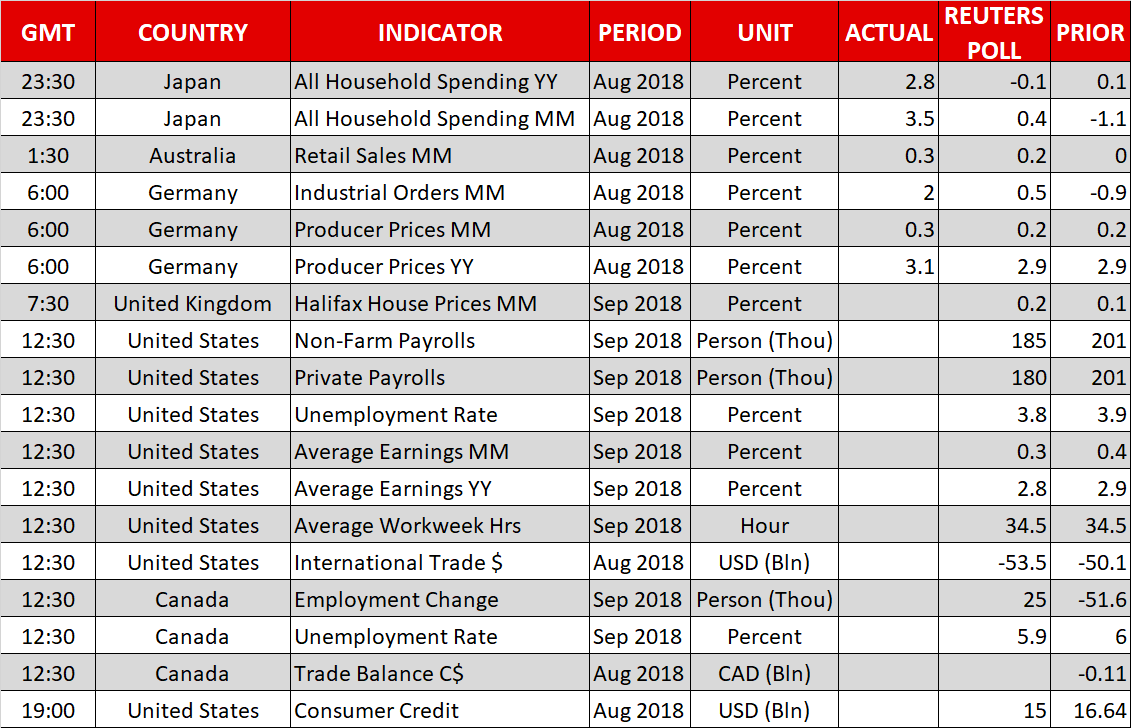
Day ahead: US employment data firmly in focus with Canada’s respective report also eyed
The US monthly jobs report is front and center in terms of data importance on Friday. In the meantime, Canada will be seeing its respective employment numbers hitting the markets as well.
Out of the UK, September house prices as gauged by the Halifax index are due at 0730 GMT. Sterling will yet again be eyeing any Brexit updates though for direction.
The eagerly-awaited US jobs numbers for September are slated for release at 1230 GMT, with an overall healthy nonfarm payrolls report being anticipated. The number of positions added to the economy is predicted to stand at 185k, below August’s 201k but still constituting a robust number. Meanwhile, the unemployment rate is expected to tick down to 3.8%, a number also recorded in May of the current year and way back in April 2000. On the wage growth front, which continues to attract most attention as it can act as an inflation driver, average earnings are anticipated to have grown by 0.3% m/m, below August’s 0.4%. This would put the annual rate of expansion in earnings at 2.8%, weaker than August’s 2.9% which was the biggest annual gain for the measure in more than nine years.
Encouraging numbers, especially on wages, are likely to boost the greenback, stoking expectations for a fourth quarter-percentage point rate increase in 2018. Upbeat releases out of the country this week, including a better-than-expected ADP employment report on positions added to the economy by the private sector, possibly render a beat in the numbers more likely.
Additionally, the reading on August’s US trade balance will be made public at the same time as the NFP report. The relevant deficit is projected to widen to $53.5 billion from $50.1bn in July, which was the highest since February. The politically sensitive trade gap with China that rose to an all-time high in the previously reported month will probably come under the spotlight. Lastly on US releases, data on August’s consumer credit are due at 1900 GMT.
Also out at 1230 GMT will be Canada’s jobs report for September, with employment forecast to bounce back in positive territory during the month. Specifically, the economy is predicted to have added 25.0k positions, after losing 51.6k in August; last month’s headline number is misleading though in the sense that the fall came on the back of a sharp slide in part-time jobs, with full-time ones rising. The unemployment rate is expected to fall to 5.9% from 6.0% in August.
In similar fashion to the US, a beat in the figures has the capacity to stoke expectations for a late October 25bps hike by the Bank of Canada, with the opposite holding true as well; Canadian OIS currently project an 85% probability for such an outcome. Meanwhile, the numbers pertaining to the nation’s trade balance for August will be released at the same time.
ECB Vice President Luis de Guindos will be talking at 1045 GMT, while regional Fed Presidents Kaplan (non-voting FOMC member in 2018) and Bostic (voter) will be making public appearances at 1430 GMT and 1440 GMT respectively.
Elsewhere, US Secretary of State Mike Pompeo will be meeting North Korea’s Kim Jong-Un during the weekend; he will be paying a visit to Japan first to meet PM Shinzo Abe and his Japanese counterpart.
In energy markets, Baker Hughes data on active oil rigs in the US are scheduled for release at 1700 GMT.
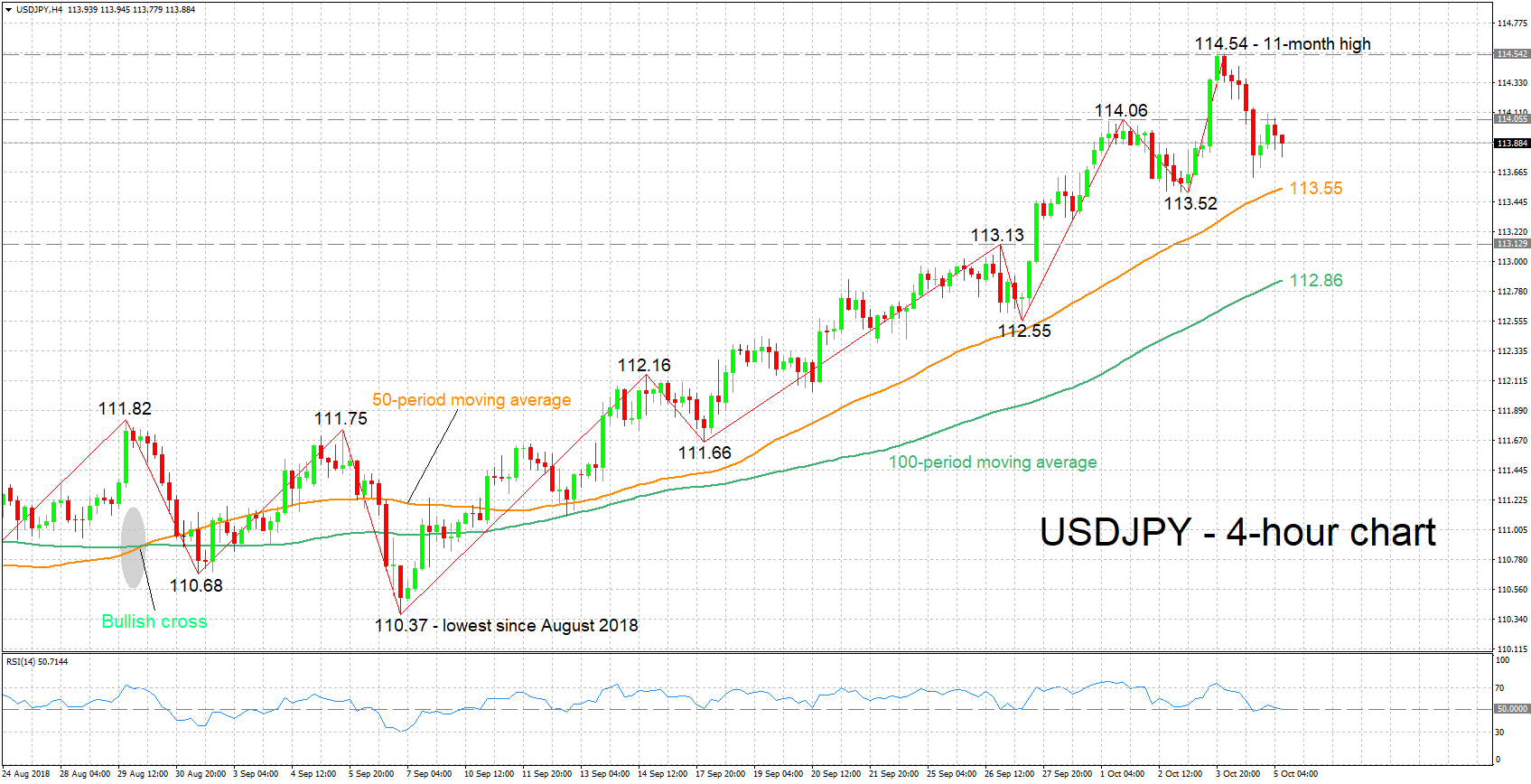
Technical Analysis: USDJPY momentum heads south
USDJPY is trading roughly 70 pips below Thursday’s 11-month high of 114.54. The RSI turned lower after entering overbought zone – signaling a shift in momentum – and is currently hovering around the 50 neutral-perceived level.
Better-than-expected US employment data, especially on wage growth, can push the pair higher. Given a move above 114.06, this being a previous peak, the zone around yesterday’s multi-month high of 114.54 may act as a barrier to the upside. Stronger gains would turn the attention to the 115 handle.
On the downside and in case of a disappointment in the numbers, support may come around the current level of 50-period moving average line at 113.55; the area around this captures a previous bottom at 113.52. Further below, the region around 113.13 – a previous top – and the 100-period MA at 112.86 would be eyed.
A Report On The US Labor Market Is In The Focus Of Attention
The US dollar is being traded near highs over the past one and a half month. The US dollar index (#DX) is consolidating. Yesterday, the index closed unchanged (0.00%). Investors took a wait-and-see attitude before publication of important economic data on the US labor market. Experts expect that in September, the number of people employed in the US non-farm sector will slow down to 185,000. The unemployment rate will fall from 3.9% to 3.8%. The growth of the average hourly wage will count to 0.3%. We recommend paying attention to the difference between the actual and forecasted values.
Yesterday, the Ivey purchasing managers' index for September was published in Canada, which dropped to 50.4 and turned out to be worse than the forecasted value of 62.3. Today, during the Asian trading session, data on the volume of retail sales have been published in Australia. In August, the indicator increased by 0.3%, as investors expected.
The "black gold" prices have started recovering after a sharp decline during yesterday's trading session. At the moment, futures for the WTI crude oil are testing a mark of $74.85 per barrel.
Market Indicators
Yesterday, the aggressive sales were observed in the US stock market: #SPY (-0.87%), #DIA (-0.63%), #QQQ (-1.92%).
At the moment, the 10-year US government bonds yield is at the level 3.20-3.21%.
The news feed on 2018.10.05:
Reports on the US labor market at 15:30 (GMT+3:00);
Employment change in Canada at 15:30 (GMT+3:00).
Democrats Might Regain Control of House, And Then?
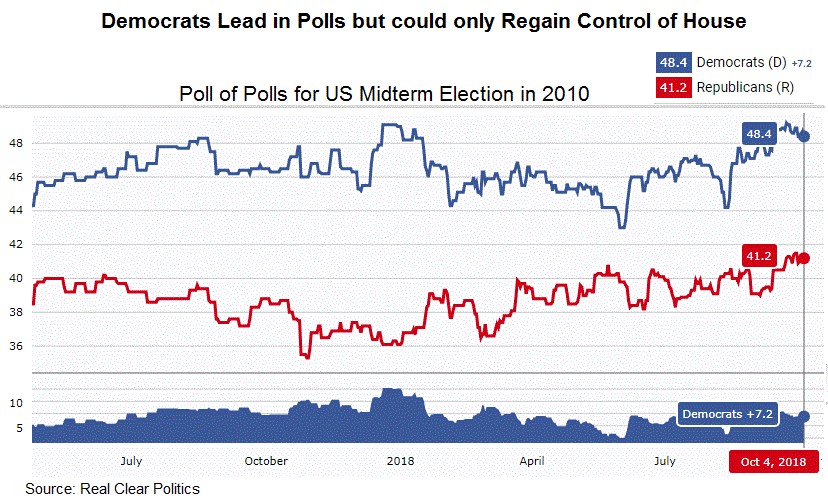
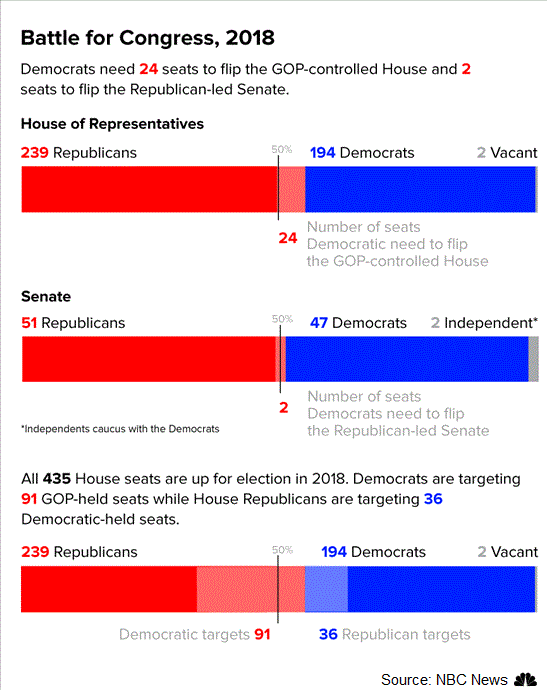
Opinion polls suggest that the upcoming US midterm elections, scheduled on November 6, would lead to a split Congress – Democrat regaining control of the House and Republic retaining majority of the Senate. Such outcome could lead to political gridlock and more vigilant oversight of Trump’s administration. Yet, the most Democrats can do is delaying the legislative process. They would unlikely be able to repeal the bills passed, let alone successfully impeach the President.
In the past, financial market volatility usually increases prior to the election day but fades as the elections end. It would likely be similar this time. Market concerns mainly focus on the election outcome’s impact on fiscal stimulus, trade war and sustainability of Trump’s presidency.
Fiscal Stimulus
Fiscal stimulus and trade would continue to be Trump’s major policy thrusts in his second term. Politicians are looking beyond the midterm to 2020 presidential run. With both Trump and Republicans hoping to extend the economic expansion beyond 2020, they are looking to implement further tax reform. The House Ways and Means Committee has recently released three bills under the framework of Tax Reform 2.0 that they hope the House will pass prior to the midterm elections.
One of the bills proposes to permanently reduce individual and small business tax rates. The remaining two cover the areas in retirement and education. These are proofs that Republicans remain clung to the old tactics of gaining supports via fiscal stimulus and economic growth.
While Democrats had been critical of the previous tax bill, they do not necessarily object all stimulus measures. While hoping to repeal the tax cut (difficult though), Democrats are keen on raising expenditure on social programs and increasing infrastructural spending. The latter might be where a bipartisan compromise could be found. In short, Democrats are in favor of fiscal stimulus but with focus on the lower income class.
Change in Trump’s Protectionist Policy
Trump’s protectionist policy and trade war with China should continue. Besides tax reform, protectionism (tariff and renegotiation of trade deals) is the policy that Trump is keen on bragging about. Even under the scenario of a split Congress, Trump, if he wants, can still rely on executive orders, which do not require congressional approval, to implement policies.
Democrats are against Trump, not protectionism. Indeed, some suggest that Democrats are more notorious of being protectionist. Meanwhile, China’s interference in the US tech industry is real bipartisan concern. Passage of the Foreign Investment Risk Review Modernization Act (FIRRMA) was an evidence of such concern.
Whether future trade policies would be tougher or softer depends on their impacts on US economy and opinions of his supporters, which would be shown in votes, rather than the change in congressional control.
Impeachment of Trump
The impeachment process begins in the House. Should Democrats gain control of the House, they are in control of all of the investigative committees. They could launch a number of new investigations into Trump and his cabinet and begin impeachment proceedings.
However, removing the President from office is a challenging task as a two-third majority in the Senate would be required for this to happen. Since the most likely scenario is that Republicans would retain majority in the Senate, a number of Republicans would need to turn against Trump. It would be self-defeating for Republicans to turn against Trump unless he is found guilty of serious crimes or his popularity slumps.
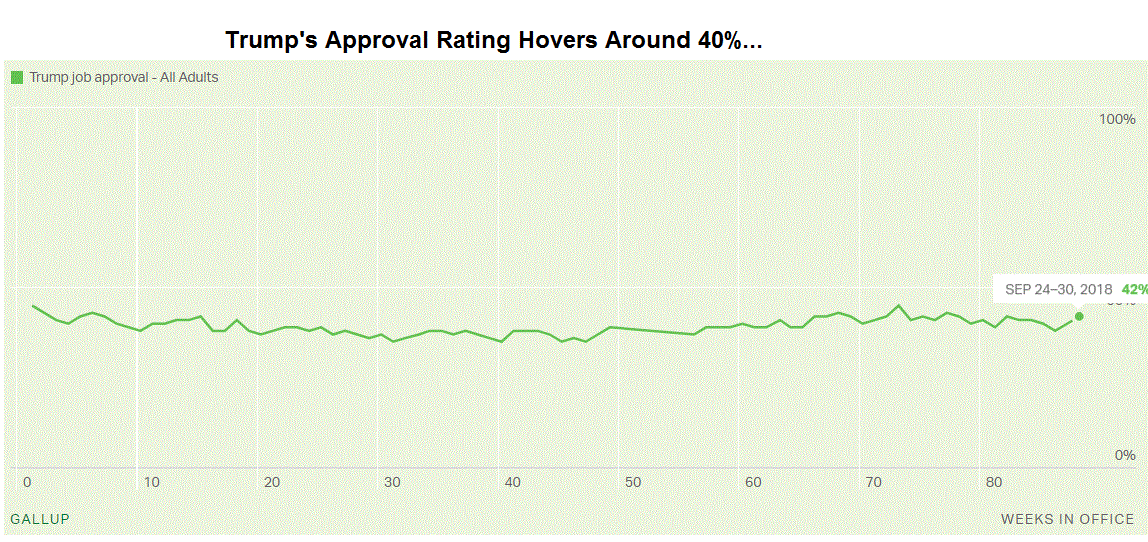
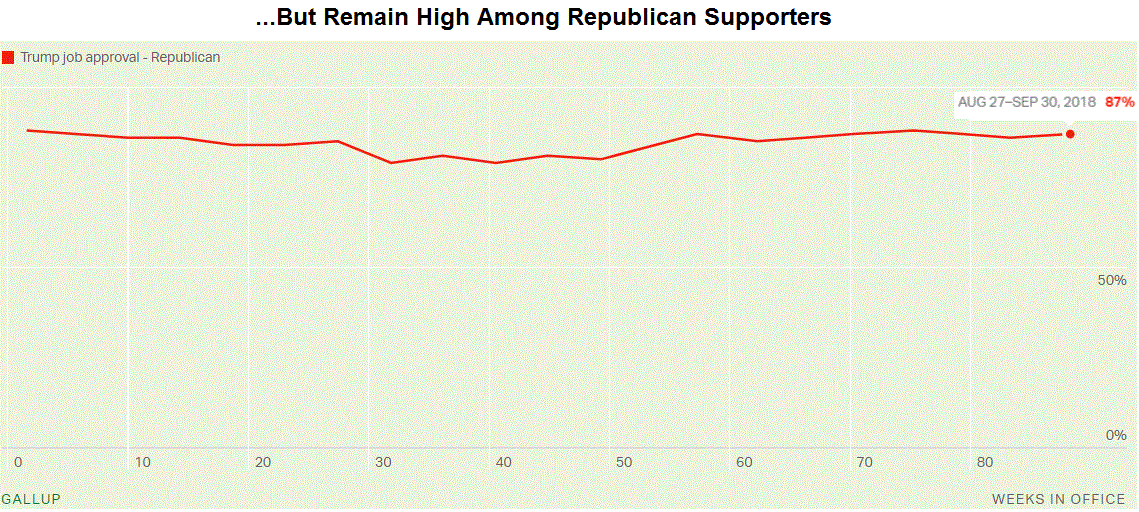
Gullup’s survey shows that Trumps’ approval rating over the past months has been hovering about 40%, while that among Republican voters remain above 80%. It is unlikely for Republicans to turn against him under the current situation.