

Sample Category Title
Silver: White Metal Reverses Its Losses In The Morning Session
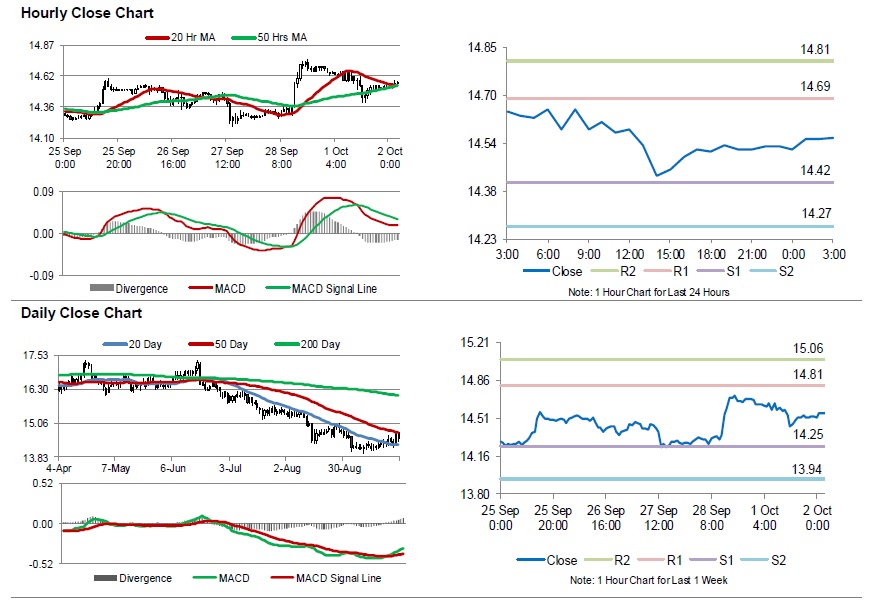
For the 24 hours to 23:00 GMT, Silver declined 0.79% against the USD and closed at USD14.53 per ounce.
In the Asian session, at GMT0300, the pair is trading at 14.56, with silver trading 0.21% higher against the USD from yesterday’s close.
The pair is expected to find support at 14.42, and a fall through could take it to the next support level of 14.27. The pair is expected to find its first resistance at 14.69, and a rise through could take it to the next resistance level of 14.81.
The white metal is showing convergence with its 20 Hr and 50 Hr moving averages.
Oil Trading Higher, Ahead Of API Weekly Crude Oil Stockpiles Data
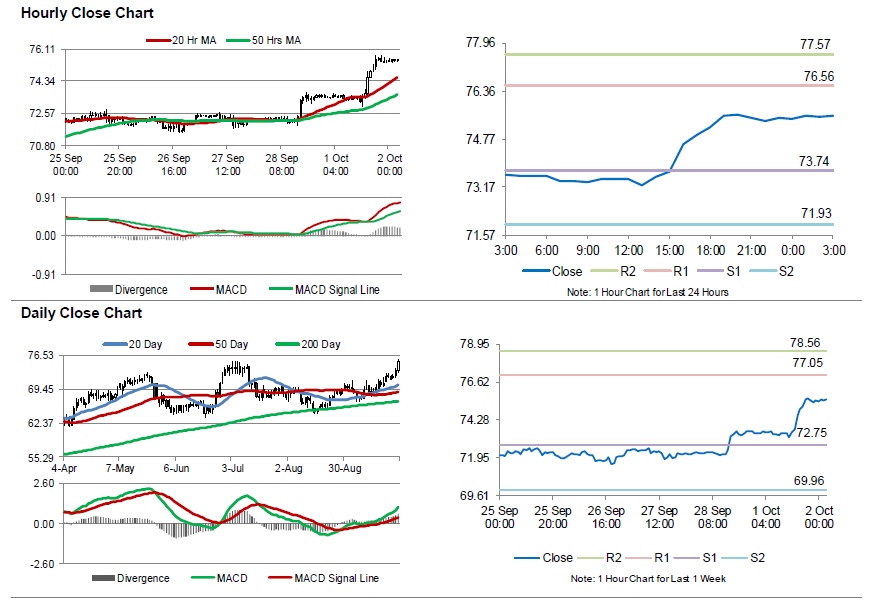
For the 24 hours to 23:00 GMT, Crude Oil rose 2.75% against the USD and closed at USD75.48 per barrel, on Iran sanctions and NAFTA deal.
In the Asian session, at GMT0300, the pair is trading at 75.54, with oil trading 0.08% higher against the USD from yesterday’s close.
The pair is expected to find support at 73.74, and a fall through could take it to the next support level of 71.93. The pair is expected to find its first resistance at 76.56, and a rise through could take it to the next resistance level of 77.57.
Crude oil is trading above its 20 Hr and 50 Hr moving averages.
EUR/USD Daily Outlook
Daily Pivots: (S1) 1.1552; (P) 1.1588; (R1) 1.1616; More.....
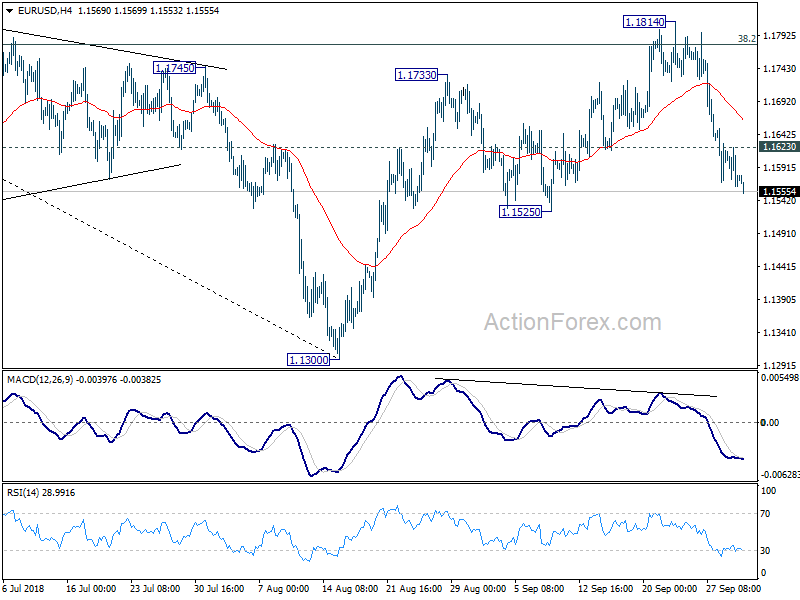
EUR/USD's fall from 1.1814 continues today and reaches as low as 1.1553 so far. Intraday bias remains on the downside for 1.1525 support. Decisive break there will confirm that corrective rise from 1.1300 has completed at 1.1814. In such case, deeper fall should be seen back to retest 1.1300. On the upside, above 1.1650 minor resistance will turn intraday bias neutral and bring recovery. But upside should be limited well below 1.1814 to bring fall resumption.
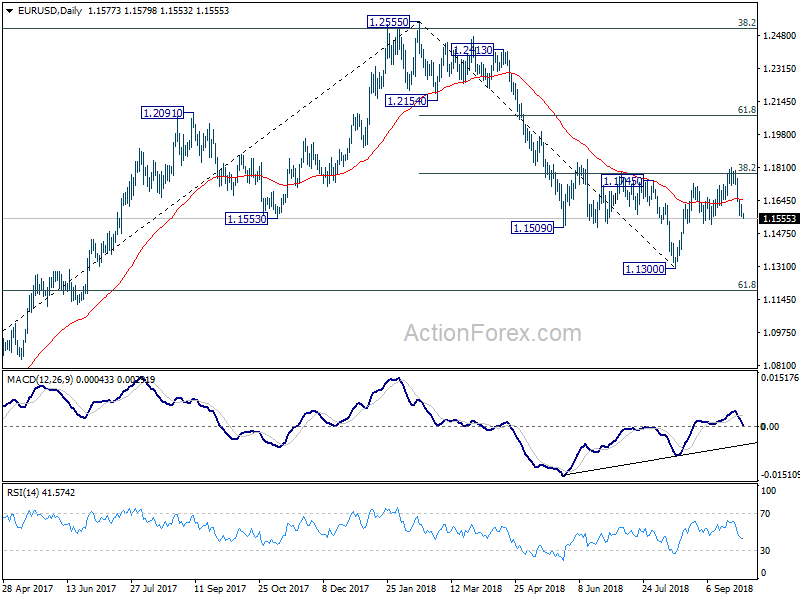
In the bigger picture, a medium term bottom should be in place at 1.1300, on bullish convergence condition in daily MACD and some consolidations would be seen. But still, note that EUR/USD was rejected by 38.2% retracement of 1.6039 (2008 high) to 1.0339 (2017 low) at 1.2516. That carries some long term bearish implications. Thus, we'd expect fall from 1.2555 high to resume after consolidation completes. Below 1.1300 should send EUR/USD through 61.8% retracement of 1.0339 to 1.2555 at 1.1186. And, in that case, EUR/USD would head to retest 1.0339 (2017 low).
Euro Weakens as Italy on Track to Clash with EU on Budget, Aussie steady after RBA
Canadian Dollar remains firm on the USMCA trade deal but it's waiting for fresh stimulus to extend rally against Dollar and Yen. Australian Dollar is also steady after RBA stands pat and published a neutral statement as widely expected. Meanwhile, Euro is suffering some fresh selling on persistent worries over Italy, which is heading for a budget clash with EU for sure. Sterling also turned mixed after another Brexit rumor faded without follow up news.
Overnight, DOW closed up 0.73% at 26551.21 after the USMCA news. But that came after hitting as high as 26737.98 and paring much gain. Similarly, S&P 500 hit as high as 2937.06 but ended up only 0.36% at 2924.59. Nasdaq closed down -09.11% at 8037.30. Treasury yield actually showed a bit more strength as 10 year yield rose 0.024 to 3.080 after hitting day high at 3.086. 30 year yield was strongly and added 0.035 to 3.232. Again, yield was stronger at the longer end. In Asia, Japanese Nikkei is trading up 0.46%, extending medium term up trend. However, Singapore Strait Times is down -0.19% at the time of writing. Hong Kong HSI is worse, down -1.64%. China remains on holiday.
Technically, Yen is regaining some strengthen in Asian session after rebound in EUR/JPY and GBP/JPY lost steam. Recent consolidation in two crosses is set to extend. Dollar is picking up some strength against Euro, Swissy, Sterling and Aussie as markets enter into European session. We'd probably see EUR/USD have a take on 1.1525 support and USD/CHF on 0.9866 resistance. GBP/USD's recovery overnight was rather weak and brief and it should revisit 1.2999 temporary low soon.
RBA left cash rate unchanged at 1.50%, maintained neutral stance
The accompanying statement is very much a carbon copy of the prior one. A change is in noting the cause of pickup in global inflation on higher oil prices and wage growth. And further pickup is expected on tightening labor markets and the sizeable fiscal stimulus of the US. But RBA also reiterated that risk to global outlook from "direction of international trade policy in the United States."
Domestically, RBA said latest data confirmed strong growth in the past year. And GDP is expected to average a bit above 3% in 2018 and 2019. Meanwhile, "one continuing source of uncertainty is the outlook for household consumption. Labor market outlook remains "positive" and lift in wage growth will be a "gradual process". Inflation is expected to decline in September quarter due to once-off factors, but should climb to above 2% in 2019 and 2020.
Overall, the RBA maintained a neutral stance with the statement and hinted again that it's in no rush to rate hike.
EU Juncker: One crisis in Greece was enough, not another in Italy
European Commission President Jean-Claude Juncker said yesterday that "Italy is distancing itself from the budgetary targets we have jointly agreed at EU level." He warned "one crisis was sufficient, one crisis was enough" and "after the toughest management of the Greece crisis, we have to do everything to avoid a new Greece -- this time an Italy -- crisis." He added "we have to prevent Italy from being able to get a special treatment here that, if everybody were to get it, would mean the end of the euro."
The chairman of Eurozone finance ministers Mario Centeno said after the group's meeting that "recent announcements by the Italian government have raised concerns over its budgetary course, concerns that need to be addressed soon." He added "we are all bound by the euro and we need sound policies to protect it. It is up to the Italian government to show it has a sustainable and credible budgetary plan."
On the other hand, Italian Deputy Prime Minister Luigi Di Maio insisted the government "will never sacrifice workers on the altar of the spread and of the crazy rules which have been imposed on us" And, "this government doesn't butcher people, the music has changed."
Fed Rosengren sees yellow lights in inflation, Kashkari sees bond flashing yellow too
Boston Fed President Eric Rosengren warned that tight labor market could push the economy towards unexpected inflation and other problems. He argued that Fed should continuing rate hikes "until monetary policy becomes mildly restrictive."
And he emphasized that "the further we get from full employment the further risk there is." Also, he added "pushing the economy too hard risks inflationary concerns or financial-stability risks". Either of these outcomes "might necessitate a more forceful monetary policy response."
While there are no "alarm going off" for now, he said "there are a bunch of yellow lights". these include commercial housing estate boom that could push prices beyond what market demand could sustain.
On the other hand, Minneapolis Fed President Neel Kashkari saw "flashing yellow" signals in the bond market, which suggested there is no need for any more rate hikes for now. He said "the bond market is saying, 'hey we're not so sure that the U.S. economic growth is going to be very strong in the future years,' so that's a nervousness for me."
Kashkari added yield curve is "a measure of giving us feedback as to are we running accommodative monetary policy or contractionary monetary policy, and I don't see any reason yet that we should be moving interest rates up and tapping the brakes."
IMF Lagarde hinted at global outlook downgrade on trade disputes
IMF Managing Director Christine Lagarde hinted yesterday that the organization may downgrade growth outlook next week. She said, "In July, we projected 3.9 percent global growth for 2018 and 2019. The outlook has since become less bright, as you will see from our updated forecast next week."
Lagarde added "A key issue is that rhetoric is morphing into a new reality of actual trade barriers. This is hurting not only trade itself, but also investment and manufacturing as uncertainty continues to rise." Though she also tried to tone down and said "we are not seeing broader financial contagion — so far — but we also know that conditions can change rapidly. If the current trade disputes were to escalate further, they could deliver a shock to a broader range of emerging and developing economies."
On WTO reform, she said "The immediate challenge is to strengthen the rules. This includes looking at the distortionary effects of state subsidies, preventing abuses of dominant positions and improving the enforcement of intellectual property rights."
On the data front
Japan monetary base rose 5.9% yoy in September versus expectation of 5.4% yoy. Consumer confidence rose 0.1 to 43.4 in September. UK will release construction PMI today while Eurozone will release PPI.
EUR/USD Daily Outlook
Daily Pivots: (S1) 1.1552; (P) 1.1588; (R1) 1.1616; More.....
EUR/USD's fall from 1.1814 continues today and reaches as low as 1.1553 so far. Intraday bias remains on the downside for 1.1525 support. Decisive break there will confirm that corrective rise from 1.1300 has completed at 1.1814. In such case, deeper fall should be seen back to retest 1.1300. On the upside, above 1.1650 minor resistance will turn intraday bias neutral and bring recovery. But upside should be limited well below 1.1814 to bring fall resumption.
In the bigger picture, a medium term bottom should be in place at 1.1300, on bullish convergence condition in daily MACD and some consolidations would be seen. But still, note that EUR/USD was rejected by 38.2% retracement of 1.6039 (2008 high) to 1.0339 (2017 low) at 1.2516. That carries some long term bearish implications. Thus, we'd expect fall from 1.2555 high to resume after consolidation completes. Below 1.1300 should send EUR/USD through 61.8% retracement of 1.0339 to 1.2555 at 1.1186. And, in that case, EUR/USD would head to retest 1.0339 (2017 low).
Economic Indicators Update
| GMT | Ccy | Events | Actual | Forecast | Previous | Revised |
|---|---|---|---|---|---|---|
| 23:50 | JPY | Monetary Base Y/Y Sep | 5.90% | 5.40% | 6.90% | |
| 4:30 | AUD | RBA Rate Decision | 1.50% | 1.50% | 1.50% | |
| 5:00 | JPY | Consumer Confidence Index Sep | 43.4 | 43.4 | 43.3 | |
| 8:30 | GBP | Construction PMI Sep | 52.6 | 52.9 | ||
| 9:00 | EUR | Eurozone PPI M/M Aug | 0.00% | 0.40% | ||
| 9:00 | EUR | Eurozone PPI Y/Y Aug | 3.90% | 4.00% |
RBA left cash rate unchanged at 1.50%, full statement
RBA left cash rate unchanged at 1.50%. The accompanying statement is very much a carbon copy of the prior one. A change is in noting the cause of pickup in global inflation on higher oil prices and wage growth. And further pickup is expected on tightening labor markets and the sizeable fiscal stimulus of the US. But RBA also reiterated that risk to global outlook from "direction of international trade policy in the United States."
Domestically, RBA said latest data confirmed strong growth in the past year. And GDP is expected to average a bit above 3% in 2018 and 2019. Meanwhile, "one continuing source of uncertainty is the outlook for household consumption. Labor market outlook remains "positive" and lift in wage growth will be a "gradual process". Inflation is expected to decline in September quarter due to once-off factors, but should climb to above 2% in 2019 and 2020.
Overall, the RBA maintained a neutral stance with the statement and hinted again that it's in no rush to rate hike.
Full statement below.
Statement by Philip Lowe, Governor: Monetary Policy Decision
At its meeting today, the Board decided to leave the cash rate unchanged at 1.50 per cent.
The global economic expansion is continuing. A number of advanced economies are growing at an above-trend rate and unemployment rates are low. Growth in China has slowed a little, with the authorities easing policy while continuing to pay close attention to the risks in the financial sector. Globally, inflation remains low, although it has increased due to both higher oil prices and some lift in wages growth. A further pick-up in inflation is expected given the tight labour markets, and in the United States, the sizeable fiscal stimulus. One ongoing uncertainty regarding the global outlook stems from the direction of international trade policy in the United States.
Financial conditions in the advanced economies remain expansionary, although they are gradually becoming less so in some countries. Yields on government bonds have moved a little higher, but credit spreads generally remain low. There has been a broad-based appreciation of the US dollar this year. In Australia, money-market interest rates are higher than they were at the start of the year, although they have declined since the end of June. In response, some lenders have increased their standard variable mortgage rates by small amounts, while at the same time reducing mortgage rates for some new loans.
The latest national accounts confirmed that the Australian economy grew strongly over the past year, with GDP increasing by 3.4 per cent. The Bank's central forecast remains for growth to average a bit above 3 per cent in 2018 and 2019. Business conditions are positive and non-mining business investment is expected to increase. Higher levels of public infrastructure investment are also supporting the economy, as is growth in resource exports. One continuing source of uncertainty is the outlook for household consumption. Growth in household income remains low and debt levels are high. The drought has led to difficult conditions in parts of the farm sector.
Australia's terms of trade have increased over the past couple of years due to rises in some commodity prices. While the terms of trade are expected to decline over time, they are likely to stay at a relatively high level. The Australian dollar remains within the range that it has been in over the past two years on a trade-weighted basis, but it has depreciated against the US dollar along with most other currencies.
The outlook for the labour market remains positive. The unemployment rate is trending lower and, at 5.3 per cent, is the lowest in almost six years. The vacancy rate is high and there are reports of skills shortages in some areas. A further gradual decline in the unemployment rate is expected over the next couple of years to around 5 per cent. Wages growth remains low, although it has picked up a little. The improvement in the economy should see some further lift in wages growth over time, although this is likely to be a gradual process.
Inflation is around 2 per cent. The central forecast is for inflation to be higher in 2019 and 2020 than it is currently. In the interim, once-off declines in some administered prices in the September quarter are expected to result in inflation in 2018 being a little lower than otherwise.
Conditions in the Sydney and Melbourne housing markets have continued to ease and nationwide measures of rent inflation remain low. Growth in credit extended to owner-occupiers remains robust, but demand by investors has slowed noticeably as the dynamics of the housing market have changed. Credit conditions are tighter than they have been for some time, although mortgage rates remain low and there is strong competition for borrowers of high credit quality.
The low level of interest rates is continuing to support the Australian economy. Further progress in reducing unemployment and having inflation return to target is expected, although this progress is likely to be gradual. Taking account of the available information, the Board judged that holding the stance of monetary policy unchanged at this meeting would be consistent with sustainable growth in the economy and achieving the inflation target over time.
(RBA) Statement by Philip Lowe, Governor: Monetary Policy Decision
At its meeting today, the Board decided to leave the cash rate unchanged at 1.50 per cent.
The global economic expansion is continuing. A number of advanced economies are growing at an above-trend rate and unemployment rates are low. Growth in China has slowed a little, with the authorities easing policy while continuing to pay close attention to the risks in the financial sector. Globally, inflation remains low, although it has increased due to both higher oil prices and some lift in wages growth. A further pick-up in inflation is expected given the tight labour markets, and in the United States, the sizeable fiscal stimulus. One ongoing uncertainty regarding the global outlook stems from the direction of international trade policy in the United States.
Financial conditions in the advanced economies remain expansionary, although they are gradually becoming less so in some countries. Yields on government bonds have moved a little higher, but credit spreads generally remain low. There has been a broad-based appreciation of the US dollar this year. In Australia, money-market interest rates are higher than they were at the start of the year, although they have declined since the end of June. In response, some lenders have increased their standard variable mortgage rates by small amounts, while at the same time reducing mortgage rates for some new loans.
The latest national accounts confirmed that the Australian economy grew strongly over the past year, with GDP increasing by 3.4 per cent. The Bank's central forecast remains for growth to average a bit above 3 per cent in 2018 and 2019. Business conditions are positive and non-mining business investment is expected to increase. Higher levels of public infrastructure investment are also supporting the economy, as is growth in resource exports. One continuing source of uncertainty is the outlook for household consumption. Growth in household income remains low and debt levels are high. The drought has led to difficult conditions in parts of the farm sector.
Australia's terms of trade have increased over the past couple of years due to rises in some commodity prices. While the terms of trade are expected to decline over time, they are likely to stay at a relatively high level. The Australian dollar remains within the range that it has been in over the past two years on a trade-weighted basis, but it has depreciated against the US dollar along with most other currencies.
The outlook for the labour market remains positive. The unemployment rate is trending lower and, at 5.3 per cent, is the lowest in almost six years. The vacancy rate is high and there are reports of skills shortages in some areas. A further gradual decline in the unemployment rate is expected over the next couple of years to around 5 per cent. Wages growth remains low, although it has picked up a little. The improvement in the economy should see some further lift in wages growth over time, although this is likely to be a gradual process.
Inflation is around 2 per cent. The central forecast is for inflation to be higher in 2019 and 2020 than it is currently. In the interim, once-off declines in some administered prices in the September quarter are expected to result in inflation in 2018 being a little lower than otherwise.
Conditions in the Sydney and Melbourne housing markets have continued to ease and nationwide measures of rent inflation remain low. Growth in credit extended to owner-occupiers remains robust, but demand by investors has slowed noticeably as the dynamics of the housing market have changed. Credit conditions are tighter than they have been for some time, although mortgage rates remain low and there is strong competition for borrowers of high credit quality.
The low level of interest rates is continuing to support the Australian economy. Further progress in reducing unemployment and having inflation return to target is expected, although this progress is likely to be gradual. Taking account of the available information, the Board judged that holding the stance of monetary policy unchanged at this meeting would be consistent with sustainable growth in the economy and achieving the inflation target over time.
CFTC Commitments of Traders – USD Bets Trimmed as Fed’s Policy Rolls Out as Planned
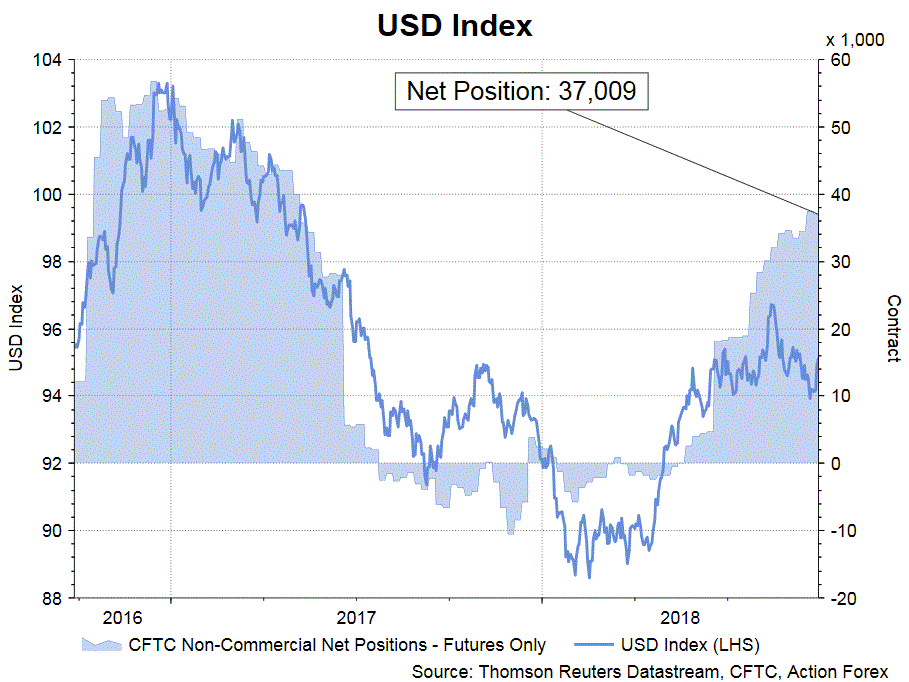
USD bulls lost ground as the greenback corrected from its peak. As suggested in the CFTC Commitments of Traders report in the week ended September 25, NET LENGTH of USD index dropped -447 contracts to 37 009 contracts. Both speculative long and short positions decreased. During the week, the DXY index slipped -0.54%. The greenback dropped against all major currencies with the exception of safe- haven assets, namely Japanese yen (JPY) and Swiss franc (CHF).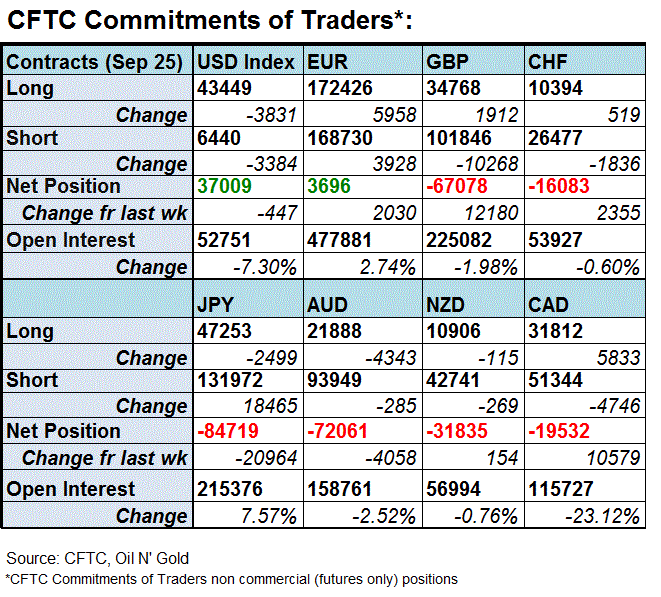
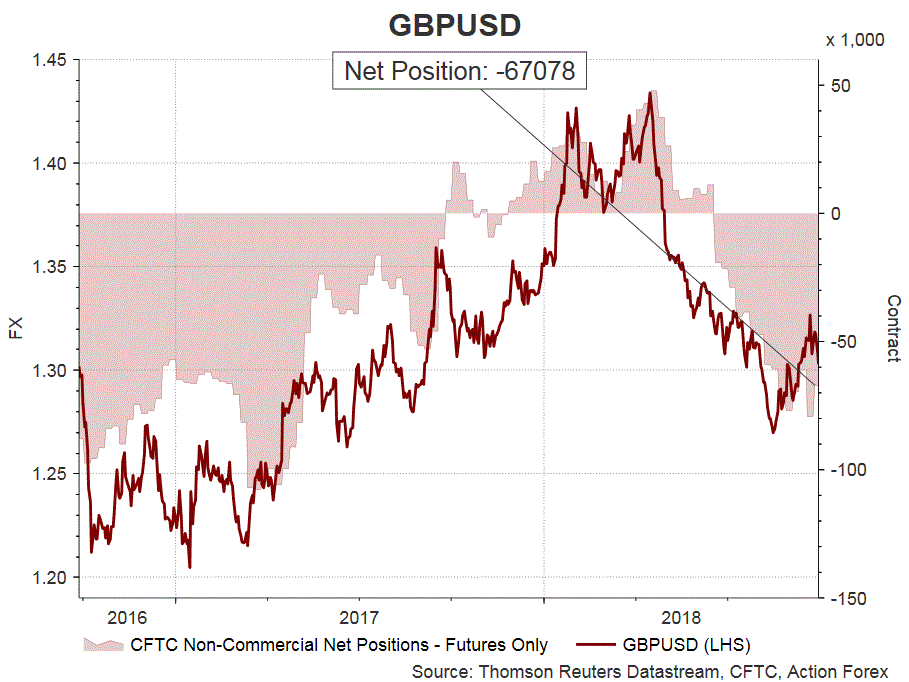
NET LENGTH for EUR futures gained +2 030 contracts to 3 696. Meanwhile, NET SHORT for GBP futures decreased -12 180 contracts to 67 078. Deadlock of Brexit negotiations remained unresolved as the deadline approaches. The market this week focuses on Conservative Party's conference in which the members of the ruling party should reveal their (updated?) stance on thorny issues including Irish border and future trader relations with the EU.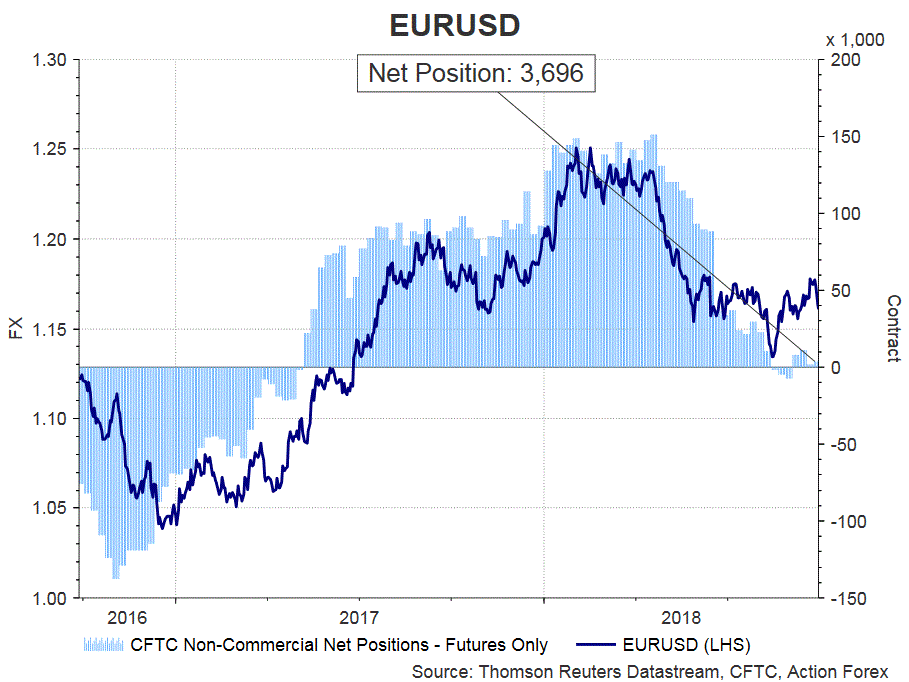
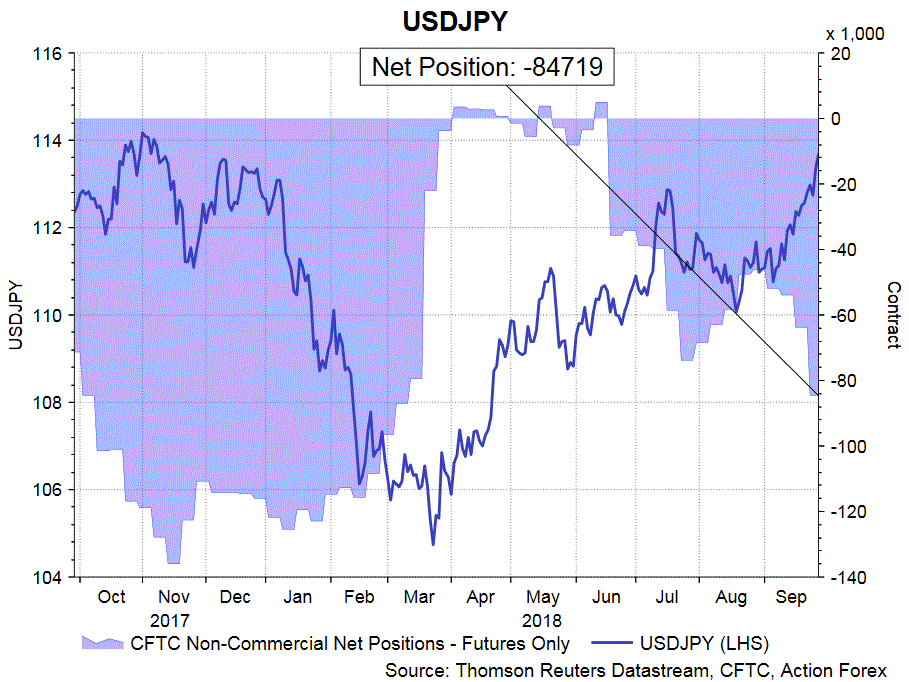
On safe-haven currencies, Net SHORT for CHF futures dropped -2 355 contracts to 16 083 while that for JPY futures deepened, by 20 964 contracts, to 84 719 during the week. This was driven by the decline in speculative long positions (-2 499 contracts) and a jump in shorts (+18 465 contracts).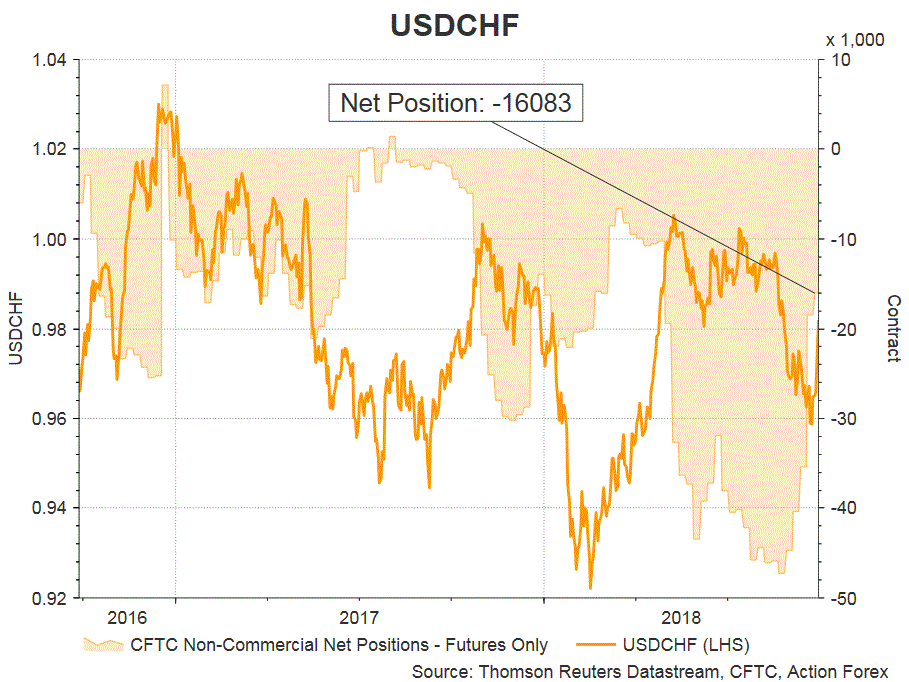
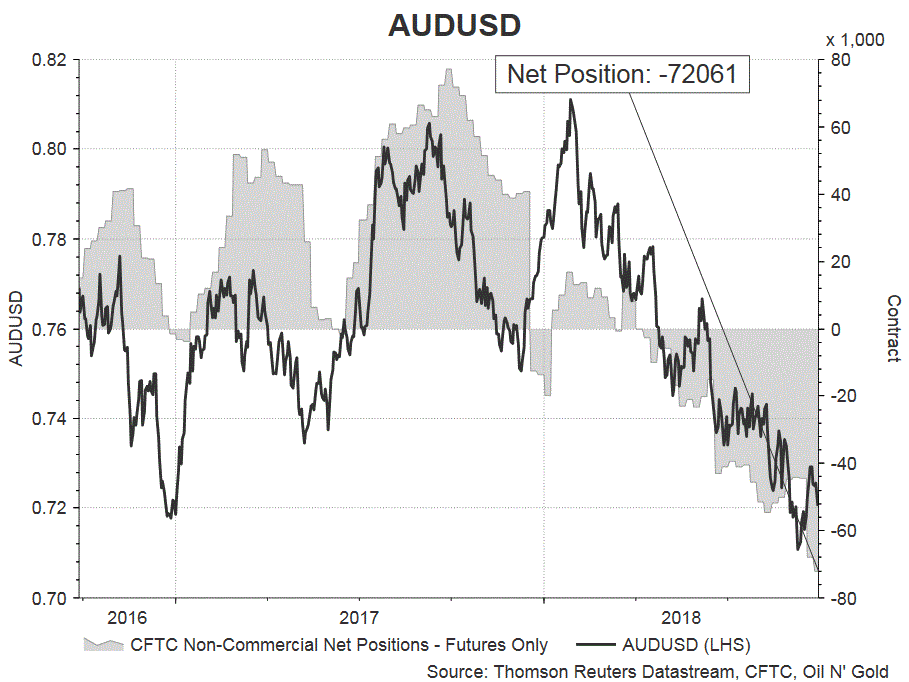
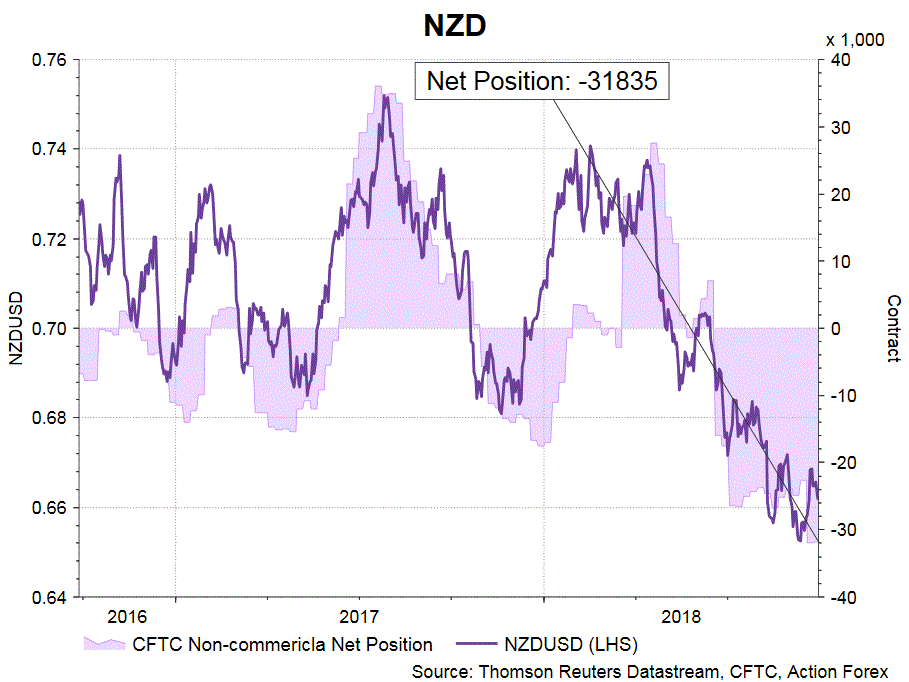
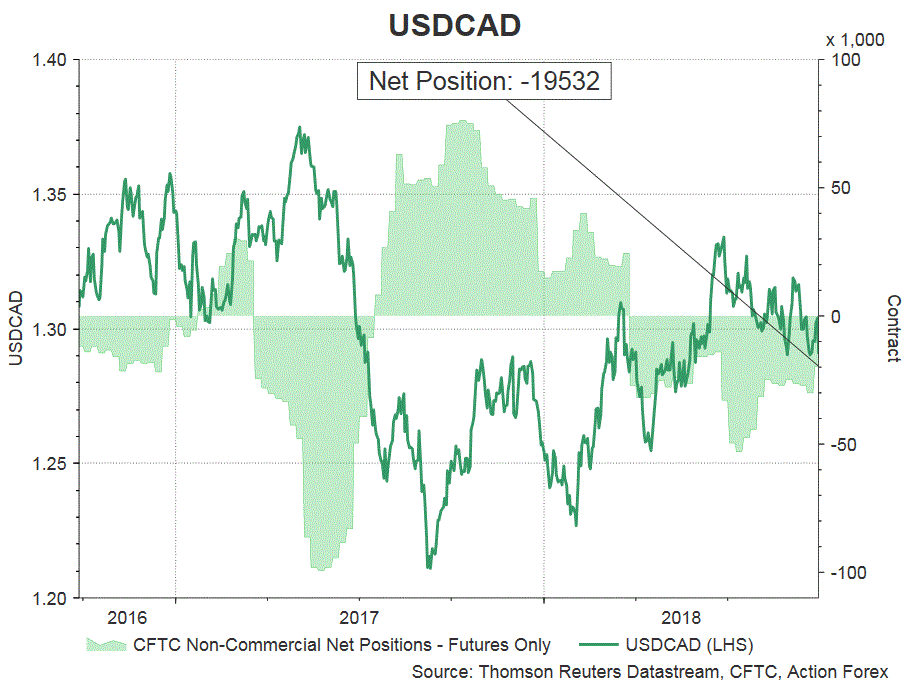
All commodity currencies stayed in NET SHORT positions. NET SHORT for AUD futures rose +4 058 contracts to 72 061, while that for NZD futures dropped +154 contracts to 31 835. NET SHORT for CAD futures declined -10 579 contracts to 19 532. Further fall in CAD shorts is expected for the coming week as Canada and the US eventually reached a preliminary trade deal to replace NAFTA.
CFTC Commitments of Traders – Traders Bullish on Energy as Prices Hit Highs
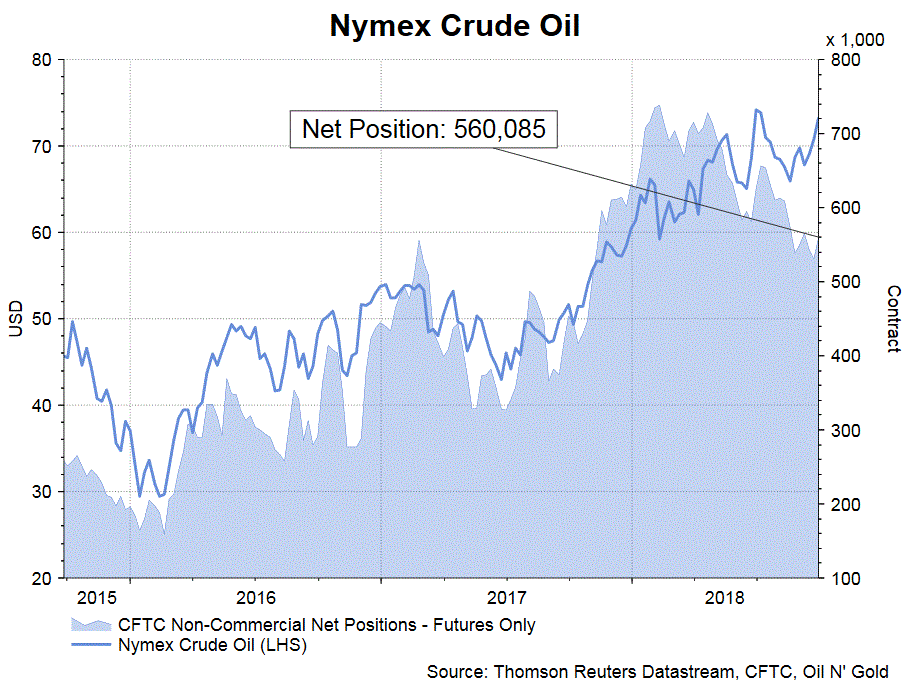
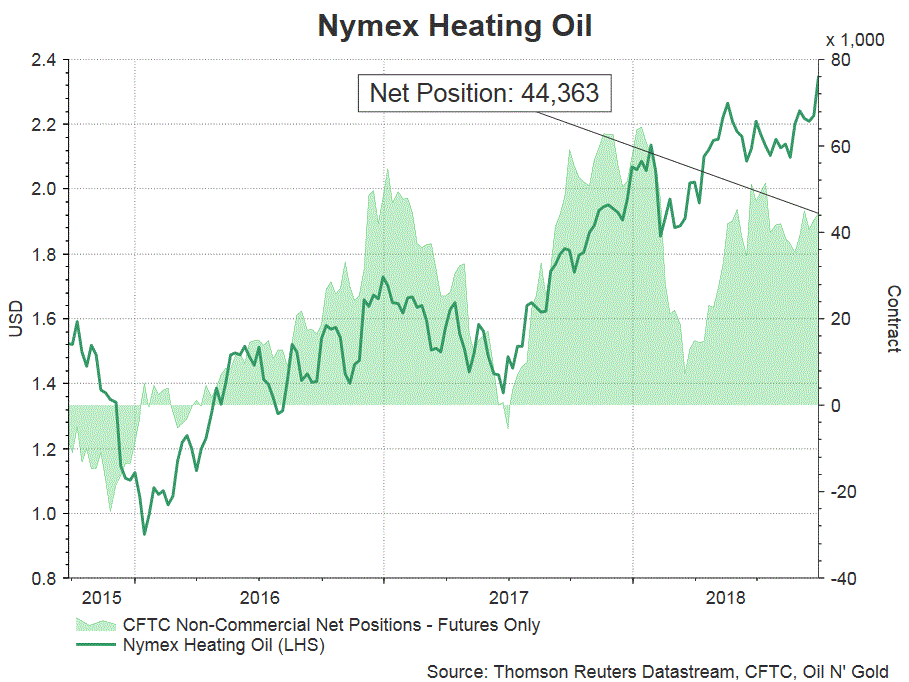
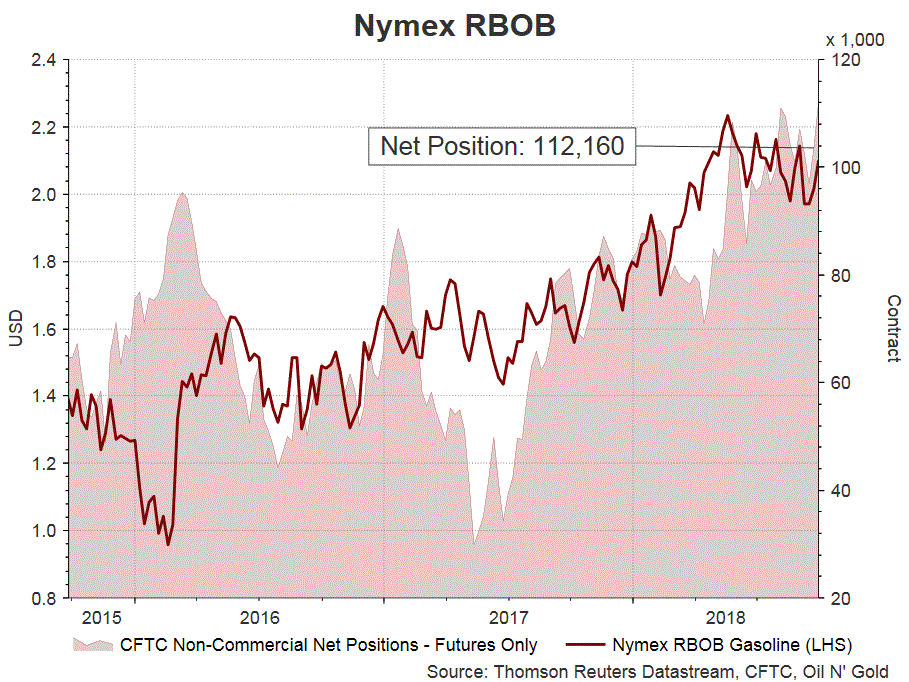
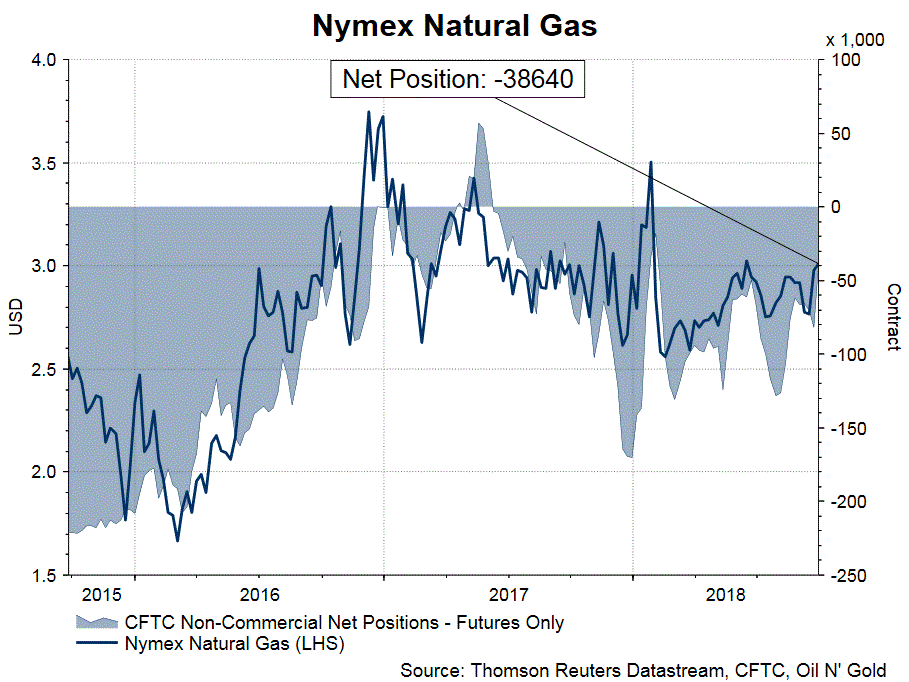
According to the CFTC Commitments of Traders report for the week ended September 25, traders turned more bullish on the energy market. NET LENGTH for crude oil, heating oil and gasoline futures rose, while NET SHORT for natural gas futures dropped. Speculative long positions of crude oil futures jumped +20 300 contracts, while shorts declined -9 419 contracts, resulting in an increase in NET LENGTH, by +29 719 contracts, to 560 085 contracts. For refined oil products, Net LENGTH for heating oil futures added +1 423 contracts to 44 363, while that for gasoline soared +8 500 contracts to 112 160. During the week, the front-month WTI crude oil contract jumped +3.48% while the corresponding Brent contract was up +3.59%. RBOB gasoline rose +3.11%. Net SHORT for natural gas plunged -43 202 contracts, to 38 640 contracts for the week. The Nymex natural gas contract rallied +5.08% on expectations of higher demand due to cold weather.
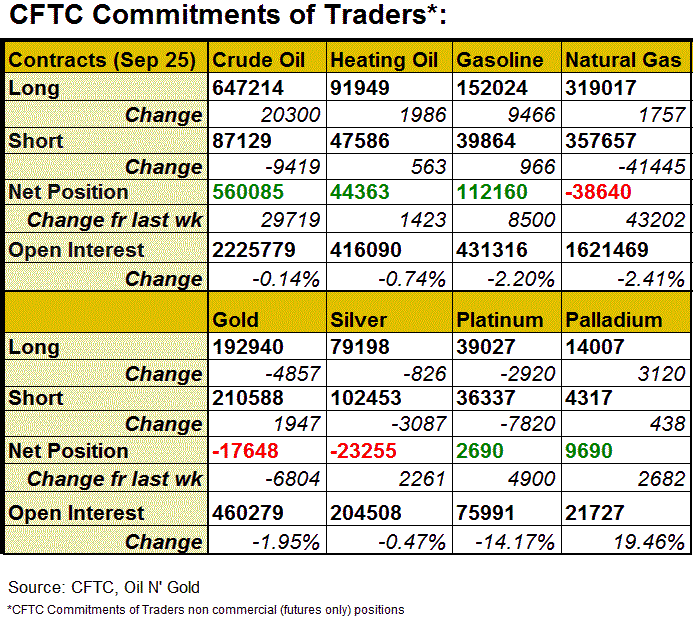
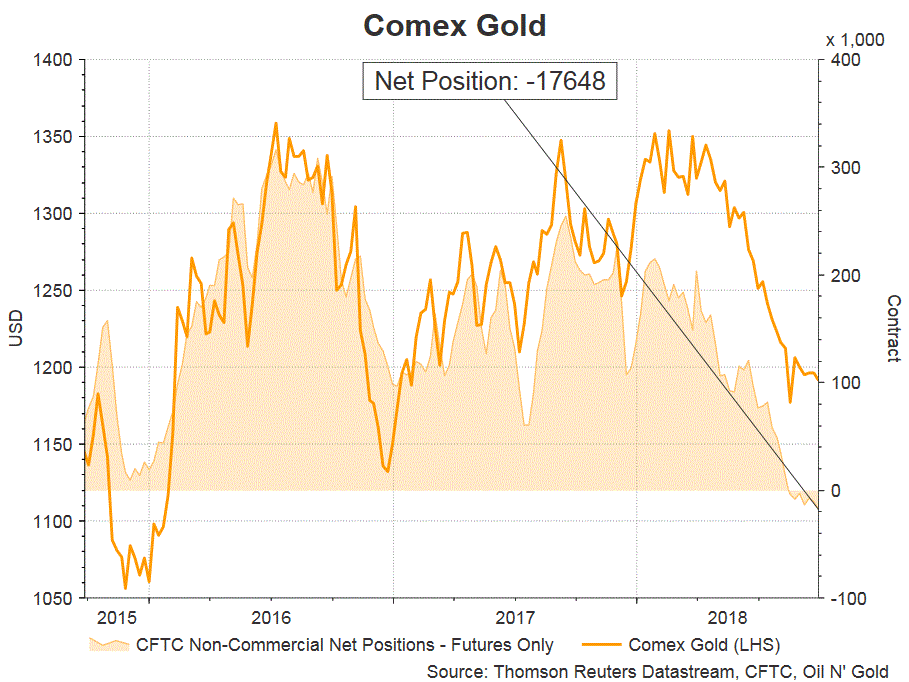
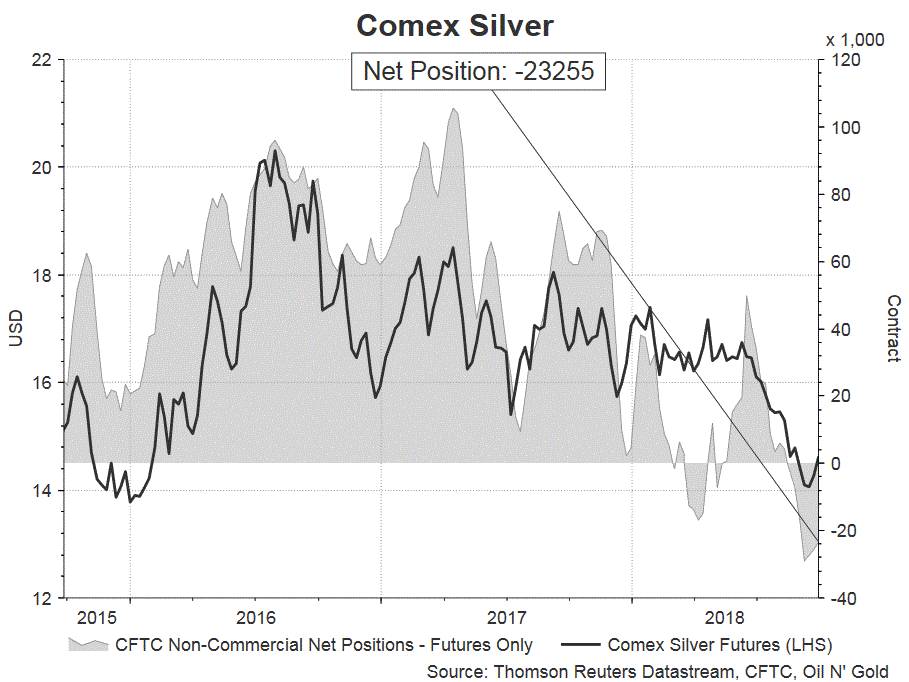
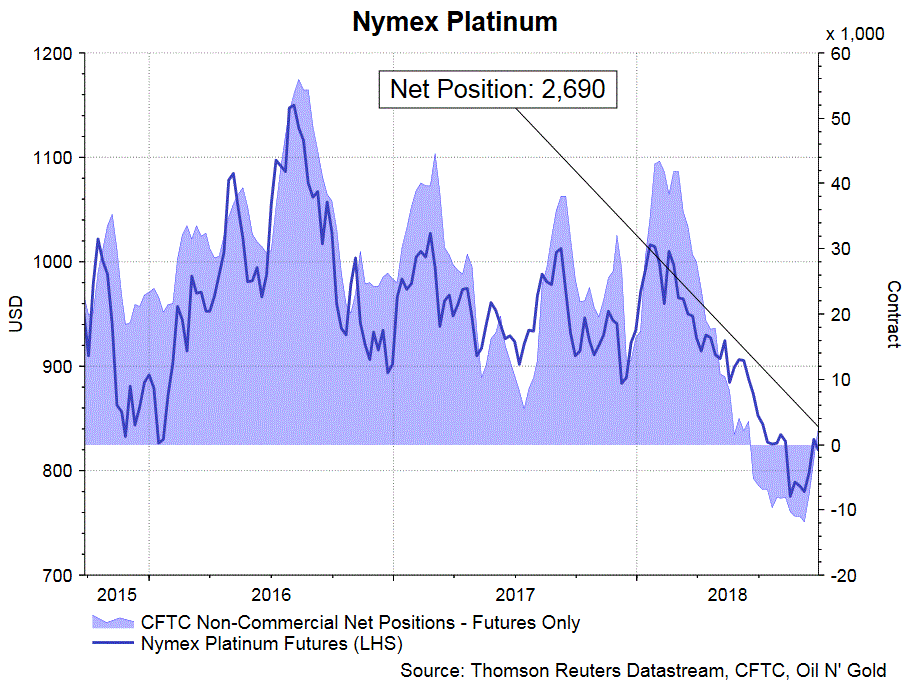
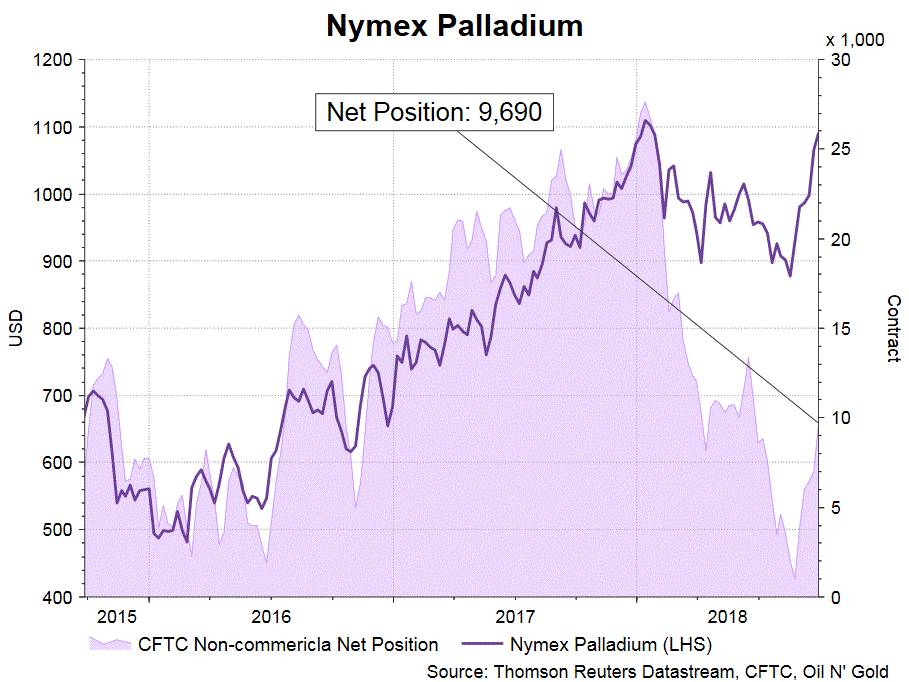
On the precious metal complex, gold and silver futures stayed in NET SHORTS for another week. Speculative long positions for the former contracted -4 857, while shorts rose +1 947, resulting in a surge in NET SHORT to 17 648 contracts. For the latter, speculative long positions were trimmed by -826 while shorts fell -3 087, resulting in a decline in NET SHORT, by +2 261 contracts, to 23 255 contracts. For PGMs, NET LENGTH of Nymex platinum futures added +4 900 contracts to 2 690 while that for palladium gained +2 682 contracts to 9 690.
Fed Rosengren sees yellow lights in inflation, Kashkari sees bond flashing yellow too
Boston Fed President Eric Rosengren warned that tight labor market could push the economy towards unexpected inflation and other problems. He argued that Fed should continuing rate hikes "until monetary policy becomes mildly restrictive."
And he emphasized that "the further we get from full employment the further risk there is." Also, he added "pushing the economy too hard risks inflationary concerns or financial-stability risks". Either of these outcomes "might necessitate a more forceful monetary policy response."
While there are no "alarm going off" for now, he said "there are a bunch of yellow lights". these include commercial housing estate boom that could push prices beyond what market demand could sustain.
On the other hand, Minneapolis Fed President Neel Kashkari saw "flashing yellow" signals in the bond market, which suggested there is no need for any more rate hikes for now. He said "the bond market is saying, 'hey we're not so sure that the U.S. economic growth is going to be very strong in the future years,' so that's a nervousness for me."
Kashkari added yield curve is "a measure of giving us feedback as to are we running accommodative monetary policy or contractionary monetary policy, and I don't see any reason yet that we should be moving interest rates up and tapping the brakes."
EU Juncker: One crisis in Greece was enough, not another in Italy
European Commission President Jean-Claude Juncker said yesterday that "Italy is distancing itself from the budgetary targets we have jointly agreed at EU level." He warned "one crisis was sufficient, one crisis was enough" and "after the toughest management of the Greece crisis, we have to do everything to avoid a new Greece -- this time an Italy -- crisis." He added "we have to prevent Italy from being able to get a special treatment here that, if everybody were to get it, would mean the end of the euro."
The chairman of Eurozone finance ministers Mario Centeno said after the group's meeting that "recent announcements by the Italian government have raised concerns over its budgetary course, concerns that need to be addressed soon." He added "we are all bound by the euro and we need sound policies to protect it. It is up to the Italian government to show it has a sustainable and credible budgetary plan."
On the other hand, Italian Deputy Prime Ministers Luigi Di Maio insisted the government "will never sacrifice workers on the altar of the spread and of the crazy rules which have been imposed on us" And, "this government doesn't butcher people, the music has changed."