Sample Category Title
Trump Trade Conflicts And Emerging Markets In Focus On Friday
- Officials hopeful of NAFTA deal today;
- Trump not easing up on EU or China and threatens to pull out of WTO;
- Emerging markets remain a risk as Argentina central bank hikes rates to 60%.
This week may come to be remembered as one in which countries in North America re-committed trade ties to one another but as ever, this hasn’t been the only story rattling financial markets and not all have been as positive.
Hopes of a trilateral deal by the self-imposed deadline of today have greatly improved as the week has progressed and negotiators from the US and Canada will once again lock horns in the coming hours with the aim of getting it over the line, or risk delaying it for many more months.
Both sides have sounded optimistic that any differences can be resolved and end months of disputes over the terms of the 24-year old trade deal which US President Donald Trump has long threatened to pull the plug on. An agreement would mark a significant step forward in trade relations with the US and its trade partners and be sold to the electorate as validation of Trump’s hard line approach ahead of the mid-terms which doesn’t necessarily bode well for the countries other trading partners who are currently engaged in negotiations.
China and the European Union have been the other two major targets for Trump, who has accused both of taking advantage of the US on trade. Reports that Trump has rejected an offer from the EU to remove car tariffs on both sides suggests these talks have much further to run, despite the apparent positive meeting between the President and European Commission President Jean-Claude Juncker last month.
Relations with China are much worse, with Trump reported to be ready to back another $200 billion of tariffs as early as next week which would be met with retaliation and further escalate the conflict between the two superpowers. With Trump also threatening to pull out of the WTO, this could well be viewed as a step backwards for global trade despite the progress on NAFTA.
Trump may not be at the centre of the other story rattling confidence in markets right now, being the sell-off in emerging market currencies, most notably the Argentinian peso, but higher interest rates in the US and the impact that’s had on the dollar has clearly contributed to it.
At the moment, the focus has primarily been on those countries that are the biggest risks, including Argentina where interest rates yesterday rose to 60% in an attempt to slow or stop the plunge in the peso. Others are feeling some pain though and investors will certainly keep a close eye on developments here should the situation continue to deteriorate.
USDTRY Outlook: Lira’s Bears Take A Breather, Inflation Report In Focus For Fresh Signals
Turkish lira rose on Friday, taking a breather of four-day fall which hit the lowest since 13 Aug record low, on spike to 6.8379 on Thursday.
Fresh support to lira came from decision to lower withhold taxes on lira's deposits and increase tax levels on foreign currencies deposits.
Lira appreciated and spiked to 6.3820 on Friday, but the actions the government is taking are likely to have short-lived positive impact on the currency, which remains under strong pressure and has registered significant losses in 2018.
At the same time, Turkish President Erdogan blamed outside factors for weakening lira and attempting to destabilize the economy, however, the key problem seems to be high inflation and inadequate reaction of Turkish central bank.
Inflation report is due on Monday, with rising fears that lira may come under increased pressure if numbers show further increase of inflation.
It will be also interesting to watch the reaction of the CBRT which holds monetary policy meeting on 13 Sep.
If the central bank fails to tackle inflation in an expected way, lira may sink further and enter uncharted territory again.
On the other side, technical studies, which so far had a minor role in directing the USDTRY pair, show negative signals developing on daily chart.
South-heading momentum is entering negative territory and slow stochastic is reversing from overbought territory and also forming bear-cross, suggesting deeper pullback from recovery high at 6.8379.
Initial support at 6.3980 zone (Fibo 38.2% of 5.6875/6.8379, reinforced by daily Tenkan-sen) contained dips for now, with sustained break here needed to signal deeper pullback.
Res: 6.7837, 6.8379, 6.9577, 7.1074
Sup: 6.5664, 6.3980, 6.3820, 6.2436

Special Report: Trump Way Or The Highway
- Trump is willing to esclate tensions no matter what
- If Canada joins new agreement, trump would toughen his stance
- Collapse of WTO may lead to recession
European markets are likely to remain under pressure today as Trump continues to attack the pillar of economic governance – the World trade organisation (WTO). He has assured the world that he is willing to escalate the trade war and not concerned about the consequences at all. He has taken one further, his latest message has ratchet up tensions for investors. Trump has made it clear that the US will withdraw from the WTO if the organisation does get things done his way. He criticised the organisation that it is not being fair with the US. Of course his statement is completely in conflict with the Commerce secretary’s view who tried to calm the market earlier in July by calling such policy talks a little premature.
According to the WTO trade report, the U.S does better in relative perspective in both cases; where it brings in cases against other countries (wining 91 percent of them time) and to those that are against it (wining 86 percent of time). However, Trump holds a different view on this and said that the country has only started to win some cases since last year. He strongly believes that the complaint settlement system is completely broken.
For investors, the biggest threat is that if the US pulls out of the WTO, the system could collapse. The absence of WTO means one to one agreement and a lot of retaliations based on fabricated sovereign issues. It opens the door wide open for global recession. Clearly, the US already has comparative advantage and the EU has been trying to overhaul the system to defuse tensions. The EU is already thinking of coming up with their own version of SWIFT payment system as it is tired of being caught between the battles that Trump is picking up with other countries.
Striking a deal today with Canada will have a significant importance for the US because the message would be clear and loud, we do not need NAFTA or any trilateral agreements. From here onwards, it is all about bilateral agreements and the US would toughen up its stance against the EU and China. Trump isn’t happy with the currency offer from the EU to eliminate tariffs on cars, this particular offer supported the market sentiment when it was presented as an option to the US president. Not accepting this offer shows, president’s administration clearly wants more from Germany. Trump hold a lot of grudge about the devaluation of the euro-zone currency.
Trump wants to move ahead with the planned $200 billion tariffs on Chinese imports and on top of this, he may actually take some actions about the China devaluing its currency its currency to support economic growth. The Chinese factory order data confirmed that the sentiment is still resilient to these shocks and today’s manufacturing PMI and non-manufacturing PMI numbers also supported this argument.
GBPUSD Watching Negative Price Divergence
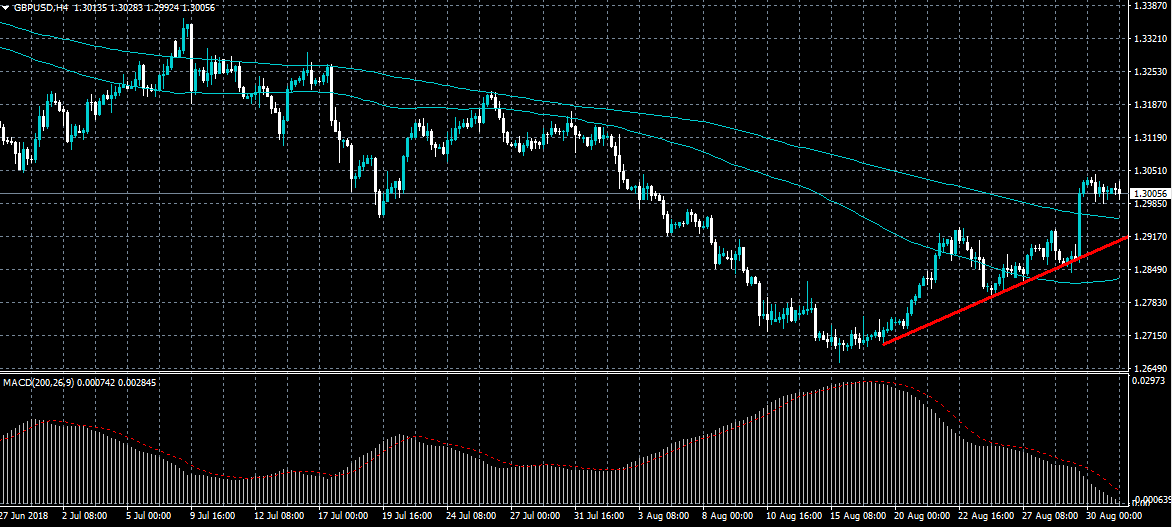
The British pound continues to trade around the 1.3000 level against the US dollar on Friday, as optimism over Brexit negotiations continues to support sterling buying. The GBPUSD pair retains an intraday bullish while trading above the 1.2985 level. Caution is advised as the recent move higher in the GBPUSD pair has created bearish price divergence on the MACD indicator across the four-hour time frame.
The GBPUSD pair is only intraday bullish while trading above the 1.2985 level, key resistance is found at the 1.2950 and 1.2930 levels.
If the GBPUSD pair moves below the 1.3020 level, buyers may test towards the 1.3040 and 1.3080 resistance levels.
USDJPY Trades Towards Key Support
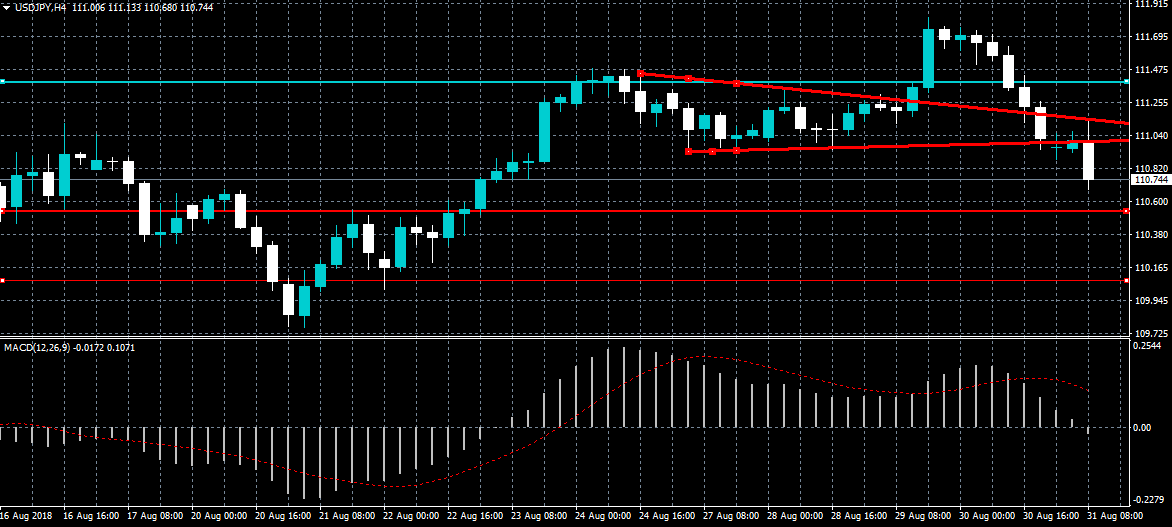
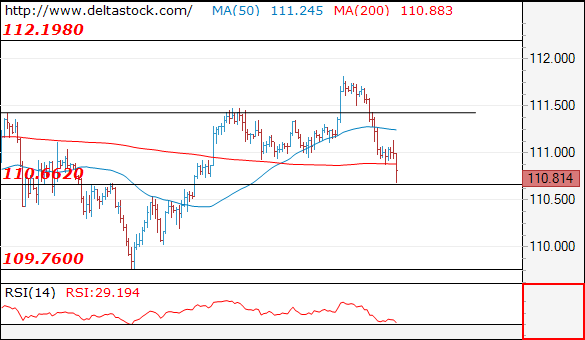
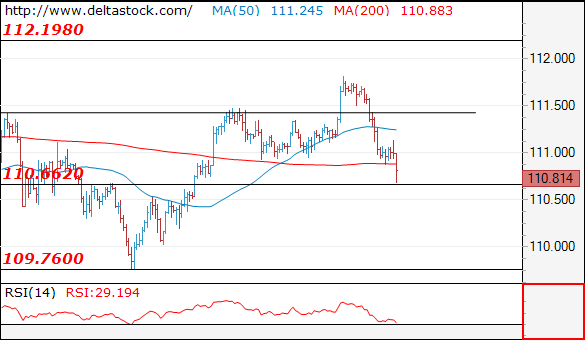
The US dollar continues to tumble against the Japanese yen currency, as investors fears grow over President Trump’s latest trade tariff threats to China and the World Trade Organization. The USDJPY pair has fallen towards the 110.70 support level and is fast approaching the key 110.55 level, which marks the neckline of a large head and shoulders pattern across the higher time frames.
The USDJPY pair is strongly bearish while trading below the 110.55 level, key support is found at the 110.00 and 109.75 levels.
If the USDJPY pair moves above the 111.10 level, buyers may test towards the 111.39 and 110.80 resistance levels.
Forex Technical Analysis: EUR/USD, USD/JPY, GBP/USD
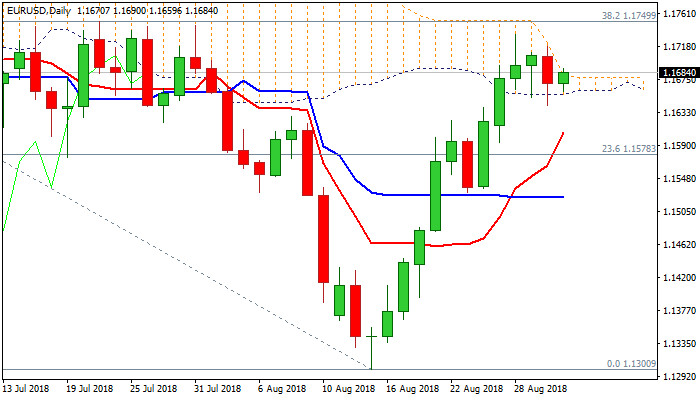
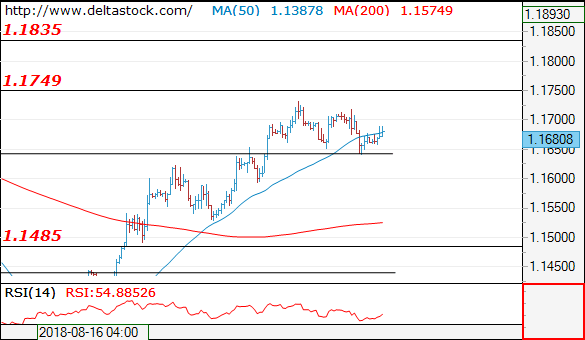
EUR/USD
Current level - 1.1680
The rebound above 1.1640 is by all means a corrective one and I favor a break through that area to challenge 1.1530.
| Resistance | Support | ||
| intraday | intraweek | intraday | intraweek |
| 1.1750 | 1.1750 | 1.1630 | 1.1300 |
| 1.1840 | 1.1840 | 1.1490 | 1.1100 |
USD/JPY
Current level - 110.80
The slide below 111.50 has neutralized the bullish outlook and the bias is negative, as a break through 110.70 will challenge 109.70.
| Resistance | Support | ||
| intraday | intraweek | intraday | intraweek |
| 110.90 | 114.50 | 110.70 | 109.30 |
| 111.50 | 114.50 | 109.70 | 109.30 |
GBP/USD
Current level - 1.3019
Intraday allow a continuation of the consolidation pattern towards 1.2940 support zone, before breaking toward 1.3210.
| Resistance | Support | ||
| intraday | intraweek | intraday | intraweek |
| 1.3060 | 1.3060 | 1.2930 | 1.2570 |
| 1.3210 | 1.3210 | 1.2800 | 1.2570 |
The Analytical Overview Of The Main Currency Pairs
The EUR/USD currency pair
Technical indicators of the currency pair:
Prev Open: 1.17060
Open: 1.16639
% chg. over the last day: -0.37
Day's range: 1.16596 – 1.16901
52 wk range: 1.0571 – 1.2557
The EUR/USD currency pair is consolidating. A unidirectional trend is not observed. At the moment, the key levels of support and resistance are: 1.16600 and 1.17000 respectively. In the near future, a technical correction after a prolonged rally over the past two weeks is not ruled out. We recommend opening positions from the key levels.
Important economic reports on 2018.08.31:
The consumer price index in the Eurozone at 12:00 (GMT+3:00).
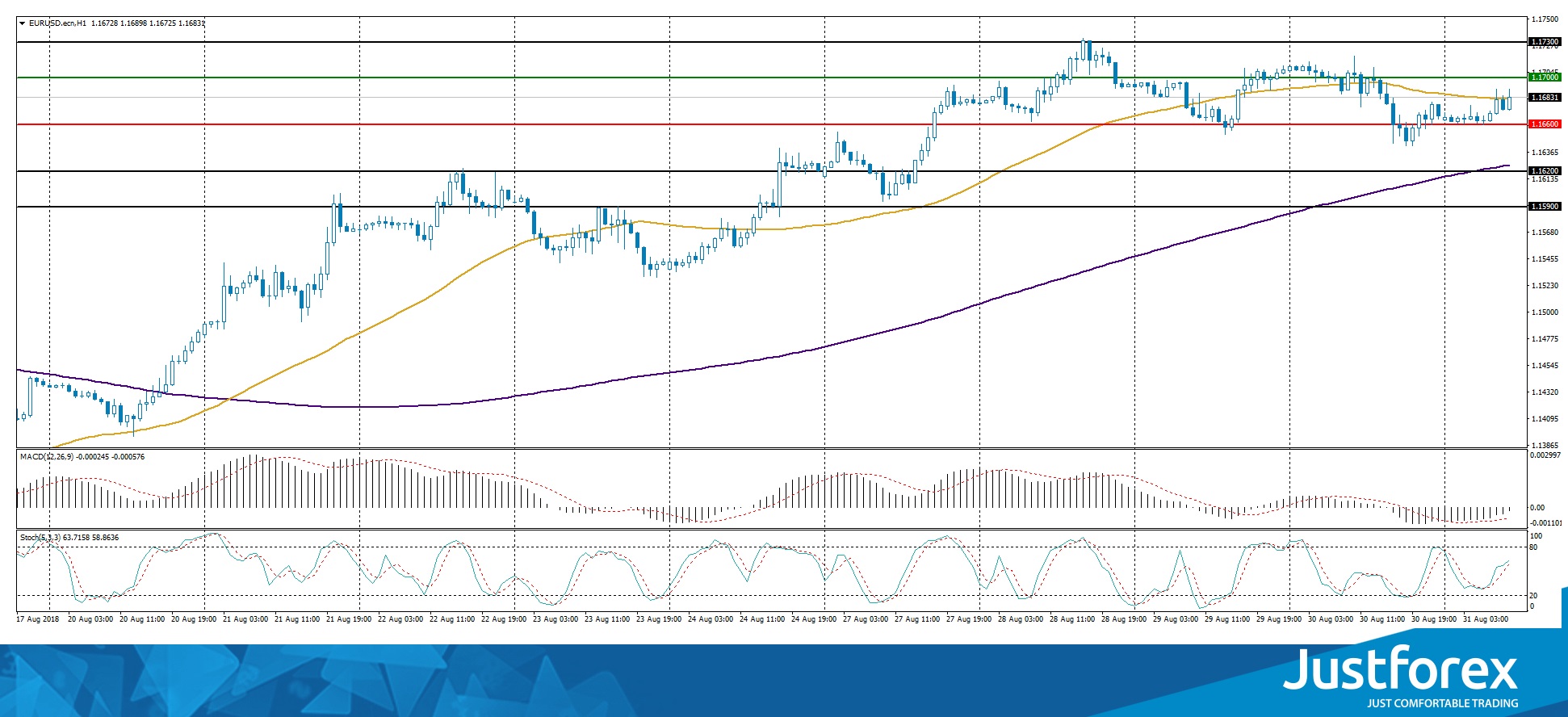
Indicators do not send accurate signals. The price has crossed 50 MA.
The MACD histogram is located near the 0 mark.
Stochastic Oscillator is in the neutral zone, the %K line is above the %D line, which indicates the bullish sentiment.
Trading recommendations
Support levels: 1.16600, 1.16200, 1.15900
Resistance levels: 1.17000, 1.17300
If the price fixes above the round level of 1.17000, further growth of the EUR/USD currency pair is expected. The movement is tending to 1.17300-1.17500.
Alternative option. If the price fixes below the 1.16600 mark, we recommend considering sales of EUR/USD. The movement is tending to 1.16200-1.16000.
The GBP/USD currency pair
Technical indicators of the currency pair:
Prev Open: 1.30244
Open: 1.30053
% chg. over the last day: -0.12
Day's range: 1.29929 – 1.30251
52 wk range: 1.2361 – 1.4345
The GBP/USD has stabilized near the round of 1.30000. At the moment, the quotes are consolidating. The key range is 1.29850-1.30350. The technical pattern indicates the possibility of further recovery of the pound's rate. Positions must be opened from the key levels. We recommend you to keep track of the current information regarding the Brexit process.
Today, the news feed on the UK economy is calm.
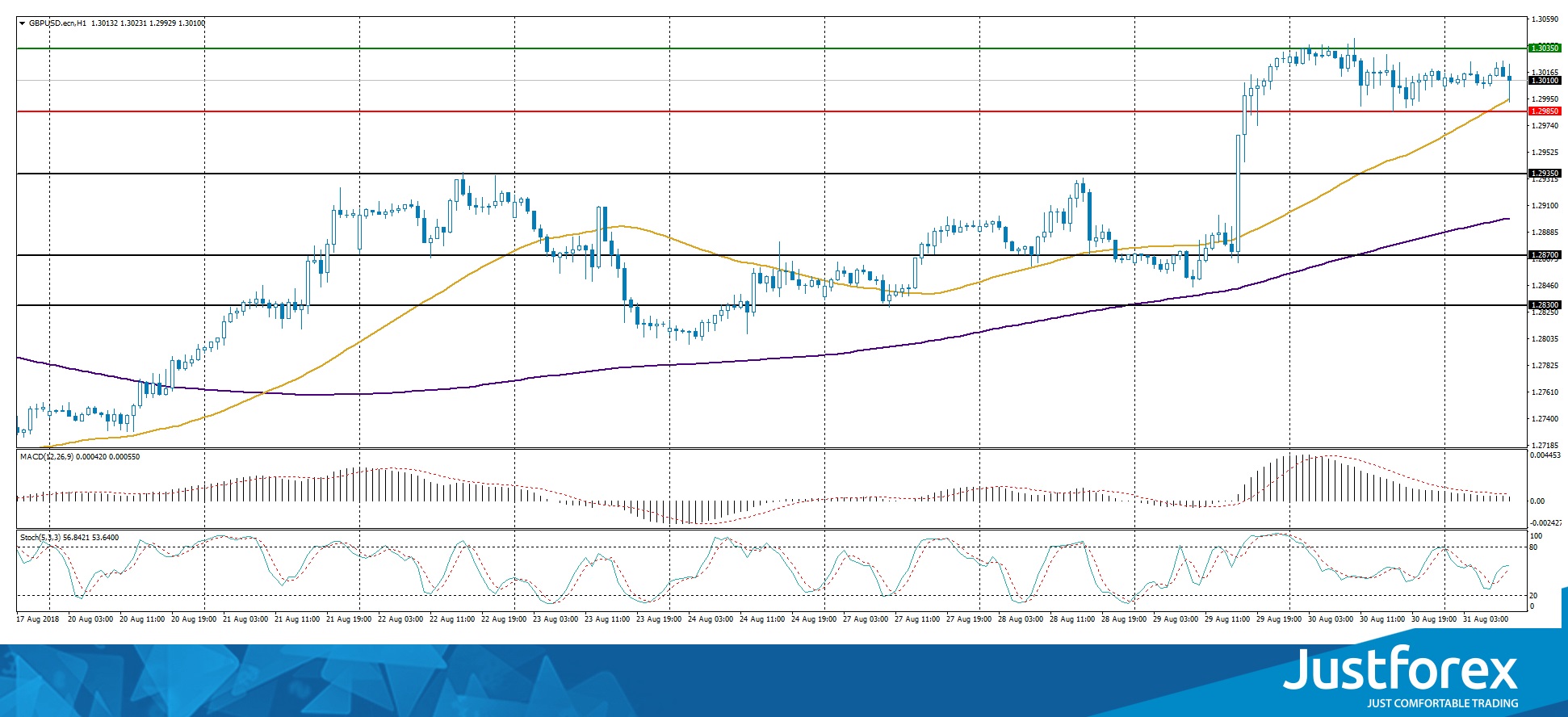
The price has fixed above 50 MA and 200 MA, which signals the power of buyers.
The MACD histogram is in the positive zone, but below the signal line, which gives a weak signal to buy GBP/USD.
Stochastic Oscillator is located in the neutral zone, the %K line is crossing the %D line. There are no signals at the moment.
Trading recommendations
Support levels: 1.29850, 1.29350, 1.29000
Resistance levels: 1.30350, 1.30600
If the price fixes above the 1.30350 mark, further growth of the GBP/USD currency pair is expected. The target level of movement is 1.30600-1.30750.
Alternative option. If the price fixes below the local support of 1.29850, we recommend considering sales of GBP/USD. The target level of movement is 1.29400-1.29200.
The USD/CAD currency pair
Technical indicators of the currency pair:
Prev Open: 1.29077
Open: 1.29708
% chg. over the last day: +0.64
Day's range: 1.29593 – 1.30230
52 wk range: 1.2059 – 1.3795
Yesterday the bullish sentiment prevailed on the USD/CAD currency pair. The growth of quotations exceeded 70 points. This is due to the release of weak data on Canada's GDP. Today, the Canadian dollar continued to lose ground. At the moment, the USD/CAD quotations are consolidating. The key range is 1.29850-1.30200. The trading instrument is tending to grow.
Today, the news feed on Canada's economy is calm.
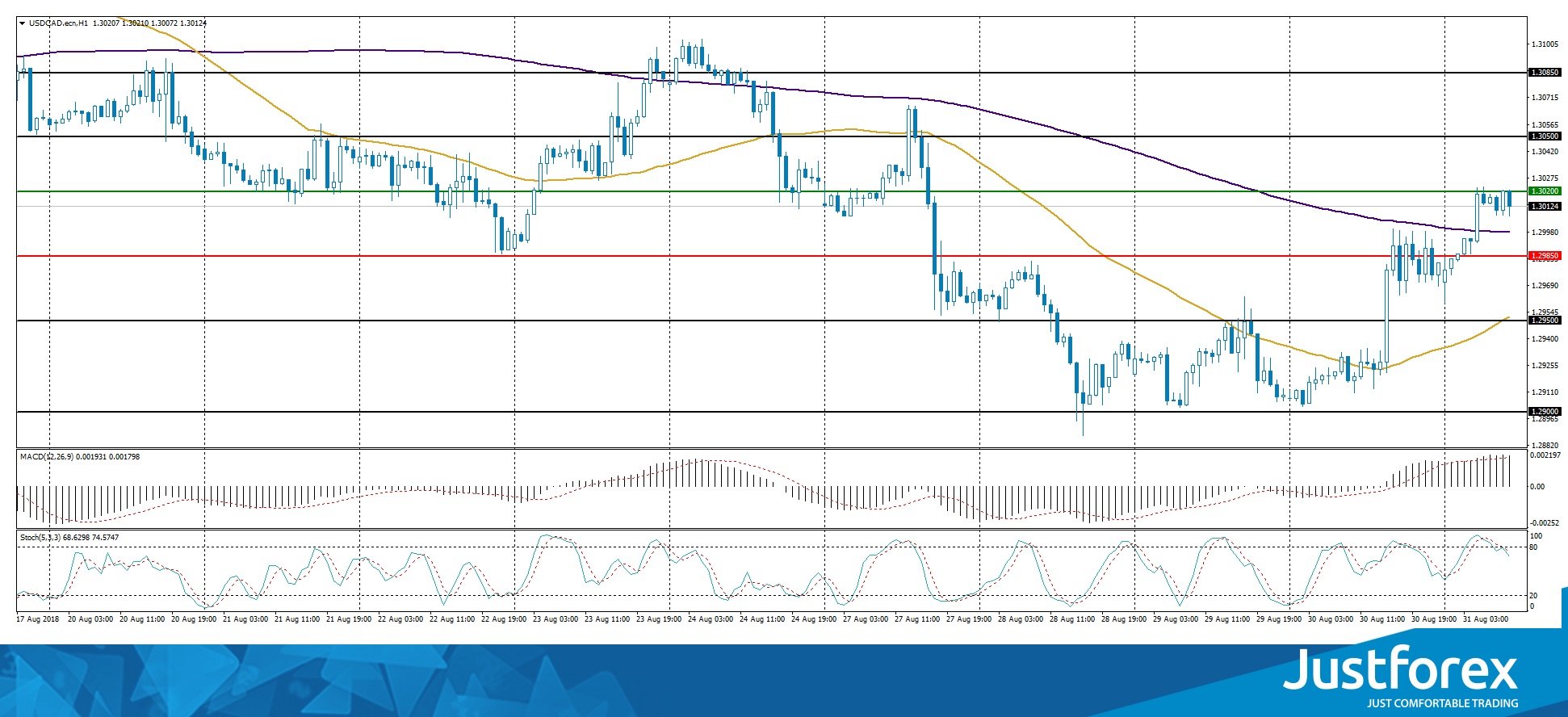
The price has fixed above 50 MA and 200 MA, which signals the power of buyers.
The MACD histogram is in the positive zone and above the signal line, which indicates the bullish sentiment.
Stochastic Oscillator is located in the neutral zone, the %K line is crossing the %D line. There are no signals at the moment.
Trading recommendations
Support levels: 1.29850, 1.29500, 1.29000
Resistance levels: 1.30200, 1.30500, 1.30850
If the price fixes above the local resistance of 1.30200, further growth of the USD/CAD quotes is expected. The movement is tending to 1.30500-1.30850.
Alternative option. If the price fixes below 1.29850, it is necessary to consider selling USD/CAD. The movement is tending to 1.29500-1.29300.
The USD/JPY currency pair
Technical indicators of the currency pair:
Prev Open: 111.691
Open: 110.965
% chg. over the last day: -0.59
Day's range: 110.695 – 111.135
52 wk range: 104.56 – 114.74
The bearish sentiment prevails on the USD/JPY currency pair. During yesterday's and today's trading, the drop in quotations was almost 100 points. The trading instrument has updated local extremes. At the moment, USD/JPY is testing the "mirror" support of 110.700. The 110.950 marks the nearest resistance. The USD/JPY quotes is tending to decline.
Ambiguous economic reports were published in the Asian trading session.
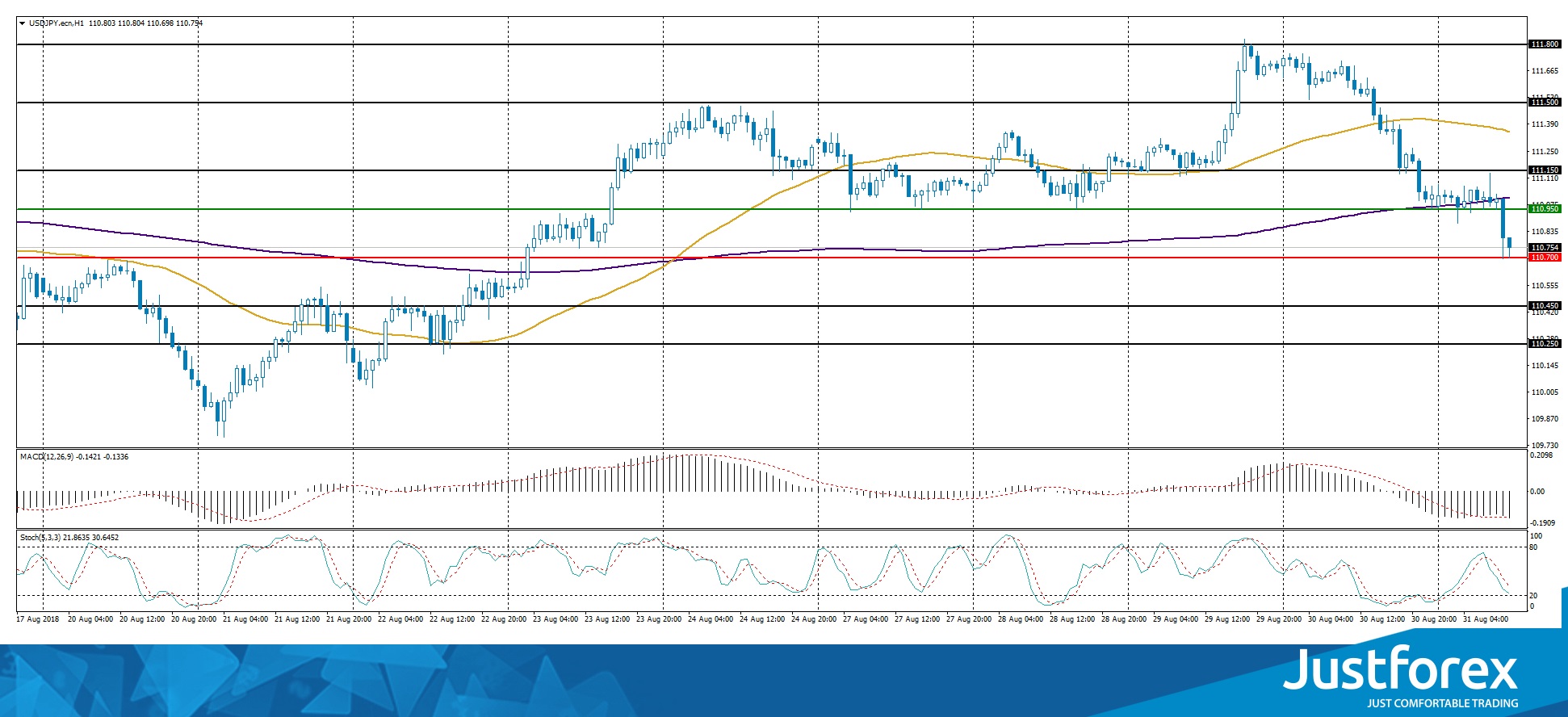
Indicators point to the power of sellers: the price has fixed below 50 MA and 200 MA.
The MACD histogram is in the negative zone and below the signal line, which gives a strong signal to sell USD/JPY.
Stochastic Oscillator is located in the neutral zone, the %K line is below the %D line, which indicates a fall in USD/JPY.
Trading recommendations
Support levels: 110.700, 110.450, 110.250
Resistance levels: 110.950, 111.150, 111.500
If the price fixes below the support level of 110.700, the USD/JPY quotes are expected to fall further. The movement is tending to 110.450-110.250.
Alternative option. If the price fixes above the 110.950 level, one should consider buying USD/JPY. The movement is tending to 111.150-111.400.
Euro Zone Aug Flash CPI Registers A Slight Miss While Region’s Unemployment Trend Continues To Improve
Notes/Observations
- More European inflation data CPI slowed from month-ago level and continues to back ECB view that yet to any sustainable signs of inflation return; Euro Zone flash CPI at 2.0% and remains above ECB target for the 3rd straight month
- Euro Zone Unemployment matched the lowest level in a decade at 8.2%
- Italy July Unemployment data of 10.4% the lowest since Jun 2012)
- Japan widened the planned monthly JGB purchases to reflect the new flexibility if Yield Control
- Brexit negotiations continue in Brussels with 6-hours of talks planned between Raab and Barnier
- Emerging market currencies remained in focus as various central bank announce measure to help stem declines
- Italian sovereign rating in focus as Fitch might only revise the outlook rather than cut current BBB rating
Asia:
- Bank of Korea (BOK) left its 7-Day Repo Rate unchanged at 1.50% (as expected). Decision was not unanimous (dissenter sought hike)
- South Korea July Industrial Production M/M: +0.4% v -0.2%e; Y/Y: 0.9% v 0.5%e
- Japan July Jobless Rate: 2.5% v 2.4%e (2nd straight increase); Job-to-applicant Ratio: 1.63 v 1.63e
- Japan Aug Tokyo CPI Y/Y: 1.2% v 1.0%e; CPI Ex-Fresh Food (Core) Y/Y: 0.9% v 0.8%e
- Japan July Preliminary Industrial Production M/M: -0.1% v +0.2%e; Y/Y: 2.3% v 2.7%e
- China Aug Official Govt Manufacturing PMI: 51.3 v 51.0e, Non-manufacturing PMI: 54.2 v 53.8e v 54.0 prior
- RBA: High debt levels could complicate future policy decisions
Europe:
- UK Aug GfK Consumer Confidence: -7 v -10e (highest reading in 2018)
Americas:
- President Trump reportedly tells aides he is ready to implement the proposed $200B in new China tariffs as soon as next week, though final decision is still pending
- President Trump reiterated pledge to withdraw from WTO if it doesn't 'shape up'; did not regret naming Powell as Fed Chair. Europe's offer for no auto tariffs was not good enough. Their consumer habits was to buy their cars, not to buy our cars.
- Brazil central bank announces FX intervention (first intervention since June 22nd) as the USD/BRL edged towards record highs
Economic Data:
- (DE) Germany July Retail sales M/M: -0.4% v -0.2%e; Y/Y: 0.8% v 1.3%e
- (UK) Aug Nationwide House Price Index M/M: -0.5% v +0.1%e; Y/Y: 2.0% v 2.7%e
- (DK) Denmark Q2 Preliminary GDP Q/Q: 0.2% v 0.3%e; Y/Y: 0.6% v 0.8%e
- (DK) Denmark July Gross Unemployment Rate: 3.9% v 3.9%e; Unemployment Rate (seasonally adj): 3.2% v 3.2%e
- (FI) Finland Q2 GDP Q/Q: 0.3% v 1.3% prior; Y/Y: 2.5% v 3.0% prior
- (FI) Finland Jun Final Trade Balance: €0.0B v €0.0B prelim
- (NO) Norway July Credit Indicator Growth Y/Y: 5.7% v 5.9%e
- (TH) Thailand July Current Account Balance: $1.1B v $2.2Be; Overall Balance of Payments (BOP): -$0.9B v -$5.3B prior; Trade Balance: $0.9B v $2.9B prior; Exports Y/Y: 8.3% v 10.0% prior; Imports Y/Y: 12.4% v 12.9% prior
- (FR) France Aug Preliminary CPI M/M: 0.5% v 0.4%e; Y/Y: 2.3% v 2.2%e
- (FR) France Aug Preliminary CPI EU Harmonized M/M: 0.6% v 0.5%e; Y/Y: 2.6% v 2.5%e
- (FR) France July PPI M/M: 0.6% v 0.1% prior; Y/Y: 4.0% v 3.4% prior
- (ES) Spain July Adjusted Retail Sales Y/Y: -0.4% v -0.1% prior; Retail Sales (unadj) Y/Y: -0.6% v +0.7% prior
- (ES) Spain Jun House Mortgage Approvals Y/Y: 3.9% v 7.3% prior; Total Mortgage Lending Y/Y: +16.6% v -1.7% prior
- (CZ) Czech Q2 Preliminary GDP (2nd reading) Q/Q: 0.7% v 0.5%e; Y/Y: 2.4% v 2.3%e
- (HU) Hungary July PPI M/M: 0.2% v 1.9% prior; Y/Y: 8.4% v 7.5% prior
- (HU) Hungary Jun Final Trade Balance: €1.0B v €1.1B prelim
- (CN) Weekly Shanghai copper inventories (SHFE): 138.0K v 146.6K tons prior
- (IT) Italy July Preliminary Unemployment Rate: 10.4% v 10.8%e (lowest since Jun 2012)
- (ES) Spain Jun Current Account: €0.5B v +€2.4B prior
- (NO) Norway Central Bank (Norges) Sept Daily FX Purchases (NOK): -450M v -600M prior
- (NO) Norway Aug Unemployment Rate: 2.4% v 2.4%e
- (PL) Poland Aug Preliminary CPI M/M: 0.0% v -0.1%e; Y/Y: 2.0% v 2.0%e
- (PL) Poland Q2 Final GDP Q/Q: 1.0% v 0.9% prelim; Y/Y: 5.1% v 5.1% prelim
- (CZ) Czech July M2 Money Supply Y/Y: 4.9% v 5.4% prior
- (RU) Russia Narrow Money Supply w/e Aug 24th: T v 10.45T prior
- (PT) Portugal Aug Preliminary CPI M/M: -0.3% v -0.6% prior; Y/Y: 1.2% v 1.6% prior
- (PT) Portugal Aug Preliminary CPI EU Harmonized M/M: -0.7% v -0.4% prior; Y/Y: 1.3% v 2.2% prior
- (EU) Euro Zone Aug Advance CPI Estimate Y/Y: 2.0% v 2.1%e (3rd straight month above ECB target); CPI Core Y/Y: 1.0% v 1.1%e
- (EU) Euro Zone July Unemployment Rate: 8.2% v 8.2%e
- (IT) Italy July Preliminary CPI (includes tobacco) M/M: 0.5% v 0.3%e; Y/Y: 1.7% v 1.4%e
- (IT) Italy July Preliminary CPI EU Harmonized M/M: -0.1% v -0.2%e; Y/Y: 1.7% v 1.7%e
- (BE) Belgium July Unemployment Rate: 6.2% v 6.0% prior
- (GR) Greece Jun Retail Sales Volume Y/Y: 3.3% v 4.9% prior
- (IS) Iceland July Final Trade Balance (ISK): -13.0B v -15.5B prelim
Fixed Income Issuance:
- (IN) India sold total INR120B vs. INR120B indicated in 2020, 2026, 2031, 2033 and 2055
SPEAKERS/FIXED INCOME/FX/COMMODITIES/ERRATUM
Equities
- Indices [Stoxx50 -0.8% at 3,404, FTSE -0.3% at 7,496, DAX -1.0% at 12,374, CAC-40 -0.7% at 5,438; IBEX-35 -0.7% at 9,400, FTSE MIB -0.5% at 20,391, SMI -0.5% at 8,993, S&P 500 Futures -0.04%]
- Market Focal Points/Key Themes: European indices open lower across the board and maintain trend as session progressed; equities in general underperforming on trade concerns; Auto sector under pressure from reports that US President Trump felt EU tariff “not good enough”; Italian stocks under pressure due to exposure in Argentina; consumer discretionary better performer along with materials sector; focus on raft of month-end macro data; light equities news flow scheduled for US session ahead of three-day holiday, expecting Big Lots
Equities
- Consumer discretionary: Air France-KLM AF.FR -2.0% (analyst action), D'ieteren DIE.BE +5.8% (results), Edenred EDEN.FR -4.0% (analyst action), Lufthansa LHA.DE -3.0% (analyst action), SAS SAS.SE +13.7% (results)
- Financials: Old Mutual OMU.ZA -0.9% (results), Vonovia VNA.DE -1.7% (results)
- Industrials: CFE Cie d'Entreprises CFEB.BE -12.4% (results), Pirelli PRIC.IT -2.9% (analyst action)
- Technology: Sage Group SGE.UK -6.1% (CEO to step down), Westminster Group WSG.UK -8.3% (placement)
Speakers
- ECB's Nowotny (Austria): Italian situation should not delay interest rate hikes and viewed Italy as a special situation with no immediate risks arising. ECB should focus on moving the Deposit Rate out of negative territory
- ECB's Rehn (Finland): ECB certainty did not manipulate its currency. Markets were reading of ECB forward guidance correctly (**Note: refers to the 1st potential 1st rate hike after summer 2019). ECB policy to remain expansionary with reinvestments to continue for as long as needed. Uged US to cease its trade-war rhetoric; its exit from WTO would damage the international order
- EU's Juncker stated that he expected the US to stand by the ceasefire agreement on trade. EU would increase auto tariffs if US implemented them (**Note: resident Trump stated that the Europe's offer for no auto tariffs was not good enough (reports circulated that EU said would agree with zero tariffs on industrial goods (including cars) if US agreed)
- EU's Moscovici reiterates view that Italy must respect commitments in budget law. He added that Italy politicians might seek 'euro exit conditions' noting that if you create the conditions for exiting the euro it means that you actually want it.
- Turkey government revised the withholding tax related to Lira currency (TRY) deposits. Cuts withholding tax on lira deposits while raising tax on FX currency deposits of up to 1year
- Turkey President Erdogan reiterated view that TRY currency (Lira) instability was an operation against Turkey and would overcome this attack
- Norway PM Solberg reshuffled Cabinet (as speculated) and named Kjell-Borge Freiberg as Oil Minister
- Japan Internal Affairs Min Noda confirmed he would not run in upcoming LDP leadership election on Sept 20th (**Note: PM Abe now likely to secure his third consecutive term.)
- Japan Coalition Party Leader Yamaguchi: Should pass extra budget in early 2019
- Bank of Japan (BOJ) announces Bond purchases for month of Sep and it reflected the new flexibility of the Yield Curve Control (YCC) as its widened the amount to be purchased
- China envoy Cui Tiankai stated that the Chinese gvot would not accept another 'Plaza accord' (**Note: Refers to the 1985 agreement to depreciate the US dollar). Reiterated view that China would never give in to intimidation, coercion or groundless accusations
Currencies
- Euro received a slight boost in late Asia trading as ECB Nowotny believed that the central bank should focus on moving the Deposit Rate out of negative territory as he saw no immediate risks arising due to Italy. EUR/USD higher by 0.1% just ahead of the US session at 1.1680 area. Dealers also noted that the Euro could stage a relief rally later today if Italy’s sovereign rating is not cut by Fitch. The Euro Zone flash CPI remained above the ECB target for the 3rd straight month but did come in below the market expectations
- Focus remained on emerging market FX as various central banks took measures to address recent currency weakness. Brazil central bank announced FX intervention (first intervention since June 22nd); Argentina Central Bank (BCRA) raised its LELIQ Rate by 1500bps to 60.00% for its 5th intra-policy move this year; Indonesia Central Bank reiterated its commitment to guard against volatility in FX and bond markets and continue with its duel interventions. Turkey government revised its withholding tax related to Lira currency (TRY) deposits which cut the withholding tax on lira deposits while raising tax on FX currency deposits of up to 1year
Looking Ahead
- UK Brexit Min Raab to meet EU’s Barnier in Brussels
- 05:30 (SL) Sri Lanka Aug CPI Y/Y: No est v 5.4% prior
- 05:30 (ZA) South Africa to sell ZAR600M in I/ L bonds
- 06:00 (IT) Italy Q2 Final GDP Q/Q: 0.2%e v 0.2% prelim; Y/Y: 1.1%e v 1.1% prelim
- 06:00 (PT) Portugal Q2 Final GDP Q/Q: 0.5%e v 0.5% prelim; Y/Y: No est v 2.3% prelim
- 06:00 (UK) DMO to sell €5.5B in 1-month, 3-month and 6-month bills (£2.0B, £2.0B and £1.5B respectively)
- 06:45 (US) Daily Libor Fixing
- 07:30 (IN) India Weekly Forex Reserves
- 08:00 (BR) Brazil Q2 GDP Q/Q: 0.1%e v 0.4% prior; Y/Y: 1.1%e v 1.2% prior, GDP 4Qtrs Accumulated: 1.5%e v 1.3% prior
- 08:00 (CL) Chile July Unemployment Rate: 7.2%e v 7.2% prior
- 08:00 (ZA) South Africa July Trade Balance (ZAR): 5.2Be v 12.0B prior
- 08:00 (IN) India Q2 GDP Y/Y: 7.6%e v 7.7% prior, GVA Y/Y: 7.5%e v 7.6% prior
- 08:00 (IN) India announces upcoming bill issuance (held on Wed)
- 08:00 (ES) Spain Debt Agency (Tesoro) announces upcoming bond issuance
- 08:15 (UK) Baltic Dry Bulk Index
- 08:30 (CA) Canada July Industrial Product Price M/M: -0.4%e v +0.5% prior; Raw Materials Price Index M/M: 0.0%e v 0.5% prior
- 09:00 (BE) Belgium Q2 Final GDP Q/Q: No est v 0.3% prelim; Y/Y: No est v 1.3% prelim
- 09:30 (BR) Brazil July Nominal Budget Balance (BRL): -46.0Be v -57.9B prior; Primary Budget Balance: -7.1Be v -13.5B prior; Net Debt to GDP ratio: 51.8%e v 51.4% prior
- 09:45 (US) Aug Chicago Purchasing Manager: 63.0e v 65.5 prior
- 10:00 (US) Aug Final University of Michigan Confidence: 95.5e v 95.3 prelim
- 10:00 (MX) Mexico July Net Outstanding Loans (MXN): No est v 4.27T prior
- 11:00 (CO) Colombia July National Unemployment Rate: No est v 9.1% prior; Urban Unemployment Rate: 11.2%e v 11.1% prior
- 11:00 (EU) Potential Sovereign ratings after European close (Fitch rating on Italy and Hungary Sovereign Debt; S&P on Sweden and Romania Sovereign Debt
- 13:00 (US) Weekly Baker Hughes Rig Count data
- 13:00 (ES) ECB’s De Guindos (Spain)
- 15:00 (CO) Colombia Central Bank non-monetary policy meeting
- 20:00 (KR) South Korea Aug Trade Balance: $7.3Be v $6.9B prior (revised from $7.0B); Exports Y/Y: 10.1%e v 6.2% prior; Imports Y/Y: 8.2%e v 16.2% prior
Limited Forex Impact From Argentina
Limited forex impact from Argentina
As Argentina falls into economic chaos, fears of default are well founded. The peso has fallen more the 45% against the USD this year and official inflation is over 25%. The central bank's futile attempt to fix things hiked rates 15% to 60% and promised not to lower before December. We doubt this will affect investors' confidence or slow exodus of capital. Real interest rates are well below levels that would attract capital inflow.
“Contagion” is the talk, but we suspect that likelihood is extremely low. Following Turkey's currency, collapsing markets are hypersensitive to the next emerging market fail. Argentina is a special case. Unlike Turkey, which is part of the MSCI emerging market index and well entrenched in emerging portfolios, Argentina is categorized as a frontier investment. Very select investors venture into this segment, they understand the risks, and they will backstop contagion concerns. That gives us time to worry about TRY, BRL and ZAR as America's tighter money continues to pressure weak EM currencies.
Strong yen, weak economy
Japan's economic data this week remain subdued, with a continued slowdown in industrial production in July, consumer consumption flat and a slight acceleration in inflation for August (CPI annual figures at 1.20%, slightly above consensus at 1%; core at 0.90%), suggesting a weak bounce for Q3 GDP. Accordingly, the Bank of Japan is expected to scale down its inflation target of 2% while maintaining its key rate stable at -0.10% at its next policy meeting on 18 September. Currently trading at 110.70, USD/JPY is expected to decline further, approaching strong support at 110.07 (20 July low).
Mounting risk-off sentiment is prompting investors to stop taking new positions and take refuge in safe havens. Key political events are the IMF's Argentina rescue, NAFTA talks along with Trump's rejection of zero duties on cars put forward by the EU and Trump's intent to impose an additional $200 billion tariffs in Chinese imports by next week. As uncertainty predominates, equities remain in the red, with the Hong Kong Hang Seng given at -1.15%, Euro Stoxx 50 at -0.52%, SMI at -0.45% and Nikkei 225 at -0.02%.
AUDUSD Outlook: Bears Look For Extension Towards Key Support At 0.7202
The Australian dollar extends weakness on Friday, holding firmly in red for the fourth consecutive day and on track for strong bearish weekly close.
Extension of Thursday’s strong bearish acceleration was partially limited by better than expected China’s PMI data for Aug and could be further obstructed by strengthening momentum, but overall picture remains bearish and keeps risk at the downside.
Higher base at 0.7140 zone (23/24 Aug lows) is under pressure, with break here to open way towards key support at 0.7202 (15 Aug low, the lowest since 02 Jan 2017). Limited upticks could be seen as positioning for fresh downside and only firm break above daily Tenkan-sen (0.7309) could sideline immediate bears.
Res: 0.7267, 0.7309, 0.7327, 0.7349
Sup: 0.7214, 0.7202, 0.7190, 0.7160