Sample Category Title
Currencies: Dollar Eases On Positive Risk Sentiment, But Will This Trade Persist?
Rates: Engulfing patterns suggest more upward potential for German yields
A strong German Ifo business confidence and positive risk sentiment following the US/Mexican agreement to rewrite Nafta inflicted losses on core bonds. The trade euphoria might be short-lived though with Chinese talks still deadlocked. Technical pictures suggest more upward potential for German yields. US eco data, supply, or ECB Praet might be triggers today.
Currencies: Dollar eases on positive risk sentiment, but will this trade persist?
Yesterday, the dollar declined further as a positive risk sentiment directed FX flows away from the US currency. The euro profited from a good German IFO. Investor assessment on the impact of the US/Mexican trade deal will be key for global (FX) trading. We are not convinced that the risk-on trade will inspire further USD losses.
The Sunrise Headlines
- US stock markets were breaking records yesterday, with all indexes in green. S&P500 (+0.77%) and NASDAQ (+0.91%) reached record high. Asian markets continued this morning, with China underperforming the rest of Asia.
- Mexico and the US have reached a trade agreement yesterday, overhauling the original NAFTA deal. Canada is now under pressure to agree to new terms on auto trade and dispute settlement rules to remain part of the three-nation pact.
- Argentina will have difficulties meeting its $82bn financing needs for this and next years despite the $50bn credit line it received from the IMF and following through on mandated reforms to cut the fiscal deficit and tame inflation.
- French Prime Minister Edouard Philippe asked his ministers to prepare for a no-deal brexit. The country hopes the UK will reach a deal with its EU partners on leaving the EU, but “the bloc has to be ready if no agreement can be found”.
- Turkey's Finance Minister Berat Albayrak said yesterday at a news conference with France's Le Maire that he wants to take the relationship with the EU to a new phase, because trade with the EU “is now more important than ever”.
- Iran's President Rouhani wants the EU to give guarantees on banking and oil sales, saying the country has acted upon its promises made in the 2015 nuclear agreement and expects the partners to come through on their parts of the deal.
- Today's eco calendar contains several US eco data including the Conference Board Consumer Confidence for August. ECB's chief economist Peter Praet speaks in Cologne (Germany)
Currencies: Dollar Eases On Positive Risk Sentiment, But Will This Trade Persist?
Risk-on weighs on USD, but for how long?
Yesterday, the post-Jackson Hole USD decline initially took a breather even as the PBOC took steps to prevent further Yuan losses. EUR/USD dropped temporarily below 1.16, but found a floor after a solid German IFO confidence. Later, risk sentiment improved, causing additional USD losses. Investors hoped that a trade-agreement between the US and Mexico could be a harbinger for less global trade tensions. US equities set new records. The dollar lost further ground. EUR/USD finished at 1.1678. The trade-weighted dollar slipped below the 95 handle. USD/JPY hardly profited from the risk-on (close 111.08). This morning, Asian investors ponder the potential consequences of the Nafta overhaul for global markets. Asian equities show modest gains. The USD decline slows. Trade-weighted USD trades at 94.85. EUR/USD hovers near 1.1675. Later today, the calendar in Europe is thin. In the US, the trade balance, Richmond Fed manufacturing index and consumer confidence will be published. Consumer confidence is expected to ease slightly from historically high levels (126.6 from 127.4). However, risk sentiment and investors' assessment on global trade after the US-Mexico trade deal will probably remain the key driver for the dollar. We are not convinced that that the US-Mexico deal will ‘automatically' be followed by progress in the trade negotiations between the US and China (or Europe). If so, the rise in US equities and the USD correction might gradually slow. In a broader perspective, the dollar reversed the early August gains against the euro and EUR/USD returned in the previous 1.15/1.18 consolidation pattern. The USD momentum has eroded further after Friday's balanced comments from Fed's Powell and due to a positive risk sentiment. The jury is still out, but the easiest part of this trade might be behind us. If so, the recent EUR/USD rebound might slow. We maintain the hypothesis that a EUR/USD break beyond the 1.1750/91 resistance will be difficult short-term.
Yesterday, UK markets were closed. EUR/GBP extended gains beyond the 0.9033/44 resistance driven by the EUR/USD rebound. There are no eco data in the UK today. So, brexit and global risk sentiment will set the tone for GBP trading. The EUR/GBP rally might take a breather after recent rally. Even so, sterling will probably remain in the defensive unless there comes really good news (brexit progress or strong eco data). We don't expect that to come anytime soon. The technical picture of EUR/GBP also improves if the break beyond 0.9033/44 is confirmed
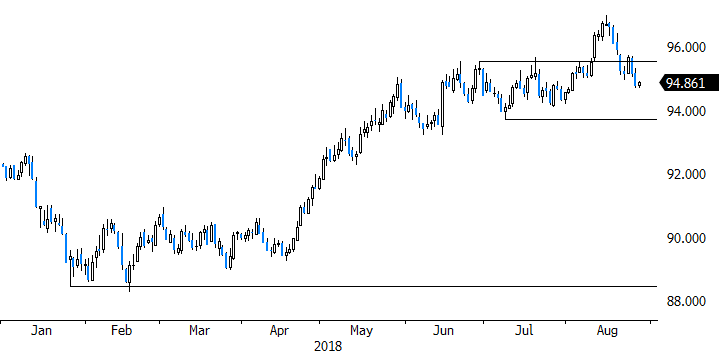
USD (trade-weighted-DXY): dollar declines on positive risk sentiment. Trade to slow?
San Francisco Fed: It’s 10-yr 3-mth spread that predicts most accurately, not 10-yr 2yr spread
The San Francisco Fed released an interesting economic letter titled "Information in the Yield Curve about Future Recessions" yesterday.
There it's noted that yield curve inversion has been a "reliable predictor of recessions". However, the difference between ten-year and three-month Treasury rates is the most useful term spread for forecasting recessions. That is, not the ten-year and two-year yield spread that's most referred to.
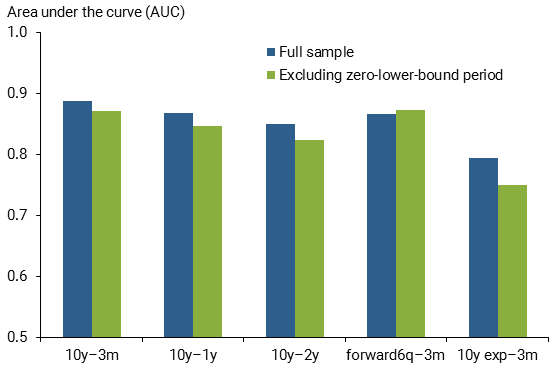
Also, the letter noted that currently, the ten-year and three-month spread is still at a "comfortable distance from a yield curve inversion." If the paper reflects the norm of FOMC member's thoughts, the yield curve flattening shouldn't be much of a curve for keeping rate hikes continue.
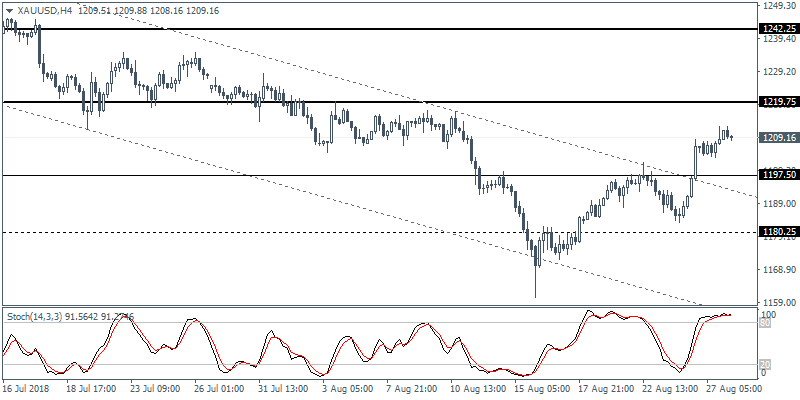
XAUUSD Intraday Analysis
XAUUSD (1209.16): Price action in Gold is expected to eventually target the 1219.75 level of resistance. The strong gains, however, expose the precious metal to a potential dip toward 1197.50. Establishing support at this level could signal a continuation to the upside. However, in the event that gold prices break down below the support level, we expect to see price action testing the lower support at 1180.75. To the upside, a breakout above 1219.75 will see further gains extending toward 1242.25.
GBPUSD Intraday Analysis
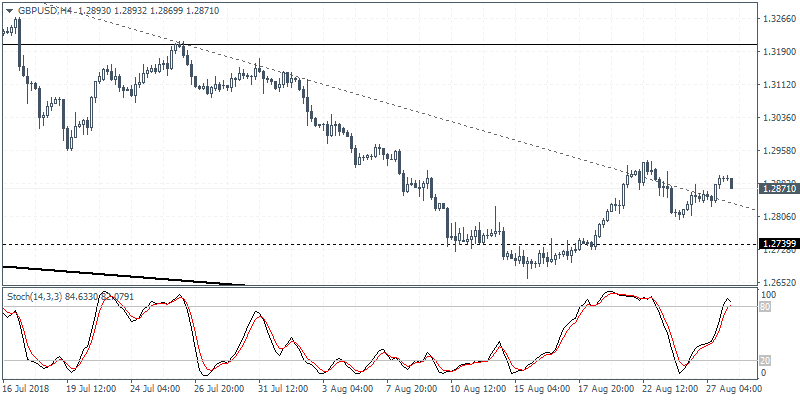
GBPUSD (1.2871): The British pound was seen posting gains for two consecutive days. However, price action is currently seen posting a lower high on the daily chart. This could potentially indicate a near-term correction. We expect price action to potentially retrace back to the previously established lows near 1.2806 level. In the event of a close below this low, GBPUSD could trigger further declines as price action could retest the previous lows at 1.2740.
EURUSD Intraday Analysis
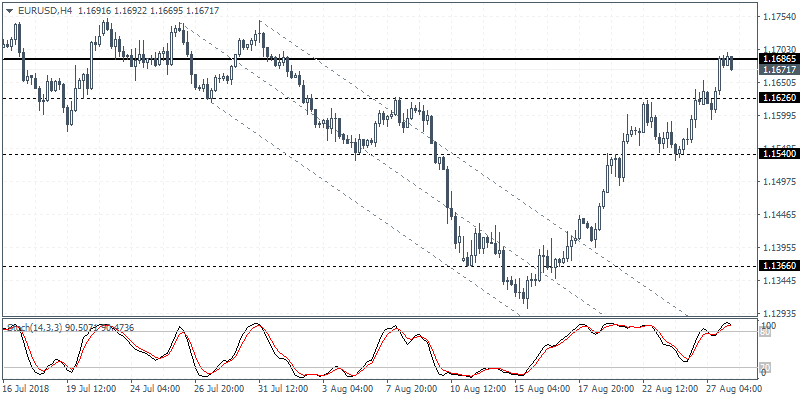
EURUSD (1.1671): The euro currency extended the gains from last Friday as price action closed bullish following the bounce off the support level at 1.1540. Price action is seen trading at the resistance level of 1.1686 level by Monday's close. The strong gains posted is likely to see a near-term correction in price action. To the downside, the initial support is found at 1.1626. A break down below this level could trigger further declines to 1.1540 which is also pending a retest of support.
USD Eases As U.S.-Mexico Agree On A New Trade Deal
The U.S. dollar continued to extend the declines from last week. Economic data was sparse and the weaker greenback sent the euro higher on the day. The gains came as signs of easing global trade tensions brought about a risk on sentiment in the market.
President Trump said that the U.S. had agreed to a new trade deal with Mexico to replace the North American Free Trade Agreement (NAFTA).
The German Ifo business sentiment showed that the German economy was on par to post a 0.5% quarterly growth for Q3.
The European session is relatively quiet today. The private loans report is due to come out with forecasts pointing to a 3.0% increase. The NY trading session will see the release of the U.S. goods trade balance followed by the preliminary wholesale inventories report. The data could potentially alter the expectations of the GDP revision for the second quarter.
Later in the evening, the Conference Board's consumer confidence report is due to show a modest decline to 126.6 from 127.4 previously. Regional manufacturing activity as measured by the Richmond Fed is forecast to show a decline to 18 from 20 a month ago.
Equities Rise & Dollar Falls On U.S. – Mexico Trade Agreement
The trade agreement reached between the U.S. and Mexico made the headlines on Monday. The news sent the S&P 500, the Nasdaq, and the Russell 2000 to new record highs. The Dow Jones Industrial average broke above 26,000 for the first time since February and is currently 567 points away from its January record high.
The U.S. – Mexico deal seemed to boost confidence that the trade war is moving closer to an end, and the next question is who’s next to close a deal with Trump? Global trade tensions have undoubtedly been the most significant source of risk in 2018. It led to massive falls in emerging market currencies and sent Chinese equities into a bear market after $2 trillion were wiped off their value.
Although investors finally see the light at the end of the dark tunnel, when it comes to China the tunnel may prove to be too long with lots of bumps along the way. However, it's Canada what investors will be watching next.
The dollar which gave up 2.3% from its 14-months high will continue to retreat lower if Canada manages to secure a similar deal this week.But if negotiations fail there’s a high chance that traders return to king dollar, and the surge in risk appetite will be short-lived.
Although most Asian stocks traded higher following Monday’s Wall Street performance, mainland China stocks fell back into red territory with Shanghai composite and Shenzhen indices retreating slightly. This suggests that neither the U.S. – Mexican deal nor PBOC’s efforts to put a floor on the CNY managed to attract investors. The latest announcement by China’s central bank to reintroduce a “counter cyclical factor” to determine the renminbi’s exchange rate is aimed to stabilize the currency after it fell for nine straight weeks since mid-June. However, with the economy continuing to gradually slow, government pushing for deleveraging, and ongoing trade tensions with the U.S., it's more likely to see a weaker currency longer term. That’s probably why the PBOC’s move was not enough to encourage investors to buy risk assets.
The economic calendar is relatively light today, so expect currency traders to continue taking the cue from equities performance and any update on U.S. trade negotiations with Canada.
GBP/USD Bullish ABC Pattern Hits Resistance Trend Line
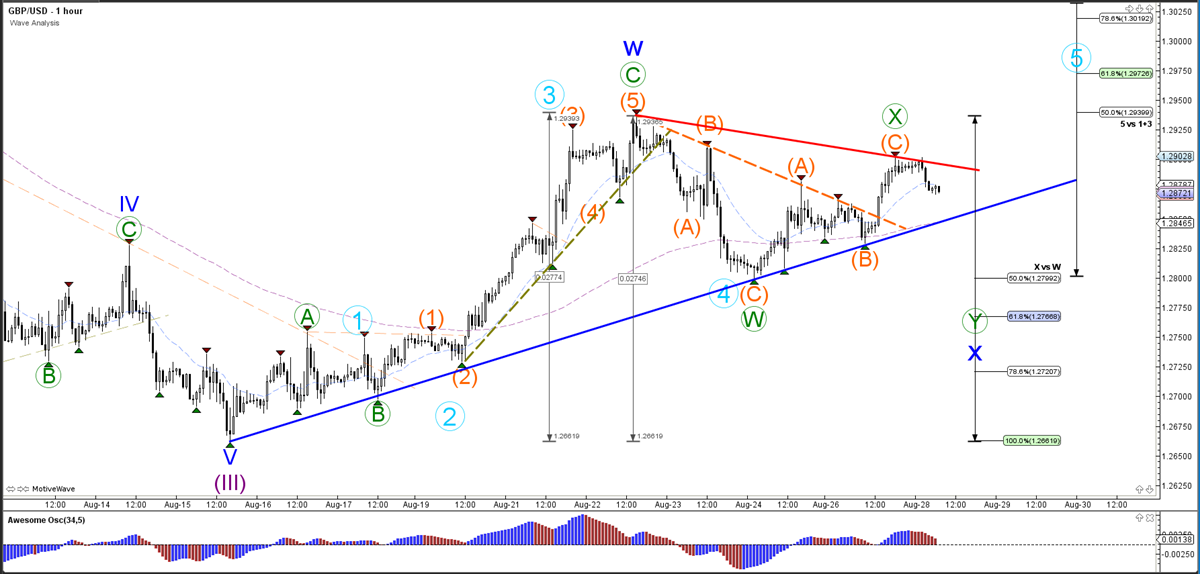
The GBP/USD remains indecisive at the moment as the long price stays between the triangle chart pattern which is indicated by the support (blue), and the resistance (red) trend lines. A bearish breakout below the support trend line (blue) could indicate a downtrend continuation within wave 5, but could also be part of an extended wave WXY (blue) within wave 4 (purple). A bullish bounce at support could indicate an immediate wave Y (blue), which could see the price move up to the 50% Fibonacci retracement level.
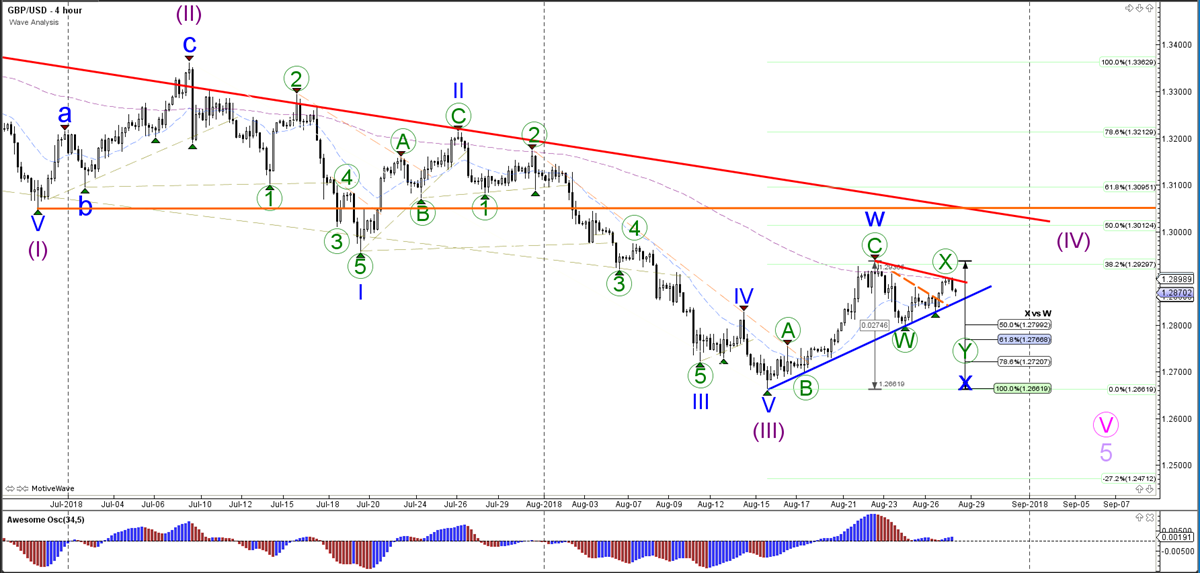
The GBP/USD alternative is a potential bullish 5 wave (light blue), although this scenario is starting to become less likely due to the slow and choppy price action seen in the ABC (orange) within wave X (green). The next breakout above or below the support and resistance trend lines is key for the bullish or bearish direction.
EUR/USD Bullish Channel Aims At Major 38.2% Fibs Levels
The EUR/USD bullish momentum is expanding the wave A (purple) via a bullish trend channel towards the round level of 1.1750. Price is however approaching a key 38.2% Fibonacci resistance zone near 1.1780, which is a decision zone for the EUR/USD.
The EUR/USD bearish reversal could indicate the end of wave A (purple) and a potential bearish retracement whereas a bullish breakout and continuation could see price move towards higher resistance levels.

The EUR/USD bearish reversal could indicate the end of wave A (purple) and a potential bearish retracement whereas a bullish breakout and continuation could see price move towards higher resistance levels.

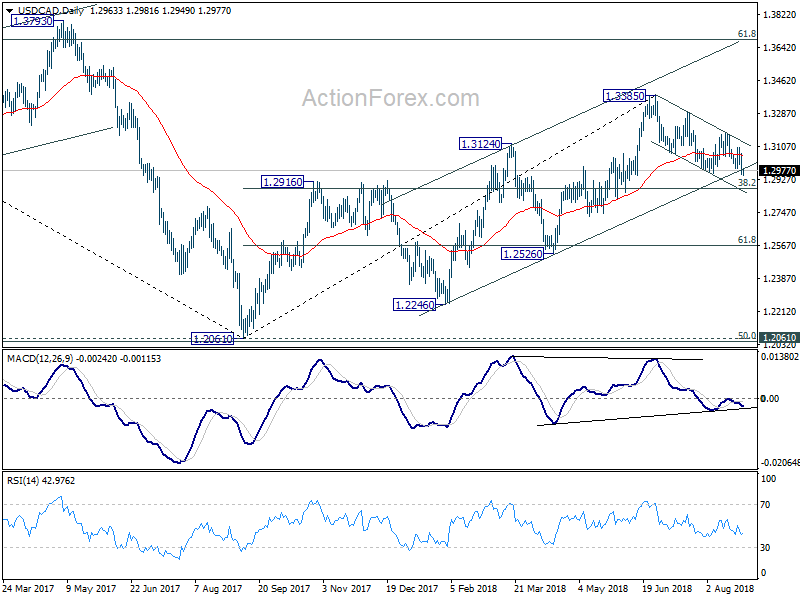
USD/CAD Daily Outlook
Daily Pivots: (S1) 1.2924; (P) 1.2996; (R1) 1.3039; More...
USD/CAD's fall from 1.3385 resumed by taking out 1.2961 support. More importantly, the break of medium term channel support how carries some bearish implication. Intraday bias is back on the downside for 1.2879 fibonacci level first. Sustained break there will add to the case of medium term reversal and target next fibonacci level at 1.2567. On the upside, break of 1.3102 resistance is needed to indicate short term bottoming. Otherwise, outlook will now stay bearish in case of recovery.
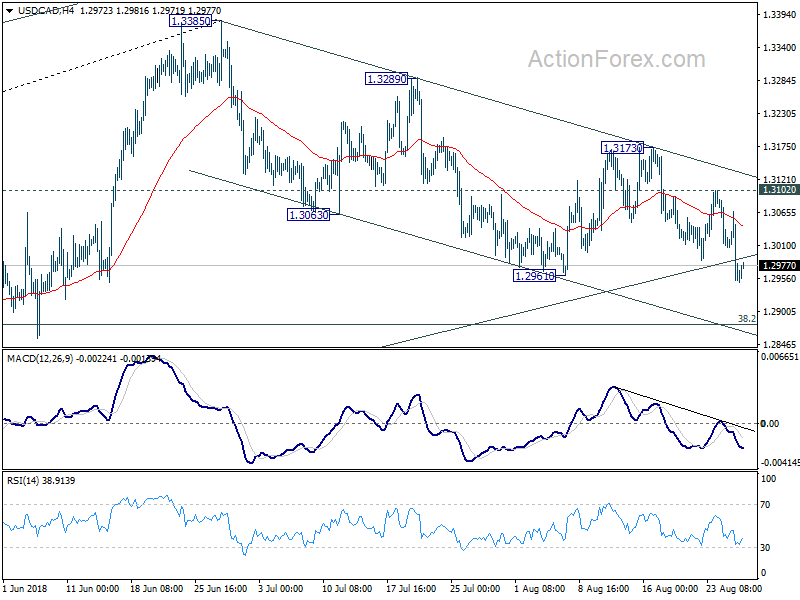
In the bigger picture, the break of channel support (now at 1.2988), argues that rise from 1.2246, as well as that from 1.2061, has completed at 1.3385. Focus is back on 38.2% retracement of 1.2061 to 1.3385 at 1.2879. Decisive break there will affirm the case of medium term reversal and target 61.8% retracement at 1.2567 and below. That will also put key long term support at 50% retracement of 0.9406 (2011 low) to 1.4689 (2015 high) at 1.2048 into focus. On the upside, break of 1.3385 will revive the bullish case and target 61.8% retracement of 1.4689 to 1.2061 at 1.3685 and above.