

Sample Category Title
Forex Technical Analysis: EUR/USD, USD/JPY, GBP/USD
EUR/USD
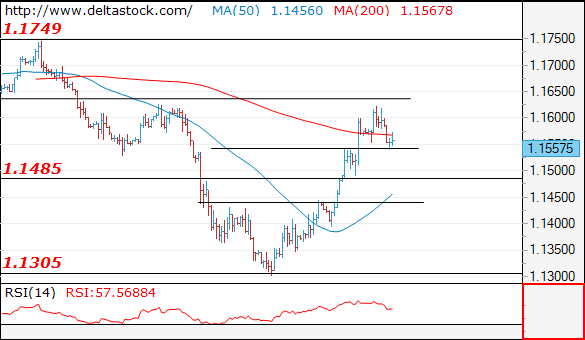
Current level - 1.1557
The reversal below 1.1640 resistance signals a bearish outlook, for a corrective dip to 1.1480 zone. Initial support lies at 1.1540.
| Resistance | Support | ||
| intraday | intraweek | intraday | intraweek |
| 1.1640 | 1.1750 | 1.1540 | 1.1300 |
| 1.1750 | 1.1750 | 1.1490 | 1.1100 |
USD/JPY
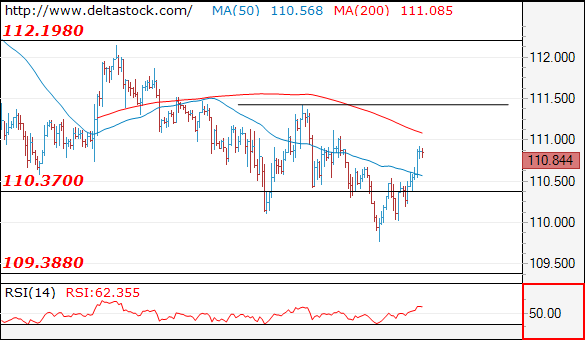
Current level - 110.84
The intraday bias is positive above 110.60, for a rise towards 111.40 key hurdle.
| Resistance | Support | ||
| intraday | intraweek | intraday | intraweek |
| 111.40 | 114.50 | 110.60 | 110.10 |
| 111.40 | 114.50 | 109.30 | 109.30 |
GBP/USD
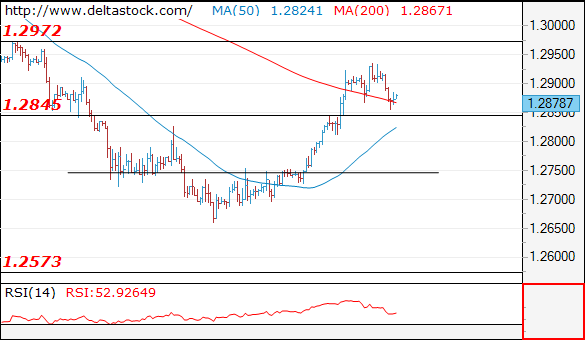
Current level - 1.2878
A reversal at 1.2935 signals a negative outlook, for a 1.2750. Trigger on the downside is 1.2840.
| Resistance | Support | ||
| intraday | intraweek | intraday | intraweek |
| 1.2930 | 1.2970 | 1.2840 | 1.2570 |
| 1.2970 | 1.3210 | 1.2750 | 1.2570 |
USDJPY Is Exactly At The POC Zone
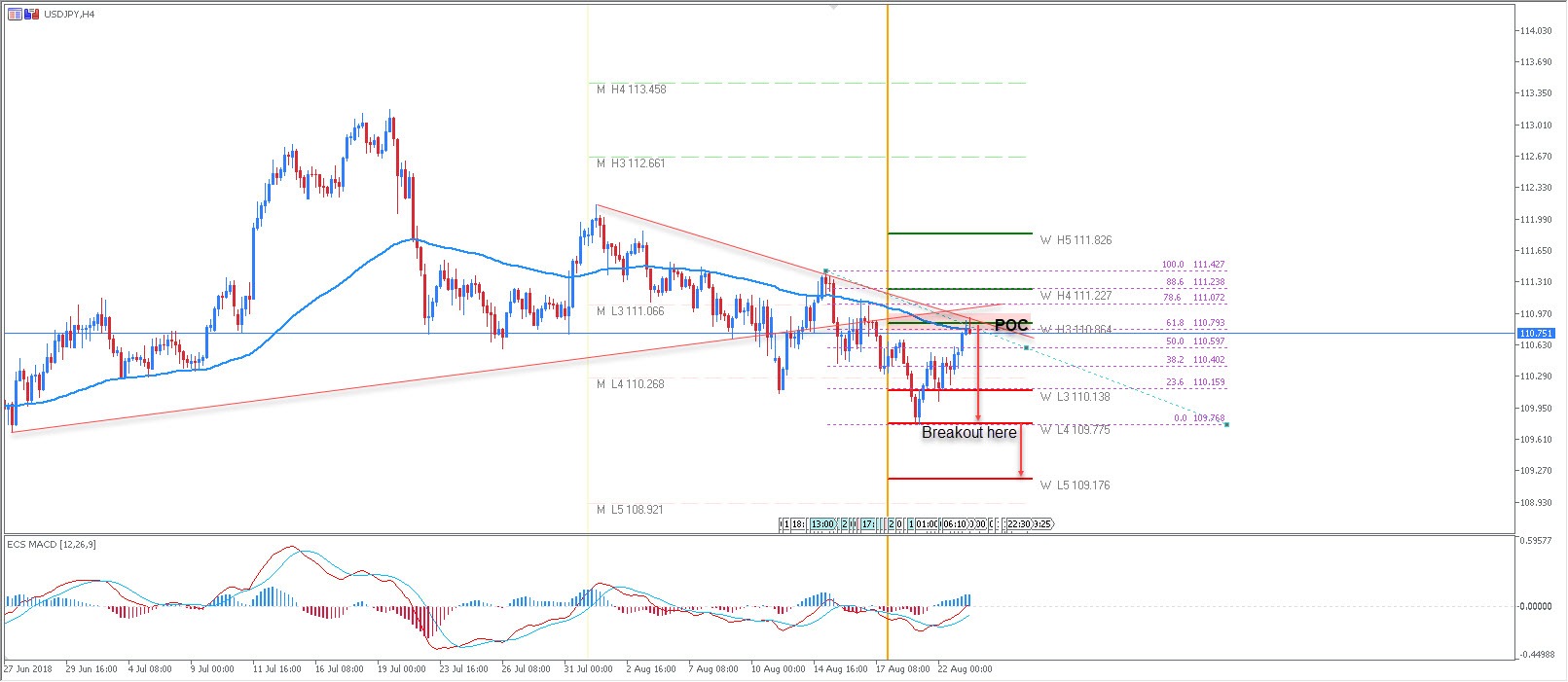
The USD/JPY has formed the zone exactly at 61.8 fib and W H3 resistance. The POC zone 110.80-111.00 might reject the price towards 110.15 and 109.77. A solid break below 109.75 should target 109.17. A close above 110.45 will negate this scenario.
W L3 - Weekly Camarilla Pivot (Weekly Interim Support)
W H3 - Weekly Camarilla Pivot (Weekly Interim Resistance)
W H4 - Weekly Camarilla Pivot (Strong Weekly Resistance)
M H4 - Monthly Camarilla Pivot (Very Strong Monthly Resistance)
M L3 – Monthly Camarilla Pivot (Monthly Support)
M L4 – Monthly H4 Camarilla (Very Strong Monthly Support)
POC - Point Of Confluence (The zone where we expect price to react aka entry zone)
GBPUSD Outlook: Bulls Show Signs Of Stall, Extension Below 1.2831 To Signal Reversal
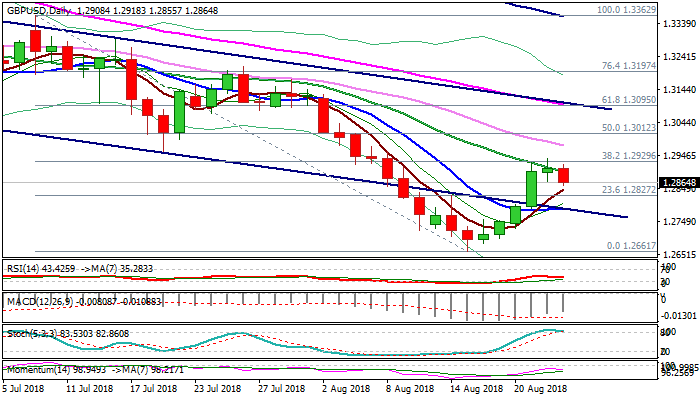
Cable holds in red on Thursday and seeing risk of deeper pullback after near-term bulls repeatedly failed to clear falling 20SMA (also Fibo 38.2% of 1.3362/1.2661 descend) and Wednesday's action ended in Doji. Reversal pattern is forming on daily chart, with daily close below 1.2831 (Fibo 38.2% of 1.2661/1.2936 upleg) needed to confirm the pattern and signal further weakness. South-turning 14-momentum and slow stochastic attempting to reverse from overbought zone, support the notion, along with fresh strength of the greenback after Fed minutes and persisting Brexit concerns. Return below bear-channel support line, reinforced by 10SMA (1.2788) is needed to neutralize hopes of fresh upside action and shift focus towards key support at 1.2661 (15 Aug low, the lowest since June 2017).
Res: 1.2898, 1.2936, 1.2976, 1.3000
Sup: 1.2855, 1.2831, 1.2800, 1.2788
USDJPY Outlook: Bulls Look For Break Above Strong 111 Resistance Zone To Resume
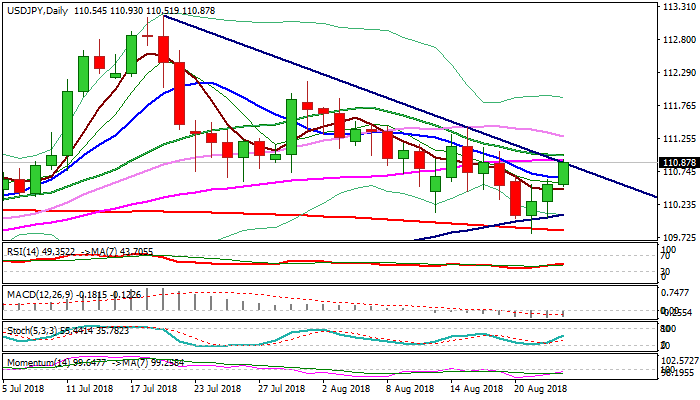
Recovery from 109.77 (21 Aug low) extends into third straight day, additionally boosted by hawkish Fed minutes and penetrates thick daily cloud (cloud base lays at 110.64). Rally faces strong headwinds at 110.90/111.00 zone (converged 55/20SMA's / bear-trendline drawn off 113.17, 19 July top) and consolidating just under the zone. North-heading slow stochastic and momentum, which both formed bull-crosses, support scenario, with close above 111.00 barrier to open way towards next pivot at 111.50 (daily cloud top, reinforced by Kijun-sen). Broken cloud base (110.64) should keep the downside protected) to maintain bullish bias.
Res: 111.00, 111.50, 111.87, 112.15
Sup: 110.64, 110.45, 110.07, 109.83
NZDUSD Bounces Off Downtrend Line, Indicators Signal More Losses
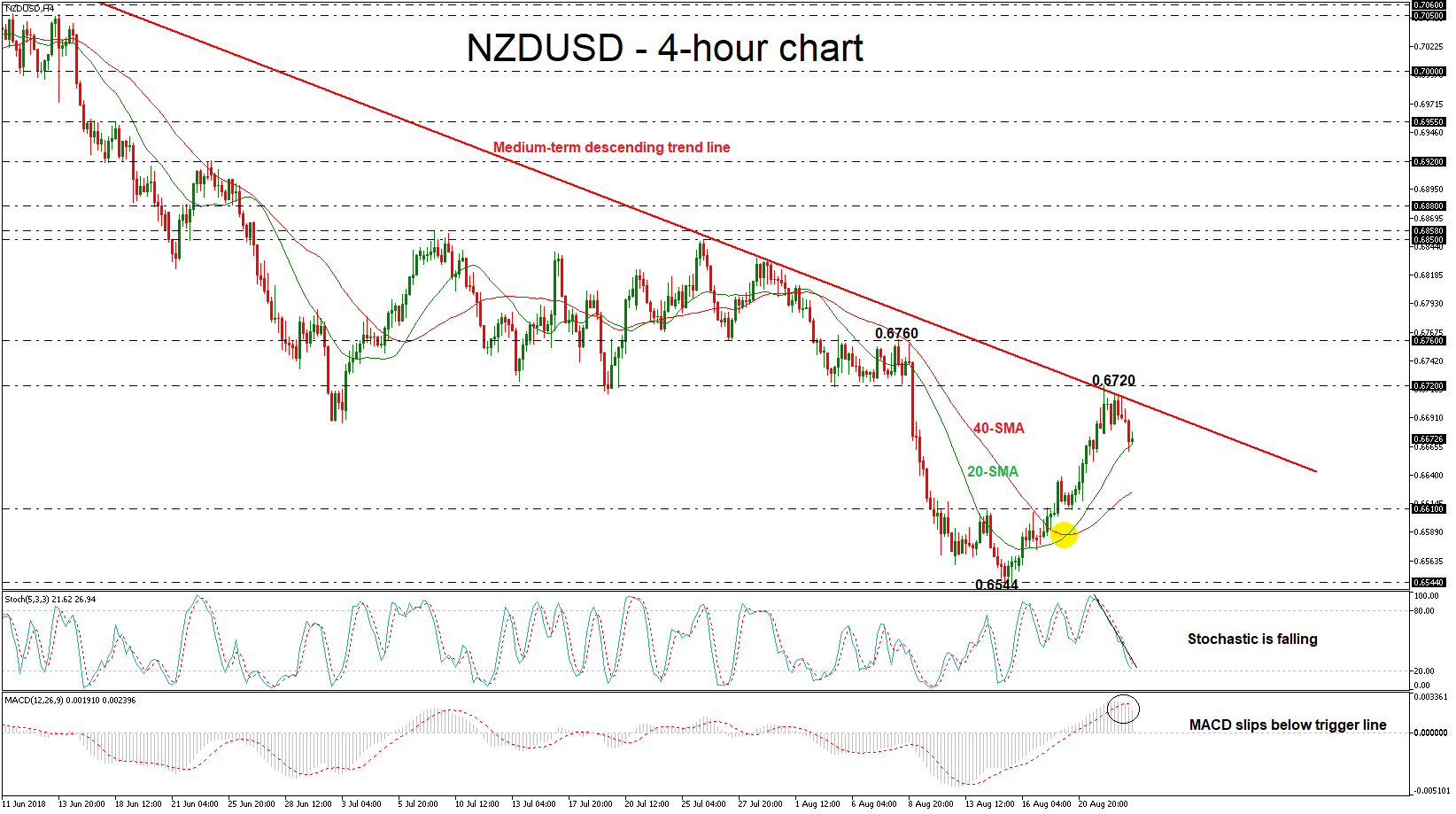
NZDUSD has been creating a pullback since yesterday after it challenged the medium-term descending trend line near the 0.6720 resistance level. However, the pair has found immediate support at the 20-simple moving average (SMA) in the 4-hour chart and the technical indicators are focusing for bearish movements as well.
Looking at the near-term picture, the stochastic oscillator is heading sharply lower towards the oversold zone, while the MACD oscillator has dived below the trigger line with strong momentum. However, the price holds above the moving averages with the bullish crossover still standing.
Should the pair manage to strengthen its negative momentum and drop below the 20-SMA, the next resistance could come from the 40-SMA at 0.6625 and then the price could hit the 0.6610 support barrier. The next key support to watch lower is the two-and-a-half-year low of 0.6544, identified by the trough on August 15.
However, in the case of an upward attempt in the next few sessions, the short-term risk would shift back to the upside, with the downtrend line and the 0.6720 resistance coming into focus again. Above these levels, the bullish picture would be endorsed and the next resistance for investors to have in mind is the 0.6760.
Regarding the longer timeframe, the pair has been developing within a bearish movement since April 13 and this would change in case of a significant bullish rally above this line.
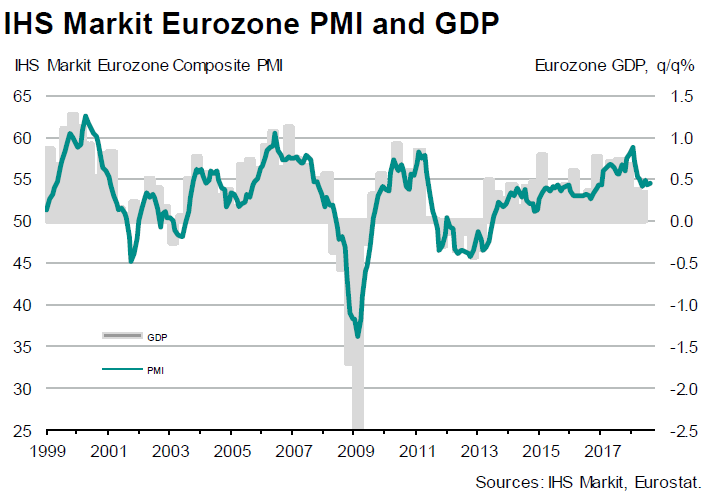
Eurozone PMI compsoite rose 0.1 to 54.4, manufacturing looking the most susceptible to a trade-led slowdown in coming months
Eurozone PMI manufacturing dropped to 54.6 in August, downf rom 55.1 and missed expectation of 55.1. PMI services rose to 54.4, up from 54.2 and matched expectations. PMI composite rose to 54.4, up merely 0.1 from 54.3.
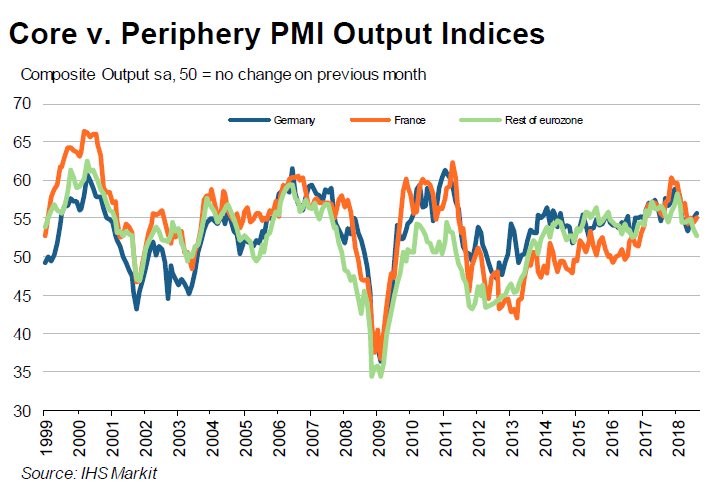
Comment Commenting on the flash PMI data, Chris Williamson, Chief Business Economist at IHS Markit said:
"The survey data indicate that the eurozone economy looks to have continued to grow at a steady rate in August, raising hopes that the third quarter could see GDP growth match the 0.4% expansion seen in the second quarter. In fact, the survey evidence suggests that the official data so far this year could yet be revised slightly higher.
"Jobs growth also remains encouragingly robust, which should help further stimulate consumer spending and help offset signs of continuing weakness in exports.
"With the indicators of current activity, employment and price gauges remaining elevated, the August survey sends a hawkish signal to policymakers. But the forward-looking indicators suggest the business mood could cool as summer passes.
"Warning lights are flashing. Analysis of past data indicates that demand needs to pick up to sustain current output and employment growth in coming months. Yet the risks seem tilted to the downside.
"Escalating political worries, rising prices and a recent slowdown in order book growth have all contributed to the gloomiest outlook for almost two years, according to companies' expectations of their future output. In manufacturing, optimism is down to its lowest for almost three years, as a nearstalling of exports corroborated escalating trade war worries.
"With manufacturing looking the most susceptible to a trade-led slowdown in coming months, hopes are pinned on a robust service sector helping to drive economic growth as we move into the autumn, yet even here optimism is down to its lowest for nearly two years."
Dollar Up Ahead Of Jackson Hole, Aussie Falls On Political Woes
Here are the latest developments in global markets:
FOREX: The dollar was 0.2% higher against a basket of currencies on Thursday after declining for six straight days. Potential catalysts for the currency’s direction during the remainder of the week are ongoing developments on the trade front and the Jackson Hole summit that will feature influential central bankers; Fed chief Powell will be giving a speech at the event on Friday.
STOCKS: Wall Street finished Wednesday’s trading mixed. The Dow Jones lost 0.3% and the S&P 500 edged marginally lower. Meanwhile, the Nasdaq Composite continued rising, adding 0.4%. In Asian markets, the Japanese Nikkei 225 rose 0.2% and the broader Topix index fell on the margin on Thursday. Hong Kong’s Hang Seng was down by 0.5%. At 0703 GMT, futures tracking major European benchmarks were painting a mixed picture, though they were not far away from neutral levels. Contracts on the Dow, S&P and Nasdaq 100 traded marginally lower.
COMMODITIES: WTI was 0.1% down at $67.80 per barrel after surging yesterday following the EIA report which showed the biggest crude stockpile drop in four weeks. Brent crude traded 0.4% lower at $74.47/barrel. In precious metals, gold was 0.75% down, at around $1,187.00/ounce. The dollar-denominated metal was suffering as the greenback strengthened during today’s trading.
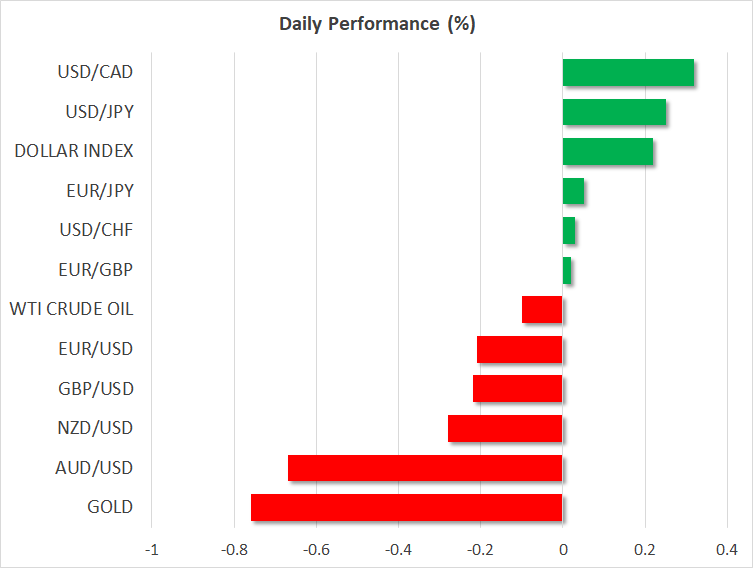
Major movers: Dollar higher across the board; Aussie tumbles on political uncertainty
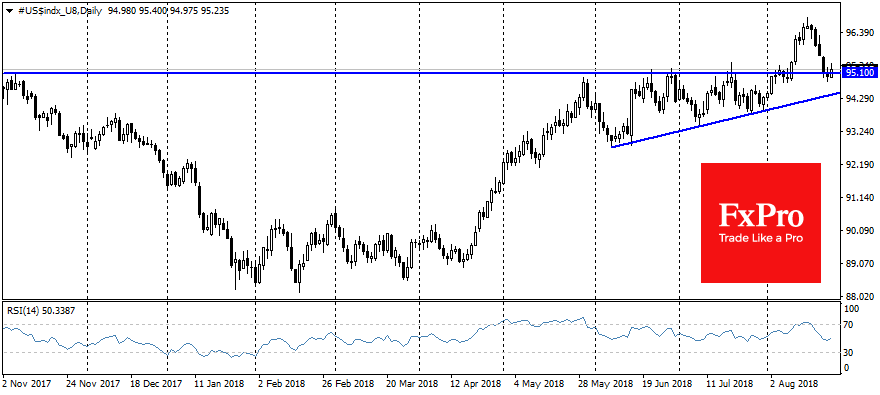
The dollar index, which gauges the greenback against a basket of six major currencies, is moving higher on Thursday after losing ground in the six previous days and recording its longest streak of declines since February. On Wednesday, the index touched 94.93 at its lowest, a level last experienced on August 2. This compares to its current level of 95.34.
The minutes of the Federal Reserve’s latest policy meeting released yesterday confirmed that the US central bank remains on track to continue normalizing rates.
In Australia, rising political uncertainty following the resignation of three of the government’s senior ministers is putting PM Malcolm Turnbull’s leadership under question and is weighing on the local dollar, which is a stark underperformer on Thursday; aussie/dollar is 0.65% down, having fallen below the 0.73 handle. The kiwi is also down, perhaps declining in “sympathy” to the Aussie but also on the back of broad dollar strength.
The sell-off in the Aussie may have acted as the catalyst for the US currency’s safe-haven allure, which was especially evident in previous weeks, to come back to the fore. Australasia’s Turnbull said he would hold another leadership vote on Friday, after the one earlier in the week, if he received a letter signed by the majority of the ruling Liberal party.
Euro/dollar and pound/dollar were both down by around 0.2% after posting some hefty gains in the days that preceded that pulled them away from multi-month low levels. Drivers for the euro in today’s trading are likely to be flash PMI figures for August and the ECB minutes pertaining to its July meeting. For sterling, any Brexit updates will again be eyed. Recent comments spurred some optimism for a deal with the EU; the nation is preparing for a no-deal outcome as well.
Dollar/yen was moving further away from the near two-month low of 109.76 hit on Tuesday. The pair was last roughly 20 pips below the 111 handle. Any escalation in US-Sino trade relationships is likely to bring the Japanese currency under buying interest.
In EM, the Mexican peso was losing ground versus the dollar, though it held most of Wednesday’s sizable gains which came on rising hopes for a breakthrough on NAFTA.
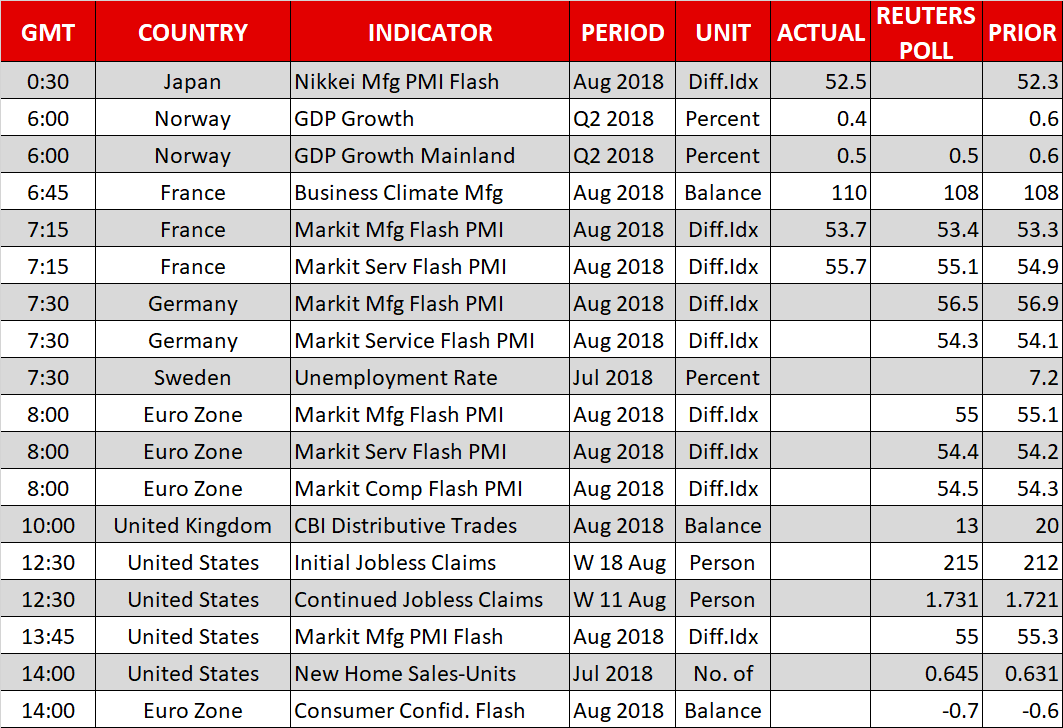
Day ahead: ECB publishes meeting minutes; flash PMIs pending out of the eurozone & US; Jackson Hole Economic Policy Symposium kicks off
Thursday’s calendar features flash Markit PMI readings out of the eurozone and the US, as well as preliminary readings on eurozone consumer confidence. Accounts of the ECB’s latest monetary policy meeting will be a highlight as well, after the FOMC meeting minutes released yesterday paved the way for higher interest rates “soon” and viewed the ongoing trade disputes and actions an important source of uncertainty and risk.
At 0800 GMT, Markit’s preliminary manufacturing PMI reading for the eurozone for the month of August is expected to come at 55.0, slightly lower compared to July’s 55.1. Meanwhile, the services PMI is anticipated to rise by 0.2 points to 54.4, and the composite PMI, which blends the manufacturing and services sectors, is projected at 54.5 from the 54.3 seen previously. Note that in December, the manufacturing PMI reached an all-time high of 60.6 before it headed downwards in the following months. The services and composite indices peaked in January.
While all PMI measures continue to comfortably hold above the 50 threshold, which separates contraction from expansion, any negative or positive surprise in the numbers could move the euro accordingly before the release of the ECB meeting minutes at 1130 GMT. The record, which will provide a detailed description of what was discussed at the central bank’s latest meeting in July, is expected to reiterate plans to end the Banks’ asset purchase program by the end of 2018 and communicate that interest rates will remain steady “at least through the summer of 2019”, with the latter bringing some confusion to investors when was first announced in July as question marks were created on how it should be interpreted. Despite ECB chief, Mario Draghi, saying that this means not until September, investors will likely want to see whether some ECB policymakers disagree with this interpretation, pushing for a hike earlier in time. Any dovish tweaks in the language could push the euro lower and vice versa. Comments on the trade front could also bring volatility to the common currency.
Also euro-related, flash eurozone consumer confidence figures for the month of August are due at 1400 GMT. A slight deterioration in the relevant index, which holds in negative territory, is forecasted by analysts.
Meanwhile in the US, Chinese and US “low-level” officials resume their trade talks later today after Washington activated its tariffs on $16 billion Chinese imports, prompting Beijing to retaliate in similar fashion. The action also raised a voice in China, with the Chinese Commerce Ministry saying it would file a complaint to the World Trade Organization (WTO).
Staying in the US, the Jackson Hole Economic Policy Symposium is scheduled to commence today, hosting central bankers and finance ministers from some of the world’s largest economies. Trade, EM uncertainty and Turkey and monetary policy are some of the topics that are likely to attract interest. The Fed’s chief, Jerome Powell, will be giving a speech at the event on Friday.
In terms of data out of the US, the flash Markit manufacturing PMI for August due out at 1345 GMT is forecast to ease by 0.3 points to 55.0. Initial jobless claims and new home sales figures will be available for review at 1230 GMT and 1400 GMT respectively.
Bundesbank chief Weidmann, whose name is often cited as a possible successor to ECB chief Draghi when his term expires in late 2019, will be speaking in Berlin at 0900 GMT.
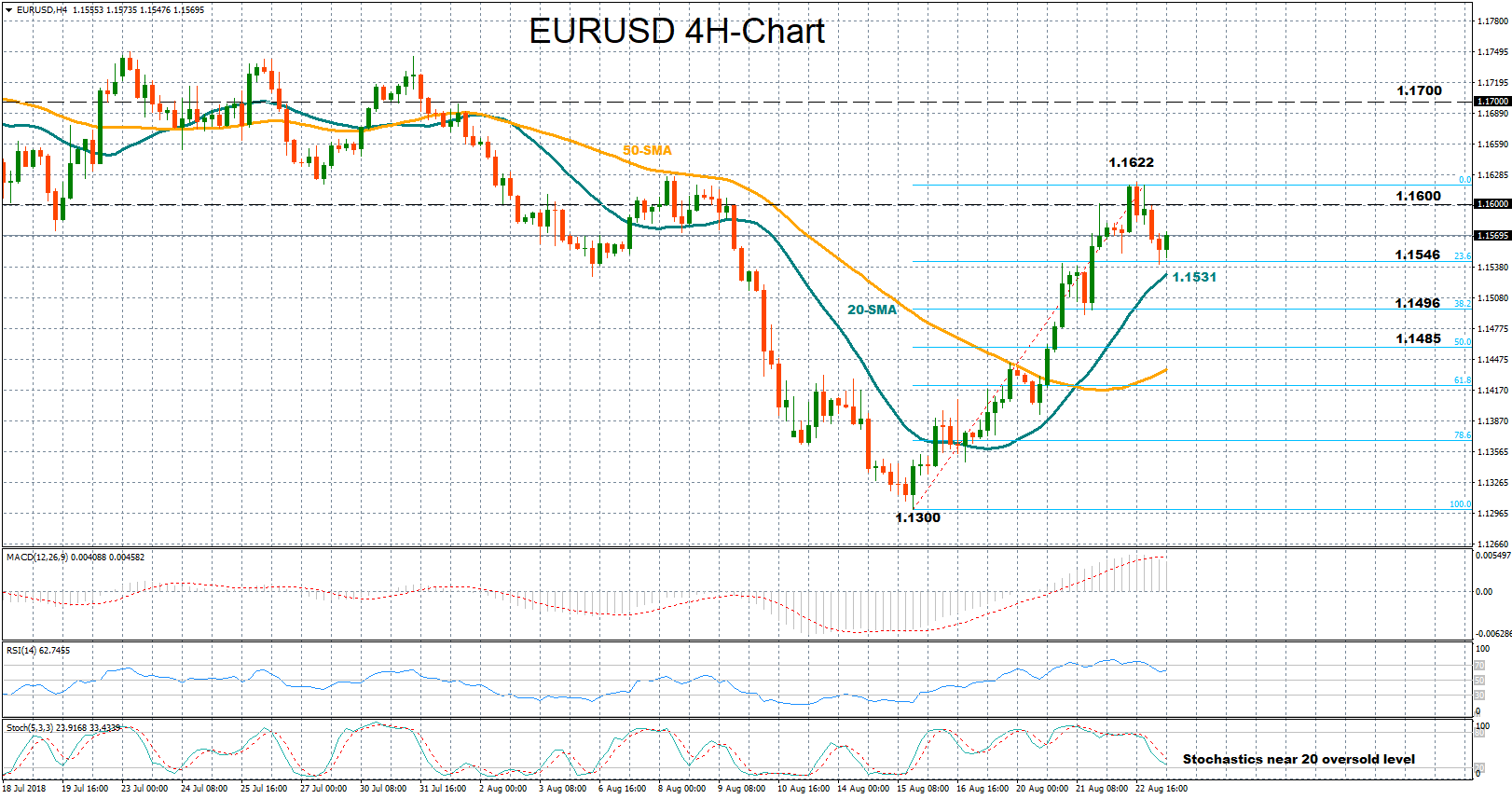
Technical Analysis: EURUSD declines after climbing above 1.16; downside may continue
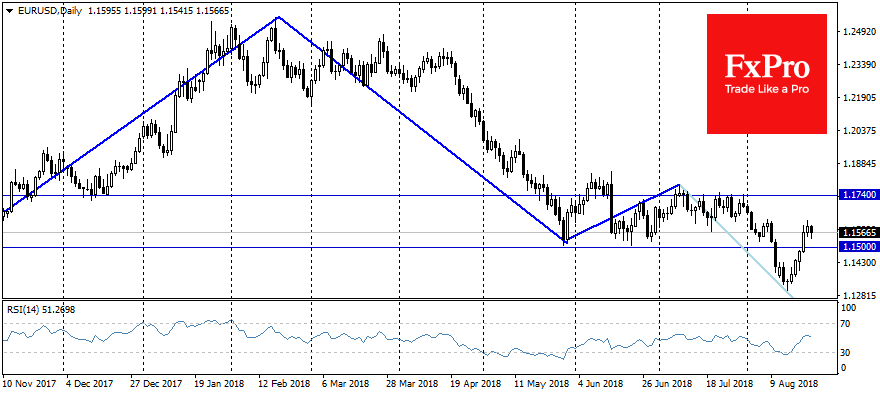
EURUSD declined from the two-week high of 1.1622 reached on Wednesday after the RSI and the stochastic oscillators fell below 70 and 80 respectively – overbought levels – on the four-hour chart, hinting that the rally triggered at roughly 1.1300 was overdone. Turning to the MACD, it has fallen below its red signal line, which may indicate that further declines are likely.
Should the price rebound, the market could try to overcome the 1.1600 round figure before it retests the 1.1622 peak. If the latter fails to halt upside movement, resistance could run towards the area between 1.1680-1.1700 which has been frequently approached in July.
On the other hand, an extension to the downside could meet immediate support at the 23.6% Fibonacci of the upleg from 1.1300 to 1.1622, around 1.1546, where the market paused today; the 20-period simple moving average lies not far below at 1.1531. Even lower, the 38.2% Fibonacci of 1.1496 and the 50% Fibonacci of 1.1485 could also restrict bearish corrections, with the latter bringing stronger downside pressures if violated.
Germany PMI hit 6-month high, potential for renewed upward pressure on headline inflation
Germany PMI manufacturing dropped to 56.1 in August, down from 56.9 and missed expectation of 56.6. PMI services rose to 55.2, up from 54.1 and beat expectation of 54.4. PMI composite rose to 55.7, up from 55.0, hit a 6-month high.
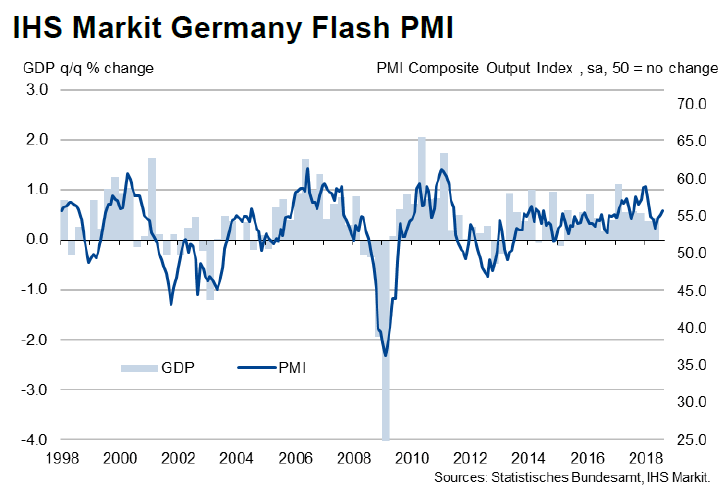
Commenting on the flash PMI data, Phil Smith, Principal Economist at IHS Markit said:
"German business continued to display remarkable resilience during August, with the latest PMI data going some way to dispel any fears about a global trade slowdown and its impact on the health of the economy.
"Buoyed by strong fundamentals in the domestic market, including rising employment and wages, the service sector enjoyed an upturn in growth in August and drove the steepest rise in private sector business activity for six months.
"While the manufacturing PMI retreated slightly, it remained well inside growth territory at the midpoint in the third quarter. The top-line number is perhaps flattered by the output component, with trends in new orders and exports – the latter the weakest in over two years – pointing to a softer pace of growth.
"Elsewhere, the survey's measure of prices charged for goods and services edged closer to January's survey-record peak, to suggest the potential for some renewed upward pressure on the headline inflation rate in coming months."
FOMC Supports Dollar Protecting Rate-Hike Plan
The American dollar adds to major competitors after publishing FOMC minutes of the previous meeting. The dollar index adds 0.4% in response to the protocols to the July meeting, when the Committee members have discussed further policy of interest rate tightening. This news helped the American currency to turn to growth after five trading sessions of decline. The Fed’s support came just when the dollar index, DXY, tested the former level of resistance of the trading range that now became support. FOMC comments have returned the expected probability of raising rates in September to 96%, same as one week earlier after the decline to 93.6% in the first half of the week. FOMC sticks to its hiking plan despite Trump’s comments.
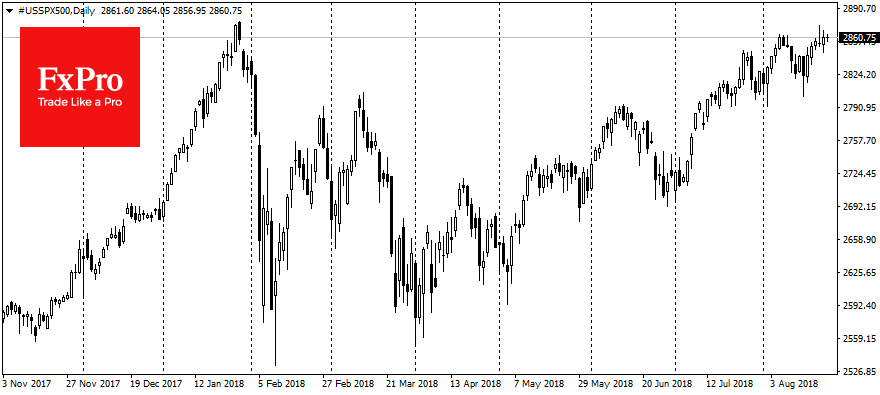
The dollar also received support overnight on the news that the punitive 25% tariffs for goods in the amount of $16 bln. were introduced by China and the US, bringing the total amount of goods that fell under tariffs to 50 bln. These measures have been announced earlier, but the markets have not been able to avoid weakening on their return to such a painful topic. Moreover, this week, Washington will discuss the possibility of imposing elevated tariffs for Chinese imports of up to $200 billion worth goods. MSCI index for Asia-Pacific region ex Japan has lost 0.1% since this morning; the futures for S&P500 demonstrate the same decline
The introduction of import tariffs threatens to increase the inflationary pressure in the United States. If the country’s economy maintains a steady rate of growth, the Fed can begin to increase interest rates more actively to return inflation to the target rates. In this regard, the importance of macroeconomic statistics, which will come out in the coming months in the U.S., can further affect the FOMC plans for the forthcoming year. Interest rate expectations often act as a key driver for currencies.
The EURUSD pair, which was as high as 1.1620 on Wednesday, experienced a decline to 1.1550 on Thursday morning, losing 0.3% after the publication of the Fomc Minutes. The British pound sank to 1.2870 from its highs near 1.2830 a day earlier. The Asian currencies are again under pressure due to the return of the trade conflict between China and the United States into the investors’ focus. The Chinese yuan is traded at 6.87 per dollar, adding 0.7% in the last 24 hours. The Japanese yen weakens to the dollar the third day in a row to 110.80.
France PMI manufacturing rose to 53.7, PMI services rose to 55.7, output growth across the French private sector
France PMI manufacturing rose to 53.7 in August, up from 53.3 and beat expectation of 53.5. PMI services rose to 55.7, up from 54.9 and beat expectation of 55.1. PMI composite rose to 55.1, up from 54.4 and hit a 4-month high.
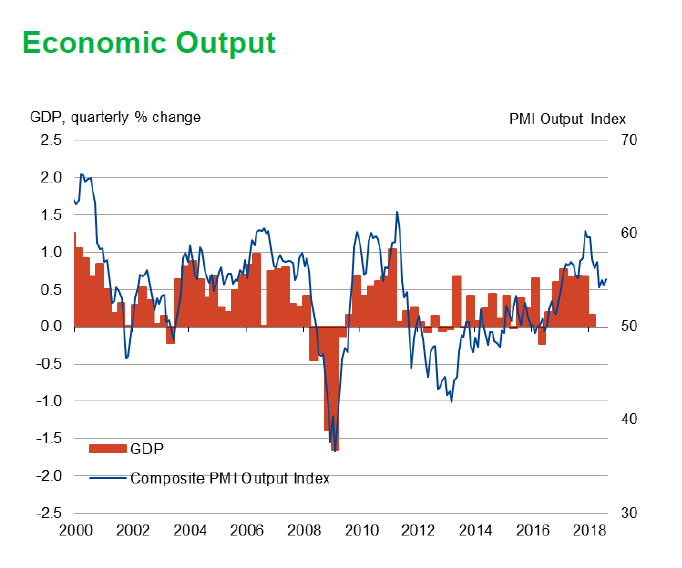
Commenting on the Flash PMI data, Sam Teague, Economist at IHS Markit said:
"Output growth across the French private sector ticked up to a four-month high in August, with both the service and manufacturing sectors seeing stronger expansions. Robust domestic client demand, alongside a renewed upturn in exports provided stimulus for the latest acceleration in growth.
"A key theme in the latest survey were the sharp inflationary pressures reported in the manufacturing sector, with many respondents blaming higher oil-related input cost burdens. This in turn placed downward pressure on confidence towards expected output growth over the next year. That said, despite optimism slipping in August, French businesses continued to hire additional staff at an elevated pace, partly reflecting rising output requirements."