Sample Category Title
Eco Data 11/2/17
[php_everywhere] [/php_everywhere]
Eco Data 11/3/17
[php_everywhere] [/php_everywhere]
Eco Data 11/1/17
[php_everywhere] [/php_everywhere]
Eco Data 10/31/17
[php_everywhere] [/php_everywhere]
Eco Data 10/30/17
[php_everywhere] [/php_everywhere]
The Weekly Bottom Line: U.S. Economy Steams Ahead at 3% Pace
U.S. Highlights
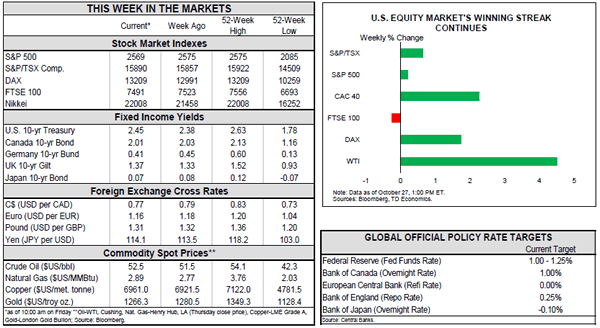
- U.S. equities this week managed to recover from earlier losses following strong earnings and a series of upbeat economic data. Durable goods orders and new home sales surprised to the upside, while the House approved a budget plan, adding to the upbeat tone.
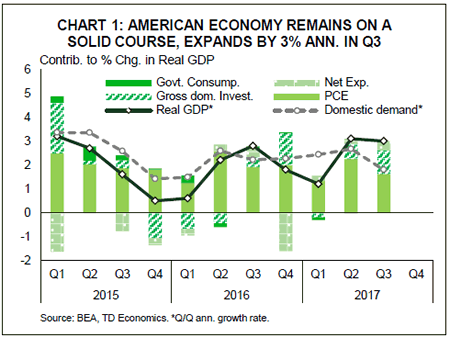
- The advance estimate for third quarter GDP growth of 3% (annualized) came in better than expected despite hurricane impacts weighing on domestic demand.
- The ECB announced a reduction in its pace of asset purchases and extended its bond-buying program through September 2018 or beyond if necessary, acting to affirm a growing policy divergence between the ECB and the Fed.
Canadian Highlights
- Economic data was generally constructive this week, with wholesale trade up in August and a solid payrolls report.
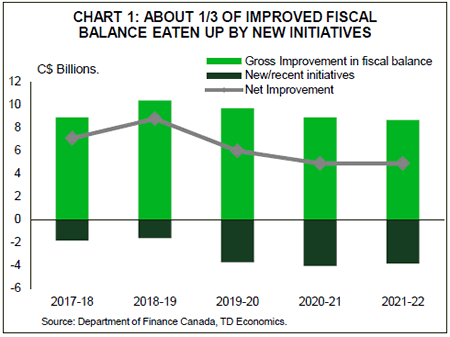
- Finance Minister Morneau delivered his fall economic and fiscal update, which sees an improved budget balance resulting from recent strong economic growth. He elected to 'split the difference', with about one-third of the gain used for new initiatives and the remainder allowed to flow through to a reduced deficit profile.
- The Bank of Canada maintained its policy rate at 1.00%. The accompanying discussion took a dovish bent, but the growth outlook remains consistent with further monetary tightening. 'Data dependency' likely means that the Bank will seek confirmation of the growth path before further tightening, making January 2018 the most likely trigger point for another hike..
U.S. - U.S. Economy Steams Ahead at 3% Pace
Stocks gained this week on the back of strong earnings reports and on upbeat economic data. Durable goods orders rose 2.2% (m/m) in September - more than double the expected rate, while new home sales surged an impressive 18.9%. Although the latter can be partially attributed to a rebound in hurricane-hit areas, improvements were recorded in all regions, as activity was likely boosted by significant inventory shortages in the existing home market. The passing of a budget plan in the House, another step forward toward tax reform, added to the upbeat tone and proved particularly beneficial to Treasury yields and the U.S. dollar.
The most anticipated report of the week, BEA's advance GDP estimate, reflected this positive momentum. Growth for the third quarter came in much better than anticipated, with the economy expanding at 3% (Q/Q annualized) despite hurricane impacts. The latter did appear to weigh on a few categories, such as services spending and both residential and non-residential construction, all of which dragged on domestic demand (Chart 1), although inventory restocking helped provide some offset. Net trade also contributed positively to growth, but likely reflected a hurricane-related fall in imports, suggesting some giveback ahead. Still, with rebuilding likely to lift fourth-quarter economic growth via a rebound in domestic demand, another print of around 3% appears to be in the cards. Given estimated trend growth of 2.0%, another quarter of above trend growth is consistent with a continuation of the current interest rate hiking cycle. As such, a December rate hike appears very likely, provided that we also see some cooperation from inflation metrics.
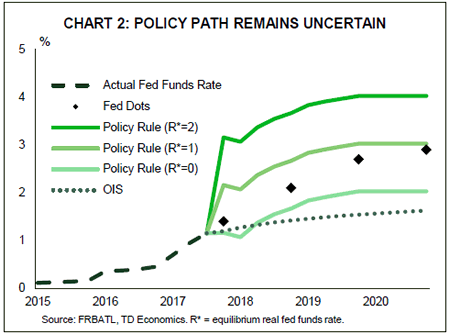
Beyond 2017 however, the interest rate path is more uncertain. This is not only due to evolving growth and inflation dynamics, but also a possible radical makeover of the Fed, which has a number of open Board of Governor positions and may soon get a new Chair. Among the frontrunners for the top position, former Fed Governor Kevin Warsh and Stanford professor John Taylor are regarded as somewhat of a challenge to the status quo, given their apparent preference for a more rules-based approach to setting interest rates. The current Fed under Chair Yellen views monetary policy rules more as guideposts and argues against a mechanical approach, the shortcomings of which include the failure to capture current cycle dynamics and the difficulty in measuring the input variables. The latter can lead to significantly different paths (Chart 2). Nevertheless, in the event that a strict rules based approach to monetary policy is implemented, it would point to a faster pace of interest rate normalization.
A number of humdrum central bank meetings took place this week, with Canada, Sweden and Norway keeping rates on hold. In contrast, the ECB meeting was more eventful as it announced an open-ended extension of its asset purchase program through September 2018 and a reduction in its pace of asset purchases to €30B/month starting in January 2018 from the present €60B pace. However, monetary policy is likely to remain loose in the Euro Area for some time as it lags the U.S. on both the inflation and employment front. This divergence in monetary policy is likely to remain a key driver of exchange rate moves for the foreseeable future.
Canada - Morneau Splits The Difference, Poloz Pauses
The past week saw limited, but generally positive economic data. Wholesale trade gained 0.5% in August, driven largely by rising volumes (+0.4%), while the lesser-known payroll employment report showed a rise of 38.9k net positions. The report also pointed to a small climb in average hours worked, a positive sign for economic output, although earnings growth remained somewhat soft.
The main events of the week were not to be found in Statistics Canada data, but rather on or near Parliament Hill. Minister Morneau delivered the fall economic and fiscal update late Tuesday afternoon. The robust performance of the Canadian economy of late translated into an improved fiscal position, reducing the deficit outlook by about $9bn per year through fiscal 2021-22 - a marked improvement, although not enough to bring balanced budgets into view. What's more, rather than 'banking' this improvement, a number of initiatives will use up part of the space. These include reduction in the small business tax rate to 9%, as well as the inflation indexation of the Canada Child Benefit next year (two years earlier than planned), and the expansion of the Working Income Tax Benefit. All told, over a five-year horizon, about one-third of the improvement in the fiscal outlook is expected to be absorbed by these measures (Chart 1), leaving small (<1% of GDP) deficits across the horizon.
Wednesday morning saw the Bank of Canada's interest rate decision and publication of its quarterly Monetary Policy Report. In the event, Governor Poloz elected to maintain the Bank's overnight interest rate at 1.00%, with an accompanying statement and report that were, on their face, fairly dovish. Four key areas of concern were again emphasized: potential labour market softness, as seen in wages, the higher sensitivity of the economy to interest rates given elevated debt levels, the impact of the digital economy on inflation, and the impacts of capacity building. On top of this, the Bank sees changes to mortgage underwriting, uncertainty around U.S. trade policies, and other issues removing about 0.3 p.p. from the growth outlook.
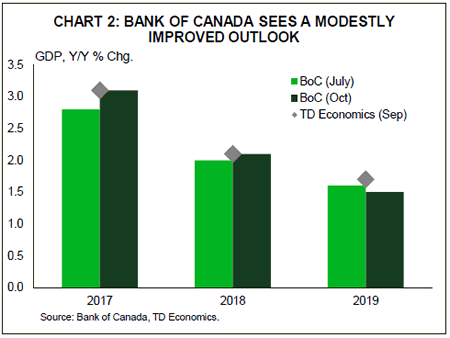
As is often the case, it is important to read between the lines. Despite all of the headwinds and concerns, the outlook for near-term growth has been upgraded (Chart 2), with the 2019 change likely reflecting a return to Canada's potential growth rate following more robust than anticipated near-term growth. Indeed, the Bank now sees the output gap (a key measure of economic slack) as effectively closed, which, when combined with an outlook for above-potential economic growth, has traditionally been a recipe for mounting inflationary pressures. Squaring this with the caution expressed on Wednesday seems to get to the heart of what Governor Poloz means by "intense data dependent mode". With risks skewed to the downside, it appears that the Bank is going to want to see confirmation of its outlook before moving rates, happy to trade the risk of higher inflation against the materialization of negative outcomes. Ultimately then, this week's pause is not likely to last, with the key rate likely to be bumped higher in January, assuming a constructive path for the Canadian economy.
U.S.: Upcoming Key Economic Releases
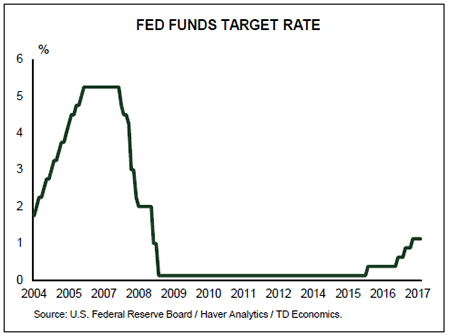
U.S. FOMC Rate Decision
Release Date: November 1, 2017
Previous Result: 1.25%
TD Forecast: 1.25%
Consensus: 1.25%
The November FOMC meeting is likely to be uneventful, with rates unchanged and no substantive changes in language. That said, we see two-sided risks: more cautious language on the inflation outlook (dovish), and a signal about an incoming rate hike (hawkish). Given current market pricing for a December hike, we expect any hawkish tone in the statement to have a more modest impact than a dovish bias.
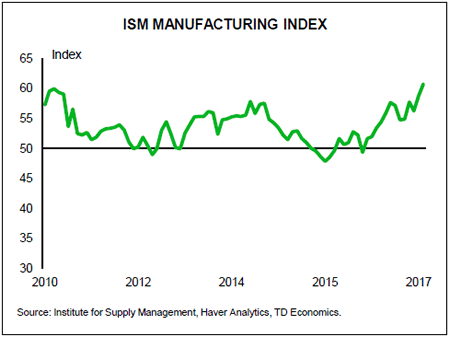
U.S. ISM Manufacturing Index - October
Release Date: November 1, 2017
Previous Result: 60.8
TD Forecast: 60.0
Consensus: 59.1
TD expects the ISM manufacturing PMI to slip back to 60.0, preserving some of its hurricane-induced strength as rebuilding efforts continue. Any correction is likely to be led by the supplier deliveries index, which surged after the hurricanes, and employment, which has been running at multi-year highs. Scope for a large correction is limited given the strength registered across regional surveys in October, notably the Philly Fed index.
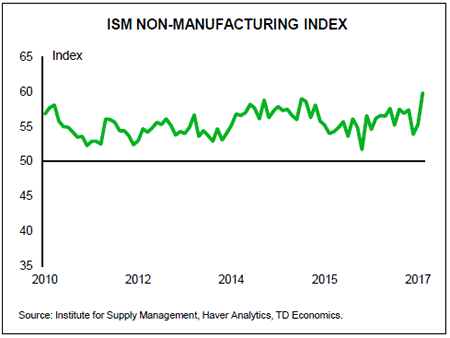
U.S. ISM Non-Manufacturing Index - October
Release Date: November 3, 2017
Previous Result: 59.8
TD Forecast: 57.5
Consensus: 58.0
ISM Non-Manufacturing Index is expected to pull back to 57.5, led also by a correction in supplier deliveries. That would leave the ISM composite above its Q3 average, consistent with solid above-trend GDP growth in Q4.
U.S. Employment - October
Release Date: November 3, 2017
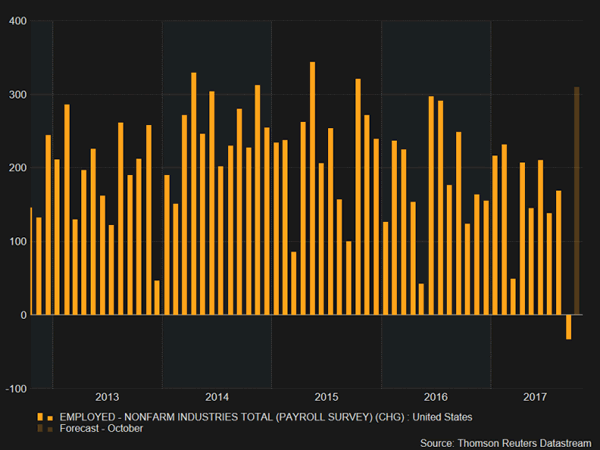
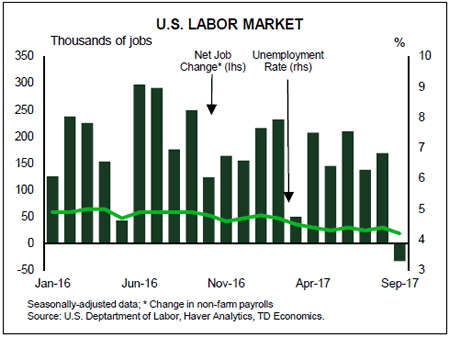
Previous Result: -33k, unemployment rate 4.2%
TD Forecast: 330k, unemployment rate 4.2%
Consensus: 310k, unemployment rate 4.2%
We expect nonfarm payrolls to almost fully give back its hurricane-induced weakness and post a 330k gain. Uncertainty however is high with scope for surprise in either direction. Our forecast assumes that a 200k-250k drag from the twin hurricanes, which we expect to almost fully recover in October. Previous hurricane episodes, such as Katrina, suggest a full bounce back in payrolls could be delayed, yet we believe this experience is different given the trend in jobless claims which have fully recovered. With labour market indicators consistent with monthly payroll gains of 175-200k, October payrolls could easily print closer to +400k or higher. However, we are more cautious as the full rebound may not be realized until subsequent revisions, as was the case in previous natural disasters. In addition, September payrolls have potential to be upwardly revised.
We expect the unemployment rate to stabilize at 4.2%. Average hourly earnings is expected to print a relatively weak 0.2% m/m increase, though risk for a more modest 0.1% rise taking into account calendar effects and hurricane distortions. That would push the annual pace lower to 2.7% y/y, or 2.6% y/y if downside is realized.
Canada: Upcoming Key Economic Releases
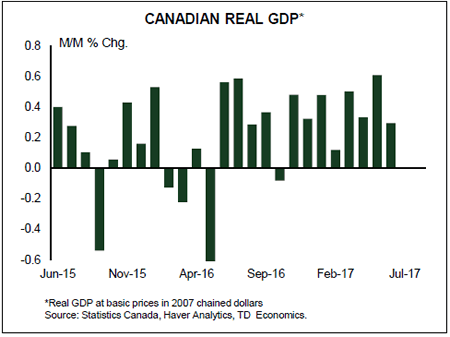
Canadian Real GDP - July
Release Date: October 31, 2017
Previous Result: 0.1% m/m
TD Forecast: 0.1% m/m
Consensus: 0.1% m/m
Industry-level GDP is forecast to rise by 0.1% in August, led by a rebound in the manufacturing industry. Retooling shutdowns at motor vehicle assembly plants single-handedly shaved nearly 0.1% from GDP in July and a partial rebound will provide a tailwind to growth in August. Outside of the manufacturing industry, growth conditions are far more mixed. Energy output may see a modest gain but utilities are likely to be a drag due to weaker demand caused by unseasonably cool weather. The services sector will be weighed down by a pullback in retail sales though broadening job growth suggests activity continues to increase. Our forecast for a 0.1% increase is consistent with Q3 growth in the low-to-mid 2% range, which presents upside risks to the Bank of Canada's 1.8% projection from the October MPR. However, with the Bank focused on the supply side of the economy, we do not expect a modest upside surprise on GDP to change their bias and look for the next rate hike to come in January.
Canadian Employment - October
Release Date: November 3, 2017
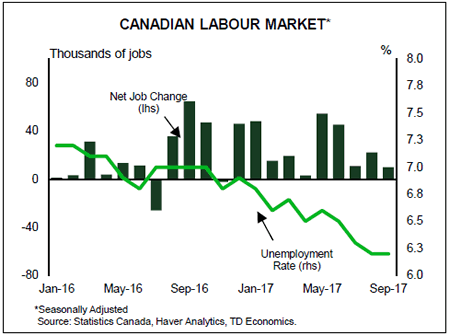
Previous Result: 10k, unemployment rate: 6.2%
TD Forecast: 15k, unemployment rate: 6.2%
Consensus: 15k, unemployment rate: 6.2%
TD looks for the economy to add 15k jobs in October though the details may prove more encouraging than the headline print. After jumping to a 15-month high last month, we see more room for wage growth to rise in October due to a combination of favourable base-effects and the continued erosion of labour market slack. The unemployment rate is likely to hold at the current cycle low of 6.2% but the risks lean towards a further improvement to 6.1%. Meanwhile, the composition of job growth will likely skew towards services and private employment after an outsizde gain in public sector employment last month. The full/part-time split is likely to favour the latter given the underperformance so far this year, but we hope that outsized swings are in the past after the 100k swings in the last two reports. Youth participation and unemployment may also get more attention than usual given Poloz's focus on remaining pockets of slack in the labour market.
Canadian International Trade - September
Release Date: November 3, 2017
Previous Result: -$3.4bn
TD Forecast: -$3.0bn
Consensus: -$2.9bn
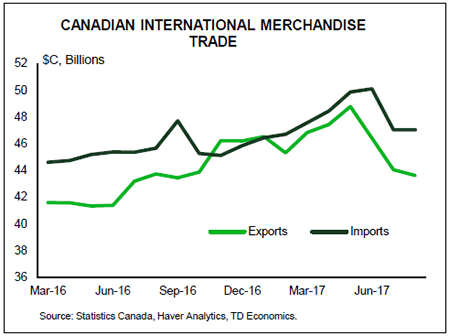
The goods trade deficit is forecast to narrow to $3.0bn in September, reflecting a moderate rebound in export activity while imports should see little change. Exports are likely to benefit from a rebound in auto production while vehicle replacement in Texas and Florida will add to foreign demand. The hurricane distortion in energy products is less clear cut but we expect an increase in petroleum exports to offset weaker demand from Gulf refineries. However, currency appreciation will continue to pose a risk. This will cap off a very weak quarter for Canadian exports after the soft handoff in June and a sharp decline in July. Even after a modest improvement in September, we look for trade to act as a sizeable headwind to growth in Q3.
Conspiracy Theories and Tin Foil Hats
Conspiracy Theories and Tin Foil Hats
Instead of policy convergence, the ECB and the Feds are heading for divorce. This week the ECB delivered one of their better changeups catching the markets leaning the wrong way. But in retrospect, perhaps the most significant surprise is the markets failed to pick up on the ECB's well-telegraphed signals that one of their more notable fears is that the firming Euro is hurting Eurozone exporters.
This weeks ECB decision to keep the monetary floodgates open refusing to call an end to central bank largess has weakened the euro and will provide an export-driven boost to EU economies.
A weak euro, of course, is entirely what ECB President Mario Draghi wants. It makes exports cheaper, ensuring the absolute competitiveness of euro-zone countries while simultaneously increasing the price of imports propping up inflation
We should probably be looking for low-risk low-cost strategies to play the stronger dollar narrative into years end instead of dwelling on conspiracy theories, but after this week's sudden G-10 Central Bank policy shifts, a concern may start to creep in that we're back on the cusp of a currency war.
On top of the roller coaster rides offered by the headline-driven game of musical chairs for the Fed Chair nomination. It will be interesting to hear President Trump and company (Mnuchin / Cohn) retort after reviewing this weeks FX charts
With G-10 currencies bleeding a sea of red, it's hard NOT make a case that global central bankers are trying to steal some of the US's economic thunder through overtly guiding their domestic currencies lower. Let's just hope we don't go back to the protectionist highway, but somehow I see that drive coming as the chorus of dovish G10 central banks is far too convincing to ignore
Removing my conspiracy theorist tin foil hat for a moment, in reality, the ECB could be doing little more than playing for time until the political mess in Spain abates and more clarity over the next Fed chair unfolds. Let's see how this plays out in weeks ahead.
The US Dollar
While the USD sparkle looks to extend into next week, the glimmer faded slightly when Fed Chair speculators pointed their Ouiji board to Powell and tempered USD's broader advances after a pinch of salt type headlines suggested Powell was Trump's choice. Indeed, markets are still nervous waiting for the Fed Chair green light before kicking into high gear. But the bottom line is: "The president has not yet decided which of the two front-runners will get which job, the sources said". However, expect Fed Chair headlines to accelerate as we near November 3 and wise to belt in for the expected roller coaster ride.
Not surprisingly given the markets focus on the Fed Chair hullabaloo, A robust US Q3 GDP reading failed to move the dollar dial convincingly as long short-term dollar positions were stretched on Friday and looking to book profit post GDP gap.
Asia FX
In Asia Fx, the higher currency correlation to US bond yields lately suggests we could see an acceleration of local bond hedging activity on a breach of UST 2.50 % level. If localised dollar demand does materialise, there could be a high probability for an overshoot so the Em investors may err on the side of caution and let the dust settle on this broader USD dollar move before aggressively re-engaging. However, given the breadth of G-10 currency moves, the Asian FX complex has held in very well. Global and Regional Macro conditions remain favourable; the geopolitical risk is abating, and China continues to hold up their end of the bargain all underpinning regional sentiment. There's no hint of panic as of yet.
Malaysian Ringgit
In Malaysia, The budget was received positively and geared towards maintaining stability in both the FX and Bond markets through fiscal prudence
Also, the financial burden of lower oil prices in 2017 will be offset by GST receipts where Income tax is anticipated to make up almost half of Malaysian government revenue amid robust economic growth.
But with improving oil prices, this will be viewed positively
Despite the positivity surrounding the budget, the currency and local bond markets remain prone to risk from the prospects of higher US interest rates and the soaring USD after the extremely dovish ECB lean sent the USD higher. But on a positive note, with most G-10 central banks turning dovish this too could suggest a return of investment flows. More so given the trial and error approach the Feds will take to reduce the balance sheet implying that regardless who takes the helm at the Fed, interest rate normalisation may not deviate too far for from the current dot plot
Weekend Risk
The focus will be on Monday EUR open. Difficult to determine if the event risk for an impending ART 155 trigger is fully priced or not as the Euro barely blinked on the plethora of Catalonian headlines in early NY.But as opposed to last weekends event risk, the EURO is on a policy divergence triggered downtrend, and Fund managers may view any negative headlines as an excuse to flush more EUR long positions on the Monday open.
US Dollar at 3 Month High After Dovish ECB Awaits Fed and Jobs Report
US tax reforms advance as ECB avoids taper tantrum
The US dollar is trading higher against all major pairs in a week with little data. The week ahead in markets will be full of indicators as well as political events that will impact markets.
The Bank of Japan (BOJ) will release its monetary policy statement near midnight Monday, October 30 EDT to be followed by the central bank's outlook report and a press conference Tuesday, October 31 at 2:30 am EDT. Investors are not expecting a change in rates and the stimulus program, but see room in the economic outlook to introduce downgraded inflation expectations.
US jobs week will kick off on Wednesday, November 1 at 8:15 am EDT with the release of the ADP private non-farm payrolls report. Last month data was impacted by bad weather in the US and is expected to be higher than the 135,000. The forecast for private payrolls is a gain of 191,000. The Fed will wrap up its two-day monetary policy meeting on Wednesday and will release its rate statement at 2:00 pm EDT. A rate hike is forecasted for December given that the CME FedWatch Tool assigns close to 99 percent probability, but only 1.5 percent in the November 1 meeting.
The Bank of England (BoE) will host a Super Thursday on November 2 at 8:00 EDT when it released the quarterly inflation report, monetary policy, rate announcement, minutes and a press conference with BOE Governor mark Carney. The central bank is expected to raise rates by 25 basis points as inflation is rising above the target. The rate hike would mark the first lift to the borrowing rate in 10 years.
The grand finale of the week's data deluge will come in the form of the biggest indicator in the market. The U.S. non farm payrolls (NFP) will be released on Friday, November 3 at 8:30 am EDT. Central bank monetary policy divergence is back on the table as a dovish ECB has boosted the US. A strong employment report with the emphasis on wage growth could once again spark a dollar rally if the Trump pro-growth policies continue to take form.
The EUR/USD lost 1.51 percent in the last five days. The single currency is trading at 1.1598 in the aftermath of the European Central Bank (ECB) decision to cut back the amount of bonds it would buy from the market down from 60 billion euros to 30 billion a month. The ECB was trying to avoid the move being read by the market as a tightening of monetary policy. The U.S. Federal Reserve had tried this previously and failed, when just the mention the central bank was going to reduce its QE program back in 2013 unleashed a surge in US Treasury yields as investors sold fixed income instruments.
To avoid a taper tantrum the ECB President also delivered a firm stance on keeping rates low and to reduce the aggressive cut in bonds, the central bank also extended the duration to the program. The EUR had risen on the back of hawkish comments from the central bank in the summer and while a taper was expected it was also known that the bank was pulling all the stops to avoid a tantrum. Mission accomplished. The EUR is lower as the QE program has been reduced but it is still open ended with low rates still the policy going forward.
The USD was higher after the ECB decision and climbed higher as the Trump Administration's efforts to reform the tax code continue to move forward. The promise to reform taxes was one of the main drivers of the Trump rally after the US presidential election, but as the Administration focused on other fronts the greenback lost traction. Now back on track the currency is appreciating versus peers. Fed leadership uncertainty has also plagued the market, with the list of candidate apparently down to two. Fed Governor Jerome Powell and Stanford economist John Taylor. The financial press on Friday was pointing at Powell as the preferred pick, which was a negative for the USD as he is expected to continue on the same line as current Fed Chair Yellen. That does not necessarily mean he is dovish, but not as hawkish as the other option. There is still the possibility that Taylor gets appointed as Vice Chair, as both positions are open for the President to fill them.
Market events to watch this week:
Monday, October 30
- Midnight JPY Monetary Policy Statement
Tuesday, October 31
- Tentative JPY BOJ Outlook Report
- Tentative JPY BOJ Policy Rate
- 2:30 am JPY BOJ Press Conference
- 8:30 am CAD GDP m/m
- 10:00 am USD CB Consumer Confidence
- 5:45pm NZD Employment Change q/q
Wednesday, November 1
- 5:30 am GBP Manufacturing PMI
- 8:15 am USD ADP Non-Farm Employment Change
- 10:00 am USD ISM Manufacturing PMI
- 10:30 am USD Crude Oil Inventories
- 2:00 pm USD FOMC Statement
- 2:00 pm USD Federal Funds Rate
- 8:30 pm AUD Trade Balance
Thursday, November 2
- 5:30 am GBP Construction PMI
- 8:00 am GBP BOE Inflation Report
- 8:00 am GBP MPC Official Bank Rate Votes
- 8:00 am GBP Monetary Policy Summary
- 8:00 am GBP Official Bank Rate
- 8:30 am GBP BOE Gov Carney Speaks
- 8:30 am USD Unemployment Claims
- 8:30pm AUD Retail Sales m/m
Friday, November 3
- 5:30 am GBP Services PMI
- 8:30 am CAD Employment Change
- 8:30 am CAD Trade Balance
- 8:30 am CAD Unemployment Rate
- 8:30 am USD Average Hourly Earnings m/m
- 8:30 am USD Non-Farm Employment Change
- 8:30 am USD Unemployment Rate
- 10:00 am USD ISM Non-Manufacturing PMI
*All times EDT
Weekly Economic and Financial Commentary: U.S. Manufacturing Strengthening with Global Growth
U.S. Review
U.S. Manufacturing Strengthening with Global Growth
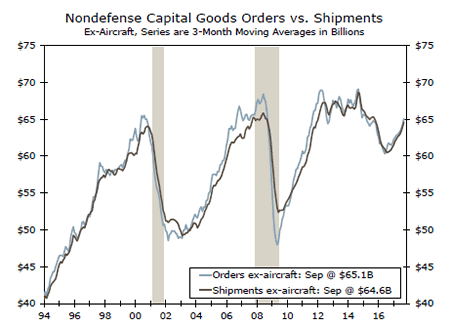
- Non-defense capital goods orders ex-aircraft, our preferred gauge of future business investment, rose a strong 1.3 percent in September, the third consecutive monthly gain of that size.
- New home sales rebounded 18.9 percent in September to a 667,000-unit annual rate, the highest level of new home sales since October 2007.
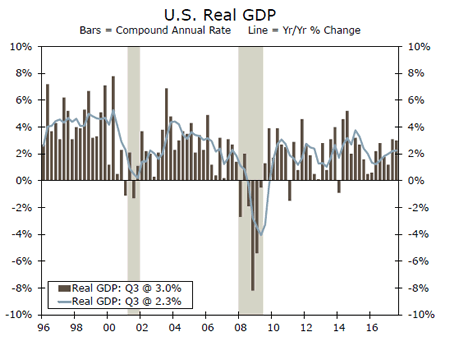
- Real GDP grew at a 3.0 percent annualized rate in Q3, topping expectations for a 2.6 percent gain. Given the possibility for hurricane-related noise in the quarterly data, the print appeared relatively devoid of head-scratching outliers.
U.S. Manufacturing Strengthening with Global Growth
On Wednesday, preliminary data on durable goods orders in the United States showed a continued firming in factory sector data to end the third quarter. Durable goods orders rose 2.2 percent in September, boosted by another double-digit jump in the volatile civilian aircraft component. Communications equipment posted a suspiciously large gain, so there may have been some additional noise generated by the recent release of the new iPhone.
Non-defense capital goods orders ex-aircraft, our preferred gauge of future business investment, rose 1.3 percent in September, the third consecutive monthly gain of that size. This string of strong prints puts the three-month average annualized rate at 11.6 percent, the fastest pace of growth since the eve of the steep decline in the price of oil in September 2014. With three-quarters of the year in the books, the recovery in the factory sector that has taken place in 2017 has built momentum in the second half of the year (top chart). The strong dollar/weak global growth/falling commodity price story that characterized the past two years has reversed in 2017, turning these headwinds into tailwinds for the sector. Manufacturers have responded by increasing payrolls by 104,000 jobs this year.
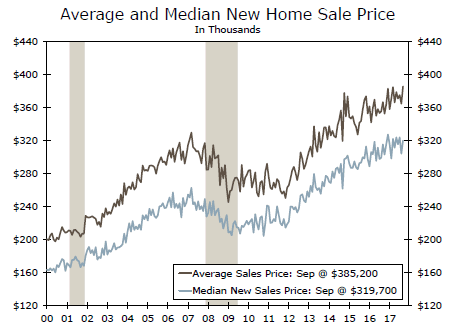
Housing data this week were encouraging, as new home sales rebounded 18.9 percent in September to a 667,000-unit annual rate, the highest level of new home sales since October 2007. The new home sales series is notoriously volatile and has bounced around even more than usual due to the relatively low absolute level of sales. Sales surged 25.8 percent in the South and accounted for nearly 80 percent of September's increase. The number of homes for sale was unchanged, but the stronger sales pace cut the months' supply by a full month to 5.0 months. Homes priced for $300,000 or more accounted for most of the sales gain, lifting both average and median home price measures (middle chart).
The advance release of third quarter GDP this morning capped the week of U.S. economic data. Given the possibility for hurricane-related noise in the quarterly data, the print appeared relatively devoid of head-scratching outliers. Real GDP grew at a 3.0 percent annualized rate in Q3, topping expectations for a 2.6 percent gain. Real personal consumption grew at a trend-like 2.4 percent in the quarter, while business equipment spending posted another solid quarter of growth (8.6 percent following an 8.8 percent gain in Q2). Residential construction saw a second quarterly decline, and government consumption and investment was slightly down, weighed down by the state & local component.
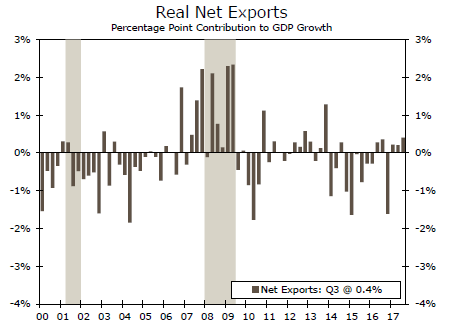
The firming global growth environment and softer dollar have helped boost economic growth in the United States. International trade once again added positively to growth, boosting the headline real GDP number by 0.4 percentage points amid a 2.3 percent gain in exports and a small decline in imports. Net exports have been additive to growth in all three quarters of the year so far, the first string of three consecutive boosts to growth since a stretch that ran from mid-2012 through Q1-2013 (bottom chart).
U.S. Outlook
Personal Income • Monday
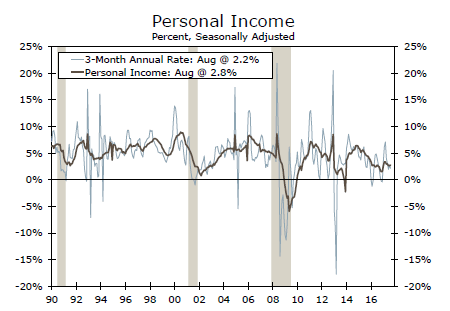
After increasing 0.2 percent in August, personal income growth is expected to strengthen 0.5 percent in September. Wage growth has improved in recent months, including a solid rise in hourly earnings in September. We also expect to see some support from income earned on financial assets, as the stock market hit a fresh high in September.
After adjusting for inflation, the pickup in income will look less impressive. The PCE deflator, the Fed's preferred measure of inflation, likely rose 0.4 percent last month. Much of the rise can be traced to higher energy prices, while core inflation is expected to rise only 0.1 percent. Spending will have also gotten a lift from higher energy prices, as well as strong auto sales. We forecast personal spending to have risen 0.7 percent in September.
Previous: 0.2% (Month-over-Month) Wells Fargo: 0.5% Consensus: 0.4%
ISM Manufacturing • Wednesday
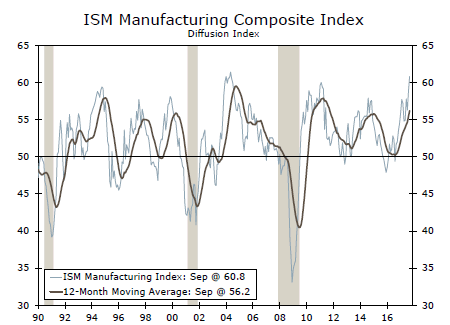
Last month's ISM manufacturing index climbed to a 13-year high of 60.8. That was in part driven by a surge in supplier delivery times following Hurricanes Harvey and Irma. Even stripping out the delivery component, however, the ISM manufacturing index has signaled strengthening activity. In addition to a rise in production and employment, the new orders index improved to 64.6 last month while backlogs have been growing this year at the strongest pace since the mid-2000s.
We expect the ISM manufacturing index to signal a slightly slower pace of growth in October. The lower reading will be driven by payback from the storm-related lengthening of delivery times last month. At 59.6, however, the ISM would be consistent with activity in the manufacturing sector still expanding at a robust clip.
Previous: 60.8 Wells Fargo: 59.6 Consensus: 59.5
Employment • Friday
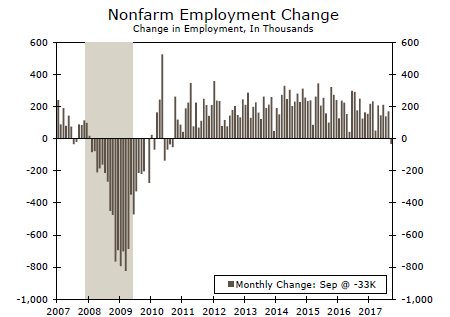
Last month's 33,000 decline in employment snapped a nearly seven-year string of uninterrupted job growth. The decline in employment was attributable to the recent hurricanes having disrupted hiring plans and preventing some jobholders from working during the survey period. Those distortions should be largely unwound in October, however. Initial jobless claims have fallen back below 240,000, the level that prevailed in the months leading into hurricane season.
We expect to see hiring rebound to 280,000 in October as employers catch up on hiring and workers return to their jobs. The unemployment rate, however, is anticipated to tick up to 4.3 percent following last month's suspiciously large 906,000-jump in household employment.
Previous: -33,000 Wells Fargo: 280,000 Consensus: 310,000
Global Review
Less Policy Accommodation Slowly Coming Into View
- The ECB decided this week to "taper" its QE program further due, at least in part, to strong growth momentum. However, benign inflation means that any rate hikes are still some ways off.
- Stronger-than-expected U.K. GDP data in Q3 means that a rate hike by the Bank of England is likely at next week's Monetary Policy Committee meeting.
- The Bank of Canada remained on hold this week, but it continued to indicate that further tightening, albeit at a slow pace, is likely in the quarters ahead.
Less Policy Accommodation Slowly Coming Into View
The European Central Bank (ECB) held a regularly scheduled policy meeting on Thursday and, as widely expected, the Governing Council decided to "taper" its quantitative easing (QE) program further (see chart on front page). Specifically, the Governing Council announced that it would dial back its monthly rate of bond purchases from €60 billion to €30 billion starting in January, and that it would maintain that pace through September 2018, "or beyond, if necessary."
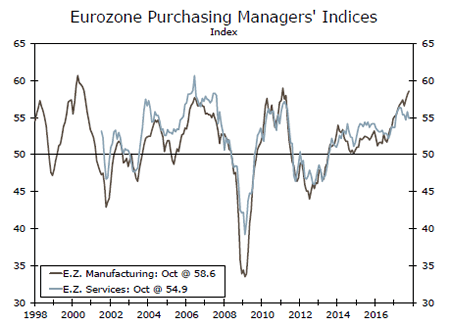
Recent data out of the euro area indicate that the economy does not need as much policy support as it did earlier. Real GDP in the Eurozone was up 2.3 percent in Q2-2017, the strongest rate of economic growth in more than six years, and the elevated level of the purchasing managers' indices suggest that growth momentum in the euro area remained solid in the third quarter (top chart).
However, inflation in the euro area remains benign—the core rate of CPI inflation was only 1.1 percent in September—indicating that a complete removal of policy accommodation probably would not be appropriate at this time. The Governing Council kept its three policy rates unchanged, and it continued to stress that they would "remain at their present levels for an extended period of time, and well past the horizon of our net asset purchases." In short, rate hikes in the Eurozone are probably some ways off still.
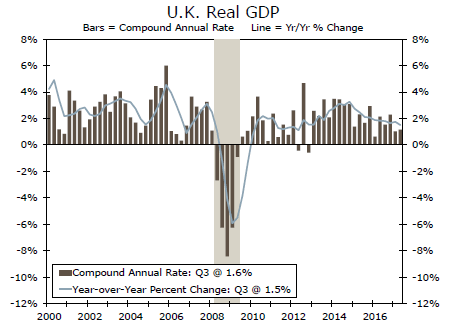
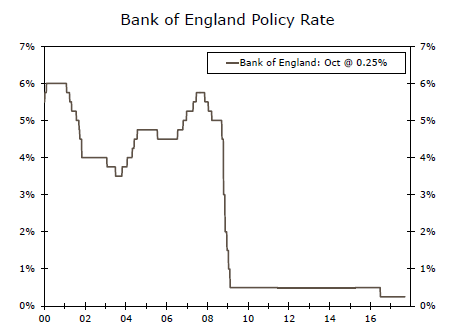
In contrast, monetary tightening in the United Kingdom likely will happen sooner rather than later. Data released this week showed that real GDP in the United Kingdom grew 0.4 percent (1.6 percent at an annualized rate) on a sequential basis in the third quarter (middle chart). The outturn was slightly stronger than many analysts had expected, and it stoked expectations that the Monetary Policy Committee (MPC) of the Bank of England (BoE) will hike rates by 25 bps at its policy meeting next week.
We had thought the MPC would wait until February before hiking rates, but the stronger-than-expected GDP result in conjunction with the still elevated rate of CPI inflation (3.0 percent in September) mean that a rate hike next week now seems likely. If, as we now expect, the MPC indeed raises its Bank Rate by 25 bps next week, it would be the first time that the MPC has hiked rates in more than 10 years. But any tightening that the MPC undertakes in the coming year likely will occur at a slow pace.
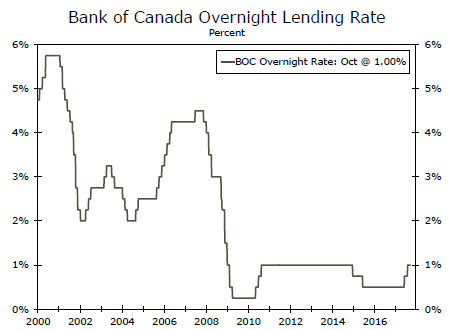
As widely expected, the Bank of Canada (BoC) refrained from raising its main policy rate this week. The BoC had hiked rates by 25 bps at its last two policy meetings (bottom chart), so a third consecutive rate hike seemed a bit aggressive to most market participants. In the press release announcing the decision, the BoC acknowledged that "less monetary policy stimulus will likely be required over time," but that it "will be cautious in making future adjustments to the policy rate." In other words, further rate hikes will be forthcoming but the pace of tightening likely will be slow. In that regard, we look for the BoC to hike rates by a total of 50 bps next year.
Global Outlook
Eurozone GDP • Tuesday
Next Tuesday will provide us with the advanced GDP report for Q3 as well as the October CPI report for the Eurozone. Economic growth has become increasingly broad based in recent quarters amid steady employment gains and improving business sentiment. The expansion has led to firmer conditions in the labor market. However, despite the solid rate of real GDP growth and the tightening in labor market conditions, inflation remains benign.
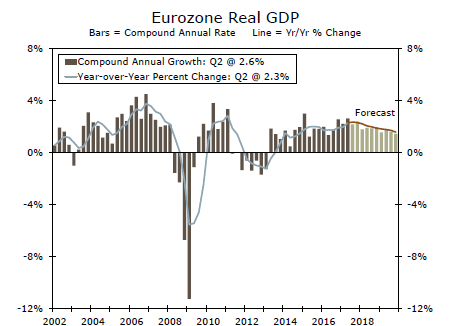
Real GDP accelerated in the Eurozone in Q2, as the year-ago pace of economic growth crossed the 2 percent threshold for the first time since Q1-2011. The outturn marks the 17th consecutive quarter in which real GDP has risen on a sequential basis. Real GDP in the overall euro area is up 7.0 percent since the mild 2011-13 recession ended. We expect GDP in the Eurozone to grow 2.4 percent in Q3, year over year, and to expand 2.2 percent and 2.1 percent in 2017 and 2018, respectively.
Previous: 2.3% (Year-over-Year) Wells Fargo: 2.4% Consensus: 2.3%
Mexico GDP • Tuesday
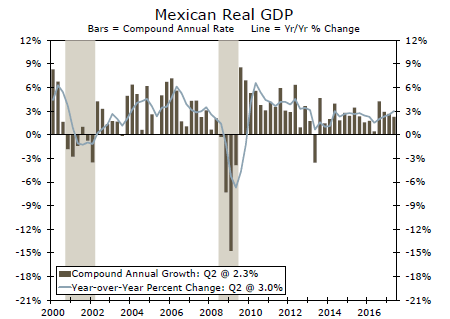
Mexican Q3 GDP is slated for release next Tuesday. The monthly data flow for July and August has not been as robust as one might have hoped. Industrial production started the quarter on a negative note, with construction activity declining 1.0 percent versus June, before increasing just 0.3 percent in August. Mining activity declined 2.3 percent while utilities output fell 0.5 percent on the month.
A bright spot in the Mexican economy is the manufacturing sector, which is largely driven by its automobile production. Manufacturing activity increased 0.5 percent in August from July and is up 3.3 percent on a year-earlier basis. Perhaps one of the most important reasons why the current NAFTA renegotiation process taking place between the United States, Canada and Mexico is so noteworthy is that the Mexican automobile sector is one of the most vital industries of Mexican production activity. We look for GDP to grow 1.9 percent in Q3.
Previous: 1.8% (Year-over-Year) Wells Fargo: 1.9%
Bank of England (BoE) Meeting • Thursday
Financial markets appear convinced that the BoE will hike rates at the conclusion of the Monetary Policy Committee's (MPC) meeting on November 2. The implied probability of an interest rate hike as of this morning was 88.7 percent. Previously we had thought the MPC would hold off and hike rates at the February meeting, however, the stronger than expected GDP data helped convince us to agree with the market expectation. The forthcoming rate hike from the BoE will likely be an increase in the Bank Rate by 25 bps, the increment in which it has tightened policy in the past.
Regardless of when the first move occurs, the pace of tightening through 2018 will likely remain gradual as inflation begins to recede and economic growth remains modest. Moreover, shadows cast by the ongoing Brexit negotiations continue to create uncertainly surrounding the U.K.'s relationship with the European Union moving forward. The MPC will likely proceed with caution.
Previous: 0.25% Wells Fargo: 0.50% Consensus: 0.50%
Point of View
Interest Rate Watch
Two and Tens, Alternative Forces
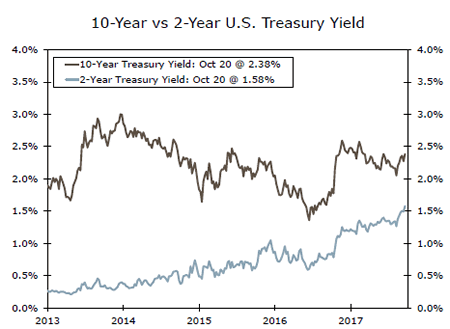
Since the start of this year, the behavior of the two and ten-year Treasury benchmark interest rates have behaved differently as each reflects the influence of alternative economic forces (top graph). As a result, the spread between the ten and two-year has declined throughout 2017.
Two Year: Upward Drift.
Since the start of 2017, the two-year yield has drifted upward. This is consistent with two factors: policy intentions and inflation. Since the fourth quarter of 2016, the policy intentions of the FOMC have signaled a pattern of rising fed funds rate increases consistent with an outlook for rising inflation, continued economic growth and lower unemployment. The economy has cooperated.
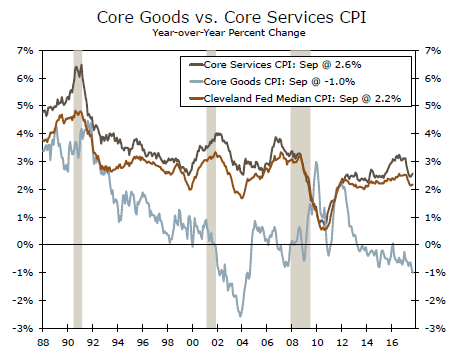
For the FOMC, the dot-plot has signaled their intentions. For the economy, the steady drift upward in the Cleveland Fed median CPI measure (middle graph) has reinforced the FOMC's and financial market expectations. Therefore, the two year rate has reacted in line with the rise of inflation and therefore, the expected follow-on rise in the Fed Funds rate.
Ten-Year: Three Factors to Follow
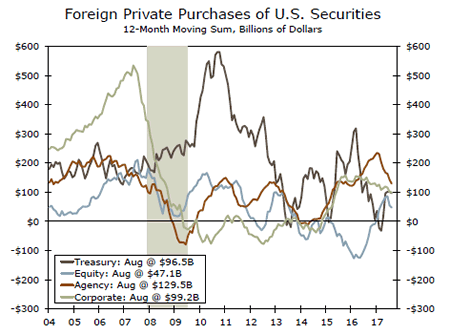
Since the start of this year, the ten-year Treasury rate has drifted lower despite the rise in the two-year rate. The buy side of the Treasury market has been a key support for lower ten-year yields. First, the increase in foreign purchases of U.S. Treasury securities (bottom graph) has been a welcome turnaround from the declines of 2016. The global search for yield continues to benefit the U.S. sovereign debt market. Second, the pace of overall U.S. economic growth and inflation has remained modest and therefore the case for higher nominal GDP growth which was popular at the start of the year has moderated and thereby supported the case for a moderation of the ten year yield.
We began the year with a below consensus forecast for the ten-year rate and that has served us well. We are on the path to be more accurate than the consensus on the ten-year forecast for the fourth year in a row. Fundamentals matter in forecasting.
Credit Market Insights
Vehicle Ownership Down, Debt Up
Vehicle ownership rates began falling after the recession and have continued to decline since. Only 85.2 percent of families owned a vehicle in 2016, compared to 86.3 percent in 2013, according to the survey of consumer finance.
Urban areas tend to have lower vehicle ownership rates: 84.8 percent of metro area residents owned vehicles in 2016 versus 87.9 percent of rural residents. Meanwhile, urban areas are also seeing the bulk of population growth. In 2016, U.S. metro areas grew by more than 2 million people, while rural areas only added 40 thousand. Therefore, more families are living in dense cities with alternatives to vehicle transport.
Increasingly cities are prioritizing public transportation as part of an effort to attract new workers. Amazon included mass transit access as a requirement for the future location of its HQ2, highlighting the importance of car-free mobility to its young, educated workforce. This suggests that lower vehicle ownership is not transitory, but an effect of fundamental shifts in lifestyle.
As fewer families own vehicles, those who do owe more on their vehicles. Median vehicle debt rose by $500 to $12.8K from 2013 to 2016. Families in the lowest income quintile saw their vehicle debt rise the fastest, by 44 percent to $7.9K over the same period. Higher debt, especially for borrowers with lower credit, is a concern for delinquency rates.
Topic of the Week
Where Are We Headed with Wage Growth?
After years of strong employment growth, the path of wage and income growth is critical for policymakers at the Fed as they weigh additional monetary policy tightening. Indicators suggest gradual improvement: average hourly earnings, the Atlanta Fed Wage Growth Tracker and the Employment Cost Index (ECI) are all currently above their expansion averages on a year-overyear basis, and the trends are broadly upward.
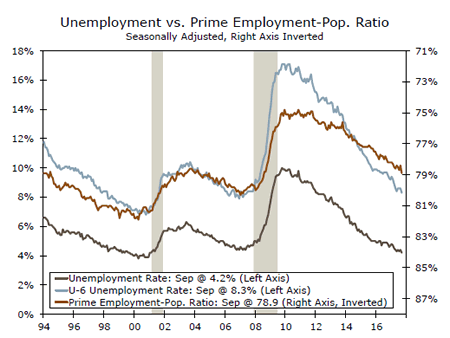
Looking forward, will wages continue to strengthen? We believe the answer is yes. Indicators of slack in the labor market have finally reached full employment levels across a broad range of metrics. Both the traditional U-3 unemployment and the broader "underemployment" or U-6 rate are at previous cycle lows, survey-data suggest businesses are increasingly struggling to find qualified workers and the employment-population ratio for prime-age workers has finally returned to a more normal level. Although the road has been long and arduous, the return to full employment should spur greater competition for increasingly scarce labor resources, pushing up compensation.
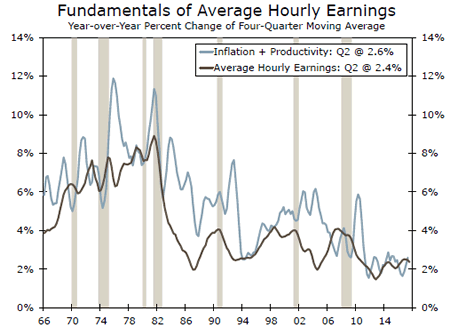
That said, compensation is unlikely to return to the previous cycle-peak growth rates anytime soon. The fundamental drivers of wage growth are not conducive to the 4-6 percent growth range that occurred at the peak of previous expansions. Workers' earnings should reflect their output, or in other words productivity. While productivity serves as the "real" driver of wage growth, workers also need to be compensated for inflation. During the current cycle, inflation and labor productivity growth have been persistently slow, making it not altogether surprising that earnings growth has been sluggish relative to previous cycles.
Next week, we get more information on recent wage and income growth with the release of personal income, ECI and average hourly earnings data. We expect personal income to be up 2.8 percent in Q3 and ECI to rise 2.5 percent over the same period, almost flat with Q2. For more information on the differences between wage indicators, see our recent report "525,600 Metrics: How Do You Measure a Year in Income Growth?"
Week Ahead – Fed and BoJ Meet But All Eyes on BoE; US Jobs Also in Focus
Central bank meetings will dominate the next seven days as the Bank of England, the Bank of Japan and the US Federal Reserve all hold their policy meetings. It will be a big week for economic indicators as well, as the Eurozone releases preliminary GDP figures and the October jobs report is out in the United States.
Australian, New Zealand and Canadian data eyed after aussie, kiwi and loonie take a battering
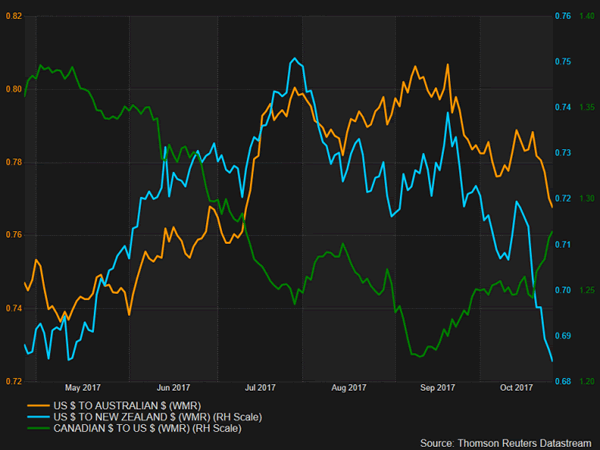
Political concerns in Australia and New Zealand have taken the Australian and New Zealand dollars to multi-month lows this week, while a less hawkish Bank of Canada and uncertainty about NAFTA's future have dragged the Canadian dollar to above C$1.28 per US dollar. The aussie may find some support from a batch of data releases out of Australia next week, which will include private sector credit (Tuesday), building approvals (Thursday) and retail sales (Friday).
In New Zealand and Canada, employment figures will be the main focus. The jobless rate for the third quarter will be watched by kiwi traders on Tuesday. Concerns about New Zealand's new Labour coalition's economic policies has bruised the kiwi in forex markets. Indications of an improving labour market may alleviate the currency's pain.
Over in Canada, if Monday's monthly GDP estimate for August and Friday's employment report were to point to strong growth, the loonie might get a lift from revived expectations of another rate hike in the coming months.
Bank of Japan expected to lower inflation outlook
As other central banks move towards tighter monetary policy, the Bank of Japan looks nowhere near starting the normalization process. With inflation still running below 1% and new dovish members joining the Bank's board, there is still a debate within the BoJ if it should be doing more to bring inflation towards it's 2% goal. The Bank is widely expected to hold policy unchanged on Tuesday when it concludes its two-day policy meeting. But it's latest quarterly outlook report could reveal another downward revision to the inflation forecasts.
The policy divergence with other advanced economies is likely to keep the yen weaker for a while longer even as growth in Japan starts to gather momentum. Major indicators to watch next week are household spending, unemployment rate and industrial output, all of which are due on Tuesday.
Eurozone flash GDP and inflation in the spotlight
After the European Central Bank's dovish tapering decision this week, economic growth and inflation numbers will keep the euro under the limelight next week. Preliminary data due on Tuesday is expected the show the Eurozone economy expanding by 0.5% during the third quarter of the year. That would be slightly weaker than the 0.6% rate enjoyed in the second quarter. The annual rate is expected to pick up slightly from 2.3% to 2.4%. Inflation meanwhile, is forecast to moderate from 1.5% year-on-year in September to 1.4% in October's flash reading. The core rate, which excludes food and energy prices and is more closely watched by the ECB, is also expected to ease by 0.1 percentage points to 1.2%. Before the inflation and GDP figures, the economic sentiment index should attract some attention on Monday.
Bank of England ponders rate hike
The UK's initial estimate of GDP for the third quarter showed a slightly stronger-than-expected growth of 0.4% quarter-on-quarter, a modest improvement on the prior three months' 0.3% rate. The data raised the odds that the Bank of England will raise rates next week, though the market-implied probability (currently at around 70%) is still below the level it was before two of the Bank's deputy governors cautioned against a premature rate increase in the past fortnight. Many economists also share the view that an early tightening could prove to be a mistake. Rate hike speculation had driven the pound to a 15-month high of $1.3656 in September but the mixed signals from policymakers, along with Brexit concerns, pushed sterling to a 3-week low of $1.3068 today. If the BoE does go ahead and raise rates next Thursday as expected by most analysts, a possible narrow majority could hurt the pound as it would indicate limited support for additional rate rises in the coming months.
Also important next week will be the Markit/CIPS PMIs for manufacturing (Wednesday), construction (Thursday) and services (Friday).
Busy week for dollar with FOMC meeting and abundance of US data
The Federal Reserve could struggle for attention next week as no move is expected by the central bank, while a number of major economic data are released. Starting with personal income and consumption figures on Monday, both are forecast to rise strongly in September after a weak August. The personal consumption expenditure report (PCE) will also contain the latest core PCE price index. The Fed's favourite inflation gauge had fallen to a two-year low of 1.3% y/y in August and a further decline could weaken the case for higher interest rates. Business surveys (Chicago PMI, CB consumer confidence) will be the main items on the calendar on Tuesday.
On Wednesday, the ISM manufacturing PMI is expected to show October was another robust month for US manufacturers after rising to a 13-year high in September. The Fed will take centre stage later in the day and will likely signal a rate hike for December. With no press conference scheduled for November, the FOMC meeting is not anticipated to be a very eventful one.
There will be more excitement for traders on Friday as the October jobs report is published. The hurricanes hitting the US East Coast caused a 33k fall in nonfarm payrolls in September - the first drop in seven years. They are expected to rebound by a massive 310k in October, while the unemployment rate is forecast to remain unchanged at 4.2%. Average earnings though could ease from 2.9% to 2.7% y/y in October, with the strong labour market so far doing little in boosting wages, hence the unease at the Fed about going too fast on raising rates.
Another big release will be the ISM non-manufacturing PMI for October. Factory orders and trade balance figures for September will complete the barrage of data on Friday.