

Sample Category Title
EUR/CHF Daily Outlook
Daily Pivots: (S1) 1.1432; (P) 1.1465; (R1) 1.1520; More... .
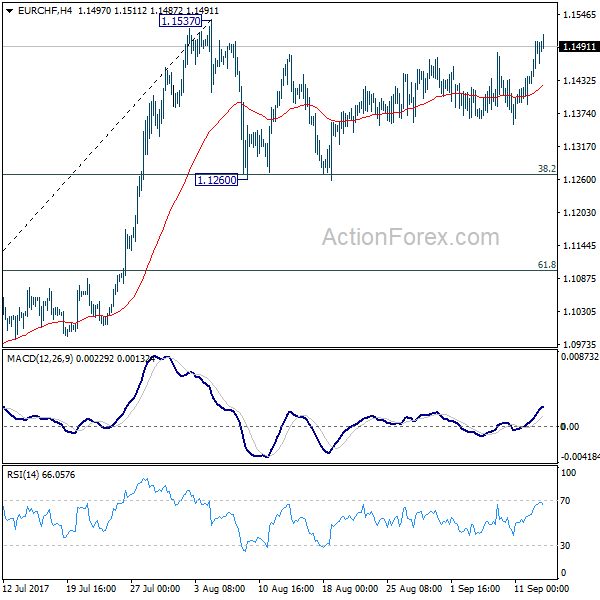
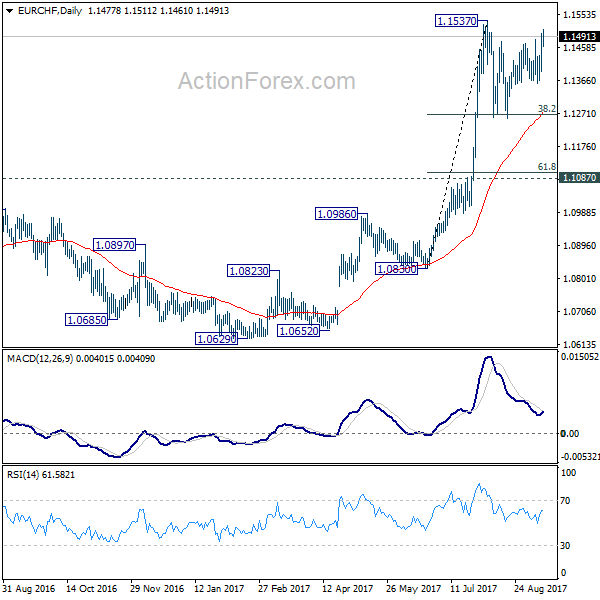
EUR/CHF strengthens to 1.1511 so far today but stays below 1.1537 resistance. Intraday bias remains neutral first and more consolidation could be seen. But in case of another fall, downside should be contained by 38.2% retracement of 1.0830 to 1.1537 at 1.1267 to bring rebound. On the upside, break of 1.1537 resistance will confirm resumption of larger rally from 1.0629. In that case, EUR/CHF should target 1.2 key resistance level next.
In the bigger picture, long term rise from SNB spike low back in 2015 is still in progress. EUR/CHF should now be heading back to prior SNB imposed floor at 1.2000. For now, this will be the favored case as long as 1.1087 resistance turned support holds.
Economic Data Back In The Headlines On Wednesday
The economic calendar features several high-profile events on Wednesday, with reports from the Eurozone, United Kingdom and United States set to make headlines.
Germany gets the ball rolling at 06:00 GMT with August inflation data. The final consumer price index (CPI) is forecast to come in at 1.8% annually in August. The harmonized index of consumer prices (HICP) is expected to see a similar level.
Spain will also release final inflation numbers at 07:00 GMT. About 15 minutes later, Switzerland will report on producer inflation for the month of August.
The United Kingdom’s National Statistics will report on August jobs data at 08:30 GMT. The claimant count change is forecast to rise by 600. The ILO unemployment rate likely held steady at 4.4% in the three months through July.
Meanwhile, average earnings excluding bonuses are forecast to rise 2.2% annually between May and July. Including bonuses, average earnings are projected to come in at 2.2% for the same period.
The European Commission’s statistical agency will also release a batch of headline data on Wednesday. At 09:00 GMT, reports on July industrial production and second quarter employment will make headlines.
Shifting gears to the United States, the Department of Labor will issue its monthly producer price index (PPI) at 12:30 GMT. Producer inflation is forecast to rise 0.3% in August and 2.5% annually.
Oil traders will be keeping a close eye on the weekly crude inventory report from the US Energy Information Administration (EIA). At 14:30 GMT the EIA is expected to show a stockpile increase of 2.285 million barrels in the week ended 4 September, following an increase of 4.58 million the week before.
EUR/USD
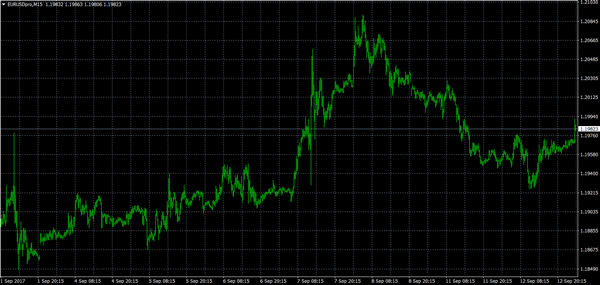
The euro fell back below 1.2000 US on Tuesday, as the dollar continued to stabilize against a basket of world peers. The EUR/USD was up 0.2% in Wednesday’s Asian session to trade 15 pips below 1.2000. The pair is trading well above the 21-day simple moving average (SMA) and appears poised to cross back over 1.2000.
GBP/USD
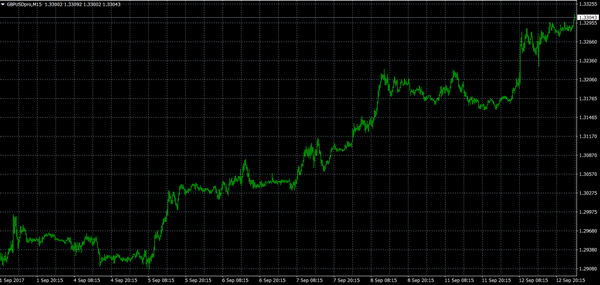
The British pound received a large boost on Tuesday after the release of upbeat inflation data, with the GBP/USD climbing above 1.3300 for the first time since last September. Cable continued to trade above 1.3300 on Wednesday after breaking above the 2017 high of 1.3266. The pair is now eyeing the 6 September 2016 high of 1.3447. On the opposite side of the ledger, immediate support is located at 1.3161, or the low from 11 September.
WTI OIL
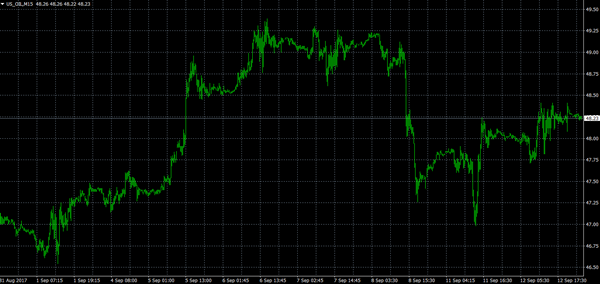
US crude prices have swung back above $48.00 in the aftermath of Hurricane Irma. The contract was last seen trading around $48.30 a barrel. The 15-minute moving averages show a neutral outlook for the commodity, with the RSI hovering near 50 and the MACD slightly above the zero line.
Euro Finds Support On News Of Greater EU Integration, Dollar Ticks Down
Currencies were trading quietly during the Asian session ahead of a busy calendar on Wednesday, with markets reacting little to the latest North Korean threats. The dollar weakened slightly with investors expecting inflation data to be released later today, while the euro ticked up after news stated that the President of the European Commission Jean-Claude Junker will call for more EU integration in his speech at the European Parliament later today.
The dollar index was trading 0.08% down in Asia at 91.87 with investors being less concerned about the renewed North Korean warnings yesterday and more cautious about US inflation data released during the European trading hours. In particular, the US producer price index is anticipated to give more insight on the inflation path with analysts projecting the monthly index to turn positive to 0.3% in August after it dropped by 0.1% in the previous month. This could also affect the Fed’s judgment on interest rates next week when policymakers will kick off their policy meeting.
Dollar/yen slipped to 110.10 following a strong rally yesterday which led the pair to a two-week high of 110.28 early today.
Meanwhile, PPI figures out of Japan came in weaker than expected for the month of August but a business survey indicated an improvement in business confidence. Japanese producer prices rose from 2.6% y/y seen in July to 2.9%, missing the expectations of a rise of 3%. On the other hand, the Business Sentiment Large Manufacturing Conditions Index jumped by 9.4%, surprising analysts who expected the index to decrease by 2.8%.
In Europe, the President of the European Commission, Jean-Claude Junker, will give a speech in Strasbourg as the EU’s State of the Union address. Rumours are for the President to call for greater EU integration, highlighting the economic strength of the region. Besides that, the Daily Telegraph stated today that Junker’s top aide, Martin Selmayr, said in a meeting with EU diplomats that countries wishing to stay under the European concept after Brexit will have to switch their national currencies to euro.
Following the above news, the euro climbed to $1.1980, while the pound moved higher to $1.3323, a few hours before the Office for National Statistics publishes UK labor data.
In other currencies, the kiwi rebounded to $0.7300 during early Asian hours after New Zealand’s ruling National Party is marginally ahead of the opposition party in the latest average of polls. Its Australian cousin rose as well, climbing to $0.8032 as the Westpac Consumer Sentiment reached the highest growth since May 2016.
Looking at energy markets, oil prices were down on the session digesting the results from the monthly OPEC report and the API weekly numbers both released yesterday. The API figures for the week ending September 12 showed an increase of 6.181mn barrels in US crude oil stocks while the OPEC report revealed higher demand forecasts for 2018.
WTI crude edged down by 0.12% to 48.17 and Brent fell by 0.24% to $54.15.
Regarding gold, the precious metal weakened to $1,331 per ounce amid stronger risk-on sentiment
AUD/USD Candlesticks and Ichimoku Analysis
Weekly
• Last Candlesticks pattern: Long white candlestick
• Time of formation: 10 Jul 2017
• Trend bias: Up
Daily
• Last Candlesticks pattern: Long white candlestick
• Time of formation: 18 Jul 2017
• Trend bias: Up
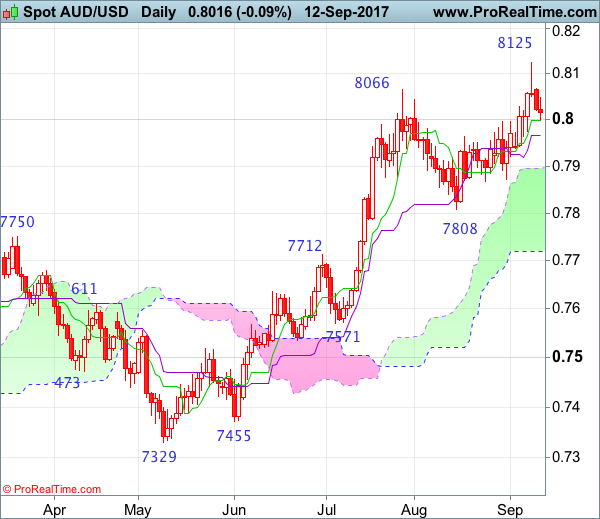
Aussie finally resumed recent upmove and surged to as high as 0.8126 in line with our bullish expectations (our long position entered at 0.7920 met target at 0.8120 with 200 points profit), this anticipated resumption of upmove suggests the medium term erratic rise from 0.6827 may extend gain to 0.8163 resistance, however, loss of near term upward momentum should limit upside to 0.8200 and reckon 0.8260-65 (61.8% projection of 0.7329-0.8066 measuring from 0.7808) would hold, price should falter well below another previous resistance at 0.8295, bring retreat later.
On the downside, expect pullback to be limited to the Kijun-Sen (now at 0.7967) and bring another rise later. A daily close below the Kijun-Sen would bring weakness to 0.7900 and possibly test of 0.7871 support, however, downside should be limited to indicated previous support at 0.7808 and bring rebound later. In the event aussie drops below said support at 0.7808, this would signal a top is indeed been formed, bring further weakness to 0.7760 but reckon downside would be limited to previous resistance at 0.7712 and 0.7670-75 would hold from here.
Recommendation: Long entered at 0.7920 met target at 0.8120 with 200 points profit and would turn short at 0.8175 for 0.7975 with stop above 0.8275
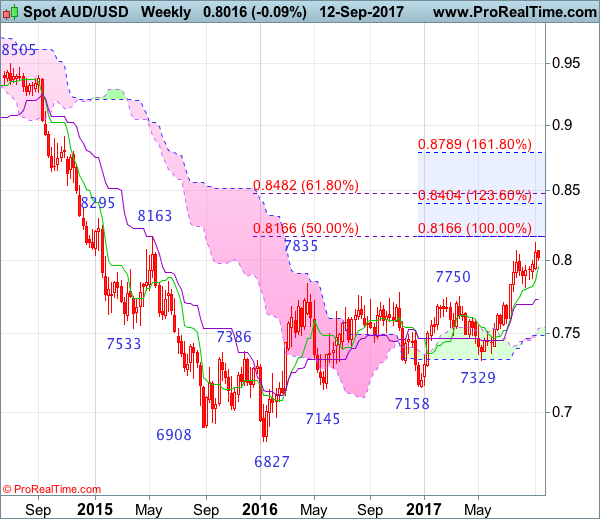
On the weekly chart, although last week’s anticipated breach of previous resistance at 0.8066 adds credence to our bullishness that the erratic rise from 0.6827 low has resumed and upside bias remains for this move to extend gain previous resistance at 0.8163, then 0.8200 but near term overbought condition should limit upside to 0.8260-65 (61.8% projection of 0.7329-0.8066 measuring from 0.7808) and another previous resistance at 0.8295 should hold, price should falter well below 0.8390-00, bring retreat later.
On the downside, although pullback to the Tenkan-Sen (now at 0.7956) cannot be ruled out, reckon minor support at 0.7871 would limit downside and bring another rise later. Below 0.7871 would bring test of support at 0.7808 but a weekly close below there is needed to signal top is formed, brig retracement of recent rise to 0.7750, however, a sustained breach below previous resistance at 0.7712 is needed to retain bearishness, bring subsequent fall to 0.7650-60, then towards 0.7600-10 but support at 0.7571 should contain weakness.
XAUUSD Intraday Analysis
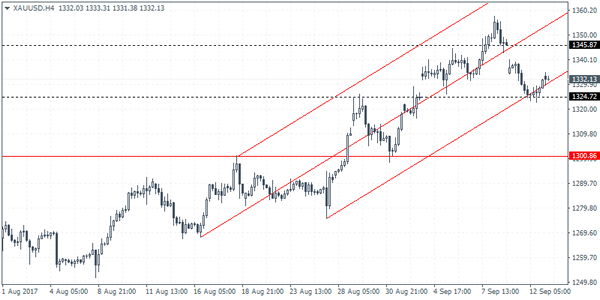
XAUUSD (1332.13): Gold prices gapped down at the start of the week, but price action is showing a sign of reversal after support looks to be established at 1324.72. This completes the gap from September 1st and looks to be a minor support level that has been established. It also puts the bias in gold to the upside in the near term. The support at 1324.72 also coincides with the lower median line which also offers a dynamic support level. A rebound is, therefore, expected which will see gold prices pushing higher to retest the 1345.87 resistance level. A retest of this level will fill the gap from Friday's close. Gold prices are likely to remain range bound in the near term within the 1345.87 and 1324.72 levels of resistance and support. A breakout off these levels will suggest further gains or declines to come. The bias, however, remains to the downside with gold prices likely to target 1300.00 region of support which is pending a retest.
GBPUSD Intraday Analysis
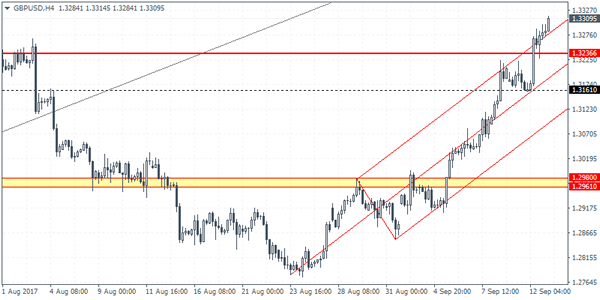
GBPUSD (1.3309): The British pound maintained the strong gains yesterday. The gains came as the UK's parliament voted on the new Brexit bill. The faster than expected inflation data also added to the bullish sentiment. Having cleared the 1.3300 level, the British pound could be seen posting higher gains. However, watch for a potential retest towards 1.3236 levels which could now be tested for support. This level initially served as resistance, but the price action shows the strong breach of this resistance which came on the back of the inflation data. Thus, it is quite likely that the GBPUSD could be seen falling back to this support level ahead of maintaining further gains. In the event that GBPUSD slips below 1.3236, then expect prices to consolidate above the support level of 1.3161
EURUSD Intraday Analysis
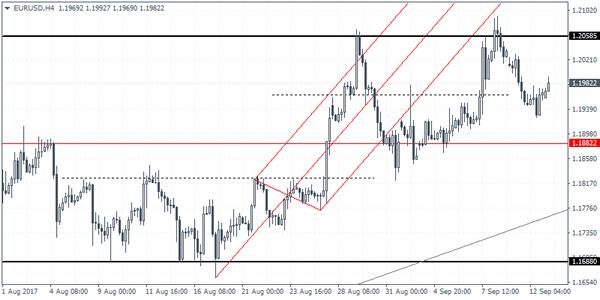
EURUSD (1.1982): The EURUSD closed with some minor gains yesterday, and price action is looking to retest the 1.2058 resistance level once again. The strong consolidation near this resistance level suggests that the bullish momentum could be intact. The reversal near the minor support at 1.1936 shows a potential cup and handle pattern in the making. Price needs to break out above 1.2058 in order to push higher. This also puts the minimum upside in EURUSD towards 1.2180 - 1.2200. However, in the event that EURUSD fails to breakout above 1.2058, we can expect the consolidation to keep the currency pair trading flat within 1.2058 and 1.1882 levels of resistance and support.
GBP Surges As Inflation Accelerates, Traders Look To Wages
The British pound maintained strong gains as the currency pair was seen trading above $1.3300. The gains came after the monthly inflation data showed a strong increase overall. Headline consumer prices accelerated 2.9%, rising sharply from 2.6% the month before and beating estimates of 2.8% increase. The core CPI also increased sharply, rising 2.7% on the month. PPI input and output prices also increased significantly suggesting that inflation in the coming months will continue to rise further.
Looking ahead, the economic data today will see the UK's labor market statistics. The average earnings will be the main focus with economists forecasting an increase in wages by 2.3%. However, with yesterday's inflation rising faster than expected, wage growth continues to lag. Elsewhere, in the US trading session, the monthly producer prices data will be released today. Overall, the data is expected to show that inflation at factory gate might have increased in August, following a modest decline the month before.
Currencies: Will (US) Data Support Further USD Gains?
Sunrise Market Commentary
- Rates: Can US eco data start a 2nd downleg in US T's this week?
Core bonds corrected lower since Friday afternoon as risk sentiment improved with new closing highs for main US equity indices. Technically, US yields regained lost support levels at key tenors. For a new upleg in US yields, we probably need strong eco data today (PPI) and later this week (CPI, retail sales, industrial production,…) - Currencies: Will (US) data support further USD gains?
Earlier this week, the dollar profited from a positive reversal in global sentiment. This risk-rebound might ease. Today and tomorrow, the focus might shift to the US price data. Will they be good enough to sustain a further USD rebound. Sterling is propelled higher by an unexpected rise in inflation. Today's wage data, if better, might reinforce the move
The Sunrise Headlines
- The bullish start to the week for US equities is still going strong, with the Dow Jones, Nasdaq and S&P 500 all notching new record closing highs. Asian stock markets trade mixed overnight.
- The Trump administration has warned China that the US will target Chinese banks unless Beijing takes much stronger measures to impose economic pain on North Korea by reducing trade and financial transactions with the regime.
- US Treasury Secretary Mnuchin casts doubt on President Trump's chances of cutting the corporate tax rate to 15%. Trump met with 6 senators including 3 Democrats who set clear conditions for future cooperation with him on taxes.
- US oil inventories jumped 6.18 million barrels last week as refineries recovered from weather disruptions. The EIA cut US output forecasts for 2017 and 2018, while also reducing its demand outlook for next year.
- The total volume of bad debts held by Italian banks shrank by €18bn in July to €173bn (lowest since 2014), in a sign that Italy's struggling financial sector is starting to benefit from stronger economic growth and greater investor interest.
- Brexit negotiators postponed next week's scheduled round of talks, adding to signs Theresa May is planning a public speech on her divorce strategy. EU and UK officials will now likely meet starting Sept. 25, people familiar said.
- Today's calendar contains EMU industrial production, US PPI number and UK labour market data. Germany, Italy and the US tap the bond market and ECB Praet speaks in Frankfurt
Currencies: Will (US) Data Support Further USD Gains?
Will (US) data support further USD gains?
The risk rebound continued yesterday, but at a slightly lower pace. This was also the case for the rise in core yields and of the dollar. Investors further reduced ‘excessive' USD long positions as tensions eased. USD/JPY still outperformed and managed to regain the 110 mark to close to session at 110.17. The dollar's rebound against the euro petered out. EUR/USD finished the session at 1.1967, from 1.1953 on Monday.
The risk rebound is losing momentum in Asia despite record closings of the Nasdaq and the S&P on WS. The rise in US yields also slows. USD/JPY stabilizes in the low 110 area. EUR/USD is returning slightly higher in the 1.19 big figure (currently 1.1985). Geopolitical tensions (North Korea) have eased this week, but the bickering continues even after the approval of new UN sanctions. The PBOC again weakened the fixing of the yuan against the dollar. This follows other measures that are seen as the PBOC trying to prevent a further protracted rebound off its currency. The CNY/CNH trade marginally stronger this morning.
The eco calendar is better filled today. Final German August inflation data and the EMU July production data won't change the picture for FX trading. In the US, the focus is on tomorrow's CPI data. However, today's PPI's might also move markets in case of a substantial surprise. Recently, moves in the dollar were mainly driven by global investor sentiment. It is interesting to see whether the data regain impact on interest rates and on the dollar. The August PPI is expected substantially higher at 0.3% M/M and 2.5% Y/Y (from 1.9%). August inflation data in other countries tended to be a bit higher than expected, but there is no one-to-one link, especially not on the level of the PPI's. The dollar is trying to build a bottoming out pattern. This process could become more solid if US data are good, or at least if they don't create new doubts. Later in the session, we keep an eye at a speech of ECB's Praet in Frankfurt. He maintained a rather soft bias of late. The dollar made a nice rebound earlier this week. The sentiment-driven rally might lose momentum and it is not that obvious that other news will already be able ready to trigger a further upleg. So, some consolidation might be on the cards
Global context. The euro remained strong last week even as the ECB delayed communication on APP tapering till October and as Draghi kept a soft tone. Markets take the view that ECB policy normalisation will come anyway. At the same time, the dollar lost further interest rate support as global uncertainty kept US yields on a downward trajectory. The decline in US yields and of the dollar has probably gone far enough given recent US eco data, which were fairly good. A technical correction occurred this week. The dollar in the first place needs an improvement in global sentiment and higher yields. US data will probably become noisy due to the impact of the hurricanes. This might cloud the Fed outlook and complicate a USD rebound. In this context, we want more confirmation that the recent USD bottoming out process might be the start of more sustained USD gains. For now we assume that further gains will be tough an limited.
Dollar sentiment remains fragile and this is visible in the technical picture of both EUR/USD and USD/JPY. EUR/USD last week set a minor new correction top at 1.2092. A return below 1.1823 would be a technical sign that the EUR/USD rally has run its course short-term. We are not that far yet. USD/JPY regained the previous range bottom at 108.13, but more confirmation is needed to conclude that the dollar is bottoming. Regaining the 110.67/95 would be a first positive sign.
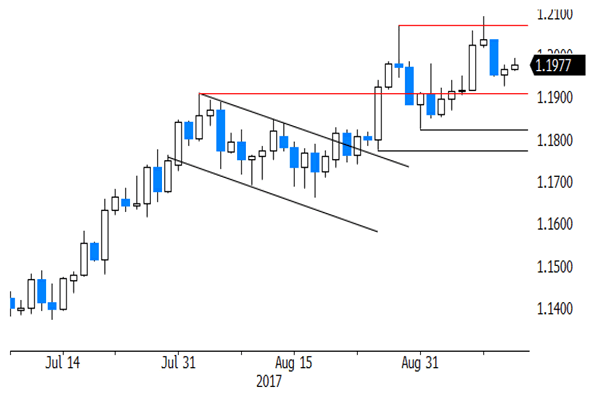
EUR/USD off recent top, but technical picture hasn't changed
EUR/GBP
Will wage data support further GBP-gains?
UK eco data came in the spotlight yesterday. UK August inflation rose much more than expected from 2.6% Y/Y to 2.9%. Core inflation was also above consensus at 2.7% Y/Y. At the August policy meeting, the BoE kept a wait-and-see bias even as it was aware that inflation could reach 3.0%. The current uptick will probably force the BoE to give more weight to inflation, even as growth slows and as Brexit uncertainty persists. The sterling rebound accelerated after the CPI release. EUR/GBP dropped temporary below the 0.90 mark and finished the session at 0.9009. Cable closed the session at 1.3283, even as the dollar was well bid across the board. The UK announced that the next round of Brexit negotiations will be postponed, but it had little impact on trading.
UK labour market data will be published today. Job market data are expected to remain solid. Wage growth is expected to rise from very low Y/Y-levels (average earnings from 2.1% to 2.3%). A positive surprise will raise speculation on a (limited) BoE rate hike furhter down the road. We don't expect the BoE already to take action this week, but more positive inflation news might force Carney and Co to adapt their rhetoric. Sterling made already a good run of late, but it might still go a bit further;
From a technical point of view, EUR/GBP cleared 0.8854/80 resistance (top end June), opening the way for a protracted August rebound. The move was the result of euro strength. Simultaneously, UK price data were soft enough to keep the BoE side-lined. Recent price data amended this story. We maintain a buy-on-dips approach as we expect the combination of relative euro strength and sterling softness to persist. The 0.9415 ‘flash-crash spike' is the next target on the charts. However, we let the current correction do its job, e.g. to the technical support in the 0.88/89 area, to sell sterling versus the euro
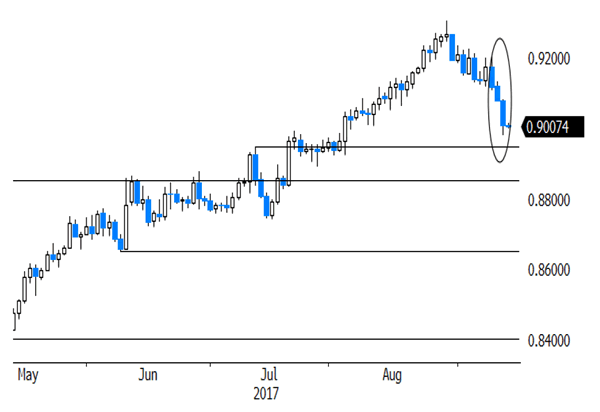
EUR/GBP: correction continues on higher inflation data
AUDUSD Bullish Trend Intact But Upside Momentum Eases
AUDUSD is in an uptrend but is making a corrective move lower after hitting a high of 0.8124 last Friday. This was the highest level since May 2015. The key level at 0.8000 is expected to act as strong support.
The RSI and MACD oscillators are flat and are indicative of a loss in upside momentum for AUDUSD, which is expected to consolidate above 0.8000 support. A breach of this would target the August 15 low at 0.7807. Below this support, the 0.7724 level comes into view. This is the 50% Fibonacci retracement of the upleg from 0.7328 to 0.8124. A drop under this important level would shift the bias to a bearish one to target 0.7632 at the 61.8% Fibonacci. An extension lower would give scope to reach the May low at 0.7328.
Major resistance stands at 0.8124 which needs to be cleared in order for the uptrend to resume and target the next major peaks at 0.8162 and 0.8294.
Trend indicators are bullish and the 50-day and 200-day moving averages are positively aligned after the bullish crossover on July 14. Momentum oscillators are turning neutral, supporting the idea that the uptrend is easing (with a correction not to be ruled out) and is likely entering a neutral phase in the short term. The medium-term bullish trend remains intact.
