Sample Category Title
Mixed UK Data and Brexit Uncertainty Cloud Outlook for Sterling
After being criticised by EU officials for turning up at the negotiating table unprepared, the UK has this week published its most comprehensive vision yet of a post-Brexit relationship with the bloc. The British government published yesterday its first policy paper on a future customs agreement with the European Union, and is due to soon release a paper on Northern Ireland and its border arrangements with the Irish Republic.
The paper calls for a new customs partnership with the EU with the aim of achieving "as frictionless as possible" trade between the UK and the EU. Aside from the desire to maintain a barrier-free trade with the EU, the British government wants to avoid a return to a hard-border between Northern Ireland and the Republic of Ireland as this could jeopardise the Peace Process in the province. Also outlined in the paper are proposals for an interim arrangement for a "time-limited period" to allow UK businesses to adjust to the new customs agreement once Britain is out of the EU.
The proposal for an interim customs system is a welcome relief for the UK business community who feared a cliff-edge scenario when the prime minister, Theresa May, raised the prospect of a 'hard Brexit' in her first major speech on the UK's exit plans back in January. Signs that the government is now shifting towards the idea of having a transitional agreement in place once the UK leaves the EU in March 2019 have helped the pound move towards 10-month highs against the US dollar, rising above $1.32 earlier this month.
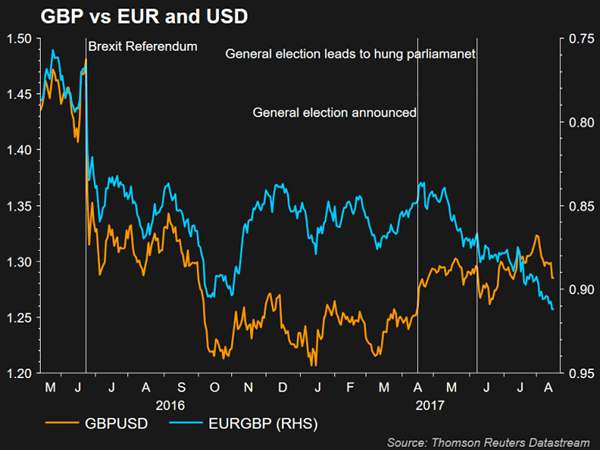
The turnaround came after the Prime Minister lost her parliamentary majority in June's snap election, which had the opposite intention of strengthening her negotiating hand in what proved to be a major political misjudgement. Many blamed the Conservatives' poor performance in the election on the government's hard line on Brexit, with the shock vote outcome giving an unexpected boost to the Remainers within May's cabinet, notably, the finance minister, Philip Hammond.
Amid all the political headlines, a more hawkish Bank of England has also lifted the pound, as surging import costs, brought on by sterling's post-Brexit depreciation, pushed UK inflation to near 4-year highs in May. However, CPI has eased back to 2.6% in June and July, alleviating some of the pressure on the Bank to act sooner rather than later.
The pound slipped back below the $1.29 level after this week's July inflation data, but more crucial will be Thursday's retail sales figures. Annual retail sales have moderated significantly in 2017 compared to last year. Household consumption comprises around 65% of UK GDP and a slowdown in spending would have a significant impact on growth, especially as so far, the weaker pound has not provided much of a boost to exporters. Rising exports and a subsequent increase in business investment has the potential to offset any decline in consumer spending.
A persistent weakness in consumption would mean the UK economy will likely continue growing at around the sluggish rate of 0.2-0.3% seen during the first two quarters of the year. This would make it more difficult for the BoE to raise rates when growth is so low and the economy vulnerable to Brexit developments. Without a rebound in consumer spending in sight, sterling could further reverse some of its impressive gains made since April.
Not all data has been feeble however, with the UK labour market remaining robust. Figures released today showed the jobless rate fell to a 42-year low of 4.4% in the three months to June. Wage growth also came in above expectations, picking up to 2.1% during the same period (though this is still below the rate of inflation). Further gains in earnings growth would be viewed as being positive for higher consumer spending and would ease concerns of a prolonged downturn in consumption.
It would also give more weight to the hawkish voices within the BoE's Monetary Policy Committee. With more MPC members becoming uncomfortable with inflation running above their target, the Bank may feel confident enough to overlook the current soft patch in the economy and raise rates on the expectation that higher wage growth will keep CPI running above 2%.
The constantly altering outlook for UK rates has become a bigger factor driving the pound in recent weeks, with the UK currency becoming less sensitive to the Brexit negotiations. However, it is too early to rule out further big political shocks causing disruption in the forex markets as no conclusive agreement has yet to emerge from the Brexit talks, while Theresa May's future in Number 10 looks highly uncertain and another fresh election plausible.
In the meantime, the broader dollar weakness and the resurgent euro have also influenced the outlook for the pound, particularly the single currency, which has risen to 10-month highs of above 0.91 pounds this week. Morgan Stanley projected last week the euro would hit parity with the pound in 2018, though other forecasts are a bit more bullish for sterling. Some analysts see the euro rally as overdone as the excessive rise in euro/dollar is not supported by a corresponding increase in either the short- or long-term yield differentials between US and German government bonds, suggesting the moves are mostly speculative.
According to the latest Reuters poll, forecasts for pound/dollar during Q3 2017 and Q2 2018 range between $1.15 and $1.44, while for euro/pound they stand between 0.77 and 1.03 pounds. For now though, the pound remains well supported above $1.26, but may struggle to climb past $1.33 without a fresh breakthrough in the Brexit negotiations or signs that the UK economy is gaining traction.
Trade Idea Wrap-up: EUR/USD – Hold short entered at 1.1755
EUR/USD - 1.1705
Most recent candlesticks pattern : N/A
Trend : Sideways
Tenkan-Sen level : 1.1720
Kijun-Sen level : 1.1720
Ichimoku cloud top : 1.1767
Ichimoku cloud bottom : 1.1739
Original strategy :
Sold at 1.1755, Target: 1.1655, Stop: 1.1755
Position : - Short at 1.1755
Target : - 1.1655
Stop : - 1.1755
New strategy :
Hold short entered at 1.1755, Target: 1.1655, Stop: 1.1755
Position : - Short at 1.1755
Target : - 1.1655
Stop : - 1.1755
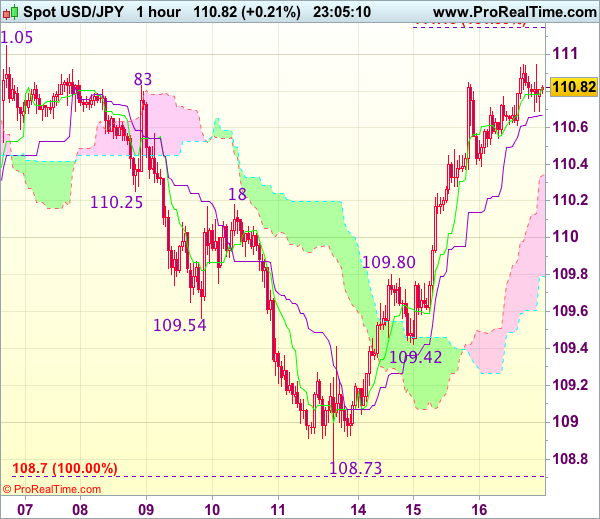
Euro’s selloff after meeting renewed selling interest at 1.1847 signals the erratic fall from 1.1910 top is still in progress and mild downside bias remains for further weakness to 1.1640-50 (50% Fibonacci retracement of 1.1370-1.1910 and previous support), below there would encourage for subsequent decline towards 1.1600-10 which is likely to hold from here due to near term oversold condition.
In view of this, we are holding on to our short position entered at 1.1755. Above 1.1755-60 would defer and risk a stronger rebound to 1.1790-95, break there would abort and signal a temporary low is possibly formed, bring subsequent gain to 1.1820 but price should falter below said resistance at 1.1847.
Trade Idea Wrap-up: USD/JPY – Buy at 110.00 or sell at 111.45
USD/JPY - 110.80
Most recent candlesticks pattern : N/A
Trend : Near term up
Tenkan-Sen level : 110.82
Kijun-Sen level : 110.67
Ichimoku cloud top : 110.34
Ichimoku cloud bottom : 109.79
Original strategy :
Buy at 110.20, Target: 111.20, Stop: 109.85
Position : -
Target : -
Stop : -
New strategy :
Buy at 110.00, Target: 111.00, Stop: 109.65
O.C.O.
Sell at 111.45, Target: 110.45, Stop: 111.80
Position : -
Target : -
Stop : -
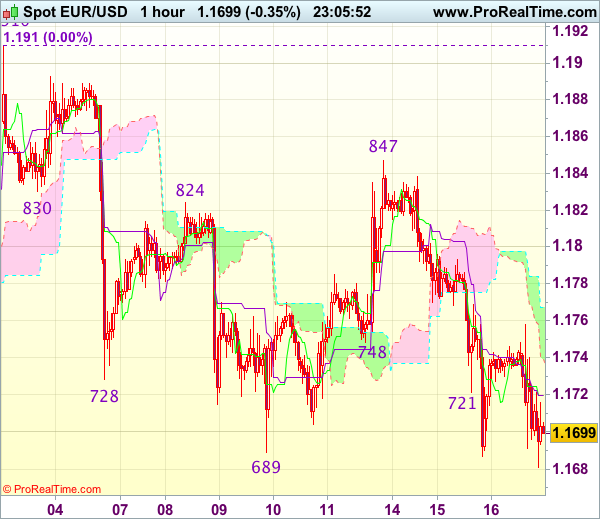
As the greenback has risen again after brief pullback, adding credence to our bullish view that the rebound from 108.73 low is still in progress, hence gain to previous resistance at 111.05 cannot be ruled out, break there would extend this rise for a stronger correction of early decline to 111.45-50, having said that, loss of upward momentum should prevent sharp move beyond there and price should falter below previous resistance at 111.71, bring a strong retreat later.
In view of this, whilst we are still looking to buy dollar on pullback, we are inclined to sell dollar on subsequent rally. Below previous resistance at 109.80 would signal top is formed instead, bring weakness towards support at 109.42.
Trade Idea: EUR/GBP – Buy at 0.9000
EUR/GBP - 0.9093
Original strategy :
Buy at 0.9000, Target: 0.9130, Stop: 0.8960
Position : -
Target : -
Stop : -
New strategy :
Buy at 0.9000, Target: 0.9130, Stop: 0.8960
Position : -
Target : -
Stop : -
As the single currency has retreated after intra-day brief rise to 0.9143, suggesting minor consolidation below this level would be seen and pullback to 0.9050-55 cannot be ruled out, however, reckon downside would be limited to 0.9015-20 and renewed buying interest should emerge around 0.9000, bring another upmove later, break of said resistance would extend recent erratic rise to 0.9160, however, weakening of near term upward momentum should prevent sharp move beyond 0.9180-85 and price should falter below 0.9200.
In view of this, would not chase this rise here and would be prudent to buy euro on subsequent pullback as 0.9000-05 would limit downside. Below 0.8960-70 would defer and suggest a temporary top is possibly formed, bring correction to 0.8922 support which is likely to hold from here.
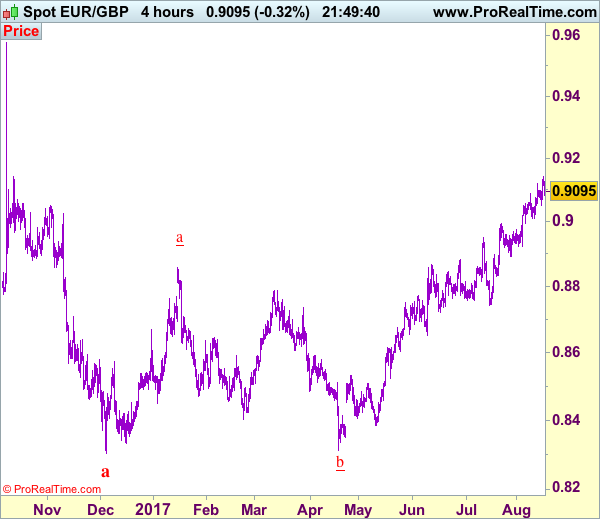
Our preferred count is that, after forming a major top at 0.9805 (wave V), (A)-(B)-(C) correction is unfolding with (A) leg ended at 0.8400 (A: 0.8637, B: 0.9491 and 5-waver C ended at 0.8400. Wave (B) has ended at 0.9413 and impulsive wave (C) has either ended at 0.8067 or may extend one more fall to 0.8000 before prospect of another rally. Current breach of indicated resistance at 0.9043 confirms our view that the (C) leg has ended and bring stronger rebound towards 0.9150/54, then towards 0.9240/50.
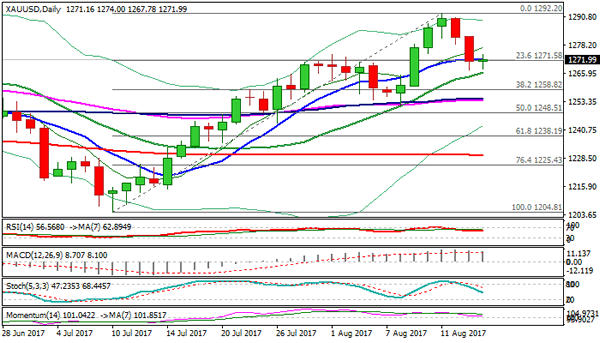
Spot Gold Bounced to $1274 after Repeated Rejection
Spot Gold bounced to $1274 after repeated rejection at strong support at $1267 (Tuesday's low / Fibo 61.8% of $1251/$1292 upleg, reinforced), as strong fall in past two days entered consolidative mode. Fresh strength of dollar and reduced safe-haven demand put the yellow metal under pressure. Long bearish candles of past two days weigh for further weakness which could be triggered by firm break below $1267 pivot. Markets are awaiting release of FOMC last meeting minutes which could send interest rate sensitive gold further down on hawkish comments that mean clearer signals about reducing a massive portfolio as well as another rate hike in 2017. Such scenario could send gold price towards next supports at $1258 (Fibo 38.2% of $1204/$1292 rally) then $1254 (converged 55/100 SMA's) and $1251 (08 Aug trough). Alternatively, stronger upside action could be expected in case of more dovish minutes.
Res: 1274; 1276; 1282; 1285
Sup: 1270; 1267; 1261; 1258
Housing Starts Pull-Back in July, But Single Family Building Displays Resilience
Homebuilding slowed in July with builders breaking ground on 1155k units. This performance surprised to the downside with markets anticipating a 1220k print.
Both single-family and multi-family construction subsided, but the latter accounted for the bulk of the decrease. Single family decreased only 4k from an upwardly revised (+11k) June figure, while multifamily starts fell by 54k from a downwardly-revised (-13k) June reading.
Building permits also disappointed, coming in at 1223k while markets had expected a 1250k reading. Single family permits held steady at 811k in July while the volatile multifamily segment saw permits contract by 52k from an upwardly revised (+21k) June figure.
National housing starts were weighed down by decline in activity in the Midwest (-32k) and the Northeast (-24k). The West posted a very modest contraction in building activity (-5k) while the South saw homebuilding rise by 3k units.
Key Implications
While the headline disappointed, the report was mildly encouraging given the strength in single family starts related to positive revisions to June's figures. Continued strength in demand, evidenced by robust new home sales data, coupled with robust income gains from a tightening labor market should support further expansion going forward despite the tick-up in mortgage rates expected going forward. This trend will be further supported by homeownership rates, which appear to have found their trough, and may be on their way up.
The strong demand is helping shore up builder optimism, with the NAHB's Index rising by 4 points in August. However, a restrained pool of skilled labor has placed pressure on builders recently, with elevated lumber and land prices posing further obstacles to construction.
Today's report is overall positive given the strength in the single family housing market which is a better indication of broad economic trends. Single family starts are a larger contributor to economic activity than multifamily building and should help make residential investment a positive contributor to third quarter growth, which is currently tracking close to 3%.
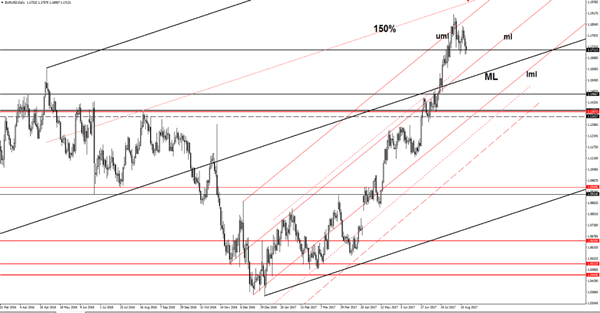
EUR/USD Pressuring Critical Support
EUR/USD is trading in the red on the short term and is expected to extend the sell-off. Is focused on correction right now, but remains how long this will be because the FOMC Meeting Minutes could force the rate to turn to the upside again.
Technically is expected to decrease further also because the US dollar index continues to stay above a broken dynamic resistance and above the 93.81 broken static resistance. We may have a minor decrease on the USDX these days, could come down to retest the broken resistance levels before will climb much higher.
The USD stays higher even if the United States data have disappointed earlier, the Building Permits dropped from 1.28M to 1.22M, while the Housing Starts have disappointed as well, have dropped from 1.21M to 1.16M, even if the traders have expected an increase to 1.22M.
The FOMC Meeting Minutes could bring a high volatility tonight, so you should be careful not to suffer a heavy loss.
Price is pressuring the 1.1711 major static support (resistance turned into support) and could drop towards the median line (ml) of the minor ascending pitchfork. A breakdown below the static support looks imminent after the failure to retest the upper median line (uml) of the minor ascending pitchfork. We'll see what impact the FOMC Minutes will have tonight, because a disappointment will boost the currency pair.
The next major downside target is at the median line (ML) of the major ascending pitchfork, only a valid breakdown below this obstacle will confirm a reversal.
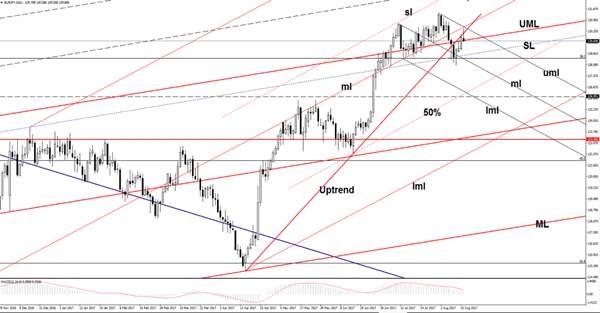
EUR/JPY Major Drop Still On Cards
EUR/JPY reached new highs in the morning at 130.38 level, but the sellers are still in game and have forced it to decrease in the last few hours. You can see that was almost to reach the confluence between the median line (ml) of the black ascending pitchfork with the upper median line (uml) of the minor descending pitchfork. The failure signals an exhaustion and a bearish pressure, a downside movement is favored after the retest of the red uptrend line.
Looks like that the rate is developing a Head and Shoulders pattern, this will be confirmed only after a valid breakdown below the 38.2% retracement level.
GBP/JPY Further Drop Favored
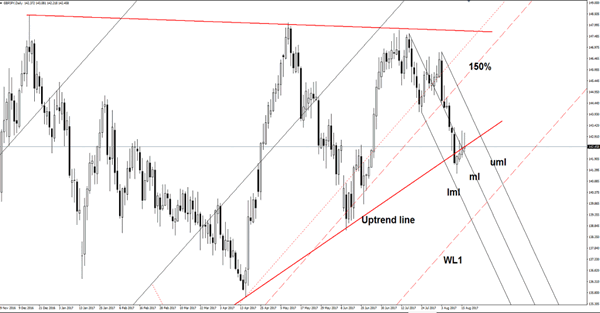
Price has come back to retest the uptrend line (red line) to confirm this resistance (support turned into resistance) and to validate a further drop in the upcoming weeks. GBP/JPY could climb even towards the upper median line (uml) of the minor descending pitchfork before will drop again. The next downside target will be at the WL1.
Trade Idea: USD/CAD – Sell at 1.2825
USD/CAD - 1.2725
Trend: Down
Original strategy :
Sell at 1.2825, Target: 1.2625, Stop: 1.2885
Position: -
Target: -
Stop: -
New strategy :
Sell at 1.2825, Target: 1.2625, Stop: 1.2885
Position: -
Target: -
Stop:-
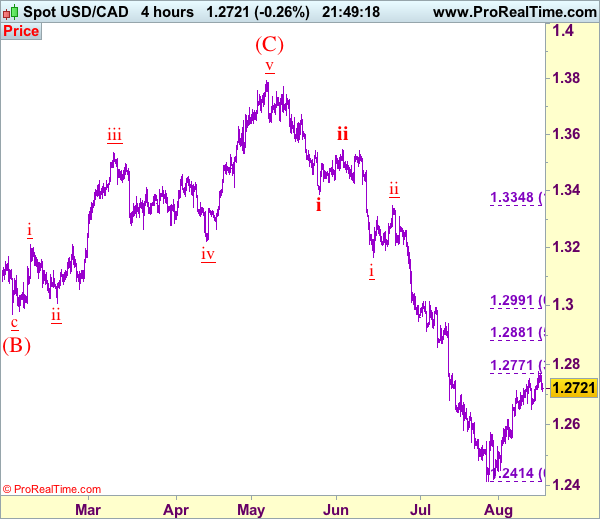
Although the greenback has retreated after rising to 1.2778 yesterday, reckon support at 1.2652 would limit downside and near term upside risk remains for the corrective rise from 1.2414 low to extend gain to 1.2800, however, as this move is still viewed as retracement of recent decline (tentatively wave iv), reckon upside would be limited to 1.2825-35 and bring retreat later, below 1.2650-55 would suggest top is possibly formed, bring weakness to 1.2600 but break of support at 1.2553 is needed to provide confirmation, bring further fall to 1.2500 first. We are keeping our count that wave v as well as wave (C) ended at 1.3794 and impulsive wave (i ii, i ii) is now unfolding with minor wave iii possibly ended at 1.2414, hence wave iv correction is underway.
In view of this, would be prudent to stand aside for now and look to sell on further subsequent rebound as 1.2825-30 should limit upside. Above 1.2880-85 (50% Fibonacci retracement of wave iii) would abort and signal a temporary low is formed, bring a stronger rebound to 1.2940-50 but price should falter below 1.2990-95 (61.8% Fibonacci retracement) and bring retreat later this week.
To recap, wave B from 1.3066 is unfolding as an a-b-c and is sub-divided as a: 1.2192, b: 1.2716 and wave c is a 5-waver with i: 1.1983, ii: 1.2506, extended wave iii with minor iii at 1.0206, wave iv ended at 1.0781 and wave v as well as wave iii has ended at 0.9931, hence the subsequent choppy trading is the wave iv which is unfolding as (a)-(b)-(c) with (a) leg of iv ended at 1.0854, followed by (b) leg at 1.0108 and (c) leg as well as the wave iv ended at 1.0674. The wave v is sub-divided by minor wave (i): 0.9980, (ii): 1.0374, (iii): 0.9446, (iv): 0.9913 and (v) as well as v has possibly ended at 0.9407, therefore, consolidation with upside bias is seen for major correction, indicated target at 1.3700 and 1.4000 had been met and further gain to 1.4700 would be seen later.