Sample Category Title
Weekly Technical Outlook And Review: EUR/USD, GBP/USD, AUD/USD, USD/JPY, USD/CAD, USD/CHF, DOW 30, GOLD
A note on lower timeframe confirming price action...
Waiting for lower timeframe confirmation is our main tool to confirm strength within higher timeframe zones, and has really been the key to our trading success. It takes a little time to understand the subtle nuances, however, as each trade is never the same, but once you master the rhythm so to speak, you will be saved from countless unnecessary losing trades. The following is a list of what we look for:
- A break/retest of supply or demand dependent on which way you're trading.
- A trendline break/retest.
- Buying/selling tails ... essentially we look for a cluster of very obvious spikes off of lower timeframe support and resistance levels within the higher timeframe zone.
- Candlestick patterns. We tend to only stick with pin bars and engulfing bars as these have proven to be the most effective.
We typically search for lower-timeframe confirmation between the M15 and H1 timeframes, since most of our higher-timeframe areas begin with the H4. Stops are usually placed 1-3 pips beyond confirming structures.
EUR/USD
Weekly gain/loss: + 65 pips
Weekly closing price: 1.1465
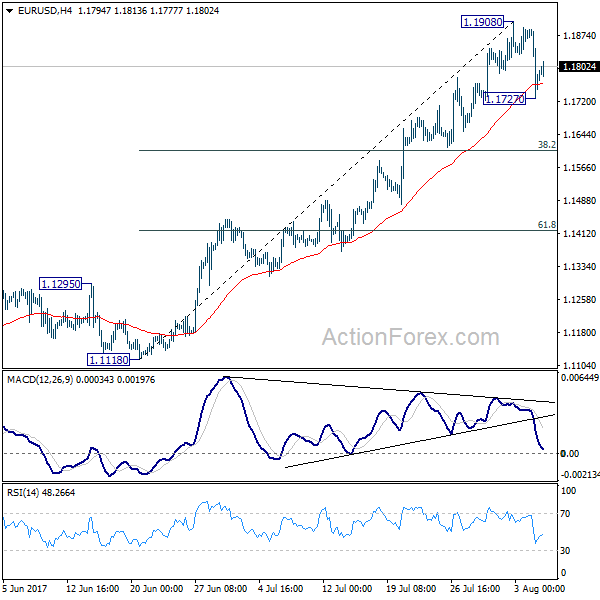
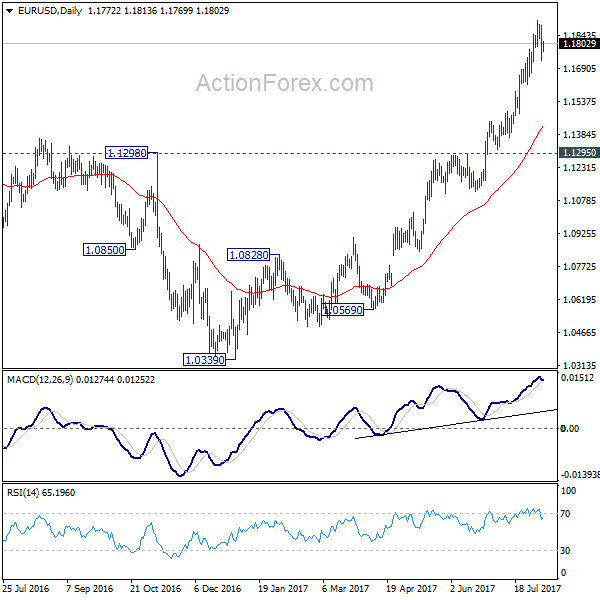
EUR/USD bulls gravitated higher last week despite weekly price being positioned within the walls of a major supply drawn from 1.1533-1.1278, which has capped upside since May 2015. This is the highest we've seen the single currency close since mid-Feb 2015, thus possibly signifying that the bears could be under serious pressure here!
Daily resistance at 1.1464, however, remains in play. This line boasts strong historical significance, managing to cap upside multiple times during the past couple of years, often delivering to-the-pip reactions! Should the bulls overcome this line this week, they'll likely attempt an approach to a daily resistance level seen pegged at 1.1533, essentially denoting the upper edge of the said weekly supply.
A brief look at recent dealings on the H4 timeframe shows that price managed to find a strong pocket of bids around the support area marked at 1.1372-1.1390, and end the week closing above a mid-level resistance at 1.1450. The move was strongly influenced after US inflation and retail sales figures missed consensus, therefore sending the dollar lower and the EUR higher.
For those who have been following recent reports on the EUR/USD you may recall that our desk took a short from 1.1484. 50% of the position was liquidated around July's opening level at 1.1417, with the remaining 50% left in the market to target the H4 Quasimodo support level at 1.1336: seen placed just nine pips above the top edge of a daily support area 1.1327-1.1253. Given Friday's news and the strong close above 1.1450, we decided to close the remainder of our position at 1.1460.
Our suggestions: Although weekly price shows the bulls to have the upper hand right now, it would be unwise of us to disregard the fact that the aforementioned weekly supply is still in motion. What's more, daily resistance at 1.1464 and the nearby H4 supply seen at 1.1529-1.1484 has yet to be breached. Therefore, for us, the bears still have a hand in this fight until proven otherwise.
With the above taken into account, we will be watching the said H4 supply base for shorts again this week. However, instead of entering using a pending order as we did last time, we will be waiting for H4 candle confirmation in the shape of a full, or near-full-bodied bearish candle, before pulling the trigger.
Data points to consider: No high-impacting events on the docket today.

Levels to watch/live orders:
- Buys: Flat (stop loss: N/A).
- Sells: 1.1529-1.1484 ([waiting for a H4 bearish candle – preferably in the form of a full, or near-full-bodied candle – is advised] stop loss: ideally beyond the candle's wick).
GBP/USD:
Weekly gain/loss: + 218 pips
Weekly closing price: 1.3101
Looking at the weekly timeframe, it's clear to see that a strong succession of bids flowed into the market last week, consequently forming a near-full-bodied weekly candle within supply at 1.3120-1.2957. Assuming that the bulls continue to govern direction here, this could lead to a move being seen up to a Quasimodo resistance level coming in at 1.3371.
Recent action on the daily timeframe, nevertheless, shows price recently crossed above a resistance area at 1.3058-1.2979. Technically speaking, this could potentially stimulate another round of buying this week up to supply drawn from 1.3278-1.3179 (not seen on the screen).
A quick recap of Friday's trade on the H4 timeframe shows that the GBP/USD received a sharp boost of buying, following lower-than-expected US inflation and retail sales numbers. The move, as you can see, pushed price above multiple tech resistances and ended the week closing marginally above the 1.31 handle.
To our way of seeing things, 1.31 is a key level to keep an eye on today. Should the market reject this number, it could imply that the bears may make an appearance within the current weekly supply. A decisive H4 close above this psychological boundary, nonetheless, would likely suggest that the unit could be heading up to a H4 resistance derived from 1.3172 (not seen on the screen), located seven pips below the daily supply mentioned above at 1.3278-1.3179.
Our suggestions: Keep a close eye on 1.31 today as it could play a decisive role in where this market may be headed today/ this week.
A decisive H4 close above 1.31 followed up with a retest and a H4 bull candle (preferably a full, or near-full-bodied candle) would be enough evidence for us to consider a long, targeting 1.3172.
A rejection of 1.31, however, would likely call for a move back down to the top edge of the recently broken daily resistance area at 1.3058/mid-level support at 1.3050. This could be an option should one be able to pin down an entry with a small enough stop to accommodate sufficient risk/reward.
Personally, we prefer looking for longs above 1.31 since risk/reward will likely be much better.
Data points to consider: No high-impacting events on the docket today.

Levels to watch/live orders:
- Buys: Watch for H4 price to print a decisive engulf above 1.31 and then look to trade any retest seen thereafter ([waiting for a H4 bullish candle – preferably in the form of a full, or near-full-bodied candle – to form following the retest is advised] stop loss: ideally beyond the candle's tail).
- Sells: Flat (stop loss: N/A).
AUD/USD
Weekly gain/loss: + 221 pips
Weekly closing price: 0.7824
A stronger-than-expected rebound was seen from the weekly support area at 0.7610-0.7543 last week, resulting in weekly price running through the trendline resistance extended from the high 0.7835 and aggressively challenging the weekly supply zone seen at 0.7849-0.7752.
Over on the daily picture, we can see that the commodity currency edged its way slightly above a daily Quasimodo resistance at 0.7819 by the week's close. Despite the strong bullish close seen here, we would not consider this line to be engulfed until the apex of the Quasimodo formation has been taken out at 0.7849, which also represents the top edge of the aforementioned weekly supply.
Influenced by Friday's weak US inflation and retails sales data, H4 action rallied through the 0.78 handle and, as you can see, was quickly retested as support. Given that the number held into the week's end, there's a chance that we could witness further buying up to a resistance level pegged at 0.7870.
Our suggestions: Seeing as weekly price is still trading within supply, and daily flow is seen interacting with a Quasimodo resistance, our team is wary of taking any long positions above 0.78 at the moment despite room being seen on the H4 timeframe to punch higher. To that end, opting to stand on the sidelines here may be the best path to take today.
Data points to consider: Chinese growth figures and Industrial production data is scheduled to be released at 3am GMT+1.

Levels to watch/live orders:
- Buys: Flat (stop loss: N/A).
- Sells: Flat (stop loss: N/A).
USD/JPY
Weekly gain/loss: – 139 pips
Weekly closing price: 112.51
Following a four-week bullish phase, last week saw the bears stamp in a strong-looking weekly bearish candle from the underside of a weekly supply zone at 115.50-113.85. In the case that the bears continue to push things south from here, the next area of interest on the weekly scale is 108.13-108.95: a demand zone that supported price beautifully mid-way through the month of June.
Bouncing down to the daily timeframe, we can see that the weekly bears have some stiff opposition! Holding firm since late January 2017, the daily support area at 111.35-112.37 was recently brought into play on Friday. Considering the established history surrounding this zone, there's a solid possibility the bulls will attempt to come into the market here.
Zooming in for a closer look at price action on the H4 timeframe, Friday's selloff, influenced by weak US inflation and retail sales figures, saw the 113 handle and the mid-level support at 112.50 consumed, and a H4 trendline support extended from the low 110.64 brought into play. The pair ended the day closing marginally above 112.50, likely helped by the reaction seen from the top edge of the daily support area at 112.37.
Our suggestions: Buying from 112.50 seems a logical idea if one dismisses the weekly timeframe. The next target from 112.50 is likely to be the 113 band given how well it served as support since the beginning of the month (see green circle).
While it is tempting to pull the trigger and buy from 112.50, our team is reluctant to commit, due to where weekly price is positioned at the moment (see above). In regard to selling this market, we're also hesitant. This is obviously because of the daily support area in motion and how restricted H4 structure is right now: July's opening level seen nearby at 112.09, followed closely by the Quasimodo support level at 111.84.
Data points to consider: No high-impacting events on the docket today. Japanese banks will be closed in observance of Marine Day.

Levels to watch/live orders:
- Buys: Flat (stop loss: N/A).
- Sells: Flat (stop loss: N/A).
USD/CAD:
Weekly gain/loss: – 229 pips
Weekly closing price: 1.2648
Last week's sharp run to the downside pushed the USD/CAD into further losses, stripping close to 230 pips off its value. The next area of support on the weekly timeframe does not come into view until we reach 1.2538, thus the odds of further selling being seen this week, in our opinion, is relatively high.
Turning our attention to the daily candles, demand at 1.2654-1.2734 suffered a minor breach going into the week's close in the shape of a full-bodied bearish candle. Assuming that the bears remain dominant beneath this zone, it's likely that we'll see price cross swords with a Quasimodo support level coming in at 1.2592 sometime this week.
Looking over to the H4 timeframe, the week ended printing a strong full-bodied bearish candle a few pips below the mid-level support at 1.2650. With this number likely under pressure, we see little reason, from a technical perspective, why the market will not attempt to approach the 1.26 handle (not seen on the screen).
With stop-loss orders likely getting chewed up from beneath the current daily demand at the moment, alongside breakout sellers' orders, a bounce from the 1.2595/1.26 neighborhood is likely to take shape. How much of a bounce is difficult to judge though, since you would be effectively buying into strong weekly selling!
Our suggestions: Should you feel 1.2592/1.26 is worthy of attention, we would strongly recommend waiting for additional confirmation here either in the form of a H4 bull candle or using the lower-timeframe candles (see above for information on how we look for this) before pulling the trigger.
Data points to consider: No high-impacting events on the docket today.

Levels to watch/live orders:
- Buys: 1.2592/1.26 (possible area to hunt for long opportunities).
- Sells: Flat (Stop loss: N/A).
USD/CHF:
Weekly gain/loss: – 10 pips
Weekly closing price: 0.9629
Weekly price, as you can probably see, remains capped by a supply at 0.9770-0.9691 and a support formed at 0.9581. Beyond the supply zone, we can see little stopping price from reaching the resistance level seen at 0.9861, and beneath the current support, there's a nearby level planted at 0.9508 that will likely be challenged should the bears come into this market.
In conjunction with the weekly timeframe, there's also a partner supply seen glued around the underside of the said weekly zone on the daily timeframe at 0.9736-0.9691 that's in play. Should this area continue to hold firm, then the next level of support does not come into view until we reach 0.9546.
Since the 5th May, the H4 candles have been consolidating between 0.97/0.9680 (round number/June's opening level – blue zone) and the 0.96 handle.
With this in mind, we remain interested in the two following zones for potential trades:
The first is the blue resistance zone mentioned above at 0.97/0.9680. We've selected this area since not only is this barrier lodged around the underside of the said weekly supply, but also its partner supply seen on the daily timeframe.
The second zone is a support area marked in green comprised of a daily support at 0.9546 and the weekly support at 0.9581, which also happens to converge closely with July's opening level at 0.9580.
Our suggestions: To initiate a trade at either of the above noted zones, nevertheless, we would require H4 candle confirmation, preferably in the shape of a full, or near-full-bodied candle. This is just a way to confirm that there are other speculators interested in the same zone as we are!
Data points to consider: No high-impacting events on the docket today.

Levels to watch/live orders:
- Buys: 0.9546/0.9581 ([waiting for a H4 bull candle – preferably a full, or near full-bodied candle – to form is advised] stop loss: ideally beyond the candle's tail).
- Sells: 0.97/0.9680 ([waiting for a H4 bear candle – preferably a full, or near full-bodied candle – to form is advised] stop loss: ideally beyond the candle's wick).
DOW 30:
Weekly gain/loss: + 229 points
Weekly closing price: 21645
US equity prices pushed to a record high of 21677 last week, which led to a strong-looking bullish candle forming. From the weekly timeframe, it is clear to see that this market's underlying trend remains strong. However, should the index pullback, the support level drawn from 21022 is likely the area where we'll see the bulls make an appearance.
Looking down to the daily timeframe, nevertheless, we can see that price recently crossed above the resistance level pegged at 21541, which technically speaking, should now act as a support barrier if it is retested.
There's not much information we can glean from the H4 timeframe that we have not already done so from the higher timeframes. Therefore, the aforementioned daily support level will likely be the first port of call should the market pullback this week.
Our suggestions: Put simply, our team wants to see the daily support level mentioned above at 21541 retested today/this week. This – coupled with a reasonably sized H4 bull candle, preferably a full, or near-full-bodied candle, would be enough evidence for us to confirm a long position as valid.
Data points to consider: No high-impacting events on the docket today.

Levels to watch/live orders:
- Buys: 21541 ([waiting for a H4 bull candle – preferably a full, or near full-bodied candle – to form is advised] stop loss: ideally beyond the candle's tail).
- Sells: Flat (stop loss: N/A).
GOLD
Weekly gain/loss: + $16.5
Weekly closing price: 1228.6
After diving relatively deep into weekly demand, the bulls slammed on the breaks last week and reversed price, erasing around 70% of the prior week's losses in the process. According to the weekly timeframe, there's space for the candles to rally back up to an area comprised of two weekly Fibonacci extensions 161.8/127.2% at 1313.7/1285.2 taken from the low 1188.1 (green zone).
On the daily timeframe, nonetheless, price is currently seen trading within a stone's throw away from a trendline resistance extended from the low 1180.4, followed closely by a resistance area pegged at 1247.7-1258.8.
Across on the H4 timeframe, the resistance area at 1229.1-1231.6, which converges with a 127.2% Fib ext. point at 1230.9 taken from the low 1208.1, is currently in play. To our way of seeing things, this area looks vulnerable to the upside. The next line beyond this zone sits nearby at 1235.0: a resistance level that happens to fuse nicely with a 161.8% Fib ext. point at 1237.1 taken from the low 1208.1.
Our suggestions: This is quite a tricky market to judge at the moment. On the one hand we have weekly price suggesting to buy the metal, and on the other hand, we have daily and H4 price nearing reasonably strong resistances!
Therefore, whichever way one choses you'll be trading against higher-timeframe structure. For now, we feel the best route one can take is to remain on the sidelines here until we have all three timeframes trading in unison.

Levels to watch/live orders:
- Buys: Flat (stop loss: N/A).
- Sells: Flat (stop loss: N/A).
Daily Technical Analysis: GBP/USD Breaks Above Key 1.30 Resistance With Sturdy Impulse
Currency pair GBP/USD
The GBP/USD broke sturdily above the previous top which is indicated by the dotted red trend line. The breakout candle is showing strong momentum, which could indicate that the Cable could continue towards the Fibonacci targets of wave 5 vs 1+3.

The GBP/USD is in a wave 3 (purple) momentum which could see a retracement develop within the wave 4 (purple) before price continues with the wave 3 (grey) of a higher degree. The Fibonacci levels of wave 4 vs 3 are therefore potential support levels that can be used for a bullish bounce. The broken resistance could also become potential support.

Currency pair EUR/USD
The EUR/USD is at a key decision spot: a bullish breakout above 1.15, the resistance trend line (red) would indicate and the 138.2% Fibonacci level would indicate a likely continuation of wave 3 (green). A bearish bounce however could confirm the wave X (purple) correction within a larger wave 4 (green).

The EUR/USD has either completed an ABC (brown) correction or is showing a continuation of the uptrend. An important factor for this structure are the trend lines (red/blue). A break above resistance or below support could indicate the potential direction.

Currency pair USD/JPY
The USD/JPY is either in a new bearish trend (123 orange) or is building a bearish correction within a larger uptrend. A break below the support trend line (blue) is a first clue of a larger bearish reversal but price will need to reach at least the 161.8% Fib target of wave 3 vs 1.

The USD/JPY could be in a wave 4 (purple) as long as price does not break above the 61.8% Fibonacci level of wave 4 vs 3 and the resistance trend line (red).

NZD Strength Could Surprise Again This Week
Key Points:
- The NZD could be poised to rally further this week.
- GDT Prices are likely to be the driving force behind further upsides.
- Technicals are also hinting at another bullish week.
The NZDUSD was under the control of the bulls last week and it completely recovered from recent losses. However, what was driving the move isn't immediately apparent given the general lack of much in the way of NZ economic news. Moreover, the NZ data that was seen was fairly disappointing – the opposite of what we would expect given the strength of the overall upswing. As a result, it's worth taking a closer look at what was influencing the pair last week and what is likely to be impacting it moving forwards.
Starting with last week's performance, the Kiwi Dollar was under pressure from the get go, declining more than 50 pips by the end of Tuesday as the market reacted to a disappointingly flat NZ Electronic Card Retail Sales result. However, interestingly, this selling pressure proved to be rather fleeting and, from Wednesday onwards, the NZD surged higher which, ultimately, saw it close Friday at a fresh high for 2017 around the 0.7345 mark.
By the looks of it, the momentum for the upswing stemmed from a number of factors, most notably Janet Yellen's rather dovish testimony to Congress. This being said, the softer US CPI data and the 0.2% contraction in US Retail Sales also played a heavy hand in fuelling buying pressure as the week drew to a close. Regardless of what played the bigger role, the combination of these factors offset not only the early losses but also the effects of the broadly weaker NZ economic news seen throughout the rest of the week – resulting in a net gain for the pair.
As for what is coming next, given how sensitive the pair was to fundamentals last week, the impending NZ CPI numbers and the GDT Price Index are definitely worth a look in going forward. The CPI results are expected to be somewhat softer than last time at 1.9% y/y and 0.2% q/q which could see the pair moderate some of its recent gains. Nevertheless, any movement could be rather subdued given the general dearth of US data and the fact that many traders will be waiting for the GDT figure before making a move.
It is worth noting here that we have had two consecutive contractions in global dairy prices which could see a bout of panic selling for the NZD should we see a significantly negative result. Conversely, a suitably positive outcome will see the markets breathe a sigh of relief – potentially encouraging the Kiwi Dollar to extend last's week's rally.
Moving on to the technical bias for the week ahead, the Kiwi Dollar is actually fairly well positioned to continue with recent bullishness. Indeed, with the exception of the stochastics, most other technical indicators are signalling that further gains are on the way. Nevertheless, the Parabolic SAR and the MACD readings warrant a closer look given their particularly strong hints of additional upsides. Specifically, the Parabolic SAR inverted twice last week – effectively renewing its longer-term bullish bias. As for the MACD oscillator, it is on the cusp of a signal line crossover which could see the bears back on the defensive moving forward. If the pair tracks higher, resistance is in place around the 0.7352, 0.7406, and 0.7480 levels.
Ultimately, the outlook for the Kiwi Dollar is looking fairly good this week and the pair could extend recent gains. Indeed, the NZD could be on a path to challenge last year's highs which might mean that the 0.75 handle and beyond are now firmly in the bulls' sights. However, even a week of poor fundamentals could put this uptrend in jeopardy which is worth keeping in mind moving ahead.
China’s Factory Rebound: What You Need To Know
Key Points:
- Chinese GDP Growth rockets to 6.9% y/y.
- Industrial Production also increases to 7.6% y/y.
- However, credit impulse is not yet evident in latest GDP figures.
Markets largely got a shock overnight as China released its latest iteration of GDP growth and Industrial Production figures. Surprisingly, the data showed that the Chinese economy grew by over 6.9% y/y in the second quarter whilst Industrial Production rose to an exceedingly strong 7.6% y/y. Subsequently, the momentum remained in place for the manufacturing powerhouse but it remains to be seen if the trend continues given some of the headwinds facing the economy.

The reason the result is so surprising is the fact that the Chinese economy has undergone some significant shocks in the past three months, which have included a national deleveraging, real estate slow down, and sinking macro indicators. Subsequently, the consensus view was that the major economic indicators would, again, provide a sharp beat and confirm the domestic softness that many have speculated over in the past few weeks.
However, instead we received a July surprise with even Retail Sales figures rising sharply to 11.0% but you would be forgiven for questioning the veracity of the data given that 'economic data management' has been known to occur. The narrative around the current results seem to imply that the Asian powerhouse is currently awash in credit and that much of the recent expansion is being driven by consumer demand (as well as exports).
Certainly, the current expansion could be seen as positive or negative depending on your view around the mounting risks of loose and cheap credit. However, it should be noted that China's recent drive towards fixing some of the financial risk issues within the economy is yet to flow through to the wider macroeconomic indicators.
Subsequently, we are likely to see a lagged response to the latest campaign/credit impulse and this will inexorably impact GDP in the near term. However, it's relatively clear that the deleveraging process has been successful for Beijing and was particularly well timed. What's less clear is what role fiscal policy is playing in the broader economic sense given that it has previously been an important part in recent growth figures.

At the time of writing, there has been little impact on the Yuan but Chinese equities have soared in response to the data dump. However, it remains to be seen in the near term if the sentiment remains in place and, subsequently, buoys the Yuan. Ultimately, the impact of the risk deleveraging is likely to flow through to the wider economy over the next few months and it will absolutely affect the positive view that most analysts have taken following the release of the 'mother of all data dumps'.
China Watch – 2017 Growth Target On Track, Xi Commands To Prevent Risks And Tighten Regulations
China's macroeconomic data for 2Q17 surprised to the upside. China's GDP expanded +6.9% y/y in 2Q17, same pace as the prior quarter but above consensus of +6.8%. Economic activities in June continued to improve. Industrial production growth accelerated to +7.6% y/y in June, beating consensus of and May's +6.5%. Retail sales expanded +11% y/y in June, up from +10.7% a month ago. The market had anticipated mild deceleration to +10.6%. Fixed asset investment in urban areas grew +8.6% y/y in the first half of the year, same pace as in the first five months of the year. The government acknowledged that the country's economy continued to improve. It appears that the country's growth is on track to meet the government target of “around +6.5%”.


Renminbi extended its recent strength against the US dollar after the releases. Onshore USDCNY fell to as low as 6.7644 at one point, only modestly above the 7-month low of 6.7598. The government has aggressively fixed the currency at 6.7562 against the greenback, down from 6.7774 on Friday. Today's fixing marks the lowest since November 2016.
Xi Highlighted Risks and Regulations at National Financial Work Conference
In his first address at the National Financial Work Conference, which is held once every five years, over the weekend, Chinese President Xi Jinping affirmed that the PBOC would play a stronger role in defending against risks, calling for more work on safeguarding the financial system and modernizing its regulatory framework. Interestingly, the word “risk” appeared 31 times in the meeting note, followed by “regulation”, which appeared 28 times, signaling that implementation of “regulations” to prevent financial system “risks” is the key direction of the government's policy.
PBOC Warned of Risks and Pledged to Regulate
Indeed, the PBOC in its financial stability report, released on July 4, summarized six major risks to domestic economy, namely, downward pressure on growth, high leverages of non-financial corporate, rapid rise in non-performing loans, high risks of informal debt operations in certain local governments, elevated property prices in first and second tier cities and high inventory levels in tier 3 and 4 cities, and unregulated development of financial products. The central bank pledged that it, together with other regulatory bodies, would endeavor to curb risks involved in shadow banking, real estate financing, local government financing platforms, internet financing and illegal fundraising activities. The institutions would increase supervision over outbound investment and prevent shocks from external challenges.
PBOC, for the first time on record, unveiled that the total size of commercial banks off-balance-sheet asset was at RMB 254 trillion by the end- 2016. This marks 109% of the total on-balance-sheet asset. The central bank cautioned over possible contagious risks to on-balance sheet assets.

We expect the government would continue its tightening policy targeting specific asset classes (including Bitcoin and real estate). With the momentum of economic growth in line with the government's full-year target, the monetary policy would be more likely tighter than looser from the current conditions.
Aussie Dollar Trading Lower In The Asian Session
For the 24 hours to 23:00 GMT, the AUD rose 1.2% against the USD and closed at 0.7825 on Friday.
LME Copper prices declined 0.8% or $44.0/MT to $5858.0/MT. Aluminium prices declined 0.4% or $7.0/MT to $1904.0/MT.
In the Asian session, at GMT0300, the pair is trading at 0.7816, with the AUD trading 0.12% lower against the USD from Friday's close.
Earlier today, data showed that China's, Australia's largest trading partner, gross domestic product (GDP) rose more-than-expected by 6.9% YoY in the second quarter of 2017, aided by a pick-up in industrial output and strong investment. The GDP had recorded a similar rise in the prior quarter, while market participants anticipated for an expansion of 6.8%. Further, the nation's industrial production gained 7.6% on an annual basis in June, exceeding market expectations for a rise of 6.5%. In the previous month, industrial production had climbed 6.5%. Also, the nation's retail sales grew more-than-anticipated by 11.0% YoY in June, rising at its fastest pace since December 2015. In the previous month, retail sales had advanced 10.7%.
The pair is expected to find support at 0.7756, and a fall through could take it to the next support level of 0.7696. The pair is expected to find its first resistance at 0.7855, and a rise through could take it to the next resistance level of 0.7894.
Looking ahead, the Reserve Bank of Australia's recent meeting minutes, slated to release in the early hours of tomorrow, will be eyed by traders.
The currency pair is trading above its 20 Hr and 50 Hr moving averages.

Euro-Zone’s Trade Surplus Slightly Widened In May
For the 24 hours to 23:00 GMT, the EUR rose 0.63% against the USD and closed at 1.1469 on Friday.
On the data front, the Euro-zone's seasonally adjusted trade surplus widened less-than-expected to a level of €19.7 billion in May, following a revised surplus of €18.6 billion in the previous month, while markets were anticipating the region's trade surplus to expand to a level of €20.2 billion.
The greenback lost ground against its major counterparts on Friday, on the back of disappointing US inflation and retail sales data that fuelled fresh doubts over the Federal Reserve's (Fed) ability to increase interest rates for a third time this year.
Data indicated that the US consumer price index (CPI) remained flat on a monthly basis in June, compared to market expectations for a rise of 0.1% and following a drop of 0.1% in the previous month. Meanwhile, on an annual basis, the CPI climbed less-than-expected by 1.6% in June, posting its smallest gain since October 2016. In the previous month, the CPI had gained 1.9%, while investors had envisaged for an advance of 1.7%. Additionally, the nation's advance retail sales unexpectedly dropped 0.2% on a monthly basis in June, declining for a second straight month and defying market consensus for a rise of 0.1%.
In the prior month, advance retail sales had fallen by a revised 0.1%. Further, the nation's preliminary Reuters/Michigan consumer sentiment index fell to a 9-month low level of 93.1 in July, surpassing market expectation for a drop to a level of 95.0, as consumers lost confidence in faster growth prospects in the US under the Trump administration. The index had registered a reading of 95.1 in the prior month.
Another set of economic data revealed that the US industrial production rose 0.4% on a monthly basis in June, topping market expectations for an advance of 0.3%. In the prior month, industrial production had risen by a revised 0.1%. Also, the nation's manufacturing production rebounded 0.2% MoM in June, at par with market expectations and after recording a drop of 0.4% in the prior month. Moreover, the nation's business inventories rose 0.3% in May, meeting market expectations. Business inventories had dropped 0.2% in the prior month.
In the Asian session, at GMT0300, the pair is trading at 1.1463, with the EUR trading a tad lower against the USD from Friday's close.
The pair is expected to find support at 1.1418, and a fall through could take it to the next support level of 1.1372. The pair is expected to find its first resistance at 1.1492, and a rise through could take it to the next resistance level of 1.1520.
Going ahead, traders will look forward to the Euro-zone's final consumer price index data for June and the German Bundesbank monthly report, both slated to release in a few hours. Additionally, the US New York Empire State Manufacturing index for July, scheduled to release later today, will be on investors' radar.
The currency pair is trading above its 20 Hr and 50 Hr moving averages.

UK’s Rightmove House Prices Rebounded In July
For the 24 hours to 23:00 GMT, the GBP rose 1.27% against the USD and closed at 1.3105 on Friday.
In the Asian session, at GMT0300, the pair is trading at 1.3102, with the GBP trading marginally lower against the USD from Friday's close.
Overnight data indicated that Britain's Rightmove house price index rebounded 0.1% on a monthly basis in July, following a drop of 0.4% in the previous month.
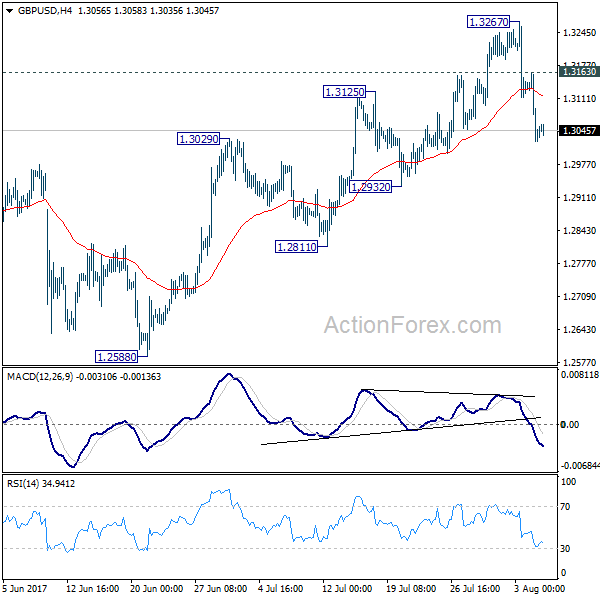
The pair is expected to find support at 1.2990, and a fall through could take it to the next support level of 1.2878. The pair is expected to find its first resistance at 1.3164, and a rise through could take it to the next resistance level of 1.3226.
The currency pair is trading above its 20 Hr and 50 Hr moving averages.

Japanese Yen Trading Lower In The Asian Session
For the 24 hours to 23:00 GMT, the USD declined 0.74% against the JPY and closed at 112.54 on Friday.
In the Asian session, at GMT0300, the pair is trading at 112.62, with the USD trading 0.07% higher against the JPY from Friday's close.
The pair is expected to find support at 112.10, and a fall through could take it to the next support level of 111.59. The pair is expected to find its first resistance at 113.30, and a rise through could take it to the next resistance level of 113.99.
On account of a holiday in Japan today, investor sentiment will be governed by global macroeconomic news.
The currency pair is showing convergence with its 20 Hr moving average and trading below its 50 Hr moving average.

Swiss Franc Reverses Its Gains In The Morning Session
For the 24 hours to 23:00 GMT, the USD declined 0.38% against the CHF and closed at 0.9636 on Friday.
In the Asian session, at GMT0300, the pair is trading at 0.9642, with the USD trading 0.06% higher against the CHF from Friday’s close.
The pair is expected to find support at 0.9614, and a fall through could take it to the next support level of 0.9585. The pair is expected to find its first resistance at 0.9686, and a rise through could take it to the next resistance level of 0.9729.
The currency pair is trading below its 20 Hr and 50 Hr moving averages.