Sample Category Title
RBA’s Hunter anticipates slow cooling of Australia’s labor market
In a speech today, RBA Assistant Governor Sarah Hunter highlighted that while conditions in the Australian labor market have eased since late 2022, the market remains "tight relative to full employment."
Looking ahead, Hunter expects labor demand to slow in comparison to labor supply, which should bring the market "into better balance" over the coming quarters. She noted that part of this adjustment is likely to come through a "decline in average hours" worked rather than sharp cuts to overall employment.
Employment growth is expected to persist but at a slower pace, lagging behind population growth. As a result, underutilization measures, including the unemployment rate, are projected to "continue rising gradually." This rise is expected to stabilize once GDP growth returns to a level more consistent with Australia's underlying economic trend.
Hunter's comments underscore RBA's outlook on the labor market, and the hawkish stance that it's not nearing the start of rates reduction cycle yet.
US Treasury Yields Decline Boosts Gold Prices
Gold prices went up by 0.30% on Tuesday as US Treasury yields dropped and the US dollar weakened, with traders waiting for important US inflation data. This data, along with the first presidential debate between Kamala Harris and Donald Trump, may influence the market's mood. Gold (XAUUSD) is currently trading at $2,514, recovering from a low of $2,500. The chances of a Federal Reserve interest rate cut are high, with a 67% likelihood of a 25 basis point reduction and a 33% chance for a 50 basis point cut. Recent US job data showed fewer new jobs than expected, but the unemployment rate fell slightly, offering some relief to the Fed.
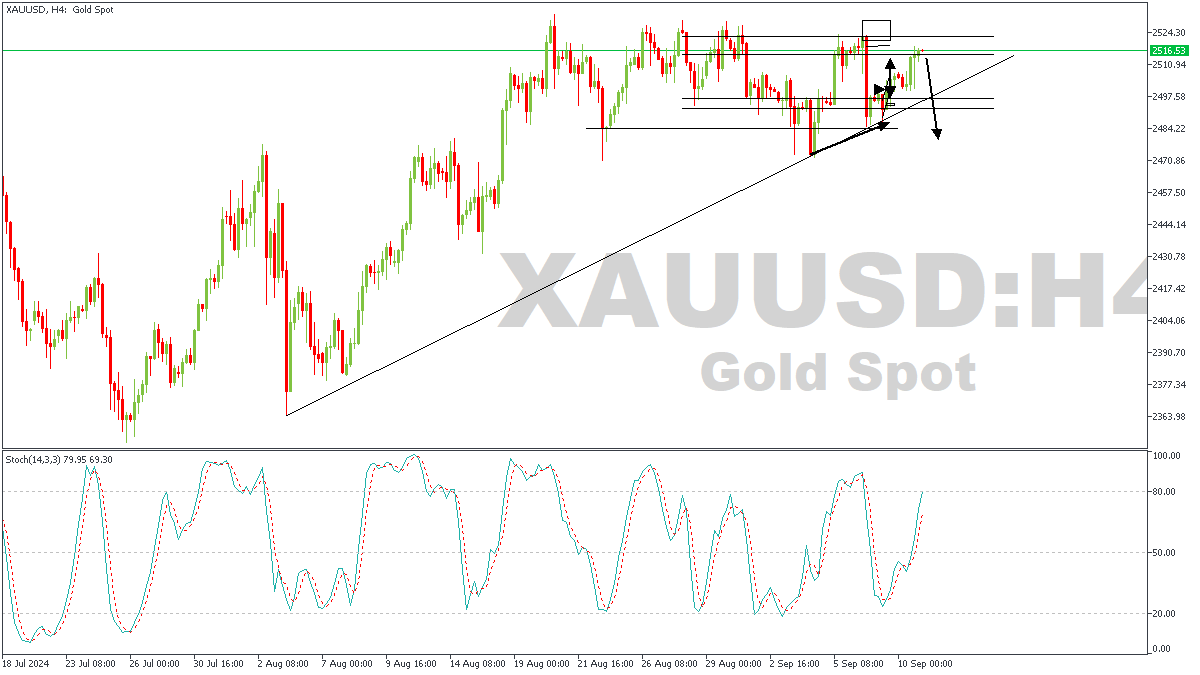
XAUUSD – H4 Timeframe
Gold did a bounce from the trendline support earlier, due to the confluence of the daily timeframe pivot and the hidden divergence on the stochastic indicator. However, the current price action is now resting within the region of another daily timeframe pivot, with the likelihood of a reversal soon. I expect this to provide an opportunity for bears to infiltrate the markets, albeit, my secondary choice of an entry would be from the break-and-retest of the trendline support.
XAUUSD – H1 Timeframe
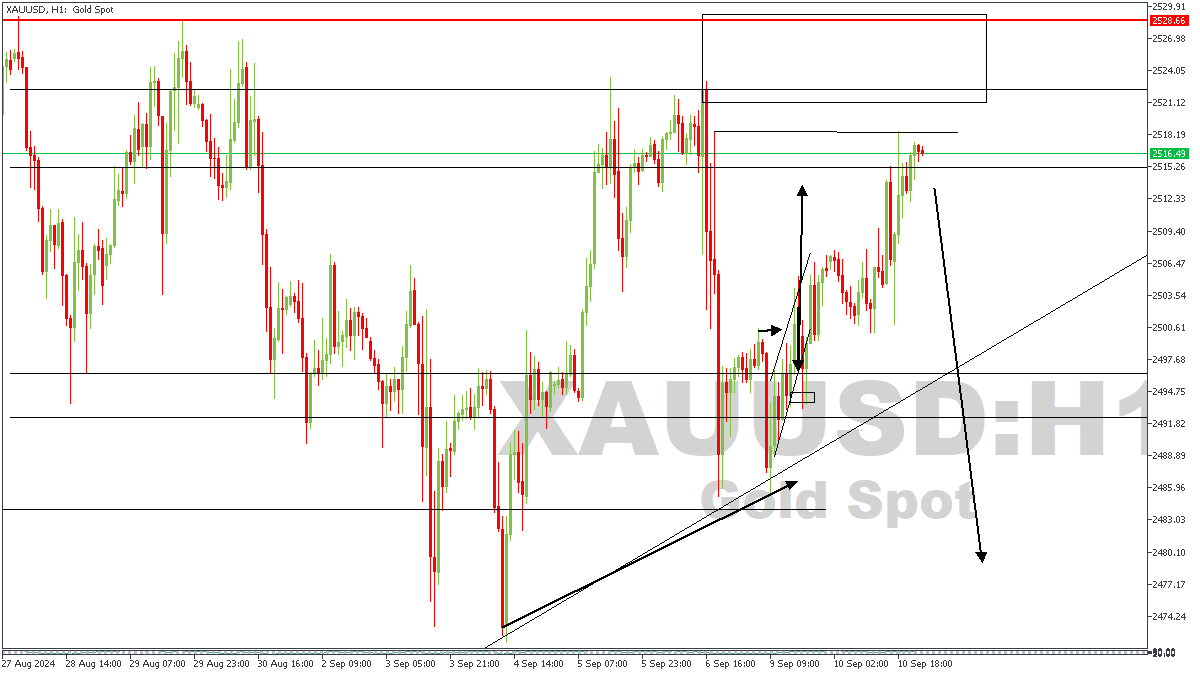
As for the price action on the 1-hour timeframe, price seems to be plotting a SBR pattern, which I hope to confirm after the rejection from the supply zone above inducement. Altogether, my sentiment remains bearish.
Analyst’s Expectations:
- Direction: Bearish
- Target: $2,495.75
- Invalidation: $2,530.15
Nasdaq Wave Analysis
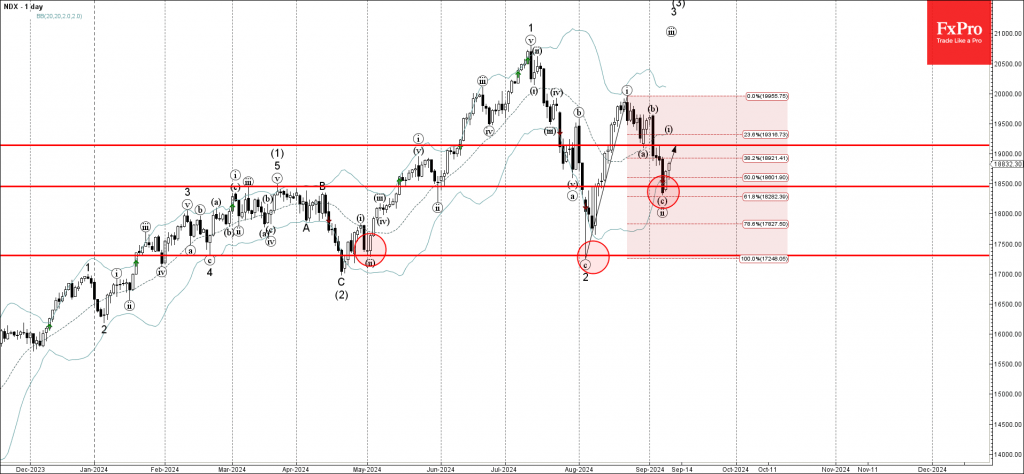
- Nasdaq reversed from support zone
- Likely to rise to resistance level 19135.00
Nasdaq index recently reversed up from the support zone located between the key support level 18500.00, lower daily Bollinger Band and the 61.8% Fibonacci correction of the upward impulse from August.
The upward reversal from this support zone created the daily Japanese candlesticks reversal pattern Piercing Line – which started the active impulse wave iii.
Given the overriding daily uptrend, Nasdaq index can be expected to rise further to the next resistance level 19135.00, former minor support from the end of August.
Brent Crude oil Wave Analysis
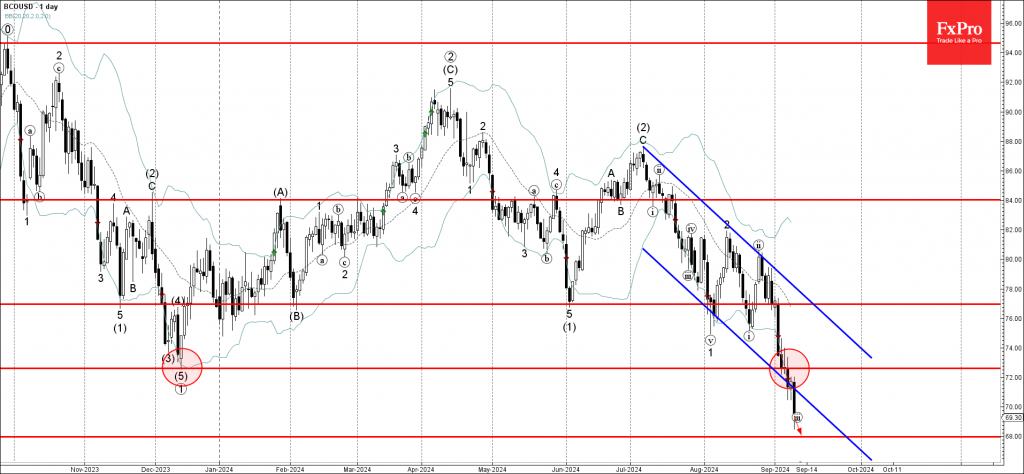
- Brent Crude oil broke key support level 72.60
- Likely to fall to support level 68.00
Brent Crude oil recently broke the support zone located between the key support level 72.60 (former multi-month support from December) and the support trendline of the daily down channel from July.
The breakout of the support level 72.60 accelerated the active impulse waves iii, 3 and (3).
Given the clear downtrend, Brent Crude oil can be expected to fall further to the next support level 68.00, target price for the completion of the active impulse wave iii.
Brent Remains Under Pressure: China and Rapid Growth in OPEC+ Production to Blame
The oil market remains under pressure. A barrel of Brent oil declined to 71.80 USD by Tuesday. The commodity erased all early-week gains as fears of slowing demand in China outweighed the risk of energy shortages due to the storm in the Persian Gulf.
In recent weeks, market participants have been paying close attention and analysing the whole range of news related to China. The sluggish economic growth rate combined with the global strategy of transition to low-carbon raw materials is reducing China’s need for oil. This negatively impacts Chinese oil imports and naturally affects market prices as China is considered the world’s largest raw material consumer.
Investors are also confident that oil consumption in Europe and the US will reduce following the active driving season. Additionally, some oil refineries are going into maintenance mode, meaning they will not need as many raw materials as before. OPEC+ had previously postponed the planned increase in oil output for a couple of months. Yes, the market now has a respite but the likelihood of an imminent commodity oversupply is still looming over prices.
Storm Francine is expected to intensify near Texas, US and could become a Category 2 storm, which means a hurricane threat. Some production facilities in Texas may be shut down until weather conditions improve.
Brent technical analysis
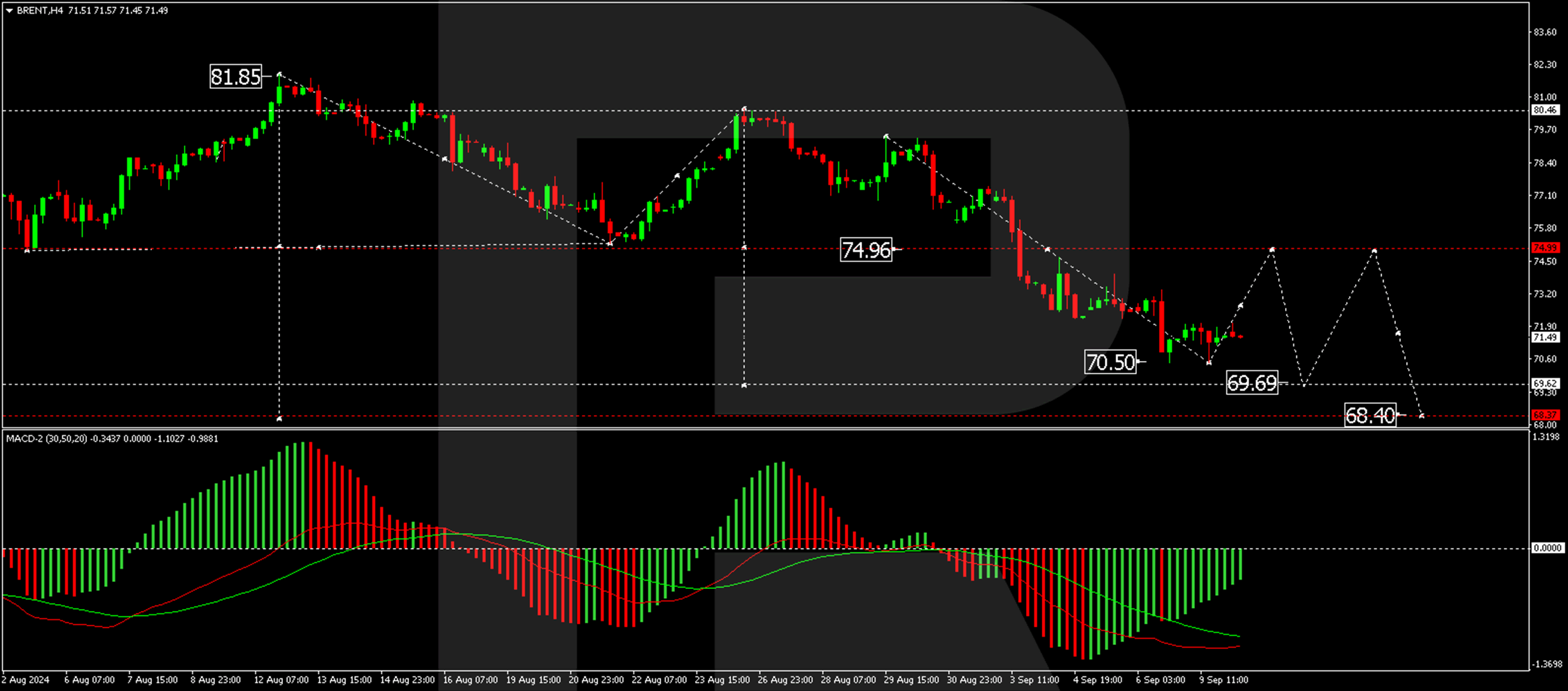
The BRENT H4 chart shows that the market has broken below the 74.96 level and completed a downward wave, reaching 70.50. A consolidation range could form at the current lows today. An upward breakout will open the potential for growth to 75.00 (testing from below). With a downward breakout, the range could expand to the local target of 69.69. This scenario is technically supported by the MACD indicator, with its signal line below the zero level at the lows and poised for growth.
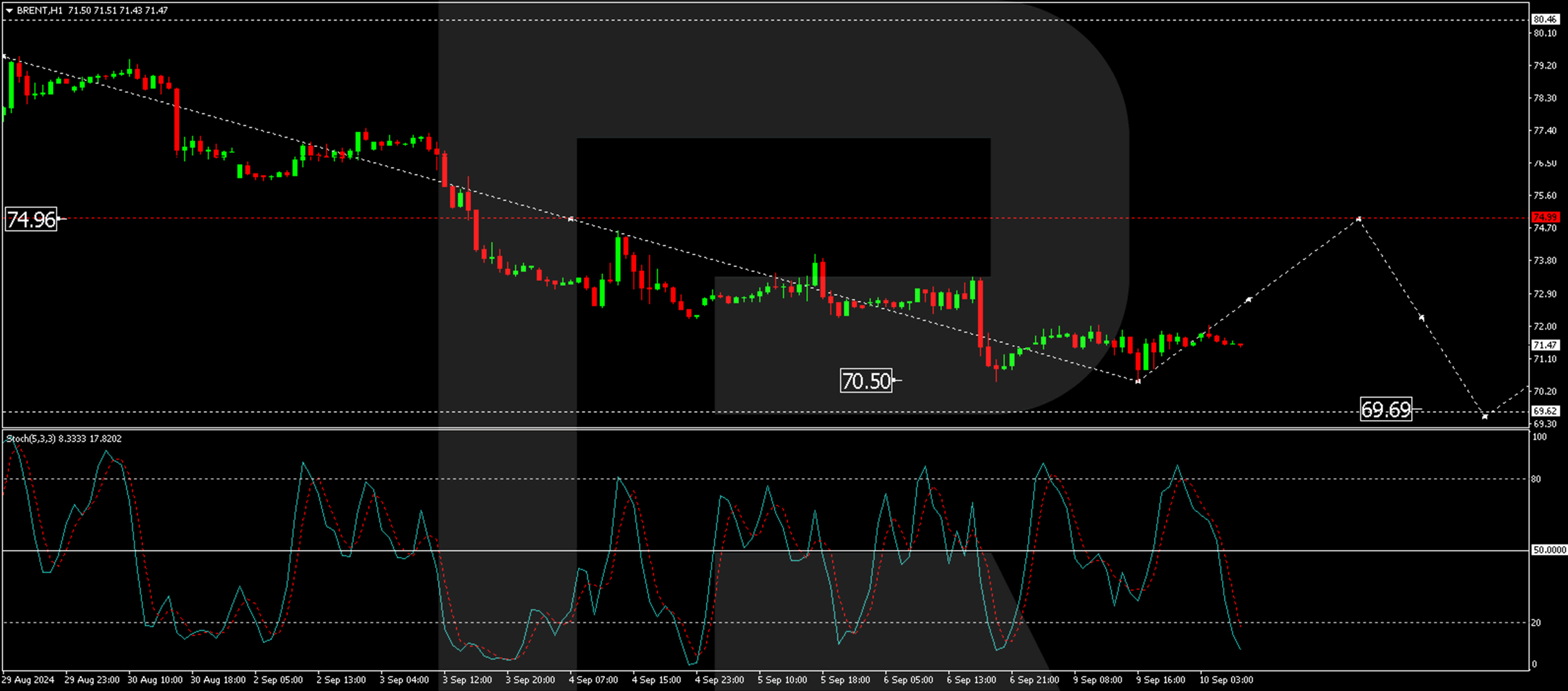
The BRENT H1 chart shows that the market has reached the downward wave’s local target of 70.50. Today, the market is forming a consolidation range above this level. The range expanded up to 71.90 and down to 70.46. A breakout above the 71.90 level will open the potential for a corrective wave towards 75.00. With a breakout below 70.46, the range could expand downwards, with the wave continuing to 69.69. This scenario is technically supported by the Stochastic oscillator, whose signal line is below 20 and poised for growth.
US 500 Index Halts Decline, But Will It Pivot?
- US 500 stock index pauses decline near 100-SMA, but negative risks remain
- Breaking above 5,600 could positively impact buying sentiment
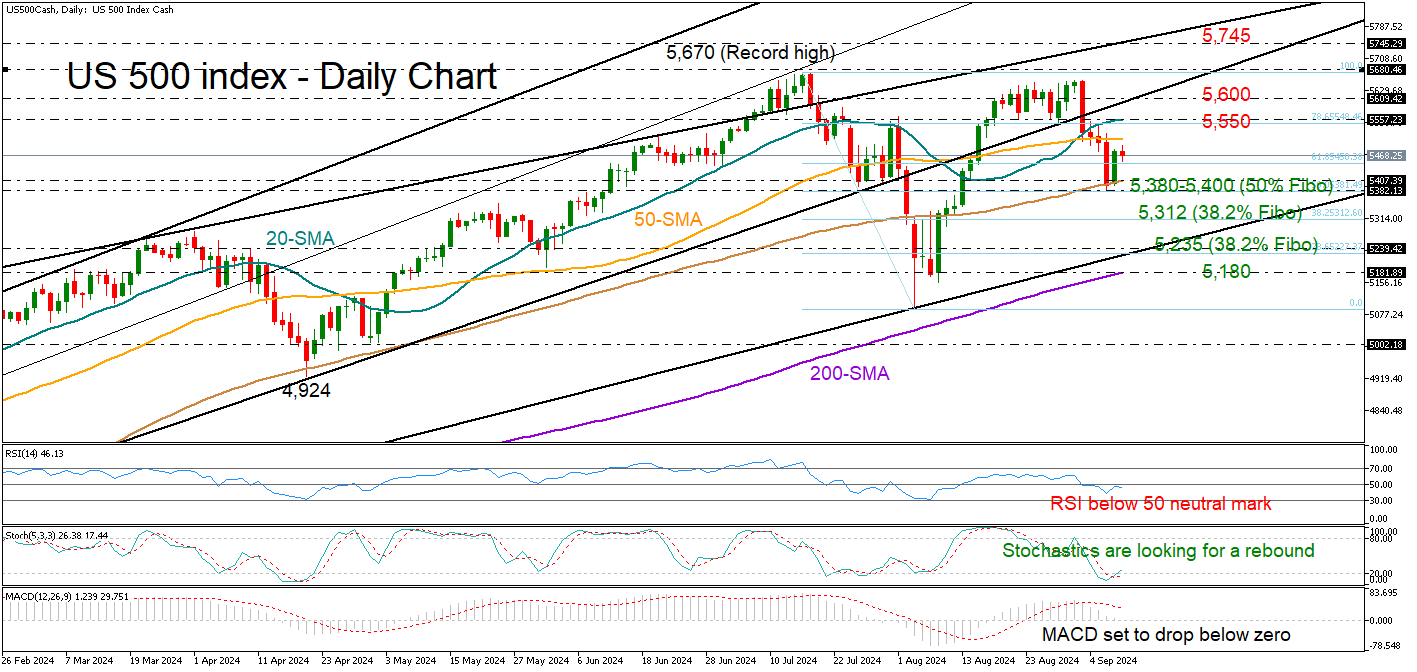
The US 500 stock index maintained support close to its 100-day simple moving average (SMA) for a second consecutive day, raising hopes that the current bearish phase may soon diminish.
From a technical perspective, there are still some negative developments that should be considered. The price could not reverse its latest bearish candlestick, remaining below its 20- and 50-day SMAs. Additionally, although the stochastic oscillator is preparing to exit its oversold region, the RSI continues to trend below its 50 neutral mark and the MACD is ready to step into the negative zone.
The first debate between Kamala Harris and Donald Trump today could be the last one before the US election. Hence the event could be the next catalyst, and buyers would like to see a decisive bounce above the 5,600 trendline area before charting a new record high likely near the former ascending line at 5,745. Further up, the price could face a tough test near the 6,000 psychological mark, which overlaps with the 161.8% Fibonacci retracement of the latest downfall and the rising constraining line from December 2023.
Should the bears breach the floor between the 100-day SMA and the 50% Fibonacci number of 5,380, the door will open for the 38.2% Fibonacci of 5,312. If the latter fails to hold, the decline could stretch towards the tentative support trendline and the 23.6% Fibonacci of 5,235. Another violation there could immediately stall near the 200-day SMA at 5,180.
Overall, the current bounce-back in the US 500 doesn’t seem encouraging because the bears are still favored by the technical indicators. An extension above 5,600 could shift the odds to the bullish side.
GBP/USD Steady as UK Wage Growth Eases GDP Next
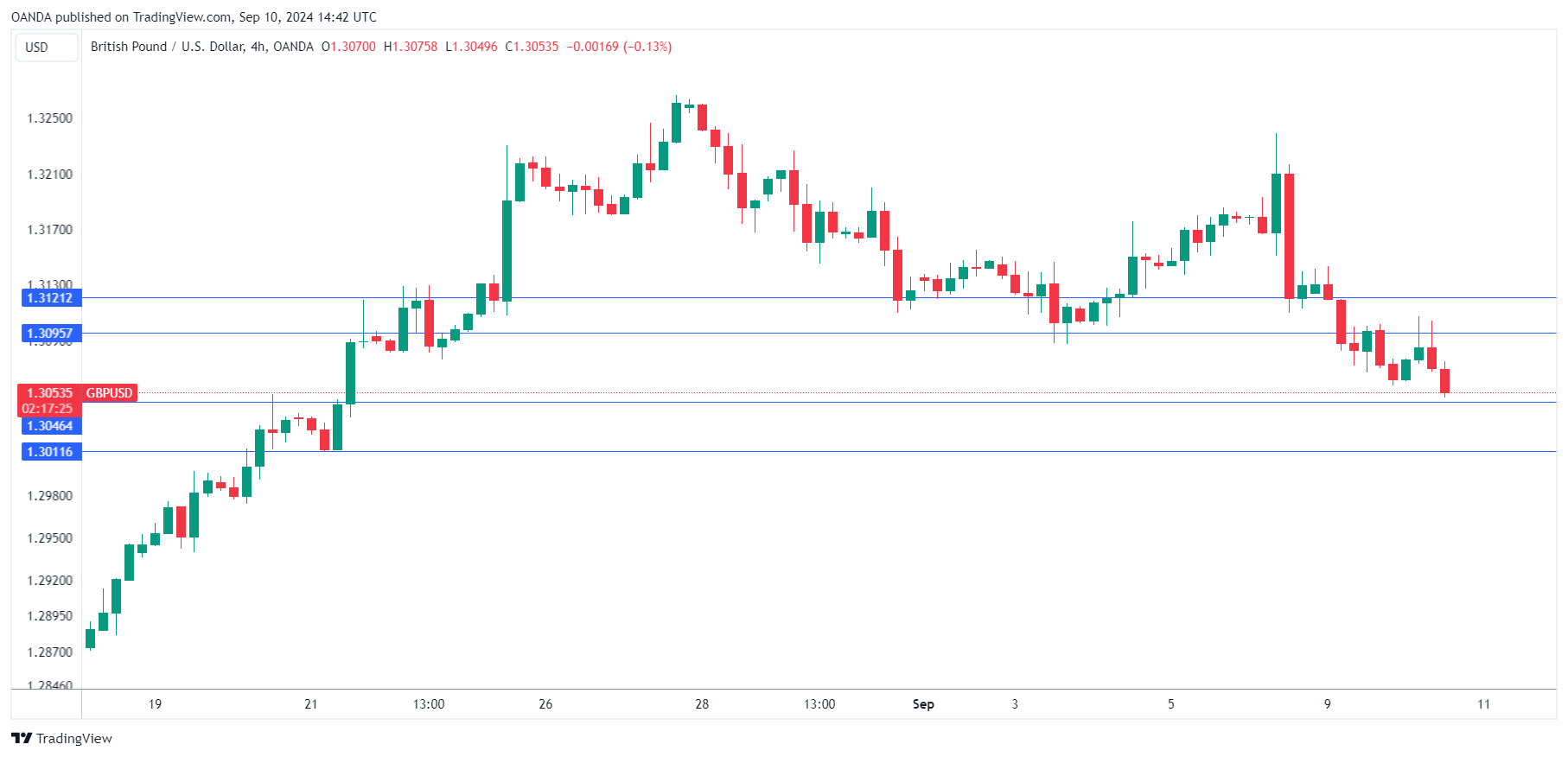
The British pound has edged lower on Tuesday. In the North American session, GBP/USD is trading at 1.3055, down 0.14% on the day.
UK wage growth drops to 2-year low
UK wage growth eased in the three months to July, an encouraging sign for the Bank of England as it looks to continue lowering rates.
Average earnings excluding bonuses climbed 5.1% y/y, down from 5.4% in the previous period and in line with the market estimate. This was the lowest level since June 2022. Wage growth is moving in the right direction but is still much too high for the BoE’s liking as it is incompatible with the target of keeping inflation at 2%.
The UK labour market remains strong, as the unemployment rate edged down to 4.1%, down from 4%. The economy created 265 thousand jobs in the three months to July, up sharply from 97 thousand in the previous report and blowing past the market estimate of 115 thousand. The solid data means that the BoE isn’t under pressure to cut rates next week, and the markets are looking at another cut in November.
The UK economy gets a report card on Wednesday, with the release of GDP for July. The economy flatlined in June and rose just 0.6% in the three months to June. Another weak GDP release could put pressure on the British pound.
Investors will be keeping a close eye on Wednesday’s US inflation release. The Federal Reserve is now focused on employment now that inflation is between 2% and 3%, but a CPI surprise could shake up the markets and change market pricing for a Fed rate cut. The odds of a 50-basis point cut have been slashed to 29%, compared to 59% on Friday.
GBP/USD Technical
- There is resistance at 1.3167 and 1.3225
- 1.3069 and 1.3011 are providing support
Sunset Market Commentary
Markets
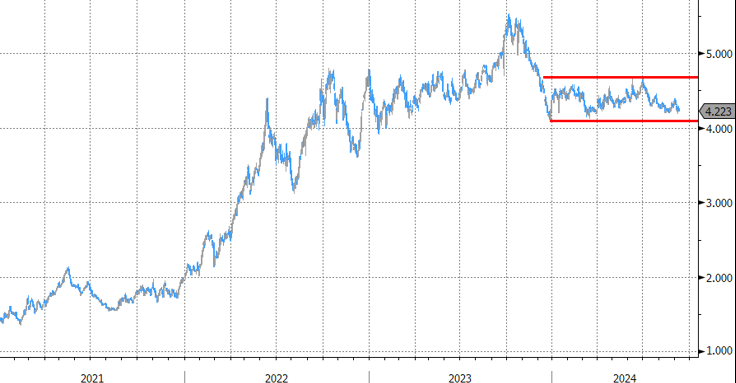
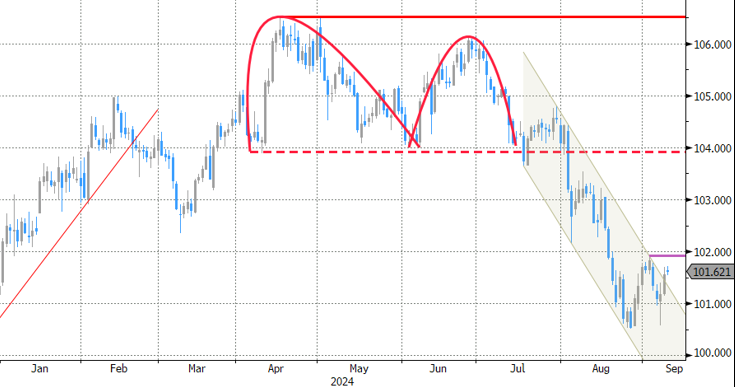
Spotting significant market moves is like looking for a needle in a haystack today. We give it our best shot anyway by diving into a bumper bond sale taking place in Italy. The southern country’s 30-yr auction drew a record €130bn+ in demand, allowing it to tighten the final terms from BTPS+15 bps area to BTPS+13. It eventually raked in an amount of €8bn. Italian bonds (marginally) outperform regional peers with spreads easing 2 bps (10-yr). It’s 30-yr bond yield is hovering near the recent lows just north of 4.2%. Yields in core areas including the US and Germany trade little changed. US Treasuries gained a slight upper hand over Bunds in early US dealings with yields easing 1.5 bps at the front. Currency markets are an ocean of calm. EUR/USD oscillates around the 1.104 opening levels. The trade-weighted dollar index takes a breather at 101.65 after some proper gains over the previous two trading gains. The Norwegian krone outperforms G10 peers. The Scandinavian currency’s recent track record was poor with EUR/NOK moving from 11.6 end of August towards but below 12. Slightly weaker than expected Norwegian headline inflation this morning nudged EUR/NOK within inches of that psychologically important figure. But lacking strength for a technical break higher, it triggered some return action instead (EUR/NOK currently offered at 11.90). Sterling reversed some earlier gains after a slightly better than expected labour market report this morning to trade virtually unchanged at EUR/GBP 0.844 and GBP/USD 1.307. The slow start of the week after today is giving way for hopefully some more live action. The eco calendar from tomorrow on heats up with the first (and probably only) presidential debate starring Trump and Harris at 3am CEST, followed by US inflation numbers in the afternoon. The ECB takes center stage on Thursday with a second 25bps rate cut all but certain.
News & Views
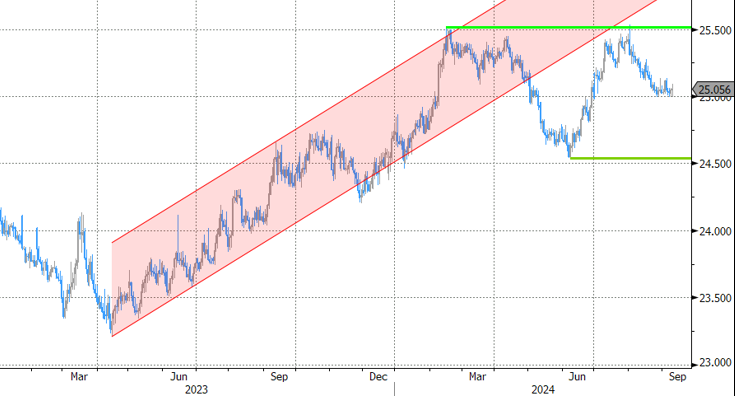
Czech inflation slowed from 0.7% M/M in July to 0.3% in August, though consensus hoped for a sharper slowdown to no growth. Main price drivers were “alcoholic beverage, tobacco” and “food and non-alcoholic beverages”. Prices of goods in total increased by 0.1% (0.5% Y/Y) and prices of services by 0.5% (5% Y/Y). Actual rent prices rose by 0.3%. Annual inflation remained stuck at 2.2% Y/Y. In the Y/Y-comparison, the impact of higher food prices was offset by lower fuel prices. The biggest influence came again from “housing, water, electricity, gas and other fuels”. Today’s inflation number compares with a 1.8% Y/Y forecast in the Czech National Bank’s summer forecasts. Core inflation (2.4% Y/Y) is also somewhat higher than predicted, as is monetary policy-relevant inflation (2.1% instead of 1.7%). The CNB commented that core inflation is being driven by wage growth in the domestic economy, which is affecting services prices in particular. Partly offsetting this is a decrease in the profit mark-ups of producers, retailers and service providers. The recent property market recovery has been reflected in faster growth in imputed rent. Today’s release didn’t alter market thinking on the outcome of the next, September 25, monetary policy meeting (25 bps rate cut). EUR/CZK made another minor attempt to dive below 25, but failed as it has been doing since the end of August.
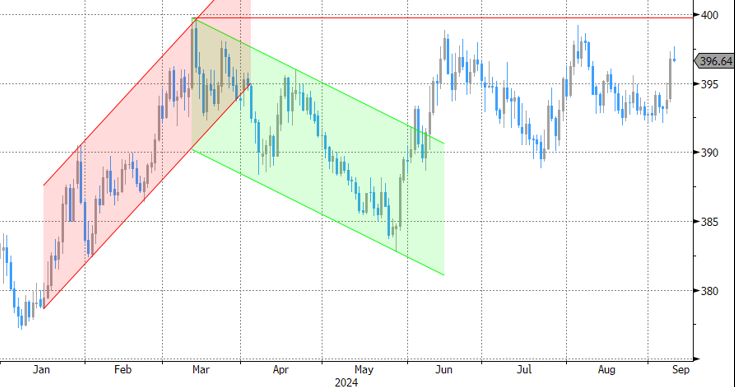
It was the other way around for Hungarian inflation. From a similar 0.7% M/M-pace in July to flat price growth in August (vs +0.2% consensus) with the Y/Y-number falling back in the tolerance band around the central bank’s 3% inflation target (3.4% Y/Y from 4.1% vs 3.6% consensus). Details showed stable food prices in August while services prices rose by 0.4% and rents by 0.9%. Prices for clothing and footwear and for electricity, gas and other fuels, fell. It’s welcome news for the central bank who skipped a rate cut in August, hoping to find the right settings in September. Inflation developments, the reaction function of the Fed/ECB and risk perception (HUF) are key in the decision making process. Only the latter is becoming an issue in continuing the cutting cycle with EUR/HUF yesterday spiking to 397 on reports that PM Orban intends to raise spending going into 2026 elections, potentially derailing public finances.
Graphs
EUR/CZK: Czech crown attempt to strengthen beyond 25 fails as higher-than-expected inflation had no strong enough legs
EUR/HUF: forint is trying to look for a bottom after a recent drop amid resurgent fiscal spending worries
Italian 30-yr yield nearing the lower bound of a sideways trading range. Today’s auction drew record demand
DXY has set its sights on first resistance around 102. Will inflation numbers tomorrow do the trick?
USD/JPY Mid-Day Outlook
Daily Pivots: (S1) 142.15; (P) 142.97; (R1) 144.00; More...
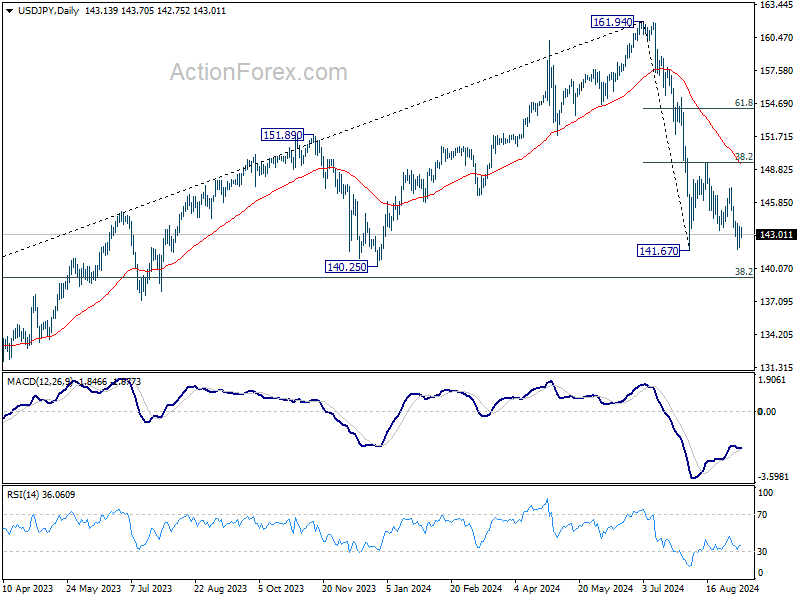
Range trading continues in USD/JPY and intraday bias stays neutral for the moment. Further decline is expected as long as 147.20 resistance holds. On the downside, decisive break of 141.67 will resume whole decline from 161.95 high. Next target will be 140.25 support.
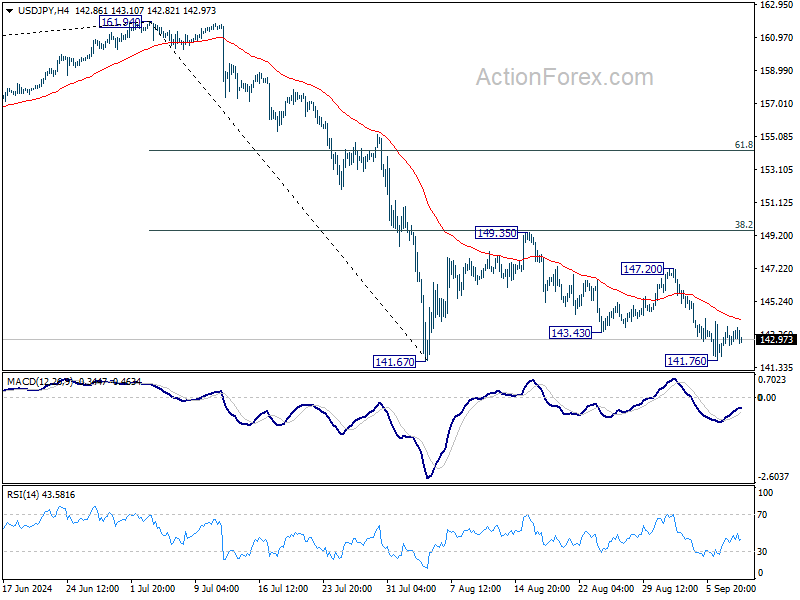
In the bigger picture, fall from 161.94 medium term top is seen as correcting whole up trend from 102.58 (2021 low). Deeper decline could be seen to 38.2% retracement of 102.58 to 161.94 at 139.26, which is close to 140.25 support. In any case, risk will stay on the downside as long as 55 W EMA (now at 149.21) holds. Nevertheless, firm break of 55 W EMA will suggest that the range for medium term corrective pattern is already set.