Sample Category Title

USD/CAD Weekly Outlook

USD/CAD's strong rally last week suggests that consolidative pattern from 1.3845 has completed with three waves to 1.3588, after being supported by 38.2% retracement of 1.3716 to 1.3845 at 1.3589 Initial bias stays on the upside this week for 1.3790 resistance first. Firm break there will likely resume whole rally from 1.3176 to 61.8% projection of 1.3176 to 1.3845 from 1.3588 at 1.4025. Nevertheless, break of 1.3656 minor support will dampen this bearish case.

In the bigger picture, price actions from 1.3976 (2022 high) are viewed as a corrective pattern. In case of another fall, strong support should emerge above 1.2947 resistance turned support to bring rebound. Firm break of 1.3976 will confirm up resumption of whole up trend from 1.2005 (2021 low). Next target is 61.8% projection of 1.2401 to 1.3976 from 1.3176 at 1.4149.

In the longer term picture, price actions from 1.4689 (2016 high) are seen as a consolidation pattern, which might have completed at 1.2005. That is, up trend from 0.9506 (2007 low) is expected to resume at a later stage. This will remain the favored case as long as 1.2947 resistance turned support holds.

GBP/JPY Weekly Outlook

GBP/JPY's pullback from 208.09 extended lower last week but recovered after hitting 202.08. Initial bias remains neutral this week first. Further fall is in favor as long as 205.77 resistance holds. This decline from 208.09 might be correcting the whole rise from 178.32 already. Break of 202.08 will target 55 D EMA (now at 201.21). Sustained break there will target 38.2% retracement of 178.32 to 208.09 at 196.71. Nevertheless, break of 205.77 will retain near term bullishness and bring retest of 208.09 high.

In the bigger picture, medium term outlook will stay bullish as long as 188.63 resistance turned support holds. Long term up trend remains in favor to continue through 208.09 at a later stage. However, firm break of 188.63 will be a strong sign of bearish trend reversal.

In the longer term picture, rise from 122.75 (2016 low) is seen as the third leg of the pattern from 116.83 (2011 low). Next target is 138.2% projection of 116.83 to 195.86 from 122.75 at 231.96. Outlook will stay bullish as long as 188.63 resistance turned, or until a clear reversal pattern forms.

EUR/JPY Weekly Outlook

EUR/JPY's fall from 175.41 short term top extended lower last week but recovered after hitting 169.98. Initial bias remains neutral this week first, and further fall is in favor as long as 172.91 resistance holds. Below 169.98 will target 38.2% retracement of 153.15 to 175.41 at 166.90, as a correction to whole rise from 153.15. On the upside, though, break of 172.91 resistance will revive near term bullishness and bring retest of 175.41 high.

In the bigger picture, medium term outlook will stay bullish as long as 164.29 resistance turned support holds. Long term up trend is still in favor to continue through 175.41 at a later stage. However, firm break of 164.29 will be a strong sign of bearish trend reversal.

In the long term picture, rise from 114.42 (2020 low) is seen as the third leg of the whole up trend from 94.11 (2012 low). Next target is 138.2% projection of 94.11 to 149.76 from 114.42 at 191.32. This will remain the favored case as long as 164.29 resistance turned support holds.

EUR/GBP Weekly Outlook

EUR/GBP recovered after edging lower to 0.8382 last week. With break of 55 4H EMA (now at 0.8421), initial bias is mildly on the upside for stronger rebound to 55 D EMA (now at 0.8477). Nevertheless, outlook will stay bearish as long as 0.8498 resistance holds, and larger down trend should resume through 0.8382 at a later stage.

In the bigger picture, down trend from 0.9267 (2022 high) is in progress. Next target is 0.8201 key support (2022 low). For now, outlook will remain bearish as long as 0.8643 resistance holds, even in case of stronger rebound.

In the long term picture, price action from 0.9499 (2020 high) is seen as part of the long term range pattern from 0.9799 (2008 high). Range trading should continue between 0.8201 and 0.9499, until there is clear signal of imminent breakout.

EUR/AUD Weekly Outlook

EUR/AUD's rebound from 1.5996 extended higher last week and broke through 55 D EMA (now at 1.6216). The development is taken as the first sign that whole correction from 1.0762 has completed with three waves down to 1.6000 fibonacci support. Further rise is expected this week as long as 1.6171 minor support holds, to 1.6148 resistance. Firm break there will solidify this bullish case. Nevertheless, break of 1.6171 minor support will dampen this bullish view and bring retest of 1.5996 instead.

In the bigger picture, fall from 1.7062 medium term top is seen as a correction to the up trend from 1.4281 (2022 low) only. Strong support is still expected between 1.5846 and 38.2% retracement of 1.4281 to 1.7062 at 1.6000 to bring rebound. Break of 1.6148 resistance will argue that the correction has completed.

In the longer term picture, price actions from 1.9799 (2020 high) are seen as a long term decline at the same scale as the rise from 1.1602 (2012 low). Rebound from 1.4281 is seen as the second leg. As long as 55 M EMA (now at 1.5977) holds, this second leg could still extend higher. However, sustained trading below 55 M EMA will open up the bearish case for extending the decline through 1.4281 low.

EUR/CHF Weekly Outlook

EUR/CHF reversed after edging higher to 0.9772 but recovered after breaching 38.2% retracement of 0.9476 to 0.9772 at 0.9659. Initial bias is turned neutral this week first. Strong bounce from current level will maintain near term bullishness. Break of 0.9972 will resume the rally from 0.9772. However, firm break of 0.9614 will extend the fall from 0.9772 to 61.8% retracement at 0.9589 and possibly below.

In the bigger picture, rebound from 0.9252 medium term bottom might not be completed yet. But even in case of resumption, strong resistance could emerge from 1.0095 to limit upside. Medium term outlook will be neutral at best as long as 1.0094 structural resistance holds. Meanwhile, break of 0.9476 will bring retest of 0.9252 low.

In the long term picture, fall from 1.2004 (2018 high) is part of the multi-decade down trend. Firm break of 1.0095 resistance is needed to be the first sign of long term bottoming. Otherwise, outlook will remain bearish.

Shift in Risk Sentiment a Short-Lived Anomaly or Start of a Longer Correction?

Last week proved to be a whirlwind for global markets, marked by a series of shocking events—from the failed assassination attempt on Donald Trump last weekend, to the historic global tech outage that occurred on Friday that brought significant attention but surprisingly little reaction from the financial markets. Still, after a volatile week for stocks, questions are raised about whether the observed shift in risk sentiment is a temporary blip or the beginning of a more prolonged sluggish corrective phase that could color the upcoming months.

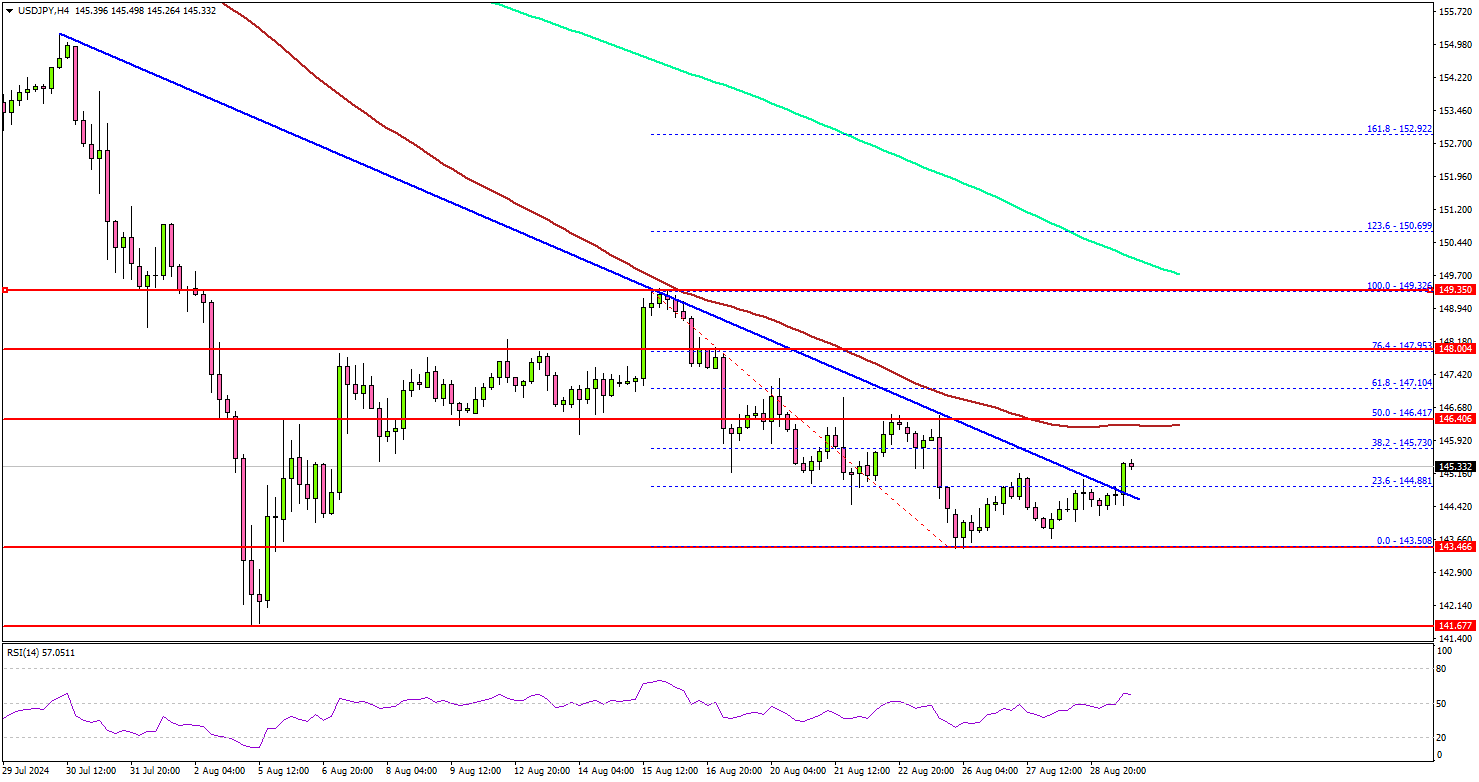
In the currency markets, the reaction was also pronounced, reflecting a clear picture of investor unease. Commodity currencies bore the brunt of this nervousness, with Kiwi leading the decline, followed by Aussie and then Loonie. Admittedly, Kiwi's slide is particularly linked to anticipations of an earlier-than-expected rate cut by RBNZ, while Loonie is being pressured by another looming rate cut from BoC. Yet's Aussie's weakness across the board suggests that these currencies are significantly impacted by the prevailing risk-off mood.

Conversely, traditional safe-haven currencies like the Swiss Franc, Japanese Yen, and Dollar emerged as top performers, benefiting from the surge in risk aversion. Notably, Dollar managed a turnaround even amid strong market consensus around two impending Fed rate cuts this year, highlighting its dual role as a safe-haven asset and a currency influenced by domestic monetary policy expectations. Euro and Sterling, meanwhile, ended in the middle of currency performance rankings.

From Record Highs to Steep Pullbacks: Are US Markets Entering Pre-Election Cautious Phase?

The US stock markets were on a rollercoaster ride last week, with pronounced volatility that caught many investors off guard. DOW epitomized this tumult, soaring to an all-time high of 41,376.00 before a stark reversal led it to close the week at 40,287.53, less than 300 pts above the previous week's close. This pattern was mirrored in broader indices as well, with NASDAQ and S&P 500 suffering their most worst week since April.

Initially, market analysts pointed to sector rotation as the primary driver of these fluctuations. However, as the week progressed and even Russell 2000 also declined sharply towards the end of the week, it became evident that other factors were at play.

A deeper analysis suggests that investors are beginning to look beyond the anticipated rate cuts by Fed, with over 90% chance, as indicated by fed fund futures, of a cut in September and another in December. However, the positive impact of these expectations on the market seems to be waning. Instead, investors could have started to lock in gains from the robust rally since April, adopting a more cautious stance as the US presidential election looms on the horizon.

The presidential race is adding a layer of complexity to market sentiments. Donald Trump is clearly seen as the front runner, and speculation is rampant about shifts in the candidacy of the Democrats, on whether and when Joe Biden would quit, and who would be his replacement. Additionally, the implications of Trump's policy directions, both domestically and internationally are still not totally clear.

Given that the election is more than three months away, it's plausible that the markets may enter a protracted period of sluggish consolidation any time, reflecting the heightened uncertainty.

Looking ahead, the upcoming earnings season, which is going into full swing, will be a critical barometer to gauge that's happening underneath. Notable sell-off in stocks after good earning results would indicate that profit-taking is already underway and could signal the start of a broader market consolidation.

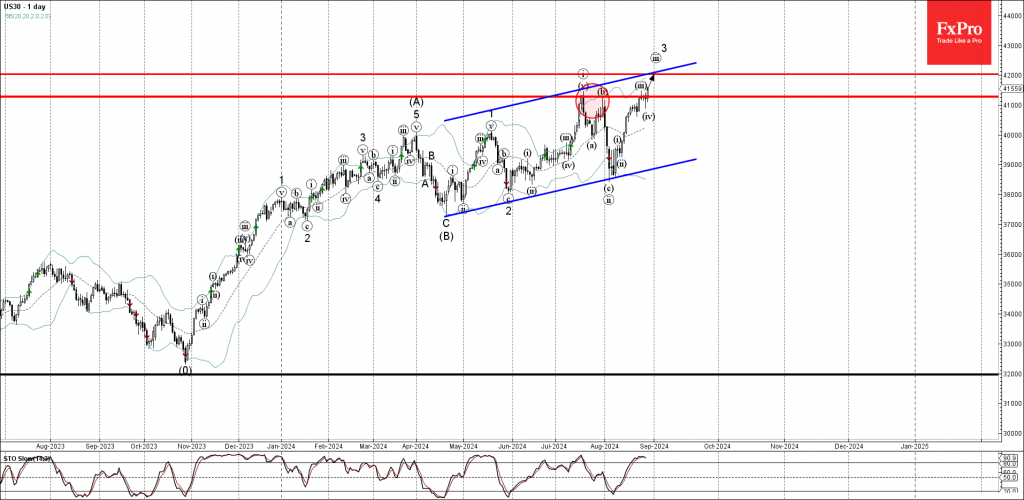
Technically, some consolidations would be seen in DOW below 41376.00 in the near term. But outlook will stay bullish as long as 39889.05 resistance turned support holds. Another rally is expected to 61.8% projection of 32327.20 to 39889.05 from 38000.95 at 42674.18. Nevertheless, decisive break of 39889.05 would open up deeper correction to 55 D EMA (now at 39317.24), or even further to 38000.96 support.

NASDAQ's steep pullback last week confirmed short term topping at 18671.06. Consolidations should be relatively brief as long as 17494.01 support holds. Another rally is expected sooner rather than later, to extend the up trend to 100% projection of 12543.84 to 16538.86 from 15222.77 at 19217.78. However, firm break of 17494.01 and sustained trading below 55 D EMA (now at 17429.71) would argue that larger correction is underway. In this bearish case, deeper correction could be seen back to 15222.77/16538.86 support zone.

Vulnerability Also Seen Across Other Major Markets

The global stock markets were not performing well too, and are looking vulnerable.

In Japan, Nikkei index plummeted from record high of 42,426.77, coinciding with the sharp rebound in Yen, which some market observers attribute to unconfirmed market intervention. Nevertheless, Near term outlook will stay bullish as long as 55 D EMA (now at 39571.47) holds. Strong bounce from current level will keep the long term up trend alive for another high above 42426.77 at a later stage.

However, considering that Nikkei was just rejected by long term rising channel resistance, sustained break of 55 D EA will argue that it's already in larger scale correction. In this case, deeper fall would be seen to 38.2% retracement of 25661.89 to 4246.77 at 36022.58, which is close to 55 W EMA (now at 36065.32).

In Germany, DAX is now in the third leg of the corrective pattern from 18892.892 high. Strong support from 17951.17 will keep near term outlook neutral and for the base for another rally soon. However, decisive break of 17951.77 will complete a head and should top pattern, and bring deeper fall to 38.2% retracement of 14630.21 to 28892.92 at 17264.55.

In the UK, the post election bounce has been very week, and capped below 8307.92 near term resistance. Break of 38.2% retracement of 7404.08 to 8474.41 at 8065.64 would bring deeper fall to 61.8% retracement at 7812.94, even just a correction to rise from 7404.08.

Dollar Index Finds Footing and Recovers on Shift in Risk Sentiment

Dollar Index demonstrated some resilience last week. Despite briefly dipping to 103.65, it recovered to close the week higher at 104.39. This development provided some evidence against a full-blown bearish outlook for now, as the index found some support at 100% projection of 106.51 to 103.99 from 106.13 at 103.65. Additionally, DXY struggled to sustain below 55 W EMA (now at 104.30) totally.

The expectations of multiple Fed rate cuts this year, combined with an extended period of risk-on market sentiment, were initially seen as catalysts for a deeper selloff in Dollar Index. However, a shift in risk sentiment last week provided a floor for DXY. As the impact of Fed rate cut expectations began to wane, Dollar's next is likely to be heavily influenced by the broader risk market dynamics.

Technically, further decline is still in favor in DXY as long as 105.20 resistance holds. Break of 103.65 and sustained trading below 55 W EMA will bring deeper fall to 102.35 or even further to 100.61.

However, break of 105.20 will argue that price actions from 106.51 is merely a corrective pattern that has completed with three waves to 103.65. Dollar index should then be ready to ready through 106.13/51 resistance zone to resume the rebound from 100.61.

Commodity Currencies Under Pressure

Commodity currencies faced significant headwinds last week, concluding as the weakest performers amidst a broader shift in risk sentiment, in particular in the US and Japan. There prospect of further selloff if the above mentioned bearish scenario in the global stock markets would materialize.

Technically, USD/CAD's extended rally from 1.3588 argues that consolidation pattern from 1.3845 has completed in a three-wave format, after hitting 38.2% retracement of 1.3716 to 1.3845 at 1.3589. Near term focus is now on 1.3790 resistance. Decisive break there will suggest that rise from 1.3176 is ready to resume. Further break of 1.3845 will pave the way to 61.8% projection of 1.3176 to 1.3845 from 1.3588 at 1.4025.

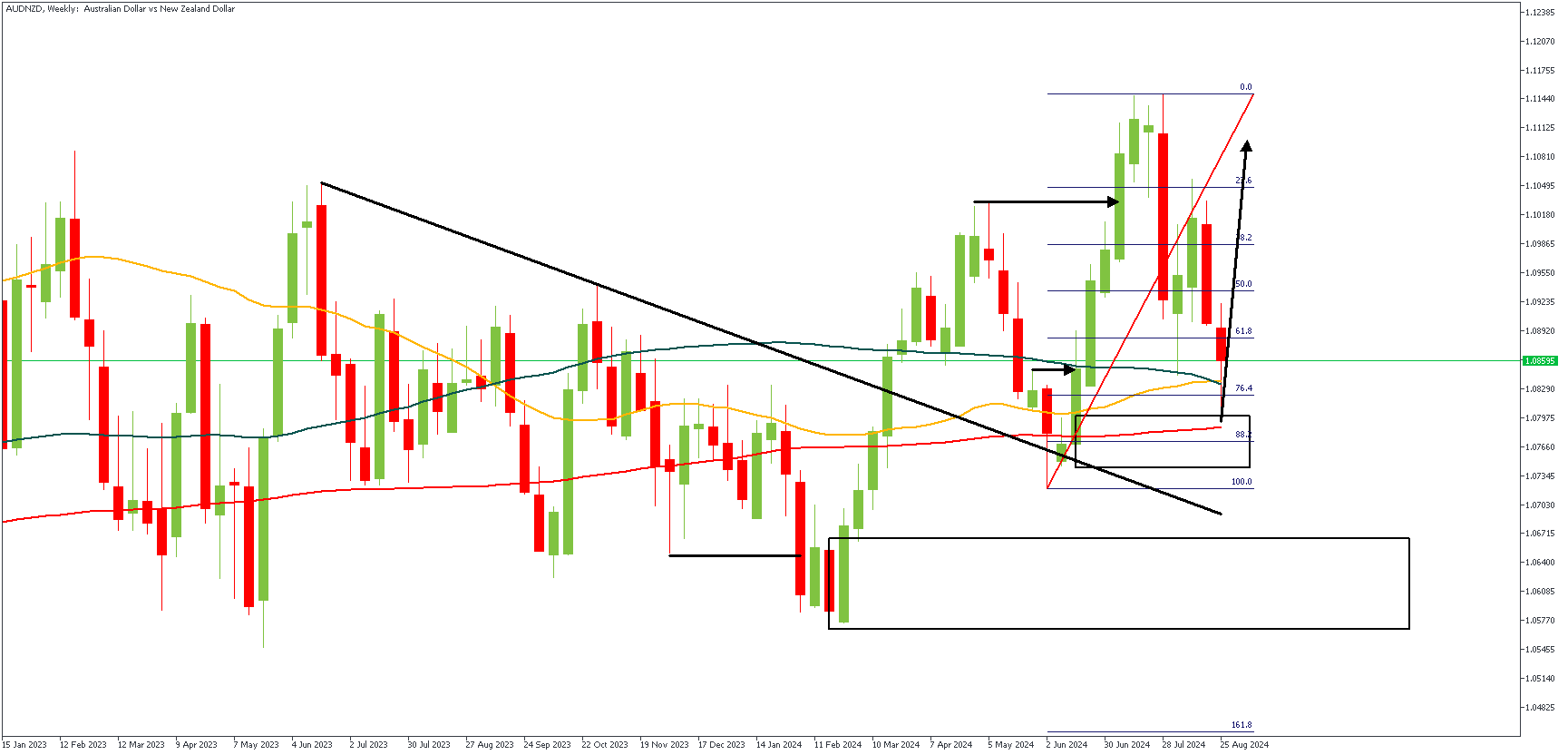
EUR/AUD break of 55 DEMA last week is taken as the first sign that correction from 1.7062 has completed with three waves down to 1.5996, after hitting 38.2% retracement of 1.4281 to 1.7062 at 1.6000. Near term focus is on 1.6418 resistance. Firm break there will solidify this bullish case and target 1.6742 resistance next.

NZD/JPY's extended decline and strong break of 55 D EMA argues that fall from 99.01 is already correcting the rally from 80.42. Further fall is expected as long as 96.39 resistance holds. Next target is 38.2% retracement of 80.42 to 99.01 at 91.90.

USD/CHF Weekly Outlook

USD/CHF dipped to 0.8819 last week as fall from 0.9223 tried to resumed, but recovered since then. Initial bias remains neutral this week first. Further decline is in favor as long as 0.8914 support turned resistance holds. Break of 0.8819 will target 61.8% retracement of 0.8332 to 0.9223 at 0.8672 next. However, break of 0.8914 will turn bias back to the upside for stronger rebound instead.

In the bigger picture, with 0.9243 resistance intact, medium term outlook in USD/CHF is neutral at best. For now, more sideway trading is likely between 0.8332/9243. However, firm break of 0.9243 will indicate larger bullish trend reversal.

In the long term picture, price action from 0.7065 (2011 high) are seen as a corrective pattern to the multi-decade down trend from 1.8305 (2000 high). Strong rebound from 61.8% retracement of 0.7065 to 1.0342 (2016 high) at 0.8317 will start the third leg as a medium term rally. But there will be no sign of long term reversal until firm break of 38.2% retracement of 1.8305 to 0.7065 at 1.1359.

Summary 7/22 – 7/26

Monday, Jul 22, 2024
GMT Ccy Events Consensus Previous
22:45 NZD Trade Balance (NZD) Jun 294M 204M
01:15 CNY 1-Y Loan Prime Rate 3.45% 3.45%
01:15 CNY 5-Y Loan Prime Rate 3.95% 3.95%
GMT Ccy Events
22:45 NZD Trade Balance (NZD) Jun
    Forecast: 294M Previous: 204M
01:15 CNY 1-Y Loan Prime Rate
    Forecast: 3.45% Previous: 3.45%
01:15 CNY 5-Y Loan Prime Rate
    Forecast: 3.95% Previous: 3.95%
Tuesday, Jul 23, 2024
GMT Ccy Events Consensus Previous
14:00 USD Existing Home Sales Jun 4.00M 4.11M
14:00 EUR Eurozone Consumer Confidence Jul P -13 -14
23:00 AUD Manufacturing PMI Jul P 47.2
23:00 AUD Services PMI Jul P 51.2
GMT Ccy Events
14:00 USD Existing Home Sales Jun
    Forecast: 4.00M Previous: 4.11M
14:00 EUR Eurozone Consumer Confidence Jul P
    Forecast: -13 Previous: -14
23:00 AUD Manufacturing PMI Jul P
    Forecast: Previous: 47.2
23:00 AUD Services PMI Jul P
    Forecast: Previous: 51.2
Wednesday, Jul 24, 2024
GMT Ccy Events Consensus Previous
00:30 JPY Manufacturing PMI Jul P 50.5 50
00:30 JPY Services PMI Jul P 49.4
06:00 EUR Germany GfK Consumer Confidence Aug -21.1 -21.8
07:15 EUR France Manufacturing PMI Jul P 45.9 45.4
07:15 EUR France Services PMI Jul P 49.7 49.6
07:30 EUR Germany Manufacturing PMI Jul P 44.5 43.5
07:30 EUR Germany Services PMI Jul P 53.5 53.1
08:00 EUR Eurozone Manufacturing PMI Jul P 46.3 45.8
08:00 EUR Eurozone Services PMI Jul P 52.9 52.8
08:30 GBP Manufacturing PMI Jul P 51.1 50.9
08:30 GBP Services PMI Jul P 52.5 52.1
12:30 CAD New Housing Price Index M/M Jun 0.10% 0.20%
12:30 USD Goods Trade Balance (USD) Jun P -98.0B -99.4B
12:30 USD Wholesale Inventories Jun P 0.50% 0.60%
13:45 CAD BoC Interest Rate Decision 4.50% 4.75%
13:45 USD Manufacturing PMI Jul P 51.5 51.6
13:45 USD Services PMI Jul P 54.5 55.3
14:00 USD New Home Sales M/M Jun 643K 619K
14:30 CAD BoC Press Conference
14:30 USD Crude Oil Inventories -4.9M
23:50 JPY Corporate Service Price Index Y/Y Jun 2.60% 2.50%
GMT Ccy Events
00:30 JPY Manufacturing PMI Jul P
    Forecast: 50.5 Previous: 50
00:30 JPY Services PMI Jul P
    Forecast: Previous: 49.4
06:00 EUR Germany GfK Consumer Confidence Aug
    Forecast: -21.1 Previous: -21.8
07:15 EUR France Manufacturing PMI Jul P
    Forecast: 45.9 Previous: 45.4
07:15 EUR France Services PMI Jul P
    Forecast: 49.7 Previous: 49.6
07:30 EUR Germany Manufacturing PMI Jul P
    Forecast: 44.5 Previous: 43.5
07:30 EUR Germany Services PMI Jul P
    Forecast: 53.5 Previous: 53.1
08:00 EUR Eurozone Manufacturing PMI Jul P
    Forecast: 46.3 Previous: 45.8
08:00 EUR Eurozone Services PMI Jul P
    Forecast: 52.9 Previous: 52.8
08:30 GBP Manufacturing PMI Jul P
    Forecast: 51.1 Previous: 50.9
08:30 GBP Services PMI Jul P
    Forecast: 52.5 Previous: 52.1
12:30 CAD New Housing Price Index M/M Jun
    Forecast: 0.10% Previous: 0.20%
12:30 USD Goods Trade Balance (USD) Jun P
    Forecast: -98.0B Previous: -99.4B
12:30 USD Wholesale Inventories Jun P
    Forecast: 0.50% Previous: 0.60%
13:45 CAD BoC Interest Rate Decision
    Forecast: 4.50% Previous: 4.75%
13:45 USD Manufacturing PMI Jul P
    Forecast: 51.5 Previous: 51.6
13:45 USD Services PMI Jul P
    Forecast: 54.5 Previous: 55.3
14:00 USD New Home Sales M/M Jun
    Forecast: 643K Previous: 619K
14:30 CAD BoC Press Conference
    Forecast: Previous:
14:30 USD Crude Oil Inventories
    Forecast: Previous: -4.9M
23:50 JPY Corporate Service Price Index Y/Y Jun
    Forecast: 2.60% Previous: 2.50%
Thursday, Jul 25, 2024
GMT Ccy Events Consensus Previous
08:00 EUR Germany IFO Business Climate Jul 89.0 88.6
08:00 EUR Germany IFO Current Assessment Jul 88.3
08:00 EUR Germany IFO Expectations Jul 89
08:00 EUR Eurozone M3 Money Supply Y/Y Jun 1.90% 1.60%
12:30 USD Initial Jobless Claims (Jul 19) 238K 243K
12:30 USD GDP Annualized Q2 P 1.90% 1.40%
12:30 USD GDP Price Index Q2 P 2.60% 3.10%
12:30 USD Durable Goods Orders Jun 0.40% 0.10%
12:30 USD Durable Goods Orders ex Transport Jun 0.20% -0.10%
14:30 USD Natural Gas Storage 10B
23:30 JPY Tokyo CPI Y/Y Jul 2.30%
23:30 JPY Tokyo CPI Core Y/Y Jul 2.20% 2.10%
23:30 JPY Tokyo CPI Core-Core Y/Y Jul 1.80%
GMT Ccy Events
08:00 EUR Germany IFO Business Climate Jul
    Forecast: 89.0 Previous: 88.6
08:00 EUR Germany IFO Current Assessment Jul
    Forecast: Previous: 88.3
08:00 EUR Germany IFO Expectations Jul
    Forecast: Previous: 89
08:00 EUR Eurozone M3 Money Supply Y/Y Jun
    Forecast: 1.90% Previous: 1.60%
12:30 USD Initial Jobless Claims (Jul 19)
    Forecast: 238K Previous: 243K
12:30 USD GDP Annualized Q2 P
    Forecast: 1.90% Previous: 1.40%
12:30 USD GDP Price Index Q2 P
    Forecast: 2.60% Previous: 3.10%
12:30 USD Durable Goods Orders Jun
    Forecast: 0.40% Previous: 0.10%
12:30 USD Durable Goods Orders ex Transport Jun
    Forecast: 0.20% Previous: -0.10%
14:30 USD Natural Gas Storage
    Forecast: Previous: 10B
23:30 JPY Tokyo CPI Y/Y Jul
    Forecast: Previous: 2.30%
23:30 JPY Tokyo CPI Core Y/Y Jul
    Forecast: 2.20% Previous: 2.10%
23:30 JPY Tokyo CPI Core-Core Y/Y Jul
    Forecast: Previous: 1.80%
Friday, Jul 26, 2024
GMT Ccy Events Consensus Previous
12:30 USD Personal Income M/M Jun 0.40% 0.50%
12:30 USD Personal Spending Jun 0.30% 0.20%
12:30 USD PCE Price Index M/M Jun 0.10% 0.00%
12:30 USD PCE Price Index Y/Y Jun 2.60%
12:30 USD Core PCE Price Index M/M Jun 0.20% 0.10%
12:30 USD Core PCE Price Index Y/Y Jun 2.60%
14:00 USD Michigan Consumer Sentiment Jul F 66 66
GMT Ccy Events
12:30 USD Personal Income M/M Jun
    Forecast: 0.40% Previous: 0.50%
12:30 USD Personal Spending Jun
    Forecast: 0.30% Previous: 0.20%
12:30 USD PCE Price Index M/M Jun
    Forecast: 0.10% Previous: 0.00%
12:30 USD PCE Price Index Y/Y Jun
    Forecast: Previous: 2.60%
12:30 USD Core PCE Price Index M/M Jun
    Forecast: 0.20% Previous: 0.10%
12:30 USD Core PCE Price Index Y/Y Jun
    Forecast: Previous: 2.60%
14:00 USD Michigan Consumer Sentiment Jul F
    Forecast: 66 Previous: 66

Weekly Market Outlook: US PCE, GDP, and Earnings Expected to Drive Volatility

  • This week, markets were influenced by trade war fears, US political developments, and a global cyber outage.
  • In Asia, the Japanese yen weakened, and Chinese authorities remained silent on economic goals despite weak data.
  • Next week, US PCE and GDP data, along with Euro Area and UK PMI data, and potential Chinese economic measures will be key drivers of market volatility.
  • The Nasdaq 100’s weekly chart shows a potential evening star candlestick pattern, hinting at further downside.

Week in Review: Trade War Fears and Softening US Data

The week is concluding on an intriguing note, with markets grappling with several issues. Early in the week, news that the US was considering additional sanctions on chip makers doing business with China reignited trade war fears. Meanwhile, the US Presidential election gained momentum with the Republican National Convention (RNC), bolstering former President Trump’s position.

Positive earnings reports from chipmakers were dampened by trade war concerns and weakening US data. Additionally, a global cyber outage on Friday disrupted banks, airports, and many companies. The outage, apparently caused by an update to a product from CrowdStrike, the cybersecurity firm, impacted customers using Windows operating systems.

The outage also affected trading, which was evident during the early hours of the UK session as liquidity seemed thin. However, markets picked up as the US session began, experiencing significant volatility. Gold saw an aggressive selloff due to a strengthening US dollar and rising US yields.

*The chart shows the drop off in volatility during the market outage in the early hours of Friday.

CBOE Volatility Index – Daily Chart 

Source: LSEG

In Asia, the Japanese yen weakened further as authorities failed to confirm whether FX intervention occurred this week, benefiting the US dollar. Market participants were also frustrated by the lack of clarity from Chinese authorities after the plenum concluded on Thursday. Despite weak data released on Monday, officials remained tight-lipped about the steps to achieve economic goals.

US indices faced challenges despite some positive earnings updates. At the time of writing, both the S&P 500 and Nasdaq 100 were attempting a recovery but were still on track to end the week in the red. The rotation out of mega-cap tech stocks continued, particularly affecting the tech-heavy Nasdaq, which was down 3.1% at the time of writing.

The Week Ahead: US Inflation, GDP and Company Earnings to Drive Volatility

US

Looking ahead to next week, there is a lot happening globally which could have an impact on financial markets. Market participants will no doubt be hoping for a soft US PCE print and signs of strong growth from the GDP number. The combination should keep current rate cut expectations in place with any surprises likely to stoke some short term volatility.

The core PCE deflator is expected to increase by 0.2% month-on-month, although there’s a chance it could be lower. The core CPI recently rose by just 0.1% month-on-month, but some elements of the PPI that feed into the PCE deflator, like portfolio fees and transport costs, support the 0.2% estimate. Even with this increase, it would align with the annual rate needed to achieve 2% inflation over time, which should maintain expectations for interest rate cuts.

Europe + UK

The Euro Area and the UK will both release the HCOB and S&P Global PMI data. The manufacturing and services numbers will give us further insights into the performance of the two economies. The Euro Area and UK composite PMI hit a three-month low in June with market participants keeping an eye on whether this was a once-off or the start of a broader slowdown.

Asian Markets

The People’s Bank of China is set to announce the 1-year and 5-year loan prime rates on Monday, with expectations that the rates will stay unchanged following no adjustments to the MLF this month. No significant data releases are anticipated from China next week.

Japan will have a quiet week, but following recent volatility, it may be worthwhile to pay attention to any further comments or signs of FX intervention. This may prove difficult given the authorities refusal to confirm either way. There is Tokyo CPI data but it is unlikely to have material impact on the yen given that inflation is not the main concern for the Bank of Japan, unlike its G7 counterparts.

Two additional factors that could influence markets in the coming week are geopolitical tensions in the Middle East following a drone attack on Tel Aviv, Israel, just before the weekend. Any indications of escalating tensions or progress toward a peace agreement could have contrasting effects on market sentiment. Market participants will also be watching for any signs or statements from Chinese authorities regarding potential steps to achieve their economic targets.

Chart of the Week

This week, my chart focus is on the Nasdaq 100. After last week’s selloff, the weekly chart is set to form an evening star candlestick pattern, suggesting more downside ahead. The ascending trendline, which has been in play since late April, might finally be retested. This will likely provoke an intriguing reaction considering all the factors that could impact the Nasdaq and broader markets in the coming week.

Nasdaq 100 Daily Chart – June 28, 2024

Key Levels to Consider:

Support:

  • 19000
  • 18500
  • 18000

Resistance:

  • 19650
  • 20000
  • 20480

The Weekly Bottom Line: Nearing the Pivot Point

U.S. Highlights

  • After an eerily calm few months, a fresh dose of volatility descended across global financial markets this week.
  • Top Fed officials speaking this week noted that they are getting ‘closer’ to cutting interest rates. Financial markets have fully priced the first cut to come in September.
  • Retail sales and industrial production data for June came in better than expected, while homebuilding remains under pressure.

Canadian Highlights

  • Economic data was under the microscope this week, ahead of the Bank of Canada’s interest rate decision on July 24th. An interest rate cut is universally expected, with both business sentiment and retail sales pointing to weak demand in Canada’s economy, which should help ease inflation pressures going forward.
  • However, if Governor Macklem opts to surprise markets with a hold, he will likely cite a lack of progress on core inflation metrics in recent months, driven by services inflation moving in the wrong direction recently.

U.S. – Nearing the Pivot Point

After an eerily calm few months, this week brought a fresh dose of volatility across global financial markets. The equity selloff was heavily concentrated across the tech sector, following some speculation that the Biden administration is considering implementing new rules to clamp down on companies exporting chipmaking equipment to China. While the selloff widened as the week progressed, small-cap stocks still managed to end the week 2% higher and are up 8% over the past nine trading days. The S&P 500 is down nearly 0.5% over that same period. The recent outperformance has largely been driven by market participants becoming increasingly confident that the Fed will begin easing its policy stance over the coming months. At the time of writing, market odds are fully priced for the first cut to come in September, with 63 bps of easing expected by year-end.

Based on how recent data has trended, investors have good reason to suspect that the Fed will likely begin dialing back its policy rate come September. Last week’s CPI report showed inflationary pressures cooling faster than expected, while recent readings of the labor market suggest that nearly all the pandemic imbalances have been restored (Chart 1). Speaking at an event at the Washington Economic Club this week, Powell reiterated the point on the labor market, citing “… essentially we’re back at equilibrium”. On inflation, Powell noted that recent readings have “added somewhat to confidence”. Other Fed officials including Williams and Waller echoed Powell’s sentiment this week, noting that the improved inflation trajectory has brought the Fed “closer” to cutting interest rates and that the current economic data are consistent with the Fed achieving a ‘soft landing’.

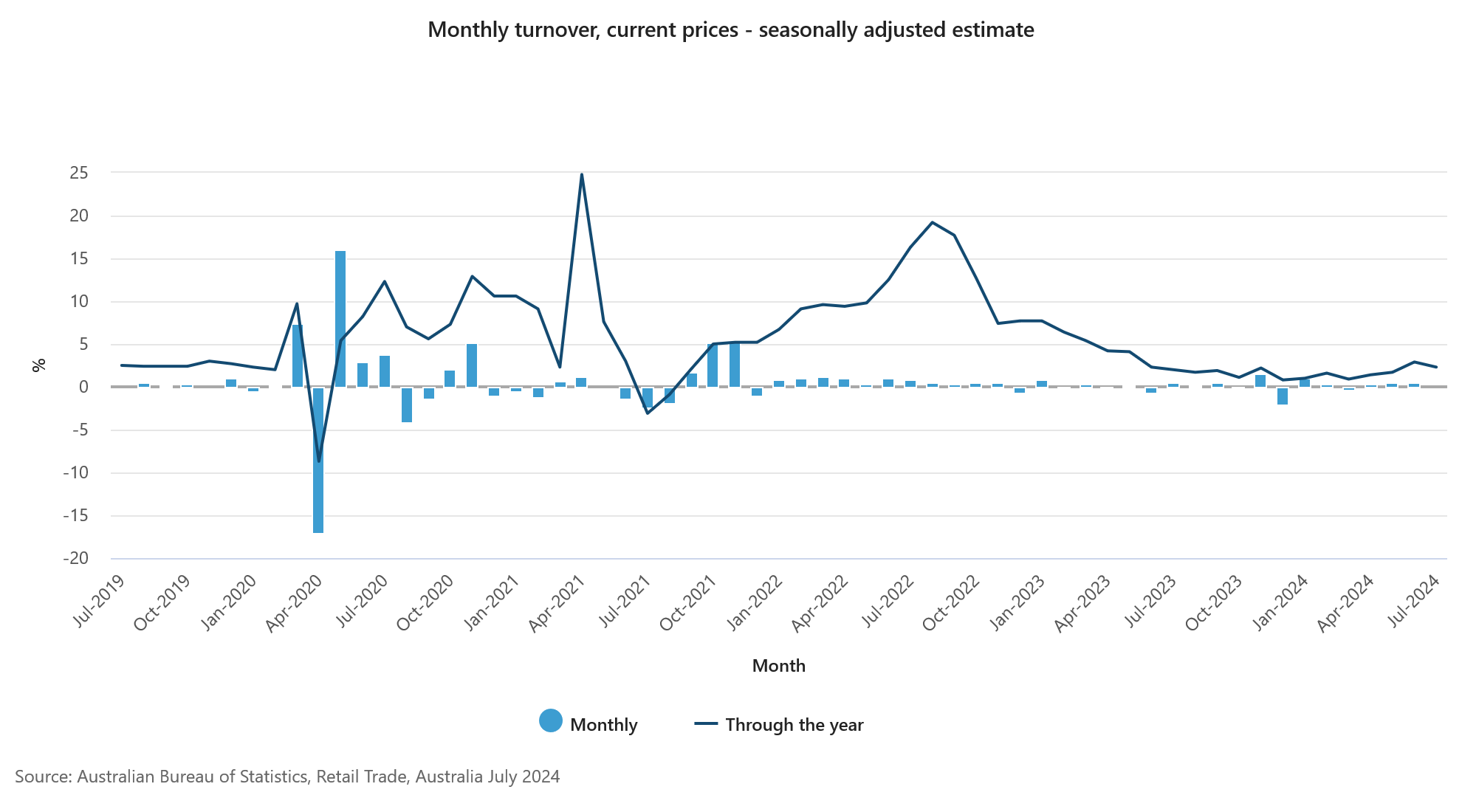
Indeed, economic data out this week support the notion that while the economy is slowing, it’s not falling off a cliff. Retail sales were flat in June, but that was largely related to a sharp pullback in auto sales due to a cyber attack on a software firm that supports car dealers across the country. Meanwhile, the control retail group – used in the BEA’s calculation of PCE – rose by a healthy 0.9% m/m, while revisions to prior months showed a stronger pace of consumer spending in April/May. Consumer spending is tracking around 2% annualized for Q2, a touch higher than Q1’s 1.5% but handily below the +3% pace averaged through the second half of last year.

Meanwhile, industrial production data for June rose by a respectable 0.6% m/m and recorded its largest quarterly gain since Q2-2021. Encouragingly, the manufacturing index has now posted gains in four of the last five months and is closing in on levels not seen since the Federal Reserve first started hiking interest rates back in March 2022. Conversely, home building activity continues to feel the pinch of higher rates, with Q2 housing starts slipping to a new post-Fed tightening low (Chart 2).

All told, it’s becoming increasingly clear the U.S. economy is downshifting from last year’s breakneck rate of expansion to something closer to a trend-like pace. Provided the next two inflation readings don’t show any meaningful reversal in recent trends, the Fed likely has a clear path to start cutting rates in the coming months.

Canada – Will the BoC Focus on the Fly or the Ointment?

This week’s economic data was under the microscope coming ahead of the Bank of Canada (BoC) interest rate announcement and updated Monetary Policy Report on July 24th. Canada’s inflation data garnered the highest scrutiny, and it came in lower than consensus expectations with a 2.7% reading – the slowest pace in more than three years. This reading cemented market bets for a quarter-point interest rate cut next week. We agree that is the most likely outcome, however, a renewed uptick in services inflation could spook the BoC into holding rates steady.

Scratching beneath the surface on CPI inflation, there is one fly in the ointment. The BoC’s preferred core inflation measure didn’t make any progress in June, stuck at 2.8% year-on-year (y/y) on average (Chart 1). Narrowing in on the most recent three months, core inflation pressures picked up from 2.5% in May to 2.9% in June. If the Bank of Canada opts to surprise markets next week and take a pause on rate cuts, this will likely be the reason that they cite.

It will come down to how much weight the Bank of Canada puts on this particular fly. Other activity and sentiment indicators are sending very clear signals that the Canadian economy is bending under the weight of higher rates. The BoC’s Business Outlook Survey for the second quarter was one such sign. The survey described business sentiment as low, and the main factors businesses mentioned were weighing on sentiment were: elevated interest rates, weak demand for non-essential goods and services, and ongoing high costs. Businesses expectations for future sales also remained historically low, and those tied to discretionary consumer spending are particularly weak (Chart 2). Businesses also expect growth in their selling prices to continue easing, which is good news for future progress on the Bank’s inflation target.

May retail sales were another sign that the consumer is also weakening. Sales were down more than expected on the month, with eight of nine industry categories and nine of ten provinces seeing sales fall. Sales were also down 0.7% month/month (m/m) in real terms. The one area to gain ground was motor vehicle and parts dealers (+0.8% m/m), led by an increase at new car dealers. Apart from that, there were no other silver linings in May retail sales. Even the advance retail indicator is pointing to another decline in sales for June.

Now it is over to the BoC’s announcement, which will also update the bank’s economic forecast. Since the last update in April, inflation has fallen slightly faster than the Bank had expected, and growth has been weaker. What we don’t know is how many rate cuts the Bank had assumed within that view. But whatever it was, there is a strong argument for a bit more easing now. The fact that the U.S. Federal Reserve is also looking like they could cut a bit earlier than was thought a few months ago helps the case for a BoC cut. That reduces any BoC worries about spreads widening too much and weakening the Canadian dollar, which would complicate their job reining in inflation.