

Sample Category Title
NZDUSD Extending Lower in Zigzag Correction
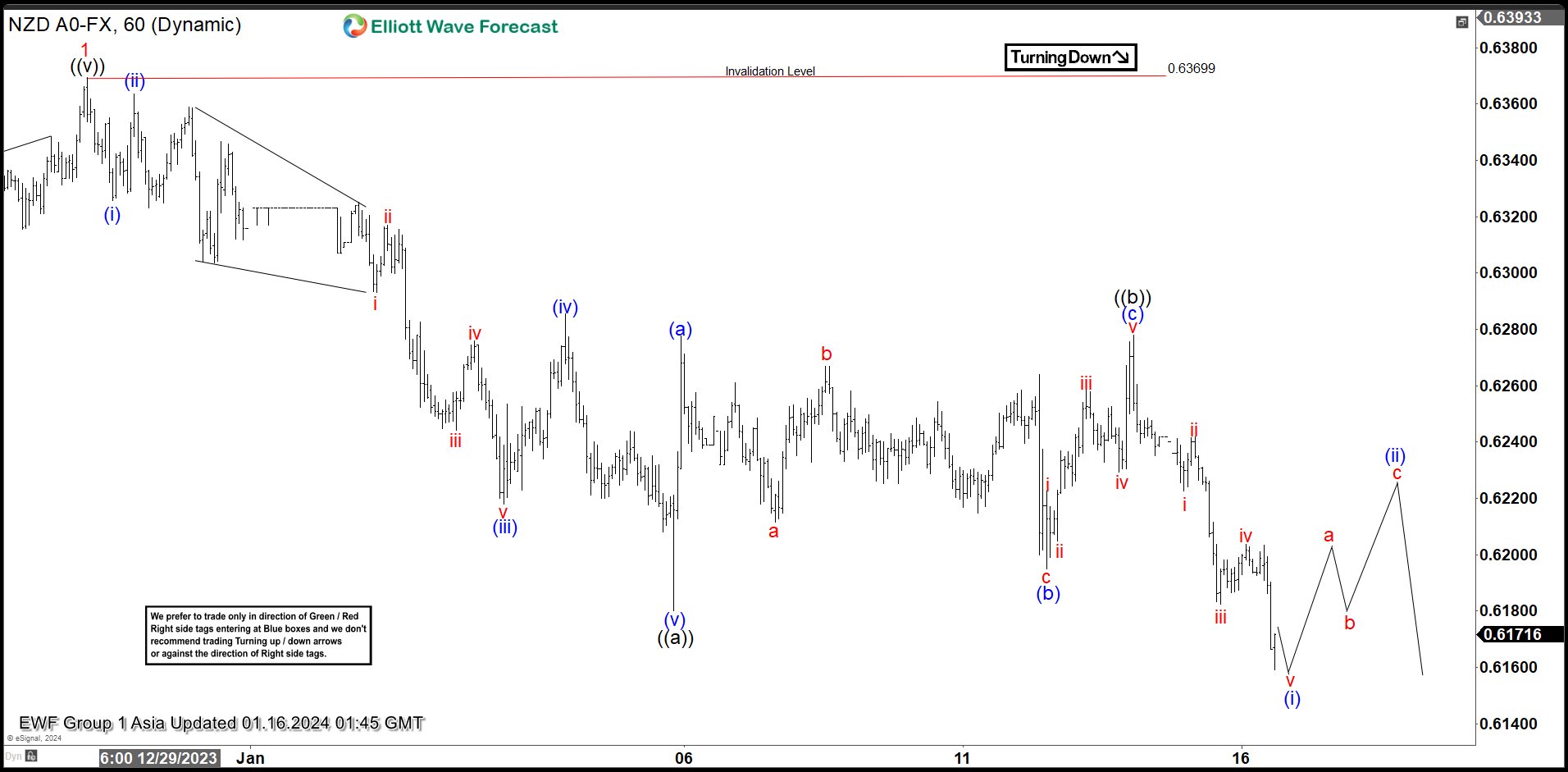
Short term Elliott Wave View in NZDUSD suggests that rally to 0.637 ended wave 1. Pair is now doing wave 2 pullback to correct cycle from 10.26.2023 low. Internal subdivision of wave 2 is unfolding as a zigzag Elliott Wave structure. Down from wave 1, wave (i) ended at 06325 and rally in wave (ii) ended at 0.636. Pair then resumes lower in wave (iii) towards 0.6218 and wave (iv) rally ended at 0.6285. Final leg down wave (v) ended at 0.618 which completed wave ((a)).
Wave ((b)) correction ended at 0.6278 with internal subdivision as a zigzag. Up from wave ((a)), wave (a) ended at 0.6277, wave (b) ended at 0.6195, and wave (c) higher ended at 0.6278. This completed wave ((b)) in higher degree. Pair has resumed lower in wave ((c)). Down from wave ((b)), wave i ended at 0.622 and wave ii ended at 0.6242. Wave iii lower ended at 0.618 and wave iv ended at 0.62036. Expect wave v lower to end soon which should complete wave (i). Pair should then rally in wave (ii) to correct cycle from 1.12.2024 high in 3, 7, or 11 swing before pair resumes lower. Near term, as far as pivot at 0.637 high stays intact, expect rally to fail in 3, 7, 11 swing for further downside.
NZDUSD 60 Minutes Elliott Wave Chart
NZDUSD Elliott Wave Video
https://www.youtube.com/watch?v=qdF60IkBcTI
NZIER survey reveals improved business outlook and steady RBNZ policy anticipated
The latest quarterly survey of business opinion by New Zealand Institute of Economic Research revealed notable improvement in business sentiment. Only a net 2% of firms now expect general business conditions to deteriorate, compared to the 52% pessimism recorded in the previous quarter.
Christina Leung, principal economist at NZIER, expressed confidence that inflation in New Zealand is on track to return to RBNZ's target range of 1% to 3% by the second half of 2024, with a projection of reaching 2% in the first half of 2025.
"It's a pretty encouraging picture for the Reserve Bank and it reinforces our expectations that there won't be further increases," in interest rate, Leung stated.
However, Leung also mentioned that NZIER does not anticipate a reduction in the cash rate until the middle of the next year, advocating for a "wait and see approach." This cautious stance reflects a recognition of the need to monitor economic trends before making significant policy changes.
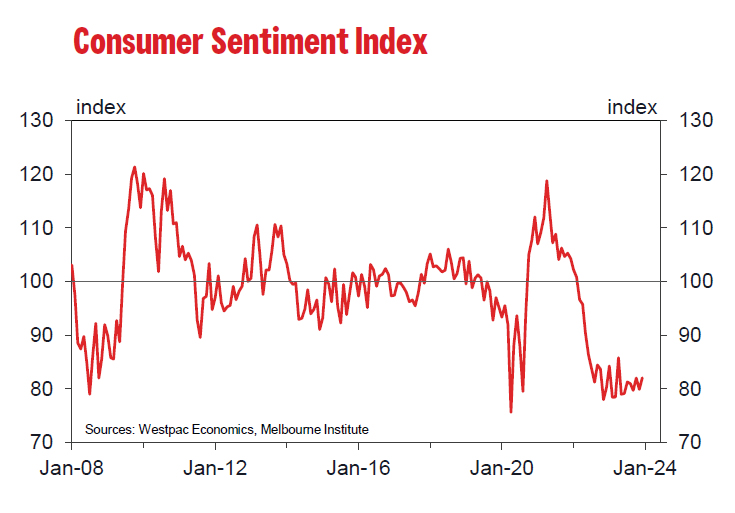
Australia’s Westpac consumer sentiment plunges to 81, bleakest start since 90s
Australia's Westpac Consumer Sentiment index dropped by -1.3% mom to 81 in January. This figure is especially significant as it ranks in the bottom 7% of all observations since the inception of the survey in the mid-1970s. The only other instances of more pessimistic starts to the year were observed during the severe recession of the early 1990s.
Westpac attributed this "intense pressure" on consumers to surging cost of living, significantly higher interest rates, and increased tax burden, all of which are collectively impacting consumer incomes.
Despite the subdued consumer sentiment, Westpac highlighted that high inflation remains the primary concern for RBA. This focus on inflation suggests that the upcoming quarterly CPI release at the end of January will be a crucial determinant of RBA's policy decision in February.
"On balance, we expect the RBA to leave rates unchanged in February, and to be unlikely to raise rates further from here," Westpac noted. However, it also cautioned that an unexpected surge in inflation could complicate the decision, making it "a more finely balanced decision".
Japan’s PPI slowed to 0.0% yoy in Dec, reflecting subsidy effects
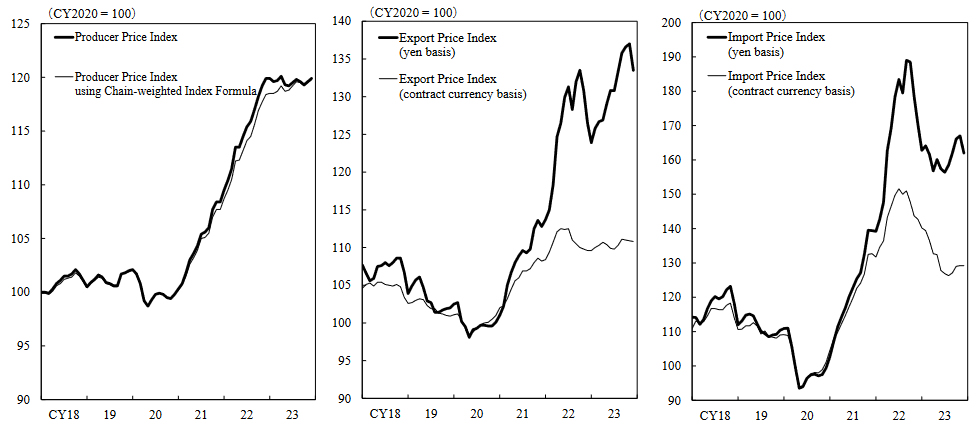
Japan's PPI records a slowdown from 0.3% yoy to 0.0% yoy in December, above expectation of -0.3% yoy. Nevertheless, this figure represents the lowest PPI reading since -0.9% yoy decline in February 2021.
The deceleration in Japan's wholesale prices can be attributed partially to the government's intervention in the form of subsidies aimed at curbing petrol and utility bills. According to a BoJ official, these subsidies reduced wholesale inflation rate by approximately 0.9 percentage points.
In terms of trade-related price indices, there was a slight increase in export price index from 1.0% yoy to 1.1% yoy. Import price index improved from -10.1% yoy to -9.5% yoy.
On a month-over-month basis, the PPI rose by 0.3% mom, Meanwhile, export price index saw a marginal decline of -0.1% mom, and import price index was flat.
China’s Economy Likely Accelerated in Q4, But Will This Lift the Gloom?
- Chinese GDP growth probably quickened in Q4
- But doubts remain about 2024 outlook
- Risk assets could rally if data due on Wednesday, 02:00 GMT is upbeat
China’s rebound hits a wall
China’s economic recovery has been a big talking point for the markets over the past year, as the lifting of most Covid curbs at the end of 2022 failed to propel growth as intended. Instead, the world’s second largest economy became a drag on global growth, as authorities struggled to get to grips with a worsening property crisis.
Annual growth slowed to 4.9% in the third quarter, having notched up 6.3% growth in the second quarter. However, it’s likely that a pickup in consumption as well as some signs of stabilization in the beleaguered real estate sector boosted GDP in the fourth quarter.
Is the economy at a turning point?
GDP is expected to have expanded by 5.3% year-on-year in the final three months of 2023. If confirmed, this would mean the government would have comfortably achieved its growth target of around 5.0%. However, a poor reading in the same period a year ago is expected to flatter the Q4 number, taking some of the shine off any rebound, unless there is a big upside surprise.
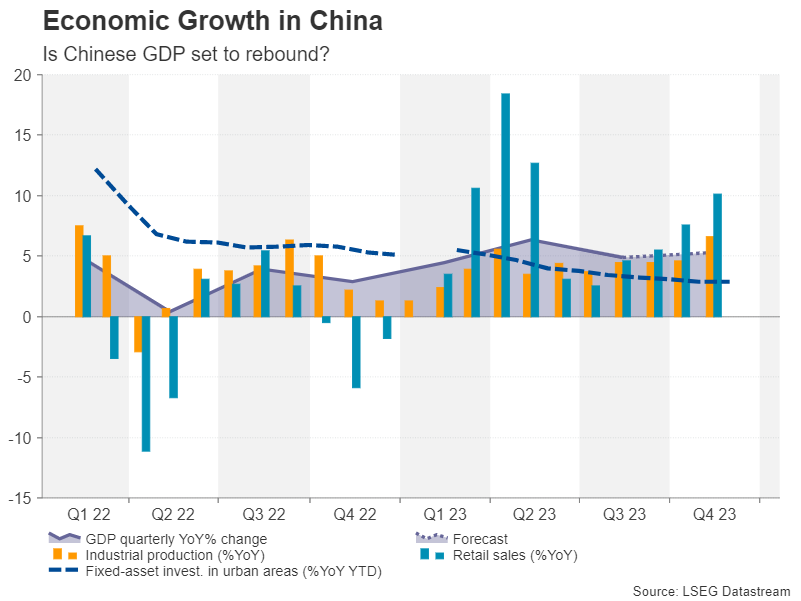
Investors will also be scrutinizing the monthly prints for retail sales, industrial production and fixed asset investment for additional clues on the health of the economy. Retail sales and industrial output have been steadily improving since the summer, in a possible sign that the drip-feed stimulus being administered by Beijing is starting to filter through the economy.
A property market still in turmoil
However, one area that hasn’t seen much of a bounce is investment in fixed assets, which has been flatlining all year amid the ongoing pain in the property market. After amassing a vast amount of debt over the decades, liquidity has started to dry up for China’s oversized property developers, amid constrains from both lenders and buyers.
The problem is partly self-induced as Beijing is determined to see through its goal of deleveraging the country’s heavily indebted sectors. The need to maintain tough lending standards as well as refrain from bailing out troubled businesses has limited the government’s scope to roll out a large stimulus package. Most of the measures announced so far have been targeted and on a regional scale.
Rising risks
But the real estate woes are not the only headache for the economy. Fears are growing of a spillover of the property crisis onto other sectors, mainly on the shadow banking industry after a major financial conglomerate recently filed for bankruptcy. Businesses are also under pressure from the government’s relentless crackdowns on some industries, particularly on large tech companies.
There have been hints that President Xi Jinping plans to broaden the crackdowns on other sectors, including energy and finance, in an anti-corruption drive. Meanwhile, Washington and Beijing remain at loggerheads over trade and 2023 was a poor year for exporters.
Aussie hoping for a China lift
With the growing list of challenges facing the economy, a stronger-than-expected GDP print on Wednesday would likely provide only short-term relief for China-sensitive assets such as industrial commodities, regional equities and the Australian dollar.
The aussie finished 2023 virtually flat against the US dollar so some good news on the Chinese GDP front could help the currency build some positive momentum at the start of 2024.
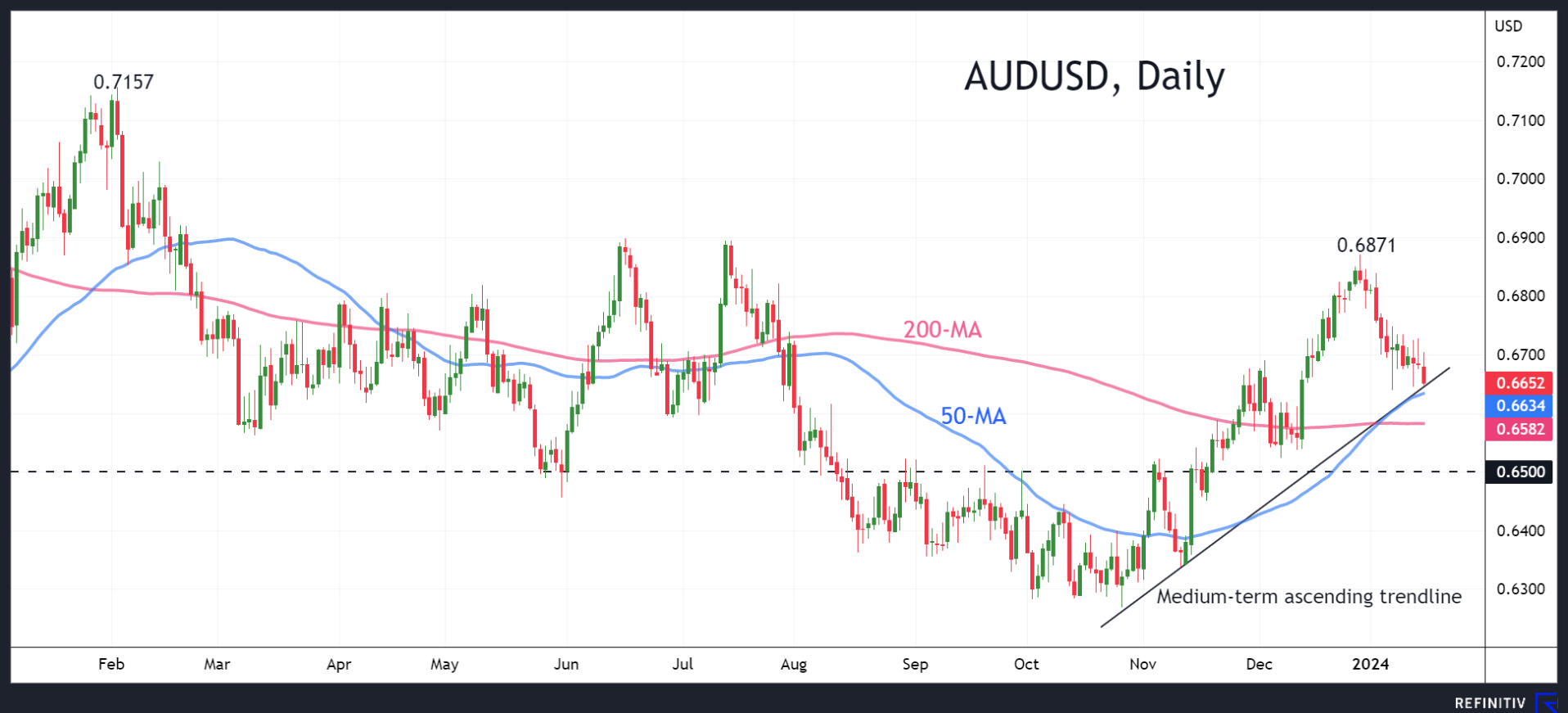
An upbeat set of numbers could help the aussie to re-challenge its December peak of $0.6871 and then aim for last February’s high of $0.7157.
However, if the GDP data disappoints, the aussie is likely to test its medium-term uptrend line in the $0.6650 region. A drop below it would turn the spotlight on the 50- and 200-day moving averages at $0.6634 and $0.6582, respectively. If there is an even sharper slide, the price could fall all the way until the $0.6500 level.
NZ First Impressions: NZIER Survey of Business Opinion, Q4 2023
The latest update on business sentiment pointed to resilience in activity and easing inflation pressures.
Key results (seasonally adjusted)
- General business confidence: -10.2 (Previous: -49.0)
- Trading activity, past three months: 6.3 Previous: -16.8)
- Trading activity, next three months: 4.9 (Previous: -12.1)
- % of businesses reporting a rise in operating costs over the past 3 months: 54.5 (Previous: 66.3)
- % of business who increased output prices over the past 3 months: 38.8 (Previous: 55.8)
The NZIER’s latest update on business conditions pointed to a Goldilocks combination of economic conditions at the start of 2024. Trading activity has been resilient and businesses are looking to take on staff. At the same time, the strong inflation pressures that have been buffeting the economy are easing.
On the activity front, businesses have reported a pick-up in trading activity through the final months of 2023. That includes a sizeable rise in manufacturing activity and retail sales, as well as gains in other sectors.
Businesses are also feeling more optimistic about the outlook for trading conditions over the coming months, though the survey is still pointing to modest growth. Conditions are mixed across the economy however. Balanced against firmer activity in sectors like retail, there is expected to be continued softness in areas like construction.
One reason for the firming in business sentiment may have been the change in government, with the new centre-right coalition expected to be much more business friendly. At the same time, many businesses will likely have welcomed the gradual easing in inflation and the related expectation that the interest rate tightening cycle has come to a close.
At the same time, there has been a sharp rise in the number of businesses who are planning on taking on staff in the new year. That comes at the same time as record levels of net migration have made it much easier for businesses to find staff with the skills they’ve been looking for. There’s also been a sharp fall in employee turnover – as economic growth has slowed, increasing numbers of workers who are currently in employment are choosing to stay put. Combined, those conditions likely point to an easing in wage growth over the year ahead.
On the inflation front, today’s survey still pointed to strong price and cost pressures, consistent with inflation lingering above 3% for some time yet. However, while still strong, those inflation pressures are dropping back. There’s also been a related lift in profitability.
As with other parts of today’s survey, inflation pressures have been mixed across industries – retailers and those in the services sector are still reporting strong pressure on input costs and output prices. In contrast, some gauges of construction cost pressures (which drove much of the strength in domestic inflation over the past year) have fallen to low levels.
GBP/USD – Consolidation Ahead of Jobs, Inflation and Retail data
- Jobs, inflation, and retail data to come from the UK
- Markets expect 125 basis points of rate cuts
- Consolidation in GBPUSD ahead of the data
We’ll get a lot of economic data from the UK this week which will tell us how the economy ended the year and whether markets are on the right path with respect to rate cuts in 2024.
Markets are pricing in 125 basis points of cuts this year, although even more so than with other major central banks, there appears to be quite an array of views on what they’ll actually do and how the data will perform.
This week we’ll get figures on the labor market on Tuesday, inflation on Wednesday, and consumer spending on Friday. BoE Governor will also make an appearance on Tuesday so it’ll no doubt be an interesting week for the pound sterling.
Rising triangle ahead of UK data
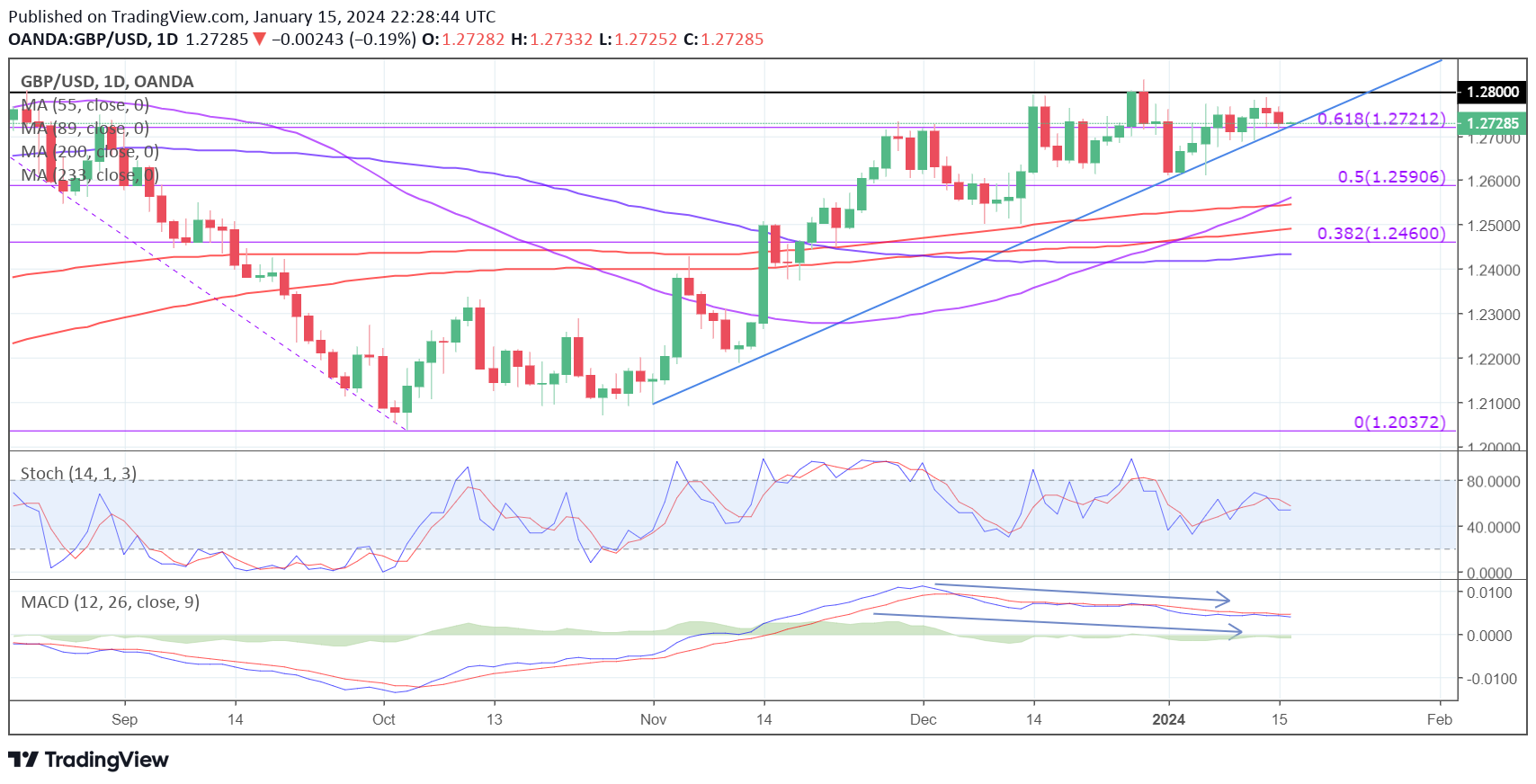
The pound has been consolidating against the dollar recently, forming a rising triangle in the process.
GBPUSD Daily
This could be viewed as bullish, given the rising lows and steady peaks but with so much data to come just as it would appear a breakout is near, it could easily go either way depending on how the numbers fall.
Gold Wave Analysis
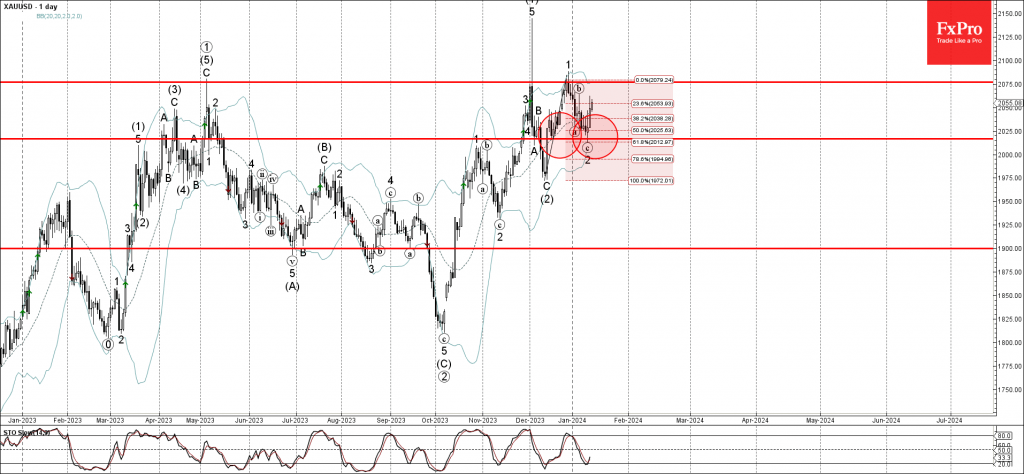
- Gold reversed from support level 2020.00
- Likely to rise to resistance level 2075.00
Gold recently reversed up from the pivotal support level 2020.00 (former minor support from the middle of December).
The support level 2020.00 was strengthened by the lower daily Bollinger Band and by the 61.8% Fibonacci correction of the upward impulse 1 from last month.
Given the clear daily uptrend, Gold can be expected to rise further to the next resistance level 2075.00 (top of the previous minor impulse wave 1).
EURCHF Wave Analysis
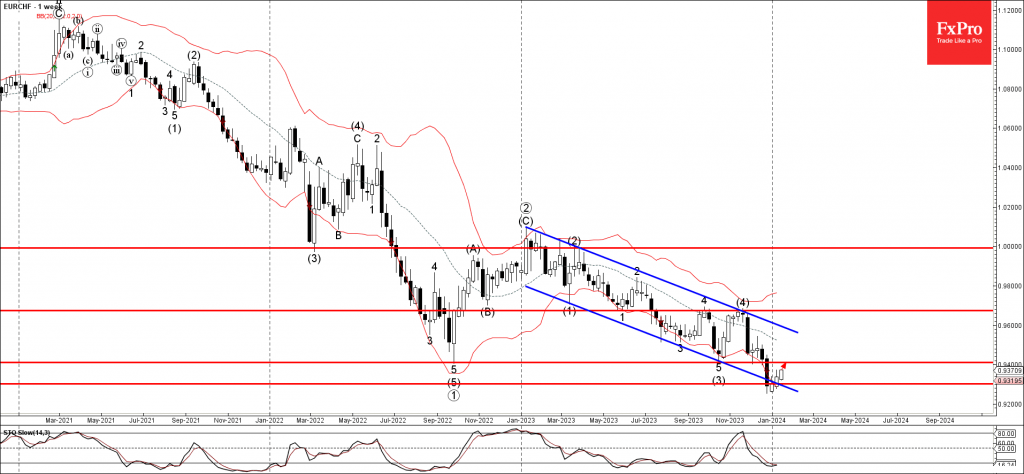
- EURCHF reversed from support level 0.9300
- Likely to rise to resistance level 0.9400
EURCHF currency pair recently reversed up from the key support level 0.9300 (intersecting with the lower weekly Bollinger Band and the support trendline of the weekly down channel from the start of 2023).
The upward reversal from the support level 0.9300 stopped the previous downward weekly impulse wave (5) from the end of last year.
Given the oversold daily and weekly Stochastic, EURCHF currency pair can be expected to rise further to the next resistance level 0.9400 (former low of wave (3) from last year).
Canada: Business and Consumer Sentiment Remained Downbeat in Q4 2023
According to the Bank of Canada Business Outlook Survey (BOS) Canadian business sentiment remained downbeat in the fourth quarter of 2023. The BOS indicator, a statistical summary of survey results, was -3.15 in 2023 Q4, up only slightly from the post-pandemic low of -3.45 in 2023 Q3.
The pessimistic tone was broad-based across sectors and firm sizes. The share of firms preparing for a potential recession in the coming year remained the same (roughly one-third), but this quarter's concerns are focused on demand, credit and uncertainty around economic conditions, rather than labour shortages and supply chains.
The good news is that both input and output price growth expectations are trending downwards, indicating some easing of inflationary pressures. Fewer businesses than last quarter plan larger-than-normal increases in their output prices. Importantly, the BoC cites that "firms' pricing behaviour is slowly returning to normal". The Bank has previously cited this as a force keeping inflation elevated.
Anticipated wage growth has slightly decreased, with fewer firms reporting pressure to increase wages due to cost of living adjustments or retention issues. Still, businesses expect their wage adjustments to be higher than average over the next 12 months with roughly three-quarters of firms expecting wage growth to return to normal by 2025.
Results in the parallel Canadian Survey of Consumer Expectations (CSCE) showed Canadian consumers have grown more pessimistic about the economy, with heightened concerns about cost of living increases in the near term. The perception of current inflation cooled only slightly to 5.9% from 6.6% in Q3, but expectations for inflation in the long-term have fallen further below the historical average.
As a result of continuous price gains, households are reducing or postponing purchases. In addition, more consumers reported that higher interest rates are increasingly affecting their spending behaviour and worsening their financial situation. These two factors remained key in affecting consumers' perception of the economy, making them increasingly worried about the future.
Reflecting this increasing concern about future prospects, consumer confidence in the labor market softened. Despite this, expectations for wage growth roughly unchanged at a high level.
Key Implications
Both businesses and consumers continue to be concerned about elevated prices and high interest costs. The reduction in consumer spending is becoming more widespread and is being felt more acutely by businesses that are now increasingly affected by competitive market pressures and weakening consumer demand.
As we see from both surveys, despite economic concerns, wage growth is likely to remain elevated in 2024. It is also becoming more apparent that the gap between consumers' perception of inflation and actual price changes is creating a real communication challenge for the Bank of Canada as it prepares to step on the path of rate cuts. According to the consumer survey, persistently high expectations for inflation for services such as rent may be slowing progress in returning overall inflation expectations to a historic norm. As we noted in our recent report, the Bank of Canada should shift its public messaging to highlight that housing expenses are not the sole determinants of Canada’s wider inflation patterns. Failing to make this distinction risks curtailing economic growth by too much.