

Sample Category Title
NZD/USD – All Eyes on RBNZ
The New Zealand dollar continues to rally. In the European session, NZD/USD is trading at 0.5746, up 0.43%.
RBNZ likely to deliver 0.50% hike
The Reserve Bank of New Zealand holds a meeting on Wednesday. The RBNZ has been aggressive with its rate tightening and is expected to raise rates by 0.50%, which would bring the cash rate to 3.50%, the highest since 2015. Governor Orr has hinted that the rate cycle could be coming to a close soon, but that is still more work to do to tame inflation. In Q2, CPI rose to 7.3%, up from 6.9% in Q1. The economy has performed well, with GDP rising 1.7% in Q2, along with a strong labour market and solid wage growth. This means that Orr can continue to raise rates above 4.0% in the knowledge that the economy is strong enough to handle additional rate hikes.
September was a disaster for the New Zealand dollar, which plunged 6.5% and fell to its lowest level since March 2020. With the US dollar taking a breather, NZD/USD has rebounded this week, with gains of 2.70%. The volatility could well continue, and the New Zealand dollar is likely to face more headwinds in the short term.
First, the risk-related currency has been hit hard as risk apprehension has soared. The war in Ukraine has escalated and the energy crisis facing Western Europe could tip many countries into recession this winter. China’s economy has been slowing down, which means less demand for New Zealand exports.
Second, the Federal Reserve remains in aggressive mode and is committed to curbing inflation, even if that results in a recession. US Treasury yields have been on an upswing, propelling the US dollar higher against most of the major currencies.
NZD/USD Technical
- NZD/USD has support at 0.5649 and 0.5554
- There is resistance at 0.5826 and 0.5921
RBA Underwhelms With Small Rate Hike
AUD/USD started the day with losses, but has since recovered. The Aussie is trading at 0.6540, up 0.37%.
RBA surprises with 0.25% hike
The Reserve Bank of Australia was widely expected to deliver a fifth consecutive hike of 50 basis points at today’s meeting, but the Bank surprised the markets with a small increase of 0.25%, which raises the cash rate to 2.35%. Governor Lowe had signalled that he was planning to ease up on the 0.50% increases, but with inflation running at 6.1% and not giving any indications of peaking, expectations were for the Bank to deliver at least one more 0.50% hike. Interestingly, the RBA statement acknowledged that inflation has not yet peaked and is expected to rise to 7.75% in 2002 before dropping to 4.0% in 2023.
If soaring inflation has not yet been beaten back, why did the RBA ease up? The answer is likely related to the continuing global economic uncertainty – China’s economy has been slowing and the war in Ukraine is escalating, with Europe facing an energy crisis this winter. The RBA statement included the usual mention that inflation and the labour market will be important factors in future rate policy, but Lowe & Co. will also be closely eyeing global developments. As well, the RBA is anxious to prevent a recession due to the sharp tightening in recent months, and a 0.25% hike will be easier for the economy to absorb than a 0.50% increase.
Over in the US, the Fed hasn’t signalled it will change its aggressive tightening stance just yet. Still, there are signs that the economy is slowing down. On Monday, the ISM Manufacturing PMI dropped to 50.9 from 52.9, barely in expansion territory and its lowest level since May 2020. Until inflation is unmistakably moving lower, the Fed is likely to continue delivering outsized rate hikes.
AUD/USD Technical
- AUD/USD has support at 0.6450 and 0.6363
- There is resistance at 0.6598 and 0.6685
GBPUSD Continues the Bullish Rally from Record Low
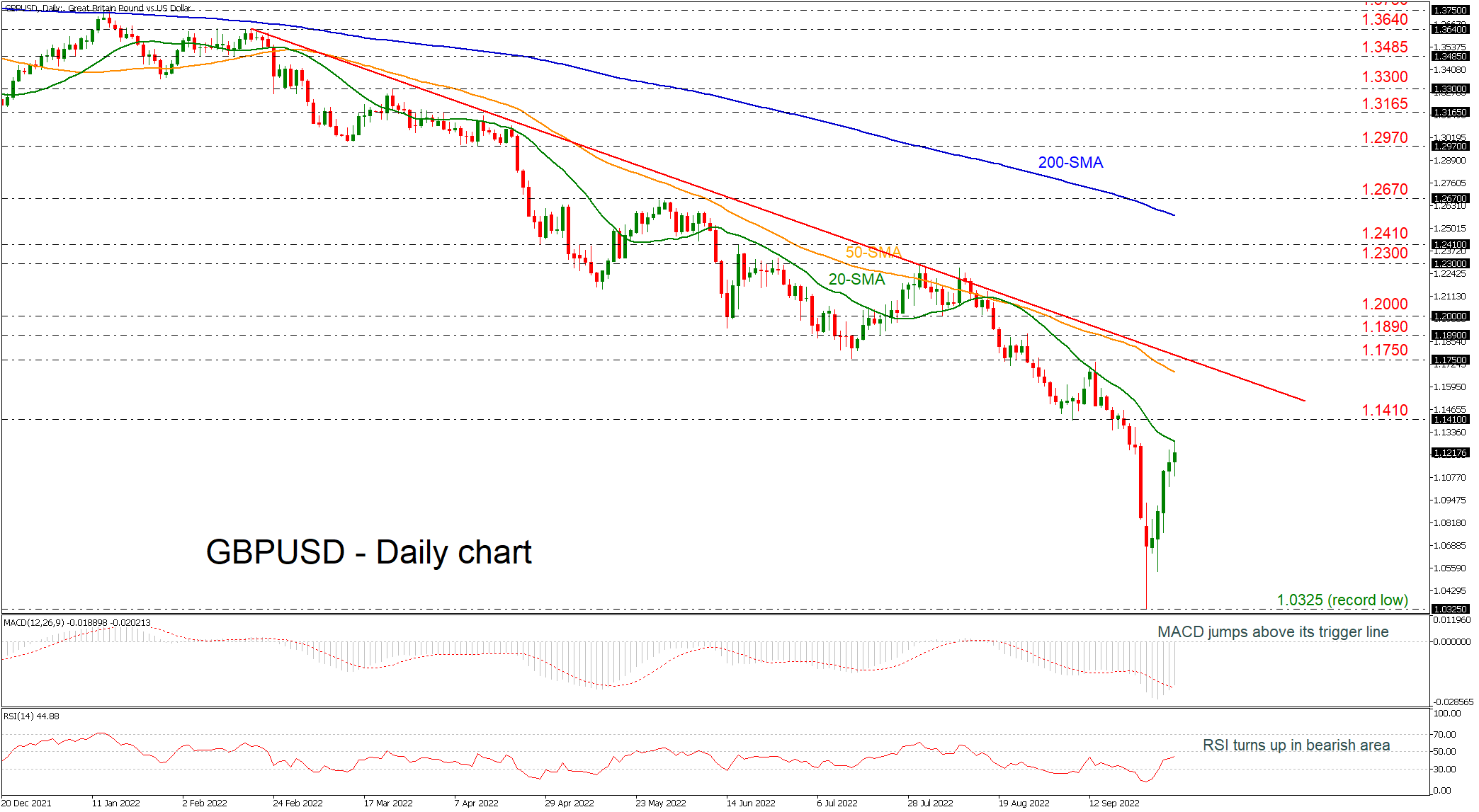
GBPUSD has gained more than 10% over the last six days, continuing the bounce off the record low of 1.0325.
Technical oscillators reflect the recent bullish bias as the pair is advancing above the 20-day simple moving average (SMA). Both the MACD and the RSI are rising with strong momentum, indicating more bullish actions.
The 1.1410 level could challenge any bullish attempts made prior to the 50-day SMA at 1.1660. Consequently, a breakout at this point may attract additional attention, as the price approaches the 1.1750 resistance, which is located near the long-term descending trend line.
Alternatively, a further decline would reinforce the longer-term case for a market in a downtrend, perhaps triggering a new negative wave towards the all-time low of 1.0325. Failure to maintain above this floor could result in a further decline towards the following psychological thresholds, such as 1.0300 and 1.0200.
Although the upward movement has shifted the bias to somewhat optimistic in the very short-term, the longer-term perspective remains highly bearish, and only a break above the downtrend line may change this.
Daily Technical Analysis
EUR/USD
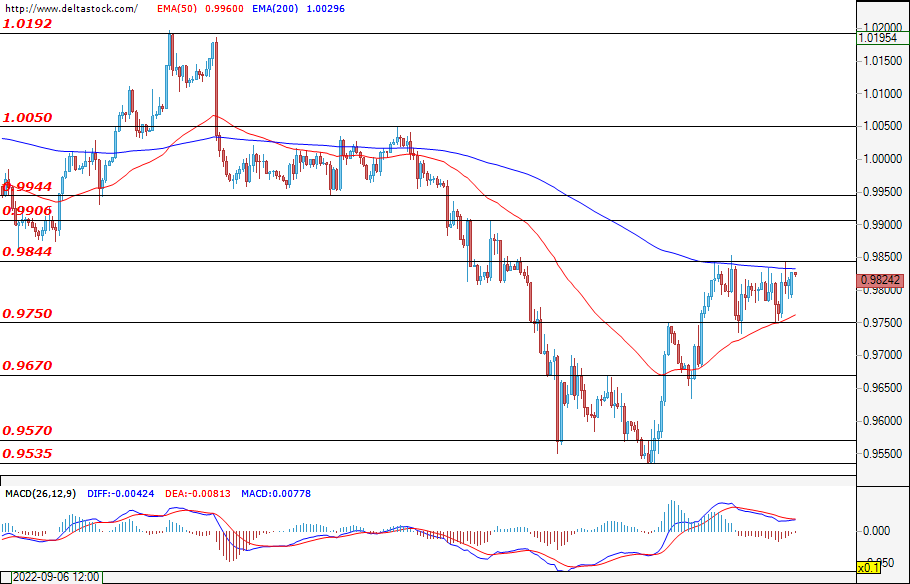
On the first day of the trading week, the single European currency failed to break out of the range that was formed last week. As markets opened in Europe, the pair approached the resistance at around 0.9845 and reacted with a decline towards the support at 0.9750. In the first few hours of the U.S. session, the dollar’s decline allowed the euro to reach the mentioned resistances again, but failed to breach them by the end of the day. Whether the declines in the dollar will continue today and allow these resistances to be breached will largely depend on the U.S. labour report at 14:00 GMT. Of course, the downtrend in the euro and the high dollar can always return after the data is analysed by the traders.
USD/JPY
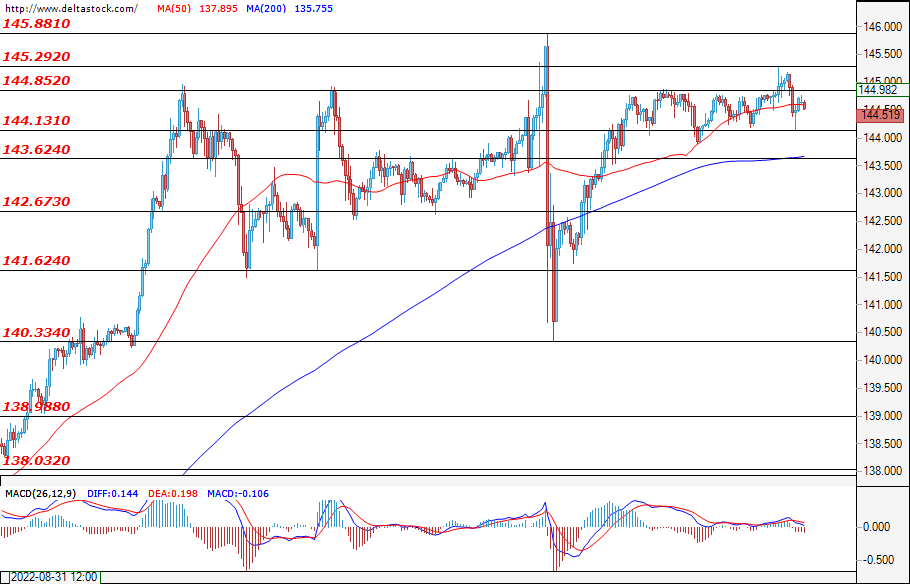
Monday started off weak for the Ninja due to the strength of the dollar. Last week's range was broken and we saw resistances stretch to about 145.30, but the bulls did not have enough strength to score a new high. The 14:00 GMT data on U.S. manufacturing was disappointing and traders took it negatively, pushing the currency pair down to the often tested support at 144.13. Whether the pair will have the strength to breach the previous top and fight off the planted protections from the Bank of Japan depends on the data on the U.S. labour force report at 14:00 GMT, which could give the greenback a boost. Of course, the actions of the BOJ should not be ignored and should be followed closely, because of the huge declines that the currency pair suffered last week.
GBP/USD
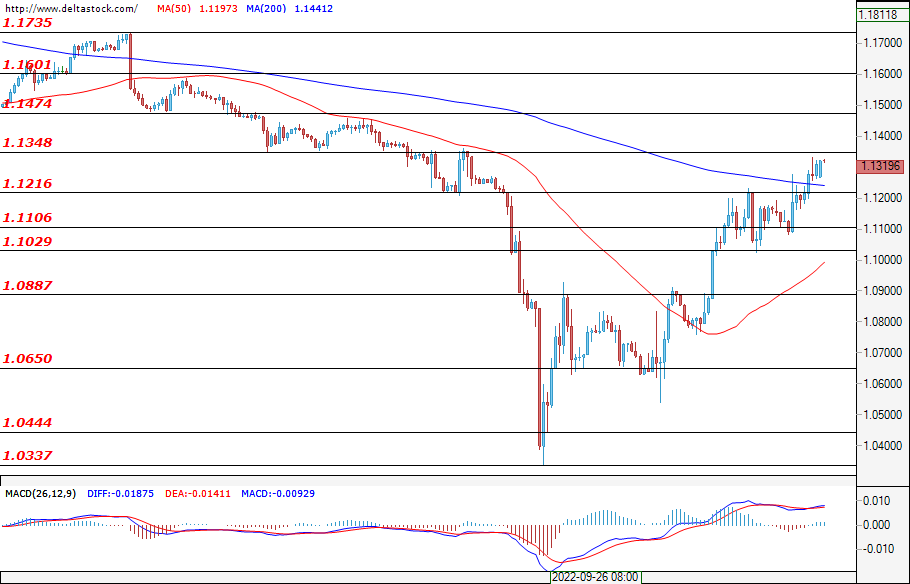
After the government in the UK decided to reverse its policy to cut taxes for the wealthiest following a major backlash, the decision was welcomed by traders and today the Cable posted a decent rally. It broke its previous resistance at 1.1216 and headed for the next one, but failed to reach it by the end of the trading session, despite being within arm’s reach. There is no data today to further support the pound, but its gains could continue if declines in the dollar deepen after the release of the U.S. labour force data at 14:00 GMT. However, if the data is strongly positive, this may incentivise the bears to open new short positions in the currency pair.
EUGERMANY40
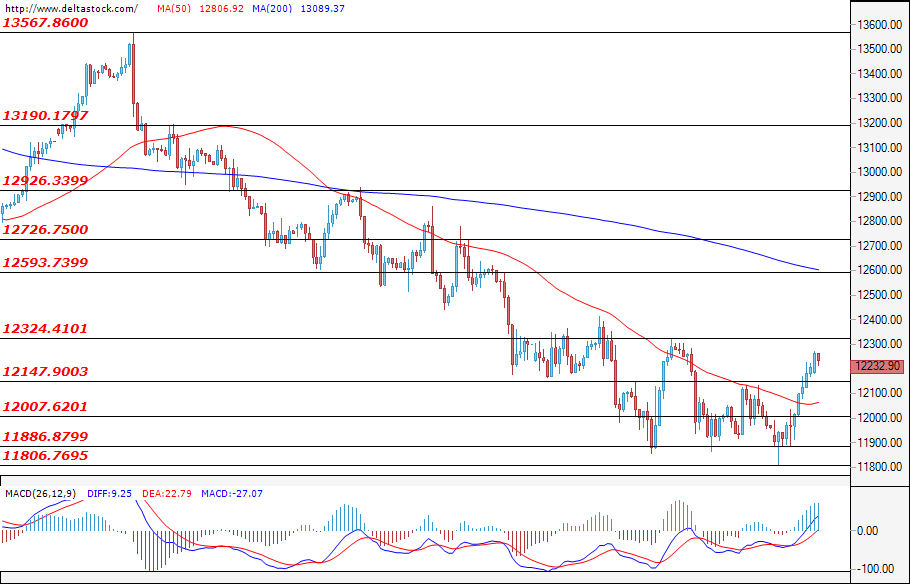
The day for the German index started rather stressfully as it managed to drop to as low as 11806 in the early hours of the session. This began to change with the opening of the European session and gains were once more realised. Two key levels were breached and the EUGERMANY40 headed towards its next resistance, but failed to reach it by the end of the trading session, with today's high of 12270 being lower than Friday's high. The possibility of a downtrend here should not be ignored, as well as the tendency for upward corrections during a bear market. There is no data today to help the index continue its recovery, but the correlation with the U.S. indices is very high at the moment and they could potentially drag the German index down with them.
US30
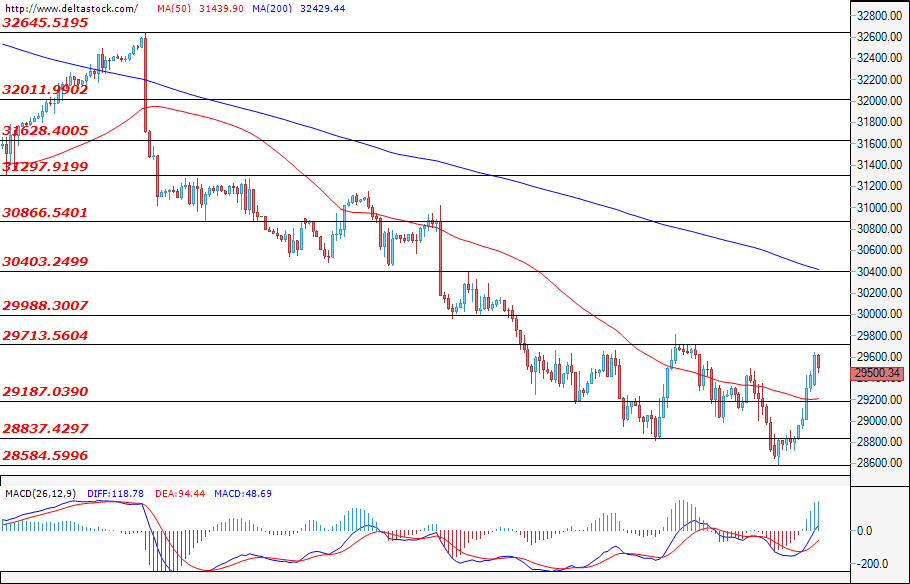
In the early hours of yesterday , the blue-chip index made a new annual low at 28584. There, however, the bulls found good entry prices and pushed prices up through the 29187 resistance, almost managing to reach last week's peak. The fact that they failed to blaze past it is a bad sign for US30 movements. Analysts say that the indices are already in a bear market, so such upward corrections are likely to happen frequently. It is difficult for the index to continue its growth in a high interest rate environment, but today's data on the U.S. labourforce report at 14:00 GMT could lead to sharp movements for the U.S. indices. The probability that the decline will continue is still high, but at this point in time, surprises should not be ruled out just yet.
XAG/USD Tests Daily Resistance
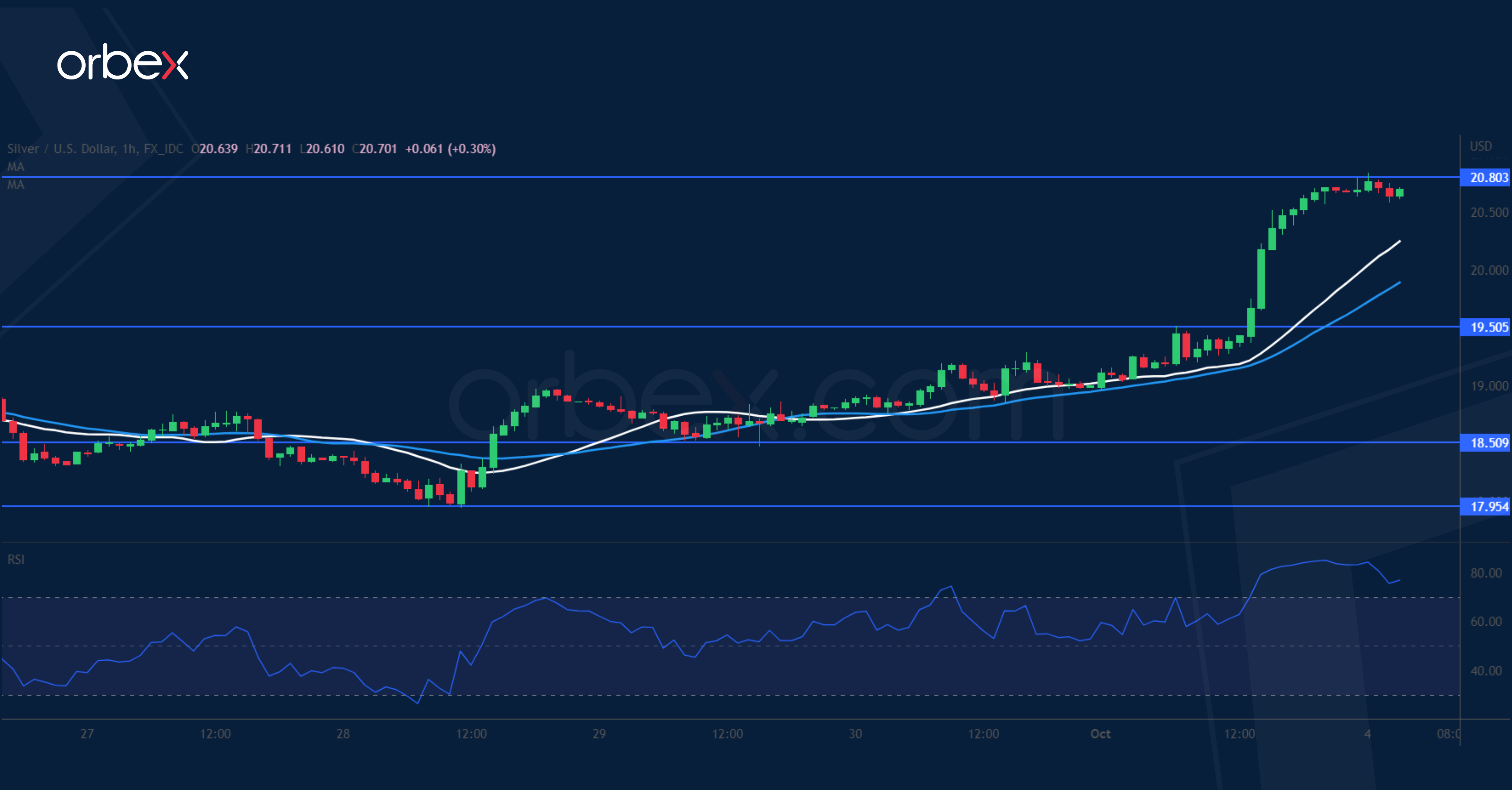
Silver surged after weaker-than-expected US manufacturing data sent Treasury yields lower. A break above 19.00 has prompted short-term sellers to cover their bets, easing the downward pressure. Then a pop above the psychological level of 20.00 attracted momentum buying. The precious metal is testing the daily resistance at 20.80, giving the bulls a chance to push back. A bullish breakout could pave the way for a reversal in the weeks to come. The resistance-turn-support at 19.50 is the first level for accumulation.
EUR/GBP Struggles for Support
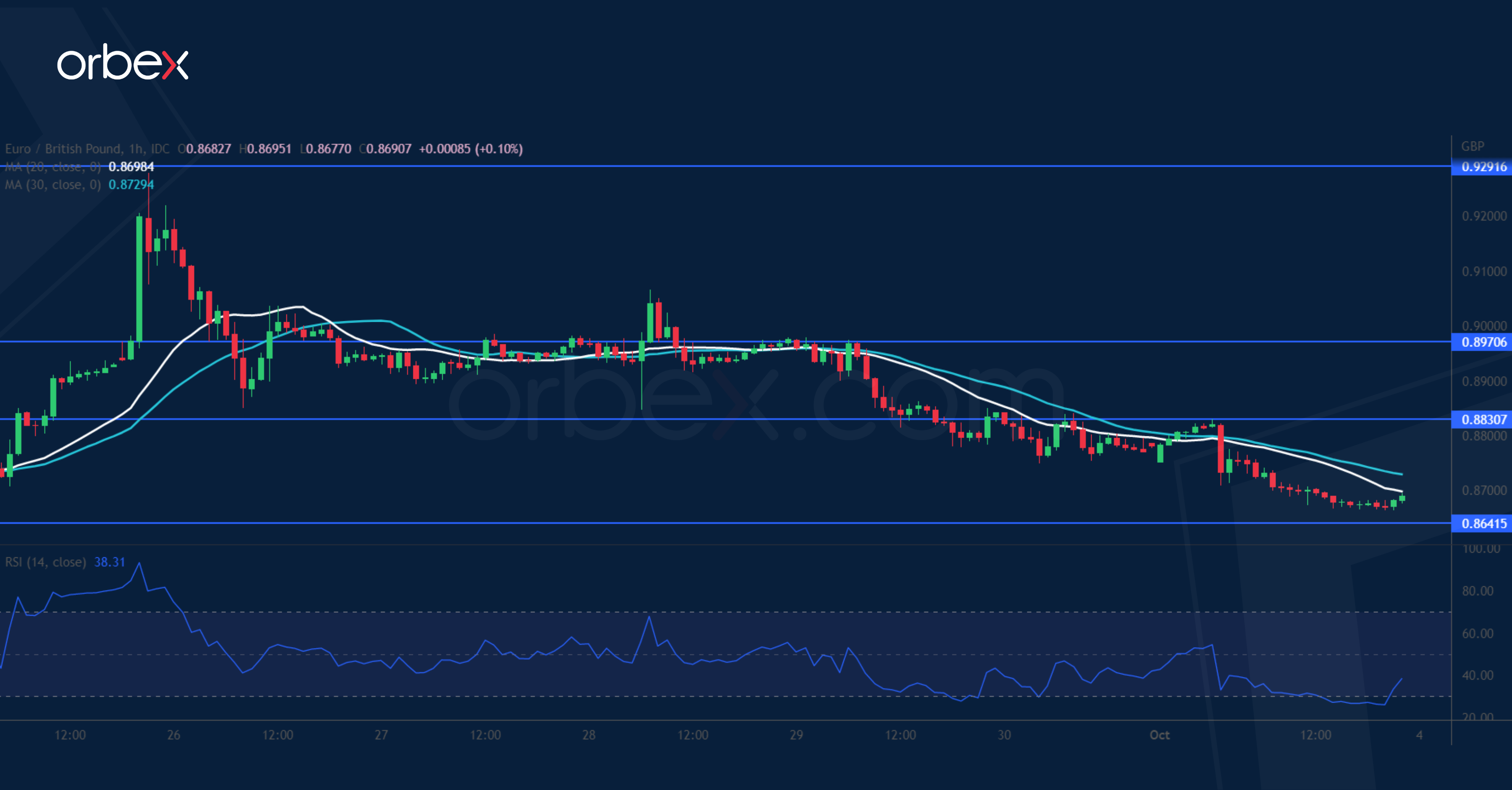
The pound rallied after British Prime Minister Liz Truss backpedalled on her tax cut proposal. A break below the base of the latest rally at 0.8720 mirrors strong demand for the pound across the board. 0.8640 at the origin of a surge above June’s high (0.8700) is a critical support from the daily chart. Its breach would invalidate the rebound and push the euro into a corrective course. 0.8830 is the immediate resistance and the bulls will need to reclaim 0.8970 before they could hope to regain control.
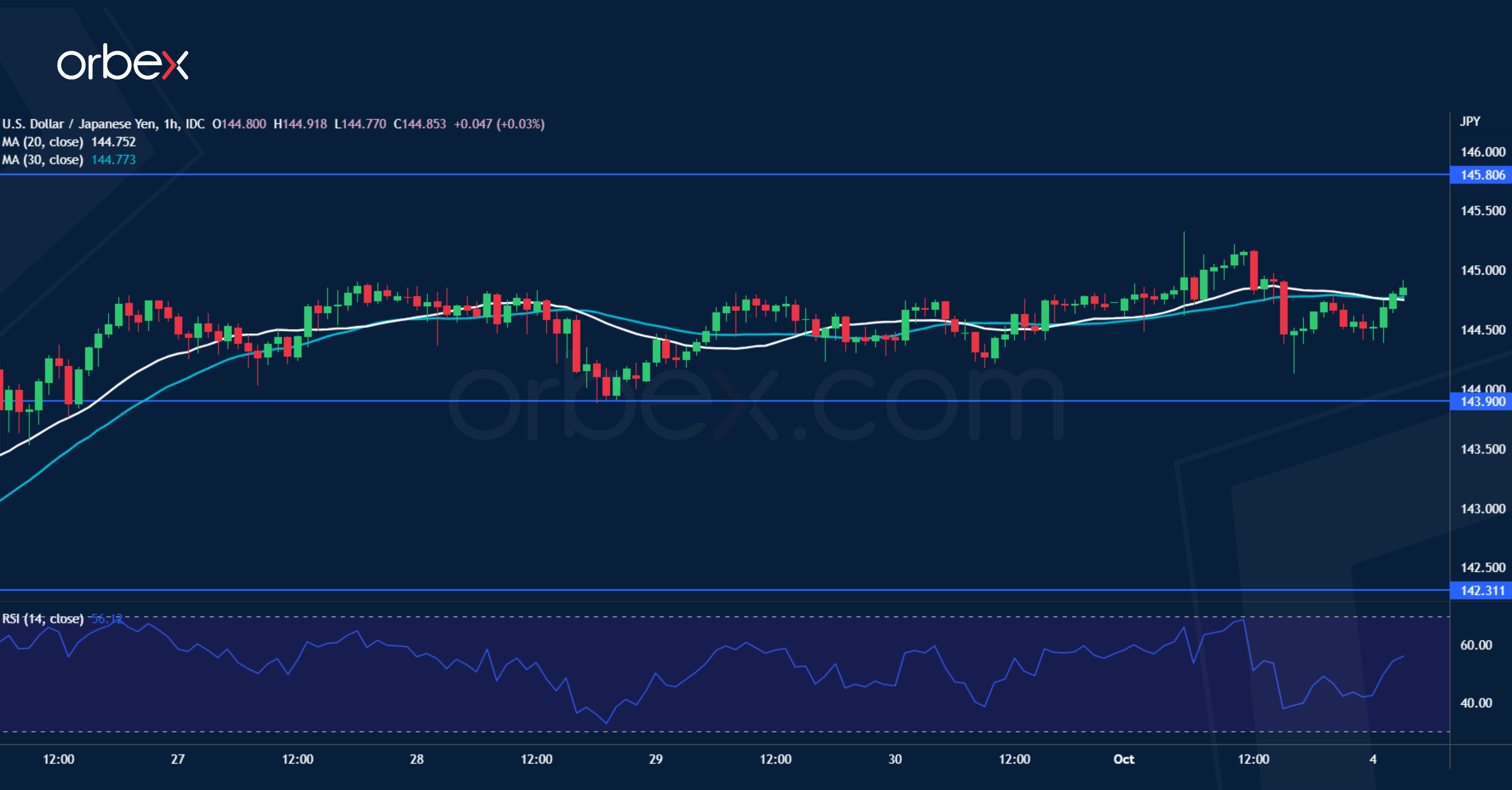
USD/JPY Hits Resistance
The Japanese yen recovered as the Tokyo core CPI beat estimates in September. The price has recouped most losses from the previous sell-off, a sign that sentiment remains upbeat despite a temporary setback. A close above the recent top at 145.80 may attract momentum buying and resume the uptrend in the weeks to come. Then August 1998’s high at 147.50 would be the next target. As the RSI climbs into overbought territory, the lower end of a brief consolidation (143.90) is the first support in case of a pullback.
Current Yield Correction Could Go On
Markets
The US manufacturing ISM surprised to the downside yesterday, easing from 52.8 to 50.9. The lowest reading since May 2020 followed a (deeper) drop in employment and new (export) orders into contraction territory. Backlogs fell sharply from 53 to 50.9. It reinforced the ongoing core bond yield correction earlier on the day, especially in the US. American rates tumbled 20 bps, give or take, at the belly of the curve (5-10y) on the account of real yields. The short end eased 16.5 bps as markets eased bets on Fed policy tightening even as most Fed governors (e.g. Williams) continue to argue for the opposite. German yields shed between 13.9 bps (2y) to >19 bps (5y, 10y). Gilt yields in the UK tanked in similar fashion with the exception of the very long end (30y +6.3 bps) after Chancellor Kwarteng cancelled the planned scrapping of the top tax rate. He later bit the dust again at the Conservative Party Conference. He announced that he’ll present his medium-term fiscal plan - containing a five year debt-cutting trajectory aimed to reassure markets - “shortly”. The Financial Times citing sources reported this could be as soon as this month instead of the original November 23. Equity markets rallied yesterday. European stocks undid losses of 2.5% to finish 0.7% higher. Wall Street rose between 2.3 and 2.7%. The dollar was under pressure. DXY closed below 112. EUR/USD, despite an unconvincing euro, rebounded intraday from 0.975 to 0.983. EUR/GBP stumbled below 0.8721 support to 0.868. Commodity currencies profited from an imminent OPEC+ output cut.
Asian-Pacific trading is all about the RBA decision (see below). It simply adds to the march higher in core bonds which is supporting stock markets. Gains go as high as 3.3% in Japan. The Aussie dollar obviously underperforms on FX markets. The dollar together with the euro strengthens a tad. USD/JPY is not leaving the 145 station as markets continue to challenge the Japanese MoF. Sterling holds on to yesterday’s gains.
With an empty economic calendar ahead for the day we think the current yield correction could go on. Things were priced to perfection and there’s scope for yields to consolidate further. In Germany, the 10y hit a first technical support at 1.92% yesterday. The next reference stands at 1.77%. For the European 10y swap and the US10y sovereign yield we keep a close eye at 2.72% and the 3.46%/3.50% area. The dollar is in for a temporary break as well, assuming Treasury outperformance combined with a more constructive setting for equities (but watch out for sucker rally’s). EUR/USD 0.99(5) is the first important technical reference. UK politics these days are worth following up too. Some cabinet ministers say Truss’s economic revolution plan may be over already. To be continued.
News Headlines
The Reserve bank of Australia surprised as it raised its policy rate by only 25 bps to 2.60%, while a 50 bps hike was largely expected. The RBA reiterates it commitment to returning inflation to the 2-3% target and further interest rate hikes are likely. However, the RBA is assessing the outlook on inflation and growth as rates have been increased substantially in a short period of time. Inflation is still too high and might further increase in the months ahead but is expected to ease next year. The RBA sees inflation a little above 4% next year and around 3% over 2024. The RBA mentions the global outlook as a source of uncertainty. It is also uncertain how Australian households will respond to tighter financial conditions including the effect on mortgage payments, with consumer confidence and housing prices declining. Further rate increases will be data dependent. Australian government bond yields currently are declining between 34 bps (3-y) and 20bps (10-y). The Aussie dollar initially dropped from AUD/USD 0.6510 to 0.6451, but reversed part of the initial decline (currently 0.648).
The BoE yesterday only bought £22mln of Gilts under the program it initiated last week to address instability in the bond market. The maximum amount of daily purchases was set at £5bln. Over the four days since the start of the program, the BoE bought a communicative £3.66 bln compared to the potential maximum of £20 bln. The small amount of buying might be an indication that the BoE sees market strain easing. The Bank probably also avoids too much interference of current buying with its overall policy stance. The program is scheduled to last till 14 October.
Investors Catch Their Breath as Quarter Kicks Off on Positive Note
The new week, the new month and the new quarter kicked off on a volatile, but a positive note. European indices ended the session with slight gains, the SMI eked out a 0.23% gain, as Credit Suisse closed a very ugly session with 0.90% loss only. The shares recovered a slump up to 12% earlier in the session. The bank convinced investors that it has enough liquidity to survive and a solid restructuring plan to thrive. Washington Post wrote ‘No, Credit Suisse isn’t on the brink’, and that ‘disappointment is more likely than default’. Now, investors are holding their breath to hear more details about the bank’s restructuring plans that should be announced by the end of this month.
For now, we can all take a deep breath, and enjoy some positive vibes across the global financial markets.
European indices gained yesterday, while the US indices rallied. Futures point at bullish start on both continents.
The Dow Jones jumped the most on Monday, as oil stocks literally roared on the back of firmer oil prices.
Oil bulls are betting that OPEC will announce an output cut of around a million barrels per day to ‘stabilize’ oil prices.
It is also said that Saudi may be willing to build some reserves to compensate for the Russian oil as European cap on Russian oil price could lead to lower Russian output.
If the market mood remains ok-ish, we could see the oil prices recover toward $90, where stands the 50-DMA. But the global slowdown, and recession fears are never far, nowadays, and could cap the price rally.
Four factors should however give support to oil prices in the medium run
- The gas to oil switch increases demand for oil.
- The US will stop selling its strategic reserves,
- European measures to cap Russian oil price will likely hit the Russian oil output, and
- We have not heard more about a nuclear deal with Iran.
But despite all, I believe that we won’t see crude oil rally above $100 per barrel.
Bad-news-good-news pricing is good news
The US ISM manufacturing index showed that expansion in the US slowed faster than investors expected. Interestingly, the soft ISM gave a positive spin to the market.
I believe that this is an important sign that despite the Federal Reserve (Fed) officials’ strongly hawkish rhetoric, many investors no longer believe that the Fed could continue tightening at the current speed.
That’s a good ingredient for a global market rebound.
In the FX, the US dollar retreat almost 3% since its September peak. The dollar lost more than 4.50% against the Brazilian real, as the actual president Bolsonaro did better than expected in the Brazilian elections last Sunday. He will be confronting the leftist Lula in the second runoff, but Lula will most likely moderate his stance to pave his way toward the presidential seat.
The recent rally in pound sterling has also a finger in the dollar’s downside correction. Cable rallied past the 1.13 level, as the UK 10-year yield returned below 4% as… Liz Truss government took a ‘mini’ step back from their terribly unpopular fiscal spending plan, and said that they will not reduce taxes on big salaries
But still, the bearish bets against pound are at the historical high levels, and Liz Truss must do more to reverse the negative sentiment in the pound, and against the UK. Because yesterday’s U-turn on high earners will save the government £2 billion, while the rest of the huge ‘mini budget’ is still on course, and will continue pressure the UK sovereign bonds and the pound.
Happily, the Bank of England (BoE) also has its hands in the mud, and is buying sovereign bonds to help UK navigate the turbulent Truss waters.
But as Bloomberg put it so well, the BoE is trying to hit the brakes, while Liz Truss is stepping hard on the gas. So, it smells like the brakes started burning on the British truck. Half a million people signed a petition for immediate election in the UK, so instability is still the major topic in Britain.
Softening central banks?
Anyway, it’s still good to know that the BoE is there.
It is also encouraging for investors to see that the Reserve Bank of Australia lifted its interest rates by 25bp only, versus 50bp expected by analysts.
And it’s cautiously positive that US investors price bad-news-as-good-news. That means we start seeing some easing in central banks’ positions, and expectations.
Today, we will be watching the job openings data in the US, and hope to see a smaller number, as the Fed sees the job openings as a factor that could ease the pressure in the US jobs market.
Then, will follow the ADP report on Wednesday, and the NFP, unemployment rate and the wages growth on Friday. Investors are praying for softish numbers this week to continue the rally.
UK Government Backtracks
Market movers today
No key data releases out today.
Three Fed speakers, Williams, Mesters and Daly, are on the wires ahead of a batch of US job market data this week. We continue to expect two more 75bp hikes in the November and December meetings, which would end the hiking cycle at 4.50-4.75% by year-end.
Following the RBA this morning, the RBNZ rate decision is due overnight. We expect another 50bp hike to 3.50% in line with consensus.
The 60 second overview
Our new Nordic outlook is out! This morning, we have published our Nordic Outlook with updated forecasts for the Nordic economies. We now expect recessions across the Nordic countries, as lower spending power and tighter financial conditions take their toll on the economies, leading to higher unemployment and lower house prices. We are especially concerned about Sweden, where consumers are facing a lot of headwind. On the other hand, the Nordics have a strong starting point compared to many other countries in Europe, and even though it increases, unemployment should still be relatively low. For more details, see Nordic Outlook - Hoping for a mild winter, 4 October.
Global manufacturing activity at the weakest level since the global financial crisis (excluding the first COVID-19 lockdown): Yesterday, the global PMI manufacturing index compiled by JP Morgan showed further setback for the sector, taking new orders to the lowest levels since the global financial crisis in 2008 and its immediate aftermath. On a positive note, yesterday's release indicated that bottleneck pressures continue to fade and businesses continue to hire and invest in new equipment.
UK government backtracks on its fiscal plans: Yesterday, Conservative Prime Minister Liz Truss backtracked on cutting taxes for the country's highest earners. This comes after significant opposition from influential and senior Conservative MPs (not least Michael Gove) at this week's Conservative Party Conference, which kicked off on Sunday. Additionally, Chancellor Kwarteng is now set to bring forward the medium-term fiscal plan already this month alongside an independent OBR report (previously set for 23 November). While the scrapping of the tax cut to highest earners is a small part of the growth plan (GBP 2bn out of a total GBP 45bn) it highlights the pressure the Government is under both from external forces, but increasingly from fellow party members. While the tax cutting agenda has faced scrutiny, there continues to be broad support for capping household energy bills and providing near-term support for businesses.
The Reserve Bank of Australia surprises dovish by hiking rates by only 25bp this morning. Consensus was looking for another 50bp hike, while market was split between 25 and 50. While Australian inflation remains clearly above target and labour market conditions are still historically tight, RBA emphasized the weakening global growth outlook as a key reason to slow the pace of hikes back to 25bp. Market's longer-term inflation expectations have moderated, and RBA sees that the recent tightening in financial conditions will continue to constrain economic activity with a lag. AUD/USD moved sharply lower following the decision, and we see risks tilted towards further weakening on a 12M horizon.
FI: The U-turn on the tax reliefs by the UK government sent global rates significantly lower in a gradual move through the day, where e.g. German Bunds ended around 20bp lower on the day. There was little news flow on the day as a whole. Peripheral spreads tightened, led by Italy, 7bp to core. The BoE's intervention last week has so far turned around the sentiment and relieved part of the stress in markets, despite that they have bought only GBP 3.7bn in total (and GBP 22m yesterday).
FX: NOK FX spot has seen huge swings and was yesterday's big winner amid risk appetite rebounding and commodities moving higher. It is not unusual to see NOK highly sensitive to positive news following a sell-off like the one over the last week. GBP was also one of yesterday's big winners with risk appetite rebounding and PM Liz Truss backtracking on tax cuts for highest earners. This comes after significant opposition at this week's Conservative Party Conference, which kicked off Sunday. Additionally, Chancellor Kwarteng is now set to bring forward debt-cutting plan this month.
Credit: After a weak start to the day, credit markets turned around, with iTraxx Xover tightening 16bp and Main 2bp. Credit Suisse attracted a lot of attention and spreads on its outstanding 5y CDS contract widened more than 50bp to close above the highs from 2009.