

Sample Category Title
Weekly Focus – Central Banks Continue Tightening Despite Recession Fears
Central banks delivered further hikes largely as expected, as inflation pressures remain high despite the rising recession risks. In the US, Fed hiked rates by 75bp as broadly expected, but the updated 'dot plot' signalled more hawkish rate expectations than markets had expected. While Powell provided few new signals on the upcoming tightening pace, he repeated that Fed is increasingly focusing on limiting economic growth below potential and looking for signs of cooling labour markets. In contrast, we are forecasting a rebound in the Q3 GDP figures, and thus we are also calling for two more 75bp hikes in the November and December meetings. Read our full Fed review: Hawkish 75bp - Fast hikes to continue, 21 September, as well as some underlying thoughts on why we continue to see risks tilted towards Fed having to maintain financial conditions restrictive for longer: FX Strategy - The bullish case for high US interest rates, 22 September.
Bank of England hiked by only 50bp yesterday, in line with our expectations but less than what markets had priced in. Recession risks are rising in the UK amid the rapid decline in purchasing power, but we continue to expect further hikes in the coming meetings, see Bank of England Update - Review: another 50bp hike and we expect more to come, 22 September. Norges Bank also hiked by 50bp, but as it was among the first to start hiking last year, we also think it could be among the first to bring the hiking cycle to a halt, we are only looking for one more 25bp hike in the November, read more in Scandi section below.
The few outliers among the hiking central banks are found in Turkey, where the CBRT continued its unorthodox monetary policy by cutting rates by 100bp despite the soaring inflation, as well as in Japan. BoJ made no changes to its dovish policy stance, but later it was announced that the Ministry of Finance had instructed it to intervene in the FX markets to limit the rapid JPY weakening for the first time since 1998. Despite this, BoJ is still conducting monetary policy which sends more yen into the market, and we think the pressure to abandon the yield curve control has increased. Read our take in Research Japan - Bank of Japan intervenes to support JPY, 22 September.
European recession fears got further boosted by the September Flash PMIs, which signalled broad based weakening in the growth outlook. Especially the manufacturing sector is under clear pressure due to a steepening decline in new orders but also rising input costs due to the energy crisis.
This weekend, we will focus on the Italian elections, where the right-wing coalition's win looks like a done deal. Giogia Meloni's party Brothers of Italy has increased its lead in the latest polls, and the focus will be on the margin of victory. Read our preview here: Italian Politics Monitor - Unchartered territory, 9 September.
Markets will continue to digest this week's central bank meetings, and in the Euro Area main focus will be on Friday's September Flash HICP figures, consensus is looking for another uptick to 9.4% y/y. In the US, focus will be on a wide range of Fed speakers as well as the August private consumption expenditures data out on Friday. In China, August PMIs will be released on Friday morning, we continue to see downside risks amid weakening export demand outlook.
Lights, Camera…Action! Central Banks Center Stage
Summary
Central banks were front and center this week, as major institutions such as the Federal Reserve, Bank of Japan (BoJ) and Bank of England (BoE) met to assess monetary policy in their respective economies. At a high level, policymakers generally communicated a hawkish outlook for monetary policy, although the Fed's updated “Dot Plot” garnered the most attention and resulted in renewed volatility across global financial markets. However, the BoJ's commitment to accommodative monetary policy and FX intervention from the Ministry of Finance were also notable, while U.K. financial markets tumbled in the aftermath of the BoE announcement and government fiscal stimulus.
Heading into this week, we believed the U.S. dollar would continue to strengthen through the end of this year. After the events of this week, we have increased conviction in that view, and now believe dollar strength could continue into the early part of 2023. We will make a more formal assessment of currency markets and provide updated exchange rate forecasts in our September International Economic Outlook, although as of now, we are likely to extend our dollar strength view into Q1-2023.
Hawkish Central Banks Abound, but Dollar to Press on
Heading into this week, the schedule was unusually packed with a myriad of central bank meetings. Not only did the Fed offer its September assessment of monetary policy, but many other G10 institutions as well as policymakers across the emerging markets met to determine monetary policy for their respective economies. Typically, the Fed takes center stage and has the most influence over the path of global financial markets. This week was no different; however, monetary policy decisions in Japan and the U.K. proved to be influential as well. And, in the emerging markets, interest rate decisions from some major developing central banks show that the path for monetary policy could be starting to diverge from the Fed even more noticeably than has been the case to date. As far as the Fed, our U.S. economics colleagues shared their thoughts in the immediate aftermath of the FOMC rate decision. In summary, our teammates believe the Fed delivered a hawkish 75 bps rate hike this week. Fed Chair Powell delivered a clear message that the committee is focused on containing inflation and bringing price growth back to its 2% target. Also, the Fed's updated “Dot Plot” revealed policymakers expect the Fed funds rate to rise an additional 125 bps by the end of this year and for rate hikes to continue in 2023, a more hawkish rate outlook than financial markets were pricing heading into the meeting.
Aside from the Fed, another central bank that caught the attention of market participants this week was the Bank of Japan (BoJ). As expected, the BoJ left monetary policy settings unchanged; however, the communication around the decision was widely interpreted as dovish. In his commentary, Governor Kuroda suggested that rate hikes may not materialize for two or three years, and that the existing yield curve control policy is unlikely to change for the time being. Kuroda's justification for accommodative monetary policy comes from uninspiring local growth and inflation dynamics, which we acknowledge are valid rationales. We believe Japan's growth prospects are somewhat limited for the next few years, and that inflation should revert to below the BoJ's target in 2023. Taking Kuroda's comments and mixing them with our view on Japan's economy, we see no reason to change our forecast profile for the Bank of Japan's policy and continue to believe the BoJ will be the only central bank with negative policy rates going forward. With the Fed raising interest rates and the BoJ on hold, diverging paths for monetary policy should continue to place depreciation pressure on the yen. We do, however, note that Japan's Ministry of Finance took action this week by intervening in FX markets for the first time since the 1990s in an effort to support the yen. The immediate reaction to the intervention announcement facilitated a sharp rally in the Japanese currency and brought the yen back from record low levels against the dollar. However, we view BoJ intervention as only a temporary respite for the yen. In our view, as long as the paths for monetary policy between the Fed and BoJ continue to diverge and interest rate differentials widen, the bias remains for the yen to continue to weaken and retest lows in the near future.
The Bank of England (BoE) also met this week when policymakers lifted interest rates another 50 bps and took its base rate to 2.25%, while also delivering a couple of surprises. To that point, BoE policymakers updated their economic forecasts with their latest inflation projection, garnering attention. According to the BoE, new Prime Minister Truss' policy to cap household energy prices should bring inflation lower in the coming months. The central bank's forecast suggests inflation should now peak lower than previously expected, which in our view, should at least offer some assistance to the Bank of England in its fight against inflation. Even so, the decision to increase interest rates by “only” 50 bps was finely balanced, with three policymakers voting in favor of a larger 75 bps increase. The Bank of England also noted the government would announce fiscal support following its monetary policy announcement, which it would take into account at upcoming meetings. As far as fiscal stimulus, the government announced series of tax cuts and regulatory reforms that will cost £161 billion over the next five years. Against this backdrop, we now expect the Bank of England to hike its policy rate by a larger 75 bps at its next meeting in November. Still, we believe this larger rate hike will prove to be a one-off. As the U.K. economic slowdown crystallizes and inflation peaks, we expect the BoE to revert to a 50 bps increase in December, and deliver a final 25 bps rate increase at its first meeting in 2023, which would see the policy rate peak at 3.75%. Even this faster pace of tightening would still lag the rate of increase from the Federal Reserve, and fall short of Bank of England tightening priced by financial markets as participants anticipate a policy rate peak closer to 5.50%. Accordingly, as the Bank of England “under delivers” relative to these expectations, we expect downward pressure on the British pound to persist.
Outside the G10, multiple emerging market central banks met this week; however, we choose to focus on just two: the Brazilian Central Bank and the Central Bank of Turkey. As far as the Brazilian Central Bank (BCB), policymakers decided to keep policy settings unchanged; however, we viewed this decision as still having hawkish undertones. In the BCB's official statement, policymakers comment they will “be vigilant” and that they “will not hesitate to resume the tightening cycle if the disinflationary process does not proceed as expected.” While the BCB's tightening cycle is paused for now, the tone of the statement leads us to believe the door is still open for potential rate hikes, especially if core inflation does not exhibit signs of trending lower. In our view, the BCB tightening cycle is likely over; however, we believe the timing of rate cuts could be pushed back into Q2-2023. Regardless of the timing for rate cuts, keeping monetary policy steady for the next few quarters now puts the trajectory of BCB monetary policy at odds with the path of Fed monetary policy. In our view, diverging paths for monetary policy, in addition to election related risks, should also place depreciation pressure on the Brazilian real over the next few quarters. The same can be said for the Central Bank of Turkey, although Turkish monetary authorities opted for cutting interest rates 100 bps despite local inflation trending above 80% year-over-year. We can reduce the decision to lower interest rates as President Erdogan influencing monetary policy decisions and implementing his unorthodox view that lower interest rates leads to lower inflation (a view that is not accepted by virtually all market participants). Turkish monetary authorities have struggled with independence, and going forward, we believe additional interest rate cuts are likely as Erdogan seems to have complete and total influence over monetary policy decisions. As the Turkish central bank continues to ease monetary policy in an environment of Fed rate hikes, the Turkish lira should continue to reach record lows against the U.S. dollar, eventually reaching TRY21.00 by the end of this year.
The takeaways from this week's central bank bonanza are clear to us. With the FOMC turning even more hawkish, combined with foreign central banks likely not able to keep pace with the Fed, the U.S. dollar should continue to strengthen. Right now, we forecast broad dollar strength against most G10 and emerging market currencies through the end of this year. This week has given us increased conviction in that view. In addition, prior to this week, we felt the U.S. dollar could peak in Q4-2022; however, we now believe risks to our dollar view are tilted towards further upside. Given the hawkish Fed outlook on interest rates, dollar strength could persist into early 2023. The dollar's relentless rise should be most robust against the emerging market currencies, but risk sensitive currencies like the Australian and New Zealand dollar could also experience renewed downside. While we will perform a more robust assessment of currency markets and formally update our exchange rate forecasts in our September International Economic Outlook, as of now, we are likely to extend our view of continuing U.S. dollar strength into early 2023.
Markets’ Answer to UK Chancellor Kwarteng’s Mini Budget was Clearcut
Markets:
A vote of no confidence. Markets’ answer to UK Chancellor Kwarteng’s mini budget was clearcut. He announced a bunch of tax cuts including lowering the 45p top rate of income tax (40p instead) and a cut in stamp duty on home sales. The measures come on top of the governments’ earlier announced energy subsidies for consumers and companies which are expected to cost £60bn in the first six months and up to £150bn in grand total. The huge fiscal booster will mainly be financed by selling extra Gilts. The UK Debt Management Office raised its planned issuance for the 2022-2023 fiscal year from £131.5bn to £193.9bn. The additional supply announcement comes exactly one day after the Bank of England decided to actively sell Gilts out of their bond portfolio, aiming to reduce their balance sheet by £80bn over the next 12 months together with natural redemptions. UK yields increase by 16.7 bps (30-yr) to almost 50 bps (4-yr) as investors re-adjust their thinking on UK risk premia. The big economic gamble also added to a sharp further repricing of the Bank of England’s expected policy rate path. The BoE in its statement yesterday already suggested that additional price pressure might be coming from the demand side, against which it would also act forcefully. Markets contemplate an acceleration from yesterday’s 50 bps move to a 100 bps one (!) in November. Current expectations for the cycle peak are raised to 5.25% by mid next year. Cable faces a significant beating, dropping from 1.1275 to the low 1.10 area, the weakest since 1985. EUR/GBP surges from 0.8721 to 0.8825, the highest level since early 2021. The FTSE loses around 2%.
EMU September PMI’s were today’s most important eco release. The composite PMI declined further as expected, from 48.9 to 48.2. It’s the third consecutive month below the 50 boom/bust mark and the lowest outcome since January 2021. Data suggest a 0.1% GDP contraction in Q3. Details showed setbacks in both manufacturing (48.5 from 49.6) and services (48.9 from 49.8). S&P Global, responsible for the survey, said that forward-looking indicators such as new order inflows, backlog of work and future output expectations all suggested that the decline in PMI’s will gather further momentum in coming months. Demand is falling at steepening rates in both manufacturing and services as a result of the rising cost of living and growing gloom about future prospects. Soaring energy prices meanwhile added further to companies’ cost burdens, and also limited production in some cases, pushing survey price gauges higher to indicate a renewed acceleration of inflationary pressures. On a country level, Germany is facing the toughest conditions with the economy deteriorating at a rate not seen outside the pandemic since the global financial crisis.
Markets didn’t really respond to PMI’s with the post-FOMC trends just being extended. US yields add up to 2 bps at the very front end of the curve with the very long end losing around 1.5 bps. German Bund underperform US Treasuries with yield changes varying between -1.6 bps (30-yr) and +5 bps (4-yr). The Italian 10-yr yield spread vs Germany widens by 7 bps going into this weekend’s election which will likely result in a majority for centre-right parties. The trade-weighted dollar set a new high, taking out 112 for the first time since 2002. EUR/USD lost the 0.98 big figure, changing currently hands near 0.9750, also the lowest level since 2002. Main European equity indices lose around 2% with US exchanges opening 1.5% softer. The EuroStoxx50 dipped below the June sell-off low (3357) to the weakest since the end 2020 vaccination rally. The S&P is closing in on the June low at 3637.
Fed Keeps Pushing USD to 2000s Highs
Recent inflation data showed no improvement despite the Fed's aggressive tightening and the key rate hikes.
On Wednesday, September 21, Federal Reserve Chair Jerome Powell announced that the Fed would "keep at" their battle to beat down inflation. The US central bank hiked interest rates by 75 basis points for the third time in a row and signaled that borrowing costs would keep rising this year.
The Fed predicts its policy rate will rise faster and higher than expected, despite the economy slowing down and unemployment rising to the level historically associated with recessions.
The federal funds rate might rise by 125 basis points during the Fed's two remaining policy meetings in 2022, implying another 75-basis-point increase in the near future.
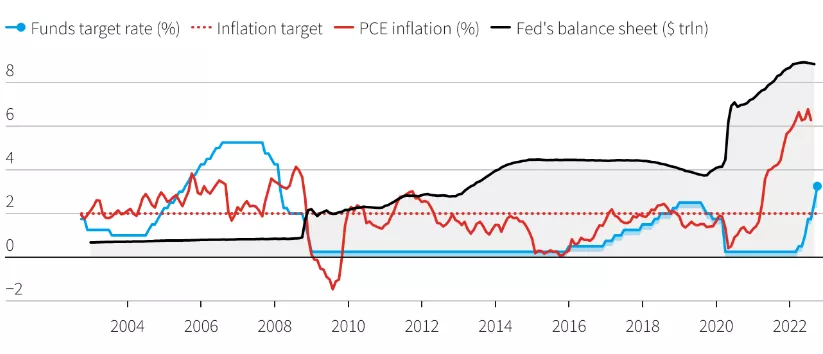
At the press conference, Powell announced the list of economic problems, mentioning rising joblessness and highlighting the housing market. Earlier on Wednesday, the National Association of Realtors reported that the US existing home sales dropped for a seventh straight month in August. Moreover, house prices in August were down about 6% from their peak in June, the biggest 2-month drop in prices in nearly a decade, which is a good sign as a persistent source of rising consumer inflation needed a "correction."
In conclusion, the committee confirmed its commitment to returning inflation to its 2% target.
Is recession coming?
The economy is still stable, job growth remains solid, and consumer and business spending has increased despite historically high inflation and rising interest rates.
However, there are mounting warning signs. Employment gains are slowing, savings cushions are decreasing, price increases remain high, and corporate profits, which had stayed strong, are declining, underscored by a bleak FedEx warning last week that contributed to a massive stock market sell-off.
Economists believe the worst times are coming over the economy as aggressive Federal Reserve interest rate hikes designed to tame inflation are likely to take a bigger toll on growth in the months ahead.
Corporate profit decrease will affect labor market
In 2022, companies have maintained large profits even though they’ve had to pay more for materials and hike wages to deal with worker shortages. However, that’s about to change as consumers temper their spending. According to US economists, earnings of S&P 500 companies grew 3.5% in the third quarter, which would be the slowest pace since 2020. As a result, companies will reduce hiring and capital spending.
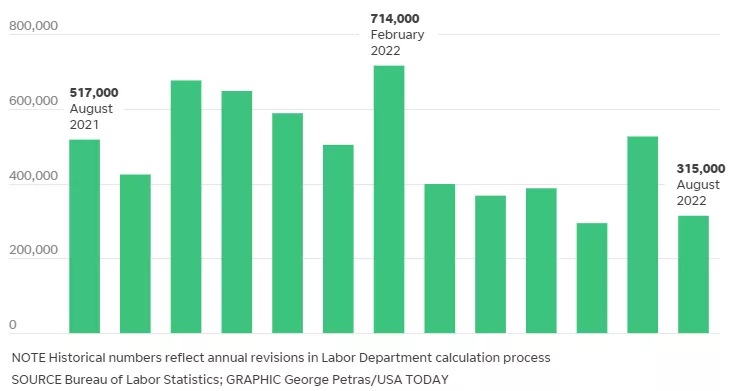
In August, employers added a solid 315 000 jobs, which is lower than an average of 455 000 in the year's first seven months. Less job creation means less income and spending.
Also, average weekly overtime hours for factory workers have dropped 11% since February to the lowest level since 2020. That's worrisome because the declining amount of overtime logged by existing workers can provoke future hiring.
Experts predict hiring to slow down, leading to about 500 000 net job losses in the 2023 spring as the unemployment rate increase from the current 3.7% to 4.8%.
How will it affect the markets?
US dollar
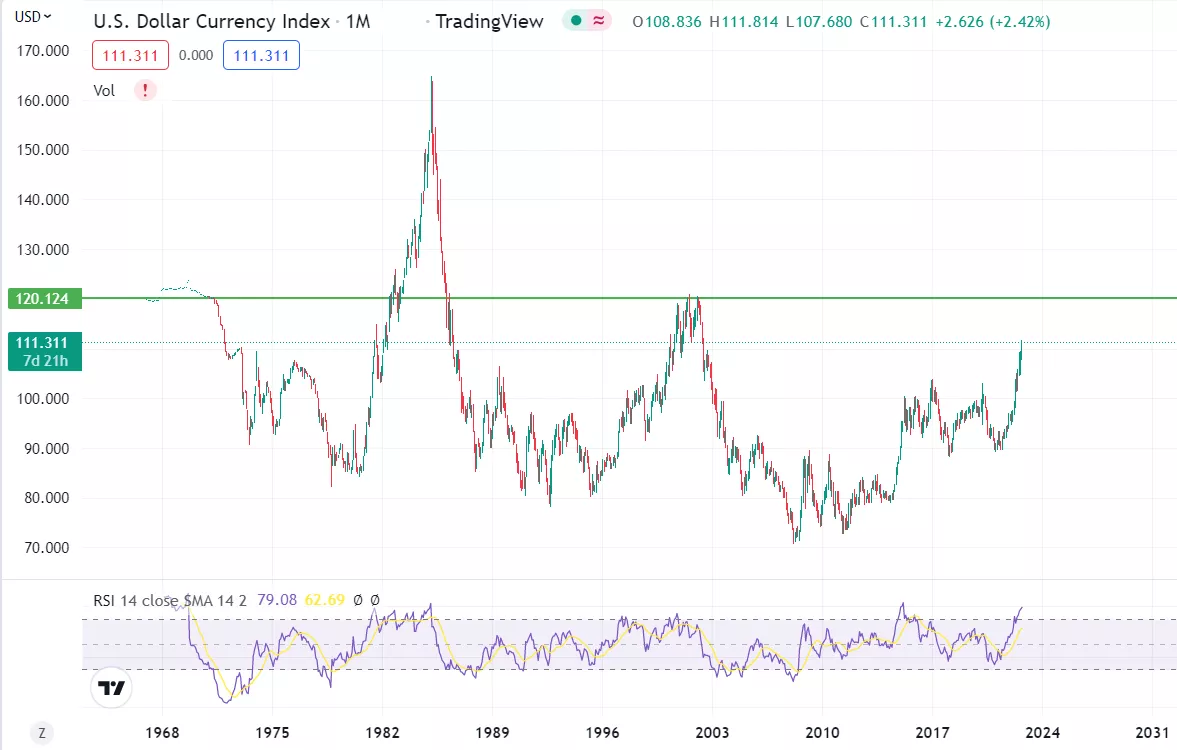
The value of the US dollar against other major currencies has reached its highest level since the early 2000s. Even as recession fears mount and the economy shows signs of slowing, the dollar continues to surge.
Broadly, it happens due the high importance of available cash flow and liquidity for a business, household, or portfolio’s financial health. Keeping cash available, especially during a crisis, adds flexibility to any wallet. Moreover, for investors, free cash is one of the main advantages of keeping liquid assets on hand when the economy turns south and risk assets fall. Therefore, as the recession will pressure the stock and crypto markets, causing sell-offs, more and more investors will turn to cash, pushing the US dollar higher against other currencies.
In addition, the US is the major economy around the globe. As a result, a recession will hurt all other economies that are strongly dependent on it. In these conditions, investors will leave “weak” currencies in favor of the greenback to hedge their capital.
In these conditions, the US dollar index has all chances of reaching the 2000s high of 120.00.
Gold
Gold isn’t saving investors from inflation as the metal is sensitive to expected long-term real interest rates. Since metal is a long-duration durable asset, its price has a strong inverse relationship with the long-term real interest rate. A further rise in key rates should drive down the price of gold. Therefore, smart money prefers short-term government bonds to gold, as yields skyrocketed to 15-year highs, providing an opportunity to cover inflation losses partly.
XAUUSD, weekly chart
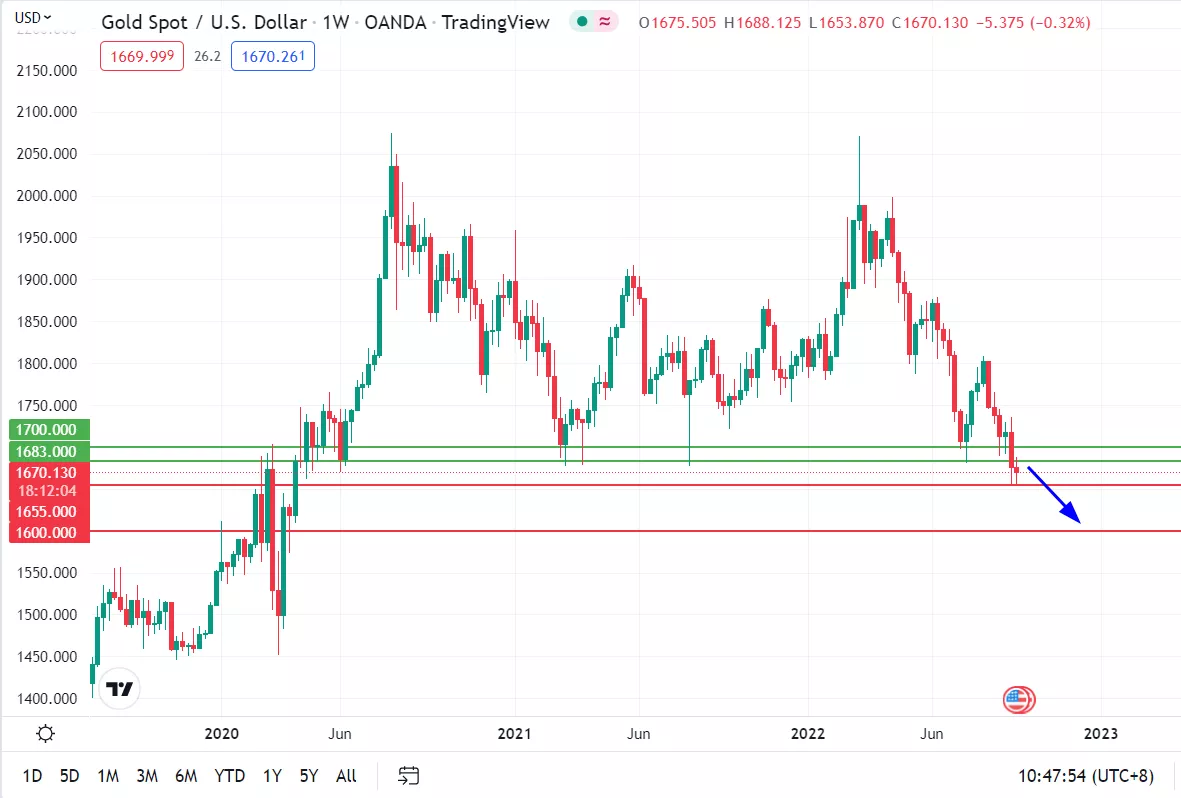
Buyers are trying to defend the level of 1655.00, but it looks like just a matter of time. After the breakout of this level, we expect a massive impulse towards the physiological support of 1600.00.
BoJ Intervention May Not Halt Yen’s Slide
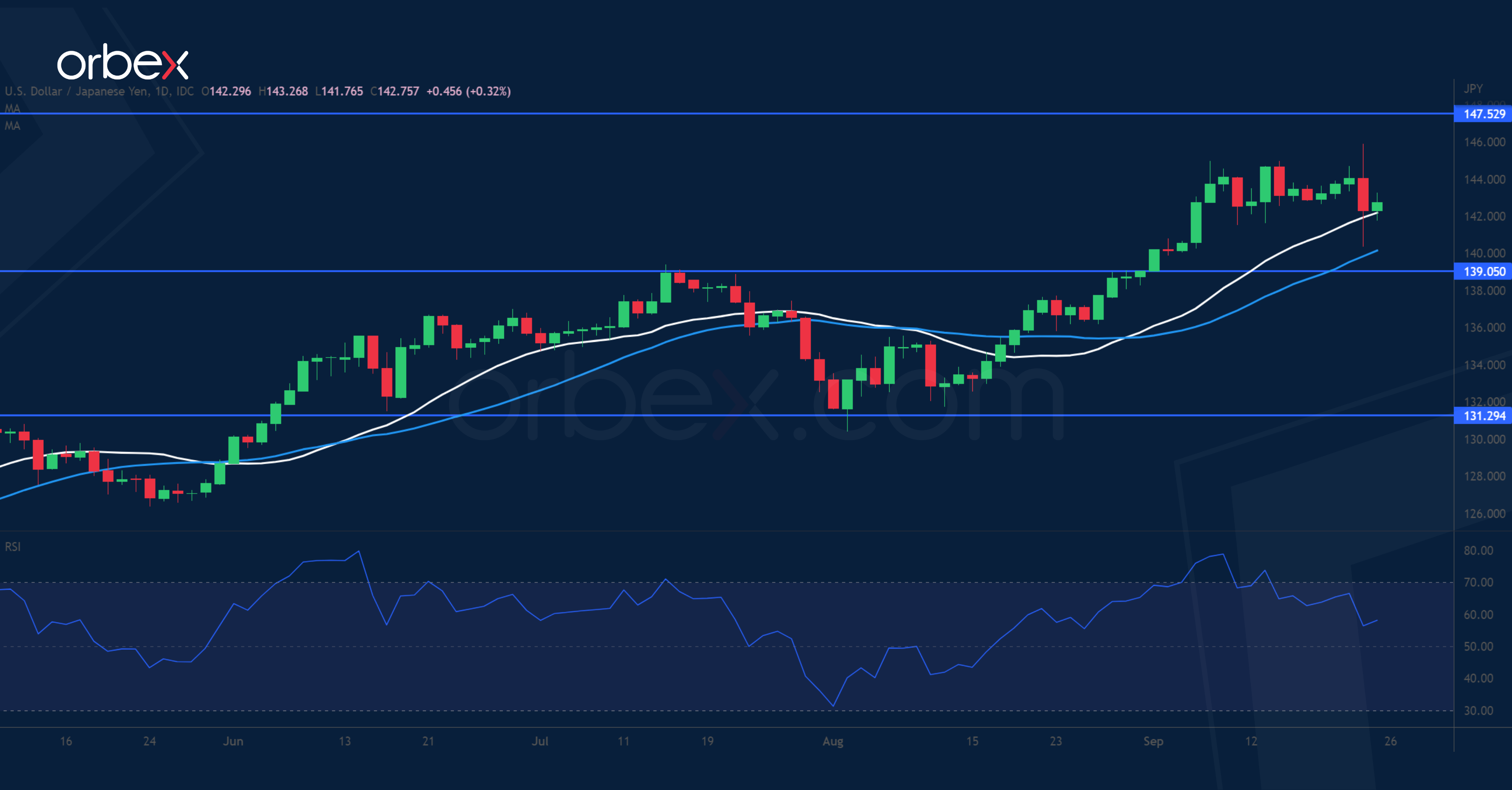
USD/JPY consolidates post-BoJ intervention
The Japanese yen clawed back some losses after the BoJ intervened in the FX market for the first time since 1998. The central bank has loaded up on its currency in an attempt to ease the imported inflation pressure. However, this symbolic move may only offer the battered yen relief and is unlikely to reverse the current trend. Policymakers have stuck to the loose policy to support the fragile recovery, in a contrarian move to the global race to tighten financial conditions. Diverging yields between Japan and the US may still favour the latter’s currency. August 1998’s high at 147.50 is the next hurdle and 139.00 the closest support.
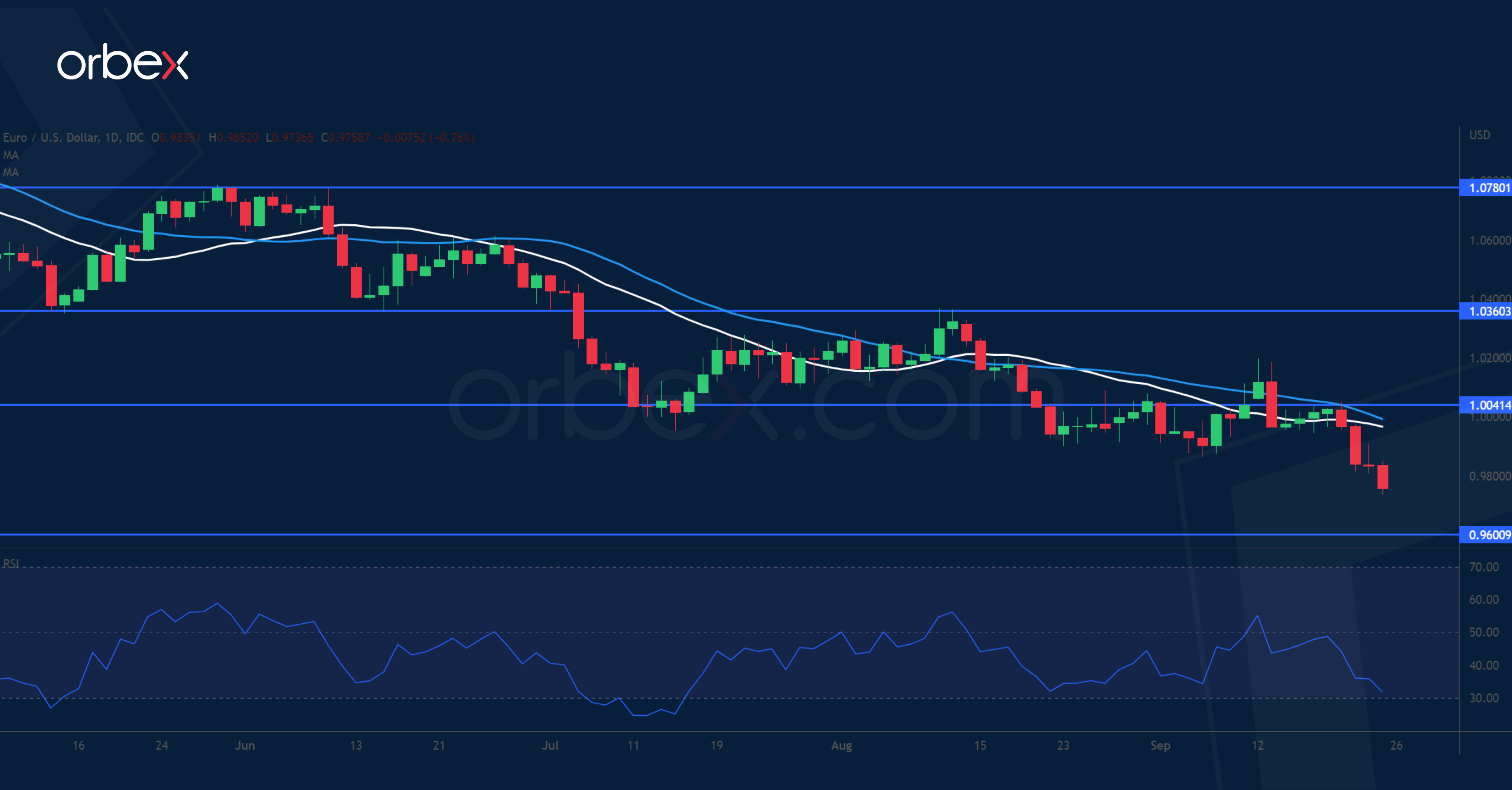
EUR/USD slips as Fed stays hawkish
The US dollar soared to a two-decade high after the Fed raised interest rates by another 75 basis points. Officials have signalled more similar hikes by the end of the year. An update on US rates projection shows a 4.4% by year's end, a full percentage point higher than last June’s forecast. In Europe, the economic slowdown, energy strains and an escalation in Ukraine could keep traders away from the single currency. This divergence mirrors the fate of other riskier currencies. In a world full of uncertainties, high yield and safety raise the dollar’s relative appeal. The pair is sliding towards 0.9600 after being capped at 1.0040.
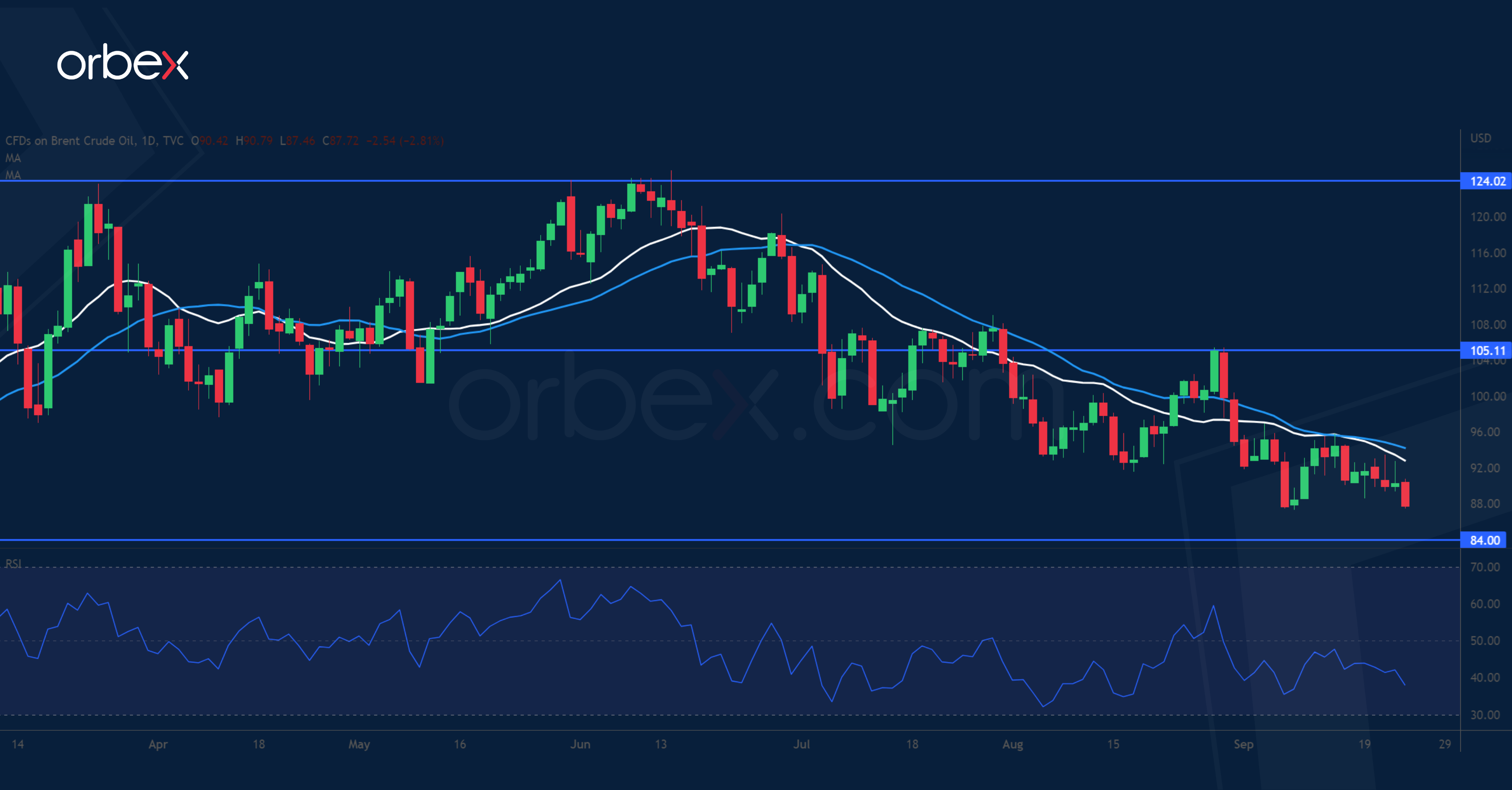
UK oil softens as global growth at risk
Brent crude struggles over geopolitical tensions and demand uncertainty. Russia announced a mobilisation of more troops in an escalating move in the Ukraine conflict. Additional sanctions could be expected from the west along with Russia’s retaliation in energy deliveries. Meanwhile, Washington signalled little progress in reviving the 2015 Iran nuclear deal. The stalemate could keep the tight market in check. However, the global race to stifle inflation makes growth a collateral damage. Lower demand and subdued risk appetite may continue to fuel the correction. The price is hovering above 84.00 and 105.00 is an important cap.
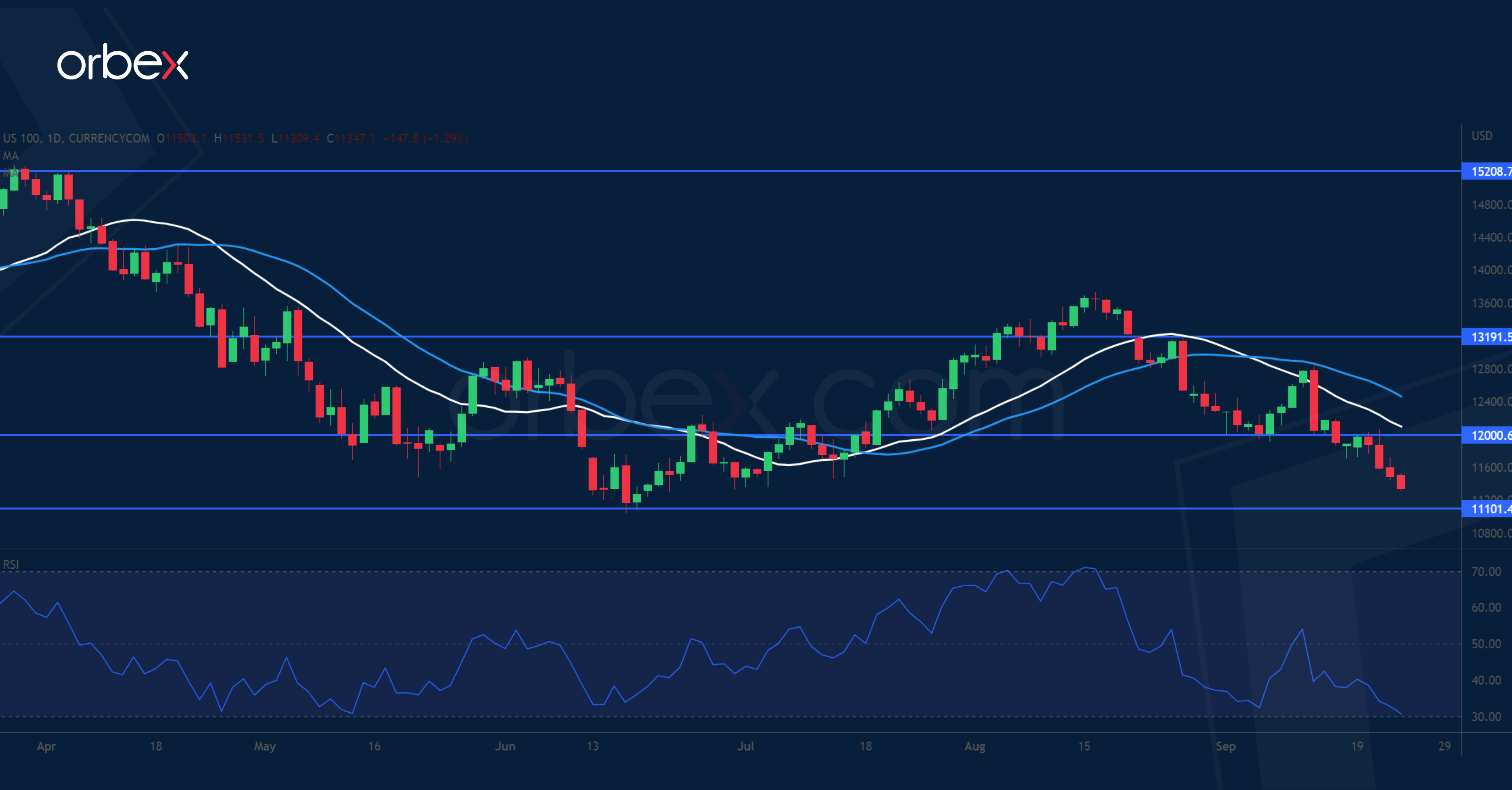
NAS 100 struggles as rates see no ceiling yet
The Nasdaq 100 slips further as the Fed reaffirms its restrictive roadmap. As the economy became second to monetary policy, investors fear that the window for a ‘soft landing’ might be closing. The question would shift from whether the recession is around the corner to how long it would last. The central bank reiterated that growth and jobs would be impacted. A solid labour market may act as a cushion, allowing policymakers to push the tightening agenda aggressively. Growth stock investors will need to remain patient as rate cuts are not expected until 2024. The index is hovering above 11100 with 12000 as the first resistance.
USD/JPY Mid-Day Outlook
Daily Pivots: (S1) 139.85; (P) 142.87; (R1) 145.40; More...
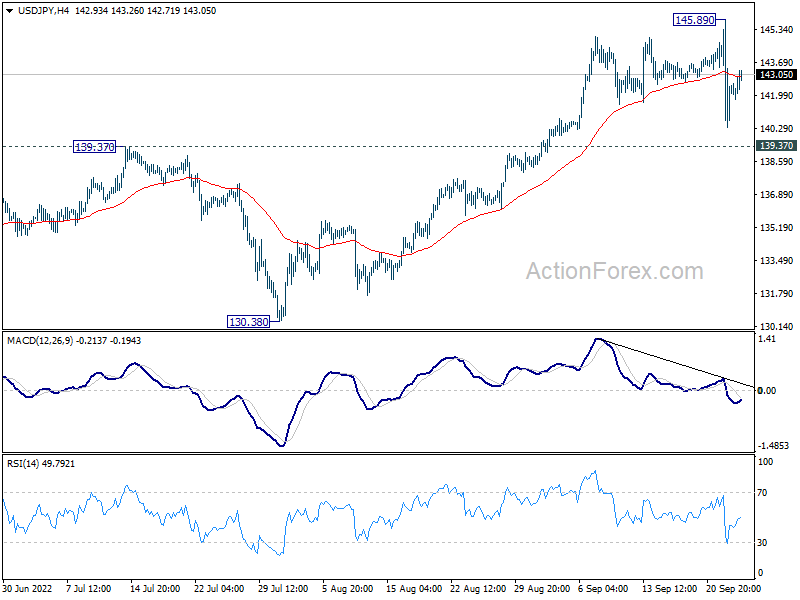
Range trading continues in USD/JPY and intraday bias remains neutral. Further rally will remain in favor as long as 139.37 resistance turned support holds. Break of 145.89 will resume larger rally to 147.68 long term resistance. However, decisive break of 139.37 will confirm short term topping, on bearish divergence condition in 4 hour MACD. Deeper decline would be seen back towards 130.38 support.
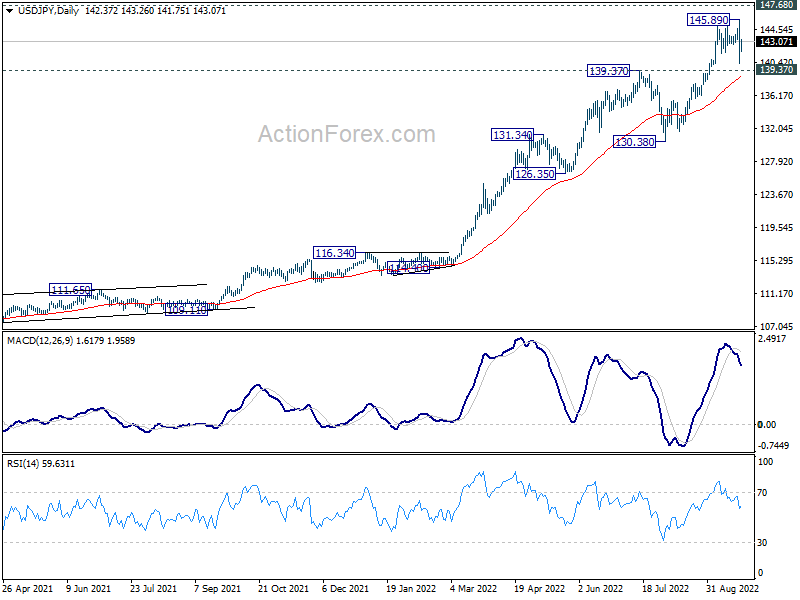
In the bigger picture, up trend from 101.18 is still in progress, as part of the whole up trend from 75.56 (2011 low). Further rise should be seen to 147.68 (1998 high). For now, break of 130.38 support is needed to be the first indication of medium term topping. Otherwise, outlook will stay bullish even in case of deep pull back.
USD/CHF Mid-Day Outlook
Daily Pivots: (S1) 0.9646; (P) 0.9748; (R1) 0.9875; More
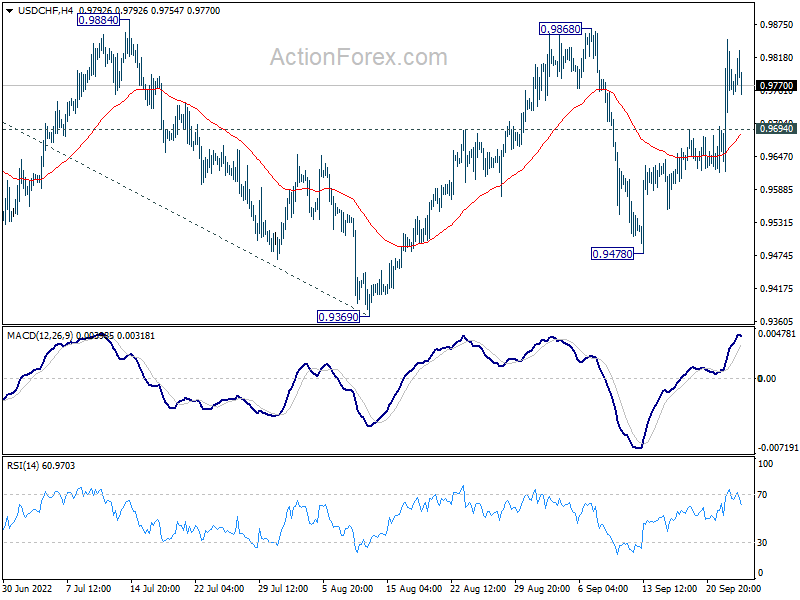
No change in USD/CHF's outlook and intraday bias stays mildly on the upside. Firm break of 0.9868 resistance will argue that larger up trend is ready to resume through 1.0063. Overall, the corrective pattern from 1.0063 high could still extend. Below 0.9619 minor support will turn bias back to the downside for 0.9478 and below.
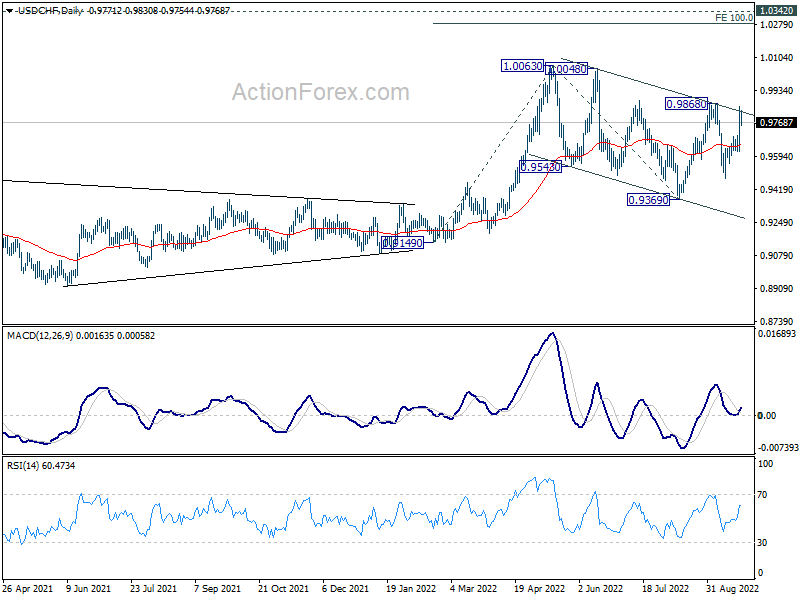
In the bigger picture, current development suggests that up trend from 0.8756 (2021 low) is still in progress. Sustained break of 1.0063 will target 100% projection of 0.9149 to 1.0063 from 0.9369 at 1.0283, and then 1.0342 (2016 high). For now, this will remain the favored case as long as 0.9369 support holds, even in case of deep pull back.
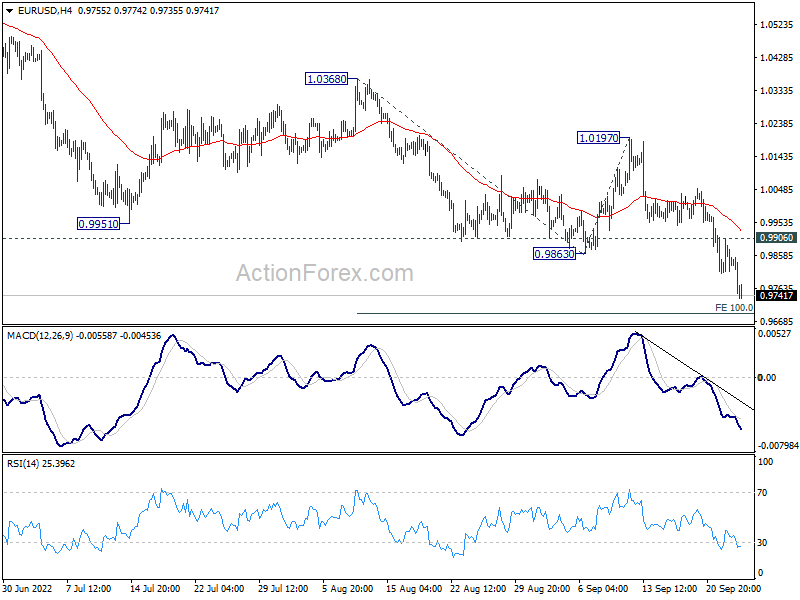
EUR/USD Mid-Day Outlook
Daily Pivots: (S1) 0.9793; (P) 0.9850; (R1) 0.9891; More...
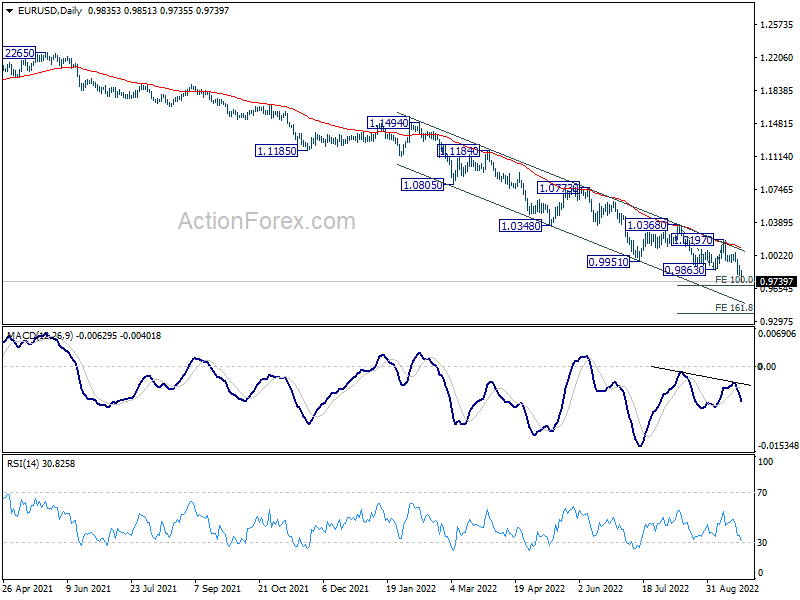
Intraday bias in EUR/USD remains on the downside for the moment. Current down trend should target 100% projection of 1.0368 to 0.9863 from 1.0197 at 0.9692. Firm break there could prompt downside acceleration and target 161.8% projection at 0.9380. On the upside, above 0.9906 minor resistance will turn intraday bias neutral first. But outlook will stay bearish as long as 1.0197 resistance holds, in case of recovery.
In the bigger picture, down trend from 1.6039 (2008 high) is still in progress. Next target is 100% projection of 1.3993 to 1.0339 from 1.2348 at 0.8694. In any case, break of 1.0197 resistance is needed to be the first sign of medium term bottoming. Otherwise, outlook will stay bearish even with strong rebound.
GBP/USD Mid-Day Outlook
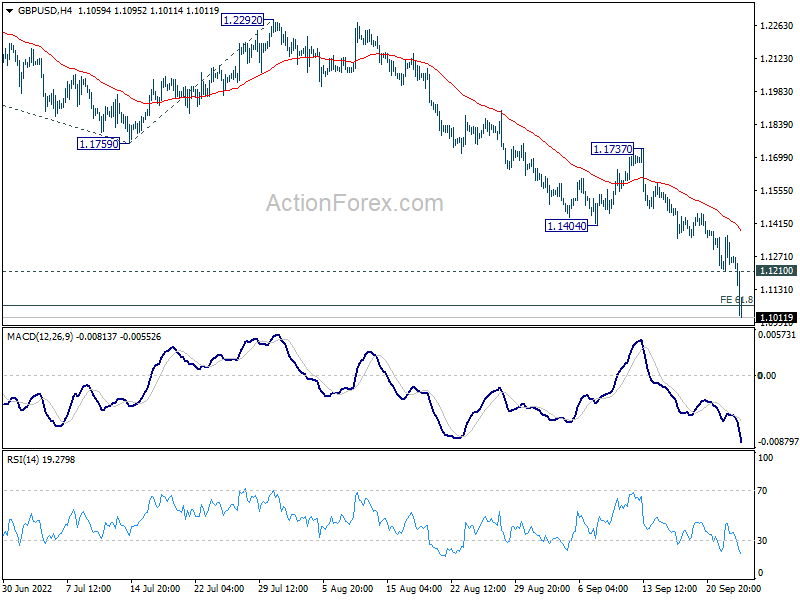
Daily Pivots: (S1) 1.1190; (P) 1.1277; (R1) 1.1342; More...
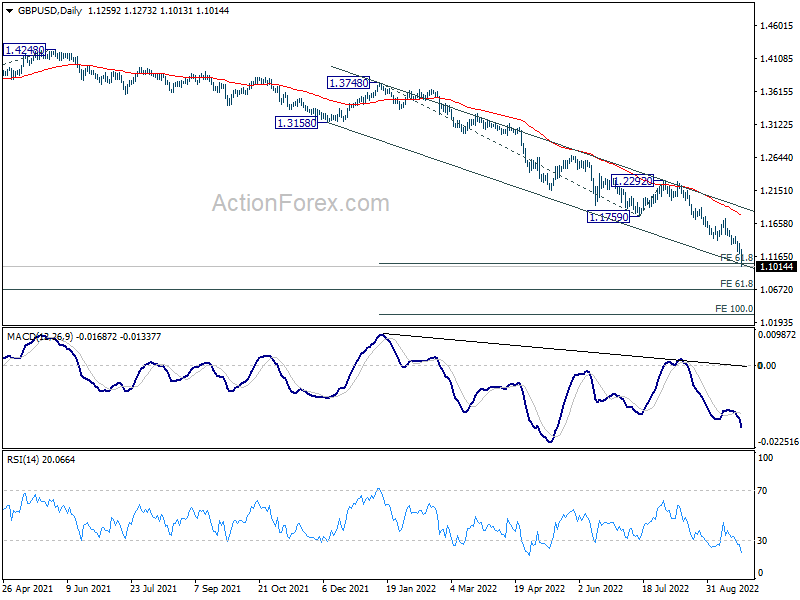
GBP/USD dives to as low as 1.1019 so far, meeting 61.8% projection of 1.3748 to 1.1759 from 1.2292 at 1.1063. there is no sign of bottoming yet. Intraday bias stays on the downside for 100% projection at 1.0303. On the upside, above 1.1210 minor resistance will turn intraday bias neutral and bring consolidations first, before staging another decline.
In the bigger picture, based on current momentum, fall from 1.4248 (2018 high) is probably resuming long term down trend from 2.1161 (2007 high). Sustained break of 1.1409 will target 61.8% projection of 1.7190 (2014 high) to 1.1409 (2020 low) from 1.4248 (2021 high) at 1.0675. This will remain the favored case for now as long as 1.2292 resistance holds.
Sterling in Free Fall on Mini-Budget
Sterling is in free fall today as markets reacted negatively to the "mini-budget" of the new government. Selloff came after Finance Minister Kwasi Kwarteng announced to cancel and planned rise in corporation tax, reverse a recent rise in income tax, and cut taxes for businesses in designated investment zones. Swiss Franc is currently the biggest winner for the day, followed by Dollar.
In Europe, at the time of writing, FTSE is down -1.84%. DAX is down -1.47%. CAC is down -1.61%. Germany 10-year yield is up 0.0182 at 1.986. Earlier in Asia, Hong Kong HSI dropped -1.18%. China Shanghai SSE dropped -0.66%. Singapore Strait Times dropped -1.10%. Japan was on holiday.
Canada retail sales down -2.5% mom in Jul
Canada retail sales dropped -2.5% mom to CAD 61.3B in July, worse than expectation of -2.0% mom. That's also the first decline in seven months. Sales were down in 9 of 11 subsectors, representing 94.5% of retail trade. The contraction was driven by lower sales at gasoline stations and clothing and clothing accessories stores. Excluding gasoline, and motor vehicle and parts, sales dropped -0.9%.
Based on advance estimate, sales recovered by rising 0.4% mom in August.
Eurozone PMI composite dropped to 48.2, recession on the cards
Eurozone PMI manufacturing dropped from 49.6 to 48.5 in September, a 27-month low. PMI services dropped form 49.8 to 48.9, a 19-month low. PMI composite dropped from 48.9 to 48.2, a 20-month low.
Chris Williamson, Chief Business Economist at S&P Global Market Intelligence said: "A eurozone recession is on the cards as companies report worsening business conditions and intensifying price pressures linked to soaring energy costs.
"The early PMI readings indicate an economic contraction of 0.1% in the third quarter, with the rate of decline having accelerated through the three months to September to signal the worst economic performance since 2013, excluding pandemic lockdown months."
Germany PMI Manufacturing dropped from 48.3 to 49.1 in September, a 27-month low. PMI Services dropped from 47.7 to 45.4, a 28-month low. PMI Composite dropped from 46.9 to 45.9, a 28-month low.
France PMI Manufacturing dropped from 50.6 to 47.8 in August, a 28-month low. PMI Services improved from 51.2 to 53.0. Overall, PMI Composite rose from 50.4 to 51.2.
UK PMI composite dropped to 48.4, economic woes deepened
UK PMI manufacturing improved from 47.3 to 48.5 in September. But PMI services dropped from 50.9 to 49.2, a 20-month low. PMI Composite dropped from 49.6 to 48.4, a 20-month low.
Chris Williamson, Chief Business Economist at S&P Global Market Intelligence said:
"UK economic woes deepened in September as falling business activity indicates that the economy is likely in recession. Companies report that the rising cost of living, linked to the energy crisis, and growing concerns about the outlook are subduing demand and hitting output levels to an extent not seen since 2009, barring the pandemic lockdowns and initial 2016 Brexit referendum shock.
"Forward-looking indicators meanwhile deteriorated further in September. Both the new orders and future expectations gauges have descended to levels which have rarely been weaker in the past, and are consistent with a deepening downturn as we head into the fourth quarter.
"Inflationary pressures continue to run higher than at any time in over two decades of survey history prior to the pandemic. Renewed supply constraints, soaring energy prices and rising import costs associated with the weakened pound are adding to cost pressures, meaning the overall rate of inflation signalled will remain of great concern to policymakers at the Bank of England. However, the detrimental impact of tightening policy into a recession is becoming increasingly apparent, with the downturn likely to intensify as we head into winter."
UK Gfk consumer confidence dropped to new record low at -49
UK Gfk consumer confidence dropped further from -44 to -49 in September, hitting another record low since 1974. Personal financial situation over next 12 months dropped -9 pts to -40. General economic situation over next 12 months dropped -8 pts to -68. Major purchase index was unchanged at -38.
"Consumers are buckling under the pressure of the UK's growing cost-of-living crisis driven by rapidly rising food prices, domestic fuel bills and mortgage payments. They are asking themselves when and how the situation will improve." Joe Staton, client strategy director at GfK, said.
Australia PMI composite edged up to 50.8, at risk of heading into contraction territory
Australia PMI Manufacturing ticked up from 53.8 to 53.9 in September. PI Services also rose slightly from 50.2 to 50.4. PMI Composite Output rose from 50.2 to 50.8.
Laura Denman, Economist at S&P Global Market Intelligence said: "September data indicated that the recent interest rate hikes made by the RBA have begun to have the desired effect in terms of prices.... At the same time, the private sector has remained in expansion territory with the pace of growth even accelerating very slightly...
"On the negative side, the full effects of recent interest rate hikes will be lagged... Should the RBA continue to increase the base rate further, the private sector economy may be at risk of heading into contraction territory in the future as disposable incomes across the nation tighten and overall demand conditions remain subdued."
GBP/USD Mid-Day Outlook
Daily Pivots: (S1) 1.1190; (P) 1.1277; (R1) 1.1342; More...
GBP/USD dives to as low as 1.1019 so far, meeting 61.8% projection of 1.3748 to 1.1759 from 1.2292 at 1.1063. there is no sign of bottoming yet. Intraday bias stays on the downside for 100% projection at 1.0303. On the upside, above 1.1210 minor resistance will turn intraday bias neutral and bring consolidations first, before staging another decline.
In the bigger picture, based on current momentum, fall from 1.4248 (2018 high) is probably resuming long term down trend from 2.1161 (2007 high). Sustained break of 1.1409 will target 61.8% projection of 1.7190 (2014 high) to 1.1409 (2020 low) from 1.4248 (2021 high) at 1.0675. This will remain the favored case for now as long as 1.2292 resistance holds.
Economic Indicators Update
| GMT | Ccy | Events | Actual | Forecast | Previous | Revised |
|---|---|---|---|---|---|---|
| 23:00 | AUD | Manufacturing PMI Sep P | 53.9 | 53.8 | ||
| 23:00 | AUD | Services PMI Sep P | 50.4 | 50.2 | ||
| 23:01 | GBP | GfK Consumer Confidence Sep | -49 | -42 | -44 | |
| 07:15 | EUR | France Manufacturing PMI Sep P | 47.8 | 49.9 | 50.6 | |
| 07:15 | EUR | France Services PMI Sep P | 53 | 50.4 | 51.2 | |
| 07:30 | EUR | Germany Manufacturing PMI Sep P | 48.3 | 48.3 | 49.1 | |
| 07:30 | EUR | Germany Services PMI Sep P | 45.4 | 47.2 | 47.7 | |
| 08:00 | EUR | Eurozone Manufacturing PMI Sep P | 48.5 | 48.8 | 49.6 | |
| 08:00 | EUR | Eurozone Services PMI Sep P | 48.9 | 49.1 | 49.8 | |
| 08:30 | GBP | Manufacturing PMI Sep P | 48.5 | 47.4 | 47.3 | |
| 08:30 | GBP | Services PMI Sep P | 49.2 | 50 | 50.9 | |
| 12:30 | CAD | Retail Sales M/M Jul | -2.50% | -2.00% | 1.10% | 0.60% |
| 12:30 | CAD | Retail Sales ex Autos M/M Jul | -3.10% | -1.00% | 0.80% | 0.60% |
| 13:45 | USD | Manufacturing PMI Sep P | 51.8 | 51.2 | 51.5 | |
| 13:45 | USD | Services PMI Sep P | 49.2 | 45 | 43.7 |