Sample Category Title
USD/JPY Daily Outlook
Daily Pivots: (S1) 143.39; (P) 144.05; (R1) 144.74; More...
USD/JPY's rally resumes by breaking 114.98 and intraday bias is back on the upside. Current up trend should target 147.68 long term resistance. Break there will target 161.8% projection of 126.35 to 139.37 from 130.38 at 151.44 next. On the downside, break of 142.63 minor support will turn intraday bias neutral again first.
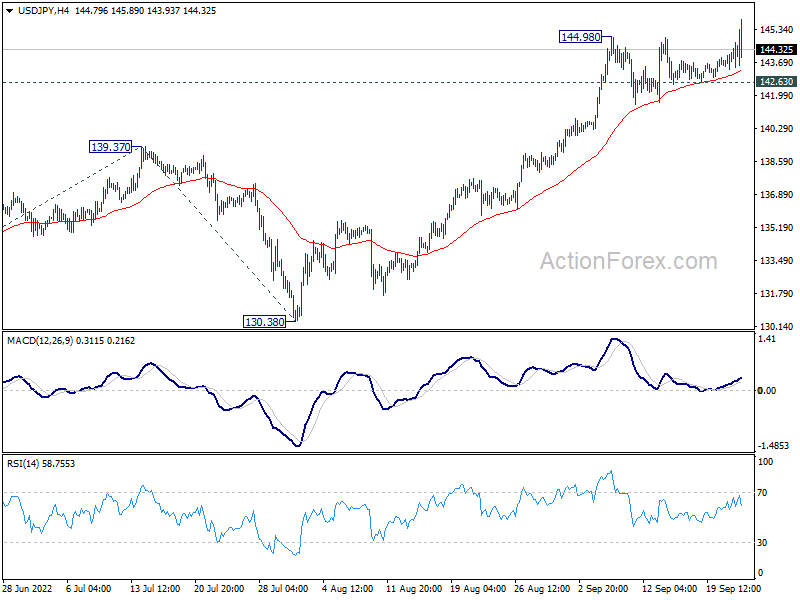
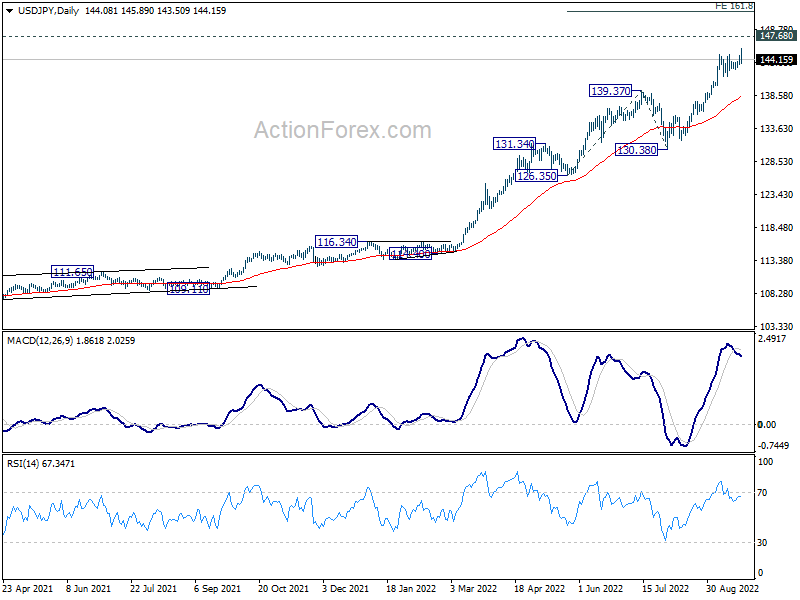
In the bigger picture, up trend from 101.18 is still in progress, as part of the whole up trend from 75.56 (2011 low). Further rise should be seen to 147.68 (1998 high). For now, break of 130.38 support is needed to be the first indication of medium term topping. Otherwise, outlook will stay bullish even in case of deep pull back.
USD/CHF Daily Outlook
Daily Pivots: (S1) 0.9623; (P) 0.9662; (R1) 0.9702; More
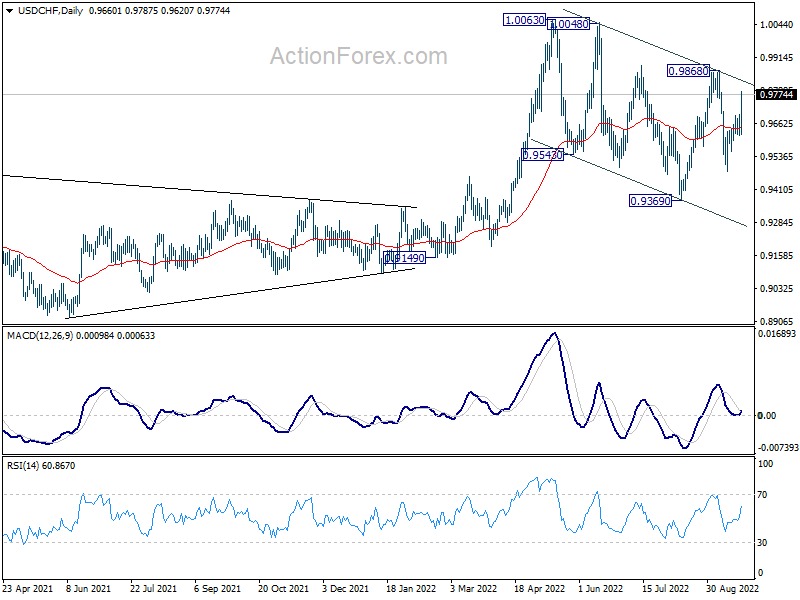
USD/CHF's rally resumed after brief consolidations and intraday bias is back on the upside for 0.9868 resistance first. Break there will argue that larger up trend is ready to resume through 1.0063. Overall, the corrective pattern from 1.0063 high could still extend. Below 0.9619 minor support will turn bias back to the downside for 0.9478 and below.
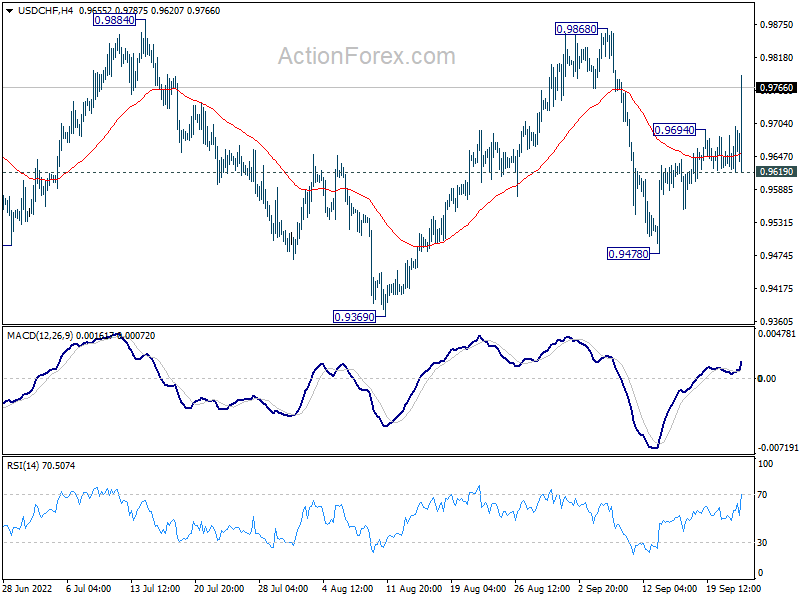
In the bigger picture, current development suggests that up trend from 0.8756 (2021 low) is still in progress. Sustained break of 1.0063 will target 100% projection of 0.9149 to 1.0063 from 0.9369 at 1.0283, and then 1.0342 (2016 high). For now, this will remain the favored case as long as 0.9369 support holds, even in case of deep pull back.
GBP/USD Daily Outlook
Daily Pivots: (S1) 1.1209; (P) 1.1297; (R1) 1.1357; More...
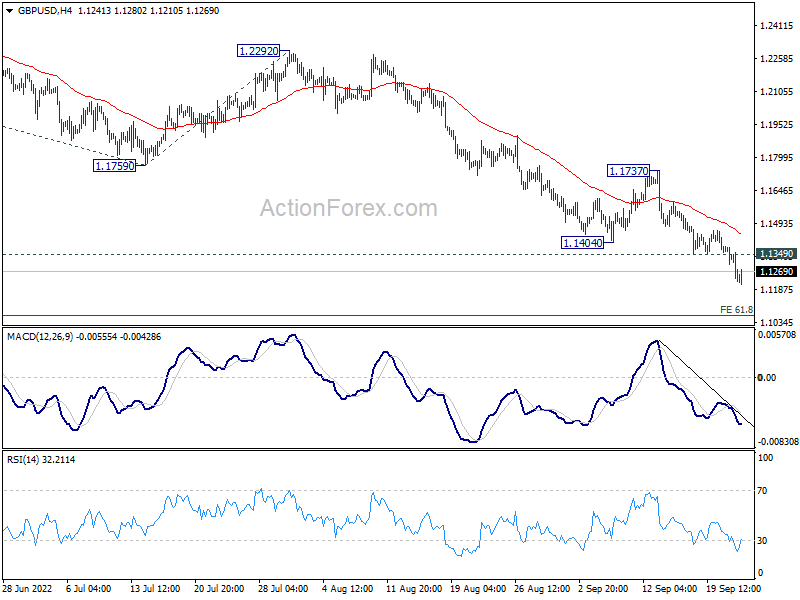
GBP/USD's decline is still in progress and intraday bias stays on the downside. Current down trend should target 61.8% projection of 1.3748 to 1.1759 from 1.2292 at 1.1063 next. On the upside, above 1.1349 minor resistance will turn intraday bias neutral first. But outlook will stay bearish as long as 1.1737 resistance holds, in case of recovery.
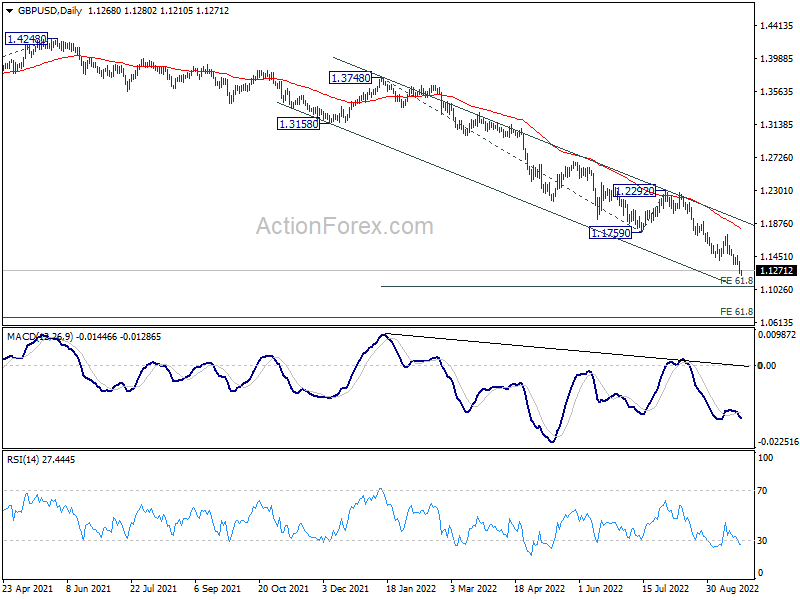
In the bigger picture, based on current momentum, fall from 1.4248 (2018 high) is probably resuming long term down trend from 2.1161 (2007 high). Sustained break of 1.1409 will target 61.8% projection of 1.7190 (2014 high) to 1.1409 (2020 low) from 1.4248 (2021 high) at 1.0675. This will remain the favored case for now as long as 1.2292 resistance holds.
SNB hikes 75bps, signalling possibility of a pause
SNB raises policy rate by 75bps to 0.50% as widely expected, to counter "renewed rise in inflation pressure". It "cannot be ruled out" that further rate hikes will be "necessary". The reference to the timeframe of "in the foreseeable future" was dropped. The statement suggests that it's probably a pause for SNB now.
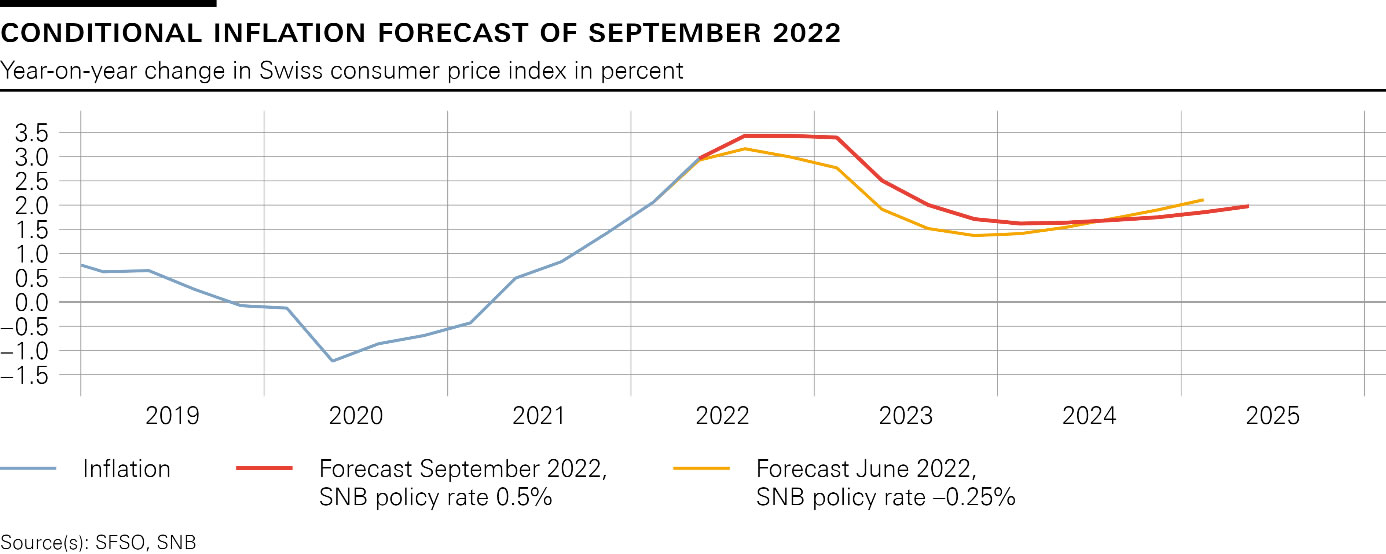
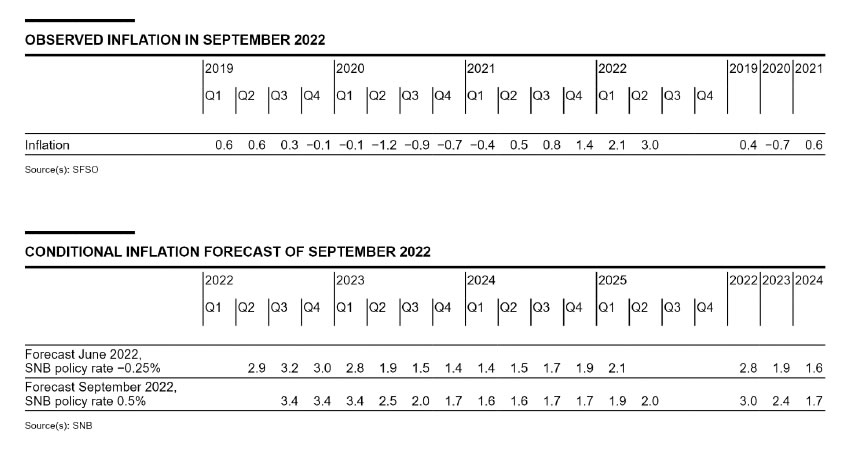
SNB expects that inflation is "likely to remain at an elevated level for the time being". Based on the assumption that policy stays at 0.50% over the entire forecast horizon, inflation will peak at 3.4% in Q3, and stay slowing from Q2 2023 to 1.6% in Q2 2024. Inflation will average 3.0% in 2022, 2.4% in 2023, and then 1.7% in 2024.
Regarding the economy, SNB expects GDP growth of around 2% this year, roughly 0.5% lower than the last monetary policy assessment. Uncertainty remains high and the biggest risks are a "a global economic downturn, a worsening of the gas shortage in Europe and a power shortage in Switzerland".
(SNB) Swiss National Bank tightens monetary policy further and raises SNB policy rate to 0.5%
The SNB is tightening its monetary policy further and is raising the SNB policy rate by 0.75 percentage points to 0.5%. In doing so, it is countering the renewed rise in inflationary pressure and the spread of inflation to goods and services that have so far been less affected. It cannot be ruled out that further increases in the SNB policy rate will be necessary to ensure price stability over the medium term. To provide appropriate monetary conditions, the SNB is also willing to be active in the foreign exchange market as necessary.
The SNB policy rate change applies from tomorrow, 23 September 2022. Moreover, the SNB is adjusting the implementation of its monetary policy to the positive interest rate environment. This ensures that the secured short-term Swiss franc money market rates remain close to the SNB policy rate. Banks' sight deposits held at the SNB are remunerated at the SNB policy rate up to a certain threshold. Sight deposits above this threshold are remunerated at an interest rate of zero percent. The SNB will also use liquidity-absorbing measures.
Inflation rose to 3.5% in August and is likely to remain at an elevated level for the time being. The latest rise in inflation is principally due to higher prices for goods, especially energy and food. The SNB's new conditional inflation forecast is based on the assumption that the SNB policy rate is 0.5% over the entire forecast horizon (cf. chart 1). Up to mid-2024, the forecast is above that of June. After that, it is lower due to the now tighter monetary policy. At the end of the forecast horizon, inflation stands at 2%. The new forecast puts average annual inflation at 3% for 2022, 2.4% for 2023 and 1.7% for 2024 (cf. table 1). Without today's SNB policy rate increase, the inflation forecast would be significantly higher.
Global economic growth has slowed considerably in recent months. At the same time, inflation in many countries is markedly above central banks' targets. In response, numerous central banks have further tightened their monetary policy.
In its baseline scenario for the global economy, the SNB expects only weak economic growth. In particular, the energy situation in Europe, the loss of purchasing power due to inflation, and tighter financing conditions are having a dampening effect. Inflation will remain elevated for the time being. However, the importance of temporary factors such as supply bottlenecks is likely to diminish over the medium term. The increasingly tighter monetary policy in many countries should also help inflation gradually return to more moderate levels.
This scenario for the global economy is subject to significant risks. For example, the energy situation could worsen again. At the same time, high inflation could become embedded and require stronger monetary policy responses abroad. Finally, the course of the coronavirus pandemic remains an important source of risk.
In Switzerland, GDP growth in the second quarter was lower than expected, at 1.1%. This was mainly due to weaker performance in manufacturing. The short-term outlook has deteriorated. By contrast, the situation on the labour market has remained positive.
The further development of the economy is likely to be shaped by the economic slowdown abroad and the availability of energy in Switzerland. To date, the prices of natural gas and electricity in particular have risen sharply.
For this year, the SNB anticipates GDP growth of around 2%. This is roughly half a percentage point lower than at the last monetary policy assessment. The level of uncertainty associated with the forecast remains high. The biggest risks are a global economic downturn, a worsening of the gas shortage in Europe and a power shortage in Switzerland. Furthermore, a resurgence of the coronavirus pandemic cannot be ruled out.
Both mortgage lending and prices for single-family houses and privately owned apartments have continued to rise in recent quarters, while the latest data show signs of a slowdown in the residential investment property segment. The SNB will continue to monitor developments on the mortgage and real estate markets closely.
AUDUSD Tumbles to New 28-Month Low
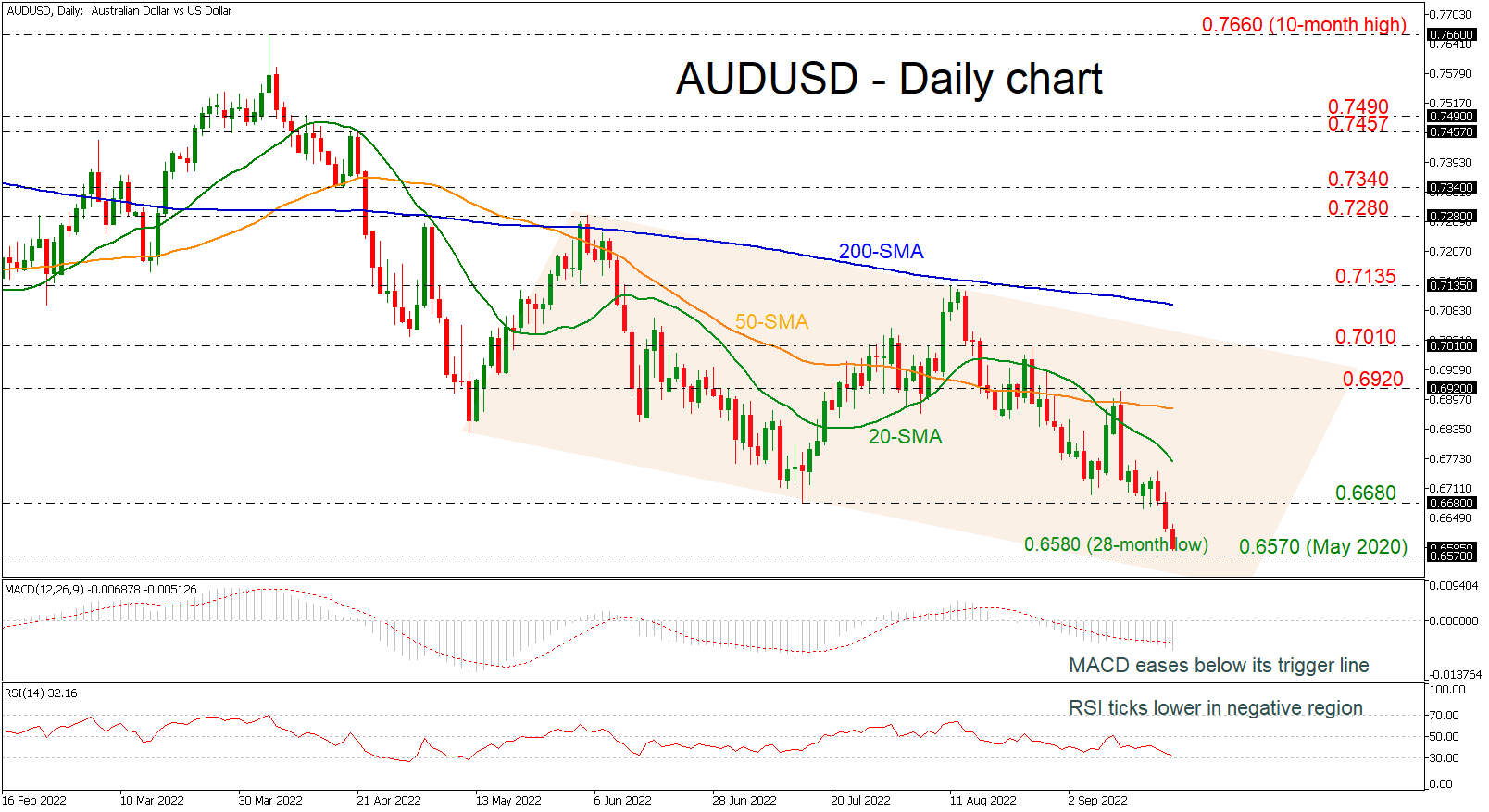
AUDUSD is plummeting for the third straight day towards a fresh 28-month low of 0.6580, remaining within a downward sloping channel since the beginning of June. The price had a pullback from the bearish cross within the 20- and 50-day simple moving averages (SMAs), keeping the medium-term outlook bearish.
Technically, the MACD is strengthening its negative momentum below its trigger and zero lines, while the RSI is approaching the 30 level.
Should weakness extend below the multi-month low of 0.6580 and the trough from May 2020 at 0.6570, support to downside movements could initially be detected from the April 2020 low at 0.6250.
Alternatively, the pair needs to overcome the 0.6680 resistance to meet a key barrier between the 20- and 50-day SMA at 0.6765-0.6875. The 0.6920 mark could also act as resistance too before a more important battle starts near the 0.7010 level and downtrend line.
In the medium-term picture, the sentiment turned bearish after the price dropped beneath the 0.7135 number. The negative slope in the 20-day SMA, which moves lower from the 50-day SMA, also adds bearish pressure.
USD/JPY: Hawkish Fed and Dovish BOJ Lift USD/JPY
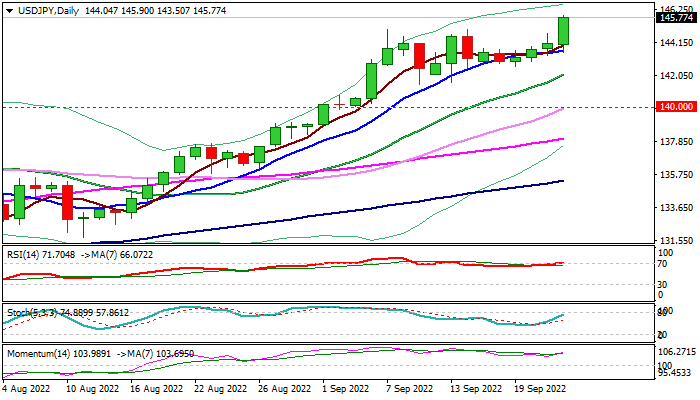
The USDJPY surges through 145 barrier in early Thursday’s trading and posts new 24-year high, inflated by hawkish Fed and repeatedly dovish stance from BOJ, which kept its ultra-easy policy and sent quite mild signals about possible intervention to support its weakening currency.
Fresh bullish acceleration (the pair was up nearly 1.3% since Asian opening on Thursday) approaches round-figure 146 barrier ahead of Fibo projections at 146.32 and 147.14, with focus on Aug 1998 peak at 147.68.
Former strong barrier at 145.00 reverted to support which should ideally contain, with deeper dips to find ground above rising 10DMA (143.62) to keep bulls intact.
Res: 146.32; 146.61; 147.14; 148.00.
Sup: 145.00; 143.95; 143.62; 142.64.
EUR/USD: The Euro Falls to New 20-year Low after Fed, Risks Deeper Drop
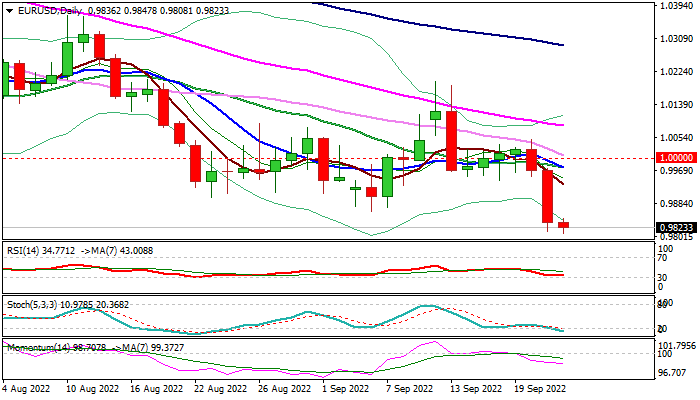
The Euro remains heavy in early Thursday’s trading and hit new marginally lower 20-year low, following 1.3% drop on Wednesday.
The sentiment was soured by growing geopolitical tensions, with hawkish Fed adding pressure on the single currency.
The US central bank raised rate by 0.75%, in line with wide expectations and signaled further strong hikes to push interest rate to 4.4% by the end of 2022 and to 4.6% in 2023 that is seen as continuous pressure on Euro.
Bears pressure psychological 0.9800 support, eyeing Fibo projections at 0.9736 and 0.9657, ahead of target at 0.9601 (Sep 2002 low).
Technical studies show overall bearish structure, with near-term action weighed by Wednesday’s large bearish candle (the second big daily drop this month).
Limited adjustments on oversold conditions are expected to offer better selling opportunities, with former low at 0.9864 (Sep 6) offering initial resistance and extended upticks to stay below broken Fibo 76.4% at 0.9942.
Res: 0.9847; 0.9864; 0.9900; 0.9942.
Sup: 0.9800; 0.9736; 0.9700; 0.9657.
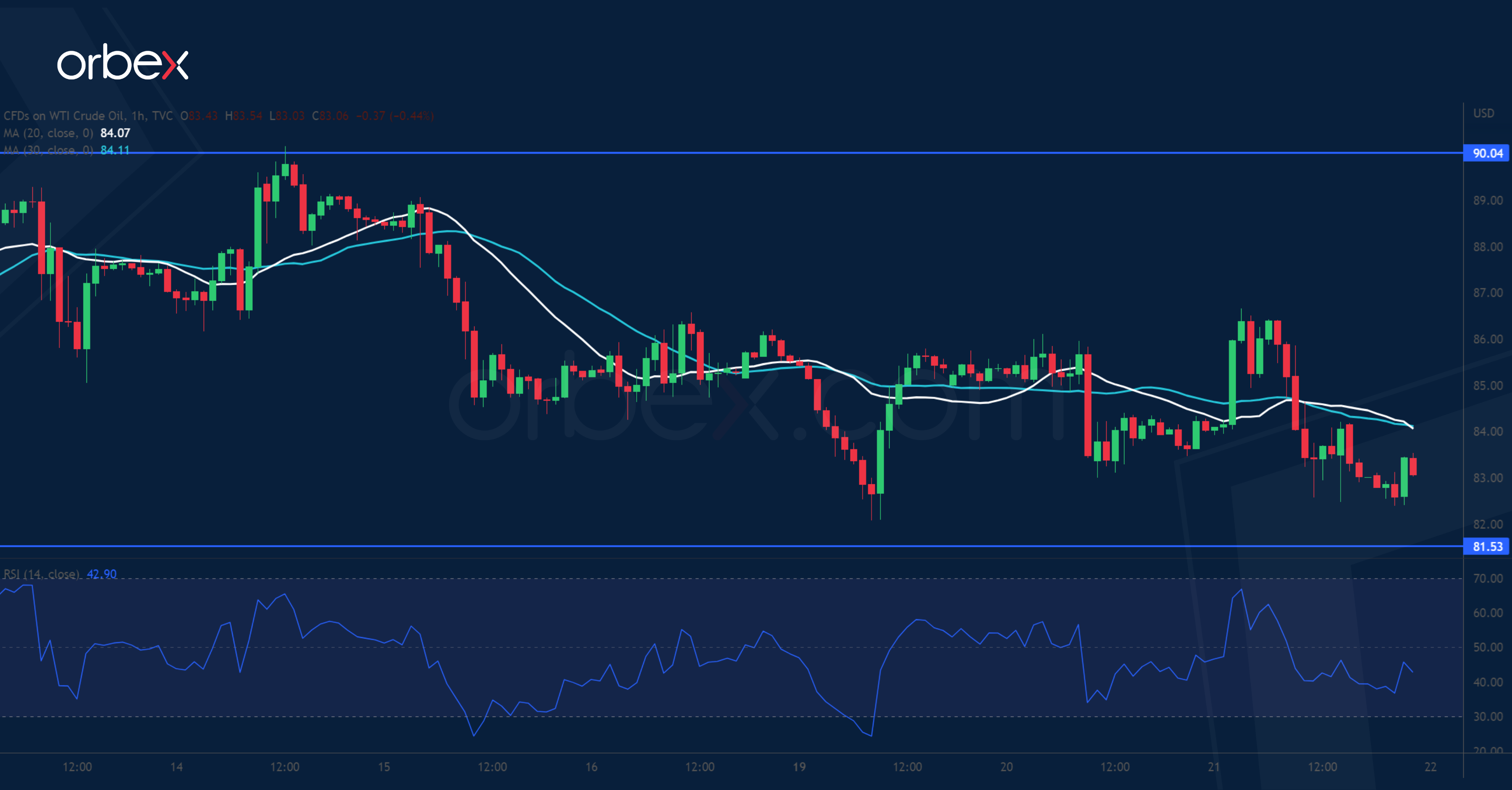
US Oil Awaits Breakout
WTI crude weakens over a gloomy economic prospect amid tighter financial conditions. Sentiment has remained fragile after the psychological level of 90.00 proved to be a tough level to crack for now. The current consolidation above 81.50 is temporary, and a breakout on either side would dictate the direction in the days to come. Only a rally above 90.00 could turn the mood around in the short-term. The bearish bias might take over and a breakout would resume the downtrend and send WTI to 78.00.
S&P 500 Tests Critical Support
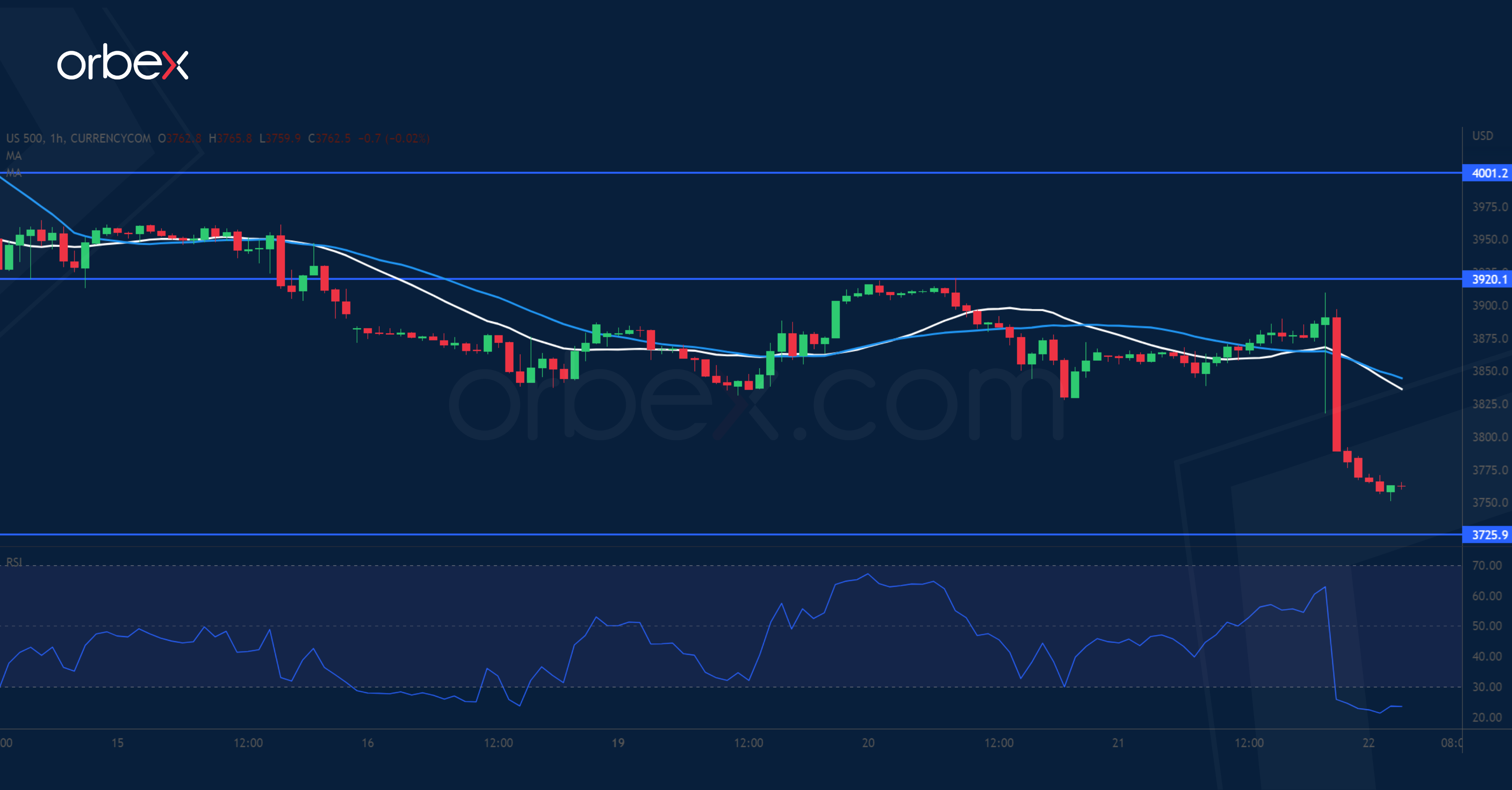
The S&P 500 plunged after another super-sized US rate hike. The break below 3900 has invalidated the recent bounce and put the buy side on the defensive. As sentiment deteriorates, strong selling pressure may continue to prevail. A fall below 3820 at the origin of a bullish breakout last July shows little buying interest left, and the index could continue to sink to the daily support at 3725 which is a critical floor to prevent a bearish reversal. The support-turned-resistance at 3920 is the first hurdle in case of a rebound.